Article

Dimension Stone Processing Sludge at Different Stages of Production: Insights for Waste Management

by
Mirna A. Neves
1,*,
Wenderson A. R. Nascimento
2 and
Adolf H. Horn
3
1
Department of Geology, Federal University of Espírito Santo (UFES), Alegre 29500-000, ES, Brazil
2
Agrochemical Graduate Program, Federal University of Espírito Santo (UFES), Alegre 29500-000, ES, Brazil
3
Geosciences Institute, Federal University of Minas Gerais (UFMG), Belo Horizonte 31270-901, MG, Brazil
*
Author to whom correspondence should be addressed.
Minerals 2025, 15(1), 39; https://doi.org/10.3390/min15010039
Submission received: 21 August 2024 / Revised: 28 September 2024 / Accepted: 9 October 2024 / Published: 31 December 2024

Abstract

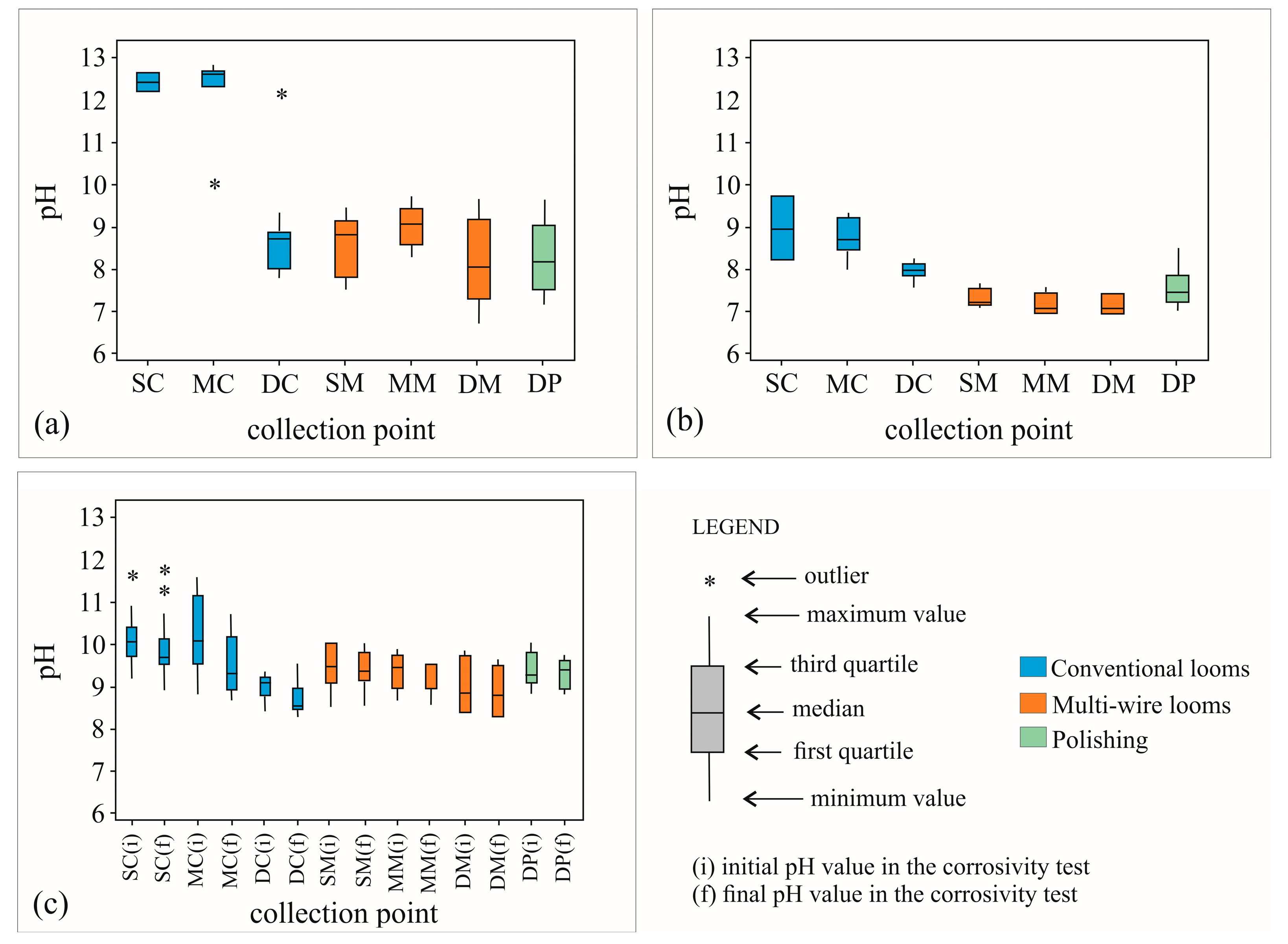
Brazil stands out as one of the main producers of dimension stones and, in order to maintain sustainable production, the principles of environmental sustainability have been increasingly desired. The importance of studying sludge from dimension stone processing is not only based on the economic and environmental burden that its waste disposal represents for the sector but also on the opportunity to use a material that can reduce the extraction of other mineral goods. This study aimed to describe the characteristics of this sludge at different stages of the processing to evaluate the differences between the material circulating in the production process and after dehydration, when it becomes a residue to be disposed of. Aluminum, iron, manganese, and barium concentrations were high in the liquid phase of the sludge, but they were reduced considerably in the solubilized extract. The hydrogen potential reduced, falling below the threshold of corrosivity, after the withdrawal of the liquid phase. Elements with concentrations higher than the maximum allowed value for inert wastes come from both the inputs used in the processing and the processed stone itself. Initiatives to segregate materials from different sources and investments for the creation of eco-products that can replace inputs, besides the use of wastes, should be encouraged to work towards sustainable production.
Keywords: ornamental stones; abrasive slurry; classification of residues; ore processing waste ornamental stones; abrasive slurry; classification of residues; ore processing waste