Article

Preparation of High-Purity Quartz Sand by Vein Quartz Purification and Characteristics: A Case Study of Pakistan Vein Quartz

State Key Laboratory of Lithospheric and Environmental Coevolution, University of Science and Technology of China, Hefei 230026, China
*
Author to whom correspondence should be addressed.
Minerals 2024, 14(7), 727; https://doi.org/10.3390/min14070727
Submission received: 11 June 2024 / Revised: 15 July 2024 / Accepted: 16 July 2024 / Published: 19 July 2024
(This article belongs to the Special Issue Physicochemical Properties and Purification of Quartz Minerals)

Abstract

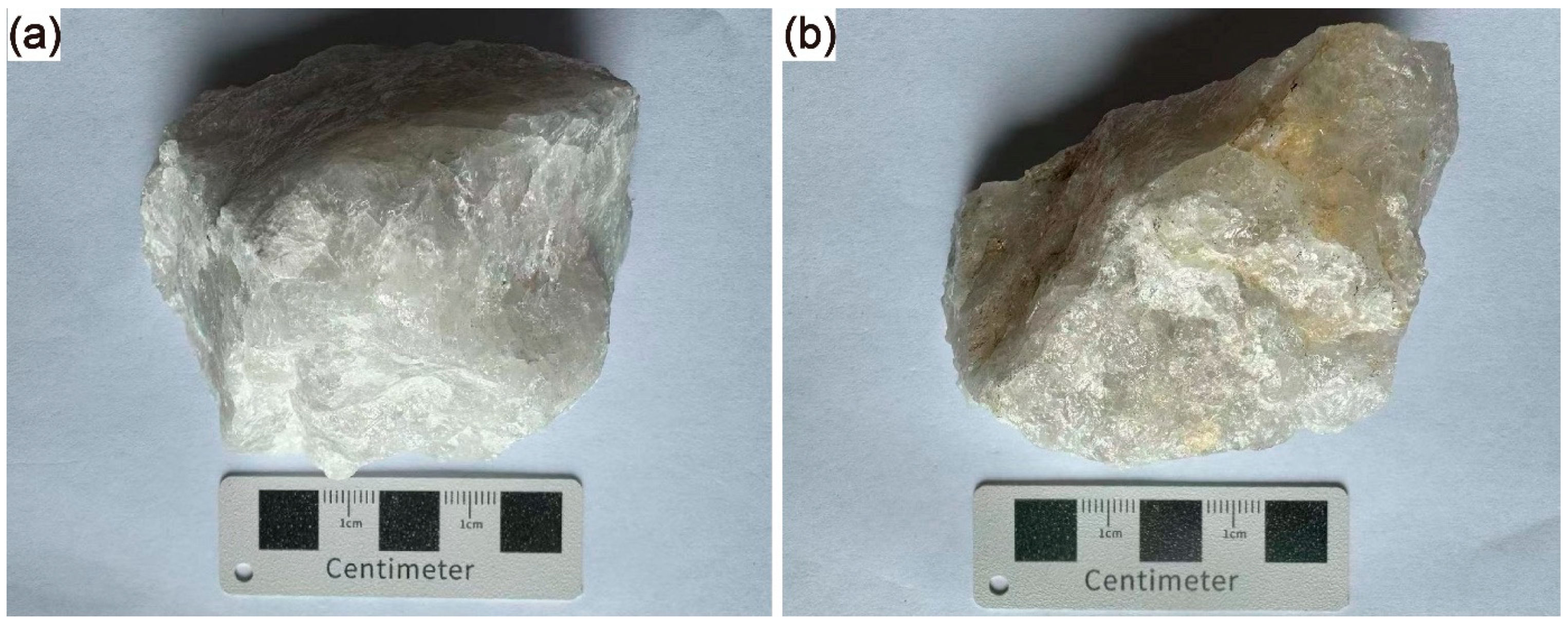
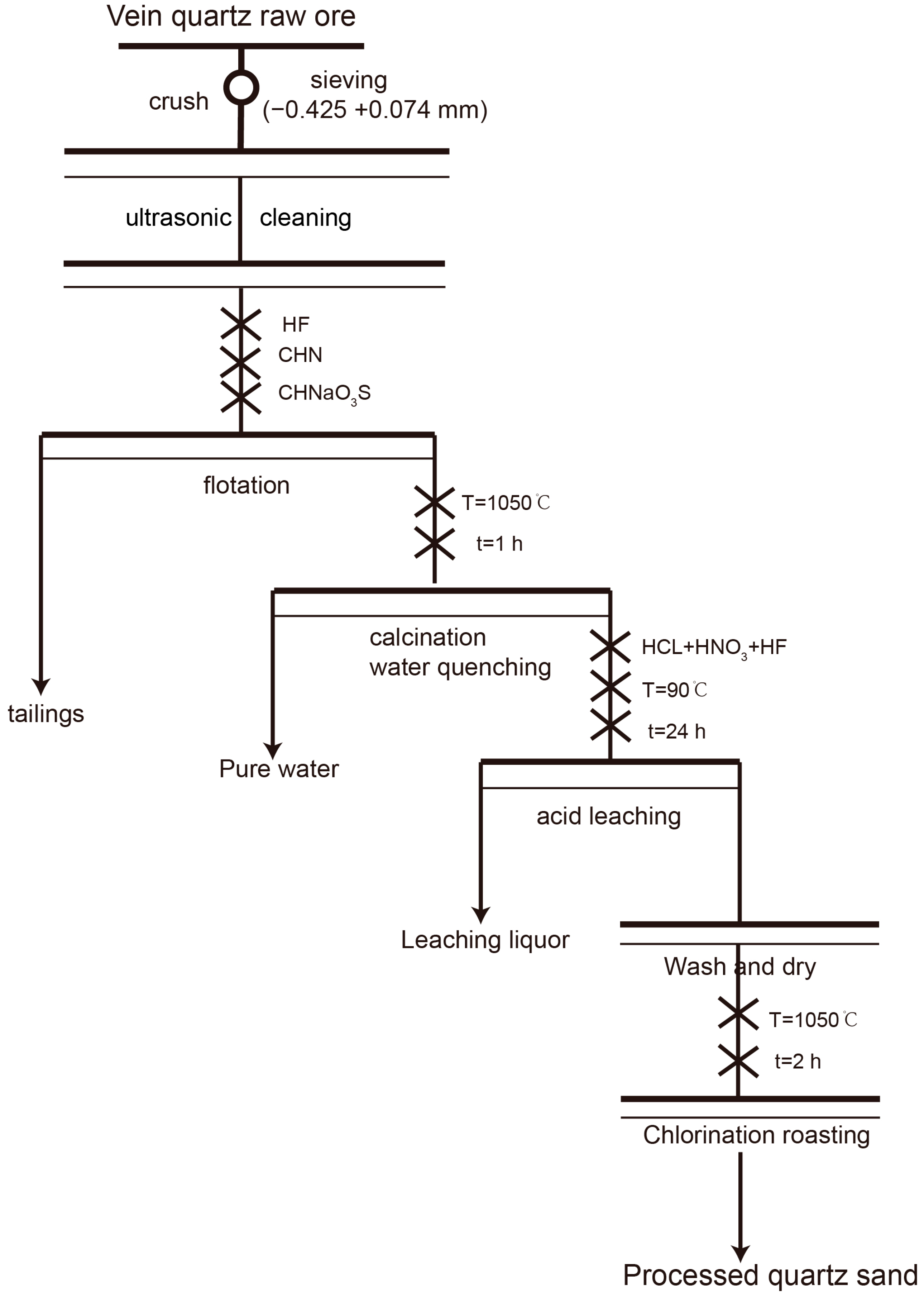
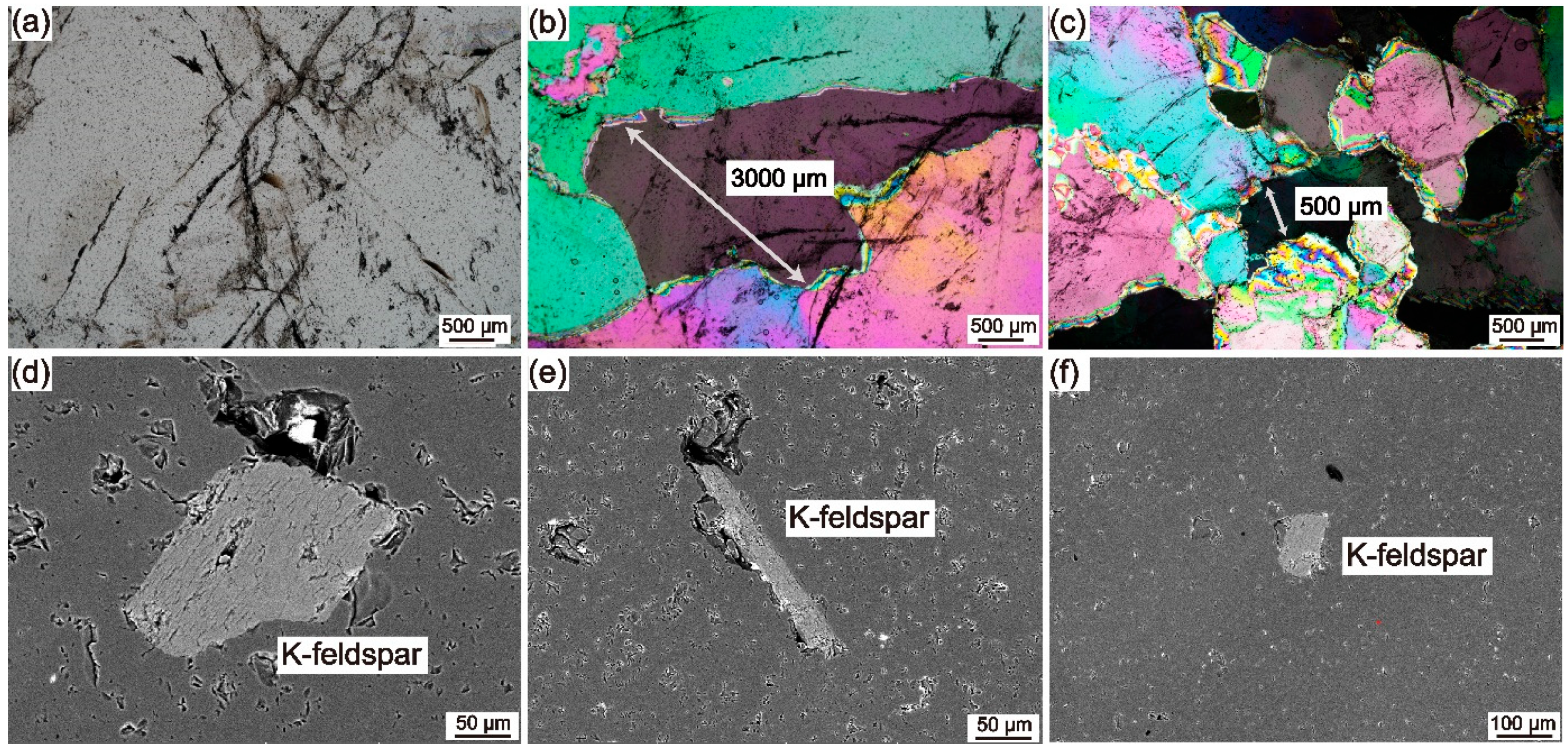
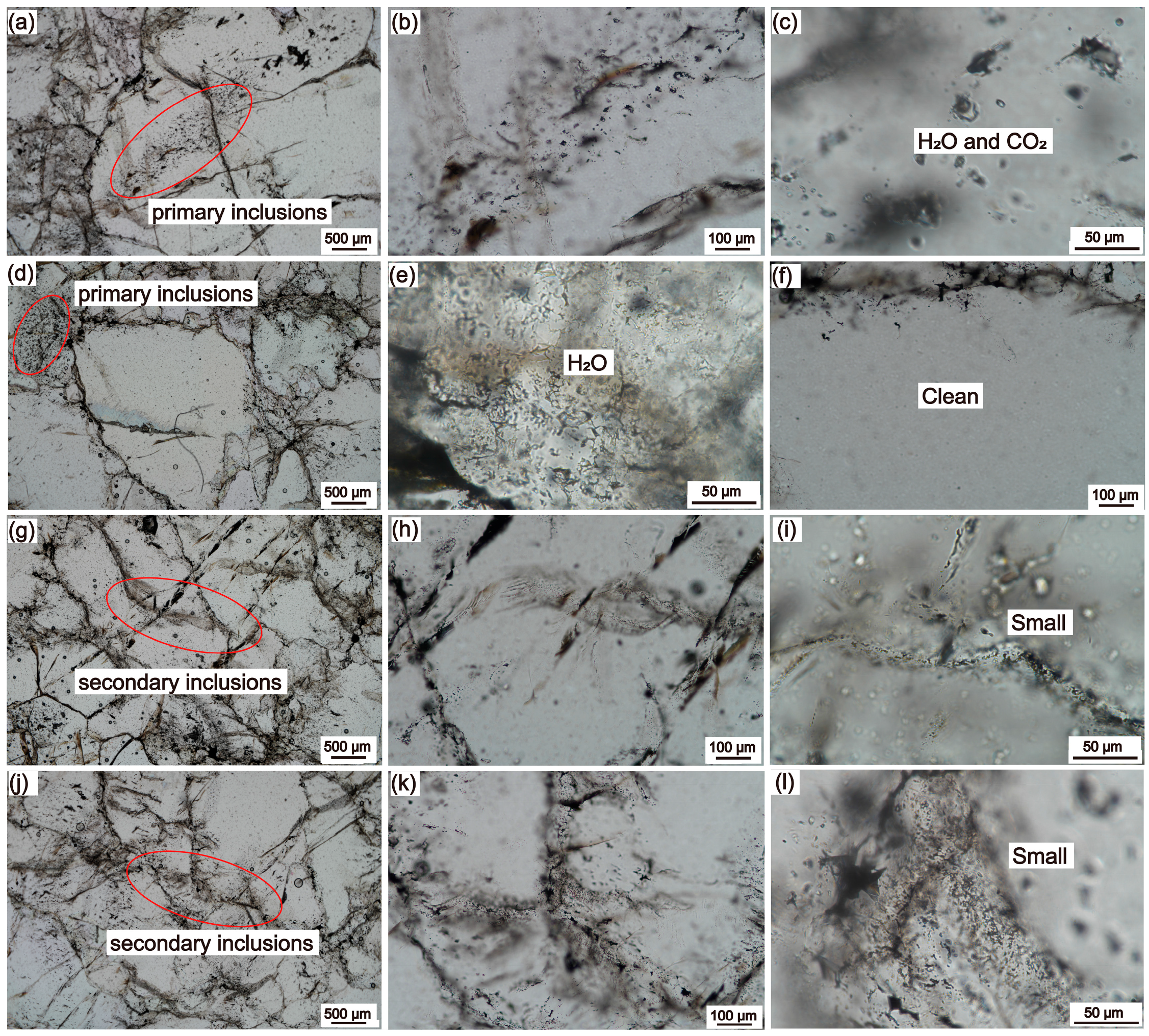
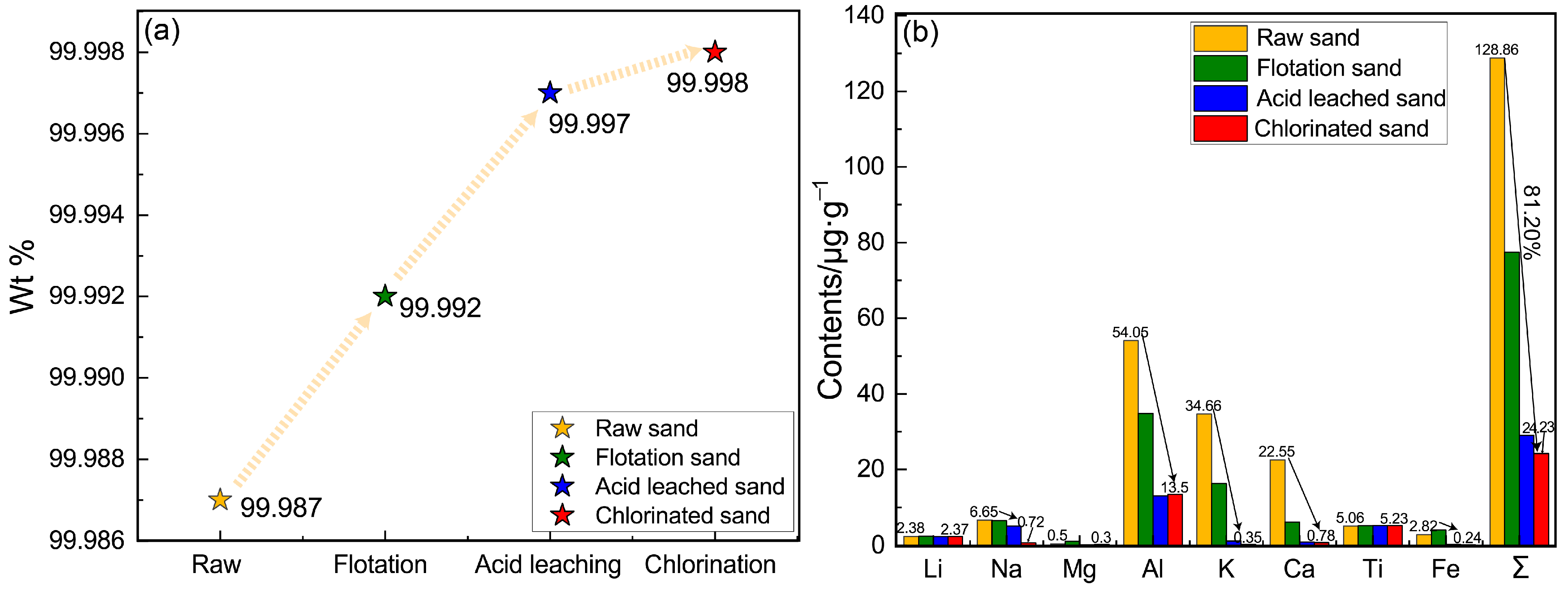
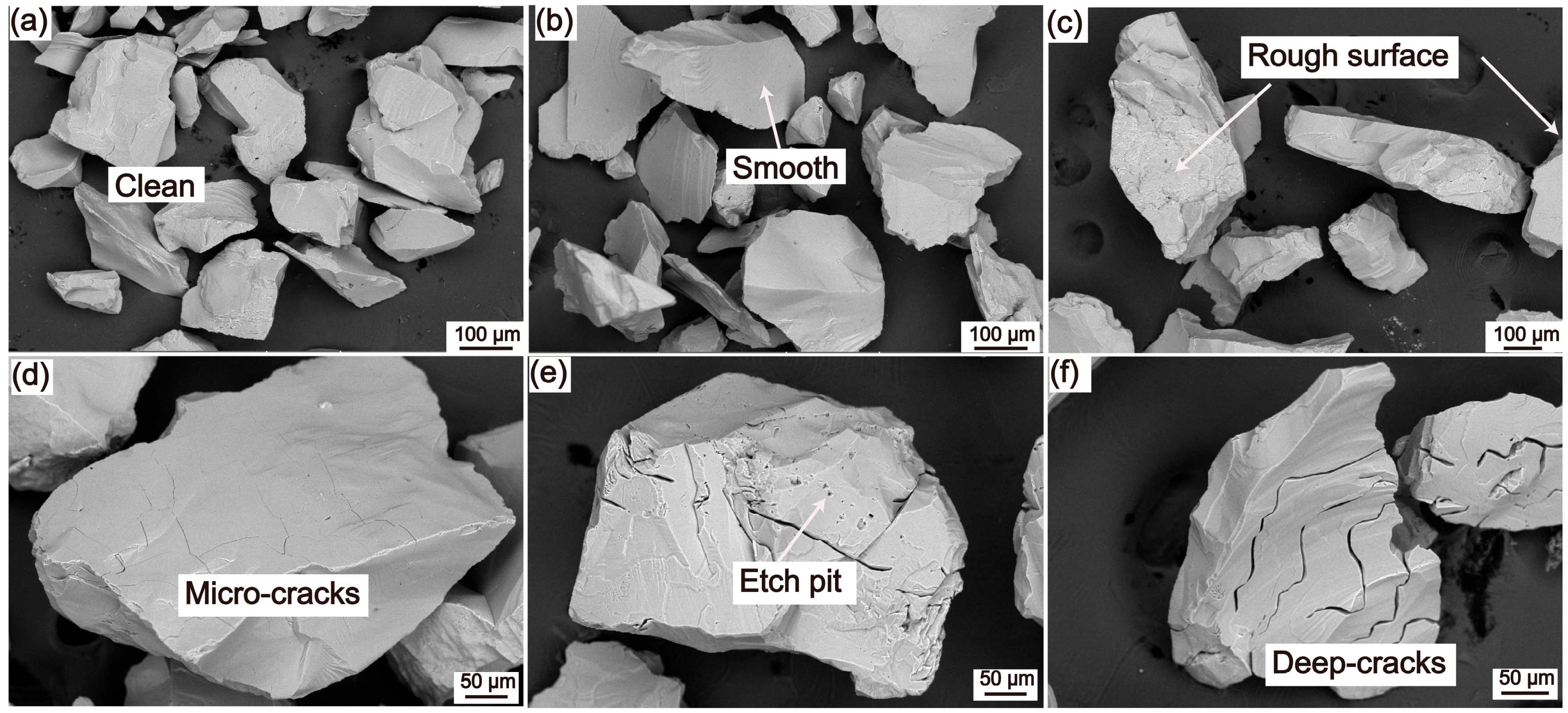
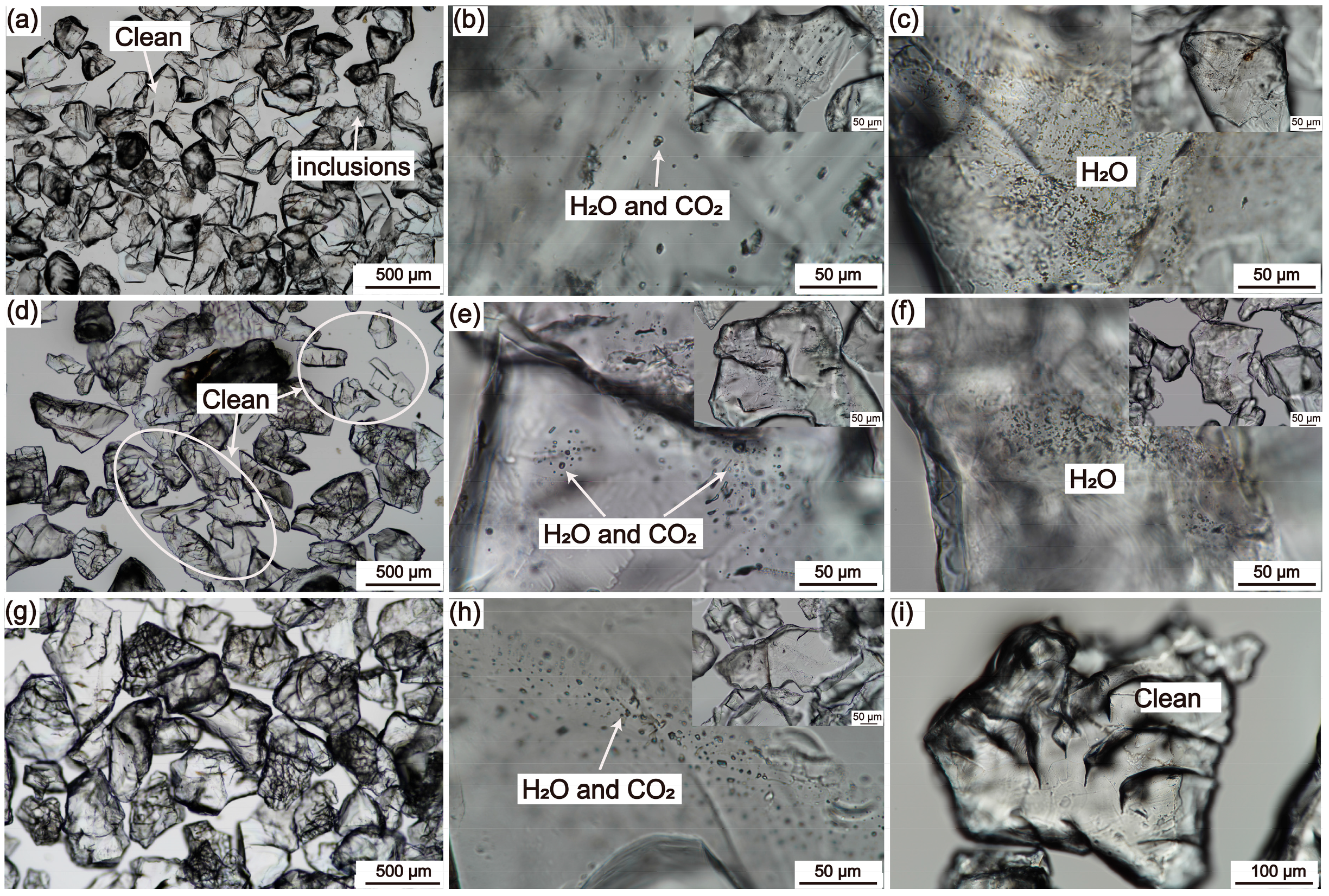
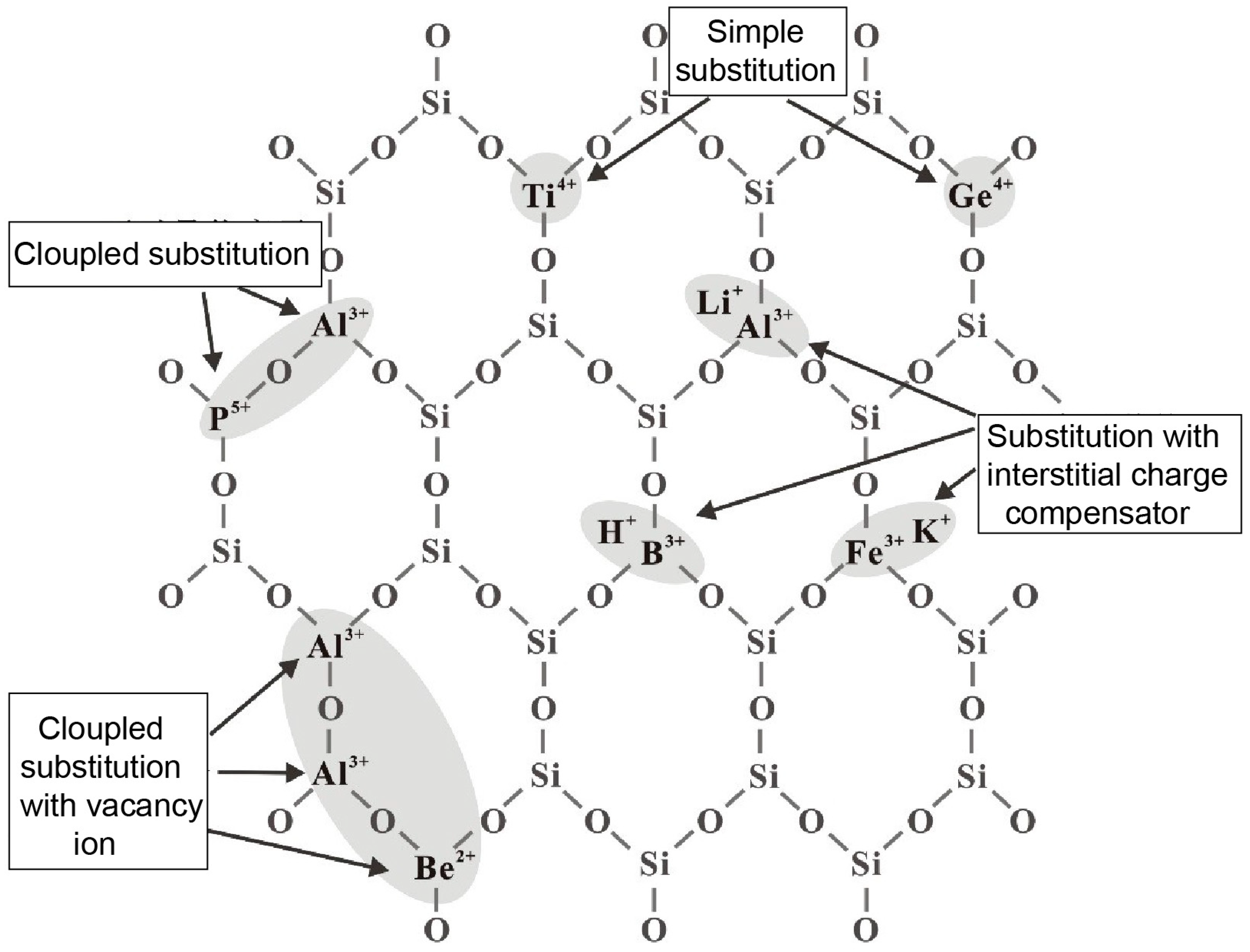
This study focuses on the purification and evaluation of the high-purity quartz (HPQ) potential of vein quartz ore from Pakistan. Vein quartz is grayish-white and translucent, with its mineral composition mainly comprising quartz crystal. Processed quartz sand is obtained from quartz raw ore through purifying technologies, including crushing, ultrasonic desliming, flotation, high-temperature calcination, water quenching, hot pressure acid leaching, and chlorination roasting. The microscopic characteristics show that the vein quartz raw ore has a medium-coarse granular metacrystalline structure, high quartz content, with only a small quantity of fine-grained K-feldspar. The inclusions primarily consist of large-sized primary inclusions and secondary fluid inclusions developed along the micro-fractures, and the content of inclusions in most areas of the crystal is very low or even nonexistent. The quartz ore with such inclusion characteristics is considered a relatively good raw material for quartz. Component analysis shows that the main impurity elements in the quartz ore are Al, K, Ca, Na, Ti, Fe, and Li, with a total impurity element content of 128.86 µg·g−1. After purification, only lattice impurity elements Al, Ti, and Li remain in the processed quartz sand, resulting in a total impurity element content of 24.23 µg·g−1, an impurity removal rate of 81.20%, and the purity of SiO2 reaching 99.998 wt.%. It is suggested that when the quartz raw ore contains high content of lattice impurity elements, such as Al, Li, and Ti, it is difficult to remove them by the current purification method. In industrial production, considering the economic cost, if quartz sand still contains high content of lattice impurity elements Al, Ti, and Li after flotation, it cannot be used as a raw material for high-end HPQ.
Keywords: vein quartz; purification; impurity elements; high-purity quartz vein quartz; purification; impurity elements; high-purity quartz