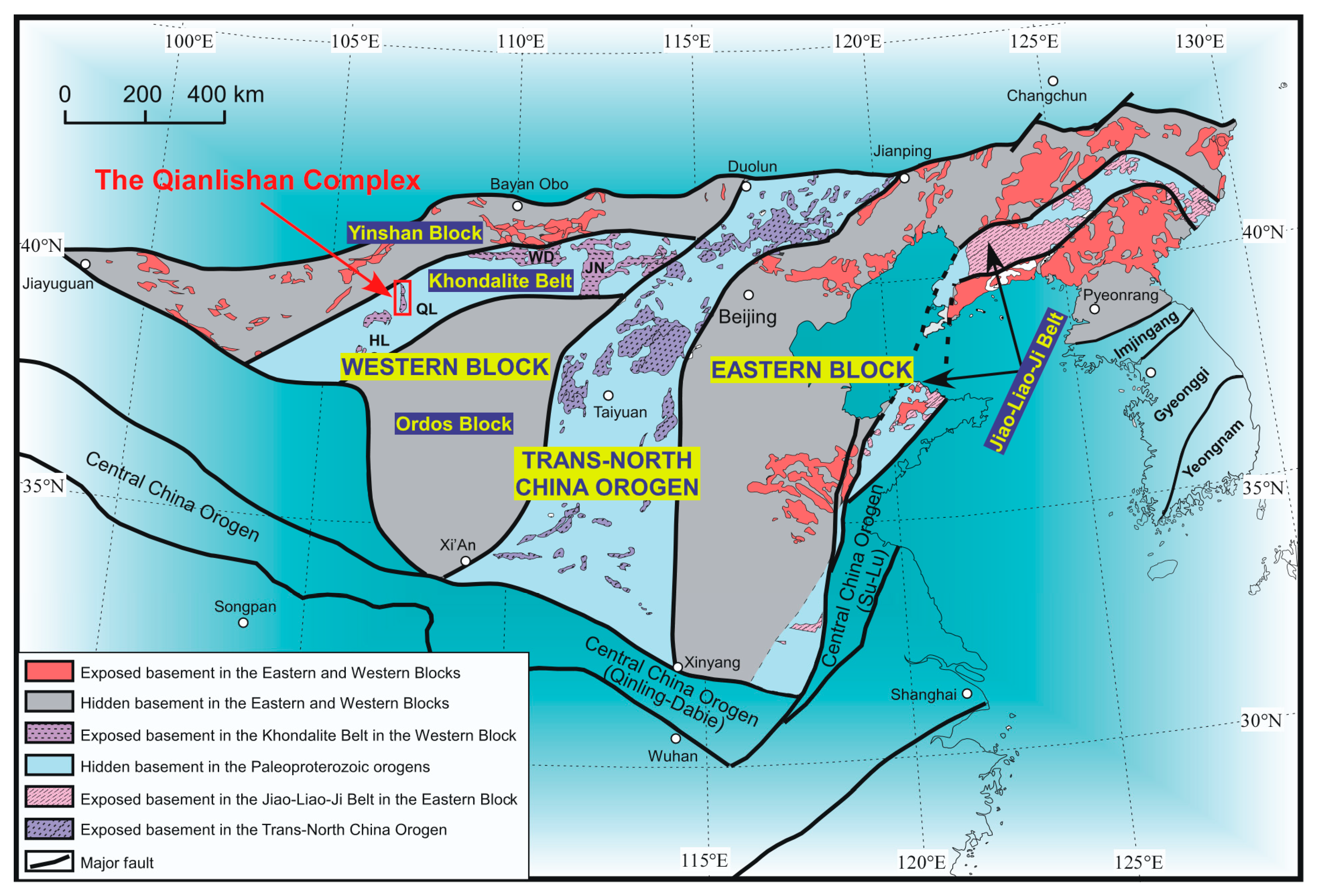
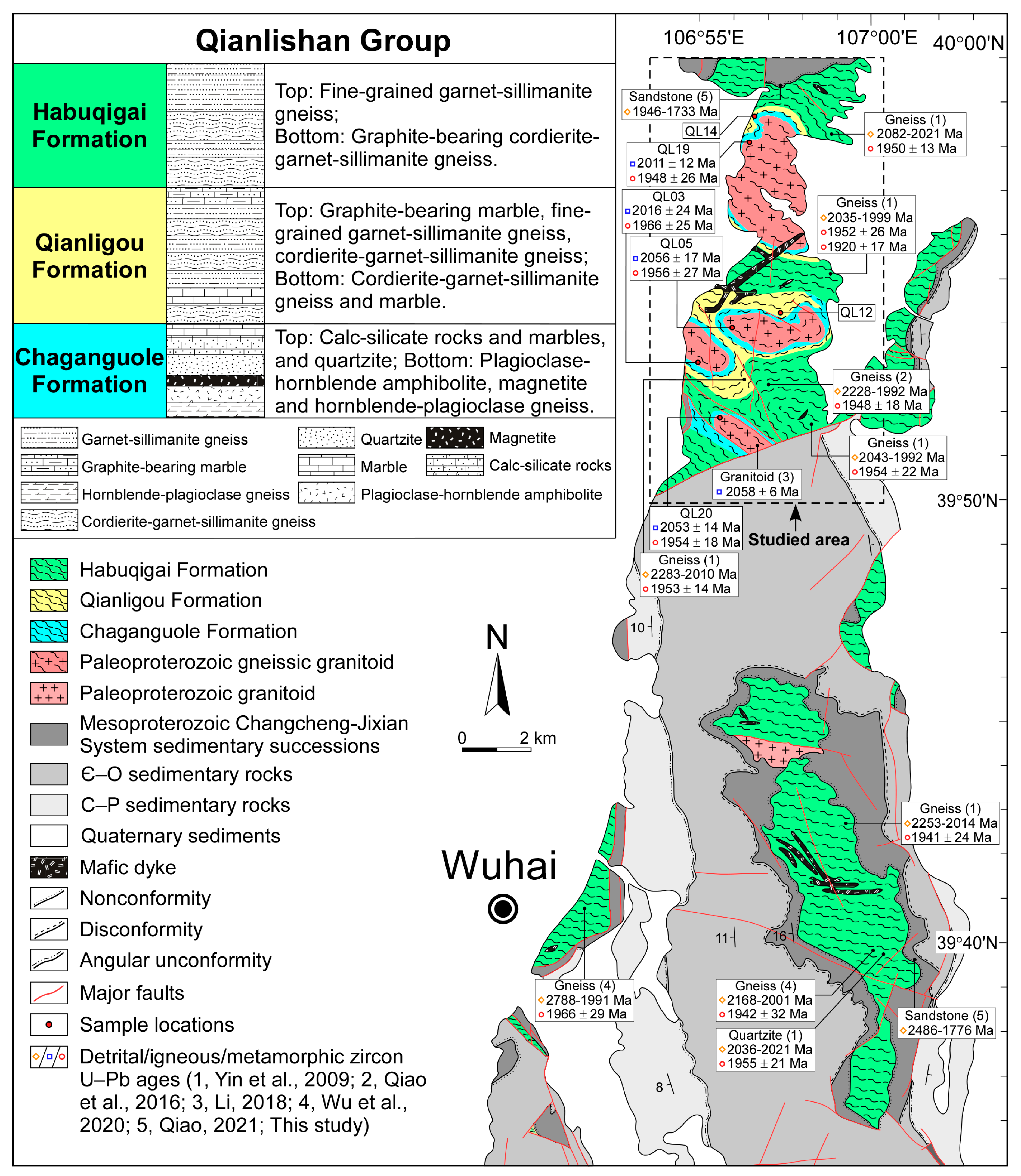
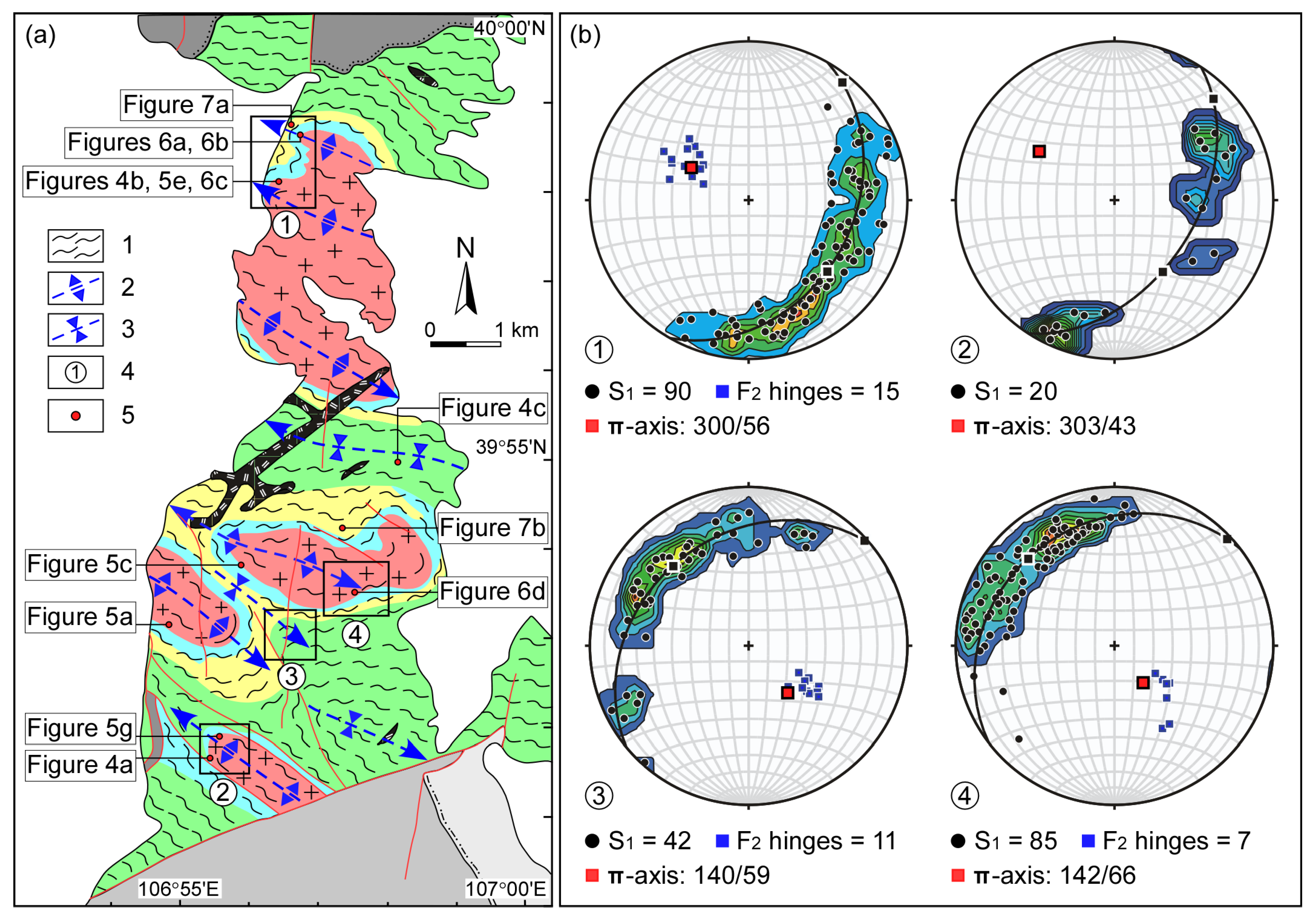
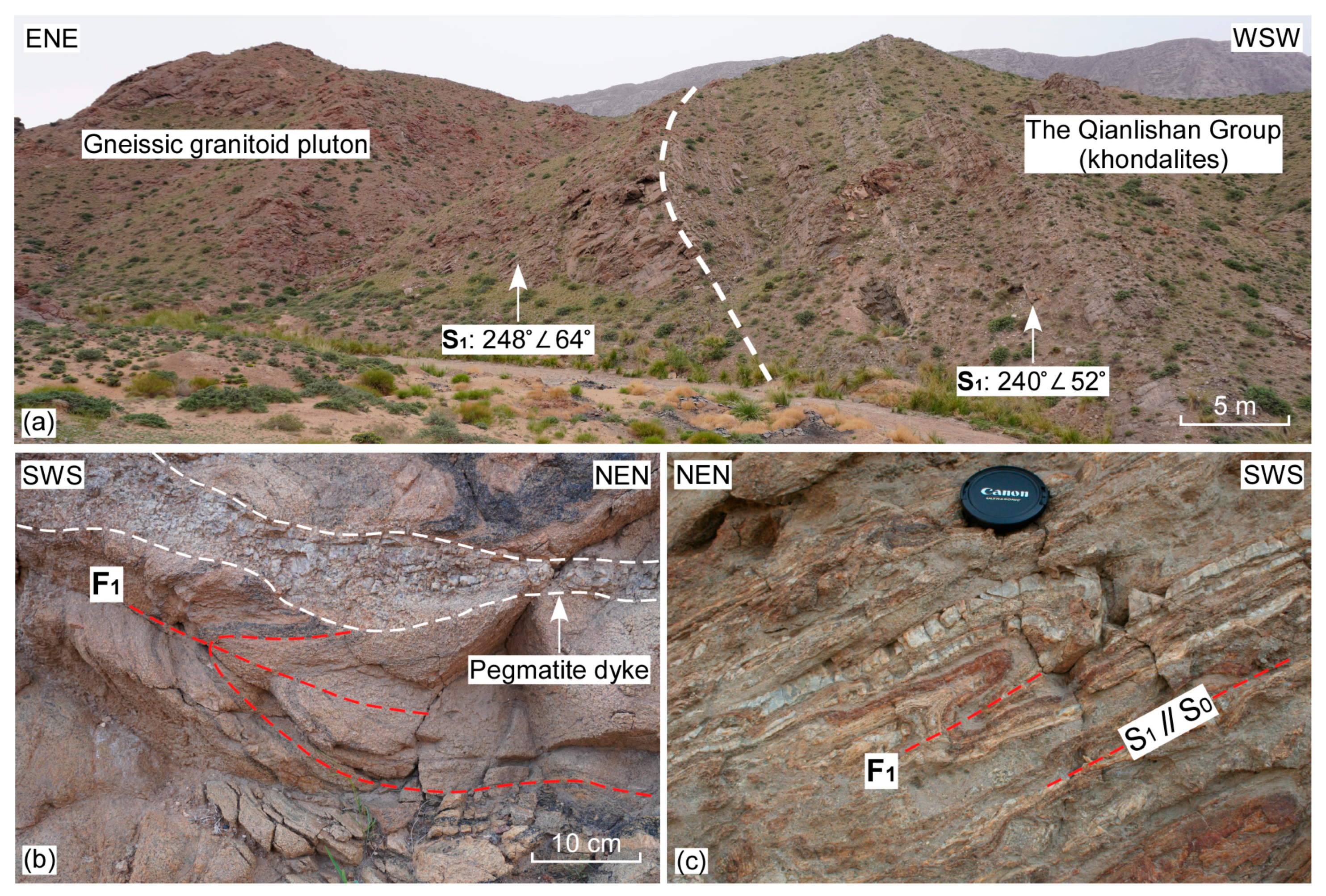
Geochronological Constraints on the Origin of the Paleoproterozoic Qianlishan Gneiss Domes in the Khondalite Belt of the North China Craton and Their Tectonic implications

Abstract
Share and Cite
Qiao, H.; Deng, P.; Li, J. Geochronological Constraints on the Origin of the Paleoproterozoic Qianlishan Gneiss Domes in the Khondalite Belt of the North China Craton and Their Tectonic implications. Minerals 2023, 13, 1361. https://doi.org/10.3390/min13111361
Qiao H, Deng P, Li J. Geochronological Constraints on the Origin of the Paleoproterozoic Qianlishan Gneiss Domes in the Khondalite Belt of the North China Craton and Their Tectonic implications. Minerals. 2023; 13(11):1361. https://doi.org/10.3390/min13111361
Chicago/Turabian StyleQiao, Hengzhong, Peipei Deng, and Jiawei Li. 2023. "Geochronological Constraints on the Origin of the Paleoproterozoic Qianlishan Gneiss Domes in the Khondalite Belt of the North China Craton and Their Tectonic implications" Minerals 13, no. 11: 1361. https://doi.org/10.3390/min13111361
APA StyleQiao, H., Deng, P., & Li, J. (2023). Geochronological Constraints on the Origin of the Paleoproterozoic Qianlishan Gneiss Domes in the Khondalite Belt of the North China Craton and Their Tectonic implications. Minerals, 13(11), 1361. https://doi.org/10.3390/min13111361