Article

Association Study on the Pore Structure and Mechanical Characteristics of Coarse-Grained Soil under Freeze–Thaw Cycles
School of Resources and Safety Engineering, Central South University, Changsha 410083, China
*
Author to whom correspondence should be addressed.
Minerals 2022, 12(3), 314; https://doi.org/10.3390/min12030314
Submission received: 18 January 2022 / Revised: 23 February 2022 / Accepted: 26 February 2022 / Published: 28 February 2022

Abstract

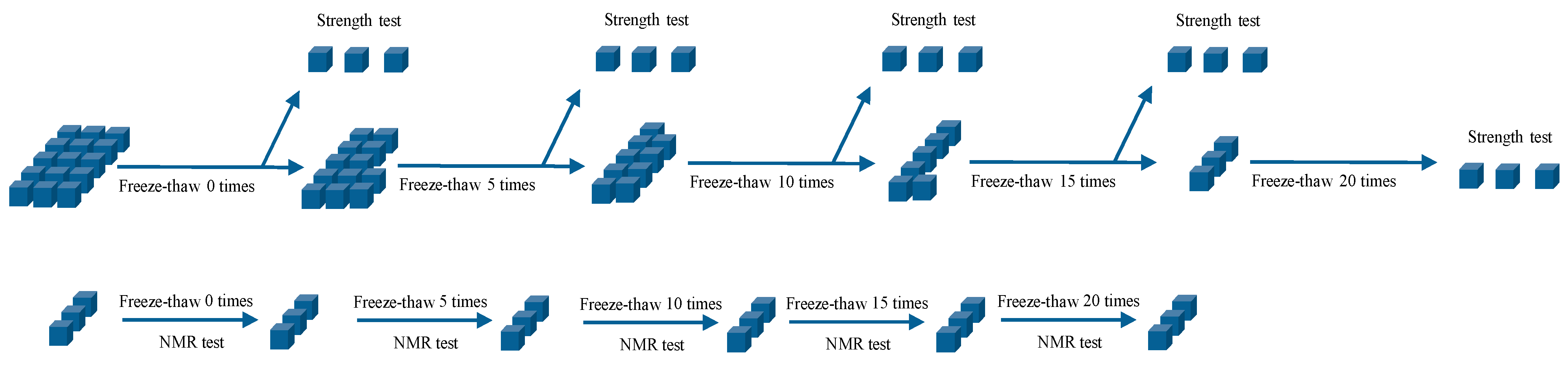
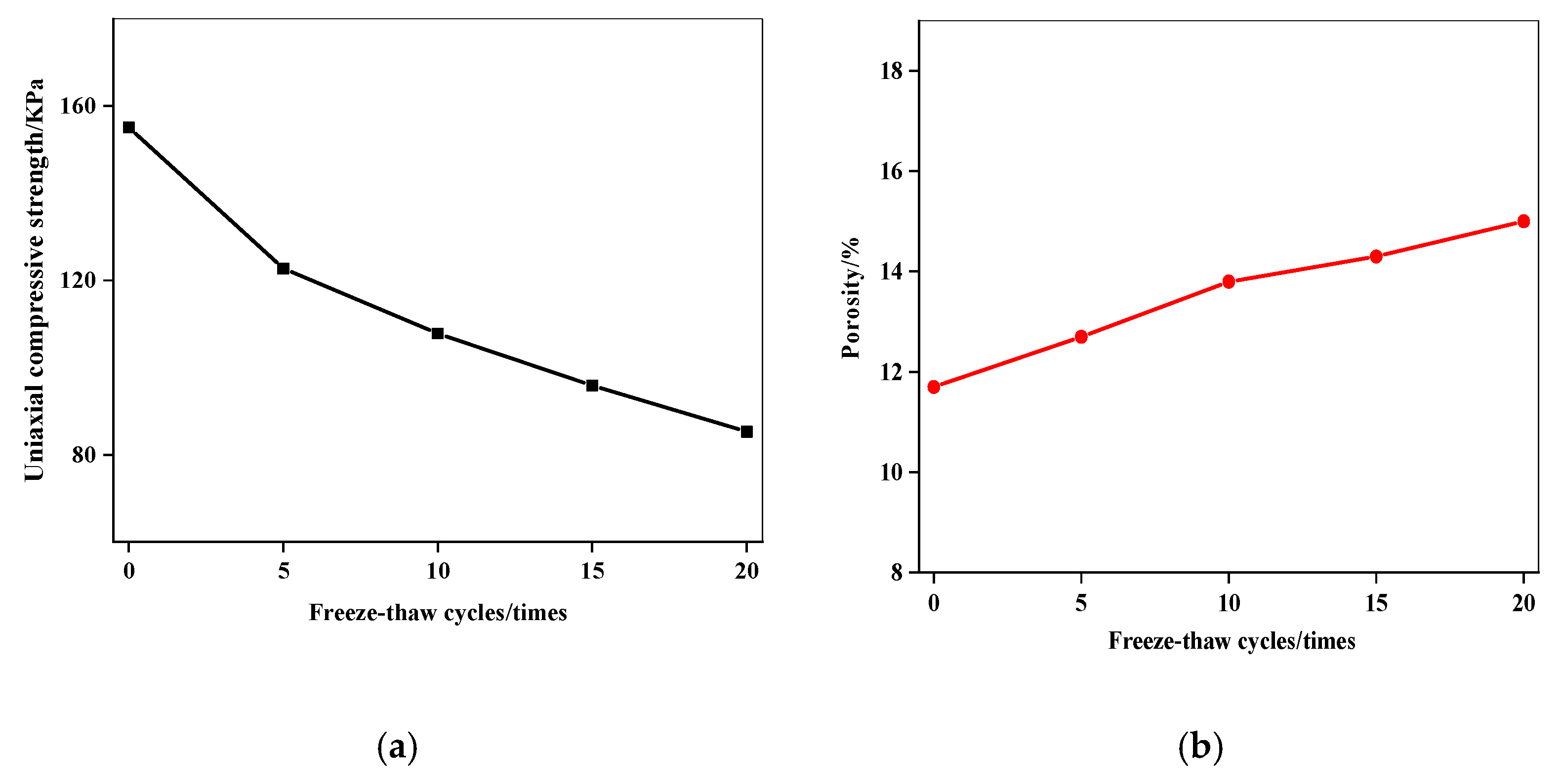
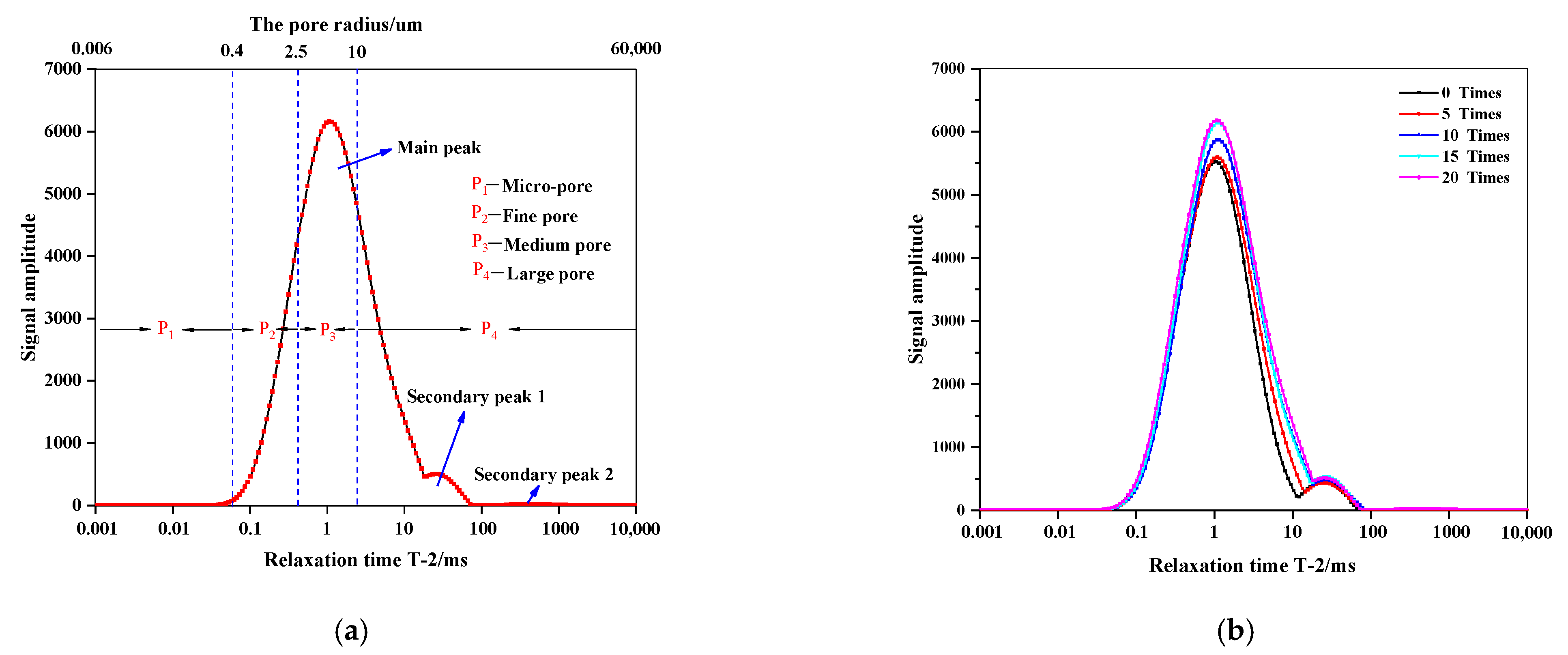
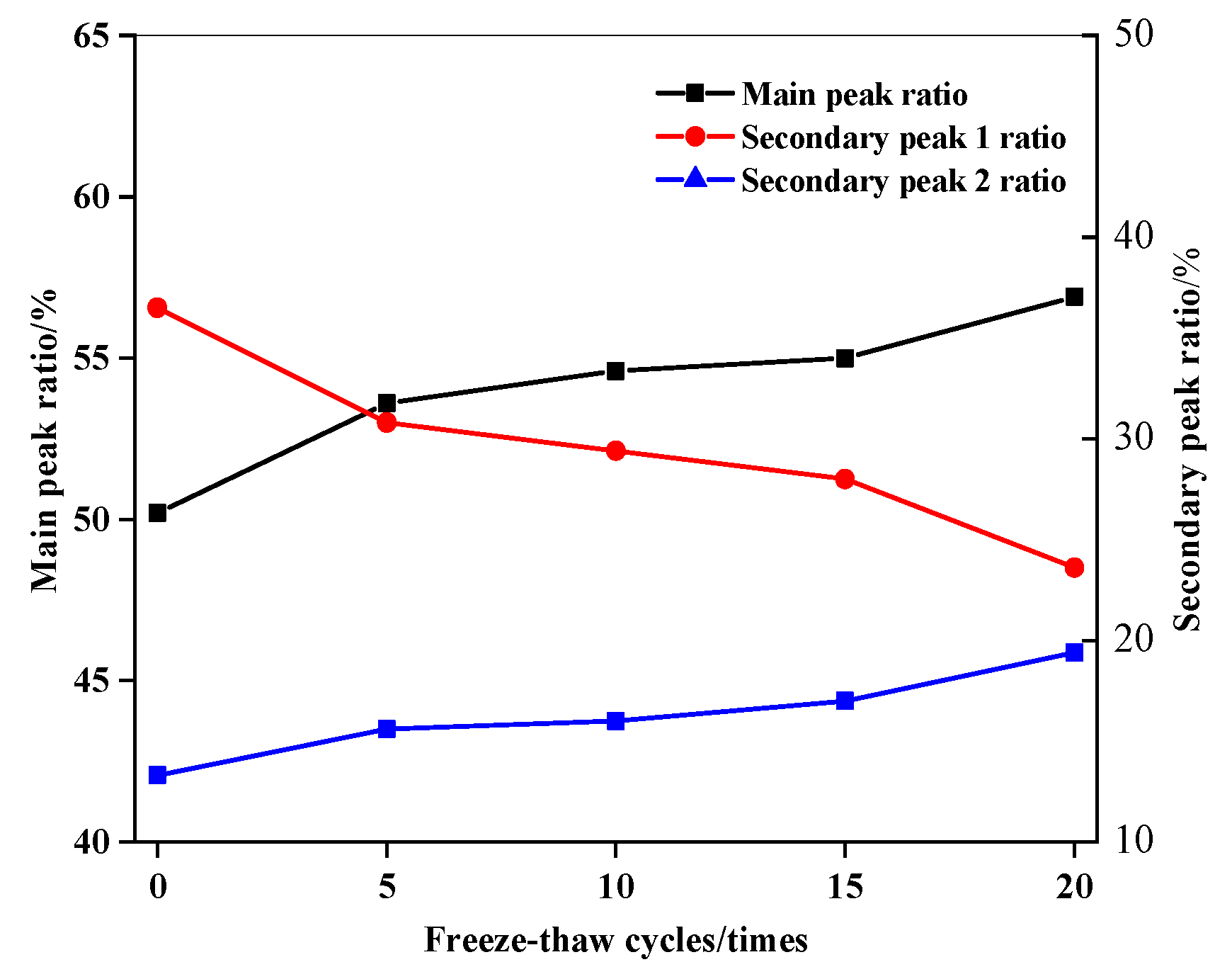
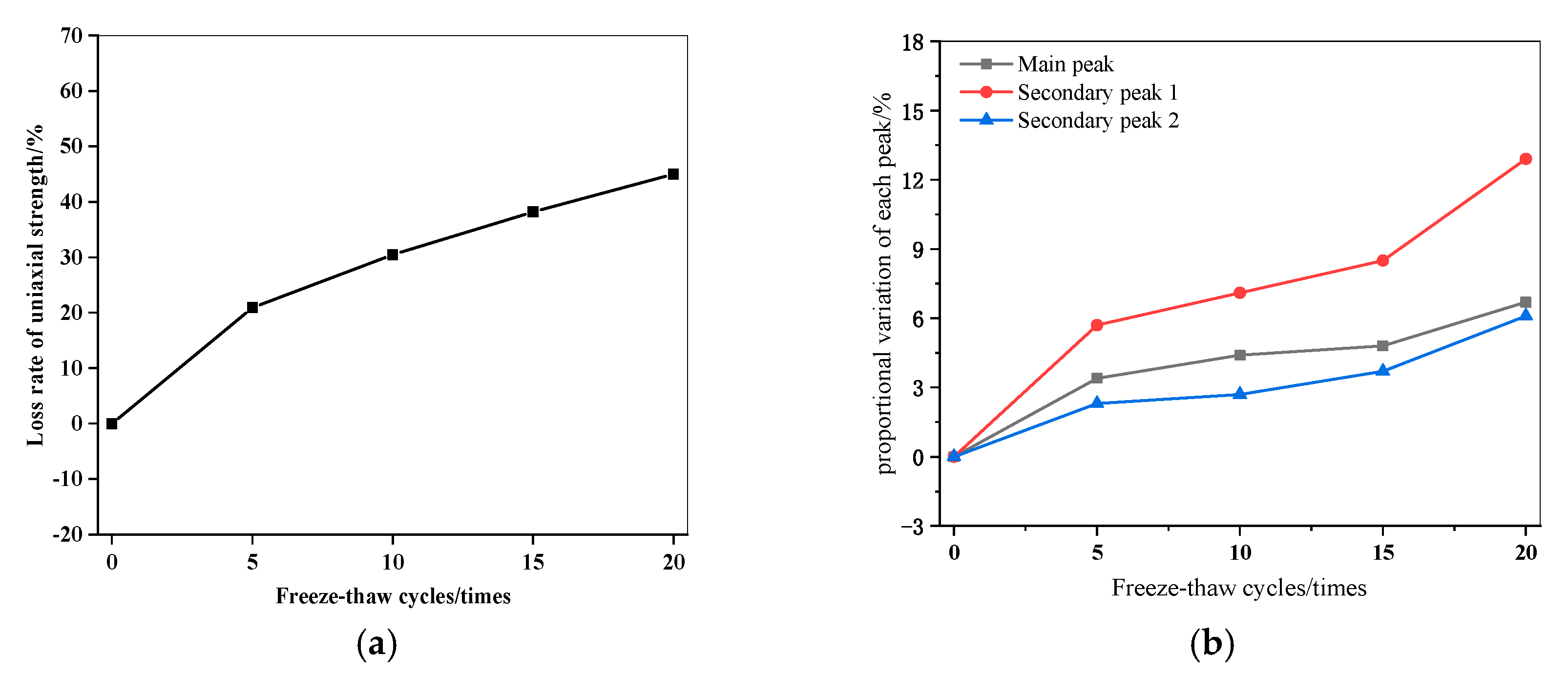
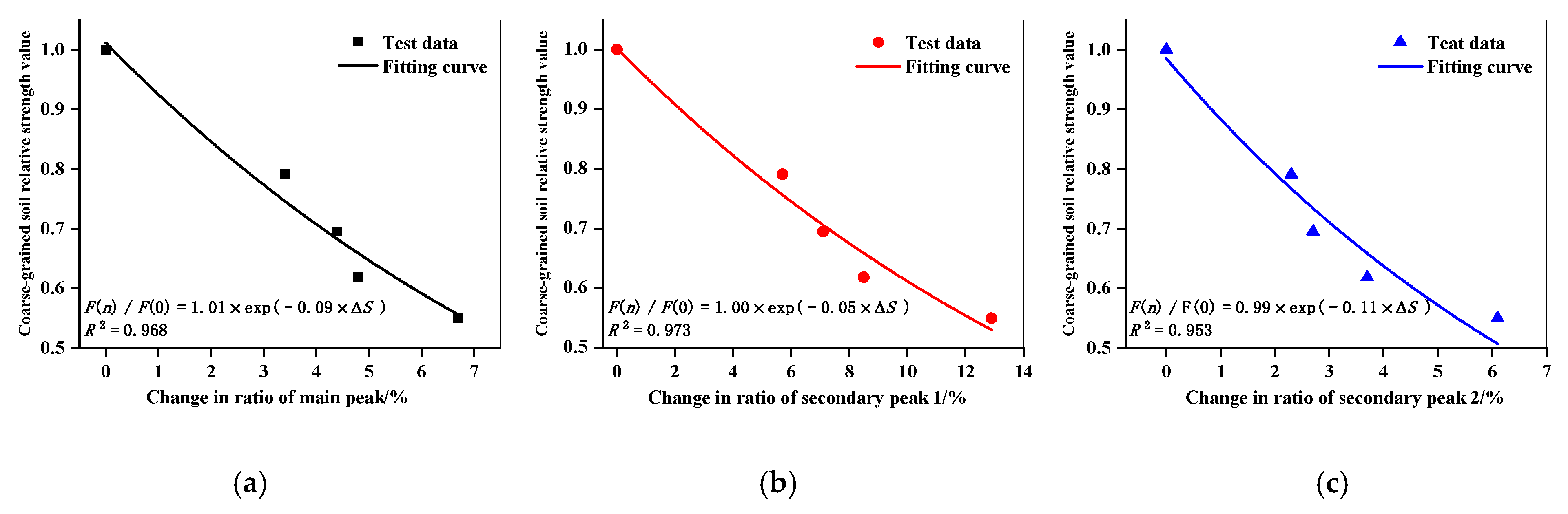
In this study, the relationship between the pore structure and macroscopic mechanical characteristics of coarse-grained soils from mine dumps is explored under various freeze–thaw cycles. A series of experiments were conducted on the mine dump materials using a standard cube sample of 7 cm × 7 cm × 7 cm, a moisture content of 7.5%, and a density of 2.34 g/cm3. The pore structure test and uniaxial compressive strength test were carried out on the coarse-grained soil samples under different freeze–thaw cycles by using a nuclear magnetic resonance (NMR) instrument and a universal servo material testing machine. The study explores the change law of the strength and pore structure of coarse-grained soil, and establishes the correlation model between the pore structure and mechanical characteristics. The results showed that: (1) With the increase in the number of freeze–thaw cycles, the porosity of the coarse-grained soil gradually increased, and the bonding ability between the internal soil particles weakened, resulting in a decrease in strength. (2) With the increase in freeze–thaw cycles, the proportion of pore volume of the main peak and secondary peak 2 of T-2 spectrum curve increases gradually, and the internal pore structure of coarse-grained soil gradually develops towards medium and large pores. (3) There is an exponential function between the variation of pore volume proportion of each peak of coarse-grained soil and the relative strength value, and there is a good fitting coefficient between the two, indicating that the change of pore structure can well reflect the evolution law of strength.
Keywords: freeze–thaw cycle; mechanical characteristics; relative strength; pore structure; nuclear magnetic resonance freeze–thaw cycle; mechanical characteristics; relative strength; pore structure; nuclear magnetic resonance