Article

Tight Sandstone Reservoir Formation Mechanism of Upper Paleozoic Buried Hills in the Huanghua Depression, Bohai Bay Basin, Eastern China
1
Dagang Oilfield Company, PetroChina, Tianjin 300280, China
2
College of Geosciences and Surveying Engineering, China University of Mining and Technology, Beijing 100083, China
3
Research Institute of Petroleum Exploration and Development, Beijing 100083, China
*
Author to whom correspondence should be addressed.
Minerals 2021, 11(12), 1368; https://doi.org/10.3390/min11121368
Submission received: 18 November 2021 / Revised: 29 November 2021 / Accepted: 30 November 2021 / Published: 3 December 2021

Abstract

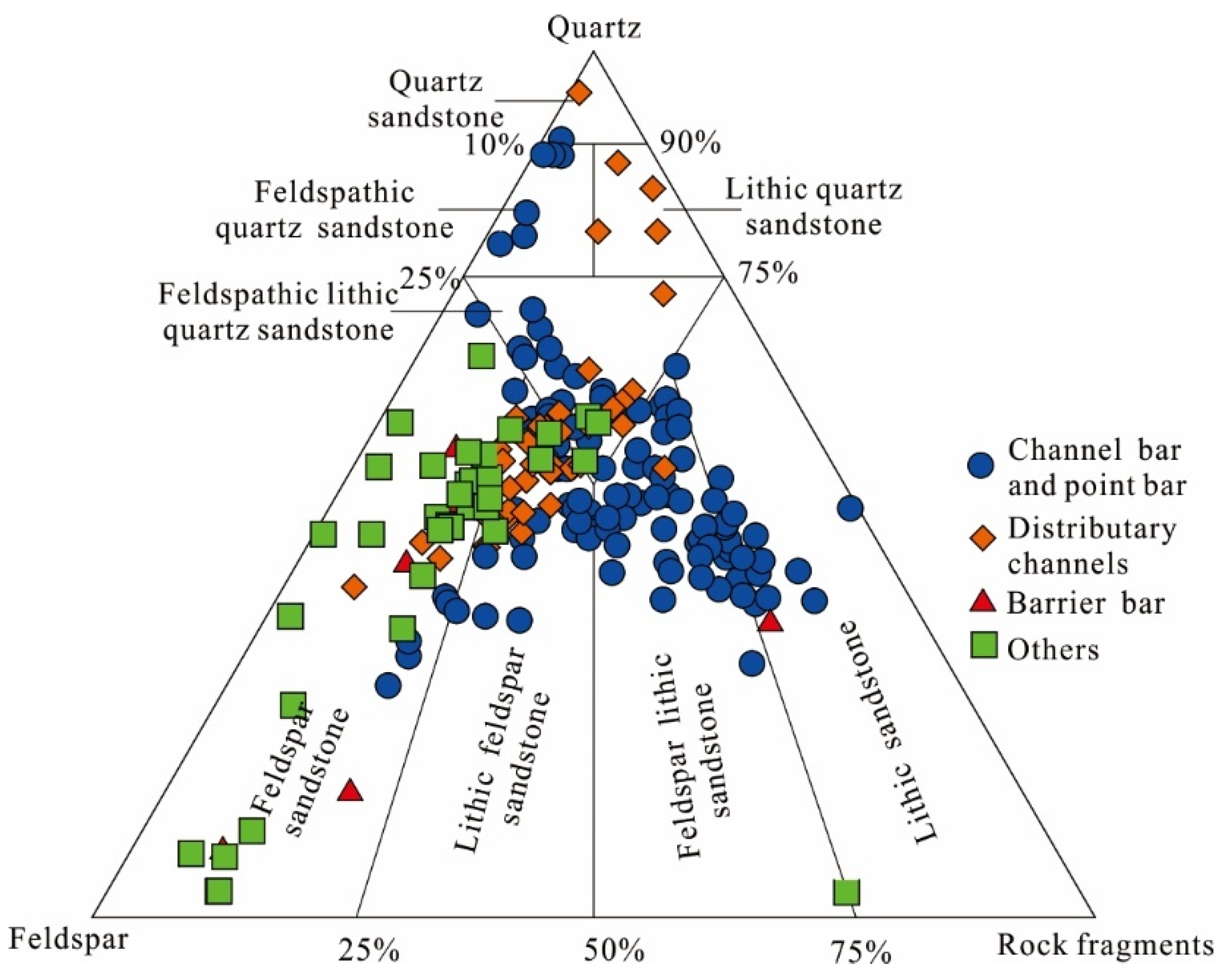
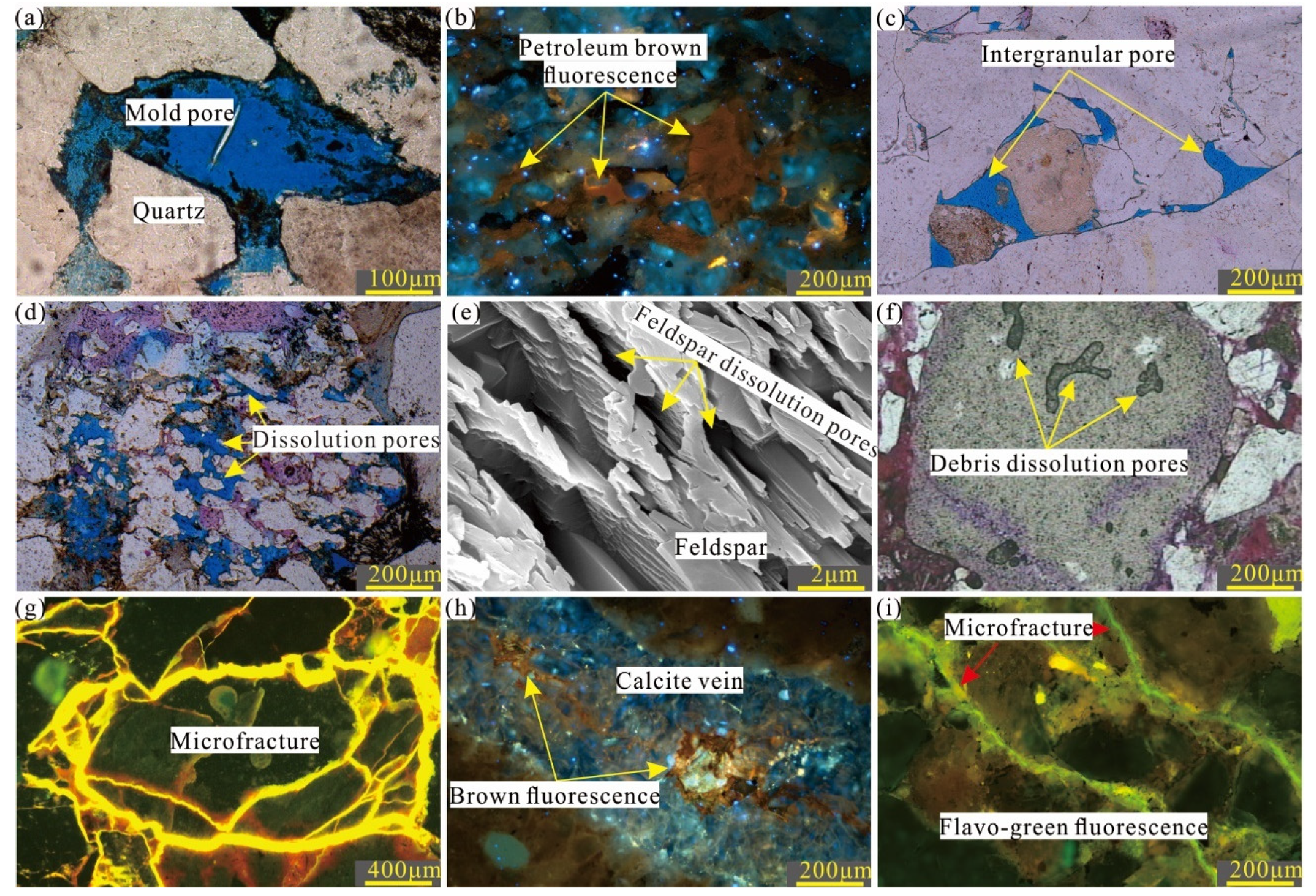
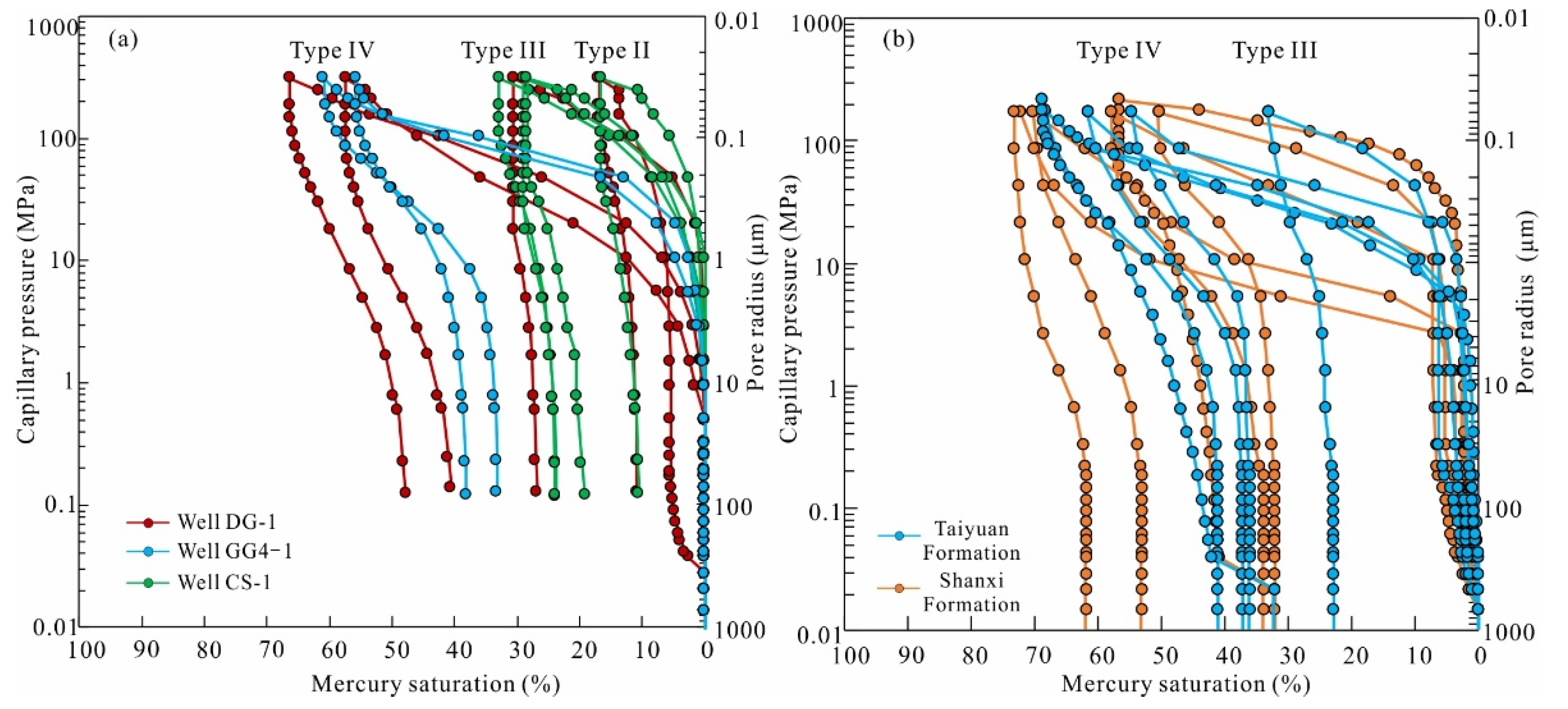
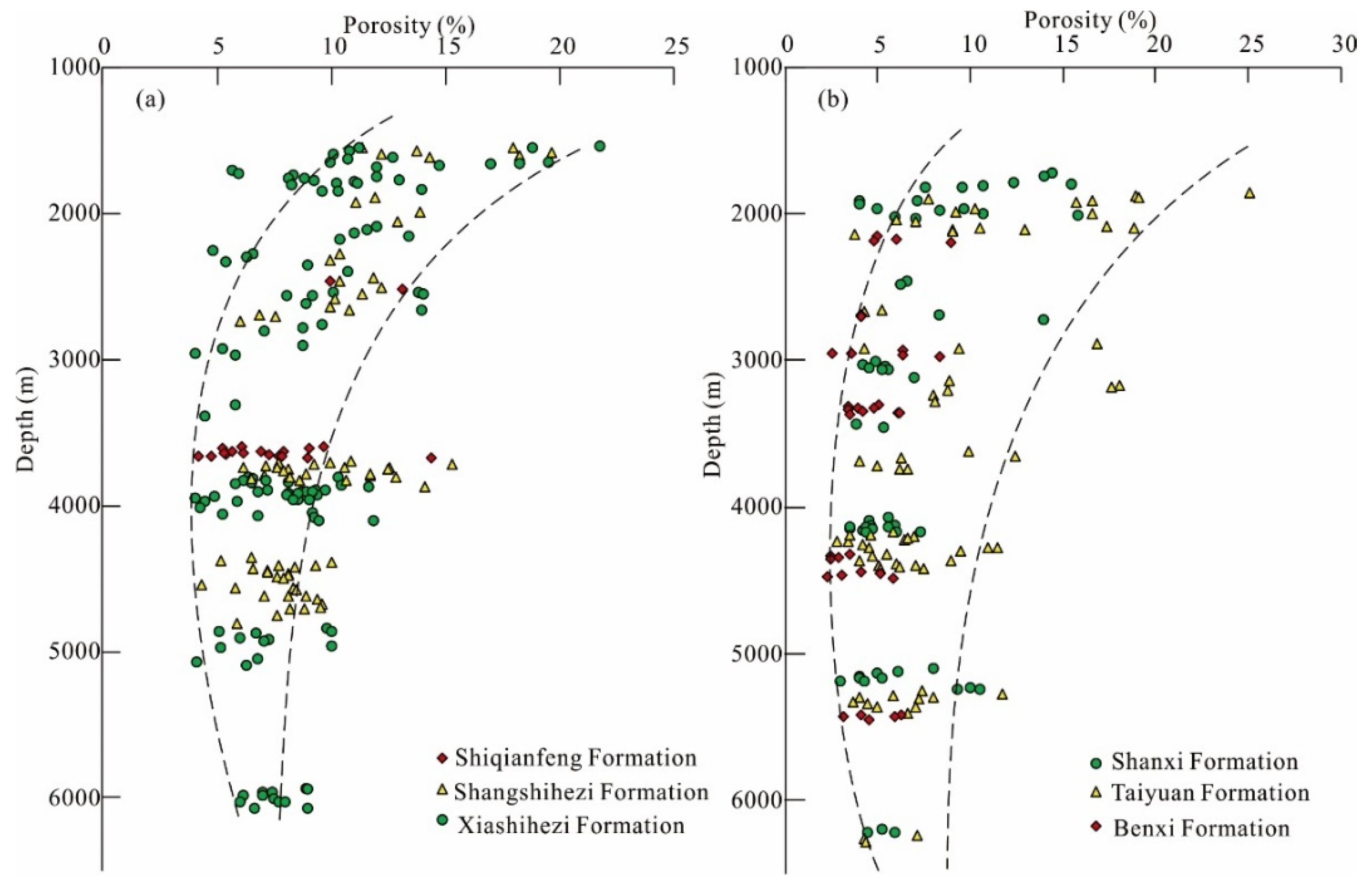
Carboniferous-Permian petroleum resources in the Huanghua Depression of the Bohai Bay Basin, a super petroleum basin, are important exploration successor targets. The reservoir sedimentary environment of coal measures in the Upper Paleozoic buried hills is variable, and the structural evolution process is complicated, which restricts the optimization of targeting sections. Using the analysis and testing results of logging, thin section, porosity, mercury injection, hydrochemistry, and basin simulation, this study revealed the formation mechanism differences of tight sandstones in the Upper Paleozoic period in different buried hills. The results show that the sandstones are mainly feldspathic sandstone, lithic arkose, feldspathic lithic sandstone, and feldspathic lithic quartz sandstone. The quartz content varies between 25% and 70%, averaging 41%. Feldspar and debris are generally high, averaging 31% and 28%, respectively. Secondary dissolution pores are the main reservoir spaces, with 45% of the tested samples showing porosity of 5–10%, and 15% being lower than 5%. The pore radium is generally lower than 100 nm, and the sandstones are determined as small pore with fine throat and medium pore with fine throat sandstones by mercury saturation results. Frequent changing sedimentary environments and complex diagenetic transformation processes both contribute to the reservoir property differences. The former determines the original pore space, and the latter determines whether they can be used as effective reservoirs by controlling the diagenetic sequences. Combining tectonic movement background and different fluid history, the different formation mechanisms of high-porosity reservoirs are recognized, which are atmospheric leaching dominated (Koucun buried hills), atmospheric water and organic acid co-controlled (Wangguantun and Wumaying buried hills), and organic acid dominated (Nandagang buried hills) influences. The results can be beneficial for tight gas exploration and development in coal measures inside clastic buried hills in the Bohai Bay Basin.
Keywords: tight gas; coal measures; diagenetic transformation; tectonic superposition; Bohai Bay Basin tight gas; coal measures; diagenetic transformation; tectonic superposition; Bohai Bay Basin