2.2. Dynamic Characteristics of DTENG
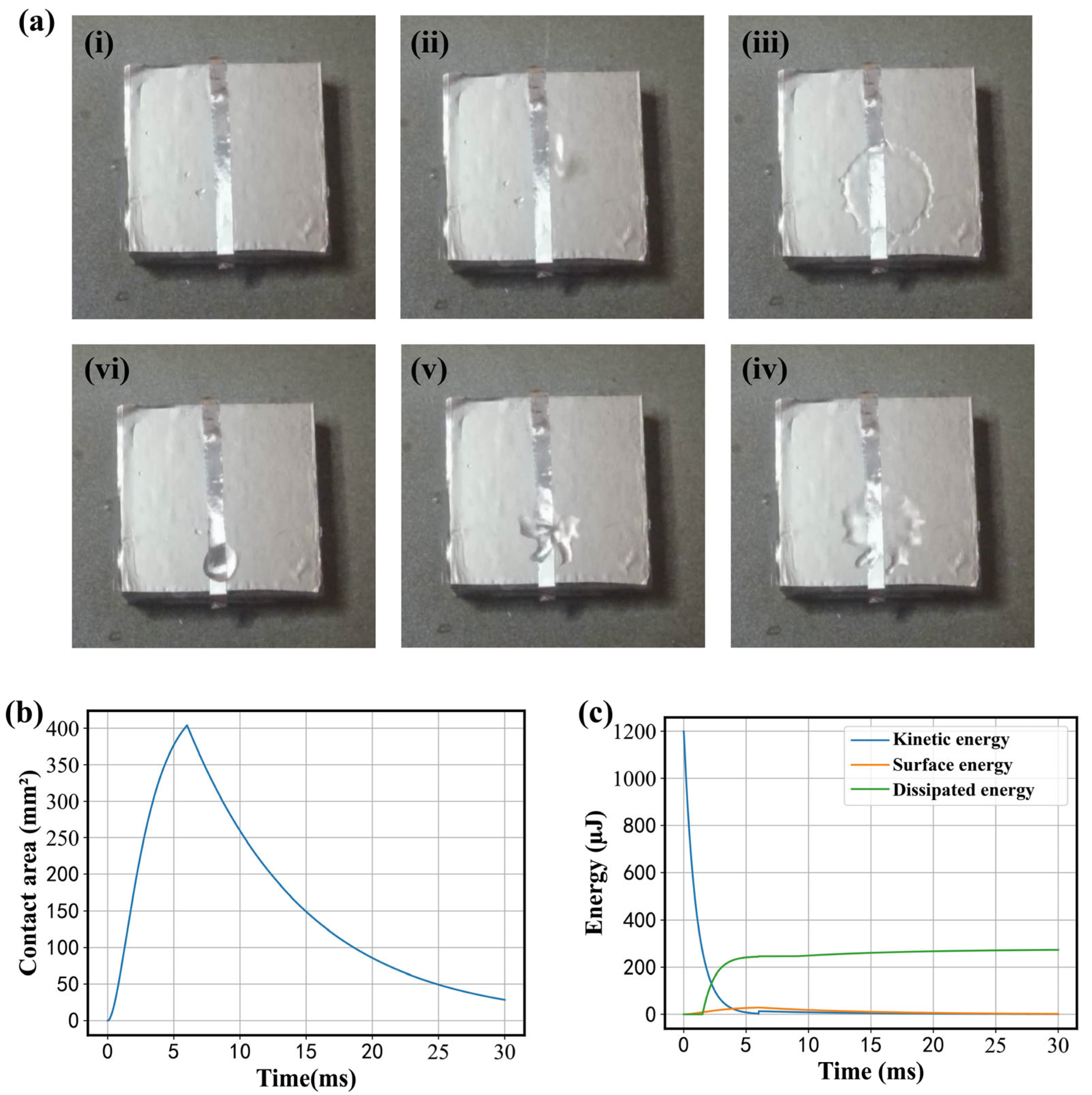
When water droplets fall freely from a height of about 25 cm and collide with a horizontal Fluorinated Ethylene Propylene (FEP) flat surface and transverse aluminum electrodes, their dynamic process exhibits a typical “expansion contraction” two-stage characteristic. As shown in
Figure 1a(i,ii), water droplets gain a certain amount of kinetic energy under the action of gravity. At the moment when the water droplets contact the FEP substrate plate and transverse aluminum electrodes, kinetic energy will be rapidly converted into radial momentum, causing the droplets to spread rapidly in the radial direction (
Figure 1a(iii)). At this point, the droplet’s shape transitions from an approximately spherical shape to a thin liquid film structure, with clear liquid rings appearing at the edge of the liquid film, and the spreading diameter reaching its peak in a short period of time. This stage is mainly driven by inertial forces, resulting in a sharp decrease in the thickness of the liquid film and a significant increase in the interfacial energy of the droplets.
After reaching the maximum spreading diameter, the movement of the droplet enters the retraction stage. Due to the effect of surface tension, the edge of the liquid film is strongly driven by contraction, and the liquid begins to flow back from the outer edge to the center. At this point, the droplet’s shape gradually shrinks from a flattened state, the thickness of the liquid ring increases, and the central area bulges, showing a trend of the liquid film recovering towards a spherical shape (
Figure 1a(iv)). Due to the ideal smoothness and moderate wettability of the flat surface, there may be some amplitude oscillation during the droplet’s retraction process (
Figure 1a(iv)). The liquid film ultimately tends towards the equilibrium state in a stationary state, which is a stable spherical droplet (
Figure 1a(vi)). The detailed movement process of the relevant water droplets can be seen in
Video S1. This time-resolved process clearly characterizes the dynamic law of “inertial-driven diffusion surface tension contraction viscous dissipation stability” after the droplets impacts the flat plate. The entire process of changing the diameter of water droplets can be described as follows, and the detailed derivation process can be found in the supporting data (
Note S1 and Table S1, Supplementary Materials).
where A is a constant obtained based on the maximum radius,
is shrinkage rate factor.
As shown in
Figure 1b, at 0–6 ms, the kinetic energy of the droplet rapidly transforms radially into a spreading motion. The lower part of the droplet is obstructed, while the upper inertia causes the liquid to expand outward from the center, forming a thin liquid film. At 6 ms, the droplet’s diameter reaches its maximum value, and the circular protrusion at the edge of the liquid film is most prominent, with the droplet’s shape resembling a thin disk. Starting from 6 ms, the outer edge of the liquid film generates a contraction driving force under surface tension, and the liquid begins to flow back from the edge to the center. The liquid ring gradually thickens, and the radial velocity of the liquid film changes from outward expansion to inward contraction. Once it reaches 30 ms, the droplet eventually remains as a stable spherical crown-shaped droplet with an equilibrium diameter smaller than the maximum expansion diameter. At this point, the system energy reaches its minimum, inertia and interfacial tension reach dynamic equilibrium, and the motion process terminates. As depicted in
Figure 1c, this “diffusion retraction” process reflects the competitive relationship between droplet’s kinetic energy, surface energy, and viscous dissipation. The diffusion stage is dominated by inertia, while the retraction stage is dominated by surface tension, and the entire process is accompanied by a certain amount of energy dissipation, manifested as the final equilibrium diameter of the droplets being smaller than the maximum diffusion diameter.
2.3. Working Mechanism and Equivalent Circuit Model of DTENG
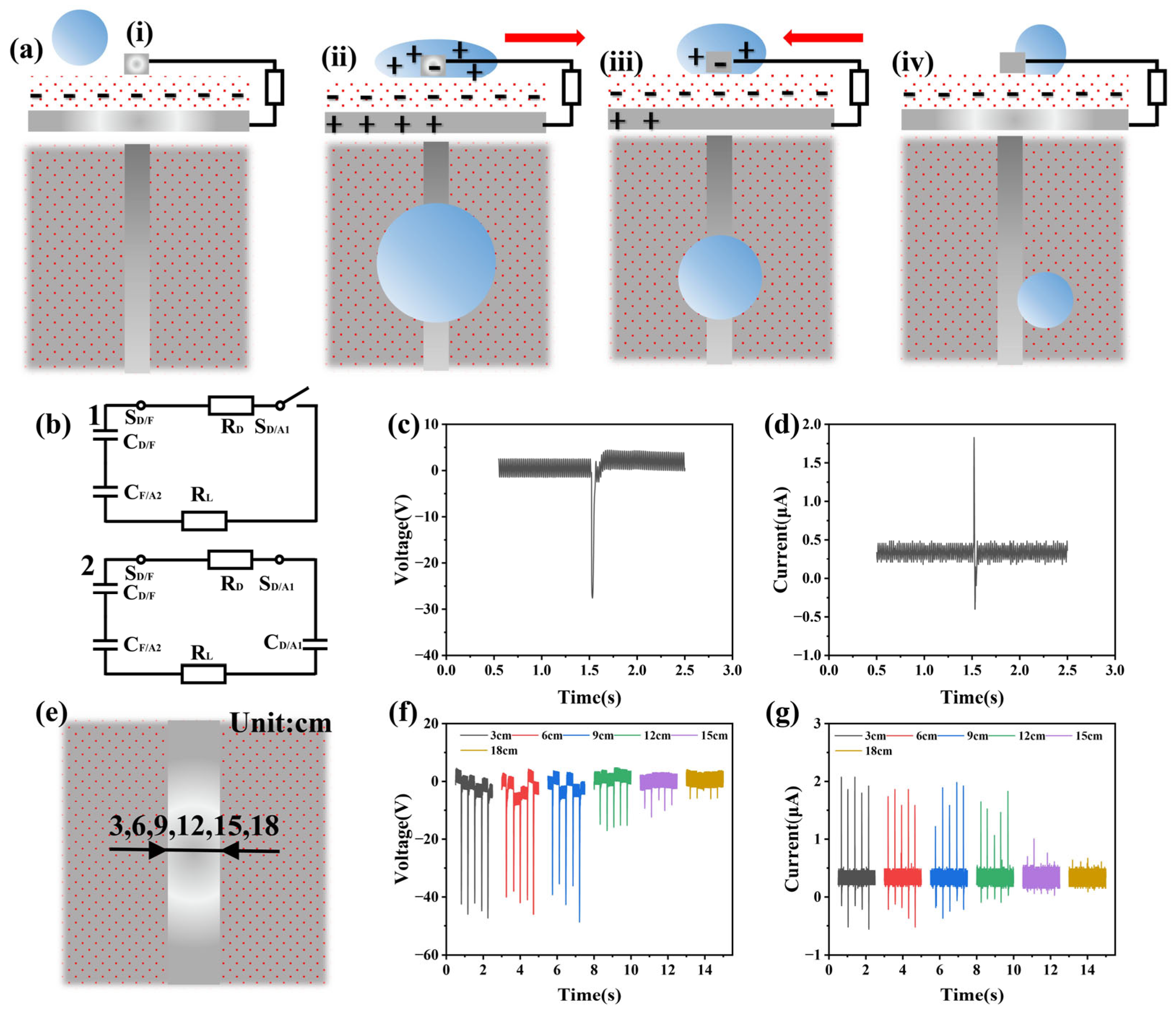
When a water droplet drops from a height of 25 cm onto the surface of a FEP film with a size of 5 cm × 5 cm, the droplet first contacts the aluminum electrode strip (width 3 mm, length 5 cm) covering the front of the film. At this point, as FEP belongs to strongly negatively charged materials, under the frictional electric effect of solid–liquid contact, the surface of FEP film tends to acquire negative charges, while water droplets maintain positive charges, thus forming a stable power output distribution at the solid–liquid interface. A layer of aluminum electrode of the same size is attached to the back of the FEP film to form electrode 2. Due to the separation of positive and negative charges between the FEP surface and water droplets, an equivalent electric field is generated inside the system, driving electron migration between A2 and the front electrode (A1). The complete movement process of water droplets impacting the FEP tablet can be seen in
Video S2. This process undergoes dynamic changes with the evolution of the droplet’s morphology and can be divided into the following stages.
As shown in
Figure 2a(i), during the free fall of water droplets, they also come into contact with the FEP film and aluminum electrode 1. At this point, an equivalent circuit is formed and the entire circuit is in a disconnected state because there is no electrostatic induction process (
Figure 2b(i)). When the droplets contact the surface of A1 and FEP film, the droplets spread rapidly. The widening of the liquid film rapidly increases the contact area between water and FEP, enhances the interface friction electrification effect, and more negative charges accumulate on the FEP surface. At this point, the system needs to maintain electrical neutrality, and the electrons driving A2 flow through an external circuit to A1, forming a transient current (
Figure 2a(ii)). This process corresponds to the electron transport during the droplets broadening stage, forming a closed circuit (
Figure 2b(ii)). The positive charge stored in the capacitor
begins to release, while other capacitors in the circuit (
,
) are also charged. When the droplet reaches its maximum spreading diameter, the contact area reaches its peak and the interface charge distribution is basically stable. Macroscopically, electrons continuously flow from A2 to A1, increasing the ground current output. As the droplets shrink under surface tension, the liquid–solid contact area decreases and the exposed area on the FEP surface increases. Due to changes in the distribution of induced charges at the interface, the direction of the system potential reverses, driving electrons to flow back from A1 to A2 (
Figure 2a(iii)). This process corresponds to the reversal of current direction during the droplets’ retraction stage. According to Kirchhoff’s laws of voltage and current, the entire process of continuous contact between water droplets, FEP film, and electrode can be described as the following differential equation. The detailed derivation process can be found in the supporting data (
Note S2 and Table S2, Supplementary Materials)
where
represents the accumulated positive charge of
when the droplets contact Al1,
represents the amount of charge transferred in the circuit,
represents the voltage across the load, and
and
represent the capacitance of the droplets and FEP, respectively. In addition,
and
represent the contact area between the droplets and the surfaces of FEP and Al1.
represents the thickness of the double layer, and
represents the thickness of FEP.
When the droplets return to a stable spherical shape, the current in the external circuit has decayed to zero, and the system reaches equilibrium (
Figure 2a(iv)). At this point, even if the water droplets are still in contact with the aluminum electrode, the circuit still does not conduct because the essence of capacitors is to conduct AC and resist DC. The numerical changes in open circuit voltage and short-circuit current at 2 s in
Figure 2c,d illustrate the operation process of the entire water droplets from the beginning of falling to leaving the FEP substrate plate. In summary, the expansion and contraction process of droplets on the FEP—aluminum electrode composite structure is not only a typical fluid dynamics process, but also an electrical process of frictional charge induction potential difference drive electron back and forth migration. The experimental trends shown in
Figure 2c,d are highly consistent with our theoretical inferences and the findings reported in journal articles [
35].
In further structural optimization experiments, as exhibited in
Figure 2e, we adjusted the width of the front aluminum electrode to investigate the effect of electrode geometry on output performance. As in
Figure 2f,g, when the front aluminum electrode is widened from 3 mm to 18 mm, the experimental results show that the output voltage sharply decreases from about 40 V to 5 V, while the output current decreases from about 2 μA to 0.5 μA. This significant attenuation phenomenon indicates that the increase in electrode width has adverse effects on the effective induction of interface charges and the driving capability of external circuits. The reasons can be attributed to the following aspects: Firstly, as the electrode width increases, the contact area between the droplets and the electrode changes from local concentration to large-scale distribution during the expansion and contraction process, resulting in the dilution of the contribution of power output density per unit area and the weakening of the power output induction effect. Secondly, the wide electrode makes the charge distribution more uniform, significantly reducing the potential difference in the system and directly causing a decrease in the output voltage amplitude. Once again, the expansion of the electrode area increases the equivalent capacitance, which limits the voltage output under the same amount of charge and also limits the efficiency of transient charge transfer, resulting in a decrease in output current. In summary, the geometric dimensions of electrodes play a crucial role in the energy conversion process of solid–liquid TENG. Narrow electrodes can maintain high power output; the wide electrode causes charge dispersion and voltage collapse, ultimately leading to dual attenuation of output voltage and current. The experimental results emphasize the importance of optimizing electrode width design and provide experimental basis for the performance regulation of subsequent devices.
2.4. Research on the Output Law of DTENG
The DTENG is driven by a variable speed peristaltic pump to quantitatively study the electrical output, as displayed in
Figure S1. When comparing the output characteristics of different electrode and dielectric structure modes, this study further reveals the significant influence of material interface and electrode layout on the performance of water droplets TENG. As shown in
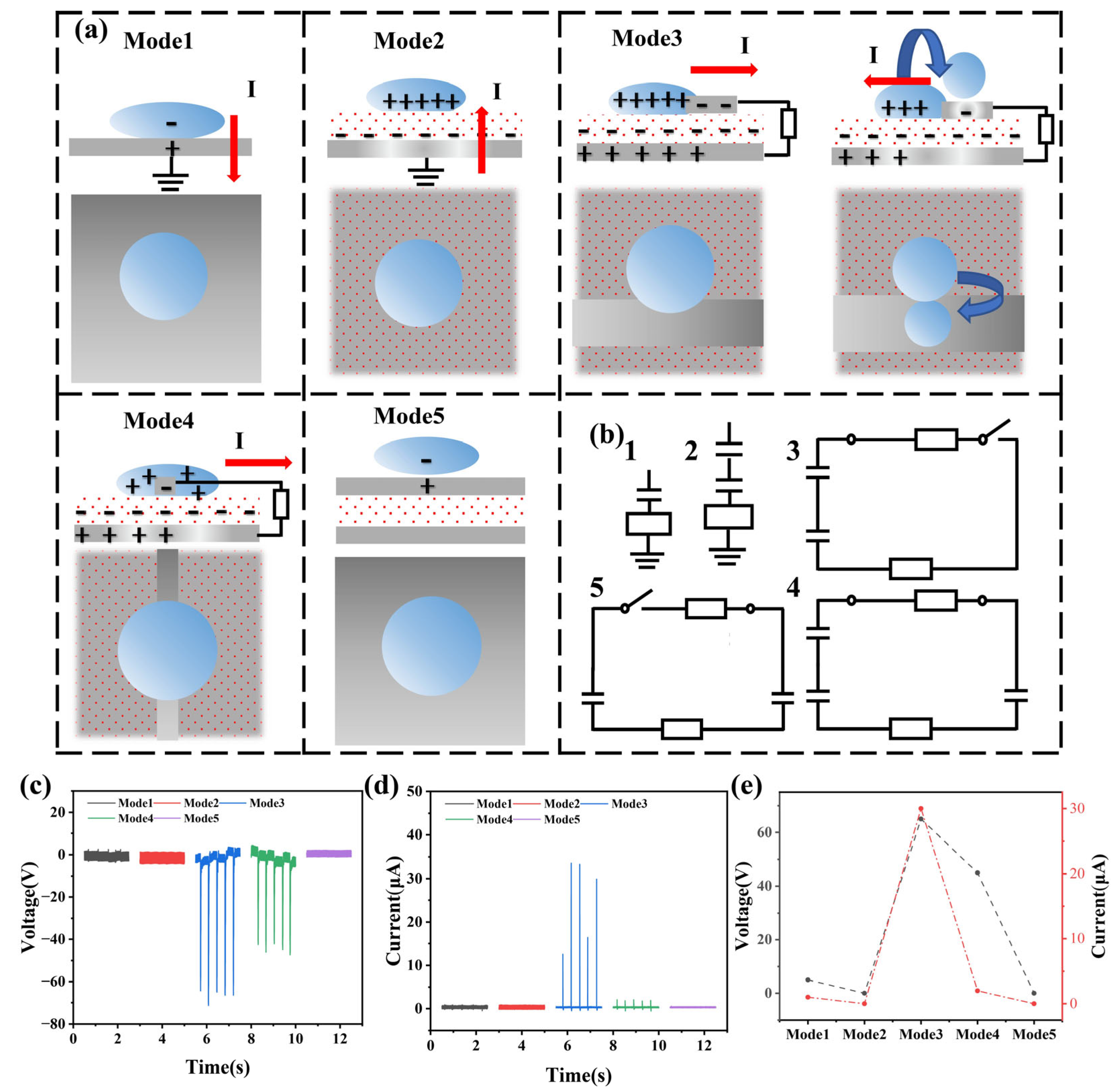
Figure 3a,b, in the single electrode mode, where only a single layer of aluminum electrode is used, when water droplets directly drip onto the metal surface, a corresponding equivalent circuit is formed. Despite limited interface charge transfer, due to extremely low charge separation efficiency, the output voltage is only about 1 V and the current is nanoampere level, as depicted in
Figure 3c,d, with almost no effective energy harvesting capability. In double-layer mode, when the bottom layer is an aluminum electrode and the top layer is an FEP film, and the water droplets directly contacts the FEP surface, the output voltage and current are both zero. This result indicates that without an effective charge collection path, a simple insulation layer interface cannot achieve charge induction and transfer, and the system is in an “open circuit” state, unable to form an effective current loop. The bottom layer is an aluminum electrode, the middle is an FEP dielectric layer, and the top is a transverse aluminum electrode with a width of 2 cm. During testing, water droplets are placed on the FEP surface next to the top electrode to form mode 3. This mode is actually the same as mode 4, producing a maximum voltage of 70 V and a maximum current of 35 μA. Again, by introducing the optimization mode 4 mentioned earlier in this article, which combines the bottom aluminum electrode with the upper FEP film, when water droplets drip onto the interface of the FEP film, stable voltage and current output is achieved through solid–liquid contact charge transfer and inductive coupling with the lower electrode, exhibiting good frictional energy conversion characteristics.
Finally, in the fifth mode, an equally sized aluminum electrode was further covered on top of the FEP film, and water droplets were dropped onto the surface of the upper electrode. The experimental results also showed zero voltage and current. This is due to the failure to excite effective frictional charges when water droplets come into direct contact with metal, and the upper metal electrode blocks the direct interaction between water droplets and FEP, resulting in complete system failure. As posted in
Figure 3e, the comparative experiments of different structural modes fully demonstrate that the interaction between FEP and the droplet’s interface is the core of frictional charge generation, while the induction and charge collection of the lower aluminum electrode are necessary conditions for energy output.
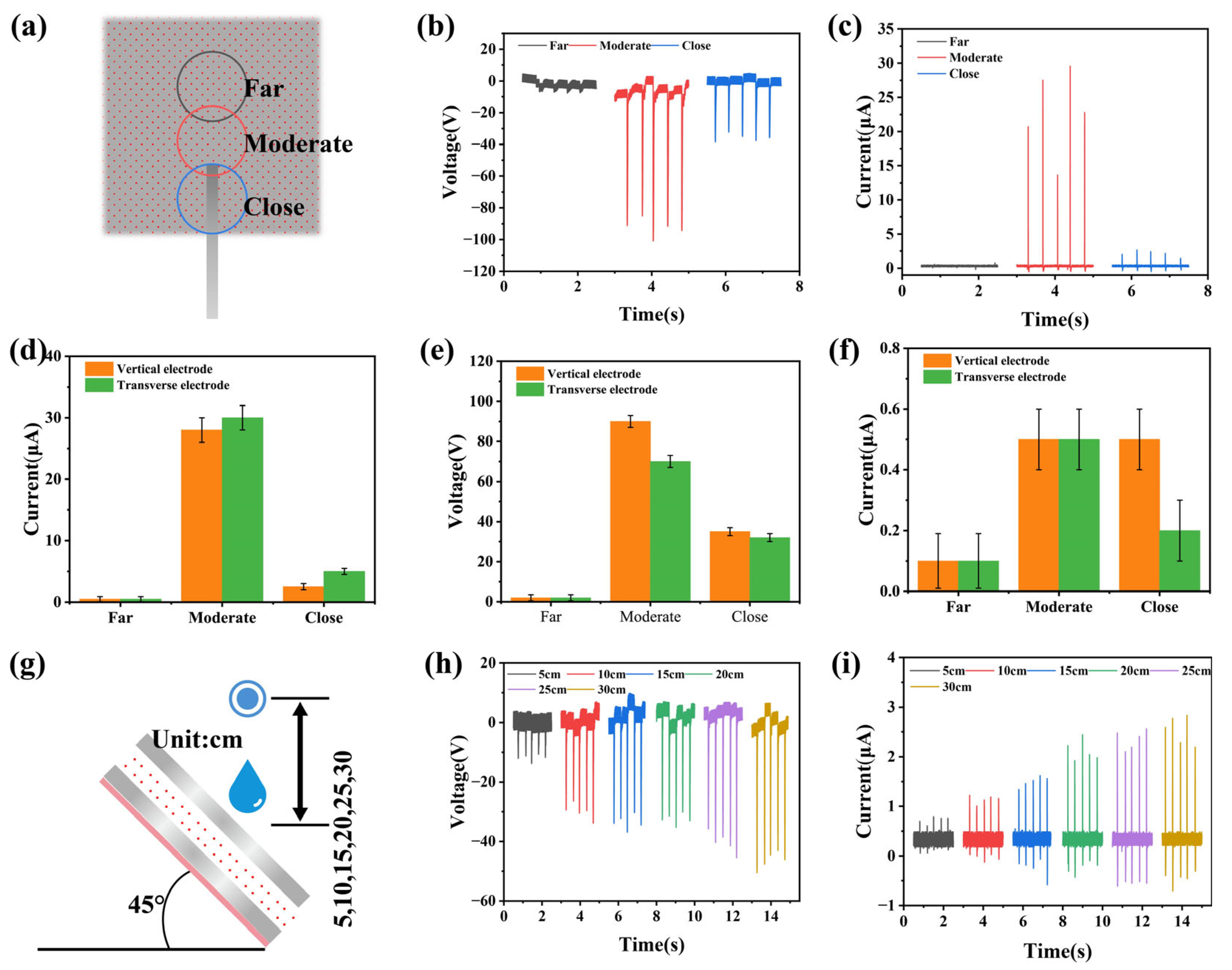
When further exploring the energy conversion characteristics of the droplet and FEP film–aluminum electrode composite structure, we designed a front aluminum electrode with a length of 2 cm and a width of 3 mm, while keeping the bottom 5 cm × 5 cm FEP film and the back aluminum electrode of the same size unchanged, to systematically study the output behavior of droplets in contact with the electrode during the expansion and contraction process. The experimental results showed significant differences among the three typical cases. As shown in
Figure 4a, when water droplets fall onto the FEP film, they only come into contact with the front aluminum electrode after completing the complete widening and retraction process. As depicted in
Figure 4b,c, the output voltage of this far case is only about 3 V, and the current is also very weak. This phenomenon may be due to the extremely short storage time of the charges generated by the droplets during the diffusion stage during the separation process from the FEP interface. By the time the droplets finally contact the aluminum electrode, the interface charges have significantly decreased, resulting in a significant weakening of the charge induction effect and almost disappearance of the output signal. Secondly, when the water droplets come into contact with the front aluminum electrode during the expansion process, the output voltage reaches about 100 V and the current is about 25 μA, which is much higher than other modes. At this time, the droplets are still in the high-speed distribution stage, with a rapid increase in contact area, high interface charge concentration, and large transient potential difference, which enables the most sufficient electron transfer between the back electrode and the front electrode, thereby achieving maximum energy conversion efficiency. The third scenario is when water droplets directly drip onto the FEP film and front electrode, which is the classic mode mentioned earlier in this article, with an output voltage of about 40 V and a current of about 2 μA. Compared to the second mode, the interface charge induced effect is partially weakened, resulting in a lower output amplitude than in the case of contact during the expansion process.
We introduce the mode of horizontal electrodes here. As shown in
Figure S2a, there are also three situations. The situation in the first two schools is the same as the classic model in this article. The third scenario is when the water droplets fall next to the electrode during close, so that the expansion and contraction process of the water droplets occur as much as possible above the aluminum electrode.
Figure S2b,c shows the voltage and current changes in the transverse electrode in these three situations. Comparing the two structures, as exhibited in
Figure 4d, the vertical electrode ground voltage is greater than the horizontal electrode ground voltage. This is attributed to the reduction in capacitance caused by the limited contact area, which enhances the transient potential difference.
Figure 4e illustrates the magnitude of the ground current during the expansion process of the water droplets, and the output current of the two structures is almost the same.
Figure 4f shows the magnitude of the ground current during the retraction process of water droplets. It was found that in the closed state, the current value of the longitudinal electrode was slightly larger than that of the transverse electrode, which further validates the theory proposed in this paper. From the comprehensive analysis of the three modes, it can be seen that the temporal contact between the droplets and the electrode during the diffusion stage has a decisive impact on the accumulation of frictional charges and transient potential difference. During the process of high kinetic energy broadening, water droplets can fully excite interface charge transfer upon contact with electrodes, significantly improving voltage and current output. After the droplet completes its expansion and contraction, it contacts the electrode. Due to the limited time for the stored charge in the droplet and the significant decrease in its movement speed, the energy collection efficiency is significantly reduced. This result reveals the electron transfer between the dynamic behavior of droplets and electrode layout in the droplet–film–electrode system, providing experimental evidence for optimizing the structural design and operating conditions of water droplet-driven TENG. All data in
Figure 4d–f were obtained from at least 10 repeated independent experiments, with standard deviations represented by error bars in the corresponding figures to verify the reproducibility of the experiments. And for the position, the farther away the DTENG’s output signal is, the less it will be.
In order to further investigate the effect of incident kinetic energy on output performance, as shown in
Figure 4g, we systematically examined the relationship between water droplets’ drop height and electrical output while keeping the front electrode width constant at 3 mm. As displayed in
Figure 4h,i, when the falling height increases from 5 cm to 25 cm, the output voltage continues to rise from about 10 V to 40 V, while the output current significantly increases from about 0.80 μA to 2.5 μA. This process reflects the greater kinetic energy of droplets at higher falling heights, effectively enhancing the contact separation dynamics between droplets and FEP films, thereby expanding the interface transient contact area and improving charge transfer efficiency, thus achieving synchronous enhancement of voltage and current. However, as the falling height further increased from 25 cm to 30 cm, the output voltage and current no longer showed significant changes and remained at levels of approximately 40 V and 2.5 μA, respectively. The main reason is that the expansion contraction process of the droplets have reached the limit state in geometry and fluid dynamics: as the falling height increases to a certain threshold, the maximum spreading area that the droplets can achieve after impact tends to saturate, and the effective contact area provided by the FEP surface does not increase anymore. Therefore, even if the input kinetic energy is further increased, the degree of interface charge separation and induced potential difference remain stable, resulting in no further increase in electrical output. The experimental results reveal a nonlinear saturation relationship between the incident kinetic energy of water droplets and the output performance of the device: in the low to medium height range, the output performance increases with height; after exceeding the critical height, the maximum diffusion area of the droplets is limited by geometric boundary conditions, and the output performance enters a saturation plateau. This law provides important reference for the application of TENGs in droplets energy harvesting, indicating that rational regulation of droplets kinetic energy while avoiding ineffective energy input is the key to achieving efficient device operation.
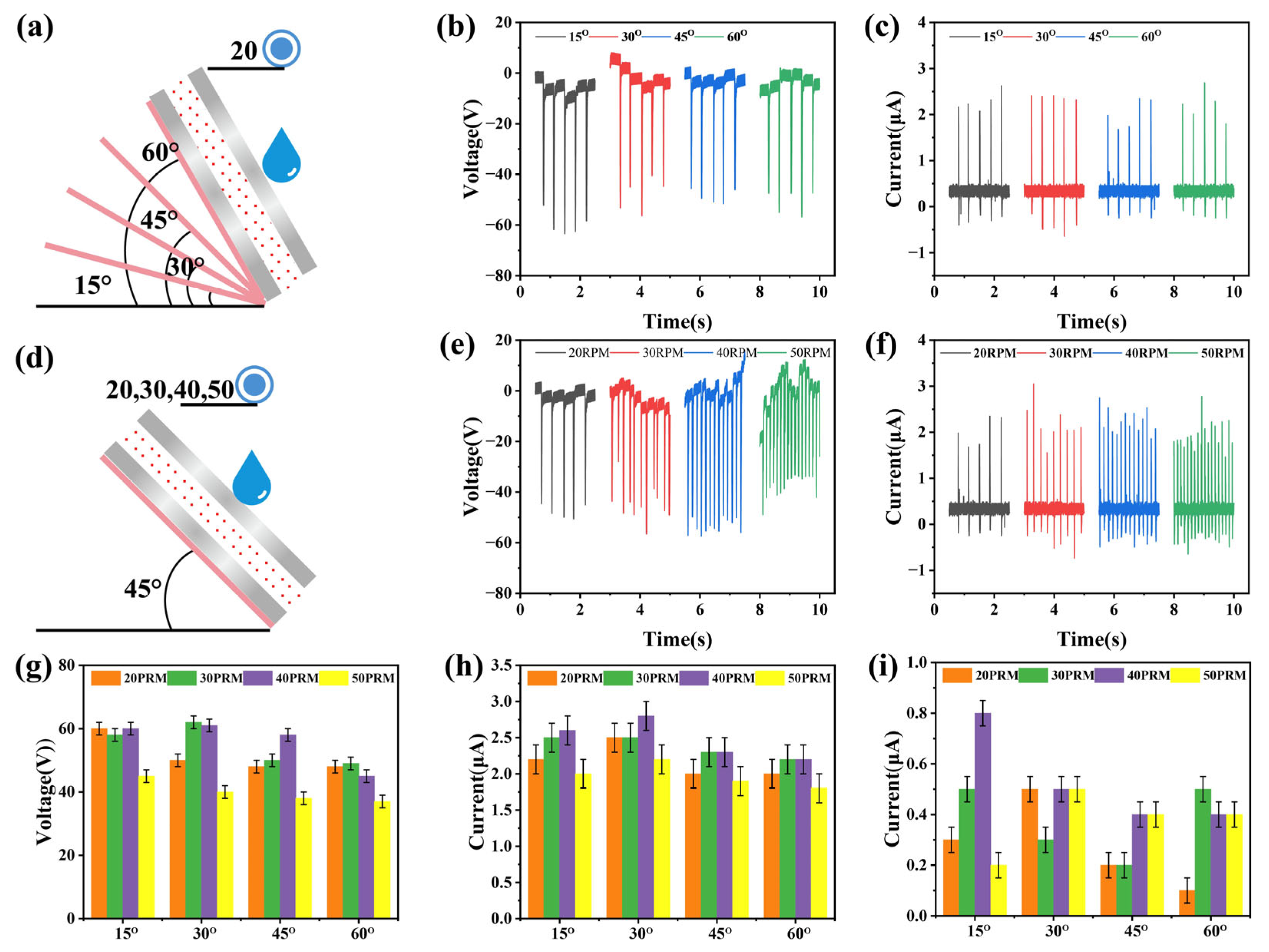
In order to investigate the comprehensive effects of incident angle and flow velocity on the output performance of the device, as shown in
Figure 5a, we first studied the tilt angle effect of FEP film under conditions of constant falling height (25 cm).
Figure 5b,c shows that when the tilt angle increases from 15° to 60°, the output voltage decreases from 60 V to 45 V, while the output current remains basically unchanged. This indicates that as the tilt angle increases the actual spreading area of the droplets on the film surface slightly decreases, resulting in a decrease in the number of induced charges at the interface and a significant decrease in voltage output, while the current is not significantly affected. This phenomenon reveals a high dependence of the contact area between droplets and solid surfaces on voltage sensitivity.
Under the condition of maintaining the inclination angle and height unchanged, as depicted in
Figure 5d, we further investigated the effect of water droplets velocity.
Figure 5e,f show that when the flow rate increased from 20 rpm to 40 rpm, both voltage and current showed a slight upward trend. This is mainly attributed to the increase in droplet frequency, which leads to an increase in the number of contact separation cycles per unit time, thereby enhancing the efficiency of charge accumulation and release. However, as the flow rate continued to increase to 50 rpm, the output voltage and current actually decreased. The reason for this abnormal phenomenon is that when the frequency of water droplets is too high, the previous droplet has not yet completed the expansion contraction and retraction process, and the latter droplet has already reached the surface, resulting in overlapping and interference in the expansion contraction processes of the droplets, and the interface contact behavior is no longer complete, thereby weakening the frictional electrification effect and charge induction effect.
Figure 5g illustrates the relationship between different flow velocities and voltage at angles of 15°, 30°, 45°, and 60°. When reaching 50 rpm, the voltage decreases relatively. Meanwhile,
Figure 5h displays the relationship between different flow velocities and the current in the diffusion state of water droplets at angles of 15°, 30°, 45°, and 60°.
Figure 5i exhibits the relationship between different flow velocities and the current in the water droplets retraction state at angles of 15°, 30°, 45°, and 60°. The current also shows a decreasing state at 50 rpm for each angle. The change in FEP plate angle will affect the impact behavior characteristics of water droplets, but only slightly (
Figure S3). In summary, the tilt angle of the thin film and the droplet flow rate have a dual regulatory effect on the output performance of the TENG. The tilt angle mainly affects the voltage sensitivity by changing the contact area, while the flow rate has an optimal range, resulting in insufficient energy conversion at low frequencies and weakened performance due to scaling interference at high frequencies. This result provides experimental evidence for the geometric and operational optimization of droplet-driven energy harvesters. All data in
Figure 5g–i were obtained from at least 10 repeated independent experiments, with standard deviations represented by error bars in the corresponding figures to verify the reproducibility of the experiments.
We carried out fatigue tests by continuously dripping water droplets from a height of 30 cm onto the FEP film and attached aluminum electrode of a dry DTENG device.
Figure S4a records the evolution of open-circuit voltage as the dry FEP surface gradually becomes wet. The voltage rises from an initial value of ~40 V to approximately 70 V, which demonstrates that retained electrons on the FEP surface contribute positively to the electrical output of the DTENG. Correspondingly, a slight upward trend in short-circuit current can be observed in
Figure S4b. In addition, slight device vibration occasionally shifts the droplet impact position to the edge of the aluminum electrode, leading to sporadic sharp current spikes. After continuous water rinsing for 3 min, both voltage and current signals stabilize at constant levels, verifying the reliable operational stability of the device.
Review articles and original research papers have systematically compared the merits and drawbacks of diverse working modes for solid–liquid TENG [
39,
40].
Table 1 summarize the output performance of solid–liquid TENG with different working modes. For the solid–liquid single electrode mode, the electrical output is extremely low, with open-circuit voltage only at the millivolt level. The solid–liquid independent layer mode delivers stable and favorable voltage signals, yet its short-circuit current remains relatively weak. By contrast, the solid–liquid contact shrinkage mode achieves outstanding performance in both voltage and current outputs. Distinct from most existing literature, this work focuses on a rarely discussed issue: we discovered the unique retraction current generated during droplet shrinkage, which constitutes the core novelty of our study.