Article

Numerical Analysis on the Horizontal Bearing Mechanism of Pile–Soil Composite Foundations Under Asymmetric Lateral Constraint Conditions
School of Civil Engineering, Zhengzhou University, Zhengzhou 450001, China
*
Author to whom correspondence should be addressed.
Symmetry 2026, 18(6), 886; https://doi.org/10.3390/sym18060886 (registering DOI)
Submission received: 21 April 2026 / Revised: 17 May 2026 / Accepted: 21 May 2026 / Published: 23 May 2026
(This article belongs to the Section Mathematics)

Abstract

The horizontal bearing mechanism of pile–soil composite foundations adjacent to retaining walls is significantly affected by asymmetric lateral constraints caused by retaining wall movement, a scenario that remains inadequately explored in conventional design. This study employs a validated three-dimensional finite element model to investigate the response of such foundations to rotational displacement of a nearby wall. A comprehensive parametric analysis quantifies the influence of pile configuration, cushion properties, soil modulus, and loading conditions. The results demonstrate that rotational displacement (RB mode) induces a highly non-uniform load distribution within the pile group. The middle-front row piles emerge as critical load-bearing components, experiencing significant load amplification (load-transfer coefficients ηp up to 2.3). Key parameters, including pile length and cushion stiffness, selectively regulate system stiffness or optimize load sharing. Increasing the pile–wall distance is identified as an effective measure to reduce load concentration on front-row piles. The findings provide quantitative insights and practical guidance for the performance-based design of composite foundations under asymmetric constraints.

1. Introduction

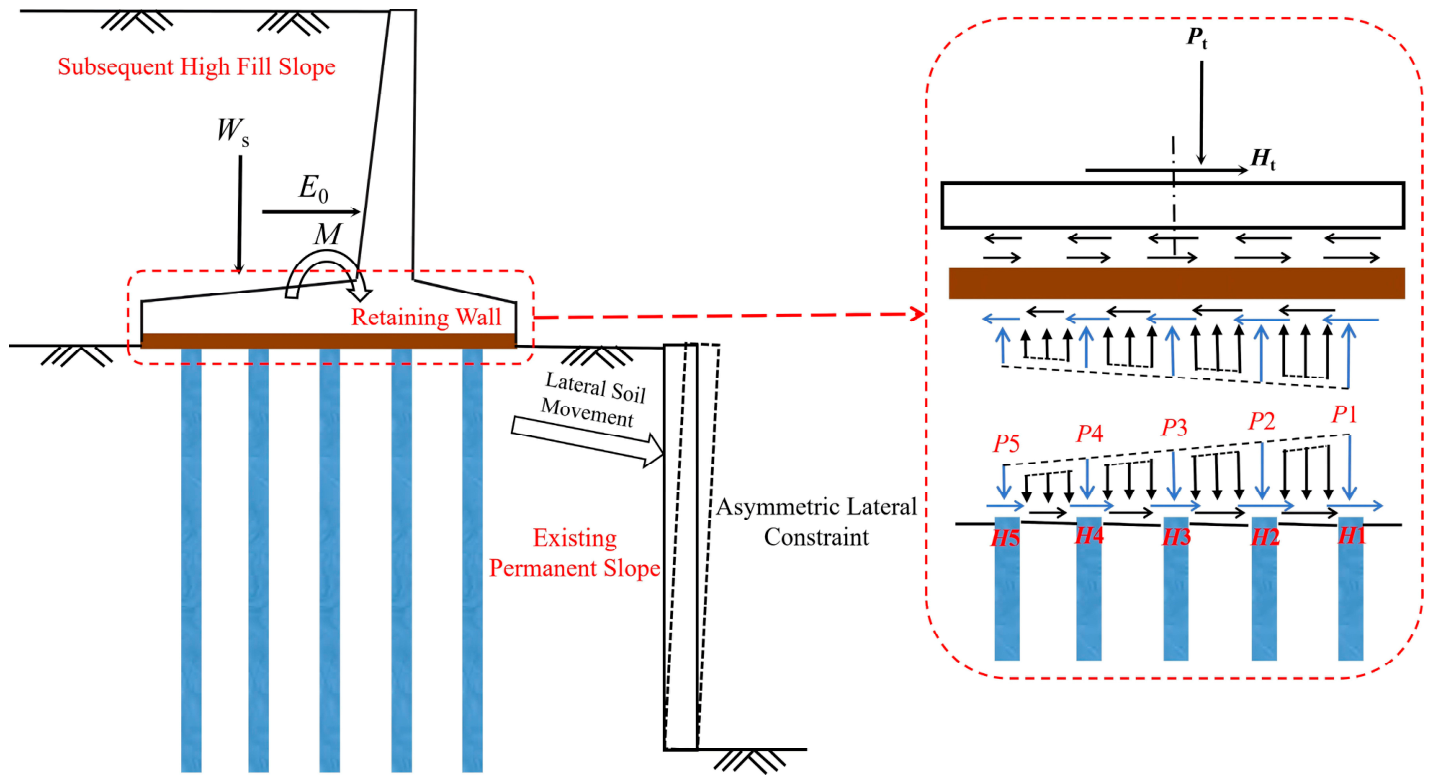
Due to rapid urbanization and the increasing scarcity of land resources, the construction of high-rise buildings and large-scale infrastructure often involves complex slope engineering, forming a typical “slope + high-rise structure” scenario [1]. Such projects impose stringent requirements on the stability of supporting structures and their corresponding foundation solutions. Composite foundations, which consist of piles, a cushion layer, and the surrounding soil, are widely employed to enhance the bearing capacity and reduce the settlement of soft ground [2,3,4]. In complex slope engineering, these foundations are frequently situated adjacent to retaining structures. Lateral displacement of the retaining wall, induced by earth pressure or surcharge loads, imposes complex asymmetric constraints on the adjacent composite foundation, significantly affecting its horizontal bearing performance, as illustrated in Figure 1. This interaction constitutes a classic soil–structure interaction problem under asymmetric loading conditions.
Considerable progress has been achieved in understanding the response of pile–soil composite foundations under horizontal loads. Regarding the cushion layer, model tests by Wu et al. [5] and Zheng et al. [6] demonstrated that increasing the cushion thickness in CFG pile composite foundations effectively coordinates pile–soil deformation, homogenizes the pile bending moment distribution, and reduces pile-top horizontal displacement by approximately 60%. Finite element analyses by Liu et al. [7] and Yan [8] further indicated that the critical section of the pile is located at a depth of approximately 0.175 times the pile length below the pile head, suggesting that optimizing cushion thickness can effectively control tensile strain at this location. Field and numerical studies by Du [9] revealed the core function of the cushion layer in load distribution adjustment, with stress exhibiting a pattern of higher values at the top and lower values at the bottom. Research by Liu et al. [10] and Wang et al. [11] also confirmed that increasing the cushion thickness and foundation embedment depth generally reduces the bending moment and horizontal displacement of various pile composite foundations while enhancing their ultimate bearing capacity.
Through theoretical analysis and numerical simulation, Chen [12] found that composite foundations with pile caps could significantly reduce pile displacement (30–50%) and bending moment, proposing a calculation method for soil resistance beside the pile based on the generalized Hooke’s law. Finite element analysis by Zhao [13] showed that horizontal loading induces significant differential settlement in raft foundations, with long and short piles exhibiting distinct stress concentration characteristics; specifically, an increase in the modulus of long piles raised the pile body stress by 30–50%. Combining experiments and simulations, Zhang [14] observed that the stress distribution in the cushion layer of small-diameter piles is prone to deviation, whereas it is more stable for large-diameter piles. Furthermore, front-row piles were found to bear greater internal forces during the later stages of loading. Regarding soil heterogeneity, simulations by Xu and Wang [15] indicated that a weak upper soil layer significantly increases and shifts the maximum tensile strain in the pile downward. Liao et al. [16] pointed out that, for the same cross-sectional area, the average maximum tensile strain in circular piles is 33% higher than in square piles, with the influence of soil stratification being more pronounced for circular piles. Ding et al. [17] analyzed stiffened composite piles and revealed that their horizontal bearing performance is superior to that of traditional pile foundations, although they are susceptible to tensile failure under overload, leading to a reduction in bearing capacity. Collectively, these studies provide important references for composite foundation design, suggesting that further research is warranted regarding complex soil conditions and nonlinear interactions.
Previous research has primarily focused on the behavior of single piles or pile groups under direct lateral loading. However, conventional design methods often simplify the foundation as a uniform, semi-infinite elastic medium, employing models like the Winkler foundation or elastic half-space for analysis [18,19,20]. In practice, the response mechanisms of composite foundations subjected to indirect loading—i.e., from altered horizontal constraints due to adjacent wall movements—are not well understood. Rotational wall movement generates a nonlinear, depth-varying soil displacement field, creating an asymmetric constraint condition [21,22,23]. Recent studies by Bauer and Reul [24] have further elucidated the complex lateral pressure mechanisms on piles in cohesive soils, highlighting the limitations of simplified earth pressure theories under such asymmetric conditions. This leads to fundamentally different load paths and pile–soil interaction mechanisms compared to symmetric loading scenarios, resulting in non-uniform stress distribution within the pile group, challenging traditional design assumptions based on symmetric loading. Furthermore, the critical role of geometric and load asymmetry in piled raft systems has been recently quantified by Elias and Al-Obaydi [25], who demonstrated that asymmetry significantly affects load sharing and differential settlement under dynamic conditions. To effectively analyze these complex asymmetric interactions, advanced sensitivity analysis methods have been recently proposed, such as the multi-method sensitivity analysis by Cheng et al. [26], which provides a robust framework for identifying key influencing factors in asymmetric excavation scenarios.
This study aims to address this gap by presenting a comprehensive numerical investigation into the horizontal bearing mechanism of pile-reinforced composite foundations under asymmetric lateral constraints induced by a rotating retaining wall. A detailed three-dimensional finite element model is developed using ABAQUS 2022 and validated against physical model tests. A systematic parametric study is conducted to quantify the influence of key geometric and material parameters on the system’s response, with emphasis on the asymmetric distribution of loads and internal forces. The findings offer new insights into the asymmetric load-transfer mechanisms and provide practical, quantitative guidance for the optimized design of composite foundations in similar challenging geotechnical conditions.

2. Numerical Modeling Methodology

To address the limitations of model tests in capturing the complex interaction between piles and soil and the influence of multiple parameters, a three-dimensional finite element model was developed using ABAQUS 2022 for simulating the pile–soil composite foundation adjacent to a rigid retaining wall [27,28].

2.1. Model Setup and Constitutive Relations

The model comprised a raft, a cushion layer, rigid piles, and the surrounding soil. The pile configuration (e.g., 1, 4, 9, 16, 25 piles in a square arrangement) and the pile-to-wall distance were key variables. The loading plate and piles were modeled as linear elastic materials [29], while the cushion layer and soil were modeled as elastoplastic materials using the Mohr–Coulomb failure criterion. While rotational displacements induce large deformation, this study focus on the load-transfer mechanism and pile internal forces rather than detailed soil flow. The M-C model effectively captures the failure envelope and post-failure behavior relevant to geotechnical stability. The relevant parameters (cohesion, internal friction angle) were determined from laboratory tests. The interface behavior between components (e.g., pile–soil, cushion–pile, wall–soil) was simulated using surface-to-surface contact pairs with Coulomb friction, with friction coefficients calibrated from test data.
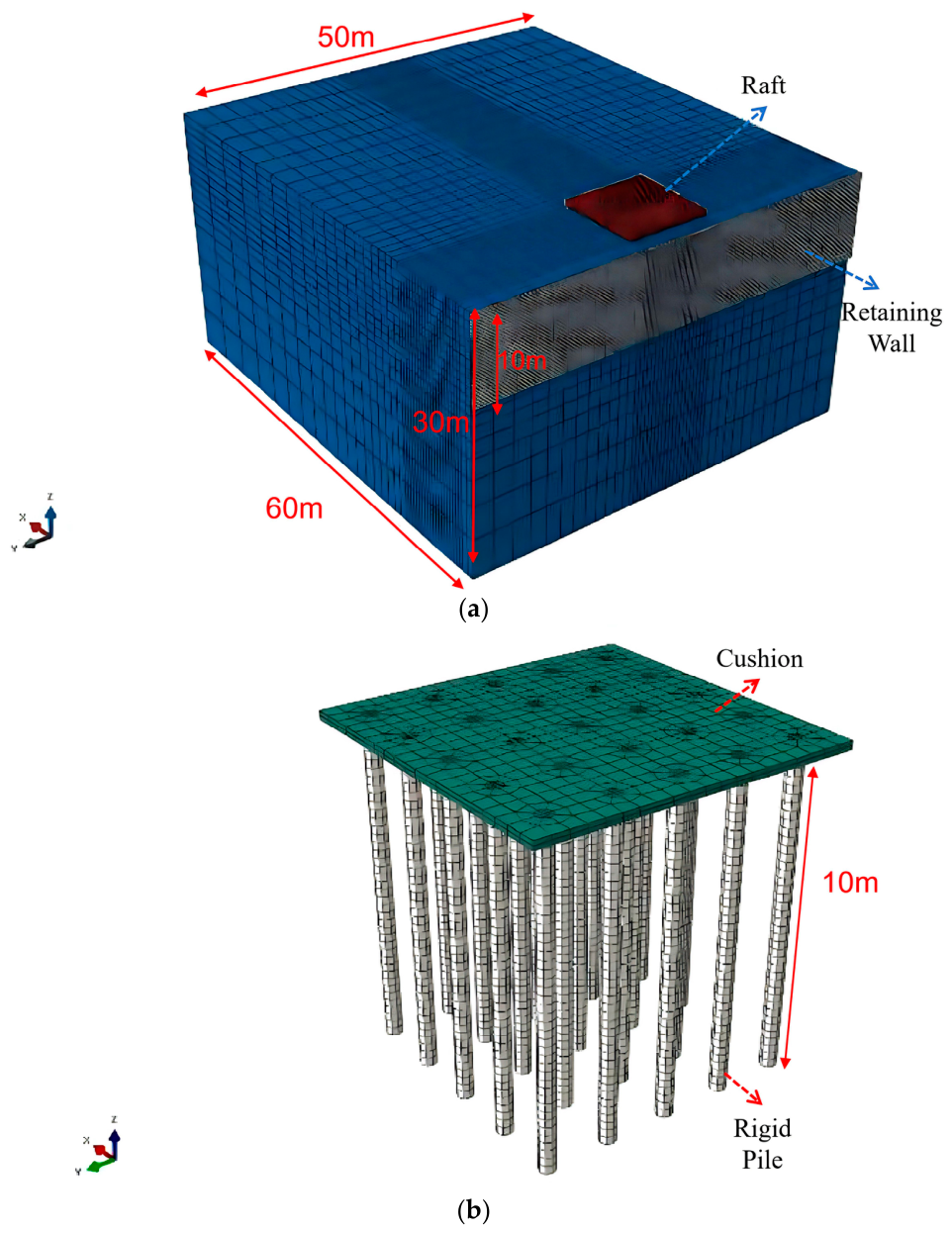
To minimize boundary effects in the numerical simulation, the model geometric dimensions were set as follows: the soil domain’s lateral width exceeded five times the loading plate width, and its vertical depth exceeded three times the pile length (10 m). The retaining wall depth was 10 m. The piles featured a circular cross-section with a diameter of 500 mm and a length of 10 m (Figure 2). Regarding meshing, the overall model employs the eight-node linear reduced integral hexahedral elements (C3D8R) and applies the hourglass control. A mesh convergence study was performed to balance computational efficiency and accuracy. The element sizes in the pile, cushion, and critical soil zones were refined until further refinement yielded changes of less than 5% change in pile head displacement and bending moment. The final discretization uses a fine mesh at the interfaces.
To accurately simulate the complex interactions among various components, this model employs a contact pair algorithm based on contact mechanics to define interface behavior. The interface normal behavior was defined as ‘Hard Contact’ allowing for separation. For tangential behavior, the Penalty function with a friction coefficient of tan(ϕ) was adopted. The dilation angle was assumed equal to the internal friction angle for the cohesionless soil. When setting up contact pairs, the master and slave surfaces were designated based on stiffness and mesh density: typically, the surface with higher stiffness or denser mesh is defined as the master surface, while the surface with lower stiffness or coarser mesh is defined as the slave surface. The lateral boundaries of the soil domain were constrained horizontally but free to move vertically, simulating a settlement condition. The bottom boundaries of both the soil and the retaining wall were fully fixed to represent the rigid bedrock.

2.2. Load Application and Analysis Procedure

The analysis simulated the construction and loading stages in the following sequence: (1) Initial geostatic stress equilibrium; (2) Activation of piles, cushion, raft, and wall; (3) A vertical eccentric load of 180 kPa was applied to the raft slab (with the eccentricity being 1/10 of the slab length) to simulate the uneven vertical loads; (4) Imposition of a rotational displacement around the base of the retaining wall (RB mode) to simulate the lateral constraint condition. (5) Finally, a graded horizontal load was applied as a concentrated force at the raft’s center. The horizontal load–displacement response of the raft, the load-sharing ratio between piles and soil, and the bending moment and displacement profiles of individual piles at different locations were extracted as key performance indicators.

2.3. Finite-Element Model Validation

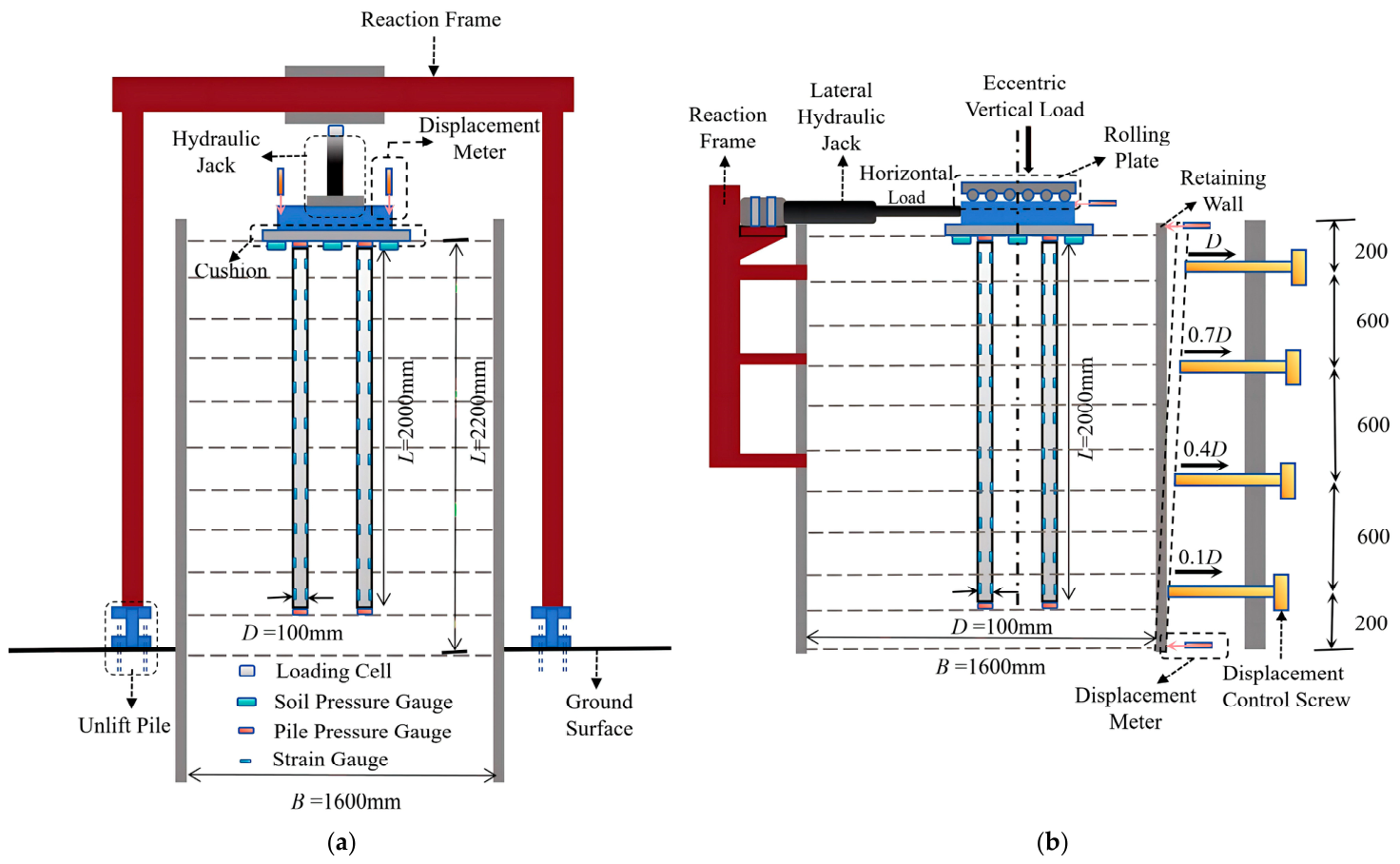
Scaled-down model tests, designed according to the Cauchy similarity principle, were conducted to investigate the elastic deformation characteristics of the pile–soil system, ensuring equivalence between the model and the prototype in terms of stress and relative stiffness. The test used a movable retaining wall model (1.6 m × 1.6 m × 2.5 m), and the experimental device was designed and developed by the Institute of Geotechnical Engineering of Zhengzhou University. The model test system consisted of five main components: model box structure, loading control system, reaction frame device, movable rigid retaining wall, and data measurement system. The rigid movable retaining wall was installed 0.8 m from the front frame, and the upper and lower spiral rods were symmetrically arranged 0.2 m above the upper and lower edges of it. The displacement of the retaining wall was achieved by rotating the spiral rods that connected the external fixed frame. The schematic diagram of the model test device is shown in Figure 3. To achieve the precise and stable application of vertical loads and the elimination of horizontal constraints, a roller plate device that can freely slide horizontally was set between the vertical jack and the loading plate.
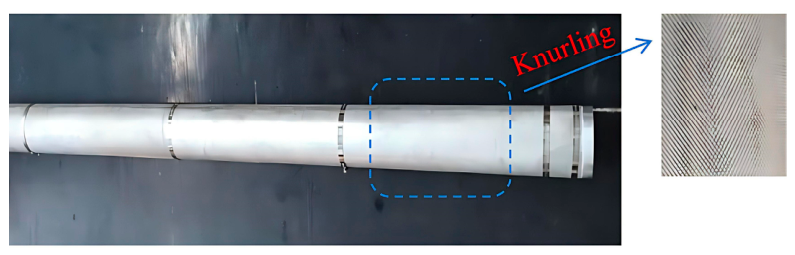
The model pile was a 10 m-long, 0.5 m-diameter C25 concrete pile as the prototype. According to the similarity criterion, a scaled-down model was made using an aluminum alloy tube with an elastic modulus of 72 GPa (2 m-long, outer diameter of 100 mm, wall thickness of 5 mm). Its compressive stiffness similarity ratio λEA ≈ (λL)3, satisfying the main similarity relationship. The surface of the pile was processed with embossing to control the side frictional resistance characteristics, and the measured friction angle at the pile–soil interface was 27.1°, as shown in Figure 4.
Achieving complete similarity in both compressive stiffness (EA) and flexural rigidity (EI) is theoretically conflicting in scaled-down models. This test prioritizes EA similarity to simulate vertical load transfer. Consequently, the EI of the aluminum model piles deviates from the strict similarity ratio. However, the numerical model is calibrated using actual prototype parameters (C25 concrete, E = 25 GPa).
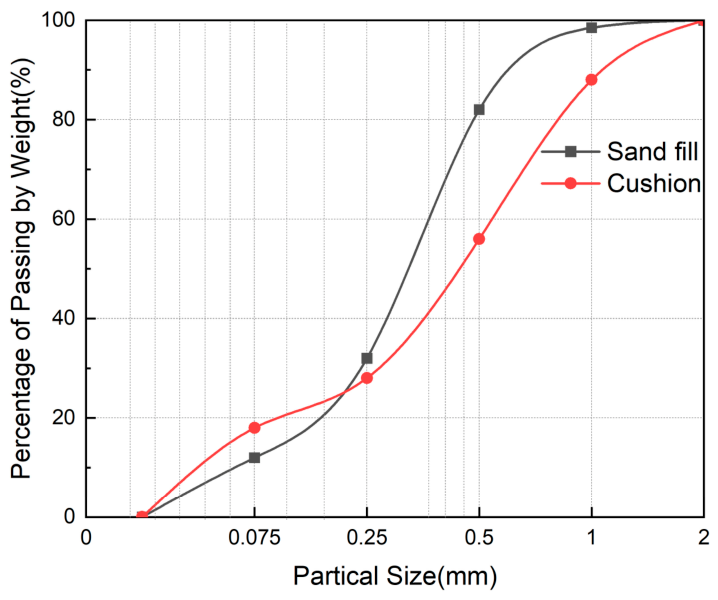
The test soil was the silt in the Zhengzhou area, in the scale test, when the B/d50 ratio (the ratio of the base diameter to the characteristic particle size) exceeds 30, the reduction in soil particle size does not affect the test results [30]. For the test pile with a diameter of 100 mm, the characteristic particles must be smaller than 2 mm. Approximately 82% of the particles in this soil by weight are larger than 0.075 mm. According to the “Code for Design of Building Foundations” [31], the sand used in this model test is classified as silt, with an average density of 1640 kg/m3 and an internal friction angle of 32.1°. The thickness of the cushion layer was determined to be 50 mm based on 40–60% of the pile diameter. The particle size distribution of the tested soil is shown in Figure 5. The size of the loading plate was determined according to the processing area of a single pile, and it could be considered a rigid plate after stiffness verification to ensure the uniform transmission of loads. The spacing of the piles was set to be four times the pile diameter. The minimum horizontal spacing between the outer box and the side of the pile body was five times the pile diameter, and the distance between the pile top and the box was also five times the pile diameter. Therefore, the influence of the boundary effect could be ignored [32].
Raft displacement was measured using the YHD series electronic strain-type displacement sensors. The strain gauges on the pile body, various displacement sensors, and the pressure sensors at the pile top and the soil surface are all connected to the static digital acquisition system to achieve real-time data collection. All soil pressure units and load sensors undergo indoor repeatability calibration before the test to correct their coefficients and eliminate the influence of stress lag. During the loading process, the wall is rotated around the base to simulate the active limit state, and the horizontal displacement Δ at the wall top is controlled at 10–15 mm (0.50–0.75% of the wall height), which is determined based on the existing research of the same model box. The displacement is applied in 12 levels, with an initial displacement of 0.5 mm, and each level increases by 1 mm. Each level of displacement is achieved by manually adjusting the top screw (which has been calibrated according to the rotation parameters) to achieve precise displacement. The next operation is performed after the data stabilizes for each level of displacement. Throughout the entire test, the vertical load needs to be maintained constant, and the pressure of the hydraulic jack is adjusted manually to counteract the foundation settlement caused by the wall rotation.
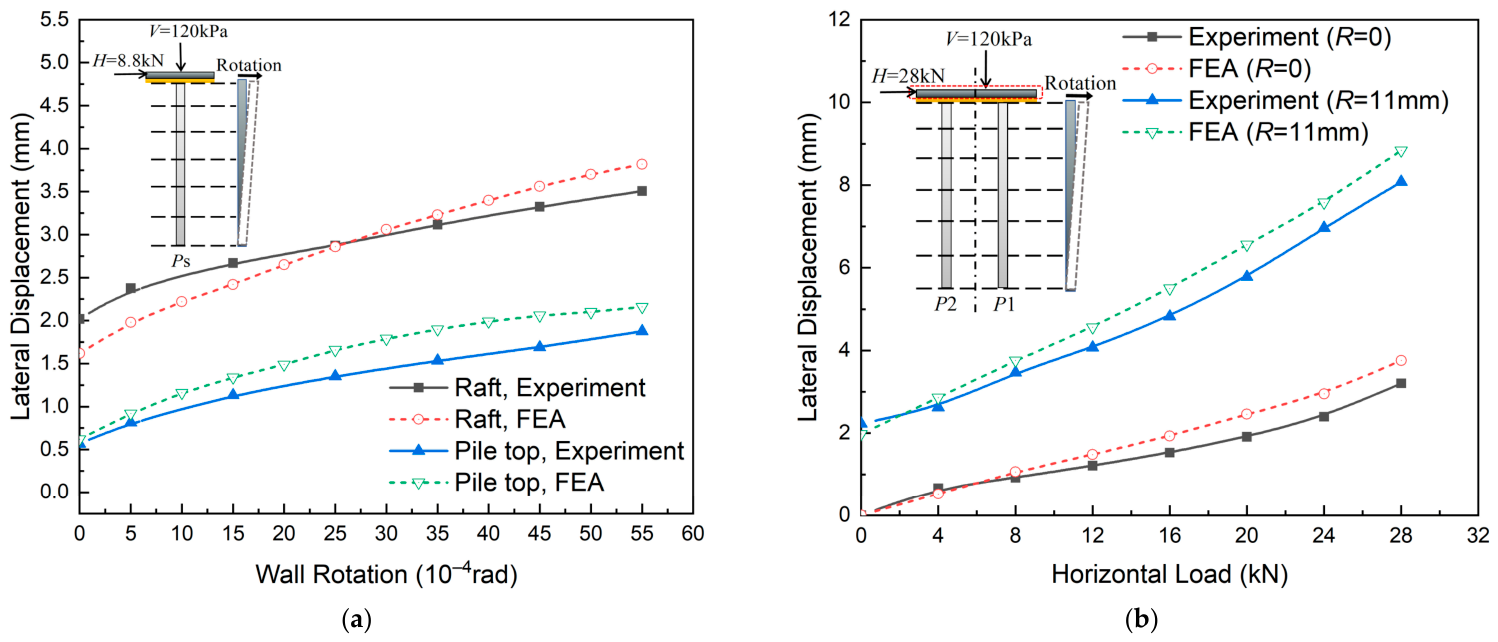
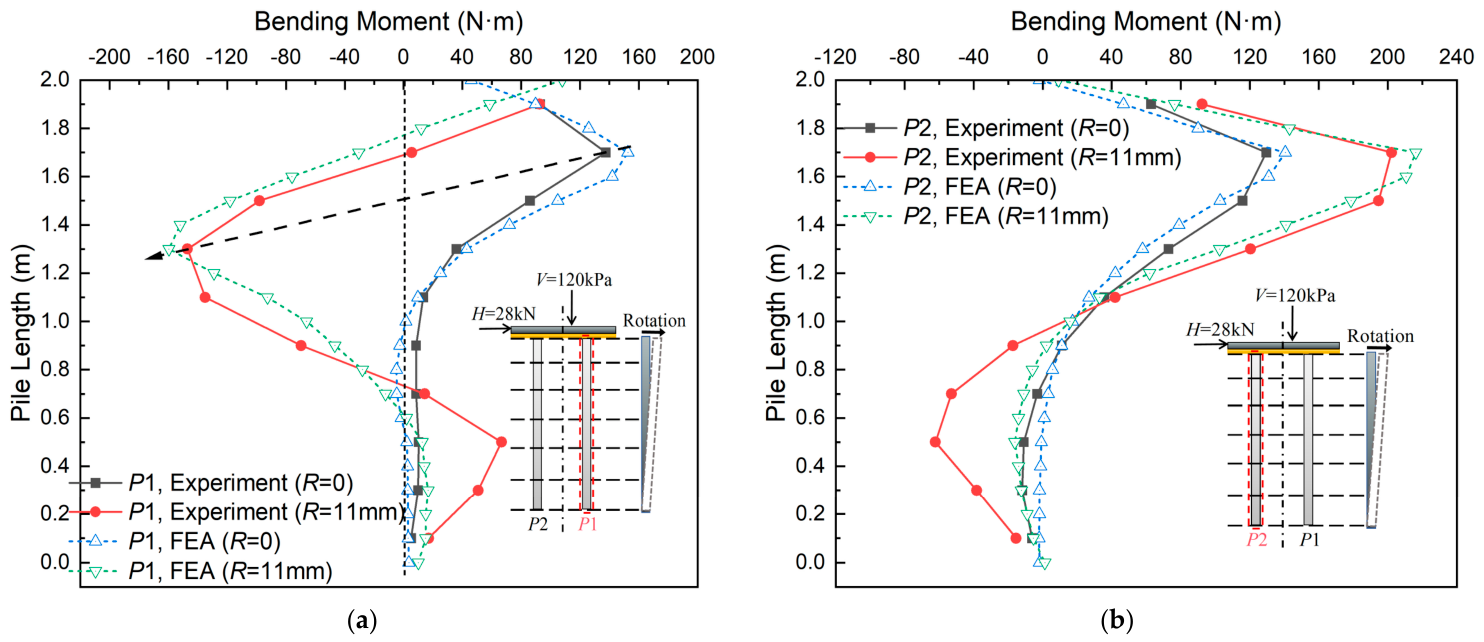
To validate the numerical model, a finite element analysis was conducted using the experimental geometry, but with the soil depth extended to twice the pile length. Table 1 lists the material parameters used in the inversion analysis. As shown in Figure 6 and Figure 7, under different rotational displacements of the retaining wall, the displacement of the raft slab and the top of the pile, as well as the bending moment evolution characteristics of each pile in the four-pile condition, the numerical simulation results are highly consistent with the experimental data in terms of the trend and magnitude of change.
This indicates that the mechanical behavior of the composite foundation under the condition of adjacent retaining wall rotation (asymmetric lateral constraint) can be reliably predicted using the validated numerical model. The simulated values show good agreement with the experimental data, albeit slightly higher in magnitude. The accuracy of the numerical simulation is limited by the characteristics of the adopted numerical methods, mainly including the contact formula based on the zero-thickness algorithm in ABAQUS, the reduction integration technique used to improve computational efficiency, and the Mohr–Coulomb constitutive model used to approximately describe the nonlinear behavior of the soil.

3. Results and Discussion: Parametric Analysis Under Rotational Constraints

A parametric study investigated the influence of key parameters on the horizontal bearing characteristics and pile mechanical response under asymmetric constraints (retaining wall rotation). The focus was on revealing the horizontal load-sharing mode and the change mechanism of the internal force distribution of the pile body. The parameters for numerical analysis mainly include two categories: one is geometric position parameters, such as pile spacing, number of piles, pile length, spacing between the front row of piles and the retaining wall, and cushion layer thickness; the other is geotechnical material parameters, such as soil stiffness and cushion modulus. All the parameters to be analyzed and their corresponding benchmark values have been summarized in Table 2.

3.1. Influence of Pile Configuration

Studies have shown that piles at different positions within a group (such as the central pile, edge pile, and corner pile) exhibit varying responses owing to the shielding effect and group interaction [33,34,35]. This difference mainly stems from the overlap of the shear resistance zones between piles, which alters the interaction mechanism between the pile and soil and the load transmission path of each pile. On the other hand, the rotational displacement of the retaining wall adjacent to the composite foundation will cause displacement of the free-field soil. In simplified analyses, such displacement is often regarded as the load acting on the passive piles [36], but in reality, the existence of the piles not only constrains the soil displacement but also changes the distribution of the existing stress field around the piles. This nonlinear response needs to be accurately captured using numerical analysis methods.

3.1.1. Effect of Pile Number

The number of piles is a key factor in regulating the overall horizontal stiffness of the composite foundation and the distribution of internal loads. Under the asymmetric constraint condition of the retaining wall rotation (RB mode), the influence mechanism of the number of piles mainly manifests in two aspects: overall load sharing and spatial internal force distribution.
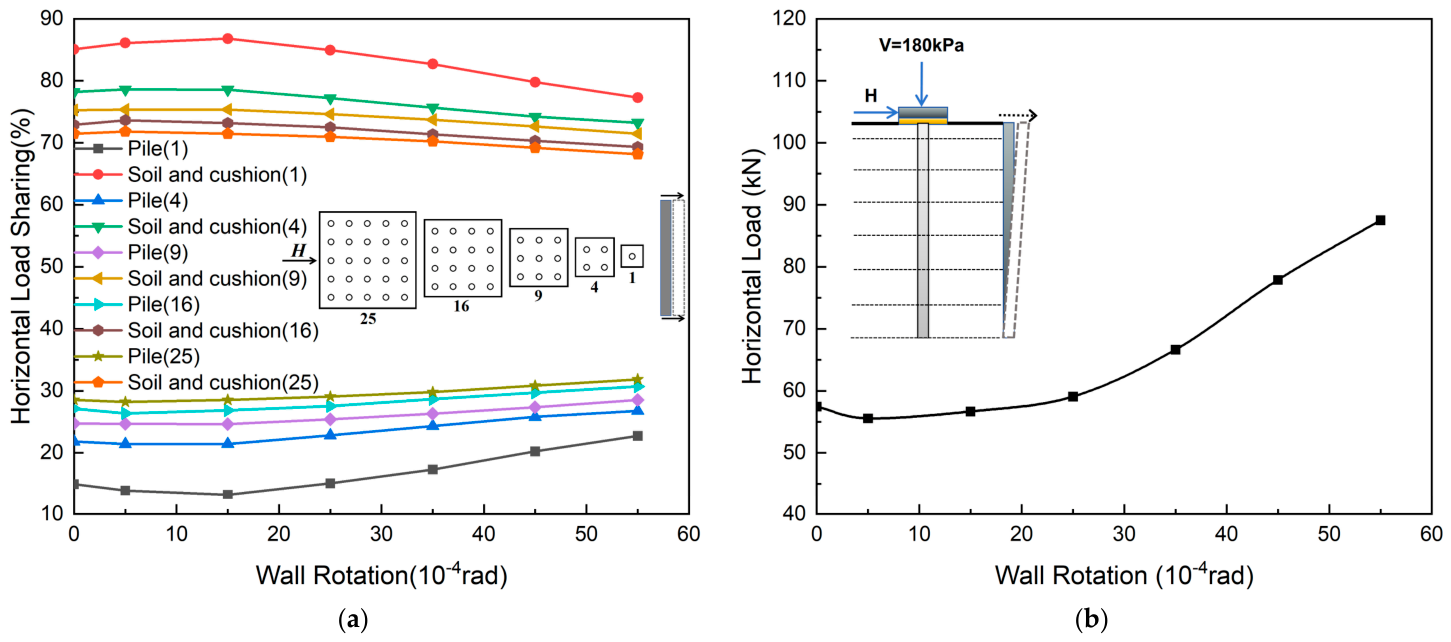
As wall rotation increases, the proportion of horizontal load shared by the piles shows an upward trend, while the sharing ratios of the soil and cushion layer decrease accordingly. This pattern is significantly influenced by the number of piles: a greater number of piles results in a higher proportion of the load being shared by the piles. When the rotation amount reaches 55 × 10−4 rad, the load-sharing ratio of the piles in the 25-pile composite foundation is approximately 32%, significantly higher than 22% in the single-pile condition (Figure 8a). At the same time, the slope of the load-rotation quantity curve tends to become flatter as the number of piles increases, indicating that more piles work collaboratively to effectively constrain the soil displacement and slow down the growth rate of pile loads. The horizontal load on the piles in the 25-pile composite foundation increases from approximately 57.5 kN to 87.5 kN (a 52% increase), serving as a benchmark for comparison with the single-pile condition (Figure 8b).
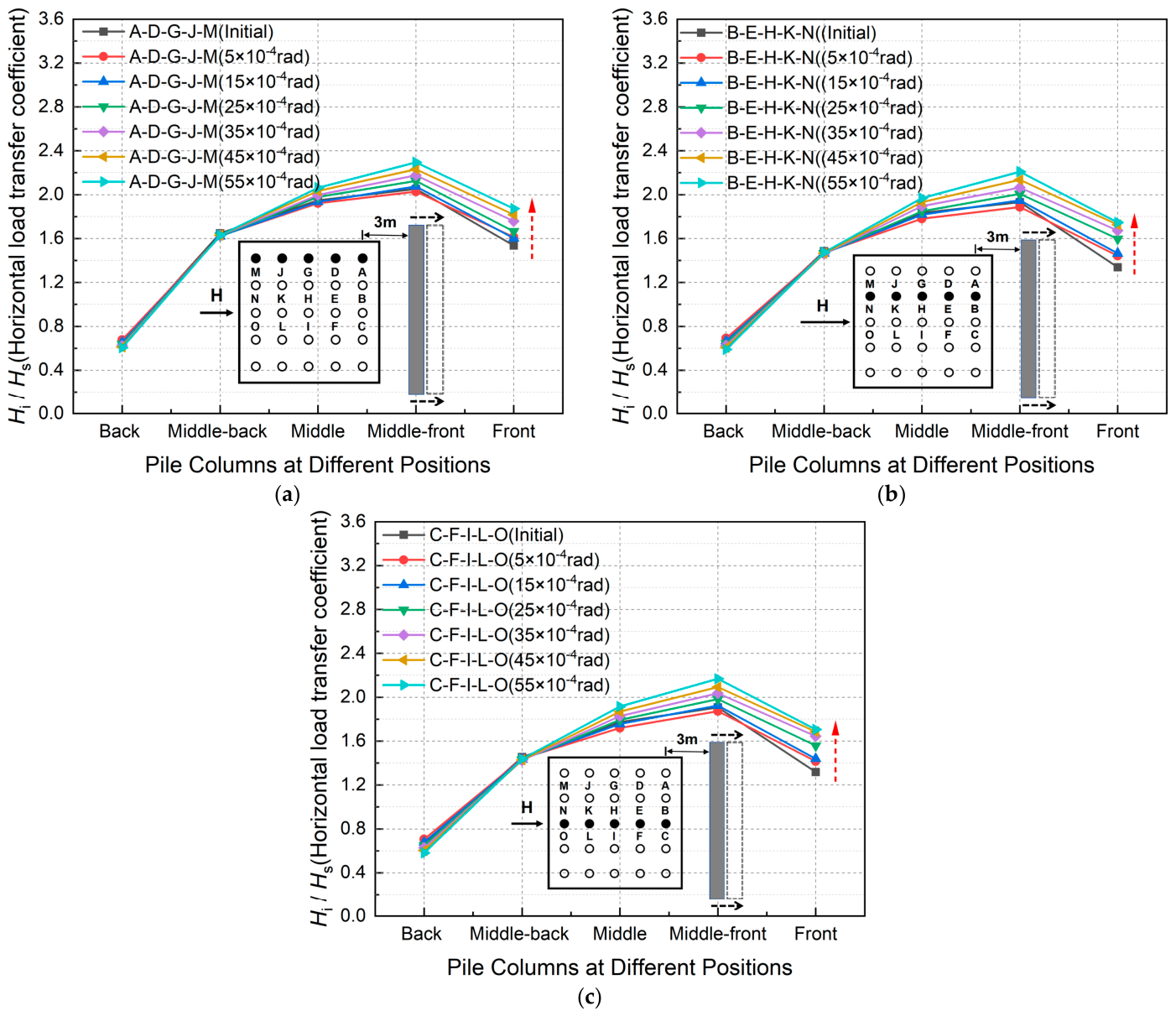
Under the drive of the asymmetric rotational displacement field, the distribution of horizontal loads in the pile group shows a strong spatial non-uniformity and a unique “peak inward displacement” phenomenon. The horizontal load-transfer coefficient ηp is defined as the ratio of the load of a certain pile in the pile group to the load of a single pile. Its spatial distribution indicates that the peak does not occur at the front-row pile closest to the retaining wall, but is stably located in the middle-front row piles. For example, at a rotation amount of 55 × 10−4 rad, the ηp of the middle-front row piles can reach approximately 2.3, significantly higher than that of the front-row piles, which is about 1.87 (Figure 9). This indicates that the horizontal resistance of the front-row piles, due to their larger free surface at the front and insufficient soil constraints, is actually weaker than that of the middle-front row piles, which have a stronger interaction between pile–soil–pile. Except for the rear-row piles, the ηp values of all piles are greater than 1.0, confirming that the group pile effect generally leads to load amplification.
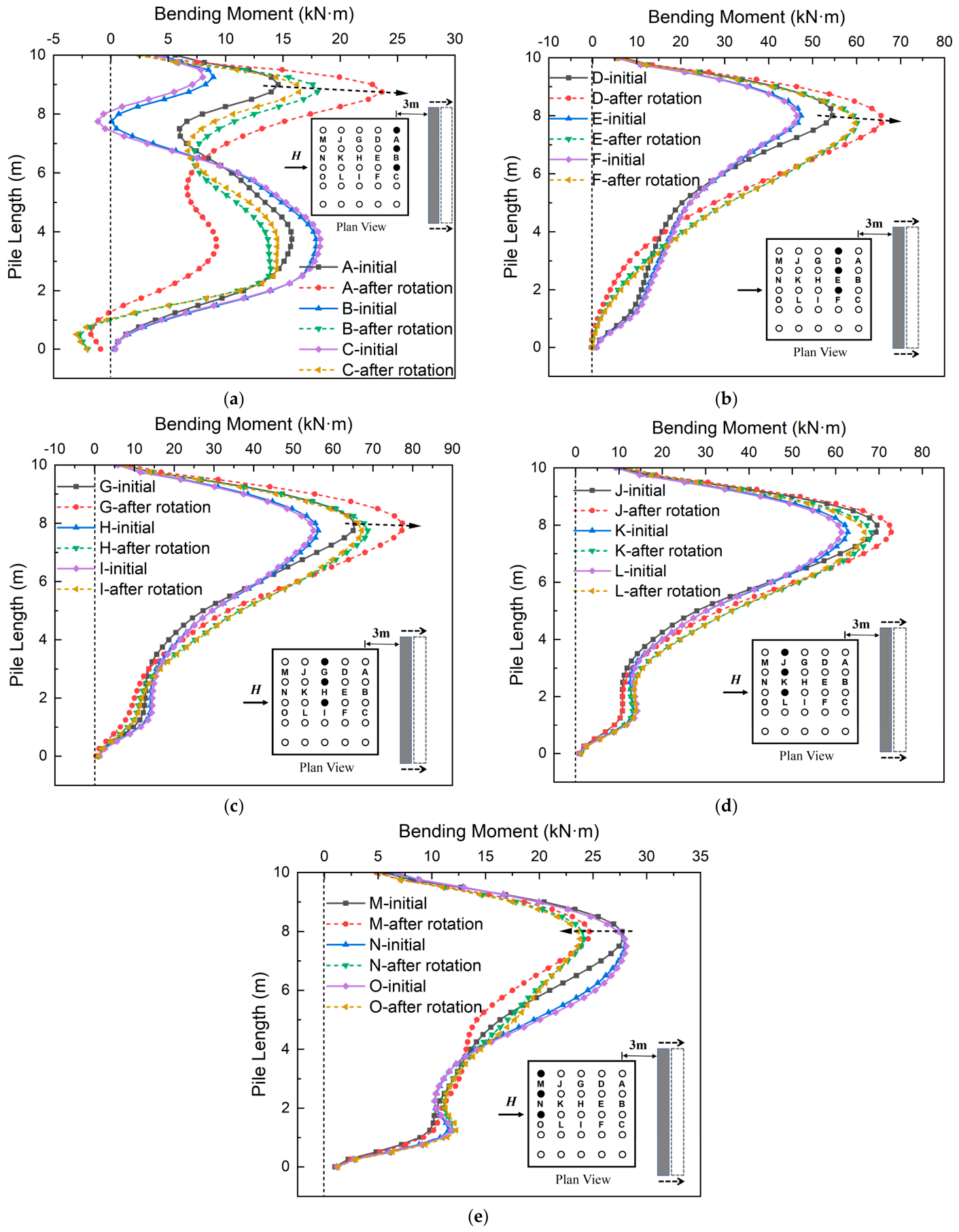
The distribution of pile bending moment further reveals the spatial heterogeneity of the internal force response. After the retaining wall rotation, except for the bending moment of the rear-row piles slightly decreasing, the bending moments of all other piles increase significantly, and the increase is roughly inversely proportional to the distance from the retaining wall. The bending moment of the middle-row piles is the largest (such as pile G is approximately 78 kN·m), and the rear-row piles have the smallest bending moment (Figure 10). It is noteworthy that the maximum bending moment point shifts downward from near the pile top to the middle-upper part of the pile (3–4 m depth), and the bending moment curve of the front-row piles may present a complex double-peak shape, while the middle and rear-row piles are mostly single-peak shapes.

3.1.2. Effect of Pile Length (Embedment Depth, Lp)

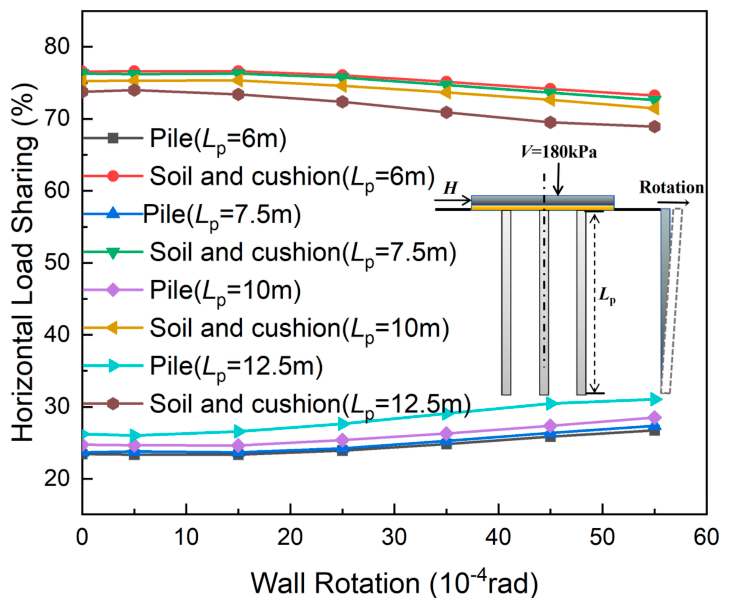
The embedment depth of the pile body is a key parameter for regulating the load distribution and internal force response of the composite foundation under the condition of the retaining wall rotation. As rotation proceeds, the proportion of the horizontal load borne by the piles increases, and greater embedment depth results in a higher load-bearing proportion. For example, when the pile length Lp = 12.5 m (greater than the depth of the retaining wall), the load distribution curve on the graph rises most significantly, indicating that the pile body can more effectively transfer the load to the deep soil; meanwhile, shorter piles (Lp = 6 m, 7.5 m) have limited load-bearing capacity and the curve rises more slowly. This reveals that increasing the pile length can optimize the path of load transfer from the shallow soil to the deep pile body, as shown in Figure 11.
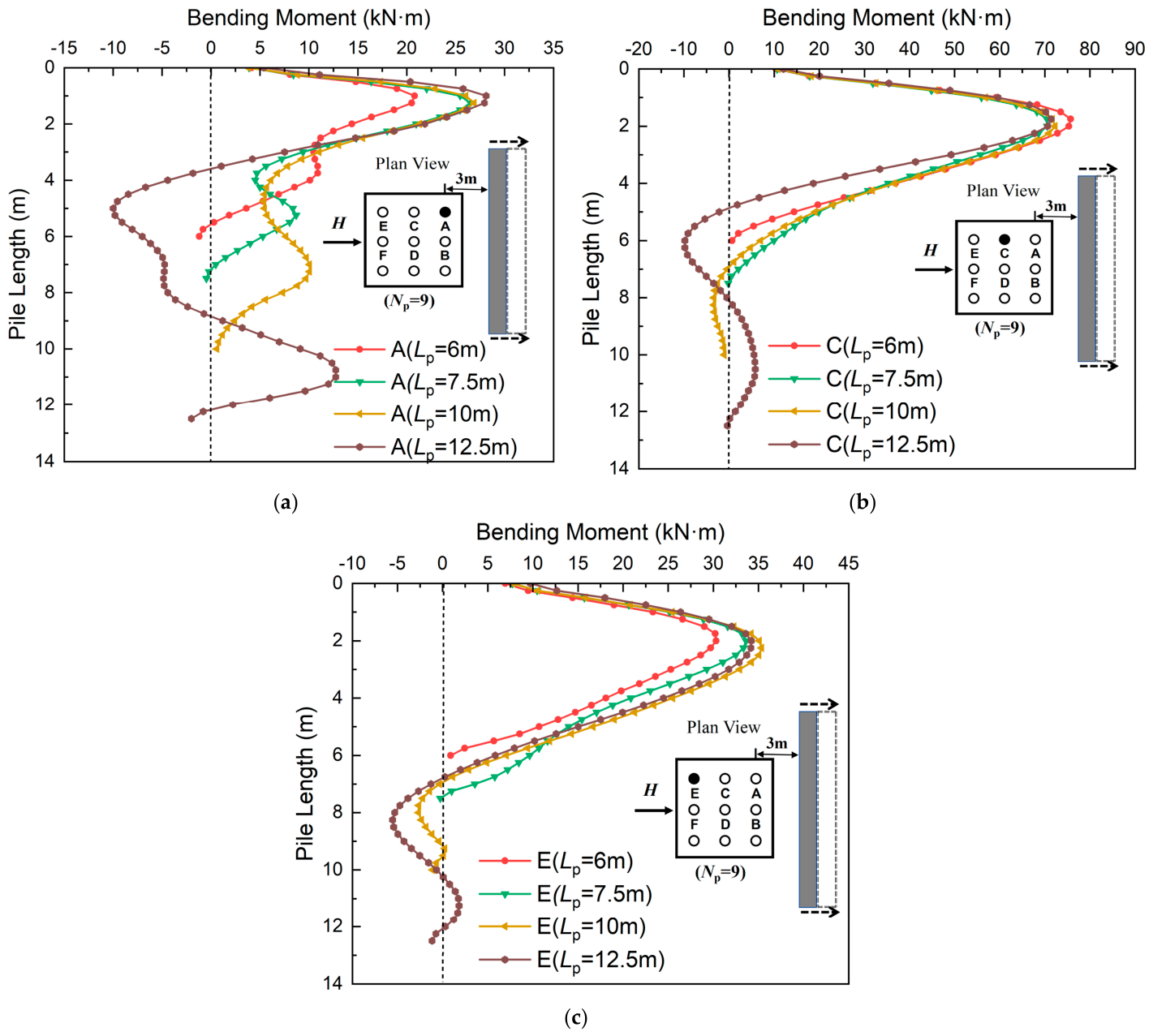
The distribution of the pile body’s bending moment is also greatly influenced by the embedment depth. As shown in Figure 12, the bending moment is nonlinearly distributed along the depth, with a peak in the shallow layer (0–4 m). As Lp increases, the maximum bending moment value significantly increases and the position shifts downward. Long piles (Lp = 10 m, 12.5 m) may also have negative bending moments in the deep layer due to reverse constraints, forming a complex multi-segment curved shape; especially, the “double peak” bending moment curve of the front-row pile is typical. The responses of piles at different positions are significantly different: the middle-row pile, due to simultaneously bearing a large transfer soil pressure and rear-row constraints, is in a bending–compression combined state, and its bending moment value is the most prominent; the bending moment of the rear-row pile is relatively small. Therefore, the embedment depth of the pile body and its position in the group of piles jointly determine the internal force distribution, and design should consider them in a coordinated manner.

3.1.3. Effect of Pile Spacing (s/d Ratio)

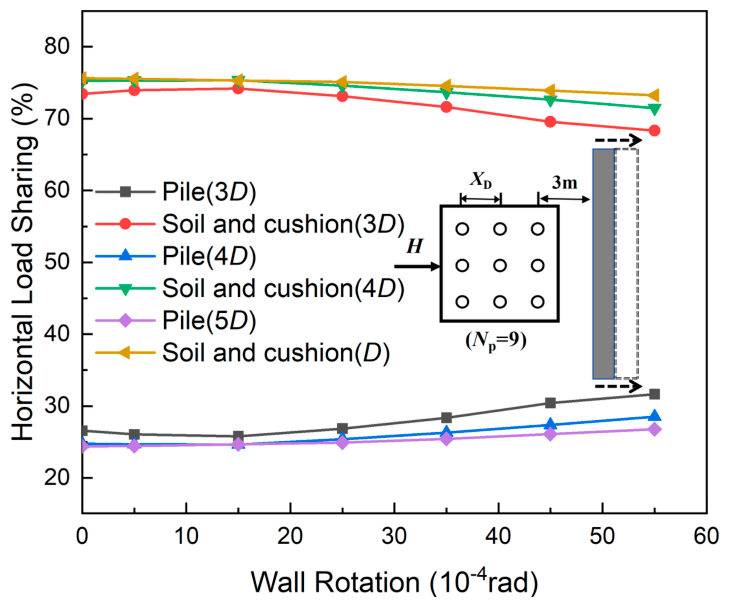
Through numerical simulation, the influence of pile spacing on the horizontal response of pile-group composite foundation is investigated when the retaining wall rotates and causes soil lateral displacement. As shown in Figure 13, the results indicate that the pile spacing significantly regulates the load-transfer path between piles and soil: when the pile spacing is small (such as 3D), the overall load sharing of the pile body is higher, but the load is concentrated in the middle row of piles, resulting in an uneven distribution; increasing the pile spacing (to 5D) can optimize the load distribution, making the front and middle rows of piles more evenly participate in the force-bearing, and enhancing the load-transfer coefficient of the front row of piles, while the load-bearing capacity of the rear row of piles does not fully exert itself due to the “shielding effect” of the front row.
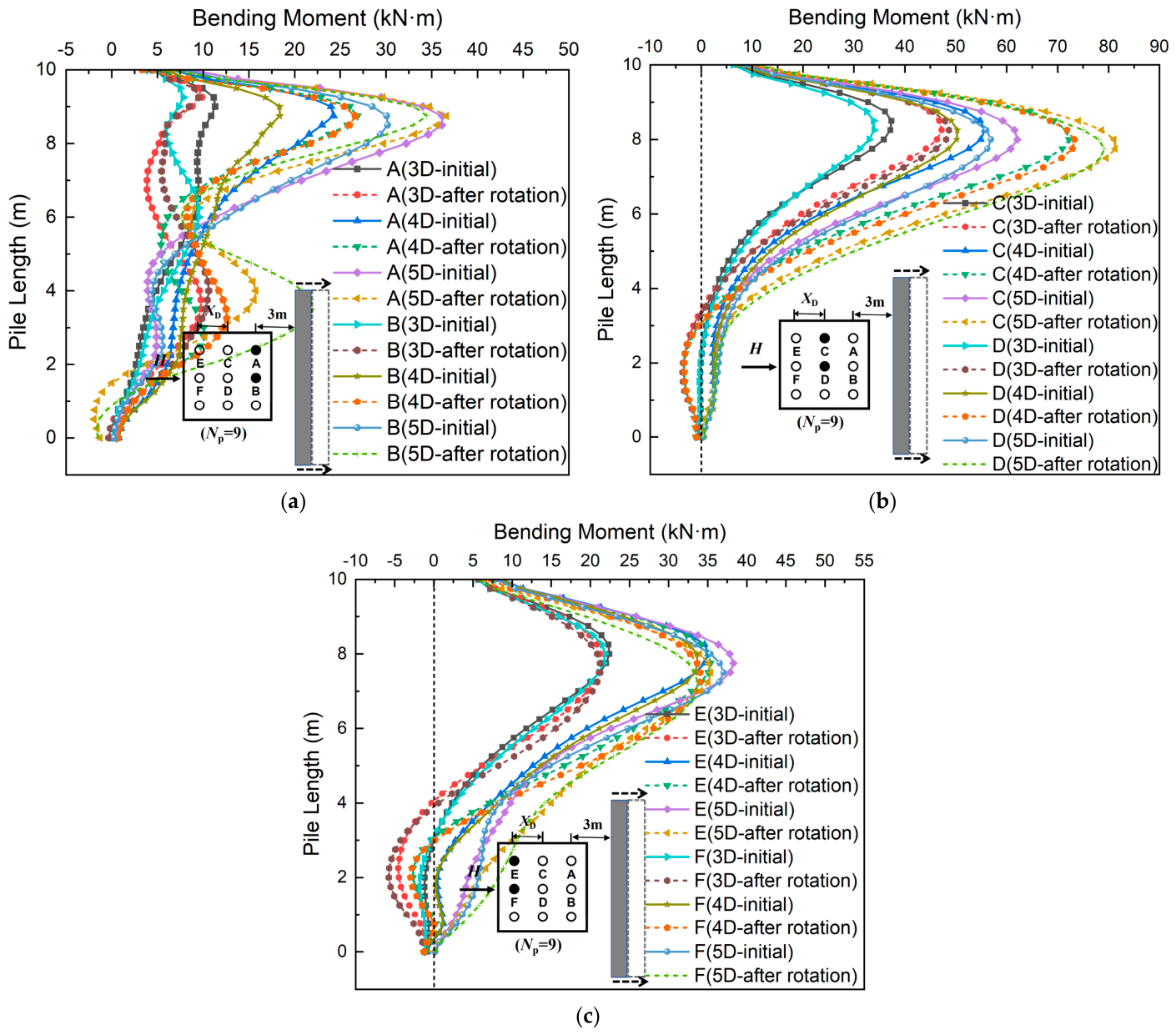
The bending moment distribution of the pile body is also regulated by the pile spacing. Figure 14 reveals that an increase in pile spacing generally exacerbates the bending moment response of each row of piles, especially significantly increasing the bending moment of the middle row of piles. The bending moment distribution pattern of the front row of piles changes from a “single peak” to a “double peak” after rotation, reflecting the combined force mechanism of being bent at the top and pushed by the soil in the middle and lower parts. Therefore, choosing an appropriate pile spacing is a key design method for optimizing the internal load distribution of the composite foundation, improving the internal force distribution of the pile body, and enhancing the collaborative working performance of the system.

3.2. Influence of Cushion and Soil Properties

3.2.1. Effect of Cushion Properties

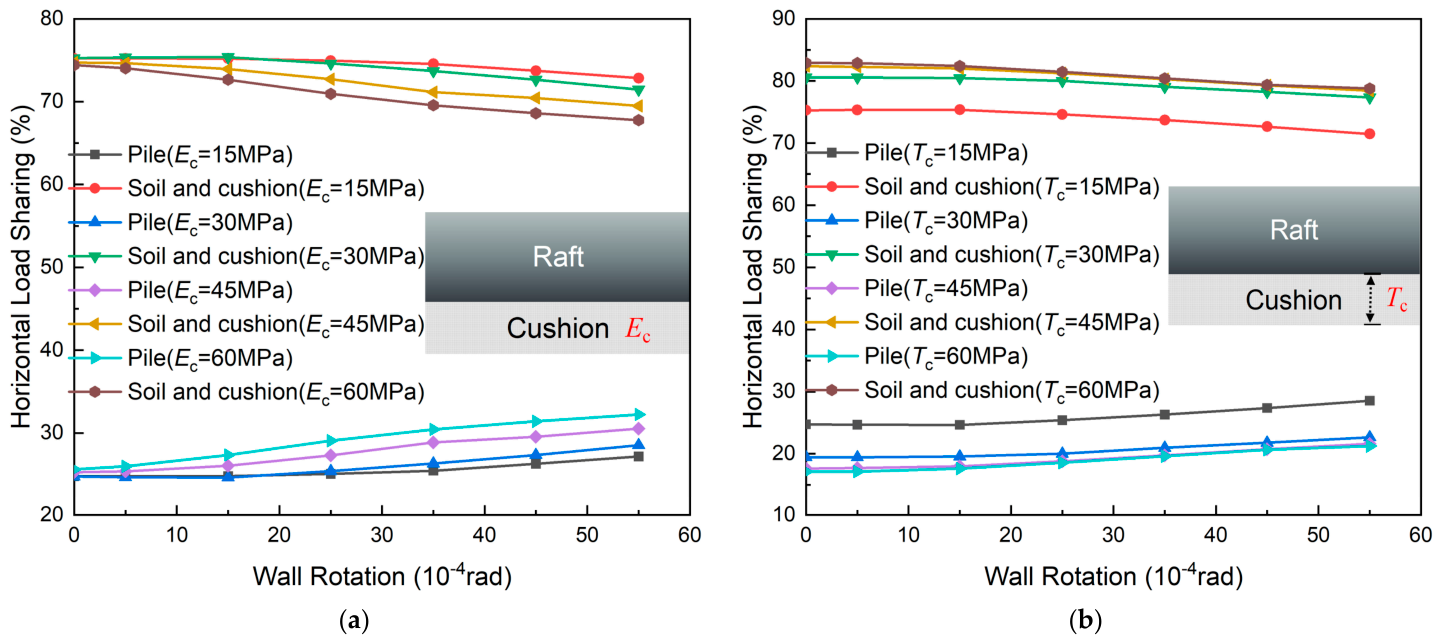
The thickness and stiffness of the cushion layer are the key parameters for controlling the load sharing between the pile and soil in the composite foundation under the condition of retaining wall rotation. The mechanism of their action mainly lies in the following: the thickness of the cushion layer regulates the lateral diffusion of the load through its internal shear deformation space, and the greater the thickness, the more it can mobilize the soil between the piles to participate in bearing; the stiffness of the cushion layer determines its vertical compression characteristics, and the higher the stiffness, the more conducive it is to transferring the horizontal thrust to the pile body; conversely, more of the load is borne by the cushion layer and the soil. Together, they regulate the stress ratio between the pile and soil, which is the basis for optimizing the coordinated work of the pile and soil.
The simulation results presented in Figure 15 indicate that cushion layer parameters significantly impact load sharing. As the elastic modulus of the cushion layer increases, the proportion of the horizontal load borne by the pile significantly increases, while the ratio of the load shared by the soil and the cushion layer decreases. This is because the high stiffness of the cushion layer can more effectively transfer the load to the pile. On the contrary, increasing the thickness of the cushion layer will cause the proportion of the load shared by the pile to decrease, because a thicker cushion layer provides a larger shear deformation space, promoting the diffusion of the load to the soil. Therefore, the combination of high stiffness and thin thickness will strengthen the concentration of the load on the pile, which is beneficial for controlling deformation but requires high pile strength; meanwhile, the combination of low stiffness and thick thickness can exert the bearing potential of the soil between the piles, providing better economic performance but may accompany larger displacements. Reasonable design of these two parameters is crucial for achieving efficient coordination between the pile and soil under the condition of retaining wall rotation.
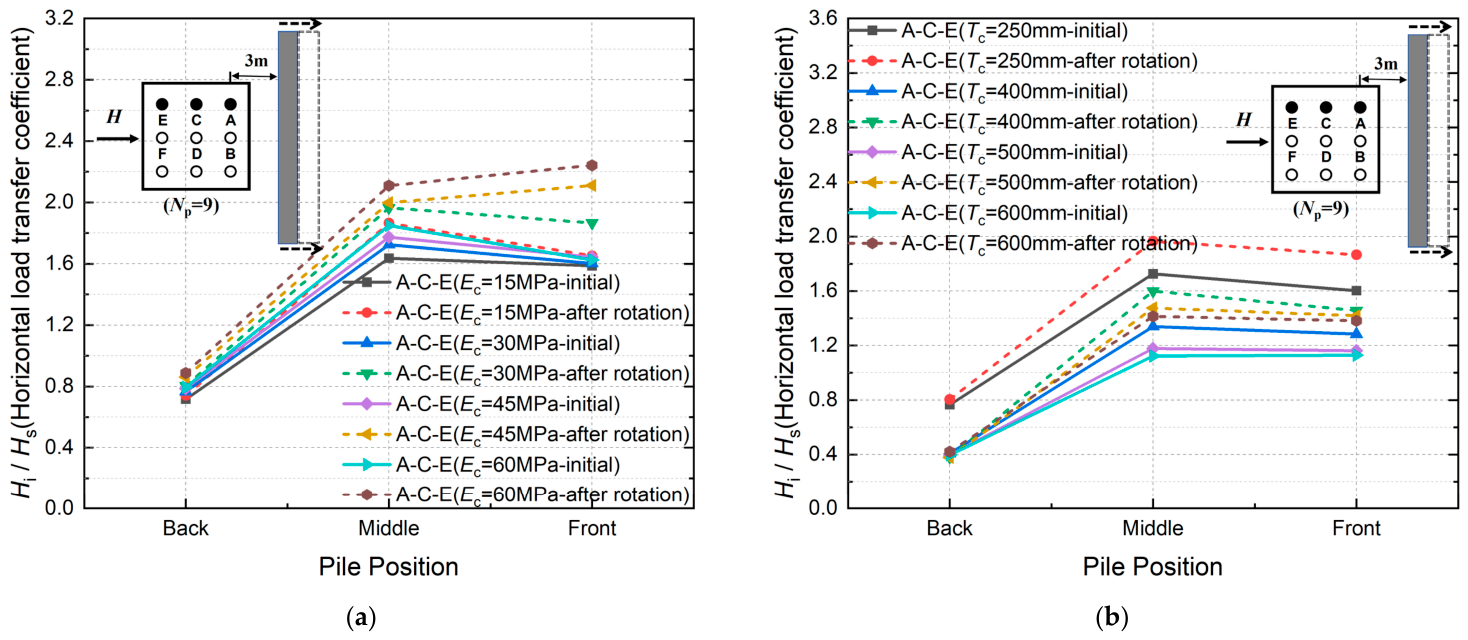
The stiffness and thickness of the cushion layer have significant and differentiated regulatory effects on the horizontal load distribution at each pile position. As shown in Figure 16, an increase in cushion layer stiffness (from 15 MPa to 60 MPa) will overall enhance the load-transfer coefficient ηp of the pile body and strengthen the trend of “forward concentration” of the load, with the increase in ηp being most significant for the front-row piles. An increase in cushion layer thickness (from 250 mm to 600 mm) will enhance shear deformation and load diffusion capacity, reducing the ηp values of each pile, especially those of the middle-row piles, and promoting a more uniform distribution of the load. Regardless of the parameters, the load distribution shows significant spatial non-uniformity, with the ηp value of the middle-row piles always being the highest, indicating that it plays a key role under asymmetric loads. Therefore, the stiffness of the cushion layer mainly regulates the direction of load concentration, while the thickness mainly affects the degree of load diffusion. Both need to be designed collaboratively to optimize the load distribution between piles and soil.

3.2.2. Effect of Soil Properties

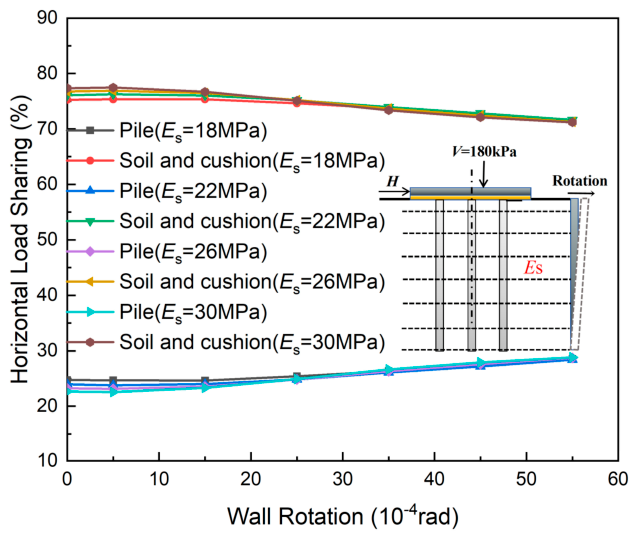
The soil stiffness is the key factor regulating the interaction between the pile and the soil in the composite foundation when the retaining wall rotates. As shown in Figure 17, in the initial stage of the retaining wall rotation (≤25 × 10−4 rad), the higher soil elastic modulus (Es) enables it to bear a higher proportion of the horizontal load, thereby effectively reducing the force on the pile. As the rotation displacement increases to approximately 55 × 10−4 rad, the load-sharing ratios under different Es conditions gradually converge, indicating that in the large deformation stage, the influence of soil modulus on load distribution weakens, and the system enters a stable state dominated by deformation coordination.
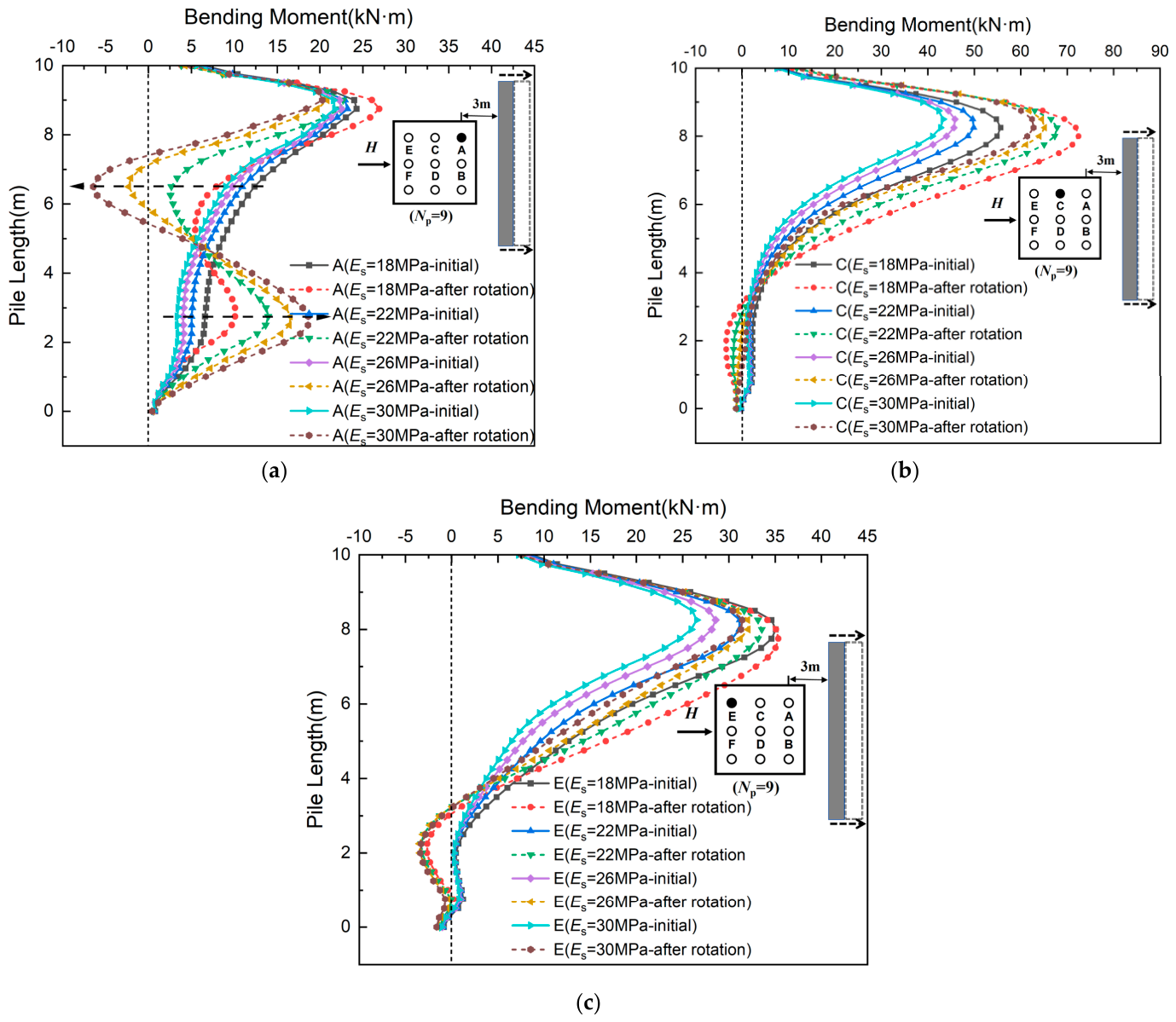
The soil stiffness has a significant impact on the development of the pile bending moment. Increasing Es (from 18 MPa to 30 MPa) can enhance lateral restraint, significantly reduce the maximum bending moment values of each row of piles, and shift the peak of the bending moment to the top of the pile. However, this constraint effect shows complexity in the front-row piles: under high Es (30 MPa) conditions, the bending moment distribution of the front-row piles presents a typical “double peak” pattern; that is, positive and negative bending moment peaks appear respectively at the shallow depth (2–3 m) and the middle depth (6–7 m), which is significantly different from the single-peak distribution of the middle and rear rows of piles. This indicates that the high stiffness soil may complicate the internal force distribution of the front-row piles that are directly subjected to the load (Figure 18).

3.3. Influence of Geometric and Load Asymmetry

3.3.1. Effect of Pile–Wall Distances

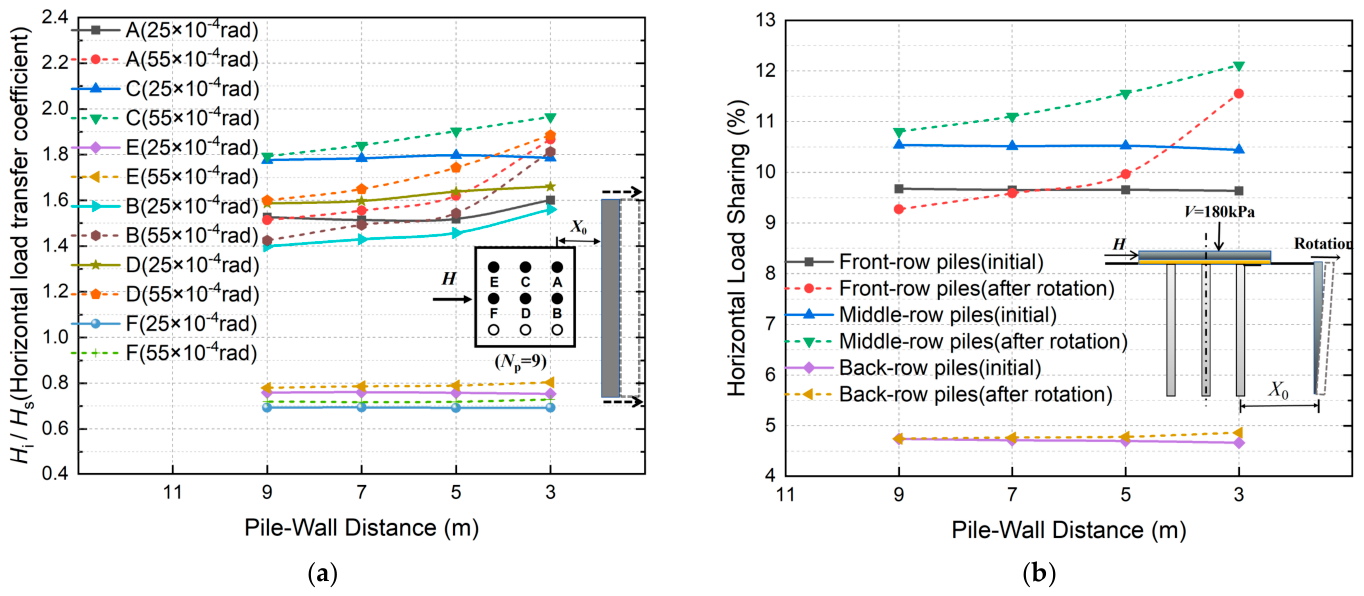
The distance between piles and walls is a key geometric parameter that regulates the horizontal response mechanism of the composite foundation under the condition of wall rotation. Numerical analysis shows (Figure 19a) that increasing the distance between piles and walls can effectively reduce the load concentration on the pile. When the spacing (X0) increases from 3 m to 9 m, the overall horizontal load-sharing rate of the pile body decreases from approximately 28.5% to 24.8%; the load-transfer coefficient (ηp) of the front-row piles decreases significantly from 1.87 to 1.51. This indicates that when the pile is far from the retaining wall, the direct disturbance of the surrounding soil by the passive earth pressure is weakened, and the horizontal load is more shared by the soil and the cushion, thereby reducing the burden on the pile body.
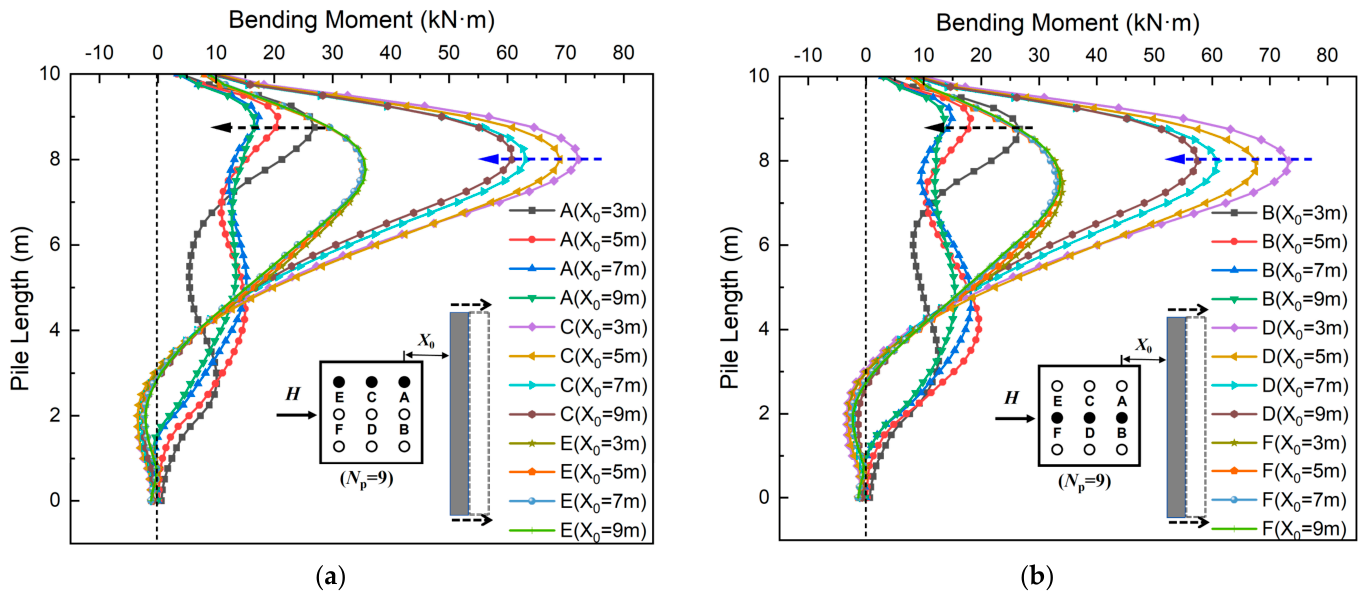
Under all spacing conditions, the load-sharing ratio is all represented as middle-row piles > front-row piles > rear-row piles (Figure 19b). Reducing the spacing will nonlinearly significantly increase the sharing ratio of the front-row piles (for example, from 9.3% to 11.6%, an increase of 25%), making them the most sensitive load-bearing components. As shown in Figure 20, the bending moment distribution of the pile body is also greatly regulated by the spacing: the bending moment peak of the middle-row piles is the highest, and that of the front-row piles is the smallest. Increasing the spacing can significantly reduce the bending moment peaks of the middle- and front-row piles, optimizing the internal force distribution of the pile body.
Therefore, increasing the pile–wall distance significantly reduces load concentration. The minimum pile–wall distance should be at least three times the pile diameter to avoid excessive load amplification on the front-row piles. Beyond this distance, the load reduction effect diminishes. Based on the linear response observed in our model, a wall rotation angle exceeding 25 × 10−4 rad induces significant nonlinear stress redistribution in the pile group, which should be a cautionary threshold for design.
The distance between piles and walls systematically affects the cooperative working performance of the composite foundation by altering the load transmission path and the soil constraint state. In engineering design, appropriately increasing the spacing between piles and walls is an economically effective measure that can be used to reduce the load and internal forces on the pile shaft.

3.3.2. Effect of Vertical Load Magnitude (V0) and Eccentricity (e)

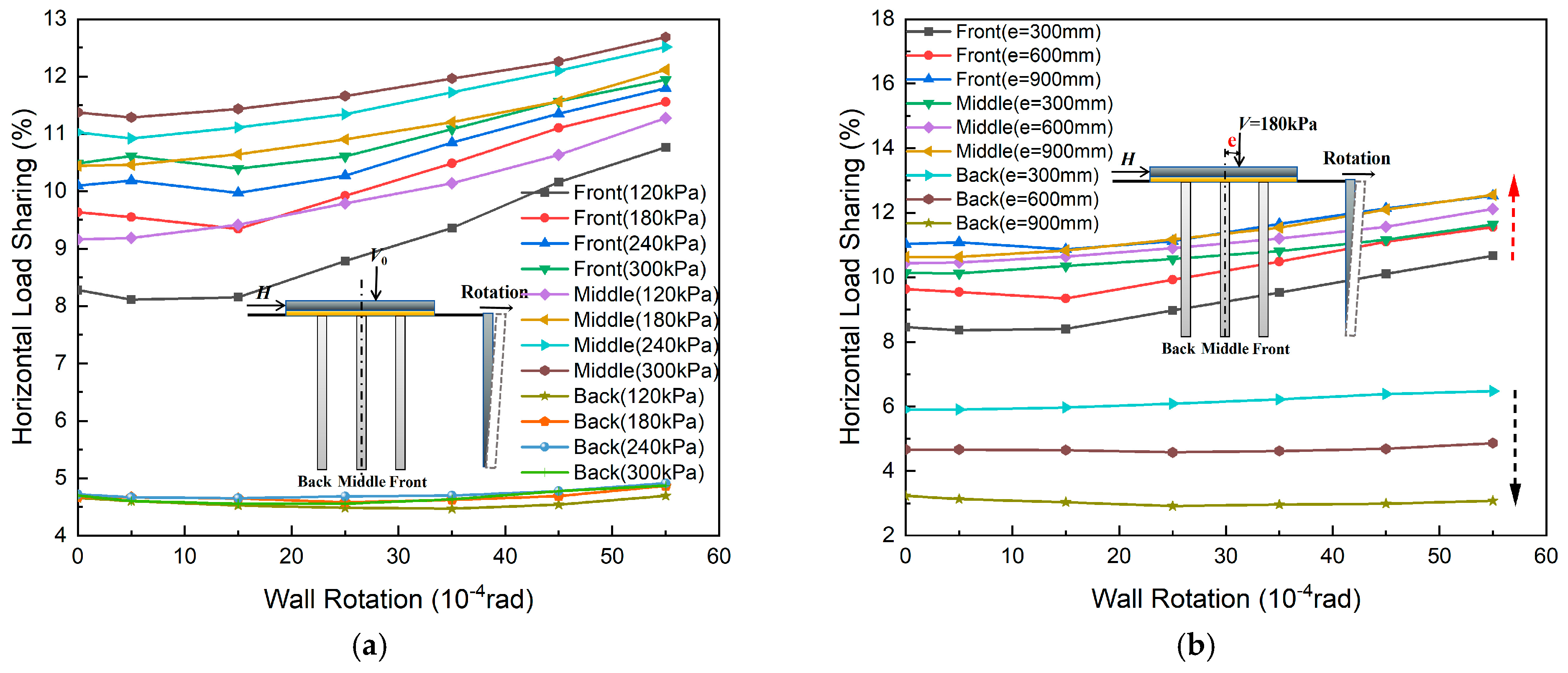
The magnitude of the vertical load and the eccentricity have significant and distinct effects on the horizontal load-sharing pattern of each row of piles within the composite foundation. As shown in Figure 21a, increasing the vertical load (V0) will generally increase the horizontal load-sharing rate of each row of piles. In the initial stage of the retaining wall rotation (15 × 10−4 rad), higher vertical pressure significantly enhances the shear transfer efficiency of the load by strengthening the frictional resistance at the pile–soil interface. The sharing rate of the front-row piles under V0 = 300 kPa is approximately 27% higher than that under V0 = 120 kPa.
The eccentricity of the load (e) mainly causes the redistribution of the load within the pile group rather than changing the total load borne by the piles (Figure 21b). When the eccentricity e increases from 300 mm to 900 mm, the load shows a clear “forward transfer” trend: the sharing rate of the rear-row piles drops sharply from approximately 6.5% to 3.1% (a decrease of more than 50%), while the sharing rates of the front-row piles and middle-row piles increase accordingly. The increase in the front-row piles is more significant (from 10.7% to 12.6% at 55 × 10−4 rad, an increase of approximately 18%), indicating that the eccentric effect mainly balances by mobilizing the front-row piles to bear higher shear forces.
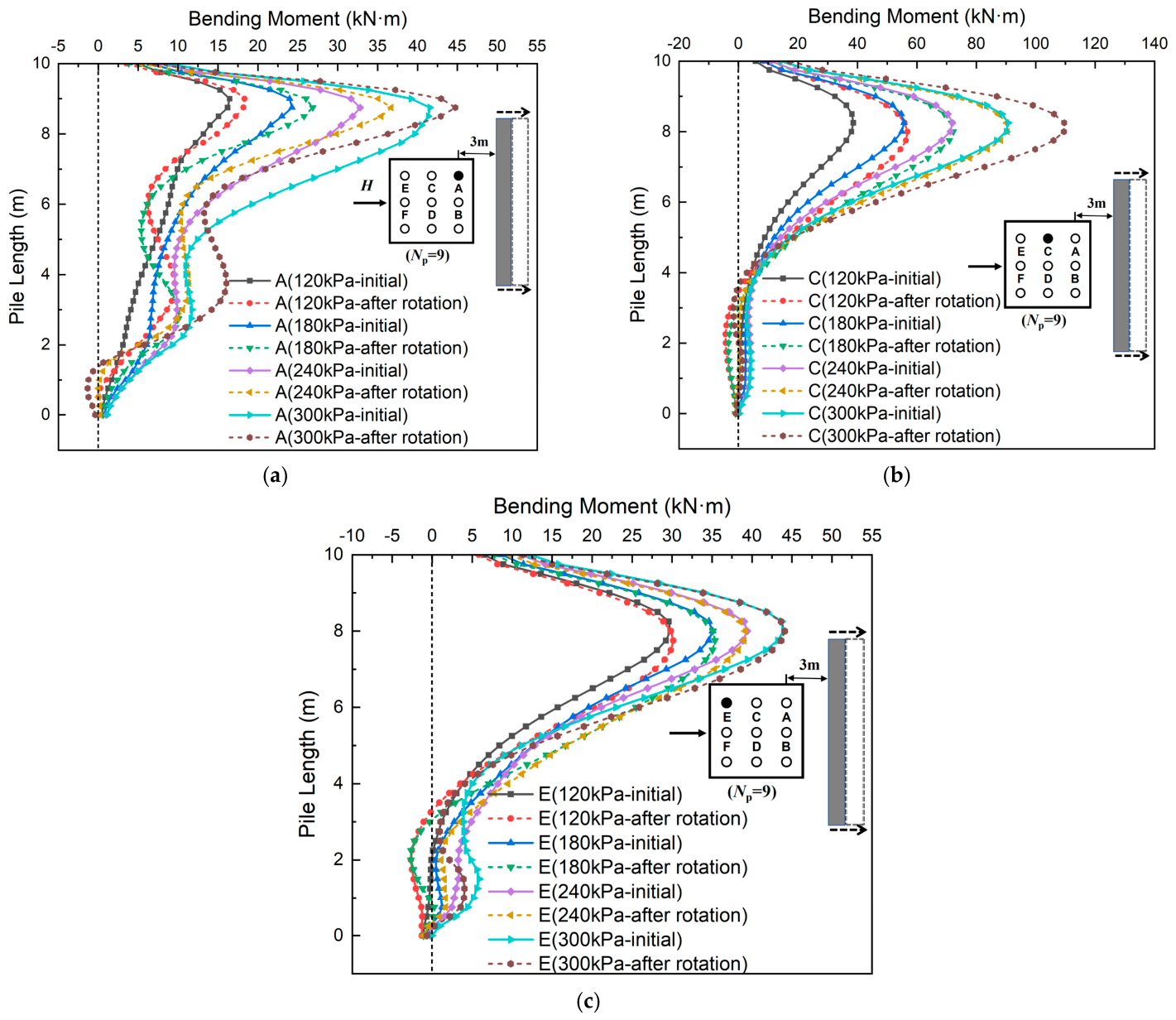
As shown in Figure 22, the magnitude of the vertical load has a significant amplification effect on the development of the pile bending moment. When V0 increases from 120 kPa to 300 kPa, the bending moment of each pile increases significantly, and the response varies by pile position: the response of the middle-row pile C is the most intense, with its maximum bending moment increasing from approximately 57 kN·m to approximately 110 kN·m, a nearly double increase. The mechanism is that the increased vertical load strengthens the normal restraint of the soil on the pile side, thereby generating a larger lateral soil reaction under the retaining wall rotation excitation and converting it into a bending moment.

4. Sensitivity of Design Parameters to the Horizontal Response of Composite Foundation

Based on the parametric analysis, the influence trends and relative sensitivities of nine key design parameters are summarized for the maximum bending moment of the pile and the load-sharing ratio of the pile body in Table 3. This integrated analysis not only elucidates the behavior of individual parameters but also reveals the internal mechanisms of the coupling effects among multiple parameters.
The “high, medium and low” three-level rating of parameter sensitivity is determined based on the comprehensive judgment of the change amplitude of the core indicators caused by each parameter within its research variation range. The specific quantitative criteria are as follows: a rating of “high” sensitivity is given when the change amplitude of the indicator exceeds 50% or fundamentally changes the response mechanism; a rating of “medium” sensitivity is given when the change amplitude is between 20% and 50%; and a rating of “low” sensitivity is given when the change amplitude is typically less than 20%. This summary table provides direct guidance for engineering practice, can assist in identifying the main controlling parameters for specific performance targets, and helps avoid unfavorable parameter combinations (such as high vertical load coupled with a small pile–wall distance), thereby seeking the optimal balance between safety and economy.

5. Conclusions

This study conducted a comprehensive numerical investigation on the horizontal bearing behavior of pile–soil composite foundations subjected to asymmetric lateral constraints induced by the rotational displacement of adjacent retaining walls. A validated 3D finite element model was employed to systematically analyze the effects of geometric and material parameters. The main conclusions are summarized as follows:
(1)
The study reveals a distinct asymmetric load-transfer mechanism. Rotational wall displacement induces a highly non-uniform distribution of load and internal forces within the pile group, fundamentally differing from the response to direct, symmetric loading. A distinct “peak inward shifting” phenomenon is observed, where the middle-front row piles carried the highest horizontal load, with load-transfer coefficients (ηp) reaching up to 2.3. This is significantly higher than the front-row piles (ηp ≈ 1.87), indicating that front-row piles experience reduced lateral confinement.
(2)
The findings provide critical practical implications for the design of composite foundations adjacent to retaining walls. Pile configuration critically regulates the system response. Increasing the number of piles from 1 to 25 increased the pile load-sharing ratio from 22% to 32% under significant wall rotation. Furthermore, the pile length significantly influences the bending moment depth; long piles (Lp = 12.5 m) shifted the maximum bending moment downward compared to shorter piles. While a larger pile spacing (s/d ratio) optimizes load distribution among rows, it also increases the bending moment in central piles and can induce a complex double-peak bending moment profile in front-row piles.
(3)
The cushion layer acts as a crucial mediator for load distribution. A parametric shift from a soft/thick cushion to a stiff/thin cushion increased the pile load-sharing ratio by approximately 10–15%, demonstrating its role in load redistribution. Optimizing these two parameters is essential for balancing deformation control and economic efficiency.
(4)
Soil stiffness and geometric asymmetry are key external factors. Higher soil modulus (Es) provided stronger lateral restraint. Increasing Es from 18 MPa to 30 MPa reduced the maximum pile bending moment by approximately 30%. Furthermore, increasing the pile–wall distance from 3 m to 9 m reduced the load concentration on front-row piles, decreasing their load-transfer coefficient from 1.87 to 1.51.
(5)
The magnitude of vertical load significantly amplifies internal forces. Increasing the vertical load (V0) from 120 kPa to 300 kPa nearly doubled the maximum bending moment in the middle-row piles (from 57 kN·m to 110 kN·m), highlighting the strong coupling effect under asymmetric constraints.
(6)
The sensitivity analysis indicates that pile–wall distance, pile spacing, and vertical load magnitude exert a high sensitivity impact on the pile’s horizontal load share. The maximum bending moment is most sensitive to vertical load magnitude, soil stiffness, and pile spacing. This hierarchy provides direct guidance for identifying the key controlling parameters in design.
In summary, the horizontal bearing mechanism under asymmetric constraints involves complex interactions and spatial redistribution of load paths. Therefore, design should progress beyond symmetric loading assumptions and explicitly account for the non-uniformity induced by adjacent excavations or retaining structure movements. Future work could explore the effects of cyclic loading, more complex soil stratification, advanced constitutive models for soil, quantitative sensitivity of interface friction and the effects of pore water pressure.

Author Contributions

Conceptualization, Y.Z. and Y.G.; methodology, Y.G.; software, Y.Z.; validation, Y.G.; formal analysis, Y.G.; investigation, Y.Z.; resources, Y.G.; data curation, Y.Z.; writing—original draft preparation, Y.G.; writing—review and editing, Y.Z.; supervision, Y.Z. and Y.G.; project administration, Y.Z. and Y.G. All authors have read and agreed to the published version of the manuscript.

Funding

This research received no external funding.

Data Availability Statement

The data presented in this study are available within the article. Further inquiries can be directed to the corresponding author.

Conflicts of Interest

The authors declare no conflicts of interest.

References

  1. Li, Y. Stability Analysis of Multi-Level Support for High Fill Slopes. Master’s Thesis, Zhengzhou University, Zhengzhou, China, 2018. [Google Scholar]
  2. Gong, X. Development Overview of Composite Foundations and Their Application in High-Rise Buildings. China Civ. Eng. J. 1999, 32, 3–10. [Google Scholar] [CrossRef]
  3. Gong, X. Formation and Development of the Theoretical and Technical Application System for Composite Foundations. Ground Improv. 2019, 1, 7–16. [Google Scholar]
  4. Chi, Y.; Song, E.; Gao, W.; Jin, H. Experimental Study on Bearing and Deformation Characteristics of Rigid Pile Composite Foundations. J. China Univ. Min. Technol. 2002, 31, 237–241. [Google Scholar]
  5. Wu, C.; Yan, M.; Yang, J.; Liu, G. Behavior of CFG Piles and Their Composite Foundation under Horizontal Load. Geotech. Investig. Surv. 1996, 24, 18–21. [Google Scholar]
  6. Zheng, G.; Liu, S.; Wu, Z.; Gu, X.; Sun, W. Model Test on the Performance of Rigid Pile Composite Foundations under Horizontal Load. Chin. J. Geotech. Eng. 2005, 27, 865–868. [Google Scholar]
  7. Liu, Z.; Wang, Q.; Peng, S. Deformation Behavior of Piles in Composite Foundations under Horizontal Load. Ind. Constr. 2005, 35, 60–63. [Google Scholar] [CrossRef]
  8. Yan, C. Three-Dimensional Numerical Analysis of Rigid Pile Composite Foundations Under Horizontal Load. Master’s Thesis, Henan University, Kaifeng, China, 2009. [Google Scholar]
  9. Du, H. Study on the Mechanism of the Cushion Layer in Rigid Pile Composite Foundations Under Horizontal Load. Master’s Thesis, Zhengzhou University, Zhengzhou, China, 2019. [Google Scholar]
  10. Liu, H.; Tao, X.; Zhang, J.; Chen, Y. Behavior of PCC Pile Composite Foundations under Horizontal Load. Rock Soil Mech. 2010, 31, 2716–2722. [Google Scholar]
  11. Wang, F.; Zhai, H.; Lyu, Y.; Liu, T. Performance of Plain Concrete Pile Composite Foundations under Horizontal Load. J. Shenyang Jianzhu Univ. (Nat. Sci.) 2008, 24, 533–536. [Google Scholar]
  12. Chen, C. Study on the Behavior of Capped Pile Composite Foundations Under Horizontal Load. Master’s Thesis, Nanchang Hangkong University, Nanchang, China, 2012. [Google Scholar]
  13. Zhao, J. Study on the Behavior of Long-Short Pile Composite Foundations for High-Rise Buildings Under Horizontal Load—Effects of Cushion Modulus, Long Pile Modulus, and Short Pile Modulus. Master’s Thesis, Taiyuan University of Technology, Taiyuan, China, 2012. [Google Scholar]
  14. Zhang, X. Experimental Study on Horizontal Load Transfer Mechanism of Rigid Pile Composite Foundations with Different Diameters. Master’s Thesis, Zhengzhou University, Zhengzhou, China, 2023. [Google Scholar]
  15. Xu, B.; Wang, Q. Deformation Behavior of Pile Group Composite Foundations in Layered Soil under Horizontal Load. Ind. Constr. 2007, 37, 88–92. [Google Scholar] [CrossRef]
  16. Liao, L.; Wang, Q. Deformation Behavior of Circular and Square Piles in Pile Group Composite Foundations within Layered Soil under Horizontal Load. J. Archit. Civ. Eng. 2008, 25, 115–121. [Google Scholar]
  17. Ding, S.; Zhu, Z.; Yang, X.; Fei, K. Numerical Analysis of Horizontal Bearing Characteristics of Stiffened Composite Pile Composite Foundations. Highway 2022, 67, 106–112. [Google Scholar]
  18. Chen, E.; Dai, Z. Elastic Sheets on Winkler Foundations: Indentation Stiffness and Nonlinearities. Int. J. Solids Struct. 2025, 315, 113346. [Google Scholar] [CrossRef]
  19. Sheikh, A.M.F.E.; Albogami, A.; Saddek, A.B.; Alshehari, A.M.; Yousef, S.E.A.S.; Bousalem, B. Vibration of a Restrained Orthotropic Plate Subjected to In-Plane Compression Forces and Resting on Winkler-Pasternak Elastic Foundation. J. King Saud Univ.—Eng. Sci. 2026, 38, 34. [Google Scholar] [CrossRef]
  20. Xu, L.; Zhao, M.; Huang, J.; Li, H.; Du, X.; Zhao, X.; Cao, S. An Improved Winkler Foundation Modulus for a Beam in a Full Space. Appl. Sci. 2024, 14, 2277. [Google Scholar] [CrossRef]
  21. Zhang, H.; Shi, M.; Guo, Y.; Liu, W. Lateral Force Mechanism of Adjacent Structural Piles under Unbalanced Surcharge Loads. Chin. J. Geotech. Eng. 2016, 38, 2226–2236. [Google Scholar]
  22. Zhang, H.; Shi, M.; Guo, Y. Simplified Analytical Calculation for the Force and Deformation of Passive Piles Subjected to Soil Lateral Movement. J. Southeast Univ. (Nat. Sci. Ed.) 2016, 46, 392–399. [Google Scholar]
  23. Leung, C.F.; Lim, J.K.; Shen, R.F.; Chow, Y.K. Behavior of Pile Groups Subject to Excavation-Induced Soil Movement. J. Geotech. Geoenviron. Eng. 2003, 129, 58–65. [Google Scholar] [CrossRef]
  24. Bauer, J.; Reul, O. Lateral Pressure on Pile Foundations in Cohesive Soils due to Horizontal Soil Movements. Acta Geotech. 2024, 19, 6375–6390. [Google Scholar] [CrossRef]
  25. Elias, S.K.; Al-Obaydi, M.A. Effect of asymmetry pile’s length on piled raft foundation system under earthquake load. J. Eng. Appl. Sci. 2024, 71, 28. [Google Scholar] [CrossRef]
  26. Cheng, F.; Li, M.; Li, Q. Multi-Method Sensitivity Analysis of Influencing Factors on the Lateral Displacement of Retaining Piles in Asymmetric Excavations in Soft Soil Areas. Symmetry 2025, 17, 1525. [Google Scholar] [CrossRef]
  27. Tao, J.; Liang, S.; Gong, W.; Wu, C. Study on the Bearing and Force Characteristics of Rigid Pile Composite Foundations for High-Rise Buildings. J. Southeast Univ. (Nat. Sci. Ed.) 2009, 39, 238–245. [Google Scholar]
  28. Jia, J.; Wang, H.; Li, J.; Zhang, X.; Fan, X. Analysis of Bearing Capacity of CFG Pile Composite Foundations. J. Chongqing Univ. 2011, 34, 117–120+127. [Google Scholar]
  29. Comodromos, E.M.; Papadopoulou, M.C.; Rentzeperis, I.K. Pile Foundation Analysis and Design Using Experimental Data and 3D Numerical Analysis. Comput. Geotech. 2009, 36, 819–836. [Google Scholar] [CrossRef]
  30. Fioravante, V. On the Shaft Friction Modelling of Non-Displacement Piles in Sand. Soils Found. 2002, 42, 23–33. [Google Scholar] [CrossRef]
  31. GB/T 50123-2019; Standard for Geotechnical Testing Method. China Planning Press: Beijing, China, 2019.
  32. Hong, Y.; He, B.; Wang, L.Z.; Wang, Z.; Ng, C.W.W.; Mašín, D. Cyclic Lateral Response and Failure Mechanisms of Semi Rigid Pile in Soft Clay: Centrifuge Tests and Numerical Modelling. Can. Geotech. J. 2017, 54, 806–824. [Google Scholar] [CrossRef]
  33. Li, L.; Deng, X.; Zhang, S.; He, C.; Li, C. Vertical Bearing Characteristics and Group Effect of Inclined Pile Groups in Non-Uniform Foundation. Adv. Eng. Sci. 2020, 52, 97–107. [Google Scholar] [CrossRef]
  34. Liang, F.; Song, Z.; Guo, W. Integral Equation Analysis Method for Vertical Stress Interaction of Pile Groups Considering Consolidation. Chin. J. Geotech. Eng. 2014, 36, 847–854. [Google Scholar]
  35. Chen, R.; Zheng, Z.; Kong, L.; Lin, D. Analysis Method for the Force on Pile Group Foundations under Combined Horizontal and Torsional Loads. Chin. J. Geotech. Eng. 2013, 35, 1463–1469. [Google Scholar]
  36. Mu, L.; Huang, M. Analysis Method for the Influence of Foundation Pit Excavation on Adjacent Pile Foundations Based on Small-Strain Characteristics. Chin. J. Geotech. Eng. 2014, 36, 304–310. [Google Scholar]
Figure 1. Pile–soil composite foundation under asymmetric horizontal constraint conditions.
Symmetry 18 00886 g001
Figure 2. Geometry and mesh of the numerical model: (a) Overall view of the composite foundation system; (b) detailed view of the pile group and cushion layer.
Symmetry 18 00886 g002
Figure 3. Schematic view of model test system: (a) Front view; (b) lateral view.
Symmetry 18 00886 g003
Figure 4. Model pile.
Symmetry 18 00886 g004
Figure 5. Particle size distribution of test soil and cushion.
Symmetry 18 00886 g005
Figure 6. Displacement of the raft and pile top: (a) Single-pile condition (raft and pile top); (b) four-pile condition (raft).
Symmetry 18 00886 g006
Figure 7. The variation of pile bending moments before and after wall rotation: (a) Front-row piles (P1); (b) back-row piles (P2).
Symmetry 18 00886 g007
Figure 8. The variation of horizontal load sharing between piles and soil with different pile numbers: (a) 1–25 piles; (b) single pile.
Symmetry 18 00886 g008
Figure 9. The distribution of horizontal loads on piles at different positions: (a) A–M pils; (b) B–N piles; (c) C–O piles.
Symmetry 18 00886 g009
Figure 10. The variation of pile bending momens for different pile positions: (a) A–C piles; (b) D–F piles; (c) G–I piles; (d) J–L piles; (e) M–O piles.
Symmetry 18 00886 g010
Figure 11. The horizontal load sharing between piles and soil for different pile lengths.
Symmetry 18 00886 g011
Figure 12. The variation of pile bending moments at different positions under varying pile lengths: (a) Pile A; (b) pile C; (c) pile E.
Symmetry 18 00886 g012
Figure 13. The horizontal load sharing between piles and soil with different pile spacing.
Symmetry 18 00886 g013
Figure 14. The variation of pile bending moments for different pile spacing: (a) A–B piles; (b) C–D piles; (c) E–F piles.
Symmetry 18 00886 g014
Figure 15. The horizontal load sharing between piles and soil with different cushion properties: (a) Cushion stiffness; (b) cushion thickness.
Symmetry 18 00886 g015
Figure 16. The horizontal load distribution among piles with different cushion properties: (a) Cushion stiffness; (b) cushion thickness.
Symmetry 18 00886 g016
Figure 17. The horizontal load distribution among piles with different soil stiffness.
Symmetry 18 00886 g017
Figure 18. The variation of pile bending moments for different soil stiffness: (a) Pile A; (b) Pile C; (c) Pile E.
Symmetry 18 00886 g018
Figure 19. The horizontal load distribution among piles with different pile–wall distances: (a) Load-transfer coefficient; (b) load sharing.
Symmetry 18 00886 g019
Figure 20. The variation of pile bending moments of piles at different positions for different pile–wall distances: (a) A–E piles; (b) B–F piles.
Symmetry 18 00886 g020
Figure 21. The horizontal load distribution among piles with different vertical loads: (a) Load magnitude; (b) load eccentricity.
Symmetry 18 00886 g021
Figure 22. The variation of pile bending moments at different positions for different vertical loads: (a) Pile A; (b) pile C; (c) pile E.
Symmetry 18 00886 g022
Table 1. Material properties used in the model validation.
MaterialDensity (kg/m3)Elastic Modulus
(MPa)
Poisson RatioCohesion (kPa)Internal Fraction Angle (°)
Cushion1416300.33.235
Soil1640180.33.432.1
Raft7800220,0000.15//
Pile250025,0000.2//
Retaining wall7800200,0000.2//
Table 2. Parameters and their ranges for the sensitivity analysis.
ParameterPile Length
(m)
Pile SpacingNumber of PilesCushion Thickness
(mm)
Cushion Stiffness
(MPa)
Soil Stiffness
(MPa)
Vertical Load
(kPa)
Distance from Wall
(m)
Cushion thickness104D9250
400
500
600
30181803
Cushion stiffness104D92515
30
45
60
181803
Number of piles104D1
4
9
16
25
2530181803
Pile length6
7.5
10
12.5
4D92530181803
Pile spacing103D
4D
5D
92530181803
Soil stiffness104D9253018
22
26
30
1803
Vertical Load104D9253018120
180
240
300
3
Distance from wall104D92530181803
5
7
9
Load eccentricity104D9253018Eccentricity
e = 300 mm
e = 600 mm
e = 900 mm
3
Table 3. Influence trends and sensitivity of parameters.
Design ParametersChange DirectionMaximum Bending Moment (Pile)Horizontal Load Sharing (Pile)Key Influencing Mechanism
Pile NumberIncreaseIncrease
(medium)
Increase
(high)
Enhances the “group pile effect”, increases the overall stiffness, and concentrates the load on the internal piles.
Pile SpacingIncreaseIncrease
(high)
Increase
(high)
The load transfer is deeper and the bearing capacity of a single pile increases, but it complicates the bending moment distribution of the preceding piles.
Pile LengthIncreaseIncrease
(medium)
Decrease (medium)Reduces the stress overlap between piles and soil and optimizes the load distribution, but increases the load on individual piles.
Pile StiffnessIncreaseIncrease
(medium)
Increase
(high)
The compaction of the cushion layer is reduced, and the horizontal load is more effectively transmitted and concentrated to the front-row piles.
Pile ThicknessIncreaseDecrease (medium)Decrease (medium)Provides more shear deformation space to promote the diffusion of the load to the soil between the piles.
Soil StiffnessIncreaseDecrease
(high)
Decrease (medium)Provides stronger lateral restraint to inhibit the deformation of the pile body and share more initial loads.
Vertical Load MagnitudeIncreaseSignificant Increase (high)Increase (medium)Enhances the friction at the pile–soil interface, significantly amplifying the bending moment of the pile body (especially for the middle-row piles).
Vertical Load EccentricityIncreaseSpatial RedistributionRedistribution (low)The load is redistributed within the pile group and transferred to the front-row piles.
Pile–Wall DistanceIncreaseDecrease (medium)Decrease
(high)
Weakens the direct effect of the passive earth pressure generated by the rotation of the retaining wall on the pile body.
Disclaimer/Publisher’s Note: The statements, opinions and data contained in all publications are solely those of the individual author(s) and contributor(s) and not of MDPI and/or the editor(s). MDPI and/or the editor(s) disclaim responsibility for any injury to people or property resulting from any ideas, methods, instructions or products referred to in the content.