Synergistic Regulation of Electric Field and Wettability on Water Molecule Condensation: A Molecular Dynamics Study


Abstract
1. Introduction
2. Models and Methods
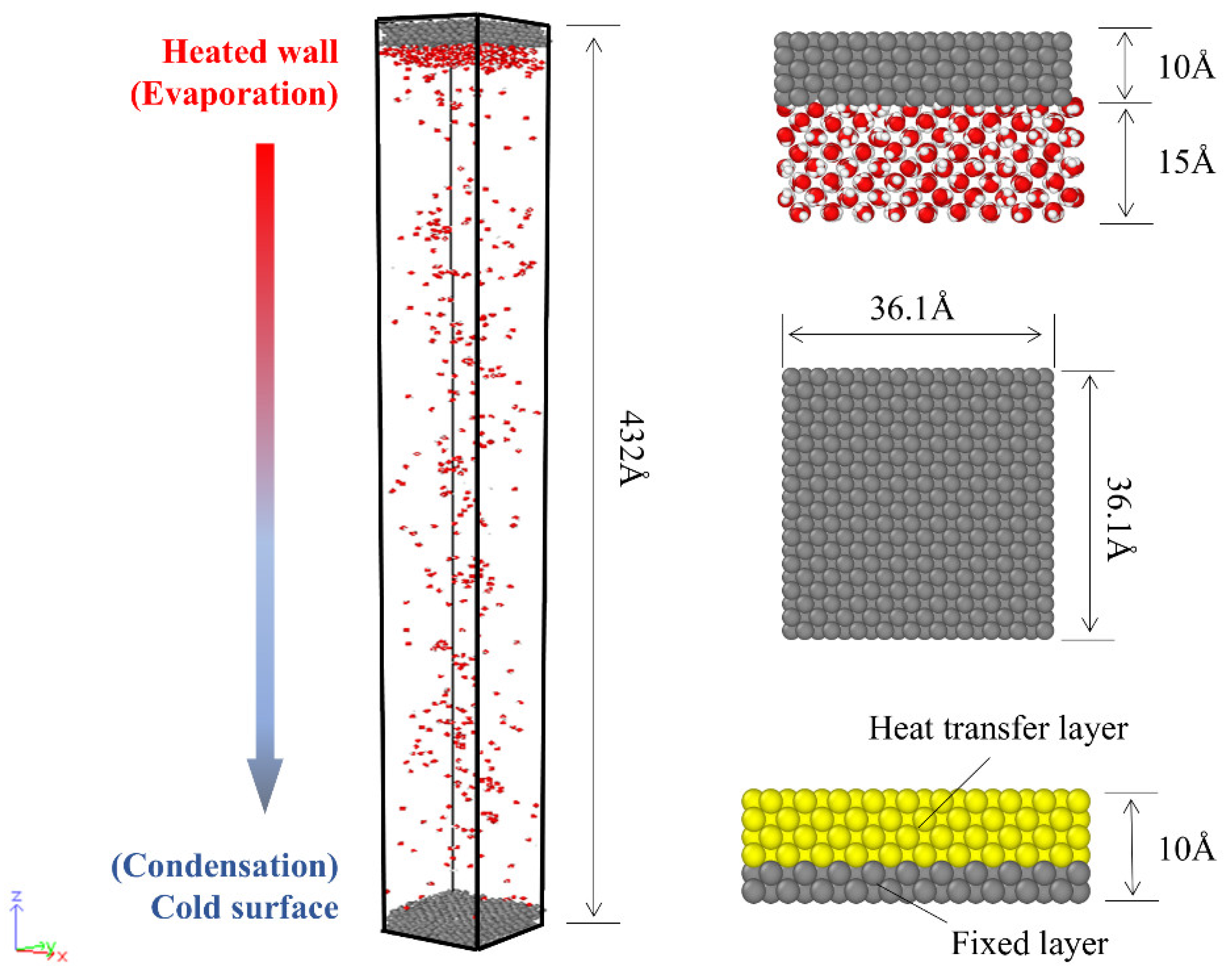
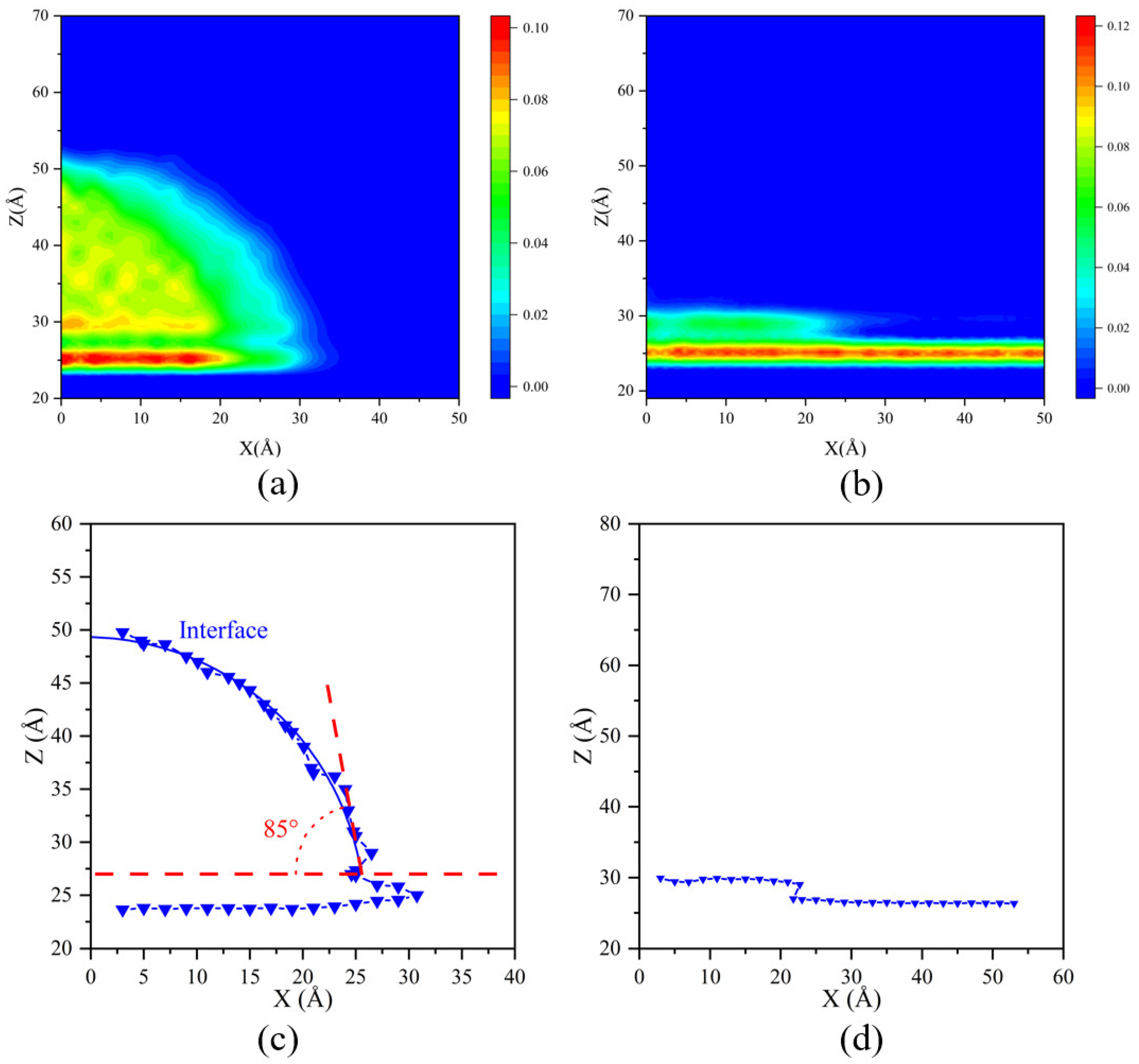
2.1. Model Specifications
2.2. Simulation Methodology
3. Results and Discussion
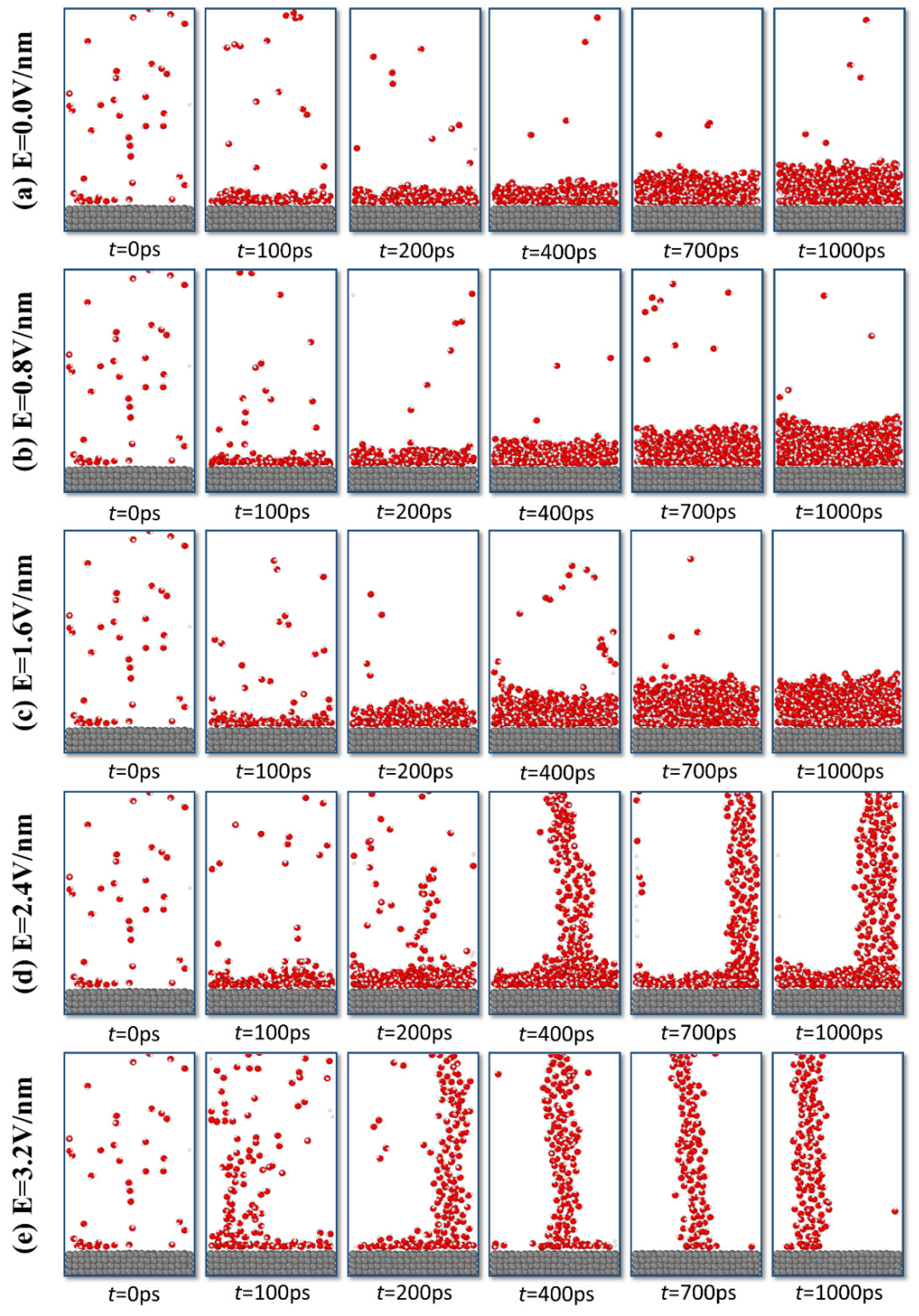
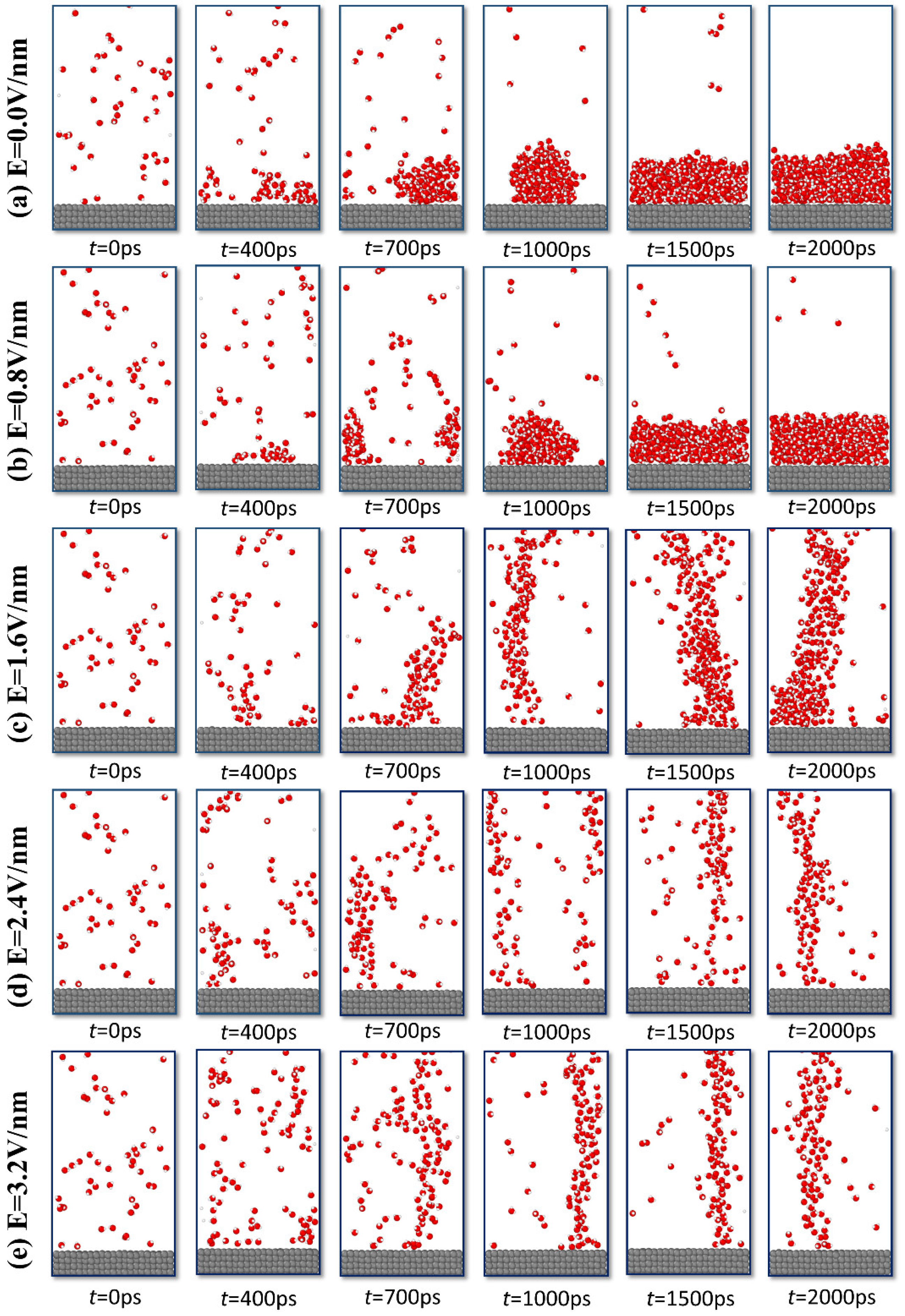
3.1. Condensation Process of Water Molecules
3.2. Condensation Rate
3.3. Condensation Morphology Transformation
4. Conclusions
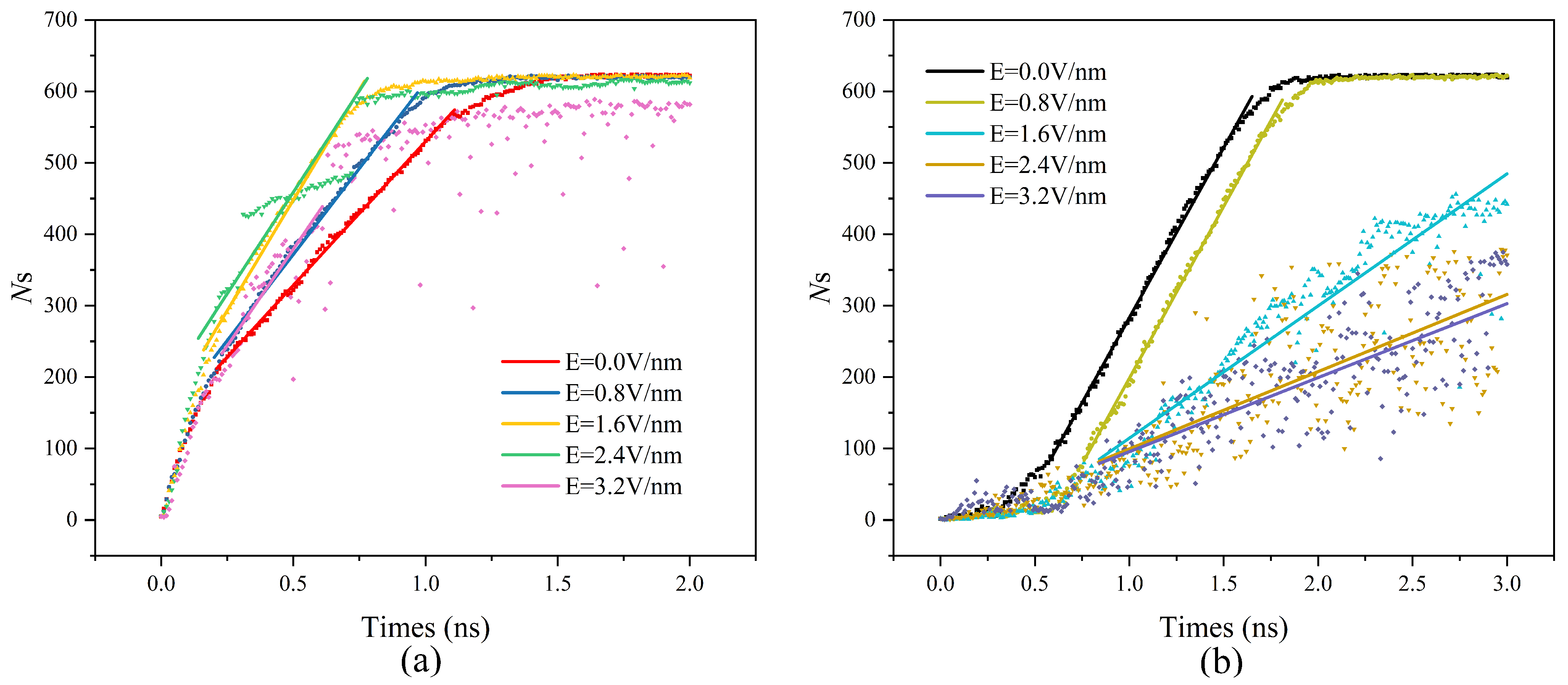
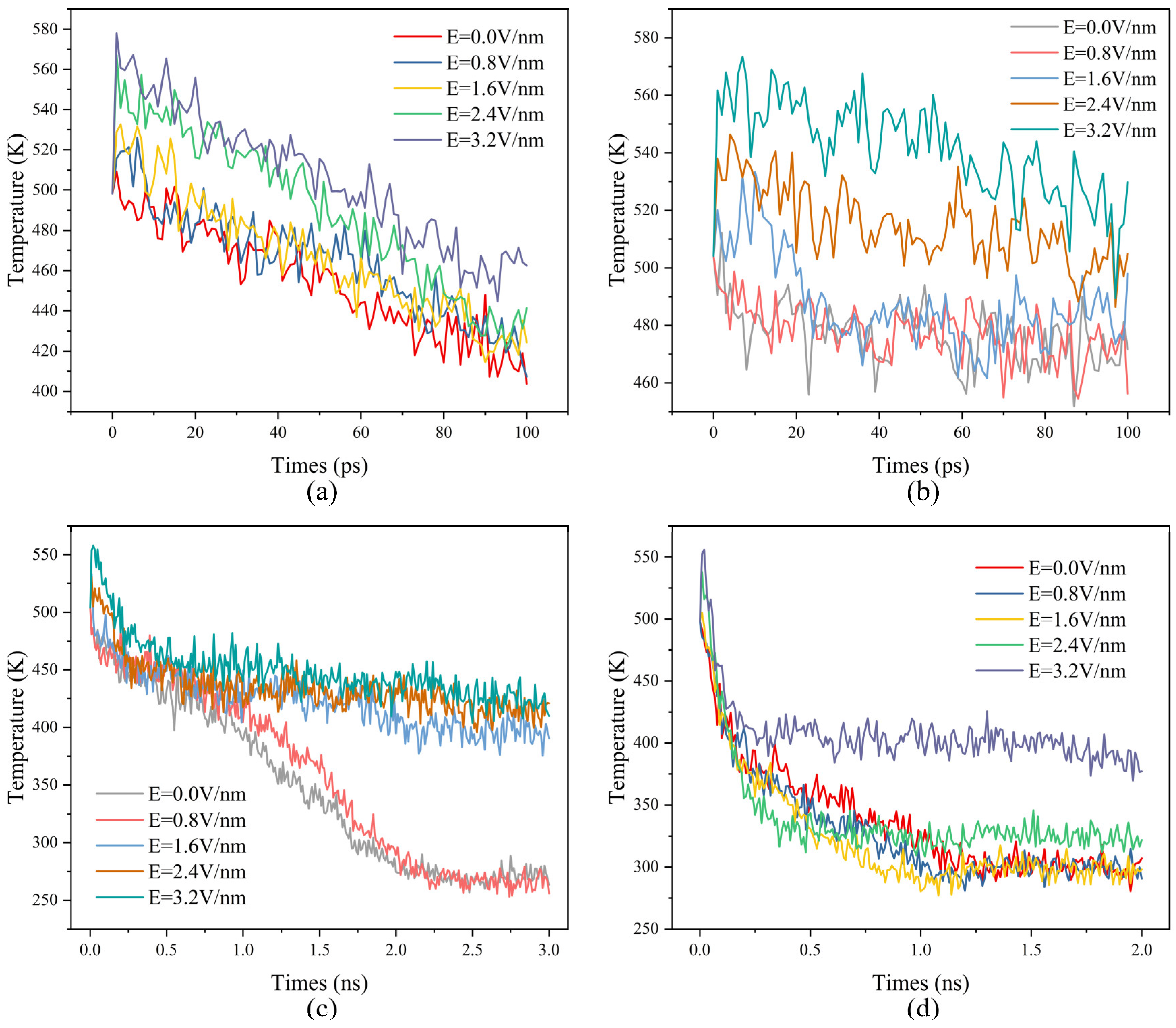
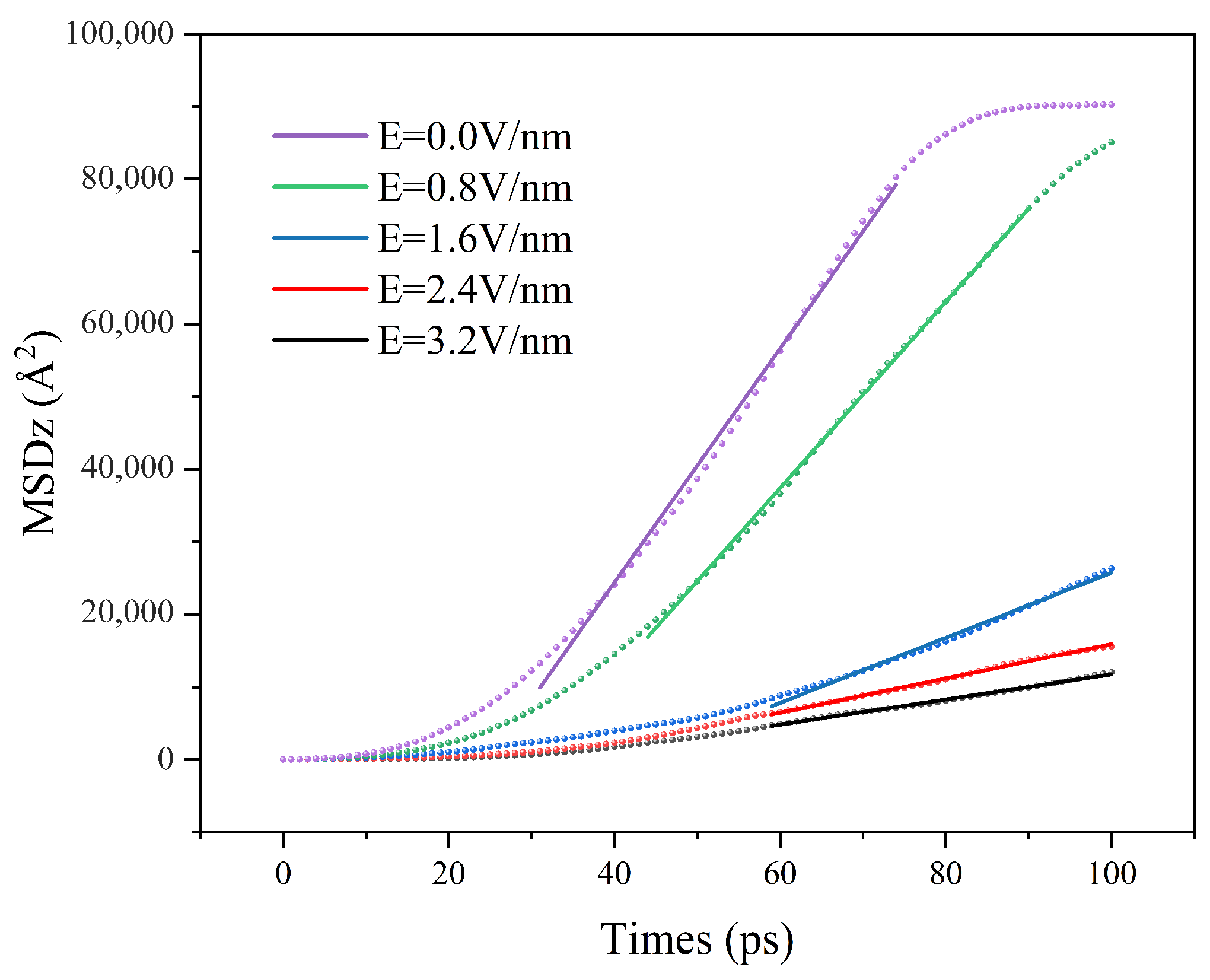
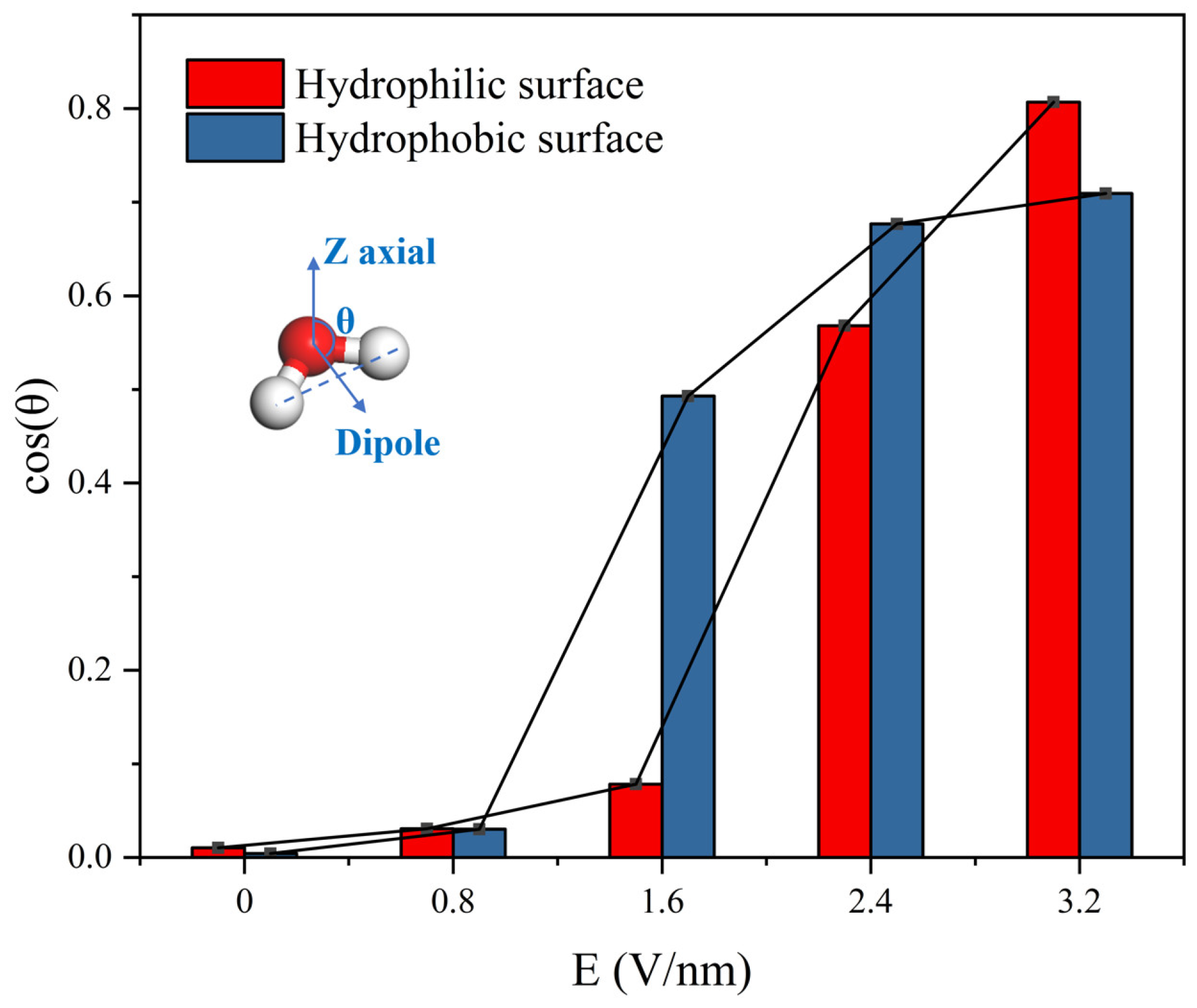
- The effect of electric field strength on the condensation rate is regulated by surface wettability. On hydrophilic surfaces, the condensation rate initially increases and then decreases with increasing electric field strength; the highest condensation efficiency is observed at an electric field strength of 1.6 V/nm. On hydrophobic surfaces, the condensation efficiency gradually decreases with increasing electric field strength. This is primarily due to the combined effects of increased temperature and enhanced mean square displacement in the Z direction.
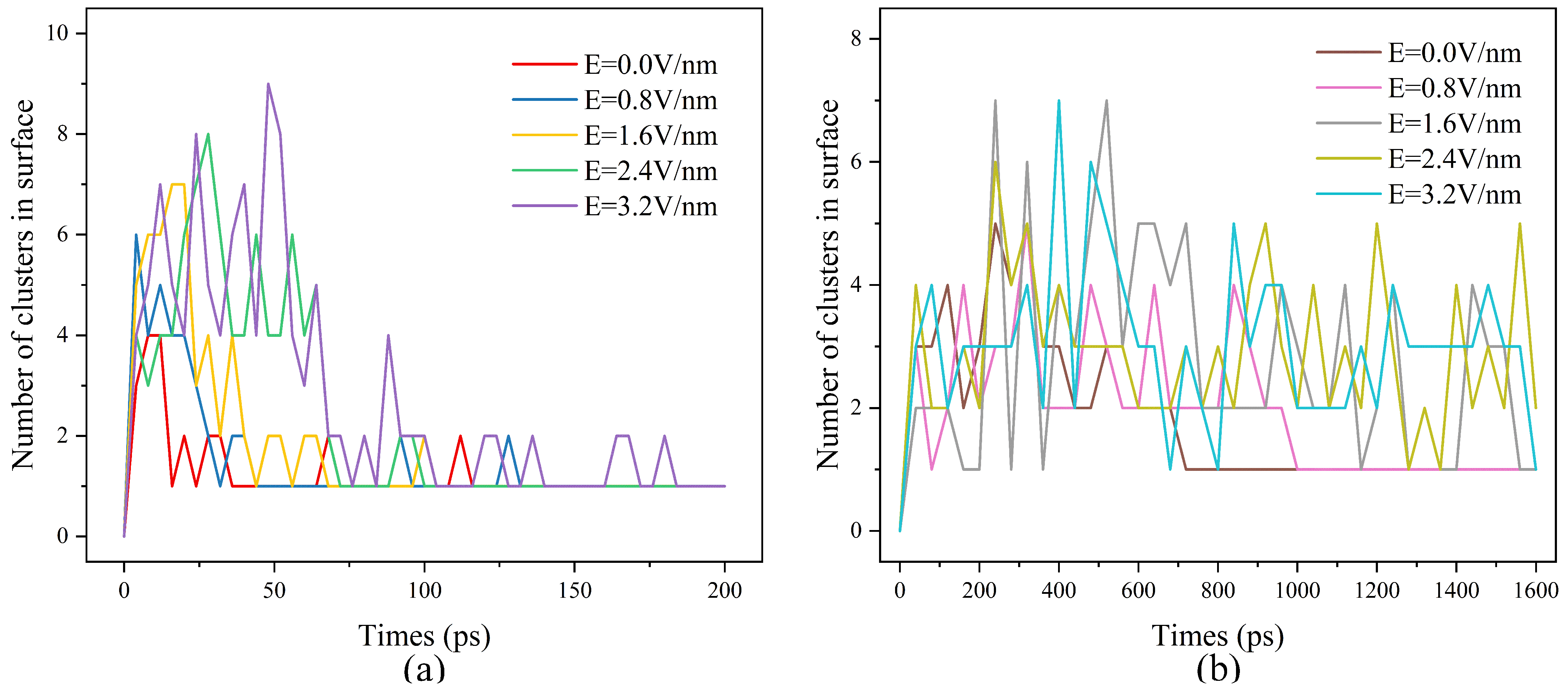
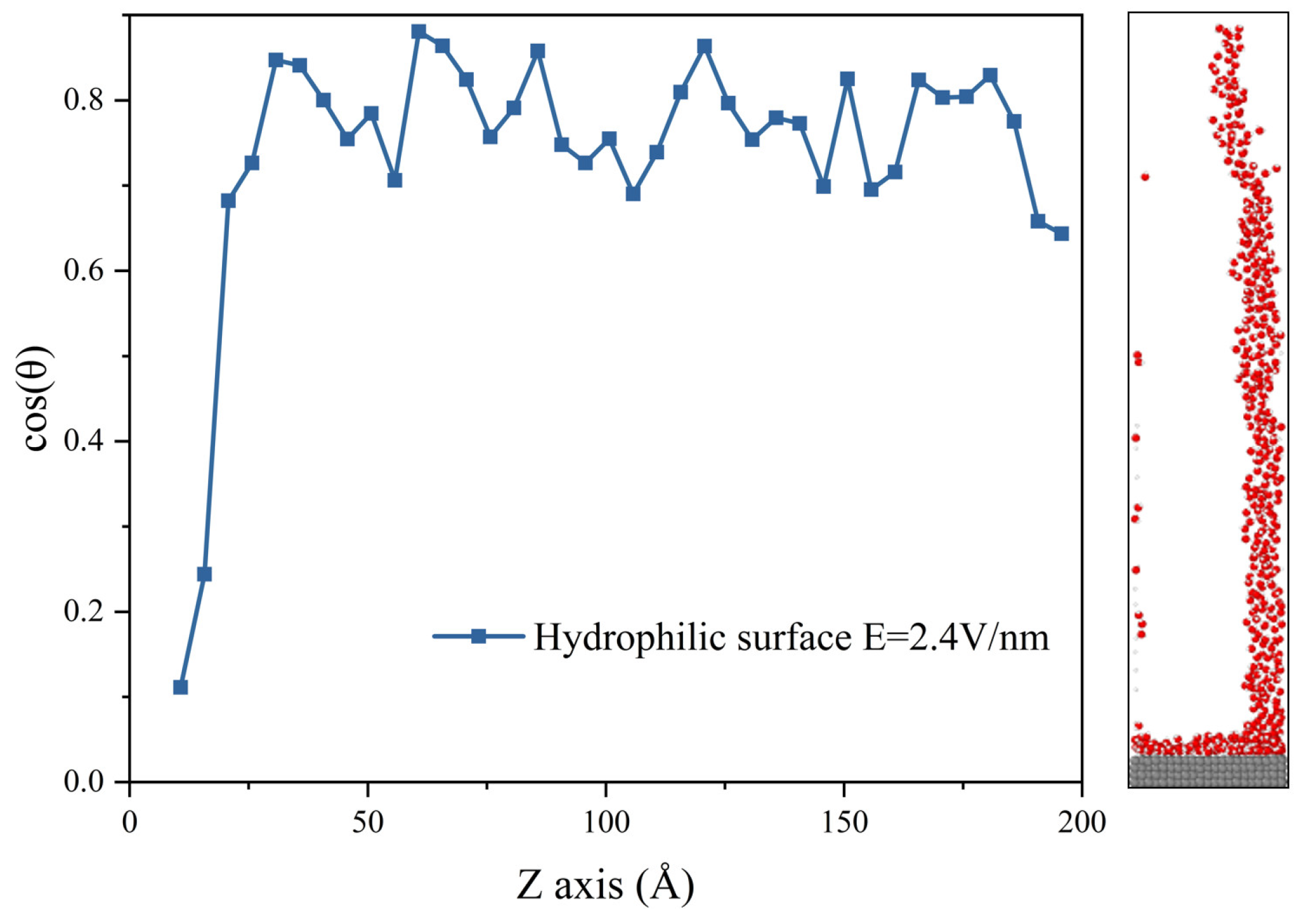
- The orientation of the water molecule dipole moment is jointly regulated by the external electric field, intermolecular interactions between water molecules, and substrate–water interactions. The weaker the wettability, the more readily the electric field assumes a dominant role. Once the electric field becomes dominant, the condensation morphology of water molecules changes, shifting from filmwise condensation to columnar condensation.
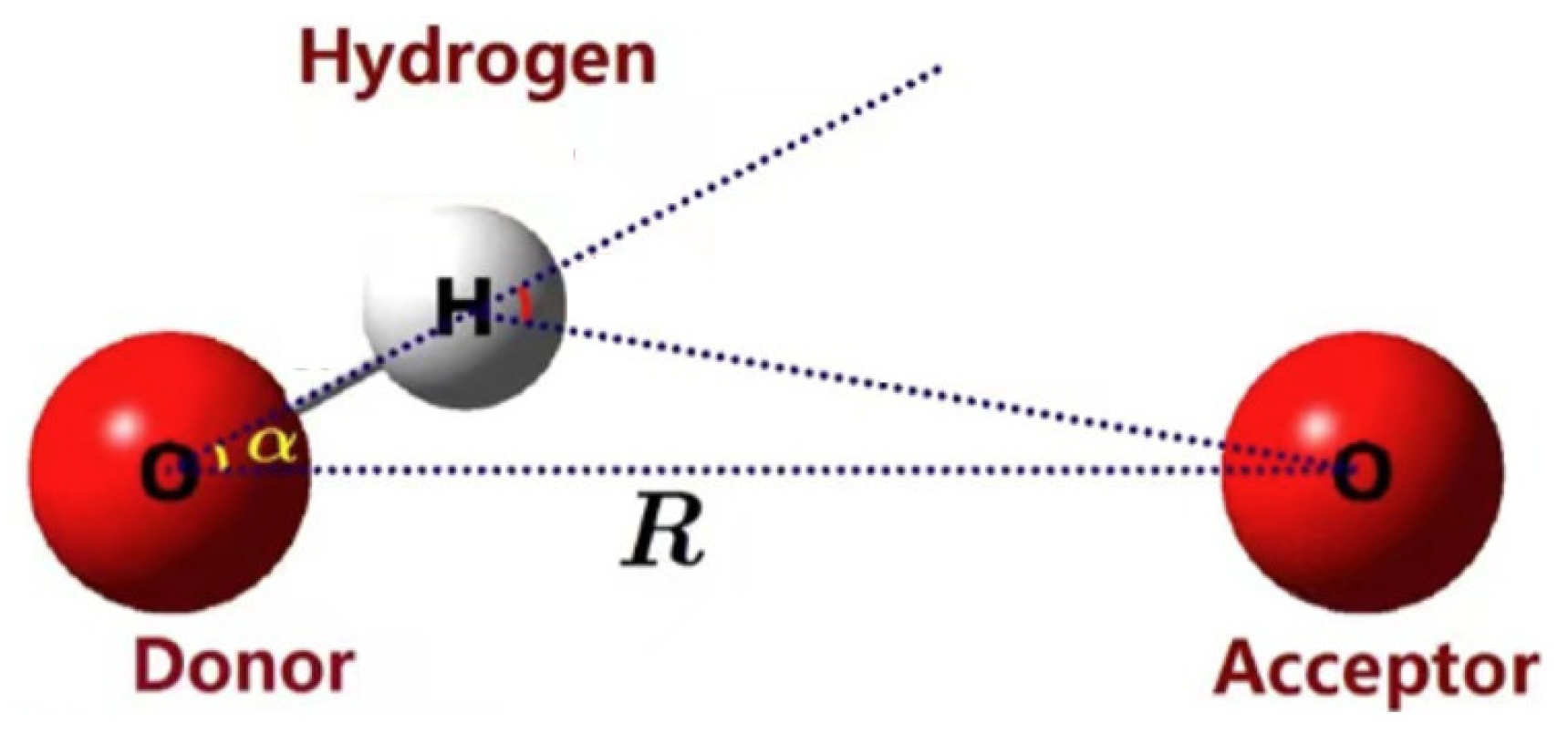
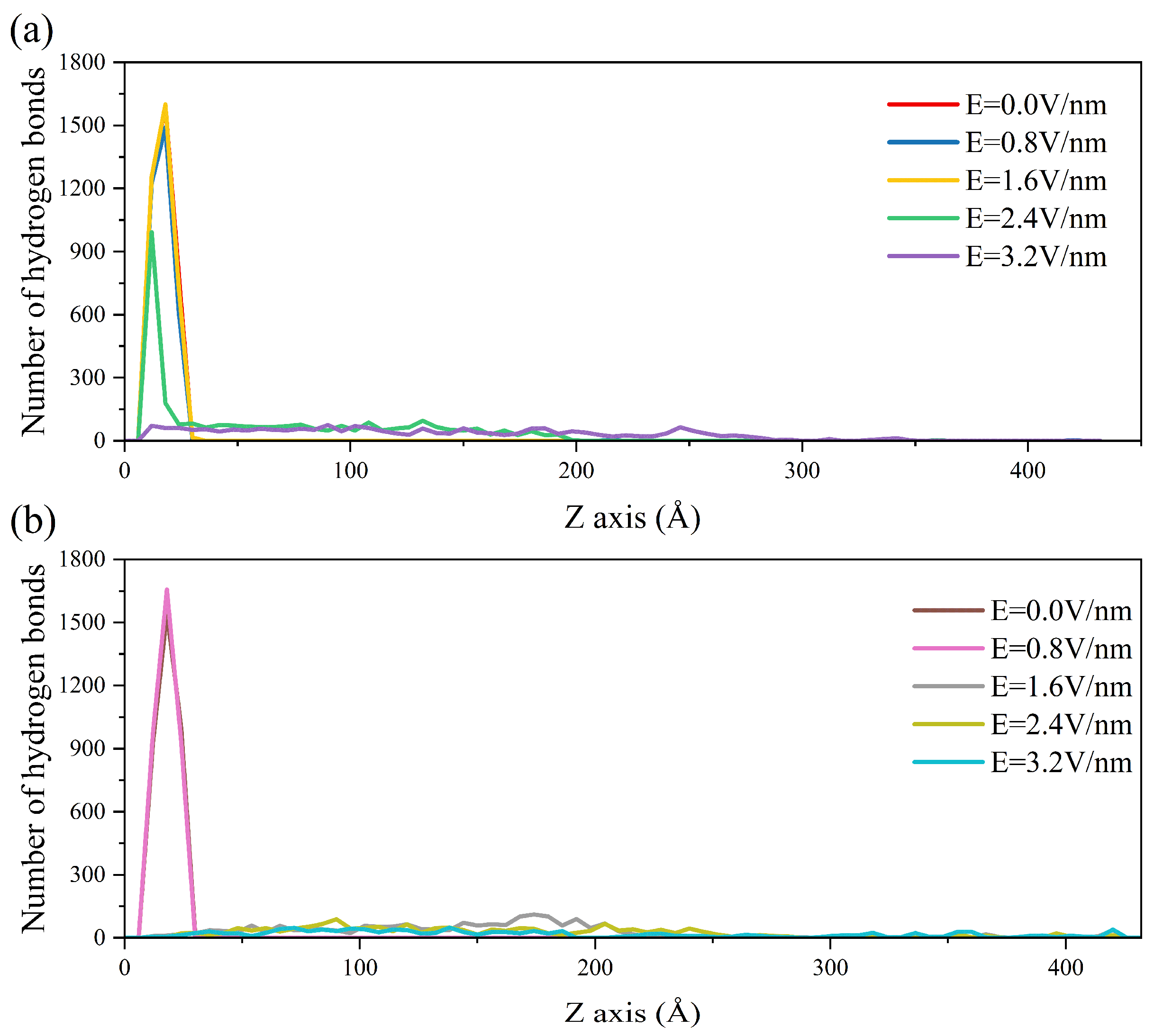
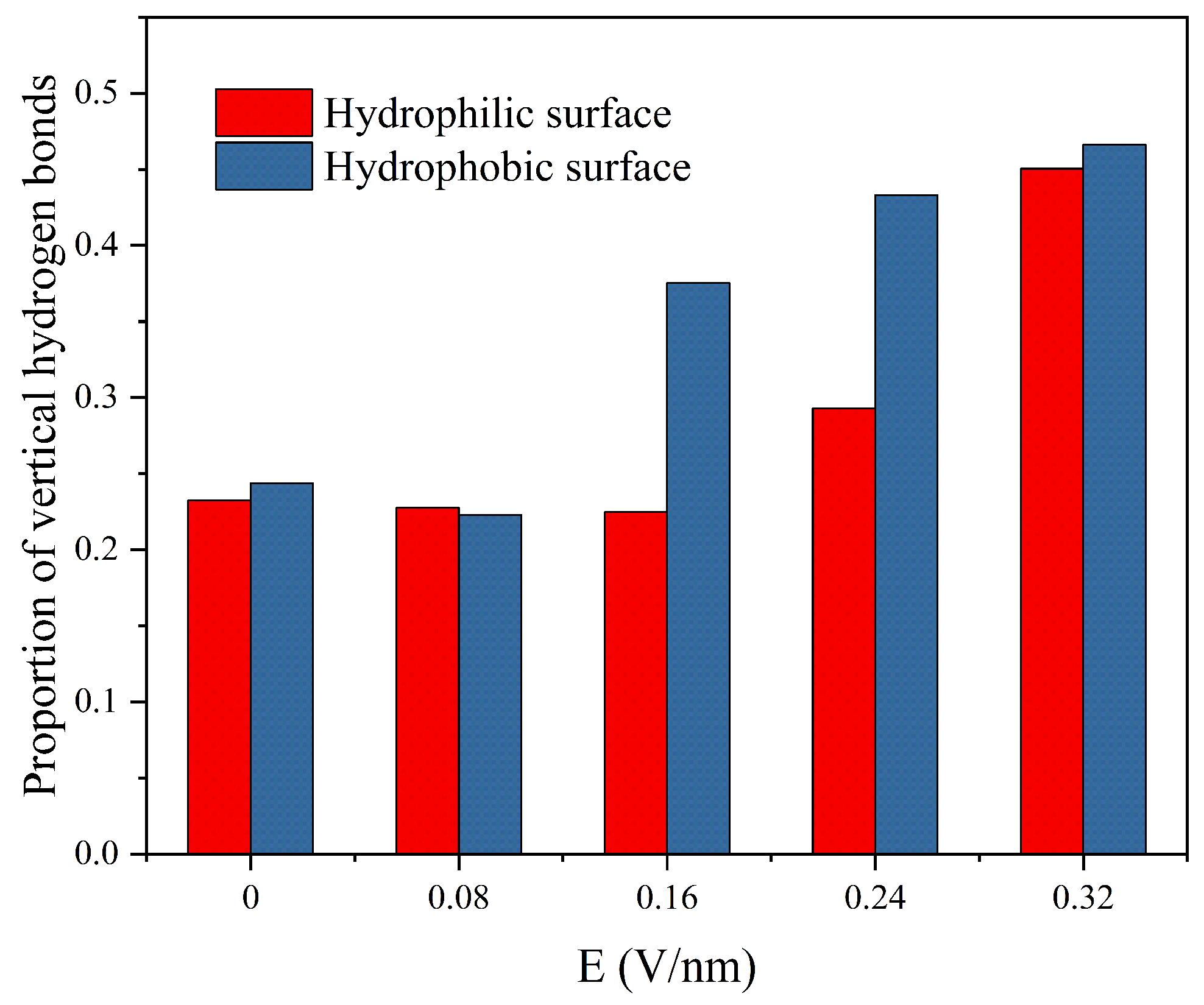
- Under the influence of the electric field, the dipole moments tend to align parallel to the direction of the electric field. This enhances the intermolecular attractive forces in the Z-direction, driving the restructuring of the hydrogen-bond network along the Z-axis. Following this restructuring, water molecules aggregate along the Z-direction electric field, thereby undergoing a morphological transformation.
Supplementary Materials
Author Contributions
Funding
Data Availability Statement
Conflicts of Interest
References
- Qin, X.; Sun, J. Analysis of the causes of underground fog in Dongrong Second Mine. Saf. Coal Mines 2005, 36, 37–39. [Google Scholar] [CrossRef]
- Qingwen, Y.; Yongxing, L.; Haonan, F.; Xiaodong, W.; Mengjiao, J. Experimental Research on the Defogging Efficiency of Wellhead in a Lead-zinc Mine. Min. Res. Dev. 2021, 41, 168–174. [Google Scholar] [CrossRef]
- Mengjiao, J.; Xiaodong, W.; Haonan, F.; Shupeng, C.; Xuelin, T. Research on the Generating Mechanism and Treatment of Fog in the Return Air Wellhead of a Metal Mine. Saf. Environ. Eng. 2023, 30, 44–52+60. [Google Scholar] [CrossRef]
- Martikainen, A. Fog Removal in the Declines of Underground Mines in Sub-Arctic Regions. Ph.D. Thesis, Helsinki University of Technology, Espoo, Finland, 2007. [Google Scholar]
- Martikaninen, A. Fog mesh as an alternative fog removal method in mine ramps. Trans.-Soc. Min. Metall. Explor. Inc. 2007, 320, 38. [Google Scholar]
- Huang, D.B.; Quan, X.J.; Cheng, P. An investigation on vapor condensation on nanopillar array surfaces by molecular dynamics simulation. Int. Commun. Heat Mass Transf. 2018, 98, 232–238. [Google Scholar] [CrossRef] [Scilit]
- Xu, W.; Lan, Z.; Peng, B.L.; Wen, R.F.; Ma, X.H. Effect of surface free energies on the heterogeneous nucleation of water droplet: A molecular dynamics simulation approach. J. Chem. Phys. 2015, 142, 054701. [Google Scholar] [CrossRef] [Scilit] [PubMed]
- Gao, S.; Liao, Q.W.; Liu, W.; Liu, Z.C. Effects of Solid Fraction on Droplet Wetting and Vapor Condensation: A Molecular Dynamic Simulation Study. Langmuir 2017, 33, 12379–12388. [Google Scholar] [CrossRef] [Scilit]
- Gao, S.; Liu, W.; Liu, Z.C. Tuning nanostructured surfaces with hybrid wettability areas to enhance condensation. Nanoscale 2019, 11, 459–466. [Google Scholar] [CrossRef] [Scilit]
- Hu, H.W.; Li, Q.; Liu, S.; Fang, T.Y. Molecular dynamics study on water vapor condensation and infiltration characteristics in nanopores with tunable wettability. Appl. Surf. Sci. 2019, 494, 249–258. [Google Scholar] [CrossRef] [Scilit]
- Xu, W.; Lan, Z.; Peng, B.L.; Wen, R.F.; Ma, X.H. Effect of nano structures on the nucleus wetting modes during water vapour condensation: From individual groove to nano-array surface. RSC Adv. 2016, 6, 7923–7932. [Google Scholar] [CrossRef] [Scilit]
- Wang, Q.; Xie, H.; Liu, J.; Liu, C. Heterogeneous nucleation of argon vapor on the nanostructure surface with molecular dynamics simulation. J. Mol. Graph. Model. 2020, 100, 107674. [Google Scholar] [CrossRef] [Scilit]
- Liao, M.J.; Duan, L.Q. Dependencies of Surface Condensation on the Wettability and Nanostructure Size Differences. Nanomaterials 2020, 10, 1831. [Google Scholar] [CrossRef] [Scilit] [PubMed]
- Wang, Z.J.; Wang, S.Y.; Wang, D.Q.; Yang, Y.R.; Wang, X.D.; Lee, D.J. Water vapor condensation on binary mixed substrates: A molecular dynamics study. Int. J. Heat Mass Transf. 2022, 184, 122281. [Google Scholar] [CrossRef] [Scilit]
- Niu, D.; Gao, H.T.; Yan, Y.Y. A discussion for the formation of cassie droplet on nanostructured surface using molecular dynamics simulation. Case Stud. Therm. Eng. 2021, 25, 100976. [Google Scholar] [CrossRef] [Scilit]
- Li, D.; Li, C.; Li, J.; Yang, W.; Xiao, M.; Zhang, M.; Yang, Y.; Yu, K.; Pan, Y. Efficient Corona Discharge Fog Collector: Multiple Mesh Electrodes with Electric Field Enhances Fog Harvesting. Plasma Chem. Plasma Process. 2022, 42, 1249–1264. [Google Scholar] [CrossRef] [Scilit]
- Li, D.C.; Li, C.; Xiao, M.H.; Li, J.W.; Yang, Z.W.; Fu, Q.X.; Zhang, M.; Yu, K.X.; Pan, Y. Deconstructing plasma fog collection technology: An experimental study on factors impacting collection efficiency. J. Phys. D Appl. Phys. 2024, 57, 075201. [Google Scholar] [CrossRef] [Scilit]
- Zhang, M. Electric Field Facilitated and Enhanced Dehumidification: Multiscale Numerical Transportmodeling and Experimental Study. Ph.D. Thesis, Southeast University, Nanjing, China, 2021. [Google Scholar]
- Wang, P. Research on the Mechanism of Corona Discharge Promoting Water Vapor Condensation and Droplet Growth. Ph.D. Thesis, Huazhong University of Science and Technology, Wuhan, China, 2021. [Google Scholar]
- Morcelli, S.; Cremaschi, L. Analysis of Electro-Static Assisted Air Dehumidification; Auburn Univeristy: Auburn, AL, USA, 2021. [Google Scholar]
- Song, F.H.; Chen, R.F.; Wang, G.; Fan, J.; Niu, H. Coalescence and Break-Up Behaviors of Nanodroplets under AC Electric Field. Molecules 2023, 28, 3064. [Google Scholar] [CrossRef] [Scilit]
- He, X.; Zhang, B.X.; Wang, S.L.; Wang, Y.F.; Yang, Y.R.; Wang, X.D.; Lee, D.J. Electrowetting-based control of wetting transition of a nanodroplet on pillar-arrayed surfaces. J. Mol. Liq. 2022, 345, 117049. [Google Scholar] [CrossRef] [Scilit]
- Song, F.H.; Ma, L.; Fan, J.; Chen, Q.C.; Zhang, L.H.; Li, B.Q. Wetting Behaviors of a Nano-Droplet on a Rough Solid Substrate under Perpendicular Electric Field. Nanomaterials 2018, 8, 340. [Google Scholar] [CrossRef] [Scilit] [PubMed]
- Wen, K.Q.; Chen, X.M.; Cheng, S.Y.; Wang, X.; Ma, H.C.; Song, Q.H.; Zhao, Q.Y.; Tian, H.M.; Zhang, J.; Shao, J.Y. Modulation of wetting state switching of droplets on superhydrophobic microstructured surfaces by external electric field. J. Colloid Interface Sci. 2024, 672, 533–542. [Google Scholar] [CrossRef] [Scilit]
- Zhang, B.X.; Wang, S.L.; He, X.; Yang, Y.R.; Wang, X.D. Dynamic spreading of a water nanodroplet on a nanostructured surface in the presence of an electric field. J. Mol. Liq. 2021, 333, 116039. [Google Scholar] [CrossRef] [Scilit]
- Kargar, M.; Lohrasebi, A. Deformation of water nano-droplets on graphene under the influence of constant and alternative electric fields. PCCP 2017, 19, 26833–26838. [Google Scholar] [CrossRef] [Scilit]
- Zong, D.; Yang, Z.; Duan, Y. Wettability of a nano-droplet in an electric field: A molecular dynamics study. Appl. Therm. Eng. 2017, 122, 71–79. [Google Scholar] [CrossRef] [Scilit]
- Miqdad, A.M.; Datta, S.; Das, A.K.; Das, P.K. Effect of electrostatic incitation on the wetting mode of a nano-drop over a pillar-arrayed surface. RSC Adv. 2016, 6, 110127–110133. [Google Scholar] [CrossRef] [Scilit]
- Yan, X.Z.; Li, J.; Li, L.C.; Huang, Z.Y.; Wang, F.P.; Wei, Y.A. Droplet condensation on superhydrophobic surfaces with enhanced dewetting under a tangential AC electric field. Appl. Phys. Lett. 2016, 109, 161601. [Google Scholar] [CrossRef] [Scilit]
- He, X.; Wang, S.-L.; Yang, Y.-R.; Wang, X.-D.; Chen, J.-Q. Electro-coalescence of two charged droplets under pulsed direct current electric fields with various waveforms: A molecular dynamics study. J. Mol. Liq. 2020, 312, 113429. [Google Scholar] [CrossRef] [Scilit]
- Ding, W.Y.; Wang, M.; Dai, X.B.; Zhang, J.Z.; Xin, G.M.; Wang, X.Y. Dewetting transition of water on nanostructured and wettability patterned surfaces: A molecular dynamics study. J. Mol. Liq. 2021, 336, 116869. [Google Scholar] [CrossRef] [Scilit]
- Ghahremanian, S.; Abbassi, A.; Mansoori, Z.; Toghraie, D. Effect of nanostructured surface configuration on the interface properties and heat transfer of condensation process of argon inside nanochannels using molecular dynamics simulation. J. Mol. Liq. 2021, 339, 117281. [Google Scholar] [CrossRef] [Scilit]
- Hasan, M.N.; Rabbi, K.F.; Sabah, A.; Ahmed, J.; Kuri, S.K.; Rakibuzzaman, S.M. Molecular Dynamics Study on Evaporation and Condensation Characteristics of Thin Film Liquid Argon on Nanostructured Surface in Nano-scale Confinement. In Proceedings of the 7th Bangladesh-Society-of-Mechanical-Engineers (BSME) International Conference on Thermal Engineering (ICTE), Dhaka, Bangladesh, 22–24 December 2016; Bangladesh University of Engineering and Technology (BUET): Dhaka, Bangladesh, 2017. [Google Scholar]
- Mishin, Y.; Mehl, M.J.; Papaconstantopoulos, D.A.; Voter, A.F.; Kress, J.D. Structural stability and lattice defects in copper: Ab initio, tight-binding, and embedded-atom calculations. Phys. Rev. B 2001, 63, 224106. [Google Scholar] [CrossRef] [Scilit]
- Mark, P.; Nilsson, L. Structure and dynamics of the TIP3P, SPC, and SPC/E water models at 298 K. J. Phys. Chem. B 2001, 105, 9954–9960. [Google Scholar] [CrossRef] [Scilit]
- Varilly, P.; Chandler, D. Water Evaporation: A Transition Path Sampling Study. J. Phys. Chem. B 2013, 117, 1419–1428. [Google Scholar] [CrossRef] [Scilit]
- Wang, Y.-H.; Wang, S.-Y.; Lu, G.; Wang, X.-D. Effects of wettability on explosive boiling of nanoscale liquid films: Whether the classical nucleation theory fails or not? Int. J. Heat Mass Transf. 2019, 132, 1277–1283. [Google Scholar] [CrossRef] [Scilit]
- Seyf, H.R.; Zhang, Y. Effect of nanotextured array of conical features on explosive boiling over a flat substrate: A nonequilibrium molecular dynamics study. Int. J. Heat Mass Transf. 2013, 66, 613–624. [Google Scholar] [CrossRef] [Scilit]
- Wang, W.; Zhang, H.; Tian, C.; Meng, X. Numerical experiments on evaporation and explosive boiling of ultra-thin liquid argon film on aluminum nanostructure substrate. Nanoscale Res. Lett. 2015, 10, 158. [Google Scholar] [CrossRef] [Scilit]
- Guo, W.T.; Zeng, L.C.; Lu, Y.; Chen, J. Tuning surface hybrid-wettability to enhance the vapour film phenomenon induced by boiling heat transfer: Molecular dynamics. Int. Commun. Heat Mass Transf. 2022, 136, 106172. [Google Scholar] [CrossRef] [Scilit]
- Chen, L.; Wang, S.Y.; Xiang, X.; Tao, W.Q. Mechanism of surface nanostructure changing wettability: A molecular dynamics simulation. Comput. Mater. Sci. 2020, 171, 109223. [Google Scholar] [CrossRef] [Scilit]
- Wang, S.Y.; Wang, Z.J.; Wang, D.Q.; Yang, Y.R.; Zheng, S.F.; Gao, S.R.; Wang, X.D.; Lee, D.J. Nucleation of water vapor on nanodimpled surfaces: Effects of curvature radius and surface wettability. Appl. Therm. Eng. 2023, 219, 119437. [Google Scholar] [CrossRef] [Scilit]
- Plimpton, S. Fast Parallel Algorithms for Short-Range Molecular Dynamics. J. Comput. Phys. 1995, 117, 1–19. [Google Scholar] [CrossRef] [Scilit]
- Stukowski, A. Visualization and analysis of atomistic simulation data with OVITO-the Open Visualization Tool. Modell. Simul. Mater. Sci. Eng. 2010, 18, 015012. [Google Scholar] [CrossRef] [Scilit]
- Stillinger, F.H., Jr. Rigorous basis of the frenkel-band theory of association equilibrium. J. Chem. Phys. 1963, 38, 1486–1494. [Google Scholar] [CrossRef] [Scilit]
- Hou, Y.M.; Yu, M.; Chen, X.M.; Wang, Z.K.; Yao, S.H. Recurrent Filmwise and Dropwise Condensation on a Beetle Mimetic Surface. ACS Nano 2015, 9, 71–81. [Google Scholar] [CrossRef] [Scilit]
- Chen, J.; Pan, Z. Comparative analysis of two kinds of hydrogen bond criteria in the liquid water system. J. Mol. Sci. 2015, 31, 497–501. [Google Scholar] [CrossRef]
- Luzar, A.; Chandler, D. Effect of environment on hydrogen bond dynamics in liquid water. Phys. Rev. Lett. 1996, 76, 928. [Google Scholar] [CrossRef] [Scilit]


Disclaimer/Publisher’s Note: The statements, opinions and data contained in all publications are solely those of the individual author(s) and contributor(s) and not of MDPI and/or the editor(s). MDPI and/or the editor(s) disclaim responsibility for any injury to people or property resulting from any ideas, methods, instructions or products referred to in the content. |
© 2026 by the authors. Licensee MDPI, Basel, Switzerland. This article is an open access article distributed under the terms and conditions of the Creative Commons Attribution (CC BY) license.
Share and Cite
Zhu, H.; Wu, Y.; Yuan, Q. Synergistic Regulation of Electric Field and Wettability on Water Molecule Condensation: A Molecular Dynamics Study. Symmetry 2026, 18, 773. https://doi.org/10.3390/sym18050773
Zhu H, Wu Y, Yuan Q. Synergistic Regulation of Electric Field and Wettability on Water Molecule Condensation: A Molecular Dynamics Study. Symmetry. 2026; 18(5):773. https://doi.org/10.3390/sym18050773
Chicago/Turabian StyleZhu, Hongqing, Yan Wu, and Qi Yuan. 2026. "Synergistic Regulation of Electric Field and Wettability on Water Molecule Condensation: A Molecular Dynamics Study" Symmetry 18, no. 5: 773. https://doi.org/10.3390/sym18050773
APA StyleZhu, H., Wu, Y., & Yuan, Q. (2026). Synergistic Regulation of Electric Field and Wettability on Water Molecule Condensation: A Molecular Dynamics Study. Symmetry, 18(5), 773. https://doi.org/10.3390/sym18050773