Next Article in Journal
Symmetry-Based Selection of Gravitational Lagrangians via Noether Approach
Previous Article in Journal
A Three-Player Asymmetric Game Model with Chinese Local Universities’ Transformation
 
 
Due to scheduled maintenance work on our servers, there may be short service disruptions on this website between 11:00 and 12:00 CEST on March 28th.
Review

A Short Review on the Theoretical Studies of Silicene

1
School of Intelligent Manufacturing, Sichuan University of Arts and Science, Dazhou 635000, China
2
Sichuan Province’s University Key Laboratory of Intelligent Photoelectric Detection System and Its Application, Sichuan University of Arts and Science, Dazhou 635000, China
*
Author to whom correspondence should be addressed.
Symmetry 2026, 18(4), 569; https://doi.org/10.3390/sym18040569
Submission received: 2 February 2026 / Revised: 19 March 2026 / Accepted: 23 March 2026 / Published: 27 March 2026
(This article belongs to the Section Engineering and Materials)

Abstract

Silicene, an atomically thin monolayer allotrope of silicon, had emerged as a prominent topic in condensed matter physics and material science due to its novel properties and promising potential applications. Although challenges exist in fabricating freestanding silicene because of its sensitivity to the conventional environment, its theoretical study continues to develop intensively. This short review highlights the progress made in the ab initio simulations of silicene, such as geometry optimization of silicene and its electrical structure and physical characteristics including optical properties, topological properties and mechanical behavior. The theories and methods used for the theoretical studies of silicene could provide a framework for investigating other one-atom-thick two-dimensional materials with Archimedean lattice structures.

1. Introduction

Since Novoselov and his collaborators’ groundbreaking mechanical extraction of graphene from graphite in 2004 [1], Xenes, which are composed of a single type of element primarily from groups III through VI on the periodic table, such as boron, silicon, germanium, phosphorus and tellurium, have triggered great interest due to their unique properties including tunable bandgaps, strong spin–orbit coupling, high carrier mobility and promising potential applications in the fields of energy storage, catalysis, spintronics, topological physics and so forth [2,3,4,5,6]. Atomically thin two-dimensional materials’ electronic properties could vary from normal insulators to semiconductors with tunable bandgaps and even semimetal modulated by the substrates, strain engineering and chemical functionalization. For instance, the electronic structure of single-sheet MoS2 nanoparticles up to ∼3.4 nm is entirely dominated by surface states near the Fermi level [7]. The electronic properties of graphene stacks and layered materials XY3 (X: Group-14 element, Y: Group-15 element) vary with stacking order, number of layers and thickness [8,9]. Among Xenes, silicene stands out due to its robust spin–orbit coupling and tunable bandgap, which makes it highly compatible with the existing silicon-based electronics. So silicene has emerged as a hot topic in condensed matter physics and material sciences, as evidenced by numerous comprehensive reviews [3,10,11,12,13,14]. The term “silicene” was coined by Guzmán-Verri and Lew Yan Voon in 2007 [15].
As computational power and mathematical algorithms advance, computer simulations have become indispensable tools to design and develop new materials. The following sections mainly review the ab initio simulations on silicene.

2. Geometry

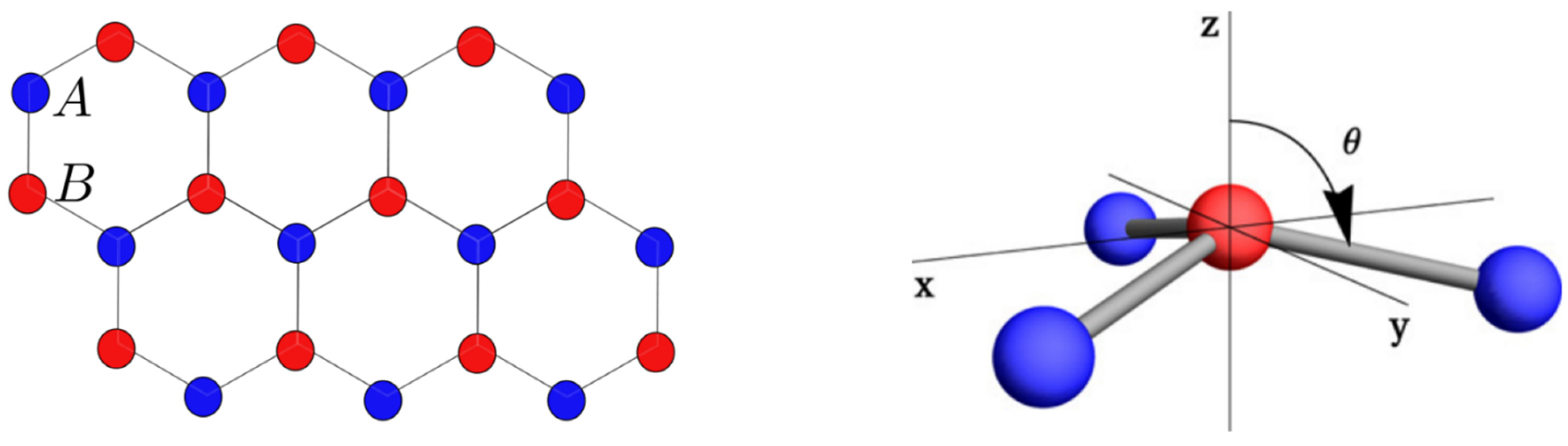
It had been widely accepted that the physical and chemical properties of materials closely depend on their geometry. The initial and crucial step of first-principles calculations within density functional theory (DFT) [16,17], which had been the cornerstone of condensed matter physics and material sciences methods, is to optimize the original geometry to identify the ground-state configuration. Geometry optimization in DFT involves finding the local minimum of the Born–Oppenheimer potential energy surface E ( R I ) , and the condition for a ground state is that the Hellmann–Feynman forces on each atom are zero, i.e., F I = E ( R I ) = 0 , where R I depicts the nuclear coordinates. Dynamical stability requires that all eigenvalues of the dynamical matrix D i j ( q ) are positive for every wave vector q in the Brillouin zone. An imaginary frequency (often plotted as a negative value) corresponds to a negative eigenvalue, indicating that a small perturbation will lead to a structural distortion, proving the structure is not a local minimum on the energy surface. The mathematical basis for stability is that the time-averaged positions of atoms fluctuate around their initial lattice sites at a finite temperature (e.g., 300 K or 1000 K) over a long simulation time (e.g., 10 ps), without undergoing a phase transition or bond breaking. So carrying out phonon dispersion calculations and performing ab initio molecular dynamics (AIMD) simulations are necessary steps for assessing the stability of the optimized structure. In 1994, Takeda and Shiraishi performed groundbreaking first-principles calculations on one-atom-thick two-dimensional silicon and discovered that the ground-state structure of one-atom-thick two-dimensional silicon took on a low-buckled hexagonal form with D3d symmetry [18], as shown in Figure 1.
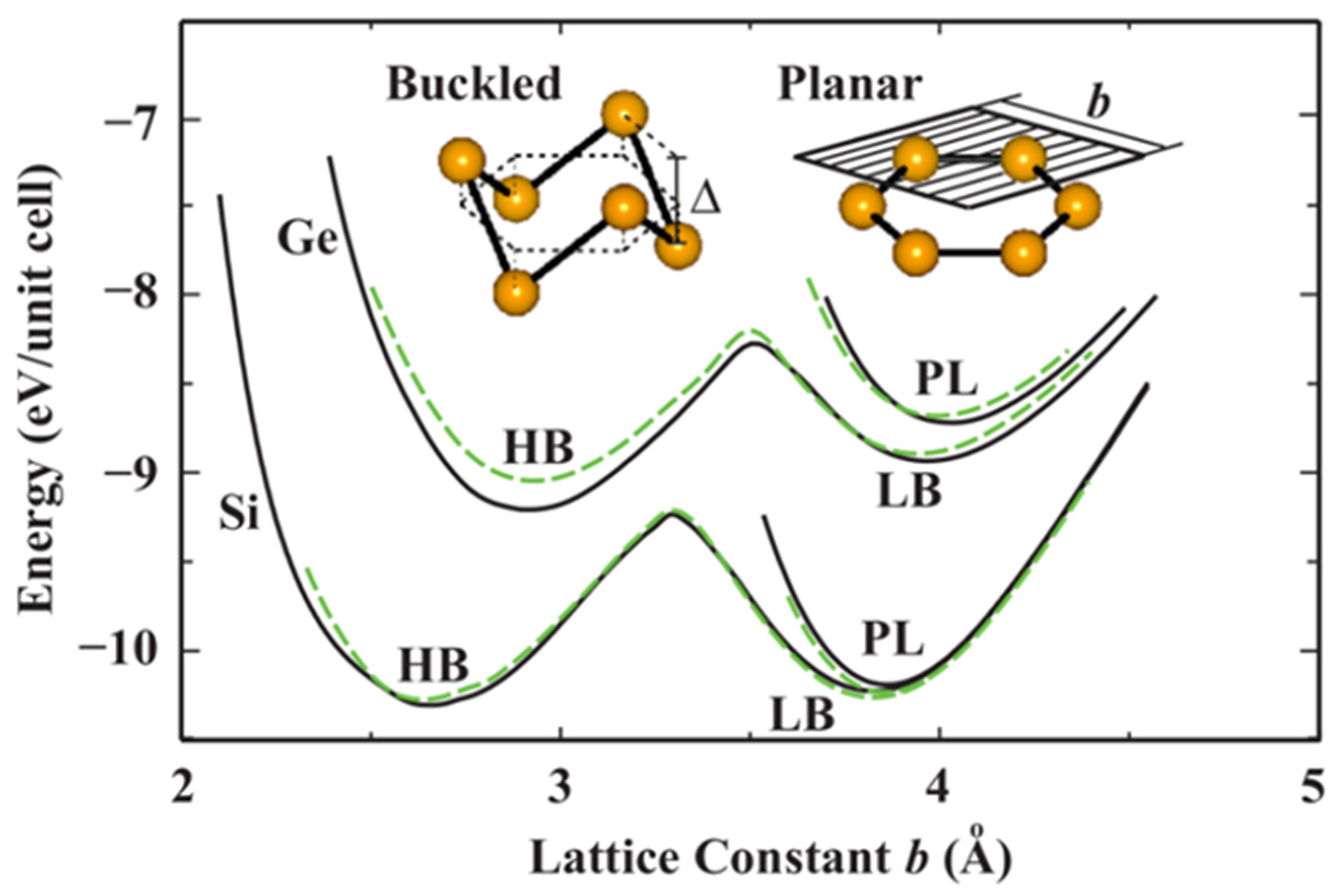
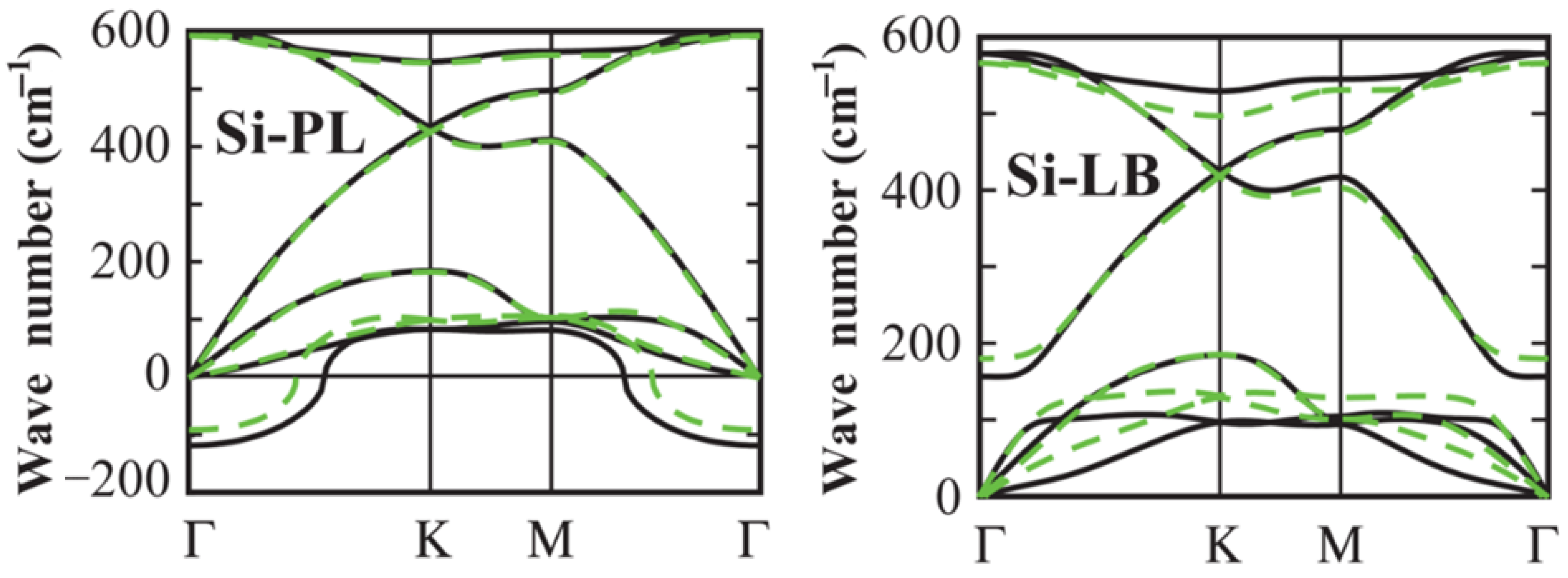
In 2009, Ciraci and his collaborators optimized the geometry of atomically thin two-dimensional silicon isomers using the Local Density Approximation (LDA) with the Projected Augmented Wave (PAW) potential and ultrasoft pseudopotentials and obtained more-detailed information about the buckling height of silicene [20]. Based on the evolution of total energy with the changes in lattice constant of the different two-dimensional silicon allotropes and their phonon dispersion, as shown in Figure 2 and Figure 3, they concluded that the low-buckled silicon allotrope, called silicene with a buckling height of δ = 0.44 Å, is more stable than both the ideal planar hexagonal structure and the high-buckled allotrope, which has a buckling height of δ = 2.00 Å.
The phonon dispersion of the planar silicon allotrope exhibits imaginary values, as depicted in Figure 3, suggesting an unstable structure. Researchers concluded that the buckling of silicene resulted from the longer bond length (~2.28 Å) between nearest-neighbor silicon atoms compared with that of carbon atoms in graphene. The bond between nearest-neighbor silicon atoms in silicene favored sp2-sp3 mixed orbital hybridization over pure sp2 hybridization. The buckled structure of silicene influences its chemical and physical properties; specifically, its chemical activity and electrical characteristics vary with the buckling distance.

3. Electronic Structures

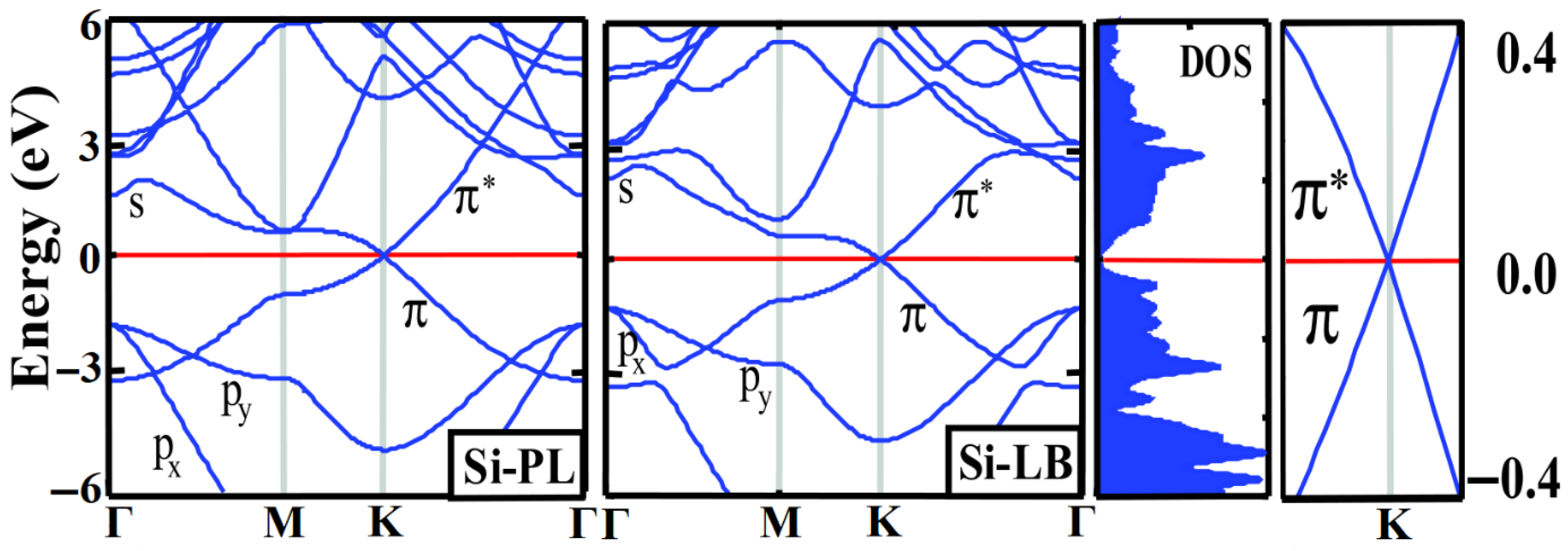
The energy band structure and density of states characterize the electronic properties of materials. The energy band structures of ideal planar silicon and silicene, along with the density of states of silicene without spin–orbit coupling, are shown in Figure 4. Both energy band structures exhibit comparable topologies, with the π and π* bands crossing linearly at the K and K′ points in the Brillouin zone [20].
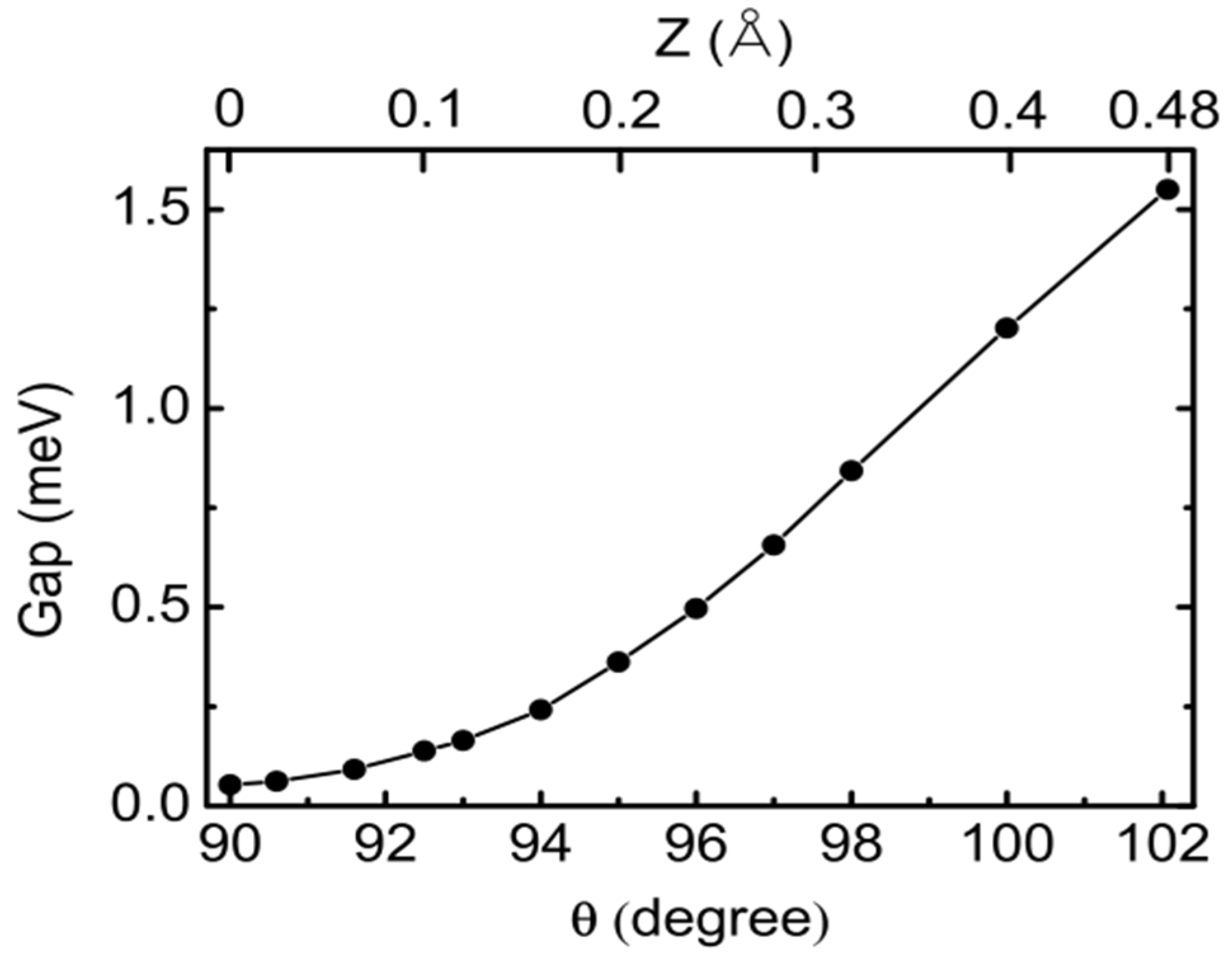
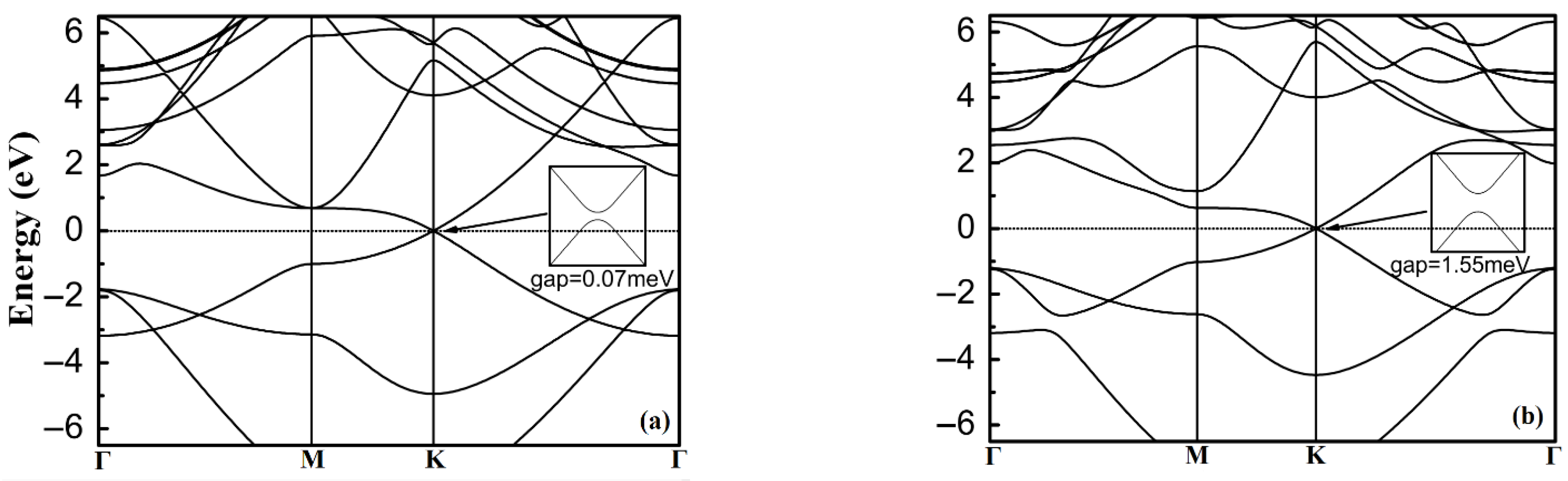
In 2011, prof. Yu-Gui Yao’s group performed first-principles calculations to investigate the effect of spin–orbit coupling on the energy gap and band topology of the ideal planar silicon configuration and silicene. They presented the evolution of the gap, as shown in Figure 5, opened by spin–orbit coupling for the π orbital at the Dirac point K from the planar honeycomb geometry to the low-buckled honeycomb geometry. Meanwhile, as shown in Figure 6, they provided the energy band structure and the gap opened by spin–orbit coupling for the ideal planar silicon configuration and silicene in detail. The band gap of 1.55 meV of silicene is much higher than that of graphene, which makes the quantum spin Hall effect observable in an experimentally accessible low-temperature regime in silicene [21,22].
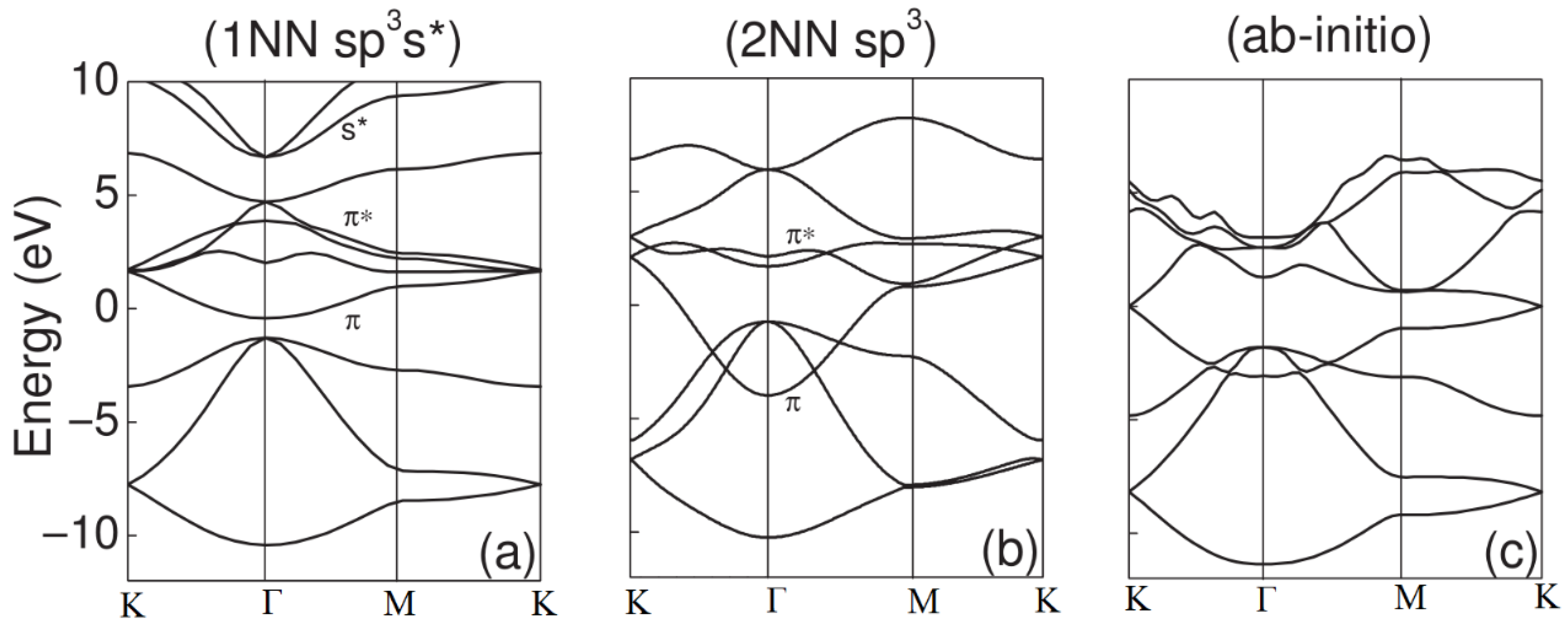
Due to inconsistencies between ab initio calculations and the π-TB model considering the nearest-neighbor interactions, as proposed by Yang and Ni [23], Guzmá-Verri and Lew Yan Voon developed a unifying tight-binding Hamiltonian. They incorporated both first-nearest-neighbor (1NN) and second-nearest-neighbor (2NN) interactions, introducing the coupled σ-π tight-binding model to analyze the electronic properties of silicon-based nanomaterials, including silicene [15]. Figure 7 shows the calculated band structure of silicene from Guzmá-Verri and Lew Yan Voon compared with the result from Yang and Ni. The band structures calculated by the sp3s* (1NN) and sp3 (2NN) models are shown, respectively, in Figure 7a,b while the band structure calculated by Yang and Ni using the ab initio method is shown in Figure 7c. The π energy bands of silicene obtained from both models sp3s* and sp3 have similar form to the corresponding one in graphene because of the same lattice structure, but the π* the band changes its curvature due to the 2NN interactions or the signs of the TB parameters. The difference in band structures of silicene obtained by the sp3s* (1NN) model and the ab initio calculation about theΓpoint can be attributed to the 1NN approximation in the sp3s* model.
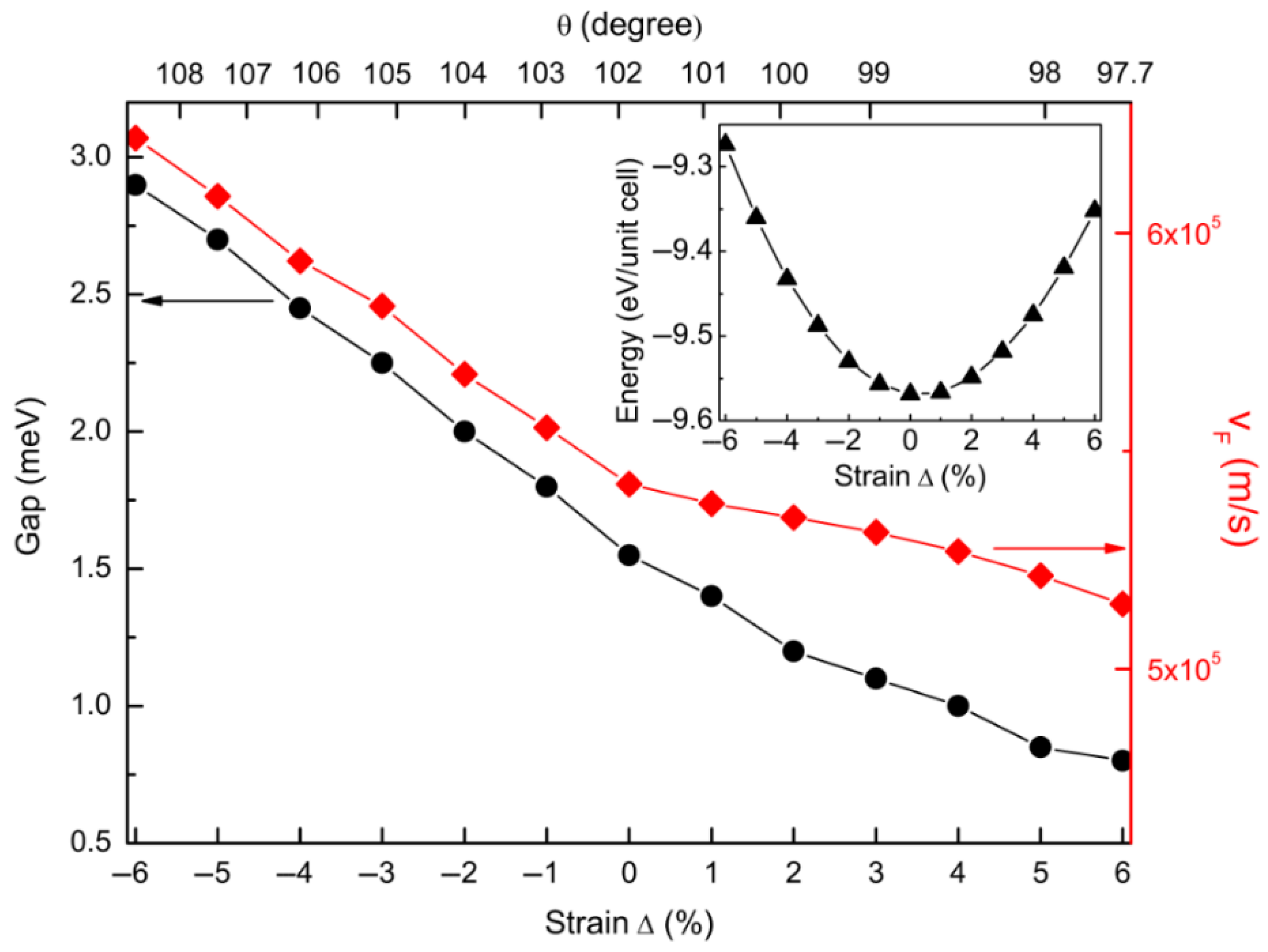
Free-standing silicene is unstable in conventional environments due to the sp2 and sp3 orbital hybridization, and so it is commonly fabricated on substrates. In terms of experimental fabrication, silicene had been epitaxially grown on a close-packed silver surface Ag (111) via direct condensation of a silicon atomic flux onto the single-crystal substrate in ultrahigh vacuum conditions and proven by atomic-resolved scanning tunneling microscopy [24,25]. Hence, investigating the silicene on substrates is of great importance because substrates significantly influence silicene’s properties, such as lattice mismatches between the silicene atomic sheet and the substrate that ripple the silicene atomic sheet and then affect the functional and structural properties of silicene. The gap opened by spin–orbit coupling at Dirac points related to QSHE and the Fermi velocity of charge carriers VF near the Dirac points in a series of silicene geometries under hydrostatic strain were studied through the first-principles method [21].
As shown in Figure 8, the magnitude of the gap at Dirac points induced by spin–orbit coupling is incremental with the decrease in hydrostatic strain Δ = [ ( a a 0 ) / a 0 ] × 100 % , where a 0 and a represent the lattice constant without and with hydrostatic strain, respectively. Figure 8 also indicates that, the greater the angle, the greater the gap, while the magnitude of the hydrostatic strain does not significantly change the carrier Fermi velocity VF near the Dirac points under different hydrostatic strains. The value of the carrier Fermi velocity VF is slightly less than the typical value of 106 m/s in graphene due to the larger Si-Si atomic distance.
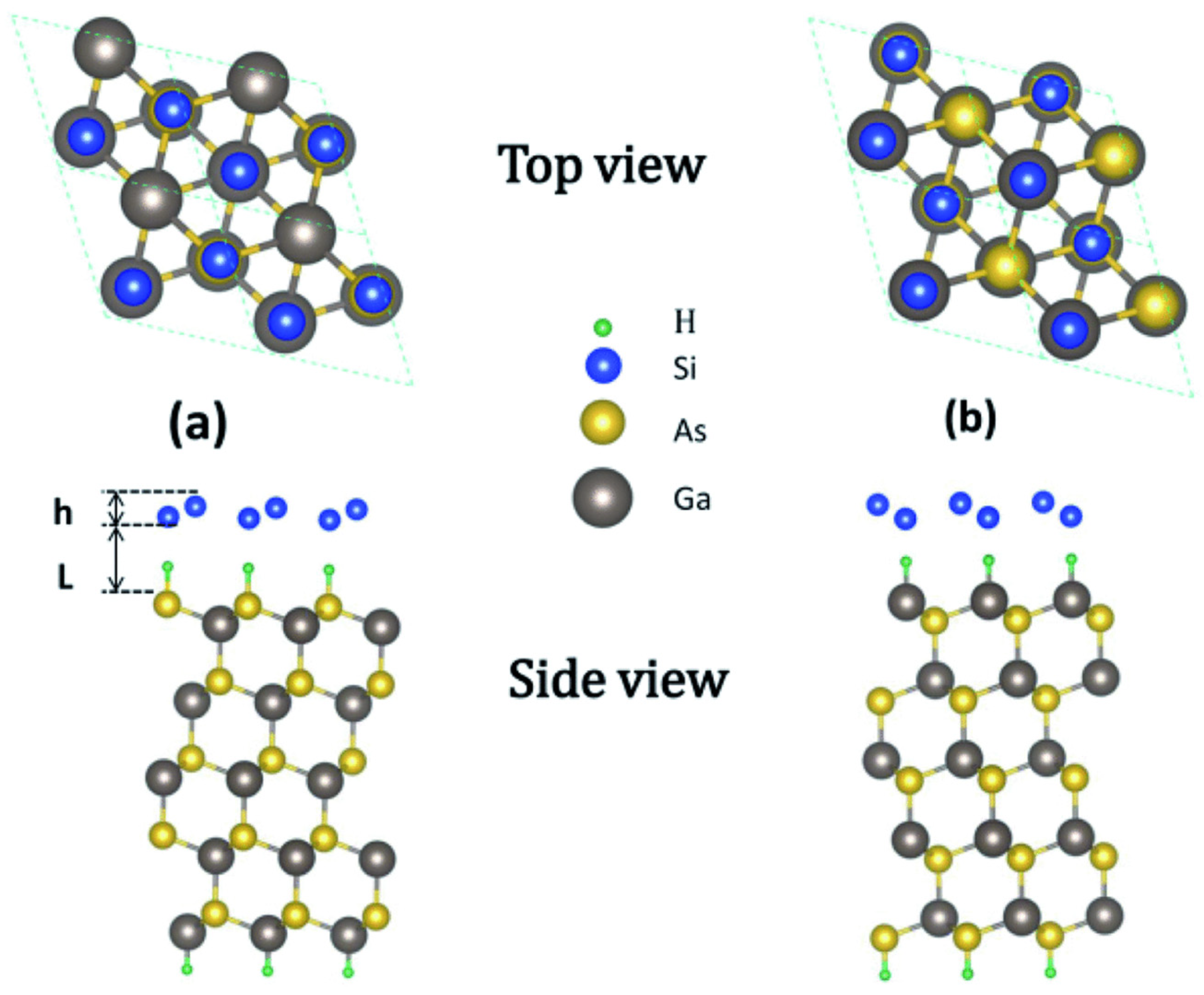
The covalent bond formed between silicene, the hydrogen intercalation and GaAs surface disrupts the Dirac cone in low-energy regions of silicene [26,27]. The properties of silicene formed on GaAs (111) are influenced by the changes in electronegativity between Ga and As. Silicene on differently terminated GaAs (111) surfaces is distinguished by Si-AsGa and Si-GaAs, and silicene on substrates with hydrogen intercalation is designated as Si-HAsGa and Si-HGaAs, as shown in Figure 9.
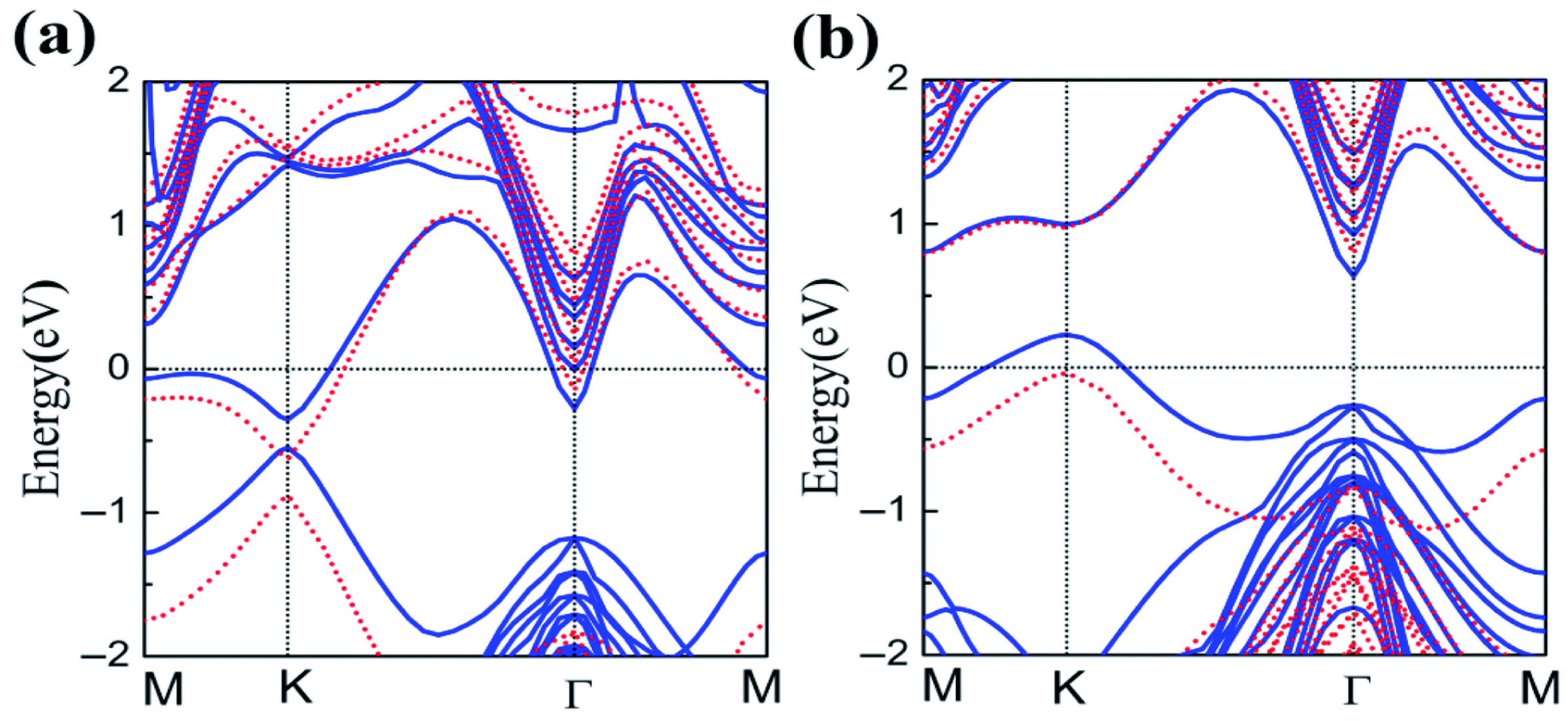
The energy band structures of silicene on GaAs (111) surfaces calculated by the GGA exchange-correlation and the HSE hybrid functional method are indicated by blue solid lines and red dashed lines in Figure 10, respectively. Figure 10 (left) shows that the silicene/HAs–GaAs heterostructure exhibits a direct bandgap, which indicates that the interaction between the silicene layer and the As-terminated GaAs (111) surface is largely weakened by the hydrogen intercalation. The silicene/HGa–GaAs heterostructure shows indirect bandgap (Figure 10 right), and the dispersion characteristic of the Dirac cone disappears because of the covalent bond between Si and H atoms on the Ga-terminated surface. Therefore, they concluded that the hydrogen intercalation had different effects on the electronic properties of silicene on different GaAs (111)-terminated surfaces. By comparing the results of GGA calculations and the HSE hybrid functional correction, it could be concluded that GGA exchange-correlation is basically correct for the energy band calculations and always underestimates the value of the energy gap but does not affect the qualitative analysis of the results. Tight-binding (TB) models capture the essential physics of the low-energy Dirac electrons and the spin–orbit coupling. However, the limitations of TB models are that they rely on parametrization, often derived from DFT calculations at specific high-symmetry points. They may not accurately capture the full band structure away from the K point nor do they inherently include many-body effects or inelastic scattering.
The structural and electronic properties of silicene on substrate MgX2(0001) (X = Cl, Br, and I) were studied by Zhu et al. using first-principles calculations within the framework of density functional theory complemented in the Vienna Ab initio Simulation Package. They predicted that all of the substrates preserve the Dirac cone of silicene with minor p doping well [28].
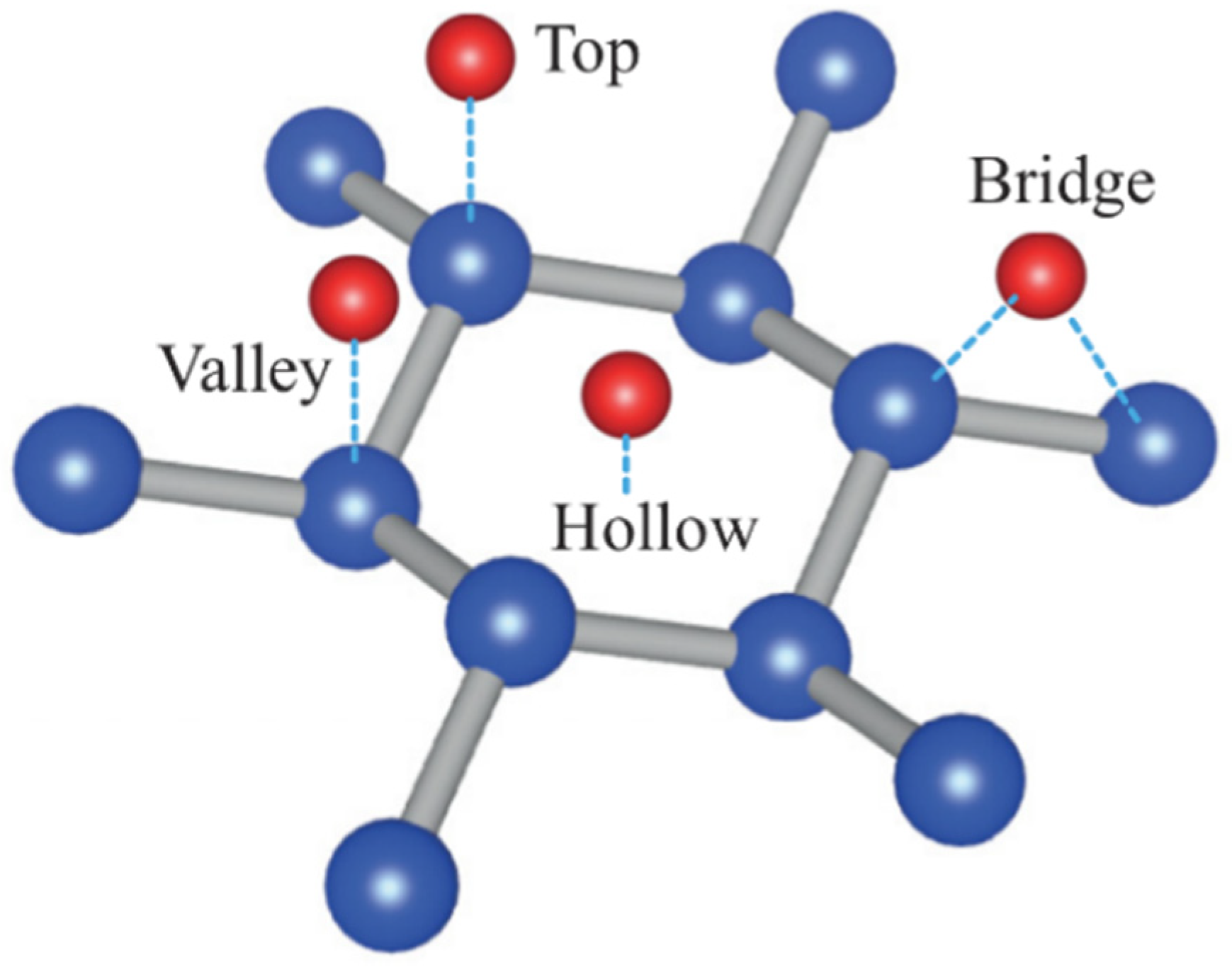
Another effective method for modulating the electronic structure of silicene is to adsorb atoms, such as hydrogen atoms, alkali metal atoms, alkaline-earth metal atoms, rare-earth atoms and transition metal atoms [29,30,31,32,33]. The four possible adsorption positions for adatoms on silicene are shown in Figure 10; they are top, hollow, bridge and valley.
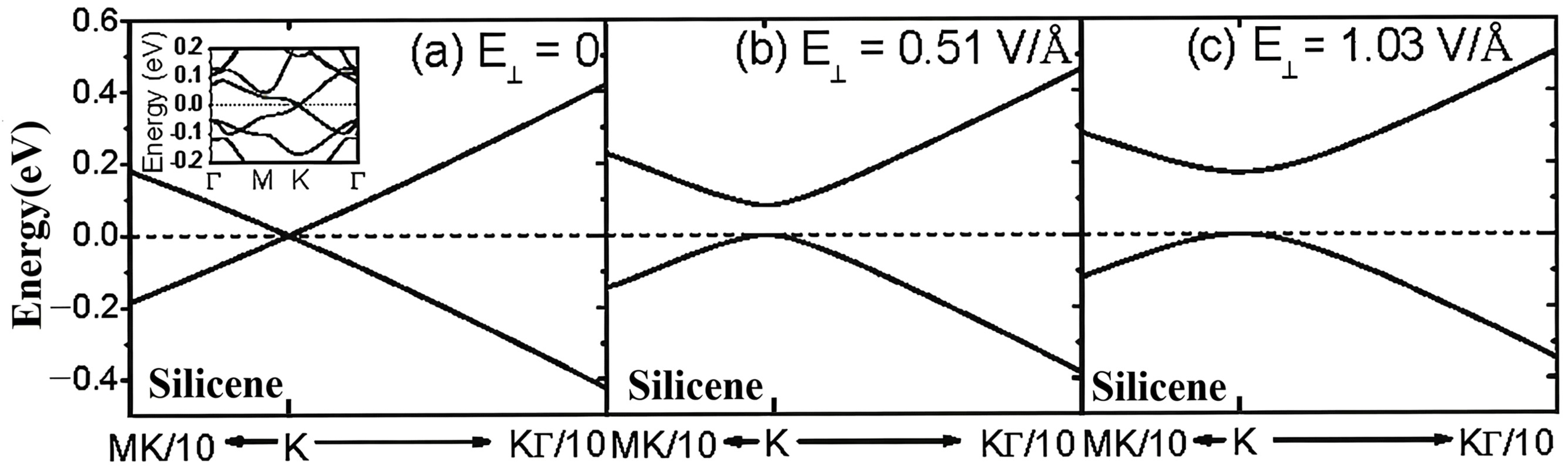
Lew Yan Voon et al. studied the structural and electronic properties of hydrides of silicene using ab initio calculations and found that hydrides of silicene are buckled geometrically and semiconducting (indirect gap) electronically [29]. Huang et al. performed density functional theory-based first-principles calculations to study the stability, micro-geometry, and electronic properties of alkali metal atoms adsorbed on silicene and made the comparison between pure silicene and hydrogen-saturated silicene. Among them, SiLi stands out as a semiconductor with a direct bandgap of 0.34 eV, while other compounds of SiX (X = Na, K, Rb) exhibit metallic properties [30]. The adsorption characteristics of alkali, alkaline-earth, transition metal adatoms on silicene were also analyzed by means of first-principles calculations. In contrast to graphene, interaction between the metal atoms and the silicene surface is quite strong due to its highly reactive buckled hexagonal structure [31]. The investigation of the interaction of silicene with metal atoms has significant importance because of its fundamental relevance to applications in catalysis, batteries, and nanoelectronics. The absorptions of boron, nitrogen, aluminum, and phosphorus on silicene were discussed by Sivek using density functional theory-based ab initio calculations [32]. They found that the most preferable adsorption sites were valley, bridge, valley and hill sites for B, N, Al, and P adatoms, respectively. They revealed that silicene had a very reactive surface and that it could serve as an important and novel playground for silicene-based novel nanoscale materials. Yong-Feng Li and his coworkers carried out a systematic investigation on the structural, magnetic and topological properties of silicene with adsorbed rare-earth adatoms using first-principles calculations. Their results revealed that rare-earth adatoms prefer to occupy the hexagonal center of silicene (Hollow in Figure 11) rather than other sites [33]. Ni et al. explored the effects of an external vertical electric field on the band structure of silicene and predicted that it would open a band gap in semimetallic silicene [34]. Figure 12 demonstrates that applying an external electric field vertical to the plane of silicene opens an energy gap in its energy dispersion, with the gap being linearly proportional to the intensity of the electric field.

4. Mechanical Properties

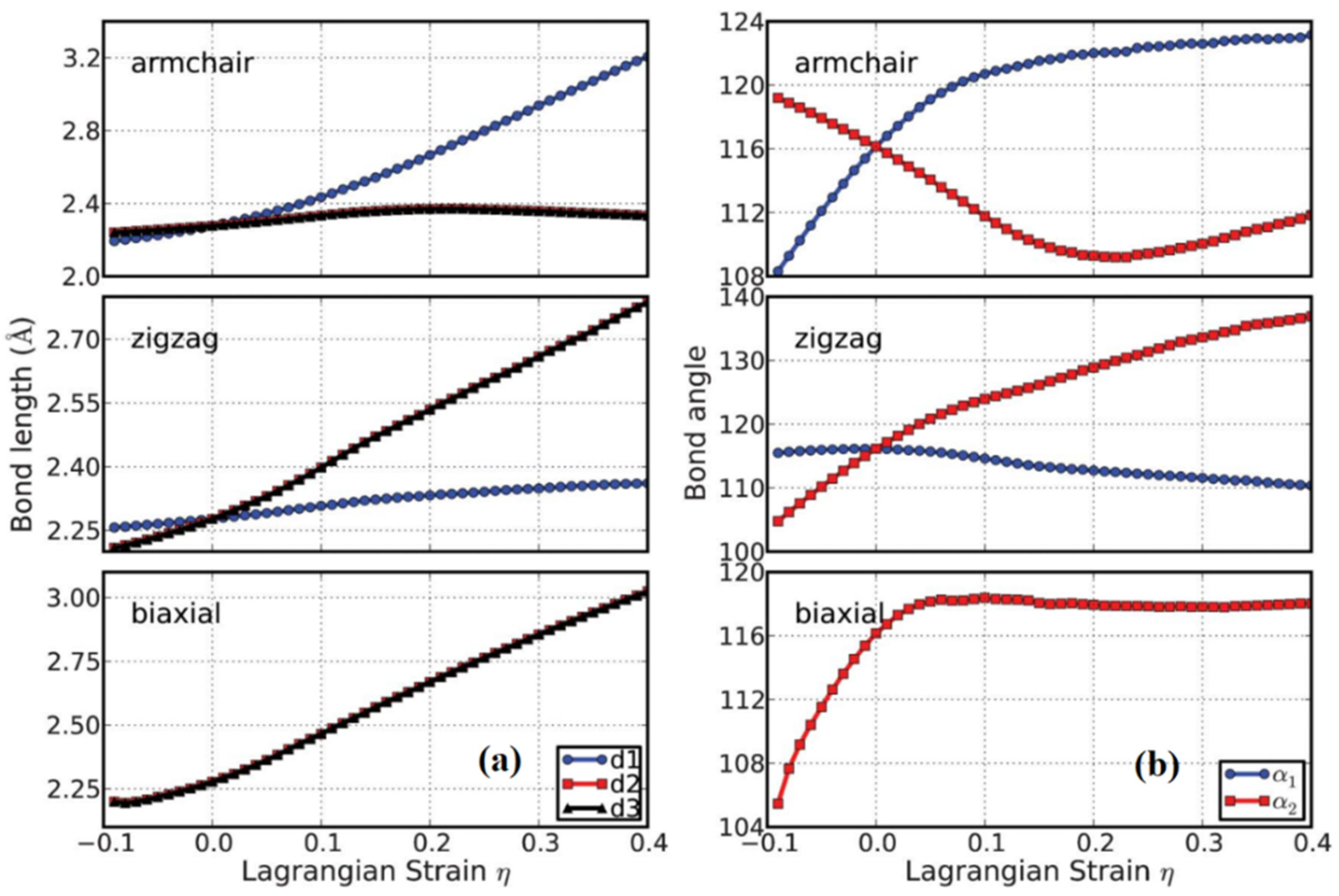
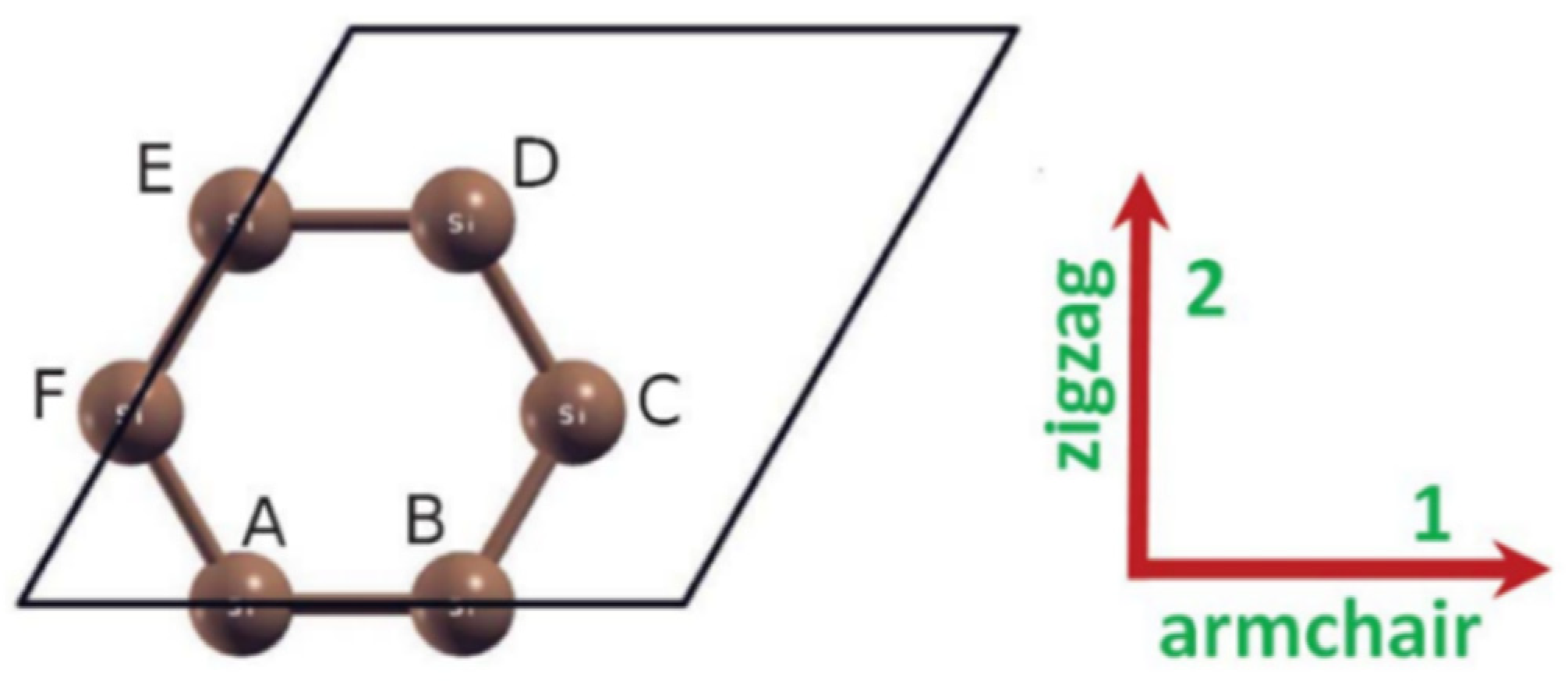
The mechanical stability of materials, which is tightly linked to their deformation behavior, is a critical consideration for their practical applications. The representative and systematic theoretical study on the mechanical stabilities and behaviors of silicene is the one by Peng et al. [35]. In Peng et al.’s work, the mechanical stabilities of planar (g) and low-buckled (b) honeycomb monolayer structures of silicon at large strains were investigated by ab initio density functional theory calculations. They studied the mechanical properties including the ultimate stresses, ultimate strains, and high-order elastic constants of silicene, as well as the structure evolutions. To interpret the relations between geometrical parameters and various strains clearly, the six atoms in a conventional unit cell of the undeformed silicene configuration were marked as A–F, as shown in Figure 13. Zigzag, armchair, and biaxial in the following figures represent the following deformation states: uniaxial strain in the zigzag direction, uniaxial strain in the armchair direction, and equibiaxial strain, respectively.
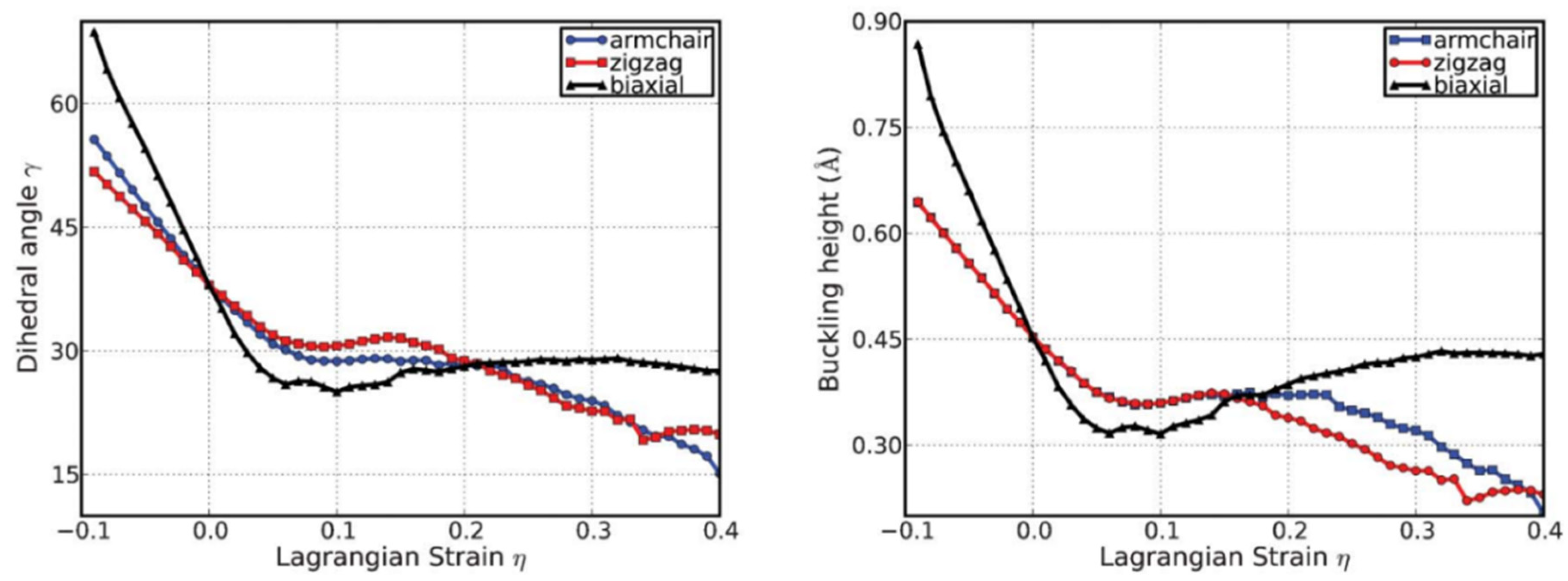
The evolution of bond length, bond angle, dihedral angles, and buckling height with the change in the applied strain along the direction of armchair, zigzag and biaxial is presented in Figure 14 and Figure 15, where d1, d2, d3 is used to denote the bond lengths of AB, BC, CD, respectively, and α1, α2 is used to represent the bond angles ABC and BCD, respectively; γ is used for the dihedral angle. The buckling height is an important parameter to characterize the corrugation of the silicene surfaces. Compressive strains increase the buckling height, while tensile strains decrease the buckling height.
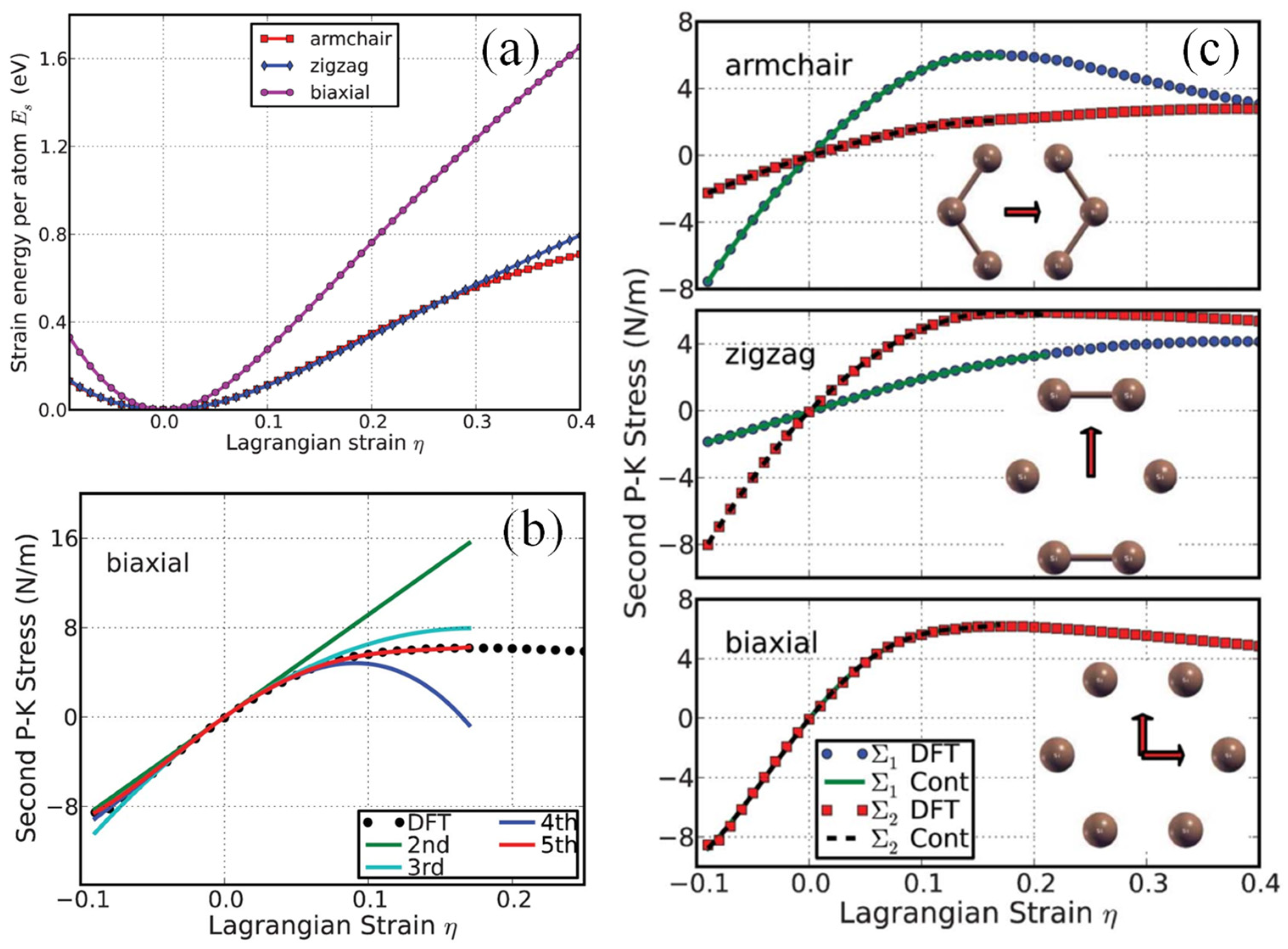
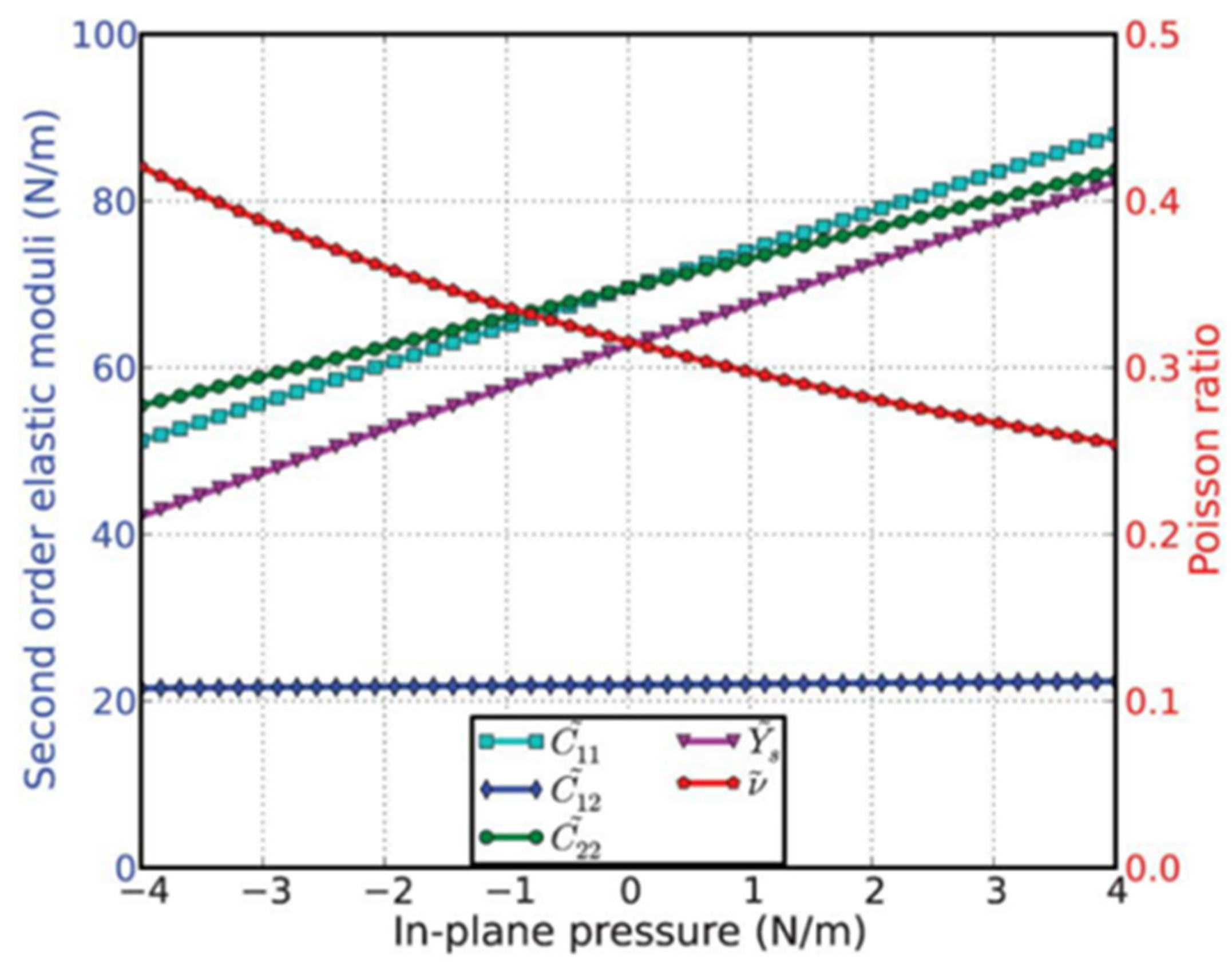
Peng et al. also examined the relationships between strain energy and strain; stress–strain responses, across armchair, zigzag, and biaxial strain conditions; the relationships between the second-order elastic moduli and pressure; and the Poisson ratio and pressure for low-buckled silicene. The results can be seen in Figure 16 and Figure 17. The second-order elastic constants, including in-plane stiffness, are predicted to monotonically increase with pressure, while the Poisson ratio monotonically decreases with increasing pressure. They found that all the ultimate stresses and ultimate strains of silicene are smaller than those of g-BN, graphene, and graphane.
In addition, Roman et al. quantified the elastic stiffness and the effective bending stiffness of monolayer silicene using full atomistic first-principles-based ReaxFF molecular dynamics [36]. Scalise et al. also investigated the structural and vibrational properties of silicene by means of first-principles calculations [37]. Their findings may provide guidance on the expected results of silicene/semiconductor heterostructures under experimental conditions, and their theoretical observations are expected to promote the application of silicene in optoelectronic devices.

5. Optical Properties

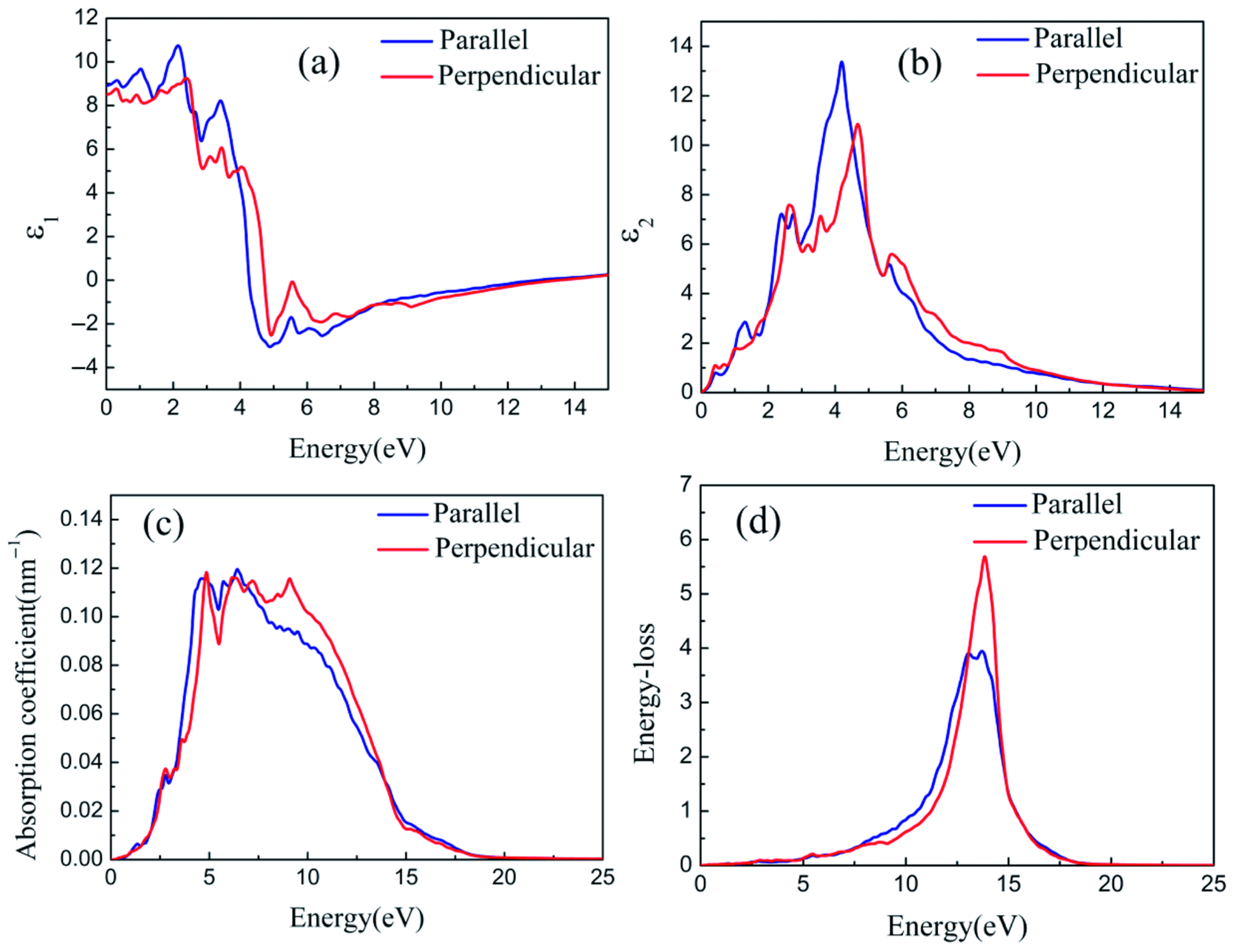
Yu et al. discussed the effect of buckling height, interlayer spacing, biaxial strain and external electric field on the band structure of silicene on semiconductor substrate GaAs (111) using first-principles calculations. Moreover, they examined the real and imaginary parts of the dielectric function, optical absorption, and energy-loss spectra as a function of photon energy to understand the optical characteristics of silicene grown on GaAs (111) with hydrogen intercalation [26]. The dielectric function, which reflects the microscopic physical process of electronic transition and optical spectral information, is defined as the relationship between the frequency of electromagnetic waves and the material’s permittivity, influencing both light propagation and absorption. The real part of the dielectric function defines the dispersion effects, while the imaginary part implies absorption losses. Figure 18a,b illustrate the real and imaginary parts of the dielectric function of the silicene/HAs–GaAs heterostructures, respectively, as a function of the incident photon energy, considering light polarization parallel and perpendicular to the heterostructure surface. Figure 18c,d show the calculated optical absorption spectra and the energy-loss spectra, respectively. Given that it is a direct energy gap semiconductor, the heterostructure exhibits robust absorption, particularly when the photon energy exceeds the bandgap. Thus, there is a steep rise in the absorption coefficient, indicative of the direct transition processes. A more detailed discussion of the optical properties of silicene can be found in Reference [26].

6. Topological Properties

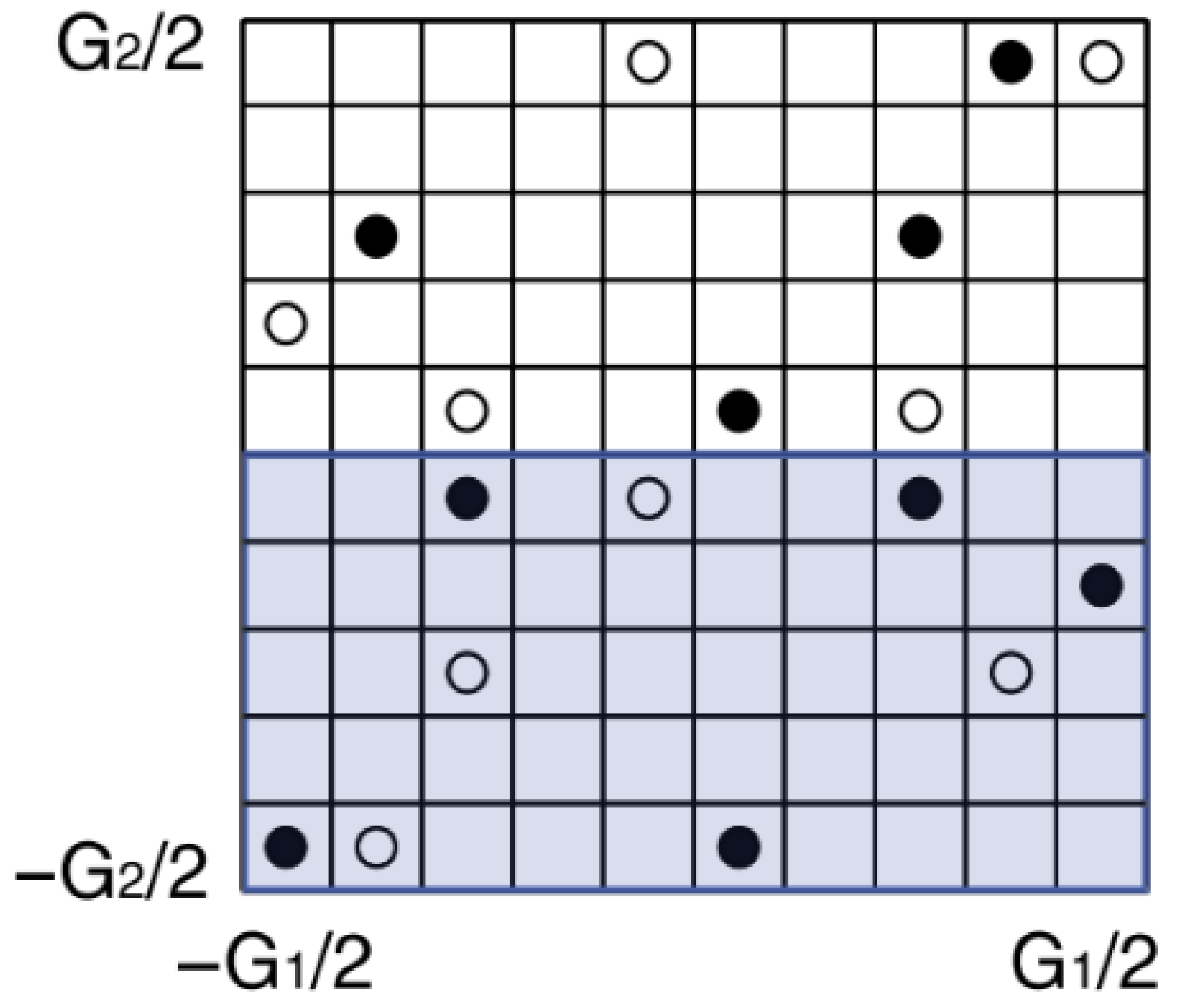
Topologically nontrivial quantum states, such as quantum spin Hall states and quantum anomalous Hall states with potential applications in next-generation nanoelectronics and spintronics have also been predicted theoretically at room temperatures in silicene. Liu and his collaborators performed first-principles calculations to investigate the spin–orbit-opened energy gap and the band topology in silicene and demonstrated that silicene with topologically nontrivial electronic structures can realize the quantum spin Hall effect (QSHE) by exploiting adiabatic continuity and the direct calculation of the Z 2 topological invariant [21]. The Z 2 invariant is an obstruction to smoothly defining the wave functions over half of the entire Brillouin zone under a certain gauge with the time-reversal constraint, and its explicit definition is as follows, Z 2 = 1 2 [ B + d k A ( k ) B + d 2 k F ( k ) ] mod 2 , in which A ( k ) is the Berry connection; F ( k ) is the Berry curvature; B + is Bloch functions in half of the Brillouin zone. Z 2 = 1 for topological insulator, and Z 2 = 0 for ordinary insulators. The nonzero Z 2 invariant is an obstruction to smoothly defining the Bloch functions in B + under the time-reversal constraint. The integer field n ( k j ) = 1 2 π { [ Δ ν A μ ( k j ) Δ μ A ν ( k j ) F ( k j ) ] } , where Δ ν is the forward difference operator. Hence, the Z 2 invariant is given by the sum of the n-field in half of the Brillouin zone [38]. Figure 19 shows the calculated torus in the Brillouin zone spanned by G1 and G2. Note that the two reciprocal lattice vectors form an angle of 120°. The white and black circles denote n = 1 and −1, respectively, while the blank denotes 0. The Z 2 invariant equals 1, obtained by summing the n field over half of the Brillouin zone.
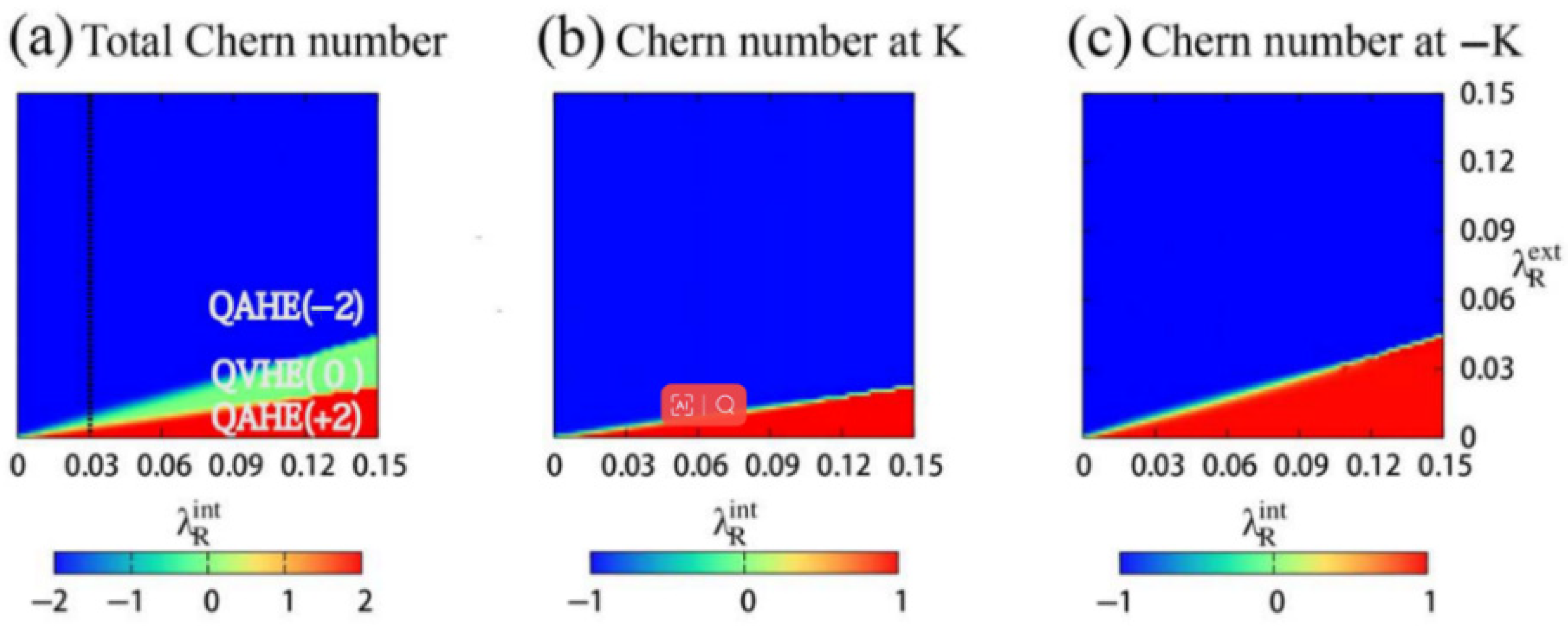
Geissler et al. studied the topological phase transitions in silicene based on the group theoretical and topological analysis of the quantum spin Hall effect generated by the interplay of a Rashba and an intrinsic spin–orbit coupling in silicene [19]. In addition, Zhang et al. used the combination of first-principles calculations and tight-binding modeling to report the possibility of realizing a stable quantum anomalous Hall effect in 3d-transition metal (vanadium)-doped silicene [39]. They also predict that the quantum valley Hall effect and electrically tunable topological states are possible in certain transition-metal-doped silicenes. The Chern number analysis characterizes the material’s topological properties. Figure 20 illustrates the Chern-number-based phase transition between topologically nontrivial states, including the quantum anomalous Hall effect and the quantum valley Hall effect, achieved by combining extrinsic Rashba spin–orbit coupling ( λ R ext ) and intrinsic spin–orbit coupling ( λ R int ).

7. Summary

Silicene exhibits many favorable properties due to its low-buckled geometry and strong spin–orbit coupling. For instance, its low-energy electronic excitations resemble Dirac fermions, and it can host topologically nontrivial states, such as the quantum spin Hall effect (QSHE), quantum anomalous Hall effect (QAHE), and quantum valley Hall effect (QVHE). Silicene holds great potential for a wide range of applications, including magnetic materials, energy conversion and storage, semiconducting devices, and future advancements in nanoelectronics and spintronics. Despite these promising findings, several critical challenges must be addressed to bridge the gap between fundamental research and practical silicene-based devices. The well-known environmental degradation of silicene necessitates the development of robust encapsulation techniques or the exploration of chemically inert substrates. The field urgently needs a reliable method to transfer silicene or grow it on ultra-inert substrates to access its intrinsic properties.
More importantly, the theories and methods, especially the first-principles calculations based on the density-functional theory used to study silicene, could be adopted to investigate and develop some other, new, one-atom-thick two-dimensional materials, such as a two-dimensional silicon allotrope with hybrid honeycomb–kagome lattice [40], materials with square–octagon structure and biphenylene structures, thereby expanding the range of one-atom-thick two-dimensional materials.


Author Contributions

Conceptualization, A.B. and G.P.C.; methodology, A.B.; validation, G.P.C.; formal analysis, A.B.; investigation, A.B.; resources, G.P.C.; data curation, A.B.; writing—original draft preparation, A.B.; writing—review and editing, A.B. and G.P.C.; funding acquisition, A.B. All authors have read and agreed to the published version of the manuscript.

Funding

This work is supported by the Science Foundation of Sichuan University of Arts and Science under Grant No. SUAS-24-09 and the Science Foundation of Sichuan Province’s University Key Laboratory of Intelligent Optoelectronic System Perception and Application under Grant No. ZNGD2406.

Data Availability Statement

The raw data supporting the conclusions of this article will be made available by the authors on request.

Conflicts of Interest

The authors declare no conflicts of interest.

References

  1. Novoselov, K.S.; Geim, A.K.; Morozov, S.V.; Jiang, D.; Zhang, Y.; Dubonos, S.V.; Grigorieva, I.V.; Firsov, A.A. Electric Field Effect in Atomically Thin Carbon Films. Science 2004, 306, 666. [Google Scholar] [CrossRef]
  2. Molle, A.; Goldberger, J.; Houssa, M.; Xu, Y.; Zhang, S.C.; Akinwande, D. Buckled Two-Dimensional Xene Sheets. Nat. Mater. 2017, 16, 163. [Google Scholar] [CrossRef]
  3. Zhao, J.J.; Liu, H.S.; Yu, Z.M.; Quhe, R.G.; Zhou, S.; Wang, Y.Y.; Liu, C.C.; Zhong, H.X.; Han, N.N.; Lu, J.; et al. Rise of Silicene: A Competitive 2D Material. Prog. Mater. Sci. 2016, 83, 24. [Google Scholar] [CrossRef]
  4. Qin, Z.H. Recent Progress of Graphene-like Germanene. Acta Phys. Sin. 2017, 66, 216802. (In Chinese) [Google Scholar] [CrossRef]
  5. Ochapski, M.W.; de Jong, M.P. Progress in Epitaxial Growth of Stanine. Open Phys. 2022, 20, 208. [Google Scholar]
  6. Tao, L.; Cinquanta, E.; Chiappe, D.; Grazianetti, C.; Fanciulli, M.; Dubey, M.; Molle, A.; Akinwande, D. Silicene Field-Effect Transistors Operating at Room Temperature. Nat. Nanotechnol. 2015, 10, 227. [Google Scholar] [CrossRef]
  7. Li, T.S.; Galli, G. Electronic Properties of MoS2 Nanoparticles. J. Phys. Chem. C 2007, 111, 16192. [Google Scholar] [CrossRef]
  8. Castro Neto, A.H.; Guinea, F.; Peres, N.M.R.; Novoselov, K.S.; Geim, A.K. The Electronic Properties of Graphene. Rev. Mod. Phys. 2009, 81, 111. [Google Scholar] [CrossRef]
  9. Ramzan, M.S.; Bacic, V.; Jing, Y.; Kuc, A. Electronic Properties of a New Family of Layered Materials from Groups 14-15: First-Principles Simulations. J. Phys. Chem. C 2019, 123, 25470. [Google Scholar] [CrossRef]
  10. Molle, A.; Grazianetti, C.; Li, T.; Taneja, D.; Alam, M.H.; Akinwande, D. Silicene, Silicene Derivatives, and Their Device Applications. Chem. Soc. Rev. 2018, 47, 6370. [Google Scholar] [CrossRef] [PubMed]
  11. Shan, G.C.; Tan, H.Y.; Ma, R.G.; Zhao, H.B.; Huang, W. Recent Progress in Emergent Two-Dimensional Silicene. Nanoscale 2023, 15, 2982. [Google Scholar] [CrossRef]
  12. Kara, A.; Enriquez, H.; Seitsonen, A.P.; Lew Yan Voon, L.C.; Vizzini, S.; Aufray, B.; Oughaddou, H. A Review on Silicene—New Candidate for Electronics. Surf. Sci. Rep. 2012, 67, 1. [Google Scholar] [CrossRef]
  13. Oughaddou, H.; Enriquez, H.; Tchalala, M.R.; Yildirim, H.; Mayne, A.J.; Bendounan, A.; Dujardin, G.; Ali, M.A.; Kara, A. Silicene, a Promising New 2D Material. Prog. Surf. Sci. 2015, 90, 46. [Google Scholar] [CrossRef]
  14. Chen, L.; Cheng, P.; Wu, K. Silicene. In Encyclopedia of Interfacial Chemistry; Elsevier: Amsterdam, The Netherlands, 2018; p. 297. [Google Scholar]
  15. Guzmán-Verri, G.G.; Lew Yan Voon, L.C. Electronic Structure of Silicon-Based Nanostructures. Phys. Rev. B 2007, 76, 075131. [Google Scholar] [CrossRef]
  16. Hohenberg, P.; Kohn, W. Inhomogeneous Electron Gas. Phys. Rev. 1964, 136, B864. [Google Scholar]
  17. Kohn, W.; Sham, L.J. Self-Consistent Equations Including Exchange and Correlation Effects. Phys. Rev. 1965, 140, A1133. [Google Scholar]
  18. Takeda, K.; Shiraish, K. Theoretical Possibility of Stage Corrugation in Si and Ge Analogs of Graphite. Phys. Rev. B 1994, 50, 14916. [Google Scholar] [CrossRef] [PubMed]
  19. Geissler, F.; Budich, J.C.; Trauzettel, B. Group Theoretical and Topological Analysis of the Quantum Spin Hall Effect in Silicene. New J. Phys. 2013, 15, 085030. [Google Scholar] [CrossRef]
  20. Cahangirov, S.; Topsakal, M.; Aktürk, E.; Sahin, H.; Ciraci, S. Two- and One-Dimensional Honeycomb Structures of Silicon and Germanium. Phys. Rev. Lett. 2009, 102, 236804. [Google Scholar] [CrossRef]
  21. Liu, C.C.; Feng, W.X.; Yao, Y.G. Quantum Spin Hall Effect in Silicene and Two-Dimensional Germanium. Phys. Rev. Lett. 2011, 107, 076802. [Google Scholar] [CrossRef]
  22. Liu, C.C.; Jiang, H.; Yao, Y.G. Low-Energy Effective Hamiltonian Involving Spin-Orbit Coupling in Silicene and Two-Dimensional Germanium and Tin. Phys. Rev. B 2011, 84, 195430. [Google Scholar]
  23. Yang, X.B.; Ni, J. Electronic Properties of Single-Walled Silicon Nanotubes Compared to Carbon Nanotubes. Phys. Rev. B 2005, 72, 195426. [Google Scholar] [CrossRef]
  24. Lalmi, B.; Oughaddou, H.; Enriquez, H.; Kara, A.; Vizzini, S.; Ealet, B.; Aufray, B. Epitaxial Growth of a Silicene Sheet. Appl. Phys. Lett. 2010, 97, 223109. [Google Scholar] [CrossRef]
  25. Feng, B.J.; Ding, Z.J.; Meng, S.; Yao, Y.G.; He, X.Y.; Cheng, P.; Chen, L.; Wu, K.H. Evidence of Silicene in Honeycomb Structures of Silicon on Ag(111). Nano Lett. 2012, 12, 3507. [Google Scholar] [CrossRef]
  26. Yu, T.; Zhang, H.; Li, D.; Lu, Y.W. Electronic and Optical Properties of Silicene GaAs(111) with Hydrogen Intercalation: A First Principles Study. RSC Adv. 2021, 11, 16040. [Google Scholar] [CrossRef]
  27. Zhang, X.; Guo, Z.X.; Cao, J.X.; Xiao, S.G.; Ding, J.W. Atomic and Electronic Structures of Silicene and Germanene on GaAs(111). Acta Phys. Sin. 2015, 64, 186101. (In Chinese) [Google Scholar] [CrossRef]
  28. Zhu, J.J.; Schwingenschlögl, U. Structural and Electronic Properties of Silicene on MgX2 (X = Cl, Br, and I). ACS Appl. Mater. Interfaces 2014, 6, 11675. [Google Scholar] [CrossRef]
  29. Lew Yan Voon, L.C.; Sandberg, E.; Aga, R.S.; Farajian, A.A. Hydrogen Compounds of Group-IV Nanosheets. Appl. Phys. Lett. 2010, 97, 163114. [Google Scholar] [CrossRef]
  30. Huang, Y.P.; Yuan, J.M.; Guo, G.; Mao, Y.L. First-Principles Study on Saturated Adsorption of Alkali Metal Atoms on Silicene. Acta Phys. Sin. 2015, 64, 013101. (In Chinese) [Google Scholar] [CrossRef]
  31. Sahin, H.; Peeters, F.M. Adsorption of Alkali, Alkaline-Earth, and 3d Transition Metal Atoms on Silicene. Phys. Rev. B 2013, 87, 085423. [Google Scholar]
  32. Sivek, J.; Sahin, H.; Partoens, B.; Peeters, F.M. Adsorption and Absorption of Boron, Nitrogen, Aluminum, and Phosphorus on Silicene: Stability and Electronic and Phonon Properties. Phys. Rev. B 2013, 87, 085444. [Google Scholar] [CrossRef]
  33. Li, Y.F.; Zhang, K.C.; Liu, Y.J. Structural, Magnetic and Topological Properties in Rare-Earth-Adsorbed Silicene System. Magn. Magn. Mater. 2019, 492, 165606. [Google Scholar] [CrossRef]
  34. Ni, Z.Y.; Liu, Q.H.; Tang, K.C.; Zheng, J.X.; Zhou, J.; Qin, R.; Gao, Z.X.; Yu, D.P.; Lu, J. Tunable Bandgap in Silicene and Germanene. Nano Lett. 2012, 12, 113. [Google Scholar] [CrossRef] [PubMed]
  35. Peng, Q.; Wen, X.D.; De, S. Mechanical stabilities of silicene. RSC Adv. 2013, 3, 13772. [Google Scholar] [CrossRef]
  36. Roman, R.E.; Cranford, S.W. Mechanical properties of silicene. Comp. Mater. Sci. 2014, 82, 50. [Google Scholar] [CrossRef]
  37. Scalise, E.; Houssa, M.; Pourtois, G.; Broek Bvan den Afanas’ev, V.; Stesmans, A. Vibrational Properties of Silicene and Germanene. Nano Res. 2013, 6, 19. [Google Scholar] [CrossRef]
  38. Xiao, D.; Yao, Y.G.; Feng, W.X.; Wen, J.; Zhu, W.G.; Chen, X.Q.; Malcolm Stocks, G.; Zhang, Z.Y. Half-Heusler Compounds as a New Class of Three-Dimensional Topological Insulators. Phys. Rev. Lett. 2010, 105, 096404. [Google Scholar] [CrossRef]
  39. Zhang, X.L.; Liu, L.F.; Liu, W.M. Quantum Anomalous Hall Effect and Tunable Topological States in 3d Transition Metals Doped Silicene. Sci. Rep. 2013, 3, 2908. [Google Scholar] [CrossRef]
  40. Sang, P.; Wang, Q.; Wei, W.; Wang, F.; Li, Y.; Chen, J. Semiconducting Silicene: A Two-Dimensional Silicon Allotrope with Hybrid Honeycomb-Kagome Lattice. ACS Mater. Lett. 2021, 3, 1181–1188. [Google Scholar]
Figure 1. Top view of silicene (left). Sublattice A (red) and sublattice B (blue) are not in the same plane. Side view of silicene and the angle between the Si-Si bond and the direction perpendicular to the plane (right). Reproduced from Ref. [19].
Symmetry 18 00569 g001
Figure 2. Energy as a function of the hexagonal lattice constant for various honeycomb structures of 2D Si. The black (dark) and dashed green (dashed light) curves represent energy calculations performed using LDA with PAW potential and ultrasoft pseudopotentials, respectively. The inset illustrates planar and buckled geometries, along with the buckling distance (△) and lattice constant (b) of the hexagonal primitive unit cell. Reproduced from Ref. [20].
Symmetry 18 00569 g002
Figure 3. Phonon dispersion curves obtained by force-constant method (dark curves) and linear response theory (dashed green curves). The presence of imaginary frequencies indicates the structural instability of planar silicene structure (left). Reproduced from Ref. [20].
Symmetry 18 00569 g003
Figure 4. Energy band structure of silicon calculated for planar (PL) and low-buckled (LB) structures. The density of states (DOS) for the LB structure is also shown. The crossing of the π and π* bands at the K and K′ points in the Brillouin zone is highlighted, demonstrating their linearity near the crossing point. The energy zero is set at the Fermi level, EF. The s, px, py orbital contributions to the bands are indicated. Reproduced from Ref. [20].
Symmetry 18 00569 g004
Figure 5. The evolution of the gap opened by spin–orbit coupling for π orbital at the Dirac point K from the planar honeycomb geometry to the low-buckled honeycomb geometry while keeping the Si-Si bond length constant. The top axis depicts the difference in vertical height between sublattice A and sublattice B; the bottom axis ϴ is the angle in Figure 1 (right). Reproduced from Ref. [21].
Symmetry 18 00569 g005
Figure 6. Energy band structure of ideal planar silicon (a) and silicene (b) for the case of the spin–orbit coupling considered. Reproduced from Ref. [21].
Symmetry 18 00569 g006
Figure 7. The energy band structure of silicene from the σ-π TB models (a) for the sp3s* hybridization and (b) for the sp3 hybridization. (c) Energy band structure of silicene from the ab-initio calculations done by Yang and Ni. Reproduced from Ref. [15].
Symmetry 18 00569 g007
Figure 8. The black circles depict gap induced by spin–orbit coupling, while the red squares indicate Fermi velocity (VF) of charge carriers near the Dirac points obtained from first-principles calculations under different hydrostatic strain conditions. Inset: Energy of unit cell versus different hydrostatic strain conditions. Reproduced from Ref. [21].
Symmetry 18 00569 g008
Figure 9. Top and side views of silicene/HAs-GaAs heterostructure (a) and silicene/HGa-GaAs heterostructure (b). Reproduced from [26].
Symmetry 18 00569 g009
Figure 10. The band structures of silicene/HAs–GaAs heterostructure (a) and silicene/HGa–GaAs heterostructure (b). Blue solid lines are the results of GGA calculations and red dashed lines are the results of HSE06 calculations. Reproduced from [26].
Symmetry 18 00569 g010
Figure 11. Possible adsorption sites, hollow, top, hill, and bridge, on silicene lattice. Reproduced from Ref. [31].
Symmetry 18 00569 g011
Figure 12. (ac) are the band structures of silicene around Ef at three different vertical electric fields calculated at the GGA/DNP level. Inset in (a) is band structures in the first Brillouin zone at E = 0. The Fermi level or the valence band top is zero. Reproduced from Ref. [34].
Symmetry 18 00569 g012
Figure 13. Atomic structure of silicene in the conventional unit cell (6 atoms, marked as A–F) in the undeformed reference configuration. Reproduced from Ref. [35].
Symmetry 18 00569 g013
Figure 14. (a) Evolution of the bond lengths under the armchair, zigzag, and biaxial strains; (b) Bond angles of silicene under the armchair, zigzag, and biaxial strains. Reproduced from Ref. [35].
Symmetry 18 00569 g014
Figure 15. Evolution of the dihedral angle (left) and the buckling height (right) of silicene under the armchair, zigzag, and biaxial strains. Reproduced from Ref. [35].
Symmetry 18 00569 g015
Figure 16. (a) Energy–strain responses of silicene under armchair, zigzag, and biaxial strain. (b) The predicted stress–strain responses from different orders: second, third, fourth, and fifth order compared with the DFT calculations in the biaxial deformation in silicene. (c) Stress–strain responses of silicene under armchair, zigzag, and biaxial strain. Σ1 (Σ2) denotes the x (y) component of stress. “Cont” refers to the fitting of DFT calculations to continuum elastic theory. The insets are the geometries under ultimate strains. Reproduced from Ref. [35].
Symmetry 18 00569 g016
Figure 17. Second order elastic moduli and Poisson ratio as function of pressure for silicene from DFT predictions. Reproduced from Ref. [35].
Symmetry 18 00569 g017
Figure 18. The real part of the dielectric function (a) and its imaginary part (b), the optical absorption spectra (c), and the energy-loss spectra (d), as functions of photon energy for the silicene/HAs–GaAs heterostructure. Reproduced from Ref. [26].
Symmetry 18 00569 g018
Figure 19. The n-field configuration for silicene. The white and black circles denote n = 1 and −1, respectively, the blank denotes 0. The Z2 invariant is 1 obtained by summing the n field over half of the torus. Reproduced from Ref. [20].
Symmetry 18 00569 g019
Figure 20. The transition of the Chern number by tuning Rashba spin–orbit coupling. The transition of Chern number is tuned by tuning λ R ext and λ R int (in units of t). (a) Three topological nontrivial states, QAHE (2), QVHE (0) and QAHE (−2) with Chern numbers +2, 0, and −2, respectively, can be obtained from different combinations of λ R ext and λ R int . (b,c) Illustration of variation of CK and C−K, respectively. Reproduced from Ref. [39].
Symmetry 18 00569 g020
Disclaimer/Publisher’s Note: The statements, opinions and data contained in all publications are solely those of the individual author(s) and contributor(s) and not of MDPI and/or the editor(s). MDPI and/or the editor(s) disclaim responsibility for any injury to people or property resulting from any ideas, methods, instructions or products referred to in the content.