1. Introduction
Cavitation bubble dynamics within droplets are of significant importance in various applications [
1,
2,
3,
4], such as atomization [
5], biological sterilization [
6], inkjet printing [
7], and surface cleaning [
8]. However, the high-speed jets formed during bubble collapse can cause asymmetric flow evolution inside the droplet, leading to surface instability and splashing. Under the confining boundary of a droplet, the growth and collapse behaviors of a bubble differ markedly from those in free flows or near rigid boundaries [
9,
10,
11,
12,
13,
14]. The presence of the droplet surface strongly affects jet formation and development, rendering the bubble dynamics more complex. Therefore, this study focuses on bubble dynamics inside a droplet, aiming to elucidate the bubble–droplet interaction mechanisms and the collapse jet dynamics under the influence of the droplet surface.
The collapse of bubbles inside a droplet is strongly affected by the droplet surface, leading to more complex dynamic behaviors in the collapse jet, shock waves, and bubble migration. Concerning jets, existing studies have typically investigated the confined development of jets inside a droplet by analyzing droplet boundary conditions [
15,
16,
17,
18] and changing bubble eccentricity [
19,
20]. Obreschkow et al. [
15] observed in microgravity experiments that microjets generated by eccentric bubble collapse, when penetrating the bubble, undergo a sudden velocity drop due to constraints from the curved droplet surface. This revealed that the curved surface of the droplet is critical for the evolution of jet morphology. Combined with bubble dynamics near a free surface, Guo et al. [
18] further highlighted the decisive role of the curvature of droplet surface in producing distinct jetting patterns. Rosselló et al. [
19] found through precisely controlled experiments that bubbles with very low eccentricity merely undergo periodic spherical oscillations without significant jets. As eccentricity rises, the bubble deforms non-spherically and generates elongated jets, which often exhibit tip detachment at later stages. Zhang et al. [
20] similarly reported variations in jetting behaviors with eccentricity and provided a classification of jet phenomena across different eccentricity ranges.
Shock waves serve as the primary mode of bubble energy dissipation [
21,
22,
23,
24,
25]. Existing studies have primarily focused on interactions between subsequent phenomena within a droplet. Among these, the influence on jets [
26], spatial distribution evolution [
27], and connections to the secondary cavitation phenomena [
28] have been emphasized. Marston and Thoroddsen’s [
26] experiments on bubbles near concave interfaces, which demonstrate that the interaction between shock waves and a curved interface plays a key role in weak jet formation. Due to the surface properties of the droplet, shock waves inside the droplet can alter both subsequent collapse behaviors and droplet splashing. Numerical simulations by Avila and Ohl [
27] indicate that shock waves produced by bubble collapse inside a droplet undergo multiple reflections at curved droplet surfaces and focus along the long axis. There, they create localized high-pressure zones. These focal regions correspond well with experimentally observed areas of intense secondary cavitation. It confirms that droplet surface features and bubble location significantly influence shock wave energy distribution, thereby affecting secondary cavitation processes. Liu et al. [
28] investigated bubbles within a liquid enclosed by a spherical elastic boundary. They found that the density distribution of microbubble clusters generated by secondary cavitation highly matches the numerical simulation results of shock wave energy density. This indicates that the reflection effect of the spherical surface significantly influences the energy distribution of shock waves during bubble collapse. This result also demonstrates that microbubble clusters can serve as an auxiliary reference for the spatial energy distribution of shock waves.
Regarding bubble migration, the migration of bubbles during collapse inside a droplet is influenced by multiple factors such as buoyancy, jet reaction forces, boundary-attraction effects and so on. Classical theories on bubble migration near boundaries offer valuable references for understanding bubble migration within a droplet [
29,
30,
31,
32]. Theoretical analysis by Blake et al. [
29] indicates that for small bubbles whose buoyancy force is negligible, their collapse phase occurs away from the free liquid surface and is accompanied by a counter-jet. Subsequently, Best et al. [
31] developed a simplified Kelvin impulse theory model, providing an effective tool for predicting the migration of bubbles near boundaries. Through experiments near walls with varying included angles, Tagawa et al. [
32] combined image method with velocity potential analysis to theoretically predict jet angles and bubble migration characteristics. Experimental results validated that the mathematical model based on the image method proposed by Best et al. [
31] can accurately describe bubble migration.
Overall, previous studies have extensively explored the formation and evolution of bubble collapse jets inside a droplet, the effects of shock waves, and their interactions with the droplet surface. Most are descriptive without predictive models for collapse jet intensity and lack systematic investigation of key parameters. In other words, the coupled effect of the key dimensionless parameters for bubbles inside a droplet, namely the eccentricity and radius ratio, on bubble dynamics remains insufficiently understood. To investigate the typical patterns of bubble collapse jet inside a droplet, this study combines experimental observations with theoretical analyses based on the image method and Kelvin impulse theory. The formation mechanism and evolutionary characteristics of the jets are systematically analyzed. Qualitative and quantitative analyses of bubble collapse jets are conducted for various eccentricities and radius ratios. Additionally, the distribution characteristics of liquid velocity and Kelvin impulse inside the droplet are explored.
2. Boundary Treatment and Kelvin’s Impulse Theory
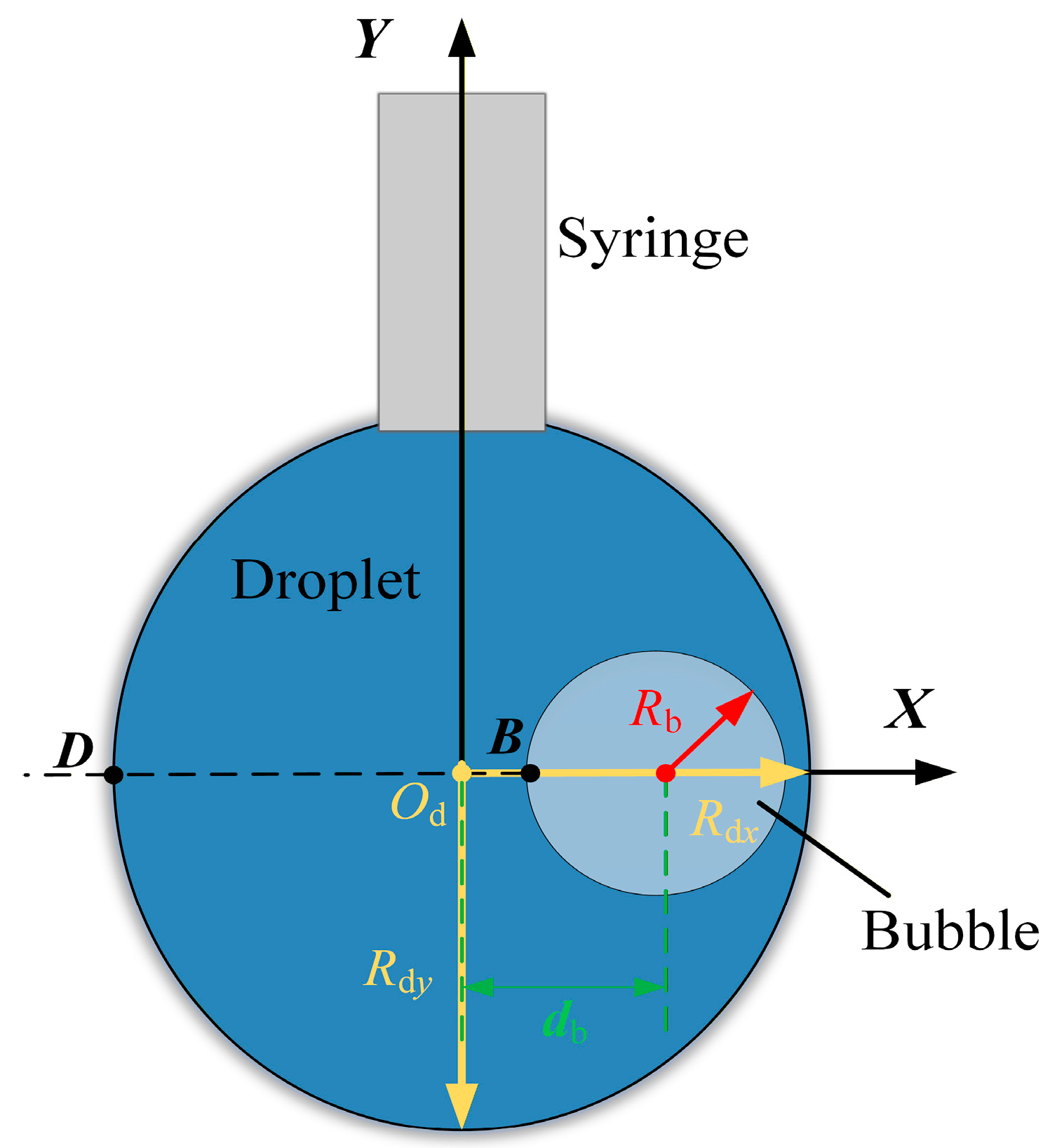
Figure 1 illustrates the main experimental parameters for a cavitation bubble inside a droplet. The central points of the bubble’s and droplet’s maximum horizontal widths are defined as the bubble center
Ob and droplet center
Od, respectively. Meanwhile, the horizontal line where
Ob and
Od are located is defined as the
X-axis. Furthermore, both
Ob and
Od in this experiment are maintained on the same horizontal axis. The separation between the bubble and droplet centers is denoted by
db, with the bubble radius defined as
Rb. The droplet is characterized by its short-axis radius
Rdx and long-axis radius
Rdy.
Rdx0 and
Rdy0 denote the short-axis radius and long-axis radius of the droplet before bubble formation, whereas
Rdx-max and
Rdy-max correspond to the droplet radii at the moment when the bubble attains its maximum size
Rbmax. Due to gravitational effects, the droplet is approximated as ellipsoids in the experiment. In this study, the equivalent radius
Rd of the droplet can be calculated using the method for determining the long and short axes of an ellipsoid, as follows:
Before the bubble forms, the initial equivalent radius of the droplet is
The maximum equivalent radius of the droplet is measured at the instant when the bubble attains its peak size:
The displacement Lc corresponds to the bubble center migration over its entire collapse phase (from peak size to end), which occurs over a time Tc.
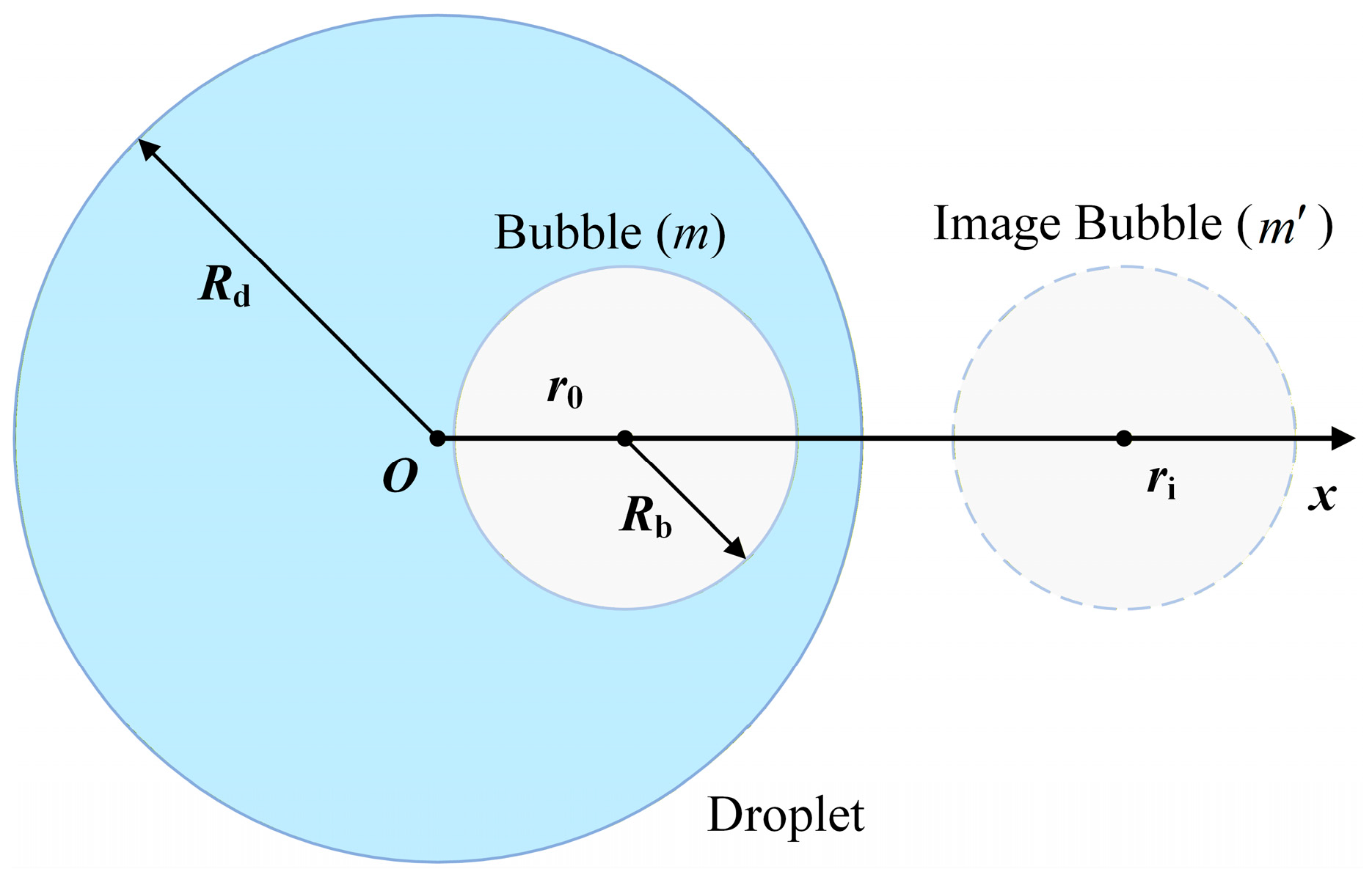
Figure 2 illustrates the boundary treatment for a bubble inside a spherical droplet. In boundary treatment, the droplets are assumed to be spherical. As shown in
Figure 2,
Rb and
Rd denote the radii of the bubble and the droplet, respectively, satisfying the condition
Rb3 =
Rd3 −
Rd03. First, establish assumptions for the bubble-droplet model: (1) The fluid exhibits incompressible potential flow in a two-dimensional space [
33]. (2) The disturbance effect of bubble oscillations on the surrounding liquid can be approximated as an isotropic point source with a fixed position (the bubble’s centroid) [
34]. (3) The buoyancy effect on the extremely small-scale bubble is neglected [
35]. To further satisfy the linearized boundary conditions at the gas–liquid interface where the velocity potential of the droplets surface equals zero [
31], the mirror method is employed. An image bubble (with a point source of intensity) is positioned at a specific location outside the droplet. The oscillation phase of this image bubble is identical to that of the corresponding actual bubble.
The bubble is initially located at
r0 with a point source intensity
m, and its image bubble at
ri with intensity
m’. Detailed boundary treatment parameters, including position, intensity (or density), and velocity potential, are represented as follows:
Consequently, the droplet surface exhibits an additional velocity potential, given by
where
φ corresponds to the boundary-induced additional velocity potential. The Bjerknes force
F and Kelvin impulse
I expressions for spherical bubbles are represented as follows [
35]:
Here,
ρ represents the liquid density, and
T denotes the time of the first bubble collapse period. The radius of the spherical bubble is denoted as
R, with
representing its first derivative of time, and
t represents time. Equation (10) requires the radial motion equation for the bubble within the droplet to be closed; this equation has been detailed in our team’s previous work and will not be repeated here [
36]. The definitions of the key dimensionless parameters in the model are listed as follows: the bubble-to-droplet radius ratio
λ, the eccentricity
ε, the time
t measured from bubble initiation, and the Rayleigh collapse time
Tb,1st.
where
The theoretical model presented above, based on the image method and Kelvin impulse theory, provides a closed-form analytical solution, which effectively predicts the migration trend of the bubble. Moreover, its predictions of collapse jet direction and intensity for various eccentricities ε and radius ratios λ are highly consistent with experimental observations.
4. Typical Bubble Collapse Dynamics Characteristics
Based on the above experimental setup and parameter range, this section first systematically presents typical collapse behaviors observed under different bubble-to-droplet radius ratios (λ) and eccentricities (ε) through high-speed photography images. These phenomena serve as the foundation for subsequent mechanism analysis.
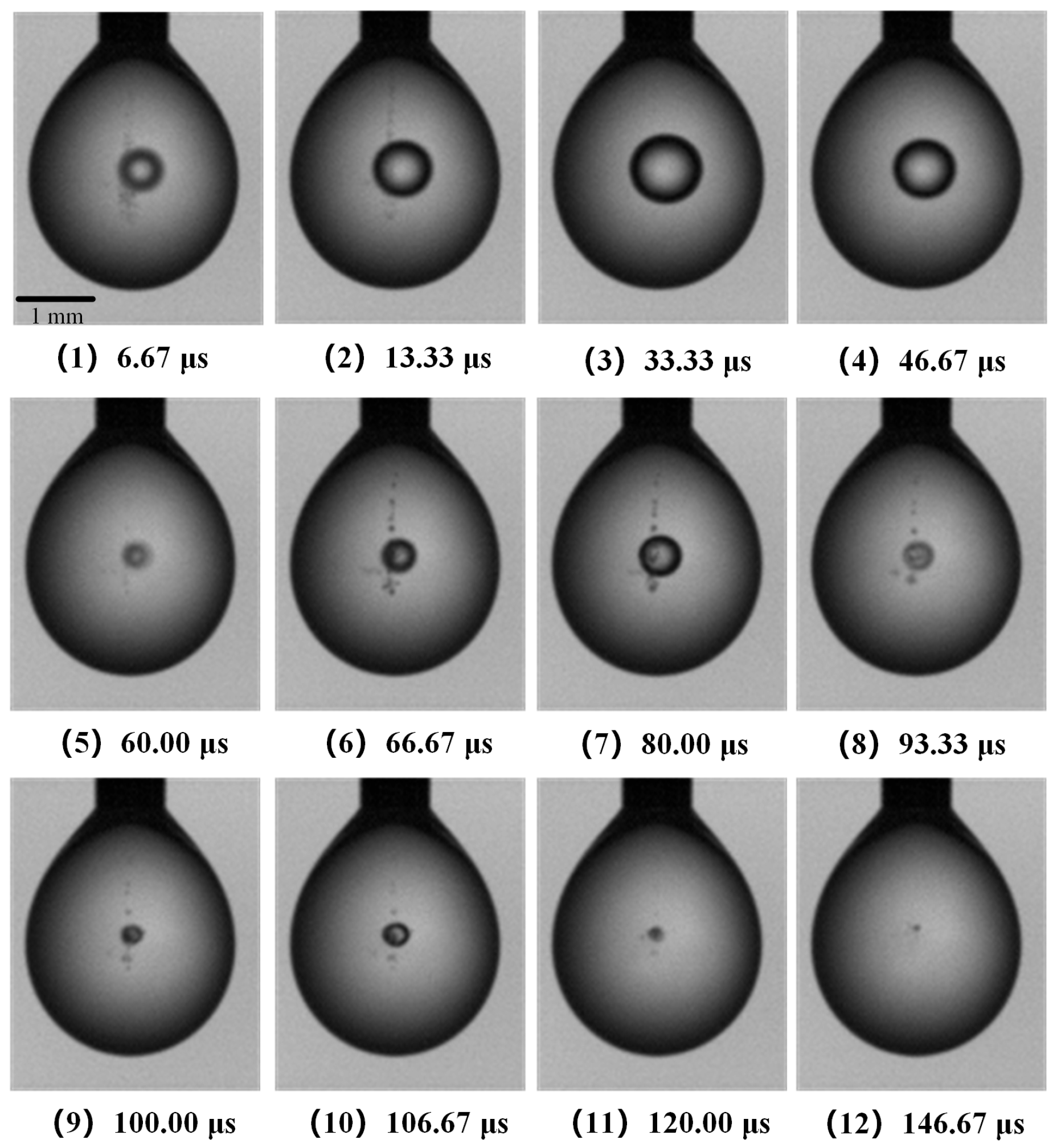
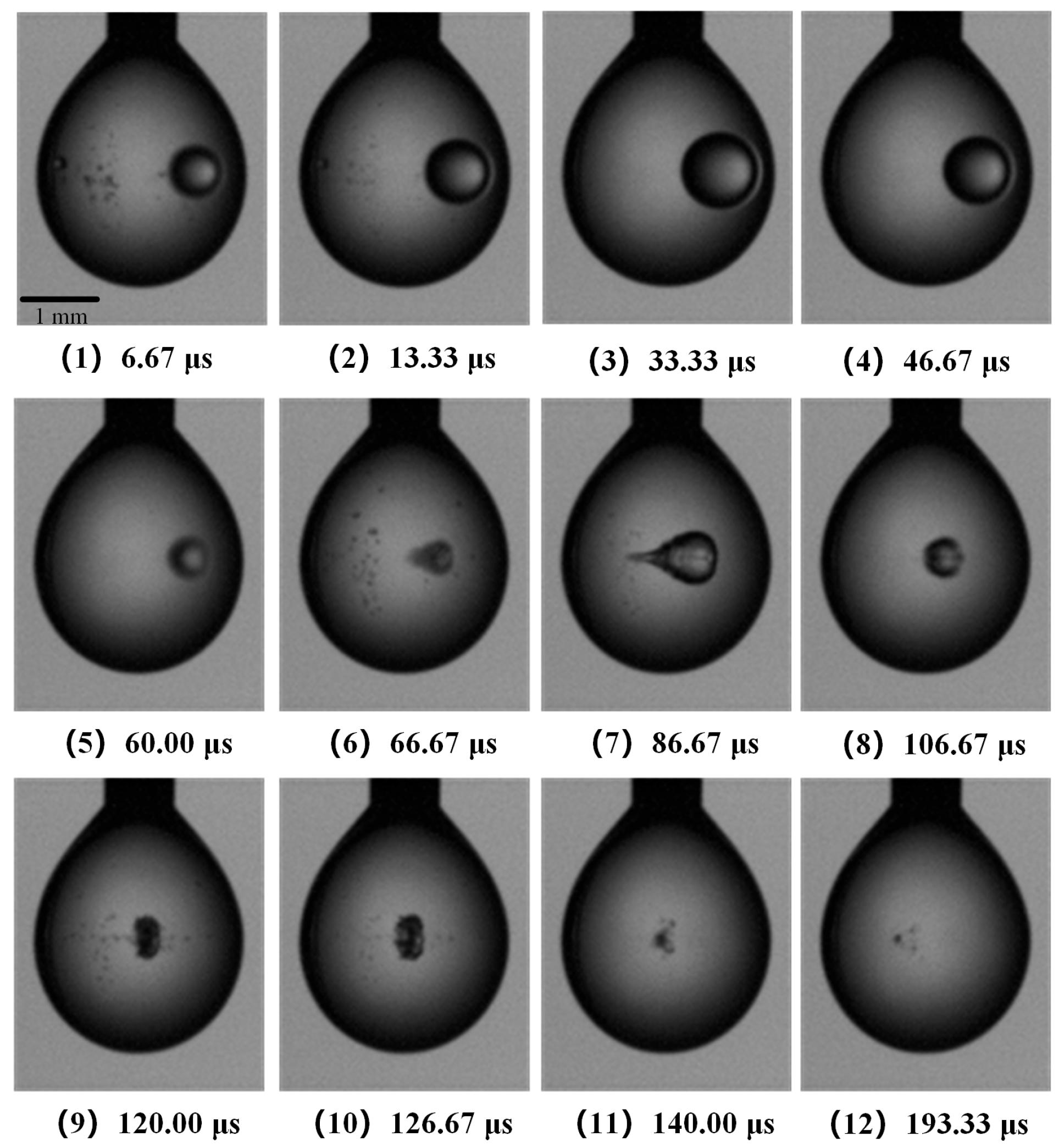
Figure 4 illustrates the typical collapse process of a bubble inside a droplet without forming a distinct collapse jet. Here, the eccentricity
ε = 0.100 and the radius ratio
λ = 0.320. During the first period (frames 1–5), the bubble maintains quasi-spherical symmetry throughout its growth and collapse. Upon entering the second period, from the early growth stage (frame 6) to the late collapse stage (frame 8), a banded distribution of microbubble clusters gradually emerges on the left side of the bubble, representing secondary cavitation. This structure can be attributed to the collapse shock wave undergoing multiple reflections from the droplet surface and focusing in this region, creating a localized low-pressure zone [
27]. In subsequent periods (frames 9–12), the bubble exhibited only weak oscillations before ultimately collapsing, with no further significant jet formation or large-scale structural evolution observed.
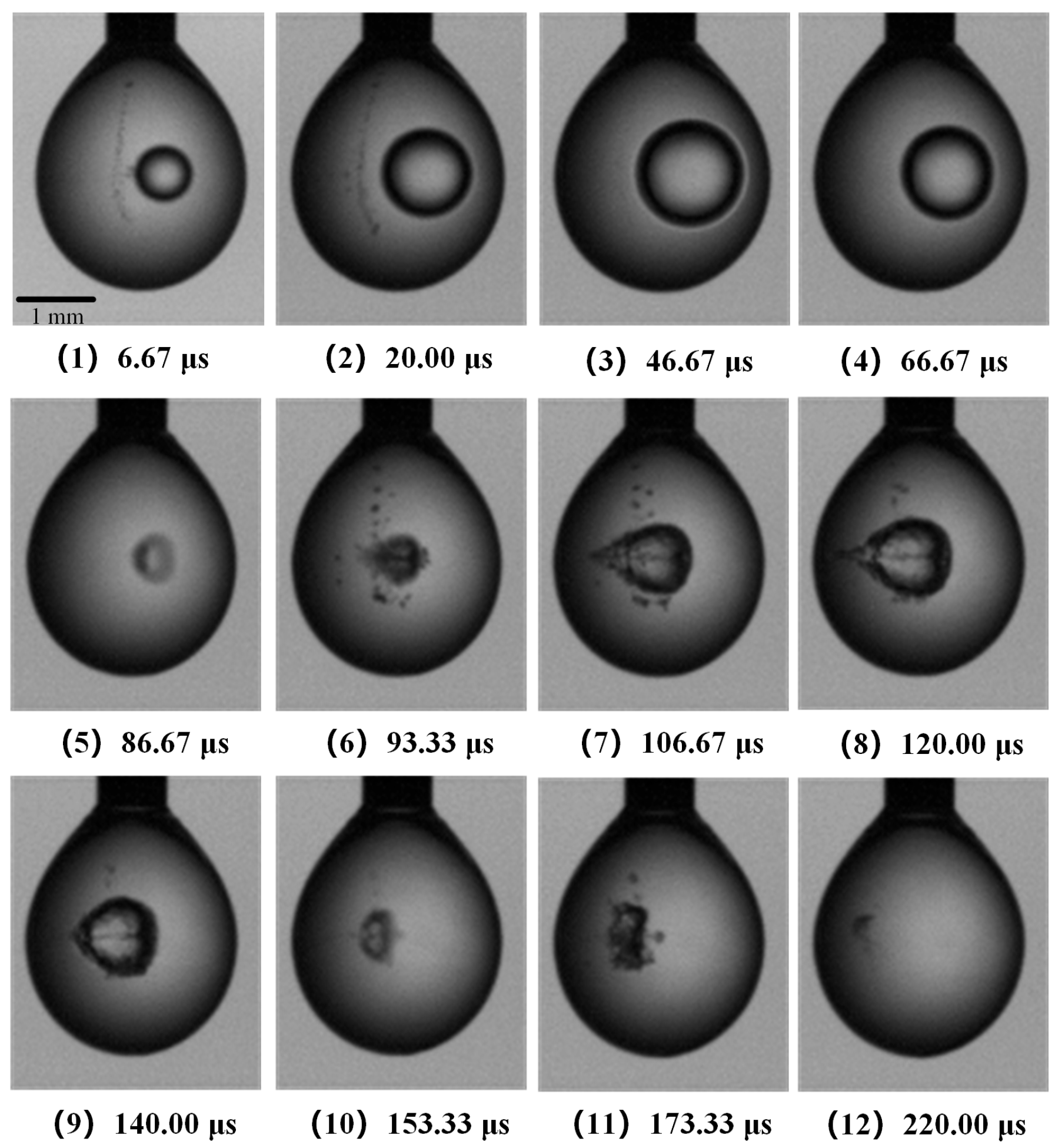
Figure 5 illustrates the typical collapse process of a weak jet formed inside a droplet when the eccentricity
ε = 0.525 and the radius ratio
λ = 0.360. During the first period (frames 1–5), the bubble remains spherically symmetric. Consequently, no prominent collapse jet is observed. Upon entering the second period, a horizontal jet directed to the left begins forming during the initial growth phase of the bubble (frame 6). This jet gradually expands and penetrates the bubble, causing the entire bubble to stretch into a conical structure (frame 7). Subsequently, the jet tip separates from the main bubble and gradually dissipates, allowing the bubble to recover to an approximately spherical shape (frame 8). During subsequent periods (frames 9–12), the bubble persists as a small gas mass, undergoing multiple weak oscillations while exhibiting an overall leftward migration between collapse periods.
Figure 6 illustrates the typical collapse process of a bubble generating a strong jet inside a droplet when the eccentricity
ε = 0.350 and the radius ratio
λ = 0.550. During the first period (frames 1–5), the bubble exhibits spherical growth and collapse. Upon entering the second period, a horizontal collapse jet directed leftward emerges during the initial growth phase (frame 6). This jet penetrates through the right-side depression of the bubble, forming a distinct horizontal trajectory within it. Under the jet’s traction, the bubble gradually evolves into a conical structure (frames 7–8). Unlike the weak jet situation (
Figure 4), this jet did not detach after extension but gradually retracted (frame 9), ultimately restoring the bubble to a bowl shape (frame 10).
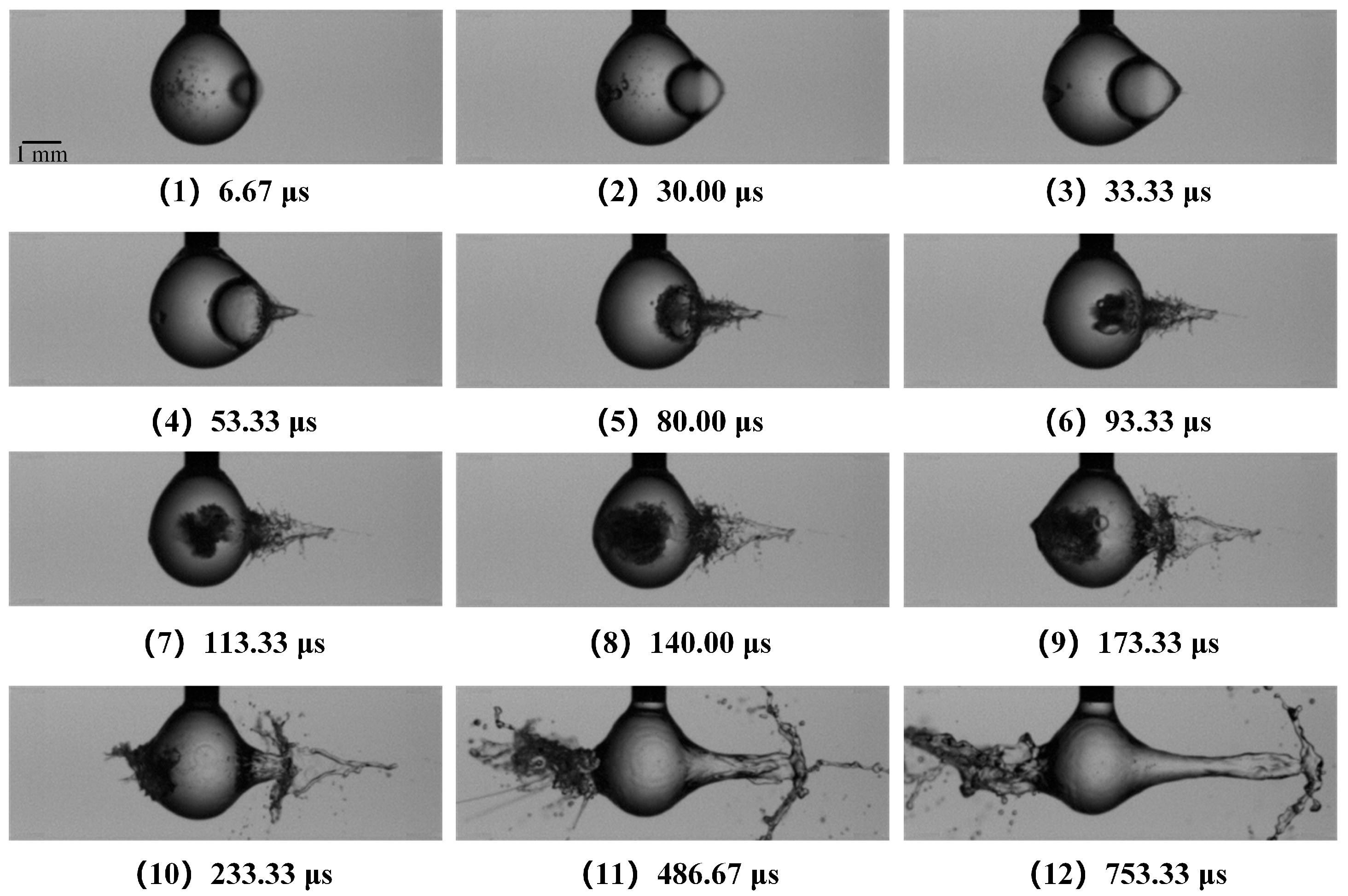
Figure 7 illustrates the typical collapse process of a bubble forming a complex jet inside a droplet at eccentricity
ε = 0.850 and radius ratio
λ = 0.605. During the first period (frames 1–5), the bubble grows spherically. However, as the bubble enters its collapse phase (frames 3–5), it collapses toward the right and interacts with the right surface of the droplet. As a result, the bubble partially penetrates the droplet interface. Upon entering the second period, the bubble undergoes significant deformation during secondary growth. Compared to the strong jet situation (
Figure 6), the larger λ value enhances the interaction between the bubble and the droplet. This draws more ambient gas into the bubble interior, disrupting the original jet structure and forming complex asymmetric flow patterns. This process propels the entire bubble toward the left (frames 6–8). Subsequently, the bubble contacts the left surface of the droplet and is constrained by it, which limits its further expansion (frame 9). Ultimately, this complex jet penetrates the droplet surface (frames 10–12). In summary, the difference between
λ and
ε significantly alters the bubble collapse behaviors, leading to diverse evolution patterns of cavitation collapse jets. To reveal the driving fluid flow and dynamic mechanisms governing these patterns, the next section will present the liquid velocities near bubbles under varying
λ and
ε conditions.
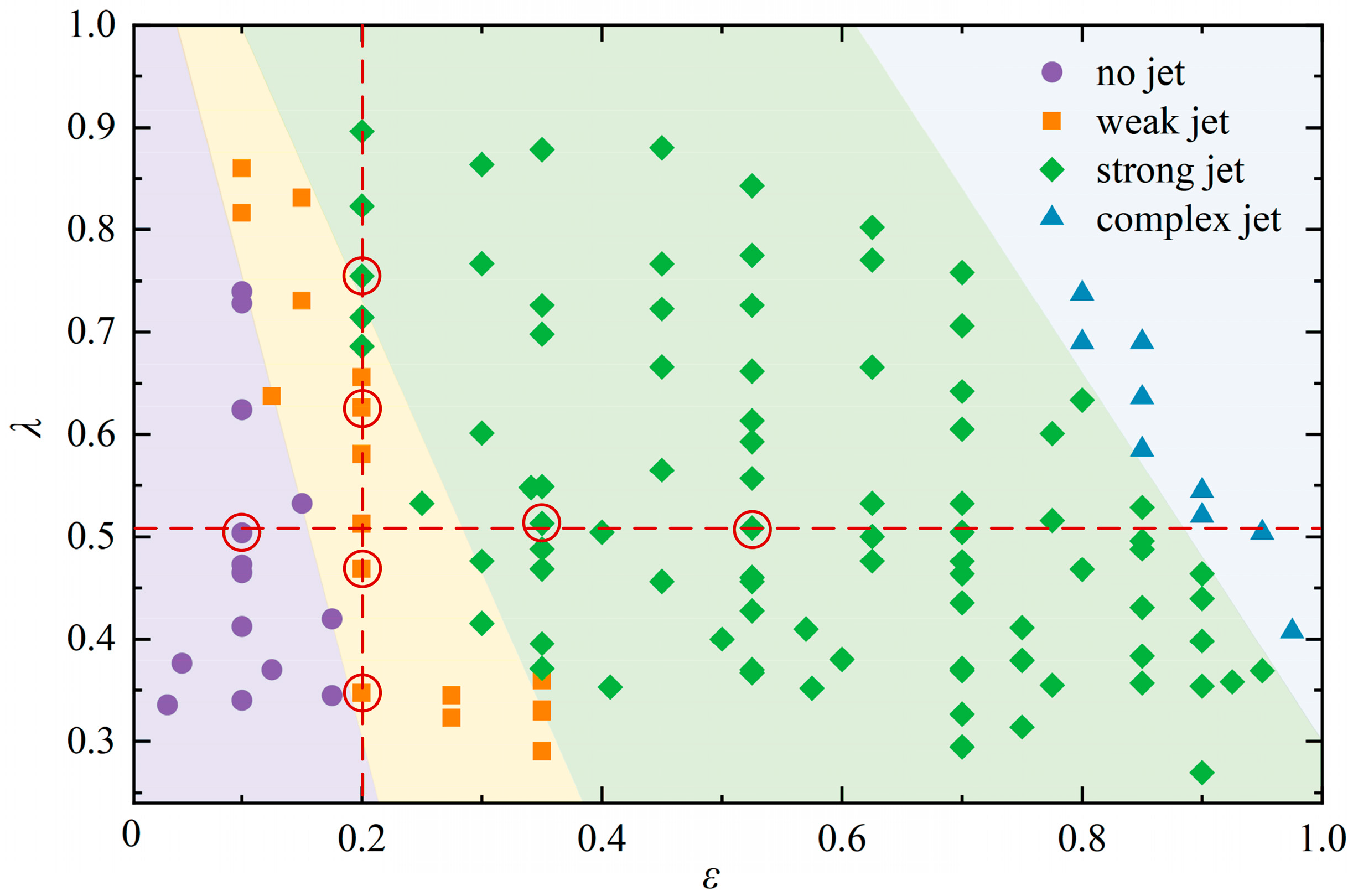
Figure 8 displays the partitioning results for four typical bubble collapse jets under varying eccentricity (
ε) and radius ratio (
λ). In the purple region, no jet is observed. This is because at low eccentricities, the influence on droplet surface oscillations is insufficient, preventing the generation of adequate pressure differences across the bubble wall. Consequently, no jet forms. In the orange region, a weak jet can be observed. Here, a small depression forms on the right side of the bubble, while the left side gradually bulges to form the jet tip. In the green region, jet intensity increases. At larger radius ratios
λ, the bubble exhibits strong jet development constrained by the droplet boundary, preventing tip closure during subsequent evolution. In the blue region, the bubble displays complex jet behavior. Here, substantial gas ingress into the bubble causes the jet direction to fluctuate, resulting in irregular bubble shapes. Additionally, to analyze the formation mechanism of the typical bubble collapse jet phenomenon discussed in this section, the parameters highlighted in the red circle in
Figure 8 are selected as the samples. Their liquid velocity field is analyzed in
Section 5.
5. Liquid Velocity Distribution Characteristics
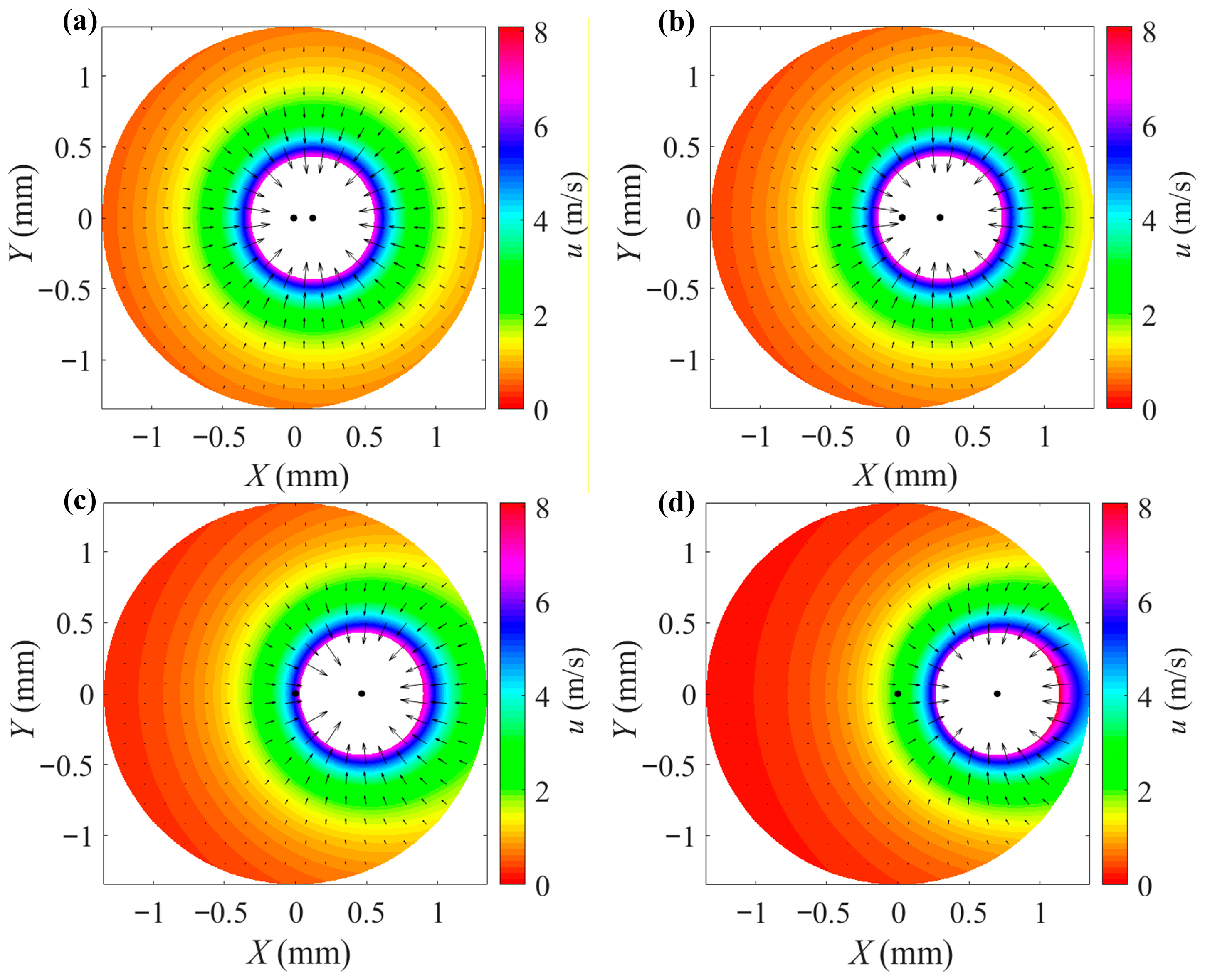
Figure 9 presents theoretical predictions of the velocity field at a typical moment inside a droplet for different eccentricities (ε).
Figure 9a–d correspond to eccentricities of
ε = 0.01, 0.20, 0.35, and 0.525, respectively. As shown, when the bubble is located at small eccentricity (
Figure 9a), both the bubble wall and the droplet surface show a velocity distribution that is both homogeneous and isotropic. As the eccentricity increases (
Figure 9b–d), the velocity distribution gradually exhibits significant anisotropy. Specifically, the right bubble wall, being closer to the droplet surface, experiences markedly accelerated contraction. While the contraction of the left bubble wall decelerates, the right droplet surface experiences a more pronounced effect from the collapse, which substantially boosts its motion velocity. In contrast, the fluid velocity in the remaining regions of the droplet gradually diminishes.
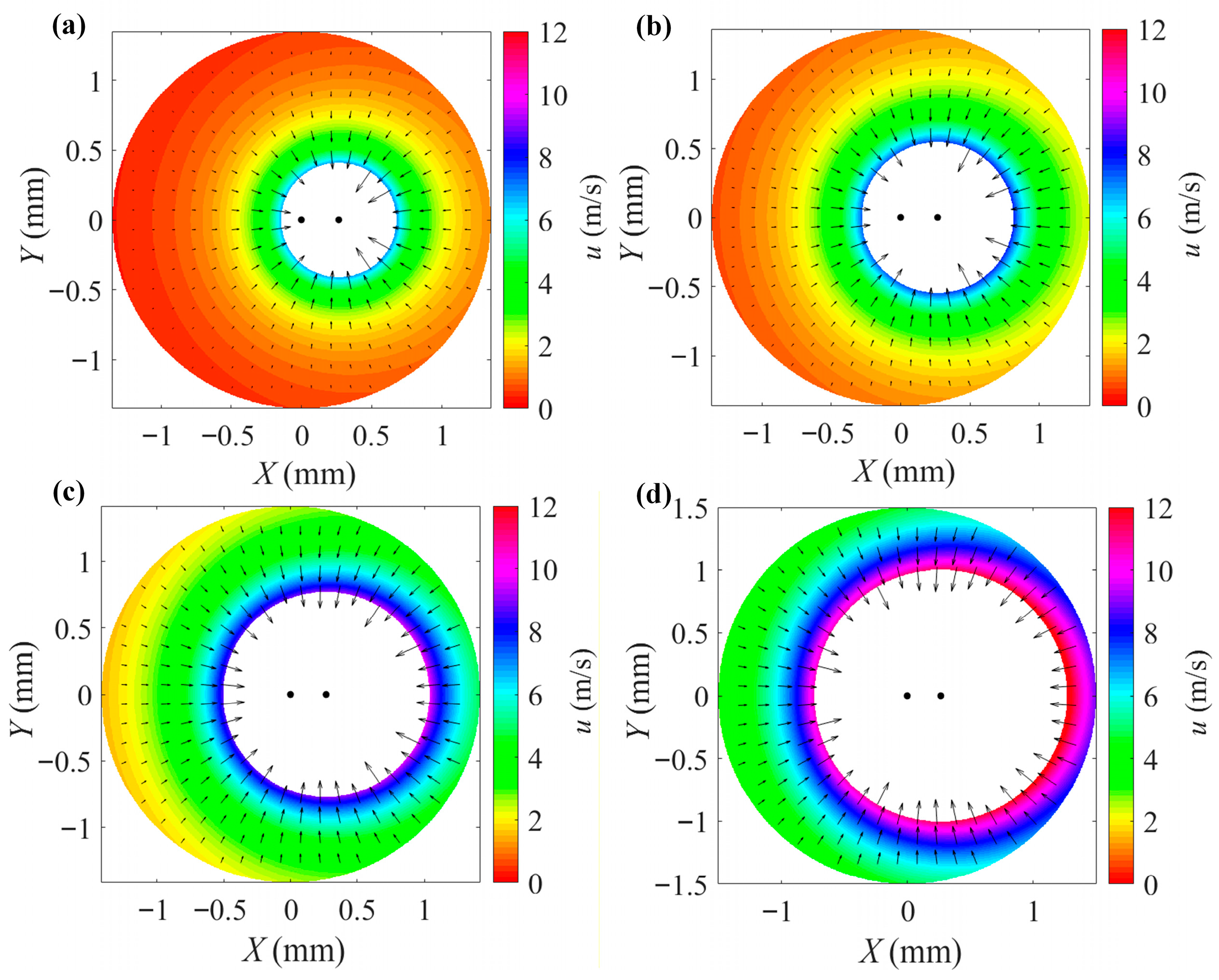
Figure 10 presents theoretical predictions of the velocity field at a typical moment inside the droplet for different radius ratios (
λ).
Figure 10a–d correspond to radius ratios of λ = 0.35, 0.46, 0.62, and 0.75, respectively. The results indicate that for a small
λ (
Figure 10a), the velocity field surrounding the bubble is largely isotropic. It is weakly influenced by the droplet surface, and the droplet surface is nearly stationary. As
λ rises (
Figure 10b–d), bubble collapse significantly disrupts the internal flow field of the droplet. The velocity distributions near the bubble and droplet surface become increasingly anisotropic. Notably, under larger
λ (
Figure 10d), the right-side bubble wall contracts at a significantly higher rate. This acceleration is markedly stronger than one on the other sides. Simultaneously, the motion velocity on the right surface of the droplet also increased substantially, exceeding that of the parts of the surface.
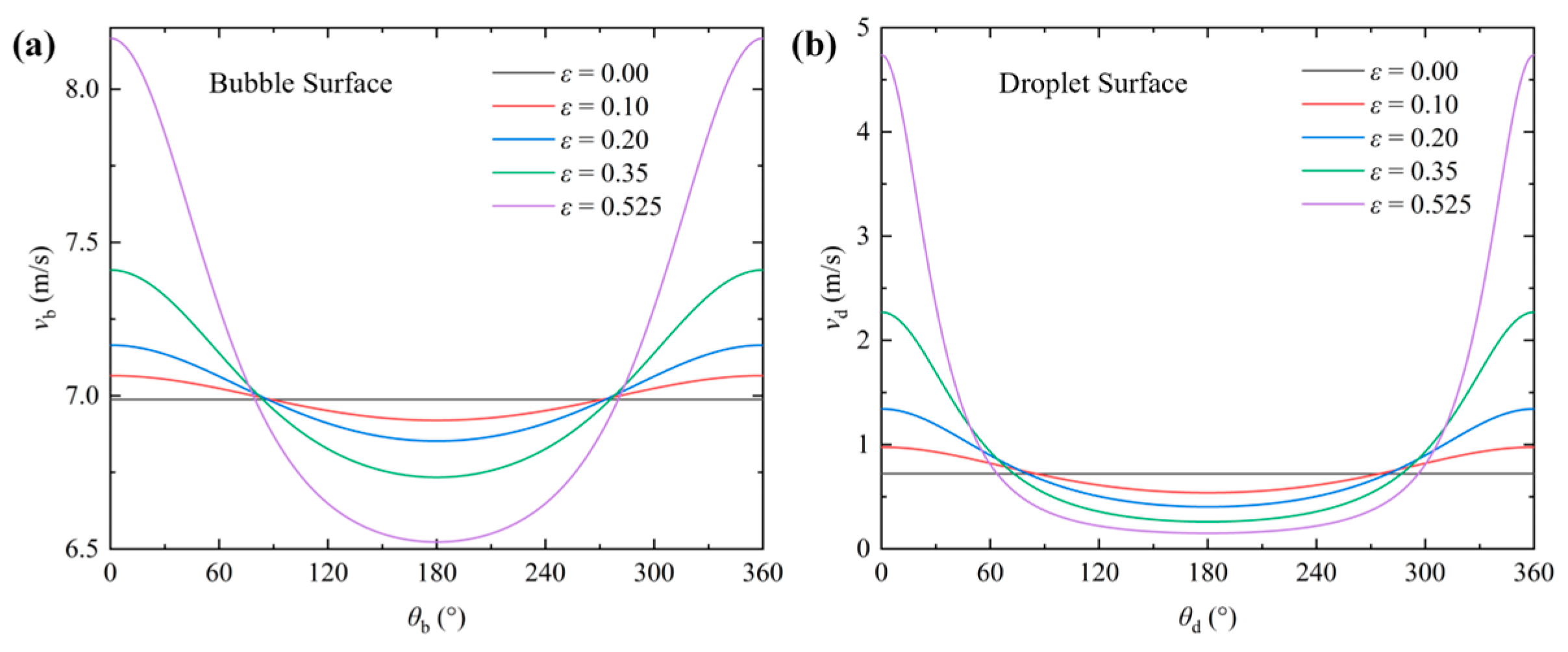
Figure 11 depicts the predicted velocity profiles for both the bubble and droplet surface across different eccentricities (
ε).
Figure 11a displays the velocity distribution curve for the bubble wall, while
Figure 11b shows that for the droplet surface. Point B, where the negative
X-axis meets the bubble wall, is taken as the bubble reference point. The intersection of point
D of the negative
X-axis and the droplet surface is defined as the droplet reference point. In the figure,
θb represents the azimuth angle of the bubble wall, while
θd corresponds to that of the droplet surface. Thus,
θb = 0° and
θd = 0° correspond to the right vertex of the bubble and droplet, respectively. The velocities at the characteristic points
B and
D are defined as
In the above equation, Lb denotes the displacement of the point B from the bubble’s maximum size to the characteristic at the end of collapse, while Ld represents the displacement of the droplet from the onset of splashing to the characteristic point D at the farthest splashing point. Tb and Td respectively denote the time durations of the above processes.
For a bubble at the droplet’s center (
ε = 0.00) in
Figure 11a, the fluid velocity around it shows a uniform and isotropic distribution, and the flow surrounding the bubble wall is both uniform and isotropic. Under eccentric conditions, such uniform distribution disappears. The minimum value occurs at the left vertex (
θb = 180°), while the maximum value is found at the right vertex (
θb = 0°). As ε increases, the difference in velocity distribution becomes more pronounced. This manifests as the minimum velocity decreasing from 6.99 m/s to 6.52 m/s, while the maximum velocity increases from 6.99 m/s to 8.17 m/s.
Figure 11b indicates that the surface velocity distribution of the droplet follows a similar pattern. As
ε increases, the non-uniformity of surface velocities intensifies. This manifests as the minimum velocity decreasing from 0.72 m/s to 0.15 m/s, while the maximum velocity significantly increases from 0.72 m/s to 4.74 m/s.
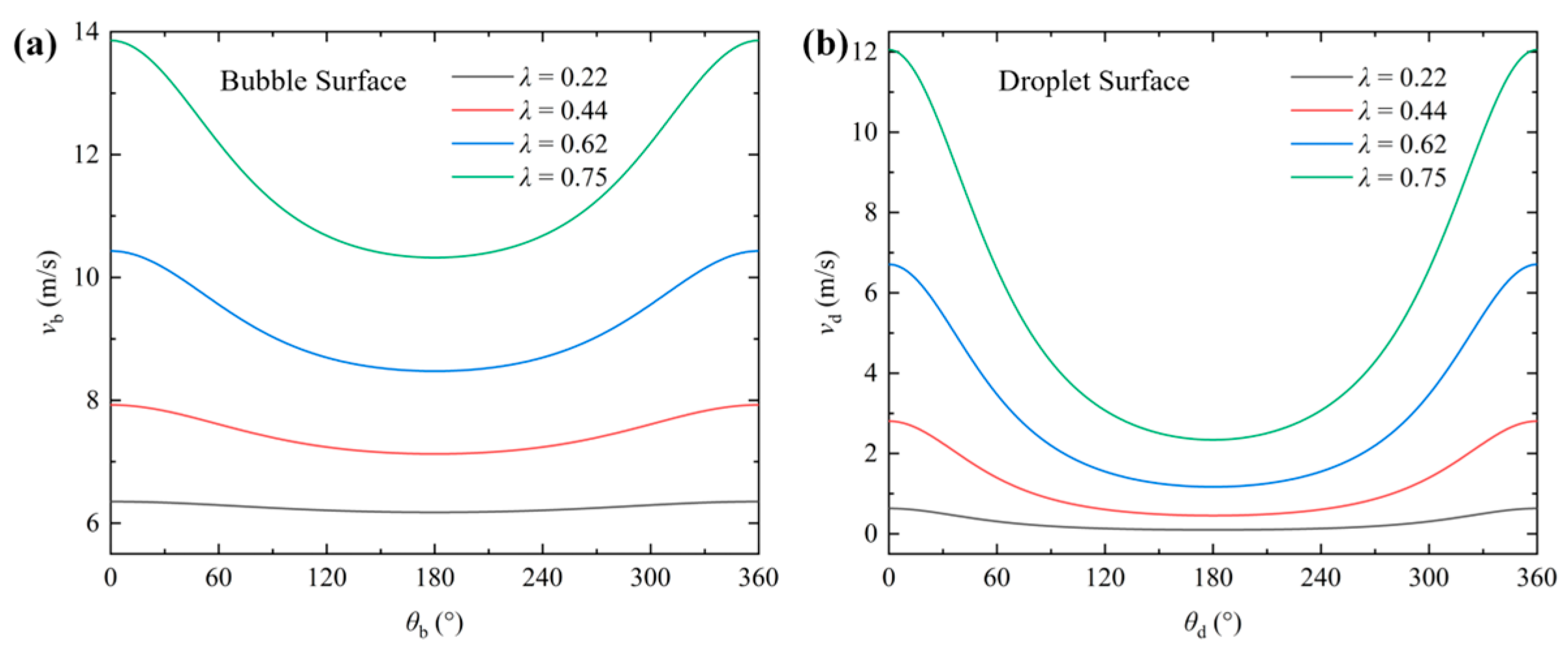
Figure 12 presents theoretical predictions of the velocity distribution on both the bubble and droplet surfaces across a range of radius ratios (
λ).
Figure 12a indicates that as
λ increases, the flow field surrounding the bubble wall progressively develops stronger anisotropy. Additionally, the overall fluid velocity around the bubble wall exhibits a gradually increasing trend. The velocity difference between the right vertex (
θb = 0°) and the left vertex (
θb = 180°) significantly increases. As
λ increases from 0.22 to 0.75, this velocity difference rises from 0.17 m/s to 3.53 m/s.
Figure 12b shows the velocity distribution of the droplet surface, which exhibits a similar trend. At smaller
λ values (e.g., 0.22), the surface velocity is essentially zero. As
λ increases, the overall surface velocity rises, and the velocity difference between the right vertex and the left vertex markedly intensifies, increasing from 0.53 m/s to 9.71 m/s.
6. Comparison of Theoretical Predictions and Experimental Results
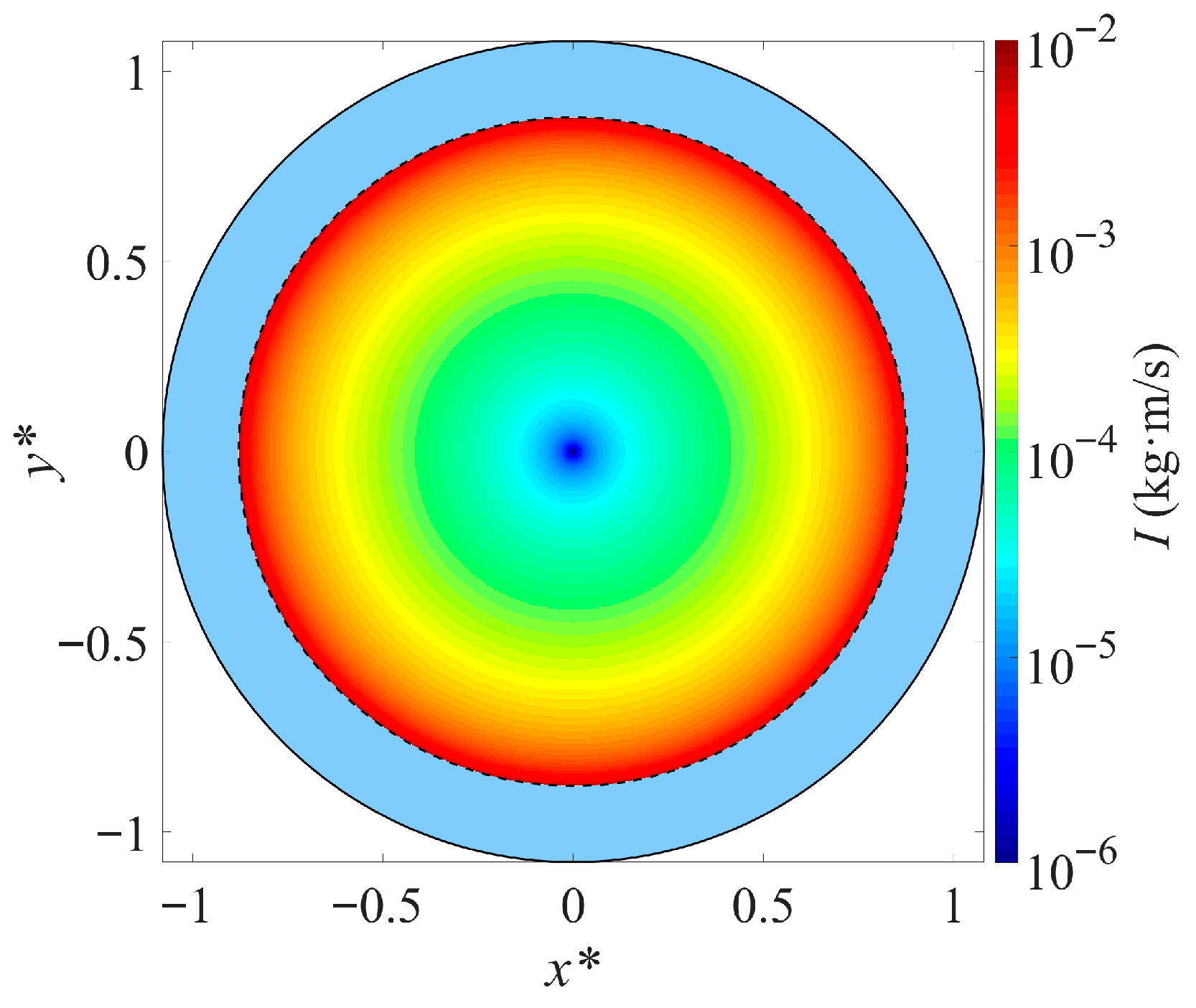
Figure 13 presents the theoretical prediction of the spatial distribution of the Kelvin impulse (
I) on the bubble. The outermost solid black circle, with radius
Rd* (=
Rd/
Rmax), represents the outer surface of the droplet. A dashed circle of radius (
Rd* − 0.2) is drawn inside the droplet. The sky-blue annular region between the dashed and solid circles indicates the area beyond the theoretically valid prediction range. When positioned close to the droplet center, the bubble is subjected to a comparatively low Kelvin impulse. The Kelvin impulse intensity progressively increases as the bubble recedes from the droplet center. Moreover, model symmetry dictates that the Kelvin impulse remains oriented toward the droplet center.
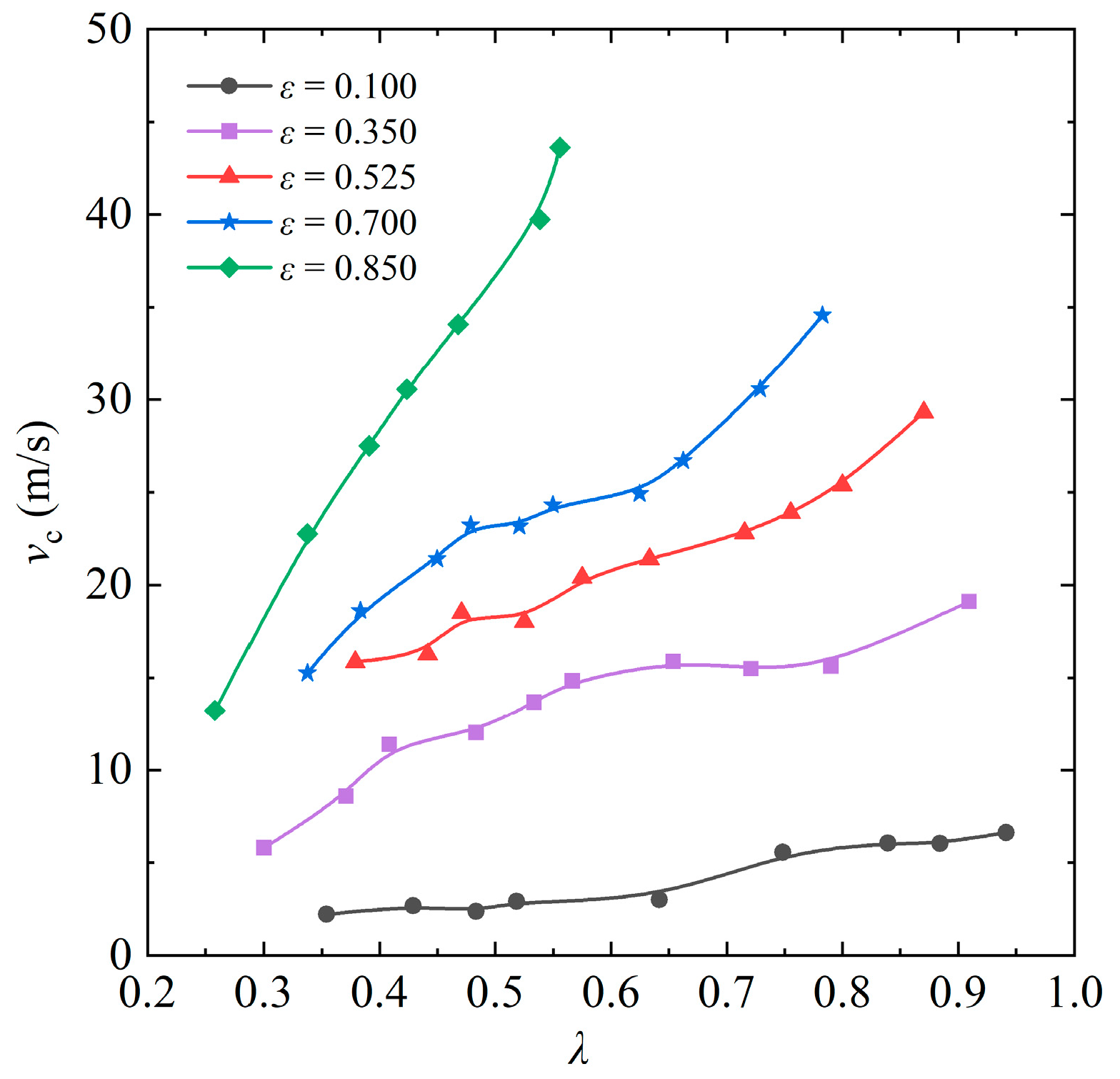
Figure 14 illustrates the variation in the bubble center velocity (
vc) with the radius ratio (
λ) for different eccentricities (
ε). The bubble migration velocity is characterized by its center velocity, defined as
In the equation, Lc denotes the displacement of the bubble center from its peak size to collapse termination. Tc represents the duration of this process. Results indicate that as λ increases, vc gradually rises. This suggests that larger bubble sizes exhibit more violent migration during collapse. Comparing curves for different ε values reveals that higher ε values yield higher overall vc values. Furthermore, vc increases more significantly with increasing λ. This indicates that as bubbles approach the droplet surface, the boundary forces exerted by the droplet intensify, thereby amplifying the influence of the internal flow field on bubble migration dynamics.
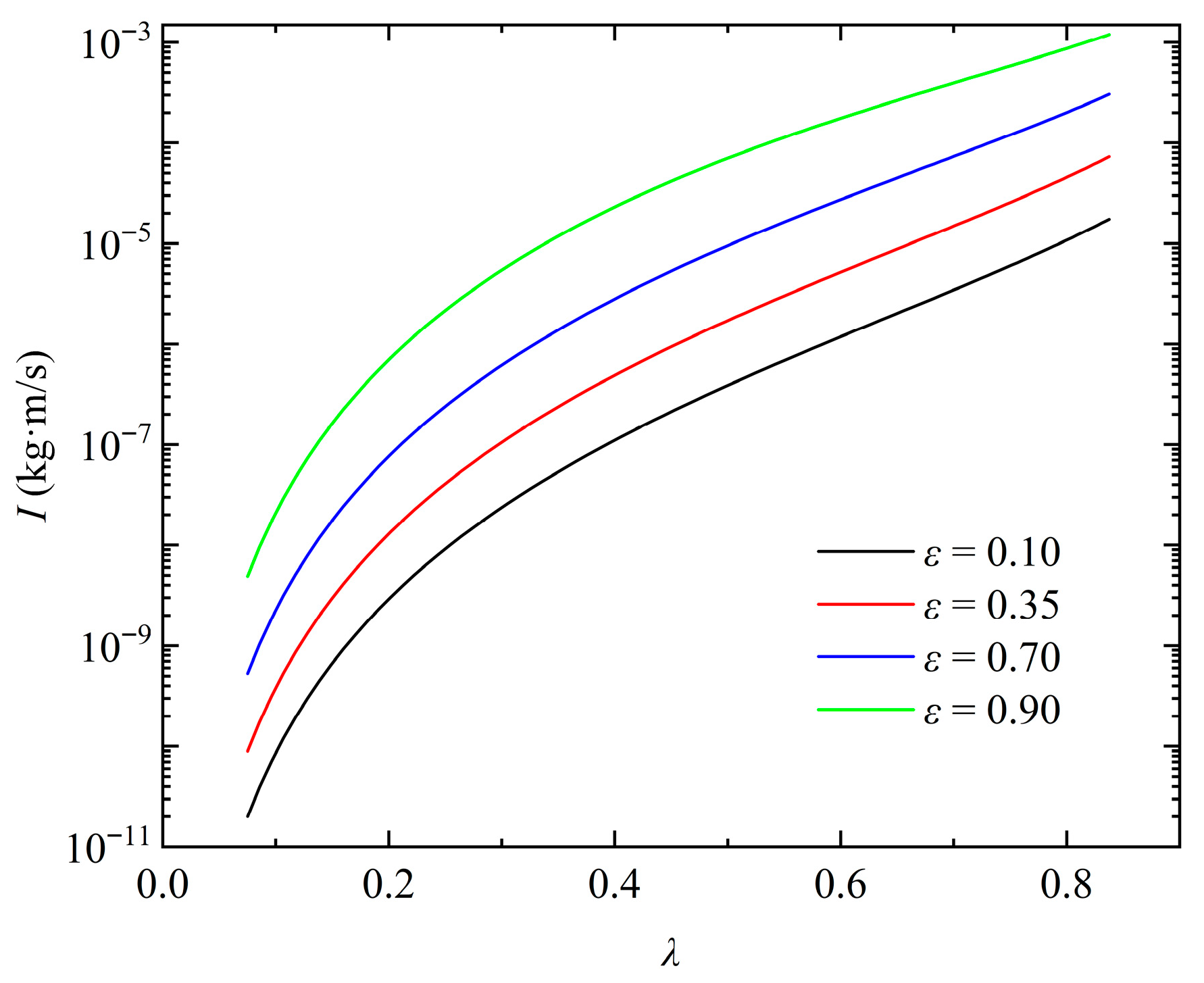
Figure 15 presents theoretical predictions of Kelvin impulse (
I) variations with radius ratios (
λ) for different eccentricities (
ε). As shown, the Kelvin impulse gradually increases with the radius ratio. Furthermore, the corresponding Kelvin impulse results also grow larger with increasing eccentricity. This trend aligns with the experimental results depicted in
Figure 13.
7. Conclusions
This study systematically investigates the collapse dynamics of bubbles at eccentric positions inside a droplet, integrating high-speed photography experiments with Kelvin impulse theory. Two key dimensionless parameters are analyzed—the bubble-to-droplet radius ratio (λ) and eccentricity (ε). Through extensive experiments, this paper identifies four typical collapse jets occurring within a liquid droplet under the combined effects of eccentricity (ε) and radius ratio (λ). Subsequently, to elucidate the mechanism behind the jet evolution, we conduct theoretical analysis based on the image method and Kelvin impulse theory. Regarding the formation mechanism of collapse jets, the liquid velocity field within the droplet-bubble system and the characteristic velocities of both are analyzed. For their evolutionary characteristics, we predict jet intensity through Kelvin impulse and bubble motion properties. The principal findings of this study can be summarized as follows:
- (1)
Under different radius ratios, bubble jets are classified into four types: no jet, weak jet, strong jet, and complex jet. Results show that in the case of no jet, bubble oscillations decay while droplet morphology remains mostly unchanged. Under weak and strong jets, the jet penetrates the bubble and initiates deformation, yet no significant disturbance occurs on the droplet surface. Conversely, under complex jets, bubble growth is restricted. Upon collapse, the jet penetrates the droplet, causing destruction.
- (2)
The combined effects of eccentricity (ε) and radius ratio (λ) result in the non-uniformity and distribution characteristics of the velocity field inside the droplet. Specifically, as both the radius ratio and eccentricity increase, the anisotropy in the liquid velocity distribution gradually intensifies, and the velocity differences between the bubble wall’s and droplet surface’s left and right axial endpoints progressively widen.
- (3)
As λ and ε increase, the Kelvin impulse intensity and the bubble center velocity vc rise significantly. This indicates that larger bubbles positioned closer to the droplet surfaces exhibit more violent migration and stronger interaction effects. Also, the direction of the Kelvin impulse from the bubble consistently points toward the droplet center.
Building on the findings of this study, future research could extend this work in several directions. First, while the current study focuses on single bubbles, the interactions of multiple bubbles within a droplet are more representative of practical applications, such as atomization and surface cleaning. Moreover, the influence of liquid properties (e.g., viscosity and surface tension) on bubble–droplet interactions requires systematic investigation.




 ,
,