1. Introduction
Since its inception in the pioneering work [
1], topology optimization has attracted substantial attention as a powerful tool for achieving optimal structural performance. The primary objective of topology optimization is to determine the optimal material distribution within a given design domain, subject to a prescribed volume fraction, in order to minimize a specified objective function [
2,
3,
4]. Based on topology optimization methods, a structural designer can obtain multiple conceptual design solutions. Among the numerous methods, the most popular one is the Solid Isotropic Material with Penalization (SIMP) method, which is a density-based topology optimization [
2]. This method has been extensively adopted to obtain the optimized results in the fields of aircraft design [
5], bridge design [
6,
7,
8], architectural and structural design [
9,
10,
11], and car design [
12]. Despite the success of the methods, several challenges remain to be addressed, particularly regarding numerical instabilities (such as checkerboard patterns and blurred structural boundaries) and computational efficiency.
To avoid obtaining numerical instability, filtering techniques are often employed [
13,
14] in density-based topology optimization methods, including density and sensitivity filtering techniques. These methods typically require information from neighboring elements, which can be difficult to obtain in the case of fine meshes or complex domains and geometries [
15]. Meanwhile, the application of filtering techniques can also introduce new challenges. For example, when a larger filter radius is employed, it often leads to the emergence of numerous gray elements. To obtain clear boundaries, level-set methods were proposed to produce clear and smooth boundaries without the need for additional post-processing [
3,
16,
17]. Nevertheless, these methods have inherent limitations, particularly the increased computational complexity and cost associated with solving the evolution of level-set functions.
With the rapid development of machine learning (ML), a number of studies have been conducted to address these challenges. For example, Yu et al. employed an artificial neural network to predict an optimized structure based on given boundary conditions and optimization settings [
18]. Deep belief networks (DBNs) were used to transform the input data into a higher-level representation, thereby reducing the number of iterations [
19]. Qian et al. proposed an explicit level-set approach based on the topology description function (radial basis function)-enhanced neural network for topology optimization [
7], where the traditional topology optimization method is transformed into an update process for the network parameters. Li and Ye further introduced a hybrid approach that integrates the method of moving asymptotes and the Adam optimizer for updating the parameters of a radial basis function neural network [
20]. Zhang et al. [
21] employed neural networks (NN) to perform topology optimization and conducted a comprehensive study of this method. In addition, diffusion models have also been employed to reduce the design variable dimensionality, where transfer learning is utilized to enable generalization to unseen design conditions [
22]. More recently, generalizable structural topology generation informed by a few prior designs has also been explored through Fourier and latent modulated neural networks, demonstrating the potential of neural representations for rapid topology synthesis [
23]. In parallel, designer-driven topology optimization has also been investigated through human-in-the-loop neural networks, where designer feedback is incorporated into the optimization process [
24]. Topology optimization has also been extended to model-and-data-driven robust concurrent optimization, where structural topology and device layout are optimized simultaneously while accounting for load location uncertainty and non-design domain effects [
25]. It has further been applied to reliability-based, time-dependent, and multi-scale design problems [
26,
27,
28]. Beyond learning-based density or topology representations, recent studies have also explored replacing the conventional FEM module with physics-informed neural models in topology optimization. For example, Jeong et al. proposed a PINN-based topology optimization framework (PINNTO), in which an energy-based PINN is used to replace finite element analysis for determining the deformation state [
29]. They further developed a more advanced PINN-based framework for nonlinear and complex topology optimization [
30]. In addition to these PINN-based developments, other studies have also highlighted the growing interest in ML-driven topology optimization, including review and real-time optimization frameworks [
31,
32,
33]. In related fields, meta-learning has also been introduced for rapid prediction in geometry-sensitive engineering problems, such as tunneling-induced surface ground deformation [
34]. Moreover, lightweight deep networks have shown strong capability in detecting fine-scale crack patterns [
35,
36], while automatically designed deep architectures have also been explored for topology-sensitive vessel segmentation [
37]. These studies further demonstrate the importance of efficient and expressive neural representations for geometrically complex and slender structural patterns.
Although these studies have demonstrated the potential of machine-learning-based topology optimization, further improvements are still needed in the geometrically faithful representation of fine-scale structural features. Existing neural-network-based approaches mainly emphasize optimization efficiency, dimensionality reduction, or parameterized density representation, but the integration of geometrically informed basis functions with neural representations remains relatively limited. In particular, accurately capturing slender members, high-aspect-ratio components, and sharp structural boundaries in a unified and fully differentiable framework is still a challenging issue. This limitation motivates the development of a geometry-enhanced neural representation that can better incorporate anisotropic geometric priors into topology optimization.
In this context, Anisotropic Radial Basis Functions (ARBFs) provide a promising way to enhance the geometric expressiveness of neural representations. ARBFs have demonstrated effectiveness in capturing complex geometric features and improving computational efficiency in applications such as shape representation [
38,
39]. For example, an ARBF-based method has been successfully applied to simulate the dynamics of a continental-scale ice sheet, where the ratio between typical thickness and length is extremely small [
38]. These unique properties make ARBFs particularly well-suited for topology optimization tasks involving slender structures or high-aspect-ratio features, such as bar-like members. However, their application in topology optimization remains underexplored.
To address this research gap, this paper proposes a novel Geometric-enhanced Neural Network (GeNN) method for topology optimization based on Anisotropic Radial Basis Functions (ARBFs). The proposed method employs ARBFs to represent the density field, which allows for a more compact representation of the design space and improves computational efficiency by reducing the number of design variables. The ARBFs are designed to capture complex geometric features, particularly in cases with small thickness-to-length ratios, such as bar-like members. By embedding ARBFs into the neural network architecture, GeNN greatly enhances its nonlinear representation capacity. The method dynamically adjusts the shape and position parameters of ARBFs, effectively capturing complex topological features while producing sharp structural boundaries. In addition, it inherently suppresses checkerboard patterns without additional filtering techniques. Beyond these capabilities, the method offers the flexibility to adjust geometric parameters, enabling the generation of multiple competitive design solutions. This will allow designers to refine and select the most suitable conceptual design based on their expertise. This work advances the current state of the art by (1) introducing a geometry-enhanced neural representation for improving geometric fidelity and computational performance, enabling a continuous, differentiable, and geometrically informed representation of the density field; (2) demonstrating the scalability of the proposed GeNN framework across diverse applications, including heat conduction problems, multi-volume constraint designs, and large-scale structural optimization, and (3) eliminating the need for filtering or manual gradients through an end-to-end differentiable architecture. These contributions establish GeNN as a unified, scalable, and more interpretable alternative to existing neural topology optimization methods.
The remainder of this paper is organized as follows.
Section 2 briefly introduces the theoretical foundation of the anisotropic radial basis function.
Section 3 presents the details of the proposed method. Several numerical experiments are shown in
Section 4 to evaluate the optimization capabilities.
Section 5 demonstrates its scalability across various optimization problems.
Section 6 discusses the role and impact of key components within the framework. Finally,
Section 7 concludes the paper.
2. Theoretical Foundation of the Anisotropic Radial Basis Function
The Anisotropic Radial Basis Function (ARBF) is an extension of the traditional radial basis function [
40] (RBF) that introduces anisotropy to enhance the flexibility and adaptability. Unlike traditional isotropic RBFs, which assume uniform scaling in all directions, ARBFs allow for direction-dependent scaling factors, enabling the model to capture the local characteristics of the data more effectively. This enhanced adaptability makes ARBFs particularly suitable for applications involving directional variability or complex spatial structures. Traditional isotropic RBFs are typically defined as
where
is the input point,
is the center of the
i-th basis function, and ‖ ‖ denotes the Euclidean norm. Among the various isotropic basis functions, the Gaussian basis function is the most commonly used. Its mathematical expression is given below:
where
is the bandwidth parameter to control the width or spread of the Gaussian function.
For the anisotropic case, the Gaussian ARBF can be written as
Here,
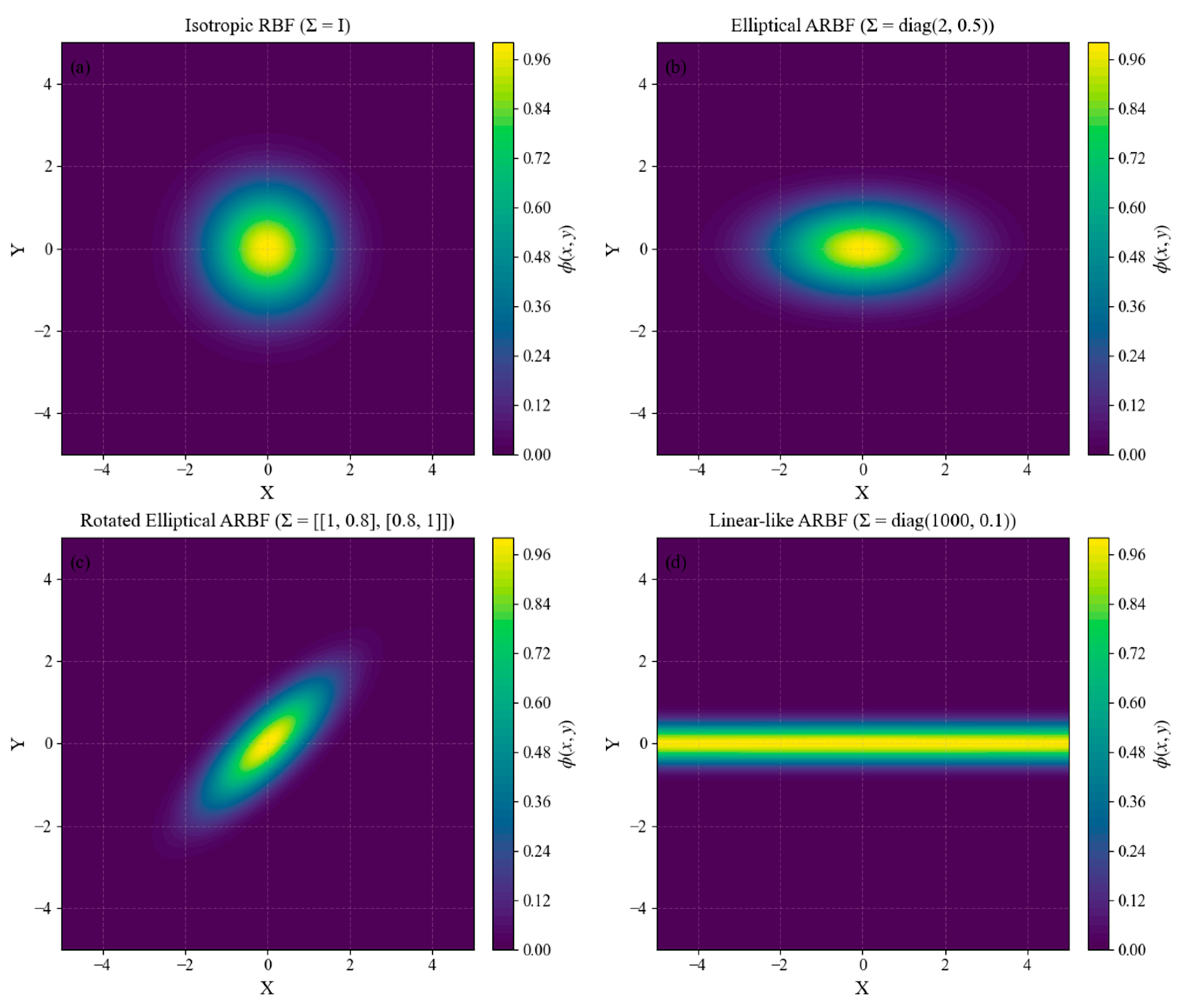
is a symmetric covariance matrix that controls the shape and orientation of the Gaussian function, allowing it to stretch or compress along different axes (see
Figure 1).
As shown in
Figure 1, Anisotropic Radial Basis Functions (ARBFs) demonstrate exceptional versatility in representing a wide range of geometric shapes by adjusting their covariance matrix Σ. When Σ is set to the identity matrix (Σ = I), the ARBF generates an isotropic, circular shape. By modifying Σ to a diagonal matrix (Σ = diag(2, 0.5)), the ARBF transitions to an elliptical form, capturing anisotropic scaling along different axes. Introducing off-diagonal terms (e.g., Σ = [[1, 0.8], [0.8, 1]]) further enables the ARBF to model rotated elliptical shapes, reflecting directional dependencies. In extreme configurations, such as Σ = diag(1000, 0.1), the ARBF approximates a linear-like structure, effectively capturing features with high aspect ratios. This remarkable adaptability allows ARBFs to model complex geometric and topological features with precision, making them particularly effective for representing density fields at structural boundaries and achieving sharp, well-defined optimized designs [
41].
3. Proposed Method
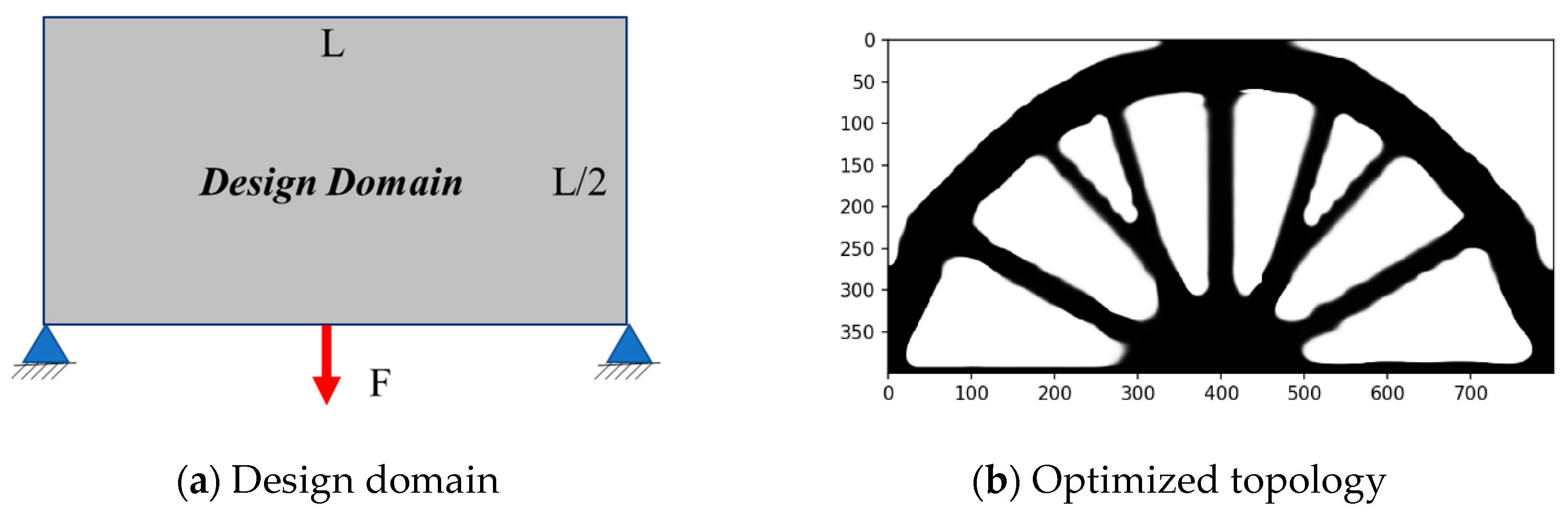
Topology optimization is a powerful design tool that aims to determine the optimal material distribution within a given design domain. To illustrate the proposed method, which is based on the Solid Isotropic Material with Penalization (SIMP) formulation, a design domain with predefined loads and constraints is considered (see
Figure 2). The compliance minimization problem seeks to maximize the structural stiffness subject to a prescribed volume fraction constraint, and is mathematically expressed as follows:
where the
,
and
are the global displacement, stiffness matrix, and force vectors, respectively,
and
are the local displacement and stiffness matrix, respectively,
is the design variable representing the element density,
,
and
are the material volume, volume of the design domain, and the prescribed volume fraction, respectively. Young’s modulus
is a function of density, as follows:
where
denotes Young’s modulus of the material, and the penalization factor
is set as 3 in this study.
In traditional density-based methods, density is defined at each element. In contrast, the proposed method employs a Geometric-Enhanced Neural Network (GeNN) to represent the density field. Unlike traditional sensitivity-based optimization algorithms, such as moving asymptotes (MMA) [
42], a globally convergent version of the MMA (GCMMA) [
43], and Optimality Criteria (OC), the proposed method does not directly update element densities. Instead, it optimizes the parameters (θ) of the GeNN using optimization algorithms commonly employed in deep learning, such as Adaptive moment estimation (Adam) [
44], thereby indirectly controlling the density distribution. This strategy enables a more flexible exploration of the design space and offers the capability to uncover topology structures that are difficult to achieve with traditional methods.
3.1. Geometric-Enhanced Neural Network
The proposed Geometric-enhanced Neural Network (GeNN) addresses the limitations of previous methods by providing a flexible and efficient representation of the density field. By using Anisotropic Radial Basis Functions (ARBFs), GeNN enables precise control over material distribution, particularly in capturing fine-scale geometric features and high-aspect-ratio structures during the topology optimization. Importantly, the introduction of ARBFs is not merely an increase in the parameter degrees of freedom of conventional isotropic RBFs. By incorporating learnable directional scaling and rotation, ARBFs provide a fundamentally different representational mechanism, enabling the density field to capture direction-dependent geometric features, such as slender members and high-aspect-ratio structures, more effectively and offering a more flexible design space for optimization. The architecture and training procedure of the GeNN are described in detail below.
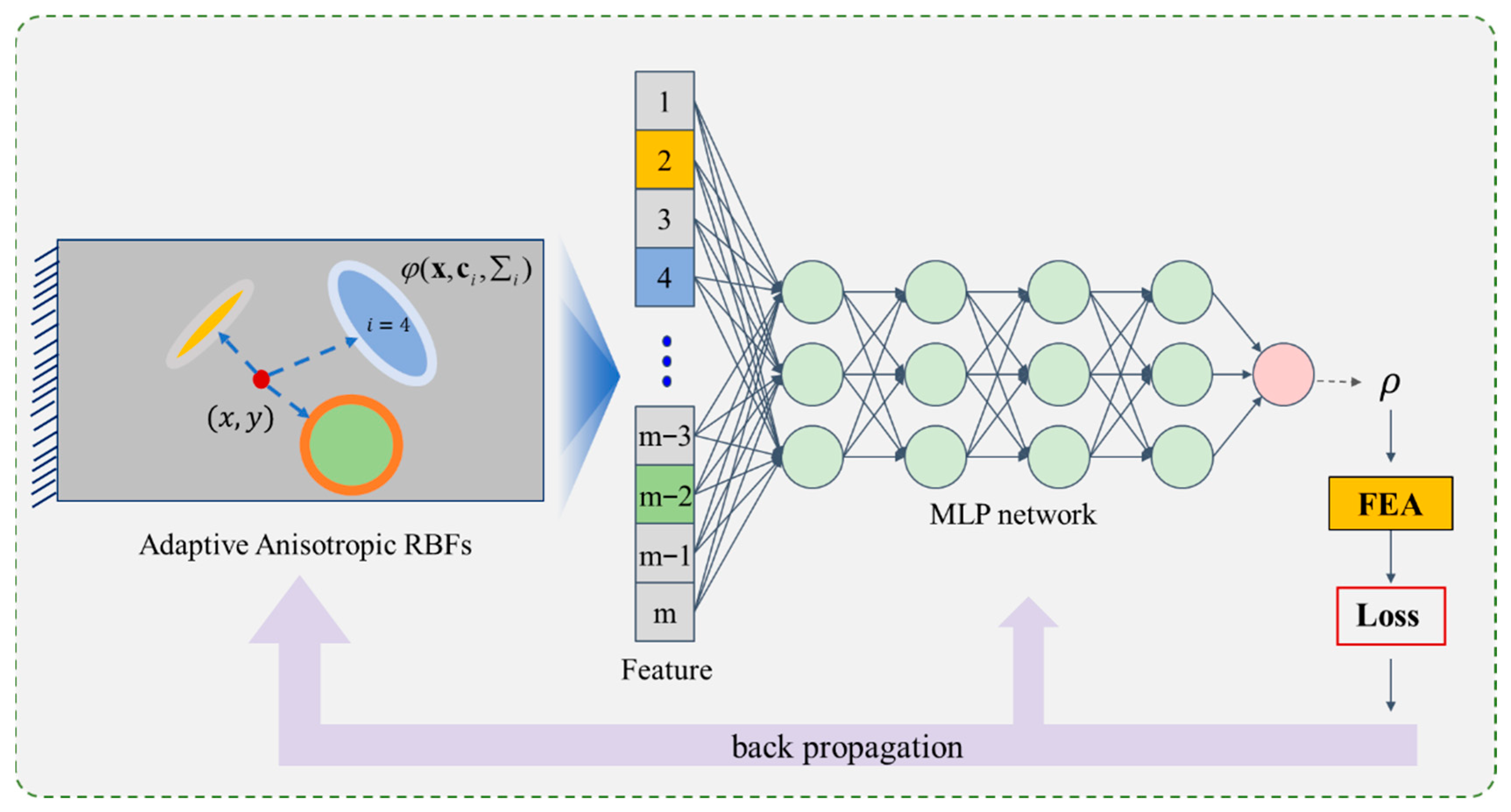
Following the illustration of the GeNN in
Figure 3, a detailed explanation of its architecture and operation is provided. The GeNN utilizes a set of
adaptive anisotropic radial basis functions (ARBFs) randomly distributed within the design domain. Crucially, both the location parameters (
) and shape parameters (
) of these ARBFs are learnable, enabling the network to dynamically adapt to the optimal density distribution. The location parameters (
) are initialized to uniformly cover the design domain, while the shape parameters (
) are initialized as constant values with a prescribed initial width, denoted by
. During training, all these parameters are treated as learnable variables and optimized jointly with the network weights via gradient-based backpropagation using the Adam optimizer under the compliance objective and volume constraint.
For any given point
, each ARBF computes its response based on the distance between a given point and the center of the basis function, thereby producing the geometric feature vector
consisting of
distinct responses that capture localized geometric information across the design domain.
Essentially, these
m responses form the feature vector
that encodes the spatial context necessary for describing material variations. This feature vector is then fed into a multilayer perceptron (MLP) network. The MLP consists of multiple fully connected layers integrated with nonlinear activation functions (e.g., nn.Tanh()), which enable the network to learn complex mappings between the extracted features and the corresponding material density. Finally, a sigmoid activation function is applied to the output of the last hidden layer, and its output values are converted to density values
, as follows:
where
is the MLP network, and
is the set of learnable parameters. Therefore, the complete set of learnable parameters for the proposed GeNN model includes the location parameters (
) and shape parameters (
) of these RBFs, as well as the parameters (
) of the MLP.
In contrast to conventional element-wise density parameterizations, the ARBF-based representation enforces spatial continuity of the density field. Since each density value is generated by the superposition of smooth anisotropic kernels with finite support, the resulting field inherently exhibits spatial correlation. This continuous parameterization restricts element-scale high-frequency oscillations, which are the primary source of checkerboard patterns in classical SIMP formulations. As a result, checkerboard instabilities are naturally suppressed without the need for additional filtering techniques. This behavior is further validated by the numerical experiments presented in
Section 4.
3.2. Loss Function
During each training step, GeNN calculates the density value at the center of each element and provides this value to the FEA solver for calculating the element displacement
. Then, the element strain energy can be calculated by
, where
represents the material penalty. Finally, summing the strain energies of all elements yields the total compliance, as shown below:
To take full advantage of the nonlinear optimization capability of neural networks, a constrained optimization problem (see Equation (4)) is converted to an unconstrained optimization problem using the Lagrange multiplier method. Its formulation is expressed as follows:
where
is the initial objective function when the density values of all elements in the design domain are equal to
, and
is the penalty parameter that balances the compliance objective and the volume constraint. In our implementation, the penalty parameter is progressively increased during training according to a continuation-type schedule (
per iteration.
3.3. Optimization Algorithm
Based on the proposed GeNN method and Equations (6)–(9), the compliance minimization problem has been reformulated into a neural network optimization problem. The complete optimization scheme is outlined as follows:
Comparing Equations (4a) and (10), it can be observed that the design variable in the topology optimization problem has shifted from
to
. The dimension of the optimization space will be drastically reduced, i.e.,
. For example, in the optimization case shown in
Figure 2, the number of optimization variables of the traditional topology optimization method is
N = 12,800, and the optimization variables of the proposed GeNN method are
W = 2036.
To solve Equation (10), the gradient of the loss function with respect to the optimization variable must first be computed. The mathematical expression for this gradient is given as follows:
where the
can be determined analytically via the backpropagation algorithm. It should be noted that the overall loss is a composite function consisting of a finite element analysis (FEA) component and a differentiable neural-network component. For the compliance term, the sensitivity with respect to the density field is evaluated using the classical adjoint sensitivity formulation in density-based topology optimization (see, e.g., the 99-line topology optimization code [
45]), while the remaining derivatives are obtained through backpropagation. Its complete formulation is presented as follows:
The proposed method is compatible with any gradient-based optimization algorithm commonly used in deep learning. In this paper, the Adam optimizer is adopted because it generally provides more stable and efficient updates for neural-network-based optimization problems. The convergence criterion is based on the change in the loss function, specifically the standard deviation of the objective function values between successive iterations. Its formulation is as follows:
where
denotes the number of consecutive iterations used to monitor convergence (
). If
, the optimization algorithm is terminated.
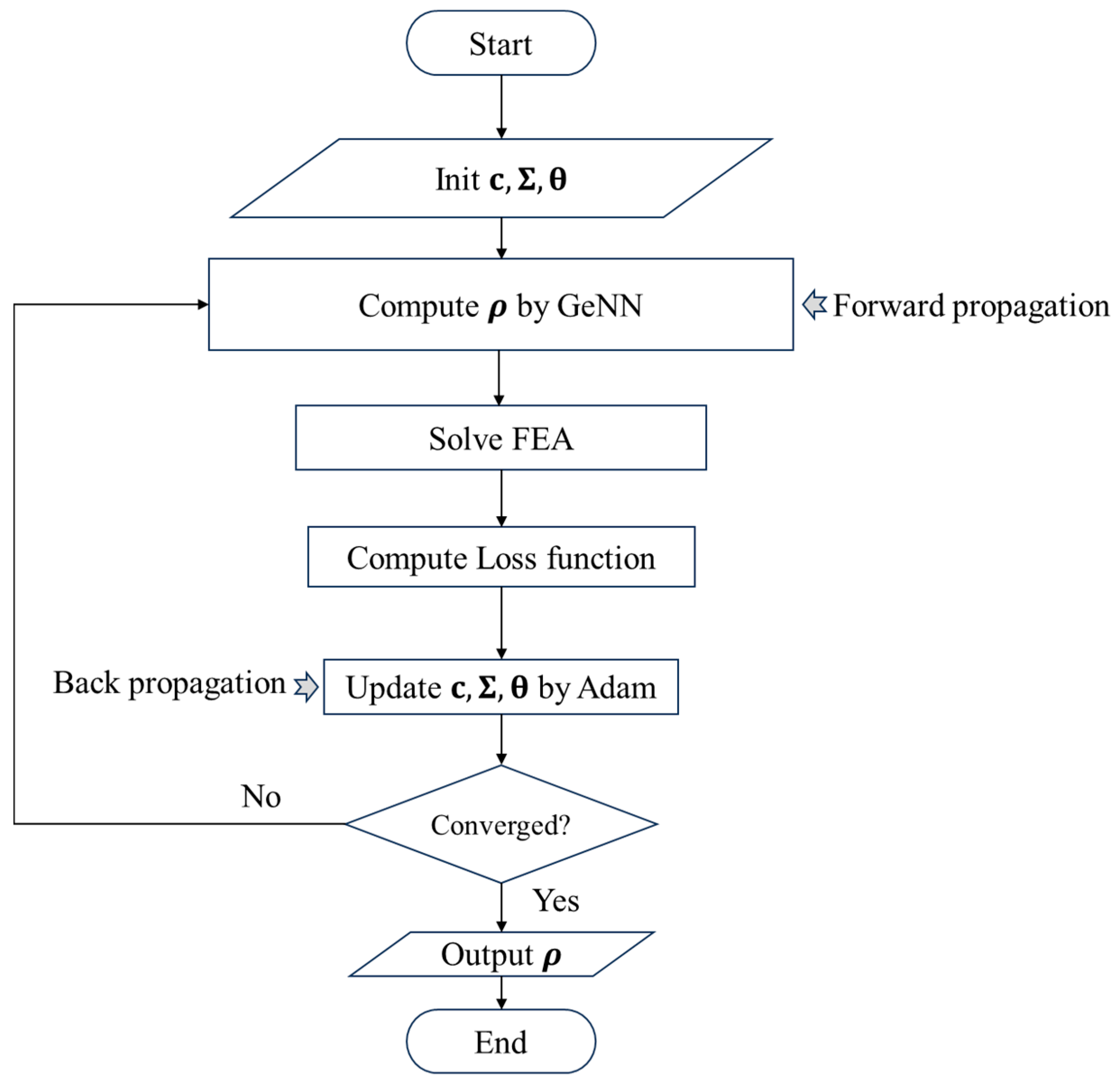
Figure 4 illustrates the optimization flowchart. The procedure begins with the initialization of parameters, including the location parameters (
), shape parameters (
), and the network parameters (
). GeNN is then employed to compute the density field
, followed by solving the finite element analysis (FEA) to evaluate the structural response. The loss function is computed based on the optimization objectives, and the parameters are updated using the Adam optimization algorithm. The iterative process continues until pre-defined convergence criteria are satisfied, at which point the optimized density field is output. Upon completing the iterative training, GeNN enables real-time generation of high-resolution optimized structures through forward propagation using refined meshes.
4. Numerical Experiments
To investigate the proposed GeNN method, a series of numerical examples are presented.
Section 4.1 presents 2D compliance examples to evaluate the optimization capabilities;
Section 4.2 explores high-resolution topology optimization design;
Section 4.3 provides a comparative analysis between the proposed GeNN and the traditional method to demonstrate the superiority of the proposed method; and
Section 4.4 compares GeNN with various RBF- and neural-network-based models. The default parameters in the following implementation are as follows:
1: The design domains of all 2D examples are assumed to be discretized by using a mesh of 80 × 40 square FEs (Q4 elements), the number of ARBFs is set to , two hidden layers with 10 neurons per layer are employed, unless otherwise stated.
2: The volume fraction, the density penalization power, Young’s modulus, and Poisson’s ratio are set as 0.4, 0.3, 1.0, and 0.3, respectively.
3: The network parameters are updated using the Adam optimizer with a learning rate set to 0.1. The momentum parameters are configured with and , respectively.
4: Convergence is evaluated over 10 consecutive iterations, i.e., NC = 10. The convergence tolerance values are set to 0.0001 for the 2D examples and 0.001 for the 3D examples, respectively.
5: All examples are implemented using Python 3.10.16 and PyTorch 2.5.1.
6: For the SIMP baseline, a standard density filter is employed to suppress checkerboard patterns and mesh dependency. The filter radius is set to 1.3 elements for the 2D examples and 1.5 elements for the 3D example.
4.1. 2D Compliance Minimization Examples
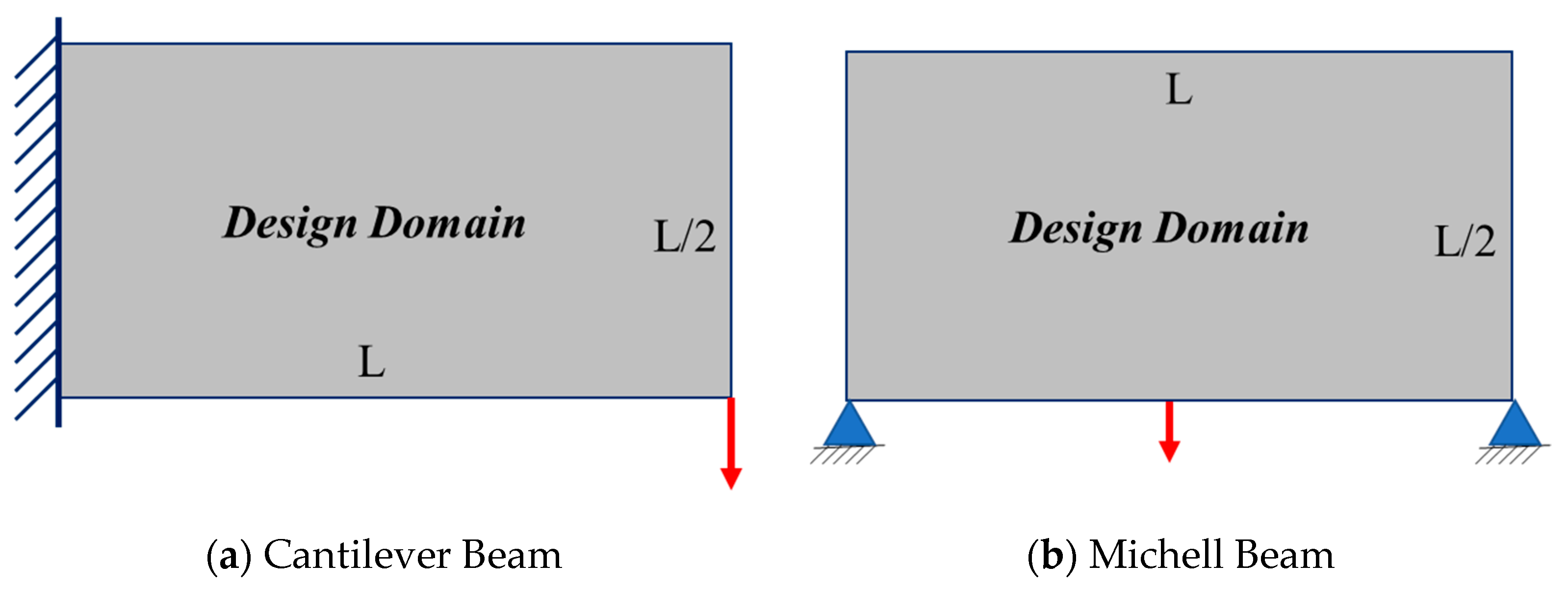
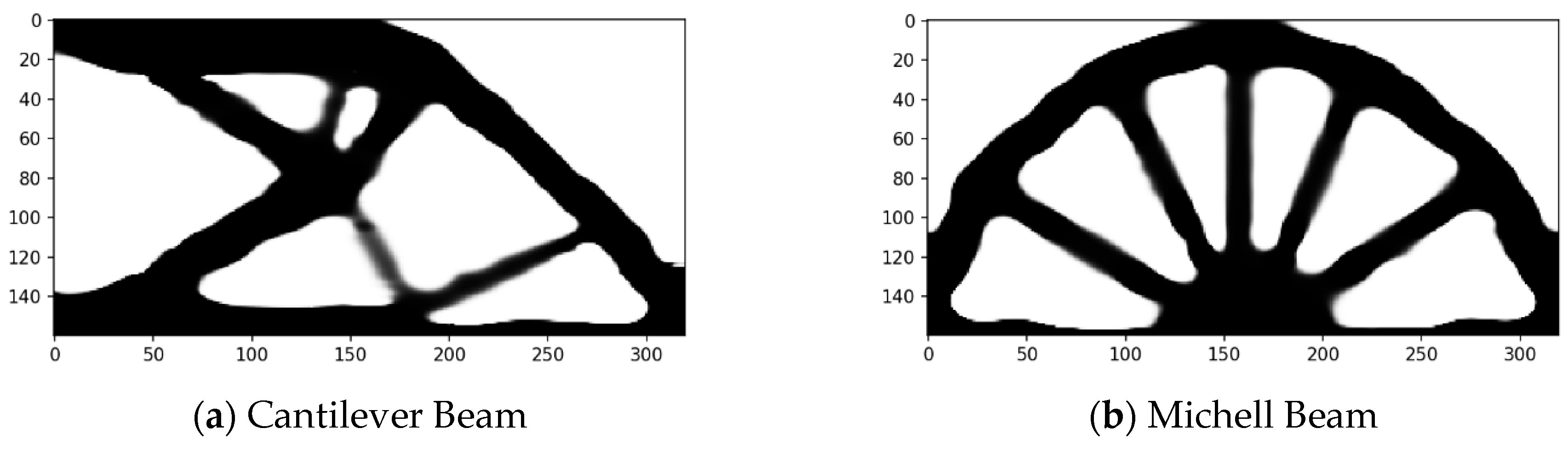
Figure 5 illustrates the design domains and boundary conditions for both the cantilever beam and Michell beam. For the cantilever beam, the left edge is fully constrained, while a unit concentrated load is applied at the bottom-right corner. In the Michell beam problem, both the bottom-left and bottom-right corners are fully fixed, with a concentrated force applied at the midpoint of the bottom edge.
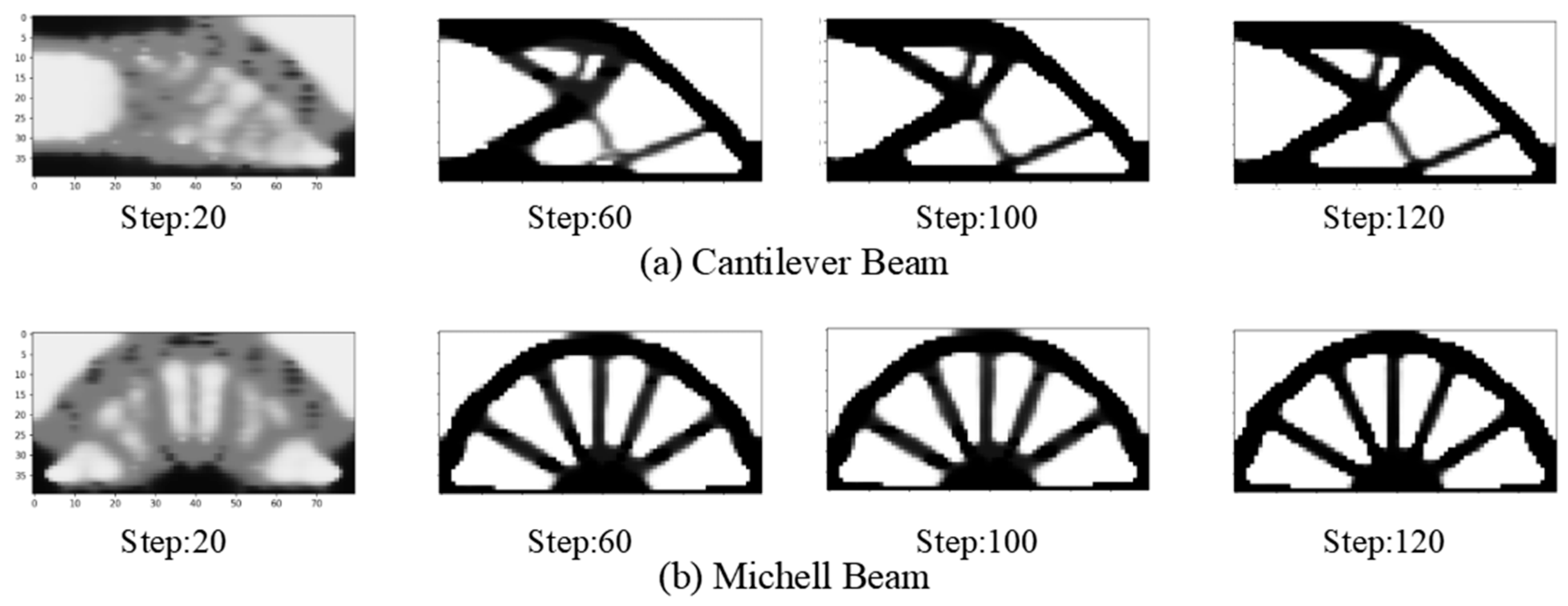
Figure 6 shows the optimized results of the cantilever and Michell beams throughout the iterative process, where nearly stable results are achieved after 60 iterations. Meanwhile, the results indicate that the proposed method can achieve nearly binary (0–1) topology optimization and avoids the checkerboard phenomenon without relying on filtering techniques commonly employed in traditional SIMP topology optimization. To further quantify checkerboard suppression, a
block-based checkerboard index
is introduced to measure element-scale alternating density patterns.
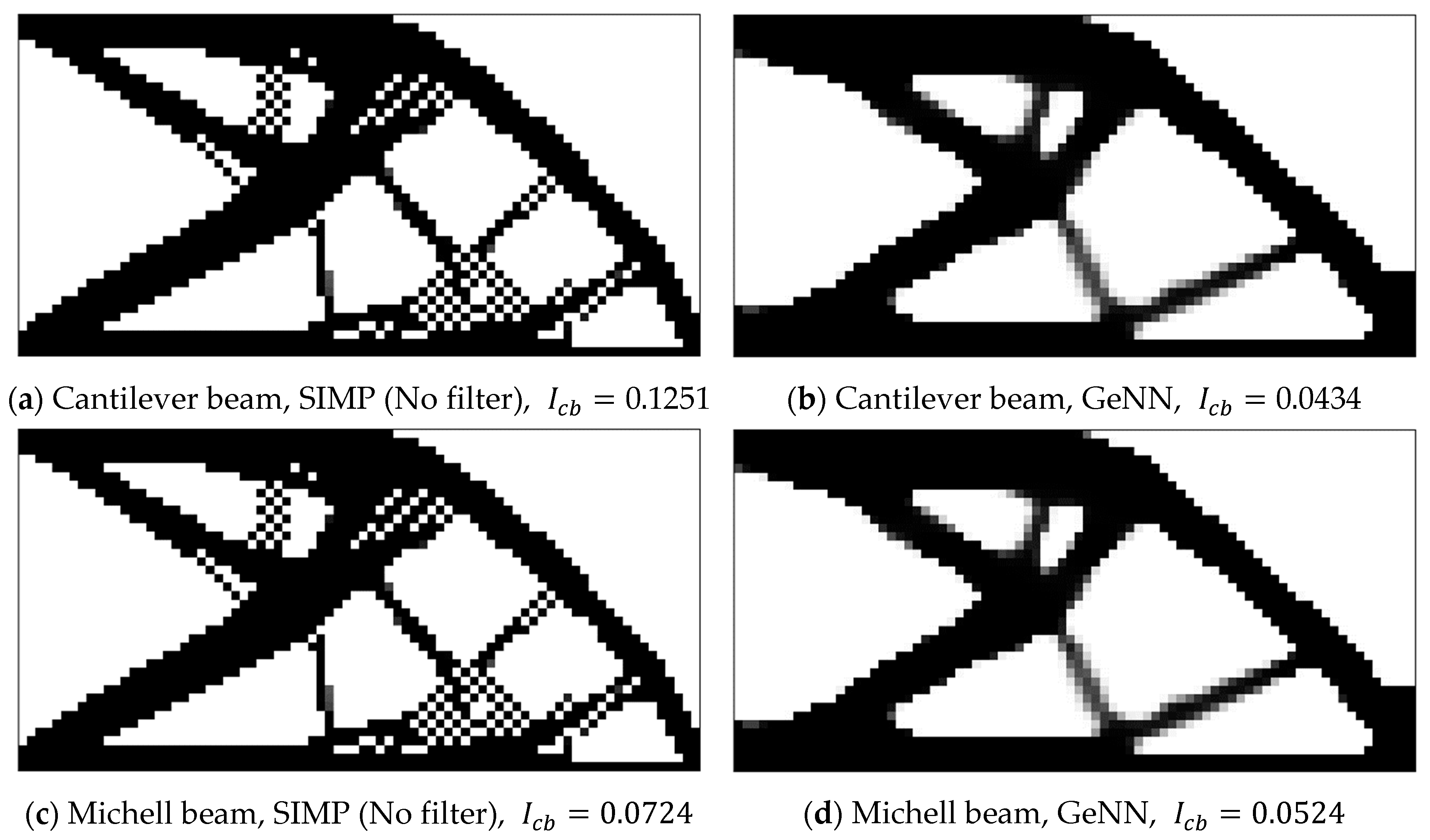
Figure 7 compares the proposed GeNN with the unfiltered SIMP baseline for the cantilever beam and Michell beam. For the cantilever beam,
decreases from 0.1251 to 0.0434, corresponding to a reduction of approximately 65.3%. For the Michell beam,
decreases from 0.0724 to 0.0524, corresponding to a reduction of approximately 27.6%. These quantitative results further support that the ARBF-based continuous parameterization in the proposed framework effectively suppresses checkerboard artifacts without additional filtering.
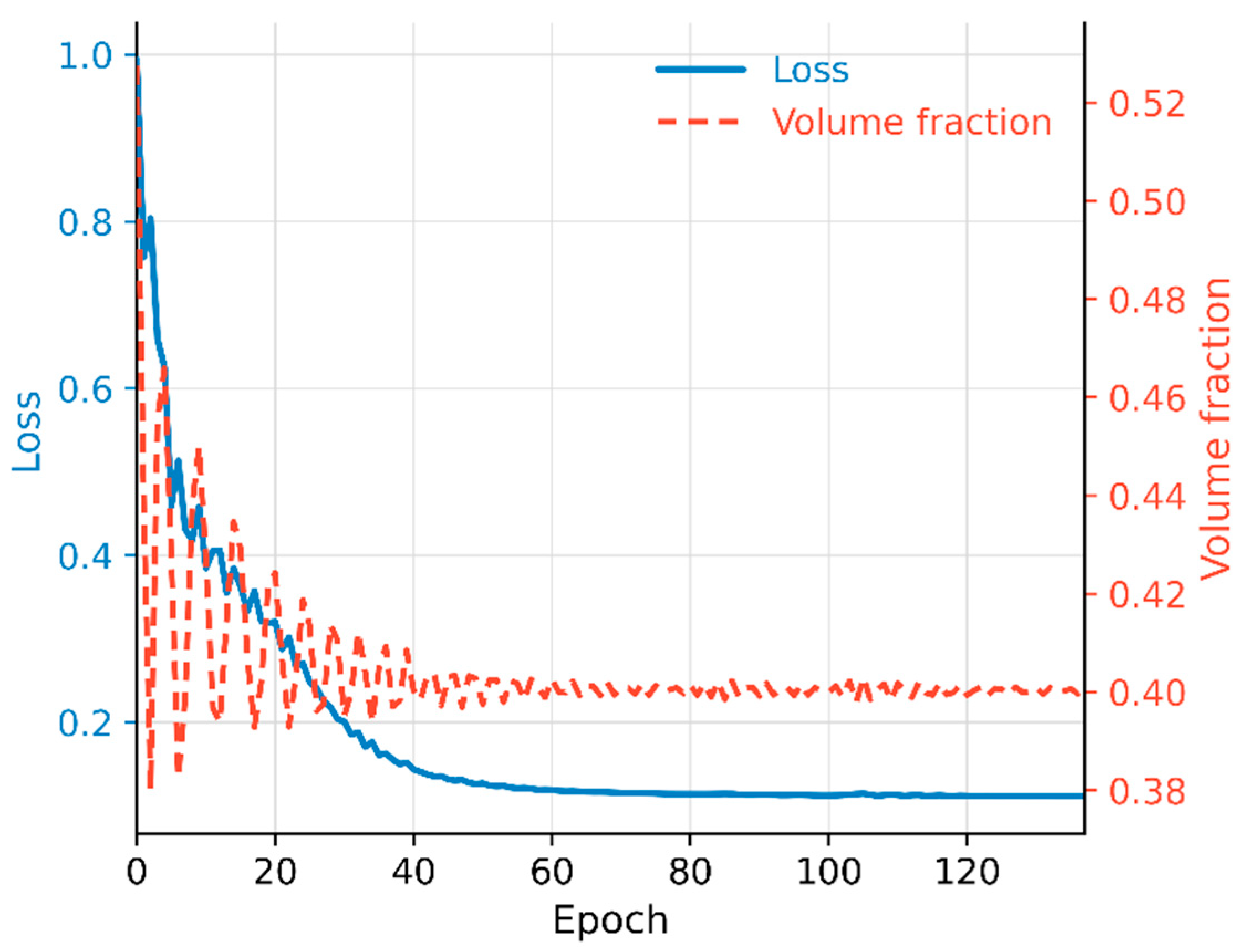
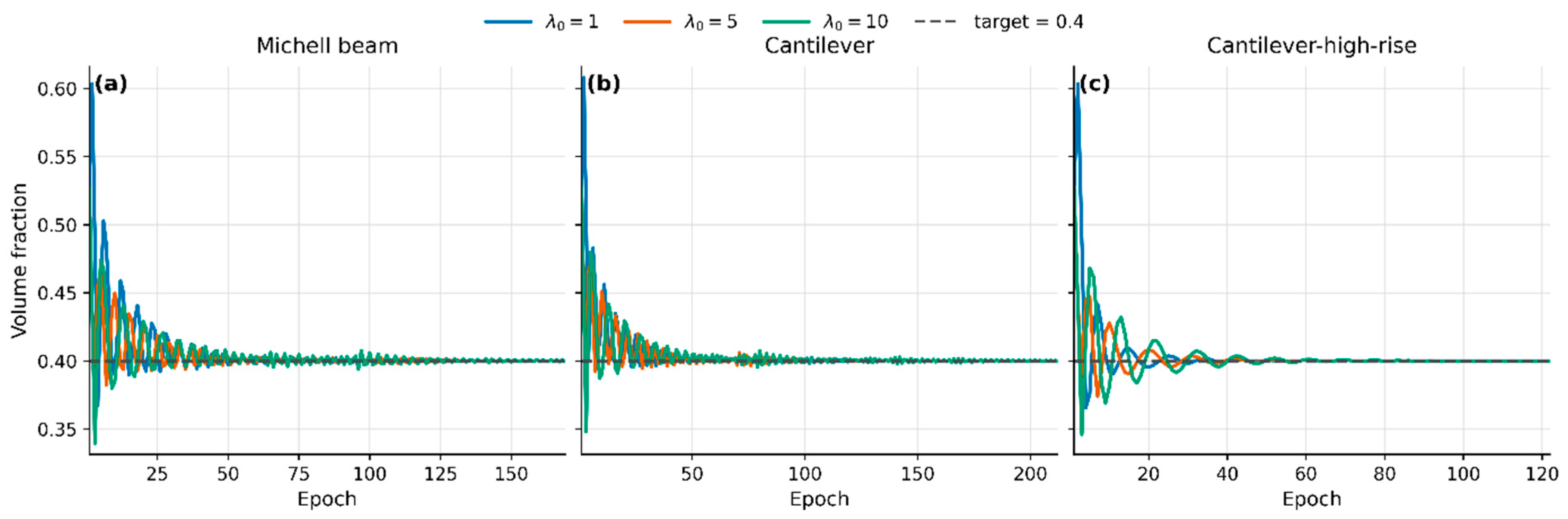
The convergence curves of the Michell beam, including the loss function and volume fraction, are illustrated in
Figure 8. The results indicate that the optimization process stabilizes after approximately 60 iterations, with only minor adjustments observed at the structural boundaries.
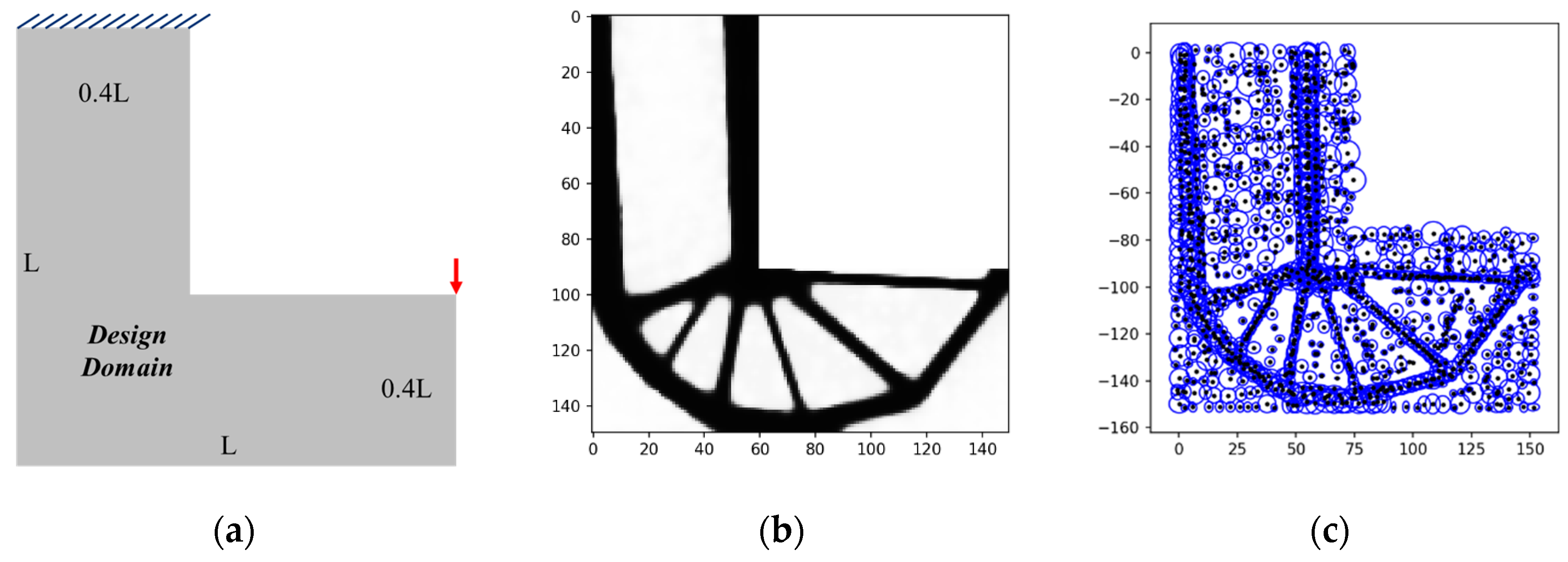
To further illustrate the ability of the proposed method to handle complex geometries, the well-known L-bracket benchmark problem is employed, where the top end of the L-bracket is fully constrained, the external force is distributed over 8 nodes to avoid singularities and ensure numerical stability, as shown in
Figure 9a. The design domain is discretized by using a mesh of
square FEs (Q4 elements) with the number of ARBFs set to
. The volume fraction is set to 0.23.
Figure 9b presents the optimized result, demonstrating that the proposed method can achieve clear boundaries while being capable of handling complex geometric problems. The distribution of ARBFs in
Figure 9c further demonstrates the method’s ability to dynamically adjust shape and position parameters, enabling precise modeling of complex density variations while ensuring the clarity of structural boundaries.
4.2. Real-Time High-Resolution Inference-Based Design
After completing the training process, the GeNN utilizes its pre-trained neural network to generate high-resolution optimization results in real time by forward propagation.
Figure 10 illustrates finer resolution boundaries of the optimized topologies, which were obtained by sampling the density function at a resolution 4× higher using the pre-trained GeNN. This process enables near real-time high-resolution inference after training, with the high-resolution forward pass completed in less than 0.02 s, while the total runtime, including training, is approximately 30 s.
4.3. Comparison with the Traditional Method
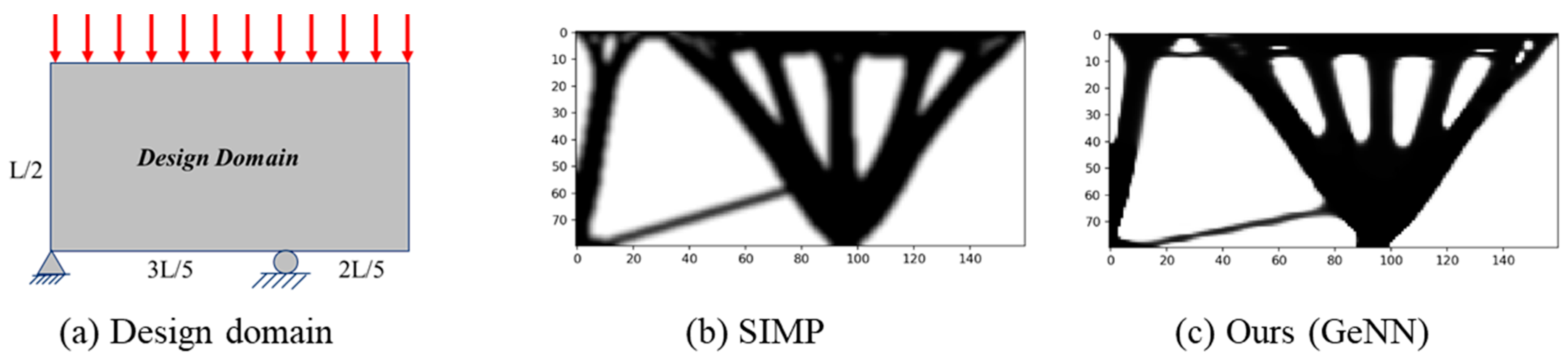
In this section, a simply supported (SS) beam is used to compare the performance of the proposed GeNN framework with the traditional SIMP method. The GeNN is then extended to the 3D compliance minimization problem to evaluate its effectiveness in handling more complex optimization scenarios with improved precision and efficiency.
For the SS beam, the bottom-left corner is completely fixed, while vertical displacements are restrained along the lower 3/5 of its length, and a uniform unit load is applied along the top edge. The design domain is assumed to be discretized by using a mesh of 160
80 square FEs (Q4 elements).
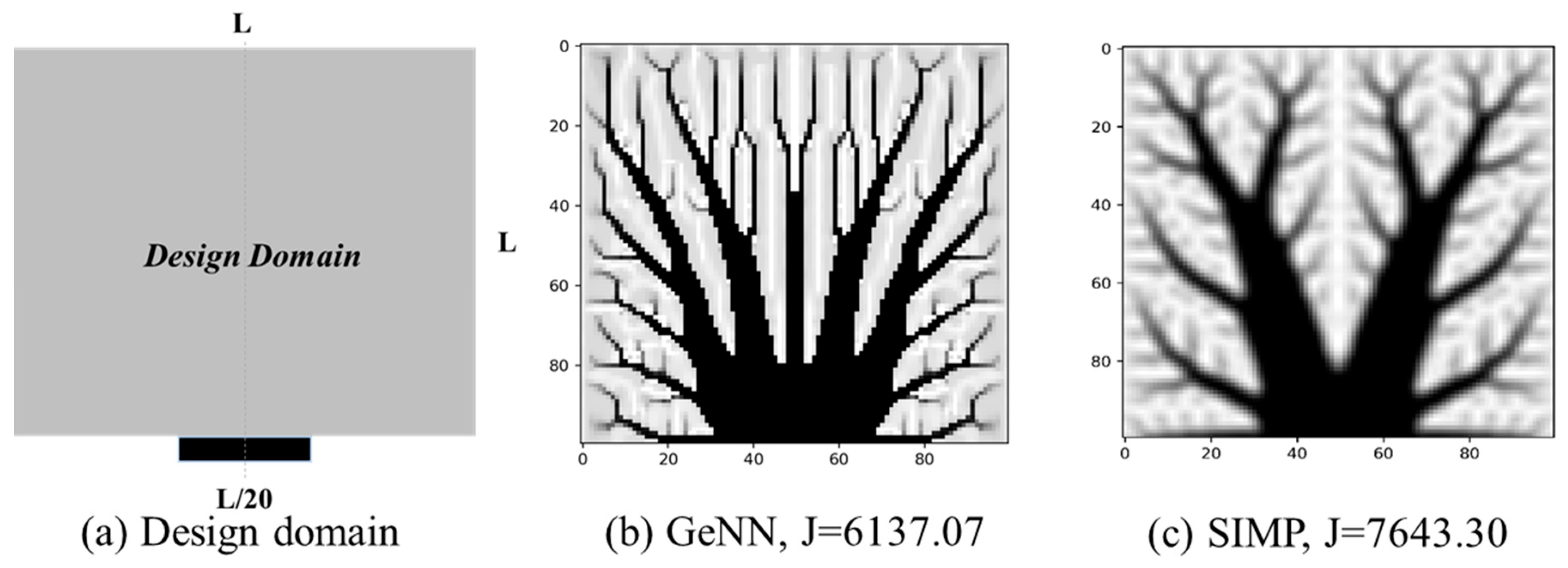
Figure 11 presents the comparison results between the SIMP and GeNN methods. The results demonstrate that the proposed GeNN framework produces clearer optimization results with more fine-scale structural features. Meanwhile,
Table 1 gives a summary of the SS beam between SIMP and GeNN. These results show that the topology result obtained using the proposed method gives better accuracy with a significantly reduced number of iterations compared to the SIMP method. Additionally, the computation time is reduced from 61.36 s to 32.55 s.
In the 3D example, this extension is accomplished by changing the input coordinates from to , coupled with the implementation of a 3D FEA solver. The finite element analysis is performed using a standard linear 8-node hexahedral displacement-based element with 24 degrees of freedom per element. The element stiffness matrix is derived under the linear elasticity assumption and assembled into a global sparse stiffness matrix. Density-dependent stiffness interpolation is implemented using the SIMP scheme. The resulting linear system is solved using a sparse direct solver (PARDISO). This implementation ensures numerical stability and scalability for large-scale 3D problems.
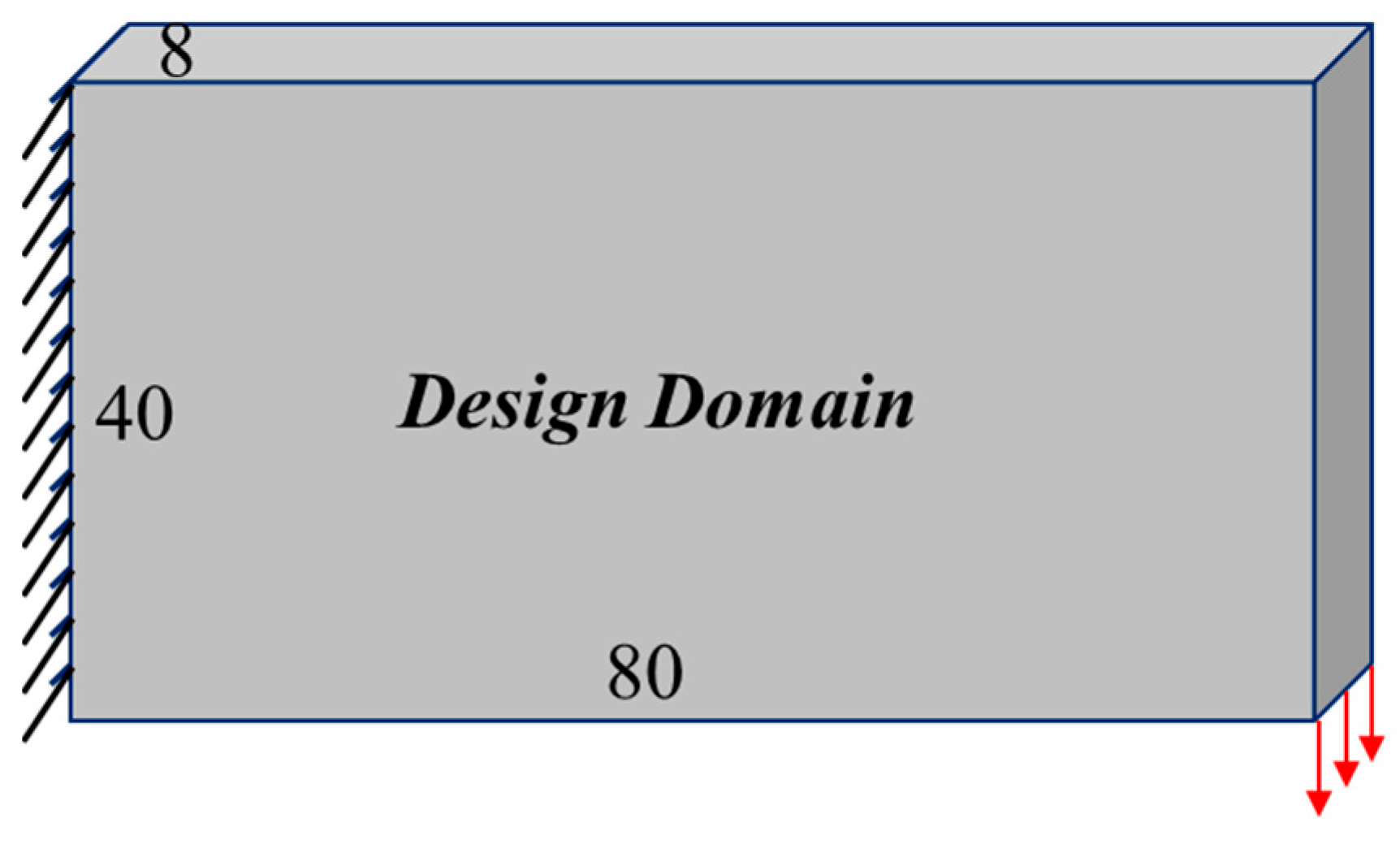
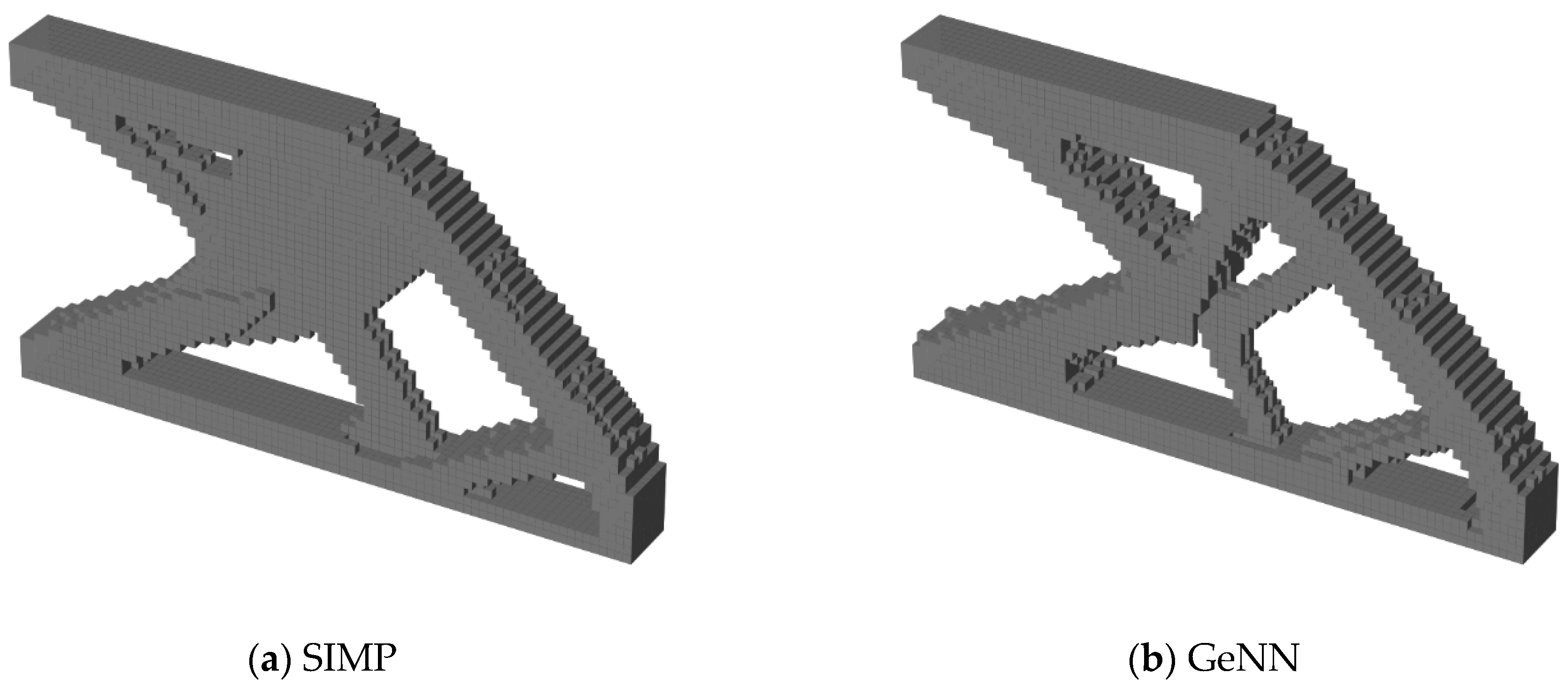
A 3D cantilever beam, discretized by an 80 × 40 × 4 hexahedral mesh, is employed to demonstrate the generalization of the proposed GeNN method, as shown in
Figure 12.
Figure 13 illustrates that the optimized result obtained by the proposed method has clearer and smoother boundaries than the SIMP method. Furthermore, the proposed GeNN method exhibits superior computational efficiency, converging in fewer iterations while simultaneously achieving a lower compliance value than the traditional SIMP-3D approach, as summarized in
Table 2.
4.4. Comparison with Network-Based Methods
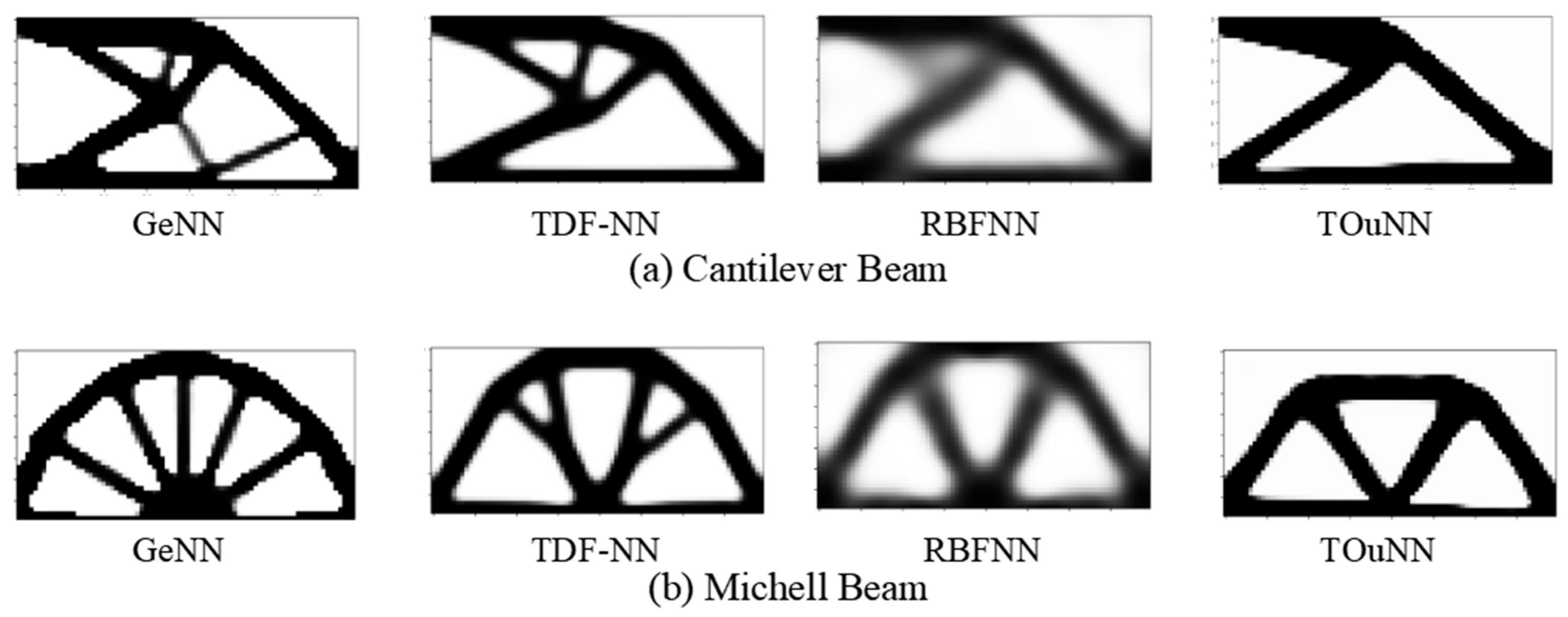
In contrast to prior RBF-or neural-network-based methods that rely on isotropic basis functions or static feature encodings, the proposed GeNN approach introduces anisotropic directional scaling, enabling more accurate representation of fine-scale structural features with high aspect ratios. To this end, the cantilever and Michell beam problems shown in
Figure 5 are used to demonstrate the advantages of the proposed method. The compared models include TDF-NN [
7], RBFNN [
20], and TOuNN [
33]. To ensure that the comparison reflects the intrinsic parameterization capability of each network-based method, the Heaviside projection was not applied to the RBFNN baseline in this study.
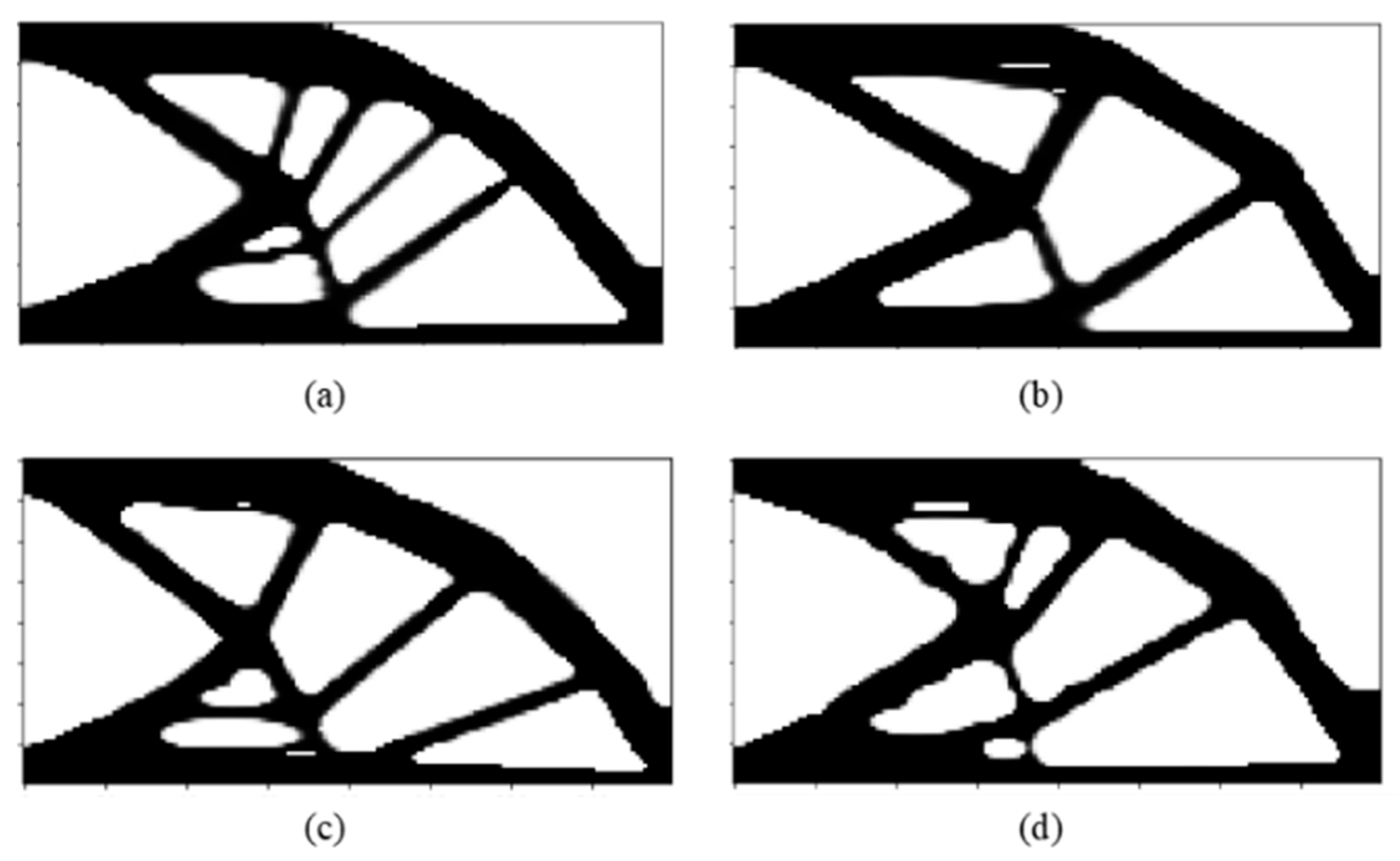
Figure 14 shows that the proposed method has clear boundaries and topological features compared to the other network-based methods. To provide a scale-consistent comparison, we additionally normalize the total wall-clock time by the number of degrees of freedom (DOFs). Since all compared methods are evaluated on the same 2D benchmark discretization (
Q4 elements, corresponding to 6642 DOFs), the time per DOF provides a fairer measure of computational efficiency. The normalized results further confirm the efficiency advantage of the proposed GeNN. For the cantilever beam case, the time per DOF is
s/DOF for GeNN, compared with
,
and
s/DOF for TDF-NN, RBFNN, and TOuNN, respectively. For the Michell beam case, the corresponding values are
,
,
, and
s/DOF, respectively.
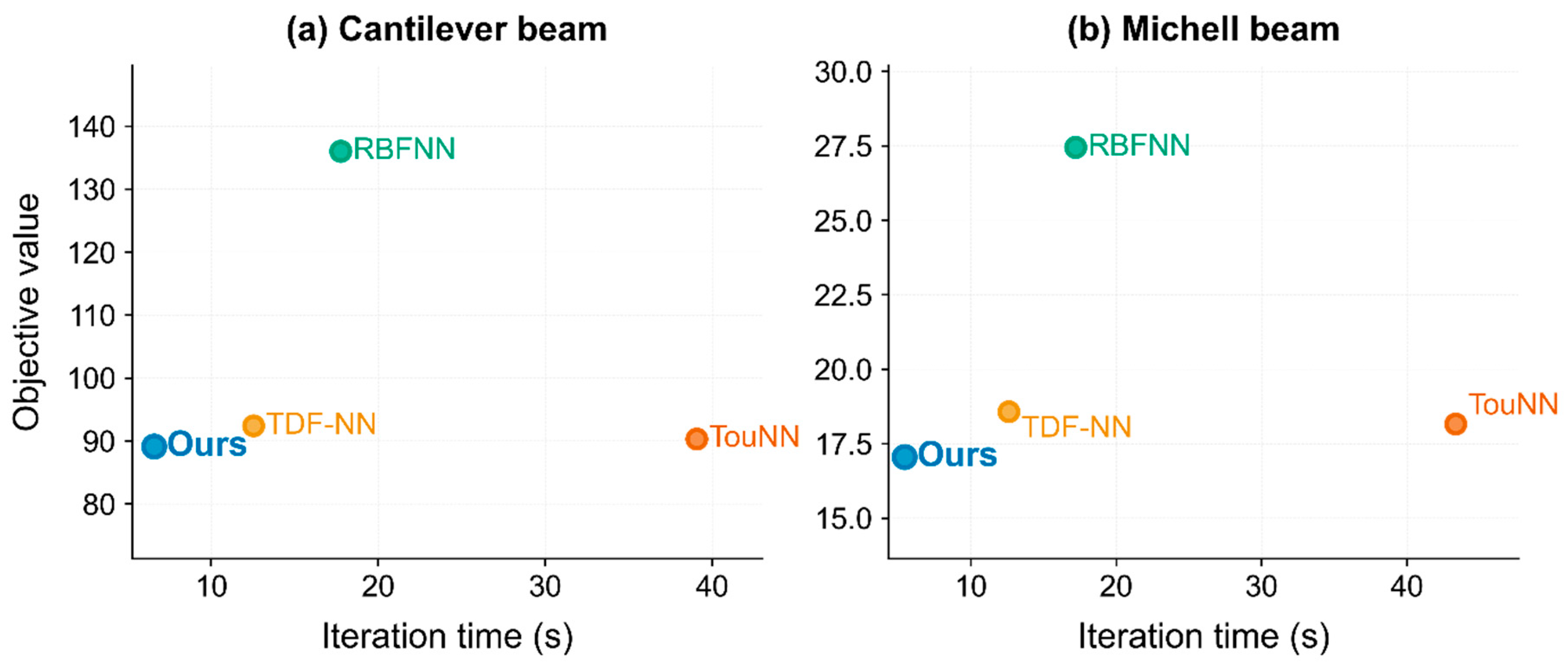
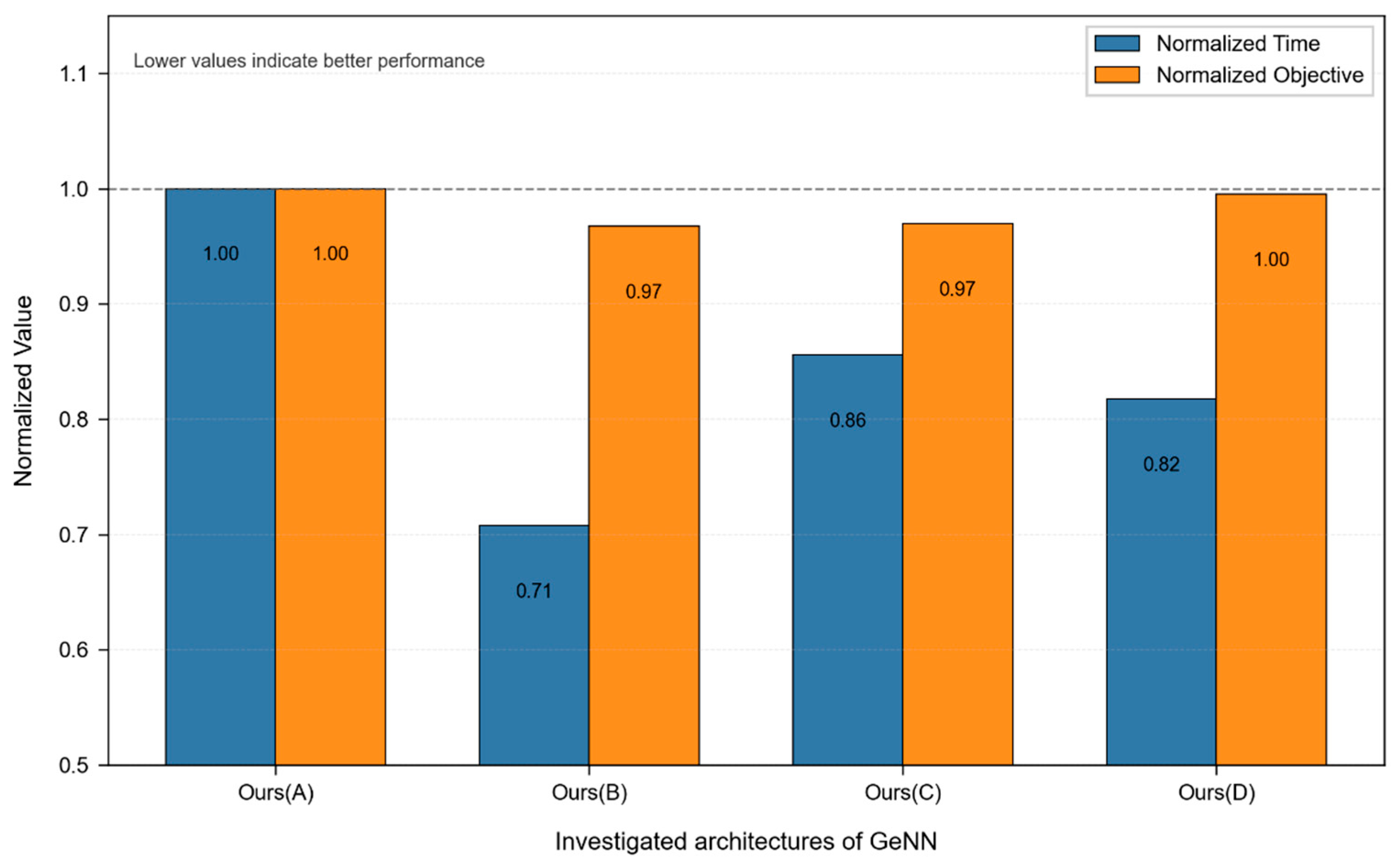
Figure 15a illustrates the superior computational efficiency of the proposed GeNN method across both benchmark cases. For the cantilever beam problem, GeNN achieves convergence in 6.59 s, demonstrating a 47.5% reduction in computation time compared to TDF-NN (12.54 s), a 62.9% reduction compared to RBFNN (17.75 s), and an 83.1% reduction compared to TouNN (39.07 s). Similarly, for the Michell beam problem, GeNN completes optimization in 5.46 s, outperforming TDF-NN (12.61 s), RBFNN (17.20 s), and TouNN (43.34 s) with reductions of 56.7%, 68.3%, and 87.4%, respectively. In addition,
Figure 15b further highlights that GeNN not only achieves faster convergence but also obtains competitive or superior objective values, underscoring its effectiveness in balancing computational efficiency and optimization quality.
7. Conclusions
This article introduces a novel Geometric-enhanced Neural Network (GeNN) for topology optimization. By integrating anisotropic radial basis functions (ARBFs) into a neural network framework, GeNN provides a continuous and geometrically informed representation of material densities. Based on the numerical examples considered in this study, the proposed method demonstrates improved computational efficiency and competitive optimization performance compared with conventional topology optimization methods as well as representative RBF- and neural-network-based approaches. In addition, it effectively suppresses checkerboard patterns without employing filtering techniques, indicating its potential for large-scale and resource-constrained civil engineering applications.
The main conclusions are summarized as follows.
1. The proposed GeNN method utilizes ARBFs with directional scaling factors to capture the geometric features. The input of the GeNN method is the coordinate and the output is the density field . The learnable parameters include the position and shape parameters of ARBFs, as well as the weights and biases of the MLP, which are optimized through the backpropagation algorithm. Ablation studies further validate that ARBFs significantly enhance the geometric representation.
2. Compared to the traditional SIMP method and other RBF- or neural network-based methods, the proposed GeNN method achieves superior optimization results in significantly less time. The optimization results have clearer boundaries, i.e., the optimization results have fewer gray elements. Additionally, GeNN employs adaptive ARBFs to effectively reduce the number of design variables, further enhancing computational efficiency.
3. The proposed GeNN method effectively eliminates numerical instabilities without relying on filtering techniques. Furthermore, by tuning the network parameters, multiple competitive and distinct optimization results can be generated, enabling designers to select an appropriate optimization structure for a specific design task.
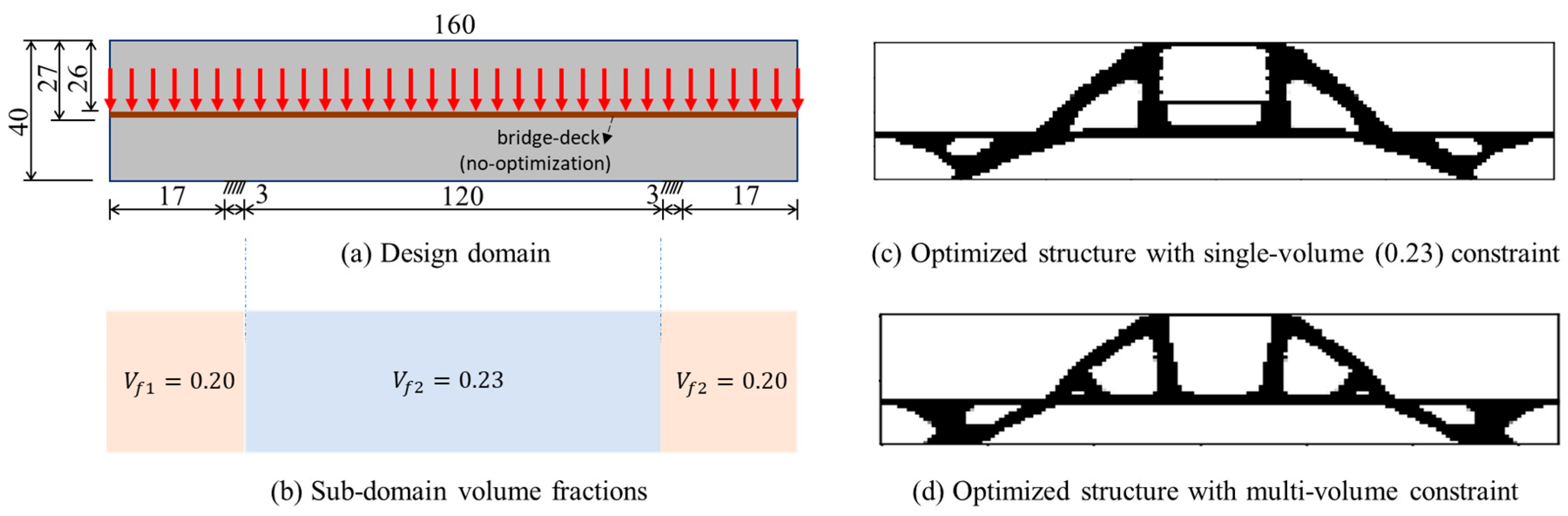
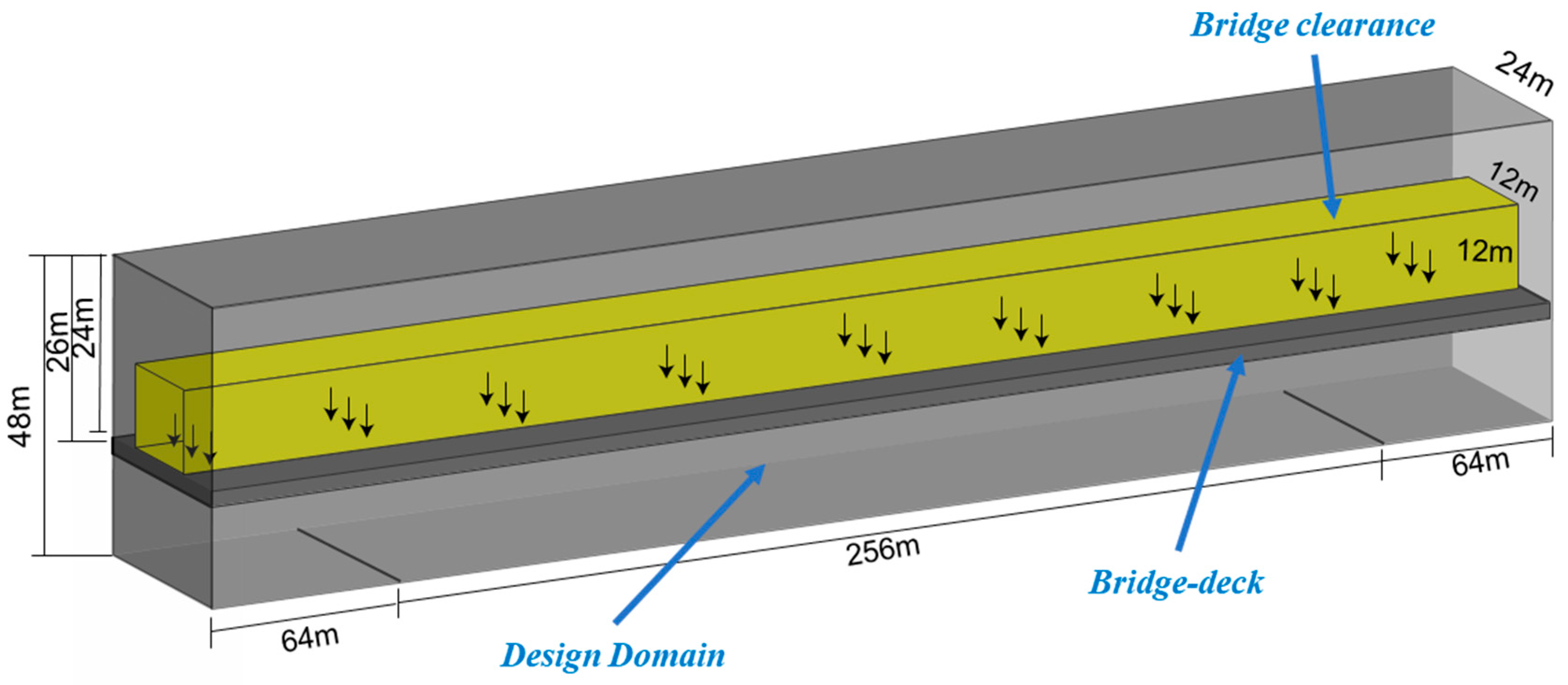
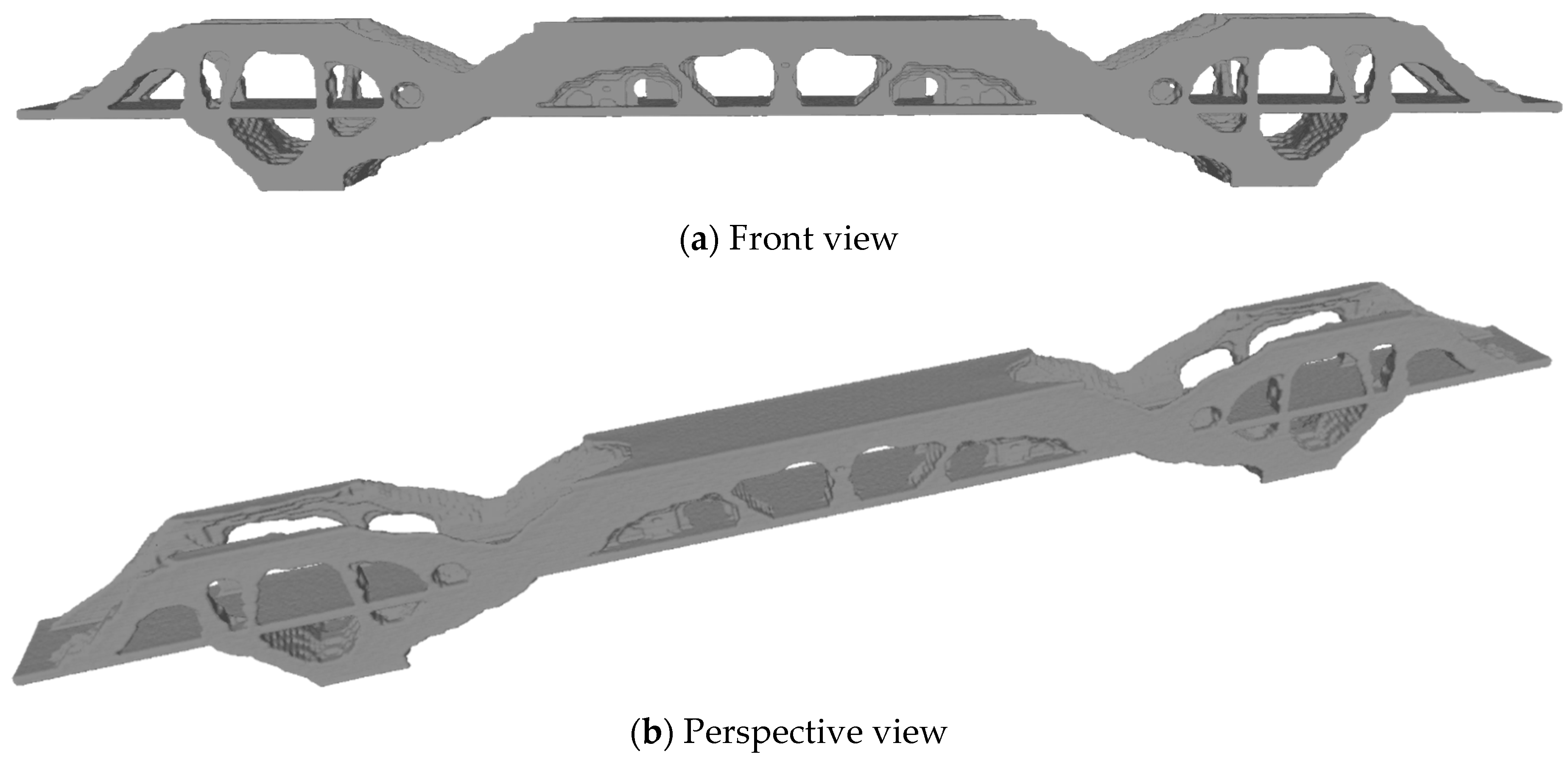
4. The proposed GeNN framework demonstrates good adaptability across the computational examples considered in this study, including compliance minimization, heat conduction, multi-volume design, and a large-scale 3D bridge example. Moreover, the successful optimization of the 3D bridge model with more than one million degrees of freedom indicates the computational scalability of the framework for large-scale topology optimization problems.
However, several limitations of the present study should be acknowledged. The representation capacity of GeNN is inherently governed by the number and scale of ARBF kernels, leading to a trade-off between fine-feature expressiveness and implicit smoothness or regularization. An insufficient number of kernels may restrict geometric resolution, whereas overly localized kernels may increase sensitivity to initialization and hyperparameter selection. Moreover, although the ARBF parameterization mitigates checkerboard artifacts without explicit filtering techniques, the final discreteness of the optimized topology (i.e., the presence of gray elements) may still depend on kernel width initialization, penalization parameters, and training configurations.
Future work will focus on adaptive parameter tuning to improve robustness, extending GeNN to multi-volume and seismic-loading scenarios, and integrating it with multi-resolution strategies, more comprehensive engineering constraints, and complementary learning frameworks to enhance scalability and practical applicability in civil engineering.



 ,
,