Article

Analysis and Experimental Validation on the Temperature Characteristics of Permanent Magnet/Magnetorheological Fluid Variable-Stiffness Driven Joints

by
Jinjie Ji
1,
Xiaojun Liu
2,
Zuzhi Tian
3,*,
Zheng Fu
3,
Xiangfan Wu
4,
Xing Zhang
1 and
Chaochao Niu
5
1
School of Intelligent Manufacture, Jiangsu Vocational Institute of Architectural Technology, Xuzhou 221116, China
2
Shenhua Shendong Coal Group Corporation Limited, CHN Energy, Ordos 017209, China
3
School of Mechatronic Engineering, China University of Mining and Technology, Xuzhou 221116, China
4
School of Mechanical and Electrical Engineering, Xuzhou University of Technology, Xuzhou 221018, China
5
Shandong Energy Group, Jinan 250014, China
*
Author to whom correspondence should be addressed.
Symmetry 2026, 18(3), 430; https://doi.org/10.3390/sym18030430
Submission received: 23 December 2025 / Revised: 23 January 2026 / Accepted: 27 February 2026 / Published: 28 February 2026
(This article belongs to the Section Engineering and Materials)

Abstract

This study investigates the temperature distribution characteristics, temperature rise behavior, and the thermal effects on the output torque in a Permanent Magnet/Magnetorheological Fluid (PM/MRF) variable-stiffness drive joint through a combined approach of simulation and experimentation. First, a thermal simulation model of the joint was established using COMSOL Multiphysics, and steady-state and transient temperature field analyses were conducted under slip powers ranging from 25 W to 100 W. The steady-state results show that, when the joint reaches thermal equilibrium under 100 W, its internal maximum temperature is 113 °C, which falls within the allowable operating temperature range of the MRF. Transient simulations indicate that, within 180 s, the temperature in the working area of the joint continuously rises, but the rate of temperature increase gradually slows down, with a maximum temperature rise of 18.35 °C observed in the transmission mode. Furthermore, an experimental test system was constructed to conduct temperature rise characteristic tests and torque temperature characteristic tests on the joint. The experimental results show that the maximum actual temperature rise measured within 180 s in transmission mode was 17.36 °C, slightly lower than the simulated prediction. Within the temperature variation range of 10 °C to 50 °C, the maximum reductions in driving torque and braking torque were 14.1% and 14.9%, respectively. The study demonstrates that, under short-term operating conditions, the effect of the internal temperature rise on the output torque is predictable and can be mitigated through closed-loop current compensation. These findings provide theoretical and experimental foundations for the thermal safety design and high-precision control of PM/MRF variable-stiffness joints.

1. Introduction

Magnetorheological fluid (MRF) is a smart material whose unique magnetorheological effect enables widespread applications in mechanical transmission and braking systems [1,2,3]. When there is no external magnetic field to act on, the MRF behaves as an ordinary liquid state and can flow freely, with its magnetic particles scattered. When an external magnetic field is applied, the MRF will immediately change from a liquid state to a quasi-solid state. The scattered and suspended magnetic particles inside form a chain structure with a certain shear yield stress along the direction of the applied magnetic field, and the yield stress generated by curing will increase accordingly with the increase in the intensity of the applied magnetic field within a specific range. When the externally applied magnetic field is removed, the MRF will return to its liquid state within milliseconds [4,5].
The permanent magnet/magnetorheological fluid (PM/MRF) variable-stiffness drive joint leverages the combined action of permanent magnets, excitation coils, and MRF. This integration enables effective variable-stiffness driving and braking, with the added safety feature of maintaining a braking state during a power loss. The transmission of both the driving and braking torque in this joint fundamentally relies on the magnetorheological effect of the MRF. The PM/MRF variable-stiffness drive joint comprehensively utilizes the PM, excitation coil, and MRF [6,7].
Temperature significantly influences the magnetorheological effect [8,9,10], as excessive temperatures can induce shear-thinning effects or even failure in magnetorheological fluids [11,12,13], severely compromising the operational safety of drive joints. In response, scholars worldwide have conducted research on the temperature effects of MRF materials and their transmission/braking devices. Patil et al. [14] employed a finite element simulation to perform a thermodynamic analysis on magnetorheological brakes for electric bicycles, accurately estimating a temperature rise in MRF during braking operations [15]. Masoud et al. [16] utilized a rotational rheometer to experimentally investigate the temperature dependence of rheological properties and viscoelastic performance of MRF, demonstrating significant temperature effects on fluid mechanical properties under non-magnetic field conditions, while the magnetic field effects remained dominant. Zhen et al. [17,18,19] conducted a simulation analysis of the temperature rise characteristics in magnetorheological dampers under multi-physics coupling conditions, revealing that the temperature rise primarily originates from viscous heating during MRF flow. Electromagnetic heating exhibits minimal impact on the damper temperature rise under low-current conditions, whereas variations in the excitation signal amplitude and frequency significantly influence the damper temperature rise [20,21,22].
Despite the existing research on the thermal characteristics of MRF-based devices, detailed studies on the internal temperature distribution and the specific impact of a temperature rise on torque performance in PM/MRF variable-stiffness joints remain limited [23,24,25,26]. Consequently, this study conducts a comprehensive thermal analysis of a PM/MRF variable-stiffness module. Both steady-state and transient thermal field simulations are employed to analyze the internal temperature distribution under various slip powers. Furthermore, we experimentally validate the temperature rise characteristics and investigate the torque–temperature relationship in a prototype PM/MRF variable-stiffness drive joint. The findings aim to elucidate the actual thermal behavior of the joint and assess the influence of temperature elevation on its driving and braking torque performance, thereby providing insights for thermal management and reliability enhancement in such systems.

2. Temperature Field Simulation

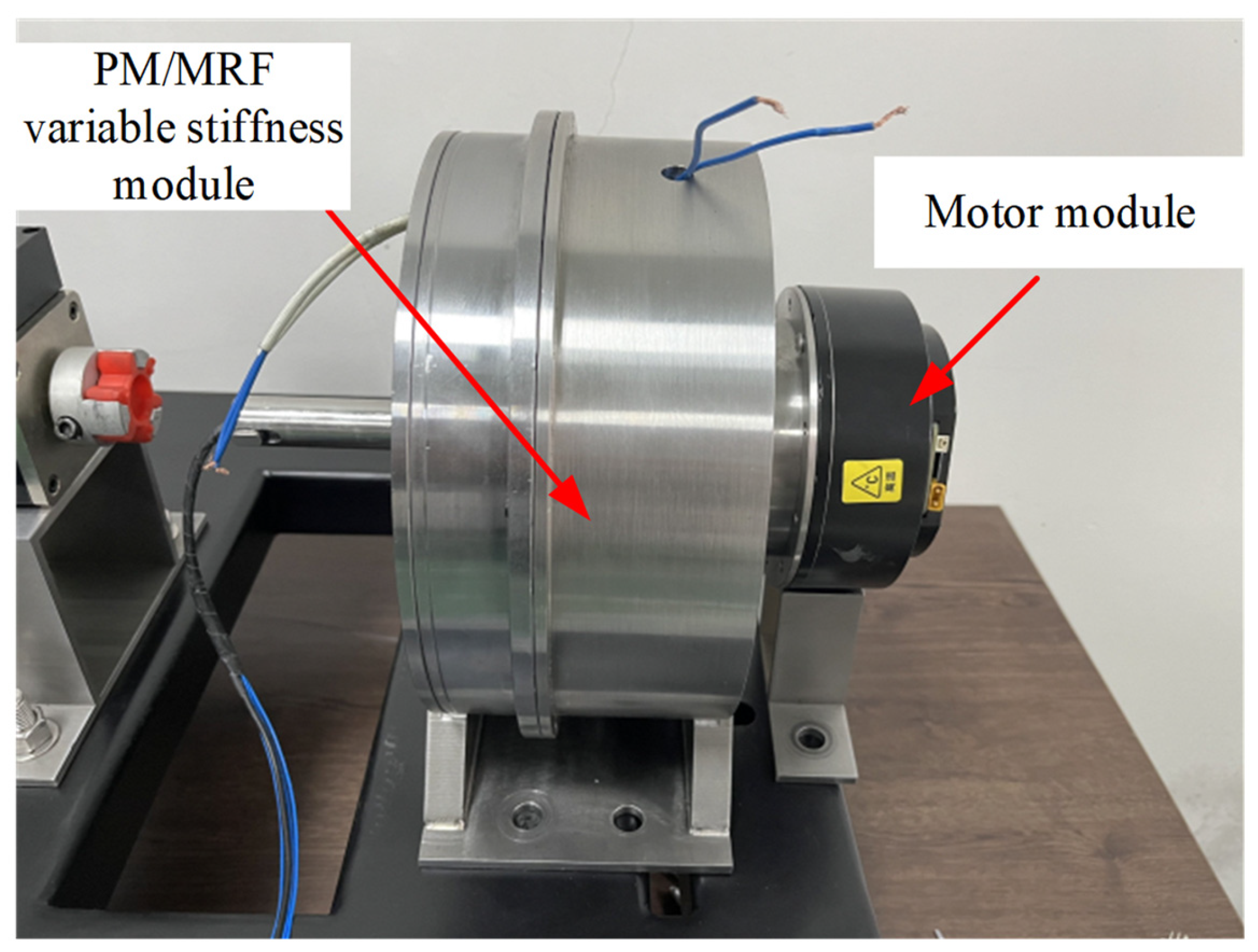
The prototype of the PM/MRF variable-stiffness drive joint, as illustrated in Figure 1, consists of a motor module and a PM/MRF variable-stiffness module connected in series. Since the MRF is contained within the PM/MRF variable-stiffness module, this section employs COMSOL Multiphysics 6.2 to conduct a temperature field simulation specifically for this module. And Table 1 presents the specific technical parameters of the prototype.

2.1. Heat Source Analysis

Heat transfer is the process by which energy is transferred through the temperature differences between different objects or substances. It mainly includes three ways: heat conduction, heat convection, and heat radiation.
The primary heat sources during the operation of the PM/MRF variable-stiffness module are the frictional heat generated by the interaction of MRF particles and the resistive heat produced when the excitation coil is energized. Additional heat is generated due to the rotational friction in the mechanical components such as bearings and skeleton oil seals [27]. However, the thermal contribution from these structural elements is relatively minor and can be considered negligible compared to the heat generated by the magnetorheological fluid and the excitation coil. Therefore, for the purpose of the thermal analysis and calculation, only the frictional heat from the MRF particles and the resistive heat from the excitation coil need to be considered.
(a)
Soft magnetic particles in MRF generate heat through friction
When the driving MRF and braking MRF operate under slip conditions with all power losses converted into heat, the heat generation power Qm of a single MRF microelement can be expressed as follows:
Q m = d P m d V m = d T n Δ ω d V m
where Δ ω is the speed difference between the driving and driven discs, in rad/s; Pm is the slip power, in W; Tn is the torque transmitted between the driving and driven disc, N·m; and Vm is the volume of MRF, m3.
(b)
Resistance heat of the excitation coil
Both the braking coil and the transmission coil generate resistance heat when powered on. The heat generation power Qc per unit volume is as follows:
Q c = P c V c = U c I V c = I 2 R c π ( r cw 2 r cn 2 ) l c
where U c is the voltage of the excitation coil, V; Pc is the power of the excitation coil, in W; I is the current of the excitation coil, A; Vc is the volume of the excitation coil, m3; rcn and rcw are the inner and outer diameters of the excitation coil, m; Rc is the resistance of the excitation coil, Ω; and lc is the coil width, m.
Based on the technical parameters listed in Table 1 and the subsequent calculations, the rated slip power in drive/brake operation mode is approximately 100 W, while the slip power during power-off braking is about 50 W. Calculations performed under rated operating conditions, specifically at a slip power of 100 W with a coil current of 3A, reveal that the frictional heat generated within the MRF is substantially greater than the resistive heating of the coils. Quantitatively, the MRF frictional heating is approximately 40 times that of the drive coil and about 27 times that of the brake coil. Given that the heat generated by the coil resistance is orders of magnitude lower than the frictional heating of the soft magnetic particles in the MRF, it is justifiable to consider only the MRF frictional heat in the temperature field simulations of the PM/MRF variable-stiffness joint.

2.2. Establishment of Simulation Model

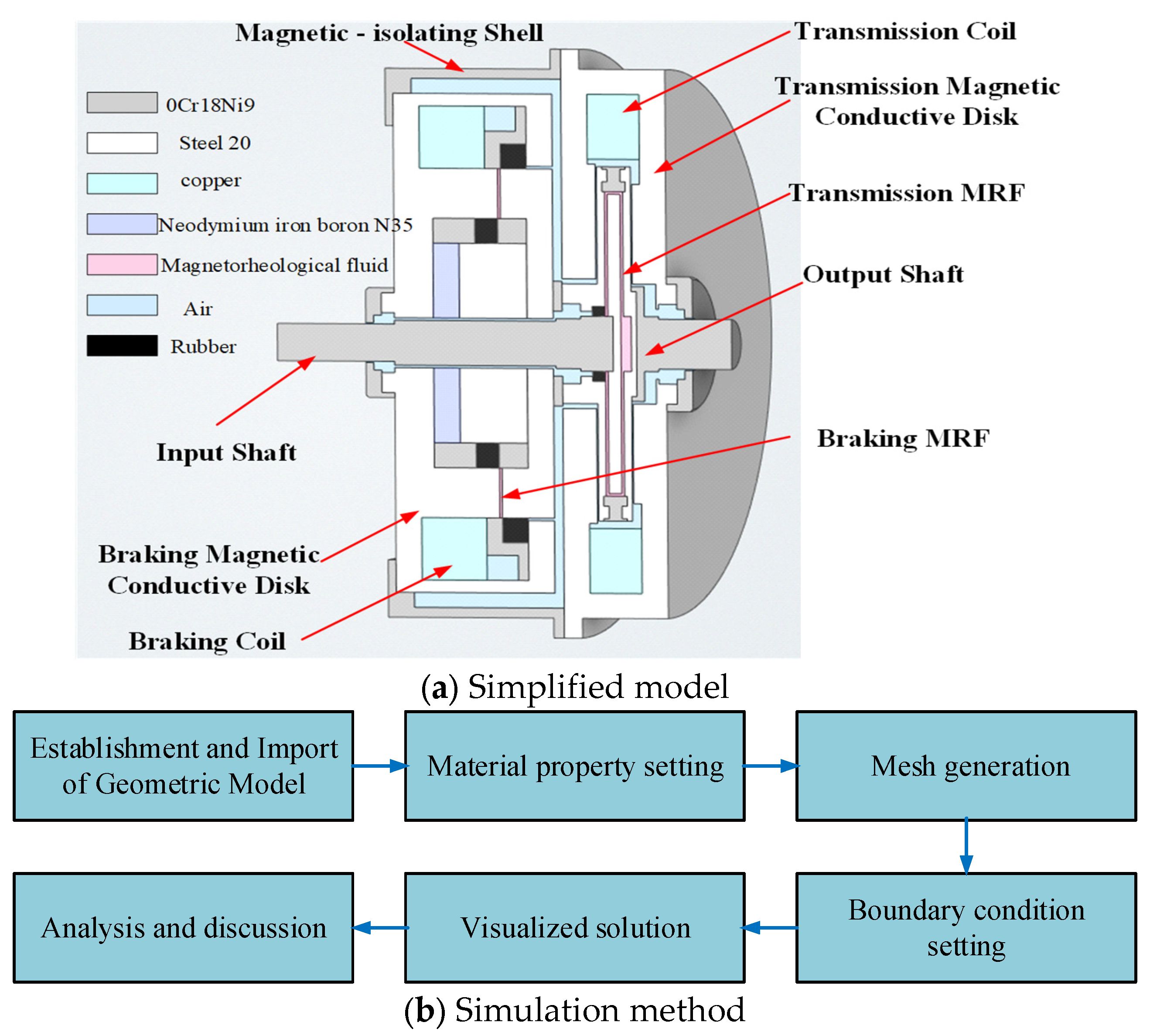
Due to the relatively complex structure of the PM/MRF variable-stiffness module, a three-dimensional model was created in SolidWorks 2025 and subsequently imported into COMSOL Multiphysics for simulation. To enhance the computational efficiency of the temperature field simulation, the model was simplified through appropriate geometric idealizations. Figure 2a illustrates the symmetrical cross-section of the simplified model used in the temperature field simulation, along with the material assignments for each component. Figure 2b illustrates the whole simulation method.

2.3. Simulation Method

The simulation method of the temperature field simulation includes material assignment, meshing, the application of initial temperature, and boundary conditions, as shown in Figure 2b. The heat dissipation performance of the materials involved in the simplified simulation model of the temperature field of the PM/MRF variable-stiffness module is shown in Table 2.
In this thermal simulation, the thermophysical properties of all materials, particularly the thermal conductivity and specific heat capacity including those of the MRF, are modeled as temperature-independent constants as specified in Table 2. It should be noted, however, that, in real operating conditions, the key properties of the magnetorheological fluid such as viscosity and thermal conductivity do exhibit temperature dependence. By assuming constant properties, the simulation does not account for potential self-stabilizing effects that could arise in practice, such as a slight decrease in internal frictional heating or a modest improvement in thermal conduction as the temperature increases. As a result, the temperature rise predicted here represents a conservative, or upper-bound, estimate which serves as a practical and reliable basis for assessing the thermal safety of the joint.
During the simulation analysis of the PM/MRF variable-stiffness module, special attention should be paid to the temperature rise at both braking MRF and transmission MRF locations. To ensure the accuracy of the simulation results, a mesh convergence study was conducted under transmission conditions at a slip power of 100 W. Three levels of mesh refinement were evaluated, with a particular focus on the maximum temperature in the MRF region. As shown in Table 3, the difference in the maximum temperature between the medium and fine meshes was only 0.2 °C. This negligible variation confirms that the selected mesh size, specifically 0.5 mm for the MRF region and 1.0 mm elsewhere, produces mesh-independent results in the present thermal analysis.
Consequently, the mesh size for both MRF regions is set to 0.5 mm, and 1 mm is adopted for other parts.
The initial temperature of the simulation is set at 10 °C, consistent with the starting ambient temperature of the experiment, to ensure that the basis for comparison between the simulation and the experiment is the same.
Heat exchange between the module housing and the external environment occurs through thermal radiation and convection. To streamline the simulation process, the corresponding heat transfer equations are formulated as follows:
k i T f = α n T T t 0
where i represents the direction of heat exchange; ki is the thermal conductivity in the i direction, W/(m·°C); and αn represents the heat transfer coefficient, W/(m2·°C). Based on the previous research experience of the research group, the value of αn is taken as 10.

2.4. Simulation Results and Analysis

The slip power values adopted in the simulation (25 W, 50 W, 75 W, and 100 W) cover the operating range of the joint from low load to rated load. Specifically, 100 W corresponds to the rated slip power of the joint, and 50 W represents the typical braking condition under PM action alone. In the transient simulations, 50 W (braking mode) and 100 W (transmission mode) correspond directly to the experimental conditions of a 0 A braking current and 3 A transmission current, respectively. The series of power values in the steady-state simulations are used to systematically investigate the variation in the temperature distribution with load.

2.4.1. Steady-State Temperature Field

(a)
Braking mode
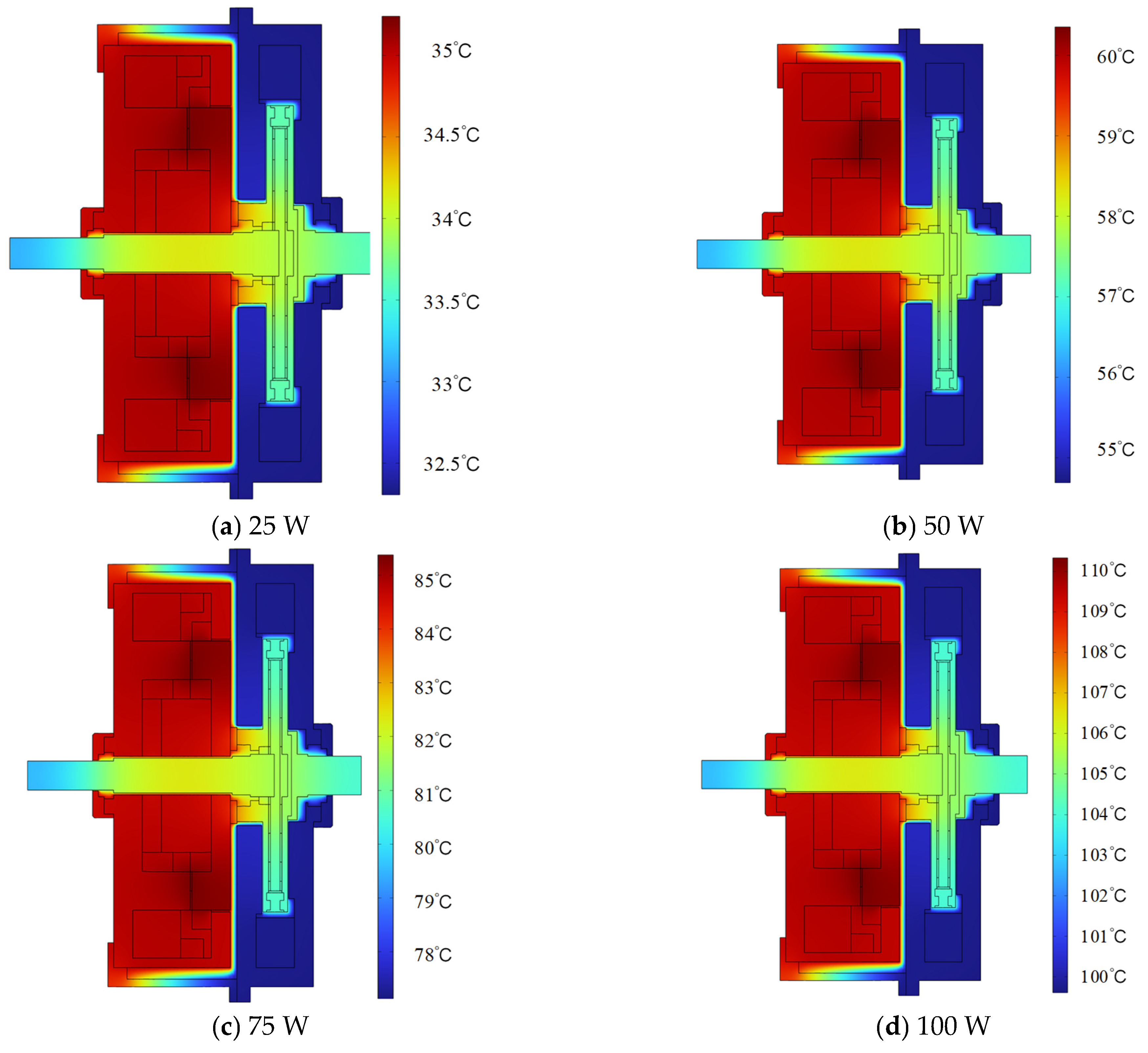
In the braking working mode, heat generation conditions were applied to the braking MRF of the PM/MRF variable-stiffness module at slip powers of 25 W, 50 W, 75 W, and 100 W, respectively. The axisymmetric plane of the module was taken to obtain the temperature distribution cloud map shown in Figure 3.
As clearly shown in Figure 3, under different braking slip power conditions, the steady-state temperature distribution patterns of the PM/MRF variable-stiffness module exhibit consistent characteristics. The maximum thermal equilibrium temperature within the module occurs at the braking MRF region, while the minimum temperature appears in the transmission conductive disk area.
The internal maximum thermal equilibrium temperature of the PM/MRF module demonstrates an upward trend with increasing braking slip power. When the slip power increases from 25 W to 100 W in 25 W increments, the corresponding maximum temperatures rise sequentially by 71.25%, 41.47%, and 29.34%. This indicates that the temperature growth rate gradually decreases as the braking slip power increases. During the same power variation process, the temperature differentials between the maximum and minimum thermal equilibrium points within the module reach 2.93 °C, 5.66 °C, 8.26 °C, and 10.74 °C, respectively, showing that the internal steady-state temperature gradient expands with the increased braking slip power. When the braking slip power reaches 100 W, the maximum internal thermal equilibrium temperature reaches 110.34 °C. Considering the allowable temperature range of MRF (−40 °C to 140 °C), the peak temperature at the braking MRF region under thermal equilibrium conditions remains well within the permissible operating range.
(b)
Transmission mode
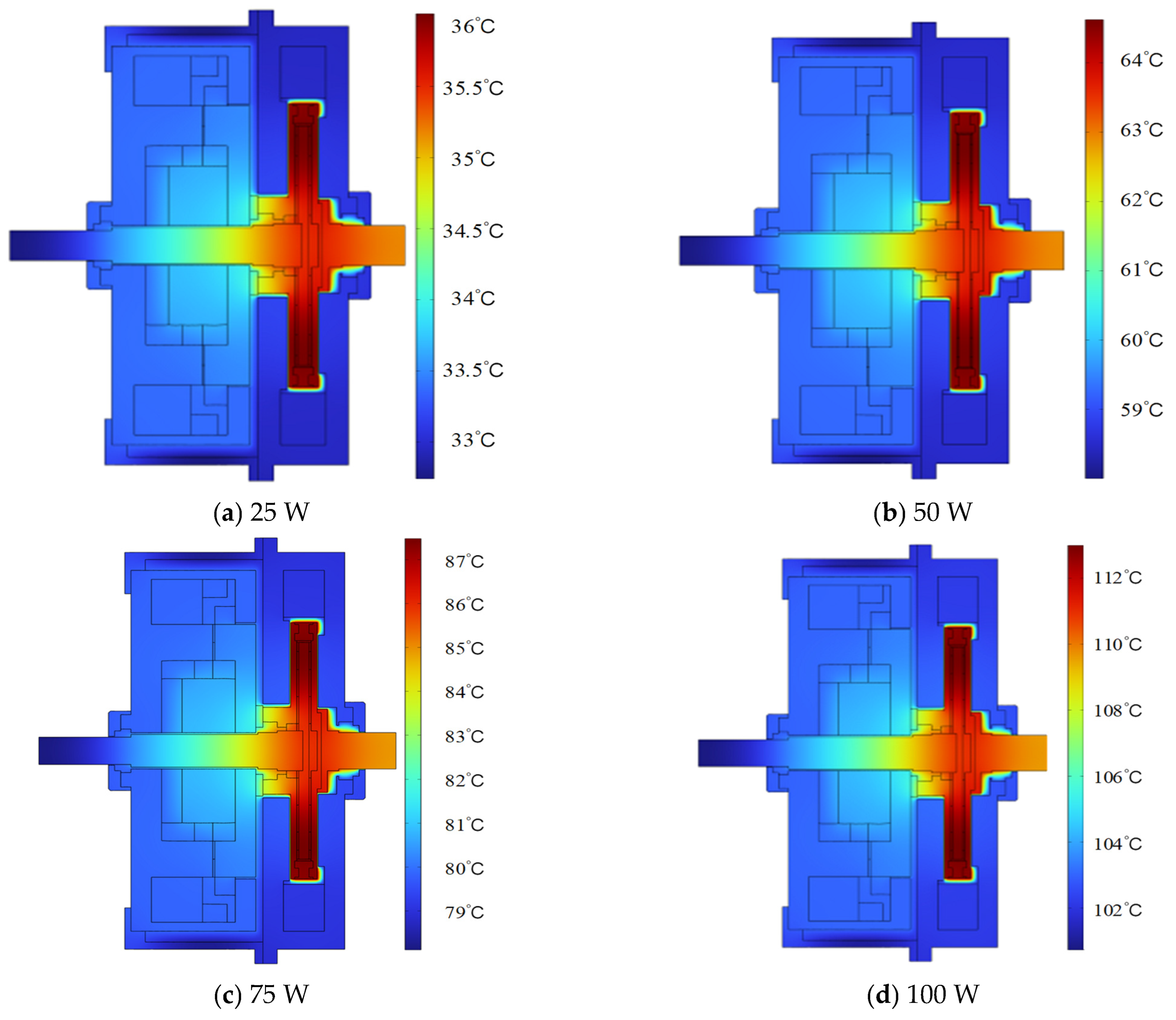
For the PM/MRF variable-stiffness module under transmission operating mode, heat generation conditions were applied to the transmission MRF at the slip powers of 25 W, 50 W, 75 W, and 100 W, respectively. The axially symmetric plane of the module was analyzed to obtain the temperature distribution contours shown in Figure 4.
As revealed in Figure 4, under different transmission slip power conditions, the temperature distribution patterns during thermal equilibrium within the module remain fundamentally consistent. The maximum temperature occurs at the maximum radius of the transmission MRF, while the minimum temperature is observed at the magnetic isolation housing.
In the transmission MRF region, higher heat generation rates are found at larger radii, resulting in temperature elevation with increasing radius during thermal equilibrium. The internal maximum thermal equilibrium temperature of the PM/MRF module exhibits an increasing trend with a higher transmission slip power. When the slip power increases from 25 W to 100 W in 25 W increments, the corresponding maximum temperatures rise sequentially by 79.5%, 35.38%, and 29.17%. This indicates that the temperature growth rate gradually decreases as the transmission slip power increases. During the same power variation process, the temperature differentials between the maximum and minimum thermal equilibrium points within the module reach 3.27 °C, 6.62 °C, 9.37 °C, and 12.27 °C, respectively, demonstrating that the internal steady-state temperature gradient expands with an increased transmission slip power. When the transmission slip power reaches 100 W, the maximum steady-state temperature inside the module reaches 113 °C. Considering the allowable temperature range of MRF, the peak temperature at the braking MRF region under thermal equilibrium conditions during transmission mode operation remains well within the permissible operating range.

2.4.2. Transient Temperature Field

To investigate the temperature rise characteristics of the PM/MRF variable-stiffness module, transient temperature field simulations were conducted under both braking and transmission operating modes.
(1)
Braking operating mode
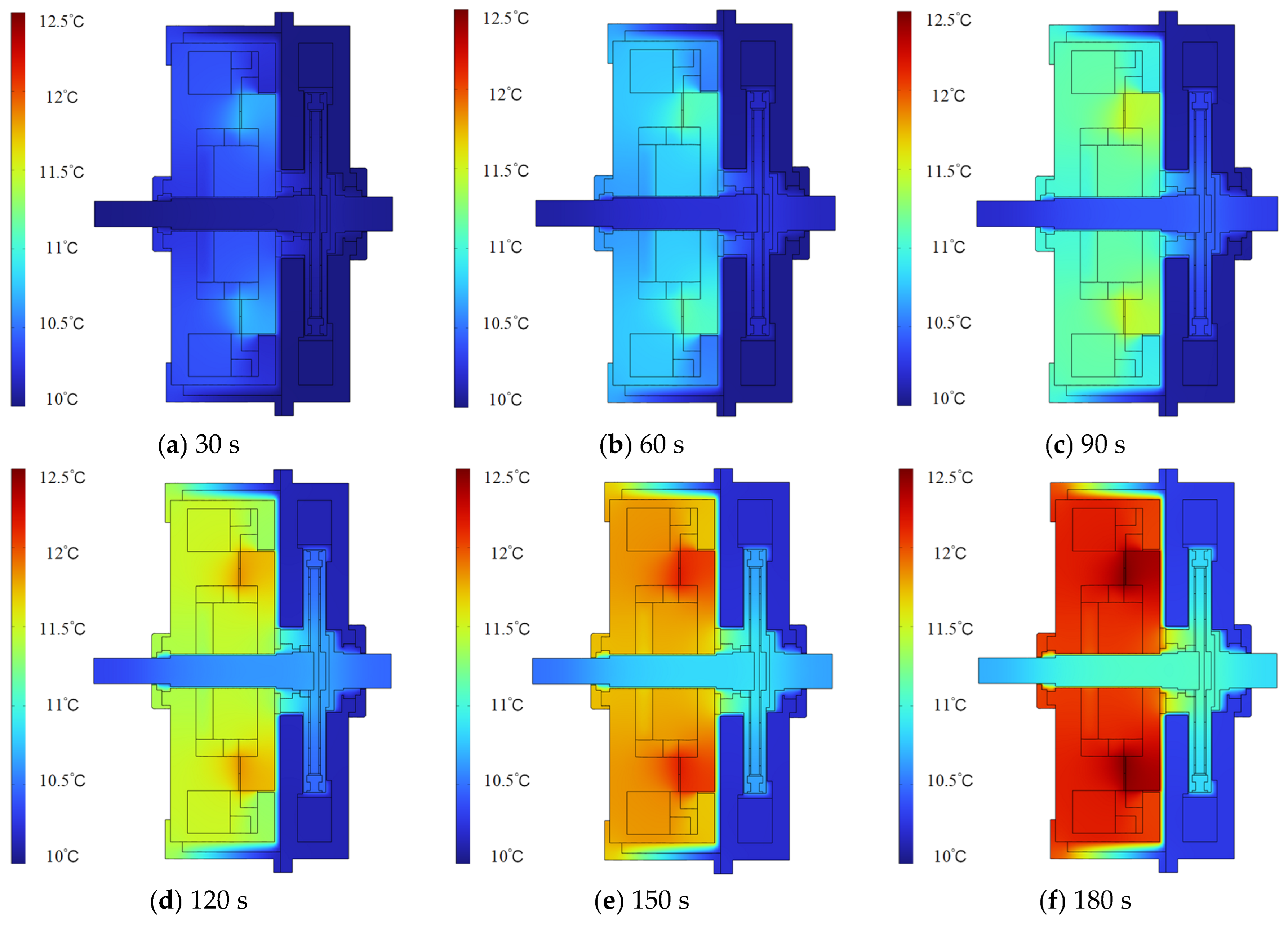
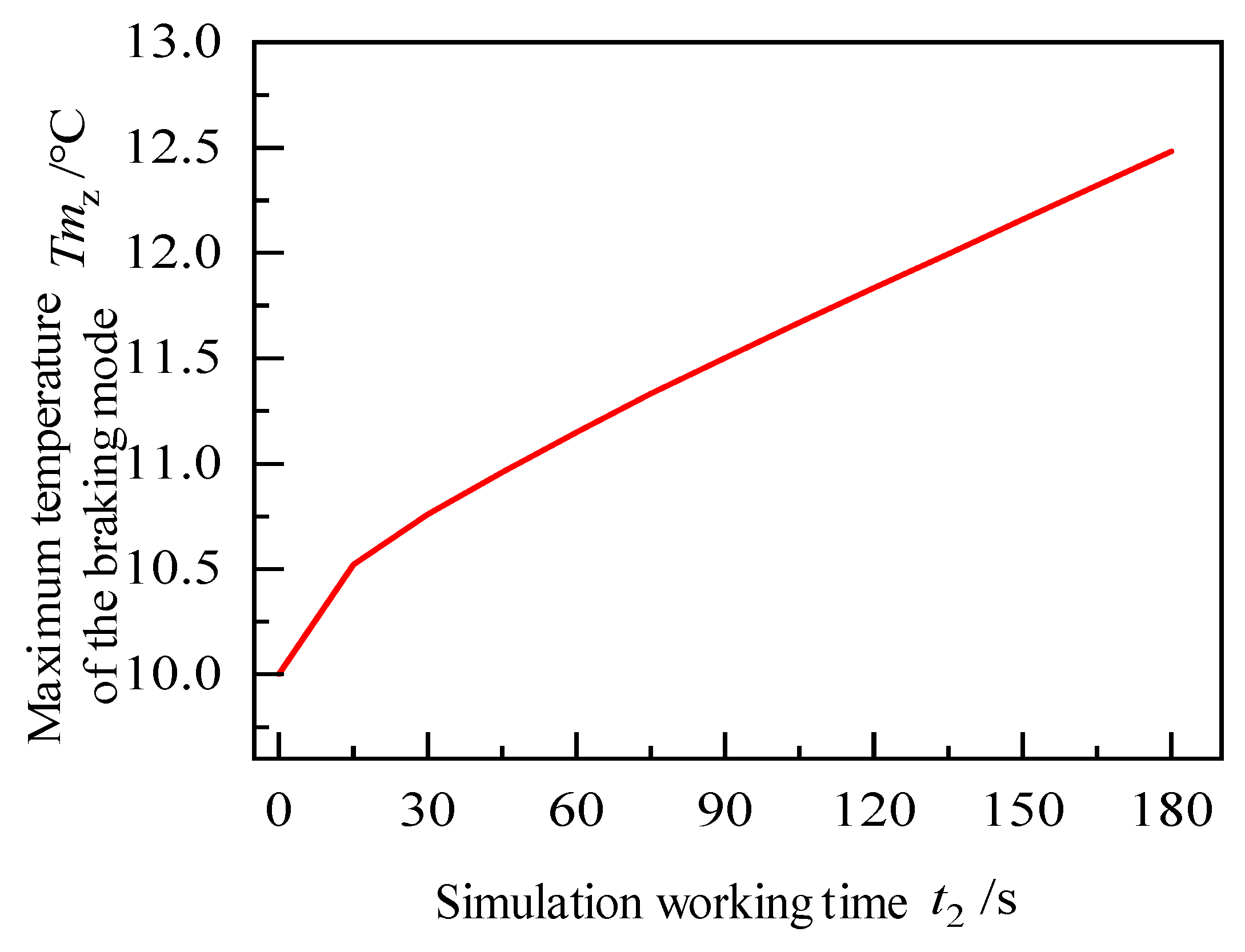
When braking is achieved solely through permanent magnetic field action, the slip power is approximately 50 W. Therefore, a transient temperature field simulation under braking mode was performed using this slip power value. Figure 5 illustrates the axially symmetric plane temperature distributions at 30 s, 60 s, 90 s, 120 s, 150 s, and 180 s intervals, while Figure 6 shows the maximum temperature Tmz variation curve over 180 s.
As revealed in Figure 5, during braking operation, heat is predominantly generated at the braking MRF region and propagates outward from this source. Most heat dissipation occurs within the braking assembly, with minor diffusion along the input shaft and a transmission/braking magnetic isolation ring toward the transmission MRF area. Due to the limited contact area between the transmission/braking magnetic isolation ring and braking components, combined with air gaps separating adjacent regions of the transmission and braking sections, minimal heat transfer reaches the transmission MRF region within a short duration, resulting in a negligible performance impact. After 180 s of braking operation, the maximum internal temperature of the PM/MRF module reaches 12.48 °C, representing only a 2.48 °C increase from the initial temperature. This observation indicates that temperature elevation remains insignificant during short-term braking operations.
It can be clearly observed from Figure 6 that the variation trend of the maximum internal temperature of the PM/MRF variable-stiffness module at different time points in the braking mode is relatively fast in the first 15 s. From 15 s to 180 s, it basically rises linearly, with an increase rate of 0.012 °C/s. It can be inferred that it will be difficult for the temperature to exceed 15 °C in the subsequent period. The lower temperature rise rate can ensure that the internal temperature rise in the PM/MRF variable-stiffness module does not have a significant impact on the performance of MRF in the short-time braking working mode.
(2)
Transmission operating mode
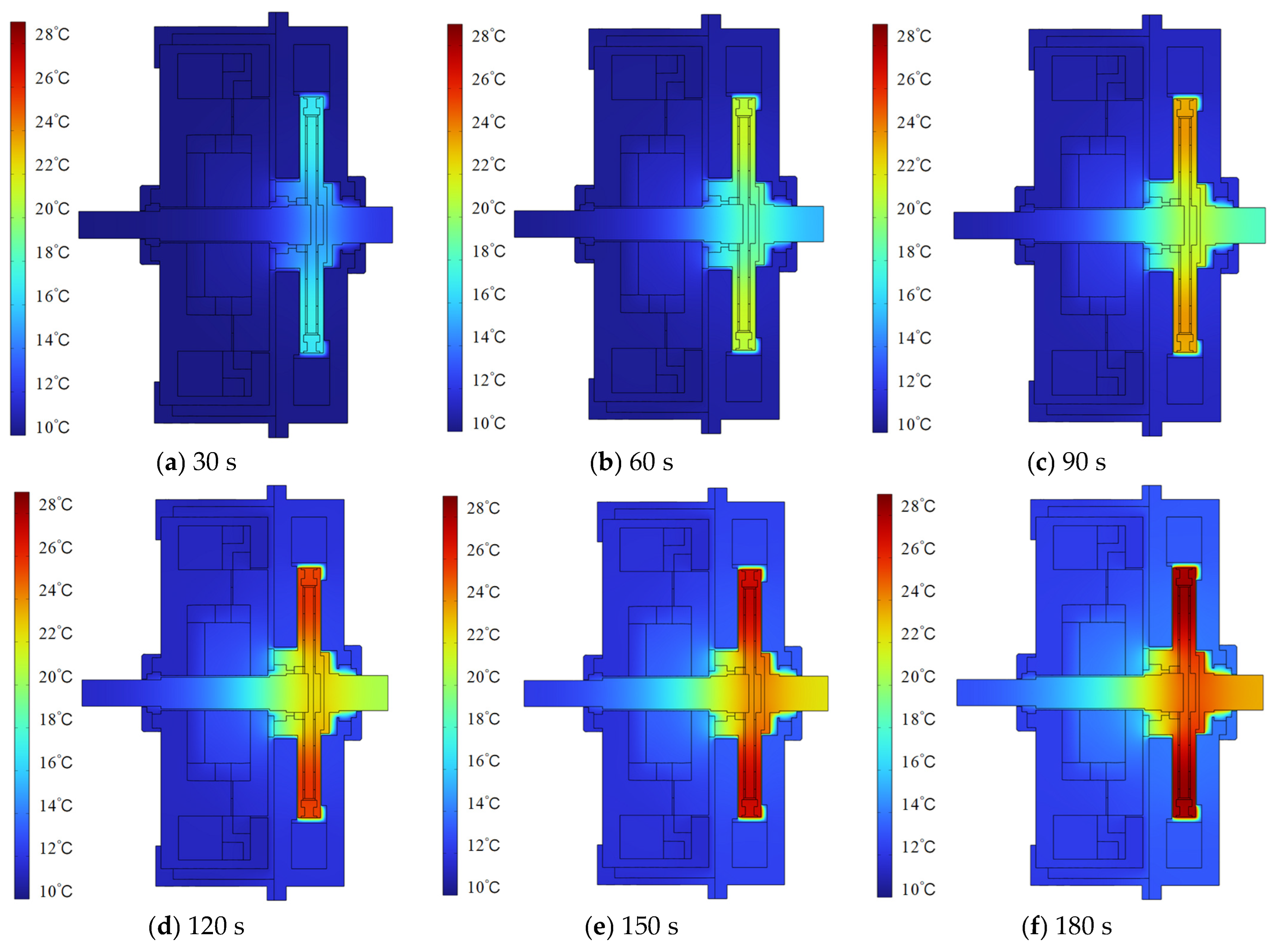
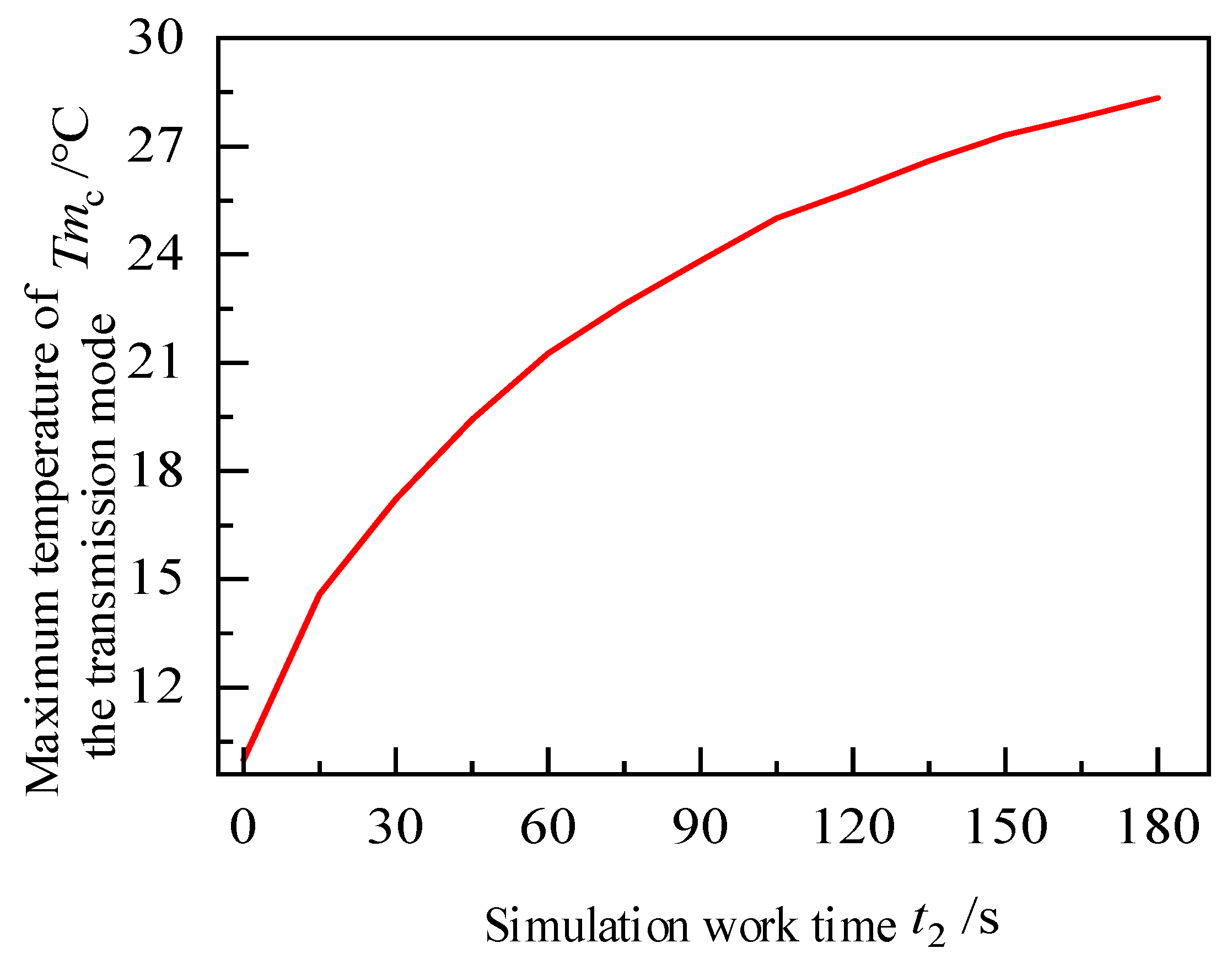
When the transmission system operates at maximum torque transfer under slip conditions with complete power dissipation as heat, the slip power is assumed to be 100 W. The transient temperature field simulation under transmission operating mode was conducted using this slip power value. Figure 7 illustrates the axially symmetric plane temperature distributions at 30 s, 60 s, 90 s, 120 s, 150 s, and 180 s intervals, while Figure 8 shows the maximum internal temperature Tmc variation curve for the PM/MRF variable-stiffness module during transmission operation over 180 s.
As shown in Figure 7, during transmission operating mode, the temperature at the transmission MRF region gradually increases with heat primarily dissipating outward through the input and output shafts. Limited thermal transfer to the braking MRF region occurs during short-term operation due to air gap insulation. Within the entire working area of the transmission MRF, locations with larger transmission radii exhibit higher heat generation rates. After 180 s of transmission operation, the maximum temperature reaches 28.35 °C, representing an 18.35 °C increase from the initial temperature.
As shown in Figure 8, the maximum internal temperature of the module exhibits a gradual increase with operational time, though the rate of the temperature rise demonstrates a decelerating trend over extended periods. This phenomenon occurs because, while heat accumulates rapidly during the initial stages, the module’s inherent thermal conduction and radiation capabilities are progressively enhanced with sustained temperature elevation. Consequently, these improved heat dissipation mechanisms effectively mitigate the rapid temperature escalation. The temperature regulation mechanism prevents an excessive thermal buildup in short durations, thereby ensuring the operational reliability of the PM/MRF variable-stiffness module’s transmission component during short-term operations.

3. Experiment and Discussion

3.1. Establishment of the Experimental System

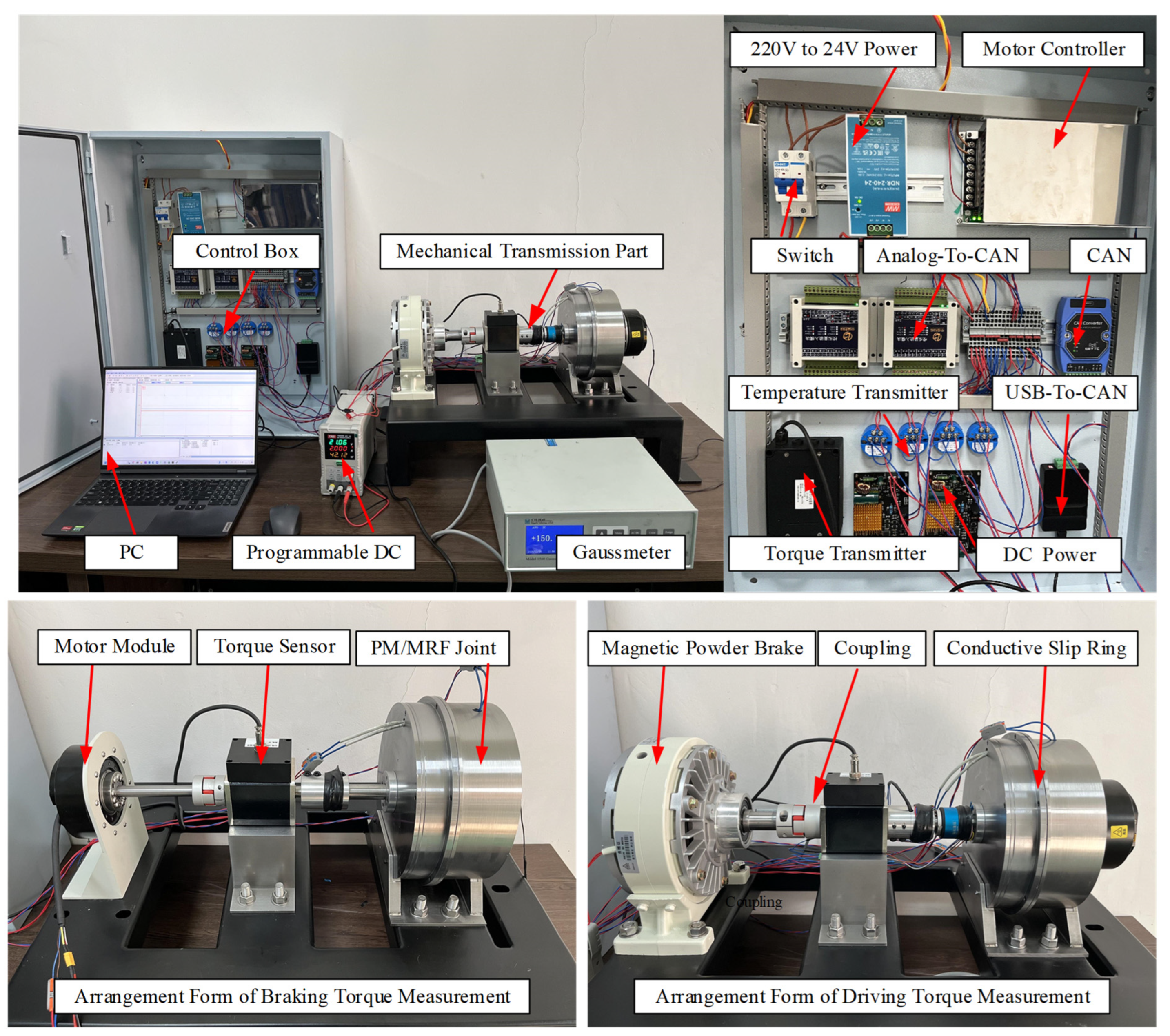
To explore the actual temperature rise characteristics of the PM/MRF variable-stiffness drive joint and the influence of the internal temperature rise on the torque, the temperature rise characteristic experiments and torque–temperature characteristic experiments of the PM/MRF variable-stiffness drive joint prototype were carried out using the experimental system shown in Figure 9. And the experiments were conducted in a naturally ventilated indoor space. The ambient temperature during testing was approximately 5 °C to 10 °C.
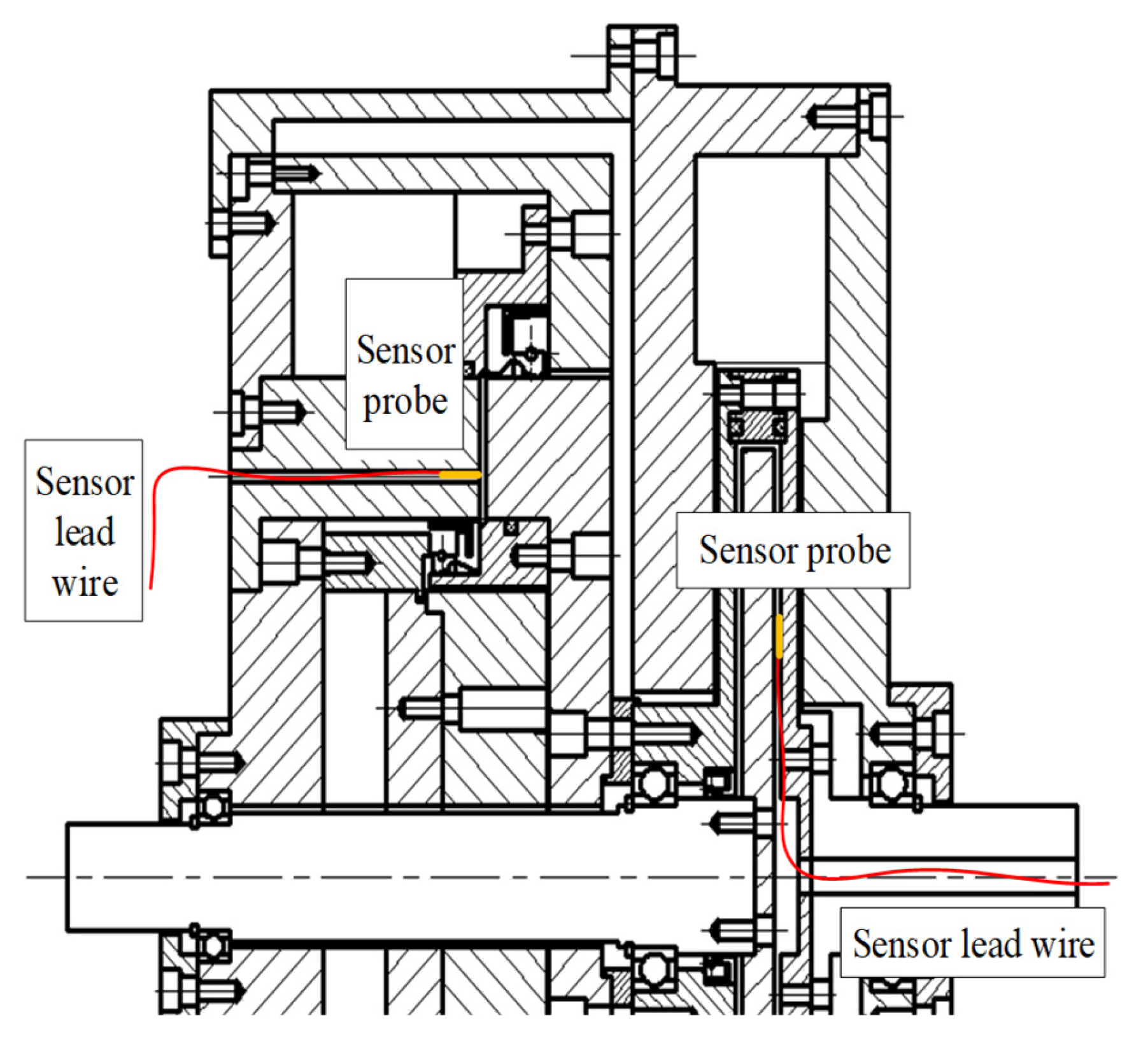
To measure the temperature within the working gap, a temperature probe needs to be built into the PM/MRF variable-stiffness module. The installation diagram is shown in Figure 10.

3.2. Results and Discussion

3.2.1. Temperature Rise Characteristic

The mechanical transmission components of the experimental system were initially assembled according to the braking torque measurement configuration. The motor module was then operated at a constant speed of 0.5 r/s while applying braking currents of 0 A, 0.5 A, 1.0 A, and 1.3 A to the braking coil. For each current level, the system ran continuously for 180 s while temperature sensor data from the braking MRF region were recorded. After each 180 s test interval, the system was allowed to cool naturally to ambient temperature before proceeding to the next measurement sequence.
Subsequently, the mechanical transmission components were reconfigured according to the drive torque measurement configuration. The magnetic powder brake was energized to achieve a full locking condition, followed by applying a forward 1.3 A current to the braking coil. Transmission currents of 0 A, 1 A, 2 A, and 3 A were sequentially applied to the transmission coil, with each current level maintained for 18 s. Temperature data were continuously acquired from three thermal sensors deployed at the transmission MRF region during each operational interval.
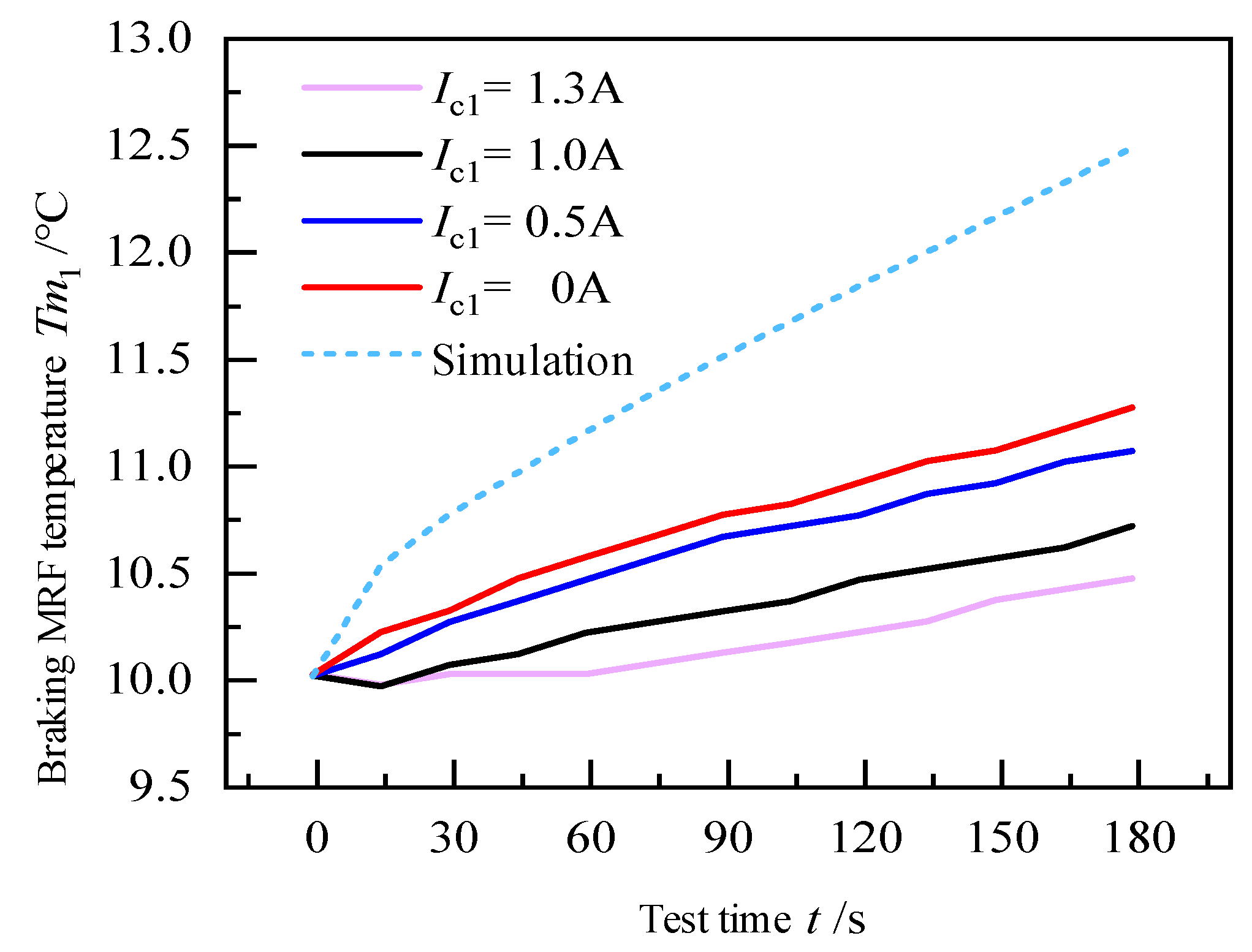
Figure 11 illustrates the experimentally obtained temperature evolution curves of the braking MRF under varying braking coil currents over the 180 s test duration.
As shown in Figure 11, when applying braking coil currents of 0 A, 0.5 A, 1 A, and 1.3 A, the braking MRF temperatures increased by 1.26 °C, 1.06 °C, 0.71 °C, and 0.46 °C, respectively, over the 180 s duration. These results indicate that higher forward currents in the braking coil accelerate the temperature rise in the braking MRF. When the braking coil current was zero, the temperature evolution curve of the braking MRF exhibited a similar trend to the simulation results—showing a rapid initial temperature increase within the first 15 s, followed by a near-linear progression from 15 s to 180 s. However, the measured temperature rise was slightly lower than the simulated results. This discrepancy can be attributed to two main factors: first, the actual convective cooling in the experimental setup may have been more effective than that assumed in the simulation; second, the model assumed constant thermal properties for the materials and, thus, did not account for the potential increase in the thermal conductivity of the MRF with rising temperature. These simplifications indicate that the simulation yields a conservative estimate from a design perspective.
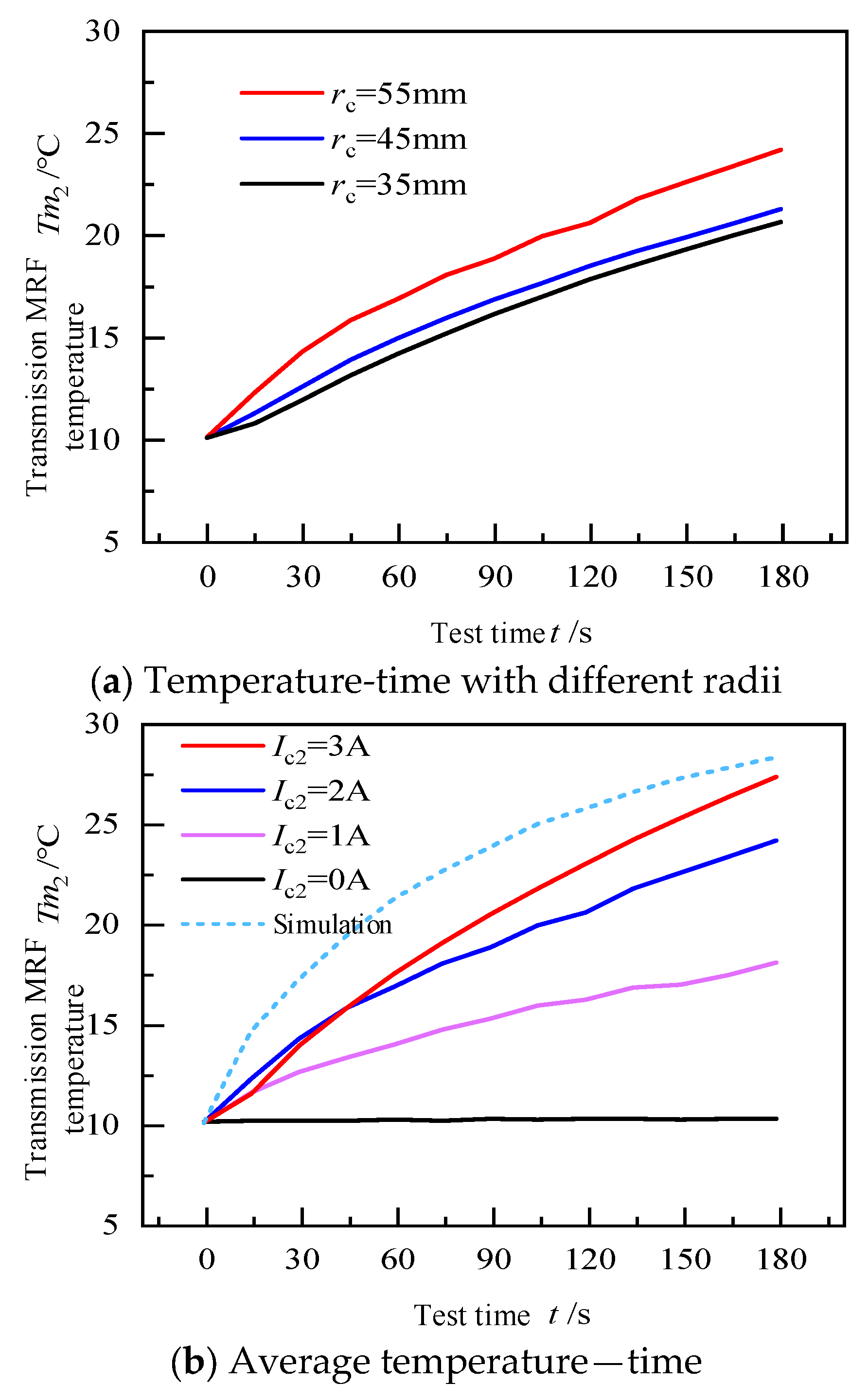
When the transmission coil was supplied with a 2A current, the temperature data acquired from three thermal sensors in the transmission section during the 180 s test interval are presented in Figure 12a. Figure 12b illustrates the variation curves of the average temperature values measured by the three sensors under different transmission coil currents over the same duration.
When the transmission coil current was set to 2 A, the temperature sensors located at 35 mm, 45 mm, and 55 mm radii recorded the respective temperature increases of 10.61 °C, 11.25 °C, and 14.16 °C over 180 s. This phenomenon confirms that the heat generation rate of the transmission MRF increases with the radial distance. Under transmission coil currents of 0 A, 1 A, 2 A, and 3 A, the average temperatures from the three transmission MRF sensors showed corresponding increases of 0.21 °C, 8.04 °C, 14.16 °C, and 17.36 °C over the same duration. These results indicate that the temperature rise rate of the transmission MRF accelerates with higher transmission coil currents. Notably, when applying a 3.0 A transmission coil current, the overall temperature of the transmission MRF remained lower than the simulated predictions despite exhibiting a steeper initial temperature rise during the 180 s interval.

3.2.2. Torque–Temperature Characteristic

Elevated operating temperatures can induce MRF degradation in the PM/MRF variable-stiffness drive joint, potentially causing a reduction in or complete loss of the transmission/braking torque capacity with critical safety implications. Therefore, it is essential to investigate the torque performance variations under different temperature conditions.
The experimental system was initially configured following the braking torque measurement setup. The motor module was operated at a constant 0.5 r/s speed to allow a gradual temperature elevation in the braking MRF region. Temperature data acquisition from the braking MRF sensors was continuously performed until reaching target temperatures of 10 °C, 20 °C, 30 °C, and 40 °C, respectively. At each temperature condition, three experimental cycles were conducted by applying 0 A, −1.3 A, and +1.0 A currents to the braking coil. Continuous torque sensor data acquisition was maintained for 5 s intervals during each test to obtain corresponding torque measurements under specific temperature–current combinations, with strict control of the operational duration to prevent temperature drift.
Subsequently, the experimental system was reconfigured according to the drive torque measurement setup. The magnetic powder brake was fully engaged while applying a +1.3 A current to the braking coil. The motor module was operated at a constant 0.5 r/s speed to allow gradual temperature elevation in the transmission MRF region. Experimental trials were initiated when the average temperature sensor readings from the transmission MRF reached 10 °C, 20 °C, 30 °C, 40 °C, and 50 °C, respectively. At each temperature condition, four experimental cycles were conducted by applying 0 A, 1 A, 2 A, and 3 A currents to the transmission coil. Continuous torque sensor data acquisition was maintained for 5 s intervals during each test to obtain the corresponding drive torque measurements under specific temperature–current combinations.
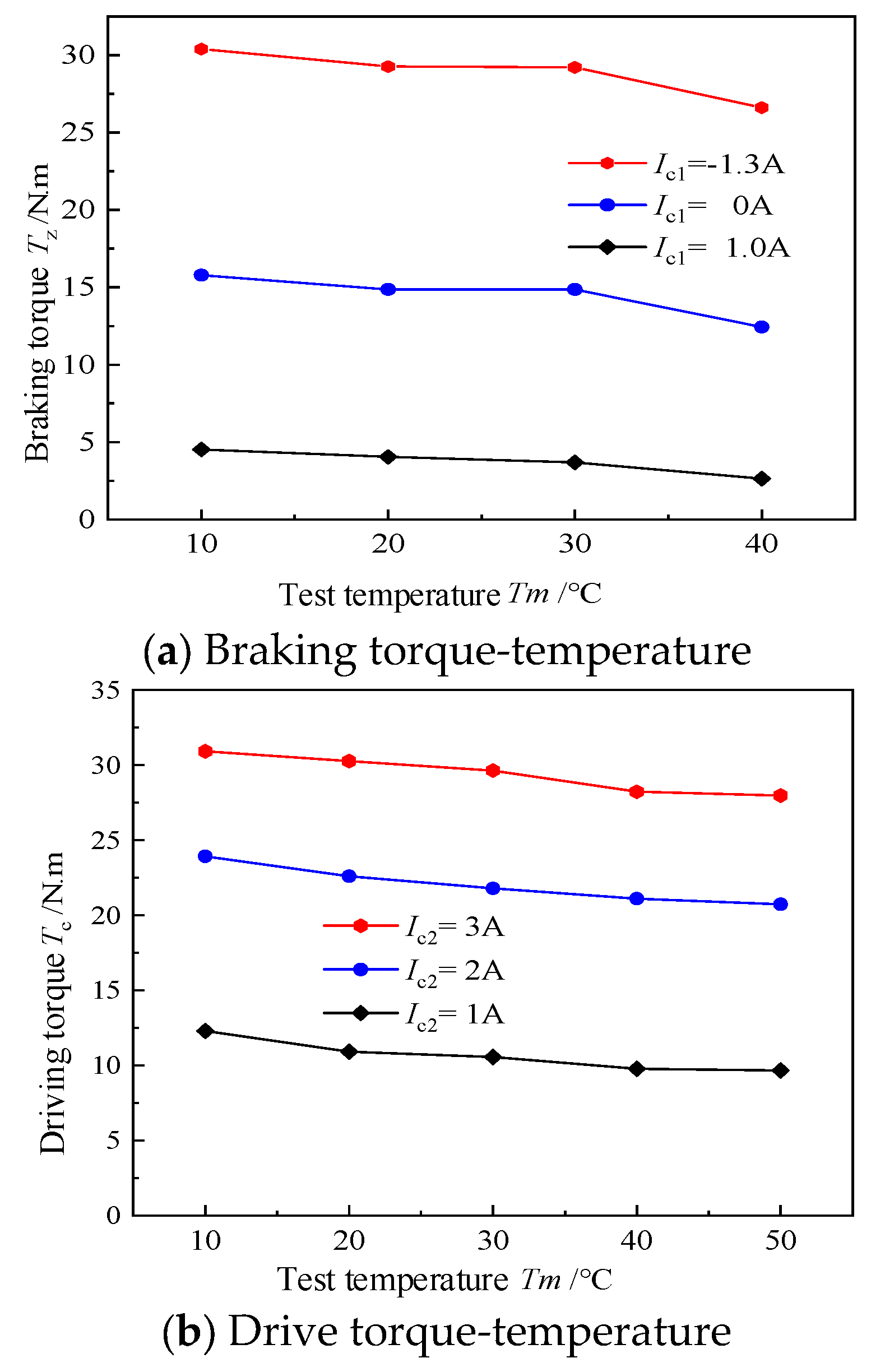
The experimental results showing a braking torque variation with braking MRF temperature under different braking coil currents are presented in Figure 13a, while the drive torque variation with transmission MRF temperature under varying transmission coil currents is illustrated in Figure 13b.
Figure 13a illustrates the braking torque variation under a constant coil current of −1.3A. As the temperature of the braking MRF rises progressively from 10 °C to 20 °C, and then to 30 °C, and, finally, to 40 °C, the braking torque decreases sequentially by 1.13 N·m, 0.05 N·m, and 2.60 N·m. This yields a cumulative reduction of 3.78 N·m over the entire 30 °C temperature increase. When the current of the brake coil is 0 A, the braking torque is reduced by 0.92 N·m, 0.01 N·m, and 2.42 N·m respectively, with a total decrease of 3.35 N·m. When the current of the brake coil is 1 A, the braking torque drops by 0.49 N·m, 0.35 N·m, and 1.05 N·m respectively, with a total decrease of 1.89 N·m. It can be observed that the braking torque consistently decreases with the increase in the temperature of the braking MRF. Moreover, the decreased amplitude is the smallest between 20 °C and 30 °C, while it increases significantly between 30 °C and 40 °C. This reduction in braking/driving torque with rising temperature is attributed to the temperature-dependent decrease in the MRF’s shear yield stress, a fundamental rheological property well-established in the literature [28].
The relationship between the driving torque and temperature under a transmission coil current of 1 A is presented in Figure 13b. As the temperature of the transmission MRF increases stepwise from 10 °C to 20 °C, 20 °C to 30 °C, 30 °C to 40 °C, and, finally, to 50 °C, the corresponding torque reductions are 1.38 N·m, 0.36 N·m, 0.78 N·m, and 0.12 N·m, respectively. This results in an overall torque decrease of 2.64N·m across the complete 40 °C temperature rise. When the current of the transmission coil is 2A, the driving torque is reduced by 1.33 N·m, 0.82 N·m, 0.67 N·m, and 0.38 N·m, respectively, with a total decrease of 3.2 N·m. When the current of the transmission coil is 3 A, the driving torque drops by 0.65 N·m, 0.63 N·m, 1.41 N·m, and 0.25 N·m, respectively, with a total decrease of 2.94 N·m. It can be observed that the driving torque also decreases gradually as the temperature of the transmission MRF increases, and the most substantial torque drop occurs during the initial 10 °C temperature increase.
This corresponds to a percentage reduction of approximately 14.1% in driving torque and 14.9% in braking torque over the specified temperature ranges. These quantified relationships demonstrate that the torque–temperature characteristic follows a predictable pattern rather than random fluctuation. In practical applications where the torque precision is critical, this systematic variation can be accounted for through control strategies that adjust the excitation current based on the measured temperature, transforming the observed thermal sensitivity into a manageable system parameter.
According to the test results of the temperature rise characteristics, it can be known that the maximum measured value of the temperature rise in the braking mode within 180 s is 1.26 °C, and the maximum measured value of the temperature rise in the driving mode is 17.36 °C, and the temperature rise rates are both relatively slow. Therefore, in the case of short-term operation, the braking torque and driving torque of the PM/MRF variable-stiffness joint are less affected by the internal temperature rise.

4. Conclusions

Through a combined thermal field simulation and experimental investigation, this study examines the temperature rise characteristics and torque–temperature relationship of a PM/MRF variable-stiffness drive joint. The key findings are as follows:
(a)
The simulation results reveal that the maximum equilibrium temperatures in both transmission and braking components exhibit a positive correlation with increasing slip power. When the slip power reached 100 W, the steady-state maximum temperatures reached 110.34 °C in the braking system and 113 °C in the transmission system, both of which are within the operational temperature limits of MRF. The temperature elevation curves for both components from 0 to 180 s demonstrate gradually attenuating rise rates, with the braking system showing a 2.48 °C increase and the transmission system showing an 18.35 °C increase at the 180 s mark, indicating relatively small temperature increases during short-term operation.
(b)
The experimental results indicate maximum temperature rises of 1.26 °C in the braking system and 17.36 °C in the transmission system over 180 s, both slightly lower than the simulated predictions. The braking torque exhibited a maximum reduction of 3.78 N·m when the braking MRF temperature increased from 10 °C to 40 °C, while the drive torque showed a maximum reduction of 2.94 N·m with the transmission MRF temperature rising from 10 °C to 50 °C. These findings confirm that self-generated heat has a minimal impact on both braking and drive torque performances under short-term operational conditions.
(c)
The torque output exhibits a predictable temperature dependence, with maximum reductions of approximately 14.1% for driving torque and 14.9% for braking torque over the tested temperature ranges. For closed-loop precision control applications, this drift can be effectively mitigated by implementing a current adjustment based on real-time temperature feedback, thereby ensuring a consistent torque performance. This quantitative characterization provides essential parameters for the design of thermal-compensation control algorithms in PM/MRF-based actuation systems.
This study has limitations that suggest directions for future research. The thermal model used simplified constant material properties and boundary conditions, leading to conservative predictions. The experiments focused on short-term behavior in a specific environment. Future work should develop models with temperature-dependent properties, investigate long-term thermal cycling effects, and implement model-based control with real-time thermal compensation.

Author Contributions

Software, X.L.; validation, X.Z.; formal analysis, X.Z.; investigation, Z.F.; resources, Z.T.; writing—original draft, J.J.; writing—review and editing, Z.T. and C.N.; visualization, X.W.; methodology, C.N. All authors have read and agreed to the published version of the manuscript.

Funding

The National Natural Science Foundation of China (52305078, 52375069 and 52305064).

Data Availability Statement

The data that support the findings of this study are available from the corresponding author upon reasonable request.

Acknowledgments

The authors would like to thank the editors and reviewers for their valuable comments and constructive suggestions.

Conflicts of Interest

Author Xiaojun Liu was employed by the company Shenhua Shendong Coal Group Corporation Limited. Author Chaochao Niu was employed by the company Shandong Energy Group. The remaining authors declare that the research was conducted in the absence of any commercial or financial relationships that could be construed as a potential conflict of interest.

References

  1. Ji, J.; Wu, X.; Tian, Z. Effect on the Sedimentation Stability of Magnetorheological Fluid by Micro-nano Composite System. J. Magn. 2023, 28, 172–180. [Google Scholar] [CrossRef]
  2. Yu, L.; Chen, F.; Li, H. Study on Sedimentation Stability of Silicone Oil-based Magnetorheological Fluids with Fumed Silica as Additive. Front. Mater. 2024, 11, 1395507. [Google Scholar] [CrossRef]
  3. Li, S.; Meng, W.; Wang, Y. Numerical and experimental studies on a novel magneto-rheological fluid brake based on fluid–solid coupling. Sci. Prog. 2020, 103, 0036850419879000. [Google Scholar] [CrossRef] [PubMed]
  4. Okui, M.; Sugibayashi, S.; Suzuki, R.; Nakamura, T. Path restriction and speed regulation via force feedback-type welding teaching device using magnetorheological brakes. Smart Mater. Struct. 2020, 29, 104001. [Google Scholar] [CrossRef]
  5. Wu, P.; Yang, S.; Hua, Q.; Yan, H. Review of Magnetorheological Fluid Engineering Applications. Times Auto 2020, 2, 16–17. [Google Scholar]
  6. Chen, F.; Wang, X.; Li, H.; Li, A.; Deng, Y.; Tian, Z.; Wu, X. A novel water-cooling magnetorheological transmission device. J. Mech. Sci. Technol. 2022, 36, 2309–2319. [Google Scholar] [CrossRef]
  7. Choi, S.-B. Thermal Conductivity and Temperature Dependency of Magnetorheological Fluids and Application Systems—A Chronological Review. Micromachines 2023, 14, 2096. [Google Scholar] [CrossRef]
  8. Zhu, H.; Rui, X.; Yang, F.; Zhu, W.; Jiang, M. Influence of temperature and internal leakage on magnetorheological damper. Int. J. Mech. Syst. Dyn. 2024, 4, 487–496. [Google Scholar] [CrossRef]
  9. Thiagarajan, S.; Koh, A.S. Simultaneous thermo-magnetorheological response of magnetorheological fluids: Effect of concentration and composition. IEEE Trans. Magn. 2021, 57, 1–8. [Google Scholar] [CrossRef]
  10. Gao, C.F.; Zheng, C.Q.; Zhang, Q.; Huang, X.S.; Zhang, G.; Jiang, H.F. The influence of temperature on the shear stress characteristics of magnetorheological fluids. Chin. J. Appl. Mech. 2020, 37, 1724–1730. [Google Scholar]
  11. Chen, Y.F.; Qian, H.C.; Huang, H.; Dong, H. Design and Performance Analysis of Magnetorheological Brake for Energy-Feeding Traction Elevator. Chin. Hydraul. Pneum. 2021, 45, 138–148. [Google Scholar]
  12. Fu, Z.; Gan, X.; Liu, X.; Jian, Z.; Hu, H. Effect of temperature on the mechanics of magnetorheological fluid damper. J. Chin. Inst. Eng. 2022, 45, 97–108. [Google Scholar] [CrossRef]
  13. Zhou, H.Y.; Fan, Z.M.; Shen, J.C.; Han, H.G.; Zhang, G.; Li, X. Simulation and Experiment on the Influence of Temperature Effect on the Dynamic Performance of MRD. Mech. Sci. Technol. 2022, 41, 1313–1320. [Google Scholar]
  14. Patil, S.R.; Powar, K.P.; Sawant, S.M. Thermal analysis of magnetorheological brake for automotive application. Appl. Therm. Eng. 2016, 98, 238–245. [Google Scholar] [CrossRef]
  15. Chen, S.; Yang, J. Probing Slip Differential Heat of Magnetorheological Fluids Subjected to Shear Mode Operation and Its Effect on the Structure. Materials 2019, 12, 1860. [Google Scholar] [CrossRef]
  16. Masoud, H.; Ramin, S.; Subhash, R. Temperature dependency of magnetorheological fluids’ properties under varying strain amplitude and rate. J. Magn. Magn. Mater. 2020, 498, 166109. [Google Scholar] [CrossRef]
  17. Wang, L.; Luo, Y.P.; Liang, H.Y.; Ji, M. Research on temperature field of a new type of magnetorheological fluid dynamometer with cooling system. J. Magn. 2019, 24, 583–592. [Google Scholar] [CrossRef]
  18. Zhang, L.; Feng, Y.B.; Huang, X.X.; Li, L.; Zhang, Z.H. Analysis of Temperature Rise Characteristics of Magnetorheological Dampers Coupled with Multiple Physical Fields. Therm. Sci. Technol. 2023, 22, 125–134. [Google Scholar]
  19. Zhang, L.; Feng, Y.B.; Huang, X.X.; Li, S.; Zhang, Z. Analysis of Damping Characteristics of Magnetorheological Damper Considering Temperature Effect. Mach. Tool Hydraul. 2023, 51, 96–104. [Google Scholar]
  20. Ji, J.; Wu, X.; Tian, Z.; Xie, F.; Chen, F.; Li, H. A Novel Magnetorheological Fluid with High-Temperature Resistance. Materials 2023, 16, 4207. [Google Scholar] [CrossRef]
  21. Wang, D.; Hou, Y. Design and experimental evaluation of a multidisk magnetorheological fluid actuator. J. Intell. Mater. Syst. Struct. 2013, 24, 640–650. [Google Scholar] [CrossRef]
  22. Skalski, P. Analysis of Viscoplastic Properties of a Magnetorheological Fluid in Operational Conditions of a Damper’s Work; HAL Open Science: Villeurbanne, France, 2011. [Google Scholar]
  23. Chen, S.; Huang, J.; Jian, K.; Ding, J. Analysis of Influence of Temperature on Magnetorheological Fluid and Transmission Performance. Adv. Mater. Sci. Eng. 2015, 2015, 583076. [Google Scholar] [CrossRef]
  24. Zschunke, F.; Rivas, R.; Brunn, P.O. Temperature Behavior of Magnetorheological Fluids. Appl. Rheol. 2005, 15, 116–121. [Google Scholar] [CrossRef]
  25. Xiao, Z.; Hu, H.; Ouyang, Q.; Shan, L.; Su, H. Multi-Condition Temperature Field Simulation Analysis of Magnetorheological Grease Torsional Vibration Damper. Front. Mater. 2022, 9, 930825. [Google Scholar] [CrossRef]
  26. Rabbani, Y.; Ashtiani, M.; Hashemabadi, S.H. An experimental study on the effects of temperature and magnetic field strength on the magnetorheological fluid stability and MR effect. Soft Matter 2015, 11, 4453–4460. [Google Scholar] [CrossRef]
  27. Feng, Q.B.; Luo, Y.P.; Wang, S.C.; Sun, S.C. The mechanism and influence of heat generation in magnetorheological fluid during operation. Light Ind. Mach. 2022, 40, 1–7. [Google Scholar]
  28. Li, H.P.; Jonkkari, I.; Sarlin, E.; Chen, F. Temperature effects and temperature-dependent constitutive model of magnetorheological fluids. Rheol. Acta 2021, 60, 719–728. [Google Scholar] [CrossRef]
Figure 1. The whole prototype of the PM/MRF Variable-Stiffness Actuator.
Symmetry 18 00430 g001
Figure 2. Temperature field simulation model of PM/MRF variable-stiffness module.
Symmetry 18 00430 g002
Figure 3. Temperature distribution cloud diagram of braking mode.
Symmetry 18 00430 g003
Figure 4. Temperature distribution cloud diagram of transmission mode.
Symmetry 18 00430 g004
Figure 5. Temperature rise in braking mode.
Symmetry 18 00430 g005
Figure 6. Temperature rise curve of braking mode.
Symmetry 18 00430 g006
Figure 7. Temperature rise in transmission mode.
Symmetry 18 00430 g007
Figure 8. Temperature rise curve of transmission mode.
Symmetry 18 00430 g008
Figure 9. The experimental system.
Symmetry 18 00430 g009
Figure 10. Installation of built-in sensor.
Symmetry 18 00430 g010
Figure 11. Temperature rise characteristic of the braking part.
Symmetry 18 00430 g011
Figure 12. Temperature rise characteristic of the transmission part.
Symmetry 18 00430 g012
Figure 13. Torque–temperature characteristics.
Symmetry 18 00430 g013
Table 1. The technical parameters of PM/MRF Variable-Stiffness Actuator.
PerformanceParametersPerformanceParameters
Rated driving torque30 N·mWire diameter of coil1 mm
Rated braking torque 30 N·mNumber of turns of the braking coil600
Rated power-off braking torque15 N·mNumber of turns of the drive coil400
Rated speed30 rpmSpecification and sizeΦ222 × 196 mm
Rated braking current1.3ARated drive current3A
Table 2. Thermal performance parameters of selected materials.
MaterialThermal Conductivity λ (W/(m·°C))Density ρ (kg/m3)Specific Heat Capacity c (J/(kg·°C))
PM1.57500465
MRF130901000
Steel 20487850480
0Cr18Ni9147900510
Brass1098500377
Rubber0.210.931700
Air0.030.9461009
Table 3. Results of the mesh convergence study.
ConfigurationMRF MeshOther Parts MeshMesh TypeMaximum Temperature (°C)
Mesh—Coarse0.8 mm1.5 mmTetrahedral 113.9
Mesh—Medium0.5 mm1.0 mmElement 113.0
Mesh—Fine0.3 mm0.7 mmMesh112.8
Disclaimer/Publisher’s Note: The statements, opinions and data contained in all publications are solely those of the individual author(s) and contributor(s) and not of MDPI and/or the editor(s). MDPI and/or the editor(s) disclaim responsibility for any injury to people or property resulting from any ideas, methods, instructions or products referred to in the content.