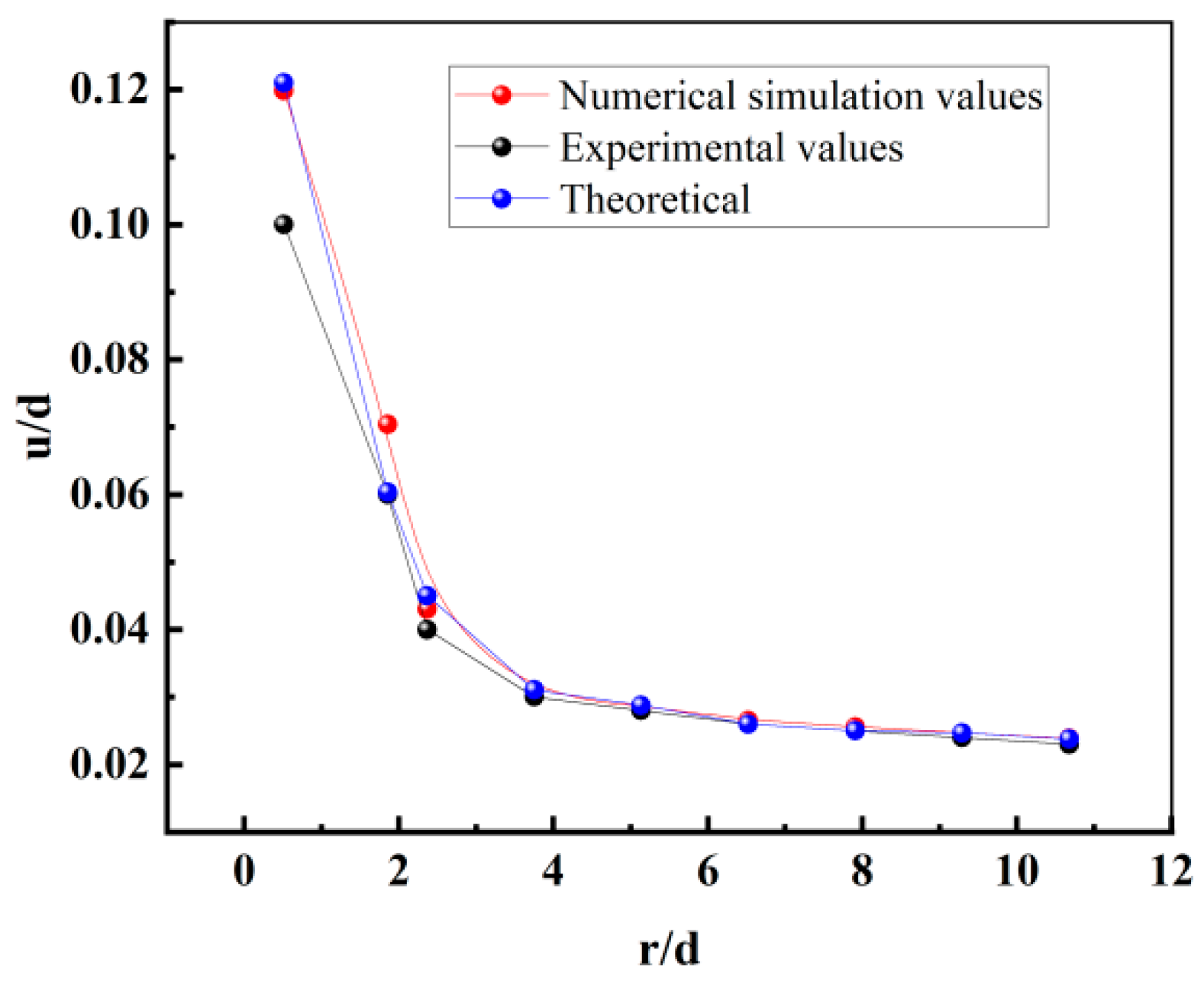
4.1. Analysis of the Effect of Penetration Rate on the Spread Range
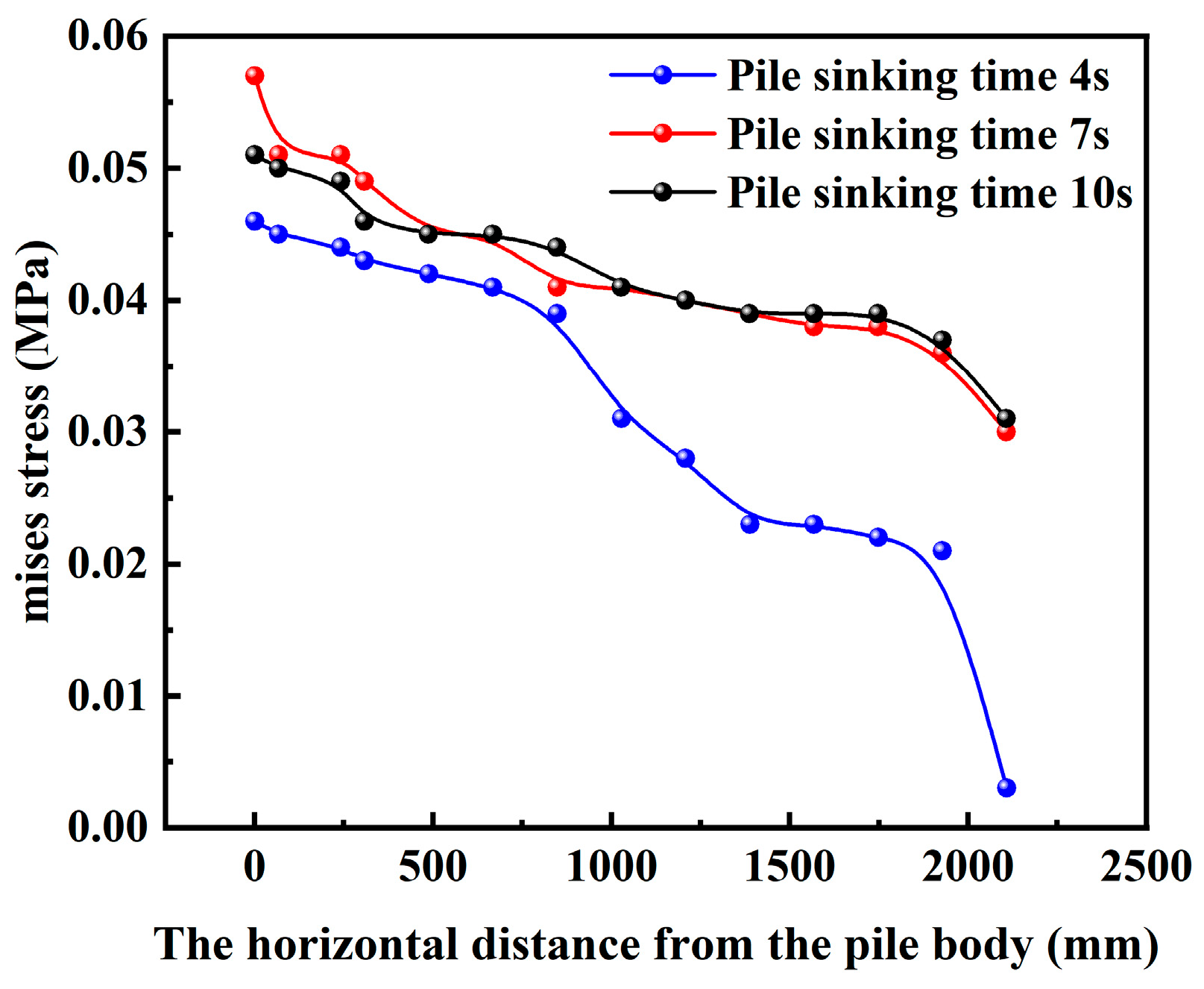
Figure 5 illustrates the variation in Mises stress in the soil around the pile as a function of horizontal distance under different penetration times. The peak stress occurs close to the pile wall, approximately 1.5 to 2 times the casing radius away from the pile wall, as the grouting duration increases. Localized compression and shear pressures at the pile shoe groove are the main contributors to the stress concentration observed in this area. As the insertion time progresses, the high-stress zone expands by approximately 40% compared to earlier stages, and the peak stress within the soil mass increases significantly after 10 s of insertion. The stress distribution curve shows a tendency to flatten slowly as the insertion time increases, suggesting that the soil mass is undergoing viscoelastic-plastic creep under continuous loading conditions.
High-speed installation results in greater stress concentrations near the pile, as indicated by the comparative analysis of stress distributions at varying penetration rates. A higher penetration rate amplifies soil disturbance, mainly due to strain rate effects, where the rapid movement of the casing boot induces greater shear deformation in the surrounding soil. Furthermore, the rapid insertion may lead to the immediate buildup of excess pore water pressure, contributing to the expansion of the smear zones as the soil structure is disturbed over a larger area. In comparison to low-speed insertion, stress peaks can increase by approximately 50%, and the high-stress zone expands from approximately six to eight times the casing diameter. This clearly demonstrates that varying penetration rates influence both the formation and the extent of smear zones, with higher driving speeds having a more pronounced effect.
With an increasing penetration rate, the rate of shear deformation in the soil around the pile also increases, which in turn leads to a higher buildup of excess pore water pressure. This pressure accumulates more rapidly as the pile shoe penetrates at a faster rate. The excess pore pressure reduces the soil’s effective stress, promoting the expansion of the smear zones. As the insertion rate increases, the shear forces applied to the soil also increase, leading to more localized soil disruption. The strong smear zone is characterized by a region where the soil undergoes significant shear failure, leading to a sharp decline in its strength parameters and permeability. Conversely, the weak smear zone, which extends further from the pile, experiences a slower rate of permeability reduction but still exhibits significant disturbances to soil structure. As a result, both zones expand simultaneously, directly affecting the consolidation efficiency of the foundation.
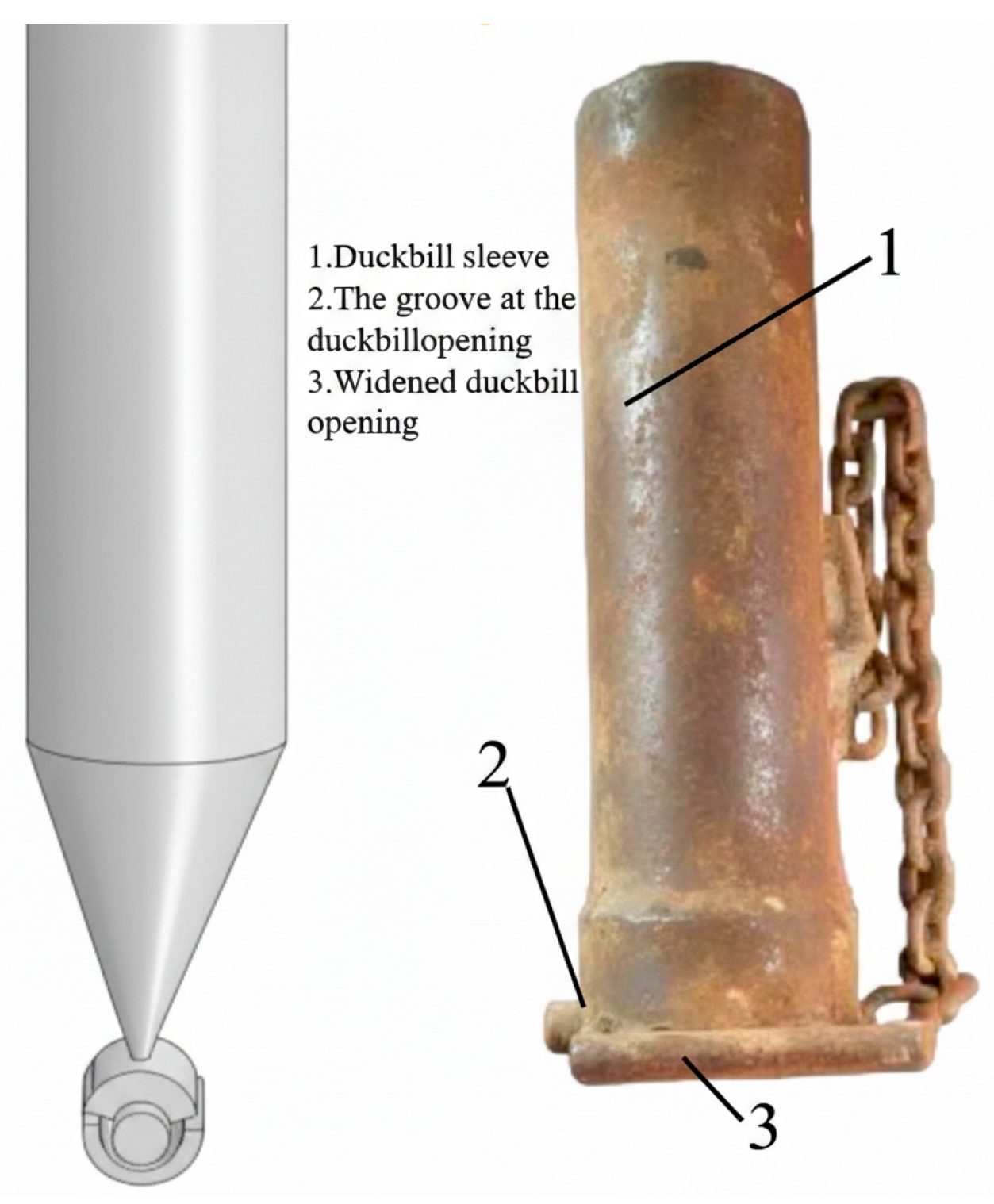
Furthermore, the distribution of the surrounding stress field is influenced by the pile shoe geometry. The slot structure of the pile shoe induces localized stress concentrations, resulting in an uneven stress distribution. Longer casings facilitate deeper stress transfer, leading to the development of a bimodal stress distribution pattern. The expansion and bending of long casing boots at the soil interface, particularly at the duckbill structure, create localized stress zones. Additionally, the distribution of casing wall friction impacts the broader stress field. This dual stress pattern emerges because the geometry of the casing boot results in varying soil interactions at different radial distances from the boot. These findings align with those of Sathananthan et al. [
2], who used cavity expansion theory to demonstrate how soil creep, construction rate, and pile shoe design collectively govern the stress response process.
Thus, these results provide important insights for optimizing the design and construction of pile shoes, offering a theoretical foundation for improving the operational efficiency of pile foundations in soft soil treatment projects. The study underscores the importance of both construction rate and pile shoe geometry in mitigating the smearing effect.
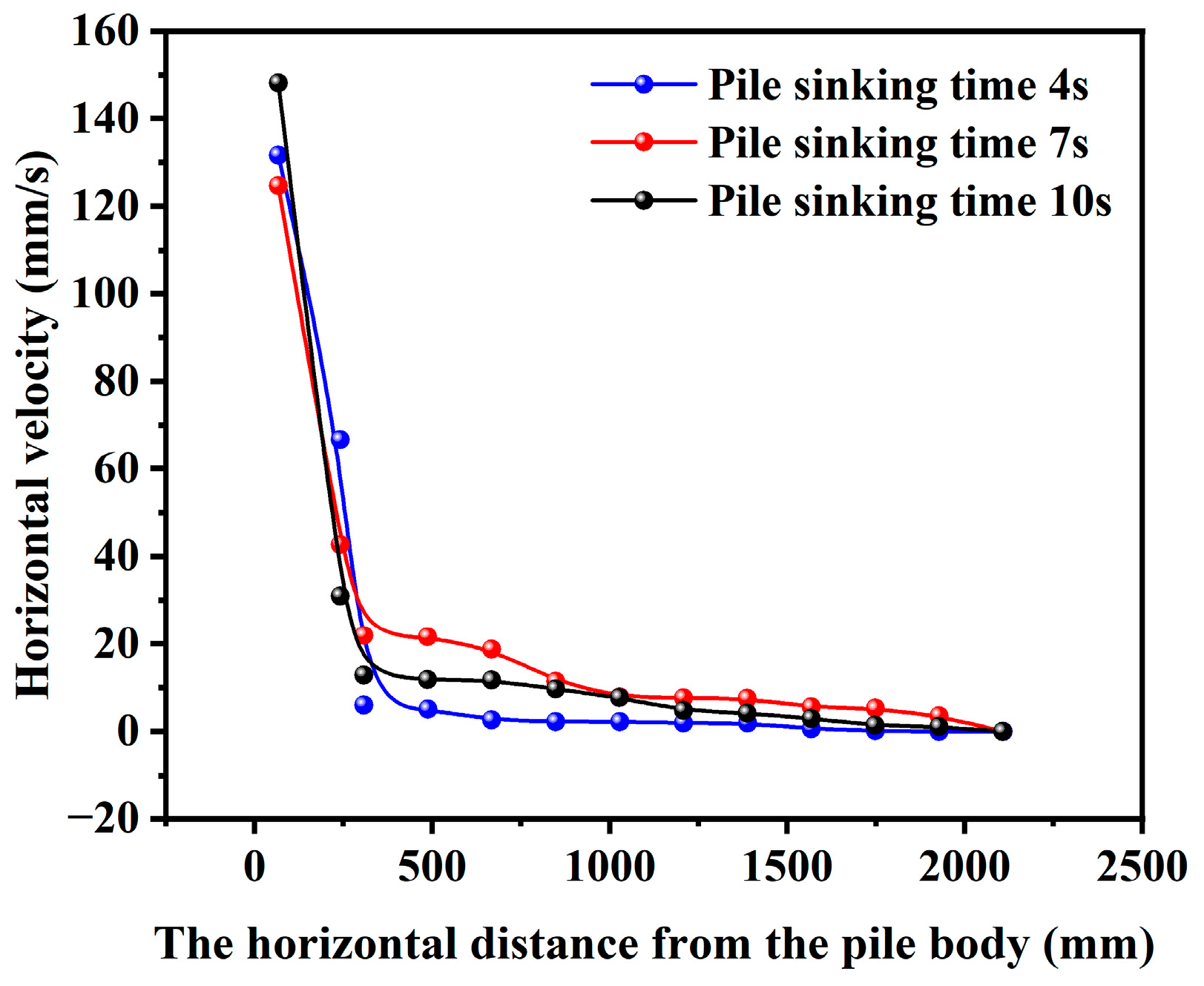
Figure 6 presents the distribution patterns of horizontal displacement in the soil surrounding the pile at various penetration rates. It is clear that as radial distance from the pile increases, the horizontal displacement decreases. The most rapid rate of displacement reduction occurs between 0 and 50 mm from the pile wall. Furthermore, the displacement decay in this region corresponds closely to the geometric dimensions of the pile shoe, suggesting that this area is the core coating zone, primarily governed by the pile shoe’s geometry.
Additionally, displacement amplitudes near the pile are significantly influenced by varying penetration rates. Horizontal displacement near the pile increased by approximately 40% to 67% under the 4-s insertion condition compared to the 10-s insertion zone. In other words, the compression and shear forces near the pile shoe are intensified with increasing penetration rates.
Interestingly, the displacement attenuation boundary at the outer edge of the smear zone remains almost constant at 80 mm. This observation indicates that the mechanical properties of the soil, rather than the construction velocity, control the outer boundary of the smear zone. As the penetration rate increases, stress concentrations near the pile rise substantially, and the smear zone broadens, which aligns with the stress distribution pattern observed in
Figure 4. Consequently, the construction pace has a secondary effect, with the pile shoe geometry being the primary controlling factor.
These observations provide insights into the combined influence of construction rate and pile shoe geometry on the development of the smearing effect. They offer valuable engineering guidance for soft soil foundation treatment projects. The results have significant implications for forecasting the long-term bearing capacity of pile foundations and optimizing construction parameters for soft soil foundation remediation [
16].
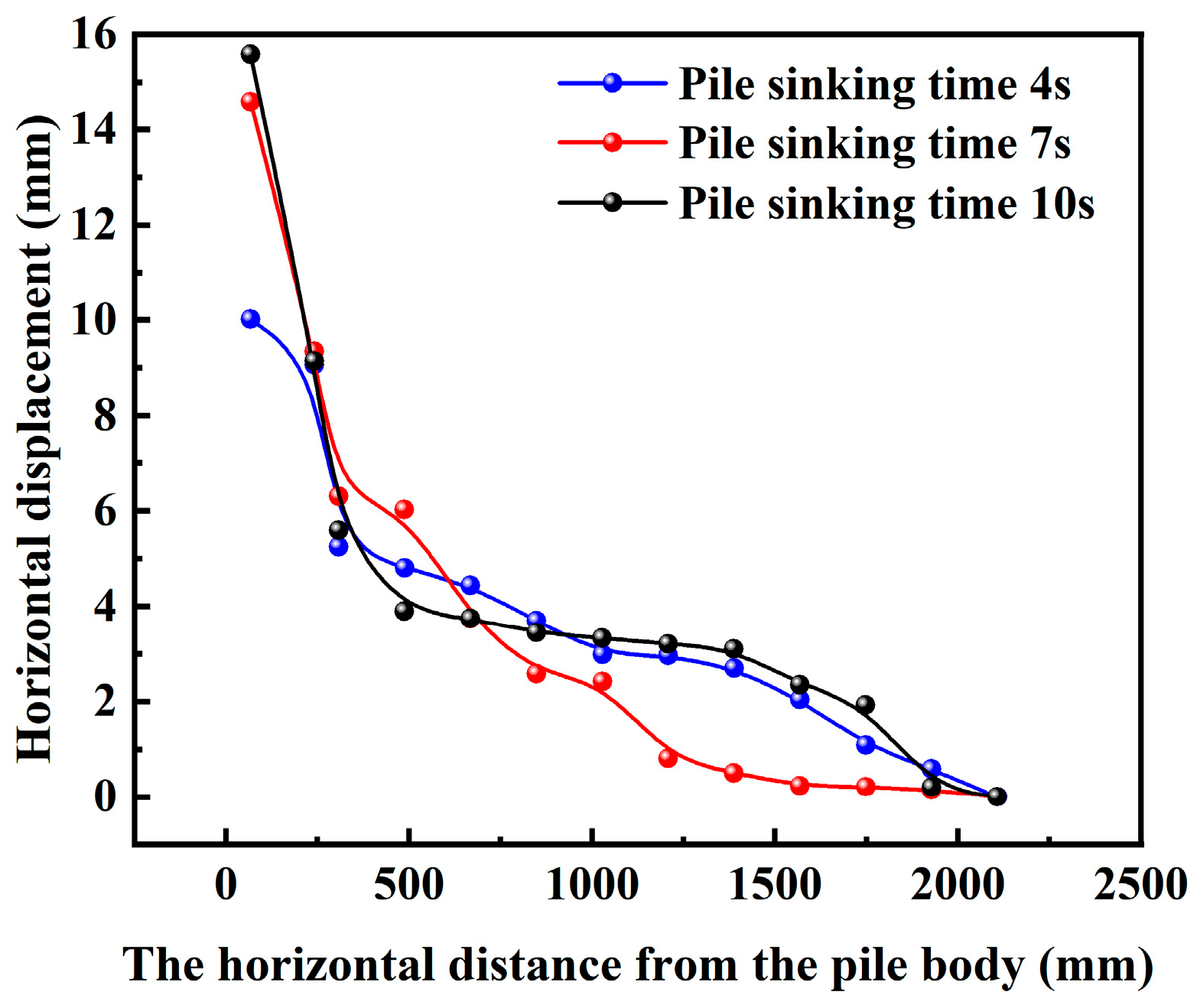
Figure 7 illustrates how the horizontal displacement of soil surrounding the pile varies with horizontal distance, depending on the insertion time. As the insertion rate increases, both the spatial extent and the intensity of the smear zone become more pronounced. The smear zone comprises two distinct regions: the strong effect zone, where the displacement gradient is most significant, and the weakly affected zone, where the displacement change is more gradual.
Notably, the displacement near the pile wall increases by approximately 35% to 50% when the insertion time is reduced from 10 s to 4 s. This behavior highlights the direct correlation between insertion rate and displacement: the faster the pile insertion, the greater the deformation of the surrounding soil.
Additionally, the radius of the weakly affected zone, defined by a noticeable threshold in displacement, expands from approximately six times the sleeve diameter (d) to eight times the sleeve diameter as insertion speed increases. This finding suggests that rapid pile driving leads not only to more intense local soil deformation but also to a significant expansion of the affected area.
These observations align with the underlying physical processes: higher insertion rates contribute to increased pore water pressure and enhanced shear deformation. The energy associated with rapid penetration (E ∝ v
2) causes a more substantial disturbance in the soil structure, which accelerates the expansion of the smear zone [
17].The increased displacement and pore pressure during high-speed pile insertion thus result in a significant alteration of the soil’s structural integrity, especially near the pile.
These findings underscore the critical role of the insertion rate in managing the spread and intensity of the smear zone. By controlling this parameter, one can optimize the foundation consolidation process in soft soil treatment projects. The increase in both the radial extent of the smear zone and the intensity of soil shear and deformation provides essential insights for improving the efficiency of foundation treatments and optimizing pile shoe designs.
4.2. Analysis of the Effect of Card Slot Curvature on the Coating Range
In order to demonstrate the quantitative superiority of the proposed duckbill-type pile shoe design, a comparative analysis of the smear zone size between the duckbill-type and conventional pile shoes was conducted. The smear zone was quantified by measuring the radii of both the strong and weak smear zones under typical construction conditions. For the duckbill-type pile shoe, the strong smear zone extended 3 to 4 times the sleeve diameter (d), while the weak smear zone ranged from 7 to 10 times the sleeve diameter. In contrast, conventional pile shoes, which lack the unique geometric features of the duckbill design, resulted in significantly larger smear zones, with the strong smear zone extending 5 to 6 times the sleeve diameter and the weak smear zone ranging from 12 to 15 times the sleeve diameter. This reduction in smear zone size is attributed to the design modifications, such as the flared end and curved gripping slots, which help reduce localized stress concentrations and distribute stresses more evenly across the surrounding soil. These modifications effectively mitigate the smearing effect, enhancing the ability of the proposed design to maintain soil integrity during installation.
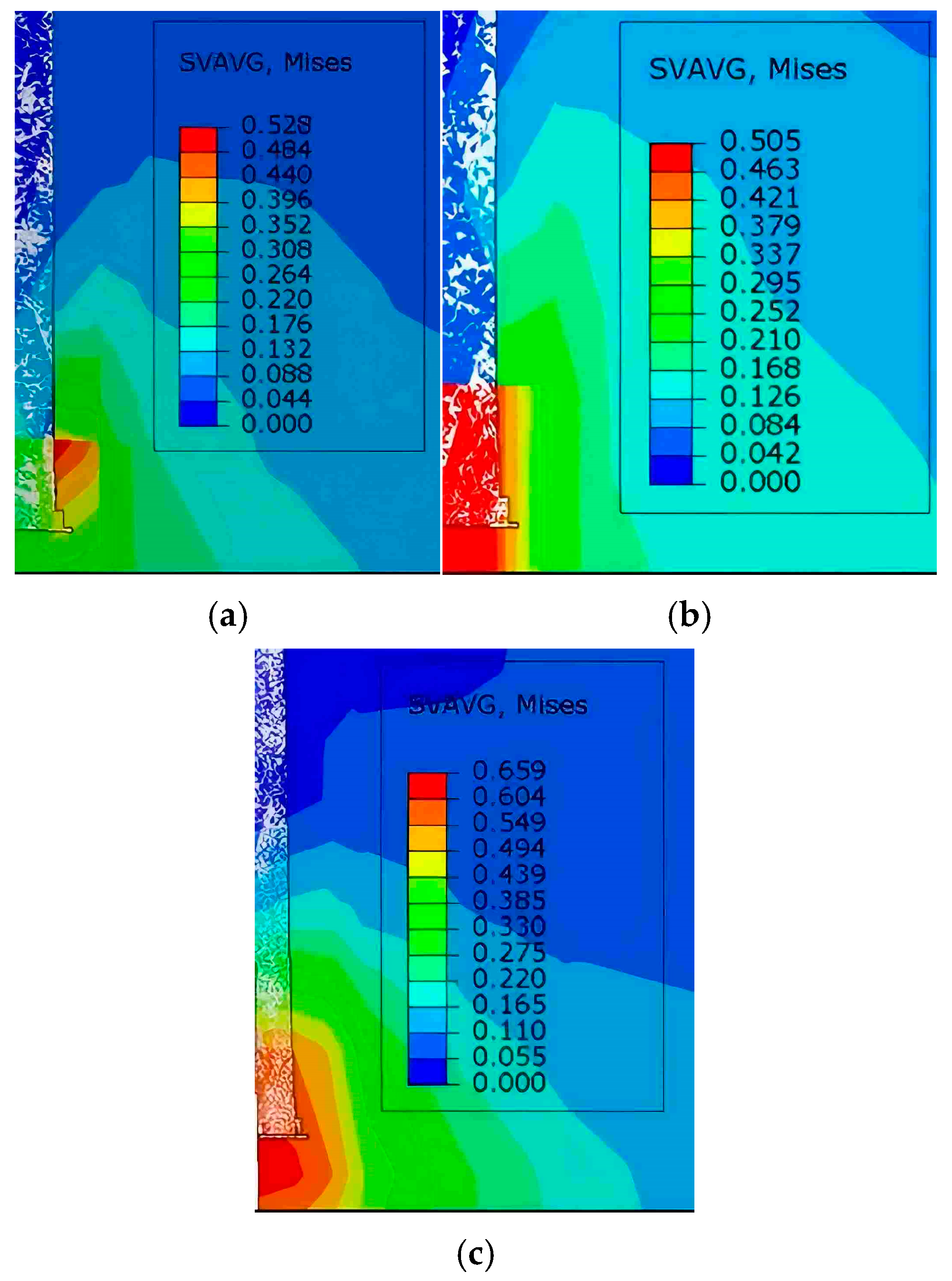
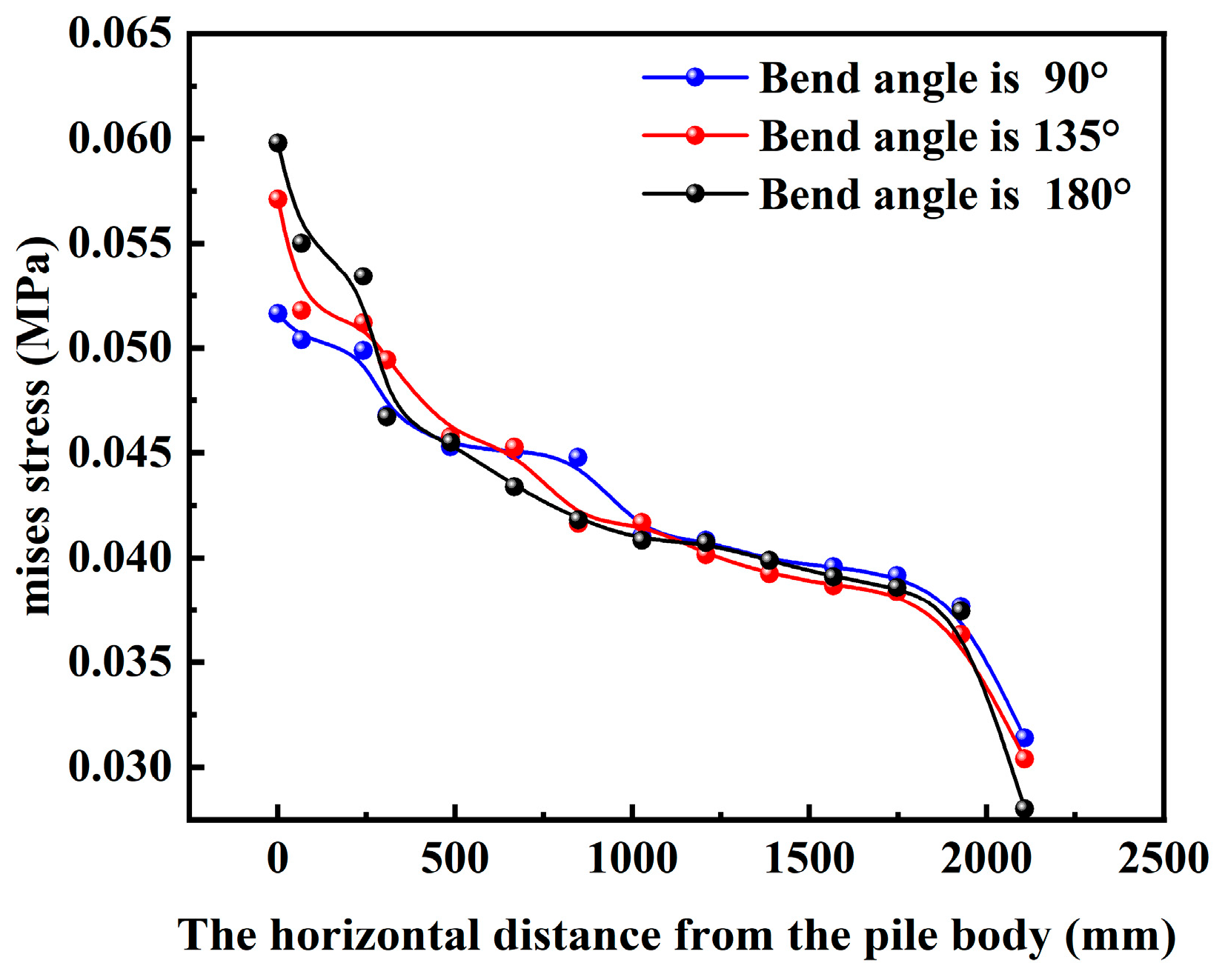
The Mises stress distribution in the soil surrounding the pile for 90°, 135°, and 180° slot bending angles is presented in
Figure 8. This figure illustrates how varying the curvature of the clamping groove affects the diffusion and stress transmission at the pile-soil interface. When the slot bend reaches 180°, the stress peak is located within the welded connection zone, extending to approximately 60 mm. The stress distribution is most uniform when the slot is bent at 90°, with an initial effective range of around 780 mm. As the bending angle increases from 90° to 180°, both the peak Mises stress and the range of stress diffusion also increase, as a result of stronger stress transmission due to the larger pile-soil contact area.
This phenomenon aligns with the “flexible contact expansion effect” theory [
18], which suggests that flexible curved structures help control local stress concentrations through progressive stress transmission. The duckbill-shaped pile shoe, with its curved groove, contrasts with conventional straight-walled or conical pile shoes, effectively reducing high stress concentrations at the welded ends, increasing the effective stress transfer area, and ensuring building stability by promoting smoother stress distribution.
In general, the extent of stress transmission and the distribution of stresses during pile shoe installation are heavily influenced by the slot curvature. A careful selection of the bending angle, particularly between 90° and 135°, can help mitigate the development of localized high-stress zones and the subsequent expansion of the smear zone in soft soil foundation reinforcement projects. When the curvature exceeds 135°, stress concentrations at the slot boundaries tend to increase, disrupting the continuity of the drainage channel and diminishing local sealing performance. A curvature of 180° or more leads to significant stress accumulation at the slot corners, impairing the ability to maintain an effective seal. This reduction in sealing performance directly impacts the anti-clogging efficiency of the drainage board, as the stress-induced changes in the surrounding soil structure hinder the water drainage efficiency. Ultimately, this effect compromises the foundation’s bearing capacity, highlighting the need for optimization of pile shoe geometry to maintain both the sealing performance and the foundation’s stability.
Figure 9 illustrates the Mises stress distribution in the soil surrounding the pile at 90°, 135°, and 180° slot bending angles. The results show that stress peaks consistently occur near the pile shoe’s sleeve wall across all bending conditions, with stress decreasing exponentially as the radial distance from the pile increases. Stress concentration is most pronounced at a 90° slot angle, where the influence zone extends approximately six times the sleeve diameter. As the bending angle exceeds 135°, the stress distribution begins to diffuse, and the affected region extends to around eight times the sleeve diameter. At a 180° bend, the peak stress is lowest, and the stress distribution becomes more uniform. However, the decay rate increases by approximately 40%, and the effective range reduces to nearly four times the sleeve diameter.
The efficiency of stress transfer and the interaction between the pile and soil are significantly influenced by the slot curvature. The impact of slot curvature on stress distribution aligns with findings from Ghandeharioon et al. [
19] which suggest that pile shoe geometry plays a key role in controlling the smear effect. Moderate curvature effectively reduces localized high-stress concentrations while broadening the stress distribution area around the pile. This finding underscores the importance of optimizing slot curvature to improve stress distribution characteristics during pile shoe insertion, especially in soft soil foundation treatments like land reclamation. These results offer critical theoretical and engineering insights for the structural design of pile shoes and the optimization of construction parameters.
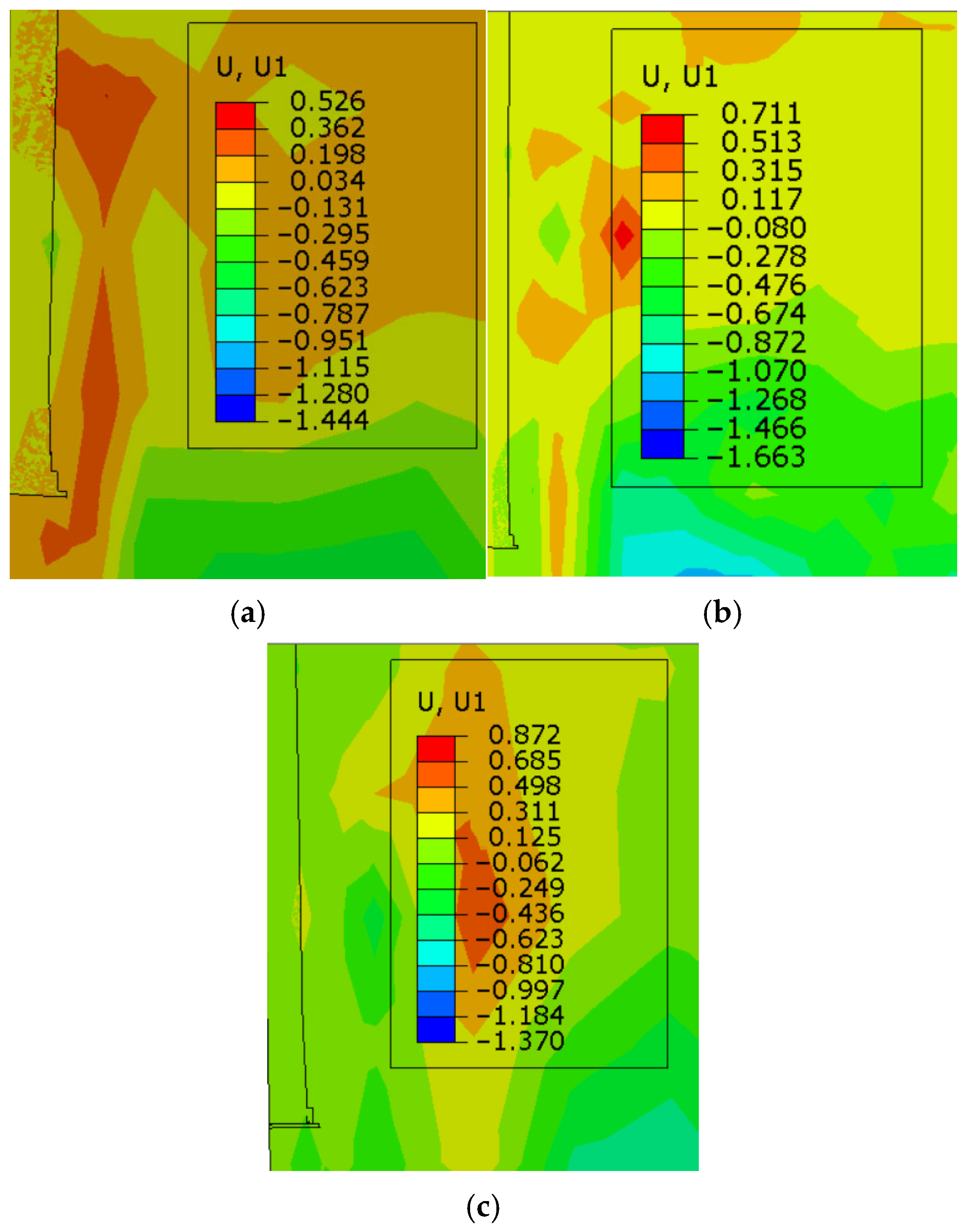
Figure 10 illustrates the distribution of horizontal displacement in the soil surrounding the pile under various slot bending conditions. The results reveal that the soil’s horizontal displacement significantly increases as the bending angle of the pile shoe groove decreases from 180° to 90°. This indicates that a smaller bending angle enlarges the smear zone and enhances the soil’s response. The performance of the duckbill pile shoe is clearly dependent on the bending angle. The displacement gradient is maximized at a 90° bend, with the smear zone extending approximately 2.2 d (where d is the sleeve diameter). At a 135° bend, the coating zone shows signs of localized fragmentation, compromising the continuity of the drainage boundary. When the bend angle reaches 180°, the coating effect virtually disappears, making it difficult to maintain a stable seal and drainage channel.
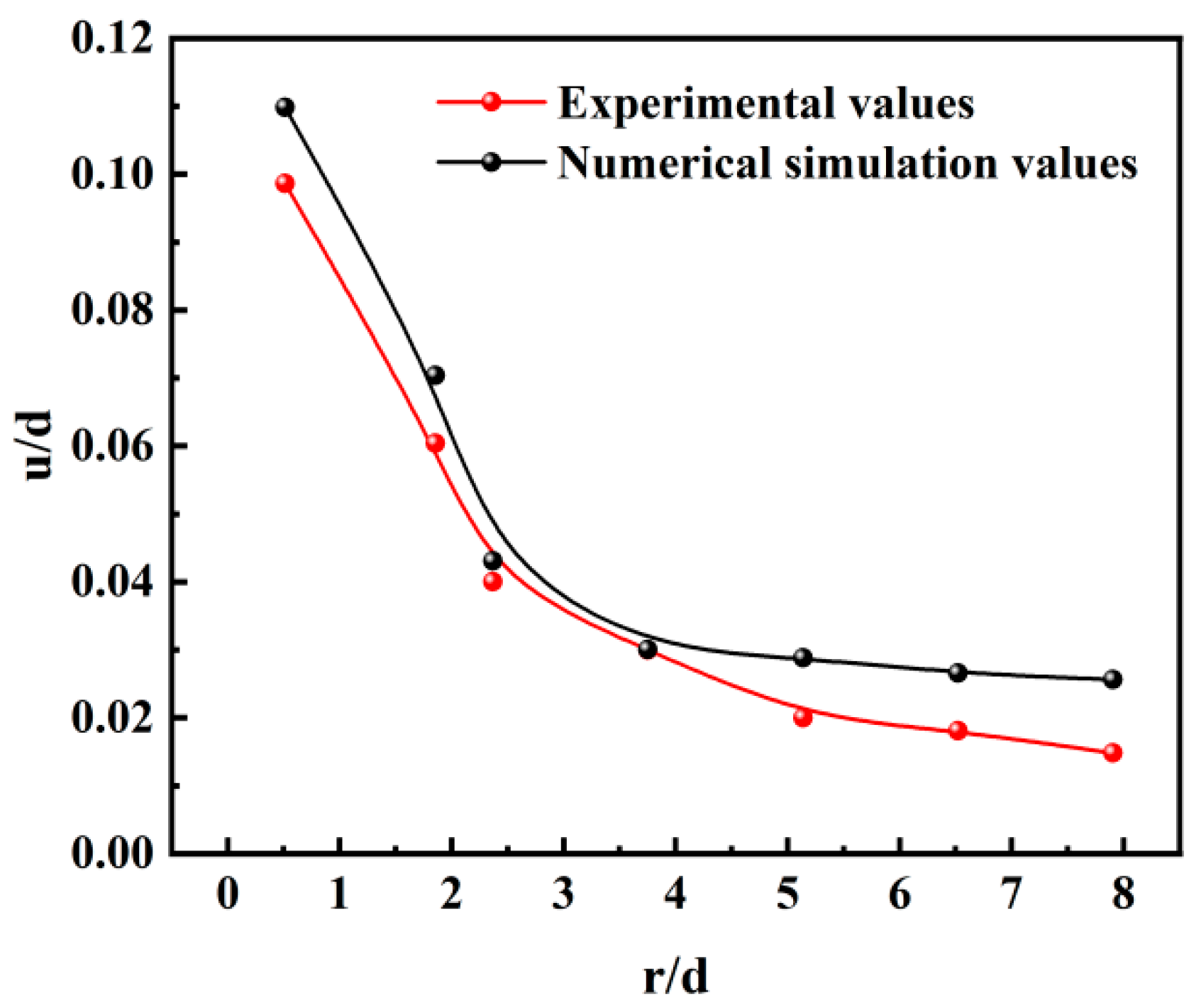
The simulation results in this study are slightly smaller than the smear zone range (approximately 2.5 d) determined by Sathananthan et al. [
2], based on cavity expansion theory. However, they closely align with the strong smear zone (approximately 4 d) and weak smear zone (7–10 d) patterns, thus confirming the validity of the pile-soil interaction model and the accuracy of the numerical simulations. A closer examination reveals that the development and spread of the smearing effect during pile shoe insertion are strongly influenced by the geometric configuration of the slot. Selecting an optimal bending angle between 90° and 135° in soft soil foundation treatment projects strikes a balance between preserving continuous drainage channels and reducing localized high-stress concentrations. This approach improves foundation consolidation efficiency and maximizes pile shoe drainage performance.
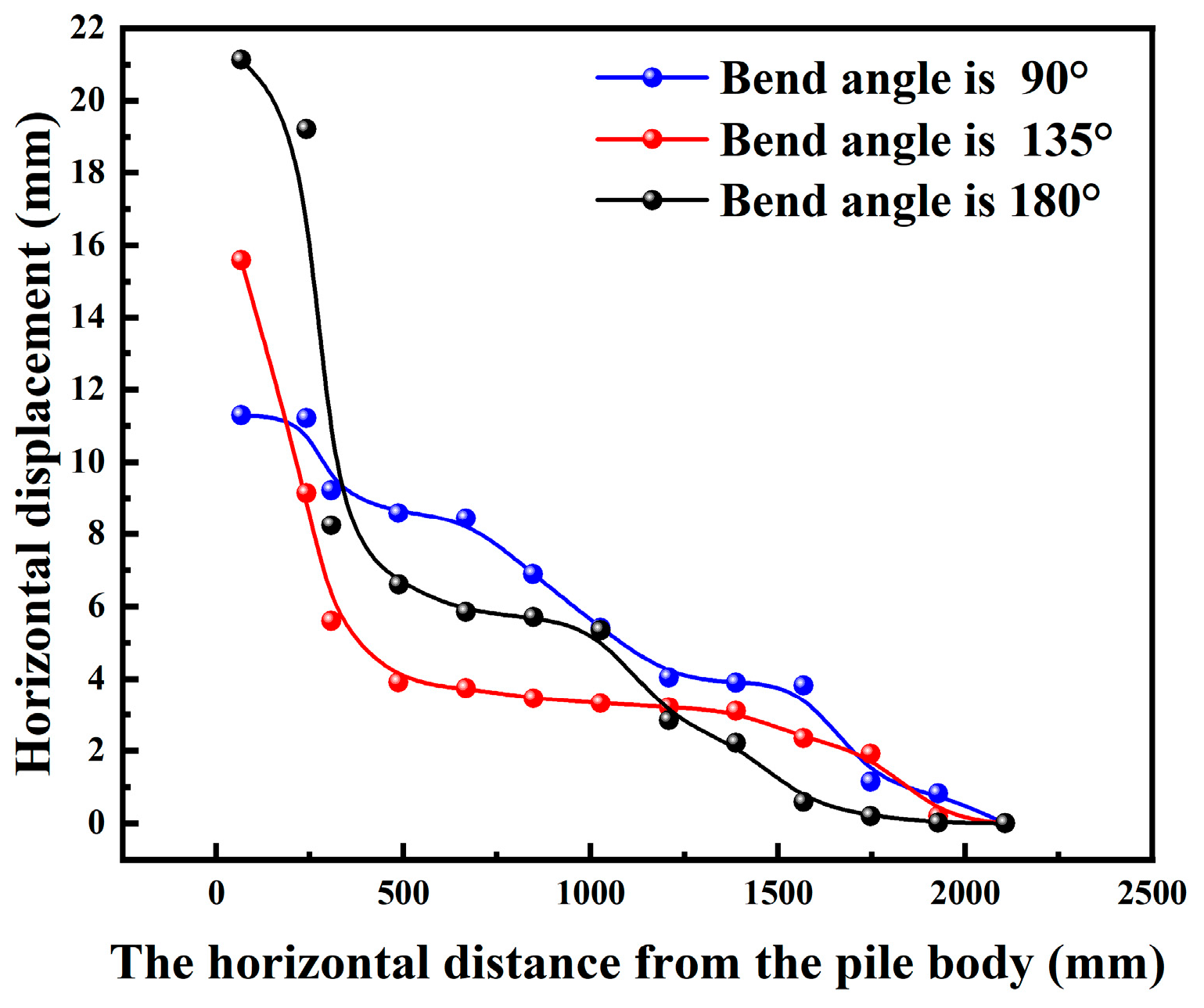
Figure 11 illustrates how the curvature of the duckbill pile shoe groove affects the distribution of horizontal displacement in the soil surrounding the pile. The smear zone expands as the groove curvature increases, as seen from the following observations: horizontal displacement in the soil surrounding the duckbill pile significantly increases, and the smearing effect intensifies as the groove curvature increases from 90° to 180°. The coating range is approximately 800 mm for a 90° groove bend, as indicated by the 0.5 mm displacement contour lines, whereas the coating range extends up to approximately 1500 mm for a 180° bend. This demonstrates that both the smear zone and the degree of pile-soil interaction increase with the curvature of the pile shoe groove.
Soil displacement within this zone exhibits a sharp increase, with the highest displacement gradient occurring between 0 and 500 mm from the pile body, resulting in a large, robust smear zone. The extent of this smear zone closely matches the 2–3 d (where d is the sleeve diameter) observed by Sathananthan et al. [
2] using cavity expansion theory. As the slot curvature increases, the pile-soil contact area expands, shear forces intensify, and the stress distribution becomes more uniform. Eventually, a diffuse pattern emerges within the coating zone. However, excessive bending limits the formation of stable drainage boundaries, compromising local sealing performance.
In conclusion, the pile shoe’s geometric shape is the primary factor influencing the development and extent of the smear effect. For soft soil layers, selecting a groove curvature between 90° and 135° extends the smear zone while maintaining the continuity of the drainage boundary. This strategy optimizes foundation consolidation efficiency and enhances pile shoe drainage performance.
The optimal curvature range for the pile shoe groove is between 90° and 135°, as this range most effectively disperses stress and reduces local concentrations compared to sharper (90°) or more gradual (180°) curvatures. At a 90° curvature, the sharp bend creates concentrated stress at the slot edges, resulting in a smaller smear zone and greater soil deformation. As the curvature increases towards 135°, forces are distributed over a larger area, reducing stress concentration and ensuring a more uniform stress distribution. This redistribution of forces lowers the likelihood of localized stress peaks, promoting more efficient stress diffusion through the surrounding soil. In contrast, at a 180° curvature, while the contact area is maximized, the stress distribution becomes too diffuse, reducing the overall efficiency of force transmission and potentially compromising the local sealing performance of the pile shoe, which in turn decreases consolidation efficiency. Therefore, the 90–135° range strikes the best balance, reducing stress concentration, maintaining effective sealing, and improving foundation stability.
4.3. Analysis of Soil Parameters’ Influence on the Application Range
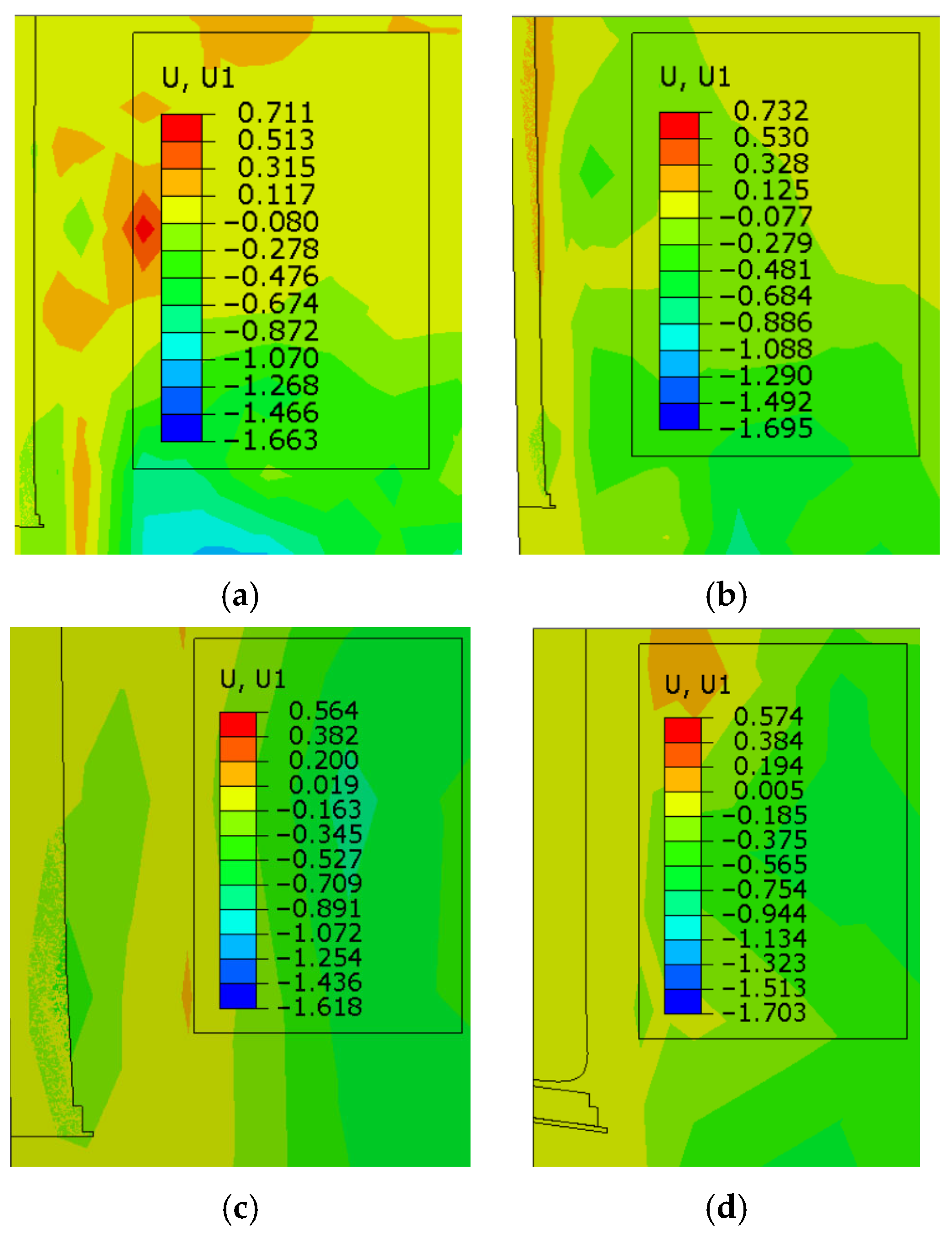
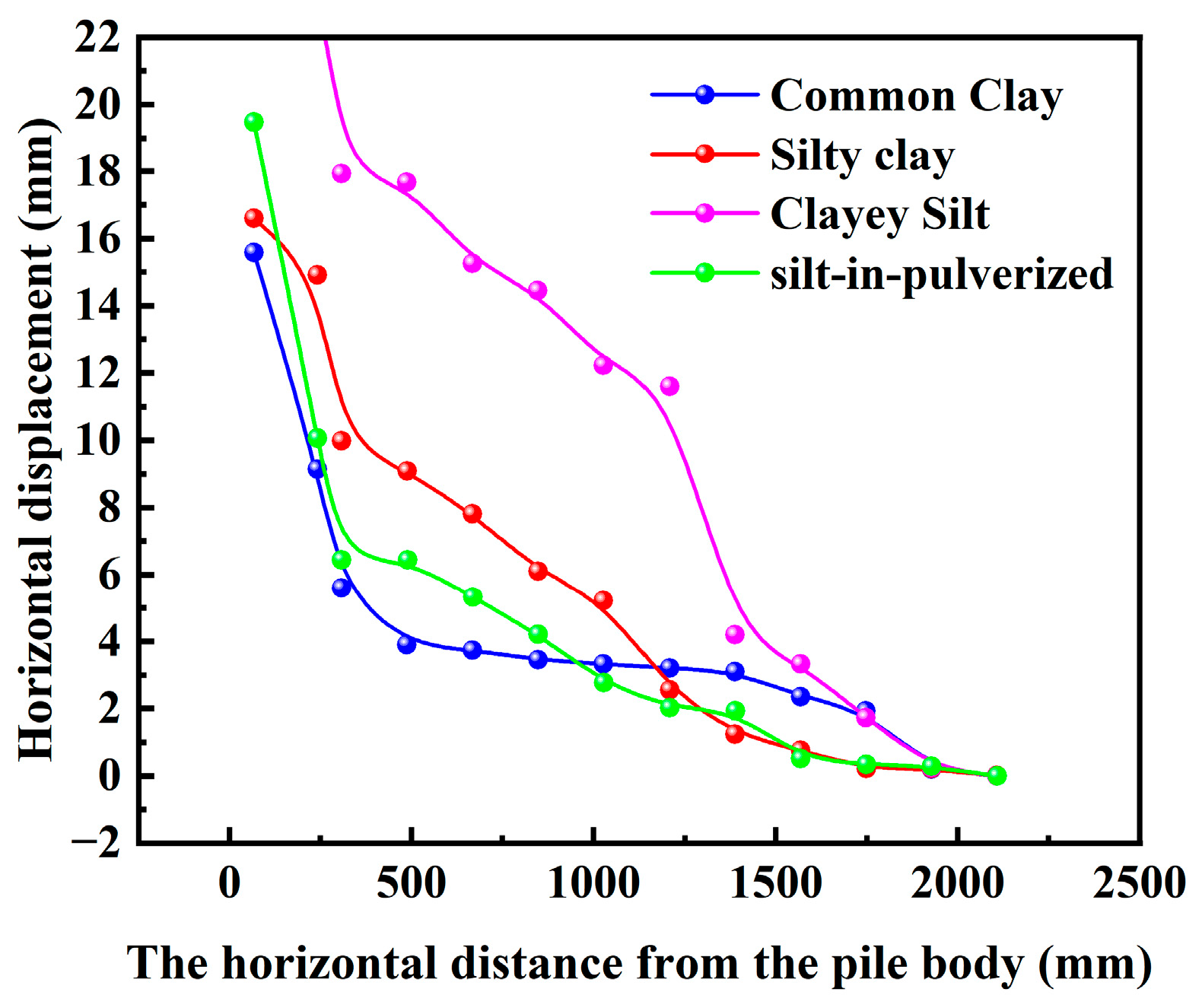
Figure 12 illustrates the distribution characteristics of the pile shoe’s horizontal displacement field when penetrating different types of soft soil. Softer soils exhibit larger smear zones. For example, in ordinary clay, the smear radius is approximately 3 d (where d represents the sleeve diameter), resulting in a relatively smaller displacement gradient. In contrast, silty clay exhibits a larger smear radius of about 7 d due to its higher shear swelling, leading to deeper displacements. The heightened sensitivity of silty clay to the smearing effect is likely due to its unique dilatancy characteristics, which significantly enhance shear strength under high-stress conditions. Additionally, the lower permeability of silty clay makes it more susceptible to smearing, as restricted fluid flow exacerbates the formation and expansion of the smear zone.
On the other hand, powdery clay displays brittle shear failure at the boundary, with a smear radius around 4.5 d. The displacement field in silt-clay mixtures shows a bimodal distribution, with a smear zone extending approximately 5 d. This result is due to relatively narrow shear zones and the absence of mud ejection between the shear spots. Notably, the position of the smear zone coincides with the localized stress concentration and high-strain regions induced by the duckbill pile shoe. The development and extent of the smear zone are significantly influenced by the geometric shape of the pile shoe.
This outcome aligns with the cavity expansion theory-based conclusions made by Sathananthan et al. [
2], which indicate that the weak smearing region has a greater extent and that the strong smearing region is roughly 2.5 d. Comparative investigations reveal that both soil type and pile shoe geometry influence the extent of coating coverage. Due to its strong cohesiveness, ordinary clay has a slightly smaller smear zone than other types of clay. Silty clay, with its high shear swelling effect, exhibits a wider smear range, while silty clay and silt-clay interlayers fall between these extremes. Their strain distribution patterns and lateral interface morphologies differ, yet they demonstrate similar smearing effects. It is evident that soil properties and pile shoe structural characteristics have a substantial coupling influence on the smearing effect, with both factors working together to determine its extent and spatial distribution. As such, the quantified smear zone found in this study can serve as a reference for evaluating smear zones under different stratigraphic conditions, providing valuable technical advice for optimizing soft soil foundation reinforcement parameters.
Figure 13 illustrates the radial attenuation characteristics of horizontal displacement under various soil conditions. Overall, displacement shows strong nonlinear attenuation with increasing radial distance, and the geometric configuration of the pile shoe plays a crucial role in controlling its variation. Starting from the outer edge of the sleeve, the coating zone extends approximately 60 mm outward. Within this 0–60 mm range, horizontal displacement decreases sharply by around 60–80%. The height of the remodeling zone caused by pile shoe compression corresponds closely to this variation. Beyond this range, the soil response transitions from the plastic failure stage to the structural adjustment stage, as indicated by the slowing rate of displacement change.
Different soil types exhibit distinct smearing effects. Silty clay, with its limited permeability and moderate strength, shows the largest smearing range—approximately ten times the sleeve’s diameter. In contrast, ordinary clay, due to its high cohesive strength, has the smallest smear range—around seven times the sleeve diameter. The combined effects of permeability and structural strength are evident in the results for silty clay and silty loam, which fall between these two extremes. Moreover, the 10 mm widening at the tip of the duckbill pile shoe intensifies local compression, significantly disrupting the soil structure adjacent to the pile. Nonetheless, displacement attenuation slows beyond four times the sleeve diameter, with residual displacement remaining below 5%, suggesting that the overall structure retains basic stability.
This trend aligns with the findings of Indraratna et al. [
20], confirming that both the soil’s characteristics and the pile shoe’s geometric parameters jointly control the smear effect. In conclusion, controlling the smear zone and improving foundation consolidation performance in soft soil foundation treatments, such as land reclamation, can be achieved through careful planning of pile shoe geometry and optimization of construction parameters based on soil characteristics. This approach provides essential theoretical support for the long-term performance assessment and reinforcement of soft soil foundations.
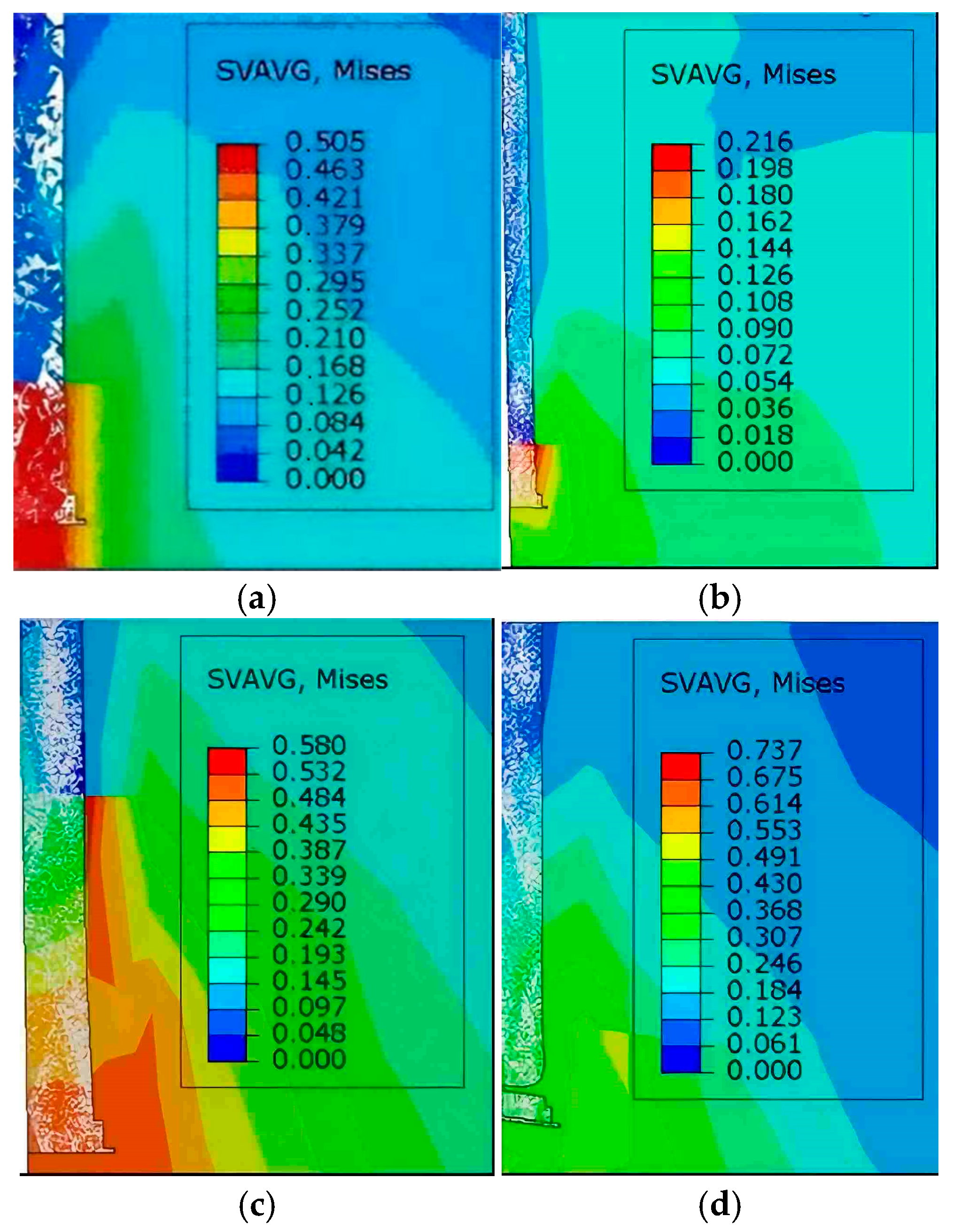
Figure 14 illustrates the distribution patterns of Mises stress as the pile shoe penetrates various soil types. It is evident that different soil types significantly influence the smear zone’s characteristics. Ordinary clay, due to its relatively soft texture, exhibits less pronounced stress concentration effects in all directions. Its maximum stress reaches only 0.216, with the maximum effect range extending to 12 d (where d represents the sleeve diameter), showing a gradual degradation of stress with increasing radial distance. In contrast, silty clay exhibits a more localized influence, with a reduced impact range of only 8 d due to its higher stress concentration and faster stress decay. The maximum stresses for silty silt and silty clay are 0.737 and 0.590, respectively, with silty silt displaying a bimodal stress distribution, which is more uniform than that of silty clay.
Spatially, stress concentration primarily occurs near the edges of the grooves and at the contact points between the pile shoe and the soil. This indicates that the local stress transfer at these points is influenced by the pile shoe’s geometric shape. The permeability and mechanical properties of the soil are significant factors in determining the extent of the smear zone. Due to its higher cohesive strength, ordinary clay exhibits a relatively narrow smear range, whereas silty clay, with its stronger shear swelling effect, has a wider smear range. The boundary between these extremes becomes less defined in soils like silty loam and silty clay loam.
These findings support the conclusions of Indraratna et al. [
20], which suggest that the smear effect is closely linked to the soil’s permeability and shear characteristics. The spatial extent of the smear zone is determined by both the geometric shape of the pile shoe and the intrinsic properties of the surrounding soil. Therefore, by carefully adjusting the pile shoe geometry and construction parameters, it is possible to control the smear zone, enhance the drainage effectiveness of plastic drainage boards, and accelerate foundation consolidation during the construction of soft soil embankments.
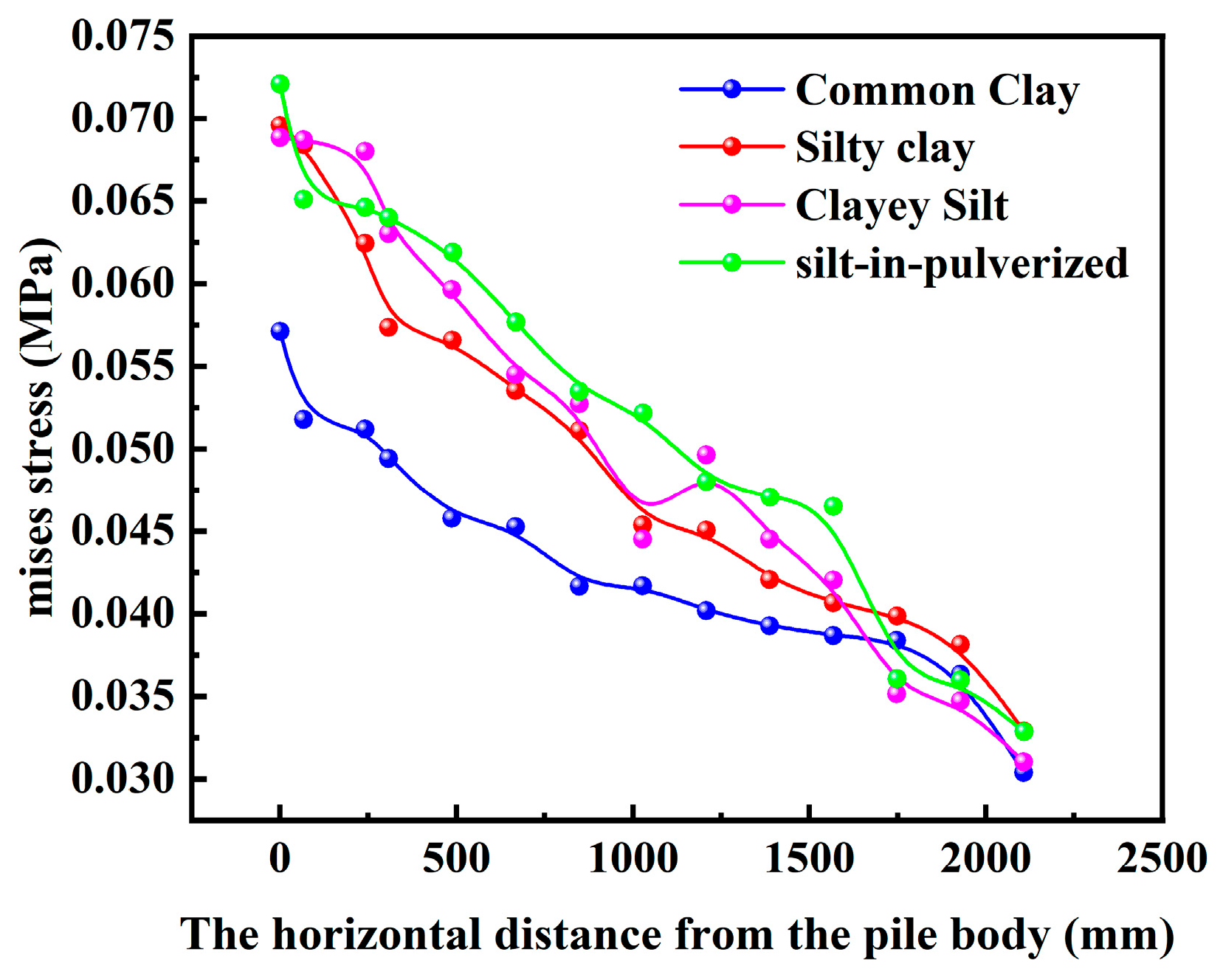
Figure 15 illustrates the distribution pattern of Mises stress along the horizontal direction under various soil conditions. The results reveal notable nonlinear degradation in the Mises stress across all soil types. The smearing effect is confirmed by the concentration of stress predominantly around the pile shoe, with the impact extending well beyond the pile shoe’s structural dimensions. The combined effect of the duckbill structure and groove creates a high-stress core zone, where the stress gradient reaches its maximum between 0 and 250 mm from the pile body. The overall horizontal extent of the substantial stress zone is approximately 600–800 mm, or 4.6–6.2 times the sleeve’s outer diameter.
The extent of the smearing effect is strongly influenced by the soil type. Silty clay and silt-clay soils fall in between, with spread ranges of 9 d and 8 d, respectively, while ordinary clay has the shortest spread range, approximately 7 times the sleeve diameter (7 d). Silty clay, on the other hand, exhibits the largest spread, about 10 times the sleeve diameter (10 d). This trend is consistent with the findings of Sathananthan et al. [
2] and Indraratna et al. [
20], which show that the magnitude of the smear effect is significantly determined by fluctuations in the soil’s mechanical properties and permeability.
In conclusion, the development and spread of the smear effect are predominantly influenced by pile-soil contact. These findings have major engineering implications for improving the effectiveness of soft soil foundation treatment and consolidation in port areas. The systematic variations observed across different soil conditions provide a quantitative basis for optimizing pile shoe geometry and designing construction parameters. The extent of the smear zone is closely related to soil type and penetration characteristics, which can be quantitatively correlated with key geotechnical parameters, such as cohesion, internal friction angle, and permeability. Soils with higher cohesion (e.g., ordinary clay) exhibit smaller smear zones due to their enhanced shear resistance, while soils with lower cohesion (e.g., silty clay) exhibit larger smear zones. Similarly, soils with lower friction angles (e.g., silty clay) tend to have broader smear zones due to reduced shear resistance, whereas soils with higher friction angles (e.g., ordinary clay) limit lateral spreading. Permeability also plays a crucial role, with soils of lower permeability (e.g., silty clay) showing larger, more persistent smear zones due to limited pore pressure dissipation. Incorporating these parameters into the modified circular hole expansion theory enables the development of a predictive model for estimating smear zone extent based on soil type. This refined approach enhances the accuracy of simulations and supports the optimization of pile shoe design and construction parameters, ultimately improving the efficiency of soft soil foundation treatments.