1. Introduction
The conformable derivative was introduced by Khalil et al. [
1] as a generalization of the classical derivative. When the function
f is differentiable, the conformable derivative reduces to a scaling of the classical derivative
, preserving many familiar properties while allowing fractional-order behavior. The applications of the conformable derivative and its generalizations have grown significantly in physics. For instance, Rosales et al. [
2] applied the conformable derivative to Newton’s law of cooling over short time intervals, while Shukla et al. [
3] investigated the cooling of different liquids and compared the conformable formulation with other fractional derivatives such as the Caputo and Riemann–Liouville types, demonstrating improvements over the classical model. In the context of wave propagation, Rosales et al. [
4] analyzed electromagnetic waves using derivatives of order
, showing how fractional models can generalize and modify classical behavior in both time and space. Additional applications include viscous fluid flow in porous media [
5], numerical algorithms for quantum mechanics [
6], extensions of traditional dynamical systems [
7], and analytical solutions of the conformable Schrödinger equation [
8]. Further theoretical developments are presented in [
9,
10,
11], highlighting the broad and growing relevance of conformable calculus in modeling complex physical phenomena.
In this work, we focus on Newton’s law of cooling, which states that the rate of change in the temperature of an object is proportional to the difference in temperature between the object and its surroundings, expressed by the following equation:
where
k is the cooling-rate constant and
is the ambient temperature, the solution is given by
and this solution depends on the assumed form of
[
12,
13]. If the ambient temperature
is assumed to be constant, the solution of (
1) is
Using the experimental measurement
, the value of
k can be computed as
As shown in Equation (
2), the dimensional units of
k are
.
We now reformulate the conformable version of Newton’s law of cooling. Let
be a function. The
-th order conformable derivative of
f is defined [
1] as
for all
and
. Note that for
the classical derivative is recovered.
Proposition 1 (Khalil, Thm. 2.2).
Let f be a differentiable function. Then the following relation holds: Proof. From (
5), make the change in variable
. Then,
□
Now, substituting the conformable derivative into Newton’s law of cooling (
1), we have
To preserve dimensional consistency (see [
2]), we set
. Thus, the conformable form of Newton’s law becomes
Note that with this definition,
k has units of
, ensuring dimensional concordance in Equation (
7).
We propose to model the ambient temperature
as a function of
in order to find an analytical solution to Equation (
7). The use of the fractional time variable
introduces a simple scaling symmetry, meaning that the structure of the model remains unchanged when time is proportionally stretched or compressed. With this symmetry-based formulation, the solution of (
7) can be obtained as follows: multiply by the integrating factor
.
using the change in variable
we have
If we consider
as a constant, we recover the function proposed in [
2]:
if we use
the coefficient
k depends on
and can be calculated as follows:
One of the main issues with Equation (
9) is that the solution has a horizontal asymptote at the constant value
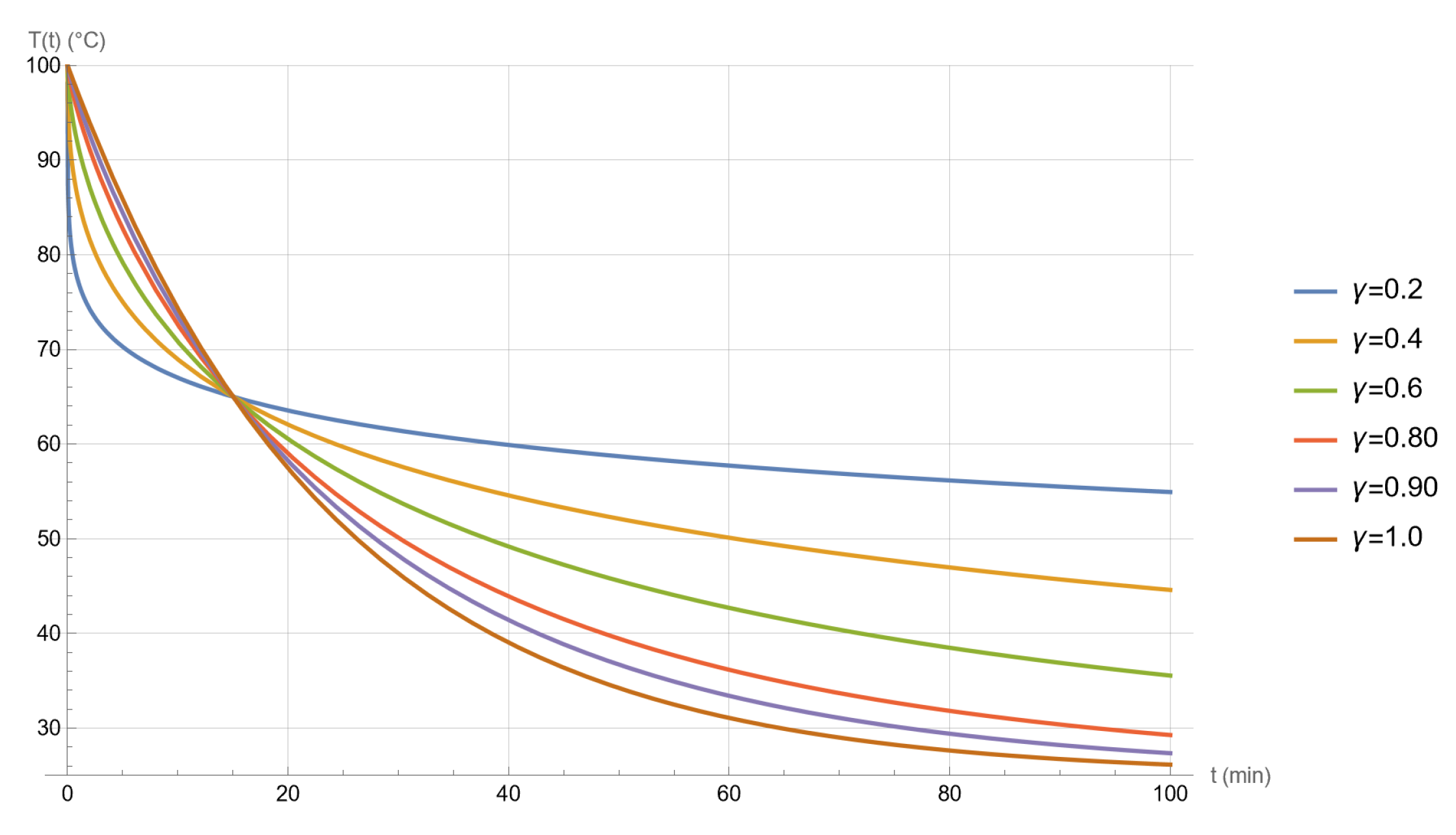
, which implies that the object cannot reach a temperature below this value. In
Figure 1, we illustrate the behavior of the solutions of (
9).
This is why it is important to model a non-constant ambient temperature
when considering long time intervals. In [
12], the room temperature was measured, and the results appear to exhibit a sine behavior.
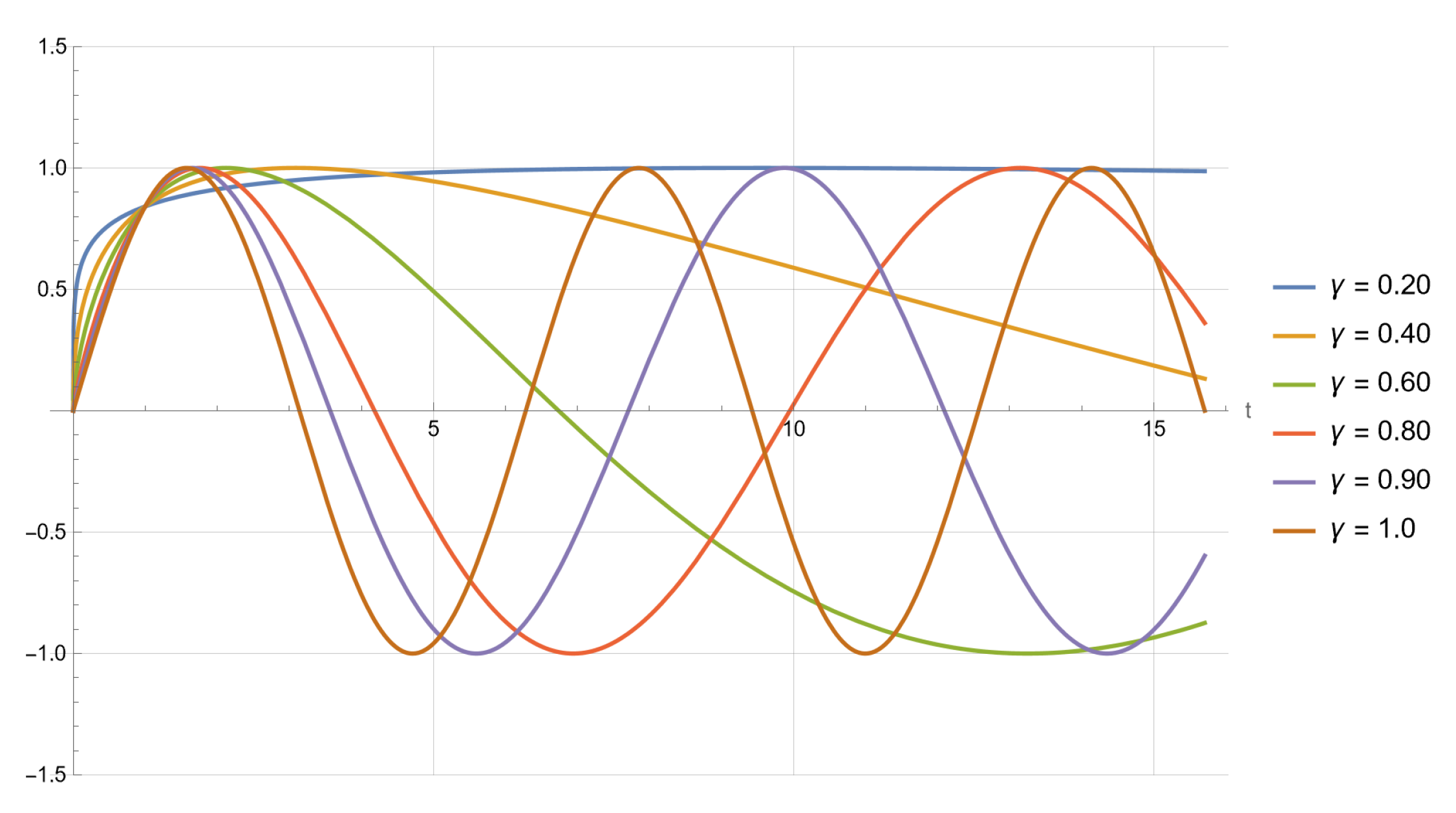
Figure 2 shows graphs of
for different values of
.
If we employ the model
and substitute it into Equation (
8), then by integrating by parts and applying trigonometric identities, the resulting temperature function is as follows:
where
and
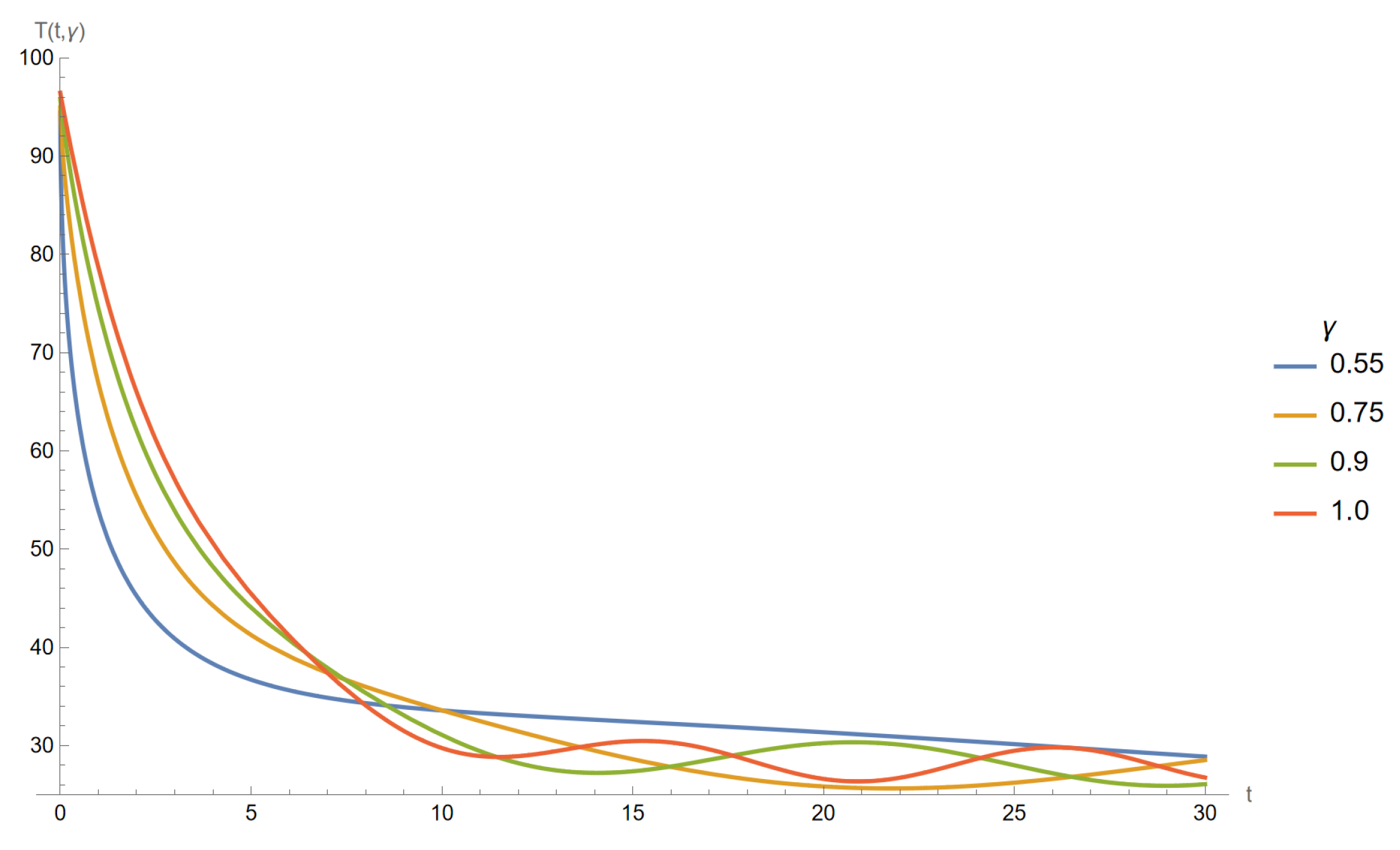
. The behavior of these solutions is illustrated in
Figure 3.
For large values of
t Equation (
11) we have the following:
2. Results
The experiment was conducted in a closed room with dimensions of
m, under controlled ambient temperature conditions. The temperature was measured using a data acquisition system based on two DS18B20 digital temperature sensors connected to an Arduino UNO R3 board. One sensor was fully submerged at the center of the hot-water volume to record the cooling process, while the second sensor was placed outside the container to continuously monitor the ambient temperature the sensor provides digital readings with an accuracy of
°C, ensuring reliable measurements throughout the experiment. Based on the ambient temperature data, sinusoidal functions were fitted to model the temperature as functions of
t and
. We propose the sinusoidal models shown in
Table 1 because, in [
13], polynomial, damped, and Gaussian models are also examined; however, the sinusoidal model consistently demonstrates superior performance. The ambient temperature measurements were analyzed using MATLAB’s nonlinear curve-fitting tool. The fitting procedure employed the
fit command with the single-term sinusoidal model, corresponding to the analytical form
. The quality of each fit was assessed through the coefficient of determination
provided by MATLAB (available at:
https://la.mathworks.com, accessed on 30 November 2025).
For the fractional exponent formulation, a similar fitting procedure was applied using , where a systematic search over the range was carried out to identify the optimal fractional exponent. In our case, the best agreement with experimental data were obtained for .
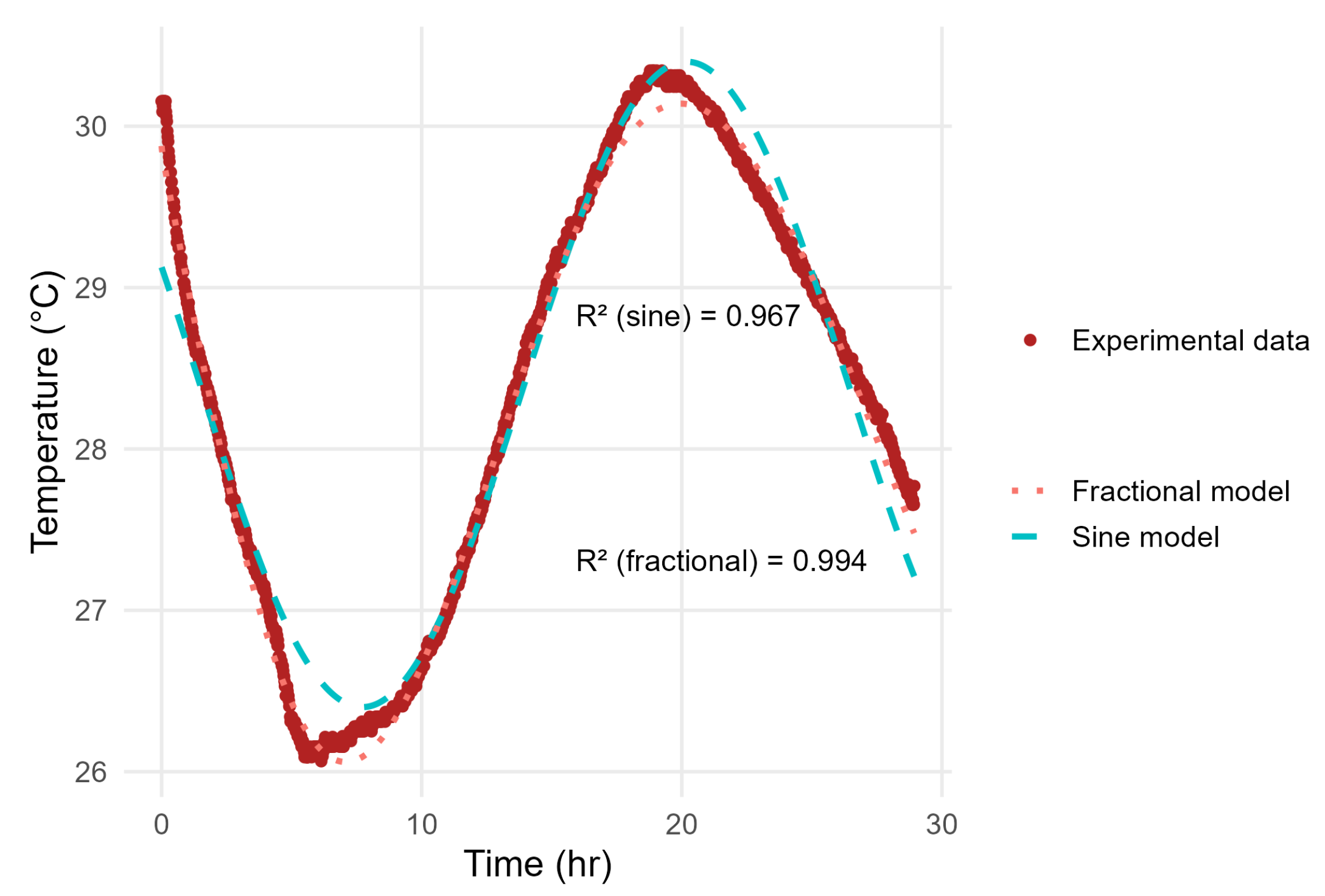
Figure 4 shows the environment temperature and the corresponding sinusoidal function adjustments in terms of
t and
.
The functions,
(the constant case),
and
, were substituted into Equations (
1) and (
7), respectively, considering the initial condition
°C, integration by parts gives us the following for the ambient temperature
:
to find the value of
k we use the experimental data
°C it was calculated with the help of MATLAB. The fractional case is similar; in the constant case, the value
k is determined by (
4). The results are shown in
Table 2.
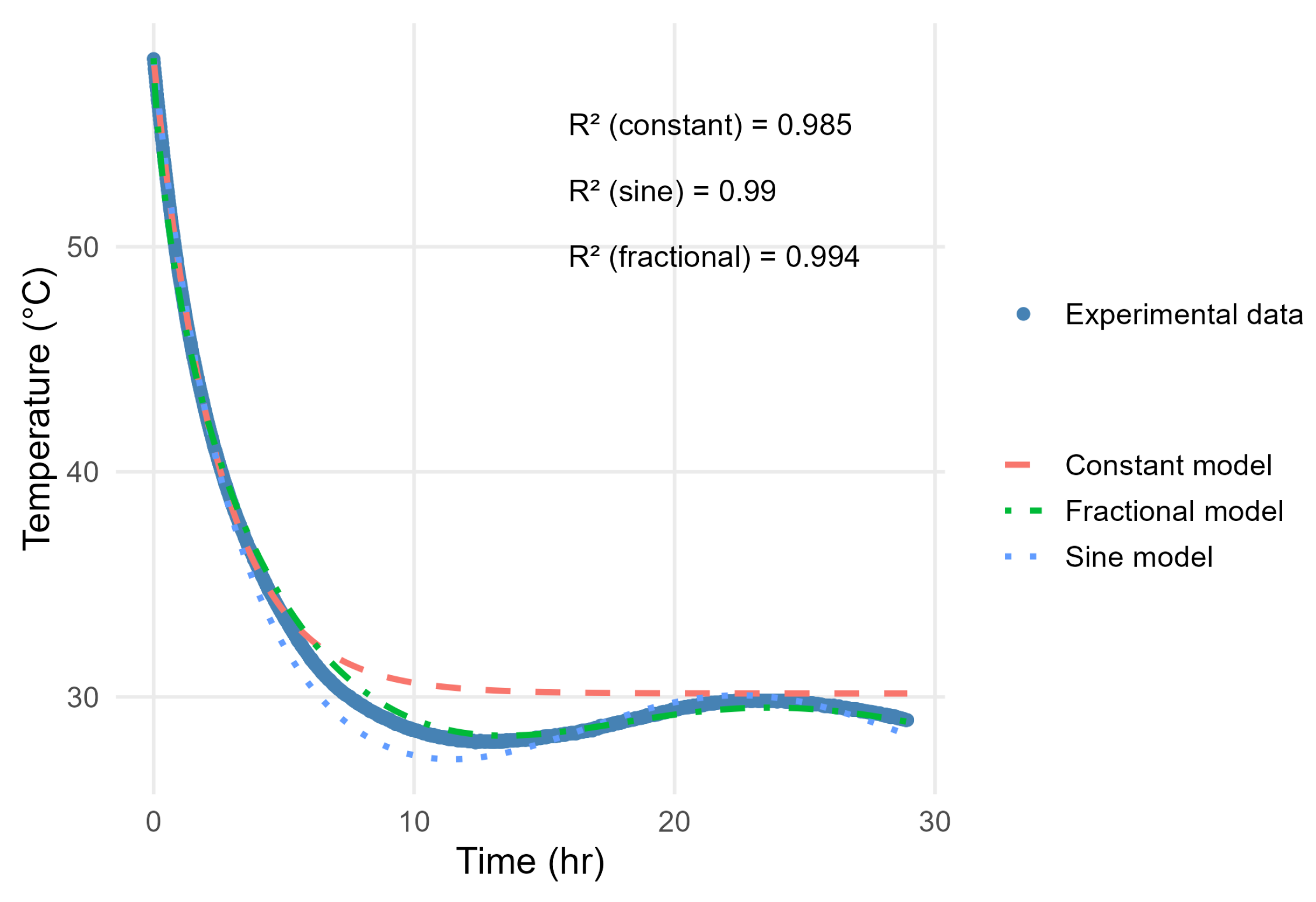
Figure 6 shows the comparison between real data and the predictions.
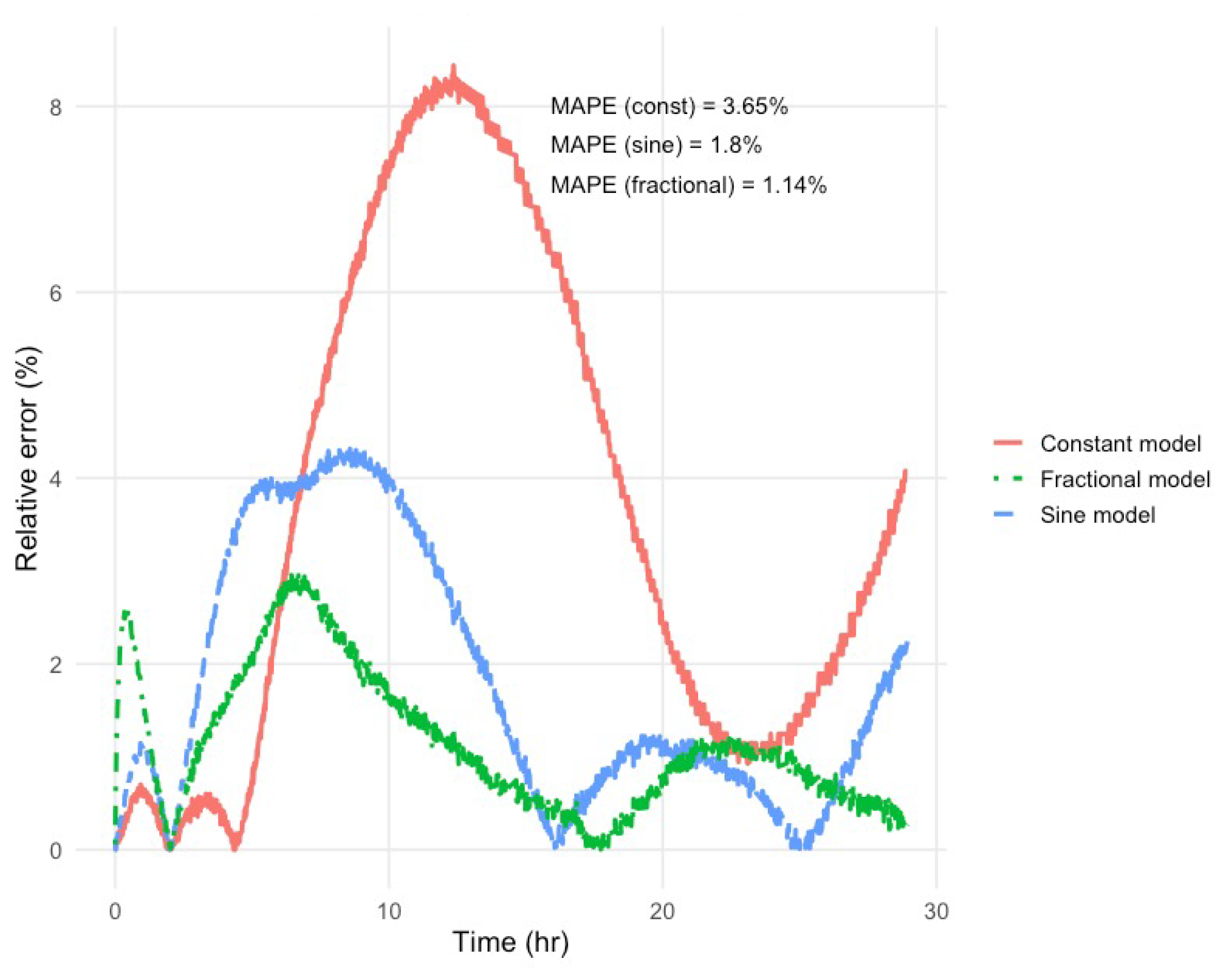
Figure 7 shows the error when we consider a temperature constant, sinusoidal model with argument
t and
.
In
Figure 6, both the fractional and sine models yield higher coefficients of determination (
) and generally lower absolute percentage errors, indicating a closer agreement with the experimental data compared to the constant-coefficient model.
As shown in
Figure 7, the constant model exhibits the largest error (MAPE = 3.65%), the sine model achieves a better approximation (MAPE = 1.8%), and the conformable model attains the lowest error (MAPE = 1.14%). These results confirm that the conformable model more accurately represents the long-term behavior of the system, due to the flexibility introduced by the fractional time variable
.
3. Conclusions
This study aims to investigate Newton’s Law of Cooling through experimentation, employing both the classical formulation and the conformable derivative approach. Following the methodology proposed by [
2], in which the conformable derivative was applied to short-term cooling, the present work extends the analysis to long-term behavior and incorporates the effect of variable ambient temperature, resulting in a more comprehensive and general model. To validate the results, temperature sensors and sinusoidal models expressed in terms of
t and
(with
) are used to account for ambient temperature fluctuations. These diverse models offer a clear advantage: they significantly reduce errors compared to models that assume constant temperature or sinusoidal variation solely in terms of
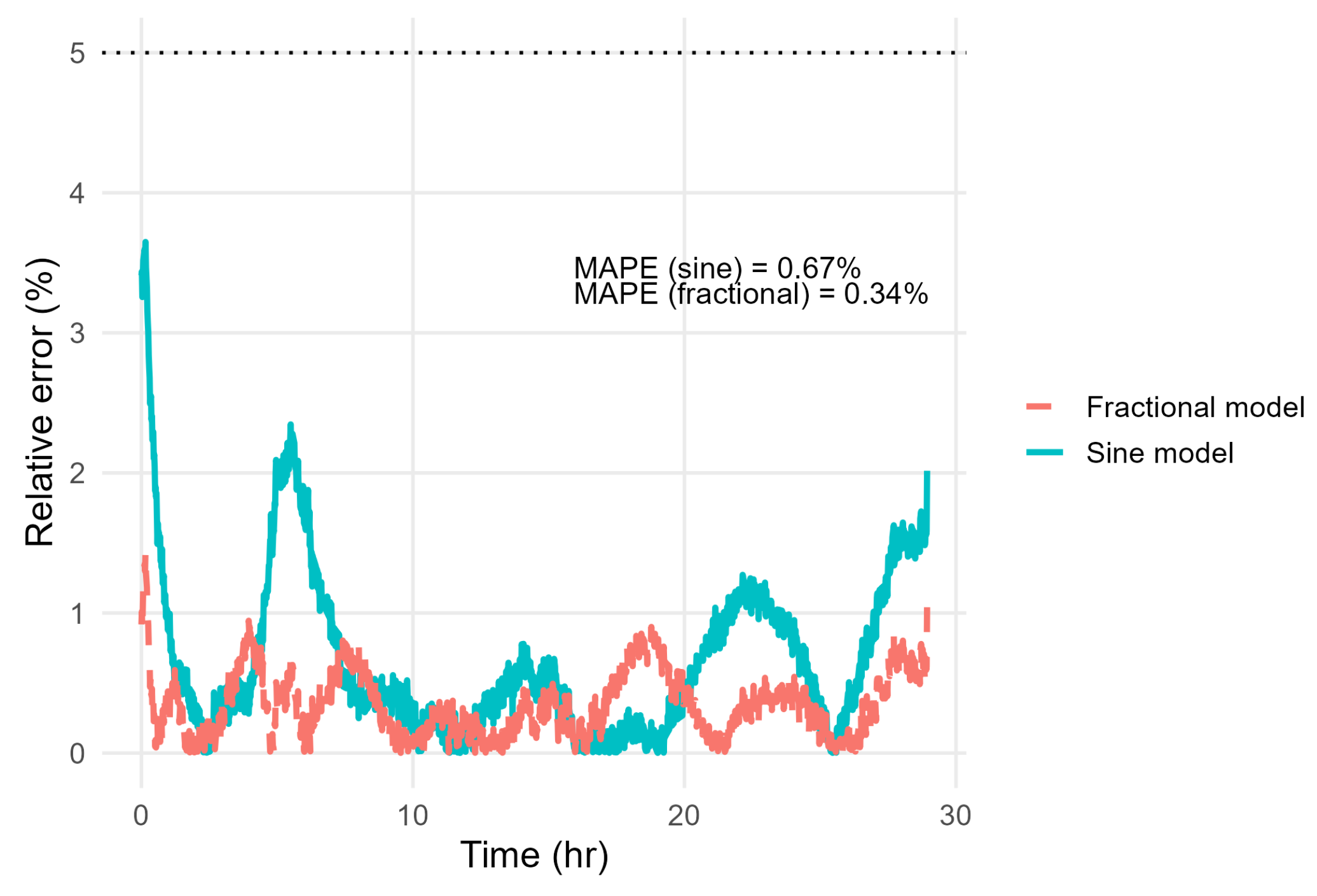
t. Notably, the error associated with the sinusoidal model in terms of
remains below 2% for the majority of the recorded measurements, providing more accurate temperature predictions in long-term scenarios.
The temperature function
exhibits oscillatory behavior for large values of
t, reflecting the expected fluctuations of room temperature. Because ambient temperature rarely stays constant,
Figure 4 demonstrates the superior performance of the sinusoidal model formulated with the fractional power
.
This approach highlights the effectiveness of conformable derivatives in modeling thermal processes under non-constant ambient conditions, outperforming classical models in precision and long-term accuracy. Beyond the thermal process analyzed in this study, the proposed conformable model based on the variable can be extended to describe a wide range of physical phenomena. Examples include heat diffusion in heterogeneous or porous materials, electrical circuits, anomalous diffusion in complex or biological media, and other systems exhibiting memory or nonlocal effects. In such cases, the conformable derivative provides a mathematical framework that offers improved physical interpretation and greater flexibility in parameter control.