Article

Research on Structural Design and Plugging Laws of Knot Temporary Plugging Agent

1
Research Institute of Petroleum Exploration & Development, PetroChina Company Limited, Beijing 100083, China
2
State Key Laboratory of Deep Earth Exploration and Imaging, China University of Geosciences, Beijing 100083, China
*
Authors to whom correspondence should be addressed.
Symmetry 2026, 18(2), 211; https://doi.org/10.3390/sym18020211
Submission received: 1 December 2025 / Revised: 7 January 2026 / Accepted: 16 January 2026 / Published: 23 January 2026
(This article belongs to the Special Issue Feature Papers in Section "Engineering and Materials" 2025)

Abstract

Horizontal wellbore temporary plugging and diversion fracturing serves as a critical technical approach for the economical and efficient development of unconventional oil and gas reservoirs. A degradable knot temporary plugging agent (TPA) offers distinct advantages for perforation plugging in horizontal wellbore; however, existing research remains limited, and the influence of knot TPA parameters on perforation temporary plugging mechanisms has not been clearly elucidated. This study employs a CFD-DBCM coupled model to conduct numerical simulations of temporary plugging with a knot TPA. The simulation is validated through visualized temporary plugging experiments, followed by an optimization analysis focusing on the flank length and structural configurations of the knot TPA. Research indicates that, when the flank is less than 1.6 times the central diameter, its plugging capacity is significantly compromised. Once the flank exceeds 1.6 times the central diameter, the total plugging performance of the knot TPA improves to a certain extent, and the temporary plugging capacity for the upper perforations increases particularly significantly. When flank lengths are identical, a knot TPA with uniformly distributed four flanks exhibits superior plugging performance compared to configurations featuring only single or double flanks. Given formation heterogeneity, a temporary plugging simulation analysis of the combined knot TPA was conducted. The results indicate that employing a combined knot TPA achieves a higher valid plugging rate compared to using only one type of knot TPA, with valid plugging accounting for the majority of cases. Field application of knot TPA was conducted in the fracturing stage of an oil well in Zhejiang, and the changes in on-site data verified the effectiveness of the temporary plugging technique of knot TPA.

1. Introduction

Unconventional oil and gas resources are those that cannot be explored or produced using conventional exploration and production techniques. Despite the significant total quantity of these resources, their reservoir physical properties are relatively poor. Consequently, specific reservoir stimulation techniques are necessary to enable economically viable development. Staged multi-cluster fracturing in horizontal wells has emerged as a pivotal technological strategy for the effective development of unconventional oil and gas resources. This technology involves isolating horizontal well sections with bridge plugs at designated intervals, where perforations are initiated at specific locations. Large volumes of fracturing fluid are injected into the wellbore to generate high pressure, enabling the fluid to penetrate the formation through the perforations and propagate fractures, thereby enhancing hydrocarbon production efficiency [1]. The primary challenge in hydraulic fracturing lies in achieving sufficient fracture initiation across all perforation clusters. However, due to reservoir heterogeneity and stress shadow effects, fractures tend to propagate unevenly, ultimately resulting in suboptimal hydrocarbon production rates [2,3]. Research indicates that over two-thirds of oil and gas production originates from less than one-third of the perforation clusters [4].
Temporary plugging and diverting fracturing technology has emerged as a primary solution for promoting uniform fracture propagation. During the fracturing operation, temporary plugging agents (TPAs) are introduced to seal off perforations with high fluid intake. This induces a pressure buildup within the wellbore, redirecting the fracturing fluid toward unstimulated perforations and thereby promoting uniform fracture initiation at different locations [5].
In horizontal well perforation and diversion fracturing operations, degradable spherical TPA is widely utilized due to its high pressure-bearing capacity and straightforward structural design. The researchers conducted relevant studies employing methodologies such as laboratory experiments, theoretical analysis, and numerical simulations [6]. Yuan et al. established a large-scale temporary plugging experimental apparatus to investigate the migration and plugging mechanisms of spherical TPA under multifactorial conditions through experimental studies [7]. Hu and Li conducted a multi-factor, visual analysis and discussion on the sealing mechanism of spherical TPA in perforations using computational fluid dynamics–discrete element method (CFD-DEM) numerical simulations. Based on the analytical outcomes, they optimized the key operational parameters, thereby providing valuable insights for field applications of temporary plugging and fracturing operations [8,9]. Wan et al. used a numerical simulation method to trace the migration trajectory and blocking behavior of spherical TPA in horizontal wells with spiral perforation clusters. In their study, they pointed out that density and injection are the key factors affecting the plugging behavior of spherical TPA [10].
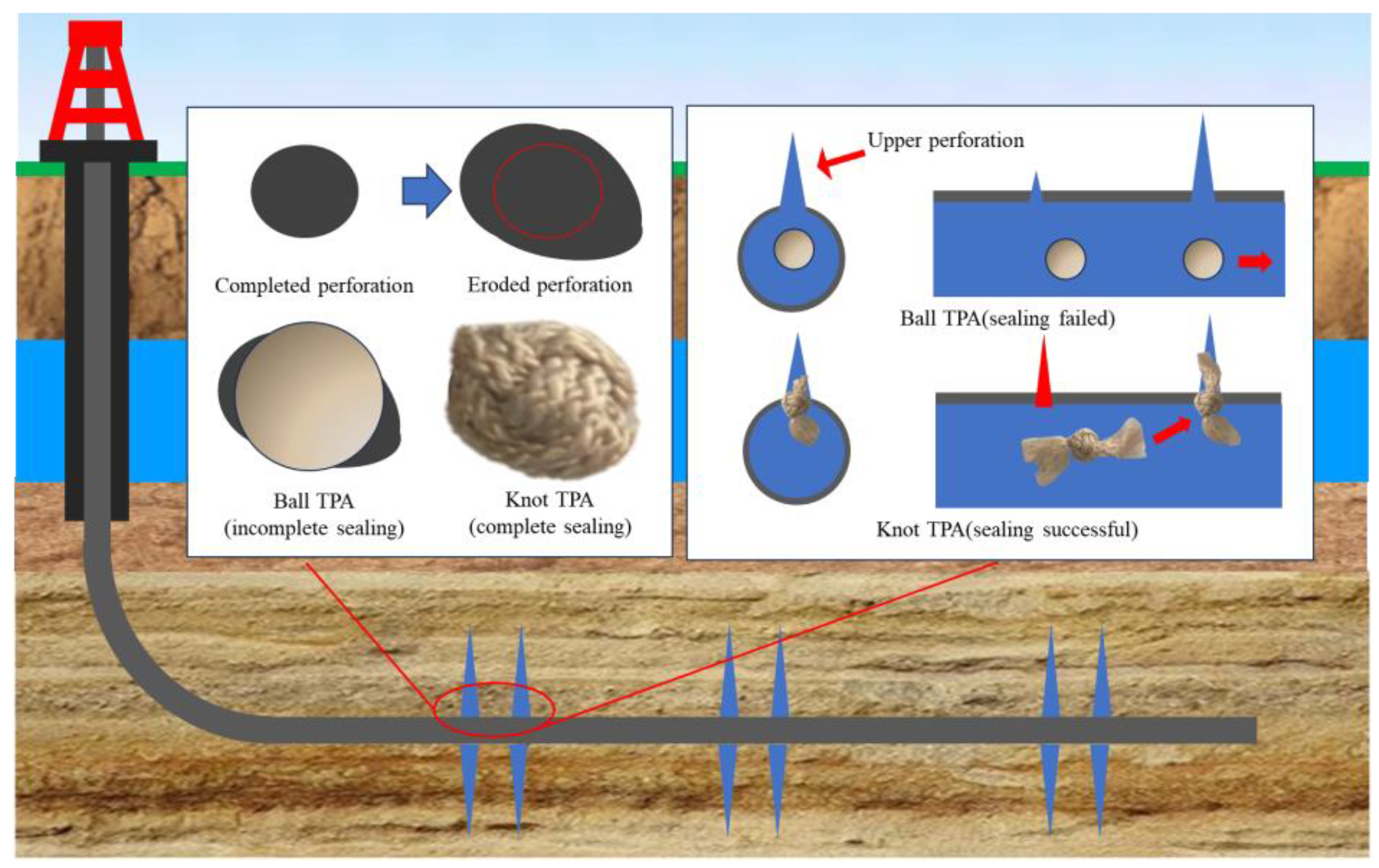
However, the application of spherical TPA still presents particular challenges. The spherical TPA exhibits significant sensitivity to perforation erosion extent and perforation diameter [1,11]. During hydraulic fracturing operations, the erosive action of fracturing fluids and proppants on perforations results in varying degrees of deformation across different perforations within the same wellbore. The use of a mismatched spherical TPA often results in suboptimal temporary perforation plugging efficacy [12]. To address the limitations of spherical TPA, researchers have developed a novel degradable knot TPA. Through performance evaluations, including pressure-bearing capacity, solubility, and suspension properties, its superior characteristics have been validated (Figure 1). Wu et al. analyzed the flow field near perforations in wellbores to elucidate the mechanism of plugging with a knot TPA [13]. Through high-pressure temporary plugging experiments, they validated the superior efficacy of knotted cables in temporarily sealing perforations. Preliminary field applications have demonstrated favorable outcomes [5,14]. Xu et al. established a set of experimental equipment for high-pressure knot temporary plugging and gave some suggestions for the optimal size of knot TPA for different perforations [15]. Lv et al. used a knot TPA to fracture a fault-block reservoir in Fushan Oilfield. Field pressure response, microseismic monitoring, optical fiber monitoring, and post-fracture daily stimulation results show that the knot TPA has significant plugged-in advantages over previous spherical and granular TPA [16]. However, due to the intricate, flexible structure of knot TPA, conventional physical modeling experiments struggle to capture and elucidate the nuanced morphological changes in knots near perforations. In our previous research, we developed a coupled computational model integrating computational fluid dynamics–discrete ball-chain methods (CFD-DBCMs) to characterize the flexible behavior of the knot TPA. Through numerical simulations of knot plugging processes, parameters such as stress states and fluid dynamics variations before the knot TPA entry into perforations were analyzed, elucidating the migration and plugging mechanisms of knots. The validity of these simulations was further verified using a visualized plugging experimental setup, in which high-speed cameras captured detailed kinematic changes in knots near perforations [17].
Current research on the structural parameters of knot TPA remains limited, and the impact of variations in process parameters of knot TPA on the perforation plugging mechanism has yet to be clearly elucidated. Therefore, building upon prior research findings, this study employs the CFD-DBCM for numerical simulation to optimize the structural design of knot TPA. A knot TPA model was established based on the DBCM. By modifying the structural parameters of the knot flank, a comparative analysis was conducted to evaluate the plugging performance of the knot TPA in horizontal well perforation operations. This study provides a reference for optimizing the parameters of the knot TPA in field applications.

2. Numerical Implementation and Experimental Validation of Temporary Plugging with Knot TPA

2.1. Fluid–Solid Coupling Equations

The CFD-DBCM coupled computational model was employed to simulate the transport and temporary plugging behavior of knot TPA within the horizontal wellbore. In the CFD module, the fracturing fluid was treated as a continuous phase, with its motion governed by the Navier–Stokes equations, while, in the DBCM module, the knot TPA was modeled as a discrete phase following Newton’s laws of motion.
The fracturing fluid in the horizontal wellbore was treated as incompressible, and its flow behavior was governed by mass conservation and momentum conservation. In the governing equations for two-phase flow, it is necessary to account for the discrete phase’s volume fraction and incorporate momentum exchange terms to reflect the influence of the discrete phase on the continuous fluid.
The equations governing the conservation of mass and momentum are given by
( α ρ ) t + ( α ρ u ) = 0 ,
( α ρ u ) t + ( α ρ u ) = α p + ( α τ ) + α ρ g + F e ,
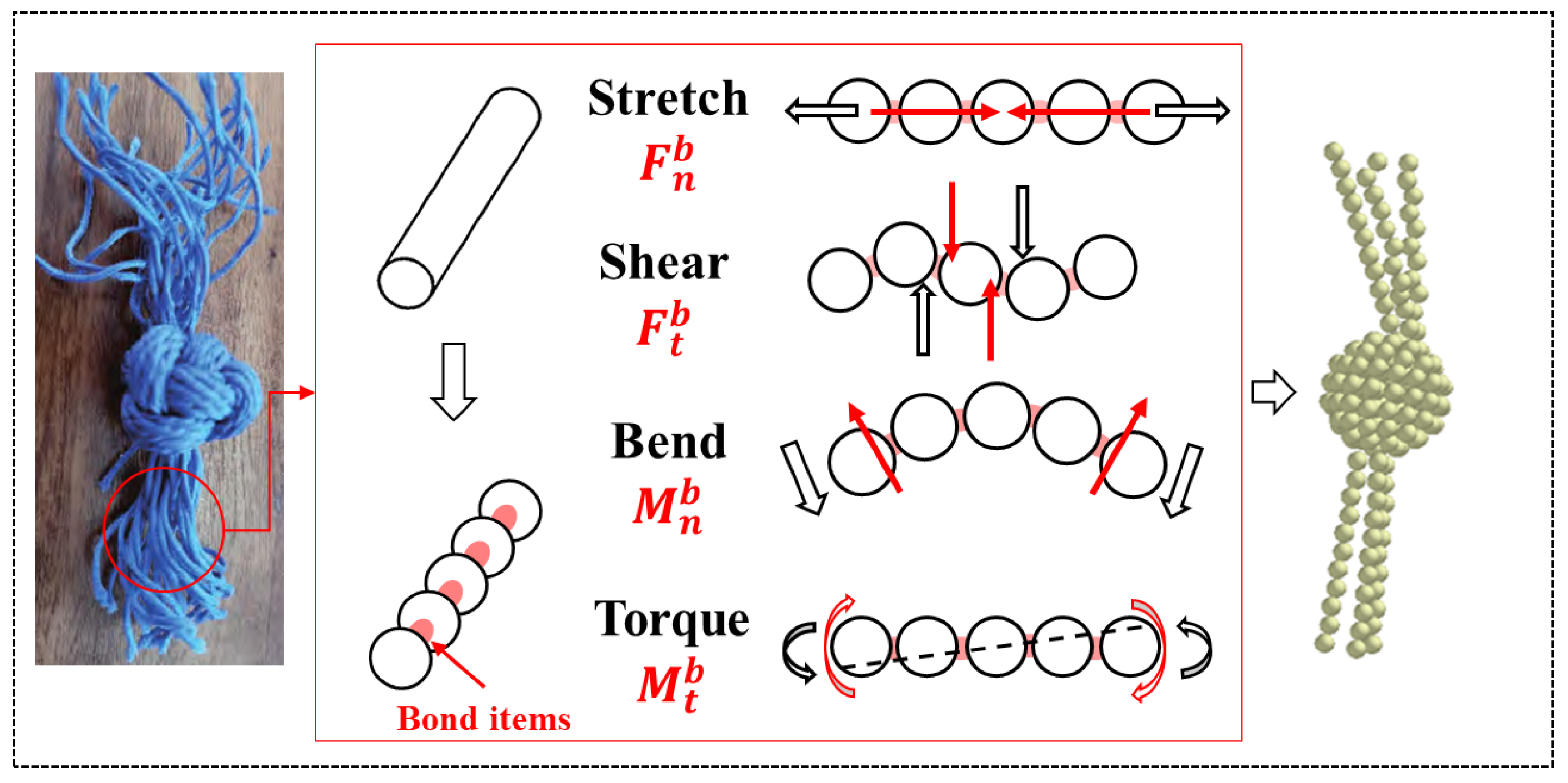
In the DBCM, the discrete phase is established based on the Hertz–Mindlin (no-slip) particle contact model, and the motion of discrete elements adheres to Newton’s second law of motion [18,19]. As shown in Figure 2, a discrete element model with a specific arrangement structure was utilized. This model discretizes continuous fibers into orderly arranged particles and introduces a bond model between adjacent particles. Consequently, these particles can undergo stretching, bending, and twisting under applied forces, thereby approximating the mechanical behavior of flexible fibers.
The translation and rotation equations for discrete elements are given by
m d 2 x i d t 2 = F n c + F n d c + F t c + F t d c + F d f + F p f + F M f + F S f + m g + F n b + F t b ,
J b d 2 θ i d t 2 = M t c + M f c + M f + M n b + M t b .
For a comprehensive exposition of Equations (1)–(4), please refer to the previously published literature [17].

2.2. Fluid–Solid Coupling Methods

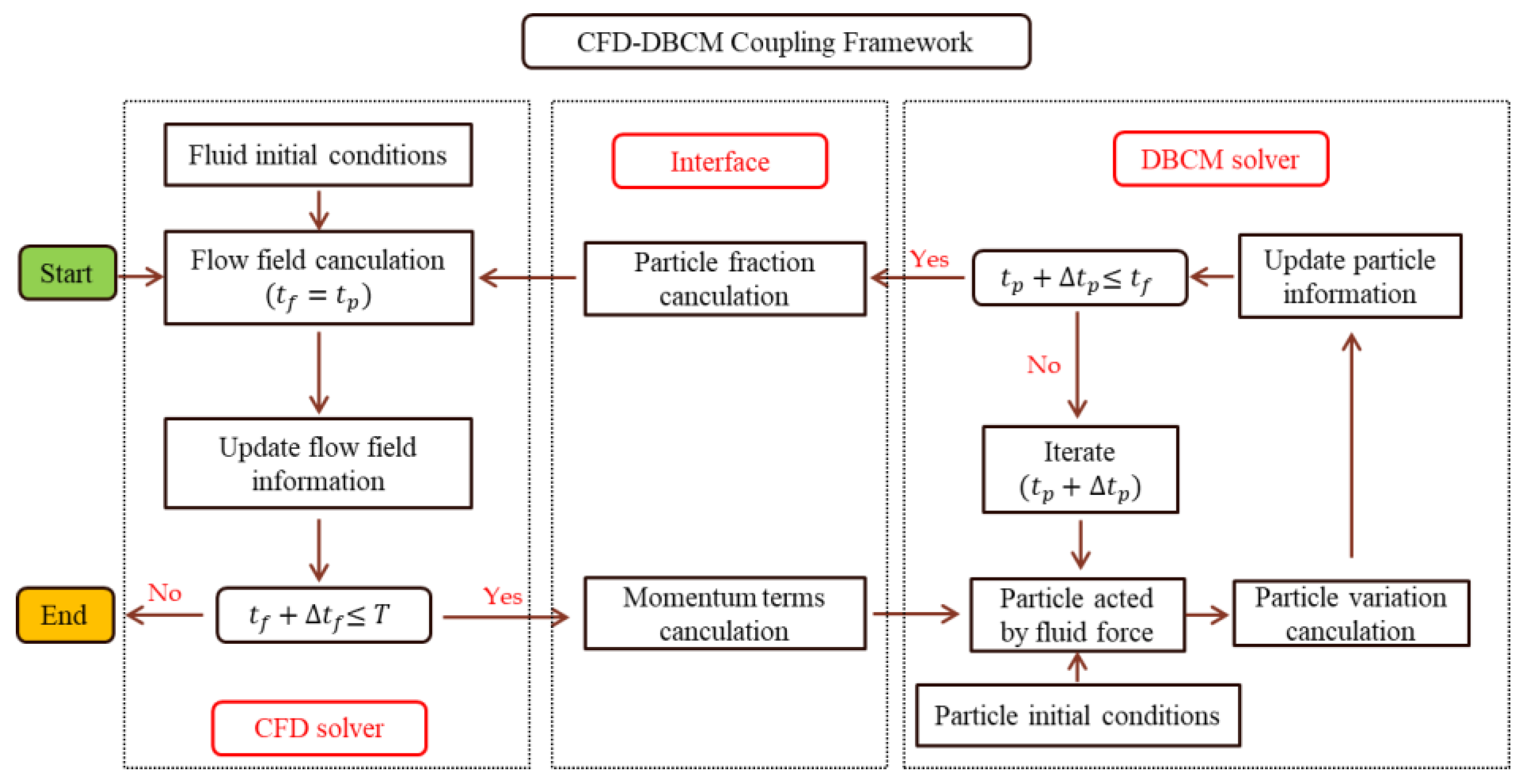
The coupling framework is illustrated in Figure 3. First, the flow field for the current time step was computed using the CFD solver based on data from the previous time step until convergence was achieved. Next, the flow field information was transmitted to the coupling interface, where the fluid forces were calculated and transferred to the DBCM solver. The DBCM solver then computes the forces acting on the particles at the current time step and updates their positions and velocity information. Following this, the particle data was passed back to the coupling interface to calculate the volume fraction of each fluid computational cell, which was then transmitted to the CFD solver. Then it completes one iteration cycle, after which the process repeats for the next time step.

2.3. Analysis and Experimental Verification of the Temporary Plugging Mechanism with Knot TPA

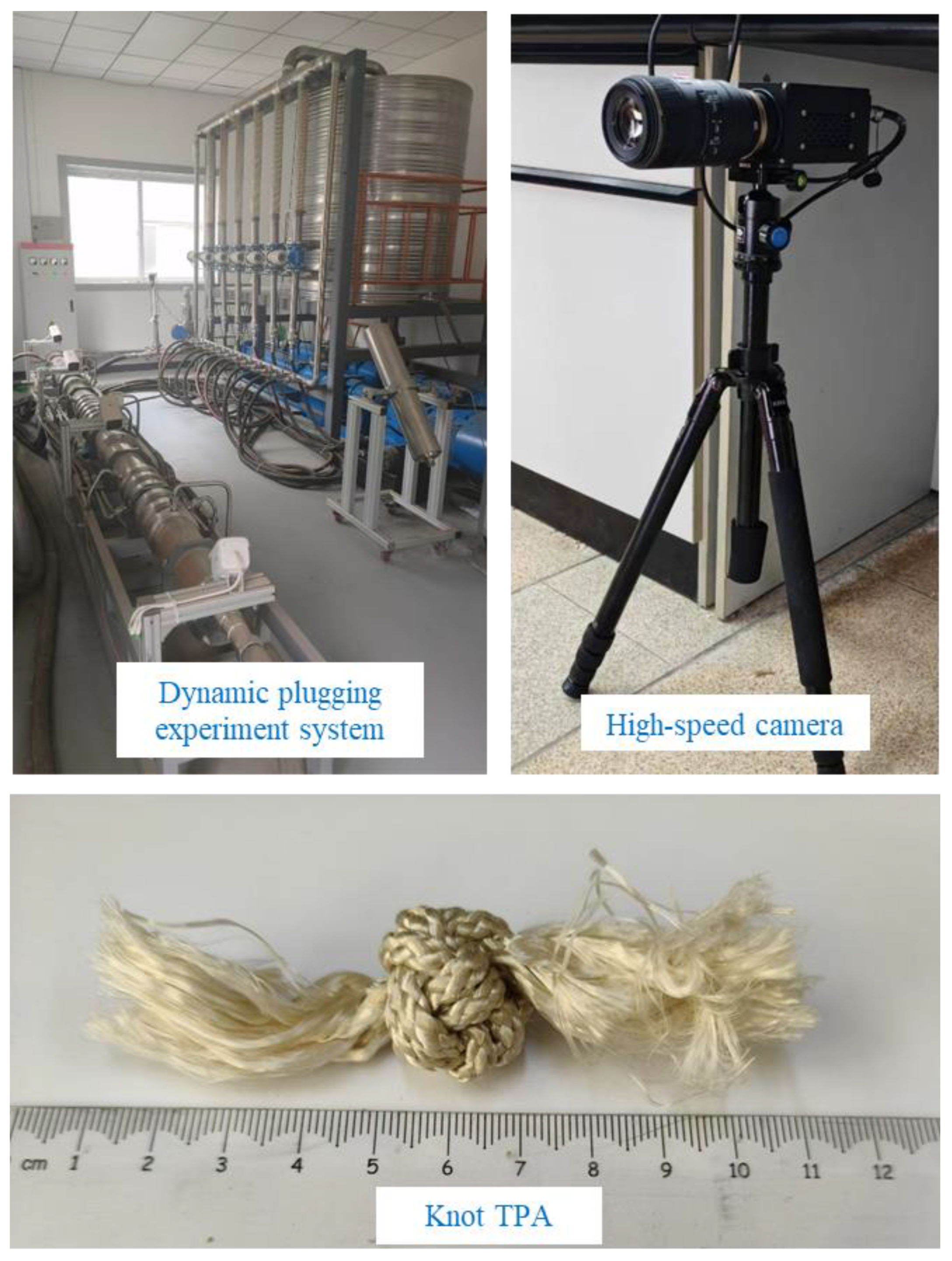
Analyze the temporary plugging process with the knot TPA and validate the numerical simulation’s feasibility through visualized temporary plugging experiments. With reference to the apparatus dimensions from the visualized temporary plugging experiments and the specifications of experimental samples of knot TPA, the numerical simulation model for the horizontal wellbore and the knot TPA model were configured with the parameters detailed in Table 1. Furthermore, we employ a methodology of synchronized comparative analysis between numerical simulation results and experimental data. The visualized temporary plugging system with knot TPA, as illustrated in Figure 4, employs high-speed cameras to capture detailed dynamic changes in the knot TPA before it plugs the perforations.
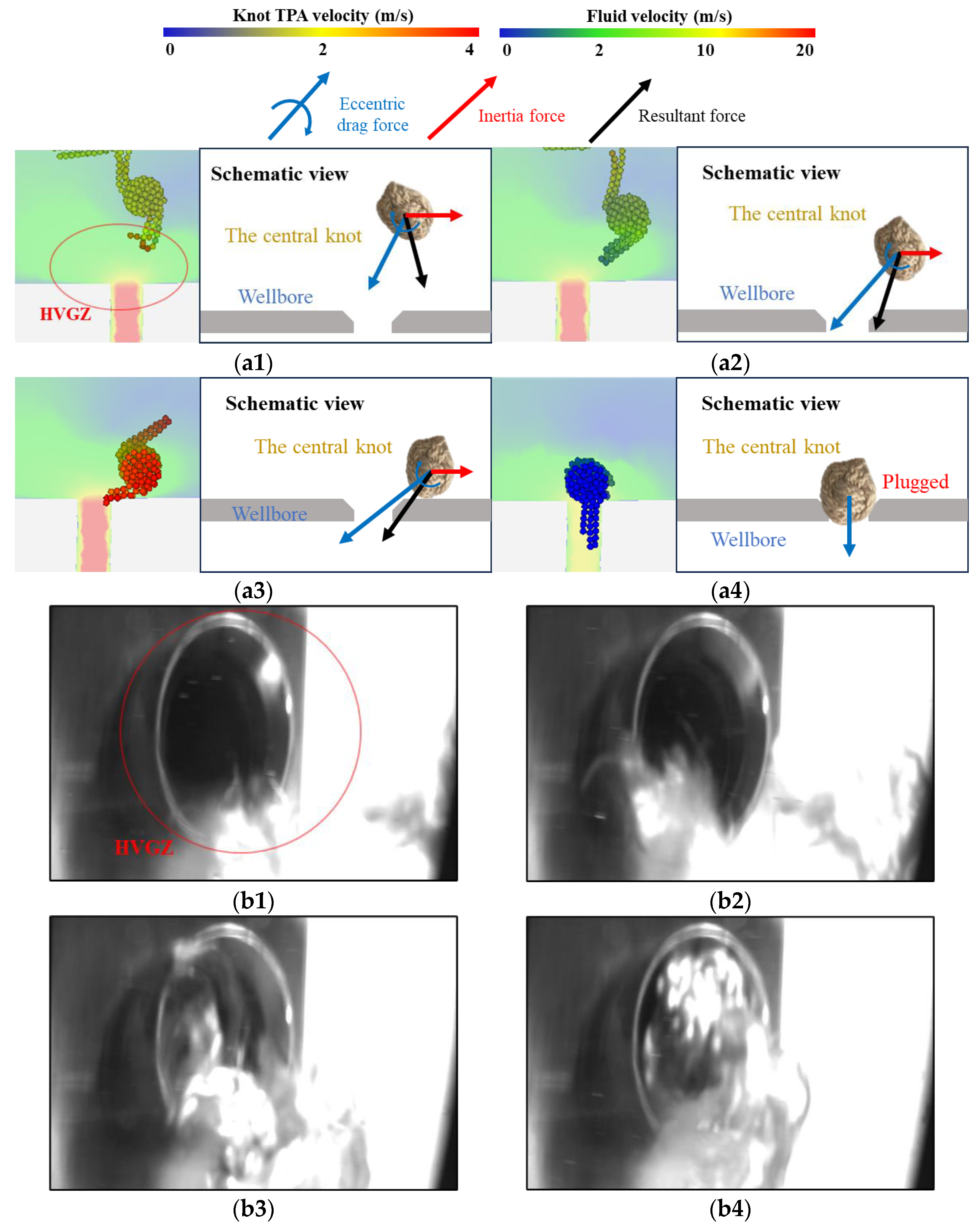
Figure 5 presents a comparative analysis of the plugging process by the knot TPA for the perforation, comparing numerical simulation (Figure 5(a1–a4)) with visualized temporary plugging experiments (Figure 5(b1–b4)). The fluid flow within the horizontal wellbore proceeds from right to left, and the knot TPA is propelled toward the rear section of the wellbore under the influence of inertial forces exerted by the main flow direction. When the knot TPA approaches near the perforation in an inclined orientation, the flank contacts the high-velocity gradient zone (HVGZ) of the perforation. It is subjected to tensile forces, which straighten the flank under the HVGZ’s influence. Since the flank contacts the HVGZ at a non-collinear angle relative to the central node, the drag force transmitted to the central node manifests as an eccentric drag force. The eccentric drag force can be decomposed into a drag component and a moment. The drag component combines with the inertial force in the main flow direction to form a resultant force, which determines the deflection direction of the knot TPA. The moment induces rotation of the central knot. When the central knot rotates to a position where the flank aligns collinearly with the central knot, the flank achieves maximal contact with the HVGZ under identical spatial conditions, thereby enhancing the temporary plugging efficacy of the perforation. Figure 5 presents detailed variations in the temporary plugging process by knot TPA captured via high-speed camera during experimentation, which demonstrates a high degree of consistency with the corresponding numerical simulation results. This alignment validates the feasibility of using the CFD-DBCM coupling model to simulate the temporary plugging mechanism of the knot TPA.

3. Optimization of Knot TPA Structural Parameters

An analysis of the variation in perforation plugging capacity of the knot TPA was conducted in response to changes in its process parameters. Two critical parameters govern the performance of knot TPA: the flank length and its structural configuration. Consequently, this section employs the previously established numerical simulation methodology to conduct a systematic analysis and discussion on the transient plugging behavior of knot TPA with respect to these two parameters.

3.1. Basic Model Specification

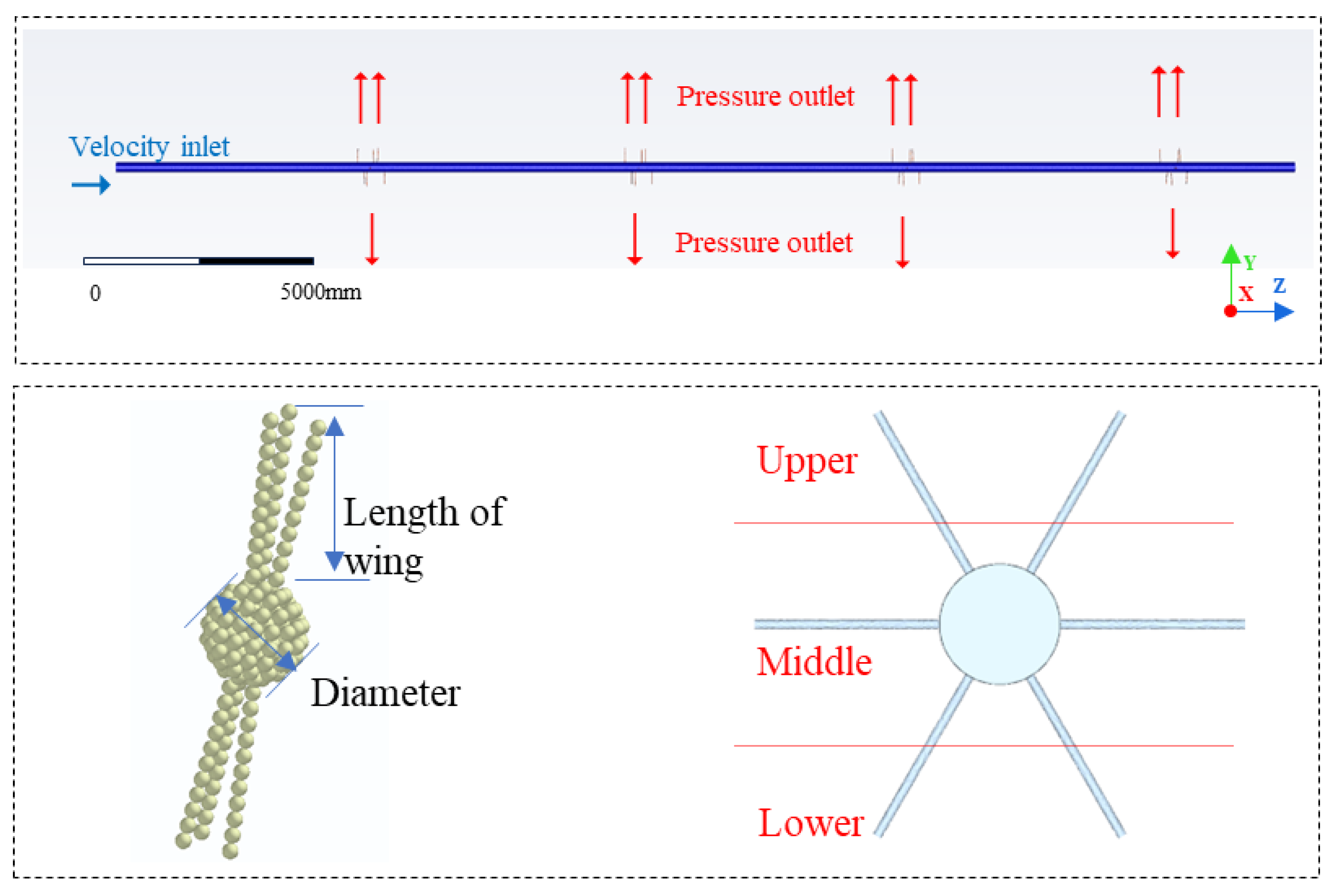
Based on the on-site temporary plugging fracturing design parameters for a horizontal wellbore, a corresponding horizontal wellbore model was established. As illustrated in Figure 6, the model features an inner wellbore diameter of 124.26 mm and a total length of 22 m. In total, 36 perforations are configured and evenly distributed across four clusters, with a 5 m interval between adjacent clusters. Each cluster has a perforation density of 16 holes per meter arranged in a 60° spiral pattern. A polyhedral unstructured mesh is applied to the horizontal wellbore, with local refinement implemented at the junctions between the wellbore and perforations. In the simulation, the inlet displacement rate was maintained at 12 m3/min, with the perforation outlet resistance assumed to be 0. The selected material density of knot TPA was 1.1 g/cm3, and a fluid with a density of 1.02 g/cm3 and a viscosity of 40 mPa·s was employed to simulate the fracturing fluid used in field operations. Detailed parameters are provided in Table 2.

3.2. Discussion on the Flank Length of Knot TPA

This section investigates the impact of varying the length of the flank on the temporary plugging efficacy of the knot TPA.
The evaluation of plugging performance for perforations using knot TPA with different parameters is based on four key metrics: the total plugging rate ( n t o t a l ), the stability coefficient of the total plugging rates ( k t o t a l ), the stratified plugging rates for the upper, middle, and lower sections of the perforations ( n ( c ) ), and the stratified plugging uniformity coefficient ( e a v e ). Their respective definitions and formulas are provided below.
The total plugging rates ( n t o t a l ) reflect the effectiveness of plugging perforations using knot TPA, with higher values indicating superior plugging performance. The formula is expressed as follows:
n t o t a l = n p N p × 100 % ,
where n p represents the number of perforations sealed by the knot TPA in the horizontal wellbore, and N p denotes the total number of perforations in the horizontal wellbore, which is 36 in this study.
During the temporary plugging simulation, intricate interactions occur among the flow field, knot TPA, and the wellbore wall surface. The plugging capacity of each knot TPA with respect to perforations is influenced by such interactions, which are collectively characterized as “stochastic factors” in this study. Even with identical numerical configurations across multiple simulation sets, the influence of “stochastic factors” induces variability in total plugging rates. The stability coefficient of the total plugging rates ( k t o t a l ) reflects the consistency of the total plugging rates among different simulation groups under identical preset conditions. A lower value indicates reduced susceptibility to “stochastic factors” and superior plugging performance. The formula is expressed as follows:
k t o t a l = 1 a i = 1 a n t o t a l ( i ) n t o t a l ¯ ,
where a represents the number of simulated experimental groups under the current set conditions, n t o t a l ( i ) denotes the total plugging rates of the i -th group, and n t o t a l ¯ indicates the average total plugging rates under the current set conditions.
The stratified plugging rates ( n ( c ) ) refer to the plugging ratio of the horizontal wellbore at the upper, middle, and lower sections of the perforation interval. A higher value indicates superior plugging performance of the horizontal wellbore. The formula is expressed as follows:
n ( c ) = n ( c ) p N ( c ) p × 100 % ,
where n ( c ) p represents the number of perforations plugged by knot TPA in the upper, middle, or lower section of the horizontal wellbore, and N ( c ) p denotes the total number of perforations in the upper, middle, or lower section of the horizontal wellbore. When the parentheses “ ( c ) ”, respectively, represent the upper, middle and lower perforation, the total plugging rates of upper, middle and lower perforations can be written as “ n u ”, “ n m ”, and “ n l ”, and the number of perforations plugged by the knot TPA can be written as “ n u p ”, “ n m p ” and “ n l p ”, and the total number of perforations can be written as “ N u p ”, “ N m p ” and “ N l p ”. In this study, N ( c ) p is consistently set to 12.
The stratified plugging uniformity coefficient ( e a v e ) reflects the plugging homogeneity of perforations at the upper, middle, and lower sections of the horizontal wellbore. A lower value indicates superior plugging performance, as defined by the following formula:
e a v e = n t o t a l ¯ n u + n m + n l 3 .
The length of the flank is quantified using the ratio of the diameter of the central knot to the length of the flank, denoted by the symbol ( u f k ). The diameter of the central knot employed in the numerical simulation is 12 mm, with u f k ranging from 0.4 to 2.8. At the commencement of each simulation, 40 knot TPAs are sequentially deployed at the wellbore inlet. Following the temporary plugging simulation, the perforation plugging status is quantified. The plugging performance metrics are evaluated using the four parameters above, with results presented as follows.
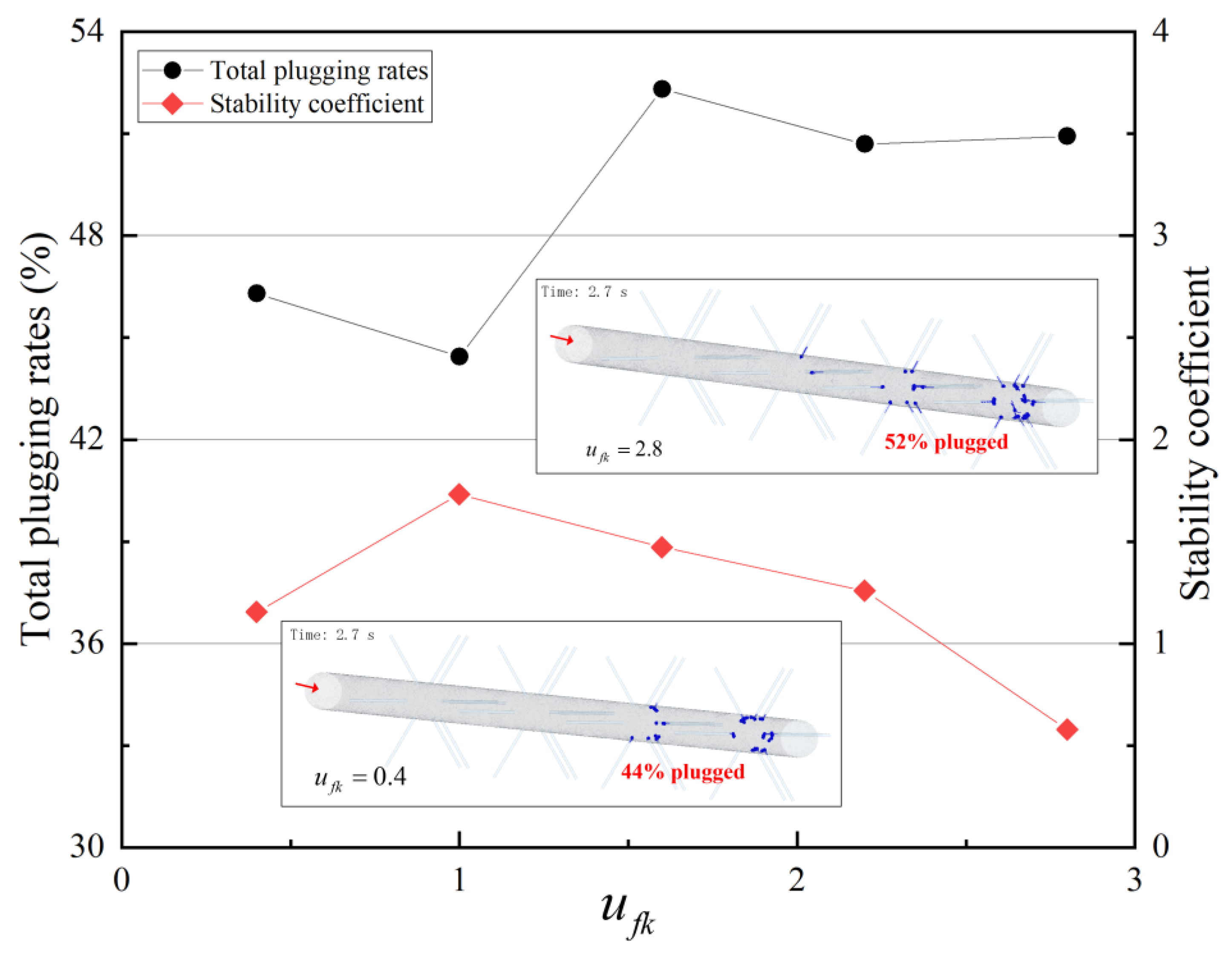
The black curve in Figure 7 depicts the variation trend of total plugging rates with respect to u f k . The first half of the curve is significantly lower than the latter half, primarily because shorter flanks have a reduced probability of reaching the HVGZ near the perforation. Furthermore, the shorter the length of the flank, the lower the likelihood of contacting the HVGZ. This indicates that reducing the flanks to relatively short lengths adversely affects the total plugging efficiency.
When u f k increases to approximately 1.5, the plugging efficiency exhibits a significant enhancement, reaching a relatively high value (8% increase). The likelihood of the long flank contacting the HVGZ is substantially greater than the short one. When u f k continues to increase beyond 2, the total plugging rates decrease only slightly compared to that at a ratio around 1.5, while the curve exhibits an oscillatory trend. This indicates that, once u f k reaches 1.5, further increasing the ratio yields negligible improvement in the plugging performance of the knot TPA.
The variation in the total plugging stability coefficient with respect to u f k is depicted by the red curve in Figure 7. It exhibits a slight initial ascent on the left side, followed by an overall decreasing trend. Setting u f k to 1 as the threshold, the stability coefficient gradually decreases as the ratio exceeds this value. The primary reason is that long flanks increase the likelihood of knot TPA at different positions along the wellbore contacting the HVGZ, thereby enhancing the resistance to “stochastic factors”.
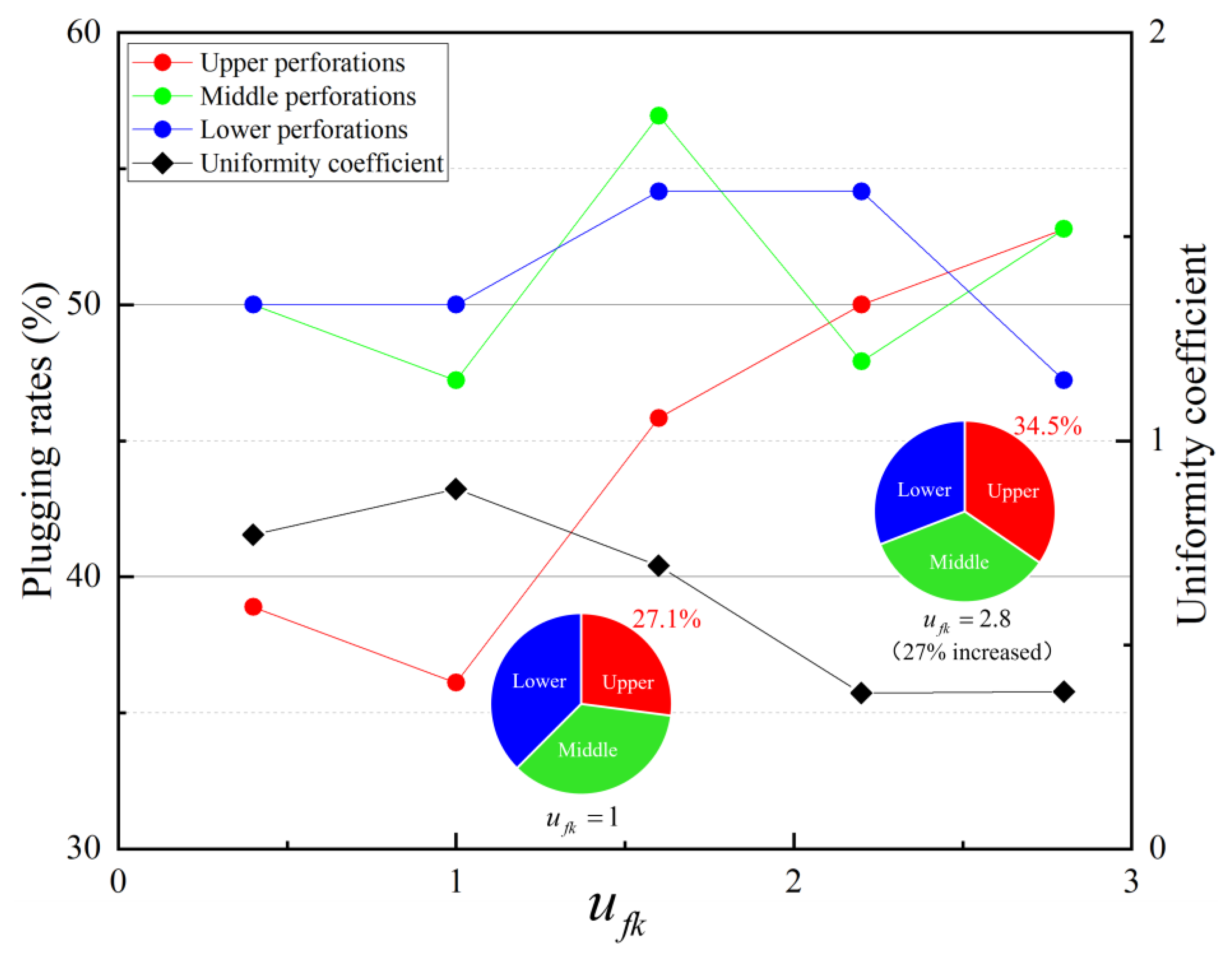
Figure 8 illustrates the influence of u f k variations on the perforation plugging efficiency at distinct locations within the horizontal wellbore. The red, green, and blue curves correspond to the variations in perforation plugging rates at the upper, middle, and lower perforations of the horizontal wellbore, respectively. The green and blue curves exhibit an overall oscillatory pattern without a distinct trend, indicating that altering u f k has no significant effect on the plugging capacity in the middle and lower perforations of the horizontal wellbore. In contrast, the red curve shows a notable increase following a slight decline, primarily due to the density difference between the knot TPA and the fracturing fluid, causing some degree of sedimentation during long-distance transport within the wellbore. However, the flank sedimentation rate is significantly lower than the central knot, resulting in the knot TPA predominantly assuming a “V”-shaped configuration with the flank tips oriented toward the upper perforations of the horizontal wellbore. This orientation increases the likelihood of contact between the flank and the HVGZ, thereby enhancing the plugging efficiency of the upper perforations (27% increased).
Furthermore, the black curve in Figure 8 illustrates the impact of u f k variation on the perforation plugging uniformity coefficient. After an initial slight increase, the curve demonstrates an overall downward trend, indicating that increasing u f k helps narrow the differential plugging capacity between the upper, middle, and lower perforations when a certain density difference exists between the knot TPA and the fracturing fluid. This enhancement improves overall uniformity in wellbore plugging.

3.3. Discussion on the Types of Knot TPA

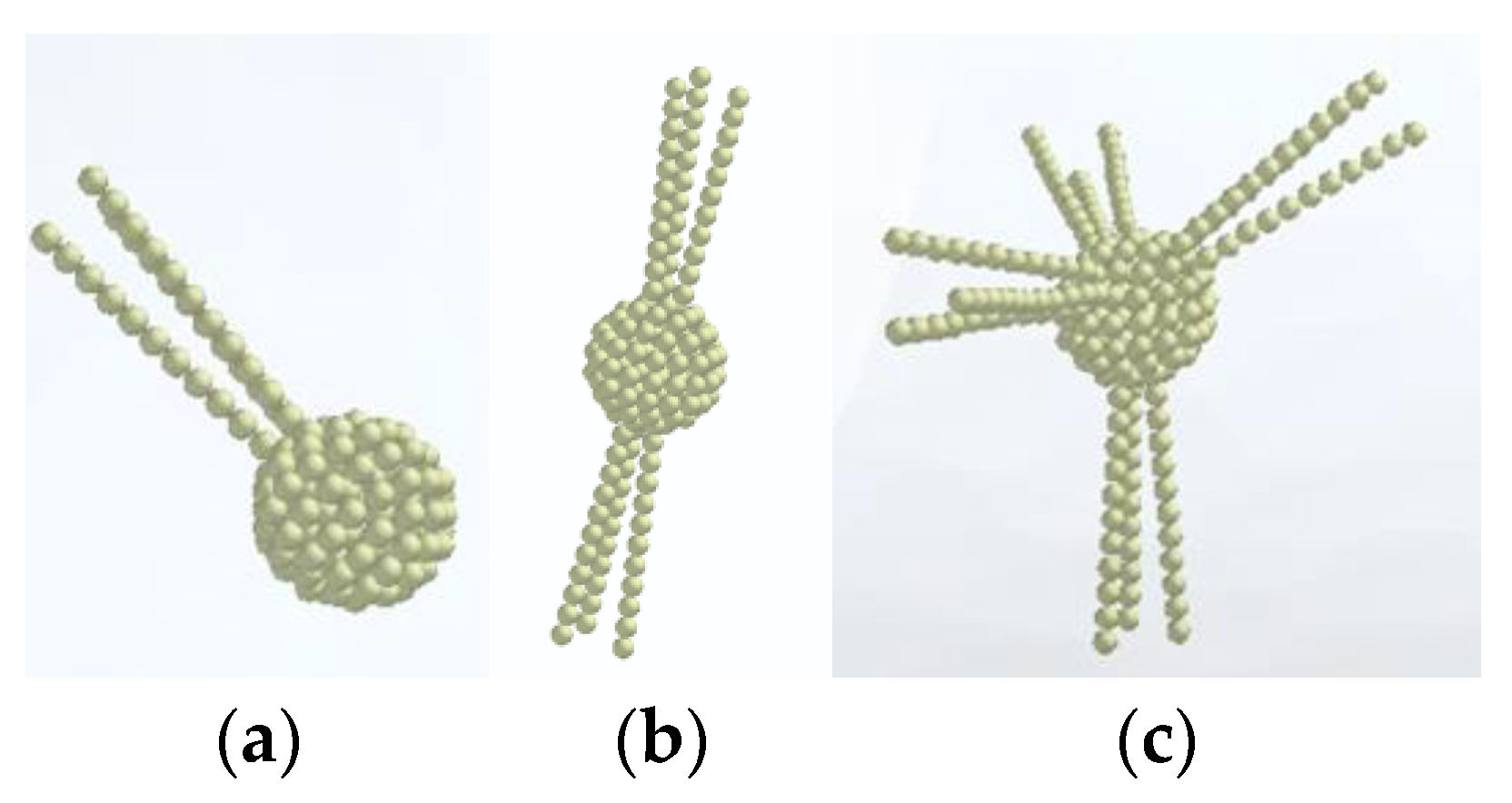
Building upon the analysis of flank length in the preceding section, in this study, u f k is established at 1.6. Subsequently, an analytical discussion examines the impact of knot TPA types on the plugging performance. Three structural types of knots were selected as the research objects: Single (Figure 9a), Double (Figure 9b), and Triangular pyramid (Figure 9c), as shown in Figure 9. In the following introduction, the three types of knot TPA are, respectively, represented by the knot TPA (a), knot TPA (b), and knot TPA (c).
The knot TPA (b) represents a configuration widely utilized in field applications, featuring symmetrically arranged bilateral flanks. In contrast, the knot TPA (a) retains flanks on only one side, with the opposing side truncated. The knot TPA (c), analogous to the molecular geometry of methane, incorporates four flanks uniformly distributed on the surface of a central knot, with inter-flank angles approximating 109°. In the simulation, except for the knot TPA model, all other parameters remain consistent with the preceding section. This section evaluates the impact of the type of knot TPA on its plugging performance using four metrics: the total plugging rates n t o t a l , the stability coefficient of the total plugging rates k t o t a l , the stratified plugging rates for the upper, middle, and lower sections of the perforations n ( c ) , and the stratified plugging uniformity coefficient e a v e .
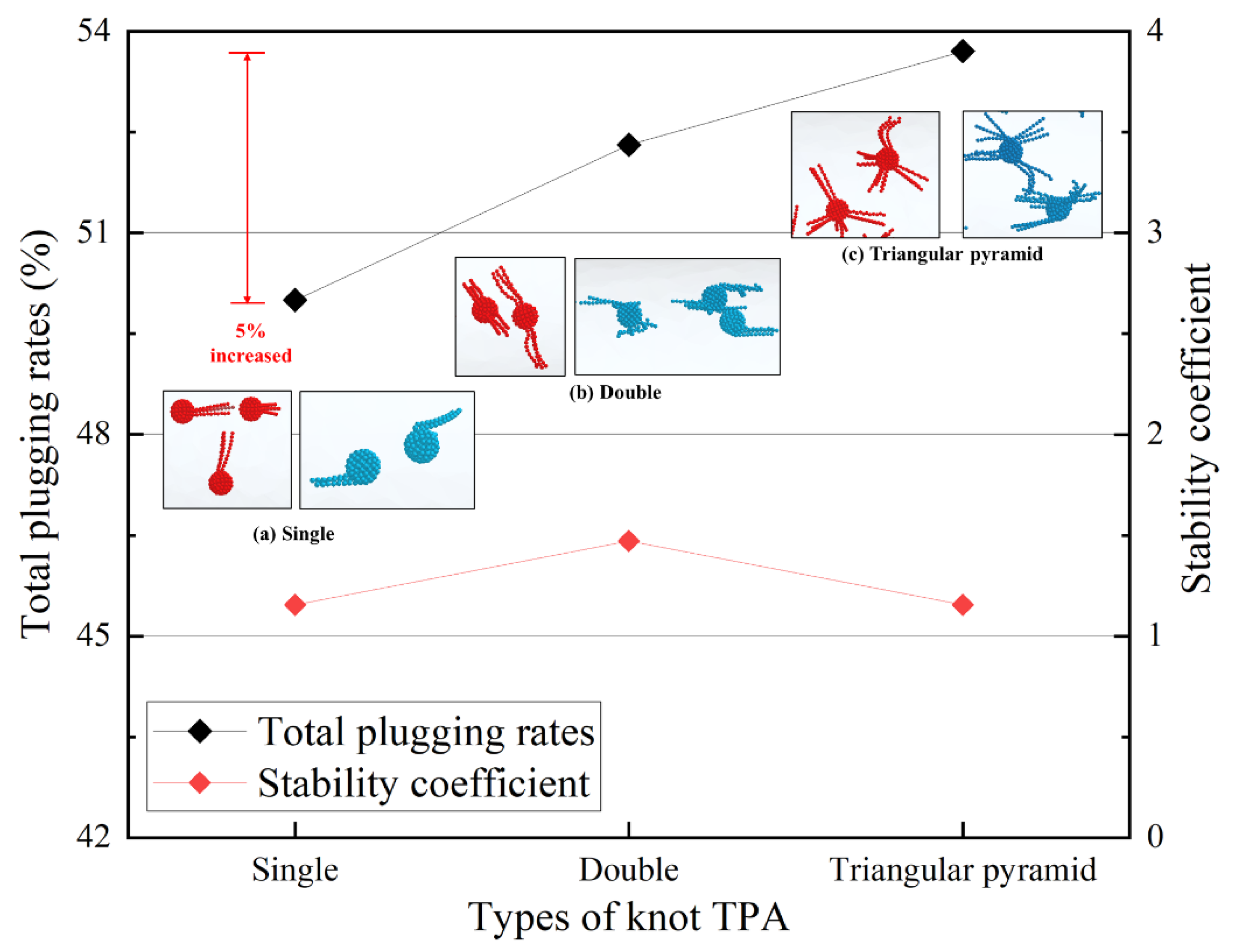
Curves in Figure 10 illustrate the influence of types of knot TPA on both the total plugging rates of perforations and the stability coefficient. Following the transition from (a) to (c) in the knot TPA design, the total plugging rates increased by 5%. The illustrations in Figure 10 show morphological comparisons of three types of knot TPA in the simulation. The red ones are the shapes when they first enter the inlet, and the blue ones are the shapes after passing through multiple perforation clusters. It is noteworthy that all three types of knot TPA exhibit a certain degree of bending and contraction along their flanks after passing through the perforation clusters, which reduces their effective length upon contact with HVGZ. However, the knot TPA (c) demonstrates relatively minimal susceptibility to such contraction effects and exhibits superior plugging performance (with 5% increase in total plugging rates). Furthermore, altering the types of the knot TPA demonstrates no significant impact on the stability coefficient.
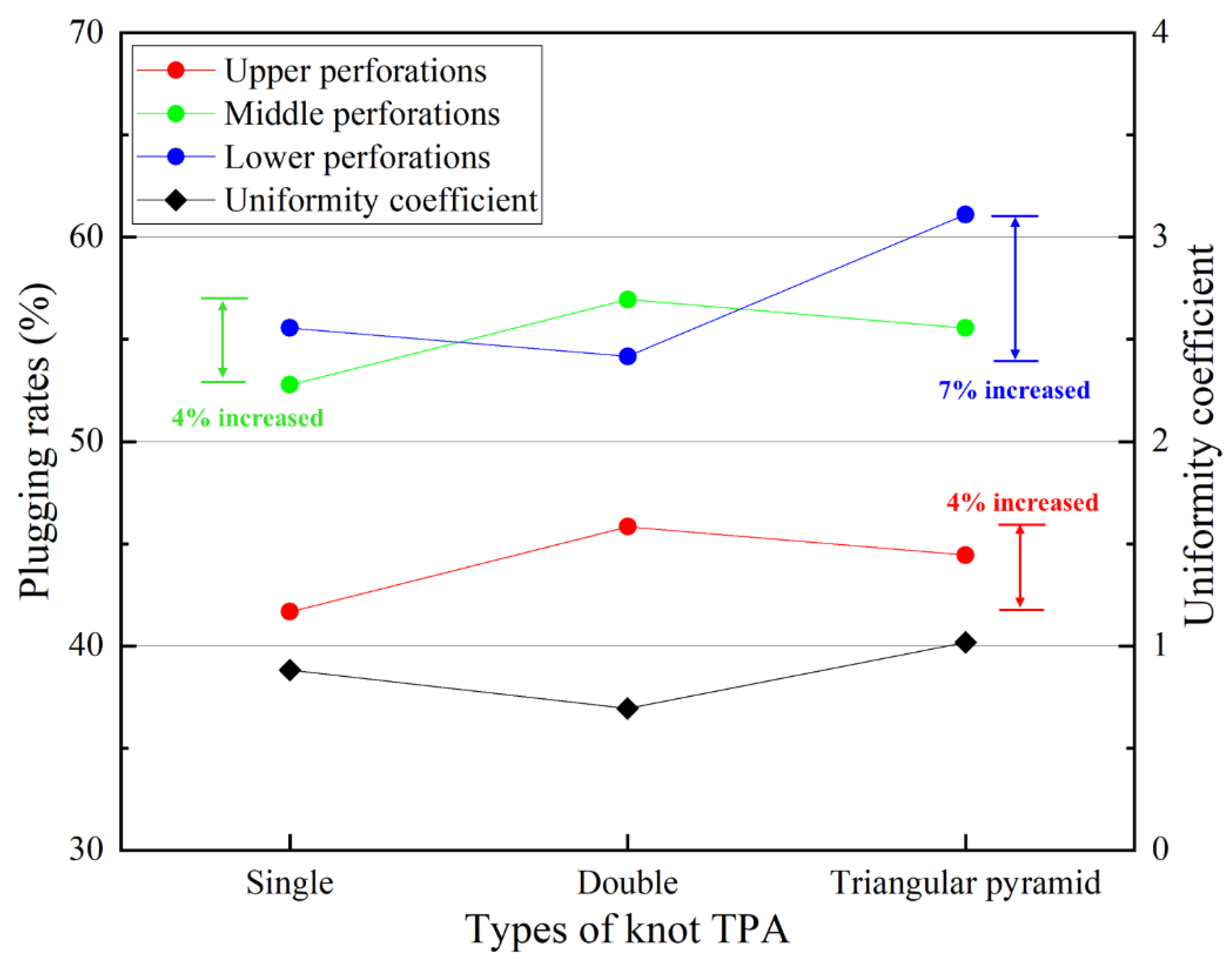
Figure 11 illustrates the perforation plugging efficiency curves (represented by red, green, and blue lines) for the upper, middle, and lower sections of the horizontal wellbore, respectively. Compared with the knot TPA (a) configuration, the knot TPA (b) demonstrates an approximately 4% improvement in plugging performance for both the upper and middle perforations. In contrast, the knot TPA (c) shows no significant difference from the knot TPA (b) in terms of sealing capability for the upper and middle sections of the horizontal wellbore. However, the knot TPA (c) exhibits a notable enhancement of approximately 7% in plugging efficiency for the lower perforations when compared to the knot TPA (b). Furthermore, altering the types of the knot TPA demonstrates no significant impact on the uniformity coefficient.

3.4. Discussion of Combined Knot TPA Temporary Plugging Simulation

Building upon the findings from the preceding two sections concerning the flank length and the types of knot TPA, this section proceeds to analyze the temporary plugging behavior influenced by combined knot TPA. The basic parameters of the horizontal wellbore and knot TPA remain consistent with the preceding sections. Meanwhile, in this section, we account for factors such as formation heterogeneity and the “stress shadow” effect during the fracturing process by applying resistance at the outlets of the second and third perforation clusters along the wellbore. The flow rate through these perforations is approximately one-third of that through the unobstructed perforations, and these specific perforations should not be sealed. The resistance at the first and fourth perforation clusters outlet remains 0.
Two distinct temporary plugging simulation groups were established: the default group employed 18 knot TPA (b) with the u f k set to 1.6, while the improved group initially deployed 8 knot TPA (c) with the u f k set to 2, followed by 10 knot TPA (b) with the u f k set to 1.6. Three evaluation metrics were adopted in this section: valid plugging rates ( n v ), invalid plugging rates ( n i n v ), and valid plugging ratio ( n v r ). Their respective formulas are provided below.
The valid plugging rates ( n v ) refer to the proportion of plugged perforations to the sum of perforations in the first and fourth perforation clusters. The closer this value is to 100%, the better the plugging performance. The formula is as follows:
n v = n p ( 1 , 4 ) N p ( 1 , 4 ) × 100 % ,
where n p ( 1 , 4 ) represents the number of perforations plugged by knot TPA in the first and fourth perforation clusters, N p ( 1 , 4 ) represents the sum of the perforations in the first and fourth perforation clusters, which amounts to 18 in this section.
The invalid plugging rates ( n i n v ) refer to the proportion of plugged perforations to the sum of perforations in the second and third perforation clusters. The closer this value is to 0%, the better the plugging performances. The formula is as follows:
n i n v = n p ( 2 , 3 ) N p ( 2 , 3 ) × 100 % ,
where n p ( 2 , 3 ) represents the number of perforations plugged by knot TPA in the second and third perforation clusters, N p ( 2 , 3 ) represents the sum of the perforations in the second and third perforation clusters, which amounts to 18 in this section.
The valid plugging ratio ( n v r ) is the proportion of plugged perforations in the first and fourth perforation clusters to the sum of perforations plugged in all the perforation clusters. The closer this value is to 100%, the better the plugging performance. The formula is as follows:
n v r = n p ( 1 , 4 ) n p ( 1 , 4 ) + n p ( 2 , 3 ) × 100 % .
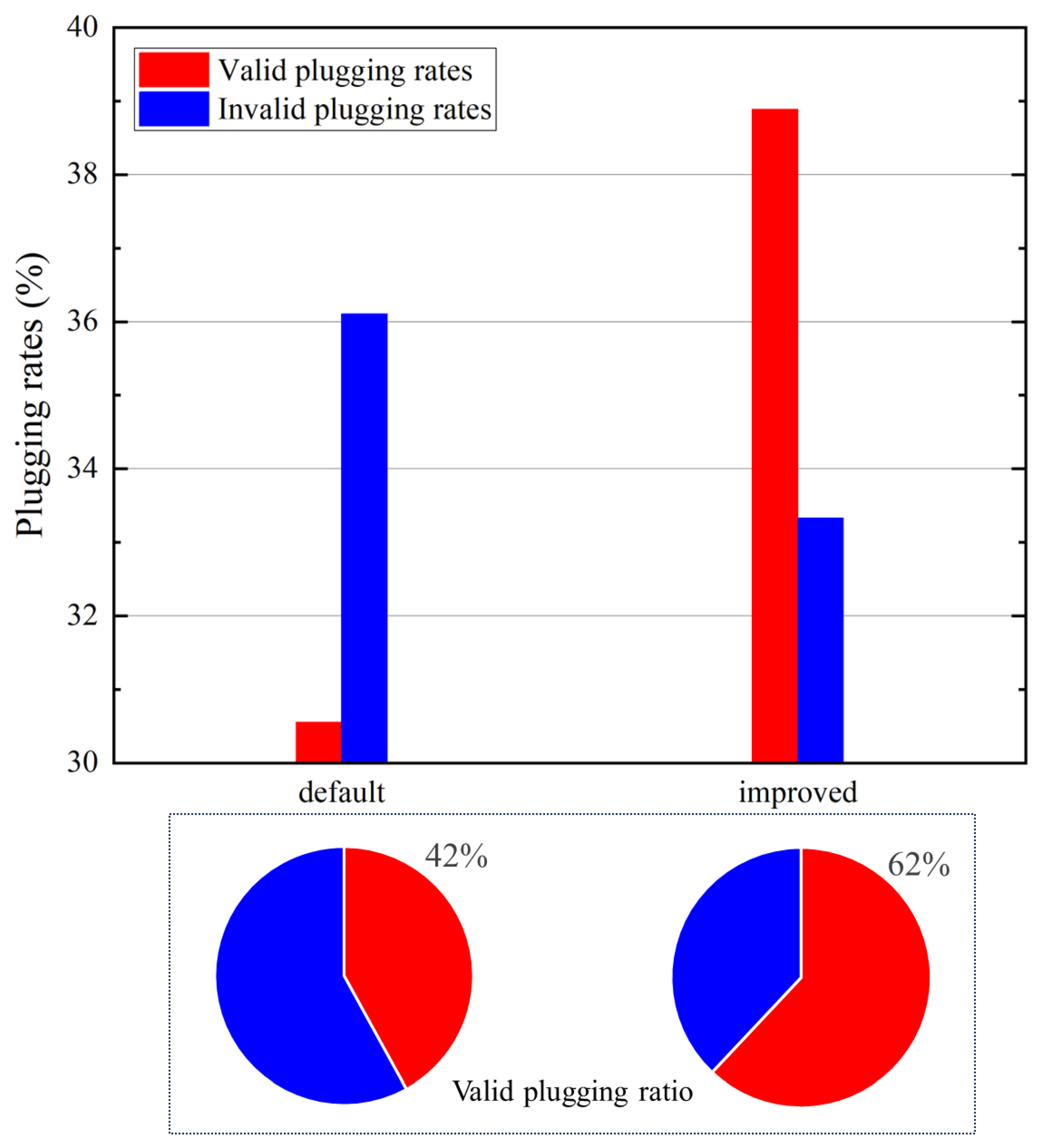
Figure 12 presents a dual-bar chart comparing outcomes between the default and improved groups for valid plugging rates and invalid plugging rates. Based on the temporary plugging simulation results from the default group, the improved group replaced a portion of knot TPA (b) with knot TPA (c), resulting in an approximately 8% improvement in valid plugging rates for the first and fourth perforation clusters, while reducing invalid plugging rates for the second and third perforation clusters by 3% to 4%.
The pie chart in Figure 12 illustrates the valid plugging ratio in two comparative simulation groups. When utilizing knot TPA (b) configurations from the default group for temporary plugging simulation, invalid plugging constituted the majority, accounting for as high as 58%. In contrast, after replacing a partial knot TPA in the improved group, valid plugging became predominant, with its proportion increasing from 42% to 62%.

4. Field Application of Knot TPA

Building on the aforementioned discussion of knot TPA parameters, the methodology was implemented during fracturing operations in stages #16 and #22 in Well DA1 in Zhejiang (Table 3).
During the stage #16 fracturing operations, five-knot TPAs (b) with a central diameter of 20 mm and five-knot TPAs (b) with a central knot diameter of 25 mm were deployed, all with a flank length not less than 2. At the commencement of operations, the knot TPA was introduced at the surface at an injection rate of 2 m3/min, followed by delivery into the target fracturing stage at 6 m3/min. Upon achieving anticipated plugging, the operational injection rate was increased to 17 m3/min to proceed with fracturing. Results indicate that, at the same injection rates, the casing pressure rose from 101.5 MPa before the temporary plugging operation to 104.5 MPa after the operation, representing an increase of 4 MPa.
During the stage#22 fracturing operations, six-knot TPAs (b) with a central diameter of 20 mm were deployed, along with a six-ball TPA with a diameter of 25 mm. Additionally, 25 kg of particulate TPA was introduced at a pumping concentration of 80 kg/m3. At the commencement of operations, the knot TPA was introduced at the surface at an injection rate of 2 m3/min, followed by delivery into the target fracturing stage at 6 m3/min. Upon achieving anticipated plugging, the operational injection rate was increased to 16 m3/min to proceed with fracturing. Results indicate that, at the same injection rates, the casing pressure rose from 95.5 MPa before the temporary plugging operation to 98.5 MPa after the operation, representing an increase of 3 MPa. We conclude that the temporary plugging operations performed during the above two fracturing treatments were effective.

5. Conclusions

This study employs a coupled CFD-DBCM computational model to optimize and evaluate key parameters of knot TPAs for subsequent field application.
(1)
Numerical simulations of knot TPA temporary plugging were conducted and validated against visualized experimental results. A comparative analysis reveals a high degree of consistency between the experiments and simulation results, demonstrating the feasibility of the knot TPA temporary plugging simulation framework.
(2)
Optimization analysis was conducted on the flank length and structural configuration of the knot TPA. When u f k is less than 1.6, the flank is excessively short, resulting in inferior plugging performance of the knot TPA. Conversely, when u f k exceeds 1.6, the long flank helps mitigate interference from “stochastic factors” during knot migration. It enhances plugging performance, leading to an increase in the total plugging rates, while the plugging capability for upper perforations is significantly improved. Under identical flank length conditions, increasing the number of flanksof the knot TPA can effectively improve its plugging performance.
(3)
The formation heterogeneity was incorporated in the numerical simulation of temporary plugging in a horizontal wellbore, with analysis on the temporary plugging performance of the combined knot TPA. The results indicate that the combined use of multiple types of knot TPA can enhance invalid plugging rates, reduce invalid plugging rates, and ensure that the valid plugging ratio constitutes the majority.
(4)
Field application of knot TPA was conducted in the fracturing stage of an oil well in Zhejiang. Operational data demonstrated that, under the same injection rate conditions, the pressure during the fracturing stage increased by 3–4 MPa after deploying the knot TPA temporary plugging technique, thereby validating the efficacy of the knot TPA.

Author Contributions

Conceptualization, J.X. and Y.L.; methodology; software, W.L.; validation, Q.S., R.W. and L.Y.; formal analysis, Y.L.; resources, W.W.; data curation, L.Y.; writing—original draft preparation, J.X.; writing—review and editing, Y.L.; project administration, Q.S. All authors have read and agreed to the published version of the manuscript.

Funding

This research was funded by the China National Petroleum Corporation Technology Project (2022yjcq05, 2023ZZ28YJ02).

Data Availability Statement

The data that support the findings of this study are available from the corresponding author upon reasonable request.

Conflicts of Interest

Author Jianjun Xue, Qiang Sun, Ran Wei, Leilei Yu and Wei Wang were employed by the Research Institute of Petroleum Exploration & Development, PetroChina Company Limited, Beijing. The authors declare that this study was funded by by China National Petroleum Corporation Technology Project. The funder was not involved in the study design, collection, analysis, interpretation of data, the writing of this article or the decision to submit it for publication.

References

  1. Zhou, Z.; Wang, D.; Zheng, B.; Liu, X.; Yang, K. Comparative experimental investigation on permeability and pressure bearing capacity of different types of temporary plugging bodies. Unconv. Resour. 2024, 4, 100062. [Google Scholar] [CrossRef]
  2. Long, G.; Liu, S.; Xu, G.; Wong, S.-W.; Chen, H.; Xiao, B. A perforation-erosion model for hydraulic-fracturing applications. SPE Prod. Oper. 2018, 33, 770–783. [Google Scholar] [CrossRef]
  3. Chen, M.; Zhang, S.; Zhou, T.; Ma, X.; Zou, Y. Optimization of in-stage diversion to promote uniform planar multifracture propagation: A numerical study. SPE J. 2020, 25, 3091–3110. [Google Scholar] [CrossRef]
  4. Lecampion, B.; Desroches, J.; Weng, X.; Burghardt, J.; Brown, J.E. Can we engineer better multistage horizontal completions? Evidence of the Importance of near-wellbore fracture geometry from theory, lab and field experiments. In Proceedings of the SPE Hydraulic Fracturing Technology Conference, The Woodlands, TX, USA, 3–5 February 2015. [Google Scholar]
  5. Peng, X.; Zhang, Q.; Yu, R.; Yang, H.; Liu, B.; Li, X.; Yang, Z.; Li, T.; Han, Z. Research of a self-adaptive high-performance re-fracturing technology with knot temporary plugging in a thin reservoir with high stress. Chem. Technol. Fuels Oils 2023, 58, 1027–1034. [Google Scholar] [CrossRef]
  6. Zhang, T.; Li, M.; Guo, J.; Gou, H.; Mu, K. Numerical study on mechanism and parameters optimization of temporary plugging by particles in wellbore. SPE Prod. Oper. 2022, 37, 135–150. [Google Scholar] [CrossRef]
  7. Yuan, L.; Zhou, F.; Li, M.; Yang, X.; Cheng, J.; Wang, B. Experimental study on diverter transport through perforations in multicluster fracturing of horizontal well. SPE J. 2022, 27, 971–985. [Google Scholar] [CrossRef]
  8. Hu, Q.-H.; Cheng, W.; Wang, Z.-C.; Shi, Y.-Z.; Jia, G.-L. Transportation and sealing pattern of the temporary plugging ball at the spiral perforation in the horizontal well section. Pet. Sci. 2024, 21, 3288–3297. [Google Scholar] [CrossRef]
  9. Li, T.; Xu, W.; Wang, L.; Jiang, F.; Zhang, J. Temporary plugging ball migration and plugging law of staged multi-cluster fracturing in horizontal wells. Fault-Block Oil Gas. Field 2023, 30, 168–176. [Google Scholar]
  10. Cheng, W.; Lu, C.; Feng, G.; Xiao, B. Ball sealer tracking and seating of temporary plugging fracturing technology in the perforated casing of a horizontal well. Energy Explor. Exploit. 2021, 39, 2045–2061. [Google Scholar] [CrossRef]
  11. Wang, B.; Zhou, F.; Yang, C.; Wang, D.; Yang, K.; Liang, T. Experimental study on injection pressure response and fracture geometry during temporary plugging and diverting fracturing. SPE J. 2020, 25, 573–586. [Google Scholar] [CrossRef]
  12. Erbstoesser, S.R. Improved ball sealer diversion. J. Pet. Technol. 1980, 32, 1903–1910. [Google Scholar] [CrossRef]
  13. Wu, B.; Shi, S.; Zhang, T.; Wang, M.; Wang, J.; Wang, J.; Wang, Z. Study on field test and plugging simulation of the knot temporary plugging agent. Chem. Technol. Fuels Oils 2022, 58, 530–543. [Google Scholar] [CrossRef]
  14. Xu, J.; Wang, J.; Wang, M.; Hu, G.; Zhou, P.; Miao, H.; Kang, K.; Feng, H. Performance research and field application of the knot temporary plugging agent. Chem. Technol. Fuels Oils 2022, 58, 544–553. [Google Scholar] [CrossRef]
  15. Xu, J.; Wang, M.; Wu, B.; Xie, B.; Tan, L.; Wang, B. Field scale test of high-pressure temporary plugging of knot-type temporary plugging agent. Pet. Drill. Tech. 2025, 53, 117–122. [Google Scholar]
  16. Lv, X.; Feng, D.; Zhang, Z. Application of fracturing technology for temporary blockage and turning of rope knots in complex fault block oilfield. In Proceedings of the 2024 10th International Conference on Advances in Energy Resources and Environment Engineering (ICAESEE 2024); Atlantis Press: Dordrecht, The Netherlands, 2025. [Google Scholar]
  17. Li, W.; Liu, Y.; Meng, Q.; Xue, J.; Sun, Q. Study on migration and plugging mechanism of knot temporary plugging agent in hydraulic fracturing. Phys. Fluids 2025, 37, 63349. [Google Scholar] [CrossRef]
  18. Guo, Y.; Wassgren, C.; Hancock, B.; Ketterhagen, W.; Curtis, J. Validation and time step determination of discrete element modeling of flexible fibers. Powder Technol. 2013, 249, 386–395. [Google Scholar] [CrossRef]
  19. Markauskas, D.; Platzk, S.; Kruggel-Emden, H. Comparative numerical study of pneumatic conveying of flexible elongated particles through a pipe bend by DEM-CFD. Powder Technol. 2022, 399, 117170. [Google Scholar] [CrossRef]
Figure 1. Schematic of the plugging advantages of the knot TPA for eroded perforations and upper perforations.
Symmetry 18 00211 g001
Figure 2. Schematic of flexible characterization of knot TPA.
Symmetry 18 00211 g002
Figure 3. Schematic of CFD-DBCM coupling computation method.
Symmetry 18 00211 g003
Figure 4. Dynamic plugging experiment system and knot TPA.
Symmetry 18 00211 g004
Figure 5. Comparison of simulation results of knot TPA with experimental results.
Symmetry 18 00211 g005
Figure 6. Schematic diagram of wellbore perforation configuration and knot TPA model.
Symmetry 18 00211 g006
Figure 7. Curve of the effect of u f k variation on the total plugging rates and stability coefficient.
Symmetry 18 00211 g007
Figure 8. Curve of the effect of u f k variation on the stratified plugging rates and uniformity coefficient.
Symmetry 18 00211 g008
Figure 9. Three types of knot TPA: (a) Single; (b) Double; (c) Triangular pyramid.
Symmetry 18 00211 g009
Figure 10. Curve of the effect of types of knot TPA on the total plugging rates and stability coefficient.
Symmetry 18 00211 g010
Figure 11. Curve of the effect of types of knot TPA on the stratified plugging rates and uniformity coefficient.
Symmetry 18 00211 g011
Figure 12. Comparative analysis of valid plugging rates, invalid plugging rates, and valid plugging ratios in the two simulation groups.
Symmetry 18 00211 g012
Table 1. Simulation parameters for the mechanisms of temporary plugging of knot TPA.
TypeParametersValue
CasingLength4.5 m
Inner diameter114.3 mm
Total number of perforations18
Cluster separation distance0.5 m
Diameter of perforations12 mm
FluidDensity1 g/cm3
Viscosity1 mPa·s
Injection rate2 m3/min
Knot TPADiameter15 mm
Length of the flank20 mm
Total number20
Table 2. Parameters of simulation based on the field setting.
TypeParametersValue
CasingLength22 m
Inner diameter124.26 mm
Total number of perforations36
Cluster separation distance5 m
Diameter of perforations10 mm
FluidDensity1.02 g/cm3
Viscosity40 mPa·s
Injection rate12 m3/min
Knot TPADiameter12 mm
Density1.1 g/cm3
Total number40
Table 3. Record of the construction of the fracturing stages for Well DA1.
Fracturing StagesPressure
Before Fracturing
Pressure
After Fracturing
Variations
#16101.5 MPa104.5 MPa4 MPa
#2295.5 MPa98.5 MPa3 MPa
Disclaimer/Publisher’s Note: The statements, opinions and data contained in all publications are solely those of the individual author(s) and contributor(s) and not of MDPI and/or the editor(s). MDPI and/or the editor(s) disclaim responsibility for any injury to people or property resulting from any ideas, methods, instructions or products referred to in the content.