Article

Key Noise Evaluation of Analog Front-End in Microradian-Level Phasemeter for Space Gravitational Wave Detection


1
Changchun Institute of Optics, Fine Mechanics and Physics, Chinese Academy of Sciences, Changchun 130033, China
2
School of Electronic Information Engineering, Changchun University of Science and Technology, Changchun 130022, China
*
Author to whom correspondence should be addressed.
Symmetry 2026, 18(1), 93; https://doi.org/10.3390/sym18010093
Submission received: 25 November 2025 / Revised: 31 December 2025 / Accepted: 1 January 2026 / Published: 4 January 2026
(This article belongs to the Section C: Physics)

Abstract

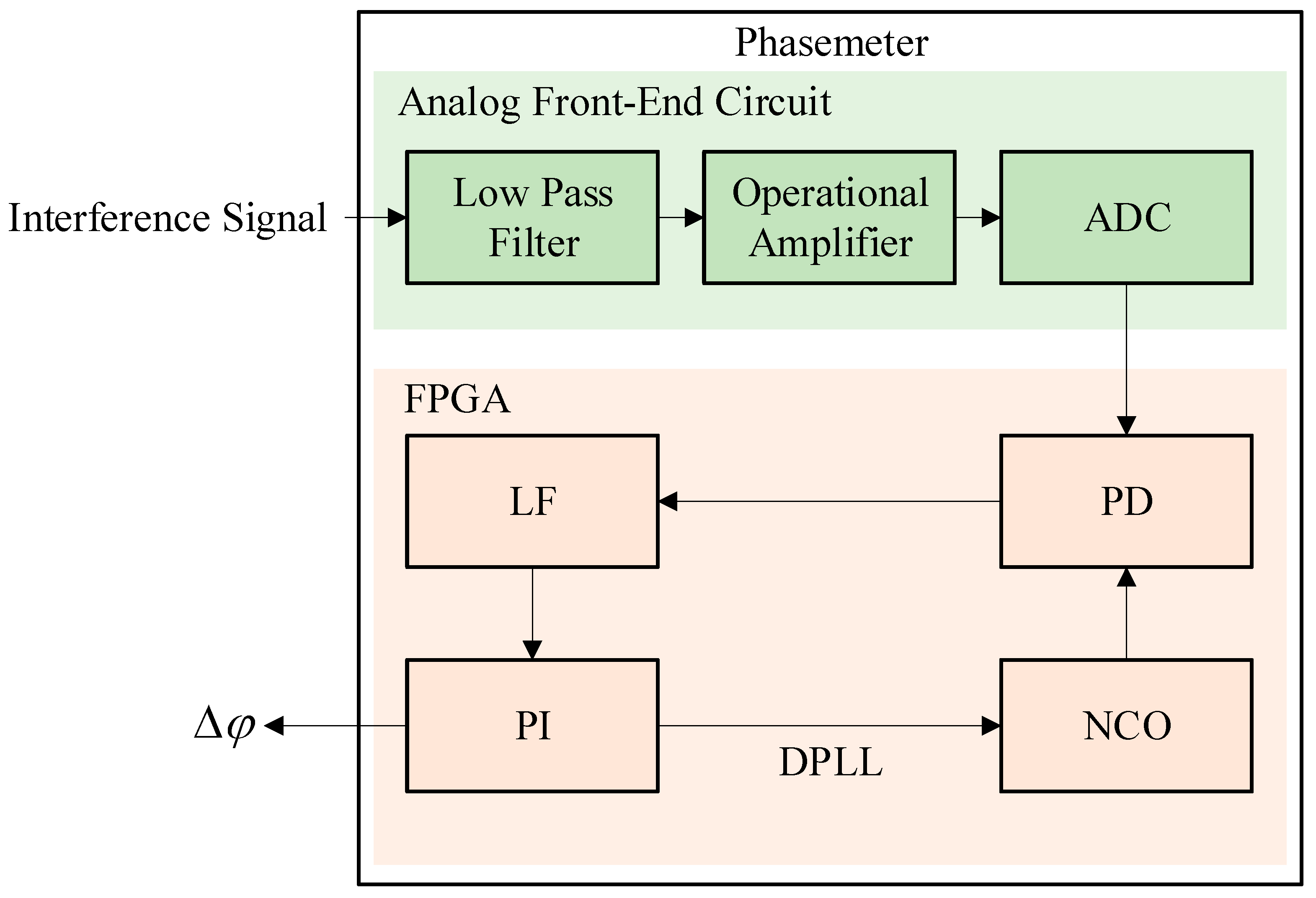
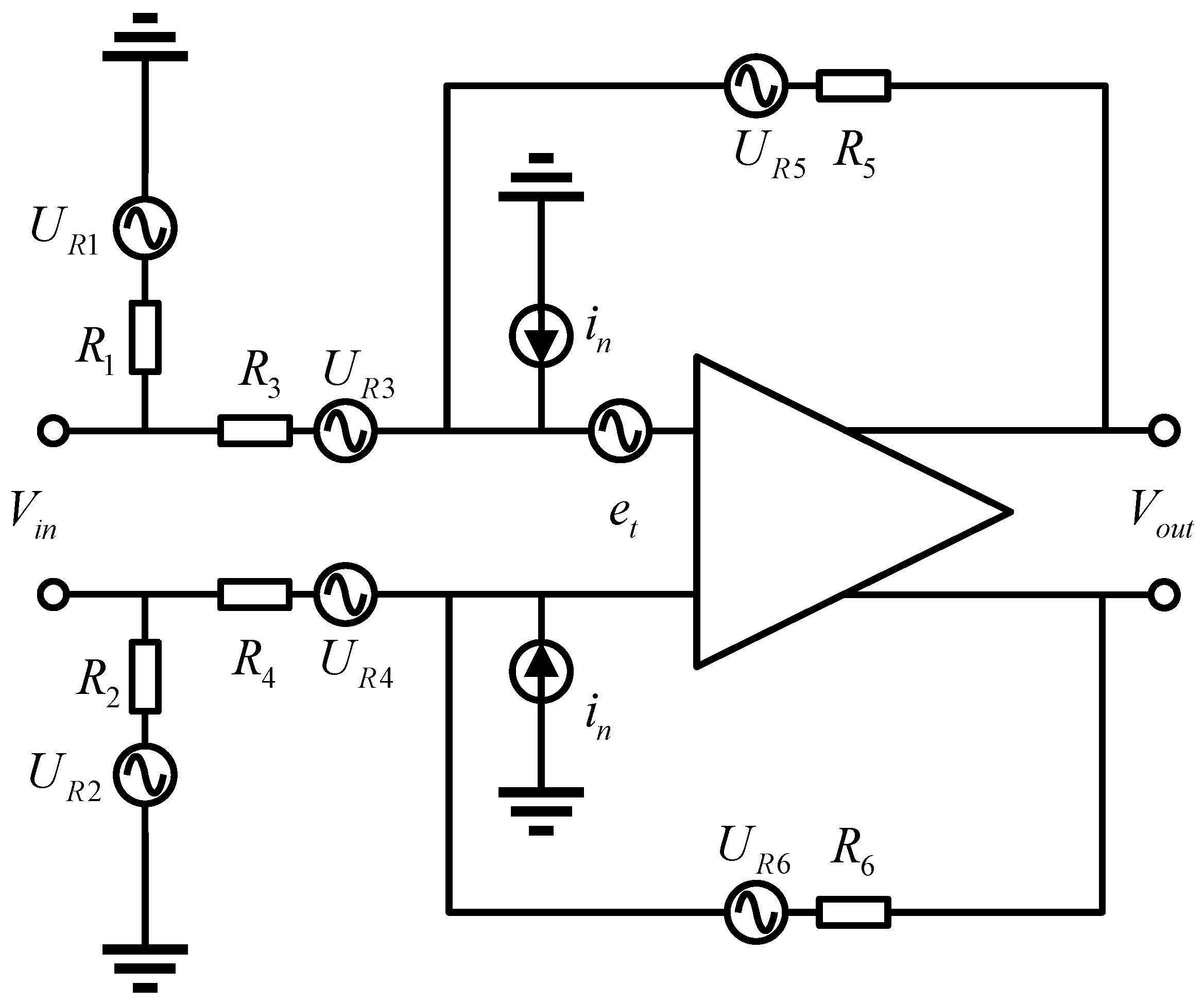
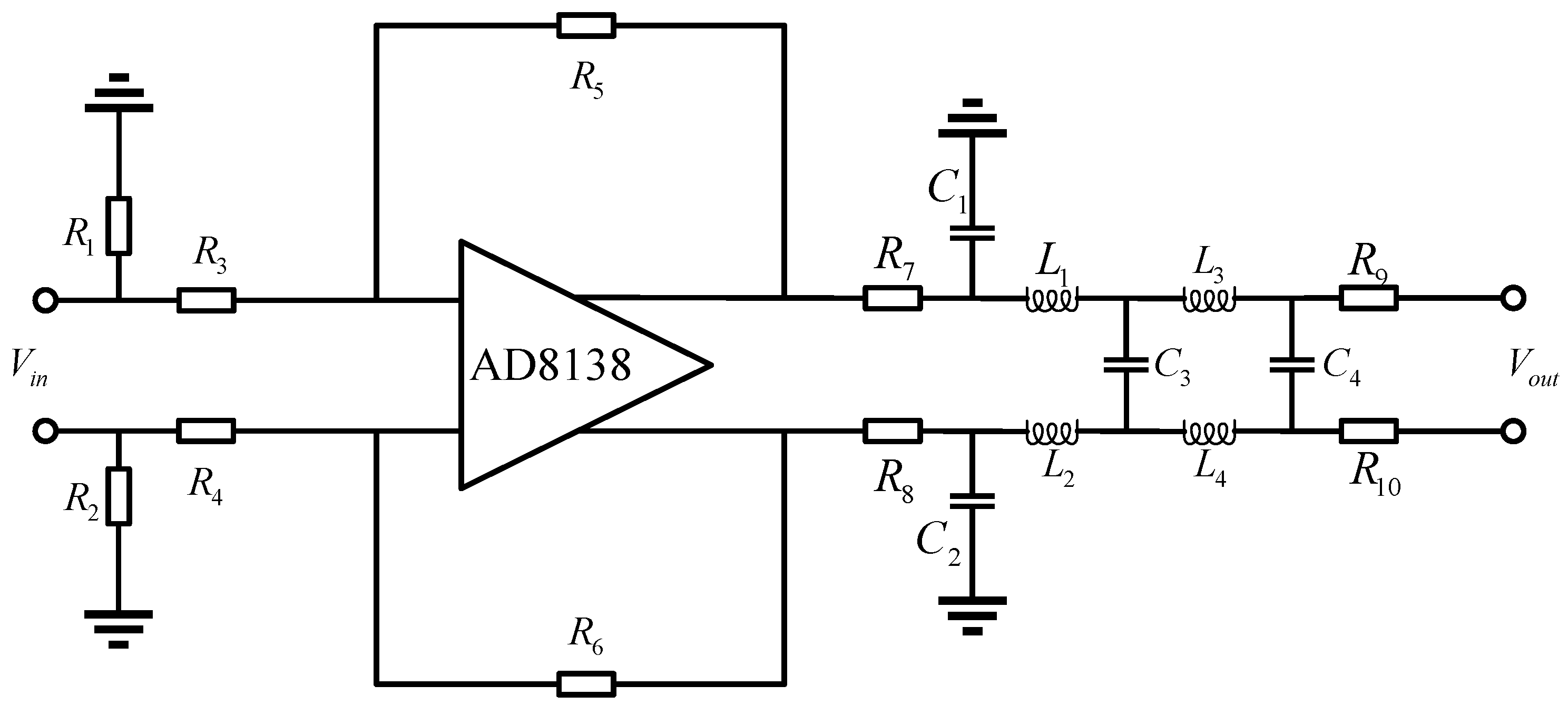
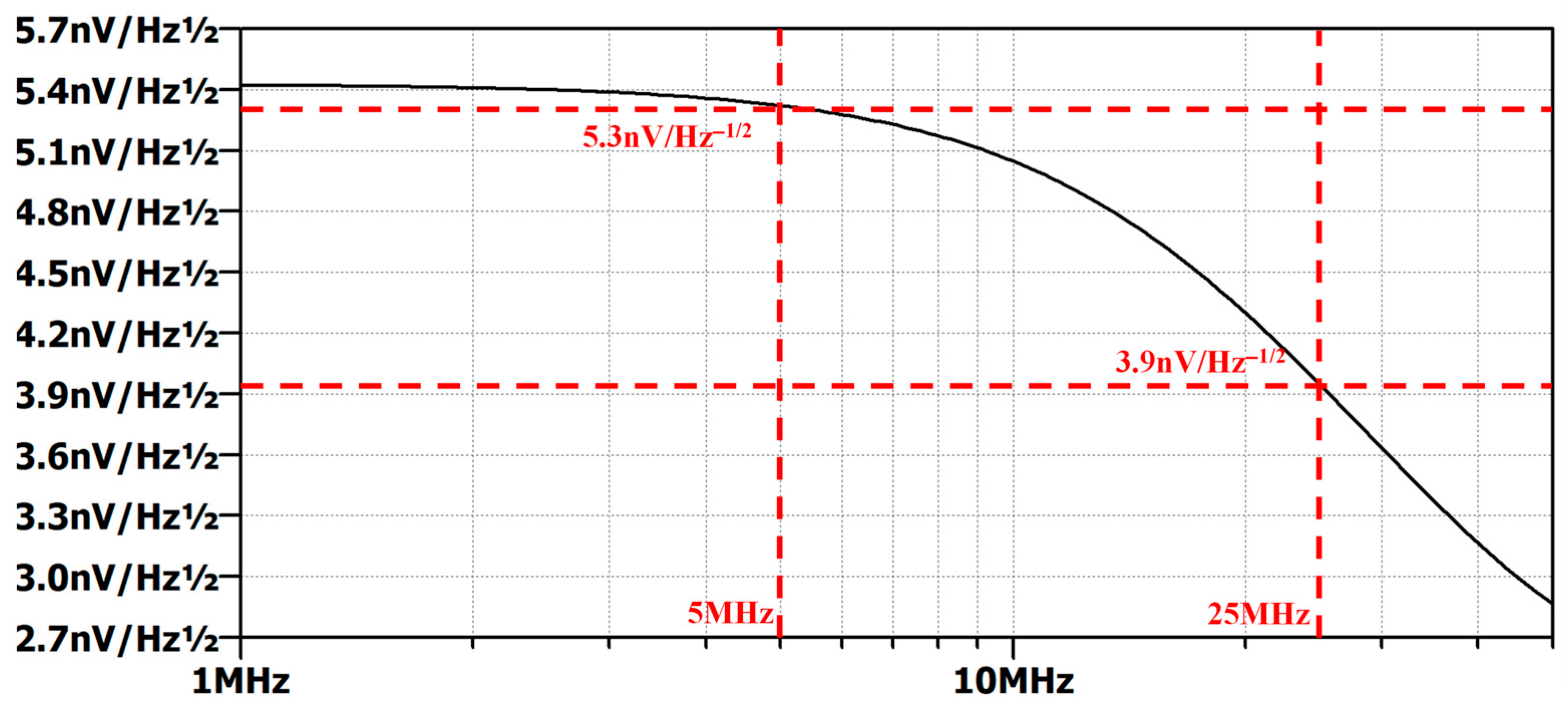
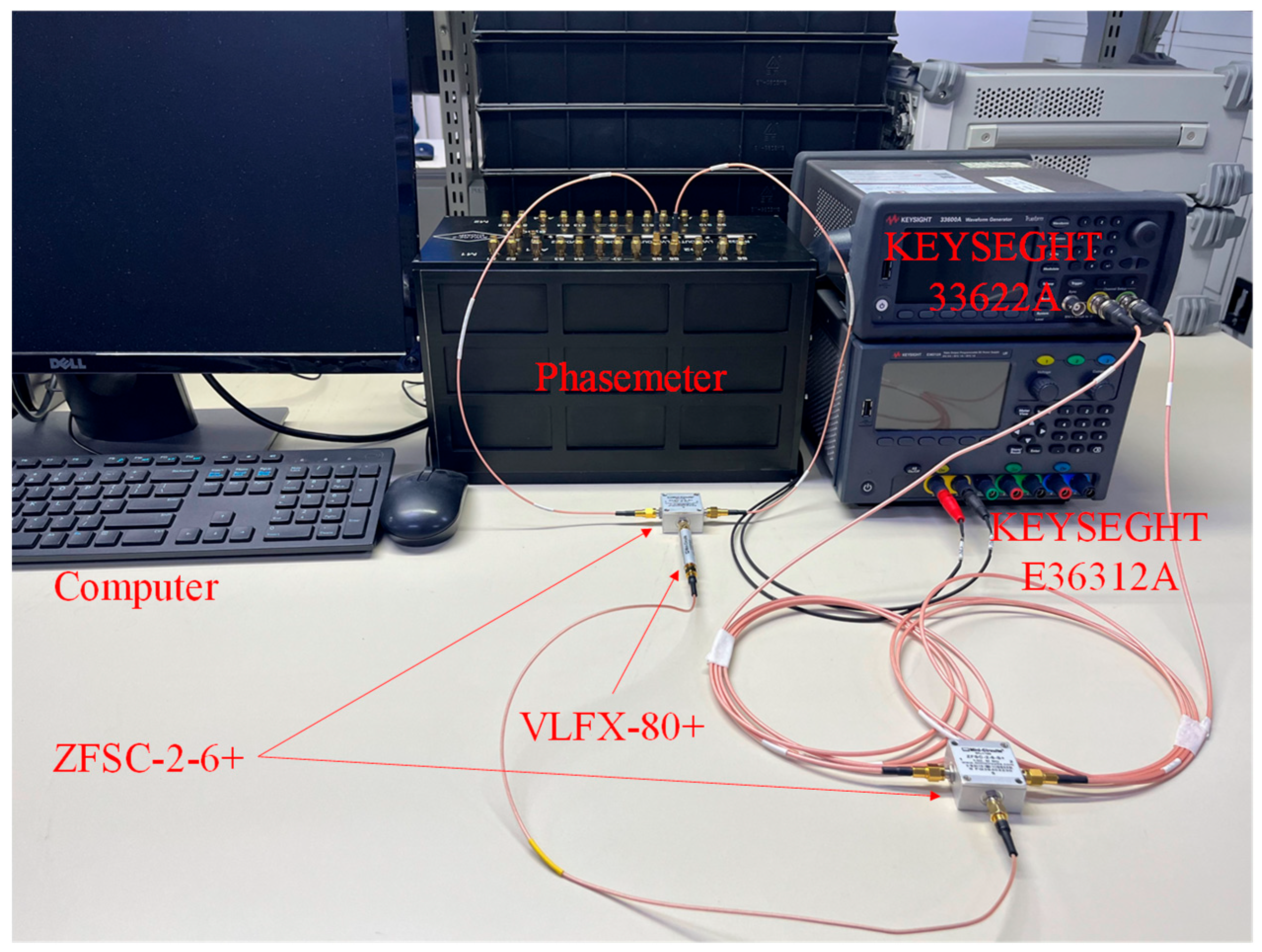
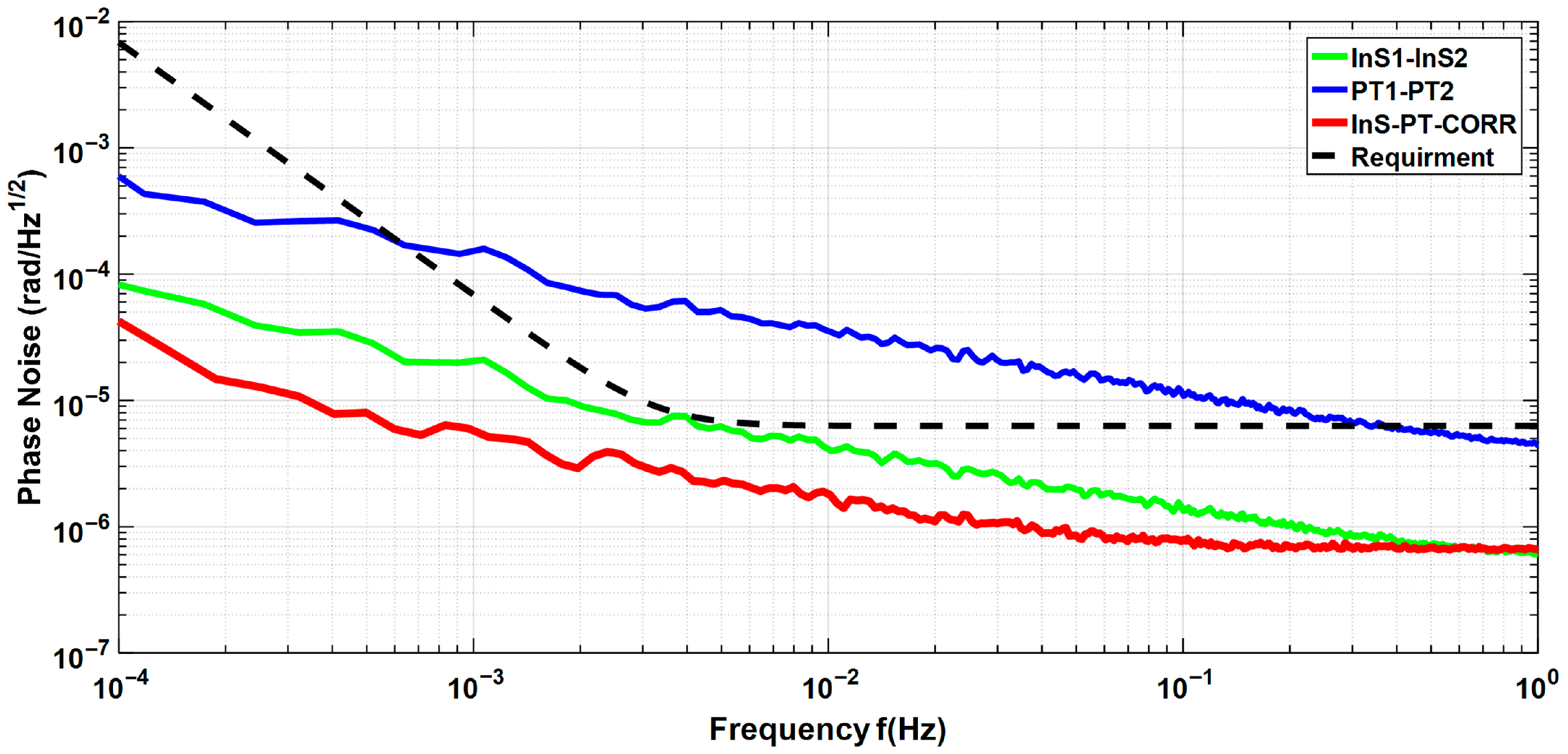
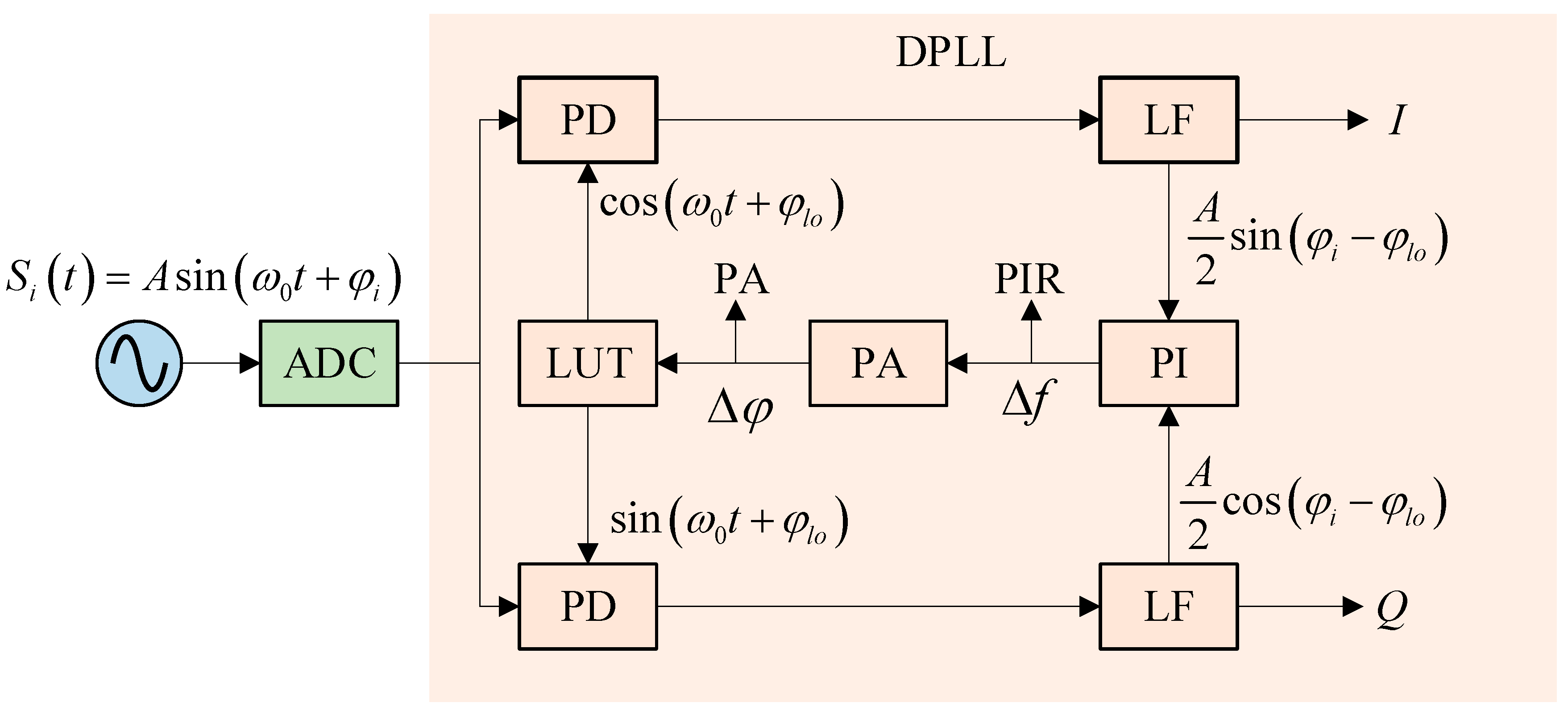
For microradian-level phasemeters aimed at space-based gravitational wave detection, the analog front-end circuitry plays a critical role in determining the system’s phase noise. This paper focuses on the symmetric differential structure-based operational amplifier analog front-end between the Quadrant Photodiode output and the high-resolution ADC input. An equivalent additive noise model is established, and the mechanism of noise conversion into phase noise is derived. The noise performance within the target 5–25 MHz band is evaluated through LTspice simulations and experimental verification. Experimental results show that, after suppressing sampling timing jitter with a 37.5 MHz pilot tone, the noise contribution of the front-end analog circuit to the phasemeter system is significantly better than the phase measurement noise requirement of 2π μrad/Hz1/2 in the 0.1 mHz–1 Hz band for space-based gravitational wave detection. Compared with a transformer-based front-end, the differential amplifier solution exhibits significant advantages in low-frequency noise suppression and signal stability. Further analysis using the digital phase-locked loop closed-loop transfer function confirms that the noise amplitude is proportional to phase noise and inversely proportional to signal amplitude, providing a theoretical basis for analog front-end circuit optimization and system-level noise budgeting. The results offer a reliable reference for the design of high-precision phasemeters and the engineering implementation of space-based gravitational wave detection missions.
Keywords: space gravitational wave detection; phasemeter; analog front-end circuitry space gravitational wave detection; phasemeter; analog front-end circuitry