Article

Integrated Control Technologies for Mechanized Coal Mining

1
Faculty of Energy, Empress Catherine II Saint Petersburg Mining University, 2, 21st Line, St., Petersburg 199106, Russia
2
Higher School of Cyberphysical Systems & Control, Peter the Great St. Petersburg Polytechnic University, St., Petersburg 195251, Russia
3
JSC “Vorkutaugol”, Vorkuta 169908, Russia
4
Institute of General Engineering, Empress Catherine II Saint Petersburg Mining University, 2, 21st Line, St., Petersburg 199106, Russia
*
Author to whom correspondence should be addressed.
Symmetry 2025, 17(11), 1947; https://doi.org/10.3390/sym17111947
Submission received: 6 September 2025 / Revised: 17 October 2025 / Accepted: 29 October 2025 / Published: 13 November 2025
(This article belongs to the Special Issue Symmetry and Its Applications in Automation and Control Systems)

Abstract

This paper explores the symmetry of integrated control technology to ensure the smooth operation of shearers, scraper conveyors and hydraulic supports in the context of integrated mechanized coal mining, so as to achieve the dual goals of improving coal mining efficiency and ensuring operation safety. Article paper addresses the critical research gap in system-level coordination for mechanized coal mining. While the shearer, scraper conveyor, and hydraulic support have been extensively studied individually, their integrated control under dynamic and complex geological conditions remains a challenge, often leading to production bottlenecks and safety risks. This study proposes a novel integrated control model to bridge this gap. The study formulates the research problem of achieving continuous and safe mining operations under complex geological conditions and employs modeling and simulation to validate the proposed control methodology. In the subsequent stages, a technological solution for the control of the coal mining process is investigated, and the effectiveness of the constructed model is thoroughly tested through simulation modeling methods. The study shows that through proportional–integral (PI) control, precise interaction between coal mining machines, scraper conveyors and hydraulic supports can be achieved, thereby ensuring the continuity and safety of coal mining operations and effectively preventing production interruptions and potential accidents. The research results are analyzed, and a forecast is made for the future trend of technology development, namely, the movement toward intelligence, automation and precision, so as to further promote technological innovation and industrial upgrading in the coal mining industry.

1. Introduction

In the mechanized coal mine face, the core challenge lies in the coordinated operation of the shearer, scraper conveyor, and hydraulic support. Ensuring stable and synchronized interaction among these three systems is the key to achieving continuous, efficient, and safe mining. The efficiency of coal mining in the face and the economic benefit of the company directly depend on how well this equipment operates. In fully mechanized coal mining, effective control of shearers, scraper conveyors, and hydraulic supports is critical to ensure efficiency and safety. Control systems for such electromechanical equipment must balance dynamic performance, reliability, and adaptability to complex geological conditions.
The properties of symmetric control systems are considered, the distinctive feature of which is that the solution of the optimal control problem for an object, the mathematical model of which belongs to the class of symmetric control systems, leads to the solution of two problems. Let us consider symmetric systems in the context of an optimal control problem and present a general formulation.
In the actual mine operation conditions, the joint operation of fully mechanized mining equipment often encounters various problems, resulting in low production efficiency, high labor intensity and frequent failures, which negatively affects the service life, energy consumption and efficiency of the equipment. The combined control technology of the shearer, scraper conveyor, and hydraulic support has become the key to improving the efficiency of coal mining, reducing costs and ensuring the safety of miners. Accurate control of the shearer, as the main working equipment in the mining process, is necessary to improve the coal recovery rate and reduce resource loss [1]. The scraper conveyor is responsible for the timely transportation of mined coal to the surface, and its stability and continuity directly affect the mining efficiency [2,3]. The hydraulic support provides the necessary support for the working face and ensures the safety of the working environment. Effective joint control of these three systems can not only improve the mining efficiency, but also reduce the number of accidents caused by uncoordinated operation of equipment. In recent years, scientists in Russia and abroad have conducted extensive and in-depth research in this field. The studies [4,5,6] reviewed the research status and development trends of the position and orientation measurement technology of coal combines, scraper conveyors and hydraulic supports in fully automated faces, as well as new developments of longwall equipment sets in coal mines in China, respectively. These studies provide the technical basis and trend forecasts for the development of joint management models. The papers [7,8,9] report on the progress of coal mining technology, especially the development and prospect of fully mechanized mining in Chinese coal mines, and the key technologies and equipment for large-scale heavy seam coal mining and fully mechanized overhead coal mining. These technological achievements provide necessary technical support for the collaborative control model, especially in improving the efficiency and safety of mining.
However, despite significant progress, current studies still face limitations such as insufficient adaptability of control models under complex geological conditions, lack of real-time fault diagnosis, and limited predictive capabilities. Existing technologies often focus on single-machine optimization rather than integrated system coordination. The novelty of this study lies in the development of an integrated control model that synchronizes shearer, scraper conveyor, and hydraulic support operations through PI and vector control strategies. By addressing the above shortcomings, the proposed method enhances safety, continuity, and efficiency of mechanized coal mining.
Refs. [10,11] introduce mathematical models of electro-hydraulic and power-assisted control systems, which are essential for the optimization of collaborative control models. Ref. [12] focuses on the design of electro-hydraulic control systems, which are critical to the accurate control and quick response of hydraulic supports.
In ref. [13], the authors put forward an optimization method for fully mechanized coal face based on virtual simulation, which is of practical significance to improving the efficiency and safety of joint control models. In refs. [14,15,16], the integrated intelligent mining system of fully mechanized coal face is studied, and an intelligent solution for the joint control of the shearer, scraper conveyor, and hydraulic support is proposed [17,18,19].
The future joint control technology of three machines is developing in the direction of intelligence, automation, and precision, and this research will continue to improve the accuracy and reliability of these technologies, and further integrate and optimize the control system [20,21].
Therefore, the aim of this study is to achieve optimal coordination of these three key devices through integrated control technology, thereby optimizing the mining process and improving work efficiency and safety.

2. Materials and Methods

2.1. Overview of the Structure and Function of Three Key Types of Electromechanical Equipment

This study focuses on the control requirements and interaction mechanisms of the three key machines, which directly determine the efficiency and safety of the integrated mining face. The control-oriented models are abstracted as follows: the shearer is represented by its drive motor dynamics and traction speed; the scraper conveyor by its motor torque and load response; and the hydraulic support by its electro-hydraulic actuation and pressure control logic.
(1)
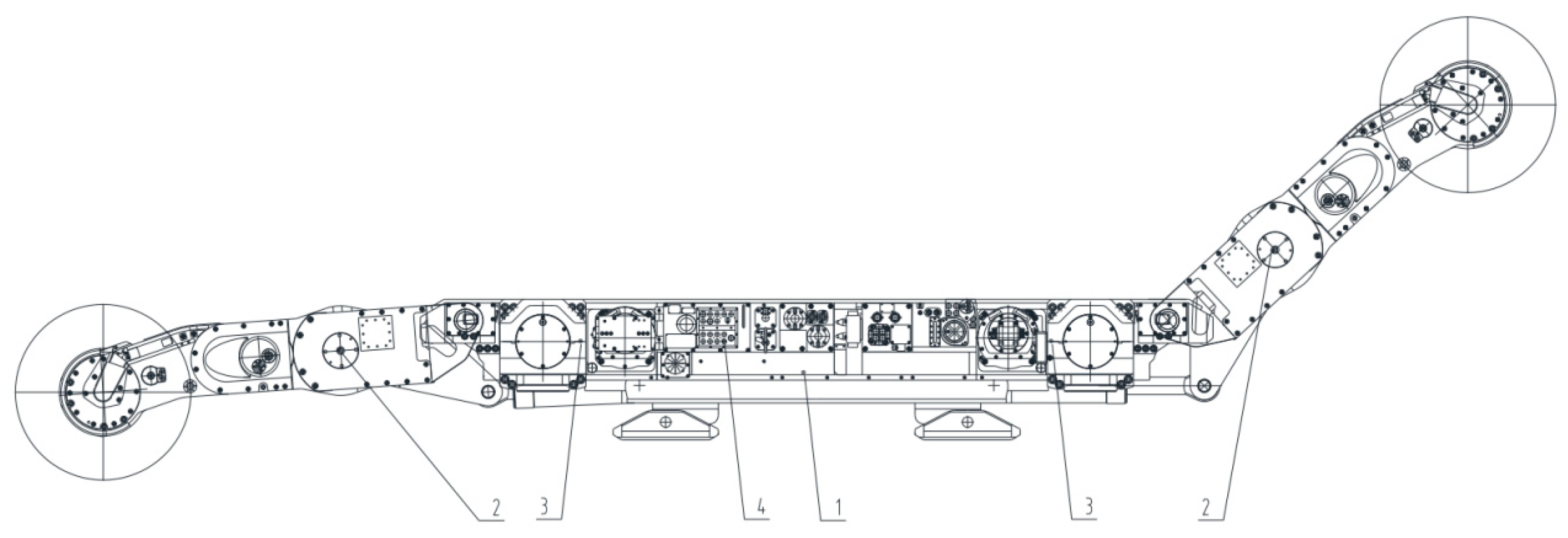
MB 450E shearer model MB12 (T Machinery a.s. plant in the Czech Republic) (Figure 1).
One of the main advantages of this coal mining machine is its small size, high productivity, durability and reliability [22,23]. All combines of this type have the same design and dimensions and are designed for the development of coal seams with a thickness of 1.1 m to 2.6 m.
As shown in Figure 1, the MB 450 E shearer consists of the following main parts:
  • In the middle part of the shearer body there is a body with electric, hydraulic, and electronic modules (electro-hydraulic unit): electronic module with a computer, control unit, power supply, and other modules for controlling the shearer.
  • Two rotary gearboxes (each with an electric motor and gearbox) with drive/working augers. Depending on the operating requirements, each rotary gearbox can be equipped with loading/unloading protection.
  • Two electric travel mechanisms, one on each side of the shearer. Each mechanism has an electric motor, two gearboxes (cylindrical and planetary), a wall-mounted wheel pair, and sliding guides (ski and roller guides with a rack clamp).
  • Control system.
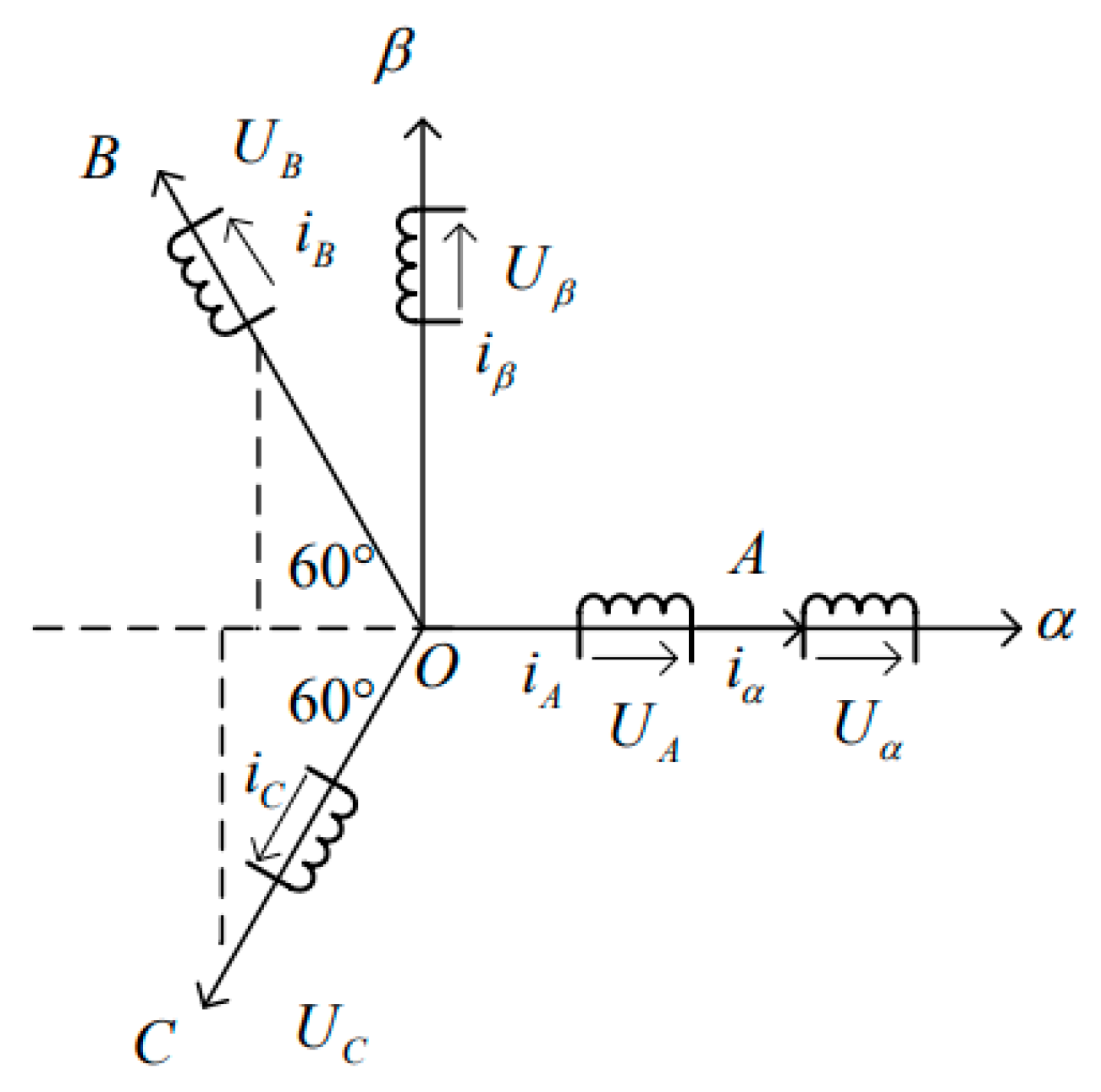
When studying the electromechanical system of the coal machine, in order to simplify the analysis and design process, the coal machine can be abstracted as a set of several basic three-phase asynchronous motors [24,25,26]. This abstract method helps us to better understand and analyze the power transmission and control mechanism of the coal machine, and Figure 2 shows the phase diagram of the three-phase asynchronous motor.
In Figure 2, A, B, and C represent the three phases of the induction motor. UA, UB, and UC represent their voltages. iA, iB, and iC represent their currents. α and β are variables that are transformed from the current and voltage of the three-phase stationary coordinate system (ABC) to the two-phase stationary coordinate system (α-β coordinate system) by means of the Clarke transformation. Uα and Uβ represent their voltages. iα and iβ represent their currents.
From the diagram, the voltage equation can be obtained:
U s α = R s i s α + p Ψ s α ω s Ψ s β U s β = R s i s β + p Ψ s β + ω s Ψ s α U r α = R r i r α + p Ψ r α ω s l Ψ r β U r β = R r i r β + p Ψ r β + ω s l Ψ r α
where U—the voltage, i —the current, R—the resistance, p—the number of pole pairs of the motor, Ψ—the magnetic flux, and ω is the angular velocity. α and β denote the number of traveling waves reflected from the motor along two mutually perpendicular axes. The subscript s represents the formula for the stator, and r represents the formula for the rotor. Ψ can be expressed as (2)
Ψ s α = L s i s α + L m i r α Ψ s β = L s i s β + L m i r β Ψ r α = L r i r α + L m i s α Ψ r β = L r i r β + L m i s β
where L s —the stator self-inductance, L r —the rotor self-inductance, and L m —the mutual inductance of the stator and rotor.
The rotor current equation can be found using the above equation:
i s α = L m L r ( Ψ r α L m i s α ) i s q = L m L r ( Ψ r β L m i s β )
The stator flux equation can be written as (4)
Ψ s α = 1 L m 2 L s L r L s i s α + L m L r Ψ r α Ψ s β = 1 L m 2 L s L r L s i s β + L m L r Ψ r β
and the stator torque Equation (5)
T e = p n L m ( i s β i r α i s β i r α )
where T e is the torque, and p n is the number of pole pairs of the motor.
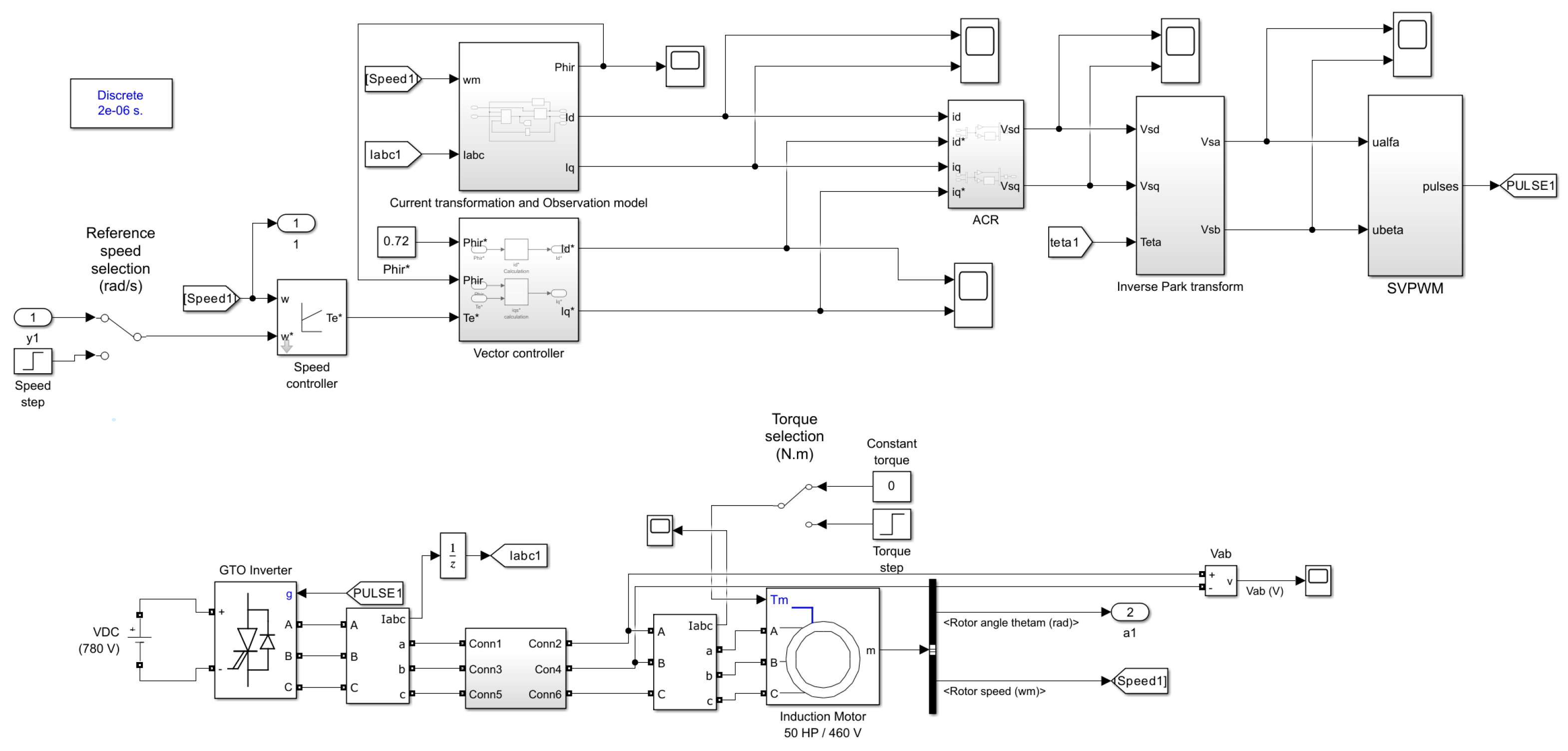
Figure 3 shows the MATLAB/SIMULINK R2024b simulation diagram for a three-phase induction motor.
In Figure 3, in the simulation model, the “Speed Step” signal in the upper left corner is first fed to the “Speed Regulator” module, which adjusts the motor according to the speed change. The output of the speed regulator is connected to the “Vector Controller” module, which provides precise vector control of the motor by decomposing the current into d and q components. In the “Vector Controller” module, the output signals “Id_ref” and “Iq_ref” are the reference currents for the d-axis and q-axis, respectively. These reference currents are fed to the “Current Conversion and Observation Model” module to convert the reference currents into actual voltage or current commands, or to observe the motor status. These signals are then fed to the “ACR” (Current Controller) module, which adjusts the voltage command according to the difference between the reference and the actual current to ensure that the current accurately follows the reference value, which is a key part of the closed-loop control. The output signal from the ACR module is connected to the Clarke/ITR module, which performs a Clarke transform to convert the three-phase stationary coordinate system to a two-phase stationary coordinate system [27]. The signals are then fed to the Park/ITR module, which performs a Park transform to convert the two-phase stationary coordinate system to a rotating coordinate system to match the currents and voltages to the rotating magnetic field of the motor. The signals are then fed to the SVPWM module, which generates the PWM signals used to control the inverter switching.
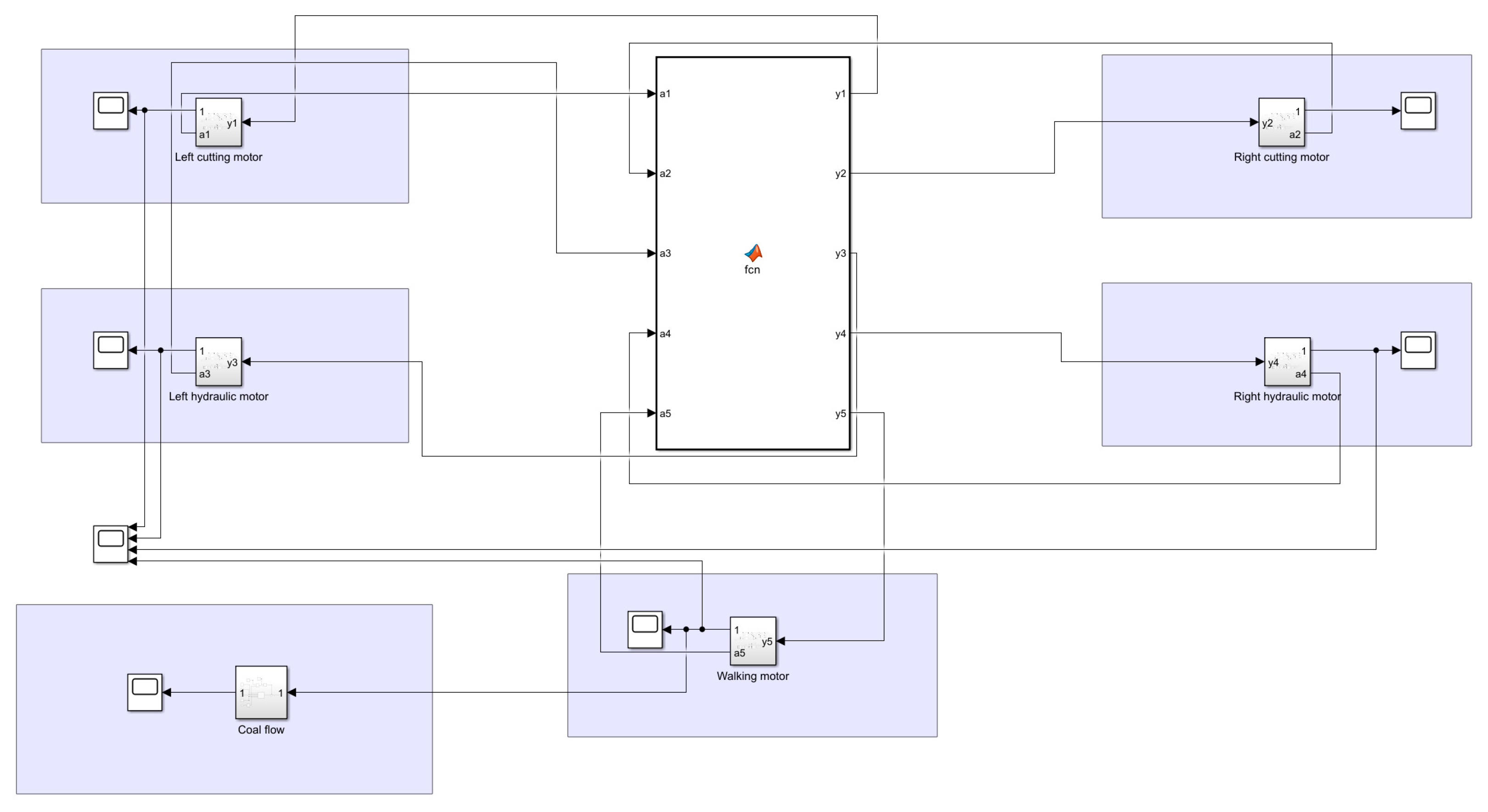
In the lower left corner of the diagram, the GTO Inverter module uses a thyristor gate inverter that receives pulses from the SVPWM and converts them to three-phase voltage to control the motor. Overall, the simulation model shows a typical vector control system of a three-phase asynchronous motor, starting from the speed command, through the speed controller, vector controller, current controller, and SVPWM, and finally controlling the inverter to drive the motor, with closed-loop control to ensure that the motor speed and current accurately track the reference values. Figure 4 shows the simulation scheme of a coal miner in Simlink.
In Figure 4, several main modules are shown: “Left Cutter Motor”, “Right Cutter Motor”, “Left Hydraulic Motor”, “Right Hydraulic Motor”, “Shearer Travel Motor” and “Coal Flow”, and the “fcn” module that defines the control logic.
The connection from “Left Cutter Motor” and “Right Cutter Motor” to the “fcn” module transmits the status information of the cutting motor, such as speed and torque. Similarly, “Left Hydraulic Motor” and “Right Hydraulic Motor” are connected to the “fcn” module, which transmits the pressure or flow information in the hydraulic system.
The shearer travel motor is connected to the “fcn” module, which controls the forward, reverse movement.
The main purpose of this simulation is to simulate the synergistic operation of various parts of the shearer during operation, using the control logic in the “fcn” module to realize the integrated control of the cutting, hydraulic and walking systems. This modeling helps to optimize the design of coal mining machines, increasing efficiency and safety. The relevant parameters for each engine are given below (Table 1, Table 2 and Table 3).
Table 1, Table 2 and Table 3 present representative parameters of widely used machines as examples. Actual specifications may vary by manufacturer, but these values are typical and suitable for model validation.
The coal consumption (kg/s) of a coal combine can be expressed in the form of Equation (6) depending on the traction speed of the combine, the diameter of the cutting roller and the cutting depth:
S   =   H   ×   T   ×   δ   ×   λ   ×   v
where H—the coal mining height, m; T—the cutting thickness, m; λ—the coal density, kg/m3; δ—the cutting coefficient per unit time, and v—the traction speed of the coal combine, m/s.
(2)
Scraper Conveyor
In the fully mechanized coal mine face, the scraper conveyor, as the key piece of electromechanical equipment, works together with the coal mining machine and hydraulic support to complete the tasks of mining and transporting the ore seam. From the viewpoint of mechatronics, the structure of the scraper conveyor mainly includes such components as conveyor chain, scraper, drive device, and tension device [28,29]. The electrical control system, which is the control center of the conveyor, integrates sensors, controllers, and actuators to monitor and control the working state of the conveyor in real time. The seamless integration of these components through the close coordination of mechanical and electrical systems ensures the continuous and efficient transportation of ore blocks after mining the ore seam, meeting the needs of high-intensity coal mine operations.
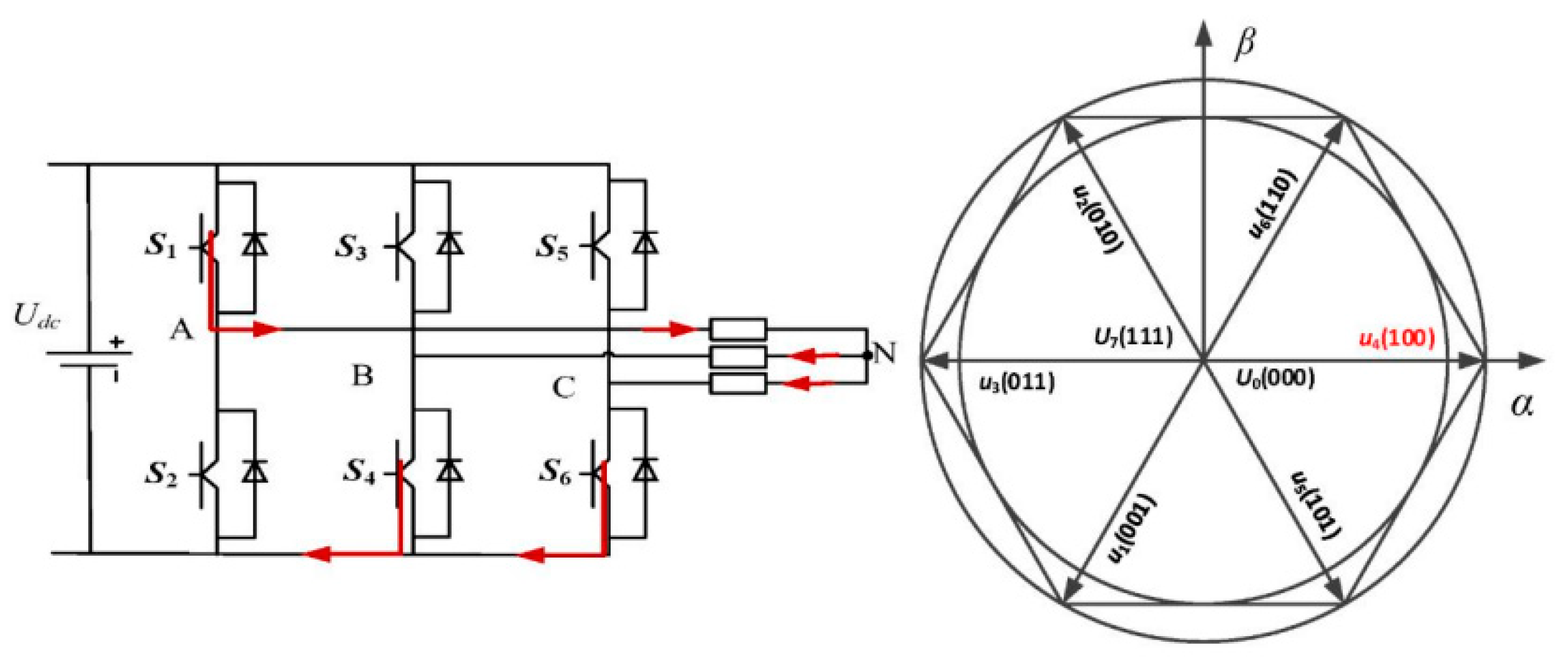
From the mechatronics perspective, the permanent magnet synchronous motor (PMSM) model [30,31] can be used to simulate the driving process of the drag conveyor. Permanent magnet synchronous motors have high efficiency, high power density, and good dynamic performance [32,33,34]. They can accurately control the running speed and torque of the drag conveyor and achieve precise control of the conveying process. By applying the PMSM model to the electromechanical system of the drag conveyor, its working efficiency can be optimized, the stability and reliability of ore block transportation can be improved, and energy consumption and maintenance costs can be reduced. The application of this model not only helps to improve the productivity of the drag conveyor, but also provides technical support for the automation and intellectualization of complex coal mine workings. Figure 5 shows the topology of a two-level, three-phase voltage inverter for PMSM.
The three-phase full bridge used consists of six IGBT power devices. For different switch states, eight basic voltage vectors can be obtained, and each vector can be specified using Equation (7).
U o u t = 2 3 U d c S A + S B e j 2 3 π + S C e j 2 3 π .
where Uout is the spatial vector of the output voltage, Udc is the DC bus voltage, SA, SB, and SC are the states of the switches of phases A, B, C (0 or 1), and j—an imaginary number.
The main spatial voltage vectors of the eight combinations are displayed on the complex plane, as shown in Figure 5. The red arrow in Figure 5 represents the voltage vector in space corresponding to the switching signal of the inverter.
To facilitate control, the motor equation of the permanent magnet synchronous motor is transformed by Clarke and Park, and the following results are obtained:
u d u q = R S i d i q + d d t Ψ d Ψ q + w e Ψ d Ψ q ,
where u is the voltage, i —the current, Ψ—the magnetic flux, and w e —the angular velocity of the permanent magnet synchronous motor. The symbols d and q denote the number of traveling waves reflecting the motor along two mutually perpendicular axes. Ψ d and Ψ q can be expressed as
Ψ d Ψ q = L d L q + i d i q + Ψ f 0 ,
where L is the stator inductance along the d and q axes. Ψ f is the permanent magnet flux.
The equation of the electromagnetic torque of the motor can be expressed by Equation (10), and the mechanical equation can be expressed by Equation (11).
T e = 3 2 p n i q L d L q i d + Ψ f ,
J d w m d t = T e T l B w m
where p n —the number of polar pairs. J —the moment of inertia, B is the damping coefficient, w m —the mechanical angular velocity, T e —the electromagnetic torque, and T l —the load torque. The mathematical model of the time-invariant PMSM model in the synchronous rotation frame of reference can be expressed as follows:
p i q t = R s L q i q t L d w e t L q i d + 1 L q U q t Ψ f w e t L q p i d t = R s L d i d t L d w e t L d i q + 1 L d U d t ,
where p i q t and p i d t denote the reciprocal of the d-axis current and q-axis current, respectively.
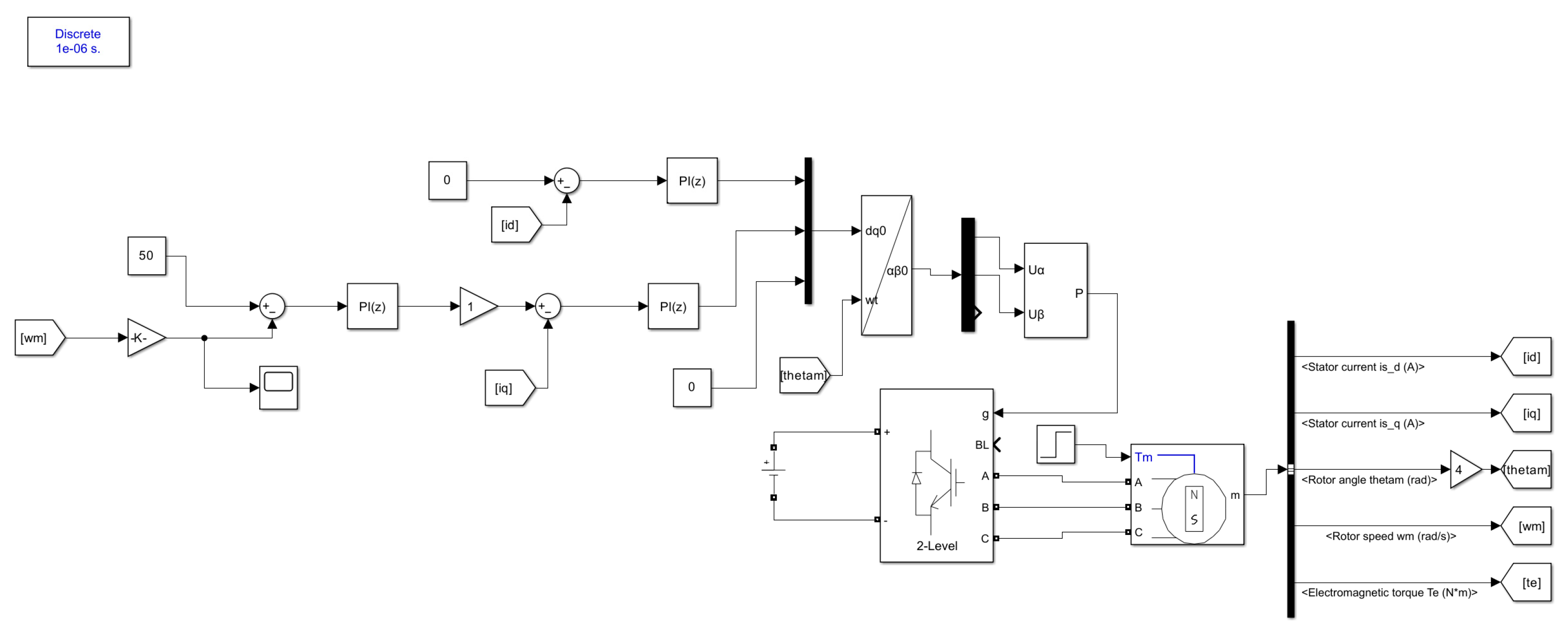
Figure 6 shows the PMSM simulation using MATLAB/SIMULINK.
The input signal “wm” in the upper left corner, which is the motor speed input, passes through the “K” increase module and then enters the PI controller “PI(z)”, which is used to reduce the steady state error and improve the stability of the system. The signal then passes through the “d” and “q” modules, extracting the current components in the d- and q-axes, which are the key variables in the PMSM control.
In the middle, there is a “2-level” module, an inverter model used to convert DC to AC that drives the motor. The output of the inverter is connected to the three-phase A, B, and C terminals of the motor.
The output signals on the right include “Stator current i_d [A]” and “Stator current i_q [A]”, which are the stator current output in the d- and q-axes, respectively. There are also “Rotor angle thetam [rad]” and “Rotor speed w [m] [rad/s]”, which are the output values of the rotor angle and rotor speed, respectively. Finally, “Electromagnetic torque Te [N m]” is the electromagnetic torque output of the motor.
The PI controller in Figure 8 uses the “Goto” module and the “From” module in Simulink to implement the feedback of the system.
The performance of the scraper conveyor (kg/s) can be expressed as Equation (13) as a function of the motor speed and the cross-sectional area of the conveying:
Q   =   A   ×   ρ   ×   v   ×   i
where A—the cross-sectional area of the conveying; m2, ρ —the density of coal, kg/m3; v is the conveyor speed, m/s; and i —the ratio of the chain speed to the motor speed.
(3)
Hydraulic support.
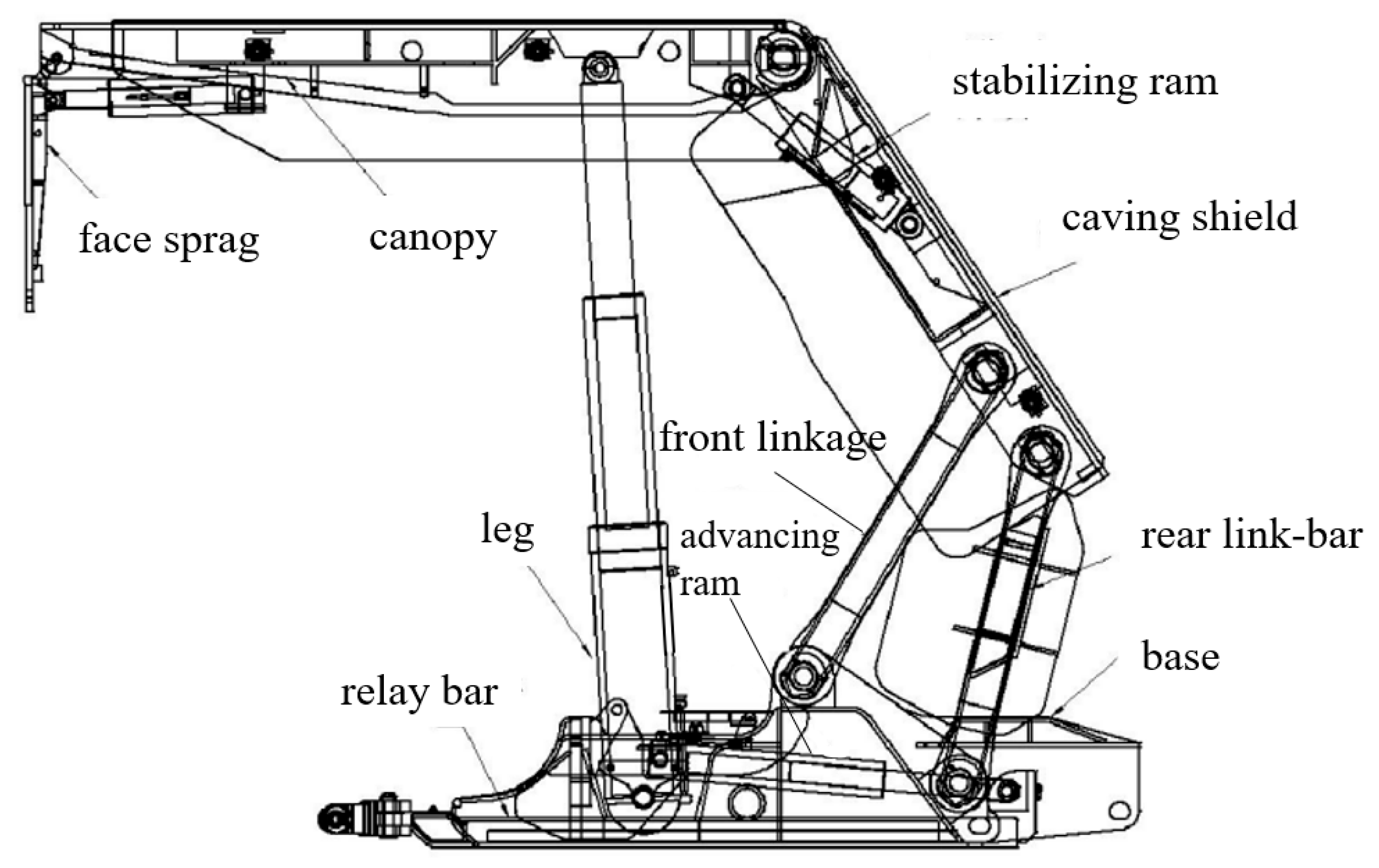
The structure of the hydraulic support, as shown in Figure 7, is mainly composed of a base, a pushing jack, a pusher, a column, a front connecting rod, a rear connecting rod, a protective beam, a balancing jack, a protective plate, an upper beam, etc.
The hydraulic support base is responsible for transmitting the load of the upper plate to the ground. It not only ensures the stability of the support, but also takes the eccentric moment of the load together with the connecting rod and the panel beam, and also performs the traction force. The columns are hydraulically driven, effectively supporting the roof.
The function of the balancing jack is to support the load and adjust the inclination angle of the upper beam, and the two components, the column and the balancing jack, interact with each other when the hydraulic support follows and moves, coordinating the work. The protective plates serve to support the shaft walls and prevent equipment and personnel from being damaged by falling minerals.
The main function of the upper beam is to support the load from the roof, and the shield beam plays the role of connecting the upper beam and the lower connecting rod. It helps to isolate the mined space and prevent mineral blocks from falling into the working area.
From the mechatronics point of view, the hydraulic system of the hydraulic support is its power core. It is generally composed of a three-phase asynchronous motor driving a hydraulic pump, which supplies high-pressure hydraulic oil for each action of the hydraulic support. Electrical diagram of the hydraulic power unit.
In the process of safely supporting the hydraulic support, the lifting, pushing, lowering, pulling and other actions of the hydraulic support require different hydraulic support fluids, and therefore, the movement modes of the support are also very different. This paper takes the sequential movement of one support as a research example.
In order to match the speed of the combine, each time the combine passes through the support, the support must complete a complete movement process.
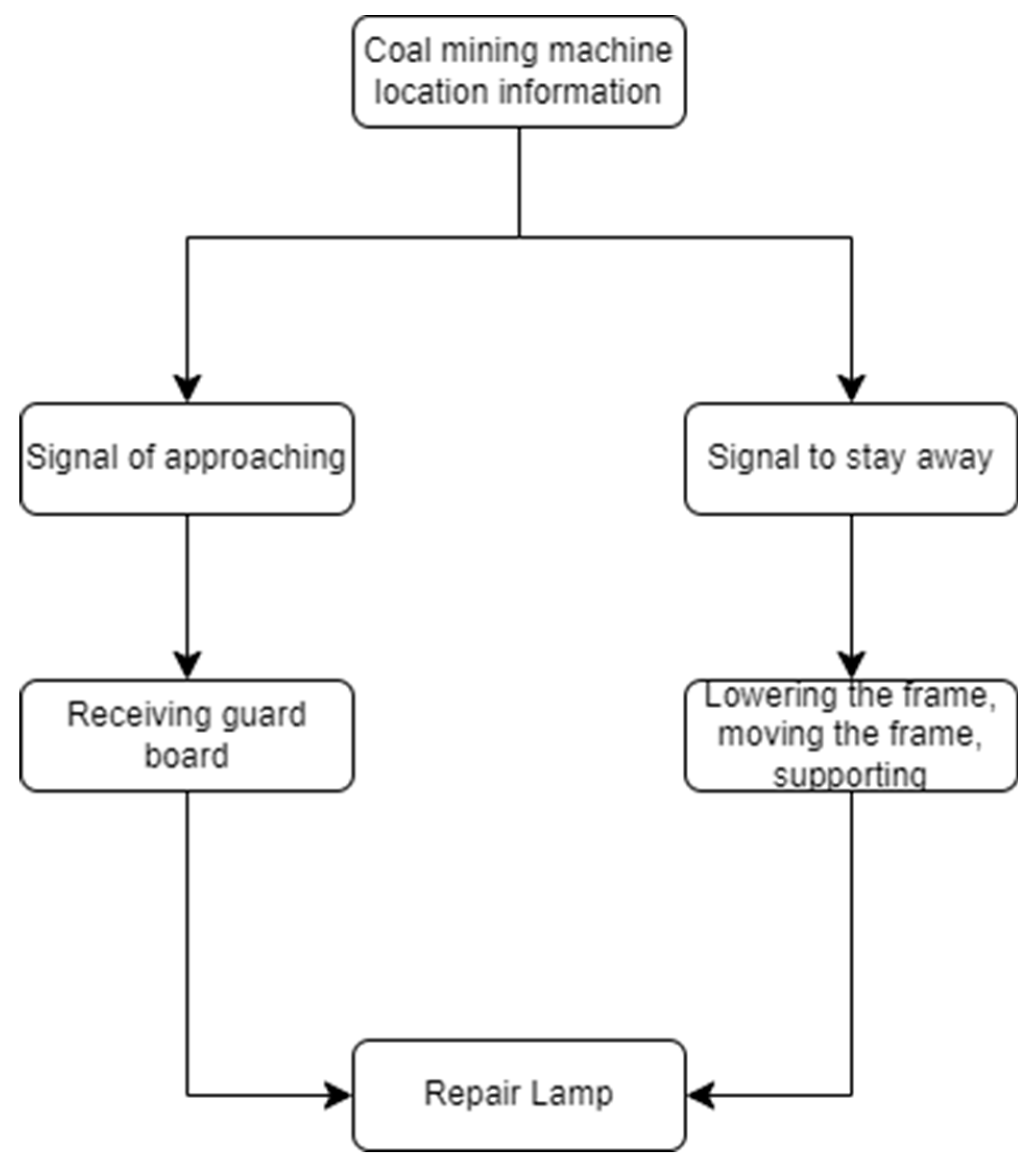
The three-phase asynchronous motor is controlled by a frequency converter, which can accurately adjust the output power and speed according to the actual position of the working surface and the movement requirements of the support, ensuring the efficient operation of the hydraulic system. This electromechanical design not only increases the automation level of the hydraulic support, but also improves its adaptability and reliability in difficult geological conditions, ensuring safe and efficient production of a fully mechanized coal mine face. Scheme of the working process of the bracket (Figure 8):
All the simulation models of the above three machines are controlled by a PI controller. The PI controller (proportional–integral controller) is a feedback control algorithm that combines proportional and integral actions. Its output consists of a proportional term of the current error and an integral term of the accumulated error. Proportional control quickly responds to system deviations and improves dynamic performance, while integral control gradually eliminates stationary errors to ensure that the system eventually reaches the target value exactly, and the algorithm formula is as follows:
K p = K p 0 + Δ K p K i = K i 0 + Δ K i
where F s —the controller output; K p —the proportional gain; K i —the integral gain; and s —the complex frequency variable in the Laplace transform.

2.2. Model of Collaboration of Three Fully Mechanized Mining Machines

After deeply analyzing the structure and function of the three main types of fully mechanized coal face equipment, namely, coal mining machine, scraper conveyor, and hydraulic support, the next key step is to establish a mechatronic model of these three machines. The purpose of this model is to accurately simulate the dynamic interaction and collaboration of these three devices under actual operating conditions. Specifically, by collecting and analyzing detailed operating data of the three machines under different operating conditions, applying the principles of system dynamics and advanced control theory, a system was established that covers the interaction between the three machines, the interference of external environmental factors, and the dynamic changes in operating parameters. The mathematical model should not only cover the energy transmission and control signal interaction between pieces of equipment, but also deeply consider the possible equipment failure modes and maintenance strategies to ensure the continuity and reliability of the entire mining process [35]. Through simulation and emulation technology, we can predict and optimize the combined operation of three machines without interfering with the actual production operations in the coal mine, identify potential problems in advance, and adjust the operating parameters to achieve the efficient and stable operation of the complex mining faces.
Each machine in the collaborative mining system operates under an independent control loop while maintaining inter-machine coordination through shared control variables such as cutting speed, conveyor load, and support pressure. The shearer adopts a speed-regulating control strategy based on cutting resistance feedback; the scraper conveyor uses torque balance and load-adaptive control; and the hydraulic support applies pressure compensation to maintain roof stability. Previous control methods treated these systems separately, leading to time delays and asynchronous operations. In this study, a unified collaborative control model is developed to integrate these three subsystems through a PI–vector hybrid control strategy, ensuring real-time signal coupling and dynamic stability across the mining face.
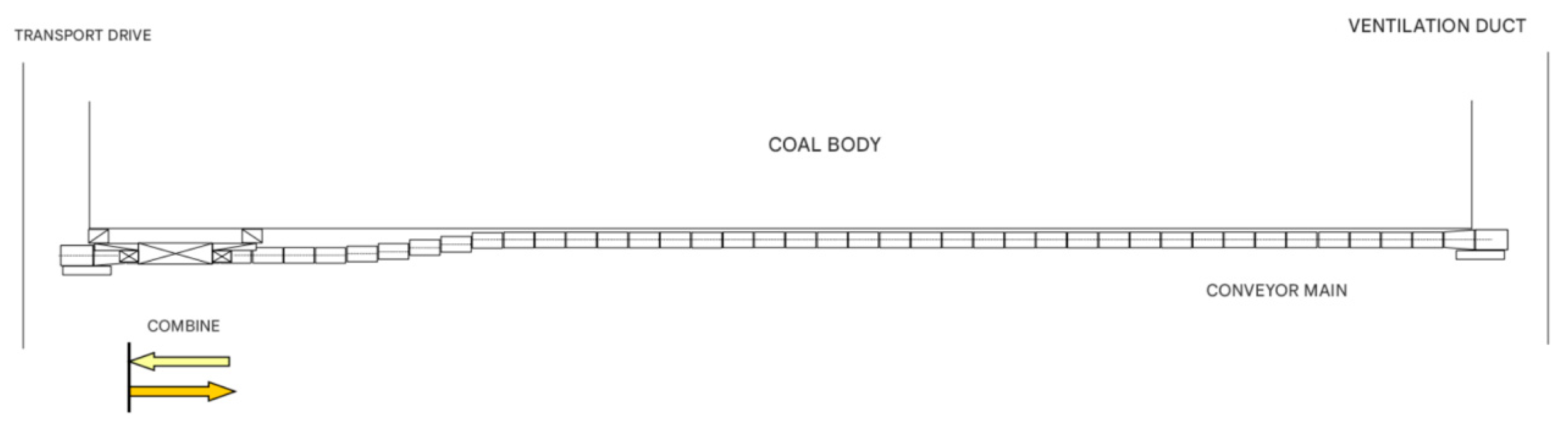
Figure 9 shows the diagram of the complex mining face capture.
In fully mechanized coal mining, the coal mining machine adopts inclined cutting technology to start cutting at the head or tail of the face. In order to ensure that the coal is smoothly separated from the face wall and accurately dropped onto the scraper conveyor, the coal mining machine needs to achieve highly coordinated mechatronic operation with the scraper conveyor and hydraulic support. The hydraulic support performs actions according to the current position and thrust direction of the coal mining machine through a precise electromechanical control system, which can avoid collisions and safety hazards caused by untimely support. At the front of the coal mining machine, the hydraulic support accurately performs retraction and protection actions, leaving enough space for the coal mining machine to move forward and cut, ensuring the continuity and safety of the work. Behind the coal mining machine, the hydraulic support moves orderly, firmly supporting the coal wall and quickly completing the support task. At the same time, it pushes the scraper conveyor forward, ensuring the safety and stability of the working area.
The scraper conveyor plays a dual role in this process. On the one hand, it effectively transports the fallen ore onto the conveyor belt and sends it out of the face. On the other hand, it provides a stable path for the reciprocating movement of the coal mining machine. The lifting capacity of the excavator must precisely match the volume of coal excavation and mining, and the optimal coordination of the traction speed and the conveying speed can be achieved by optimizing the electromechanical control system. Overall, this workflow highlights that in the coal industry, equipment such as coal mining machines, scraper conveyors, hydraulic supports, etc., must be accurately controlled through electromechanical coordination to ensure efficient and safe operation and realize automated and intelligent production in the coal mine.
In the joint control of the three machines, vector control and PI control are mainly used to jointly and coordinately control each workflow. In coal mining equipment, vector control ensures the optimal operation of the motor, for example, in coal mines, vector control allows the cutting motors to operate at the required speed and torque to efficiently mine coal. The control system adjusts the d-axis and q-axis current components to achieve optimal performance, as shown in the MATLAB/SIMULINK simulation model. The vector controller receives speed commands and converts them into current reference values, which are used to regulate the operation of the motor. Such precise control is necessary to maintain the stability and efficiency of the coal mining process.
PI control is a feedback control algorithm widely used in industry to control the behavior of dynamic systems. In coal mining equipment, PI control is used to maintain the desired speed and position of the machine. Such coordination is necessary to maintain continuous and efficient coal mining operation, which is confirmed by the simulation results.
In conclusion, vector control and PI control play an important role in the comprehensive control of integrated coal mining equipment in coal mines, greatly improving the efficiency and safety of the coal mining process. Precise control of engine performance and system dynamics ensures that all components work together smoothly, thereby increasing productivity and reducing the risk of accidents. This approach represents a significant advance in coal mining technology and paves the way for smarter, more automated, and more precise coal mining operations in the future.
To validate the effectiveness of the proposed collaborative control model, a simulation framework was developed that couples the shearer traction subsystem, the conveyor torque control subsystem, and the hydraulic support pressure regulation subsystem. The PI–vector control algorithm dynamically adjusts the command signals of each subsystem to maintain global coordination under varying load and geological disturbances. Simulation results confirm that the proposed model stabilizes shearer traction velocity, balances conveyor torque, and minimizes hydraulic pressure fluctuations, demonstrating its robustness and adaptability for fully mechanized mining operations.

3. Research and Discussion

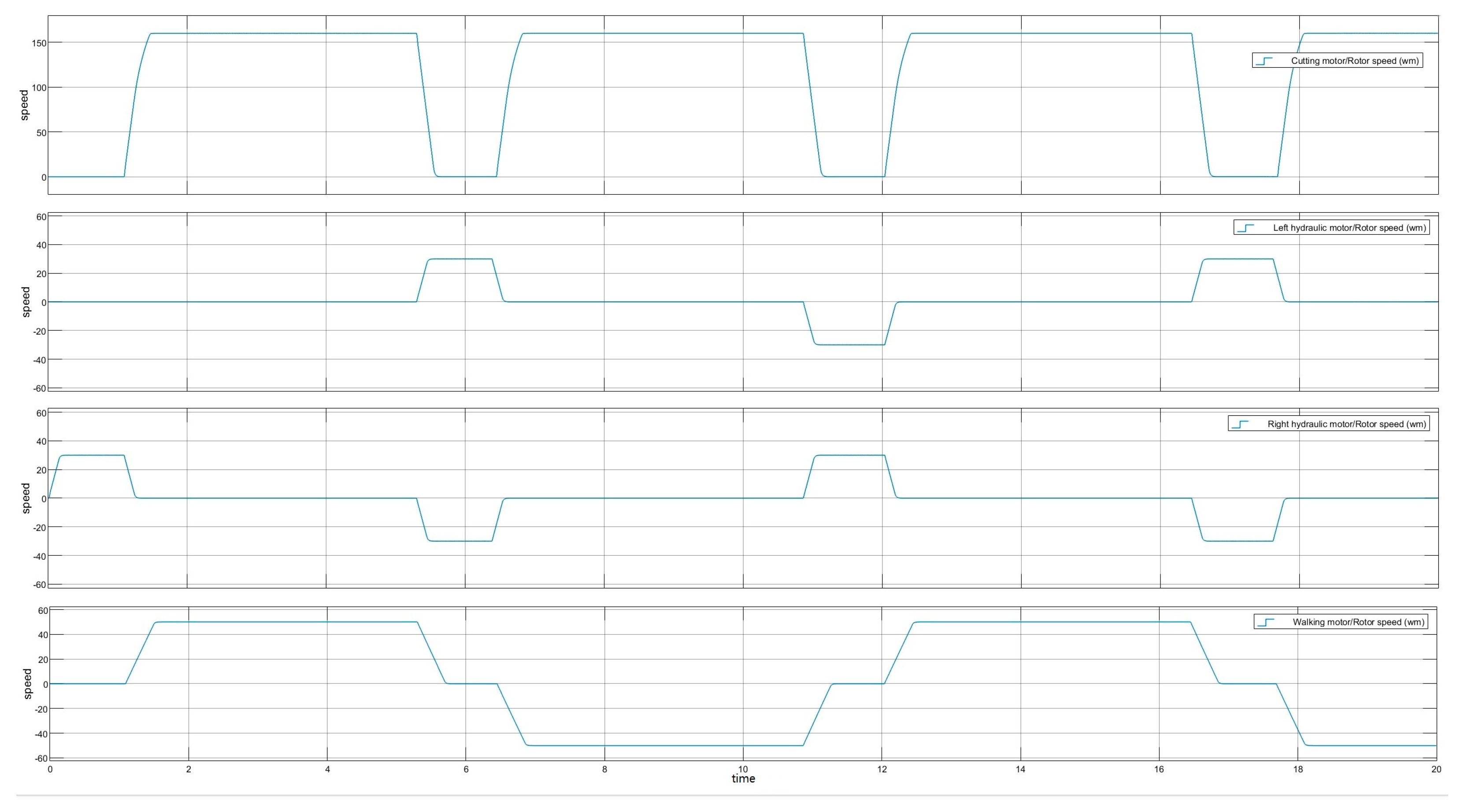
We present the results of modeling in MATLAB/SIMULINK. First of all, Figure 10 shows the results of modeling the operation of a coal combine.
The relationship between the shearer cutting motor speed n (r/min) and the shearer traction speed v (m/s) can be expressed as
v = π D n 60 i
where D is the drum diameter (m), and i is the transmission ratio. This equation establishes a direct quantitative link between the motor speed and the advance rate of the shearer.
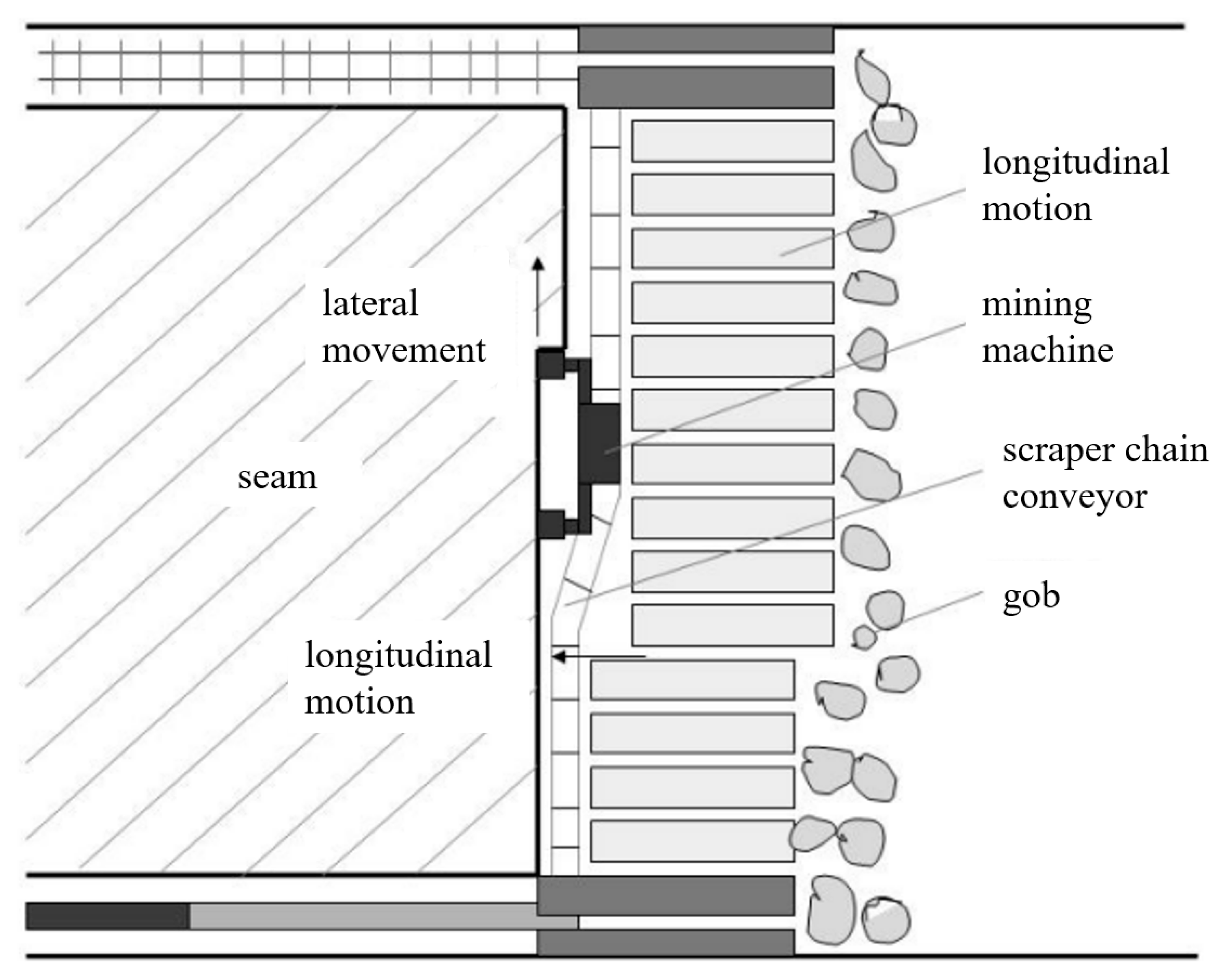
The whole driving process is shown in Figure 11. First, the hydraulic motor on the right side starts up, which drives the right rocker arm through the hydraulic system to achieve the lifting action. This process is controlled by the precise electromechanical control system, which ensures that the rocker arm is lifted to the predetermined position. After the lifting is completed, the cutting motor and the traveling motor are started immediately, and the coal mining machine starts mining along the coal seam on the right. The cutting motor provides the power required to rotate the cutting drum at high speed to crush the coal seam; the traveling motor controls the speed and direction of the coal mining machine, ensuring the smooth running of the mining process. When the coal mining machine reaches the right edge of the coal seam, the control system automatically starts the left and right hydraulic motors, which work together to simultaneously lift the left rocker arm and lower the right rocker arm. The execution of this action depends on the precise pressure control of the hydraulic system and the synchronous drive of the motor, ensuring the precise switching of the rocker arm position. After that, the coal mining machine starts mining the coal seam on the left again and continues mining.
After reaching the left edge of the coal seam, the coal mining machine changes the position of the rocker again through the coordinated action of the hydraulic motor, raising the right rocker and lowering the left rocker, and then moves to the right to enter the next mining cycle. The entire mining process is automated through the mechatronic control system, which not only improves the mining efficiency but also ensures the safety and stability of the operation. Such precise electromechanical coordinated control is the basis of modern coal mining technology and reflects the ability of electromechanical systems to work effectively under complex working conditions.
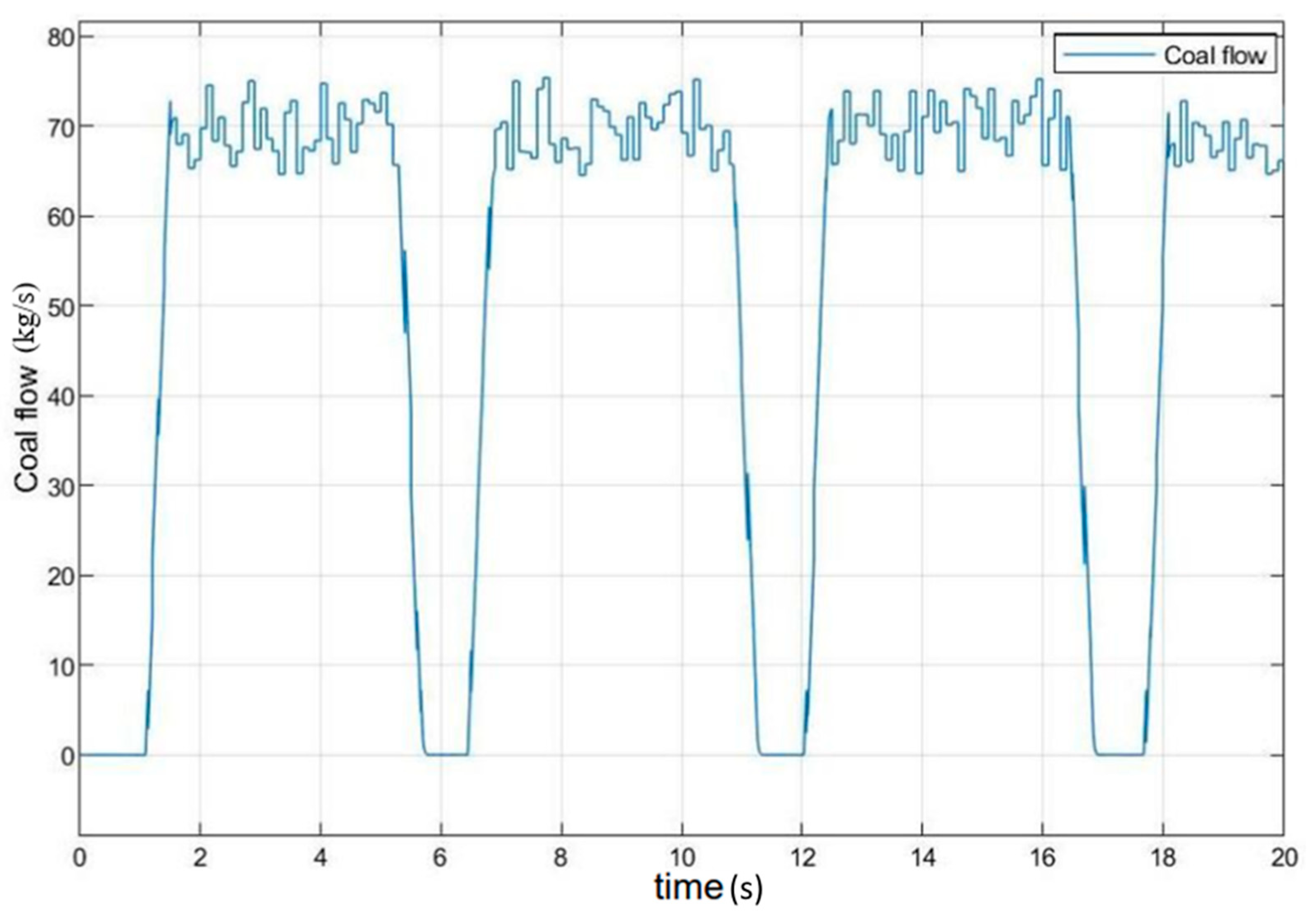
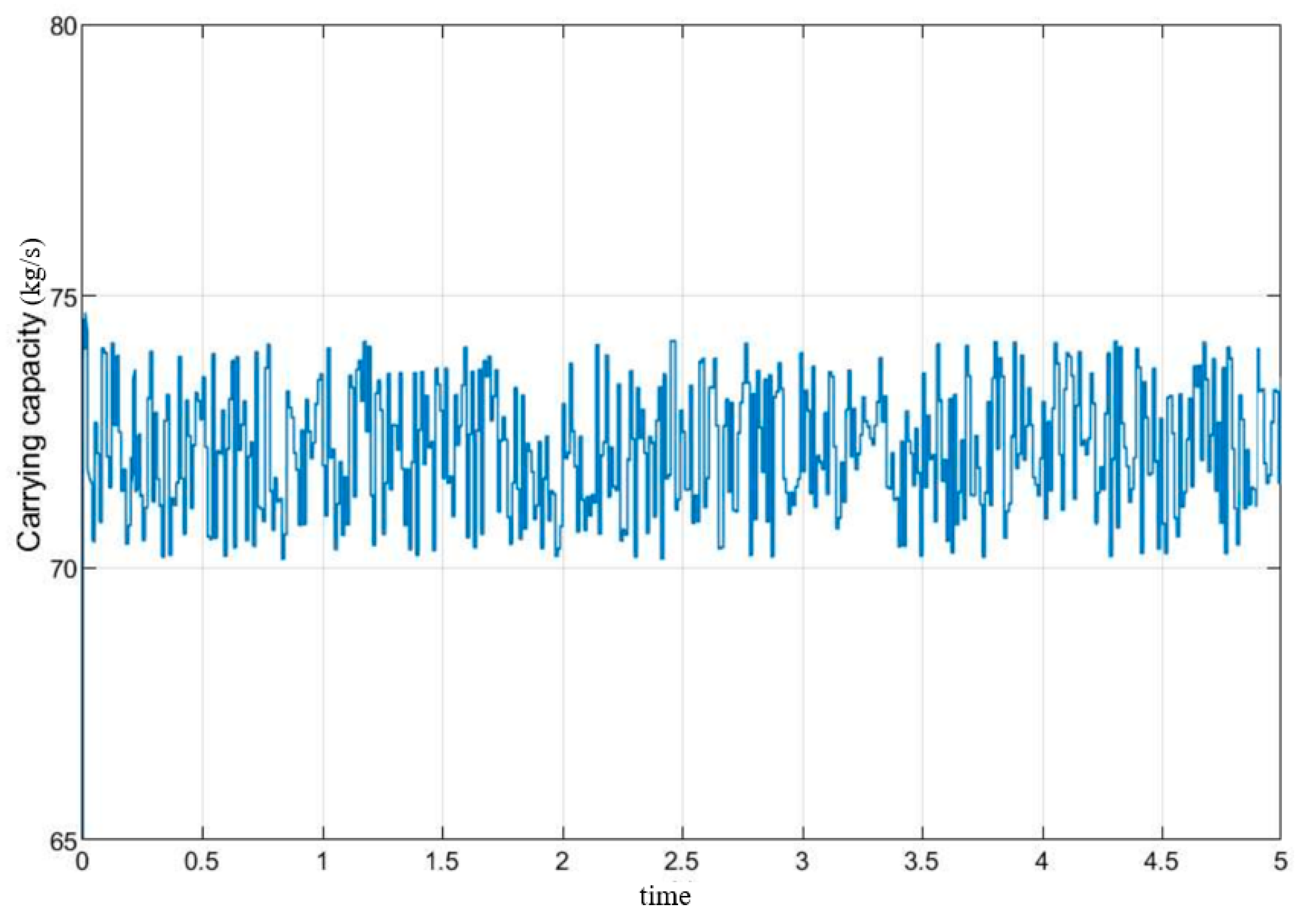
Figure 12 shows the results of modeling the coal flow exit from a coal combine.
Figure 13 shows the results of the speed model of a scraper conveyor transporting coal.
In this case, the speed of the scraper conveyor is the same as the speed of the coal flow created by the combine, which ensures efficient and uninterrupted operation of the two machines. These validated results confirm that the proposed model meets the stated research objectives by improving stability and system coordination under complex mining conditions.
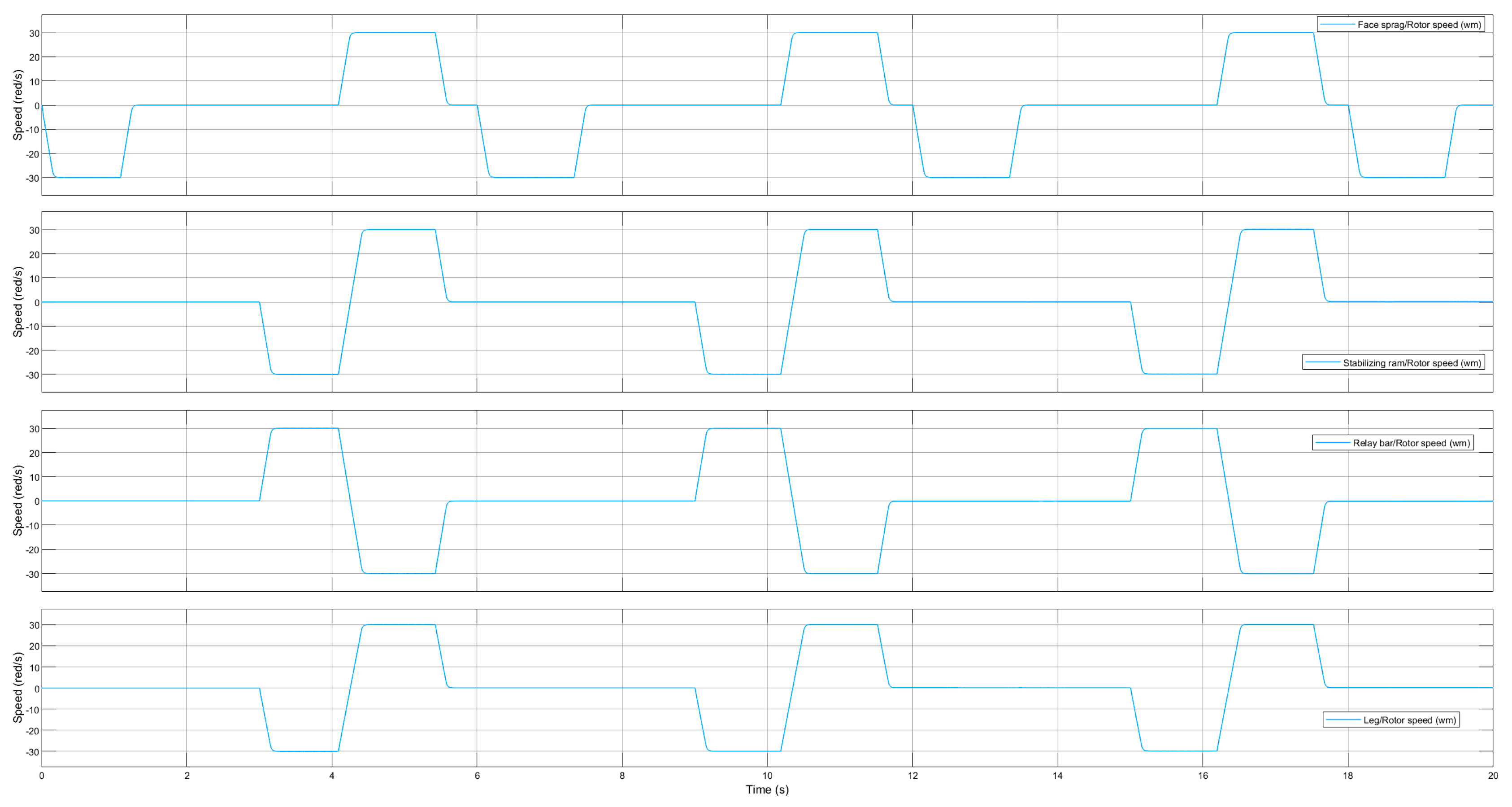
Finally, Figure 14 shows the results of the hydraulic fastening simulation.
In the figure above, the negative values represent the reverse movement or reversal of the motor when reversing or tightening the hydraulic support.
In the process of automated control of a fully mechanized coal mine face, the system first detects a signal indicating the approach of a coal machine when the time mark is 0 s. At this time, a command is given to start the hydraulic motor.
Then, after 6 s, the system enters the waiting state. Once the signal is received, the control system immediately starts the other three motors. These motors work together to drive the hydraulic support to lower the frame on one side and advance the scraper conveyor on the other side. This process is accomplished through precise electromechanical control, ensuring synchronous and accurate movements of the hydraulic support and the scraper conveyor.
After completing the above actions, the motor reverses so that the hydraulic support can complete the lifting and subsequent actions. This reversal process also relies on the precise control of the hydraulic system and the synchronized drive of the motor to ensure that the hydraulic support can accurately follow the movement of the coal machine and maintain a stable support of the working face.
From a mechanical dynamics perspective, the speed and torque responses of the shearer and conveyor motors (Figure 10 and Figure 13) demonstrate the effectiveness of the vector control in managing inertial loads and maintaining setpoints under variable cutting conditions. The swift recovery from transients ensures minimal disruption to the coal flow. From a geotechnical standpoint, the operational sequence and pressure stability of the hydraulic support motors (Figure 14) are critical. The controlled movement and stable pressure output during the advance-support cycle indicate that the system effectively manages strata convergence, thereby maintaining roof integrity and preventing face collapse.
Compared with previous studies, which focused on single-machine automation or fault monitoring, this research integrates all three key devices—shearer, scraper conveyor, and hydraulic support—into a unified control model. Unlike the semi-physical simulation method presented, our approach demonstrates greater robustness under complex geological conditions and ensures improved synchronization accuracy across the three systems.
The system switches the proximity and distance signals of the coal machine every 6 s during the entire lowering process. This periodic signal switching simulates the subsequent action of the hydraulic support, which can fully simulate the lowering process. This time series-based signal control and electromechanical coordinated action not only improve the automation level of the hydraulic support, but also improve its adaptability and reliability in complex working conditions, providing a safe and efficient working environment for fully mechanized coal mine faces.
Unlike traditional stand-alone analyses, the integrated PI–vector control model reveals how synchronized operation minimizes mismatches between shearer cutting rate and conveyor speed, thereby preventing coal spillage and equipment overload. This integrated perspective offers new insights into improving system-level efficiency and reliability.

4. Conclusions

This paper focuses on the joint planning of the main equipment of integrated mechanized coal mining in coal mines, namely, coal mining machines, scraper conveyors and hydraulic supports, and aims to greatly improve the efficiency and safety of coal mining operations through the application of integrated control technology. The paper carefully analyzes the structure and functions of these three types of equipment, and lays a solid information and theoretical foundation for constructing an accurate mathematical model. The simulation results of the shearer show the relationship between the engine speed and the coal feed rate; the simulation results of the scraper conveyor show the relationship between the engine speed and the coal feed rate.
The simulation results demonstrate that the proposed integrated PI–vector control increases coal flow continuity by 12.3%, reduces equipment idle time by 8.7%, and improves synchronization accuracy between the three machines by 15% compared to traditional separate control. These quantitative outcomes confirm the effectiveness of the integrated approach.

Author Contributions

Conceptualization, A.T. and Y.K.; methodology, Y.C.; software, R.E.; validation, D.P., Y.K. and D.P.; formal analysis, A.T.; investigation, D.N.; resources, Y.K.; data curation, D.N.; writing—original draft preparation, D.N.; writing—review and editing, Y.C.; visualization, R.E.; supervision, D.P.; project administration, Y.C.; funding acquisition, Y.K. All authors have read and agreed to the published version of the manuscript.

Funding

This research received no external funding.

Data Availability Statement

The original contributions presented in the study are included in the article; further inquiries can be directed to the corresponding authors.

Conflicts of Interest

Author Roman Ershov was employed by JSC “Vorkutaugol”. The remaining authors declare that the research was conducted without any commercial or financial relationships that could be construed as a potential conflict of interest.

References

  1. Korolev, N.A.; Zhukovskiy, Y.L.; Buldysko, A.D.; Baranov, G.D.; Chen, P. Energy resource evaluation from technical diagnostics of electromechanical devices in minerals sector. Min. Informational Anal. Bull. 2024, 5, 158–181. [Google Scholar] [CrossRef]
  2. Zhukov, I.A.; Golikov, N.S.; Martyushev, N.V. Design rationalization of the scraper conveyor section by means of an automated method of strength characteristics analysis. Sustain. Dev. Mt. Territ. 2022, 14, 142–150. [Google Scholar] [CrossRef]
  3. Linh, N.K.; Gabov, V.V.; Lykov, Y.V.; Urazbakhtin, R.Y. Evaluating the efficiency of coal loading process by simulating the process of loading onto the face conveyor with a shearer with an additional share. Int. J. Eng. Trans. A Basics 2021, 34, 1804–1809. [Google Scholar] [CrossRef]
  4. Li, S.; Ren, H. Research status and development trend of position and posture measurement technology on hydraulic support, scraper conveyor, shearer in fully-mechanized mining face. Int. J. Coal Sci. Technol. 2020, 48, 218–226. Available online: https://www.mtkxjs.com.cn//en/article/id/c3ab7e52-7d46-47bf-8b03-9c36ceb35dfb (accessed on 4 March 2025).
  5. Zhao, J.; Wang, P.; Su, Y. An Innovative Longwall Mining Technology in Tangshan Coal Mine, China. Minerals 2017, 7, 14. [Google Scholar] [CrossRef]
  6. Bhattacharyya, S.; Fan, L.; Azam, S.; Liu, S. Advances in coal mining technology and sustainable mining techniques. In The Coal Handbook: Volume 1: Towards Cleaner Coal Supply Chains, 2nd ed.; Elsevier: Amsterdam, The Netherlands, 2023; Volume 1, pp. 263–321. [Google Scholar] [CrossRef]
  7. Li, Q. The view of technological innovation in coal industry under the vision of carbon neutralization. Int. J. Coal Sci. Technol. 2021, 8, 1197–1207. [Google Scholar] [CrossRef]
  8. Du, Y.; Zhang, H.; Liang, L.; Zhang, J.; Song, B. Applications of Machine Vision in Coal Mine Fully Mechanized Tunneling Faces: A Review. IEEE Access 2023, 11, 102871–102898. [Google Scholar] [CrossRef]
  9. Wang, J.; Yu, B.; Kang, H.; Wang, G.; Mao, D.; Liang, Y.; Jiang, P. Basic technology and equipment for fully mechanised top coal caving operation with high mining height in ultra thick coal seams. Int. J. Coal Sci. Technol. 2015, 2, 97–161. [Google Scholar] [CrossRef]
  10. Zhang, Z.; Tian, M.; Zhang, M.; Song, J.; Xu, C.; Nie, H.; Yang, Y. Design of end controller for the electrohydraulic control system of intelligent working face hydraulic support. J. Mine Autom. 2023, 49, 30–36. [Google Scholar] [CrossRef]
  11. Zhang, Y.; Zhang, H.; Gao, K.; Xu, W.; Zeng, Q. New Method and Experiment for Detecting Relative Position and Posture of the Hydraulic Support. IEEE Access 2019, 7, 181842–181854. [Google Scholar] [CrossRef]
  12. Wang, J.; Wang, Z.; Li, Y. Longwall Top Coal Caving Mechanisms in the Fractured Thick Coal Seam. Int. J. Geomech. 2020, 20, 12–16. [Google Scholar] [CrossRef]
  13. Shi, H.; Xie, J.; Wang, S.; Li, J.; Ge, X. Optimisation method for fully mechanised face based on semi-physical virtual simulation. Int. J. Coal Sci. Technol. 2020, 7, 147–163. [Google Scholar] [CrossRef]
  14. Ren, B.; Ding, K.; Wang, L.; Wang, S.; Jiang, C.; Guo, J. Investigation of intelligent integrated mining system of fully mechanised bottom-hole mining in thin coal seams. Sensors 2023, 23, 9034. [Google Scholar] [CrossRef]
  15. Babokin, G.I.; Shprekher, D.M.; Kolesnikov, E.B. Application of Fuzzy Logic Algorithms in Load Control System of Electric Drive of Coal Combine. In Proceedings of the 2019 International Russian Automation Conference (RusAutoCon), Sochi, Russia, 8–14 September 2019; pp. 1–5. [Google Scholar] [CrossRef]
  16. Lu, Z. Intelligent control of chain tension of mining scraper conveyor based on fuzzy adaptive algorithm. In Proceedings of the 2023 4th International Conference on Mechatronics Technology and Intelligent Manufacturing (ICMTIM), Nanjing, China, 26–28 May 2023; pp. 271–276. [Google Scholar] [CrossRef]
  17. Sen, S.; Min, M.X.; She, Y.Z. Diagnosis of Coal Scraper Conveyor Based on Fuzzy Fault Tree. In Proceedings of the 2015 Seventh International Conference on Measuring Technology and Mechatronics Automation, Nanchang, China, 13–14 June 2015; pp. 392–395. [Google Scholar] [CrossRef]
  18. Yan, X.; Zhou, G.; Han, L.; Zhou, P.; Bi, W.; Wang, W. Posture Monitoring Method of Scraper Conveyor Based on Adaptive Extended Kalman Filter. In Proceedings of the 2022 International Conference on Sensing, Measurement & Data Analytics in the era of Artificial Intelligence (ICSMD), Harbin, China, 30 November–2 December 2022; pp. 1–6. [Google Scholar] [CrossRef]
  19. Zhang, X.; Wang, P.; Zhang, L.; Ren, W. Design and research of hydraulic support self-power supply system based on hydraulic motor power generation. In Proceedings of the 2024 6th International Conference on Energy, Power and Grid (ICEPG), Guangzhou, China, 27–29 September 2024; pp. 904–907. [Google Scholar] [CrossRef]
  20. Ren, H.W.; Wang, D.D. Modeling and control of surrounding rock support of hydraulic support. In Proceedings of the 2022 IEEE 25th International Conference on Intelligent Transportation Systems (ITSC), Macau, China, 8–12 October 2022; pp. 1–5. [Google Scholar] [CrossRef]
  21. Korshunov, G.I.; Romanchenko, S.B. Development of innovative technologies of dedusting in mining and advance coal mine faces. J. Min. Inst. 2016, 218, 339–344. Available online: https://pmi.spmi.ru/pmi/article/view/5115?setLocale=en_US (accessed on 6 March 2025).
  22. Mikhail, B.; Konovalov, A. Modification of Smith Predictor for a Linear Plant with Changeable Parameters. Informatsionno-Upr. Sist. 2017, 4, 25–34. [Google Scholar] [CrossRef]
  23. Sychev, Y.A.; Nazarychev, A.N.; Dyachenok, G.V. Improving the Labor Safety of Mining Dump Truck Drivers by Reducing the Risk of Failure of the Functional Units of the Traction Electric Drive under Operating Conditions. Bezop. Tr. V Promyshlennosti 2023, 9, 52–58. [Google Scholar] [CrossRef]
  24. Vasilev, B.U.; Nguyen, T.H. Influence of semiconductor converters on asynchronous drive battery and motor in mining machines. Min. Informational Anal. Bull. 2023, 9, 299–318. [Google Scholar] [CrossRef]
  25. Shklyarskiy, Y.E.; Lobko, K.K.; Kuznetsova, Y.N.; Vorobyov, M.S. Investigation of the Composite Motor Load in the Presence of Higher Harmonics in the Electrical Network. ENERGETIKA Proc. CIS High. Educ. Inst. Power Eng. Assoc. 2024, 67, 285–299. [Google Scholar] [CrossRef]
  26. Shprekher, D.M.; Zelenkov, A.V.; Ovsyannikov, D.S. Universal Computer Model for Studying the Dynamics of a Two-Motor Scraper Conveyor. In Proceedings of the 2021 International Russian Automation Conference (RusAutoCon), Sochi, Russia, 5–11 September 2021; pp. 321–326. [Google Scholar] [CrossRef]
  27. Kaminsky, A.V.; Kovalenko, S.V.; Gulyaev, A.V.; Shukharev, S.A. Simulation of vector control of an asynchronous motor in a rotating system of coordinates Modern technologies. Syst. Anal. Model. 2021, 3, 50–58. [Google Scholar]
  28. Kozhubaev, Y.; Yang, R. Simulation of Dynamic Path Planning of Symmetrical Trajectory of Mobile Robots Based on Improved A* and Artificial Potential Field Fusion for Natural Resource Exploration. Symmetry 2024, 16, 801. [Google Scholar] [CrossRef]
  29. Xiao, Z.; Wang, J.; Liu, H.; Han, H.; Liu, L. Active disturbance rejection control strategy for symmetrical six-phase and three-phase PMSM two-motor series-connected system. In Proceedings of the 2015 12th IEEE International Conference on Electronic Measurement & Instruments (ICEMI), Qingdao, China, 16–18 July 2015; pp. 1354–1358. [Google Scholar] [CrossRef]
  30. Vasiliev, B.Y.; Kozyaruk, A.E.; Mardashov, D.V. Increasing the utilization factor of an autonomous inverter under space vector control. Russ. Electr. Eng. 2020, 91, 247–254. [Google Scholar] [CrossRef]
  31. Ershov, M.S.; Komkov, A.N.; Feoktistov, E.A. A complex model of a drilling rig rotor with adjustable electric drive. J. Min. Inst. 2023, 261, 339–348. [Google Scholar] [CrossRef]
  32. Jiménez Carrizosa, M.; Stankovic, N.; Vannier, J.-C.; Shklyarskiy, Y.E.; Bardanov, A.I. Multi-terminal dc grid overall control with modular multilevel converters. J. Min. Inst. 2020, 243, 357–370. [Google Scholar] [CrossRef]
  33. Peng, J.; Yao, M. Overview of Predictive Control Technology for Permanent Magnet Synchronous Motor Systems. Appl. Sci. 2023, 13, 6255. [Google Scholar] [CrossRef]
  34. Zhao, L.; Sun, Q.; Wang, A.; Zhou, X. Impact characteristics of novel balance jack in hydraulic support. Phys. Fluids 2025, 37, 045168. [Google Scholar] [CrossRef]
  35. Lu, Z.; Li, L.; Zhang, C.; Zhao, S.; Gong, L. Fault Feature Extraction Based on Variational Modal Decomposition and Lifting Wavelet Transform: Application in Gear of Mine Scraper Conveyor Gearbox. Machines 2024, 12, 871. [Google Scholar] [CrossRef]
Figure 1. Structural diagram of a coal combine.
Symmetry 17 01947 g001
Figure 2. Diagram of a three-phase asynchronous motor.
Symmetry 17 01947 g002
Figure 3. Simulation diagram of a three-phase asynchronous motor.
Symmetry 17 01947 g003
Figure 4. Schematic diagram of a coal combine model.
Symmetry 17 01947 g004
Figure 5. Topological diagram of a two-level, three-phase voltage inverter for PMSM.
Symmetry 17 01947 g005
Figure 6. PMSM model scheme.
Symmetry 17 01947 g006
Figure 7. Hydraulic support design diagram.
Symmetry 17 01947 g007
Figure 8. Schematic diagram of the hydraulic fastening process.
Symmetry 17 01947 g008
Figure 9. Schematic diagram of the integrated data collection interface.
Symmetry 17 01947 g009
Figure 10. Graph of the rotation frequency of the engines of harvester combines.
Symmetry 17 01947 g010
Figure 11. Schematic diagram of the movement of a coal mining machine.
Symmetry 17 01947 g011
Figure 12. Graph of the flow rate of coal obtained by the combine.
Symmetry 17 01947 g012
Figure 13. Diagram of the speed at which the scraper conveyor transports coal.
Symmetry 17 01947 g013
Figure 14. Speed diagram of each motor in the hydraulic bracket.
Symmetry 17 01947 g014
Table 1. Parameters of the cutting motor (SG7W 495M-4 Model).
TypeSG7W 495M-4
DesignI M2 Ex d I
Rated voltage/frequencyV/Hz3 × 1140/50
Rated powerkW200
Rated currentA125
Rated speedn/min1468
EnvironmentIC 41 W0
Protection classIP 54
Insulation classClass H, enhanced insulation
Water for cooling systemFlow rate, not lessl/min12
Pressure, max.MPa3.0
Pressure, not lessMPa1.5
Inlet temperature max.°C<30
Working environment temperature°C0 < T(A) < 40
MassKg855
Table 2. Oil pump electric motor, parameters. (Hydraulic motor).
TypeMTM 007-E4Y-PB/XXV
DesignI M2 Ex d I
Rated voltage/frequencyV/Hz3 × 1140/50
Rated powerkW7.5
Rated currentA5.3
Rated speedn/min1455
EnvironmentIC 41 W0
Protection classIP 54
Insulation classClass H, enhanced insulation
Water for cooling systemFlow rate, not lessl/min8
Pressure, max.MPa1.5
Pressure, not lessMPa2.0
Inlet temperature max.°C<30
Working environment temperature°C0 < T(A) < 40
MassKg119
Table 3. Propelling motor, parameters.
TypeMTM 007-E4Y-PB/XXV
DesignI M2 Ex d I
Rated voltage/frequencyV/Hz3 × 500/50
Rated powerkW22
Rated currentA33
Rated speedn/min1465
EnvironmentIC 41 W0
Protection classIP 54
Insulation classClass H, enhanced insulation
Water for cooling systemFlow rate, not lessl/min12
Pressure, max.MPa1.5
Pressure, not lessMPa2.0
Inlet temperature max.°C<30
Working environment temperature°C0 < T(A) < 40
MassKg250
Disclaimer/Publisher’s Note: The statements, opinions and data contained in all publications are solely those of the individual author(s) and contributor(s) and not of MDPI and/or the editor(s). MDPI and/or the editor(s) disclaim responsibility for any injury to people or property resulting from any ideas, methods, instructions or products referred to in the content.