Article

Evolutionary Dynamics of Division of Labor Games for Underwater Searching Tasks
by
Minglei Xiong
1,*,†,‡ and
Guangming Xie
1,2,*,‡
1
State Key Laboratory for Turbulence and Complex Systems, Intelligent Biomimetic Design Lab, College of Engineering, Peking University, Beijing 100871, China
2
Peng Cheng Laboratory, Shenzhen 518055, China
*
Authors to whom correspondence should be addressed.
Current address: Boya Gongdao (Beijing) Robot Technology Co., Ltd., Beijing 100176, China.
These authors contributed equally to this work.
Symmetry 2022, 14(5), 941; https://doi.org/10.3390/sym14050941
Submission received: 27 March 2022 / Revised: 23 April 2022 / Accepted: 2 May 2022 / Published: 5 May 2022
(This article belongs to the Topic Dynamical Systems: Theory and Applications)

Abstract

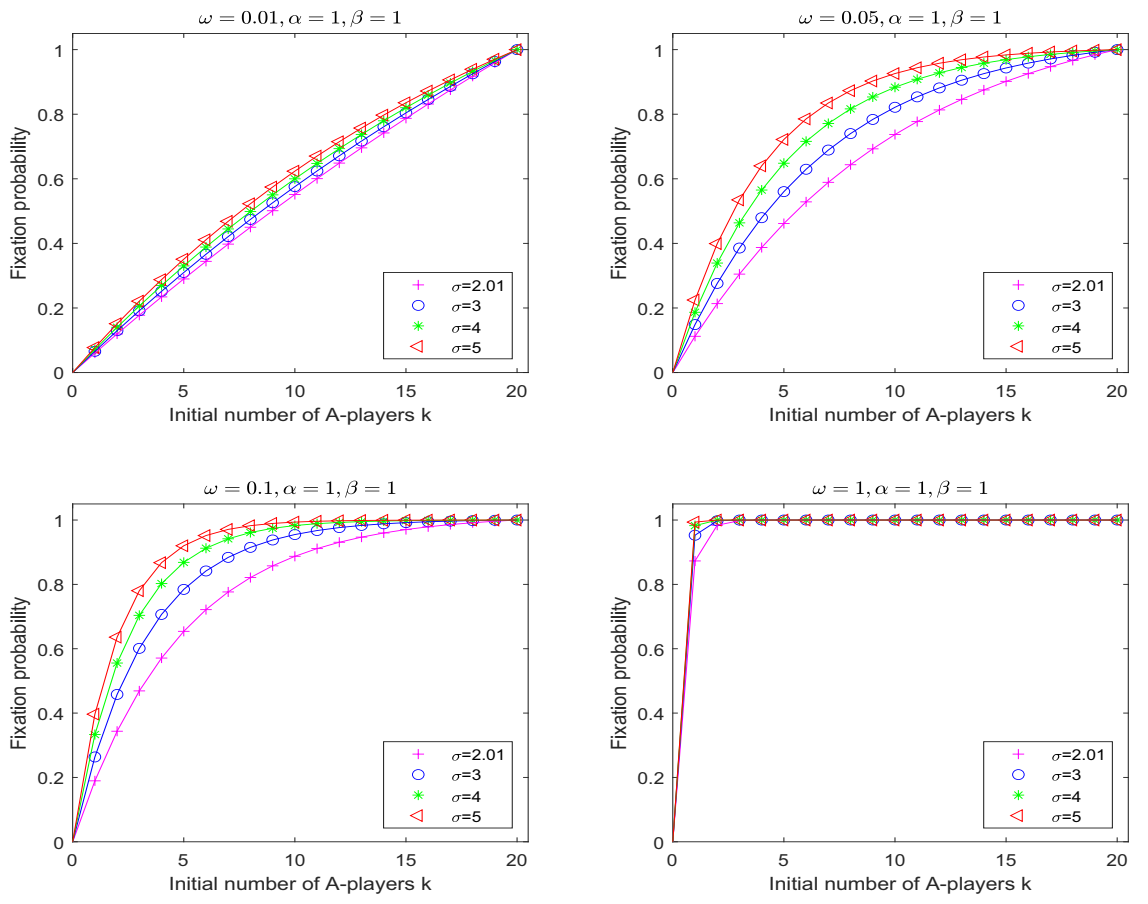
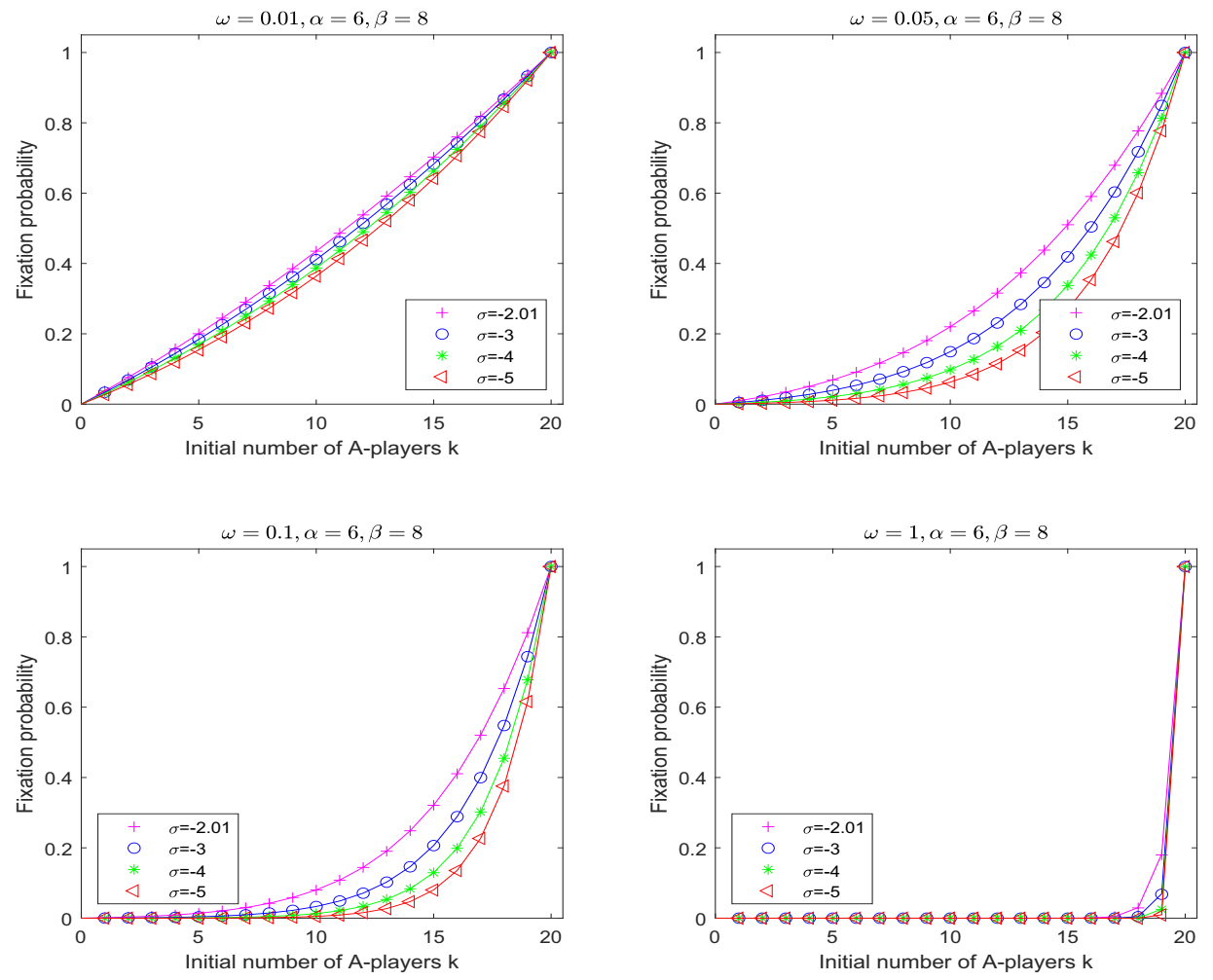
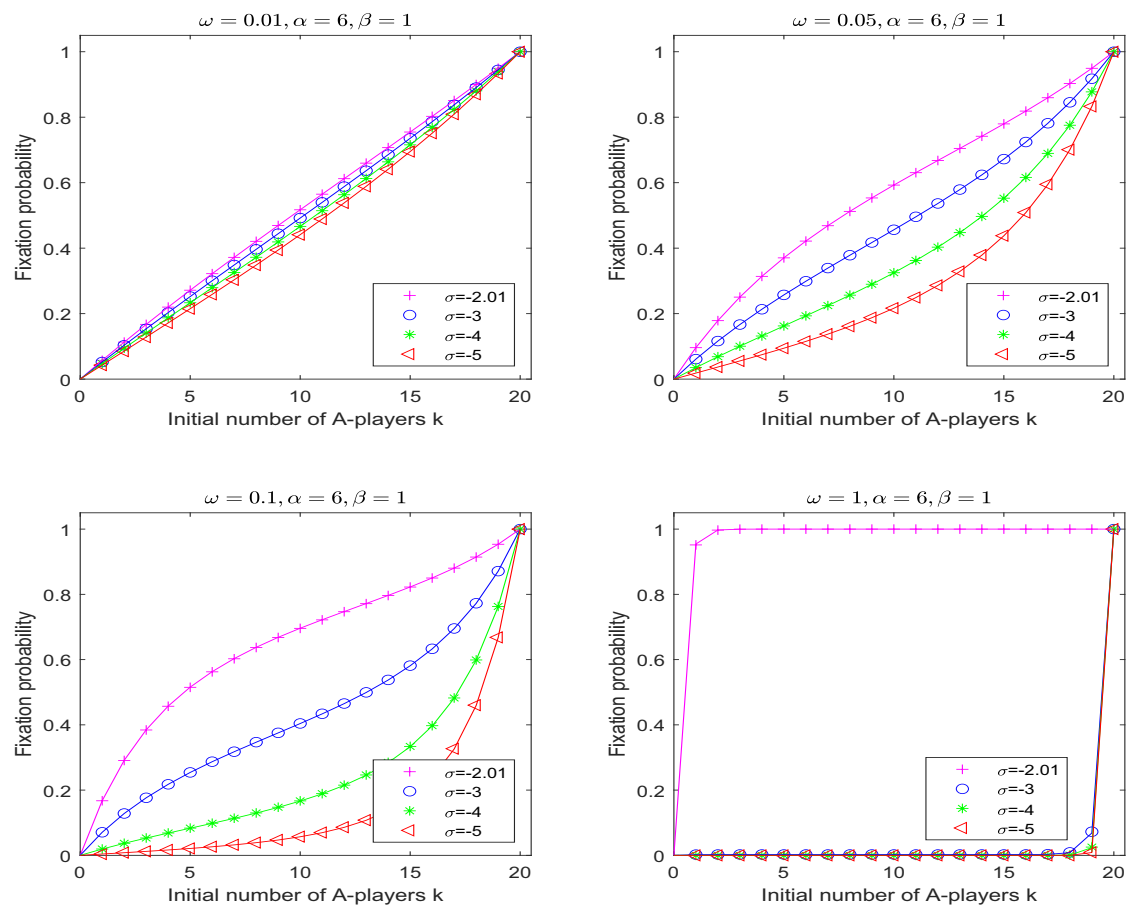
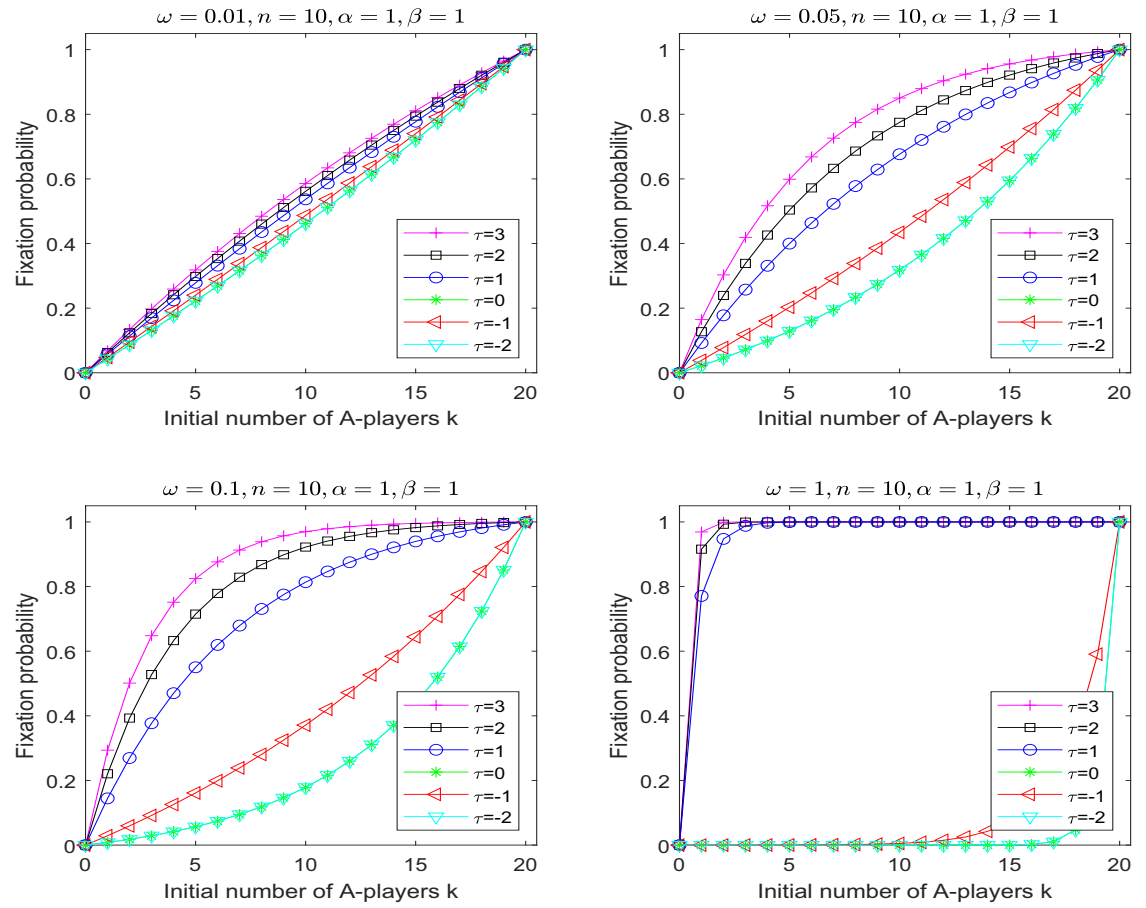
Division of labor in self-organized groups is a problem of both theoretical significance and application value. Many application problems in the real world require efficient task allocation. We propose a model combining bio-inspiration and evolutionary game theory. This research model theoretically analyzes the problem of target search in unknown areas for multi-robot systems. If the robot’s operating area is underwater, the problem becomes more complicated due to its information sharing restrictions. Additionally, it drives strategy updates and calculates the fixed probability of relevant strategies, using evolutionary game theory and the commonly used Fermi function. Our study estimates the fixed probability under arbitrary selection intensity and the fixed probability and time under weak selection for the two-player game model. In the multi-player game, we get these results for weak selection, which is conducive to the coexistence of the two strategies. Moreover, the conducted simulations confirm our analysis. These results help to understand and design effective mechanisms in which self-organizing collective dynamics appears in the form of maximizing the benefits of multi-agent systems in the case of the asymmetric game.
Keywords: fixation probability; game theory; collaborative search; multi-agent systems fixation probability; game theory; collaborative search; multi-agent systems