Article

Keep a Left Profile, Baby! The Left-Cradling Bias Is Associated with a Preference for Left-Facing Profiles of Human Babies


Department of Psychological, Health and Territorial Sciences, University “G. d’Annunzio” of Chieti-Pescara, Via dei Vestini, I-66100 31 Chieti, Italy
*
Authors to whom correspondence should be addressed.
These authors equally contributed to this work.
Symmetry 2020, 12(6), 911; https://doi.org/10.3390/sym12060911
Submission received: 27 April 2020 / Revised: 21 May 2020 / Accepted: 25 May 2020 / Published: 1 June 2020
(This article belongs to the Special Issue Symmetry and Asymmetry in Brain Behavior and Perception)

Abstract

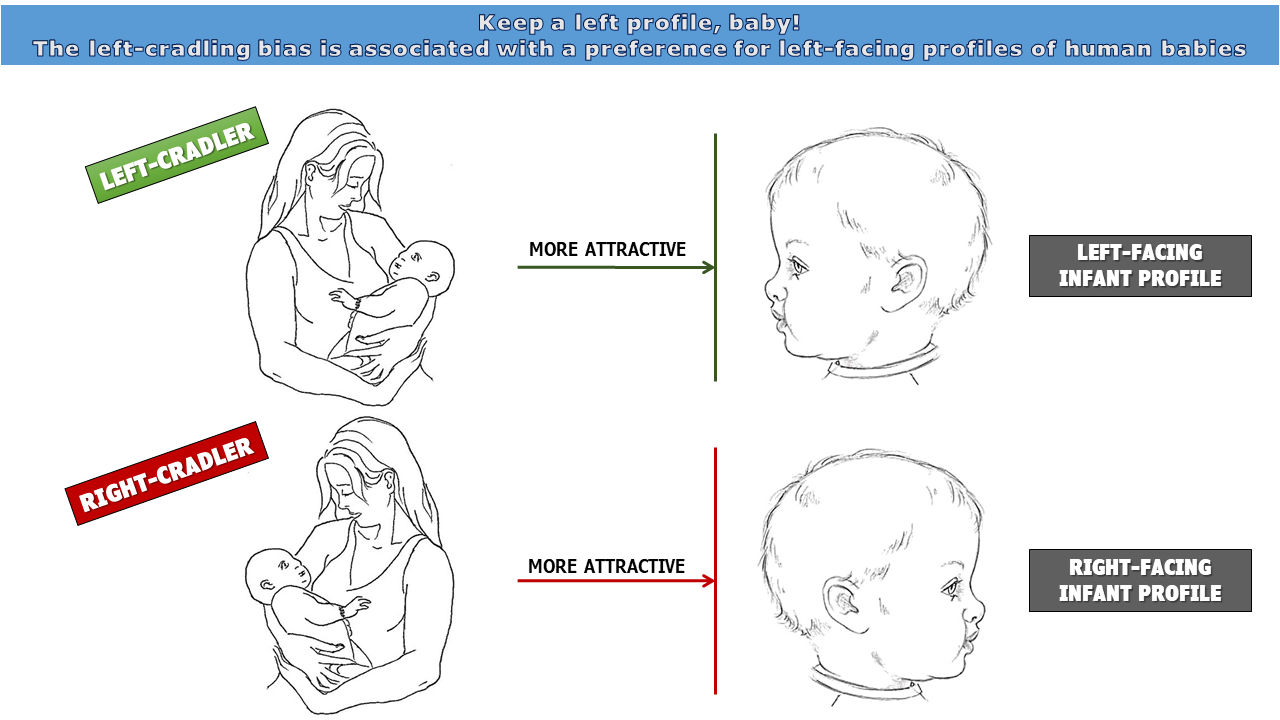
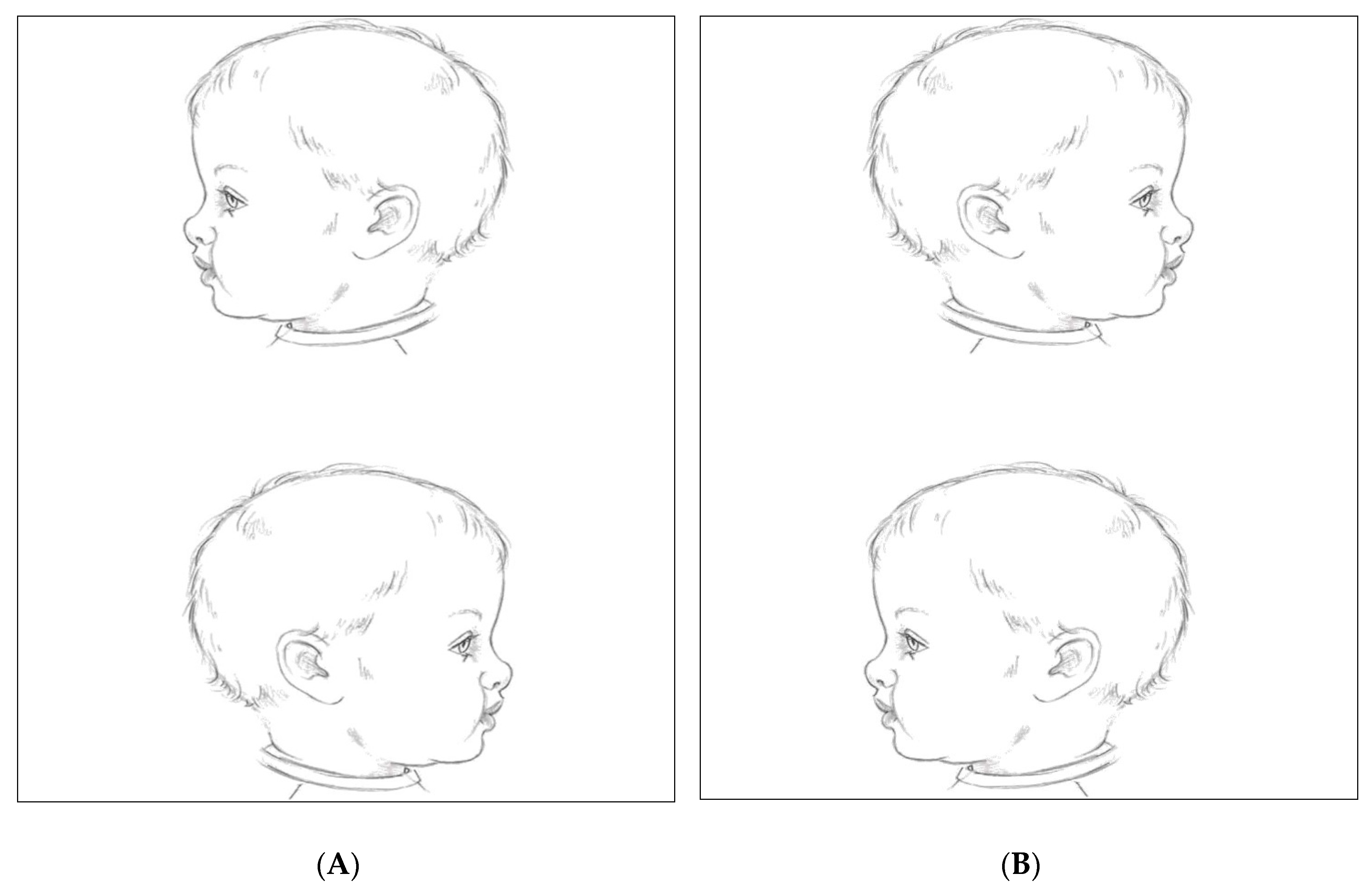
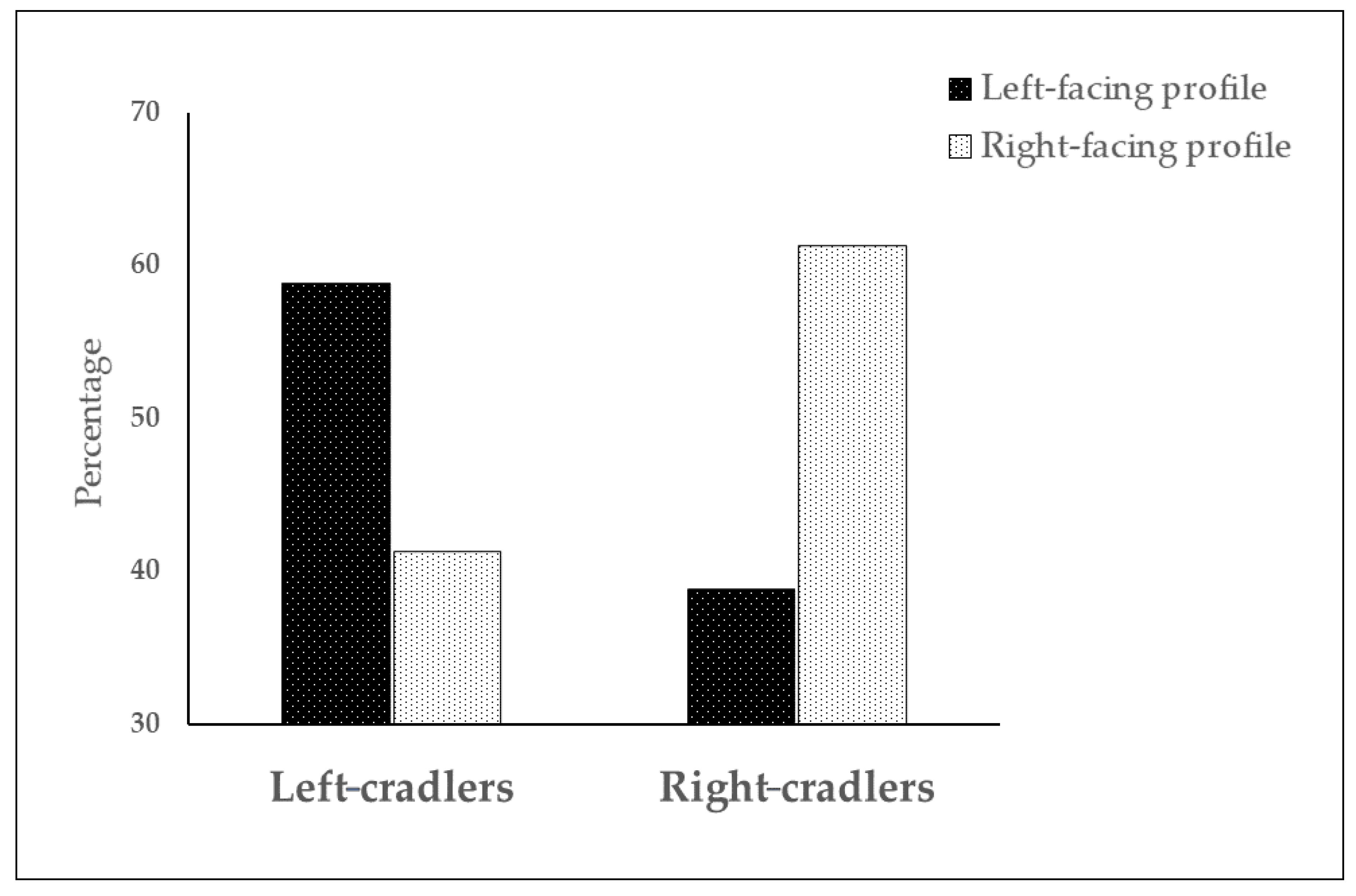
The left-cradling bias (LCB) refers to the (typically female) preference to hold an infant on the left side of one’s own body. Among the three main accounts proposed for such a phenomenon, namely the “handedness”, “heartbeat” and “hemispheric asymmetry” hypotheses, the latter has met with the greatest empirical success. Accordingly, the LCB would facilitate the communication of socio-emotional information through the right hemisphere of both the cradled and the cradling individual, and should emerge mainly in face-to-face interactions. In this regard, it should be noticed that when the infant’s body is oriented toward the cradler, the left or right side of their face is relatively more visible to left- and right-cradlers, respectively. Therefore, we hypothesized that the LCB might also be associated with a preference for left-facing profiles (i.e., those showing the left, and more expressive, hemiface/cheek) of human babies. In order to test our hypothesis, we assessed the cradling-side preferences of female participants, as well as their preference for the left- or right-facing profile of a human infant depicted in a drawing. Left-cradlers exhibited a significantly larger preference for the left-facing version of the drawing compared with right-cradlers, a finding further corroborating the right-hemisphere hypothesis.
Keywords: behavioral asymmetries; mother–infant interaction; left-cradling bias; infant face; face profile behavioral asymmetries; mother–infant interaction; left-cradling bias; infant face; face profile
Graphical Abstract