Article

Ellipse Coefficient Map-Based Geomagnetic Fingerprint Considering Azimuth Angles


1
The Advanced IT & Ship Convergence Center, Korea Maritime and Ocean University, Busan 49112, Korea
2
The Research Development Center, Woori Engineering, Sejong 30054, Korea
3
The Department of Electrical Engineering, Korea Polytechnics, Ulsan 44482, Korea
4
The Division of Electronics and Electrical Information Engineering, Korea Maritime and Ocean University, Busan 49112, Korea
*
Author to whom correspondence should be addressed.
Symmetry 2019, 11(5), 708; https://doi.org/10.3390/sym11050708
Submission received: 3 April 2019 / Revised: 11 May 2019 / Accepted: 21 May 2019 / Published: 23 May 2019

Abstract

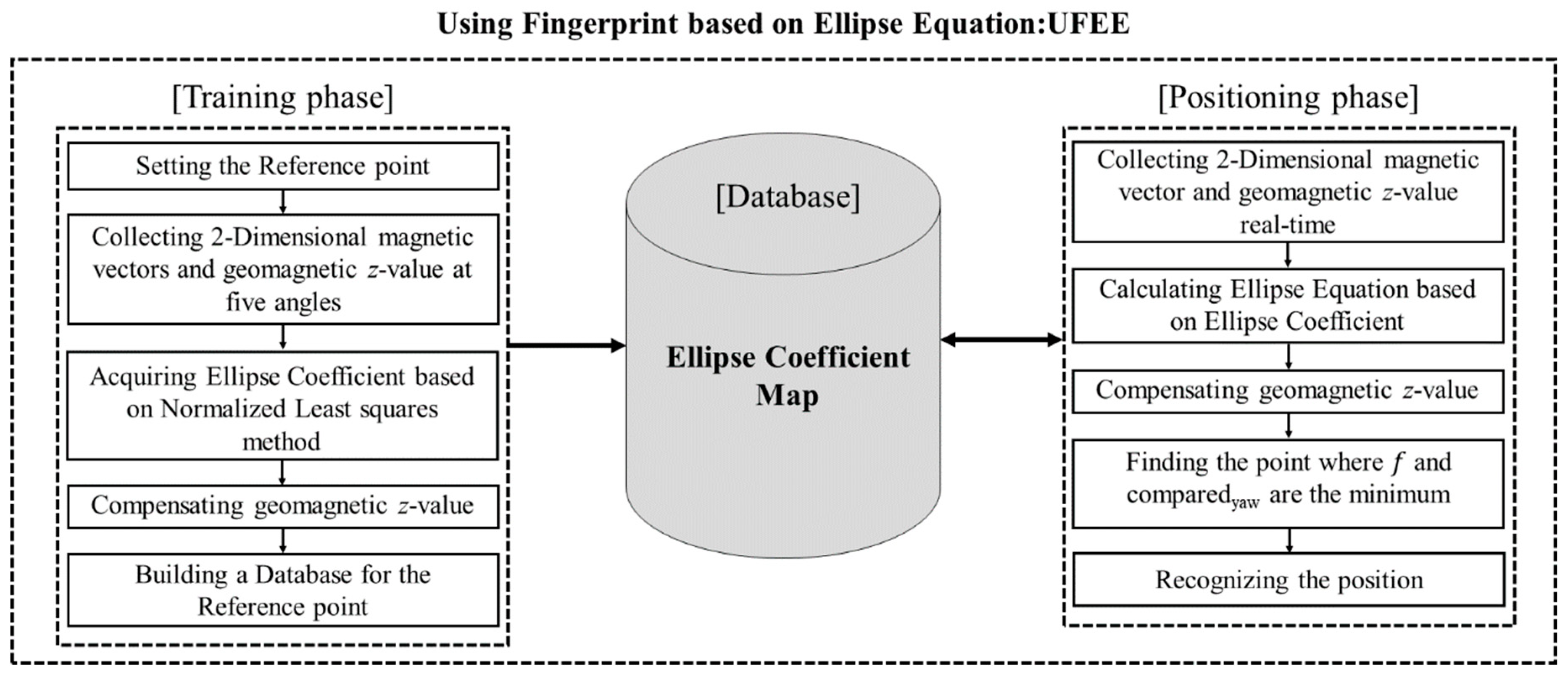
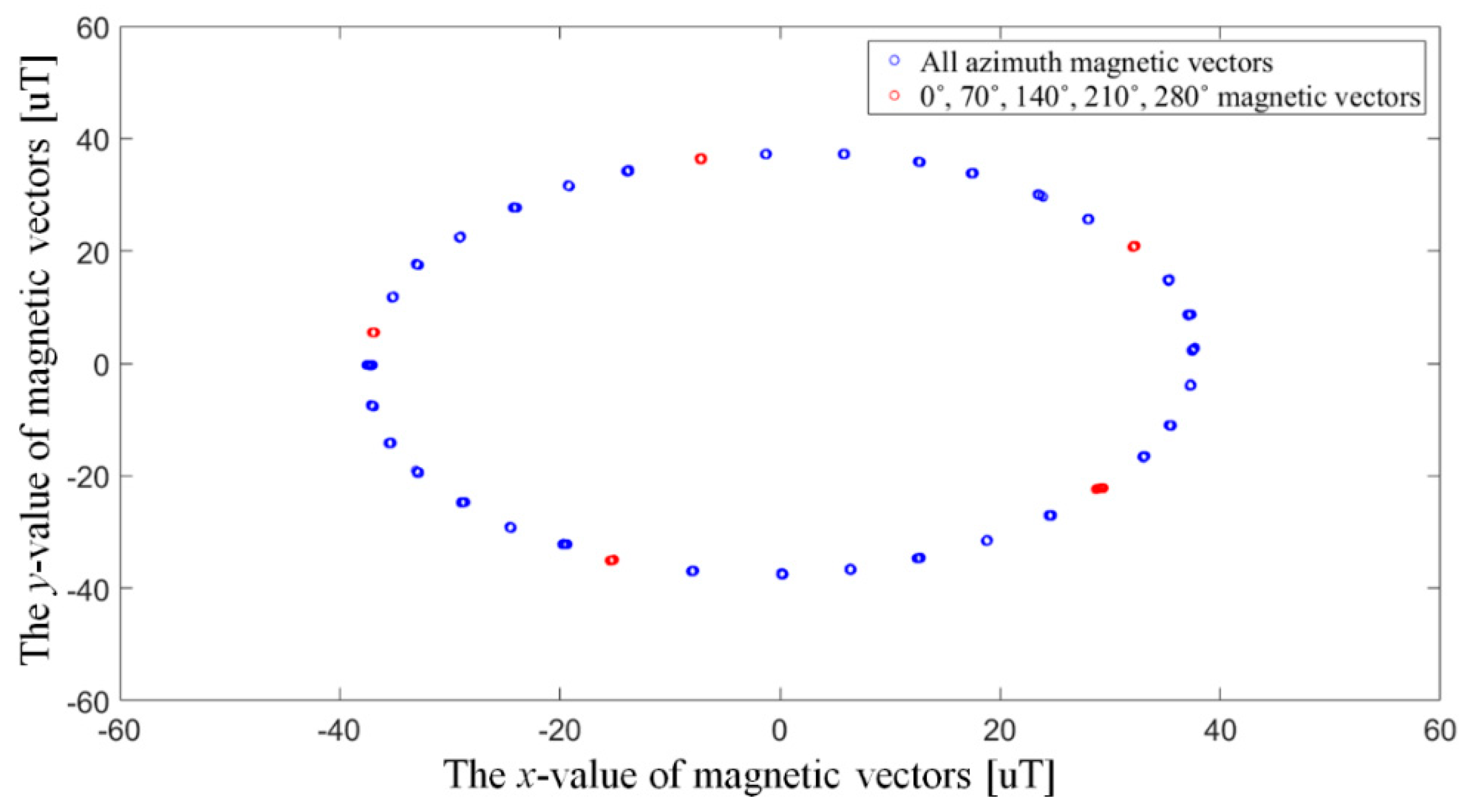
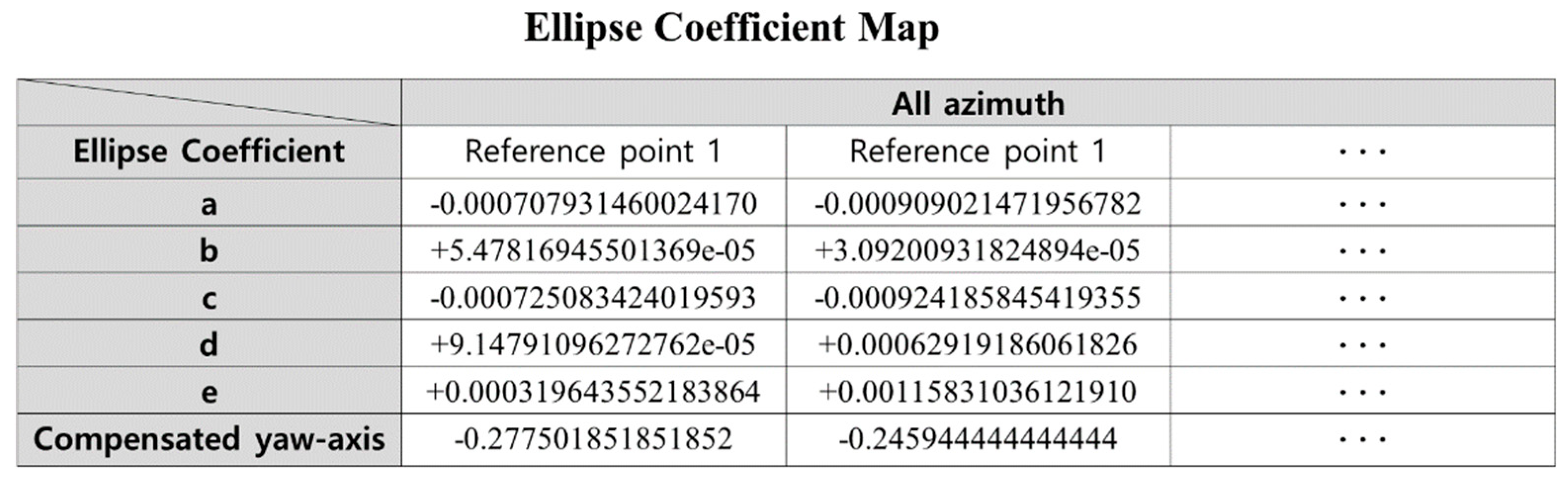
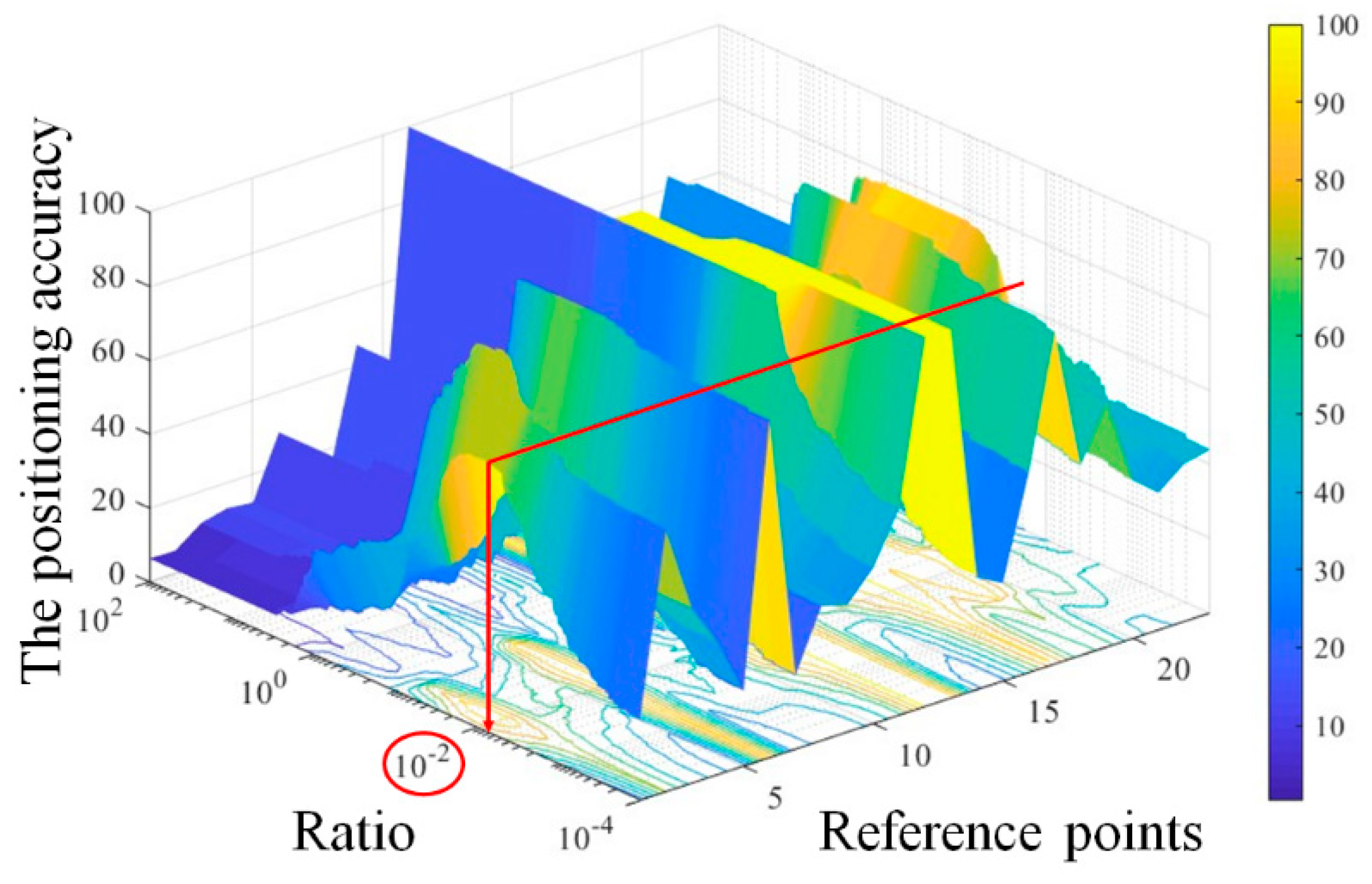
Geomagnetic fingerprint has been actively studied because of the high signal stability and positioning resolution even when the time has elapsed. However, since the measured three-axis geomagnetism signals at one position are irregular according to the change of the azimuth angle, a large-sized database which is stored magnitudes per angles is required for robust and accurate positioning against the change of the azimuth angle. To solve this problem, this paper proposes a novel approach, an elliptic coefficient map based geomagnetic fingerprint. Unlike the general fingerprint, which stores strength or magnitude of the geomagnetism signals depending on the position, the proposed algorithm minimized the size of databased by storing the Ellipse coefficient map through the ellipse equation derived from the characteristics of 2-D magnetic vectors depending on the position. In addition, the curvature bias of ellipse was reduced by applying the normalized linear least-squares method to 2-D geomagnetic characteristics and the positioning accuracy was improved by applying the weighted geomagnetic signal equalization method.
Keywords: ellipse coefficient map (ECM); geomagnetic fingerprint; Indoor positioning; linear least-squares method ellipse coefficient map (ECM); geomagnetic fingerprint; Indoor positioning; linear least-squares method