Article

The Influence of Organs on Biochemical Properties of Tunisian Thuja occidentalis Essential Oils


1
LR11-ES31 Laboratory of Biotechnology and Valorisation of Bio-GeoRessources, Higher Institute of Biotechnology of Sidi Thabet, BiotechPole of SidiThabet, University of Manouba, Ariana 2020, Tunisia
2
Faculty of Sciences of Bizerte, Jarzouna-Bizerte, University of Carthage, Zarzouna 7021, Tunisia
3
Laboratory of Epidemiology and Veterinary Microbiology, Bacteriology and Development Biotechnology Groups, Pasteur Institute of Tunisia, University of Manar, Tunis 1002, Tunisia
4
LR17-ES03 Physiopathology, Food and Biomolecules, Higher Institute of Biotechnology of Sidi Thabet, Biotechpole Sidi Thabet, Ariana 2020, Tunisia
5
Laboratory of Management and Valorization of Forest Resources, National Research Institute of Rural Engineering, Water and Forestry (INRGREF), Tunis 1002, Tunisia
6
Department of Veterinary and Animal Sciences, University of Copenhagen, Stigboejlen 4, 1870 Frederiksberg, Denmark
7
Holy Spirit University of Kaslik, P.O. Box 446 Jounieh, Mount Lebanon, Lebanon
8
Faculty of Sciences and Arts in Balgarn, University of Bisha, Kingdom of Saudi Arabia, P.O. BOX 60 Balgarn, Sabt Al Alaya 61985, Saudi Arabia
*
Author to whom correspondence should be addressed.
Symmetry 2018, 10(11), 649; https://doi.org/10.3390/sym10110649
Submission received: 21 August 2018 / Revised: 4 November 2018 / Accepted: 9 November 2018 / Published: 19 November 2018

Abstract

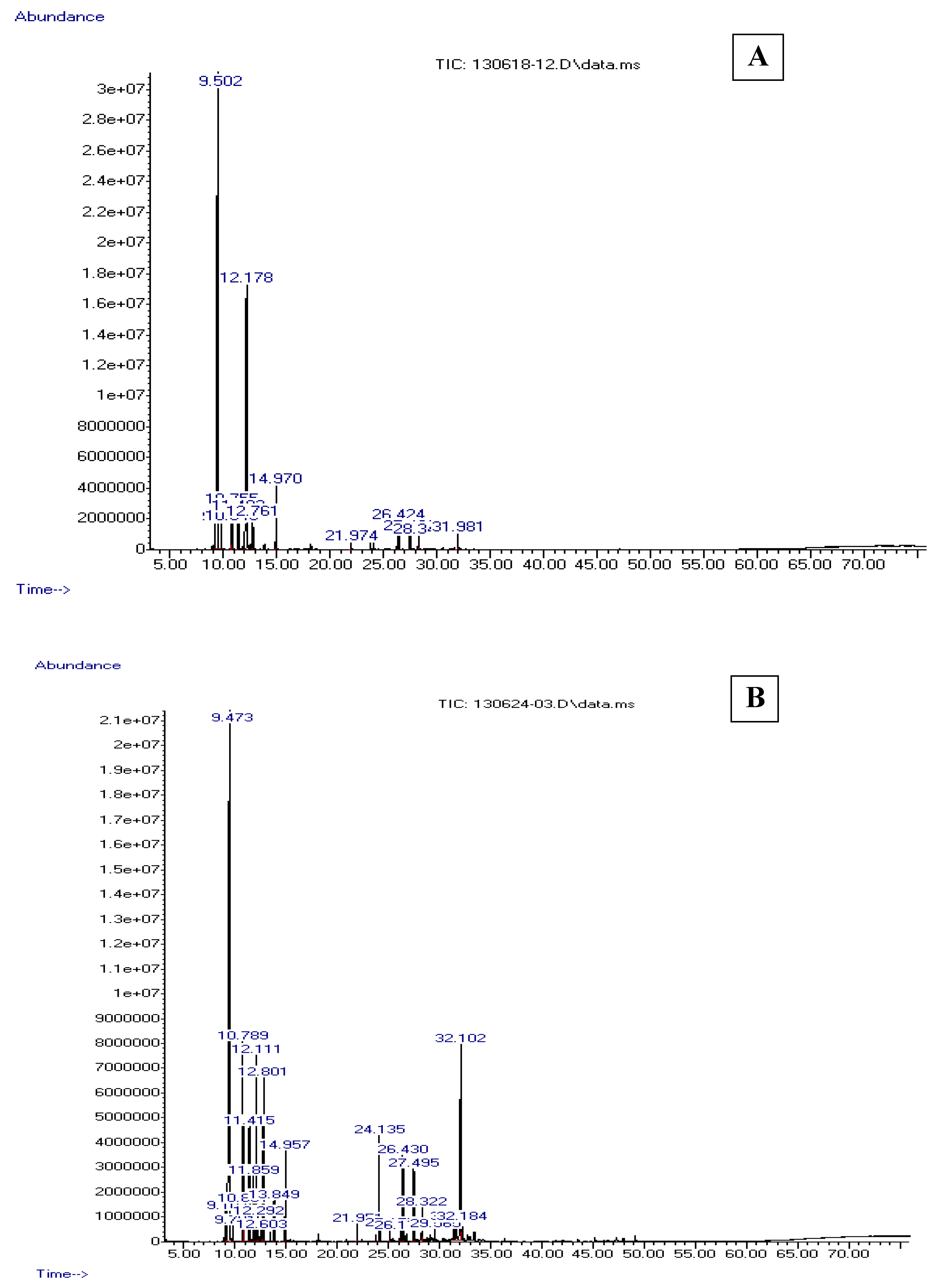
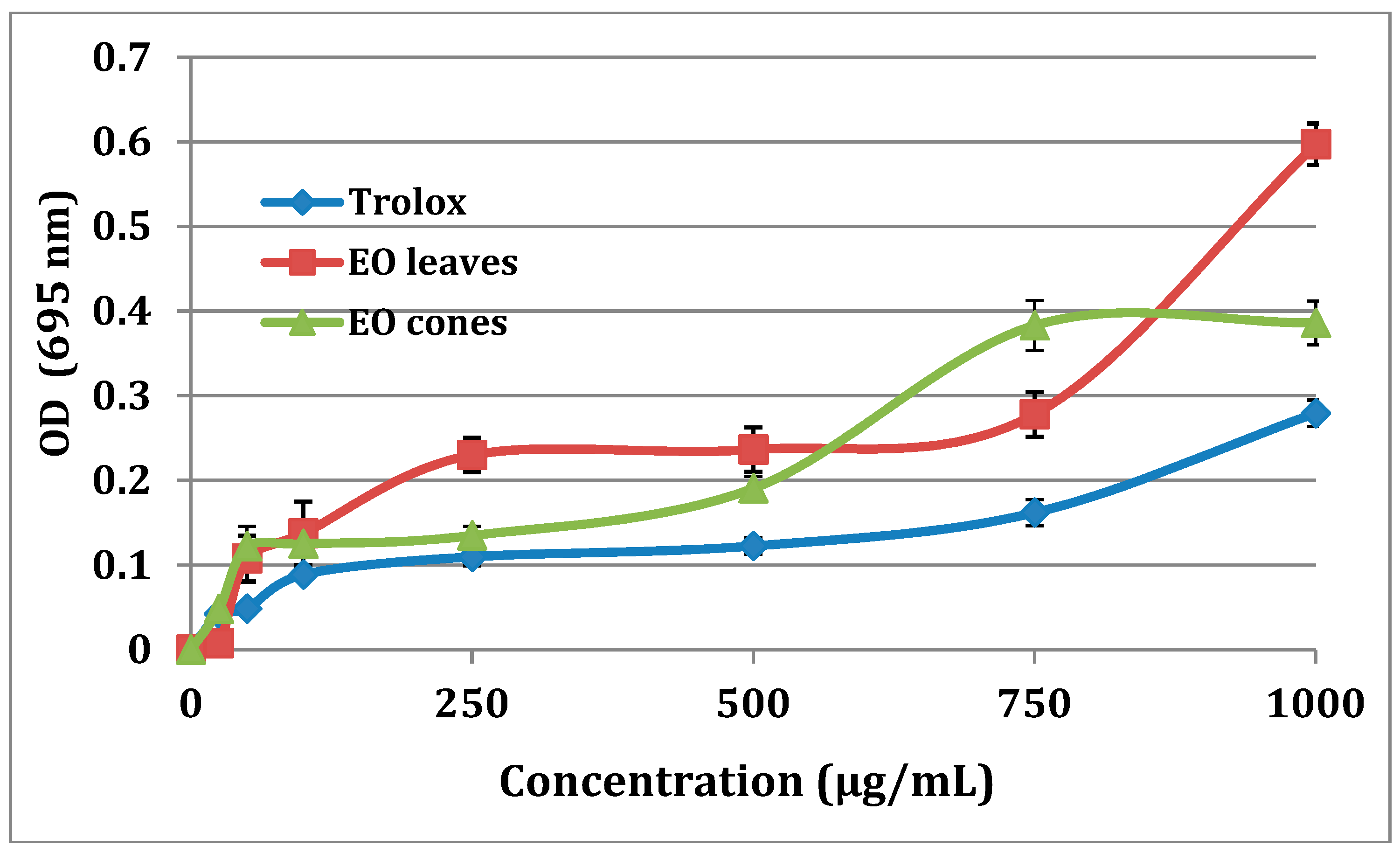
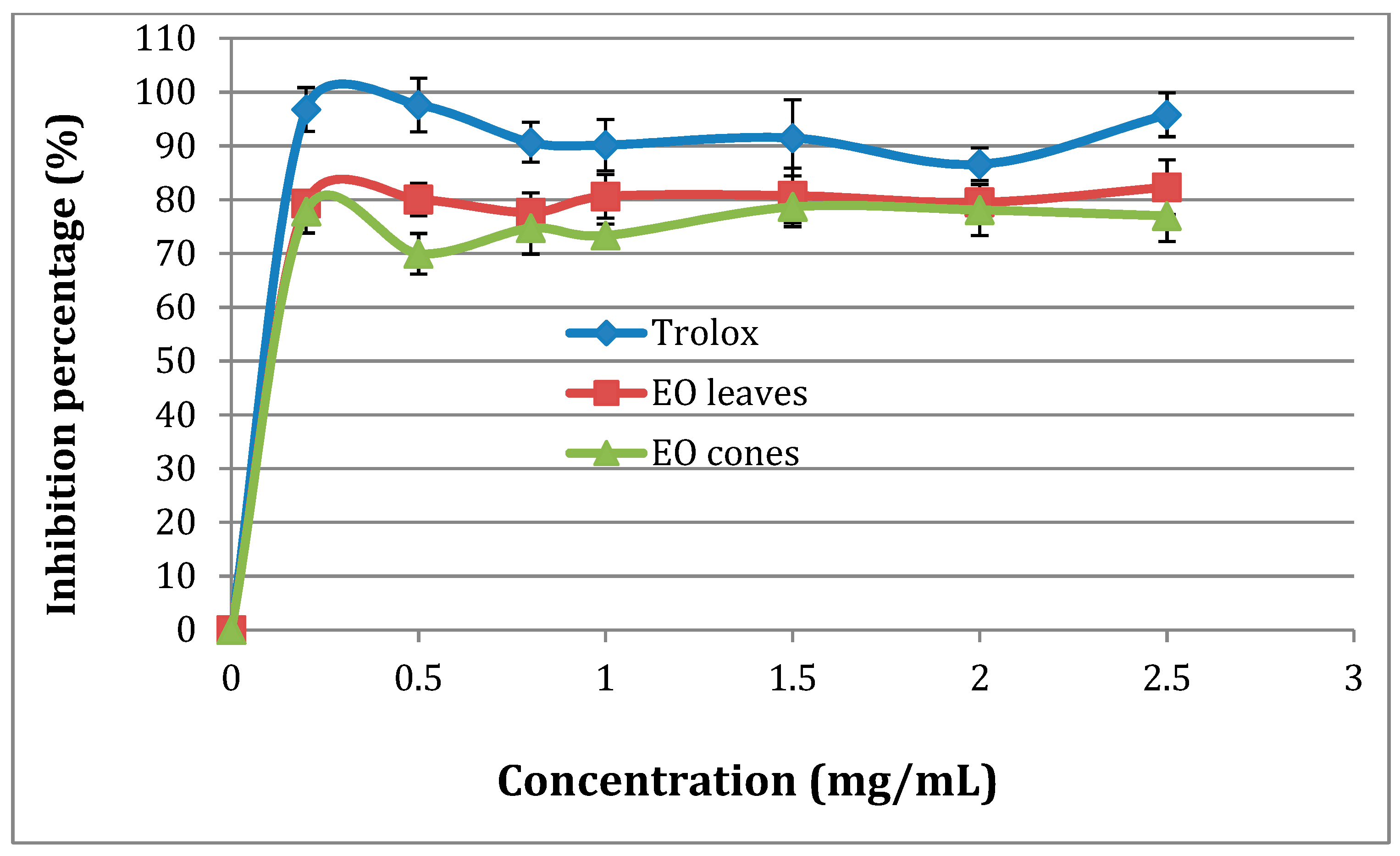
In this study, the chemical composition and biological activities of the essential oil (EO) extracts (from leaves and cones) of the Tunisian Thuja occidentalis were evaluated. The composition of the leaf EO extract was more complex than that of the cones. The major components of the leaf EO extract were α-Pinene (34.4%), cedrol (13.17%), and β-Phellandrene (8.04%), while the composition of the cone EO extract was characterized by the predominance of α-Pinene (58.55%) and 3-Carene (24.08%). All EO extracts showed much better antioxidant activity than Trolox against 2, 2′-diphenyl-1-picryl hydrazyl (DPPH) radical scavenging, but EOs extracted from leaves exhibited the highest total antioxidant activity. All EOs showed strong antibacterial and antifungal activities against nine tested foodborne microorganisms (Bacillus cereus American Type Culture Collection (ATCC) 1247, Listeria monocytogenes ATCC 7644, Staphylococcus aureus ATCC 29213, Aeromonas hydrophila EI, Escherichia coli ATCC 8739, Pseudomonas aeruginosa ATCC 27853, Salmonella typhimurium NCTC 6017, Aspergillus flavus (foodborne isolate), and Aspergillus niger CTM 10099. The highest antimicrobial activities by disk diffusion assay were recorded for the EOs extracted from leaves, while no difference in potency was marked between leaf and cone EO extracts by the agar dilution method. The most potent antimicrobial activity was recorded among fungi. This study confirms the strong antimicrobial and antioxidant potential of EO extracts from the Tunisian T. occidentalis (from the Sidi Bou Said site), highlighting its potential as a natural preservative against foodborne pathogens, particularly against E. coli and S. typhimurium.
Keywords: antimicrobial activity; antioxidant activity; essential oil; chemical composition; Thuja; natural preservative antimicrobial activity; antioxidant activity; essential oil; chemical composition; Thuja; natural preservative