1. Introduction
1.1. The New Linear City
The aim of this article is to discuss the implementation of a walkability-, urbanity-, and communality-oriented linear town model over time, with particular attention to the Hook model. To this end, the Introduction briefly presents the contemporary debate on new linear city models, while critically examining the types of cities that dominate current discourse. The article argues that insufficient attention has been given to the walkability-, urbanity-, and communality-oriented model developed in Britain between 1956 and 1960. This gap is addressed by analyzing the model and its embedded values through a temporal lens using the test cases of two towns whose planning was informed by this model, established fifty years apart.
In opening the discourse on new towns, it is important to emphasize that since the 1980s, no new towns have been planned in Western Europe. The experience of state-led planning and construction of new towns and neighborhoods in the postwar decades generated the understanding that cities are too complex for planning to accurately predict their future development [
1,
2]. Consequently, by the early 1990s, the International New Town Association was renamed the International Urban Development Association [
3], and principles of urban planning replaced the earlier reliance on morphological schemas [
4]. In other words, broad planning principles applicable across urban morphologies—such as mixed-use development [
5,
6], eco-urbanism [
7], or the healthy city [
8]—supplanted the search for an idealized formal pattern for a new town.
Despite this, new towns continue to spark the imagination and raise important questions. Today, they are no longer built in Western Europe [
9], but primarily in East Asia and the Middle East [
6,
10,
11,
12,
13,
14,
15]. A prominent example is the linear city planned in Saudi Arabia: The Line. The Line is aligned with what is arguably the most influential contemporary planning ideology: sustainability. It is envisioned, some would say fantasized, as a city powered entirely by renewable energy, designed for walkability, and supported by exceptionally efficient public transportation [
16]. True to its name, the city’s morphology is highly distinctive. It is so linear, in fact, that it stretches for 170 km in length, while its width is merely 200 m. Within this narrow strip, two continuous 500 m high facades are planned, facing inward to an oasis-like sequence of elevated bridges and greenery. On their outward side facing the desert, the buildings are to be clad in mirrors. According to the project’s developers, the linear form itself reflects sustainable ideology: the city’s physical footprint is minimal, causing almost no disturbance to open landscapes [
17]. The futuristic vision of The Line brings the plan of the new town—particularly the linear morphology—back to the forefront of urban discourse.
Recent scholarship addressing the linear city model focuses on four main themes. The first concerns the confusion between linear cities that emerge organically as a result of a river corridor or other topographical conditions [
18,
19], and new linear towns—cities that are planned this way the outset.
The second theme is the discussion on whether the city is one that is served by a linear central business district (CBD), or whether it a set of settlements connected to one another by a fast linear transportation axis. A frequently cited example is the Copenhagen Finger Plan (1947), according to which transportation corridors extending from the main city support limited urban settlements that are close to nature and connected to the metropolitan core [
20].
The third theme concerns the linear city’s degree of independence. According to Mora (2014) [
21], the first linear city was developed as an extension of a major historical city—Madrid in this case—and relied on it for cultural and employment services. Similarly, Steyn (2012) [
22] argued that the linear cities designed by Le Corbusier for Algiers and Rio de Janeiro, were also dependent on existing urban centers.
Finally, the fourth theme emerging from the literature addresses the distinction between a city planned as such from the outset and a massive architectural mega-structure that is labeled a linear city, such as The Line. Tufek-Memisevic (2023) [
23] argues that while the new linear city is grounded in contemporary planning principles—such as efficient public transportation, walkable access to the central axis, polycentricity, and proximity to the natural environment—a city-as-mega-structure is no more than a fantasy.
This article focuses on towns planned from the outset to be self-sustaining and independent—namely, not part of a settlement chain along a transportation corridor between more dominant cities, not reliant on other cities for core urban functions, and not mega-structures. It contributes to the discourse on the linear model, first, by examining the ideological values underlying it. In doing so, it extends Paszkowska-Kaczmarek’s (2021) [
17] emphasis on equality by introducing two additional values: urbanity and communality. These are explored through a typological distinction between transportation- and walkability-oriented linear models, with emphasis on the latter. Notably, walkability-oriented linear models are almost entirely absent from contemporary discussions of the linear city. The second contribution of the article lies in analyzing these models, with particular attention to the Hook model. The article’s third contribution is an examination of the interpretation of the model over fifty years, highlighting how its interpretation changes with time and providing insights into the interaction between the model and its underlying values, as well as conclusions about its practical suitability for the construction of new towns.
1.2. Planning a Transportation-Oriented Linear New City
1.2.1. Historical Development
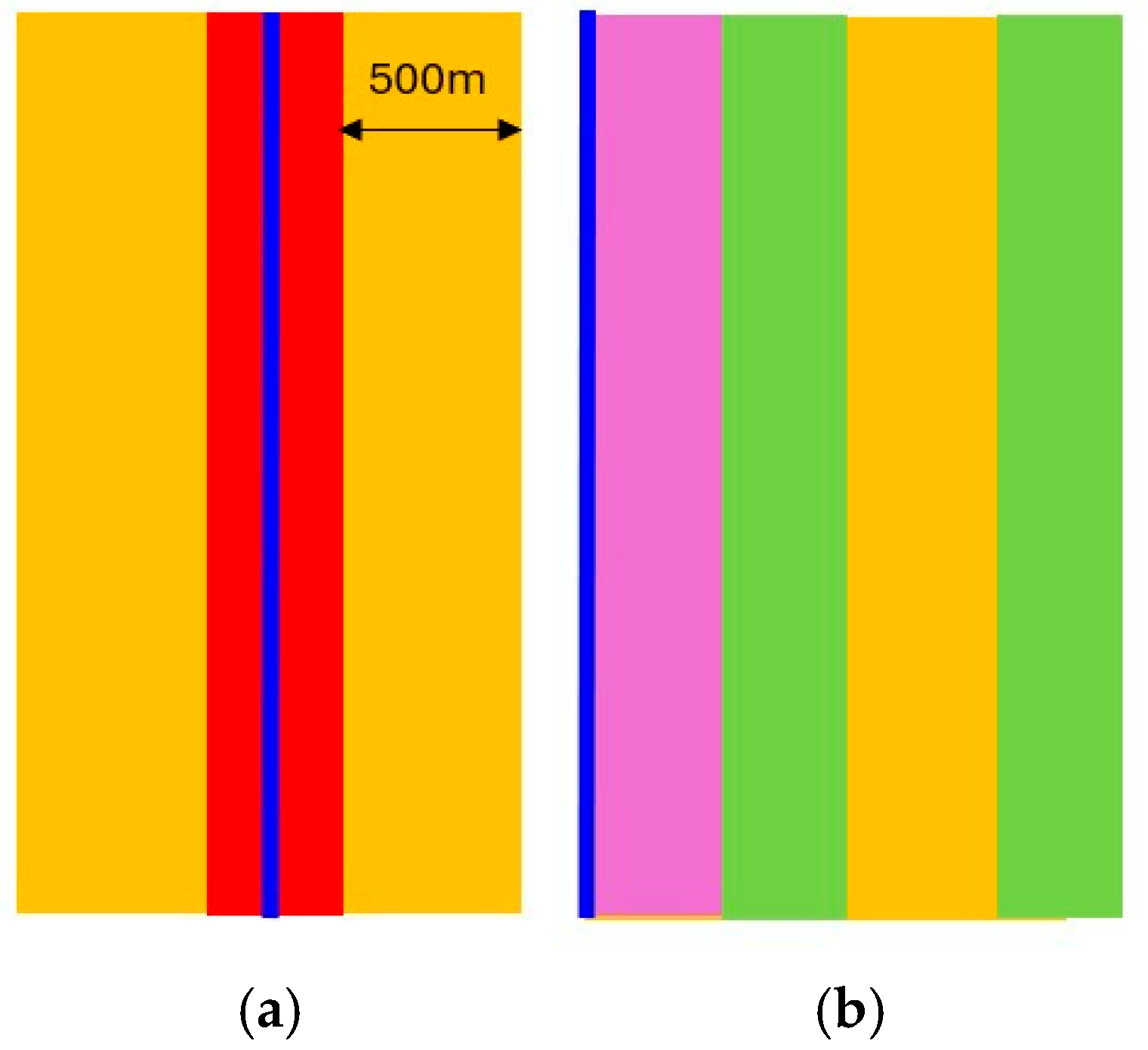
Linear communities that develop along a main road—sometimes the only one—are not new. Nevertheless, it was only in 1882 that Spanish urban planner Arturo Soria y Mata translated this pattern into a model for modern urban planning. In his proposal, a central business district (CBD) could extend along the entire length of the city, and in principle, stretch indefinitely. This CBD was intended to accommodate rapid transit lines (trams and railways), infrastructure networks, gardens, and civic buildings [
23]. Residential areas, positioned perpendicular to the linear axis and at a short and walkable distance from it, were conceived as private houses immersed in greenery, influenced by the radial garden city model [
24] (
Figure 1a). Soria y Mata argued that the linear city offered a solution to the radial city, which tended to become increasingly congested toward its central core. In the linear city, one could access all services of the linear CBD with no need for physical proximity and without traffic congestion [
25].
In 1910, Edgar Chambless presented his vision of Roadtown. Similarly to The Line, it consisted of a single continuous building. And like Soria y Mata’s city, it was imagined as infinitely extendable. In Roadtown, the structure was only two stories high, with rapid transit located in its basement and a promenade on its roof. The fields on either side remained untouched [
17].
Plans for Soviet linear cities were made from 1928 to 1933. One well-known example is Nikolay Alexandrovich Milyutin’s plan for Stalingrad, in which parallel strips along the Volga were designated for housing, industry, and high-speed transport, separated by green belts [
26]. This resembled the green belts separating land uses in the radial garden city model [
24] (
Figure 1b). The Soviet plans were influenced by the 1927 plan of French urban planner Georges Benoit Lévy. According to his approach, also inspired by the garden city, Paris should be designed as parallel and symmetrical strips of industry, green space, and sparse housing. At the linear center, an axis for high-speed traffic—trams and vehicles—was envisioned [
27].
At the fifth CIAM Congress held in Paris in 1937, the British Town Planning Committee’s plan for London was presented; it was envisioned to expand along thirteen linear branches in a star-shaped configuration. In 1942, a group of young planners known as MARS (Modern Architectural ReSearch) presented their own proposal for London: ten million inhabitants would live in a city composed of sixteen linear branches, disconnected and differentiated, resembling ribs attached to a linear spine that would serve as the CBD and industrial zones [
28] (
Figure 2).
1.2.2. Values
Two core values—both strongly inspired by the Industrial Revolution—underpin linear urban planning. The first is the veneration of technological progress. Each of the plans described above relies on rapid, motorized, and linear movement that provides residents with access to commercial and other services distributed along the linear CBD. The second value is proximity to nature, a need intensified as traditional cities became congested, noisy, and polluted [
29]. In the linear model, proximity to nature is achieved through the city’s narrow physical dimensions: just as it is easy to reach the urban center from the residential edge, it is easy to reach the surrounding landscape. In some cases, residential development was intentionally planned at low densities and immersed in greenery, influenced by Howard’s garden city (1898) [
24].
According to Paszkowska-Kaczmarek (2021), [
17] the principal value embedded in the morphology of the linear city is equality. Whereas in the traditional concentric model—derived from the organic expansion of a growing village—those who benefit most from proximity to the CBD are those who living within or near it, the linear model positions all residents along the linear CBD. Limiting residential areas to narrow bands parallel to the CBD, combined with the use of rapid public transportation along that CBD, renders it equally accessible to all.
The equality principle wes expressed also in the urban texture developed during that period. Examples include the placement of small, family houses immersed in green spaces in the garden city [
24]; the free-standing skyscraper layouts developed by Le Corbusier [
30,
31], alongside his Modernist Athens Charter (1933) [
32]; and the row layout of row-building (the Zeilenbau typology) developed by Walter Gropius (1929–1930) [
33]. These approaches aimed to provide all residents with optimal living conditions, including access to sunlight, fresh air, and green spaces. The linear morphology, in particular, presented an model that embodied equality not only in terms of these quality-of-life values, but also in terms of access to the CBD. In that, it envisioned equality on a much broader, urban scale, extending a principle that, until then, had been largely confined to urban texture or to small-scale developments, such as the garden city [
24].
1.3. The Walkable Town
1.3.1. The British New Towns
The First Generation
To understand the walkability-oriented linear town model, it is necessary to focus on postwar Britain. Whereas prior to and during World War II, the idea of new towns was largely theoretical, many towns were built in its aftermath [
34]. From 1946 to 1950, 13 new towns were established in the UK [
35], and became exemplary for the rest of the Western world [
3,
36]. These towns were motivated by the future need for housing and the challenges posed by the unplanned growth of existing cities [
37].
After the war, Patrick Abercrombie’s Greater London Plan (1945) was published, and became the prototype for British new towns [
38]. Abercrombie drew on the garden city model in terms of the abundance of greenery within neighborhoods, zoning, the use of surveys and studies to determine the location of the new town, and the cap on population size [
39]. The design of the basic urban unit—the neighborhood—was informed by the ideas American urban planner Clarence Perry (1929). According to Perry, the dimensions of the neighborhood unit should be determined by the capacity of the elementary school serving it. The school and church were to be located at the center of the neighborhood, within 400 m from the farthest house, to ensure walkability and a sense of community [
40].
The postwar towns were composed of sparse, radial, and disconnected neighborhood units around the CBD, and resembled villages more than cities. After several years, it became clear that the urban experience they offered was limited [
41], and that it was time to develop a new model, which, while embracing urbanity, would not neglect communality [
42]. The solution was the linear town, in which the elongated CBD would be close to all the residential areas. Planners believed that this would allow them to downplay the neighborhood as the primary urban building block, in favor of the connection to the town’s beating heart—the linear CBD [
6].
The Second Generation
The first walkability-oriented linear town, Cumbernauld in Scotland, was planned in 1956 for 70,000 inhabitants [
28]. Its linear CBD was intended to stretch over half a kilometer as a multilevel compact structure, designed exclusively for pedestrian traffic. While low-rise residential complexes were constructed in Cumbernauld, the linear CBD was designed as a multi-story mega-structure, with parking and service areas on the ground floor, connected via stairs and elevators to shops, offices, leisure facilities, and housing—all under one roof. Separate grade-level pathways for vehicles and pedestrians led to the CBD, and a vehicular route was planned along its length on a separate level, near or beneath it [
42]. This mega-CBD was intended to solve the problem of growing use of vehicles—which could move unhindered through the town thanks to grade separation. At the same time, it would enable an urban experience of interaction with numerous anonymous individuals [
43] along the linear CBD, which relied exclusively on pedestrian movement within an area containing all urban services [
42].
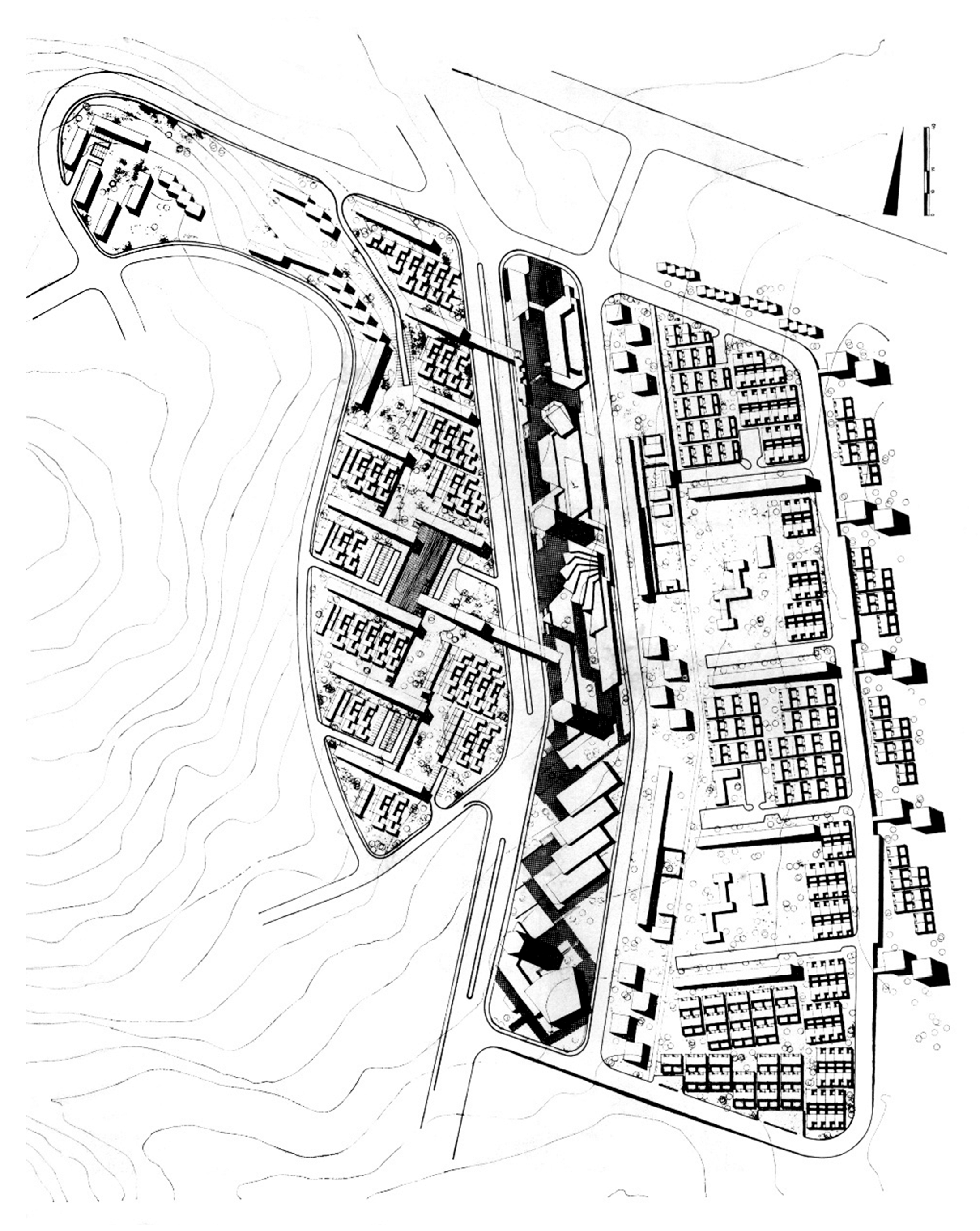
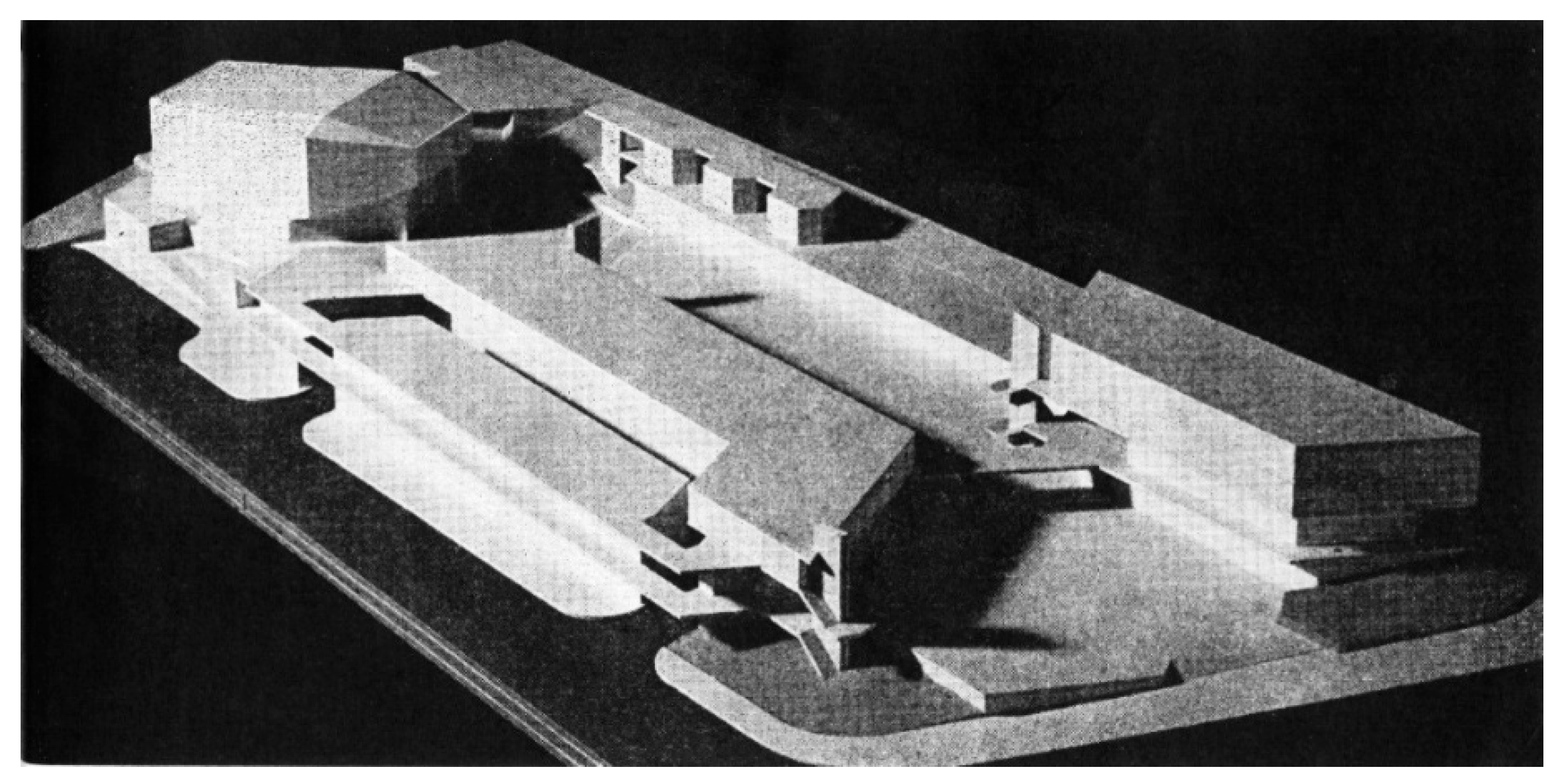
A more conceptually coherent linear town was developed by the Greater London Council (1961): Hook, planned for 100,000 inhabitants. A book published in 1961, “The Planning of a New Town”, ref. [
44] brought it to life through vivid diagrams and illustrations and gained wide recognition, even though the project had already been abandoned by 1960 [
45]. In Hook, the connection between the linear CBD and the rest of the town was established according to the same foundational walkability logic [
46]. The town’s core, intended to accommodate 60,000 residents, was based on a maximum walking distance of ten minutes (similar to the walking distances in Perry’s 1929 neighborhood unit) [
40]. These distances defined the space between the outermost houses and the multiuse, mega-structural linear CBD. Walking was therefore a constituent principle for the entire town, not only the CBD. As in Cumbernauld, a rapid transit line was planned beneath Hook’s CBD, facilitating access to and shortening distances within it [
44].
The axis linking the residential areas to the central spine was designed as pedestrian-only, in accordance with the 1960s concept of traffic separation [
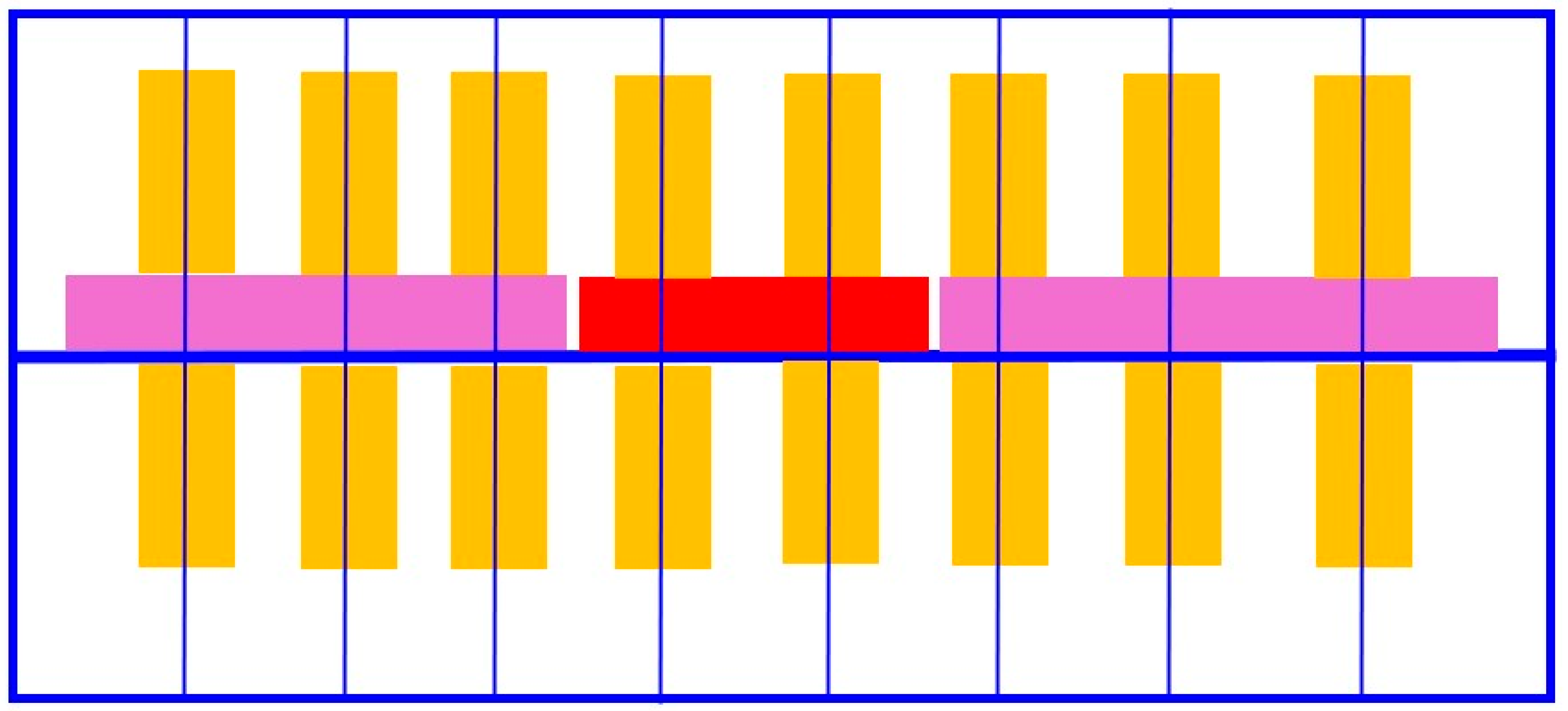
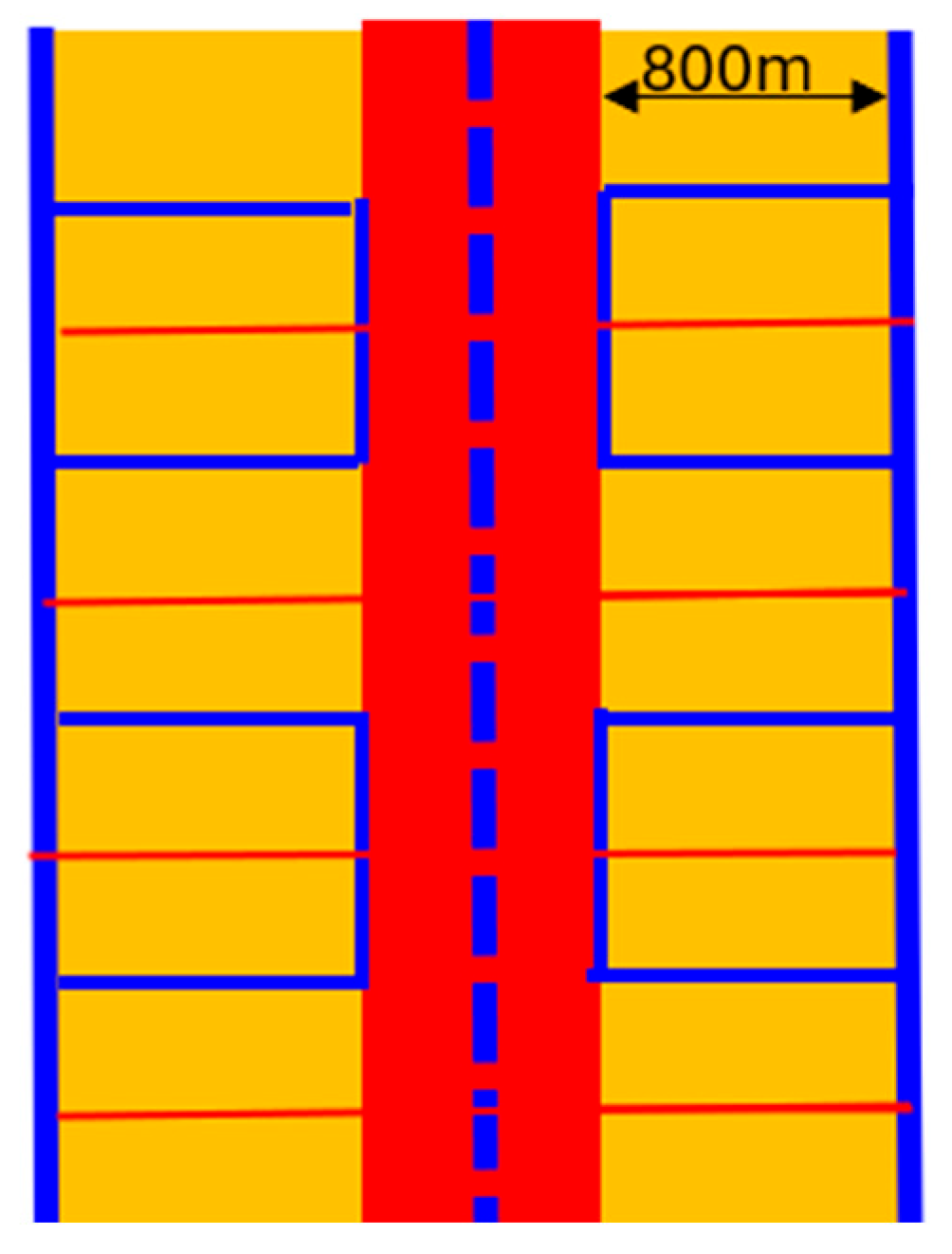
45]. Architecturally, the axis was defined by the building façades that delineated its spatial boundaries. Along its length were community services and small shops serving 4000–5000 adjacent housing units. Walking along the axis led directly to the linear CBD, without crossing any roads, as the main roads were planned to run beneath the linear CBD and around the residential areas. The facilities along the community axis met the most immediate needs: grocery, kindergarten, playground, and elementary school. All larger-scale urban functions—such commerce and entertainment—were deliberately located in the linear CBD to encourage human interaction and enhance the urban experience [
44] (
Figure 3).
1.3.2. Values
The values outlined in
Section 1.2.2 are also present in walkability-oriented linear town models. These include the veneration of progress and technology, reflected in the mega-structural construction of the linear CBD. They also include proximity to nature, as it is present within the residential complexes of Cumbernauld and within close reach of Hook (a ten-minute walk from the CBD). These models also embody the value of equality, in that all residents can easily access the CBD. In Cumbernauld, the linear CBD is located at the heart of town and is easily accessible by vehicle. In Hook, it is integrated into the pedestrian network.
Two additional values, significant in the postwar context, were communality and urbanity. The emphasis on community was a response to the horrors of the war; after all, communities had enabled the Britons to survive the bombings and hardships [
47]. In the walkability-oriented linear town, community was intended to be formed within the residential complexes of Cumbernauld and along the pedestrian axes leading to Hook’s CBD.
Urbanity was expressed in the design of the linear CBD and in its centrality. The longing for the urban experience—the social vibrancy generated by spontaneous encounters within defined, mixed-use environments—had been absent from the modernist towns and cities built after the war [
48]. In response to that criticism, in the planning of the walkability-oriented linear town, urbanity was expected to flourish within the mixed-use, pedestrian-only linear CBD [
42].
1.4. The Current Study
Most of the plans mentioned in the review above remained were only partly implemented, if at all. Soria y Mata’s proposal for Madrid was implemented along five kilometers out of 50 [
17]. Milyutin’s plan for Stalingrad conflicted with the existing spatial order, in which industry was located along the banks of the Volga, and was consequently implemented only in part [
49]. Similarly, Cumbernauld’s mega-structural linear CBD was only partially constructed [
42]. Nevertheless, examining the linear model today reveals that its core values remain relevant. This is particularly the case for the walkability-oriented linear town: the Hook model.
Today, proximity to nature—whether urban nature or accessible landscapes—remains a highly desired value [
50]. The value of technological progress, expressed today in the ideal of the “smart” or sustainable city relying on green energy, is likewise relevant [
7,
51]. Finally, the aspiration for urban equality persists in various forms [
51,
52], as does the aspiration for balancing communality and urbanity [
53].
To these values one must add walkability. Walkability to and in the linear CBD, and its integration with rapid public transport, were inherent in the linear-city model from the outset and achieved a particularly holistic expression in the Hook model. Today, walkability is regarded as a central planning principle, and it is part of the Sustainable Urban Mobility Plan (SUMP) of the European Commission [
54]. It contributes to reducing carbon emissions and therefore promotes sustainability [
55,
56]. Walkability supports physical health in an era of sedentariness [
57]. It enhances personal well-being and public safety by promoting social encounters that support mental health and contributes to a sense of safety by encouraging social surveillance [
58].
In light of the above, the present article focuses on the implementation of the Hook model in two new towns established fifty years apart, of limited size and dimensions, devoid of mega-structures. The article addresses the following questions: What were the original plans of these towns, and what became of them over the years? What values were embedded in these plans, and how were they expressed over time? What lessons can be learned from these cases? And what conclusions can be drawn regarding the implementation of the Hook model in the construction of a new town?
The remainder of this article is organized as follows. The Methodology section (
Section 2) presents a case-study analysis of two linear towns: one is contemporary and the other was built sixty years ago. The Results section (
Section 3) outlines the challenges that emerged during the construction of these towns and describes their current condition. The Discussion (
Section 4) examines the ways in which the values identified above were expressed in planning and in practice and analyzes how these expressions changed over time. Finally, the Conclusions section (
Section 5) addresses the question whether the Hook linear model is suitable for the construction of a new town.
2. Materials and Methods
The case studies examined are the Israeli linear town of Karmiel, planned in 1960, and the Israeli linear town of Harish, planned in 2010. Karmiel’s planning was strongly influenced by the Hook model [
59], particularly with regard to traffic separation and walkability. Harish, planned in a period in which no “proper” Western physical model for new towns existed, was based on lessons learned from the development of previous new Israeli towns with a view to planning a sustainable town [
2].
The planning of Karmiel and Harish, both located in northern Israel, exemplifies the evolution of the linear-city model, as well as the ways towns and cities develop. Karmiel demonstrates urban development over sixty years (its settlement began in 1964), while Harish illustrates development over roughly a decade (its settlement began in 2016). Together, they allow for an examination of the encounter between planning and reality across different stages of urban development.
Selecting towns within the same country and region neutralizes variables that may influence urban form, such as climate, culture, society, and system of governance (in Israel’s democratic system, the decision to reside in these new towns was voluntary). Both benefited from government support to a similar degree, and both were built on state-owned land. To support residential settlement in the 1960s, the state constructed housing in Karmiel and subsidized its purchase [
59]. In Harish, purchasers were granted generous state-backed mortgages in order to encourage residence [
60]. Moreover, in both towns, the state issued more building permits than in central Israel, thereby contributing to an increase in housing supply and a reduction in costs [
61]. Finally, in both, the state encouraged businesses by reducing land prices and, in the initial years, also by carrying out infrastructure works [
62,
63].
More broadly, the Israeli context is particularly suited for this case-study analysis for two reasons. The first is the influence of Western urban theories on Israeli planners. For historical reasons, the country’s elite consisted largely of Jewish immigrants from Europe, and its leading architects were either trained in Europe or strongly influenced by European and particularly British models [
64]. Consequently, Israeli urban planning conforms to the models and principles previously outlined [
65].
The second reason is that, unlike Europe, new towns are still being built in Israel [
2]. Thus, Israel may serve as a laboratory for the real-world application of West-European urban values. New towns are constructed here in order to disperse the population (as was the case in postwar Western Europe) [
66], driven by an aspiration for balanced national development. They are also intended to concentrate settlement in urban areas—rather than in suburban development—informed by a sustainability ideology aiming to preserve open spaces [
67].
Following the selection of the two case studies, a historical overview was conducted, using content analysis of both academic and non-academic documents and articles to determine what the plans entailed, the planners’ considerations and guiding values, the precedents and theories on which they drew, what happened in practice, and the resulting constraints. Interviews with planners involved in designing Karmiel and Harish complement this information, providing insights into planning considerations, theoretical influences, precedents, and constraints not found in the documents.
In parallel, to further enrich and support the findings of the content analysis and interviews, a graphic content analysis of the towns’ plans was conducted. This analysis focused on the principal schemes underlying the detailed plans. Its results are presented below in both text and schematic diagrams. Finally, a field survey of the current built reality was conducted in both towns, and its findings are incorporated into the text of the article and presented as images.
In light of the article’s aim and in view of the research questions, it is important to emphasize that the it does not seek to address the issue of linear cities in a comprehensive or universal manner. It also does not pretend to propose practical or concrete solutions for existing or planned linear cities (which, in any case, differ from one another physically and culturally and therefore require different solutions). Rather, its qualitative approach is designed to examine the implementation of the Hook model at different stages over time and in light of actual conditions.
3. Results
3.1. Preliminary Planning
3.1.1. Karmiel
The planning of Karmiel began in 1961 [
68]. Hanan Martens, Head of the Department of Urban Planning at the Ministry of Housing, and his deputy, Shmuel Horowitz, led the planning team [
69]. Similarly to the residential typologies in Cumbernauld and Hook, the housing comprised a mix of single- and four-story buildings.
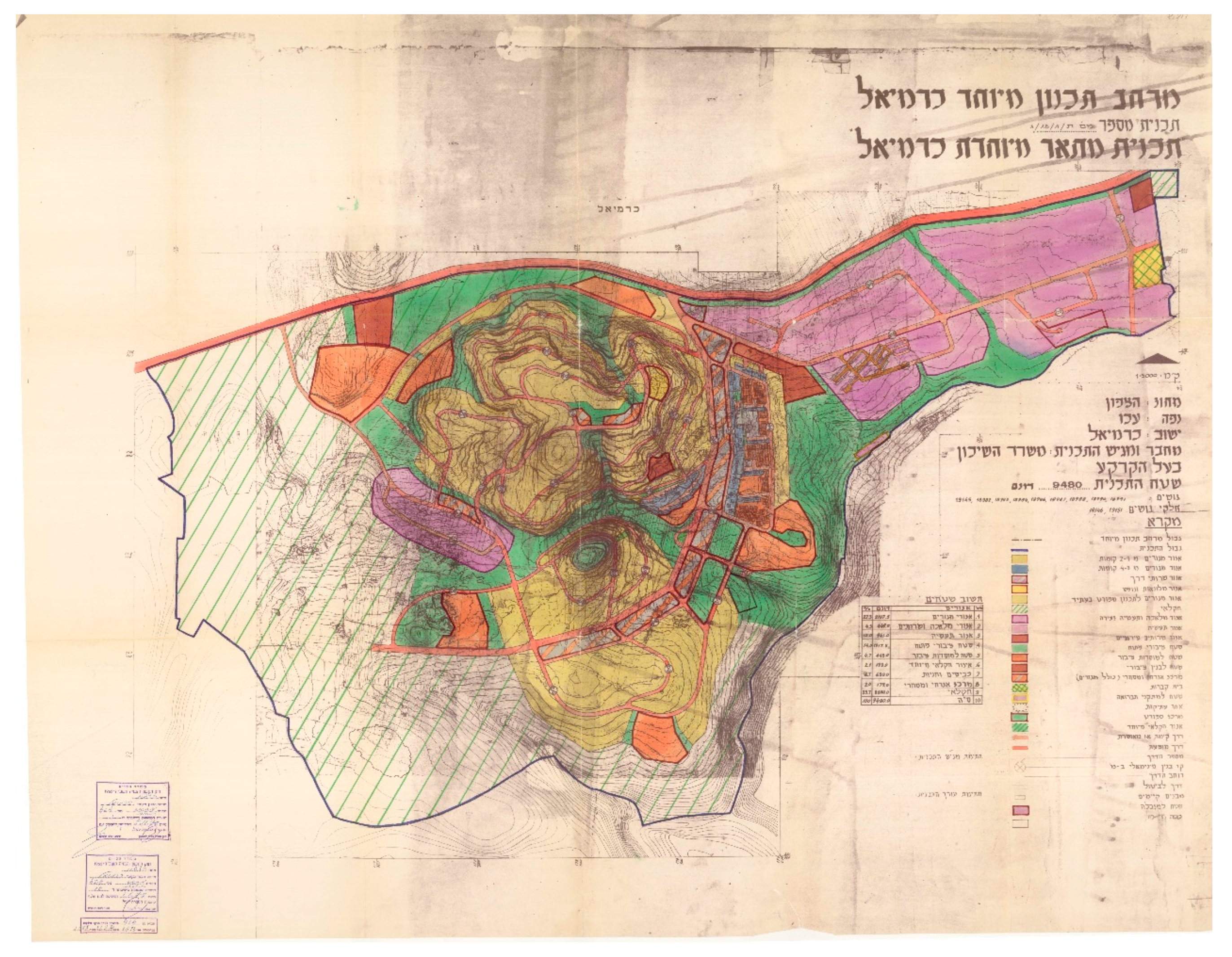
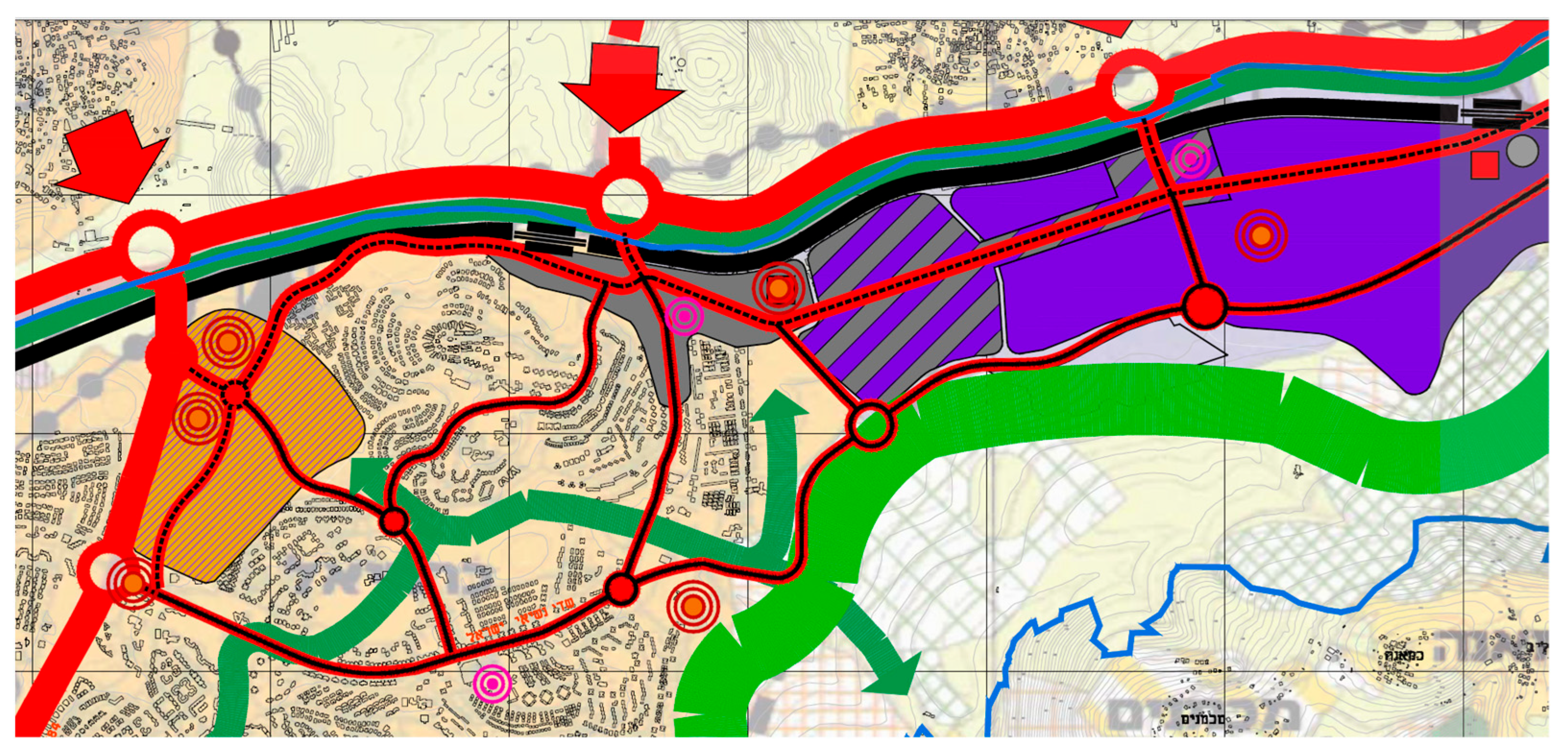
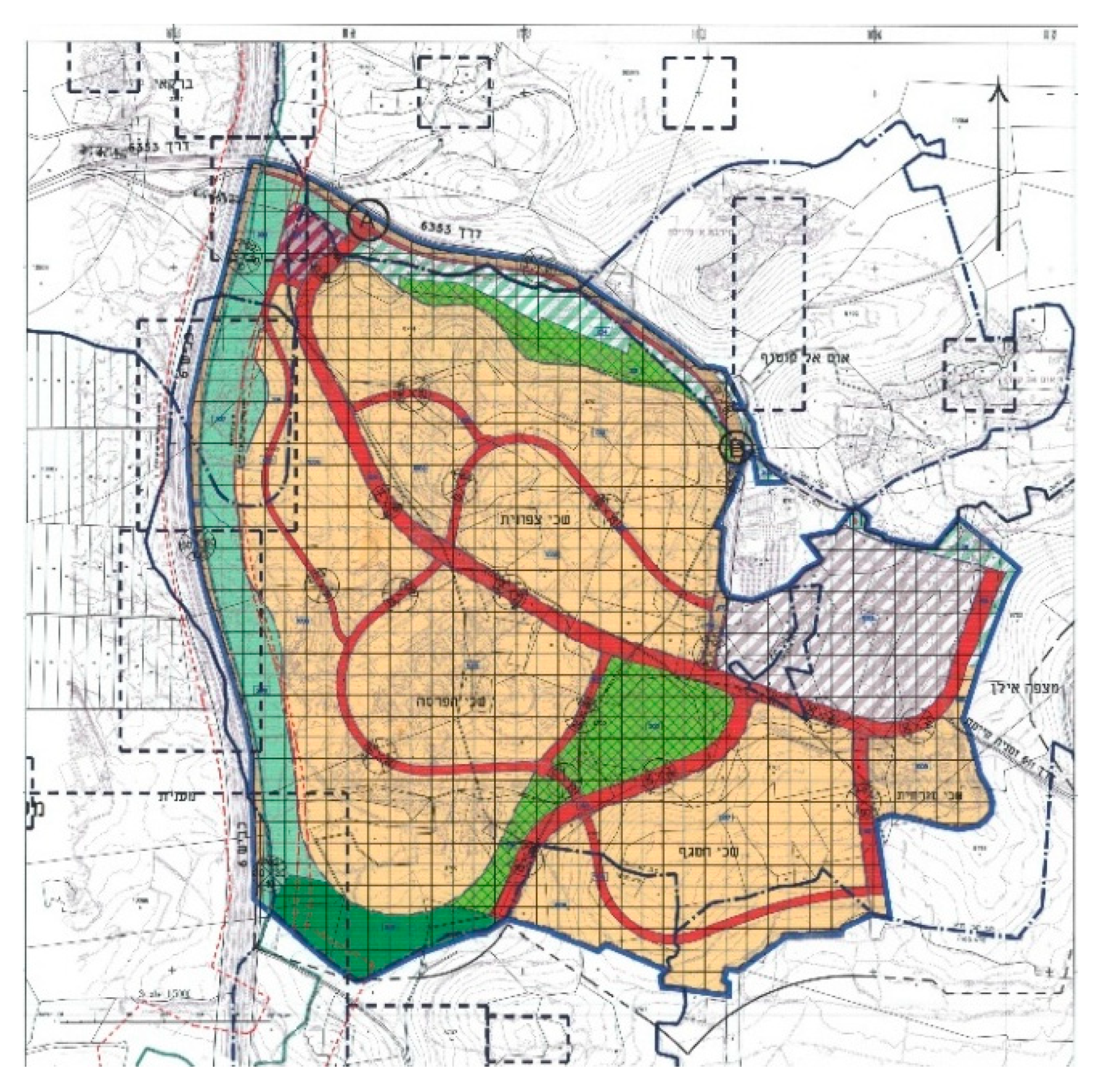
Karmiel was planned to accommodate 50,000 inhabitants—half the population size planned for Hook. Like Hook, its CBD was designed as linear. Indeed, in the master plan, the town center extended over 1.7 km—an enormous distance relative to the human capacity to experience it on foot and relative to the public and commercial functions required. From the layout plan it is evident that the width of the CBD ranged from 80 to 100 m, while residential zones were to extend 200–300 m from its lateral edges, so that their edges would define the town’s periphery (
Figure 4,
Figure 5 and
Figure 6).
Following British precedents, the town center was designed to contain all of Karmiel’s urban institutions, including hotels and apartment buildings “for young couples and individuals preferring to live in the vibrant city-center environment, thereby contributing to urban vitality at all hours” [
70] (p. 54). In the layout plan, construction was planned up to the dry riverbed crossing Karmiel, with a recreational and sports area located along the its edges [
70] (
Figure 5). As evident in the final master plan (
Figure 6), the uneven topography dictated adjustments, resulting in a curvilinear CBD. The western edge, which was narrow in the layout plan, acquired volume and depth that made walking to the CBD impractical [
71].
Significantly, unlike Cumbernauld and Hook, in Karmiel, the linear CBD was designed simply as a square flanked by buildings, rather than as a mega-structural complex. The edges of the square contained commercial and service functions, which also faced the surrounding roads: one of which served as the town’s main entrance (
Figure 7). As in Hook, pedestrian pathways were planned from the residential areas toward the CBD. However, unlike the British precedents, grade-separated traffic was not implemented in Karmiel. Thus, pedestrians walking along these pathways to the CBD had to cross the peripheral roads. Apart from a few essential public facilities such as schools, most of the urban uses, including commercial as well as public and cultural services, were intentionally concentrated in the CBD rather than in the residential areas [
72], as planned for Cumbernauld and Hook.
3.1.2. Harish
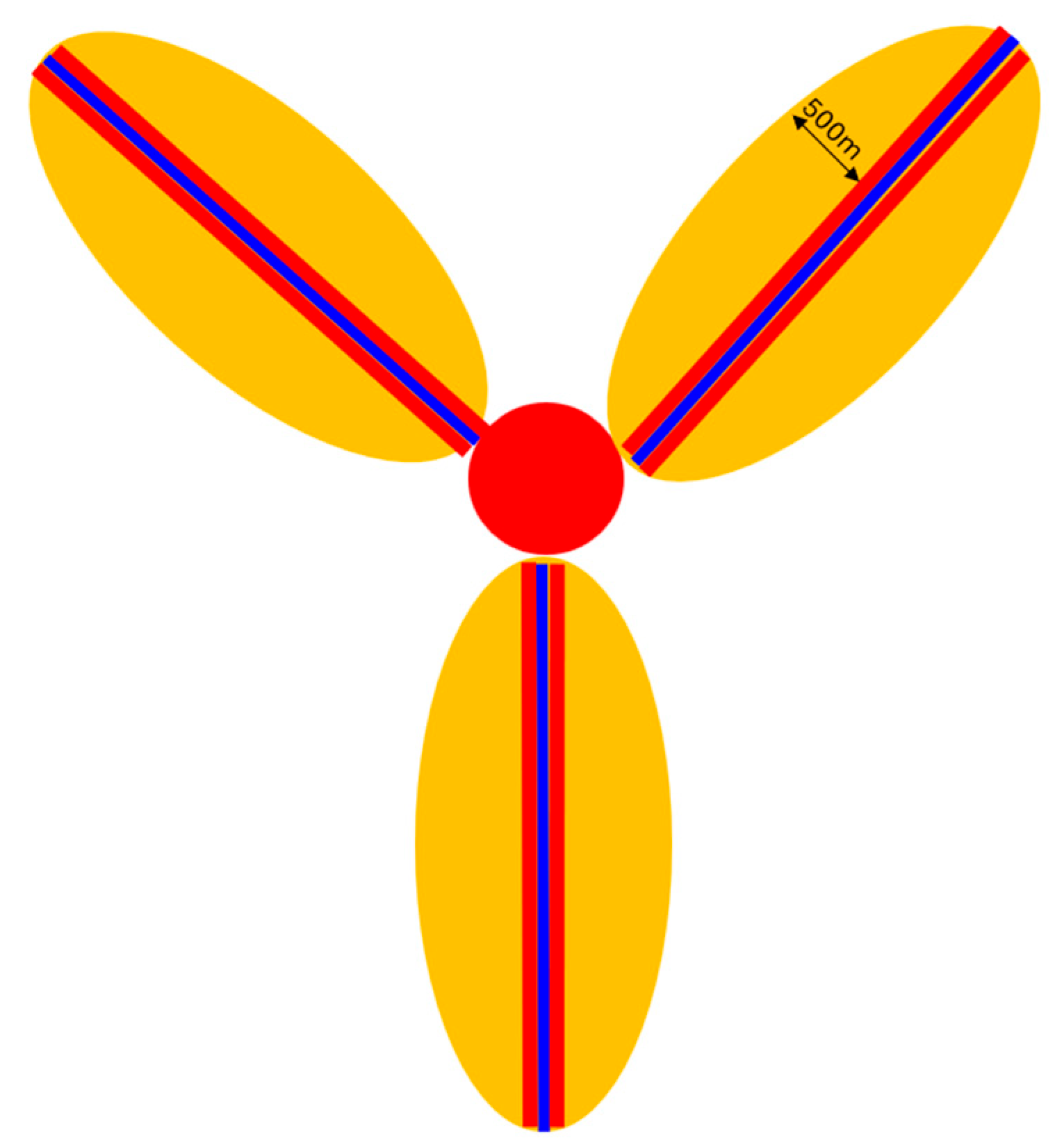
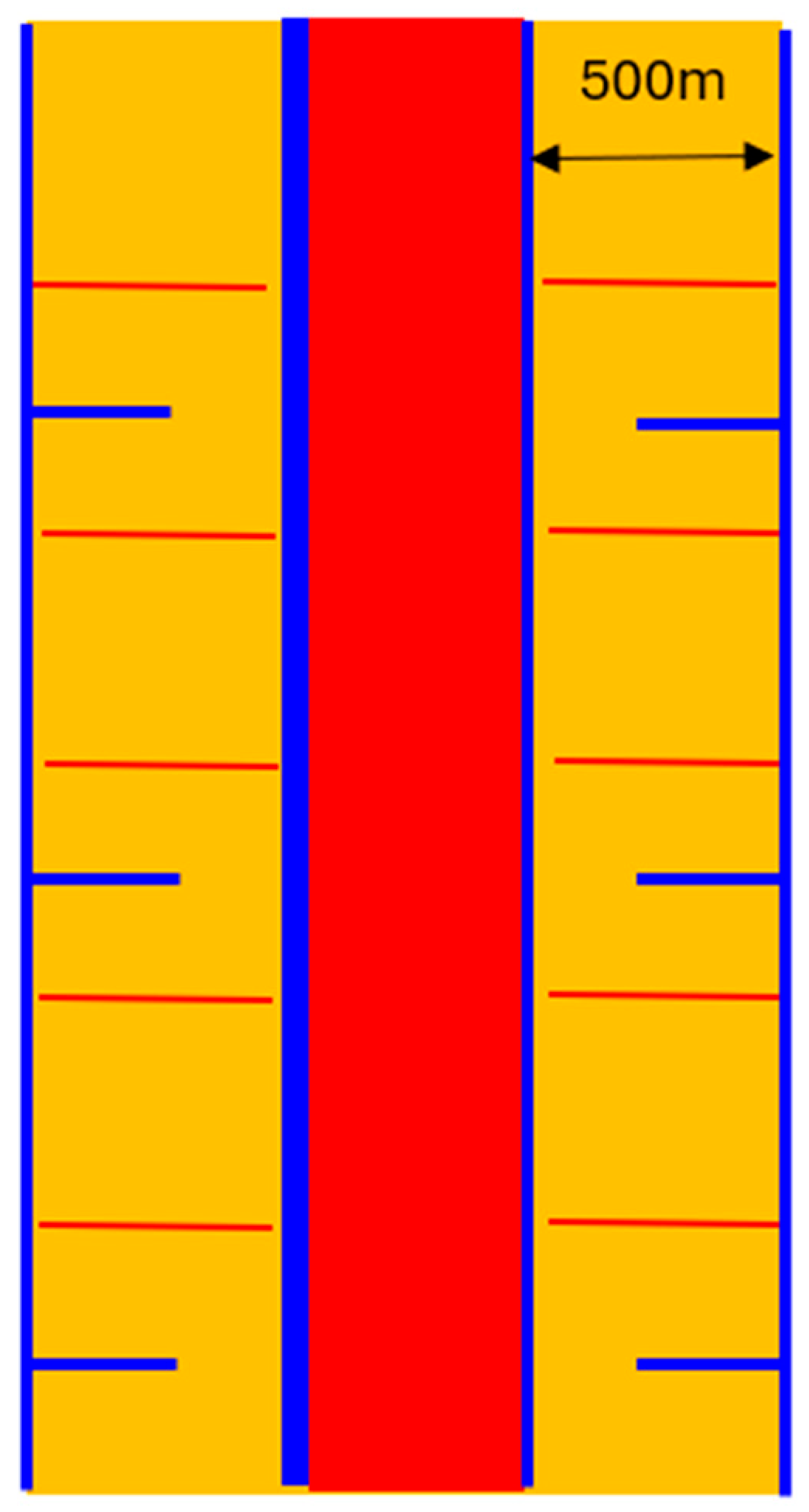
In 2010, fifty years after Karmiel, the new town of Harish was planned. Its plan also relied on a linear model. However, this time, the town’s linear axes were not designed as continuous pedestrian-only pathways. Instead, they were designed as mixed-use streets, containing commercial and public services on the ground floor and residential units above. The original plan envisioned a city of 100,000–200,000 inhabitants. It resembled a flower: an employment area at the “receptacle”, out of which three very long “petals” extended, containing housing, commerce, and associated services. Each petal was designed to include a central street running along its entire length, with a mix of housing, commercial and service functions. Mobility along these streets was envisioned as based on high-frequency public transportation. Residential units were to be located within a maximum walking distance of 500 m [
73] (
Figure 8).
The resemblance between the Harish and Karmiel schemes is clear. In both, the linear CBD, containing commercial and service functions, extends along the entire length of the town or city segment. Moreover, in both, residential areas are located on either side of the linear center, with a maximum walkable distance of 500 m from the edge of the residential zone. Finally, both plans incorporate linear vehicular axes.
The differences between the Harish and Karmiel schemes can be explained by the intended population size and the zeitgeist. Harish was designed for a population 2–4 times larger than Karmiel’s and accordingly included multiple city segments. In terms of the zeitgeist, two differences stand out. First, the center of Harish (the red circle in
Figure 8) is intended to accommodate large employment facilities and high-tech industry [
73], which was not part of the planning 50 years earlier when Karmiel was designed. Second, the detailed design of the linear center differs between them: whereas in Karmiel, the CBD is designed as pedestrian-only, with a main vehicular axis alongside it, in Harish the commercial and service center of each segment is planned as a mixed-use street. Street mobility relies on dedicated public-transport lanes, in a way that recalls the prewar models of transportation-oriented linear cities.
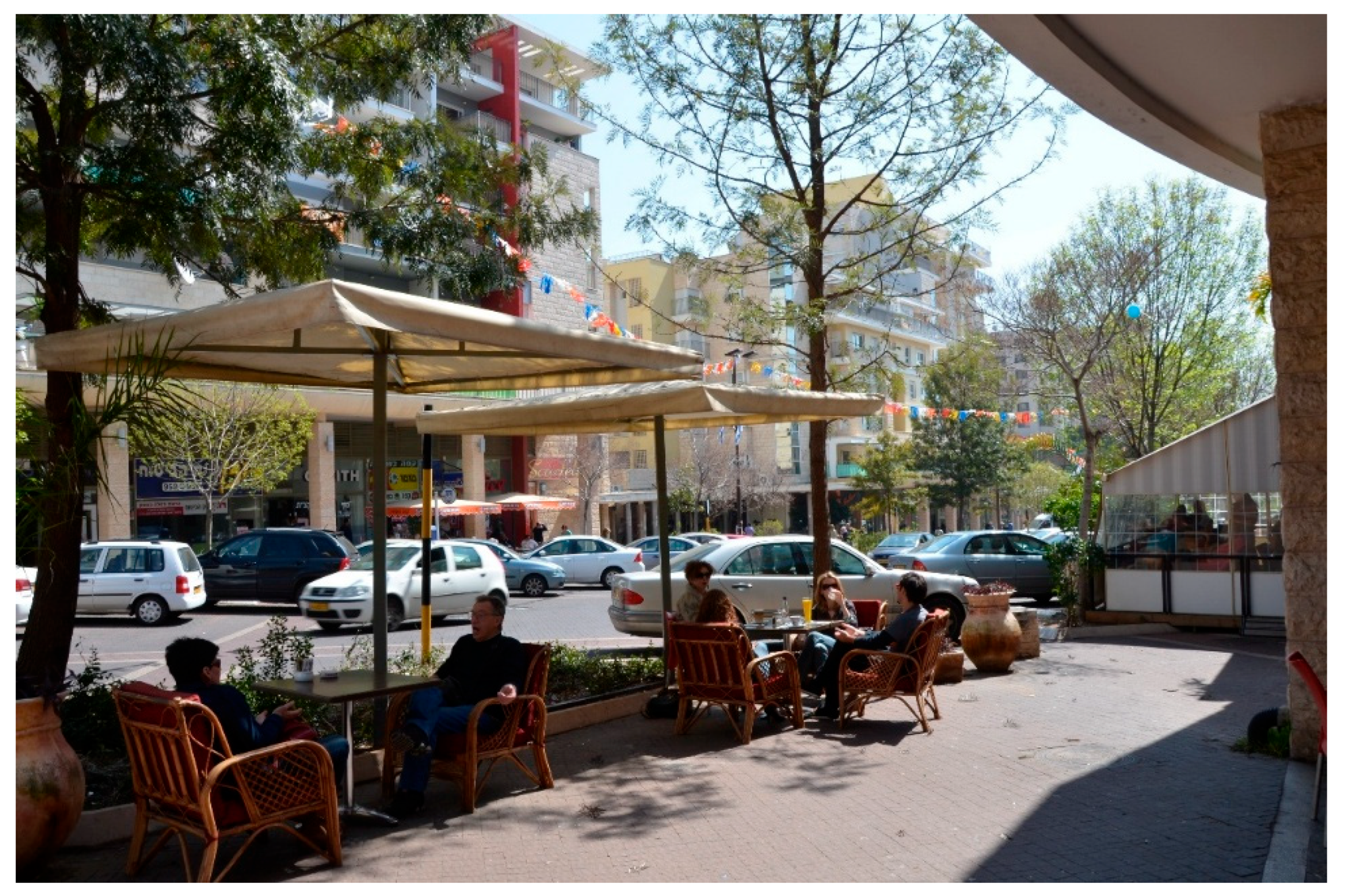
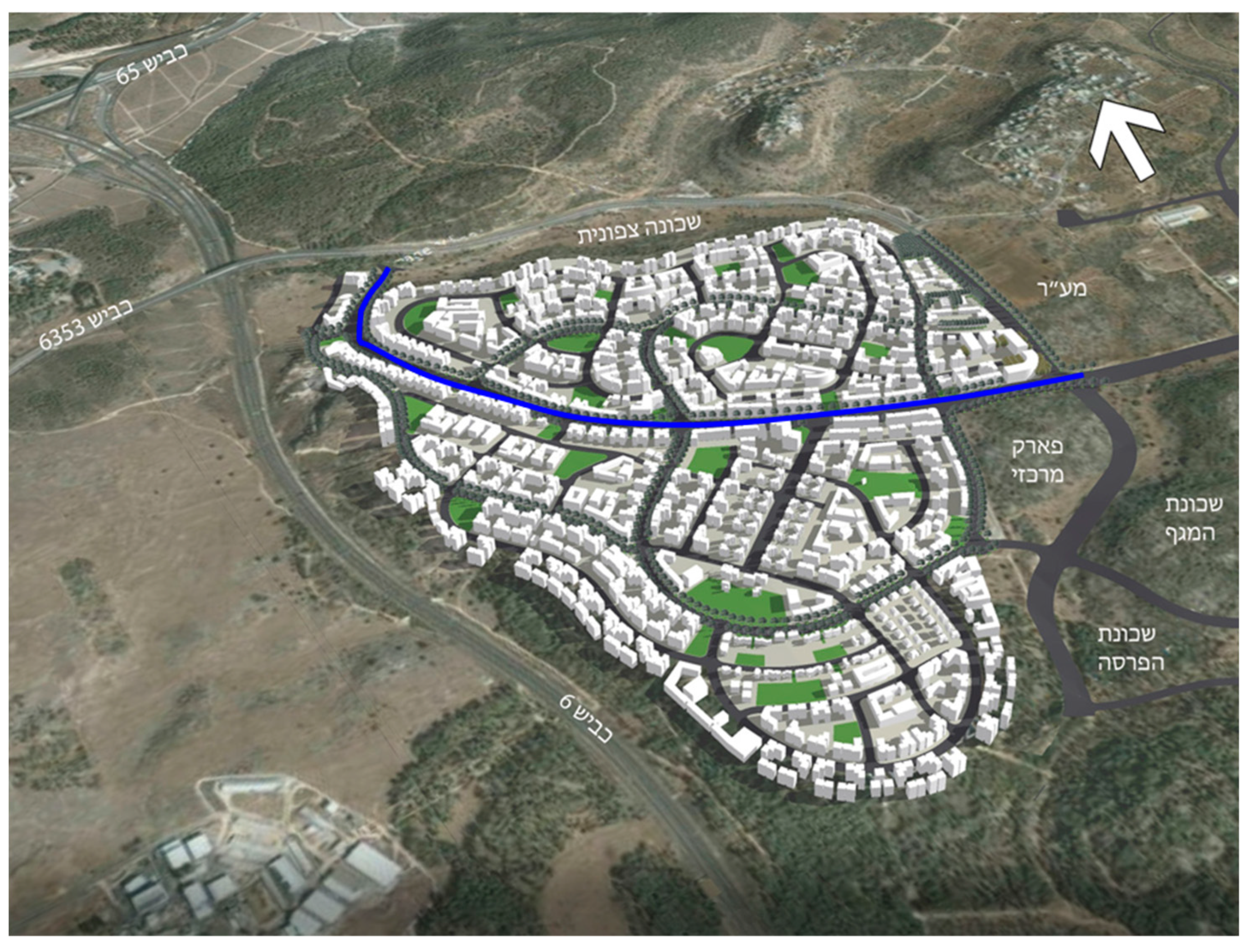
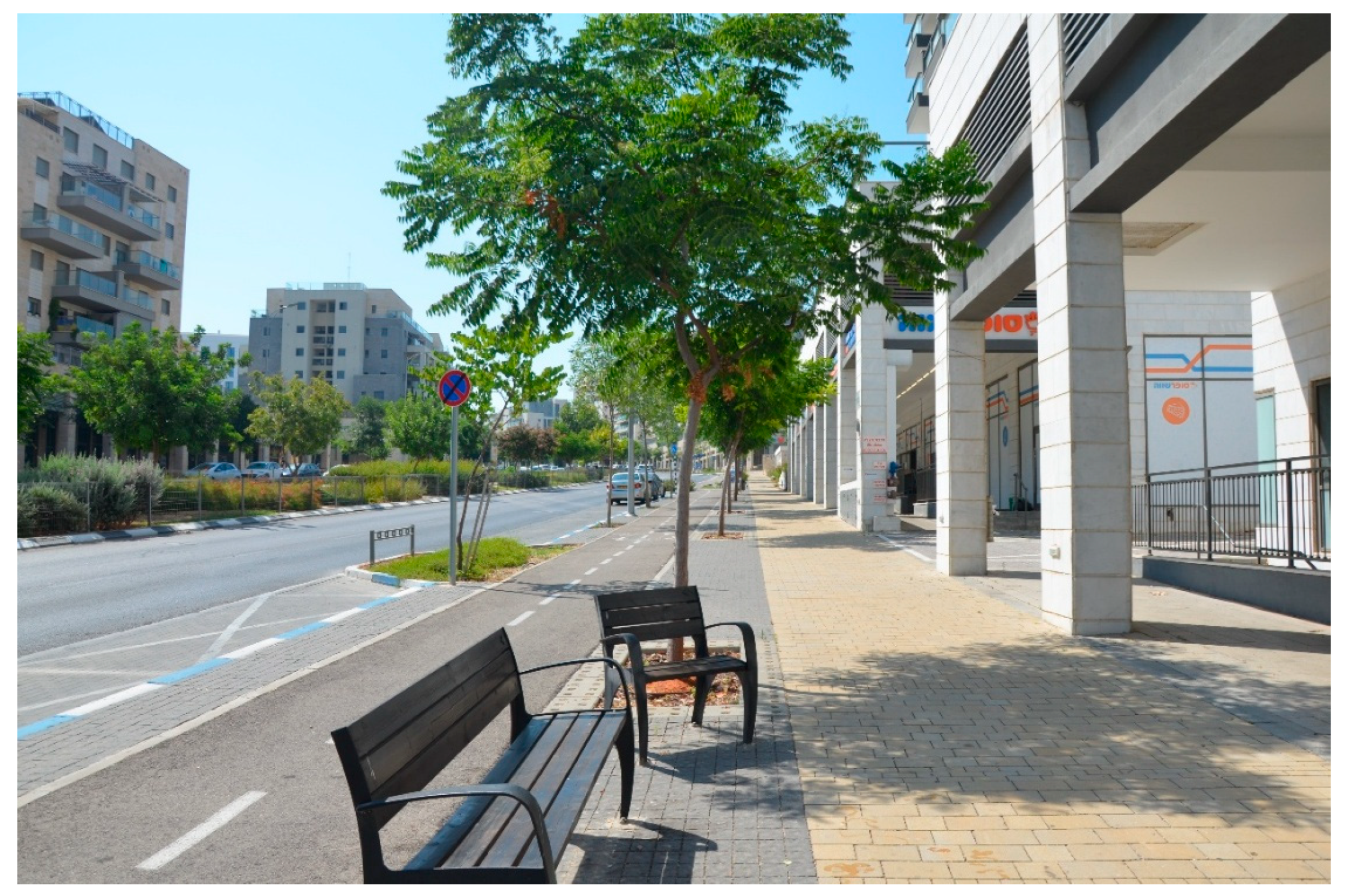
In practice, Harish was built only partially. A residential neighborhood constructed years earlier on a small portion of the land designated for Harish, together with the topographical conditions, distorted the initial scheme. Consequently, the detailed planning was intended for a town of only 50,000 inhabitants, similar to Karmiel in the 1960s. The central axis, containing the commercial and service functions of a single “petal”, served as the town’s main spine, and is therefore referred to here as the linear CBD. This central axis was also designed as the town’s main entrance, accommodating a public transportation lane in each direction, two lanes for private vehicles in each direction, parking lanes on both sides, wide sidewalks, and a commercial colonnade with residential floors above. The urban axis was built completely from the outset, extending continuously over 2 km (
Figure 9 and
Figure 10). Green spaces, intended to be located outside the town in both the Karmiel plan and the initial Harish scheme, were instead designed as small gardens along street edges, in an urbanized format. A decade later, a new plan was prepared to accommodate 100,000 inhabitants. A new neighborhood was added, and urban development was intensified, with building heights ranging from 6 to 30 stories [
74].
3.2. Urban Development
3.2.1. Karmiel
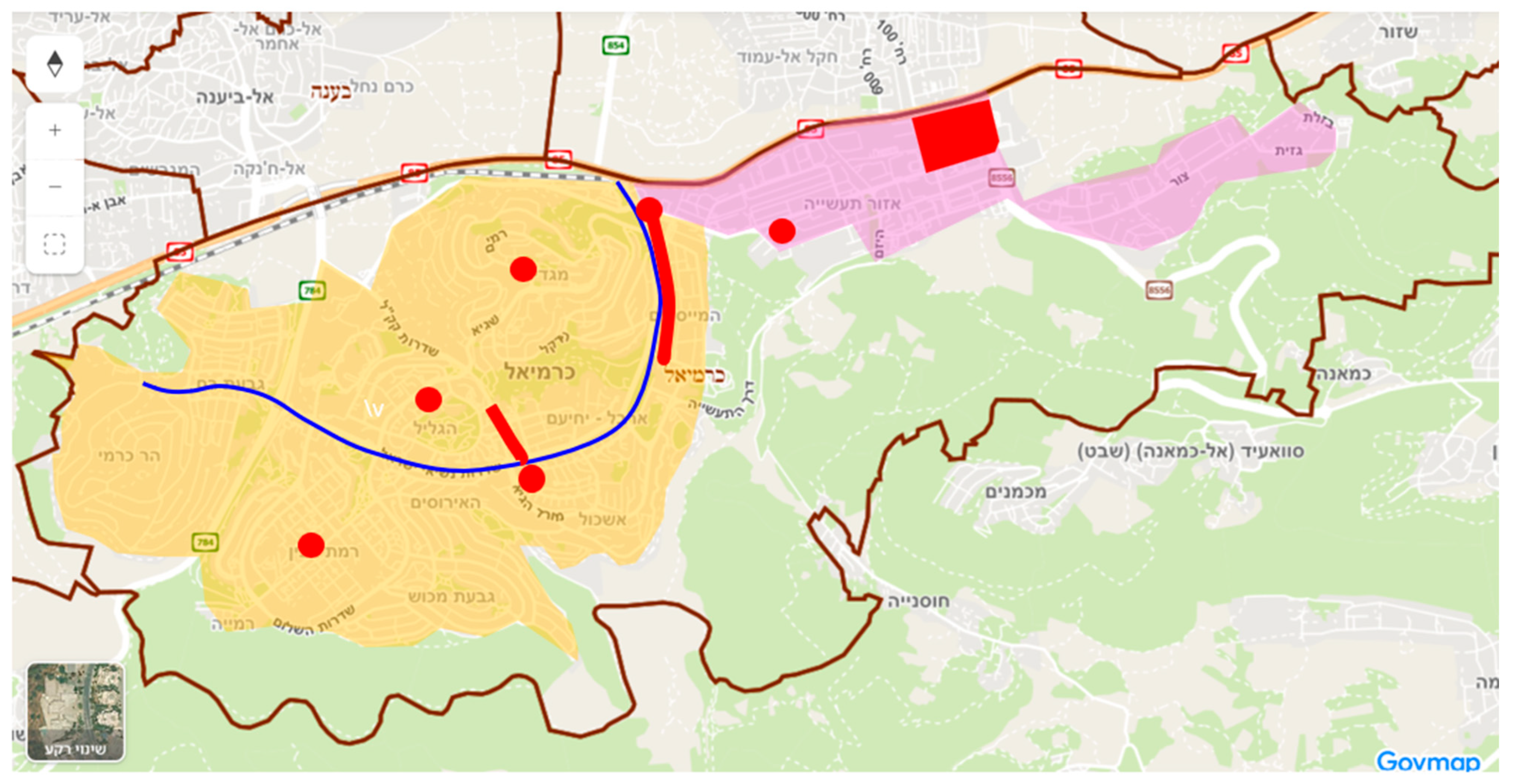
Karmiel’s current population is 50,000, meaning it has reached its intended target. Contrary to the statements by architect Martens, residential units were not constructed within the Karmiel CBD, Moreover, the CBD was not extended beyond its initial construction. Although Karmiel’s main vehicular axis stretched westward, the CBD that was supposed run alongside it was not extended. Since only the residential segment on the eastern side of the CBD was initially narrow enough to allow residents to walk from the outermost housing units to the CBD—much like in Hook’s formative scheme—walkability was abandoned once the town expanded westward.
To enable residents to access basic goods and opportunities for social interaction within walking distance from their homes, small-scale commercial and service centers were developed within neighborhoods and along the main vehicular axis. Large, parking-oriented commercial centers were also developed, in the industrial zone outside the town, which naturally weakened the town’s retail power and urban vitality (
Figure 11 and
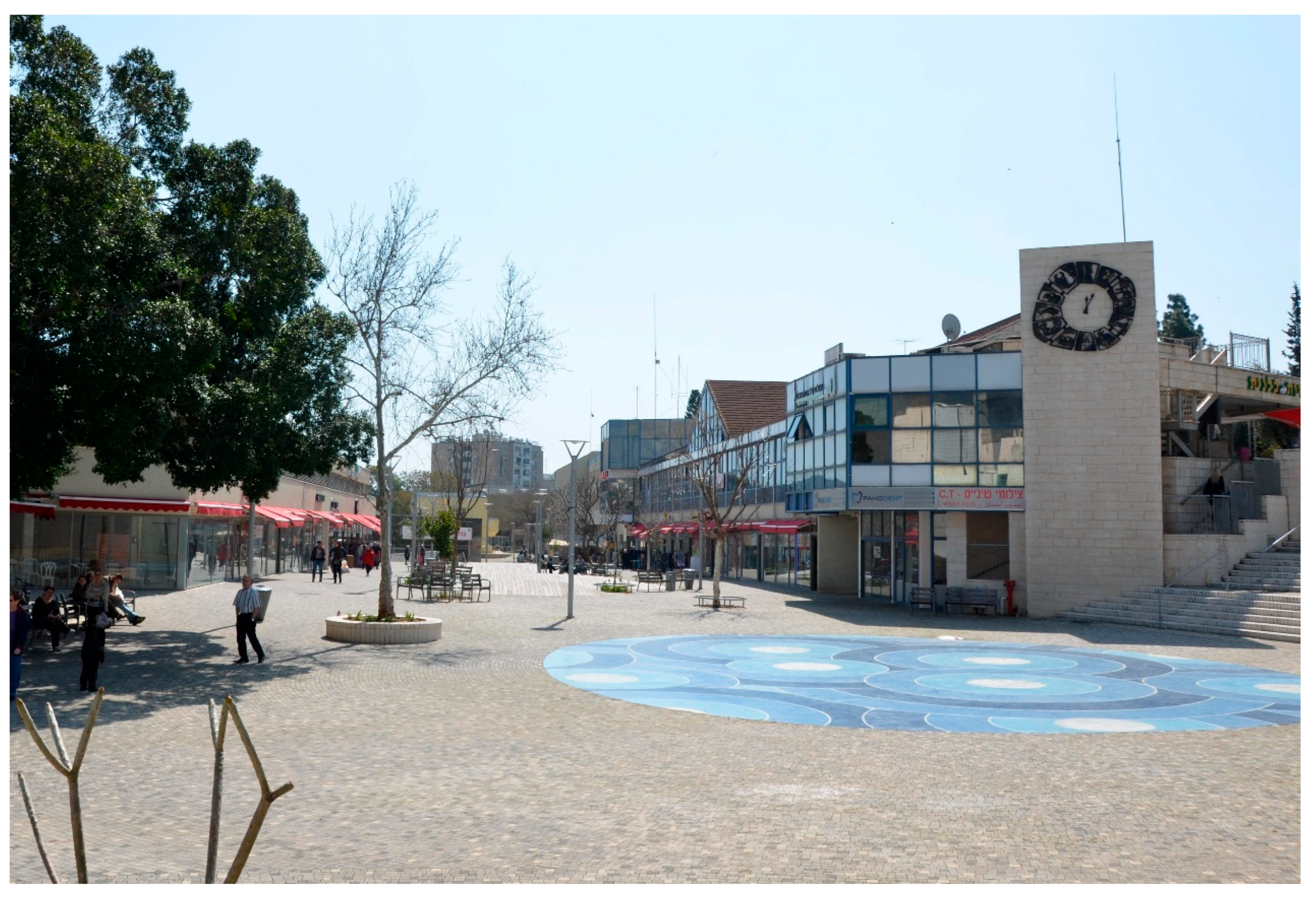
Figure 12). When the old CBD was renovated in the early 2000s, it was transformed into an esthetic urban space, but its commercial activities did not intensify (
Figure 13). No additional functions were added, and particularly not the most essential use: residential units. Adding housing could have strengthened local purchasing power and partially revitalized the complex—not as a CBD, but rather as a local, off-center focal point for a town that had expanded in a different direction.
Despite the gap between the original plan and reality, belief in the original linear plan for a continuous CBD flanked by residential neighborhoods—persisted until the late 1990s [
77]. Only then was it decided that instead of a continuous CBD, the town would develop small, concentric centers at key points along the main vehicular axes, forming a chain of disjointed central uses [
78].
The new master plan, prepared by Mazor–First from the early 1990s onward, reflected this approach. Targeting a population of 120,000 (two-thirds of whom were planned to reside within the densified built areas), the plan structured the city along main traffic axes. Urban centers adjacent to these axes were designed to contain commercial and service functions. Note that the concept of a continuous, cohesive CBD—a key principle of linear morphology—was thus abandoned [
79] (
Figure 14).
3.2.2. Harish
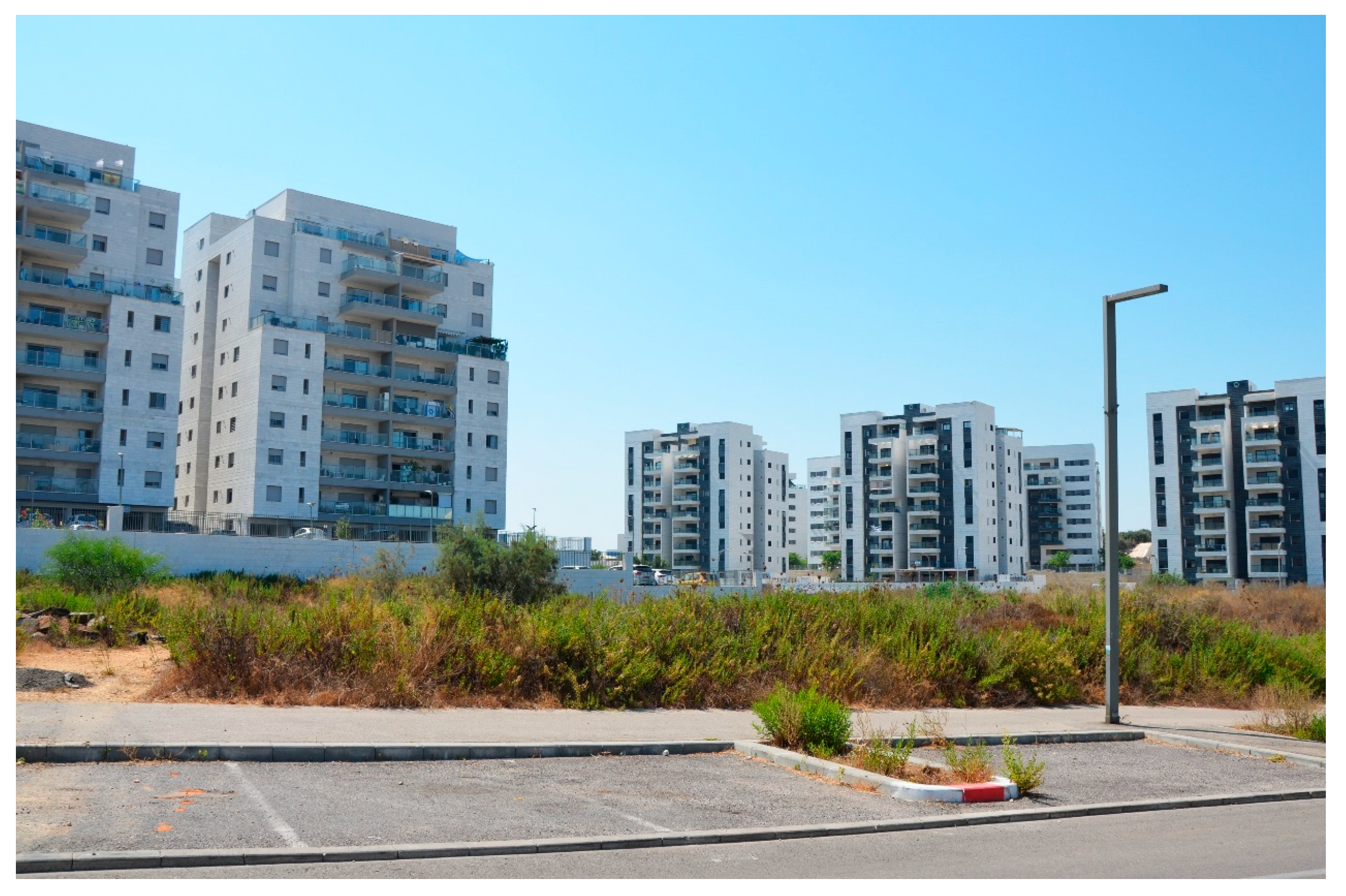
Currently, Harish has a population of 35,000, meaning it is still in the early stages of development. However, reality is beginning to diverge from the plans. First, the problematic nature of placing a new town’s commercial areas along a street that stretches over 2 km has become apparent. This arrangement stretches the new town’s limited purchasing power instead of concentrating it. It diminishes the ability of business owners to sustain themselves and reduces opportunities for residents to experience the town’s pulse. Moreover, the mere presence of built yet inactive shops has given the town a ghostlike atmosphere (
Figure 15). To address this, a shopping mall has been built at the town’s entrance, concentrating purchasing power and human activity in one location, but further suppressing commercial vitality along the main street.
Second, the attempt to channel all urban traffic along a single, multifunctional axis has also failed. To prevent congestion, the street is exceptionally wide. As a result, it remains largely empty during most of the day. This is why the town’s first engineer has converted the planned public transportation lane into a green space [
80] (
Figure 16).
Third, the employment area also faces implementation challenges. While it is relatively easy to populate residential units, especially in a country experiencing rapid population growth, it is difficult to attract large offices or high-tech industries to a nascent town that still lacks residents with specialized skills required by major firms. As a result, this area currently contains only residential buildings. The only distinction between the buildings constructed there and those in other parts of the town is that they are higher. Furthermore, the empty plots awaiting offices or high-tech industries detract from the urban experience of the emerging town (
Figure 17).
4. Discussion
As noted in the Introduction, contemporary scholars discussing the linear city model identify four main areas of discourse: the gap between an organic city and a new, planned city [
18,
19]; the gap between a linear city with a linear core and settlements along a linear axis [
20]; the gap between an independent city and a city along an axis connecting major cities [
21,
22]; and the gap between a new planned city and a mega-structure city [
23]. This article adds a new area of discourse: the ideological values informing city planning. It focuses on Hook model, which has received limited theoretical attention [
45,
46], examining it in light of real-world implementation. Accordingly, in this section, I assess which of the values identified in the Introduction have persisted through planning transformations and the encounter with reality, and how the Hook model has informed the realization of these values. This assessment will be conducted through a comparison between Karmiel and Harish.
Regarding the first value, veneration of technology, the case studies demonstrate that linear towns and cities may be realized even without the use of cutting-edge technology. In fact, the linear morphology can be implemented simply and cost-effectively without the concrete mega-structures of Cumbernauld and Hook, or the steel-and-glass constructions of The Line. In Karmiel, the linear CBD is an elongated pedestrian square, lined with shops and services, inwardly oriented and separated from the surrounding roads. In Harish, the linear CBD is a mixed-use street with multiple modes of mobility, serving as the town’s sole entrance and extending to its full length. This conception is more relevant to our discussion, as the CBD indeed runs along the entire length of the town and aligns with the contemporary view of the mixed-use, multi-mobility street as a significant urban element (as further elaborated below).
Regarding the second value, proximity to nature, the original idea of keeping the narrow town close to the surrounding environment was quickly abandoned. Topography and other constraints shifted the ideal design from a narrow, elongated town parallel to the linear CBD to a wider one encompassing the CBD. As a result, inner-urban gardens served the need for closeness to nature. Over time, in the initial planning of both Harish and the new neighborhoods of Karmiel, small street-edge gardens were preferred.
The third value, equitable access to the CBD, remained significant, although the means of achieving it changed. In Karmiel, the CBD was no longer accessible to pedestrians as the town expanded westward. To improve access to commercial and service functions, suburban centers were developed within neighborhoods or adjacent to the main transport axis. In Harish, the farthest residential building is currently separated from the linear CBD by about one kilometer in a straight line. Diverse transportation modes—cycling, public transport, and private cars—bring the CBD closer to residents who cannot reach it on foot.
As for the communality value, the ways to achieve it also changed over time. In Karmiel, the planning concept was that walking to the CBD would support the development of communality. In Harish, community formation was intended to occur within designated nodes: inner-neighborhood gardens and neighborhood public institutions. These nodes, as well as to the linear CBD, were to be accessed by a variety of mobility modes, rather than just walking.
Finally, regarding the
urbanity value, the overall conception of urbanity also changed the way urban experience was encouraged. In the 1960s, the street still suffered from the poor reputation of modernist urban planning. Modernist planning considered the traditional urban morphology responsible for the poor living conditions of the industrial city [
31]. However, from the 1970s onward, architects and scholars recognized that the problems of the industrial city stemmed from over-concentration, not from the morphological structure of streets, urban blocks, gardens, boulevards, and squares [
81,
82,
83]. Therefore, the choice of a multi-mobility, mixed-use street as the linear CBD, as planned in Harish, was natural and justified.
In sum, the conception and implementation of the Hook model have changed significantly with time. As opposed to the original idea entailing rigid notions regarding linear morphology—a long, narrow town with walking distances to a linear CBD running along its length—contemporary planning emphasizes openness to alternative solutions. The contemporary linear CBD accommodates diverse modes of mobility, the city does not have to be long and narrow, and neighborhoods can exist alongside the linear CBD without compromising their distinctiveness. Fostering communality does not have to rely exclusively on mandatory walking access to the CBD. In addition, the linear city model can be implemented without advanced technology. It seems that a mixed-use street running along the entire length of the city—and therefore keeping distances to the CBD relatively short—can offer an elegant solution.
5. Conclusions
Is the Hook model suitable for the construction of new towns? Beyond the article’s contribution to the discussion of the values of linear towns and its in-depth focus on the implementation of the walkability-oriented Hook model, it also provided insights regarding the model’s realization in the construction of new towns.
Experience shows that a new town is built in stages. For many years, there has been a gap between the population target and actual number of residents. The linear model addresses this issue in a structural manner, as it consists of recurring, continuous units [
18,
23]. Indeed, this was one of the main reasons it was adopted in the planning of Karmiel. The town’s planner stated at the time:
Since the development [of a new town] occurs in different stages in terms of scale and pace, it is impossible to predict when the town would reach the size envisioned in the master plan, in terms of the construction of [the CBD that includes] all administrative, cultural, commercial, and entertainment buildings. As a result, several plots remain vacant in towns that have been built to date [referring to earlier Israeli towns modeled after the British new towns of the first generation…] These experiences indicate that the most important requirement in planning a new town—completeness at all times—cannot be achieved using the conventional form of concentric development [
70] (p. 53).
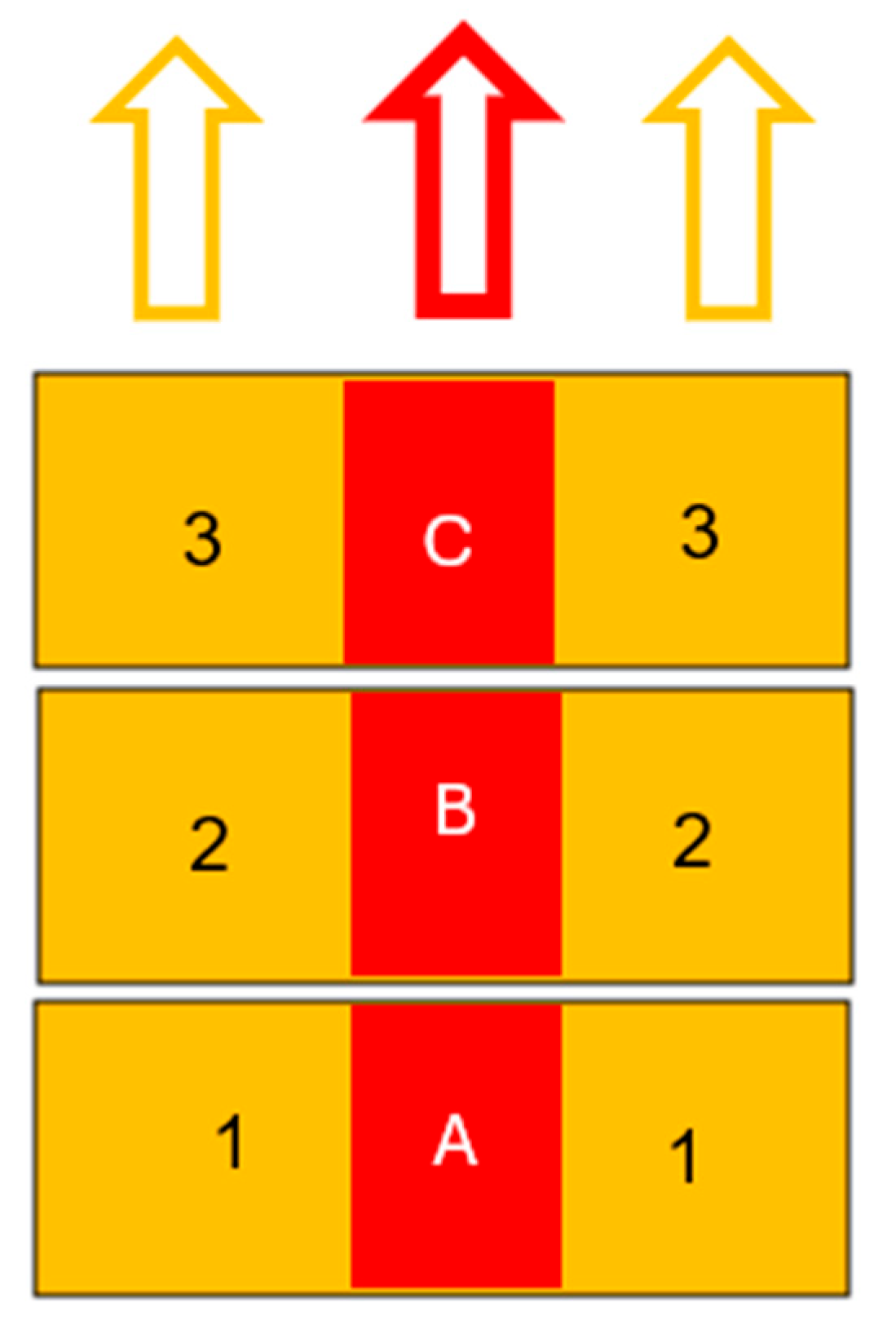
Karmiel’s planners designed each segment of the linear CBD to be built concurrently with the adjacent neighborhoods on either side. This way, the dimensions of the CBD would always match the scale of the town, ensuring its “completeness” at every stage (
Figure 18). In practice, however, Karmiel developed without the CBD expanding, let alone in the desirable linear direction. In contrast, in Harish, the opposite approach was taken: the CBD was constructed in its entirety before any other part of the town. As a result, it remained empty during the early construction phases. Only time would tell whether it would function as a true CBD or merely as a thoroughfare connecting a few gathering points at intersections where service facilities such as a health clinic or supermarket are located. In other words, the idea that the city would be built simultaneously with the CBD was not implemented in either of the two case studies.
Accordingly, three conclusions emerge from the case studies. First, although the model’s morphology apparently ensures “completeness” at every stage, there is no certainty that the city would develop in parallel with the CBD, or that the CBD’s actual size and location would align with the original design.
Second, the case studies indicate that over the long years of a town or city’s development, stretching the CBD to cover its entire planned length weakens the urban experience and thereby undermines the town or city’s attractiveness. Such an excessively elongated CBD dilutes the activities within it and leads to its failure for years. As the CBD largely determines the town’s image, this affects its entire identity, and it comes to be identified as a dormitory town rather than as a city with a healthy urban pulse. Since the aim of providing residents with an urban experience was one of the reasons for adopting the walkability-oriented linear model in the first place, and since the new town or city must attract residents to settle there already in the first years, the concept of a linear CBD is problematic in the context of a new town.
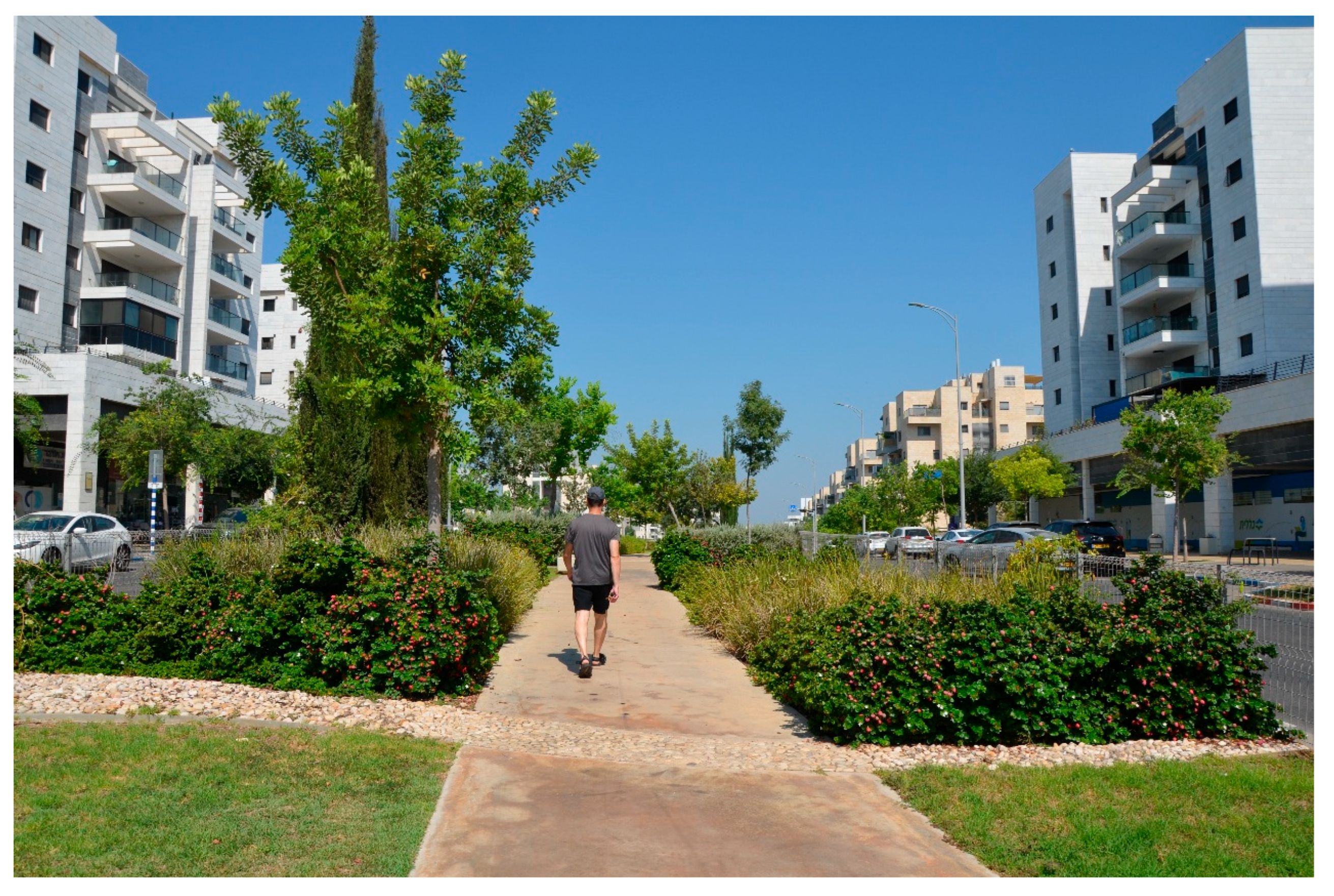
Third, the idea underlying the Hook—that a new town could develop as narrow and elongated—is also problematic. This is not only due to constraints related to topography, land ownership, landscape values, and other practical considerations. A town in which 500 m define the distance from the edge of the CBD to the town’s far edge (or 800 m as in the Hook model) cannot accommodate sufficient human diversity or purchasing power to attract varied employment and sustain commercial activity in the CBD. High-density residential development might provide enough residents to address this issue, but such densities are unrealistic for a conventional new town. To attract inhabitants, a new town must offer residential qualities that dense metropolitan areas cannot provide. Low-density combined with abundant green space is one of the advantages of a new town (
Figure 19). It is therefore unsurprising that Karmiel and Harish have tended to sprawl during their early years and are neither narrow nor elongated. In other words, the notion that a newly planned town can be narrow and elongated is inherently problematic.
Given this analysis, what can this article recommend regarding the future planning of new towns? Based on the experience of Karmiel and Harish, it can be observed that in a nascent town, the (few) residents should be concentrated in urban nodes with high-intensity uses that reinforce the urban experience, rather than dispersing commercial and service functions along a long linear CBD. The solution of commercial and service nodes connected via internal transportation—preferably efficient public transportation—appears to be the optimal approach. It is preferable in terms of the urban experience that can be concentrated in these nodes, and also because it allows for flexible urban development, as opposed to the development of a linear CBD. Unsurprisingly, this is the solution chosen in the new master plan for Karmiel. This conclusion, in effect, undermines the model’s applicability to the construction of a new town.
Finally, despite its contributions, this study is limited to new linear towns, in a democratic country, that were influenced by the Hook model and aimed to avoid the mega-structure embedded therein. The contribution of this study is limited to principled reflection regarding the suitability of this specific model. Note that the issue of new linear cities is far broader than the current scope. Future research could examine new linear towns influenced by Hook precedents in other countries, new towns not influenced by that model, or new towns implemented in non-democratic countries or those affected by extreme climates. Future studies could also make use of quantitative tools, focus on cities in specific regions, and derive conclusions aimed at improving existing cities. These directions extend beyond the scope of the present article and serve as a call for future research.