
Deciphering the Impact of Waterfront Spatial Environments on Physical Activity Through SHAP: A Tripartite Study of Riverfront, Lakeshore, and Seafront Spaces in Shenzhen



Abstract
1. Introduction
2. Literature Review
2.1. Quantification of PA
2.2. Research on Waterfront Spaces and PA
3. Materials and Methods
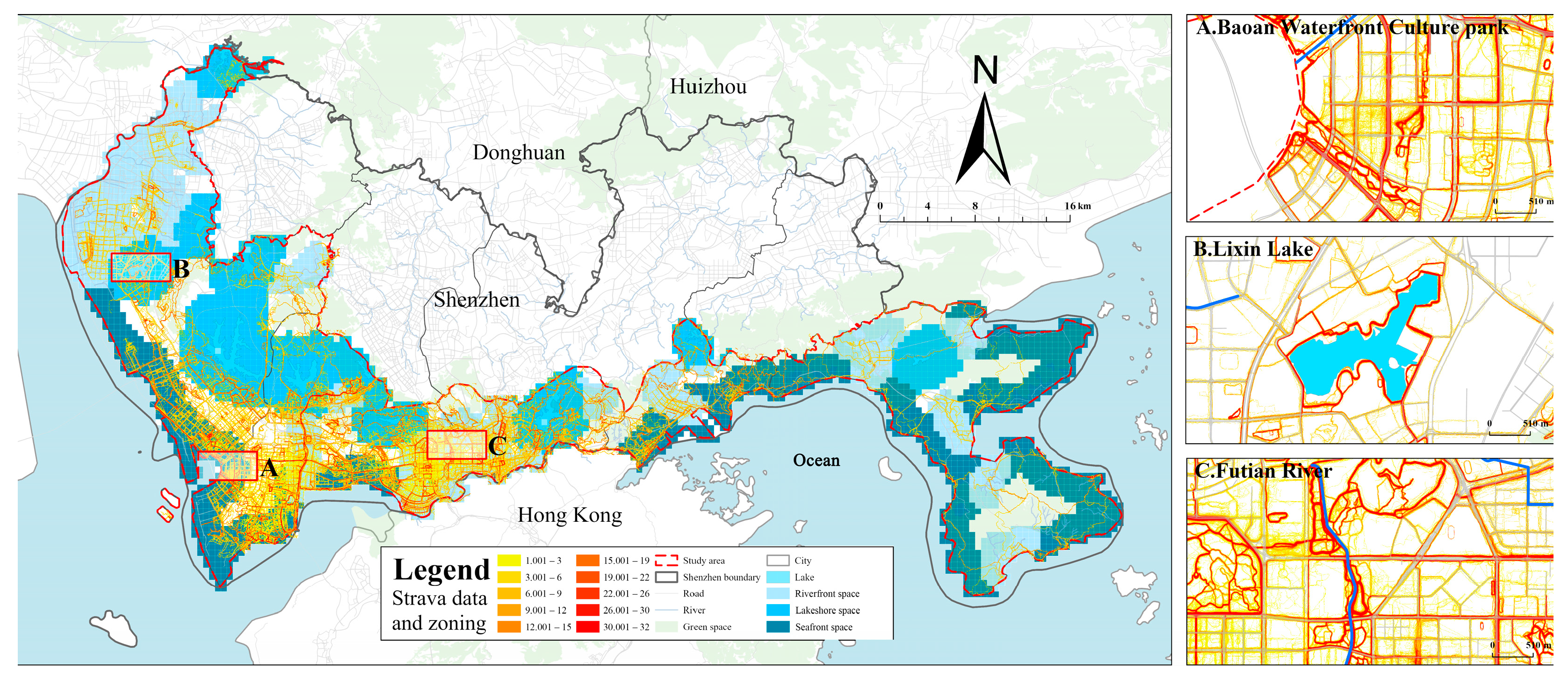
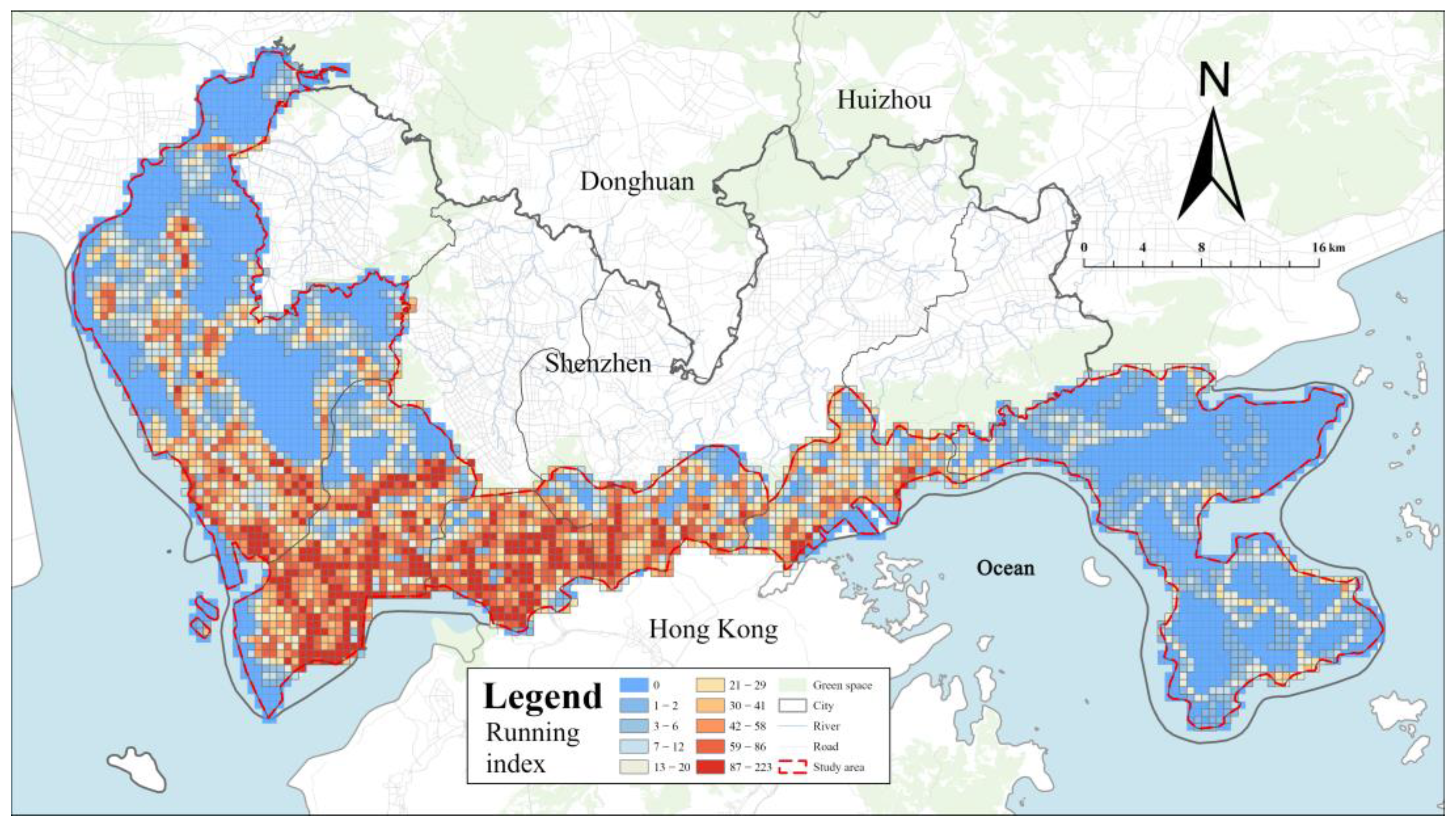
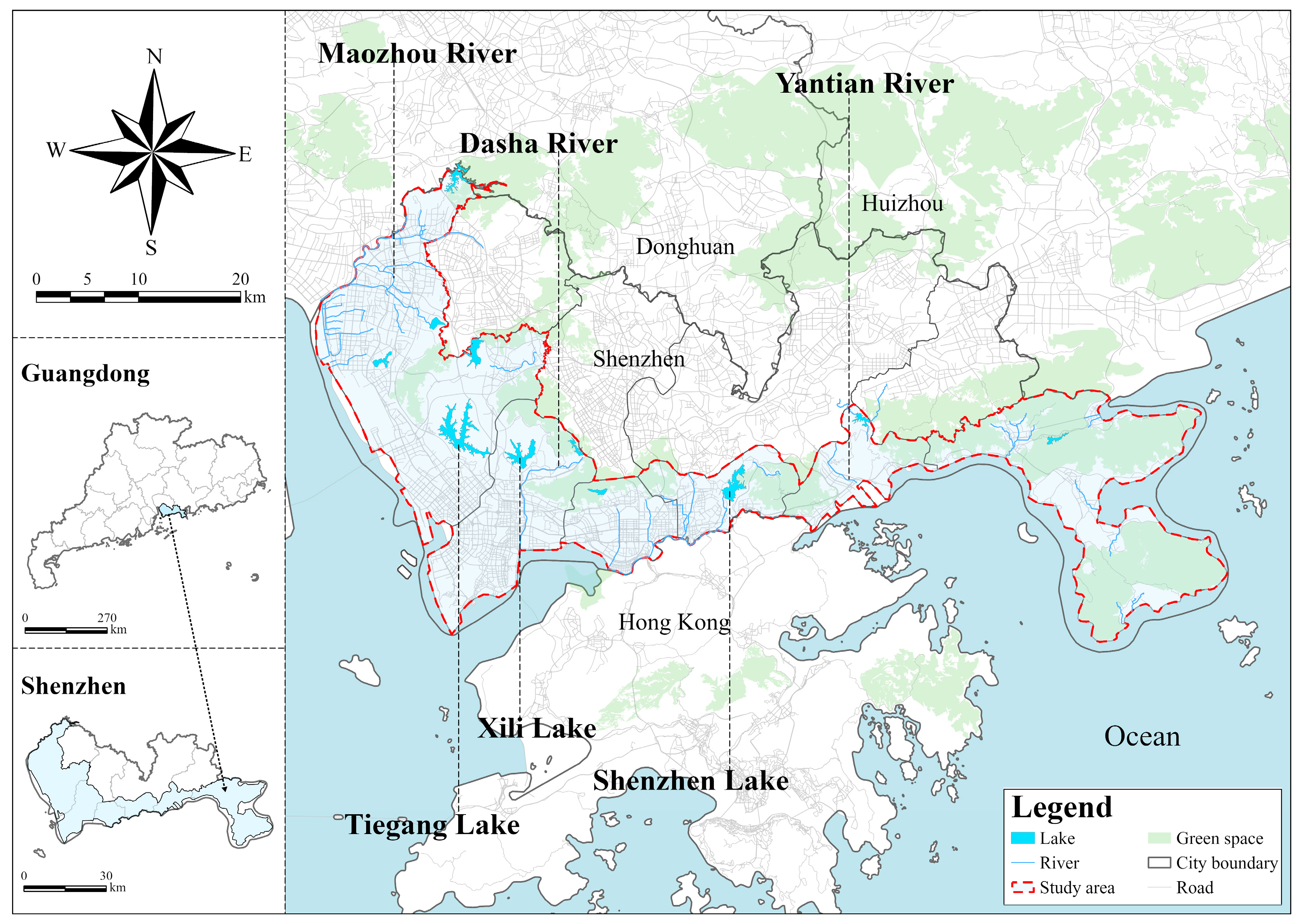
3.1. Study Area
3.2. Data Sources
3.2.1. Strava Data
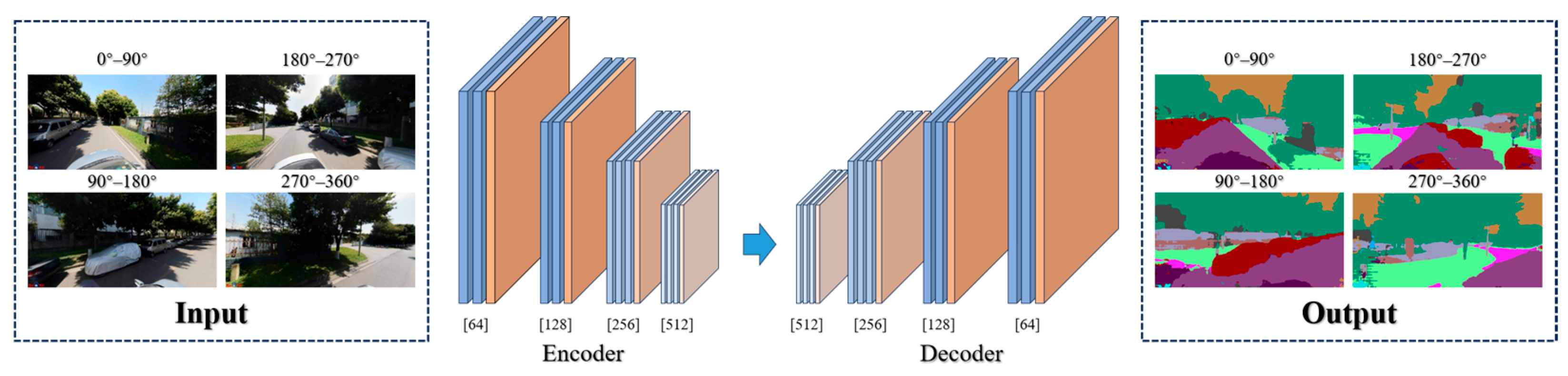
3.2.2. Baidu Street View Data (BSVD)
3.2.3. Variables
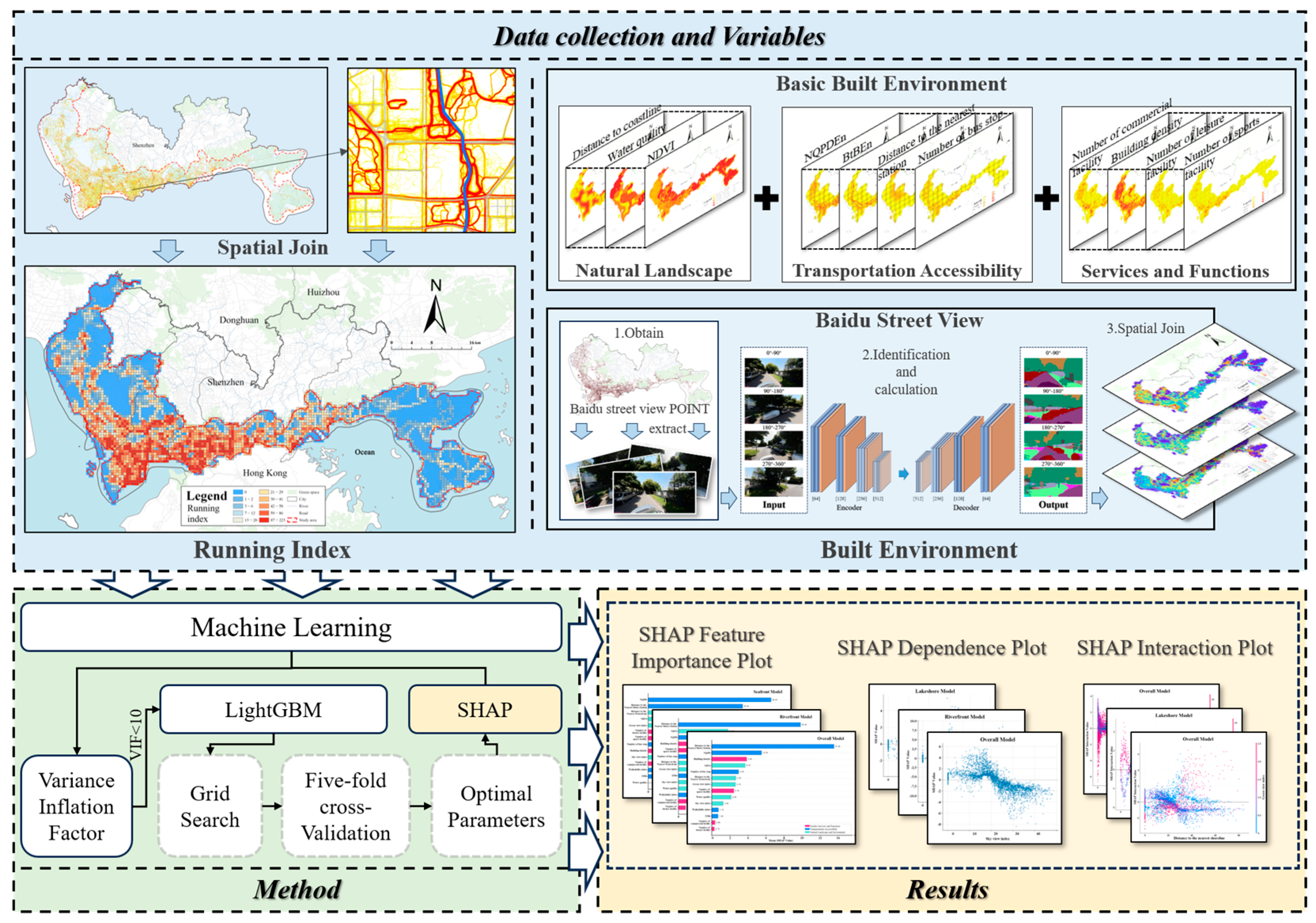
3.3. Methodology
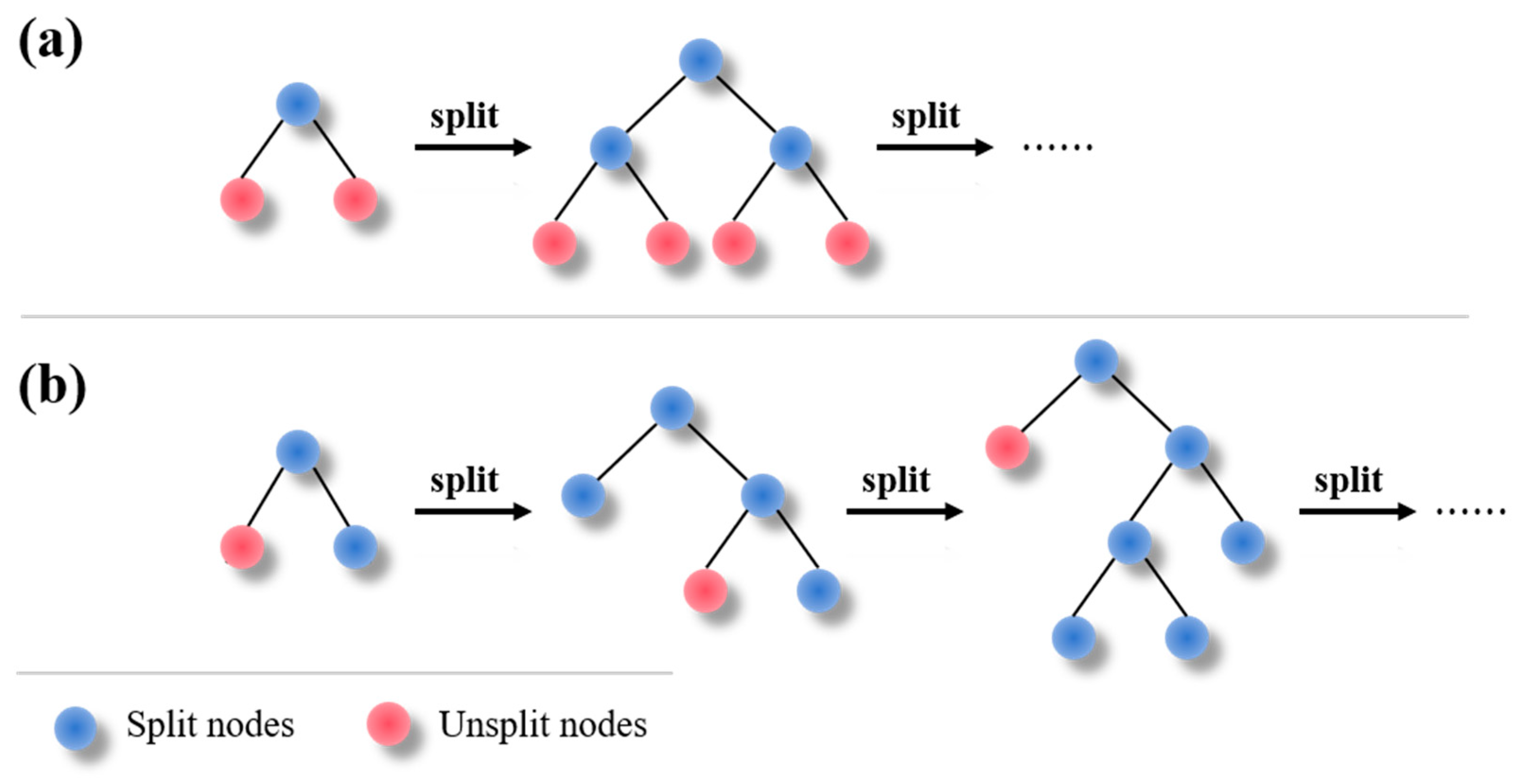
3.3.1. LightGBM
3.3.2. SHAP
4. Results
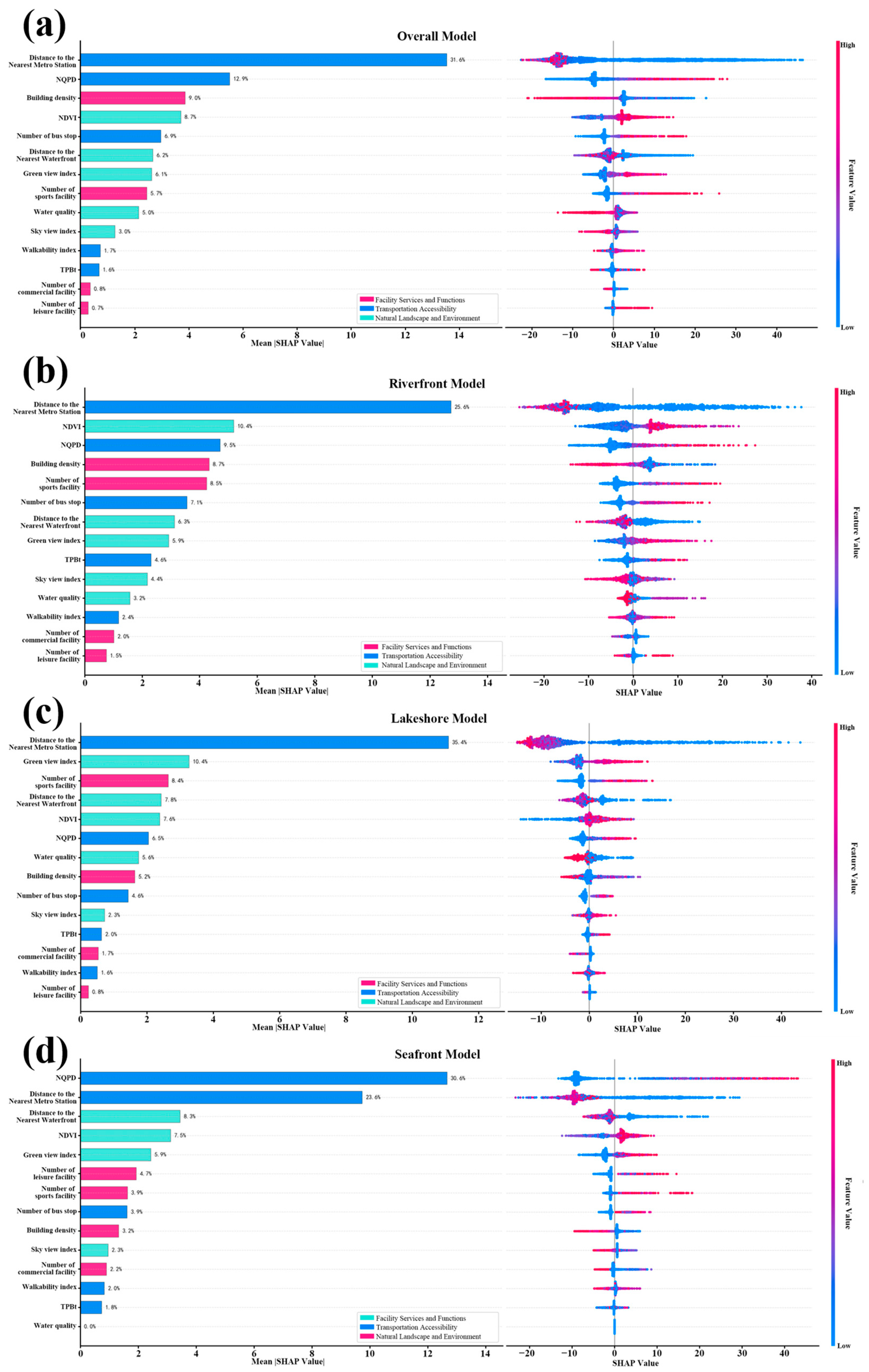
4.1. Relative Importance of Predictors
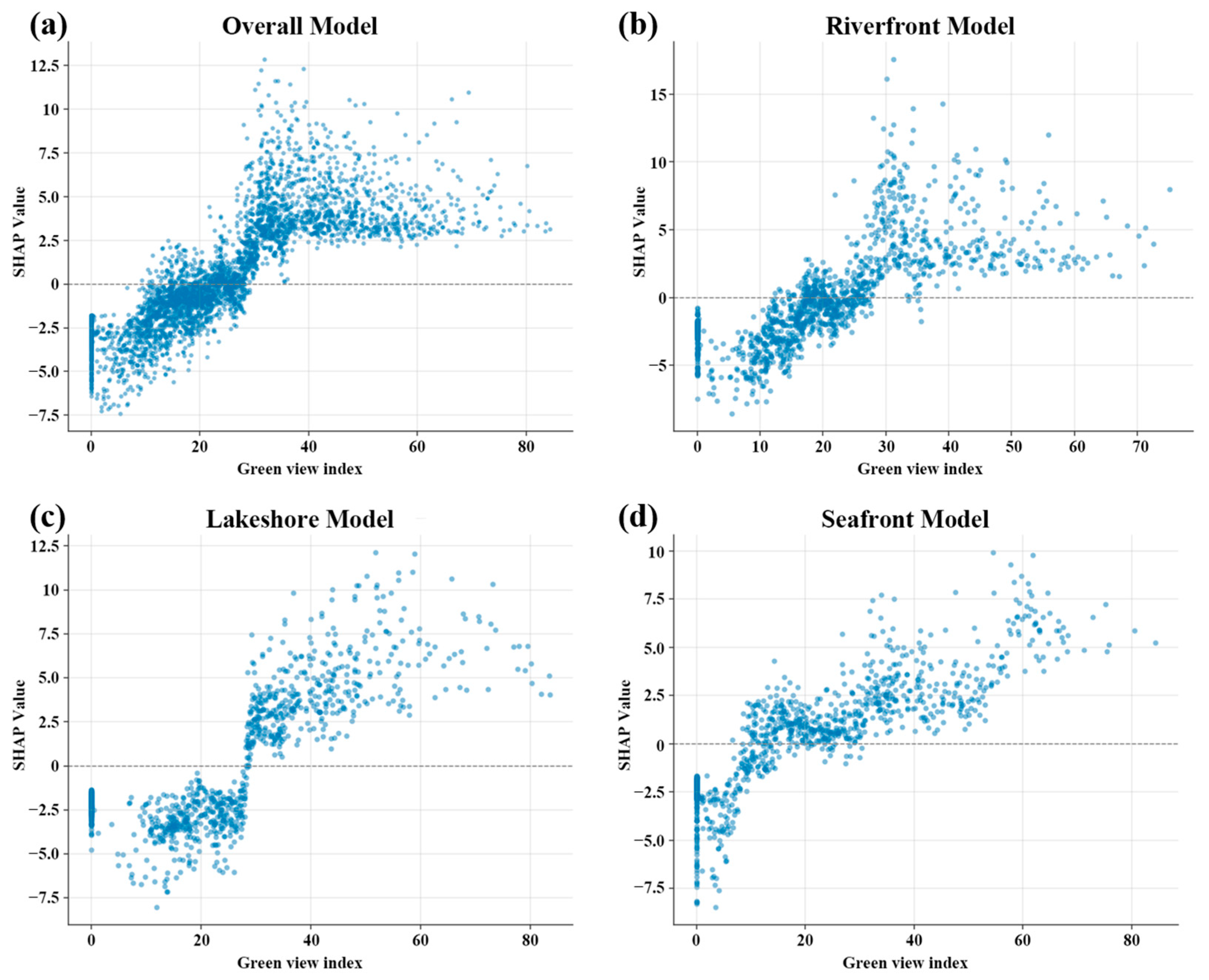
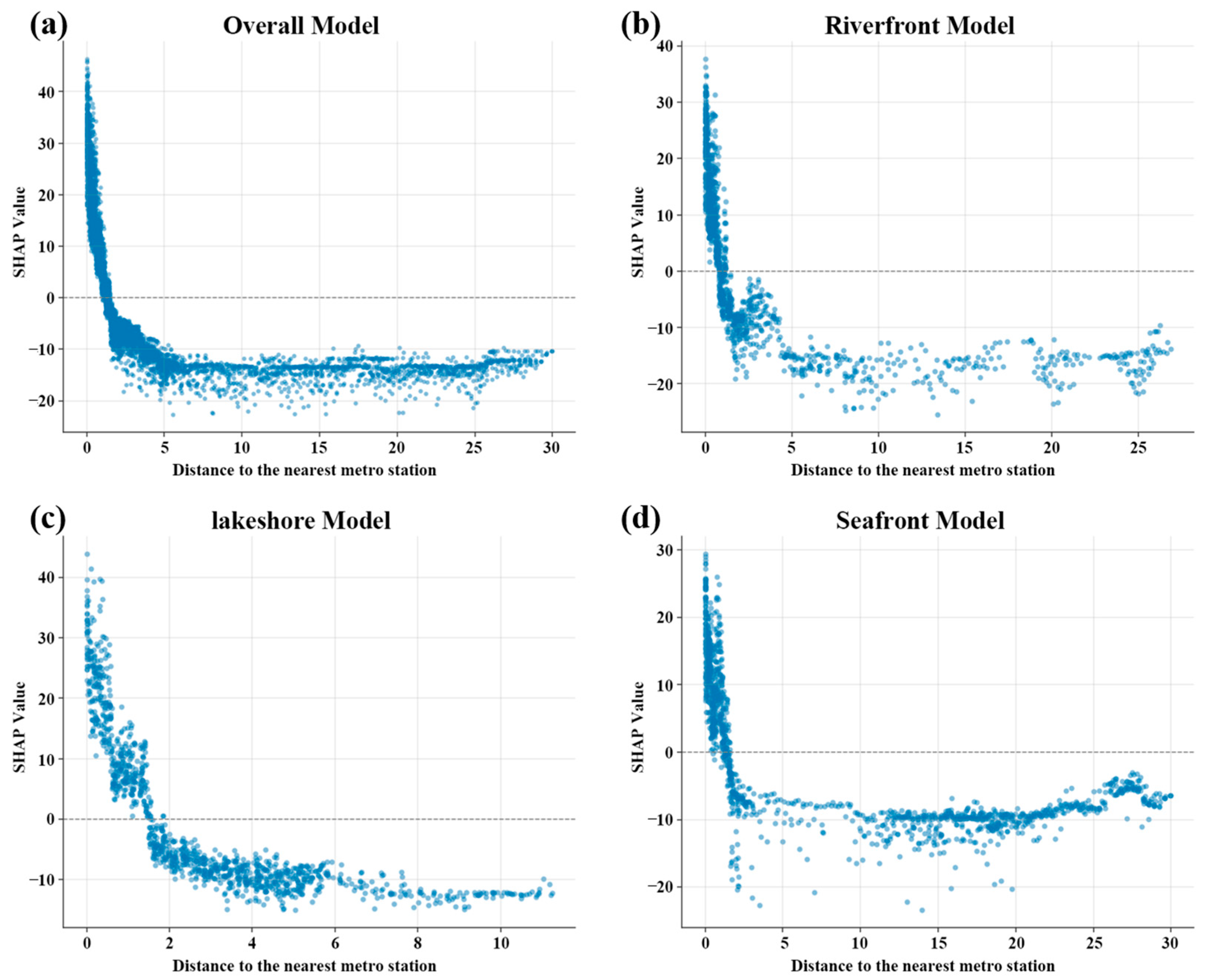
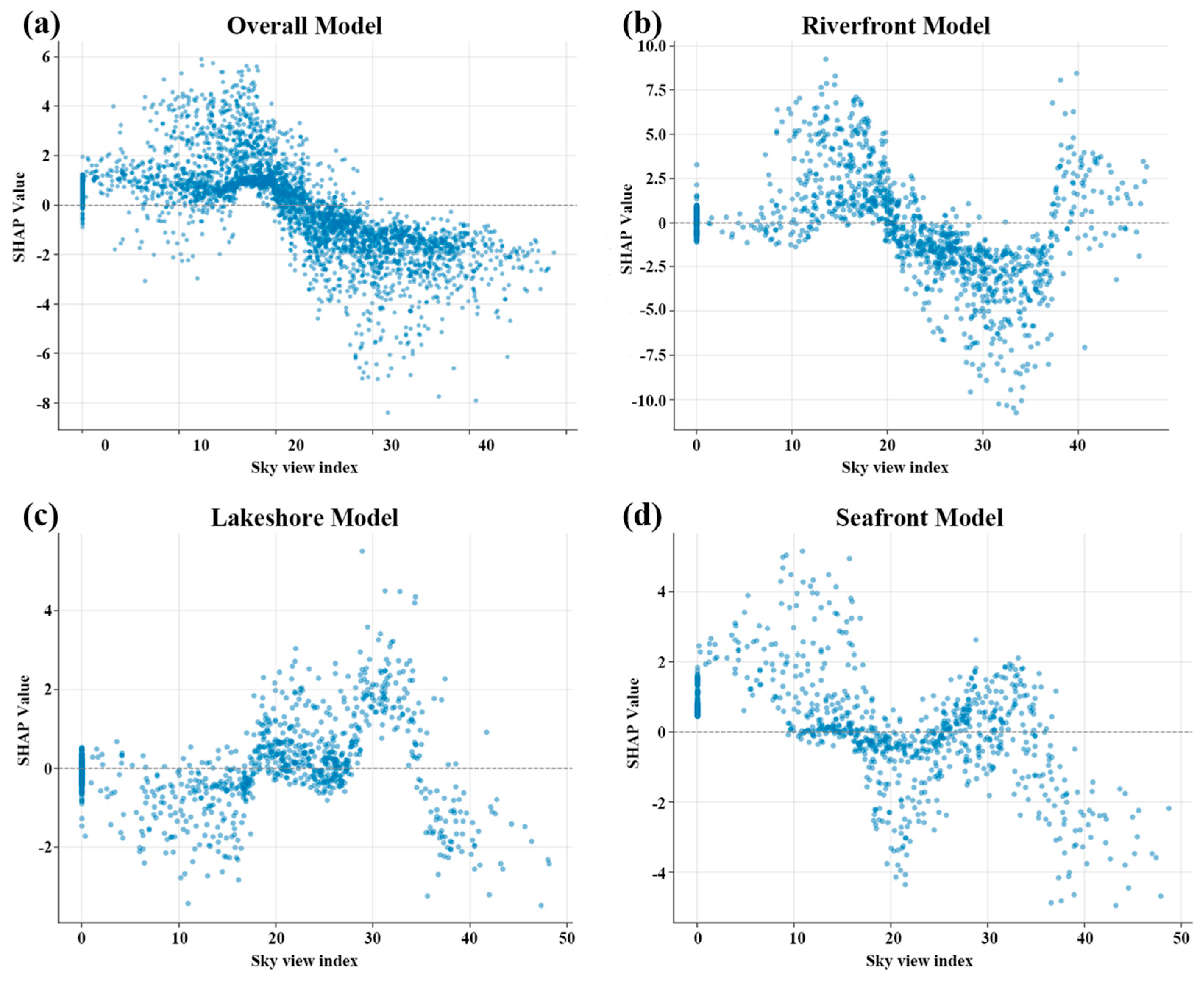
4.2. Non-Linear Effects of Predictors
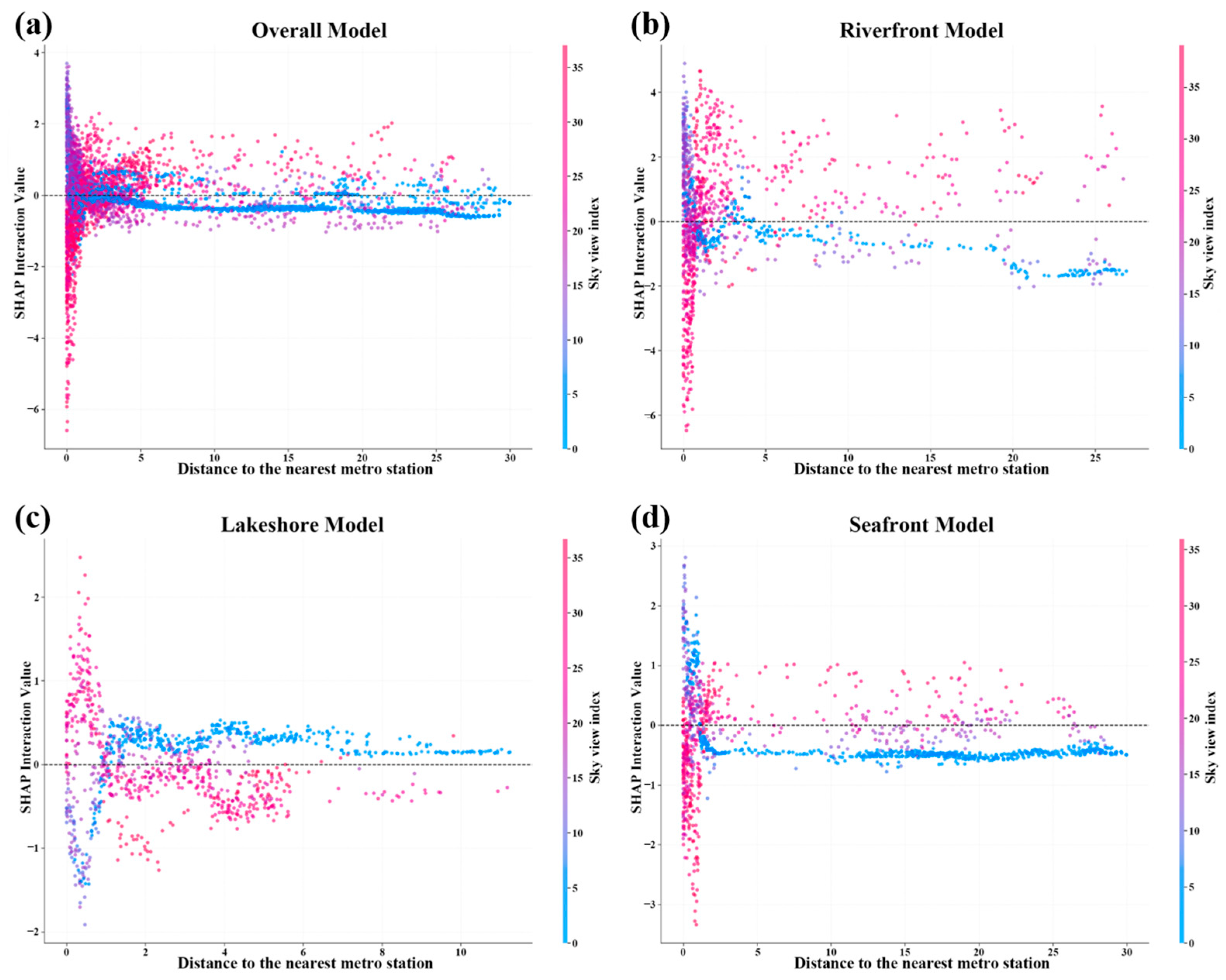
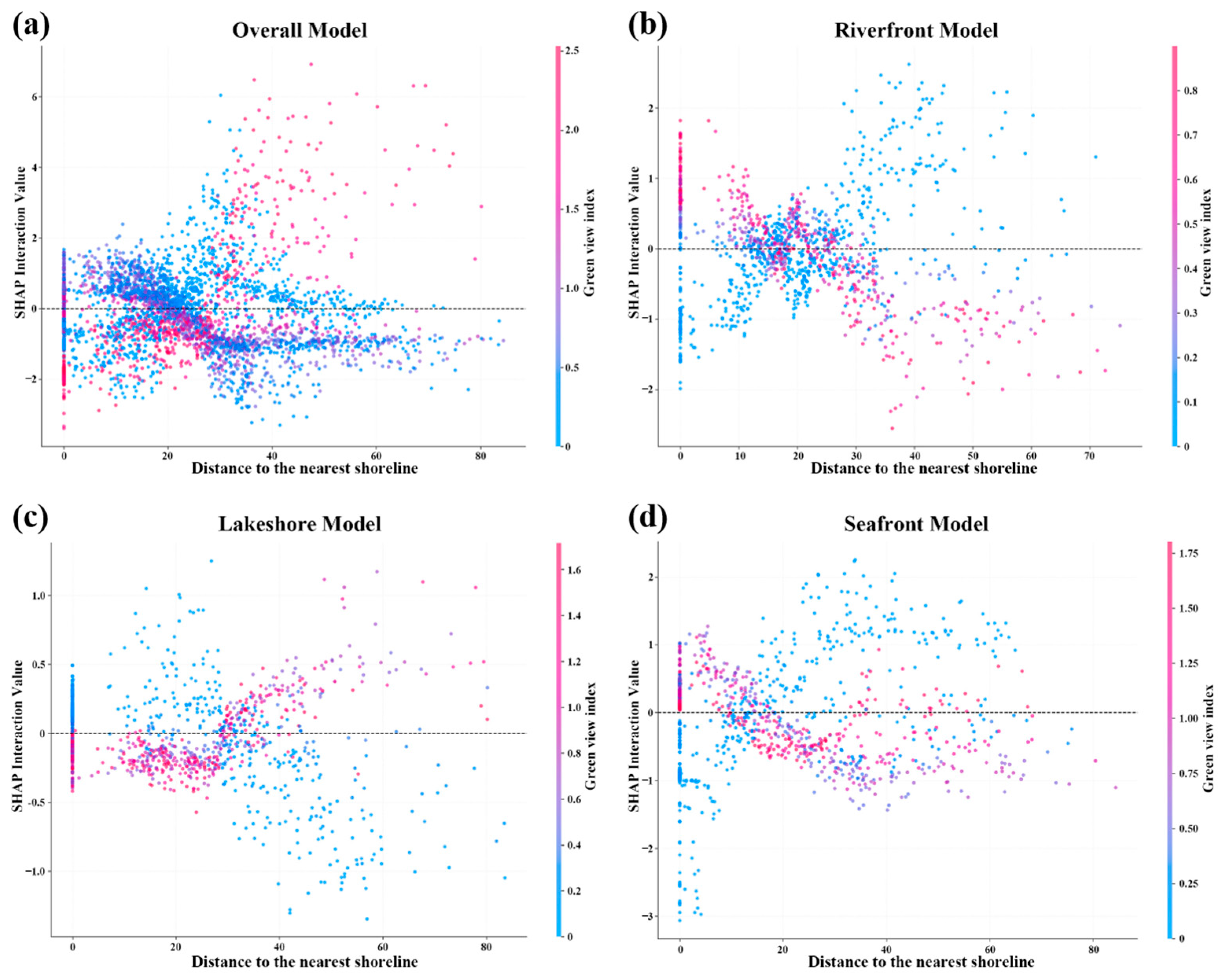
4.3. Interaction Effects of Main Variables
5. Discussion
5.1. Spatial Heterogeneity in Feature Importance
5.2. Nonlinear Influences and Threshold Effects of Elements Across Waterfront Typologies
5.3. Interaction Effects Among Elements
6. Conclusions
Author Contributions
Funding
Data Availability Statement
Conflicts of Interest
Appendix A

| Reference | Author(s) | Study Area | Dependent Variables(s) | Independent Variable(s) | Analytical Method(s) | Key Findings |
|---|---|---|---|---|---|---|
| [8] | Song Liu et al., 2021 | Huangpu River waterfront space, Shanghai, China | Real-time Tencent User Density Data | Vitality density Vitality stability | Structural Equation Modeling | Service facilities and similar factors had a significant positive effect on vitality. |
| [16] | Hayley Christian et al., 2011 | Perth, Australia | Questionnaire | Objective: walkability index, NDVI Perceived: NEWS Scale | Linear Regression | Safety from crime was negatively correlated with BMI. |
| [17] | Cynthia Carlson et al., 2012 | Manchester and Portsmouth, USA | Questionnaire | Objective: sidewalk quality, road connectivity Perceived: reported barriers to walking | Multilevel Models | Sidewalk quality was positively associated with walking behavior. A bidirectional feedback loop existed between health and walking. |
| [18] | Mengxuan Liu et al., 2023 | Six typical waterfront spaces in Shanghai, China | Pedestrian activity data collected at observation points | Microclimatic parameters, Spatial characteristics | Multiple Linear Regression Neural Network Models | Service facilities had the greatest impact on activity in waterfront spaces. |
| [22] | Xinyang Li et al., 2025 | Different types of LUSs (Leisure Urban Spaces) in the main urban area of Nanjing, China | Spatial Type, Location, Time | Baidu Heat Map Data, Meituan Dianping Data | Descriptive statistics, Spatial clustering, Sentiment scoring | Leisure districts demonstrated superior performance across multiple dimensions. |
| [23] | Yingxiang Niu et al., 2021 | Waterfront spaces in the historic city center of Suzhou, China | WeChat Heat Map Data | Multivariate data (POI, river attributes, spatial types, road network data, digital elevation) | Hash algorithm | Transportation accessibility was positively correlated with waterfront vitality. |
| [24] | Yuxiao Jiang et al., 2021 | Hong Kong, China | Google Street View Images | 5Ds, Street view imagery | Spatial Lag Model | Theoretically and empirically distinguished two types of walking behavior for the first time, revealing their spatial mismatch. |
| [26] | Jiayang Jiang et al., 2024 | 170 waterfront neighborhoods in three cold-region cities, China | Simulation Data | Built environment data | Regression Analysis, Machine Learning | Identified six core urban morphological factors that most significantly influence the thermal comfort of waterfront areas in cold regions. |
| [27] | Jie Ding et al., 2023 | Qinhuai River waterfront space, Nanjing, China | Baidu Heat Map Data | Physical environment data, spatial experience data | OLS MGWR | Factors such as catering experience had a strong positive influence, while factors like distance from the river exhibited a strong negative influence. |
References
- Bull, F.C.; Al-Ansari, S.S.; Biddle, S.; Borodulin, K.; Buman, M.P.; Cardon, G.; Carty, C.; Chaput, J.-P.; Chastin, S.; Chou, R. World Health Organization 2020 guidelines on physical activity and sedentary behaviour. Br. J. Sports Med. 2020, 54, 1451–1462. [Google Scholar] [CrossRef]
- Kekäläinen, T.; Freund, A.M.; Sipilä, S.; Kokko, K. Cross-sectional and longitudinal associations between leisure time physical activity, mental well-being and subjective health in middle adulthood. Appl. Res. Qual. Life 2020, 15, 1099–1116. [Google Scholar] [CrossRef]
- Matthews, C.E.; Moore, S.C.; Arem, H.; Cook, M.B.; Trabert, B.; Håkansson, N.; Larsson, S.C.; Wolk, A.; Gapstur, S.M.; Lynch, B.M. Amount and intensity of leisure-time physical activity and lower cancer risk. J. Clin. Oncol. 2020, 38, 686–697. [Google Scholar] [CrossRef] [PubMed]
- Lee, D.H.; Rezende, L.F.; Joh, H.-K.; Keum, N.; Ferrari, G.; Rey-Lopez, J.P.; Rimm, E.B.; Tabung, F.K.; Giovannucci, E.L. Long-term leisure-time physical activity intensity and all-cause and cause-specific mortality: A prospective cohort of US adults. Circulation 2022, 146, 523–534. [Google Scholar] [CrossRef] [PubMed]
- Ewing, R.; Cervero, R. Travel and the built environment: A meta-analysis. J. Am. Plan. Assoc. 2010, 76, 265–294. [Google Scholar] [CrossRef]
- Chen, Y.; Yu, B.; Shu, B.; Yang, L.; Wang, R. Exploring the spatiotemporal patterns and correlates of urban vitality: Temporal and spatial heterogeneity. Sustain. Cities Soc. 2023, 91, 104440. [Google Scholar] [CrossRef]
- Yu, B.; Cui, X.; Liu, R.; Luo, P.; Tian, F.; Yang, T. Intergenerational differences in the urban vibrancy of TOD: Impacts of the built environment on the activities of different age groups. Front. Public Health 2022, 10, 994835. [Google Scholar] [CrossRef]
- Liu, S.; Lai, S.-Q.; Liu, C.; Jiang, L. What influenced the vitality of the waterfront open space? A case study of Huangpu River in Shanghai, China. Cities 2021, 114, 103197. [Google Scholar] [CrossRef]
- Zhou, Z.; Yang, F.; Li, J.; Li, J.; Zou, Z. Identification of Critical Areas of Openness–Vitality Intensity Imbalance in Waterfront Spaces and Prioritization of Interventions: A Case Study of Xiangjiang River in Changsha, China. Land 2024, 13, 686. [Google Scholar] [CrossRef]
- Fortes, L.M.; Giannotti, M.; de Freitas, F.S. Gender, class and race uneven access to bike systems across five Brazilian cities. Cities 2024, 148, 104822. [Google Scholar] [CrossRef]
- Luo, X.; Zhao, Y.; Yang, J.; Li, Y.; Luo, Z. Adaptive design strategies for thermal comfort in waterfront campsites during summer in hot and humid regions. Int. J. Therm. Sci. 2024, 199, 108945. [Google Scholar] [CrossRef]
- Sun, D.; Ji, X.; Lyu, M.; Fu, Y.; Gao, W. Evaluation and diagnosis for the pedestrian quality of service in urban riverfront streets. J. Clean. Prod. 2024, 452, 142090. [Google Scholar] [CrossRef]
- Chen, J.; Li, H.; Luo, S.; Su, D.; Zang, T.; Kinoshita, T.; Yang, L. How do economic levels, urbanization, and infrastructure investments influence inequality in urban green space exposure? Insights from Japanese municipalities. Urban For. Urban Green. 2025, 104, 128649. [Google Scholar] [CrossRef]
- He, P.; Yu, B.; Ma, J.; Luo, K.; Chen, S.; Shen, Z. Exploring the non-linear relationship and synergistic effect between urban built environment and public sentiment integrating macro-and micro-level perspective: A case study in San Francisco. Front. Psychol. 2024, 15, 1276923. [Google Scholar] [CrossRef] [PubMed]
- Kaplan, R.; Kaplan, S.; Brown, T. Environmental preference: A comparison of four domains of predictors. Environ. Behav. 1989, 21, 509–530. [Google Scholar] [CrossRef]
- Christian, H.; Giles-Corti, B.; Knuiman, M.; Timperio, A.; Foster, S. The influence of the built environment social environment health behaviors on body mass index. Results from RESIDE. Prev. Med. 2011, 53, 57–60. [Google Scholar] [CrossRef]
- Carlson, C.; Aytur, S.; Gardner, K.; Rogers, S. Complexity in built environment, health, and destination walking: A neighborhood-scale analysis. J. Urban Health 2012, 89, 270–284. [Google Scholar] [CrossRef]
- Liu, M.; Yang, C.; Fan, Z.; Yuan, C. Prediction approach on pedestrian outdoor activity preference under factors of public open space integrated microclimate. Build. Environ. 2023, 244, 110761. [Google Scholar] [CrossRef]
- Zeng, X.; Zhong, Y.; Yang, L.; Wei, J.; Tang, X. Analysis of Forest landscape preferences and emotional features of Chinese Forest recreationists based on deep learning of geotagged photos. Forests 2022, 13, 892. [Google Scholar] [CrossRef]
- Liu, S.; Ma, X. How social networks affect the spatiotemporal planning of smart tourism: Evidence from shanghai. Sustainability 2021, 13, 7394. [Google Scholar] [CrossRef]
- Wei, D.; Wang, Y.; Jiang, Y.; Guan, X.; Lu, Y. Deciphering the effect of user-generated content on park visitation: A comparative study of nine Chinese cities in the Pearl River Delta. Land Use Policy 2024, 144, 107259. [Google Scholar] [CrossRef]
- Li, X.; Kozlowski, M.; Ismail, S.B.; Salih, S.A. Multidimensional Evaluation of Crowd Activity Performance in Leisure Urban Spaces Using Network Big Data: A Case Study from Nanjing, China. J. Urban Plan. Dev. 2025, 151, 05025014. [Google Scholar] [CrossRef]
- Niu, Y.; Mi, X.; Wang, Z. Vitality evaluation of the waterfront space in the ancient city of Suzhou. Front. Archit. Res. 2021, 10, 729–740. [Google Scholar] [CrossRef]
- Jiang, Y.; Chen, L.; Grekousis, G.; Xiao, Y.; Ye, Y.; Lu, Y. Spatial disparity of individual and collective walking behaviors: A new theoretical framework. Transp. Res. Part D Transp. Environ. 2021, 101, 103096. [Google Scholar] [CrossRef]
- Hu, X.; Cao, K.; Huang, B.; Li, X.; Wu, R. Walkability of greenways from the perspective of the elderly: A case study of Huangpu River waterfront greenway. Int. J. Appl. Earth Obs. Geoinf. 2025, 136, 104322. [Google Scholar] [CrossRef]
- Jiang, J.; Pan, W.; Zhang, R.; Hong, Y.; Wang, J. Thermal comfort study of urban waterfront spaces in cold regions: Waterfront skyline control based on thermal comfort objectives. Build. Environ. 2024, 256, 111515. [Google Scholar] [CrossRef]
- Ding, J.; Luo, L.; Shen, X.; Xu, Y. Influence of built environment and user experience on the waterfront vitality of historical urban areas: A case study of the Qinhuai River in Nanjing, China. Front. Archit. Res. 2023, 12, 820–836. [Google Scholar] [CrossRef]
- Jiang, Y.; Sun, Z.; Wei, D.; Zhao, P.; Yang, L.; Lu, Y. Revealing the spatiotemporal pattern of urban vibrancy at the urban agglomeration scale: Evidence from the Pearl River Delta, China. Appl. Geogr. 2025, 181, 103694. [Google Scholar] [CrossRef]
- An, R.; Shen, J.; Yang, Q.; Yang, Y. Impact of built environment on physical activity and obesity among children and adolescents in China: A narrative systematic review. J. Sport Health Sci. 2019, 8, 153–169. [Google Scholar] [CrossRef] [PubMed]
- Li, Q.; Peng, K.; Cheng, P. Community-level urban green space equity evaluation based on spatial design network analysis (sDNA): A case study of central wuhan, China. Int. J. Environ. Res. Public Health 2021, 18, 10174. [Google Scholar] [CrossRef]
- Wu, T.; Lin, D.; Chen, Y.; Wu, J. Integrating Street View Images, Deep Learning, and sDNA for Evaluating University Campus Outdoor Public Spaces: A Focus on Restorative Benefits and Accessibility. Land 2025, 14, 610. [Google Scholar] [CrossRef]
- Yang, L.; Ao, Y.; Ke, J.; Lu, Y.; Liang, Y. To walk or not to walk? Examining non-linear effects of streetscape greenery on walking propensity of older adults. J. Transp. Geogr. 2021, 94, 103099. [Google Scholar] [CrossRef]
- Yang, L.; Yu, B.; Liang, Y.; Lu, Y.; Li, W. Time-varying and non-linear associations between metro ridership and the built environment. Tunn. Undergr. Space Technol. 2023, 132, 104931. [Google Scholar] [CrossRef]
- Ganaie, M.A.; Hu, M.; Malik, A.K.; Tanveer, M.; Suganthan, P.N. Ensemble deep learning: A review. Eng. Appl. Artif. Intell. 2022, 115, 105151. [Google Scholar] [CrossRef]
- Yang, H.; Chen, Z.; Yang, H.; Tian, M. Predicting coronary heart disease using an improved LightGBM model: Performance analysis and comparison. IEEE Access 2023, 11, 23366–23380. [Google Scholar] [CrossRef]
- Li, K.; Xu, H.; Liu, X. Analysis and visualization of accidents severity based on LightGBM-TPE. Chaos Solitons Fractals 2022, 157, 111987. [Google Scholar] [CrossRef]
- Kara, S.; Aksebzeci, B.H.; Kodaz, H.; Güneş, S.; Kaya, E.; Özbilge, H. Medical application of information gain-based artificial immune recognition system (IG-AIRS): Classification of microorganism species. Expert Syst. Appl. 2009, 36, 5168–5172. [Google Scholar] [CrossRef]
- Lan, H.; Hou, H.C.; Gou, Z. A machine learning led investigation to understand individual difference and the human-environment interactive effect on classroom thermal comfort. Build. Environ. 2023, 236, 110259. [Google Scholar] [CrossRef]
- Hou, L.; Dai, Q.; Song, C.; Liu, B.; Guo, F.; Dai, T.; Li, L.; Liu, B.; Bi, X.; Zhang, Y. Revealing drivers of haze pollution by explainable machine learning. Environ. Sci. Technol. Lett. 2022, 9, 112–119. [Google Scholar] [CrossRef]
- Kim, Y.; Kim, Y. Explainable heat-related mortality with random forest and SHapley Additive exPlanations (SHAP) models. Sustain. Cities Soc. 2022, 79, 103677. [Google Scholar] [CrossRef]
- Urista, D.V.; Carrué, D.B.; Otero, I.; Arrasate, S.; Quevedo-Tumailli, V.F.; Gestal, M.; González-Díaz, H.; Munteanu, C.R. Prediction of antimalarial drug-decorated nanoparticle delivery systems with random forest models. Biology 2020, 9, 198. [Google Scholar] [CrossRef]
- Gao, F.; Chen, X.; Liao, S.; Chen, W.; Feng, L.; Wu, J.; Zhou, Q.; Zheng, Y.; Li, G.; Li, S. Crafting a jogging-friendly city: Harnessing big data to evaluate the runnability of urban streets. J. Transp. Geogr. 2024, 121, 104015. [Google Scholar] [CrossRef]
- Che, Y.; Yang, K.; Chen, T.; Xu, Q. Assessing a riverfront rehabilitation project using the comprehensive index of public accessibility. Ecol. Eng. 2012, 40, 80–87. [Google Scholar] [CrossRef]
- Calthorpe, P. The Next American Metropolis: Ecology, Community, and the American Dream; Princeton Architectural Press: New York, NY, USA, 1993. [Google Scholar]
- Penn, A.; Hillier, B.; Banister, D.; Xu, J. Configurational modelling of urban movement networks. Environ. Plan. B Plan. Des. 1998, 25, 59–84. [Google Scholar] [CrossRef]
- Macdonald, E. Urban Waterfront promenades and physical activity by older adults: The case of Vancouver. J. Archit. Plan. Res. 2007, 24, 181–198. [Google Scholar]
- Physical Activity Guidelines Advisory Committee. Physical Activity Guidelines Advisory Committee Report, 2008; US Department of Health and Human Services: Washington, DC, USA, 2008.
- Warburton, D.E.; Charlesworth, S.; Ivey, A.; Nettlefold, L.; Bredin, S.S. A systematic review of the evidence for Canada’s Physical Activity Guidelines for Adults. Int. J. Behav. Nutr. Phys. Act. 2010, 7, 39. [Google Scholar] [CrossRef]
- World Health Organization. Global Recommendations on Physical Activity for Health; World Health Organization: Geneva, Switzerland, 2010; p. 60.
- Zhou, S.; Chen, F.; Xu, Z. Evaluating the accessibility of urban parks and waterfronts through online map services: A case study of Shaoxing, China. Urban For. Urban Green. 2022, 77, 127731. [Google Scholar] [CrossRef]
- Yang, L.; Yang, H.; Yu, B.; Lu, Y.; Cui, J.; Lin, D. Exploring non-linear and synergistic effects of green spaces on active travel using crowdsourced data and interpretable machine learning. Travel Behav. Soc. 2024, 34, 100673. [Google Scholar] [CrossRef]
- Li, J.; Guo, X.; You, J.; He, Z.; Yang, Z.; Wang, L. Perception and drivers of cultural ecosystem services in waterfront green spaces: Insights from social media text analysis. Anthropocene 2025, 50, 100477. [Google Scholar] [CrossRef]
- Appleton, J. Landscape evaluation: The theoretical vacuum. Trans. Inst. Br. Geogr. 1975, 66, 120–123. [Google Scholar] [CrossRef]
- Zhu, J.; Wang, S.; Ma, H.; Shan, T.; Xu, D.; Sun, F. Nonlinear effect of urban visual environment on residents’ psychological perception—An analysis based on XGBoost and SHAP interpretation model. City Environ. Interact. 2025, 27, 100202. [Google Scholar] [CrossRef]
- Wu, C.; Ye, Y.; Gao, F.; Ye, X. Using street view images to examine the association between human perceptions of locale and urban vitality in Shenzhen, China. Sustain. Cities Soc. 2023, 88, 104291. [Google Scholar] [CrossRef]
- Wang, R.; Jiang, Y.; Liu, D.; Peng, H.; Cao, M.; Yao, Y. Is perceived safety a prerequisite for the relationship between green space availability, and the use and perceived comfort of green space? Wellbeing Space Soc. 2025, 8, 100247. [Google Scholar] [CrossRef]
- Ogawa, Y.; Oki, T.; Zhao, C.; Sekimoto, Y.; Shimizu, C. Evaluating the subjective perceptions of streetscapes using street-view images. Landsc. Urban Plan. 2024, 247, 105073. [Google Scholar] [CrossRef]
- Xu, H.; Jiang, Y.; Xue, T.; Wang, Z.; Fang, Y.; Huang, X. Exploring the impact of objective features and subjective perceptions of street environment on cycling preferences. Cities 2026, 168, 106434. [Google Scholar] [CrossRef]






| Variables | Count | Mean | Std | Min | Max | |
|---|---|---|---|---|---|---|
| Dependent variables | Running index | 4741 | 21.8 | 33.52 | 0 | 223.08 |
| Independent variables | Distance to the nearest metro station (km) | 4741 | 5.47 | 7.58 | 0 | 29.97 |
| Distance to the nearest shoreline (km) | 4741 | 0.83 | 0.84 | 0 | 3.65 | |
| NQPD | 4741 | 6.36 | 14.72 | 0 | 450.79 | |
| TPBt | 4741 | 11.81 | 38.72 | 0 | 589.68 | |
| NDVI | 4741 | 0.45 | 0.36 | −1 | 0.95 | |
| Building density | 4741 | 0.09 | 0.12 | 0 | 0.53 | |
| Sky view index (%) | 4741 | 15.31 | 13.2 | 0 | 48.68 | |
| Green view index (%) | 4741 | 18.22 | 17.65 | 0 | 84.37 | |
| Road view index (%) | 4741 | 0.96 | 1 | 0 | 7.16 | |
| Number of bus stops | 4741 | 0.68 | 1.23 | 0 | 11 | |
| Number of sports facilities | 4741 | 0.97 | 2.53 | 0 | 29 | |
| Water quality | 4741 | 2.09 | 1.27 | 0 | 4 | |
| Number of leisure facilities | 4741 | 1.14 | 3.26 | 0 | 61 | |
| Number of commercial facilities | 4741 | 9.42 | 23.95 | 0 | 259 |
| Variables | Overall Model | Riverfront Model | Lakeshore Model | Seafront Model |
|---|---|---|---|---|
| Distance to the nearest metro station | 1.81 | 1.90 | 3.52 | 1.88 |
| NQPD | 1.91 | 2.90 | 1.37 | 2.34 |
| Building density | 4.10 | 5.22 | 4.11 | 2.58 |
| NDVI | 5.16 | 5.30 | 8.31 | 1.76 |
| Number of bus stops | 2.48 | 2.55 | 2.32 | 2.12 |
| Green view index | 2.72 | 3.50 | 3.33 | 1.27 |
| Distance to the nearest shoreline | 3.12 | 2.22 | 2.51 | 1.65 |
| Water quality | 4.37 | 9.47 | 7.89 | 8.62 |
| Sky view index | 3.77 | 4.94 | 3.65 | 1.99 |
| Road view index | 3.79 | 4.84 | 3.04 | 2.23 |
| TPBt | 1.43 | 1.74 | 1.42 | 1.41 |
| Number of sports facilities | 2.38 | 2.71 | 2.20 | 2.33 |
| Number of leisure facilities | 2.74 | 3.22 | 2.68 | 2.43 |
| Number of commercial facilities | 2.80 | 3.26 | 2.62 | 2.29 |
| Overall Model | Riverfront Model | Lakeshore Model | Seafront Model | |
|---|---|---|---|---|
| LightGBM | ||||
| R2 | 0.5874 (±0.0209) | 0.5484 (±0.0255) | 0.5937 (±0.0453) | 0.6355 (±0.0213) |
| MAE | 13.4552 (±0.4039) | 15.4609 (±0.8507) | 11.1385 (±0.4903) | 12.1768 (±0.3913) |
| RMSE | 21.5062 (±0.9578) | 25.0710 (±0.6219) | 17.1777 (±0.8171) | 21.1819 (±1.1054) |
| XGBoost | ||||
| R2 | 0.5235 (±0.0273) | 0.4936 (±0.0300) | 0.5522 (±0.0487) | 0.5808 (±0.0148) |
| MAE | 16.3648 (±0.4270) | 17.2709 (±0.7767) | 13.0356 (±0.4403) | 13.7672 (±0.3334) |
| RMSE | 27.6091 (±1.1534) | 29.9138 (±0.5143) | 21.9858 (±0.7507) | 25.0314 (±0.9627) |
| Overall Model | Riverfront Model | Lakeshore Model | Seafront Model | |
|---|---|---|---|---|
| Number of leaves | 32 | 31 | 31 | 32 |
| Maximum depth of the decision tree | −1 | −1 | −1 | −1 |
| Learning rate | 0.010 | 0.010 | 0.012 | 0.011 |
Disclaimer/Publisher’s Note: The statements, opinions and data contained in all publications are solely those of the individual author(s) and contributor(s) and not of MDPI and/or the editor(s). MDPI and/or the editor(s) disclaim responsibility for any injury to people or property resulting from any ideas, methods, instructions or products referred to in the content. |
© 2025 by the authors. Licensee MDPI, Basel, Switzerland. This article is an open access article distributed under the terms and conditions of the Creative Commons Attribution (CC BY) license (https://creativecommons.org/licenses/by/4.0/).
Share and Cite
Han, L.; Yu, B.; Fang, H.; Jiang, Y.; Yang, Y.; Qiu, H. Deciphering the Impact of Waterfront Spatial Environments on Physical Activity Through SHAP: A Tripartite Study of Riverfront, Lakeshore, and Seafront Spaces in Shenzhen. Land 2025, 14, 2424. https://doi.org/10.3390/land14122424
Han L, Yu B, Fang H, Jiang Y, Yang Y, Qiu H. Deciphering the Impact of Waterfront Spatial Environments on Physical Activity Through SHAP: A Tripartite Study of Riverfront, Lakeshore, and Seafront Spaces in Shenzhen. Land. 2025; 14(12):2424. https://doi.org/10.3390/land14122424
Chicago/Turabian StyleHan, Lei, Bingjie Yu, Han Fang, Yuxiao Jiang, Yingfan Yang, and Hualong Qiu. 2025. "Deciphering the Impact of Waterfront Spatial Environments on Physical Activity Through SHAP: A Tripartite Study of Riverfront, Lakeshore, and Seafront Spaces in Shenzhen" Land 14, no. 12: 2424. https://doi.org/10.3390/land14122424
APA StyleHan, L., Yu, B., Fang, H., Jiang, Y., Yang, Y., & Qiu, H. (2025). Deciphering the Impact of Waterfront Spatial Environments on Physical Activity Through SHAP: A Tripartite Study of Riverfront, Lakeshore, and Seafront Spaces in Shenzhen. Land, 14(12), 2424. https://doi.org/10.3390/land14122424