Article

Spatial Patterns of Tourist Attractions in the Yangtze River Delta Region

1
School of Business, Liaoning University, Shenyang 110036, China
2
School of Economics and Management, Northwest University, Xi’an 710127, China
3
School of Tourism Management, Shenyang Normal University, Shenyang 110034, China
4
School of Management, Shenyang Jianzhu University, Shenyang 110168, China
*
Author to whom correspondence should be addressed.
Land 2022, 11(9), 1523; https://doi.org/10.3390/land11091523
Submission received: 6 August 2022 / Revised: 5 September 2022 / Accepted: 6 September 2022 / Published: 9 September 2022
(This article belongs to the Special Issue Regional Sustainable Development of Yangtze River Delta, China)

Abstract

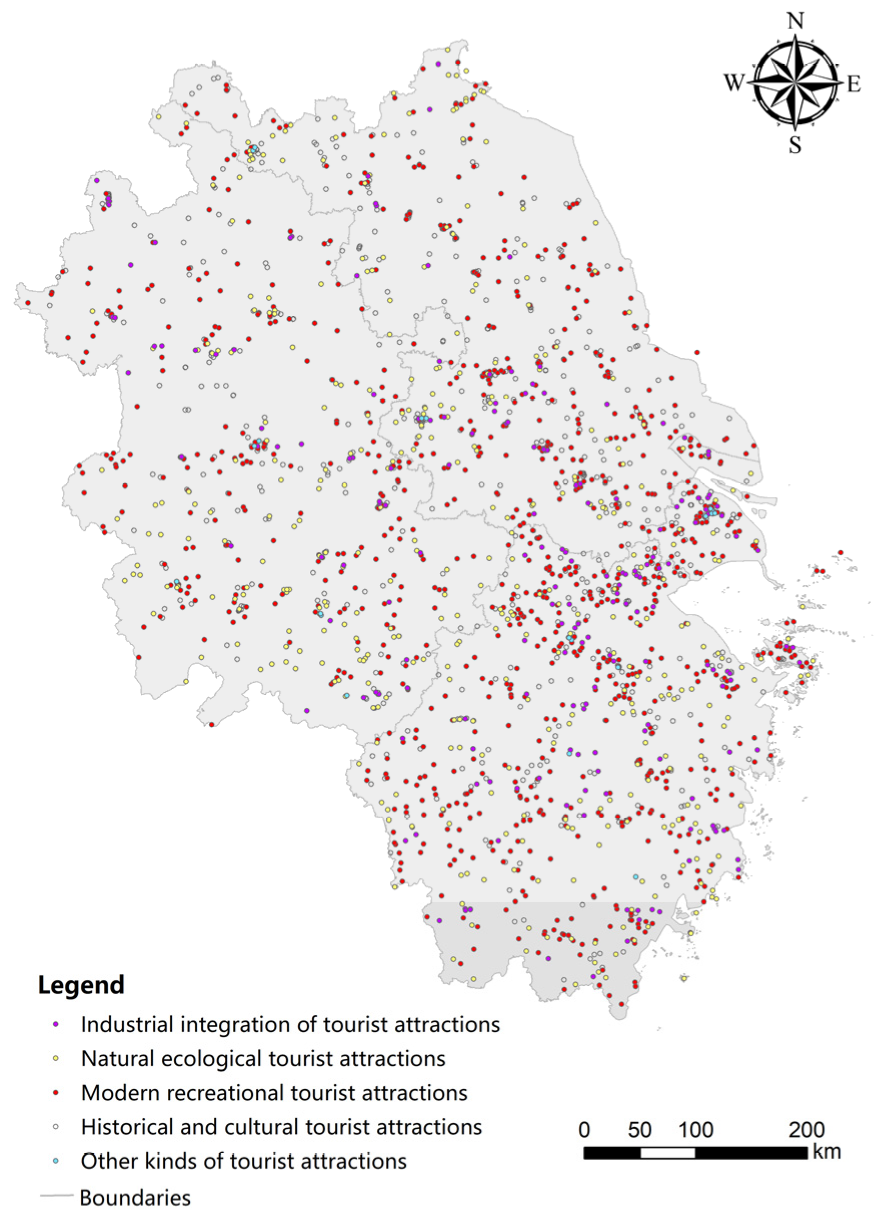
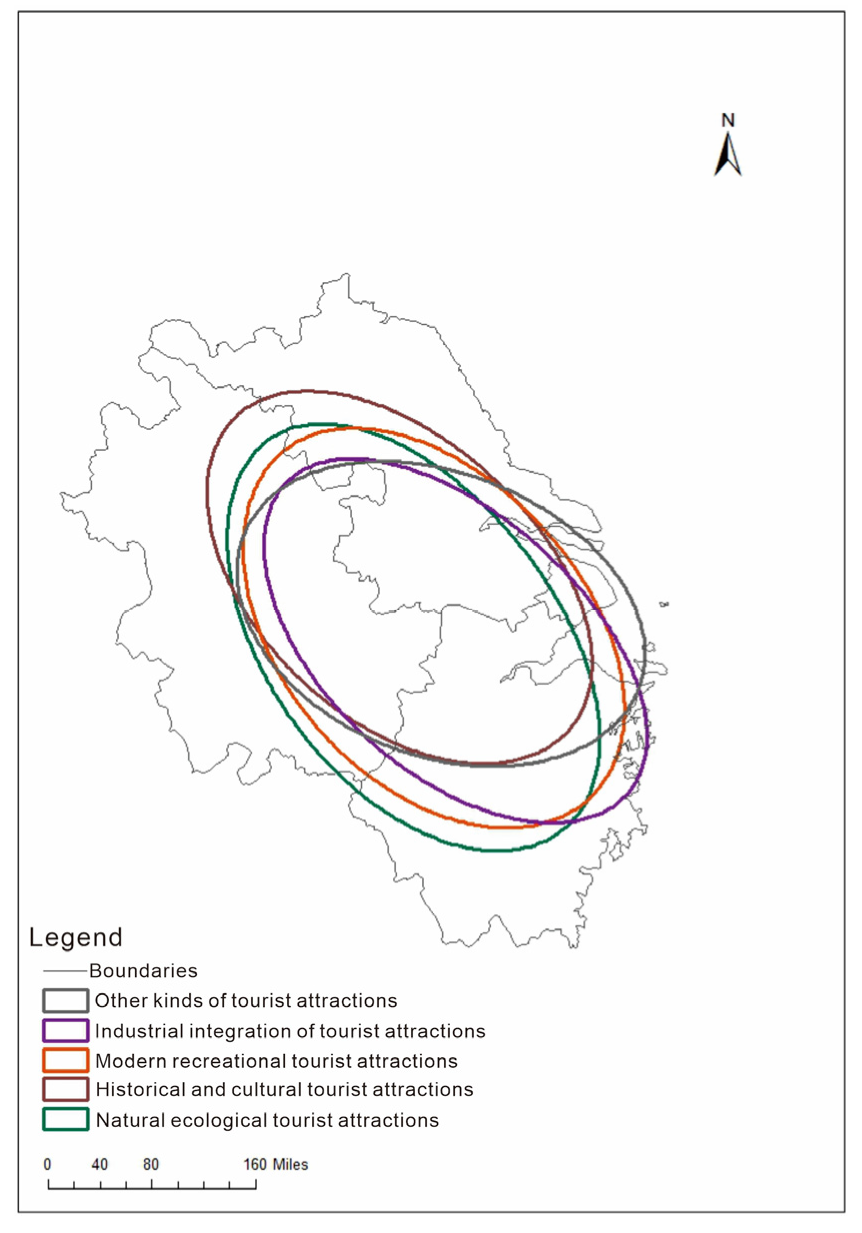
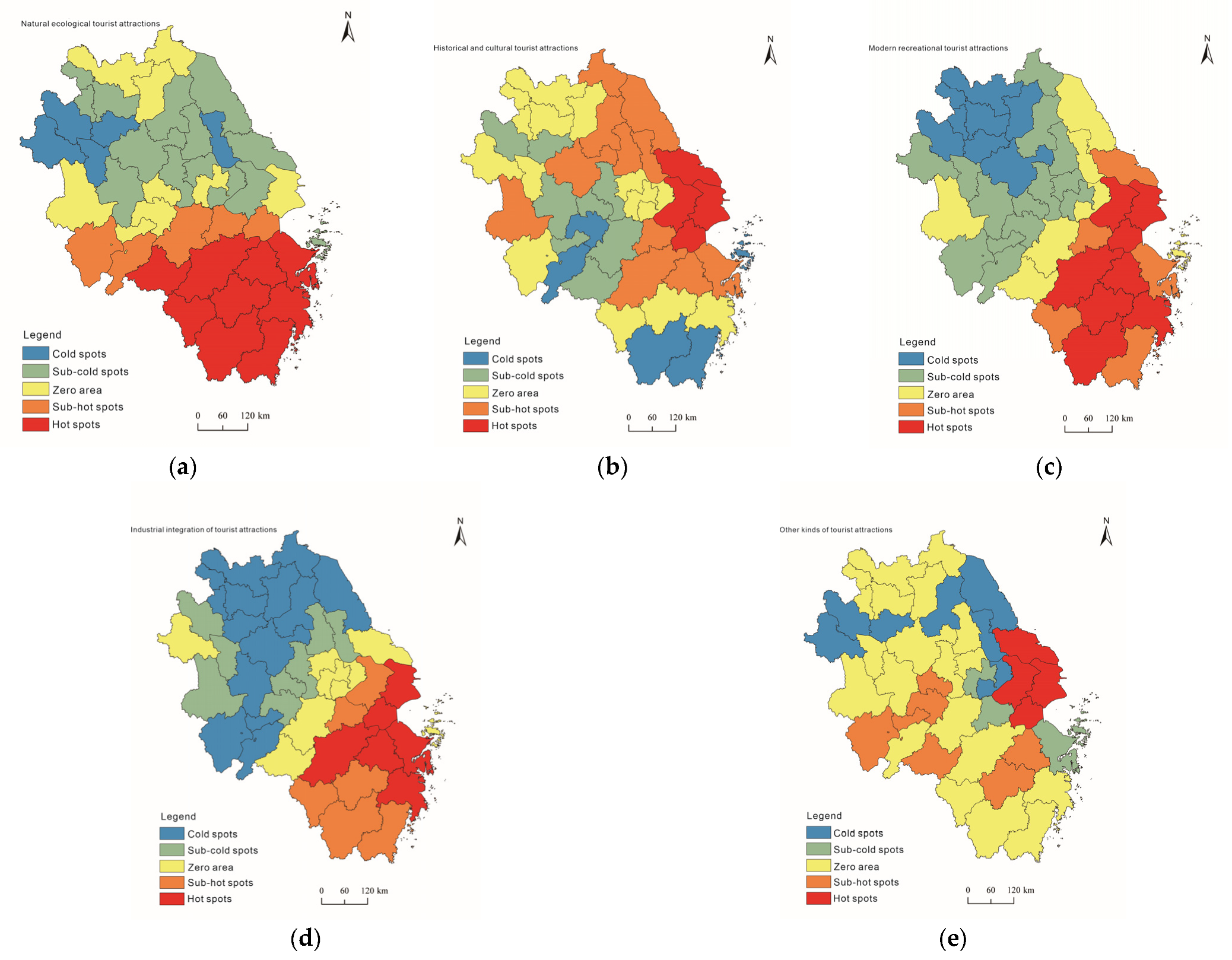
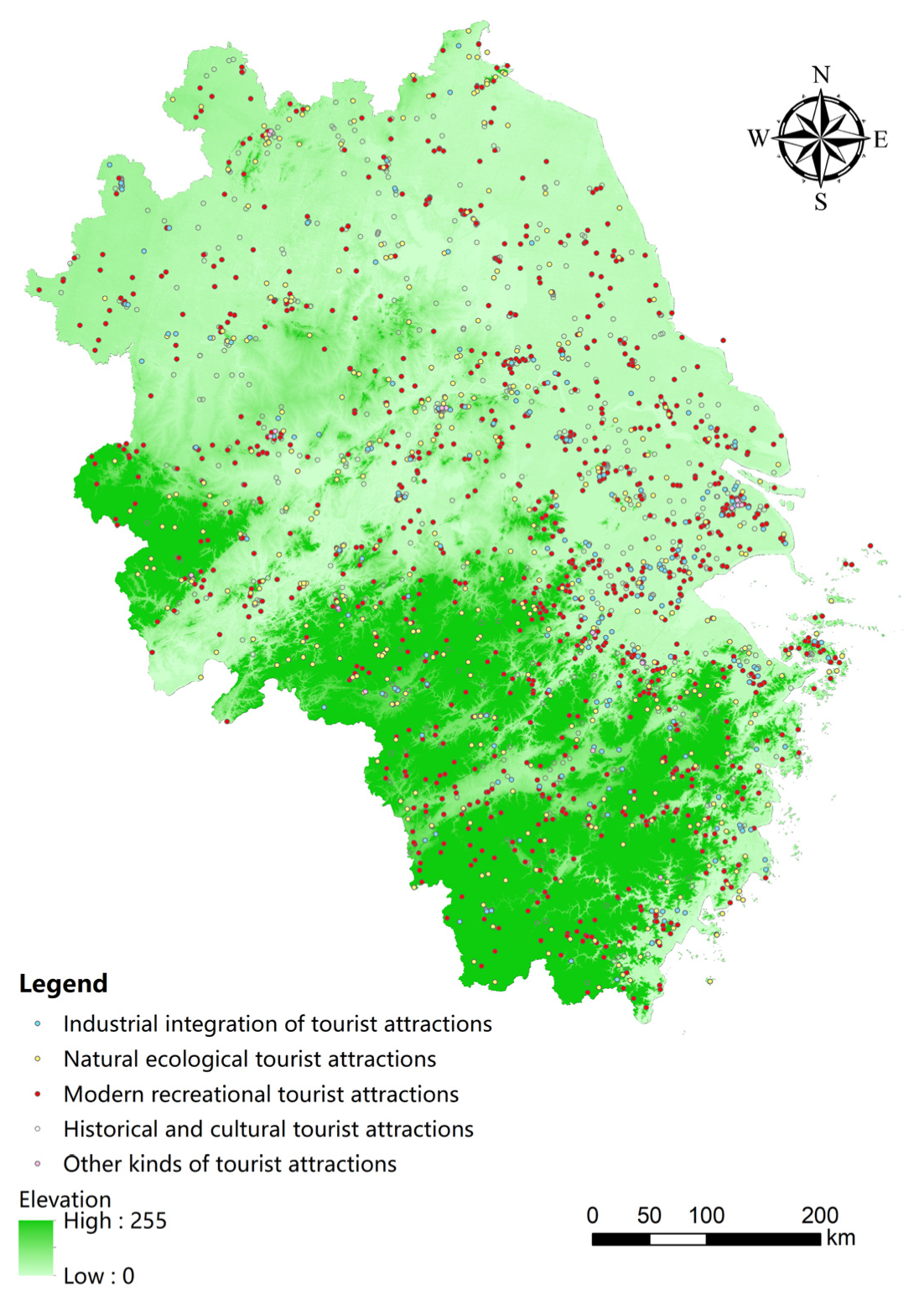
Tourism is distinctly regional with respect to the regional distribution of tourism resources, tourist attractions and supply, and spatial continuity of tourist activities. Using point-of-interest data from 2166 tourist attractions in the Yangtze River Delta, this study analyzes the spatial distribution pattern of tourist attractions and their influencing factors by applying the methods of nearest proximity index, kernel density analysis, standard deviation ellipse, hotspot analysis, and spatial superposition analysis. The results show that the number of modern recreational tourist attractions accounts for the largest proportion. The spatial distribution pattern shows more attractions in the north than the south and more in the east than the west. The spatial density of tourist attractions in Shanghai is far greater than that in other regions, followed by Jiangsu and Zhejiang. The five types of tourist attractions show a significant aggregation state. Natural ecological tourist attractions are clustered near Nanjing and Huangshan; historical and cultural tourist attractions are formed in a T-shape by Shanghai, Hangzhou, and Nanjing; modern recreational tourist attractions are clustered in Shanghai and Hangzhou; and industrial integration tourist attractions are clustered in Shanghai, Nanjing, and Hangzhou. Physical geography, traffic, and social economy are the main factors affecting the spatial distribution of tourist attractions.
Keywords: spatial patterns; tourist attraction; GIS; Yangtze River Delta spatial patterns; tourist attraction; GIS; Yangtze River Delta