Review

Digital and Computational Methods for Sustainable Urban Transitions: A Critical Narrative Review Through Urban Design


by
Andreas L. Savvides
Department of Architecture, University of Cyprus, 1678 Nicosia, Cyprus
Land 2026, 15(9), 1746; https://doi.org/10.3390/land15091746 (registering DOI)

Submission received: 10 August 2026 / Revised: 12 September 2026 / Accepted: 17 September 2026 / Published: 18 September 2026
(This article belongs to the Special Issue Emerging Technologies Towards Sustainable Urban Transitions)

Abstract

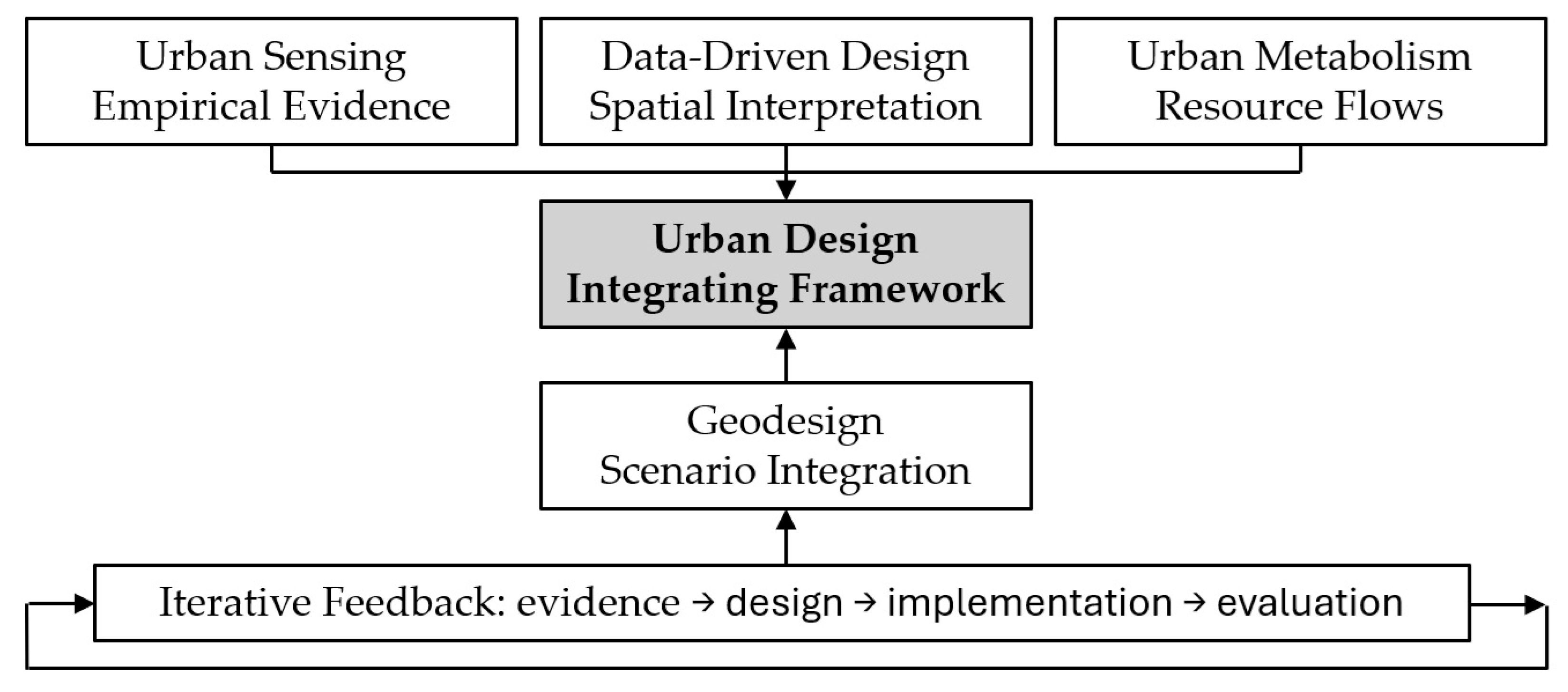
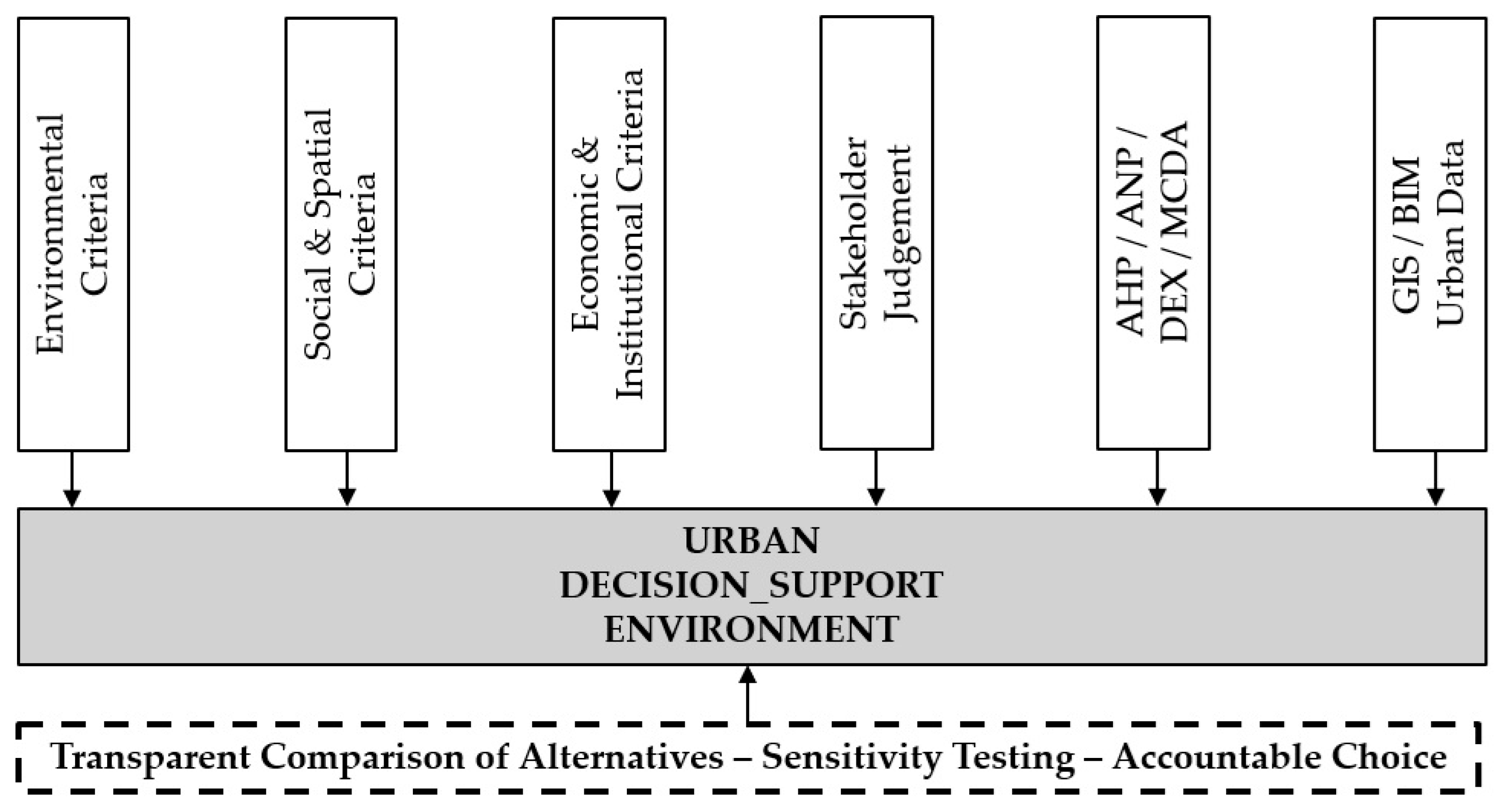
The accelerating convergence of urbanization, climate change, and digital transformation is reshaping how cities are conceived, designed, and managed. This critical narrative review asks one central question: how can newly emerging digital capabilities and established computational and decision-support methods, when applied in novel or rapidly evolving ways, support accountable urban-design decisions for sustainable urban transitions? “Emerging” is used here selectively for capabilities characterized by recent technical development, rapid diffusion, limited implementation maturity, or new urban-design applications—not as a label for established methods such as GIS, BIM, AHP/ANP, or parametric modelling. The review is organized by functional stage in the urban-design process: (i) conceptual and technological foundations; (ii) urban analysis and systems interpretation; (iii) computational design support; (iv) decision-making and spatial intervention; and (v) outcome evaluation and feedback. Across these stages, comparative evidence is used to examine function, data requirements, spatial scale, application stage, empirical maturity, risks, and limitations. The synthesis indicates that digital and computational methods are most useful when they augment rather than displace professional and civic judgement, make trade-offs and uncertainty explicit, and connect evidence to context-sensitive spatial intervention. Urban design is therefore treated not as the sole driver of transition but as a mediating spatial practice within wider planning, governance, socio-technical, and socio-ecological processes.
Keywords: sustainable urban transitions; urban design; smart cities; systems science; artificial intelligence; digital twins; decision-support systems; urban resilience sustainable urban transitions; urban design; smart cities; systems science; artificial intelligence; digital twins; decision-support systems; urban resilience