Review

A Scoping Review of Virtual Reality in Blue Space Research

1
School of Design and Arts, Beijing Institute of Technology, Beijing 102400, China
2
Tangshan Research Institute, Beijing Institute of Technology, Tangshan 063000, China
3
OPENspace Research Centre, Edinburgh College of Art, University of Edinburgh, Edinburgh EH39DF, UK
4
Chair of Landscape Architecture, Estonian University of Life Sciences, 51006 Tartu, Estonia
*
Authors to whom correspondence should be addressed.
These authors contributed equally to this work.
Land 2026, 15(9), 1565; https://doi.org/10.3390/land15091565
Submission received: 5 August 2026 / Revised: 22 August 2026 / Accepted: 24 August 2026 / Published: 26 August 2026
(This article belongs to the Special Issue Landscapes for Human-Oriented Smart Cities)

Abstract

This study aims to systematically review the current applications and development trends of virtual reality (VR) technology in blue space research. It clarifies the main research methods, technical pathways, application scenarios, and existing knowledge gaps, and integrates the advantages of VR technology with the characteristics of blue spaces to provide references for future urban renewal and urban management research. Following the PRISMA-ScR guidelines, this study searched literature published up to January 2026 in the Web of Science and Scopus databases. A total of 41 original studies were included. A scoping review approach was adopted, employing descriptive statistics, cross-analysis, and classification methods. Existing studies mainly focus on blue space types such as rivers and lakes, with immersive head-mounted displays as the primary method. Most experiments adopt single session, short term exposure designs, suggesting potential positive effects of virtual blue spaces in reducing stress, improving mood, and restoring attention. Other studies demonstrate the application of VR technology in environmental education, design assessment, and urban management within blue spaces. As an indirect exposure and supplementary intervention tool, VR shows significant potential in blue space research, particularly in supporting vulnerable populations, large-scale urban planning and design assessment, and risk management. However, current research still faces several limitations, including insufficient multisensory integration, limited capability in simulating dynamic water environments, lack of methodological standardization, uneven sample distribution, absence of longitudinal studies, and weak interactive and social dimensions. The findings highlight the need for further research on these specific aspects.

1. Introduction

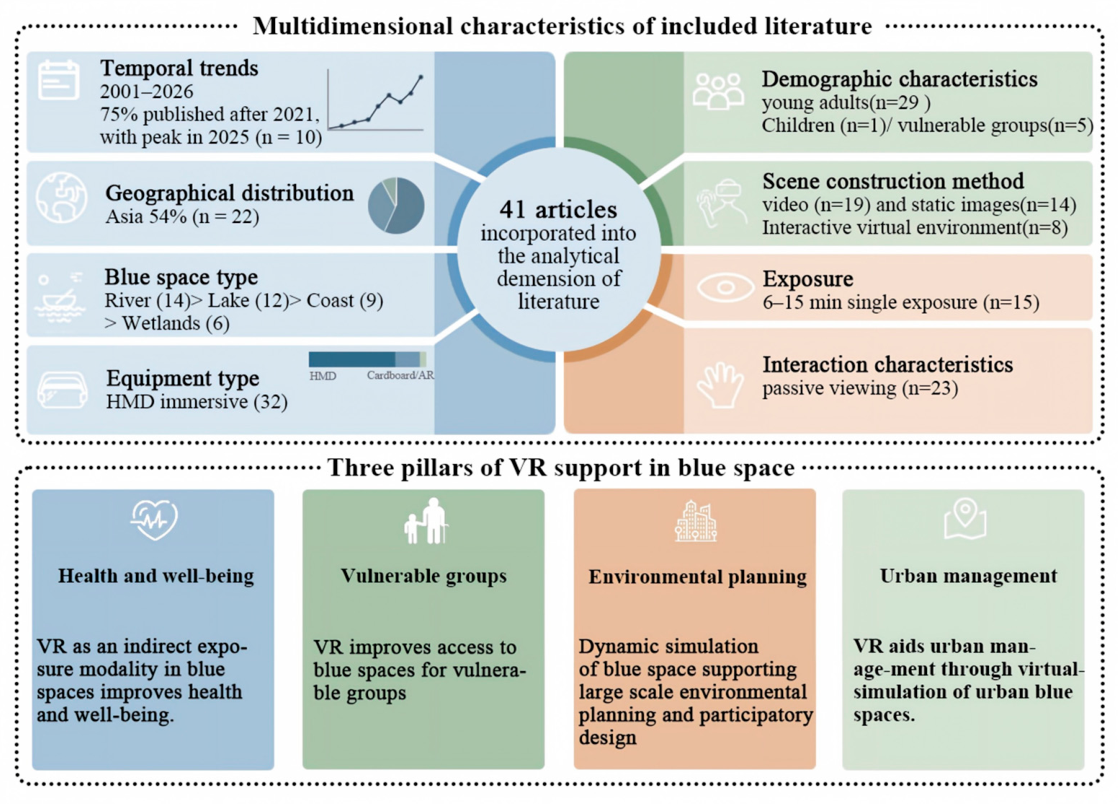
Blue spaces (such as rivers, lakes, and coastal areas), as key components of urban ecosystems, not only provide provisioning and regulating ecosystem services, but also exhibit significant health benefits. These benefits arise from their unique hydrological rhythms and open landscape characteristics, including stress reduction, cognitive restoration, and the promotion of spontaneous physical activity [1]. In high density urban areas with limited land resources, the scientific development and refined management of blue spaces are not only effective means to improve the quality of public spaces, but also critical for building healthy cities and enhancing environmental justice [2]. Interdisciplinary research funded by the EU Horizon 2020 program has advanced the concept of “Blue Health.” Scholars such as Simon Bell have explored how optimizing blue space design can promote public health and support its integration into urban planning and policy [1]. At the same time, the concept of blue space continues to evolve. It has expanded from a physical definition centred on natural water bodies to a broader framework that includes surrounding areas and human activities, thereby incorporating human–water interactions into analysis [3]. In this context, blue spaces are not only important ecological infrastructure, but also key elements at the intersection of public health and urban governance [4]. However, access to and benefits from real world blue spaces are often constrained by geographic location, urban structure, and individual mobility [5]. Different population groups experience disparities in exposure frequency and perceptual quality [6]. Meanwhile, traditional methods based on field observation or questionnaire surveys have limitations in controlling environmental variables and obtaining continuous data, making it difficult to fully capture the dynamic mechanisms of human–environment interactions (Figure 1).
In this context, VR, as an immersive digital technology, has gradually been introduced into blue space research. The concept of VR can be traced back to theoretical ideas proposed by Ivan Sutherland in the 1960s, although the first usable VR devices only emerged decades later [7]. Among these developments, the team led by Jaron Lanier laid the foundation for interactive VR environments. They defined VR as a computer simulated environment in which users can interact [8]. VR technology constructs immersive digital environments that allow users to perceive and interact with virtual worlds in ways close to real experience. Its core advantage lies in overcoming spatial and temporal constraints. It provides highly realistic sensory experiences under safe and controllable conditions, while avoiding the risks and costs associated with real world exposure [9]. With decreasing hardware costs and advances in rendering technologies, VR has evolved from an exploratory concept into a relatively mature application tool. It has been increasingly applied in urban planning, environmental perception research, and health interventions [10]. Compared with traditional image or video media, VR enhances the continuity and realism of spatial experience through dynamic viewpoint updates and immersive interaction. This gives it advantages in simulating complex environmental scenarios [11]. By constructing controllable and repeatable virtual environments, VR can reproduce water landscapes and their perceptual elements to a certain extent, providing stable experimental conditions [12]. In recent years, the scope of VR applications in environmental research has expanded. In landscape and urban design, VR is used to simulate different spatial scales and design variables, combining subjective evaluations with physiological indicators to capture public preferences [10]. In infrastructure and environmental impact assessment, immersive simulations have been applied to various complex scenarios and project rehearsals [13]. In public safety, VR has also been used to create high risk or inaccessible environments for cognitive and behavioural training [14]. These studies indicate that VR is evolving from a visualization tool into a decision-support system. It not only expands methodological approaches in blue space research, but also provides new technical pathways for related practice.
In blue space research, the application of VR also shows a multidimensional expansion trend. In environmental education, virtual wetlands or aquatic ecosystems can enhance learning engagement and comprehension [15]. In disaster management, VR-based flood simulations help improve public awareness of risk scenarios [16]. In health and well-being research, virtual blue environments are used to explore potential mechanisms of emotional regulation and stress reduction [17]. These practices indicate that VR can simulate certain perceptual characteristics of blue spaces and provide new technical pathways for interdisciplinary research.
Although VR has become an important tool for simulating health interventions in blue spaces, existing literature still shows significant imbalances in technical standards and research depth. Current studies offer relatively rich discussions on blue–green integrated landscapes, while systematic reviews focusing solely on blue spaces remain limited [18]. Moreover, there is still a lack of comprehensive synthesis regarding the application methods of key VR technologies in blue space contexts. Given this background, it is necessary to conduct a systematic review of VR applications in blue spaces from an interdisciplinary perspective, in order to clarify development trajectories, methodological characteristics, and potential limitations. This study takes blue space as the research focus and conducts a comprehensive analysis of relevant literature. It examines the relationship between blue spaces and humans, and further explores the application mechanisms of VR in population support, spatial design, and urban management. On this basis, it identifies key gaps in current research and proposes potential directions for future development.
This review makes three specific contributions: (1) The review identifies that the field is currently dominated by application-oriented validation, while systematic exploration of technical and methodological frameworks remains limited. This highlights the need for future research to advance toward healthy space design and strategic urban regeneration. (2) Current research lacks sufficient focus on VR applications in blue spaces, with most studies concentrating on green spaces. In addition, there are clear limitations in population coverage, which constrain the ability to demonstrate fully the potential advantages of VR in blue space contexts and to inform inclusive design for diverse user groups. (3) The study argues that blue spaces, as dynamically evolving entities, require consideration of their spatial and temporal complexity in VR research. It is essential to leverage VR’s unique capabilities in prediction, evaluation, design, and urban management, to shift blue space research from static description toward dynamic and intelligent integrated management.

2. Methods

The PRISMA guideline, short for preferred reporting items for systematic reviews and meta analyzes, is a standardized framework used to guide the transparent and complete reporting of systematic reviews [19]. To identify research gaps, this study adopts a scoping review approach based on systematic search methods. It aims to collect and analyze relevant literature, and to identify existing research methods and trends in relation to the study objectives [20]. The review protocol follows the methodological guidance for scoping reviews developed by the Joanna Briggs Institute [21], and adheres to the PRISMA-ScR guidelines for scoping reviews [22]. The review scope, eligibility criteria, and search strategy were informed by the Population–Concept–Context (PCC) framework recommended for scoping reviews by the Joanna Briggs Institute. The PCC framework guided the identification of the target population, key concepts, and contextual boundaries of the review, thereby supporting the development of the inclusion and exclusion criteria [23]. According to this approach, no assessment was conducted on methodological limitations or the risk of bias in the existing evidence. The objective of this review is to map the scope and characteristics of available evidence, rather than assess intervention effects or pool effect sizes. This review has been prospectively registered on the Open Science Framework (OSF), with the registration DOI: 10.17605/OSF.IO/NGR3W.

2.1. Systematic Review Protocols

This study uses Web of Science (WoS) and Scopus as the primary literature sources. Web of Science, as a key gateway to global authoritative academic information, provides high quality citation indexing and extensive historical data support [24]. Scopus, as a large-scale database of peer reviewed literature abstracts, demonstrates strong representativeness in both disciplinary coverage and the inclusion of interdisciplinary studies [25]. The combined use of these two databases ensures the comprehensiveness and academic reliability of the review sample. They provide researchers with efficient and powerful search systems, facilitating effective literature retrieval. This study searched the WoS Core Collection and Scopus databases up to 25 January 2026, without restrictions on the starting publication date. The search strategy was as follows. Due to the broad use of virtual reality across different contexts, spelling variations needed to be considered. The term is commonly written as “virtual reality,” while many studies also use the abbreviation “VR” and the technical term “immersive technology.”
For this review, VR was used as the overarching technological concept to refer to digitally generated or represented environments that enable users to experience, perceive, or interact with blue spaces. This scope included immersive virtual environments, head-mounted display (HMD) systems, 360° videos or environments, and computer-based or non-immersive virtual simulations. These technologies were classified according to their technological characteristics and implementation pathways during the data-charting process.
Augmented reality (AR) was not included as an independent search term because the search strategy was primarily designed to identify studies explicitly framed around VR or immersive technology. However, AR studies identified among the retrieved records were retained when they met the predefined eligibility criteria and involved the representation, assessment, or interaction with blue spaces. In this review, AR was therefore treated as a related immersive digital technology rather than as a separate primary search concept.
At the same time, the definition of blue space does not refer to a single physical environment. It includes diverse types of water bodies. Therefore, searching only for “blue space” would not capture all relevant studies. To address this, specific water-related terms were included in the search, such as “wetland,” “lake,” and “waterfront.” To ensure comprehensiveness and rigour, a multidimensional keyword system was constructed based on variations in VR terminology and the definitional scope of blue spaces. The first part of the search string targets “virtual reality” OR “immersive technology” OR “VR,” ensuring that all included studies are grounded in the scientific context of VR. The second part uses the Boolean operator “OR” to connect a range of blue space terms. These include conceptual terms such as “blue space” OR “waterfront,” as well as specific water body types: “river,” “water body,” “river restoration,” “lake,” “wetland,” “sea,” and “reservoir.” The two groups of terms are then combined using the Boolean operator “AND” to identify intersecting results. In Web of Science, the “Topic (TS)” field is used, while in Scopus, the corresponding “TITLE-ABS-KEY” field is applied to ensure standardized cross-database searching. Consistent Boolean search formulas were used for literature searching, and the detailed search queries used available in Appendix A.

2.2. Literature Screening Protocol

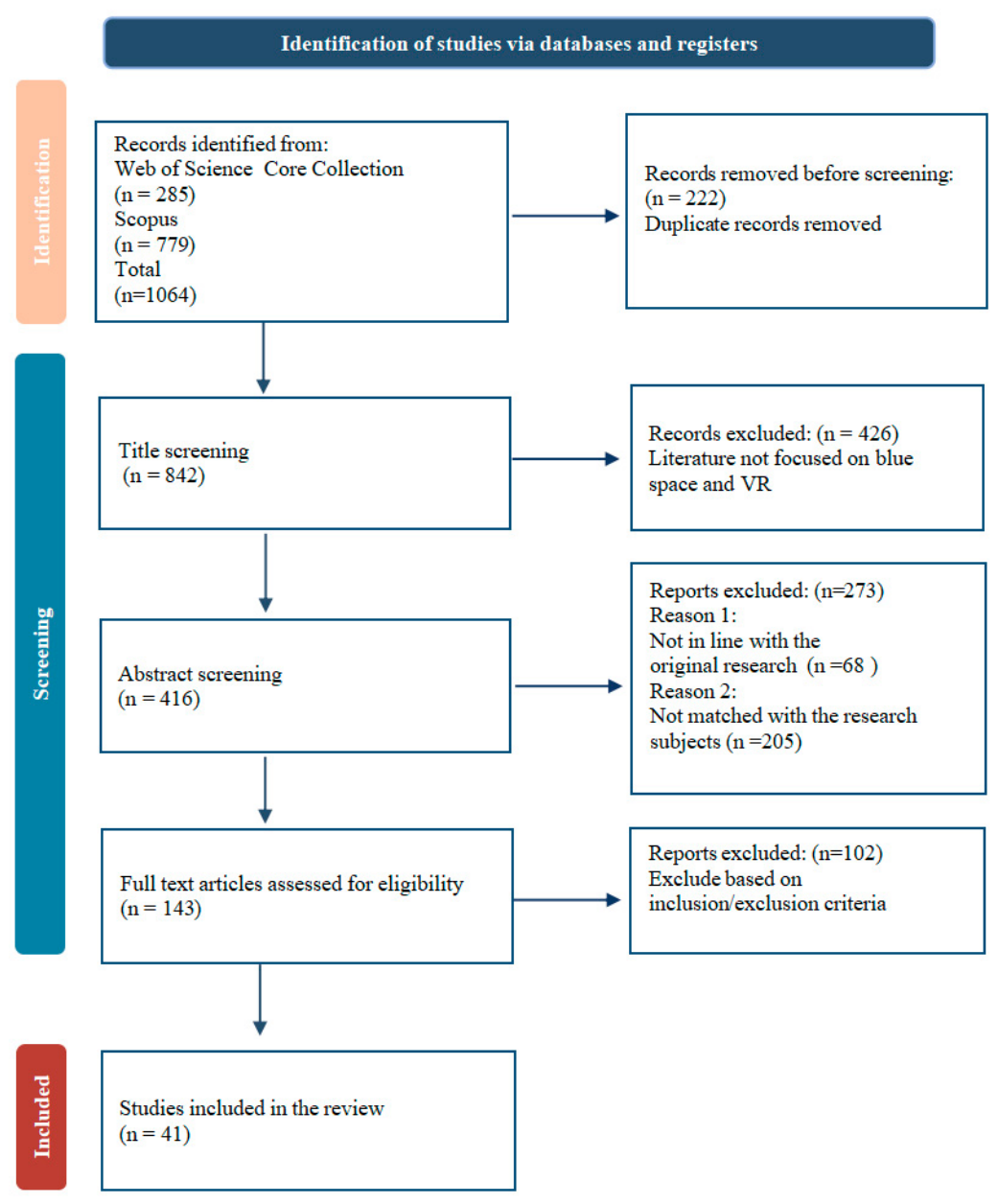
The screening process was as follows. First, two authors used Rayyan (https://www.rayyan.ai/) to screen article titles and abstracts for relevance. The focus was on studies that treat blue space and VR as primary research subjects. The tool supports data storage, retrieval, and tracking of inclusion and exclusion decisions. Full text screening was then conducted independently by the two authors, without restricting the study objectives, to determine the final set of included studies. Inter-rater agreement reached 94.2% (κ = 0.88). In cases of disagreement, a third author was consulted to decide on study inclusion. Finally, both quantitative and qualitative studies, as well as empirical research articles, were considered eligible for inclusion. Reference lists of included studies were manually screened based on the inclusion criteria, but no additional studies were identified. The PRISMA flow diagram of the screening process is shown in Figure 2.
No restrictions on language, document type, or publication status were applied during the database searches. These criteria were subsequently considered during the screening process according to the predefined eligibility criteria. Specifically, publications were eligible if they were written in English and comprised peer-reviewed journal articles or conference papers. Records that did not meet these language or publication-type criteria were excluded during the screening stage.
Following the screening process, Data were independently extracted and compiled by the two authors from the included studies to identify geographic distribution, types of blue spaces, VR implementation pathways, and application domains. The extracted data were subsequently compared between the two authors, and any discrepancies were discussed and resolved through consensus, with a third author consulted when consensus could not be reached. After verification, the data were entered into a Microsoft Excel spreadsheet in a summarized format (Table 1).

3. Results

3.1. Search Results

The searches retrieved 1064 records in total, including 285 records from Web of Science and 779 records from Scopus. After removing duplicates (n = 222), 842 records remained for title and abstract screening. Based on the predefined eligibility criteria informed by the PCC framework (Table 2), 699 records were excluded at this stage due to irrelevance in titles and abstracts. A total of 143 articles were then selected for full text review. Finally, 41 studies were included in the comprehensive analysis.
Based on the PCC framework, studies were included if they: (i) explicitly employed VR or other immersive digital technologies as research methods, experimental media, assessment tools, or intervention platforms; and (ii) involved blue spaces, including rivers, lakes, oceans, wetlands, waterfronts, or comparative studies in which blue spaces constituted a substantial component.
Studies were excluded if they: (i) primarily focused on algorithm development, hydrological simulation, environmental numerical modelling, or technical framework construction without immersive blue space experience scenarios; (ii) described general immersive technologies, VR platforms, or device performance without specific blue space applications; (iii) focused exclusively on green spaces or grey spaces without blue space content; (iv) mainly concerned cultural heritage digital display, virtual exhibitions, or technology development unrelated to blue-space applications; or (v) focused on aquatic organisms, marine ecology, fisheries, water quality monitoring, or physical water-body processes rather than blue-space experience and interaction.

3.2. Quantitative Analysis

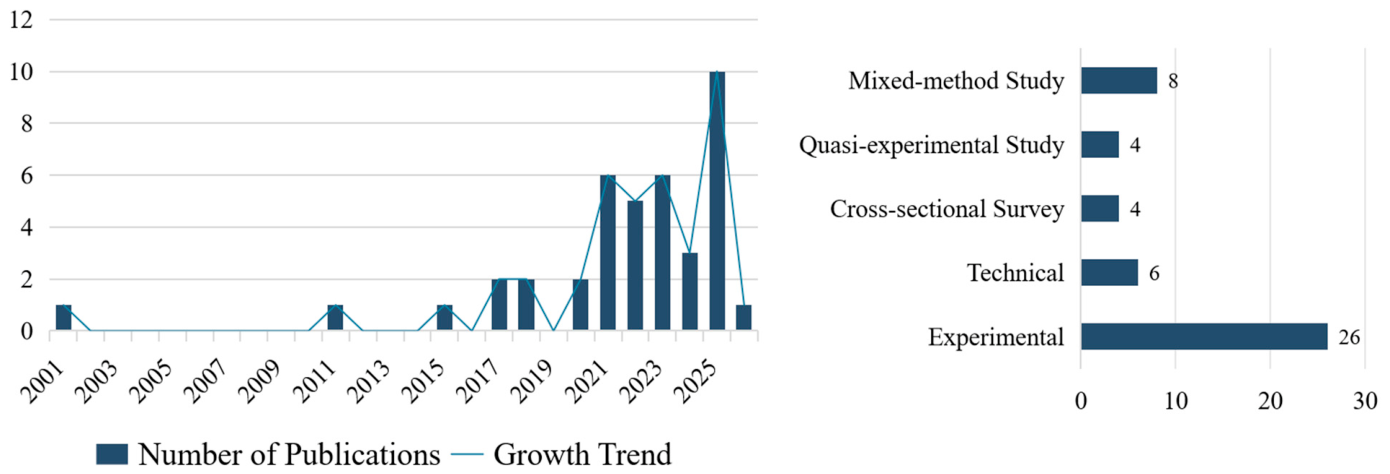
The publication period of the included studies spans from 2001 to 2026. Most studies (75%) were published in or after 2021 (Figure 3). The temporal distribution shows that the earliest application of VR in blue space research appeared in 2001. This early study explored the contribution of virtual landscape visualization in blue spaces to participatory planning [8]. In the following decade, research activity remained limited. Studies increased substantially after 2021 and reached a peak in 2025 (n = 10).
Among the 41 included studies, experimental research accounted for the largest proportion (n = 26), mainly using within subject or between subject designs. Studies focused on technical system development and algorithm validation accounted for 15% (n = 6), primarily involving virtual scene modelling, computer vision analysis, and system development. Notably, among the 26 experimental studies, eight incorporated physiological measurements (e.g., heart rate, EEG, and skin conductance) as objective indicators. Some studies combined self-report questionnaires with physiological measures, representing mixed method designs [26].

3.2.1. Geographic Distribution

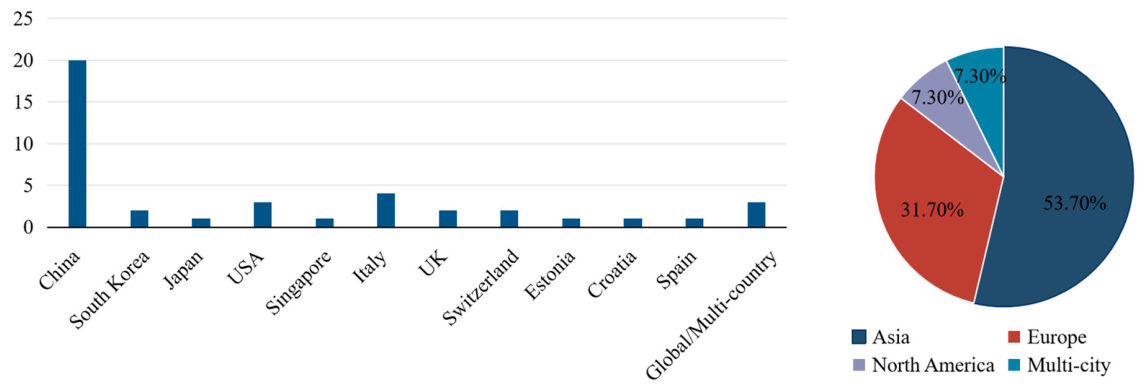
The studies included in this review are highly concentrated in Asia and Europe, while representation from North and South America remains relatively limited (Figure 4). Asia accounts for the largest share, approximately 54% (n = 22), followed by Europe at 32% (n = 13). North America represents 7% (n = 3), all of which are from the United States. In addition, a small number of multi-city studies (n = 3) have begun to emerge. China contributed the largest number of studies within Asia. From a global perspective, the existing literature still shows clear regional imbalances, with insufficient coverage of tropical regions and low-and middle-income countries. Figure 3 also indicates that most studies are conducted in middle- and high- income countries. It should be noted that due to differences in national context, social structures, and cultural backgrounds, these findings may not be directly transferable to low income or lower-middle-income settings.

3.2.2. Population Analysis

Among the 41 studies included, 35 involved human participants, covering experimental studies, questionnaire surveys, and physiological measurements. A small number focused on technical development or case studies, without reporting sample size or including participants. Therefore, sample analysis is necessary. Based on 30 studies with clearly reported sample sizes (five studies did not specify participant numbers), a total of 4320 participants were included. Sample sizes varied widely, ranging from 8 to 2137 participants. The average sample size was 144 (median = 55). A total of eight studies had sample sizes of 100 or more. In terms of participant characteristics, the included studies covered multiple population groups, with most studies focusing on young adults, particularly university students. Children (n = 1) and vulnerable groups such as patients and older adults (n = 5) are also included, mainly in environmental education [15] and rehabilitation contexts [27,28,29]. Only one study included adolescents aged 12 to 13, while younger children are almost entirely absent. Individuals aged over 35 are rarely treated as independent study populations. Evidence relating specifically to this age group was limited.

3.3. Characteristics of VR Applications Across Blue Space Types

3.3.1. Rivers and Lakes as the Primary Focus of Current Research

Among the 41 included studies, blue space types can be classified into six categories (Table 3): rivers, lakes, wetlands, coastal areas, community waterscapes, and integrated studies without specific water type distinctions. It should be noted that some studies involve multiple blue space types. Therefore, duplicate counting may occur in the classification statistics.
From the specific distribution, rivers are the most frequently studied type (n = 14). Research topics in this category are diverse, including cultural heritage conservation, spatial planning, risk management, and environmental perception assessment. For example, in the context of the Grand Canal in China, some studies combine UAV data with VR-based semantic landscape analysis to support linear heritage conservation [30,31]. In the Yellow River basin, researchers have constructed virtual environments for digital heritage archiving and corridor planning simulations [32]. In European contexts, several studies apply VR to flood risk awareness and safety education [16,33]. In the United States, river-related studies are often used for the conservation of riverside historical heritage [34,35]. In addition, some research examines the mechanisms through which visual and auditory channels in river environments influence psychological restoration, as well as the relationship between objective visual indicators and subjective perception [26].
Lake-related studies rank second in number (n = 12). These studies mainly focus on two directions: landscape perception and tourism behaviour. On one hand, some studies use immersive VR to evaluate visual effects of waterfront night lighting [36,37]. On the other hand, research also examines the influence of virtual experiences on tourist behaviour, including visit intention and place attachment [28,38]. In addition, lake environments are frequently used to investigate the restorative effects of virtual blue spaces and to identify public preferences [39,40,41].
Wetland related studies are relatively limited (n = 6), but their themes are more focused, primarily on ecological education. These studies construct virtual wetland environments to visualize complex ecological processes and support environmental education practices. For example, some cases involve the development of low cost VR systems for ecological teaching in primary education [15], or the use of dynamic simulations to enhance understanding of ecosystem functioning [42].
A total of nine studies focused on coastal environments, mainly addressing topics such as climate adaptation, participatory planning, and environmental perception assessment. In some cases, VR is used to support public participation in coastal adaptation planning [43]. Other studies examine soundscape quality and user satisfaction in coastal settings, and propose VR-based soundscape evaluation methods [44,45]. These studies often exhibit strong interdisciplinary characteristics.
Studies on community waterscapes are relatively limited (n = 4), but they place greater emphasis on built environment factors in research design. For example, VR systems are used to evaluate how elements such as building form and spatial scale in waterfront spaces influence restorative experience and perceived safety [46,47]. In addition, some studies do not distinguish specific water body types (n = 5) but instead treat blue space as an integrated environmental factor. These studies typically compare different types of virtual environments to examine their effects on psychological restoration [48], or analyze perceptual differences in blue–green space elements across population groups [49].
Rivers and wetlands were the only two blue space types represented across all four research outcomes. Ecological education studies were primarily associated with wetlands. Coastal studies were primarily associated with environmental planning outcomes. Studies on community waterscapes and no distinction of water area space were concentrated primarily in restorative perception and environmental planning.

3.3.2. Representation Characteristics of VR Scenarios in Blue Spaces

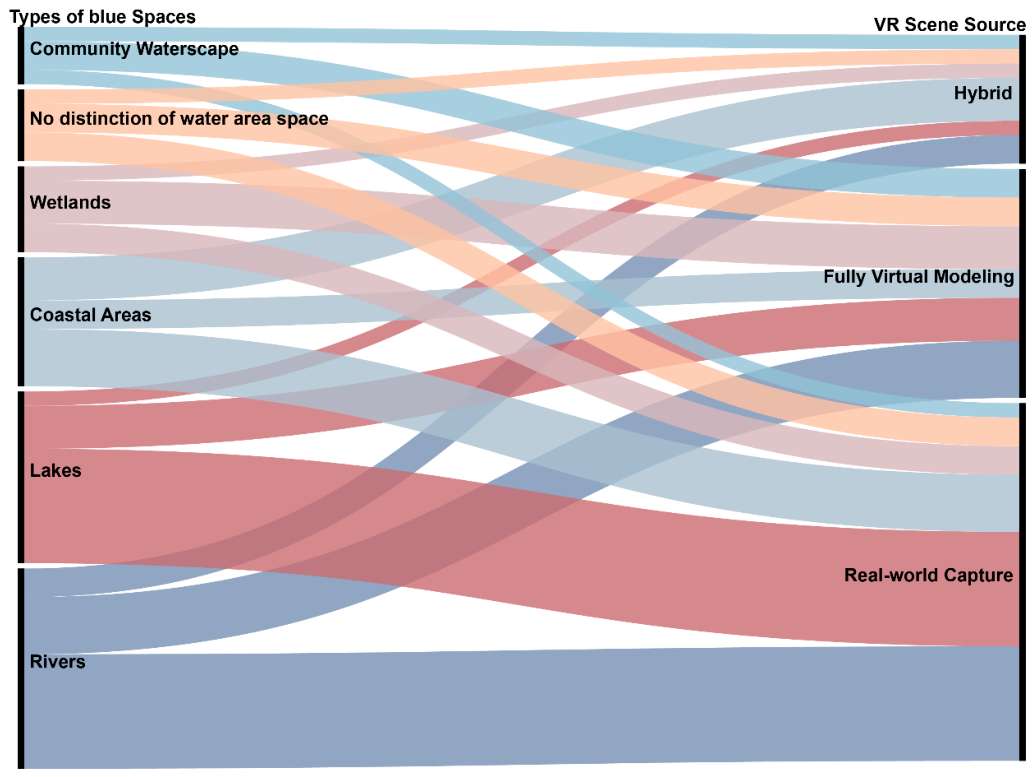
Based on distribution patterns, this study synthesizes the relationships between blue space types and their VR scenario representations in the 41 included studies (Figure 5). Overall, rivers and lakes are the most studied blue space types and dominate across different scenario construction approaches. Therefore, the following analysis is primarily based on the types of studies reported in the included literature.
From the perspective of scenario sources, existing studies can be categorized into three types: real world capture, fully virtual modelling, and hybrid representations. The Sankey diagram (Figure 5) illustrates the relationship between blue space categories and VR scene construction methods, highlighting differences in technological preferences across environmental contexts. Among these, real world capture is the most widely used approach, commonly in the form of 360° panoramic videos and panoramic images. Researchers can obtain high quality real world materials more easily and maintain a certain level of ecological representation in virtual environments [50]. This type of scene source is most frequently adopted in research on rivers and lakes, covering a broad range of research topics [26,27,28,36,39,44,47,51]. In contrast, fully virtual modelling relies on 3D modelling tools to construct blue space environments. Fully virtual modelling was commonly used in studies involving comparisons of multiple environmental variables. This approach is commonly used in community waterscape and wetland studies. For example, in community waterscape research, variables such as water scale, surrounding building forms, and soundscape elements need to be systematically controlled [46]. In wetland related studies, it is often used to compare complex combinations of spatial elements and ecosystem conditions [15,42]. Hybrid presentation combines real-world imagery with virtual modelling elements. It is mainly applied to blue space projects that are still in the planning or redevelopment stage. When real site conditions are unavailable or future scenarios need to be simulated, researchers typically overlay virtual design schemes onto real backgrounds to support design evaluation and public participation [52,53]. Hybrid representations were relatively common in coastal blue space studies, which frequently addressed climate adaptation and participatory planning scenarios [43].
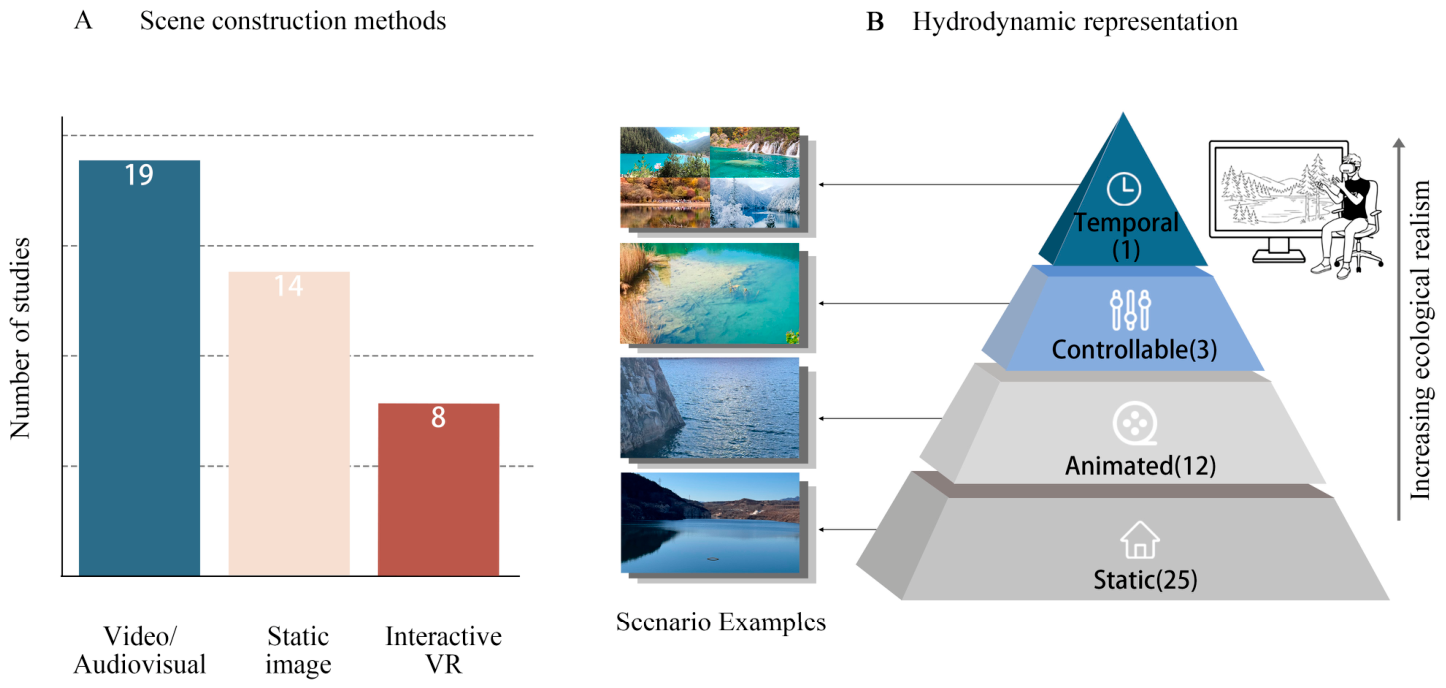
From the perspective of scenario construction, most studies employ video-based or audio-visual simulations (n = 19), followed by static images or photographs (n = 14). Interactive virtual environments remain relatively limited (n = 8). Current virtual representations of blue spaces are still dominated by relatively low complexity visual approaches. Further differentiation based on water dynamics (Figure 6) reveals clear hierarchical variations in simulation methods. First, static waterscapes dominate the literature (n = 25). These are characterized by the absence of flow, wave motion, or water level variation, with water surfaces typically represented as fixed textures [40]. Second, some studies incorporate pre-defined animations (n = 12). These enhance visual realism through looped wave effects, but such dynamics are not parameter driven and lack responsiveness to real hydrological processes [39,51].
Studies capable of implementing controllable dynamic simulations are relatively limited (n = 3). Such studies typically use procedural methods to control key water attributes, such as water level or flow velocity, to simulate dynamics closer to real conditions. For example, in flood simulation studies, rising water levels are dynamically represented to recreate disaster scenarios [16,33]. In addition, only one study incorporates a temporal dimension within a single experience. These use timelines to display water evolution across daily or seasonal scales, capturing the dynamic complexity of wetland ecosystems [42]. Overall, current research on water dynamics in virtual blue spaces is still dominated by static representations or simple animations. Complex simulations driven by data or involving multitemporal scales remain limited.

3.4. Head-Mounted Displays (HMD) as the Dominant VR Pathway

As the initial screening limited VR technologies to those applied in blue space contexts, the included studies exhibit diverse technological approaches. Based on research instances, some studies employ multiple technologies, resulting in potential double counting (Table 4). In terms of device types, head-mounted displays (HMD) are the most widely used (n = 32). Computer based simulations or non-immersive VR follow (n = 10). HMD-based displays are predominantly used in highly immersive and high presence experimental paradigms [27], which were primarily associated with restorative perception (n = 20) and environmental planning (n = 10). Computer based simulations and non-immersive VR were most frequently used in environmental planning studies (n = 7). These methods are more common for large-sample surveys and early stage design visualization [53,54]. AR was identified in three studies and was mainly applied in environmental planning and participatory design contexts [35,43]. Only one study used Cardboard technology, which was applied in ecological education [15].

3.5. Methodological Limitations of Exposure Duration and Intervention Frequency in VR Blue Space Experiments

Among the 41 included studies, 26 are experimental. Based on these, exposure duration and intervention frequency were further analyzed. Overall, most studies adopt single session, short duration exposure designs. In terms of exposure duration, 6 to 15 min is the most common range (n = 15). Some studies use psychological measures, such as questionnaires, to assess the health and well-being effects of blue space design [26,44]. Exposure durations of ≤5 min account for 15.4% (n = 4), mainly in early exploratory or technical validation studies [41,54,55]. Exposure durations of 16 to 30 min account for 19.2% (n = 5), typically used in experiments involving behavioural tasks or scenario-based narratives, including game-like mechanisms [27]. Only one study (3.8%) involves exposure exceeding 30 min. This includes a single 30 min VR session used in a controlled experiment comparing psychological and physical activity outcomes between virtual urban blue–green spaces and grey spaces during cycling [48]. One study does not clearly report exposure duration [52]. Regarding intervention frequency, single session exposure dominates (n = 22). Studies with 2 to 5 sessions are limited (n = 3). Some studies adopt a single group pre–post design to evaluate changes in negative emotions after the first and fifth VR exposure to blue spaces [27]. Other studies implemented VR interventions 3–5 times per week among cancer patients [29]. Only one study involves more than five sessions, as part of a 12-week intervention with a controlled experimental design [48]. Most studies adopted short-term exposure designs. Studies examining cumulative and long-term impacts were rarely identified. Notably, there are no longitudinal studies (≥3 months). None of the included studies reported long-term follow-up periods.

3.6. VR Provides Multisensory Interaction Channels for Blue Space Research

In VR experiments, multisensory channels and interaction modes influence the perceived realism of virtual environments. In terms of interaction types, passive viewing without active interaction accounts for the largest proportion, reaching 53% (n = 23). Participants can only adjust their viewing direction, without the ability to change navigation paths or manipulate virtual objects [47]. Limited interaction is observed in 12 studies (n = 12). For example, users can explore the environment through 360 degree viewing and trigger interactions such as information display or scene transitions by gazing at icons. These systems often include multimedia elements such as images, videos, textual descriptions, and voice-based question-and-answer functions related to wetland species and ecological content [15]. In some studies, users can follow predefined flight paths while also freely exploring the lake environment through 360 degree viewing [38]. Social interaction, defined as multi-user shared experiences, accounts for the smallest proportion, with only two studies. In one case, AR devices are used to support group discussion for design scenario simulation and speculative planning [43]. In another, desktop-based VR is used in classroom settings, where students collaborate in groups through game-based learning to explore local watershed history and environmental issues [34]. From a sensory perspective, vision is used in all studies (100%). Auditory input is also widely applied, present in 81% of studies (n = 35). Most studies combine visual stimuli with environmental sounds, such as water flow, wind, and bird calls, and even noise [46]. In contrast, haptic feedback is rarely used, accounting for only nine studies. These are typically limited to simple controller vibrations [16], lacking fine-grained tactile simulation. Olfactory input is entirely absent. None of the included studies incorporate smell-related stimuli associated with real blue space environments.

4. Discussion

4.1. VR as an Indirect Exposure Modality in Blue Spaces Improves Health and Well-Being

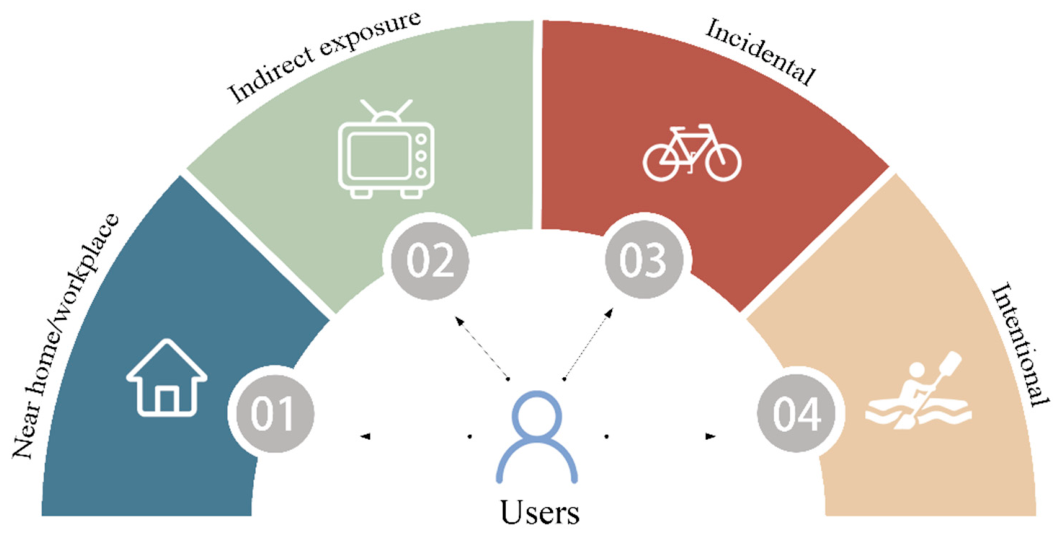
Across the studies included in this review, VR-based blue-space exposure was mainly examined in short-term experimental settings and was associated with psychological and physiological responses. Existing research has confirmed that exposure to blue spaces helps improve people’s health and well-being [1]. The Blue Health project conceptualized four types of blue space exposures (Figure 7), including home or work proximity, indirect exposure (e.g., window views or TV programs), incidental exposure (exposure occurring even though the main activity was for a different purpose, such as commuting), and intentional exposure (deliberately spending time in aquatic settings for work or recreation). This classification helps to understand the relationship between blue spaces and health and well-being [56]. It also suggests that exposure to blue spaces may be an important condition for obtaining health and well-being outcomes [57]. As an indirect exposure modality, VR helps present virtual blue spaces to people who are less likely to access real blue spaces [3]. VR has been more commonly used in laboratory settings to simulate blue spaces and observe people’s physiological and psychological responses. Compared with collecting physiological data in real environments, virtual environments are relatively more stable and may reduce the influence of external factors such as weather and noise on the data [58]. This may help researchers obtain objective physiological data, such as Heart Rate Variability (HRV), Skin Conductance, EEG, and EDA, as well as psychological data such as that obtained by self-report instruments, e.g., PANAS [37,59]. Therefore, VR could provide more evidence and scientifically grounded support for studying how indirect exposure to blue spaces may play a role in reducing the risk of depression [44].
In this context, the integration of VR is not intended to replace real nature, but to serve as a complementary intervention. Existing studies have already developed audio-visual virtual blue environments to improve the immersion and realism of virtual environments. However, White and his colleagues suggested that people may gain mental health benefits through multiple sensory interactions with water [57]. Therefore, enhancing the multisensory experience of VR to improve people’s sensory interaction with virtual blue spaces may become an important research direction in the future.

4.2. VR Improves Access to Blue Spaces for Vulnerable Groups

This review found a clear demographic imbalance in current VR-based blue space research. Children, older adults, patients, and individuals with limited mobility are among the populations that remain insufficiently studied, despite their considerable potential for VR blue space applications.
Applications targeting children are mainly focused on education, as VR can provide an interface that combines virtual environments with knowledge learning and allows children to interact and participate in engaging ways [60]. For example, in wetland-related research, VR enables children to perceive the complexity, dynamics, and biodiversity of wetland ecosystems [61] through visual presentations of hydrological systems and ecological processes. This type of immersive learning experience may help children, especially those aged 6 to 12 [62], establish emotional connections with nature, which may further influence their understanding of nature [34] and their environmental behaviours in adulthood [63].
For health-related vulnerable populations, access to blue spaces is often limited by physical conditions or external environmental factors [64]. However, these groups may have a greater need to connect with blue spaces in order to gain mental health benefits related to stress relief, illness recovery, and reduced depression risk [65]. In this context, VR blue spaces may serve as an alternative way to access blue space environments [29]. For example, one study introduced immersive waterscape experiences into healthcare settings and found that they may help divert patients’ attention from discomfort and improve psychological states in the short term [17]. As a prospective application, elderly care institutions and cancer treatment centres could provide immersive VR blue space experiences for older adults and cancer patients, in order to support mental well-being and potentially reduce the risk of depression [66]. Therefore, VR may help compensate for inequalities in access to real-world environments, particularly for patients, older adults, and individuals with limited mobility [67].
Future studies should also adopt age-appropriate and ethically grounded experimental designs when involving these populations. For children, this may include shorter VR exposure durations, simplified tasks, parental/guardian consent and child assent, and continuous monitoring for cybersickness and discomfort. For older adults, studies could incorporate longer familiarization periods, accessible interfaces, adjustable visual and auditory settings, and screening for mobility or sensory limitations. For patients and individuals with limited mobility, researchers should consider their physical and psychological conditions when determining exposure duration and experimental procedures, while providing appropriate supervision and opportunities to discontinue the VR experience if discomfort occurs. These measures would help ensure participant safety while improving the demographic validity of VR-based blue-space research.

4.3. Dynamic Simulation of Blue Space Supporting Large-Scale Environmental Planning and Participatory Design

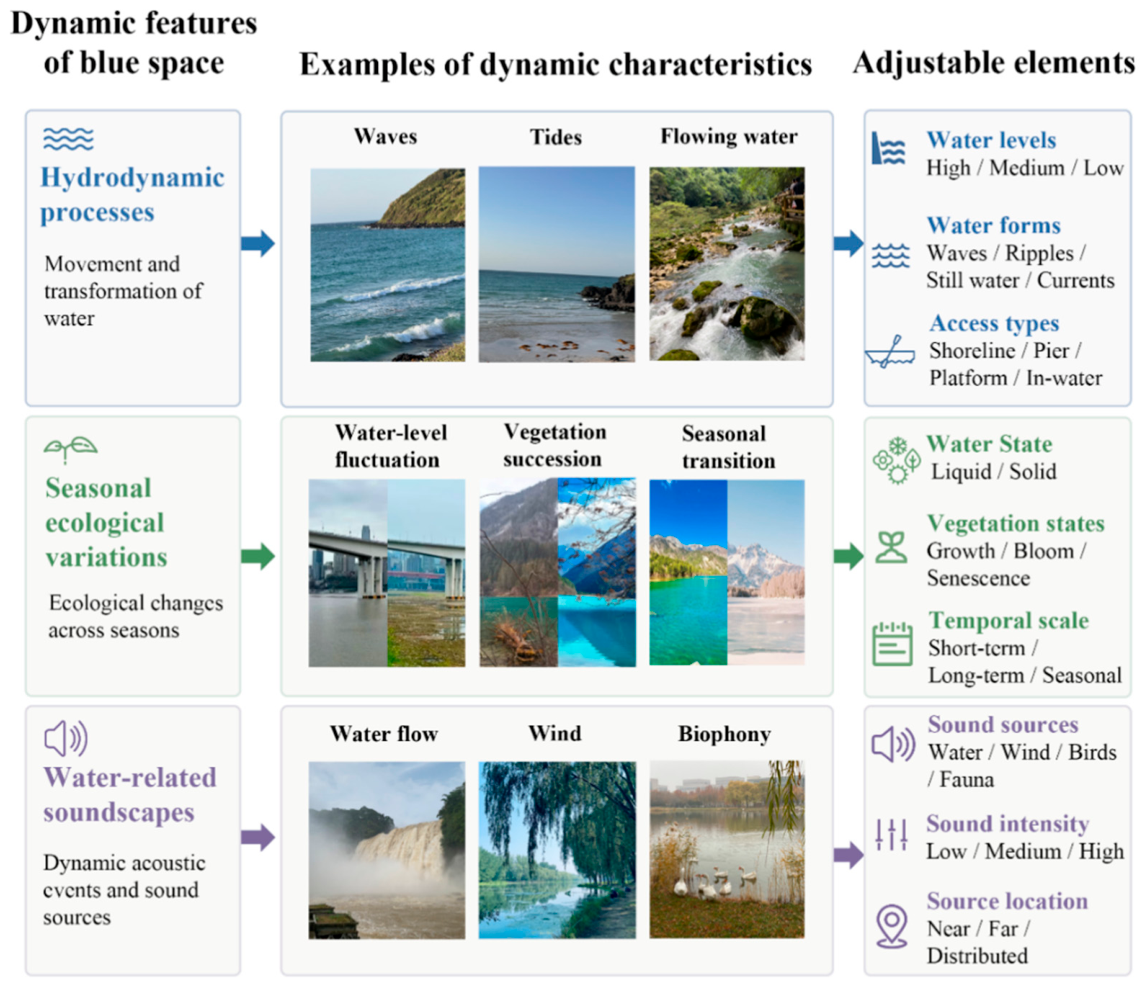
In existing studies, the blue spaces presented in VR are mostly static ecological systems [68]. However, the dynamic and changing nature of water bodies is an important factor affecting people’s perceptions and urban-level planning decisions (Figure 8). VR has the potential to represent water movement, seasonal changes, and environmental processes in ways that conventional visualization methods may not fully achieve [69]. These dynamic VR simulations may provide scientific decision support and more effective participatory design approaches for urban planning, urban design, and landscape design [70].
A direct finding of this review is the hierarchy of water representation shown in Figure 6. Most studies used static waterscapes (n = 25), followed by predefined animations (n = 12), while controllable dynamic simulations (n = 3) and temporal representations (n = 1) were rare. This pattern suggests that current VR representations capture only part of the dynamic and evolving nature of blue spaces. Future research should therefore further explore controllable, data-driven, and multi-temporal simulations of water movement, seasonal change, and hydrological processes.
In large-scale urban planning and landscape design, VR provides an observer-centred approach for presenting large-scale environments [71]. In planning and design processes involving blue spaces, VR can simulate the dynamics and complexity of these environments [17]. This approach may help designers and policymakers develop a more intuitive understanding of the potential effects of different design scenarios. VR can also present possible ecological evolution processes, disturbance factors [53], and visual landscape highlights [44] through visual interfaces, including head-mounted displays (HMDs), providing more scientific and intuitive references for large-scale environmental design.
In participatory design, VR can capture real-time eye-tracking data by simulating the dynamics and complexity of blue spaces [47], helping researchers obtain participants’ feedback on visual points of interest within the environment. VR can also display site microclimate data, such as temperature, humidity, and noise levels, through visual interfaces including HMDs. Combined with subjective questionnaires, this approach may support rapid feedback on design proposals and provide a more efficient method for participatory design [72].

4.4. VR Aids Urban Management Through Virtual Simulation of Blue Spaces

In the context of urban management, VR applications have gradually expanded from design assistance to risk assessment and routine governance [73]. Its value lies in the pre-simulation of complex scenarios and process visualization. This capability is particularly significant in water disaster management. Compared with traditional methods based on historical data or static models, VR can reconstruct scenarios such as extreme rainfall, urban flooding, and river overflow within virtual environments [16]. This may support managers to observe water dynamics and spatial impacts under near real perceptual conditions. During this process, infrastructure capacity can be evaluated, and public risk perception and behavioural responses can be preliminarily assessed. By constructing interactive flood scenarios, schools and communities can conduct training in safe environments [74]. This experiential learning approach may enhance public awareness of disaster scenarios and improve response capacity under real world conditions.
As a future research direction, VR could be further evaluated for monitoring and scenario simulation [75]. When integrated with digital twin systems, VR may transform real-time or near-real-time data into visualized environments. This may support the assessment of water-related changes, such as water-level fluctuations, shoreline erosion, and infrastructure performance. Such representations may help managers synthesize complex information and support dynamic adjustments to emergency response strategies.

4.5. Limitations

In this review, we acknowledge several limitations that may affect the findings. First, although no geographic restrictions were applied, only English-language peer reviewed studies were included. The exclusion of non-English research (e.g., Chinese, Spanish) may introduce cultural, linguistic, and publication bias. This selection approach may also lead to the underrepresentation of studies from low- and lower-middle-income countries. This occurs despite the rapid growth of research output in regions such as Asia. In addition, the literature search was conducted using only two bibliographic databases, Web of Science Core Collection and Scopus, which may have resulted in the omission of relevant studies indexed in other databases. In addition, the classification of studies based on technical characteristics, blue space types, and mental health outcomes depends on the quality and level of detail reported in the original publications.

5. Conclusions

The objective of this review is to examine the current applications and development trends of VR in blue space research. It clarifies key research methods, technical pathways, application scenarios, and existing knowledge gaps. Existing studies indicate that VR, as a form of indirect exposure, can partially reproduce the perceptual characteristics of real blue spaces. Under short-term experimental conditions, it shows positive effects on psychological restoration and emotional regulation. It also supports the collection of physiological and psychological data under controlled conditions. At the population level, VR expands accessibility to blue space experiences. It demonstrates potential in areas such as children’s education, patient care, and support for individuals with limited mobility. In urban planning and management, VR is gradually evolving from a visualization tool to a method for design assessment and decision support. It shows potential value in multi-scale planning, public participation, and risk management. At the same time, current technological pathways exhibit clear characteristics. Research is dominated by immersive devices such as head-mounted displays and relies mainly on visual and auditory channels. Scene construction often depends on simplified representations, while dynamic water simulation and multisensory integration remain limited. Longitudinal studies are extremely scarce. Sample structures are dominated by young students, with insufficient representation of children, middle-aged and older adults, and clinical populations. Future research should expand methodological standardization, equity and accessibility, advanced environmental simulation, and integration with urban governance and digital twins.

Author Contributions

Conceptualization, M.W., C.L. and S.B.; methodology, M.W. and S.B.; validation, M.W. and C.L.; formal analysis, M.W., D.S., Y.L. and Y.S.; investigation, M.W., D.S. and Y.L.; data curation, M.W., C.L., D.S., Y.L. and Y.S.; writing—original draft preparation, M.W.; writing—review and editing, M.W. and C.L.; visualization, M.W. and D.S.; supervision, C.L., M.H. and S.B.; project administration, M.H.; funding acquisition, M.H. All authors have read and agreed to the published version of the manuscript.

Funding

This work was financially supported by the Ministry of Education of China funded research project on Research on Value Implementation Mechanism of Cultural Ecosystem Service in Blue Space of Yongding River (Beijing section) based on multimodal monitoring and machine learning (No. 2025070987993), and the China Geological Group Corporation funded research project on Evaluation model of Healthy Villages based on Qinling Ecological Restoration (No. CGC-GT-JF-2025-1104). The funder had no role in the design of the review; collection, analysis, or interpretation of the data; or preparation of the manuscript.

Data Availability Statement

The data supporting the findings of this study are available from the corresponding author upon reasonable request.

Conflicts of Interest

The authors declare that this study received funding from China Geological Group Corporation. The funder had no role in the design of the review; collection, analysis, or interpretation of the data; or preparation of the manuscript.

Abbreviations

The following abbreviations are used in this manuscript:
VRVirtual Reality
PCCPopulation–Concept–Context
HMDHead-Mounted Display
PANASPositive and Negative Affect Schedule
ARAugmented Reality
HRVHeart Rate Variability

Appendix A. Search Strategy

Appendix A.1. Information Sources

The following databases were searched:
Web of Science Core Collection (WoS)
Scopus
No additional databases were included. Reference lists of included studies were manually screened to identify additional eligible studies.

Appendix A.2. Search Date Range

The search covered all records indexed from database inception to 25 January 2026.
No lower date limit was applied.

Appendix A.3. Search Fields and Filters

The search was conducted using standardized field tags:
Web of Science: TS (Topic)
Scopus: TITLE-ABS-KEY
No language, document type, or publication status restrictions were applied at the search stage.

Appendix A.4. Search Concepts and Terminology

The search strategy was built on two conceptual domains:

Appendix A.4.1. Virtual Reality Concept

To capture variation in terminology across immersive technology research, the following terms were included: virtual reality, VR, immersive technology.

Appendix A.4.2. Blue Space Concept

Given the absence of a single standardized definition of blue space in the literature, both conceptual and specific hydrological terms were included: blue space, waterfront, river, lake, wetland, sea, reservoir, water body.

Appendix A.5. Full Search Strategy

Appendix A.5.1. Web of Science (TS Field)

TS = ((“virtual reality” OR “immersive technology” OR “VR”) AND (“blue space” OR “waterfront” OR “river” OR “water body” OR “river restoration” OR “lake” OR “wetland” OR “sea” OR “reservoir”)) (n = 285)

Appendix A.5.2. Scopus (TITLE-ABS-KEY Field)

TITLE-ABS-KEY((“virtual reality” OR “immersive technology” OR “VR”) AND (“blue space” OR “waterfront” OR “river” OR “water body” OR “river restoration” OR “lake” OR “wetland” OR “sea” OR “reservoir”)) (n = 779)

References

  1. Bell, S.; Fleming, L.E.; Grellier, J.; Kuhlmann, F.; Nieuwenhuijsen, M.J.; White, M.P. Urban Blue Spaces: Planning and Design for Water, Health and Well-Being; Routledge: London, UK, 2021. [Google Scholar]
  2. Smith, N.; Georgiou, M.; King, A.C.; Tieges, Z.; Webb, S.; Chastin, S. Urban Blue Spaces and Human Health: A Systematic Review and Meta-Analysis of Quantitative Studies. Cities 2021, 119, 103413. [Google Scholar] [CrossRef] [Scilit]
  3. Gascon, M.; Zijlema, W.; Vert, C.; White, M.P.; Nieuwenhuijsen, M.J. Outdoor Blue Spaces, Human Health and Well-Being: A Systematic Review of Quantitative Studies. Int. J. Hyg. Environ. Health 2017, 220, 1207–1221. [Google Scholar] [CrossRef] [Scilit]
  4. Veerkamp, C.J.; Schipper, A.M.; Hedlund, K.; Lazarova, T.; Nordin, A.; Hanson, H.I. A Review of Studies Assessing Ecosystem Services Provided by Urban Green and Blue Infrastructure. Ecosyst. Serv. 2021, 52, 101367. [Google Scholar] [CrossRef] [Scilit]
  5. Rigolon, A.; Browning, M.H.E.M.; McAnirlin, O.; Yoon, H. (Violet) Green Space and Health Equity: A Systematic Review on the Potential of Green Space to Reduce Health Disparities. Int. J. Environ. Res. Public Health 2021, 18, 2563. [Google Scholar] [CrossRef] [Scilit]
  6. Knight, S.J.; McClean, C.J.; White, P.C.L. The Importance of Ecological Quality of Public Green and Blue Spaces for Subjective Well-Being. Landsc. Urban Plan. 2022, 226, 104510. [Google Scholar] [CrossRef] [Scilit]
  7. Sherman, W.R.; Craig, A.B. Understanding Virtual Reality; Morgan Kauffman: San Francisco, CA, USA, 2003. [Google Scholar]
  8. Lanier, J. Virtually There. Sci. Am. 2001, 284, 66–75. [Google Scholar] [CrossRef] [Scilit]
  9. Bailenson, J. Experience on Demand: What Virtual Reality Is, How It Works, and What It Can Do; WW Norton & Company: New York, NY, USA, 2018. [Google Scholar]
  10. Baran, P.K.; Tabrizian, P.; Zhai, Y.; Smith, J.W.; Floyd, M.F. An Exploratory Study of Perceived Safety in a Neighborhood Park Using Immersive Virtual Environments. Urban For. Urban Green. 2018, 35, 72–81. [Google Scholar] [CrossRef] [Scilit]
  11. Slater, M. Place Illusion and Plausibility Can Lead to Realistic Behaviour in Immersive Virtual Environments. Philos. Trans. R. Soc. B Biol. Sci. 2009, 364, 3549–3557. [Google Scholar] [CrossRef] [Scilit]
  12. Browning, M.H.; Shin, S.; Drong, G.; McAnirlin, O.; Gagnon, R.J.; Ranganathan, S.; Sindelar, K.; Hoptman, D.; Bratman, G.N.; Yuan, S.; et al. Daily Exposure to Virtual Nature Reduces Symptoms of Anxiety in College Students. Sci. Rep. 2023, 13, 1239. [Google Scholar] [CrossRef] [Scilit]
  13. Jamei, E.; Mortimer, M.; Seyedmahmoudian, M.; Horan, B.; Stojcevski, A. Investigating the Role of Virtual Reality in Planning for Sustainable Smart Cities. Sustainability 2017, 9, 2006. [Google Scholar] [CrossRef] [Scilit]
  14. Rokooei, S.; Shojaei, A.; Alvanchi, A.; Azad, R.; Didehvar, N. Virtual Reality Application for Construction Safety Training. Saf. Sci. 2023, 157, 105925. [Google Scholar] [CrossRef] [Scilit]
  15. Ou, K.-L.; Chu, S.-T.; Tarng, W. Development of a Virtual Wetland Ecological System Using VR 360° Panoramic Technology for Environmental Education. Land 2021, 10, 829. [Google Scholar] [CrossRef] [Scilit]
  16. Gamberini, L.; Bettelli, A.; Benvegnú, G.; Orso, V.; Spagnolli, A.; Ferri, M. Designing “Safer Water.” A Virtual Reality Tool for the Safety and the Psychological Well-Being of Citizens Exposed to the Risk of Natural Disasters. Front. Psychol. 2021, 12, 674171. [Google Scholar] [CrossRef] [Scilit]
  17. Masullo, M.; Maffei, L.; Pascale, A.; Senese, V.; De Stefano, S.; Chau, C. Effects of Evocative Audio-Visual Installations on the Restorativeness in Urban Parks. Sustainability 2021, 13, 8328. [Google Scholar] [CrossRef] [Scilit]
  18. Liu, C.; Wang, Z.; Li, X.; Han, M.; Bell, S. A Systematic Review of Cultural Ecosystem Services and Blue Space. Land 2026, 15, 666. [Google Scholar] [CrossRef] [Scilit]
  19. Page, M.J.; McKenzie, J.E.; Bossuyt, P.M.; Boutron, I.; Hoffmann, T.C.; Mulrow, C.D.; Shamseer, L.; Tetzlaff, J.M.; Akl, E.A.; Brennan, S.E.; et al. The PRISMA 2020 Statement: An Updated Guideline for Reporting Systematic Reviews. BMJ 2021, 372, n71. [Google Scholar] [CrossRef] [Scilit] [PubMed]
  20. Munn, Z.; Peters, M.D.; Stern, C.; Tufanaru, C.; McArthur, A.; Aromataris, E. Systematic Review or Scoping Review? Guidance for Authors When Choosing between a Systematic or Scoping Review Approach. BMC Med. Res. Methodol. 2018, 18, 143. [Google Scholar]
  21. Peters, M.D.; Marnie, C.; Tricco, A.C.; Pollock, D.; Munn, Z.; Alexander, L.; McInerney, P.; Godfrey, C.M.; Khalil, H. Updated Methodological Guidance for the Conduct of Scoping Reviews. JBI Evid. Synth. 2020, 18, 2119–2126. [Google Scholar] [CrossRef] [Scilit] [PubMed]
  22. Tricco, A.C.; Lillie, E.; Zarin, W.; O’Brien, K.K.; Colquhoun, H.; Levac, D.; Moher, D.; Peters, M.D.; Horsley, T.; Weeks, L.; et al. PRISMA Extension for Scoping Reviews (PRISMA-ScR): Checklist and Explanation. Ann. Intern. Med. 2018, 169, 467–473. [Google Scholar] [CrossRef] [Scilit] [PubMed]
  23. Peters, M.; Godfrey, C.; McInerney, P.; Soares, C.B.; Khalil, H.; Parker, D. Methodology for JBI Scoping Reviews. In The Joanna Briggs Institute Reviewers Manual 2015; Joanna Briggs Institute: Adelaide, Australia, 2015; pp. 3–24. [Google Scholar]
  24. Mongeon, P.; Paul-Hus, A. The Journal Coverage of Web of Science and Scopus: A Comparative Analysis. Scientometrics 2016, 106, 213–228. [Google Scholar] [CrossRef] [Scilit]
  25. Vera-Baceta, M.-A.; Thelwall, M.; Kousha, K. Web of Science and Scopus Language Coverage. Scientometrics 2019, 121, 1803–1813. [Google Scholar] [CrossRef] [Scilit]
  26. Hsieh, C.; Yang, J.; Huang, C.; Chin, W. The Effect of Water Sound Level in Virtual Reality: A Study of Restorative Benefits in Young Adults through Immersive Natural Environments. J. Environ. Psychol. 2023, 88, 102012. [Google Scholar] [CrossRef] [Scilit]
  27. Navarrete, J.; Navarro-Siurana, J.; Herrero, R.; Vara, M.D.; Miragall, M.; Banos, R. Connecting to Nature through 360° Videos during COVID-19 Confinement: A Pilot Study of a Brief Psychological Intervention. J. Healthc. Eng. 2022, 2022, 4242888. [Google Scholar] [CrossRef] [Scilit]
  28. Pantelidis, C.; tom Dieck, M.C.; Jung, T.H.; Smith, P.; Miller, A. Place Attachment Theory and Virtual Reality: The Case of a Rural Tourism Destination. Int. J. Contemp. Hosp. Manag. 2024, 36, 3704–3727. [Google Scholar] [CrossRef] [Scilit]
  29. Song, R.; Chen, Q.; Zhang, Y.; Jia, Q.; He, H.; Gao, T.; Qiu, L. Psychophysiological Restorative Potential in Cancer Patients by Virtual Reality (VR)-Based Perception of Natural Environment. Front. Psychol. 2022, 13, 1003497. [Google Scholar] [CrossRef] [Scilit]
  30. Luo, J.; Zhao, T.; Cao, L.; Biljecki, F. Semantic Riverscapes: Perception and Evaluation of Linear Landscapes from Oblique Imagery Using Computer Vision. Landsc. Urban Plan. 2022, 228, 104569. [Google Scholar] [CrossRef] [Scilit]
  31. Zhou, X.; Wang, Y.; Liao, H.; Gu, X.; Huang, L.; Nong, X.; Zhang, L.; Song, Y. Through the Expansive Eyes of UAVs: Combining Computer Vision to Analyze Linear Riverscape Visual Perception and Preferences. J. Urban Manag. 2025, 15, 266–283. [Google Scholar] [CrossRef] [Scilit]
  32. Wang, J.; Zhao, S. Enhancing the Preservation and Exhibition of Yellow River Cultural Heritage Through Virtual Reality: An Integrated Framework for Digital Archiving, Virtual Restoration, and Immersive Experience. Int. J. Knowl. Manag. 2025, 21, 1–19. [Google Scholar] [CrossRef] [Scilit]
  33. Bettelli, A.; Zanella, E.; Pierobon, L.; Orso, V.; Pluchino, P.; Spagnolli, A.; Ferri, M.; Gamberini, L. Beyond the Embankments: Virtual Training on Human-River Interaction for Fostering Safer Behaviors during Flood Emergencies. Sustainability 2023, 15, 14855. [Google Scholar] [CrossRef] [Scilit]
  34. Araujo-Junior, R.; Bodzin, A.; Hammond, T.; Anastasio, D.; Lam, B.; Mack, J.; Mayer, D.; Neitz, R.; Semmens, K.; Schwartz, C.; et al. Work-in-Progress-Watershed Explorers: Designing a Virtual Reality Game to Promote Local Watershed Literacy. In 2021 7th International Conference of the Immersive Learning Research Network (iLRN); IEEE: Piscataway, NJ, USA, 2021. [Google Scholar] [CrossRef] [Scilit]
  35. Cavallo, M.; Rhodes, G.A.; Forbes, A.G. Riverwalk: Incorporating Historical Photographs in Public Outdoor Augmented Reality Experiences. In 2016 IEEE International Symposium on Mixed and Augmented Reality (ISMAR-Adjunct); IEEE: Piscataway, NJ, USA, 2017; pp. 160–165. [Google Scholar] [CrossRef] [Scilit]
  36. Chen, M.; Li, J.; Zhang, Y.; Luo, Y.; Wang, X.; Zhang, Z.; Xing, R.; Xue, C. Virtual Reality-Based Analysis of Urban Waterfront Lighting Elements’ Influence on Visual Behavior. In International Conference on Human-Computer Interaction; Lecture Notes in Computer Science; Springer Nature: Cham, Switzerland, 2025; Volume 15788, pp. 193–203. [Google Scholar] [CrossRef] [Scilit]
  37. Wang, X.; Zhang, Y.; Li, J.; Zhang, Z.; Luo, Y.; Xue, C. Research on the Aesthetic Perception of Color Temperature in Urban Waterfront Nightscape Lighting Interfaces: A Virtual Reality Experiment Approach. In M2VIP—Proceedings of the International Conference on Mechatronics and Machine Vision in Practice; IEEE: Piscataway, NJ, USA, 2025; pp. 166–173. [Google Scholar] [CrossRef] [Scilit]
  38. Tom Dieck, D.; tom Dieck, M.C.; Jung, T.H.; Moorhouse, N. Tourists’ Virtual Reality Adoption: An Exploratory Study from Lake District National Park. Leis. Stud. 2018, 37, 371–383. [Google Scholar] [CrossRef] [Scilit]
  39. Kawai, C.; Georgiou, F.; Pieren, R.; Tobias, S.; Schäffer, B. In the Ear of the Beholder: Restorative Potential of Different Audio-Visual Characteristics of Recreational Spaces Tested in 360° VR. J. Environ. Psychol. 2025, 107, 102760. [Google Scholar] [CrossRef] [Scilit]
  40. Li, J.; Huang, Z.; Zheng, D.; Zhao, Y.; Huang, P.; Huang, S.; Fang, W.; Fu, W.; Zhu, Z. Effect of Landscape Elements on Public Psychology in Urban Park Waterfront Green Space: A Quantitative Study by Semantic Segmentation. Forests 2023, 14, 244. [Google Scholar] [CrossRef] [Scilit]
  41. Meyer, K. Immersive Virtual Reality and Willingness to Pay. J. Agric. Resour. Econ. 2020, 45, 484–495. [Google Scholar] [CrossRef]
  42. Lu, S.; Fang, C.; Xiao, X. Virtual Scene Construction of Wetlands: A Case Study of Poyang Lake, China. ISPRS Int. J. Geo-Inf. 2023, 12, 49. [Google Scholar] [CrossRef] [Scilit]
  43. Wolff, E.; Tenaya Kaprielian, G.; Hamel, P. Speculative Design for Climate Adaptation: Imagining Coastal Management Strategies in Singapore’s Future Waterfronts through Postcards from the Future. Ocean Coast. Manag. 2025, 265, 107622. [Google Scholar] [CrossRef] [Scilit]
  44. Jeon, J.Y.; Jo, H.I.; Lee, K. Psycho-Physiological Restoration with Audio-Visual Interactions through Virtual Reality Simulations of Soundscape and Landscape Experiences in Urban, Waterfront, and Green Environments. Sustain. Cities Soc. 2023, 99, 104929. [Google Scholar] [CrossRef] [Scilit]
  45. Puyana-Romero, V.; Maffei, L.; Brambilla, G.; Núñez-Solano, D. Sound Water Masking to Match a Waterfront Soundscape with the Users’ Expectations: The Case Study of the Seafront in Naples, Italy. Sustainability 2021, 13, 371. [Google Scholar] [CrossRef] [Scilit]
  46. Gao, H.; Liu, F.; Kang, J.; Wu, Y.; Xue, Y. The Relationship between the Perceptual Experience of a Waterfront-Built Environment and Audio-Visual Indicators. Appl. Acoust. 2023, 212, 109550. [Google Scholar] [CrossRef] [Scilit]
  47. Luo, W.; Yuan, Y.; Wang, L.; Liu, Q.; Li, L. Neighborhood Blue Spaces as Enabling Places for Emotional Well-Being: How Does Visual Perception Influence Affective Arousal and Valence. Build. Environ. 2026, 287, 113795. [Google Scholar] [CrossRef] [Scilit]
  48. Yen, H.-Y.; Huang, H.-Y. Virtual Cycling in Urban Green and Blue vs Gray Spaces: The Efficacy of Mental Health and Physical Activity. Public Health 2025, 243, 105723. [Google Scholar] [CrossRef] [Scilit]
  49. Chen, Z.; Takatori, C. Is Green Alone Enough? A Mixed-Design Virtual Reality Study on Landscape Elements and Restorative Effects across Different Occupations. Landsc. Urban Plan. 2025, 261, 105392. [Google Scholar] [CrossRef] [Scilit]
  50. White, M.; Smith, A.; Humphryes, K.; Pahl, S.; Snelling, D.; Depledge, M. Blue Space: The Importance of Water for Preference, Affect, and Restorativeness Ratings of Natural and Built Scenes. J. Environ. Psychol. 2010, 30, 482–493. [Google Scholar] [CrossRef] [Scilit]
  51. Lee, S.-H.; Chu, Y.-C.; Wang, L.-W.; Tsai, S.-C. Therapeutic Potentials of Virtual Blue Spaces: A Study on the Physiological and Psychological Health Benefits of Virtual Waterscapes. Healthcare 2025, 13, 1353. [Google Scholar] [CrossRef] [Scilit]
  52. Grellier, J.; White, M.P.; Albin, M.; Bell, S.; Elliott, L.R.; Gascon, M.; Gualdi, S.; Mancini, L.; Nieuwenhuijsen, M.J.; Sarigiannis, D.A.; et al. BlueHealth: A Study Programme Protocol for Mapping and Quantifying the Potential Benefits to Public Health and Well-Being from Europe’s Blue Spaces. BMJ Open 2017, 7, e016188. [Google Scholar] [CrossRef] [Scilit]
  53. Vassiljev, P.; Bell, S.; Balicka, J.; Amrita, U.A.A. Urban Blue Acupuncture: An Experiment on Preferences for Design Options Using Virtual Models. Sustainability 2020, 12, 10656. [Google Scholar] [CrossRef] [Scilit]
  54. Lange, E. The Limits of Realism: Perceptions of Virtual Landscapes. Landsc. Urban Plan. 2001, 54, 163–182. [Google Scholar] [CrossRef] [Scilit]
  55. Zhang, Y. Using Virtual Reality to Determine How Visual Factors Impact Pedestrian Behavior- A Case Study in Hubin Road, China. Adv. Mater. Res. 2011, 143–144, 1181–1185. [Google Scholar] [CrossRef] [Scilit]
  56. White, M.P.; Alcock, I.; Grellier, J.; Wheeler, B.W.; Hartig, T.; Warber, S.L.; Bone, A.; Depledge, M.H.; Fleming, L.E. Spending at Least 120 Minutes a Week in Nature Is Associated with Good Health and Wellbeing. Sci. Rep. 2019, 9, 7730. [Google Scholar] [CrossRef] [Scilit]
  57. White, M.P.; Elliott, L.R.; Gascon, M.; Roberts, B.; Fleming, L.E. Blue Space, Health and Well-Being: A Narrative Overview and Synthesis of Potential Benefits. Environ. Res. 2020, 191, 110169. [Google Scholar] [CrossRef] [Scilit] [PubMed]
  58. Browning, M.H.; Mimnaugh, K.J.; Van Riper, C.J.; Laurent, H.K.; LaValle, S.M. Can Simulated Nature Support Mental Health? Comparing Short, Single-Doses of 360-Degree Nature Videos in Virtual Reality with the Outdoors. Front. Psychol. 2020, 10, 2667. [Google Scholar] [CrossRef] [Scilit]
  59. Yang, Y.; Gao, X.; Han, M.; Hu, X.; Sun, Z. Exploring Physiological and Psychological Responses to Different Types of Green and Blue Spaces through Two Virtual Media. In 2024 IEEE Smart World Congress (SWC); IEEE: Piscataway, NJ, USA, 2024; pp. 94–97. [Google Scholar] [CrossRef] [Scilit]
  60. Radianti, J.; Majchrzak, T.A.; Fromm, J.; Wohlgenannt, I. A Systematic Review of Immersive Virtual Reality Applications for Higher Education: Design Elements, Lessons Learned, and Research Agenda. Comput. Educ. 2020, 147, 103778. [Google Scholar] [CrossRef] [Scilit]
  61. Kahn, P.H., Jr.; Kellert, S.R. Children and Nature: Psychological, Sociocultural, and Evolutionary Investigations; MIT Press: Cambridge, MA, USA, 2002. [Google Scholar]
  62. Strayer, J.; Bruch, A. Middle Childhood Development. In Introduction to Human Development; Pressbooks: Montreal, QC, Canada, 2025. [Google Scholar]
  63. Barrable, A.; Booth, D. Increasing Nature Connection in Children: A Mini Review of Interventions. Front. Psychol. 2020, 11, 492. [Google Scholar] [CrossRef] [Scilit]
  64. Ghaleh, M.R. Effects of Availability and Accessibility of Blue-Green Infrastructure on Environmental Justice and Health Equality. In Proceedings of the 2020 IEEE International Symposium on Technology and Society (ISTAS); IEEE: Piscataway, NJ, USA, 2020; pp. 128–133. [Google Scholar]
  65. Korpela, K.M.; Ylén, M.; Tyrväinen, L.; Silvennoinen, H. Determinants of Restorative Experiences in Everyday Favorite Places. Health Place 2008, 14, 636–652. [Google Scholar] [CrossRef] [Scilit]
  66. Pira, G.L.; Aquilini, B.; Davoli, A.; Grandi, S.; Ruini, C. The Use of Virtual Reality Interventions to Promote Positive Mental Health: Systematic Literature Review. JMIR Ment. Health 2023, 10, e44998. [Google Scholar] [CrossRef] [Scilit]
  67. Negi, S.K. Exploring the Impact of Virtual Reality and Augmented Reality Technologies in Sustainability Education on Green Energy and Sustainability Behavioral Change: A Qualitative Analysis. Procedia Comput. Sci. 2024, 236, 550–557. [Google Scholar] [CrossRef] [Scilit]
  68. Vörösmarty, C.J.; McIntyre, P.B.; Gessner, M.O.; Dudgeon, D.; Prusevich, A.; Green, P.; Glidden, S.; Bunn, S.E.; Sullivan, C.A.; Liermann, C.R.; et al. Global Threats to Human Water Security and River Biodiversity. Nature 2010, 467, 555–561. [Google Scholar] [CrossRef] [Scilit]
  69. Newman, M.; Gatersleben, B.; Wyles, K.J.; Ratcliffe, E. The Use of Virtual Reality in Environment Experiences and the Importance of Realism. J. Environ. Psychol. 2022, 79, 101733. [Google Scholar] [CrossRef] [Scilit]
  70. White, M.P.; Pahl, S.; Wheeler, B.W.; Fleming, L.E.F.; Depledge, M.H. The ‘Blue Gym’: What Can Blue Space Do for You and What Can You Do for Blue Space? J. Mar. Biol. Assoc. United Kingd. 2016, 96, 5–12. [Google Scholar] [CrossRef] [Scilit]
  71. Kim, B.-C.; Kim, S.-N.; Joo, Y. Visual Impact Control of Urban Waterfront Development on the Background Mountain View: Examining Its Justifiability through Two Types of Immersive Virtual Reality Experiments. Environ. Impact Assess. Rev. 2024, 106, 107500. [Google Scholar] [CrossRef] [Scilit]
  72. Wu, X. Research on Waterfront Landscape Design Method Based on Virtual Reality Technology. In Second International Conference on Cloud Computing and Mechatronic Engineering (I3CME 2022); SPIE: Bellingham, WA, USA, 2022; Volume 12339. [Google Scholar] [CrossRef] [Scilit]
  73. Lovreglio, R. Virtual and Augmented Reality for Human Behaviour in Disasters: A Review. In Proceedings of the Fire and Evacuation Modeling Technical Conference (FEMTC), Online, 9–11 September 2020; pp. 9–11. [Google Scholar]
  74. Ma, Y.; Wang, Y.; Zhao, Y. Realization of VR Technology—Based Flood Control DSS. In Proceedings of the 5th International Yellow River Forum on Ensuring Water Right of the River’s Demand and Healthy River Basin Maintenance; Yellow River Water Conservancy Press: Zhengzhou, China, 2015; Volume V, pp. 45–50. [Google Scholar]
  75. Wang, Y.; Yue, Q.; Lu, X.; Gu, D.; Xu, Z.; Tian, Y.; Zhang, S. Digital Twin Approach for Enhancing Urban Resilience: A Cycle between Virtual Space and the Real World. Resilient Cities Struct. 2024, 3, 34–45. [Google Scholar] [CrossRef] [Scilit]
Figure 1. Research framework of VR and blue space.
Land 15 01565 g001
Figure 2. PRISMA diagram for scoping review/study selection flowchart.
Land 15 01565 g002
Figure 3. Time distribution of included studies.
Land 15 01565 g003
Figure 4. Geographical distribution of included studies.
Land 15 01565 g004
Figure 5. Types of blue spaces in VR scene source trend presented by Sankey diagram.
Land 15 01565 g005
Figure 6. Hierarchical pyramid of water dynamics in VR blue space.
Land 15 01565 g006
Figure 7. Four types of blue space exposures. Modified based on the BlueHealth model of relationships between urban blue spaces and health and well-being proposed by Matthew P. White and Anna Wilczynska.
Land 15 01565 g007
Figure 8. Dynamic and complexity features of blue space.
Land 15 01565 g008
Table 1. Data extraction classification table.
CategoryElement
MetadataYear (S)
Author (M)
Method/locationLocation of study (M)
Region and country category (M)
Type of Participants
Blue space type (M)
Types of data (Qualitative, quantitative, spatial data, mixed methods) (M)
Virtual realityVR scene building approach (M)
Technology Core Functions (M)
Technology Implementation Path (M)
(S) = Single value; (M) = Multiple values possible.
Table 2. PCC framework.
PCC ElementDefinition
PopulationStudies applying VR or other immersive digital technologies in blue-space-related research and practice.
ConceptThe use of VR and immersive technologies, including immersive virtual environments, head-mounted display systems, and 360° videos, for simulating, representing, evaluating, or interacting with blue spaces.
ContextBlue-space environments, including rivers, lakes, oceans, wetlands, waterfronts, coastal areas, and other water-related landscapes.
Table 3. Associations between blue space types and major research outcomes.
The Research Focuses on the Types of Blue SpacesResearch NumberRestorative PerceptionEcological EducationEnvironmental PlanningRisk Management
Rivers143182
Lakes125070
Wetlands61221
Coastal Areas94050
Community Waterscape42020
No distinction of water area space53020
Note: Calculated by research instances, the total number is 50. A total of 35 studies focused on a single blue space type, while six studies address two or more types.
Table 4. Distribution of VR technology types across four research objectives.
VR Technology TypeResearch NumberRestorative PerceptionEcological EducationEnvironmental PlanningRisk Management
HMD32200102
Computer-based simulation/non-immersive VR102170
AR30120
Cardboard10100
Disclaimer/Publisher’s Note: The statements, opinions and data contained in all publications are solely those of the individual author(s) and contributor(s) and not of MDPI and/or the editor(s). MDPI and/or the editor(s) disclaim responsibility for any injury to people or property resulting from any ideas, methods, instructions or products referred to in the content.