1. Introduction
The first quarter of the 21st century has been marked by poverty, inequality, climate change, and resource scarcity, which have increasingly become interconnected global challenges [
1,
2,
3,
4]. In response, the United Nations adopted the 2030 Agenda for Sustainable Development in 2015, establishing 17 Sustainable Development Goals (SDGs) to guide global sustainable development across economic, social, and environmental dimensions [
5,
6]. Although the SDGs are designed as an integrated and indivisible framework, their implementation involves complex synergies and trade-offs across sectors, regions, and stakeholder groups [
7,
8,
9]. Regional connectivity initiatives, including transportation, energy, communication, trade, and logistics infrastructure, have become important spatial instruments for promoting SDG implementation, especially in transboundary regions [
10,
11]. These initiatives can improve regional resource allocation, stimulate economic growth, promote social progress, reduce interregional inequalities, and facilitate collaborative responses to environmental challenges. Previous research has shown that the Belt and Road Initiative (BRI) can reshape value-chain linkages between China and Silk Road countries, although its impacts vary across regions [
12]. Therefore, connectivity-oriented development should be examined not only in terms of infrastructure and economic growth but also through its broader implications for regional sustainability and SDG implementation.
Ecological and economic corridors are geographical carriers for regional connectivity, shared development, and ecological conservation [
13]. Under the BRI framework, transboundary corridors have accelerated regional integration by linking infrastructure networks, markets, resources, and development strategies across national borders [
10,
14]. However, corridor development may also generate uneven socio-ecological effects, including deforestation, habitat fragmentation, uneven development, and the marginalization of local communities [
15,
16,
17,
18]. Although existing research has provided useful insights into ecological impacts and infrastructure effects, systematic links between corridor development and specific SDG synergies and trade-offs remain insufficient. It is therefore necessary to develop an SDG-oriented perspective to understand how future corridors can integrate ecological governance, regional development, and multi-stakeholder cooperation.
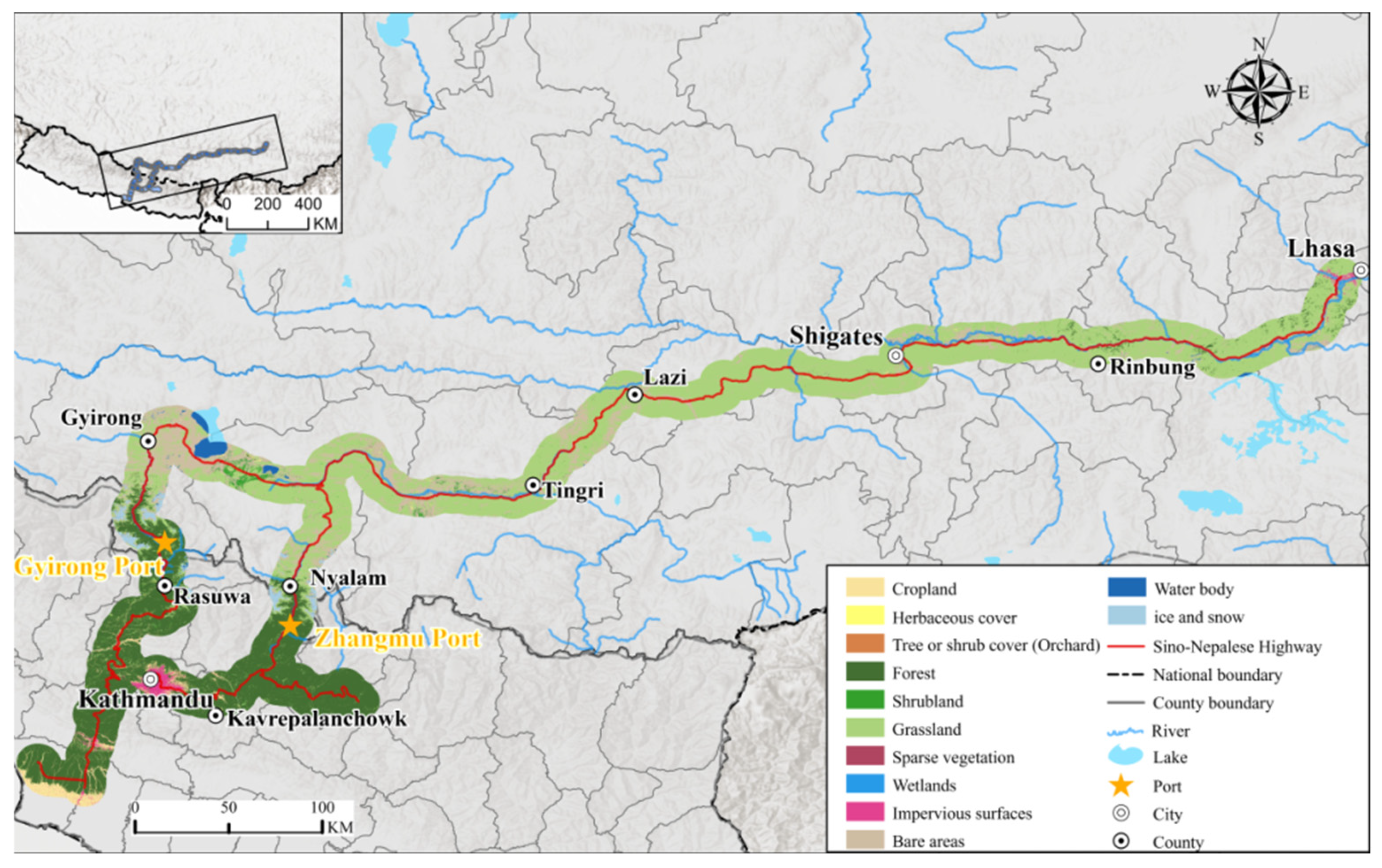
The Nepal–China Himalayan Corridor (NCHC), officially referred to as the “Trans-Himalayan Multi-Dimensional Connectivity Network”, represents a strategic connectivity initiative within the BRI in South Asia [
19]. It traverses the high mountain terrain of the Himalayas and links China’s Tibet Autonomous Region with Nepal and broader South Asian markets. The corridor crosses one of the world’s most ecologically fragile landscapes and seismically active regions [
20,
21], while also serving as an important channel for cross-border trade, logistics, economic cooperation, and ecological exchange [
14,
22]. By October 2024, Tibet’s import-export trade with Nepal reached CNY 3.14 billion, marking a 46.4% year-on-year increase and accounting for 28% of total Nepal–China trade during the same period [
23]. The NCHC faces the dual challenge of promoting infrastructure development and regional economic integration while protecting fragile ecosystems, reducing disaster risks, supporting local livelihoods, and safeguarding the interests of Himalayan communities [
24]. However, few studies have systematically examined how the NCHC can align corridor development with SDG implementation in an ecologically sensitive region.
Addressing this question requires attention not only to objective development conditions but also to the diverse perceptions, expectations, and imaginaries of stakeholders involved in corridor development. Perceptions primarily reflect stakeholders’ cognitive understandings and evaluations of existing development conditions, whereas socio-technical imaginaries emphasize the forward-looking and normative construction of the future. They shape understandings of what kinds of social orders and development directions are considered reasonable, desirable, and feasible through collectively held visions of the future [
25]. In socio-technical transition research, such future-oriented visions can influence how actors perceive and select technologies, infrastructure, institutional arrangements, and development pathways, thereby providing cognitive and normative foundations for different directions of transition [
25,
26]. Q-methodology is a hybrid qualitative–quantitative approach for systematically investigating subjectivity and identifying shared viewpoints among individuals or groups [
27,
28,
29]. It is particularly suitable for small-sample studies that examine complex environmental and development issues from multiple stakeholder perspectives. Q-methodology has been widely used in rurality, environmental conservation, energy exploitation, and policy proposition [
30,
31,
32,
33,
34,
35,
36]. For instance, the Q-methodology is utilized to investigate varying stakeholder viewpoints regarding SDG implementation [
37]. When combined with the lens of imaginaries, Q-methodology can further reveal how stakeholders envision desirable, possible, and contested futures [
27,
38], which is especially relevant for the NCHC, where future development remains under planning and negotiation.
Focusing on the NCHC, this study aims to identify SDG-oriented development pathways for a fragile transboundary mountain region. We employ Q-methodology—a mixed-method approach designed to systematically capture subjective viewpoints—combined with the lens of imaginaries to explore how different stakeholders prioritize and relate various SDGs in the context of corridor development. Specifically, we address two research questions: (1) What are the dominant SDG-oriented imaginaries held by stakeholders regarding the future development of the NCHC? (2) How do these imaginaries reveal the synergies and trade-offs among SDGs in corridor development? By answering these questions, this study contributes an empirical case from the Himalayan region to the growing body of SDG-oriented corridor research and offers a transferable methodological framework applicable to other transboundary corridor contexts.
3. Results
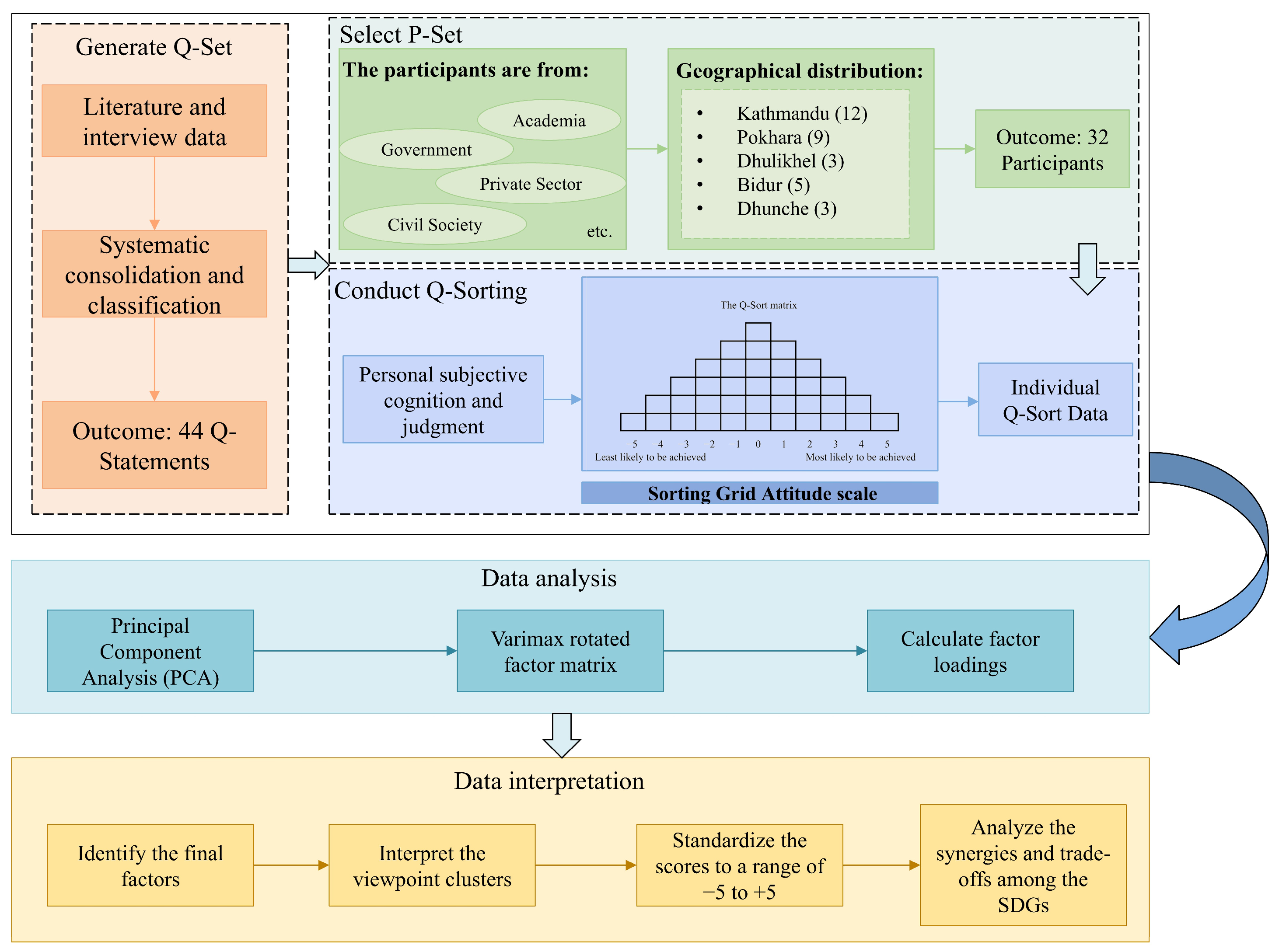
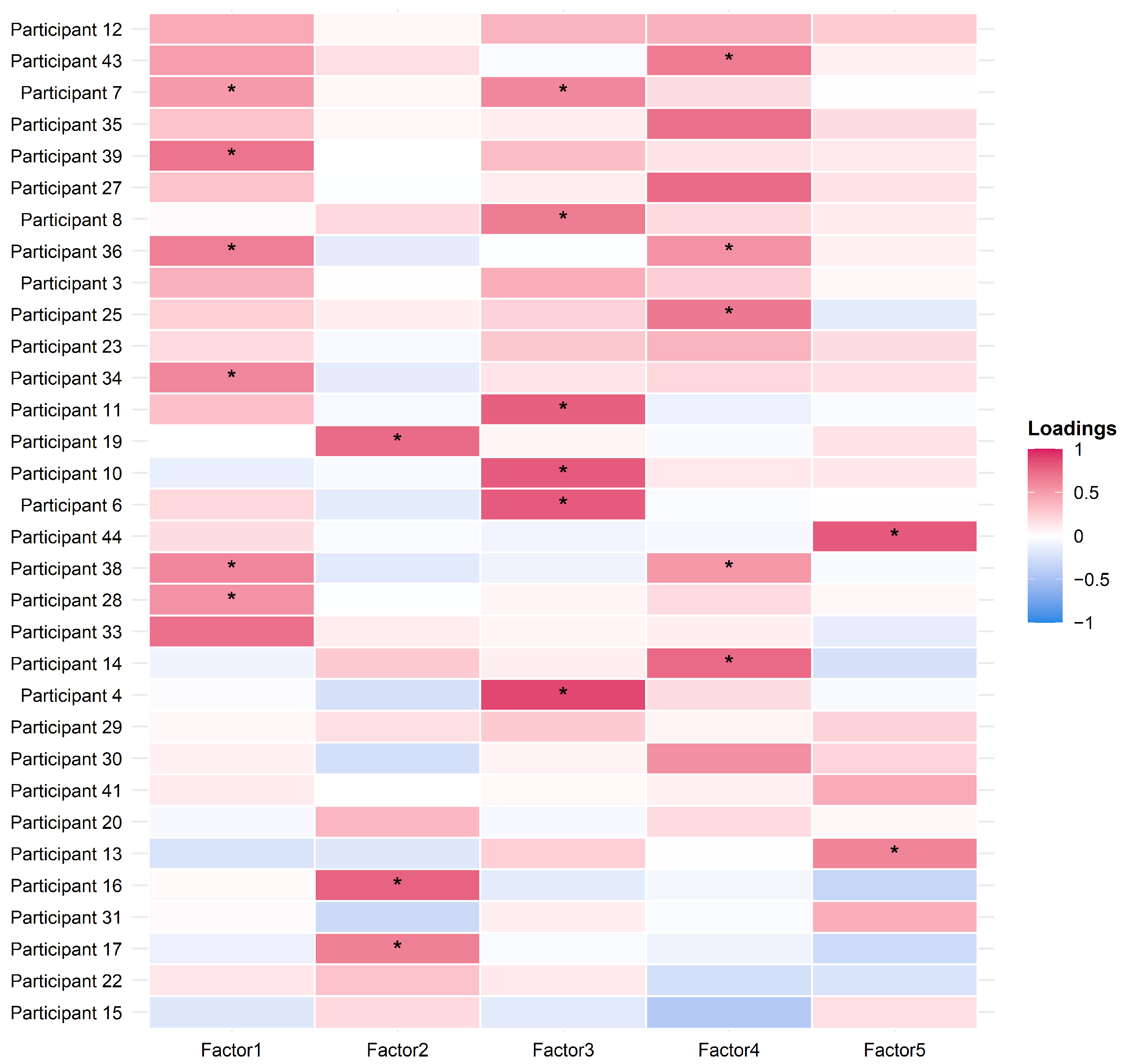
This section presents the comprehensive results regarding the SDG-oriented imaginaries identified through Q-methodology analysis. Five distinct factors emerged from the PCA, collectively explaining 68% of the total variance. Each factor represents a coherent stakeholder imaginary of how the NCHC should develop to advance the SDGs. Below, we present each factor in turn, detailing the defining statements, key SDG interactions (“most likely to be achieved” versus “least likely to be achieved”), and the underlying stakeholder logic.
3.1. Factor 1: Enhance Sustainable Green Infrastructure Development Along the Nepal–China Himalayan Corridor
Six respondents exhibited significant alignment with this factor, representing 18.8% of the total sample (
Figure 3). This factor was predominantly loaded by local authority representatives (
n = 3), entrepreneurs (
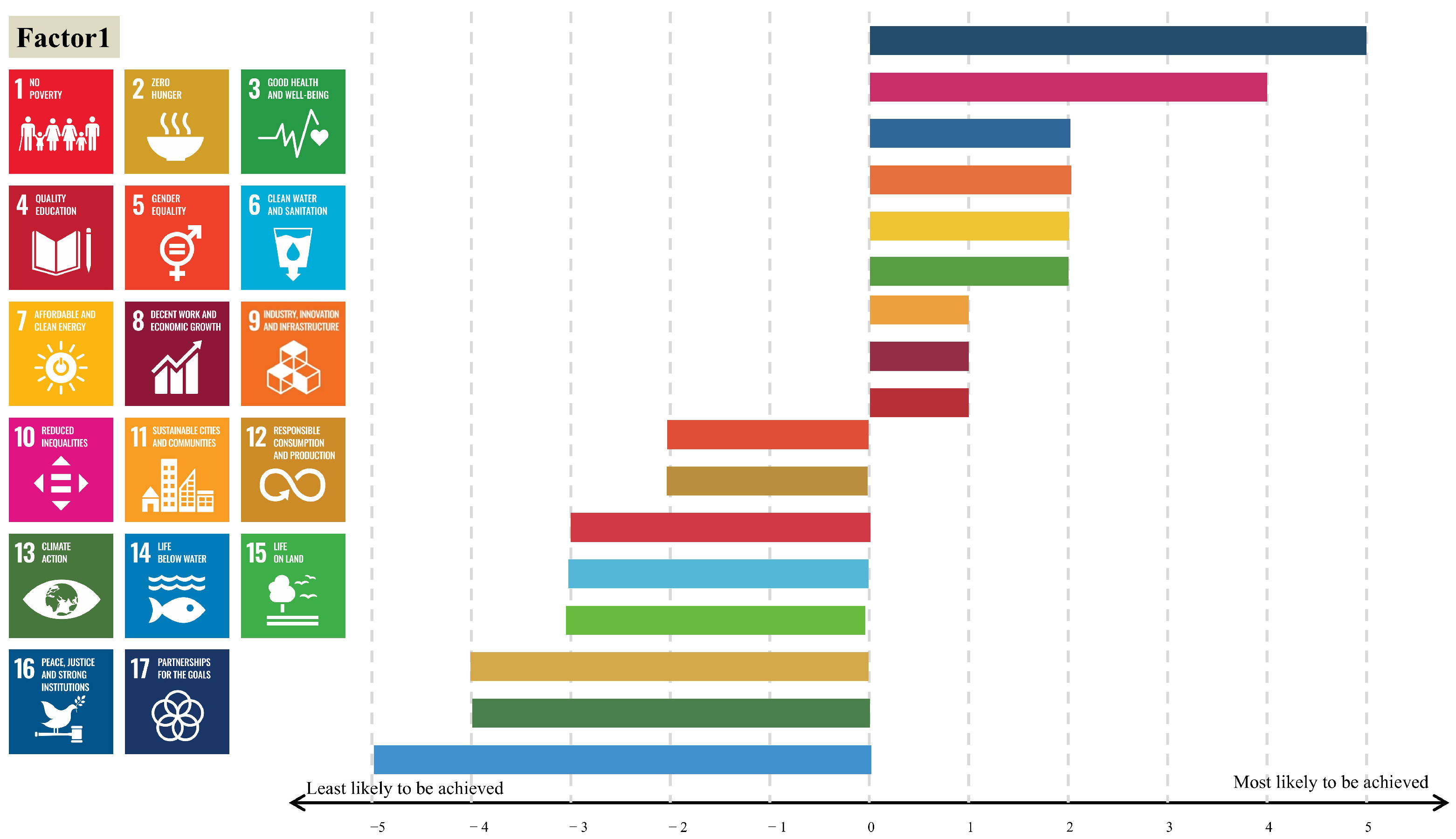
n = 2), and one civil society member. Factor 1 reflects an imaginary centered on leveraging infrastructure investment to catalyze broad-based sustainable development. The defining characteristic of this viewpoint is a strong emphasis on the trans-Himalayan multi-dimensional connectivity network as the primary engine for achieving multiple SDGs simultaneously (
Figure 4).
Factor 1 emphasizes the significance of the trans-Himalayan multi-dimensional connectivity network (S5: +5), which encompasses transport, energy, and digital infrastructure. Respondents in this group view connectivity as a catalyst that generates cascading benefits across multiple SDGs, including poverty reduction (SDG 1), decent work and economic growth (SDG 8), and industry, innovation, and infrastructure (SDG 9). The strong synergy between S5 and S6 (“Promoting cross-border trade through improved infrastructure”) reflects a developmental logic in which infrastructure investment drives trade, which in turn stimulates economic growth and job creation. This imagery aligns with the BRI’s core rationale that connectivity reduces transaction costs, integrates markets, and unlocks economic potential in peripheral regions [
10,
12].
This group further advocates for the increased involvement of Nepalese experts in the technology transfer process (S16: +4), reflecting a concern for building local technical capacity rather than relying solely on external expertise. This emphasis on capacity building resonates with SDG 17 (partnerships for the goals) and SDG 4 (quality education). The respondents envision a corridor in which infrastructure development is accompanied by knowledge transfer and skills development, ensuring that local communities and institutions can sustain and expand upon the benefits of connectivity over the long term.
Although the NCHC holds immense promise, respondents associated with Factor 1 also identified significant challenges. They rated S20 (“Ensuring environmental impact assessments are conducted for all corridor projects”) at −3, suggesting skepticism about the current rigor and enforcement of environmental safeguards. This reveals a tension between the infrastructure-driven imaginary and ecological sustainability (SDGs 13, 14, 15). The group also expressed concern about the limited participation of local communities in decision-making processes (S25: −2), indicating that inclusive governance remains a weak point in the current corridor development model. These findings underscore the need for institutional mechanisms that embed environmental and social safeguards into infrastructure planning from the outset.
3.2. Factor 2: Develop Himalayan Adaptive Capacity for Climate Action
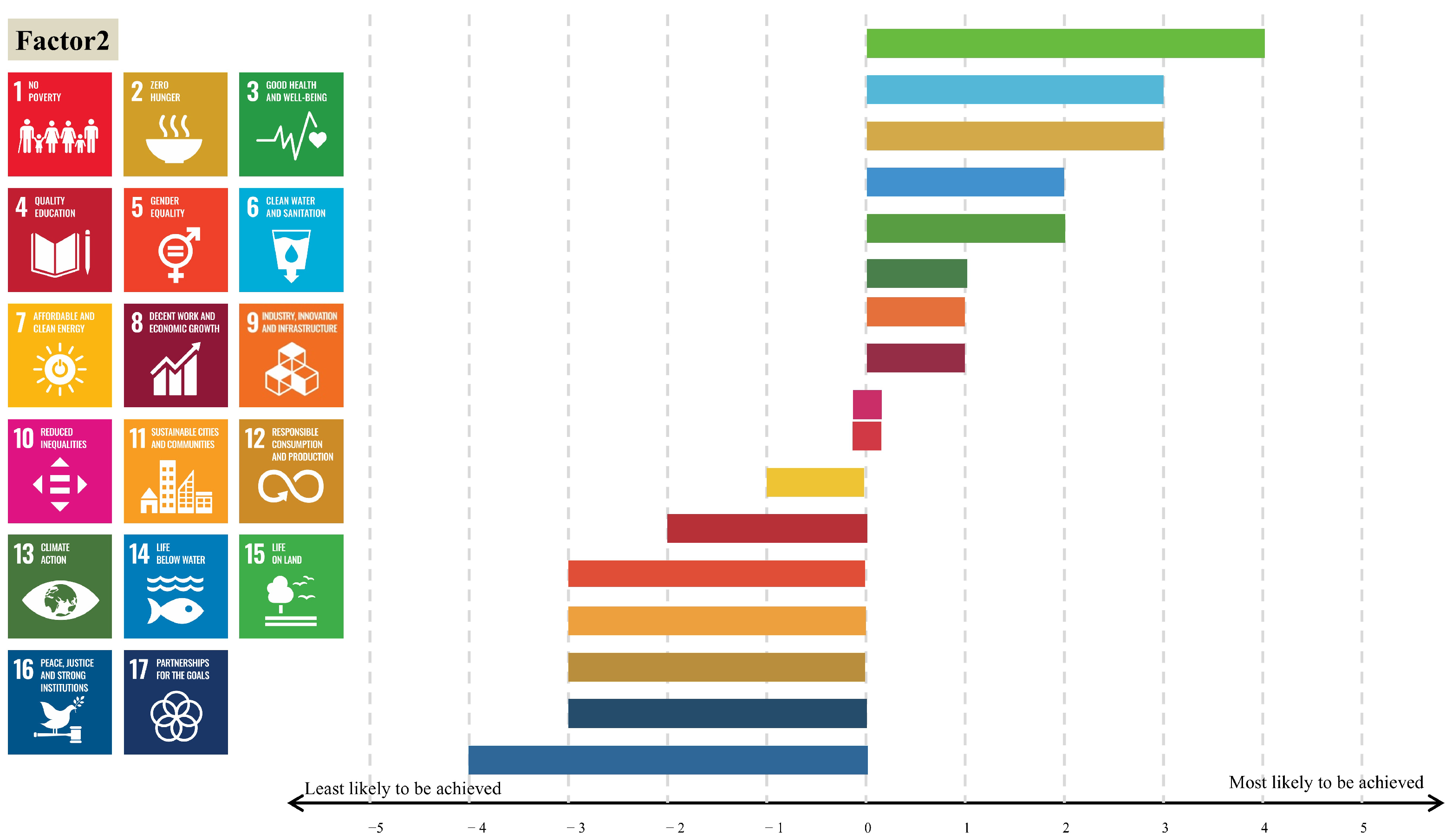
Respondents supporting Factor 2 are primarily motivated by the pressing need to protect the delicately balanced Himalayan ecosystem from the dual threats of climate change and unsustainable development (
Figure 5). Two respondents loaded significantly on this factor, accounting for 7% of the variance (
Figure 3). Both were civil society representatives with backgrounds in environmental advocacy. This imaginary prioritizes ecological resilience as the foundation upon which all other development objectives depend.
While adaptation measures for Himalayan eco-protection and conservation were central to this group, they gave less priority to large-scale infrastructure expansion. The respondents strongly endorsed S12 (“Strengthening climate adaptation capacity in Himalayan communities”: +5) and S13 (“Establishing cross-border ecological monitoring systems”: +4), reflecting a conviction that climate resilience and environmental governance must precede economic development in a region as ecologically vulnerable as the Himalayas. This viewpoint aligns with the growing body of literature emphasizing that climate adaptation in mountain regions requires context-specific, ecosystem-based approaches rather than generic infrastructure solutions [
1,
24]. The trade-off with infrastructure-centric imaginaries (Factor 1 and Factor 4) highlights a fundamental tension in corridor governance: how to balance the urgency of economic development with the imperative of ecological stewardship.
3.3. Factor 3: Leverage Inclusive Economic Growth Through Bilateral Multiple Collaborations
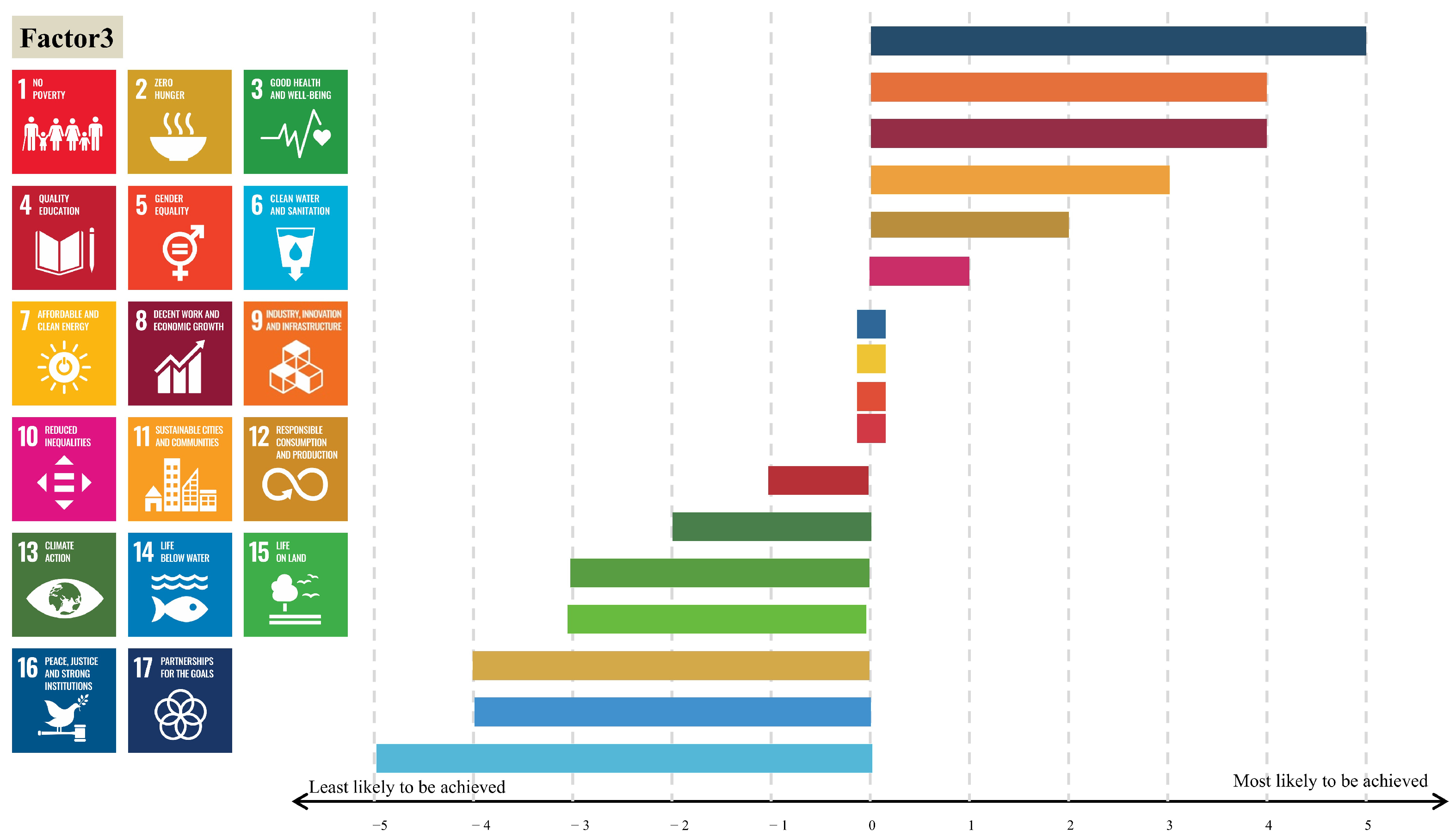
Factor 3 highlights the economic prospects enabled by the connectivity infrastructure network along the corridor (
Figure 6). Six respondents (6% of variance) loaded on this factor. This factor drew support from Chamber of Commerce representatives (
n = 2), ward representatives (
n = 3), and parliament members (
n = 1). This imagery emphasizes inclusive economic growth through deepened bilateral cooperation between China and Nepal, with a particular focus on ensuring that corridor benefits reach marginalized communities.
When focusing on the development of the China-Nepal corridor, there are several aspects that require further consideration. For instance, increasing the involvement of Nepalese experts in the technology transfer process (−4) and enhancing the efficiency of technology transfer and intellectual support between the two countries (−4) are not fully analyzed in the paper. Similarly, learning from China’s rapid poverty reduction strategies (−4) is being set aside at present. Building a transboundary early warning system for Himalayan disasters (−5), establishing greenhouse gas observation infrastructure and networks (−5), and exploring the arable land that remains underutilized due to increasing migration (−5) are also not at the forefront of analysis in this paper. Additionally, while the potential impacts of projects on local water are important, they are not the main aspects we are emphasizing for the time being.
3.4. Factor 4: Promote Trans-Himalayan Multi-Dimensional Connectivity Network Through Grounding Viable Projects
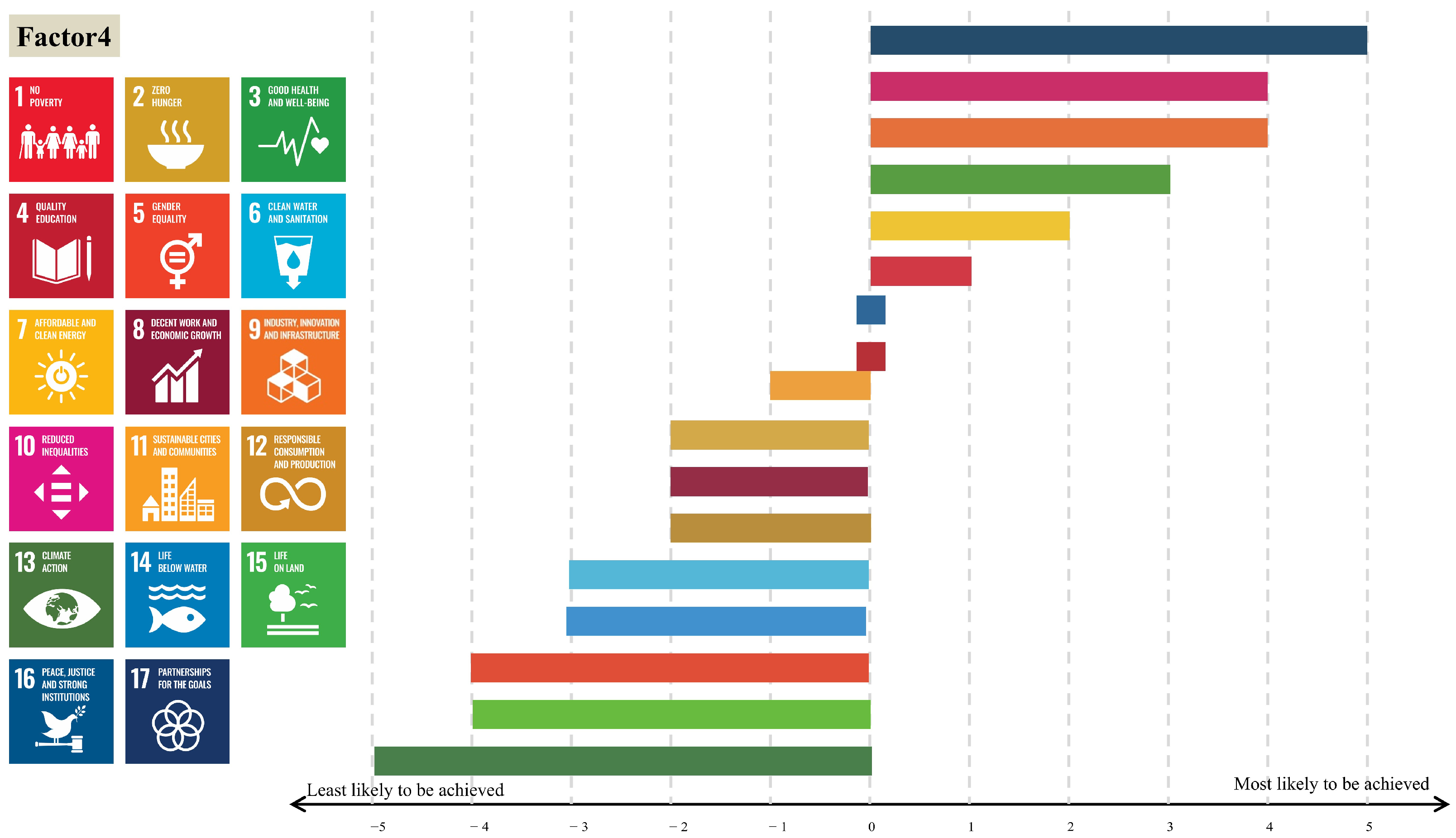
Similar to Factor 1, the foundation of Factor 4 rests on an infrastructure-centric development approach (
Figure 7). Five respondents (5% of variance) loaded on this factor. Supporters were primarily local entrepreneurs (
n = 3), ward representatives (
n = 1), and journalists (
n = 1). However, Factor 4 differs from Factor 1 in its pragmatic focus on implementation—emphasizing the translation of connectivity ambitions into concrete, viable projects rather than broad visionary goals.
Respondents who loaded significantly onto Factor 4 voiced frustration regarding the slow pace of infrastructure implementation along the corridor. They strongly endorsed S3 (“Accelerate the economic and social integration of China and Nepal”: +5) and S5 (“promote trans-Himalayan multi-dimensional connectivity network”: +5), viewing tangible infrastructure projects as the most credible pathway to realizing the corridor’s potential. This group prioritized deliverables over discourse, expressing a results-oriented imaginary that measures progress by kilometers of road built and megawatts of electricity transmitted. The pragmatic orientation of Factor 4 reflects the lived experience of stakeholders who have witnessed decades of connectivity discussions with limited on-the-ground progress, particularly regarding the long-delayed Kathmandu–Kerung Railway.
3.5. Factor 5: Enhance Local Capacity Through Transnational Policy Transfer
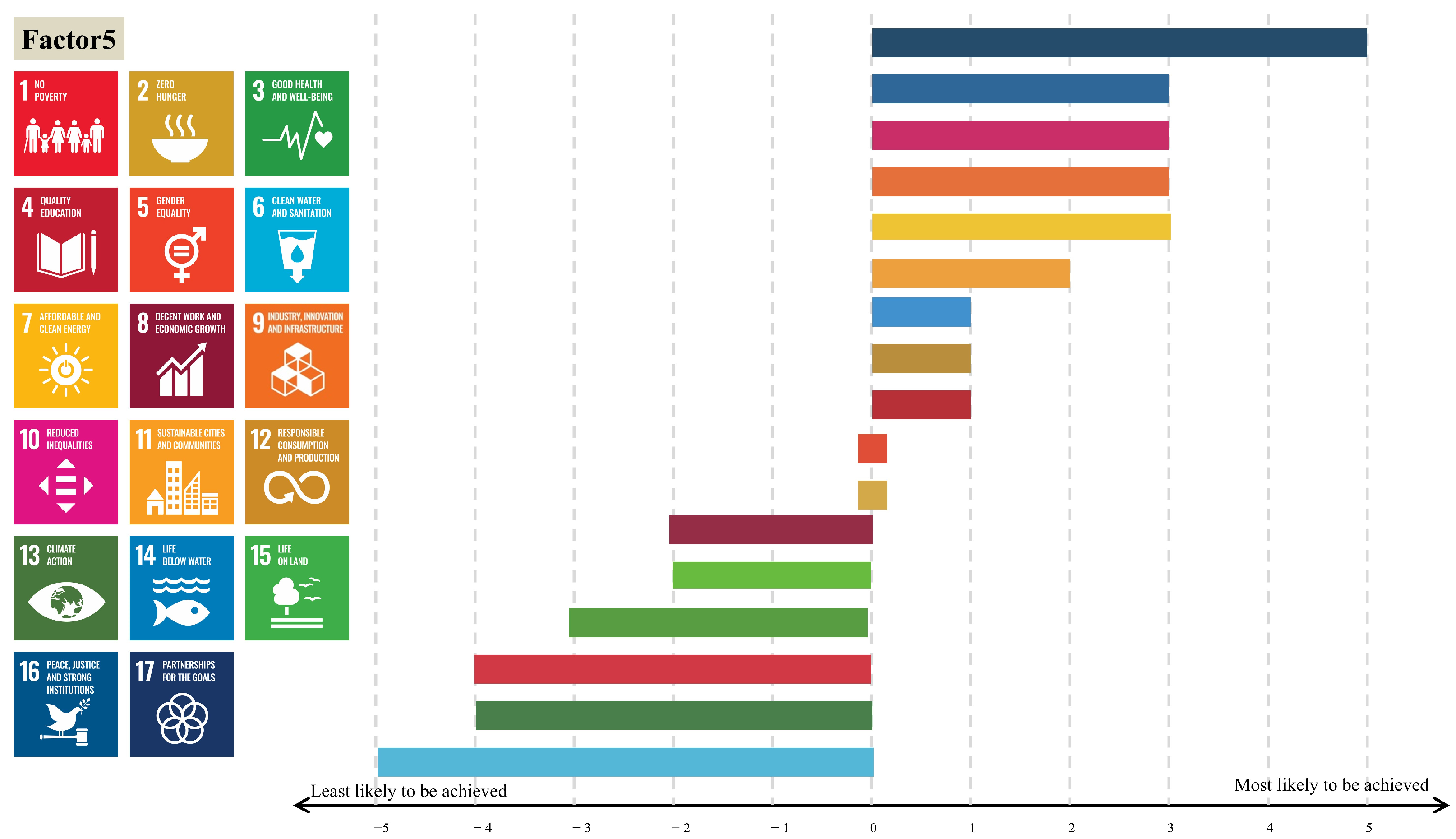
The lowest percentage of respondents (2 out of 32) loaded significantly on this factor compared to other factors (
Figure 8), accounting for 5% of the variance. The two came from the congress and the provincial planning commission, respectively. Despite its smaller representation, Factor 5 offers a distinctive imaginary centered on institutional capacity building and policy learning as drivers of sustainable corridor development.
Despite the importance of empowerment and inclusiveness in Factor 5, certain aspects received less emphasis in this imaginary. The respondents prioritized S16 (“Enhance the participation of Nepalese experts in the technology transfer process”: +5) and S20 (“Enhance the efficiency of technology transfer and intellectual support between China and Nepal”: +5), reflecting a governance-centered vision in which institutional innovation and capacity transfer—rather than physical infrastructure—serve as the primary levers for sustainable development. This imaginary foregrounds SDG 16 (peace, justice, and strong institutions) and SDG 17 (partnerships for the goals), emphasizing that durable sustainability outcomes require robust institutions, transparent governance, and genuine bilateral partnership. The relatively small number of respondents loading on this factor may indicate that governance and institutional dimensions remain underappreciated in prevailing corridor discourses, which tend to privilege visible infrastructure achievements over less tangible institutional reforms.
4. Discussion
The development of ecological corridors intersects with a wide range of objectives. Through our in-depth analysis, we identify five distinct SDG-oriented imaginaries that shape how stakeholders envision the future of the NCHC. These imaginaries—ranging from infrastructure-led growth to climate-centered resilience to governance-focused reform—reveal both convergent aspirations and divergent priorities among stakeholder groups. In this section, we discuss three cross-cutting themes that emerge from the findings: the patterns of SDG synergies and trade-offs, the role of stakeholder engagement in enhancing SDG outcomes, and the methodological contribution of Q-methodology to SDG-oriented corridor research.
4.1. Synergies and Trade-Offs Among SDGs Along the Nepal–China Corridor
Our research reveals that achieving the SDGs along the NCHC involves a multitude of trade-offs and synergies that demand careful, context-sensitive management. The five factors identified through Q-methodology illuminate how different stakeholder groups perceive these interactions, revealing both areas of broad consensus and points of contention that require negotiated resolution.
However, the SDGs are not immune to trade-offs, especially when accounting for the diverse interests and priorities of different stakeholder groups. The analysis reveals a central tension between infrastructure-driven development (Factor 1 and Factor 4) and ecologically oriented approaches (Factor 2). While infrastructure proponents emphasize the synergistic potential of connectivity to advance multiple SDGs simultaneously, ecologically minded stakeholders highlight the risks of environmental degradation, habitat fragmentation, and increased disaster vulnerability. This tension mirrors broader debates in the sustainable development literature regarding the compatibility of infrastructure-led growth with environmental sustainability [
7]. The findings suggest that mitigating these trade-offs requires institutional mechanisms that embed environmental safeguards into infrastructure planning from the outset, rather than treating ecological concerns as afterthoughts.
Furthermore, these trade-offs do not necessarily imply that the different priorities are mutually exclusive. Potential synergies can be achieved by integrating environmental and climate considerations into connectivity projects through green infrastructure, climate-resilient engineering, environmental impact assessment, and cross-border ecological monitoring. At the same time, infrastructure investment can be linked with local employment, technology transfer, and community participation to combine the priorities of Factors 1, 3, and 5. Such integrated approaches can transform potential trade-offs into complementary pathways for achieving shared SDG objectives.
4.2. Enhancing SDGs Through Increased Stakeholder Engagements
Our research reveals both opportunities and risks in relation to realizing the SDGs along the corridor. The participants in this study did not consider any SDG to be fundamentally incompatible with others (as also noted by Gannon) [
48]. Instead, respondents emphasized that many of the shortcomings and trade-offs arising during SDG implementation within corridors could be addressed through proper planning, meaningful engagement, and transparency. However, the SDGs can never entirely escape trade-offs without improvements in governance, strengthened institutions, balanced representation of diverse interests and priorities, and the safeguarding of rights within the landscapes where these corridors are situated. This reinforces the importance of local participatory mechanisms, as effective habitat governance often depends on collective action, stakeholder coordination, and context-sensitive decision-making [
49].
In the context of cross-border cooperation between China and Nepal, corridors are shaped by extensive institutional and political landscapes as well as insights from climatology, geology, political economy, landscape ecology, and multiple interdisciplinary perspectives [
24]. At the practical level, effective solutions require numerous governance-related policies along these corridors—such as migration policies, border checkpoint control, and authorized import and export items—which must be addressed at the national level. Land tenure is essential to safeguard the interests of indigenous communities, protecting their access to essential resources while enabling them to benefit from the economic opportunities along the corridor. For instance, respondents noted that despite Nepal having a relatively comprehensive climate policy framework at the national level, there is little evidence that climate risks have been incorporated into the design of its development corridors at the local level. Thus, Statement 19, which focuses on “bridging the infrastructure development gap between Nepal and China,” plays a crucial role in enhancing local connectivity, improving access to basic services, and supporting the local economy within the NCHC. Based on the Q-methodology grid, it was rated, on average, as the statement “most likely to be achieved” within the context of the NCHC.
Without a coordinated and cross-sectoral approach that takes into account transnational cumulative, multi-sector impacts and integrates development actions, it will be extremely challenging to address existing issues and formulate proper plans. Corridors serve as central hubs where the activities of multiple sectors converge, and they also create novel spaces for different actors to interact. This makes them highly suitable for integrated development planning and coordinating various actors [
48,
50]. Through such coordination, it becomes possible to fully utilize the synergies, negotiate the priorities among different SDG objectives, and minimize the trade-offs. Nevertheless, the coherence of relevant policies has clearly not yet been optimized, especially regarding the role of corridors in promoting the SDGs.
To break through the existing fragmented and siloed governance landscapes of transnational corridors, it is urgently recommended that holistic planning and management of the trade-offs and synergies among SDGs be undertaken by a top-down, high-level governance regime and prioritized policies along the corridors [
51]. A coordinating mechanism at regional, national and local levels for implementing and coordinating efforts related to the SDGs would make corridors more aligned to SDGs. Inter-ministerial and multi-stakeholder corridor forums at the national level would ensure SDG interactions within corridors and policy coherence through a consultative and participatory approach to corridor strategy. Such a strategy would plan for and deal with the trade-offs and synergies in corridors and serve as a reference for sectoral ministries to update and review their respective policies and plans, thereby promoting coherence. In this vein, an overarching corridor strategy could enable the public sector to communicate its direction more clearly to other stakeholders in the corridor, such as the private sector, vendors, and investment communities. This is particularly significant in corridors where numerous actors compete for influence and investment. Considering the remarkable envisioned value of the imaginaries identified through the factors in our study, continuous and reflective engagement with the SDG futures envisioned by these factors delivers significant potential to support the design of relevant policies. This can be achieved through negotiations about the desired futures and the identification of priority areas for policy readjustment. It is worth noting that the clusters of positive linkages between SDGs identified in this analysis, which span across the mandates of different sectors and communities, also possess the potential to inspire new forms of cross-sector collaboration. In conclusion, the factors identified in the study present a viable pathway to reshape the desired place-making modes that influence the development outcomes within corridors as proposed by Müller-Mahn et al. (2021) [
52].
4.3. Policy Implications
The five factors identified in this study suggest that policy interventions for the NCHC should be differentiated according to the distinct development priorities of stakeholders. For Factor 1, policy should promote green infrastructure by integrating environmental safeguards into infrastructure planning and project implementation. For Factor 2, greater emphasis should be placed on climate adaptation, ecological monitoring, and community-based resilience. For Factor 3, cross-border cooperation should focus on inclusive economic development and equitable distribution of corridor-related benefits. For Factor 4, policymakers should prioritize technically feasible and measurable connectivity projects, including pilot projects that can be evaluated before wider implementation. For Factor 5, technology transfer, policy learning, and local institutional capacity building should be strengthened to enhance local participation in corridor governance.
These differentiated policy priorities should not be treated as mutually exclusive. Instead, they can be integrated through cross-sector and cross-border coordination mechanisms. In practice, infrastructure planning can incorporate ecological safeguards and climate-risk assessments, while connectivity projects can be linked with inclusive benefit-sharing and local capacity-building initiatives. Such an integrated approach would help translate the different stakeholder priorities identified through the Q analysis into complementary policy actions for SDG-oriented corridor development.
From an evolutionary economic geography perspective, these future pathways should also be grounded in existing regional capabilities and knowledge bases. The principle of relatedness suggests that the development of new economic activities is closely associated with a region’s pre-existing economic profile and local knowledge base [
53]. For the NCHC, this implies that the different development imaginaries identified in this study need to be adapted to local economic, institutional, and knowledge conditions rather than being implemented as uniform development models. This perspective also provides a basis for future research to examine how stakeholder imaginaries are translated into place-specific development pathways across different spatial scales.
4.4. Desire SDGs Future Through Q-Methodology
This study demonstrates the capacity of Q-methodology to reveal the diverse imaginaries that different stakeholders hold regarding the future of SDG implementation in the NCHC. The findings confirm the efficacy of the Q method in identifying synergistic and trade-off relationships among the SDGs, offering a robust and inclusive tool for decision-making in cross-border sustainable development governance. Unconstrained by the requirement for complete datasets, our method can be effectively replicated in data-sparse regions such as the Himalayas, where foundational datasets are often insufficient. This approach also converts multi-stakeholder subjective cognition into a visual consensus map using factor analysis, and it exhibits rapid responsiveness in discerning immediate SDG associations based on stakeholders’ subjective judgments. In transnational governance contexts, Q-methodology can guide stakeholders in aligning their work with SDG activities, facilitating the integration of diverse sustainable development goals into a unified analytical framework, and thereby avoiding decision-making biases associated with singular dimensions. This approach not only elucidates existing goal trade-offs but also charts sustainable trajectories for future endeavors through its dynamic application. The adaptability of Q-methodology could facilitate its extension to other developmental agendas, offering an ongoing effective tool for analyzing subjective attitudes in regional sustainable development.
Our findings resonate with recent Q-methodology studies on development corridors and SDG implementation. Gannon et al. (2022) identified three distinct SDG imaginaries across five East African development corridors, similarly revealing that SDG interactions are predominantly synergistic but subject to multi-dimensional trade-offs, particularly involving biodiversity conservation (SDG 14/15) and inequality reduction (SDG 10) [
48]. Our Factor 2 (climate resilience priority) mirrors their finding that ecological and sustainability goals are most at risk in current corridor trajectories. However, our study further differentiates between infrastructure-led approaches (Factors 1 and 4) and governance-centered pathways (Factor 5)—a distinction less pronounced in the East African cases, likely due to the unique transboundary and ecologically fragile context of the Himalayan region. Other Q-method studies in environmental governance, such as Wang & Li (2025) on community co-management in China‘s Xishuangbanna National Nature Reserve and Henry & Fernando (2026) on road widening projects in the Philippines, also report tensions between development and conservation, yet they tend to identify fewer factors (typically three to four), suggesting that the NCHC context generates more fragmented stakeholder perspectives [
54,
55]. This comparison underscores the need for context-sensitive governance frameworks that account for both local institutional landscapes and transboundary dynamics.
5. Conclusions
This study proposes a corridor-centric model, operationalized through Q-methodology, that targets the sustainable implementation of the SDGs within the ecologically sensitive NCHC. We highlight the strategic position of regional ecological corridors in advancing regional connectivity, shared economic prosperity, and ecological conservation. Focusing on the NCHC, we explore the relationship between ecological corridors and the SDGs, with particular emphasis on how the corridor can drive ecological sustainability and contribute to long-term SDG achievement in the region. By employing Q-methodology, the research systematically links its objectives to the UN SDGs, integrates case studies tailored to specific sub-goals, and develops an SDG-aligned paradigm for regional ecological governance. We argue that embedding the SDGs into the forward-looking vision of corridor development is imperative, as this ensures that the corridor’s evolution aligns with the foundational requirements of long-term sustainability. Furthermore, incorporating the unique ecological realities of the Himalayan region into the NCHC’s framework will not only establish a model for sustainable corridor development but also serve as a pragmatic test of SDG implementation in this ecologically sensitive area. The proposed paradigm provides actionable guidance for realizing SDGs in ecological corridor initiatives.
Through Q-methodology and the imaginary framework, we analyzed stakeholder perspectives and evaluations of SDG implementation in the NCHC. We identified five distinct future development factors and revealed the complex interactions among SDGs in the region. The results demonstrate that SDGs within the corridor predominantly exhibit synergy, serving as the foundation for each other’s advancement. Factor 1 and Factor 4 underscore the substantial driving impact of cross-border infrastructure development on corridor economic growth and regional integration, ultimately facilitating progress toward SDGs such as poverty eradication and inequality reduction. The results further illuminate the trade-offs associated with the SDGs, emphasizing that environmental protection must not be neglected during the development process. Against the backdrop of climate change, Factor 2 points to the necessity of instituting mechanisms tailored to the specific needs of the region, aiming to mitigate environmental issues stemming from human activities and natural disasters. Moreover, the results underscore the imperative for enhanced stakeholder participation and the cultivation of robust partnerships. Factor 3 and Factor 5 indicate that increasing the involvement of residents and Nepalese experts in technology transfer will foster and strengthen bilateral cooperation between China and Nepal. The research methodology employed in this study exhibits robust flexibility and extensibility; in future research, the methodological framework could be extended to other BRI corridors for comparative analyses.