Article

Invasion of Alternanthera philoxeroides in Heterogeneous Habitats: Implications for Its Ecological Control in Central China

1
School of Biological Sciences, University of Auckland, Auckland 1142, New Zealand
2
Faculty of Resources and Environmental Science, Hubei University, Wuhan 430062, China
*
Author to whom correspondence should be addressed.
Land 2026, 15(8), 1411; https://doi.org/10.3390/land15081411
Submission received: 10 June 2026 / Revised: 25 July 2026 / Accepted: 5 August 2026 / Published: 6 August 2026

Abstract

Alternanthera philoxeroides (A. philoxeroides) is one of the worst invasive alien species in the world and poses serious threats to both ecological security and agricultural production in China. However, the effects of environmental factors on its growth across different habitat types remain insufficiently understood. To reveal the determining natural factors influencing the growth of A. philoxeroides, fieldwork, including 50 sample quadrats in six field sites, was conducted in the Yangtze River Basin of Hubei Province. In every quadrat, soil properties, soil moisture, pH, soil temperature, soil nutrients (N, P, and K), light intensity, plant cover, and aboveground plant fresh biomass were measured. Cluster analysis showed that A. philoxeroides habitats can be divided into five cluster groups: wetland, grassland, forest understory, farmland and aquatic communities. The results showed that both total community biomass and A. philoxeroides biomass were positively correlated with water content, whereas no significant relationships were found between biomass and soil nutrients, including N, P, and K. The biomass of A. philoxeroides was significantly higher in aquatic habitats, while no significant differences were observed among the other four terrestrial habitats. These findings suggest that hydrological management, together with early control in aquatic habitats, may be an effective strategy to limit the spread of A. philoxeroides.

1. Introduction

Alternanthera philoxeroides (A. philoxeroides), as an invasive plant, can occupy a range of habitats, including freshwater habitats, managed terrestrial habitats including agricultural areas, disturbed areas, and urban habitats that can sustain the population of the species. Globally, although it is classified as a tropical plant, it can tolerate a variety of environmental conditions in warm and cold climates. However, compared with tropical or cold climates, A. philoxeroides in the subtropics is more aggressive, with optimum growth temperatures ranging from 15 °C to 30 °C [1], forming thick monospecific stands and causing serious ecological impacts [2]. In China, it began to spread wildly in Central and Southern China as an invasive plant after being introduced as horse forage in late 1958. After 2000, it even spread to northern China and the Hainan Islands. In 2017, it was recorded in 28 provinces, occurring over approximately 2.13 million km2, accounting for 0.22% of China’s territory, between 91.8–122.7° E and 18.2–39.39° N [3].
The successful invasion of alien invasive plants in their introduced ranges is a primary question and hot topic in invasion biology. Previous studies have shown that A. philoxeroides possesses strong ecological plasticity and can tolerate variations in environmental factors, including temperature, water availability, light intensity, and soil conditions. Its ability to survive across aquatic and terrestrial environments contributes to its wide ecological distribution [4,5]. Although previous studies have demonstrated that environmental factors such as temperature, water availability, light intensity, and soil nutrients influence the growth of A. philoxeroides, they have largely focused on individual environmental factors or controlled experimental conditions. Relatively few studies have evaluated the combined effects and relative importance of multiple environmental factors in naturally heterogeneous habitats [2,6,7]. This knowledge gap limits our understanding of the key environmental drivers of field invasion and constrains the development of effective habitat-based ecological management strategies. Therefore, identifying the dominant environmental drivers of A. philoxeroides biomass across heterogeneous natural habitats is essential for improving our understanding of its invasion mechanisms and for developing effective ecological management strategies.
Ecological studies have shown that A. philoxeroides has a solid tolerance to different climates, moisture levels, soil conditions, salinity levels, heavy metal concentrations, etc. This tolerance to multiple ecological factors makes A. philoxeroides have a vast range of suitable habitats. Particularly noticeable is the high adaptability of A. philoxeroides to different water gradients. In the aquatic environment, A. philoxeroides can survive underwater for dozens of days without affecting its vitality. In underwater-shortage conditions, A. philoxeroides can also withstand a long period of drought. Even if the soil moisture is lower than 2%, the plant water content is still higher than the lethal level and can maintain vitality for more than 48 h [8].
Due to its serious biological invasion hazards, A. philoxeroides was listed as one of the worst invasive species in China. Therefore, controlling the invasion of A. philoxeroides has become an important scientific and management priority. We hypothesized that different environmental factors, such as temperature, water conditions, soil moisture and soil nutrients, might play key roles in the growth of A. philoxeroides. When determining factors are identified, some easy and simple ecological control methods could be introduced to farmers.
To address this knowledge gap, this study investigated A. philoxeroides populations across heterogeneous habitats in Hubei Province. By simultaneously evaluating multiple environmental factors under natural field conditions, we aimed to identify the key environmental drivers determining A. philoxeroides biomass and provide scientific evidence for habitat-based ecological management. Specifically, we addressed the following questions: (1) What is the relationship between the biomass of A. philoxeroides and heterogeneous habitats? (2) Which environmental factor plays the dominant role in determining the growth of A. philoxeroides? (3) Based on community characteristics and habitat conditions, what ecological management strategies can be proposed to control its invasion?

2. Material and Methods

2.1. Study Area

Fieldwork was conducted in Hubei Province, Central China. Hubei Province is located in the northern subtropical zone and a typical monsoon region. Except for the high mountains, most areas of the province have a humid subtropical monsoon climate, with sufficient light energy, abundant heat, a long frost-free period, and abundant rainfall, with the rainy season and hot season in the same period. The annual average temperature of the whole province is 15–17 °C. Most areas are cold in winter and hot in summer, with a changeable temperature in spring, which drops rapidly in autumn. January is the coldest month of the year, with an average temperature of 2 °C to 4 °C in most areas; July is the hottest, with an average temperature of 27 °C to 29 °C and an extreme maximum temperature above 40 °C, except in the high mountain areas. The frost-free period of the province lasts for 230 to 300 days, and the average precipitation is between 800 and 1600 mm. From mid-June to mid-July, the rain is the heaviest and strongest.

2.2. Methods

2.2.1. Field Sites

A. philoxeroides in Hubei Province mainly grows densely in the eastern plains, particularly along the shorelines of lakes, ponds, streams, ditches, and wetlands. Therefore, field surveys were conducted in eastern Hubei Province within the middle reaches of the Yangtze River Basin. Six representative field sites were selected based on the occurrence of A. philoxeroides and the diversity of invaded habitats (Figure 1). All six sampling sites were located in plain areas, representing the dominant landform of the study region.

2.2.2. Field Survey Method

Quadrat establishment: Field surveys were conducted from 6 June to 27 June 2021. During the survey period, a total of 50 quadrats (1 m × 1 m) were established across six field sites using a habitat-based purposive sampling strategy. Quadrats were established only in areas where A. philoxeroides occurred and were distributed among four land-use types: wasteland (27 quadrats), woodland (10 quadrats), farmland (7 quadrats), and water surface (6 quadrats). The geographic coordinates of each quadrat were recorded using a portable GPS receiver (JIEWEISEN WS-009). All environmental variables were measured once in each quadrat between 09:00 and 16:00 under field conditions, after which plant community characteristics were recorded.
Soil properties: Soil texture was classified into sandy soil, loam, and clay based on field observation and hand texture analysis.
Landform: The landform characteristics of each sampling site were recorded during the field survey. All sampling sites were located in low-elevation areas of eastern Hubei Province and were mainly characterized by plain terrain.
Soil moisture: In this study, we used a portable soil detector (EDKORS CP-WSYP) to test soil moisture.
pH: In this study, we used a portable multi-parameter soil detector (BEILUNYA JXBS-3001-SCY-PT) to test soil pH and a water-pH-measuring pen (AZ-8685) to test water PH.
Soil temperature: In this study, we used the portable soil detector EDKORS CP-WSYP, which measures both soil moisture and temperature, to test soil temperature during the daytime.
Soil nutrients: In this study, we used the portable multi-parameter soil detector BEILUNYA JXBS-3001-SCY-PT to test the three major soil nutrients N, P, and K.
Light intensity: In this study, we used a portable digitized lumeter (TASI TA8123) to test light intensity.
Plant cover: In this study, we used grid visual inspection to measure plant cover. This method is a modification of the direct visual inspection method. The sample plot is divided into a certain number of equal-area plots, and then those plots are visually measured one by one. After that, the average value is taken.
Aboveground plant fresh biomass: In this study, aboveground fresh biomass was determined by harvesting all vegetation within each 1 m × 1 m quadrat, separating plant materials by species, and weighing them immediately in the field.

2.2.3. Importance Value (IV)

The IV was used to quantify the dominance and ecological importance of each plant species within the community. It was calculated as the average of relative height (Rh), relative frequency (Rf), and relative cover (Rc):
I V = ( R h + R f + R c ) / 3
where R h , R f , and R c represent the relative height, relative frequency, and relative cover of each species, respectively.

2.2.4. Niche Breadth

The niche breadth of A. philoxeroides among different habitat types was evaluated using the Levins and Shannon niche breadth indices. The Levins niche breadth index was calculated as
B L = 1 P i j 2
and the Shannon niche breadth index was calculated as
B S = P i j l n P i j
where P i j represents the proportion of the importance value of species i in resource state j relative to its total importance value across all resource states, and j represents the number of resource states (quadrats).

2.2.5. Statistical Analysis

Statistical analyses were performed using R software (version 4.5.1). Hierarchical cluster analysis was conducted to classify the 50 quadrats into different community types based on environmental variables and plant community characteristics. The clustering results were interpreted according to the ecological characteristics of each group, including hydrological conditions, light availability, and anthropogenic disturbance. One-way analysis of variance (ANOVA) was used to test the differences in biomass and community characteristics of A. philoxeroides among different habitat types. When significant differences were detected, post hoc comparisons were conducted to identify differences among habitat groups. Linear regression analysis was performed to evaluate the relationships between soil environmental factors and both total community biomass and A. philoxeroides biomass. Statistical significance was determined at p < 0.05.

3. Results

3.1. Biomass

3.1.1. Quadrat Biomass

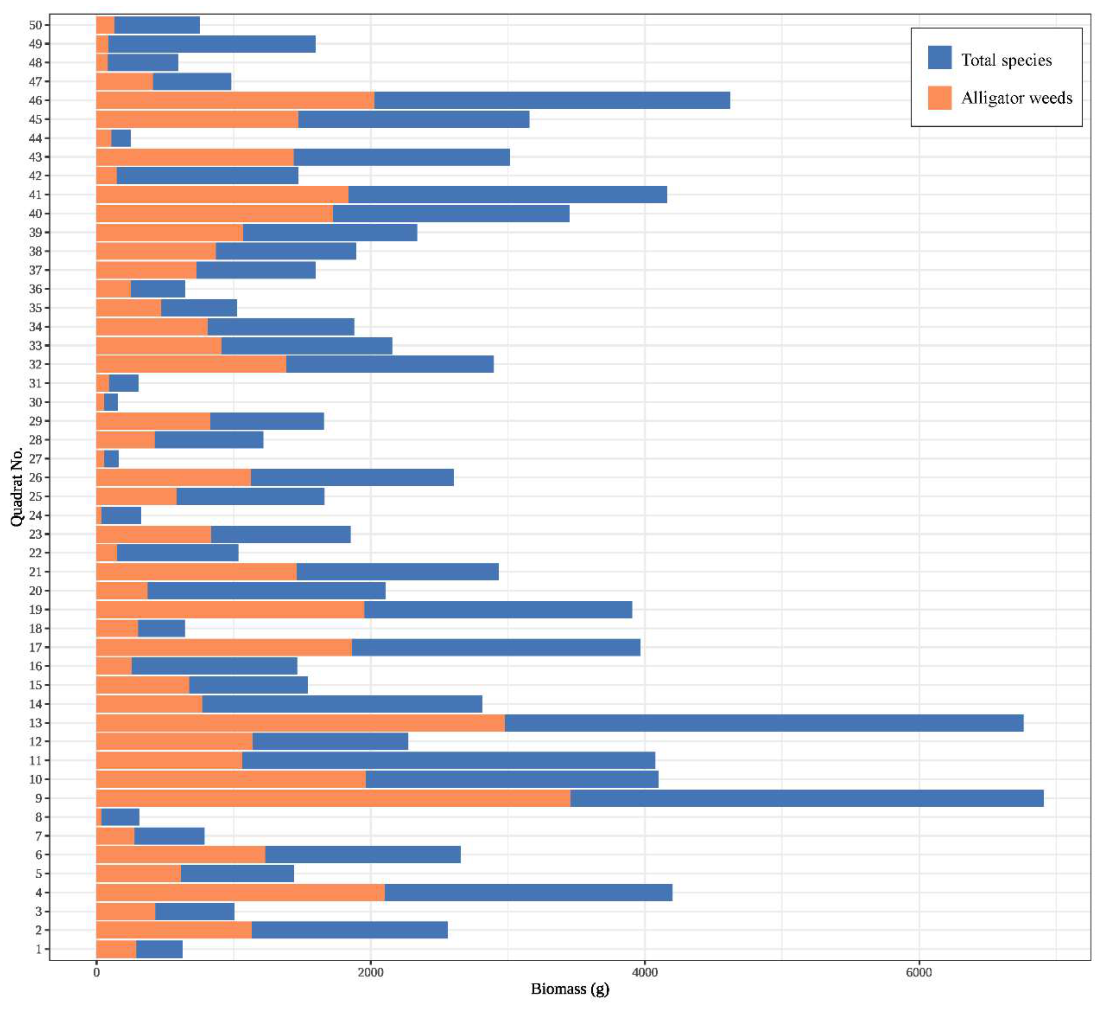
The result of the quadrat aboveground biomass of vascular plants is shown in Figure 2. In several quadrats, the biomass of A. philoxeroides was relatively small, but in most cases, the majority of the total biomass consisted of A. philoxeroides. Moreover, A. philoxeroides was the only vascular species in some of the quadrats. Across the 50 sampling quadrats, A. philoxeroides showed a high degree of dominance, with coverage exceeding 50% in 33 quadrats (66%). In addition, its aboveground biomass varied substantially among quadrats, ranging from 30.9 to 3455 g, with an average biomass of 888.8 ± 788.3 g.

3.1.2. The Relationship Between Biomass and Environmental Resources

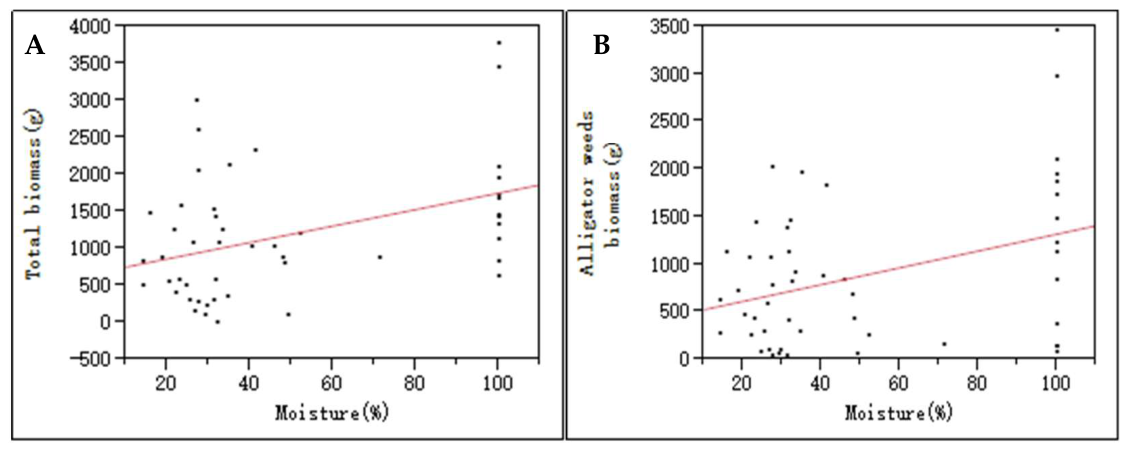
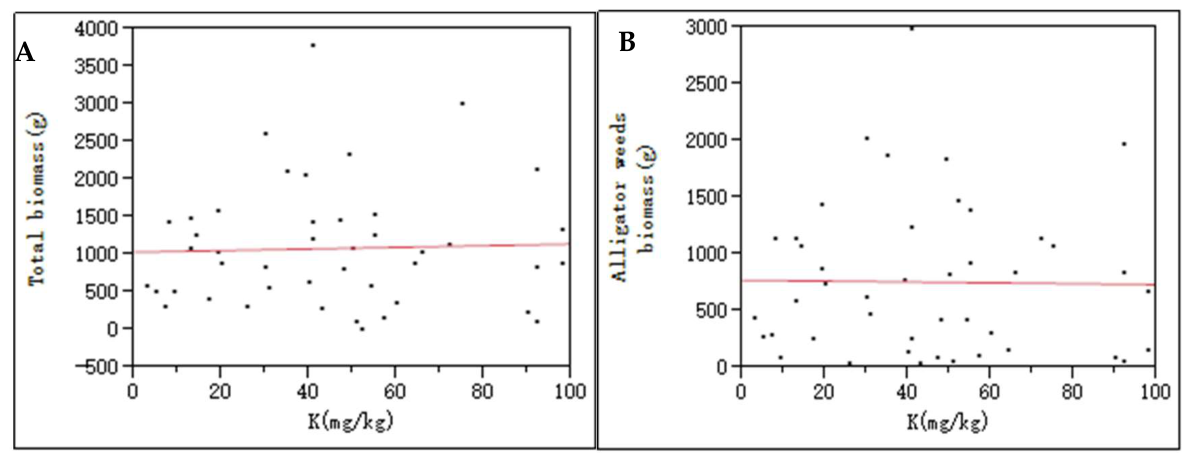
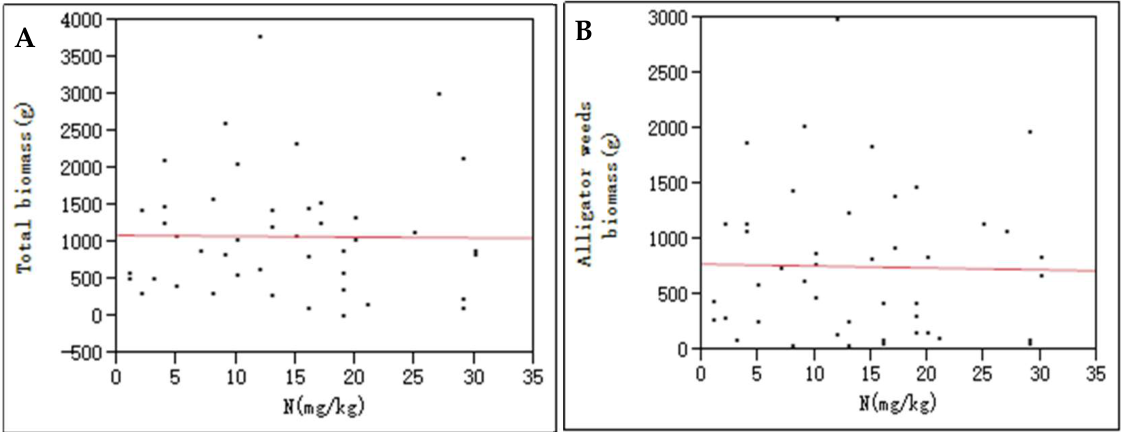
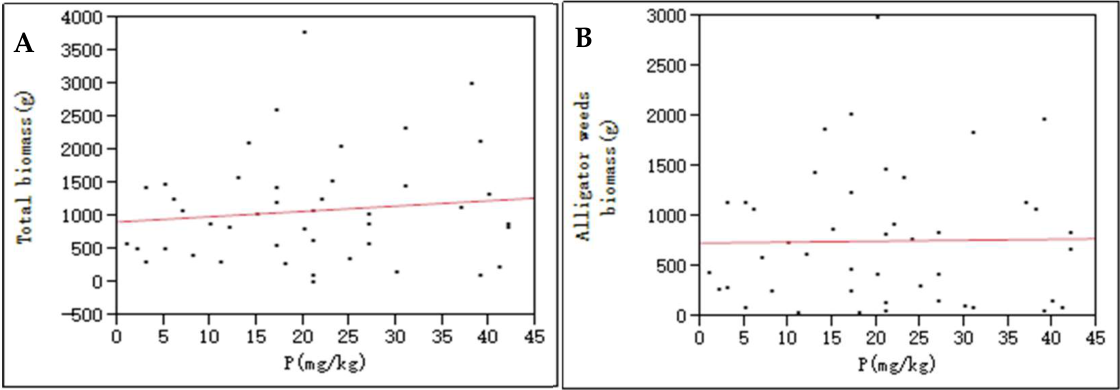
The results of linear regression showed that aboveground plant biomass was positively correlated with water content: Biomass = 645.46988 + 11.129411 × moisture, with a coefficient of determination r2 = 0.177 and an f-value of 10.3371 (with a significant p-value of 0.0023) (Figure 3). The biomass of A. philoxeroides was also positively correlated with water content but with a lower slope: Biomass = 440.67684 + 8.8403528×moisture, where r2 = 0.134 and the f-value is 7.4297 (with a significant p-value of 0.0089) (Figure 3). However, none of the relationships between biomass and nutrients were significant. Soil nutrients, comprising N, P, and K, seemed to have little influence on biomass in our study (Figure 4, Figure 5 and Figure 6).

3.2. Community Clusters

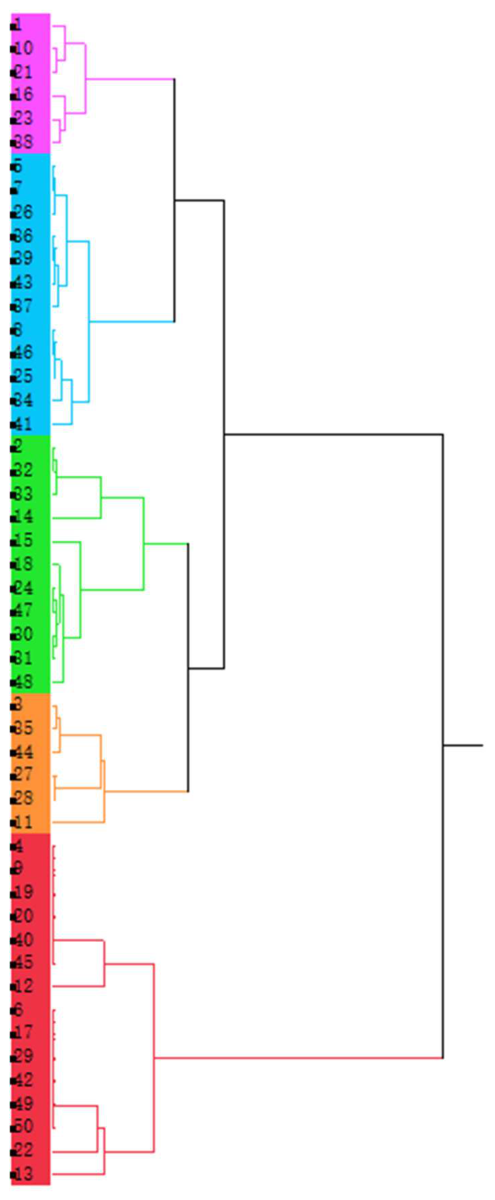
The cluster analysis results of 50 samples (Figure 7) show that the samples in different habitats can be divided into five cluster groups. Cluster 1 (purple) is wetland communities, which are mainly distributed in wetlands with a high soil moisture content. Cluster 2 (blue) is grassland communities with a relatively low soil moisture content. Cluster 3 (green) is understory communities covered by forest or shrubs. Cluster 4 (orange) is farmland communities, which are greatly affected by artificial planting. Cluster 5 (red) is aquatic communities with an extremely high water content or located directly on the water surface.

3.3. Niche Comparison of A. philoxeroides in Different Communities

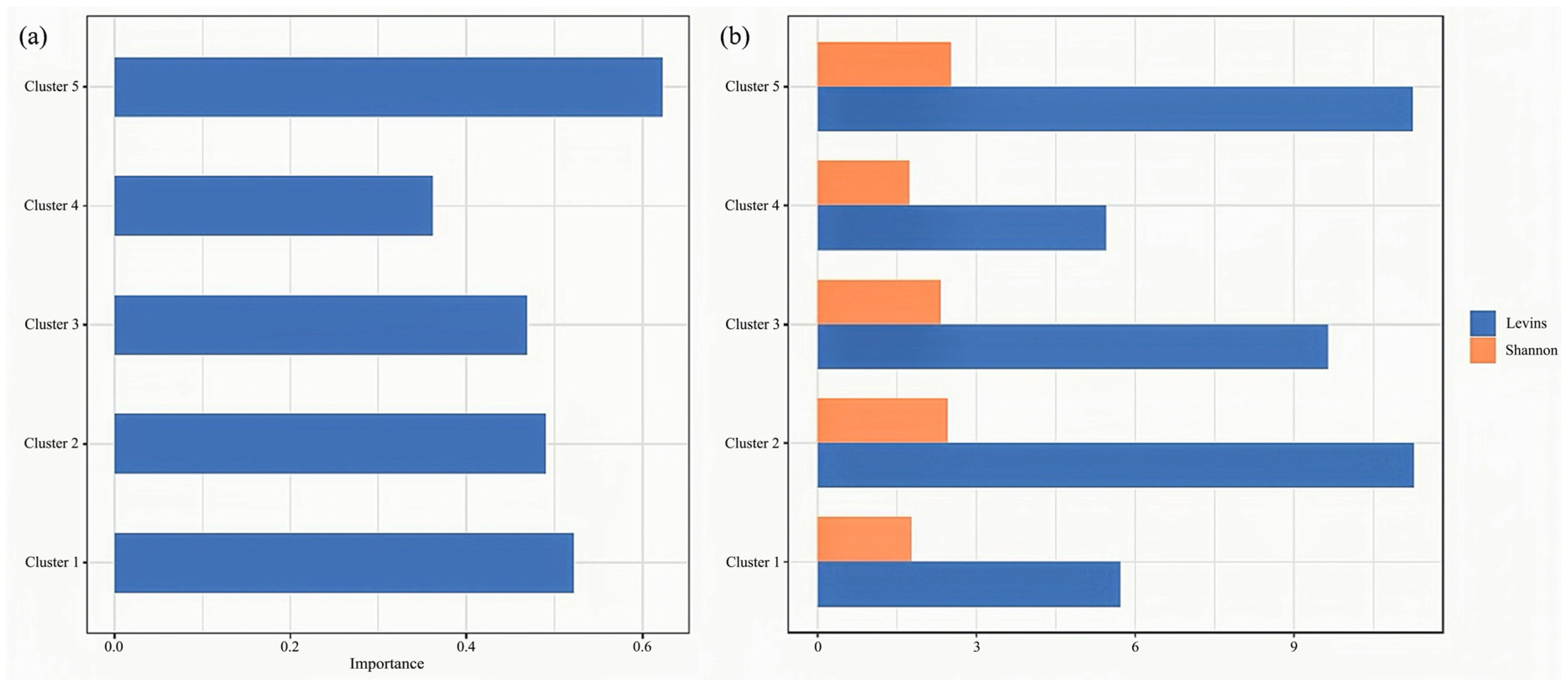
Comparing the niches in different habitats can reflect the degree of adaptation of A. philoxeroides to different environments. As Figure 8a shows, A. philoxeroides has the lowest importance value and the narrowest niche breadth in farmland communities, while it has the highest importance, with the widest niche breadth, in aquatic communities. It needs noting that wet communities have both the second-lowest importance value and the second-narrowest niche breadth, followed by understory communities and then grassland communities.

3.4. The Relationship Between Biomass and Community Types

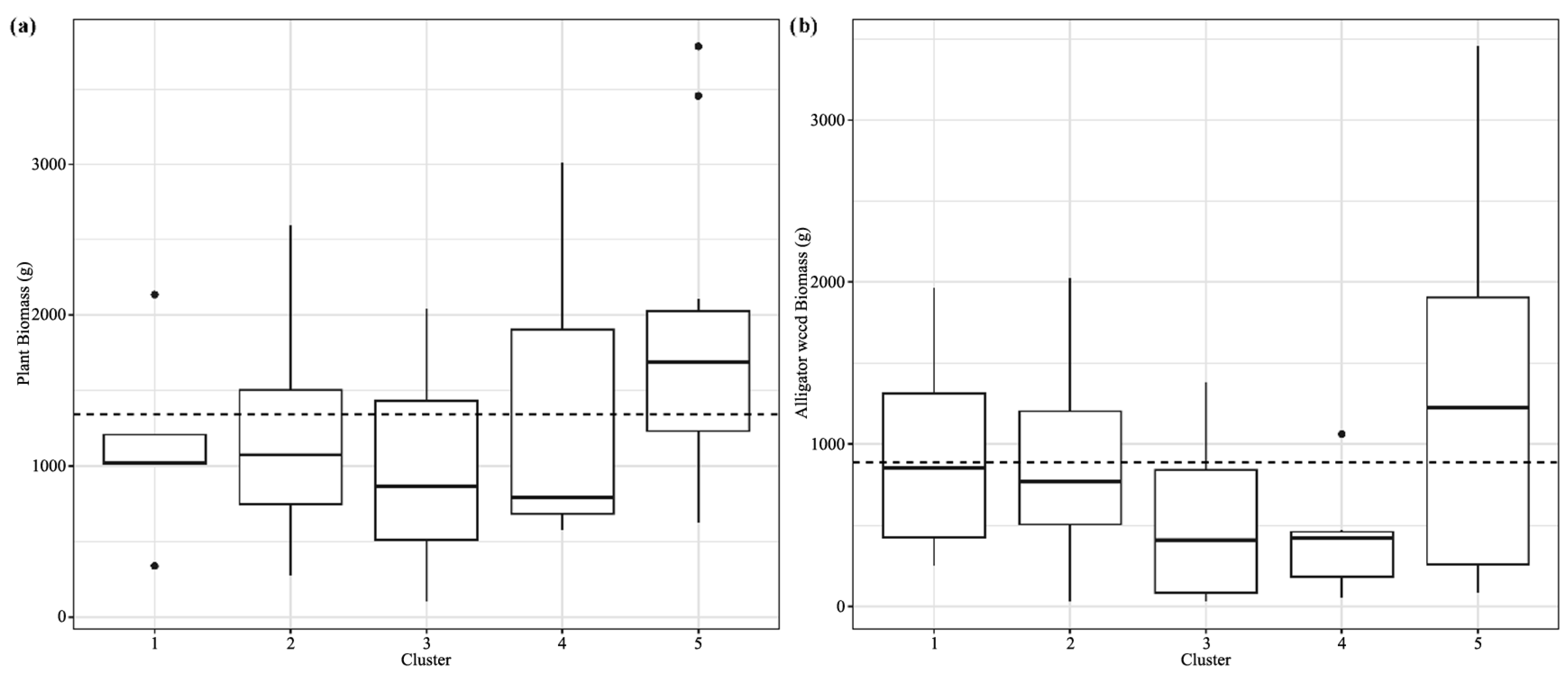
The result of the ANOVA test of aboveground plant biomass in different habitats is shown in Figure 9. Although the first four terrestrial communities do not show significant differences, the aquatic community has a significantly larger biomass (p = 0.0419). A similar trend was observed for A. philoxeroides biomass, with higher biomass in the aquatic community than in the four terrestrial communities; however, this difference did not reach statistical significance at the 0.05 level (p = 0.0638).

4. Discussion

4.1. Community Analysis

Based on environmental characteristics, the sampling sites were classified into five major community types: wetland communities with high soil moisture, grassland communities with relatively low soil moisture, understory communities dominated by forest or shrub vegetation, farmland communities strongly influenced by agricultural activities, and aquatic communities located in or directly adjacent to waterbodies.
In farmland communities, the occurrence and dominance of A. philoxeroides appeared to be relatively limited. People try to get rid of species like A. philoxeroides from their farmland because they will compete with economic crops and reduce agricultural production. The use of mechanical or manual salvage, pull-out, and other physical methods is limited, and the implementation must be very cautious. First, when digging out small patches, it is required to dig deep, 1–1.5 m underground, to ensure that all the underground rhizomes that can be reproduced are eradicated. Otherwise, there will be a rebound [9]. Second, salvaging or cutting off can easily cause fragments of propagules to spread downstream with water flow. Third, if the excavated or salvaged plants are not handled properly, they will spread when stacked and transported [6]. In this case, it is not likely for people to get rid of A. philoxeroides by physical means. However, several herbicides have good performance in controlling the A. philoxeroides population [10]. In agricultural activities, there are three main herbicides used to prevent and control A. philoxeroides: glyphosate can control aquatic populations well, but because it is not easily transported to stems and roots, it cannot control terrestrial populations. Meanwhile, dichlobenil and metsulfuron-methyl have good control effects on small terrestrial patches, but they can easily cause water pollution when used in water [6]. Therefore, herbicide application in agricultural systems may represent one potential factor limiting A. philoxeroides establishment in farmland habitats.
It is interesting that A. philoxeroides showed relatively high importance values but a narrow niche breadth in wetland communities. This pattern suggests that although A. philoxeroides can become dominant in certain wetland habitats, its distribution may still be constrained by habitat-specific factors. One possible explanation is habitat-specific biotic resistance, including potential effects of herbivory. Previous studies have demonstrated that insect herbivores can reduce the growth of A. philoxeroides, and numerous natural enemies have been reported in its native range. Although herbivory was not directly evaluated in our study, previous studies provide evidence that herbivores may influence A. philoxeroides performance. For example, the flea beetle Disonycha argentinensis has been used as a biological control agent in Australia and was effective in suppressing A. philoxeroides growth in wetland habitats, although its control efficiency was limited in terrestrial habitats due to low pupal survival associated with stem characteristics [11,12]. In China, the native grasshopper Atractomorpha sinensis has also been reported to reduce the growth of A. philoxeroides [13]. These studies suggest that herbivory may contribute to habitat-dependent variation in A. philoxeroides performance, but this mechanism requires further investigation. In addition, previous studies have suggested that invasive plant populations may exhibit different responses to herbivory across habitats. Terrestrial A. philoxeroides populations were reported to show relatively higher tolerance to herbivory, potentially associated with biomass allocation patterns [14]. Our results are consistent with these findings, suggesting that herbivory may be one of the potential factors influencing the habitat-dependent performance of A. philoxeroides. However, the specific contribution of natural insect enemies to population regulation remains unclear and warrants further study.
Understory communities may provide relatively less favorable conditions for A. philoxeroides growth. Although A. philoxeroides can exhibit some morphological responses to low light intensity, such as increased plant height and node spacing, insufficient light availability can significantly reduce its biomass, particularly stem and root biomass [15,16]. These findings are consistent with our results, suggesting that limited light conditions may constrain A. philoxeroides growth in understory habitats. Therefore, maintaining or restoring vegetation structures that reduce excessive light availability may provide a potential approach for limiting A. philoxeroides expansion.
In grassland communities, A. philoxeroides becomes the dominant species. Owing to its ecotypic adaptation ability, A. philoxeroides occupies the largest ecological niche in the community, competing for living space and environmental resources with other species, and eventually forming a monodominant community. The main reason is that A. philoxeroides can form a large number of adventitious roots to utilize surrounding nutrients. Its high nutrient use efficiency can be reflected in its nutrient element content. For example, its dry matter contains 2.3% nitrogen, 0.33% P2O5, and 6.84% K2O, which are 1.8 times, 1.02 times and 3.2 times that of rice straw, respectively [6]. Its successful terrestrial invasions depend not only on its competitive ability but also on its reproduction strategy. In China, A. philoxeroides rarely produces reproductive seeds and mainly relies on vegetative reproduction through roots and broken stems [17]. Field observation found that all branches (aboveground and underground) of this plant can reproduce asexually, and adventitious roots can sprout at the nodes to form a complete plant. At the same time, the underground rhizome can be stored in the soil to avoid the cold winter, which is conducive to the reproduction of its population. In our studies, A. philoxeroides had relatively high importance value and niche breadth in grassland communities, strongly supporting its dominance and good performance in competition. Despite A. philoxeroides having so many advantages, there are still species that can survive and compete in terrestrial habitats. For example, the only native member of the genus Alternanthera in China, Alternanthera sessilis, has a similar distribution to A. philoxeroides in South China but with a narrower ecological breadth [18]. In our study, Setaria viridis was often found in terrestrial A. philoxeroides communities. Setaria viridis is commonly found in farmland, roadsides, and wasteland and is widely distributed around the world. The seeds of Setaria viridis have strong adaptability, demonstrate tolerance to drought and barrenness, and can grow in acidic or alkaline soils, providing them with the ability to survive and spread. In the competition with A. philoxeroides, native species may still show relatively high resistance and remain in the invaded communities.
In aquatic communities, A. philoxeroides is no doubt the monodominant species. The vegetative propagation system of A. philoxeroides is very developed. Almost every node can produce adventitious roots in suitable habitats and finally develop into independent individuals [19]. This method of reproduction allows A. philoxeroides to grow rapidly once wind, water, and animals spread to suitable habitats after being damaged. This feature brings enormous advantages to its diffusion in aquatic habitats, especially in flowing water habitats. Furthermore, once A. philoxeroides occupies the water surface, its thick felt layer blocks light as well as gas exchange and finally crowds out other plants to form a monodominant community [20]. Consistent with those studies, our results show aquatic communities have the highest importance value and niche breadth of A. philoxeroides.

4.2. Environmental Analysis

The successful establishment of invasive plants in heterogeneous habitats is closely related to their ability to regulate resource acquisition and growth strategies under changing environmental conditions. A. philoxeroides exhibits strong phenotypic plasticity, allowing it to adjust morphological traits and biomass allocation patterns in response to environmental variation [21]. When environmental conditions change, A. philoxeroides will quickly adjust its morphological and structural characteristics to better adapt to the environment. Such plasticity may enhance its ability to capture available resources and maintain photosynthetic activity. In our study, the differences in biomass, importance value, and niche breadth among habitat types suggest that environmental heterogeneity may regulate the competitive performance of A. philoxeroides by altering resource availability and growth conditions.
Light intensity significantly affects biomass, leaf area, and clump height in A. philoxeroides populations. Light promotes total biomass accumulation, but under shaded conditions, A. philoxeroides can adapt to low-light habitats by increasing plant height and photosynthetic leaf area and changing biomass distribution [22]. A. philoxeroides can germinate and grow within a relatively wide temperature range (10–40 °C), with optimal growth occurring at approximately 30 °C. Germination is strongly restricted at low temperatures, with temperatures below 5 °C preventing germination, whereas germination rates increase under warmer conditions, reaching approximately 20% at 10 °C and nearly 50% at 40 °C. Although frost conditions may cause the death of aboveground tissues, underground rhizomes can remain viable, allowing the species to regenerate when favorable conditions return. Moreover, research has found that warming may increase the biomass of A. philoxeroides but also reduce the biomass of its competitors, thus increasing the effectiveness of its interspecific competition [23]. Under global warming conditions, it might be an issue that the invasiveness of A. philoxeroides will increase, and it may invade areas at higher latitudes, which were not suitable for its growth before. Water plays an essential role in the renewal and growth of A. philoxeroides populations. The germination of its rhizomes and the development of vegetative ramets significantly decrease with water content. When the rhizome water content is less than 20%, it cannot germinate [2]. When the soil water content is 30%, its germination rate is highest. The competitive dominance of A. philoxeroides is affected by nutrient levels. With increasing nutrient levels, competitive dominance is enhanced due to the aggravated interspecific competition for native species [24,25]. A. philoxeroides prefers habitats such as eutrophic ponds, wetlands, and farmland due to their high resource utilization efficiency [4]. The nitrogen content in the soil has a significant effect on the growth of A. philoxeroides. The total biomass, plant height, leaf area, and leaf biomass ratio increase with the soil nitrogen level [26]. Phosphorus is another essential nutrient for plant growth; especially with high N/P ratios, phosphorus becomes the main limiting factor for A. philoxeroides growth [24]. A. philoxeroides is also well known for its potassium-accumulating capabilities, which contribute to its drought stress [27]. Since the study area was relatively limited, variations in light and temperature conditions among sampling sites were relatively small. Thus, only water and soil conditions will be discussed.
Although soil nutrients, including N, P, and K, are important factors affecting plant growth, their effects may vary depending on local environmental conditions and resource availability. In this study, the six field sites were located within a relatively small geographic region, resulting in limited variations in temperature and light conditions. Therefore, we mainly focused on the effects of water availability and soil properties on the growth performance of A. philoxeroides. Biomass was selected as an important indicator because it reflects the ability of plants to acquire resources, accumulate organic matter, and maintain population growth [28,29]. Plants with higher biomass generally exhibit stronger competitive ability and ecological adaptability [30]. Thus, differences in biomass among habitats can help reveal how environmental conditions regulate the growth advantage of A. philoxeroides.
Our results showed a significant but relatively weak positive relationship between soil moisture and both community biomass and A. philoxeroides biomass. Higher soil moisture was associated with increased plant biomass in the communities. Under high-water-content conditions, the biomass of A. philoxeroides was significantly higher than the biomass in terrestrial habitats, indicating that it has strong adaptability to the aquatic environment and has strong growth potential with high moisture. This finding is consistent with previous studies that found that high-water-content conditions significantly affect A. philoxeroides growth. It is worth noting that although A. philoxeroides grows extremely well with high water contents, it is relatively less disturbed when soil moisture decreases, further proving its strong adaptability. However, experiments found that in habitats with relatively poor water resources, A. philoxeroides is more likely to have a relatively low biomass and weakened competitiveness [31]. The reason is that along the Yangtze River in Hubei Province, soil moisture tends to be high. Even a relatively low water content in this area is sufficient for A. philoxeroides growth. In fact, A. philoxeroides shows obvious advantages in most natural habitats, mainly related to abundant precipitation [6].
As for soil nutrients, N, P, and K seem to have little influence on the growth of vascular plants in our study. However, the growth of A. philoxeroides should be sensitive to soil nutrient content; high-fertilizer conditions have a significant effect on its growth [32]. We explained that in our study areas, soil nutrients were abundant due to a large number of farming activities. This may indicate that soil nutrients were not the primary limiting factor for plant growth in our study area. Instead, variation in water availability appeared to play a more important role in explaining biomass differences among habitats.
The invasion and spread of A. philoxeroides are strongly facilitated by its well-developed vegetative reproduction system. In this case, flowing water habitats may facilitate its dispersal, while high-moisture conditions significantly promote its growth. Consistently, the dominance of A. philoxeroides was highest in aquatic habitats in our study. Therefore, our findings suggest that water availability and hydrological connectivity should be considered in the management of A. philoxeroides invasion.

4.3. Contributions and Limitations

This study provides field-based evidence for understanding how multiple environmental factors jointly influence the growth of A. philoxeroides across heterogeneous habitats. By simultaneously evaluating climatic, hydrological, and soil-related variables under natural conditions, we identified moisture as the dominant environmental factor regulating A. philoxeroides biomass. These findings improve our understanding of the ecological mechanisms underlying the successful growth of A. philoxeroides and provide a scientific basis for developing habitat-based ecological management strategies. Nevertheless, this study has several limitations. First, only habitats occupied by A. philoxeroides were included in the field survey. Therefore, our analyses focused on environmental factors associated with biomass variation after species establishment rather than factors determining species occurrence. Incorporating both occupied and unoccupied habitats in future studies would allow a more comprehensive assessment of environmental controls on both species occurrence and post-establishment performance. Second, this study was conducted in Hubei Province, and the relative importance of environmental factors may vary under different climatic or geographical conditions. Future studies covering broader geographical regions and multiple growing seasons would further improve the generality of these findings.

5. Conclusions

The overall habitats can be classified into five typical groups: farmland communities, understory communities, grassland communities, wetland communities, and aquatic communities. A. philoxeroides is most dominant in aquatic communities but is inhibited in farmland and understory communities. A. philoxeroides is also dominant in grassland and wetland communities but not as significantly as in aquatic communities. Moreover, moisture is the critical factor in deciding both total biomass and A. philoxeroides biomass in environmental analysis. An increase in water resources significantly increases the plant’s biomass in communities. Stopping its spread through water could be important in controlling A. philoxeroides.

Author Contributions

L.L.: Conceptualization, Formal Analysis, and Writing—Original Draft. H.Z.: Writing—Review and Editing. J.C.: Data Curation and Writing—Review and Editing. L.W.: Formal Analysis and Writing—Review and Editing. Z.L.: Writing—Review and Editing. K.L.: Conceptualization and Writing—Review and Editing. All authors have read and agreed to the published version of the manuscript.

Funding

This research was funded by the Ministry of Agriculture and Rural Affairs of China, under the following project: “Investigation, Monitoring and Comprehensive Prevention and Control of Major Invasive Alien Species in Hubei Province” (No. 13200290, 2020).

Data Availability Statement

The original contributions presented in the study are included in the article. Further inquiries can be directed to the corresponding author.

Conflicts of Interest

The authors declare no conflicts of interest.

References

  1. Masoodi, A.; Sengupta, A.; Khan, F.A.; Sharma, G.P. Predicting the Spread of Alligator Weed (Alternanthera philoxeroides) in Wular Lake, India: A Mathematical Approach. Ecol. Model. 2013, 263, 119–125. [Google Scholar] [CrossRef]
  2. Shen, J.; Shen, M.; Wang, X.; Lu, Y. Effect of Environmental Factors on Shoot Emergence and Vegetative Growth of Alligatorweed (Alternanthera philoxcroides). Weed Sci. 2005, 53, 471–478. [Google Scholar] [CrossRef]
  3. Chen, L.; Yu, Y.; He, X. Historical Invasion and Expansion Process of Alternanthera philoxeroides and Its Potential Spread in China. Biodivers. Sci. 2008, 16, 578–585. [Google Scholar] [CrossRef]
  4. Zuo, S.; Ma, Y.; Shinobu, I. Differences in Ecological and Allelopathic Traits among Alternanthera philoxeroides Populations. Weed Biol. Manag. 2012, 12, 123–130. [Google Scholar] [CrossRef]
  5. Niroula, B. Phenology, Biomass and Associated Species of Alligator Weed at Biratnagar, Nepal. Nepal. J. Biosci. 2012, 2, 148–150. [Google Scholar]
  6. Pan, X.Y.; Geng, Y.P.; Sosa, A.; Zhang, W.J.; Li, B.; Chen, J.K. Invasive Alternanthera philoxeroides: Biology, Ecology and Management. Acta Phytotaxon. Sin. 2007, 45, 884–900. [Google Scholar] [CrossRef]
  7. Yu, L.-Q.; Fujii, Y.; Zhou, Y.-J.; Zhang, J.-P.; Lu, Y.-L.; Xuan, S.-N. Response of Exotic Invasive Weed Alternanthera philoxeroides to Environmental Factors and Its Competition with Rice. Rice Sci. 2007, 14, 49–55. [Google Scholar] [CrossRef]
  8. Clements, D.; Dugdale, T.M.; Hunt, T.D. Growth of Aquatic Alligator Weed (Alternanthera philoxeroides) over 5 Years in South-East Australia. Aquat. Invasions 2011, 6, 77–82. [Google Scholar] [CrossRef]
  9. Wilson, J.R.U.; Yeates, A.; Schooler, S.; Julien, M.H. Rapid Response to Shoot Removal by the Invasive Wetland Plant, Alligator Weed (Alternanthera philoxeroides). Environ. Exp. Bot. 2007, 60, 20–25. [Google Scholar] [CrossRef]
  10. Schooler, S.; Cook, T.; Bourne, A.; Prichard, G.; Julien, M. Selective Herbicides Reduce Alligator Weed (Alternanthera philoxeroides) Biomass by Enhancing Competition. Weed Sci. 2008, 56, 259–264. [Google Scholar] [CrossRef]
  11. Ma, R.; Ding, J.; Li, B. Pupation Adaptability of Agasicles Hygrophila on Different Ecotypes Alligatorweed. Chin. J. Biol. Control 2003, 19, 58–61. [Google Scholar]
  12. Julien, M.H.; Chan, R.R. Biological Control of Alligator Weed: Unsuccessful Attempts to Control Terrestrial Growth Using the Flea Beetle Disonycha argentinensis [Col.: Chrysomelidae]. Entomophaga 1992, 37, 215–221. [Google Scholar] [CrossRef]
  13. Fan, S.; Yu, D.; Liu, C. The Invasive Plant Alternanthera philoxeroides Was Suppressed More Intensively than Its Native Congener by a Native Generalist: Implications for the Biotic Resistance Hypothesis. PLoS ONE 2013, 8, e83619. [Google Scholar] [CrossRef] [PubMed]
  14. Sun, Y.; Ding, J.; Ren, M. Effects of Simulated Herbivory and Resource Availability on the Invasive Plant, Alternanthera philoxeroides in Different Habitats. Biol. Control 2009, 48, 287–293. [Google Scholar] [CrossRef]
  15. Zhang, Z.; Zhang, Z.; Pan, X. Phenotypic Plasticity of Alternanthera philoxeroides in Response to Shading: Introduced vs. Native Populations. Biodivers. Sci. 2015, 23, 18–22. [Google Scholar] [CrossRef]
  16. Bassett, I.E.; Paynter, Q.; Beggs, J.R. Effect of Artificial Shading on Growth and Competitiveness of Alternanthera philoxeroides (Alligator Weed). N. Z. J. Agric. Res. 2011, 54, 251–260. [Google Scholar] [CrossRef]
  17. Dong, B.-C.; Alpert, P.; Guo, W.; Yu, F.-H. Effects of Fragmentation on the Survival and Growth of the Invasive, Clonal Plant Alternanthera philoxeroides. Biol. Invasions 2012, 14, 1101–1110. [Google Scholar] [CrossRef]
  18. Yu, L.; Zhu, Z.; Pan, X. Phenotypic Plasticity of Alternanthera philoxeroides in Response to Root Neighbors of Kin: Introduced vs. Native Genotypes. Biodivers. Sci. 2020, 28, 651–657. [Google Scholar] [CrossRef]
  19. Schooler, S.; Baron, Z.; Julien, M. Effect of Simulated and Actual Herbivory on Alligator Weed, Alternanthera philoxeroides, Growth and Reproduction. Biol. Control 2006, 36, 74–79. [Google Scholar] [CrossRef]
  20. Dong, B.-C.; Yu, G.-L.; Guo, W.; Zhang, M.-X.; Dong, M.; Yu, F.-H. How Internode Length, Position and Presence of Leaves Affect Survival and Growth of Alternanthera philoxeroides after Fragmentation? Evol. Ecol. 2010, 24, 1447–1461. [Google Scholar] [CrossRef]
  21. Pan, X.; Geng, Y.; Zhang, W.; Li, B.; Chen, J. The Influence of Abiotic Stress and Phenotypic Plasticity on the Distribution of Invasive Alternanthera philoxeroides along a Riparian Zone. Acta Oecol. 2006, 30, 333–341. [Google Scholar] [CrossRef]
  22. Longstreth, D.J.; Mason, C.B. The Effect of Light on Growth and Dry Matter Allocation Patterns of Alternanthera philoxeroides (Mart.) Griseb. Bot. Gaz. 1984, 145, 105–109. [Google Scholar] [CrossRef]
  23. Wu, H.; Ismail, M.; Ding, J. Global Warming Increases the Interspecific Competitiveness of the Invasive Plant Alligator Weed, Alternanthera philoxeroides. Sci. Total Environ. 2017, 575, 1415–1422. [Google Scholar] [CrossRef] [PubMed]
  24. Zhang, H.; Chang, R.; Guo, X.; Liang, X.; Wang, R.; Liu, J. Shifts in Growth and Competitive Dominance of the Invasive Plant Alternanthera philoxeroides under Different Nitrogen and Phosphorus Supply. Environ. Exp. Bot. 2017, 135, 118–125. [Google Scholar] [CrossRef]
  25. Baribault, T.W.; Kobe, R.K. Neighbour Interactions Strengthen with Increased Soil Resources in a Northern Hardwood Forest. J. Ecol. 2011, 99, 1358–1372. [Google Scholar] [CrossRef]
  26. Wang, A.O.; Jiang, X.; Zhang, Q.; Zhou, J.; Li, H.; Luo, F.; Zhang, M.; Yu, F. Nitrogen Addition Increases Intraspecific Competition in the Invasive Wetland Plant Alternanthera philoxeroides, but Not in Its Native Congener Alternanthera Sessilis. Plant Species Biol. 2015, 30, 176–183. [Google Scholar] [CrossRef]
  27. Song, Z.; Su, Y. Distinctive Potassium-Accumulation Capability of Alligatorweed (Alternanthera philoxeroides) Links to High-Affinity Potassium Transport Facilitated by K+-Uptake Systems. Weed Sci. 2013, 61, 77–84. [Google Scholar] [CrossRef]
  28. Hwang, B.C.; Lauenroth, W.K. Effect of Nitrogen, Water and Neighbor Density on the Growth of Hesperis Matronalis and Two Native Perennials. Biol. Invasions 2008, 10, 771–779. [Google Scholar] [CrossRef]
  29. Daehler, C.C. Performance Comparisons of Co-Occurring Native and Alien Invasive Plants: Implications for Conservation and Restoration. Annu. Rev. Ecol. Evol. Syst. 2003, 34, 183–211. [Google Scholar] [CrossRef]
  30. Burns, J.H. A Comparison of Invasive and Non-invasive Dayflowers (Commelinaceae) across Experimental Nutrient and Water Gradients. Divers. Distrib. 2004, 10, 387–397. [Google Scholar] [CrossRef]
  31. Geng, Y.-P.; Pan, X.-Y.; Xu, C.-Y.; Zhang, W.-J.; Li, B.; Chen, J.-K. Phenotypic Plasticity of Invasive Alternanthera philoxeroides in Relation to Different Water Availability, Compared to Its Native Congener. Acta Oecol. 2006, 30, 380–385. [Google Scholar] [CrossRef]
  32. Gao, A.; Xiao, H.; Chen, F.; Zhang, M.; Yang, J.; Zhang, J.; Zhang, Y.; Balah, M.A.; Delgado, A.N.; Wu, A. High and Stable Nutrient Homeostasis Correlates with the Invasion of Alternanthera philoxeroides. Biol. Invasions 2026, 28, 35. [Google Scholar] [CrossRef]
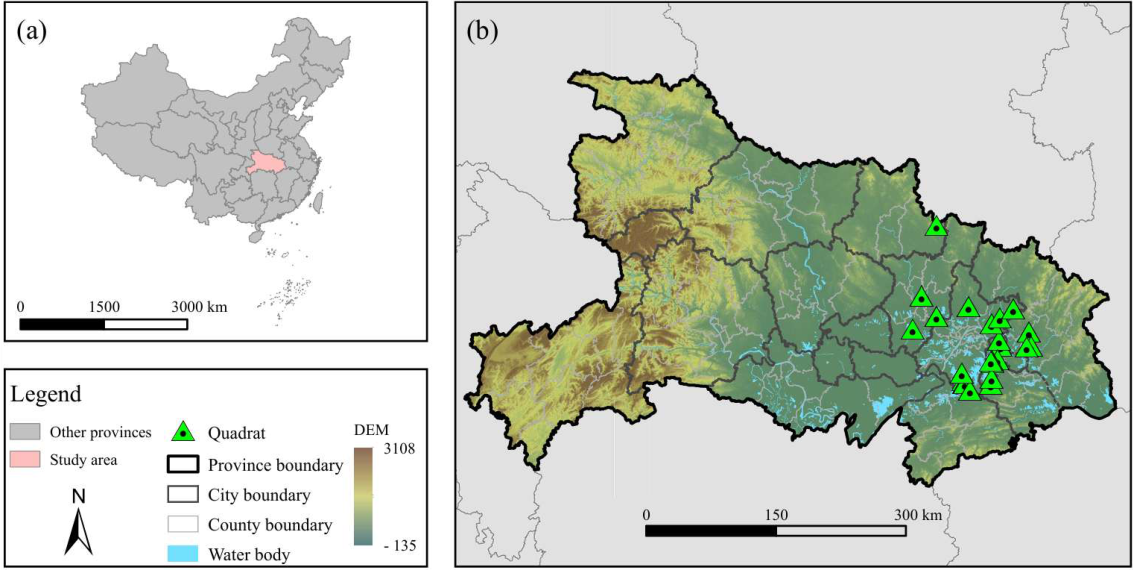
Figure 1. Location map. (a) Location of the study area; (b) distribution of sampling points.
Land 15 01411 g001
Figure 2. Total aboveground biomass of A. philoxeroides and other plants in every quadrat.
Land 15 01411 g002
Figure 3. Linear regression of total biomass (A) A. philoxeroides biomass (B) with water content. Black dots represent observed data points, and the red line indicates the fitted linear regression line.
Land 15 01411 g003
Figure 4. Linear regression of total biomass (A) and A. philoxeroides biomass (B) with soil nitrogen. Black dots represent observed data points, and the red line indicates the fitted linear regression line.
Land 15 01411 g004
Figure 5. Linear regression of total biomass (A) and A. philoxeroides biomass (B) with soil phosphorus. Black dots represent observed data points, and the red line indicates the fitted linear regression line.
Land 15 01411 g005
Figure 6. Linear regression of total biomass (A) and A. philoxeroides biomass (B) with soil potassium. Black dots represent observed data points, and the red line indicates the fitted linear regression line.
Land 15 01411 g006
Figure 7. The dendrogram of the cluster analysis of A. philoxeroides communities. The five clusters are represented by different colors: purple indicates wetland communities, blue indicates grassland communities, green indicates understory communities, orange indicates farmland communities, and red indicates aquatic communities.
Land 15 01411 g007
Figure 8. Niche comparison in different communities. (a) Importance value of different A. philoxeroides communities. (b) Niche breadth of different alligator weed communities.
Land 15 01411 g008
Figure 9. The relationship between biomass and community types. (a) ANOVA test of aboveground plant biomass in different habitats. (b) ANOVA test of A. philoxeroides aboveground biomass in different habitats. Boxes indicate the interquartile range (IQR), horizontal black lines indicate medians, black dots represent outliers, and dashed lines indicate the overall mean biomass.
Land 15 01411 g009
Disclaimer/Publisher’s Note: The statements, opinions and data contained in all publications are solely those of the individual author(s) and contributor(s) and not of MDPI and/or the editor(s). MDPI and/or the editor(s) disclaim responsibility for any injury to people or property resulting from any ideas, methods, instructions or products referred to in the content.