Article

Co-Inoculation of Rhizobia and a Multifunctional Microbial Consortium Is Associated with Improved Soybean Performance and Bacterial Community Reassembly in Soybean Fields

1
Institute of Soil and Water Resources and Environmental Science, College of Environmental and Resource Sciences, Zhejiang University, Hangzhou 310058, China
2
Institute of Microbiology, Heilongjiang Academy of Sciences, Harbin 150010, China
3
State Key Laboratory of Soil and Sustainable Agriculture, Institute of Soil Science, Chinese Academy of Sciences, Nanjing 211135, China
*
Author to whom correspondence should be addressed.
Land 2026, 15(7), 1270; https://doi.org/10.3390/land15071270
Submission received: 4 June 2026 / Revised: 11 July 2026 / Accepted: 13 July 2026 / Published: 15 July 2026
(This article belongs to the Topic Ecological Protection and Modern Agricultural Development)

Abstract

Rhizobial inoculation is an important strategy for improving nitrogen supply in soybean systems, but its field performance is often limited by soil constraints and interactions with indigenous microbiomes. Multifunctional microbial consortia may complement rhizobia by modifying rhizosphere soil conditions and nutrient availability. Here, we combined pot and one-season field experiments in a meadow albic black soil of the Sanjiang Plain, China, to evaluate the effects of rhizobia, a multifunctional bacterial consortium, and their co-inoculation (CRF) on soybean performance, soil properties, enzyme activities, and bacterial communities. CRF produced the highest soybean yield, reaching 2230 kg ha−1, which was 6.74%, 1.54%, and 1.50% higher than conventional fertilization (F), single consortium inoculation (CF), and single rhizobial inoculation (RF), respectively. Compared with F, CRF showed higher values of selected short-term soil indicators at specific growth stages, including pH, soil organic matter, alkali-hydrolyzable nitrogen (+7.51–21.14%), and available phosphorus (+19.29–42.68%). At maturity, sucrase, urease, and acid phosphatase activities under CRF were 18.6%, 15.3%, and 22.4% higher than those under F, respectively. Bacterial OTU richness increased by 11.70% under CRF, whereas evenness-related indices decreased, suggesting treatment-associated bacterial community reassembly. Soil pH explained 11.63% and 13.24% of bacterial community variation at the phylum and genus levels, respectively. These findings suggest that rhizobia–consortium co-inoculation was associated with improved soybean yield, altered rhizosphere soil indicators, and bacterial community shifts during one soybean growing season. Longer-term field trials are needed to confirm the persistence and mechanisms of these effects.

1. Introduction

Soybean is a major crop supporting global protein and edible oil supply, and its sustainable production depends on maintaining soil fertility and biologically mediated nutrient cycling [1]. In many black-soil regions, long-term intensive cultivation has been associated with soil degradation and losses of soil organic carbon (SOC), undermining nutrient retention and increasing dependence on external inputs [2,3]. These trends motivate nature-based approaches that can improve crop performance and rhizosphere conditions while sustaining productivity. Harnessing biological nitrogen fixation through the soybean–rhizobium symbiosis is a key strategy to reduce mineral N fertilizer use [4,5]. Yet, the effectiveness of rhizobial inoculation can be highly dependent on soil constraints such as unfavorable pH, limited phosphorus availability can suppress nodulation and reduce inoculation benefits, and strain competition can favor highly competitive but less beneficial rhizobia, weakening host gains [6].
Harnessing biological nitrogen fixation (BNF) through soybean–rhizobium symbiosis is a core strategy to reduce mineral N fertilizer reliance [7]. However, the effectiveness of rhizobial inoculation in degraded black soils is often constrained by two key bottlenecks: (i) environmental filtering (e.g., unfavorable pH, limited available phosphorus, and low SOC), which suppresses nodulation and BNF efficiency [3,8], and (ii) biotic competition, where native rhizobial strains with high competitiveness but low symbiotic effectiveness outcompete inoculated strains [9]. These constraints explain the inconsistent field performance of single rhizobial inoculants across sites and seasons.
From a microbiome perspective, microbial inoculants do not necessarily increase alpha diversity; instead, they frequently reorganize bacterial community composition and relative abundance patterns [10]. A large meta-analysis across hundreds of studies reported that microbial inoculants often change community structure and bacterial composition without consistently altering microbial diversity, and that these effects are modulated by environmental stress and initial soil nutrient status [11,12].
Linking soil physicochemical shifts to bacterial community reassembly is essential because soil pH acts as a dominant environmental factor at both local and global scales [13]. A global analysis of soil bacterial genera shows that pH predicts a large fraction of bacterial genus distributions worldwide, and soil pH is a major environmental filter shaping bacterial community composition [14]. In legume systems, this matters not only for free living bacterial composition but also for rhizobial establishment and plant nutrition [15]. Another challenge is that rhizosphere microbiomes are highly dynamic across plant development [16]. Time-resolved studies demonstrate strong succession of the soybean rhizosphere bacterial community across growth stages, implying that inoculation effects may be stage-dependent and that single-time-point sampling can miss key transitions [17]. Therefore, evaluating co-inoculation across growth stages while jointly tracking soil properties (e.g., pH, organic matter, moisture, and available nutrients) is critical for identifying treatment-associated changes relevant to soybean performance [18,19].
Based on this background, our study examines how rhizobial inoculation combined with a multifunctional microbial consortium influences soil physicochemical properties and bacterial community assembly in soybean fields. We focus on three connected goals: (i) testing whether co-inoculation produces more consistent improvements in soil habitat quality (particularly pH and fertility-related nutrient pools) than single inoculations; (ii) determining whether bacterial communities respond via increased richness but selective enrichment (reflected by reduced evenness) rather than uniform diversity gains; and (iii) identifying key soil drivers, especially pH and resource-related variables that are associated with bacterial community reassembly. By integrating stage-resolved soil chemistry with bacterial community ecology, this work provides a mechanistic basis for designing rhizobia–consortium co-inoculation as a scalable strategy to inform the field use of rhizobia–consortium co-inoculation in black-soil soybean systems.

2. Materials and Methods

2.1. Experimental Site and Materials

The field experiment was conducted in Sanfu Village, Tongjiang City, Heilongjiang Province (47.786° N, 132.701° E), located in the hinterland of the Sanjiang Plain. The study was conducted in a meadow albic black soil according to the Chinese soil classification system. Black soils have the following initial physicochemical properties: organic matter 33.60 g/kg, total nitrogen 1.76 g/kg, total phosphorus 1.23 g/kg, total potassium 15.46 g/kg, pH 6.10, alkali-hydrolyzable nitrogen 7.68 mg/kg, available phosphorus 53.23 mg/kg, and available potassium 174.19 mg/kg.
Soybean cultivar ‘Heihe 43’, bred by Heihe Branch of Heilongjiang Academy of Agricultural Sciences (Heihe, Heilongjiang, China), is an indeterminate, early-maturing cultivar with an approximate growth duration of 110–115 days under local field conditions. Seeds from the same certified commercial seed lot were used for all experimental units to ensure uniform initial seed quality. The rhizobia inoculant contained two strains, Sinorhizobium fredii HH103 and Bradyrhizobium japonicum TY3-5-1, mixed at a 1:1 (v/v) ratio. The rhizobial suspension was adjusted to a final concentration of 1 × 10⁸ CFU/mL prior to application. The multifunctional microbial consortium was composed of Bacillus subtilis, Bacillus megaterium, and Bacillus mycoides, mixed at a 1:1:1 ratio based on viable cell counts. The finished granular inoculant had a guaranteed effective viable count of ≥5 × 10⁸ CFU/g, with peat as the carrier material. Conventional soybean compound fertilizer (N–P2O5–K2O = 13–24–13, total nutrient content 50%) was used as the basic fertilizer.

2.2. Experimental Design

2.2.1. Pot Experiment

The pot experiment included 7 treatments for each rhizobial strain (HH103 and TY3-5-1): control (CK, no inoculants), single rhizobia, rhizobia + B. subtilis, rhizobia + B. megaterium, rhizobia + B. mycoides, rhizobia + compound inoculant, and single compound inoculant. Each treatment had 10 replicates. Soybean seeds were sown in pots (25 cm height × 15 cm diameter) with a growth medium of peat:perlite:vermiculite = 4:1:2 (sterilized at 121 °C for 2 h). Inoculants were applied after seed germination, and agronomic traits were measured at maturity (9 June 2025). Plants were watered every 2–3 days to maintain soil moisture at 60–70% of field capacity, with no waterlogging.

2.2.2. Field Plot Experiment

Four treatments were set in the field plot experiment (3 replicates per treatment, plot area 40 m2): (1) F: fertilization only (300 kg/ha compound fertilizer); (2) CF: fertilization + compound consortium (60 kg/ha); (3) RF: rhizobia (100 mL/ha, 1 × 10⁸ CFU/mL) + fertilization; and (4) CRF: rhizobia + compound consortium inoculant + fertilization. The rhizobial suspension was applied as a seed-coating treatment at a rate of 100 mL per kg of seeds before sowing. The granular microbial consortium and compound fertilizer were mechanically incorporated into the seed furrow at a depth of 10–15 cm at sowing (19 May 2025). Application rates were standardized on a per-hectare basis: 100 mL/ha for the rhizobial inoculant and 60 kg/ha for the microbial consortium. All treatments received the same basal fertilizer rate of 300 kg/ha. Soil and plant samples were collected at six soybean growth stages (emergence, branching, flowering, podding, filling, maturity), and yield was measured at harvest (18 October 2025). During the soybean growing season from May to October 2025, the mean air temperature was 18.2 °C and total precipitation was 520 mm. This study was designed to compare inoculation strategies under a uniform conventional fertilization regime; all field treatments received the same basal fertilizer rate, and treatment F served as the fertilization-only reference.

2.3. Determination Methods

2.3.1. Soybean Agronomic Traits and Yield

First pod height (cm) was measured from the soil surface to the height of the first pod on the main stem. Plant height, root length, root fresh weight, nodule number, and leaf area were measured at maturity. For pot experiments, 3 plants per pot were randomly selected; for field experiments, 10 plants per plot were sampled. Yield was calculated by drying harvested soybean to constant weight, and 100-seed weight and grain number per plant were determined.

2.3.2. Soil Physicochemical Properties

Soil samples (0–20 cm) were collected using the five-point sampling method. Soil pH was measured at a soil-to-water ratio of 1:2.5 (w/v). Organic matter was determined by the potassium dichromate oxidation-volumetric method. Alkali-hydrolyzable nitrogen was measured by the alkali hydrolysis-diffusion method. Available phosphorus was extracted with 0.5 M NaHCO3 (pH 8.5) and determined by molybdenum-antimony colorimetry. Available potassium was extracted with 1 M NH4OAc and measured by flame photometry. Soil water content was calculated by drying at 105 °C to constant weight.

2.3.3. Soil Extracellular Enzyme Activities

Sucrase activity was determined by 3,5-dinitrosalicylic acid colorimetry, urease by phenol-sodium hypochlorite colorimetry, acid phosphatase by sodium phenylphosphate colorimetry, and catalase by potassium permanganate titration.

2.3.4. Bacterial Community Analysis

Total genomic DNA was extracted from 0.5 g fresh soil per sample using the FastDNA® SPIN Kit for Soil (MP Biomedicals, Irvine, CA, USA), and DNA purity and concentration were verified by 1% agarose gel electrophoresis and a NanoDrop 2000 spectrophotometer (Thermo Fisher Scientific, Irvine, CA, USA).
The V3–V4 hypervariable region of the bacterial 16S rRNA gene was amplified using primers 515F (5′-ACTCCTACGGGAGGCAGCAG-3′) and 907R (5′-CCGTCAATTCMTTTRAGTTT-3′). PCR reactions were performed in a 25 μL system with 12.5 μL of 2 × Taq PCR MasterMix, 3 μL of template DNA (20 ng/μL), 1 μL of each primer (5 μmol/L), and 7.5 μL of nuclease-free water. The thermal cycling program was: initial denaturation at 95 °C for 5 min; 27 cycles of 95 °C for 30 s, 55 °C for 30 s, and 72 °C for 45 s; and final extension at 72 °C for 10 min.
PCR products were purified with a gel extraction kit (Qiagen, Hilden, Germany) and used to construct sequencing libraries with the TruSeq Nano DNA LT Library Prep Kit (Illumina, San Diego, CA, USA). High-throughput paired-end sequencing was performed on the Illumina MiSeq PE300 platform.
Raw sequencing reads were demultiplexed, merged using FLASH v1.2.11, and quality-filtered using Trimmomatic v0.39 with a quality threshold of Q20. Chimeric sequences were removed using UCHIME v4.2. High-quality sequences were clustered into operational taxonomic units (OTUs) at 97% sequence similarity using UPARSE v7.0.1090. Taxonomic classification was assigned against the SILVA 138.1 database with a confidence threshold of 70%. All samples were rarefied to the minimum sequencing depth for alpha and beta diversity calculations. Alpha diversity indices (Chao1, ACE, Shannon, Simpson, Pielou’s evenness) and beta diversity (principal coordinates analysis, PCoA) were calculated using QIIME v1.9.1.

2.4. Statistical Analysis

Data were processed with R 25.2 and SPSS 24.0. One-way ANOVA with Duncan’s multiple range test was used to compare differences between treatments (p < 0.05). RDA and Pearson correlation analysis were performed using CANOCO 5.0 and R Studio, respectively.

3. Results

3.1. Co-Inoculation Was Associated with Higher Soybean Performance

In the pot experiment, soybean growth responses varied with rhizobial strain and inoculation combination. For HH103 rhizobia, the CRF treatment increased plant height by 37.67%, above-ground fresh weight by 12.81%, and nodule number by 44.67%. For TY3-5-1 rhizobia, the CRF treatment increased root length by 48.03% and nodule fresh weight by 60.00%. These results indicate that the plant response to co-inoculation was strain-dependent (Supplementary Tables S1 and S2).
Soybean agronomic traits differed among inoculation treatments in both pot and field experiments (Table 1). In pot trials, compared with CK without exogenous inoculants, the CRF increased soybean plant height by 12.52–37.67%, root length by 11.35–48.03%, and above-ground fresh weight by 6.88–12.81% at maturity (p < 0.05). For nodulation, the CK treatment produced no nodules, while the CRF treatment increased nodule number by 24.78–44.67%, nodule fresh weight by 5.36–17.86%, and average nodule volume by 27.00% relative to RF (p < 0.01). The two rhizobial strains showed different response patterns: Sinorhizobium fredii HH103 was associated with higher nodule number and nodule fresh weight, whereas Bradyrhizobium japonicum TY3-5-1 was associated with greater plant height and root elongation.
In field plot experiments, the CRF treatment increased soybean emergence rate by 7.34% compared with F (Table 1). At maturity, CRF significantly improved grain number per plant and 100-seed weight relative to F (p < 0.05), leading to a yield of 2234.40 kg/ha, 6.74% higher than F, 1.50% higher than RF, and 1.54% higher than CF.

3.2. Short-Term Treatment-Associated Differences in Soil Physicochemical Properties

Soil physicochemical properties differed among treatments across soybean growth stages (Table 2). At maturity, soil pH was higher under CRF than under F by 3.81–5.59%, alleviating soil acidification in the degraded black soil (p < 0.05). SOM values under CRF were higher than those under F at several growth stages, with the largest relative difference at the filling stage (37.50%). Soil water content also showed higher values under CRF than under F across the six growth stages.
For soil nutrients, CRF showed higher AN and AP values than F at most growth stages. AN content in CRF increased by 7.51–21.14% compared with F, with the highest content at maturity, 25.17% higher than at emergence. AP and AK in CRF were 19.29–42.68% and 5.35–20.33% higher than F, respectively. These results indicate short-term treatment-associated variation in soil fertility-related indicators during one soybean growing season.

3.3. Effects on Soil Extracellular Enzyme Activities

Soil extracellular enzyme activities (sucrase, urease, acid phosphatase, and catalase) varied among treatments and soybean growth stages, and CRF generally showed higher activities of sucrase, urease, and acid phosphatase than F at maturity (Figure 1).
At maturity, sucrase activity in CRF (38.6 ± 2.1 U/g·d) was 18.6% higher than F (32.6 ± 1.8 U/g·d), indicating a higher measured sucrase activity under CRF. Urease activity in CRF was 15.3% higher than F, showing a higher measured urease activity under CRF. Acid phosphatase activity in CRF was 22.4% higher than F, facilitating phosphorus mobilization from organic matter. Catalase activity in CRF was slightly higher than other treatments but showed no significant difference (p > 0.05), suggesting that catalase, linked to soil antioxidant defense, was less responsive to inoculation. Notably, the enzyme activity ratios (urease/sucrase, acid phosphatase/urease) in CRF were more balanced than in other treatments. These enzyme results indicate treatment-associated differences in biochemical activity, but direct nutrient transformation rates were not measured.

3.4. Effects on Soil Bacterial Community Structure

The Venn diagram showed that the CRF treatment had the highest OTU abundance (4491), which was 11.70% higher than that of F (Supplementary Figure S1). The alpha diversity analysis (Supplementary Table S3) indicated that the CRF treatment had the highest Chao1 and ACE indices, confirming a significant increase in bacterial OTU richness. In contrast, the Shannon and Simpson indices were lower under CRF than under CF, and Pielou’s evenness index was also significantly reduced in the CRF treatment (p < 0.05). This pattern indicates that co-inoculation promoted the detection of additional rare taxa while enriching a subset of dominant taxa, resulting in reduced community evenness rather than a uniform increase in overall diversity.
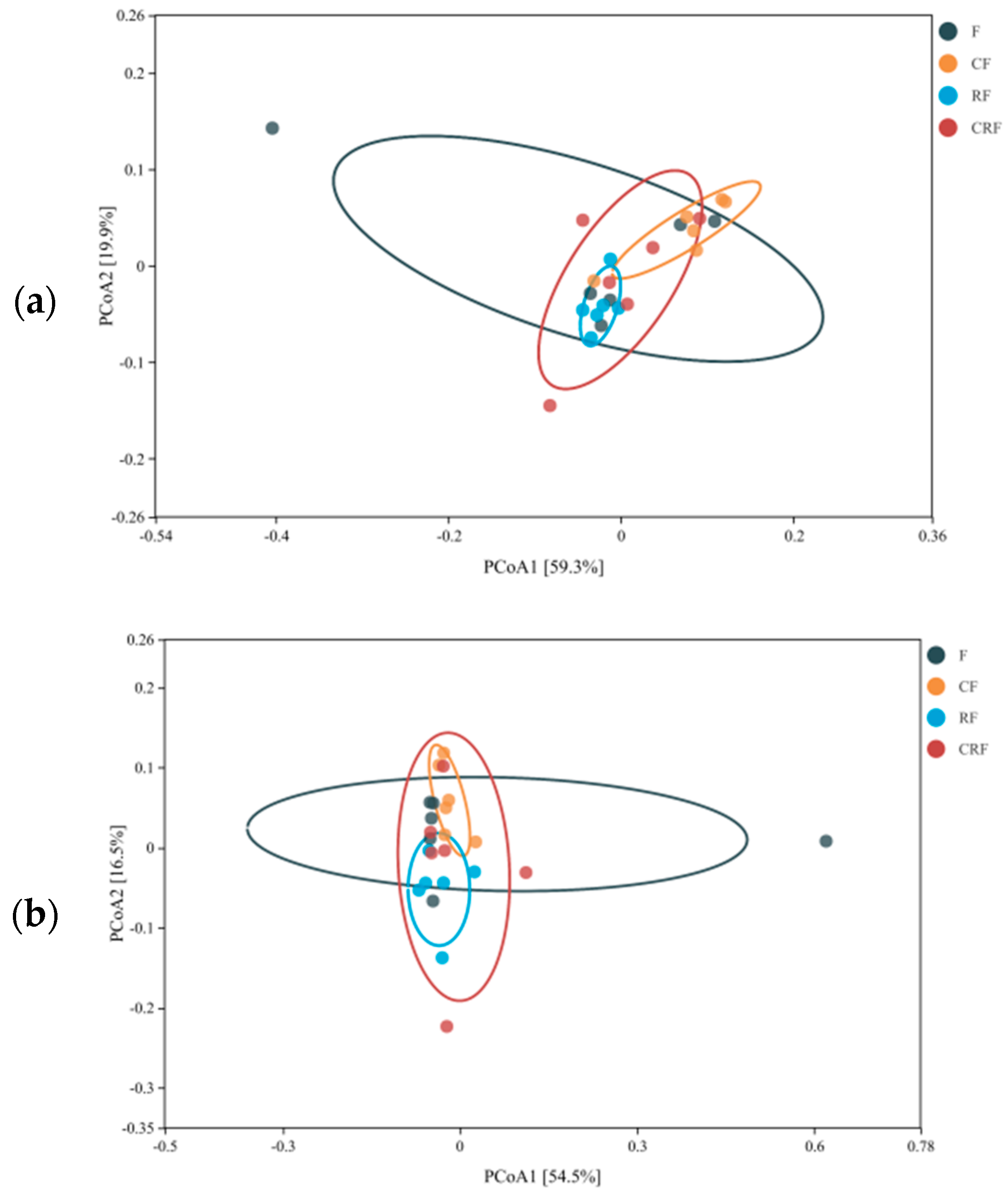
At the phylum level (Supplementary Figure S2a), the dominant phyla in all treatments were Proteobacteria (25.29–37.03%), Acidobacteria (28.34–40.16%), and Chloroflexi (10.21–15.36%). The CRF treatment had the highest relative abundance of Bacteroidetes (12.35%), while RF had the highest relative abundance of Proteobacteria (37.03%). At the genus level (Supplementary Figure S2b), the dominant genera were Candidatus_solibacter (8.32–12.45%), Bryobacter (6.78–9.87%), and Sphingomonas (5.43–8.62%). LEfSe analysis identified Luteibacter and Rickettsia as biomarkers under CRF (LDA ≥ 3.00). PCoA analysis (Figure 2a) showed that the bacterial communities of CF and RF were clearly separated, while the CRF community basically covered the ranges of CF and RF, explaining 59.30% and 19.90% of the variation at the phylum level, and 54.50% and 16.50% at the genus level (Supplementary Figure S3). These results indicate that co-inoculation was associated with shifts in bacterial community composition.

3.5. Relationships Between Soil Factors, Bacterial Community, and Soybean Yield

Redundancy analysis (RDA) revealed that among the measured soil variables, soil pH explained the largest proportion of bacterial community variation, explaining 11.63% (phylum level) and 13.24% (genus level) of the variation (Figure 3). AN and AK were the next important drivers, explaining 4.62–9.40% of the variation. Heatmap analysis showed that AN was significantly positively correlated with Latescibacteria and FCPU426 at the phylum level (p < 0.01), and significantly negatively correlated with Luteibacter at the genus level (p < 0.05; Supplementary Figure S4). SOM was significantly positively correlated with Acidothermus at the genus level (p < 0.01).
Pearson correlation analysis showed that soybean yield under CRF was positively correlated with SOM (r = 0.655, p < 0.05) and AN (r = 0.702, p < 0.05), whereas AK was negatively correlated with yield (r = −0.708, p < 0.01; Table 3). Although soil pH showed a statistically significant association with yield, the correlation coefficient was low (r = 0.146), and this relationship should be interpreted cautiously.

4. Discussion

4.1. Co-Inoculation Was Associated with Higher Soybean Performance

The combined application of rhizobia and the microbial consortium was associated with higher soybean yield and changes in several agronomic traits [20]. CRF consistently improved soybean agronomic traits and yield relative to fertilization-only and single inoculation treatments, suggesting a potential complementary effect between rhizobia and the microbial consortium [18,21]. In pot trials, CRF markedly increased plant height, root length, and above-ground biomass at maturity, and increased nodulation-related traits compared with the non-inoculated control [22]. RF and CRF further increased nodule number, nodule fresh weight, and mean nodule volume, supporting the view that the compound inoculant may have influenced rhizobial symbiosis, although nodulation efficiency and nitrogen fixation rates were not directly measured (Table 1) [23]. Moreover, the two rhizobial strains displayed distinct response profiles (HH103 favoring nodule number and fresh weight, TY3-5-1 favoring plant height/root elongation), suggesting that co-inoculation benefits can manifest through different plant–microbe interaction pathways depending on strain identity (Supplementary Tables S1 and S2) [24].
Rhizobia form symbiotic nodules with soybean roots to fix atmospheric nitrogen, while compound inoculants contain phosphorus-solubilizing and potassium-solubilizing bacteria that enhance the availability of soil nutrients [18,25]. Three levels of evidence can be distinguished in interpreting the observed treatment responses. First, directly observed responses include improved nodulation traits, higher soybean yield, increased rhizosphere nutrient concentrations, enhanced C- and N-cycling enzyme activities, and shifts in bacterial community composition under co-inoculation. Second, associations supported by the present dataset include positive correlations between alkali-hydrolyzable nitrogen, soil organic matter, and soybean yield. Third, putative but untested mechanisms that may underlie the observed patterns include: (1) effects consistent with enhanced biological nitrogen fixation by rhizobia and improved phosphorus and potassium mobilization by the Bacillus-based consortium [26]; (2) potential stimulatory effects of consortium metabolites (e.g., organic acids, amino acids) on rhizobial nodulation and symbiotic performance [27]; and (3) possible improvements in soil structure and water-holding capacity that benefit root growth. None of these mechanistic pathways were directly quantified in the present study [28]. Further measurements of inoculant colonization, nitrogen fixation rate, plant nutrient uptake, and microbial metabolites are required to verify these mechanisms.

4.2. Short-Term Soil Property and Enzyme Activity Responses to Co-Inoculation

CRF plots showed higher values of pH, SOM, available nutrients, and selected enzyme activities than the fertilization-only control at several soybean growth stages (Table 2). However, because the field experiment covered only one soybean growing season, these differences should not be interpreted as evidence of long-term soil fertility restoration, persistent SOM accumulation, or reversal of soil acidification. The higher SOM values observed at specific stages may reflect short-term variation in root-derived inputs, soil moisture, or sampling heterogeneity rather than true long-term SOM accumulation [29]. The absence of a significant treatment effect suggests that the inoculation treatments did not measurably alter this component of soil oxidative stress response under the conditions of this one-season field experiment. This result also indicates that the responses of sucrase, urease, and acid phosphatase should not be generalized to all soil enzyme systems. The higher extracellular enzyme activities suggest greater potential for substrate transformation, but enzyme activities alone do not directly demonstrate increased nutrient cycling rates. These enzymes are involved in the decomposition of organic matter and the transformation of nitrogen, phosphorus, and carbon [30,31]. The lack of significant change in catalase activity may be related to its stable role in soil antioxidant defense, which is less affected by microbial inoculation [32].

4.3. Responses of Bacterial Community Structure

The combined application of rhizobia and compound inoculants increased bacterial OTU abundance and richness, indicating treatment-associated changes in bacterial richness and evenness [33]. The dominant phyla (Proteobacteria, Acidobacteria, Chloroflexi) are important participants in soil nutrient cycling and organic matter decomposition [34]. LEfSe identified Luteibacter and Rickettsia as biomarkers under CRF. However, because this study used 16S rRNA gene amplicon sequencing, their functional roles cannot be directly inferred [35]. PCoA analysis showed that the combined treatment integrated the bacterial communities of single inoculants, suggesting that co-inoculation was associated with bacterial community reassembly [36].

4.4. Key Factors Driving Community Changes and Yield

Soil pH was identified as the key environmental factor affecting bacterial community structure, which is consistent with previous findings that pH regulates microbial community composition by influencing nutrient availability and microbial activity [37]. AN was positively correlated with soybean yield under CRF, suggesting that nitrogen availability was closely associated with yield variation in this experiment [38]. The positive correlation between soil organic matter and yield indicates an association within the measured dataset, but it does not demonstrate that co-inoculation enhanced soil carbon sequestration within one growing season [39,40].

5. Conclusions

In this one-season field study, rhizobia–consortium co-inoculation was associated with higher soybean yield, altered rhizosphere soil indicators, increased activities of selected extracellular enzymes, and shifts in bacterial community composition compared with fertilization alone. The key findings are as follows: (1) The CRF treatment increased soybean yield by 6.74% compared with conventional fertilization; (2) CRF showed higher pH, organic matter, available nutrients, and selected extracellular enzyme activities at specific growth stages; (3) bacterial richness increased while evenness-related indices decreased, indicating treatment-associated community reassembly; and (4) soil pH and alkali-hydrolyzable nitrogen were associated with bacterial community structure and soybean yield. These results suggest that rhizobia–consortium co-inoculation may be a useful management option for short-term soybean performance in this black-soil field. Multi-year, multi-site experiments with unfertilized controls and direct measurements of nitrogen fixation, nutrient transformation, root exudates, and inoculant colonization are needed to confirm the persistence and mechanisms of these effects.

Supplementary Materials

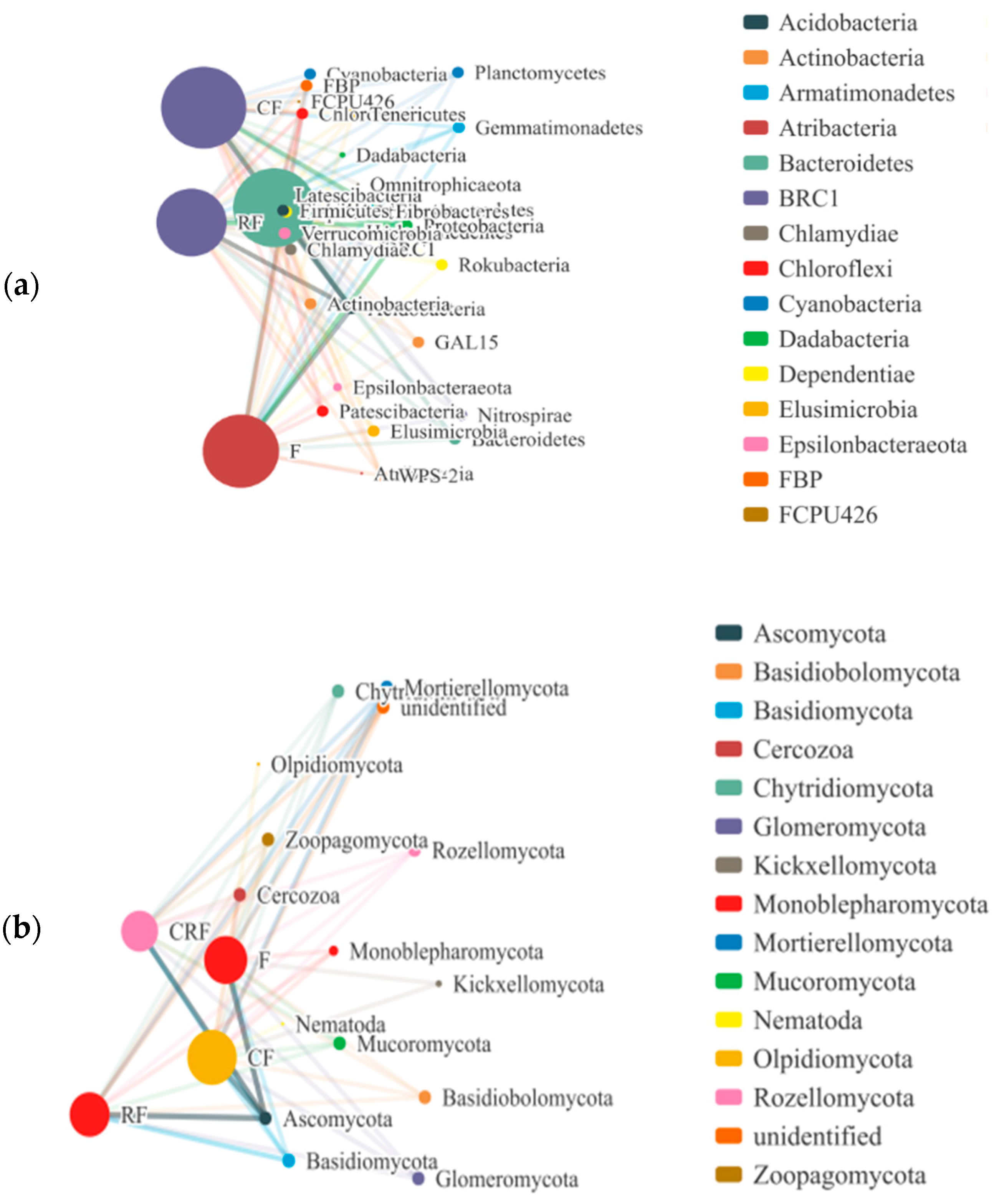
The following supporting information can be downloaded at https://www.mdpi.com/article/10.3390/land15071270/s1, Figure S1: Venn of common OTU of different treatments; Figure S2: Changes in the abundance of phylum (a) and genus under different treatments (b); Figure S3: Connetwork analysis of phylum (a) and genus (b) under different treatments; Figure S4: The Heatmap of phylum (a) and genus (b) under different treatment; Table S1: Changes of soybean mainly agronomic shape under different treatments; Table S2: Changes of nodulation in soybean under different treatments; Table S3: Bacterial richness and diversity indexes calculated by QIIME.

Author Contributions

T.H.: investigation, data curation, formal analysis, writing—original draft. C.J.: data curation, writing—review and editing. X.W.: data curation, visualization, methodology. E.F.: data curation, writing—review and editing. T.Z.: data curation, investigation. J.Z.: data curation, project administration, supervision. L.M.: conceptualization, writing—review and editing, project administration. All authors have read and agreed to the published version of the manuscript.

Funding

This research was funded by the National Key Research and Development Program of China, grant number 2024YFD1501800.

Data Availability Statement

The data that support the findings of this study are available on request from the corresponding author. The data are not publicly available due to privacy or ethical restrictions.

Conflicts of Interest

The authors declare no conflict of interest.

References

  1. Alvarez, A.L.; Weyers, S.L.; Gardner, R.D. Insights into the effect of cyanobacterial inoculations on the microbial dynamics of an arable soil under simulated rain. Biol. Fertil. Soils 2023, 59, 103–116. [Google Scholar] [CrossRef] [Scilit]
  2. Li, R.; Hu, W.; Jia, Z.; Liu, H.; Zhang, C.; Huang, B.; Yang, S.; Zhao, Y.; Zhao, Y.; Shukla, M.K.; et al. Soil degradation: A global threat to sustainable use of black soils. Pedosphere 2025, 35, 264–279. [Google Scholar] [CrossRef] [Scilit]
  3. Ulzen, J.; Abaidoo, R.C.; Mensah, N.E.; Masso, C.; AbdelGadir, A.H. Bradyrhizobium Inoculants Enhance Grain Yields of Soybean and Cowpea in Northern Ghana. Front. Plant Sci. 2016, 7, 1770. [Google Scholar] [CrossRef] [Scilit] [PubMed]
  4. Akley, E.K.; Rice, C.W.; Adotey, N.; Ampim, P.A.Y.; Vara Prasad, P.V.; Owusu Danquah, E.; Denwar, N.N. Residual Bradyrhizobium inoculation effects on soybean performance and selected soil health parameters. Agron. J. 2022, 114, 1627–1641. [Google Scholar] [CrossRef] [Scilit]
  5. Cardoso, J.D.; Gomes, D.F.; Goes, K.C.G.P.; Fonseca, N.d.S.; Dorigo, O.F.; Hungria, M.; Andrade, D.S. Relationship between total nodulation and nodulation at the root crown of peanut, soybean and common bean plants. Soil Biol. Biochem. 2009, 41, 1760–1763. [Google Scholar] [CrossRef] [Scilit]
  6. Rodiño, A.P.; De La Fuente, M.; De Ron, A.M.; Lema, M.J.; Drevon, J.J.; Santalla, M. Variation for nodulation and plant yield of common bean genotypes and environmental effects on the genotype expression. Plant Soil 2011, 346, 349–361. [Google Scholar] [CrossRef] [Scilit]
  7. Wang, L.; Jiao, Y.; Bi, Y.; Hu, Y.; Jiang, Y.; Wang, S.; Wang, S. Nodulation number tempers the relative importance of stochastic processes in the assembly of soybean root-associated communities. ISME Commun. 2023, 3, 89. [Google Scholar] [CrossRef] [Scilit] [PubMed]
  8. Hardoim, P.R.; Overbeek, L.S.V.; Berg, G.; Pirttilä, A.M.; Compant, S.; Campisano, A.; Döring, M.; Sessitsch, A. The Hidden World within Plants: Ecological and Evolutionary Considerations for Defining Functioning of Microbial Endophytes. Microbiol. Mol. Biol. Rev. 2015, 79, 293–320. [Google Scholar] [CrossRef] [Scilit] [PubMed]
  9. Labaz, B.; Hartemink, A.E.; Zhang, Y.; Stevenson, A.; Kabała, C. Organic carbon in Mollisols of the world—A review. Geoderma 2024, 447, 116937. [Google Scholar] [CrossRef] [Scilit]
  10. Wang, H.; Yang, S.; Wang, Y.; Gu, Z.; Xiong, S.; Huang, X.; Sun, M.; Zhang, S.; Guo, L.; Cui, J.; et al. Rates and causes of black soil erosion in Northeast China. CATENA 2022, 214, 106250. [Google Scholar] [CrossRef] [Scilit]
  11. Li, C.; Chen, X.; Jia, Z.; Zhai, L.; Zhang, B.; Grüters, U.; Ma, S.; Qian, J.; Liu, X.; Zhang, J.; et al. Meta-analysis reveals the effects of microbial inoculants on the biomass and diversity of soil microbial communities. Nat. Ecol. Evol. 2024, 8, 1270–1284. [Google Scholar] [CrossRef] [Scilit] [PubMed]
  12. Jack, C.N.; Petipas, R.H.; Cheeke, T.E.; Rowland, J.L.; Friesen, M.L. Microbial Inoculants: Silver Bullet or Microbial Jurassic Park? Trends Microbiol. 2021, 29, 299–308. [Google Scholar] [CrossRef] [Scilit] [PubMed]
  13. Prando, A.M.; Barbosa, J.Z.; Oliveira, A.B.d.; Nogueira, M.A.; Possamai, E.J.; Hungria, M. Benefits of soybean co-inoculation with Bradyrhizobium spp. and Azospirillum brasilense: Large-scale validation with farmers in Brazil. Eur. J. Agron. 2024, 155, 127112. [Google Scholar] [CrossRef] [Scilit]
  14. Wang, Q.; Sheng, J.; Pan, L.; Cao, H.; Li, C.; Lambers, H.; Wang, X. Soil property determines the ability of rhizobial inoculation to enhance nitrogen fixation and phosphorus acquisition in soybean. Appl. Soil Ecol. 2022, 171, 104346. [Google Scholar] [CrossRef] [Scilit]
  15. Rahman, A.; Manci, M.; Nadon, C.; Perez, I.A.; Farsamin, W.F.; Lampe, M.T.; Le, T.H.; Torres Martínez, L.; Weisberg, A.J.; Chang, J.H.; et al. Competitive interference among rhizobia reduces benefits to hosts. Curr. Biol. 2023, 33, 2988–3001.e4. [Google Scholar] [CrossRef] [Scilit] [PubMed]
  16. Martins, J.T.; Peixoto, L.; Giannini-Kurina, F.; Han, E.; Rasmussen, J. Effect of additional inoculation on in situ biomass, nodule formation and N2 fixation in soybean under Northern European conditions. Plant Soil 2026, 518, 197–210. [Google Scholar] [CrossRef] [Scilit]
  17. Wang, M.; Ge, A.-H.; Ma, X.; Wang, X.; Xie, Q.; Wang, L.; Song, X.; Jiang, M.; Yang, W.; Murray, J.D.; et al. Dynamic root microbiome sustains soybean productivity under unbalanced fertilization. Nat. Commun. 2024, 15, 1668. [Google Scholar] [CrossRef] [Scilit] [PubMed]
  18. Hungria, M.; Rondina, A.B.L.; Nunes, A.L.P.; Araujo, R.S.; Nogueira, M.A. Seed and leaf-spray inoculation of PGPR in brachiarias (Urochloa spp.) as an economic and environmental opportunity to improve plant growth, forage yield and nutrient status. Plant Soil 2021, 463, 171–186. [Google Scholar] [CrossRef] [Scilit]
  19. Kaschuk, G.; Auler, A.C.; Vieira, C.E.; Dakora, F.D.; Jaiswal, S.K.; da Cruz, S.P. Coinoculation impact on plant growth promotion: A review and meta-analysis on coinoculation of rhizobia and plant growth-promoting bacilli in grain legumes. Braz. J. Microbiol. 2022, 53, 2027–2037. [Google Scholar] [CrossRef] [Scilit] [PubMed]
  20. Barbosa, J.Z.; Hungria, M.; Sena, J.V.d.S.; Poggere, G.; dos Reis, A.R.; Corrêa, R.S. Meta-analysis reveals benefits of co-inoculation of soybean with Azospirillum brasilense and Bradyrhizobium spp. in Brazil. Appl. Soil Ecol. 2021, 163, 103913. [Google Scholar] [CrossRef] [Scilit]
  21. Canellas, L.P.; Silva, R.M.; Barbosa, L.J.d.S.; Sales, F.S.; Ribeiro, R.C.; Mota, G.P.; Olivares, F.L. Co-Inoculation with Bradyrhizobium and Humic Substances Combined with Herbaspirillum seropedicae Promotes Soybean Vegetative Growth and Nodulation. Agronomy 2023, 13, 2660. [Google Scholar] [CrossRef] [Scilit]
  22. Peoples, M.B.; Giller, K.E.; Jensen, E.S.; Herridge, D.F. Quantifying country-to-global scale nitrogen fixation for grain legumes: I. Reliance on nitrogen fixation of soybean, groundnut and pulses. Plant Soil 2021, 469, 1–14. [Google Scholar] [CrossRef] [Scilit]
  23. Del Buono, D. Can biostimulants be used to mitigate the effect of anthropogenic climate change on agriculture? It is time to respond. Sci. Total Environ. 2021, 751, 141763. [Google Scholar] [CrossRef] [Scilit] [PubMed]
  24. Nardi, S.; Muscolo, A.; Vaccaro, S.; Baiano, S.; Spaccini, R.; Piccolo, A. Relationship between molecular characteristics of soil humic fractions and glycolytic pathway and krebs cycle in maize seedlings. Soil Biol. Biochem. 2007, 39, 3138–3146. [Google Scholar] [CrossRef] [Scilit]
  25. Nardi, S.; Pizzeghello, D.; Ertani, A. Hormone-like activity of the soil organic matter. Appl. Soil Ecol. 2018, 123, 517–520. [Google Scholar] [CrossRef] [Scilit]
  26. Janati, W.; Benmrid, B.; Elhaissoufi, W.; Zeroual, Y.; Nasielski, J.; Bargaz, A. Will Phosphate Bio-Solubilization Stimulate Biological Nitrogen Fixation in Grain Legumes? Front. Agron. 2021, 3, 637196. [Google Scholar] [CrossRef] [Scilit]
  27. Akimbekov, N.; Qiao, X.; Digel, I.; Abdieva, G.; Ualieva, P.; Zhubanova, A. The effect of leonardite-derived amendments on soil microbiome structure and potato yield. Agriculture 2020, 10, 147. [Google Scholar] [CrossRef] [Scilit]
  28. Asaf, S.; Numan, M.; Khan, A.L.; Al-Harrasi, A. Sphingomonas: From diversity and genomics to functional role in environmental remediation and plant growth. Crit. Rev. Biotechnol. 2020, 40, 138–152. [Google Scholar] [CrossRef] [Scilit] [PubMed]
  29. Muñoz, N.; Qi, X.; Li, M.W.; Xie, M.; Gao, Y.; Cheung, M.Y.; Wong, F.L.; Lam, H.M. Improvement in nitrogen fixation capacity could be part of the domestication process in soybean. Heredity 2016, 117, 84–93. [Google Scholar] [CrossRef] [Scilit] [PubMed]
  30. Beruk, H.; Yoseph, T.; Ayalew, T. Unlocking the Potential of Inoculation with Bradyrhizobium for Enhanced Growth and Symbiotic Responses in Soybean Varieties under Controlled Conditions. Agronomy 2024, 14, 1280. [Google Scholar] [CrossRef] [Scilit]
  31. Omari, R.A.; Yuan, K.; Anh, K.T.; Reckling, M.; Halwani, M.; Egamberdieva, D.; Ohkama-Ohtsu, N.; Bellingrath-Kimura, S.D. Enhanced Soybean Productivity by Inoculation With Indigenous Bradyrhizobium Strains in Agroecological Conditions of Northeast Germany. Front. Plant Sci. 2022, 12, 707080. [Google Scholar] [CrossRef] [Scilit] [PubMed]
  32. He, C.; Gao, T.; Wang, X.; Chen, R.; Gao, H.; Liu, H. Co-inoculation of Bacillus subtilis and Bradyrhizobium liaoningense increased soybean yield and improved soil bacterial community composition in coastal saline-alkali land. Front. Plant Sci. 2025, 16, 1677763. [Google Scholar] [CrossRef] [Scilit] [PubMed]
  33. Fonseca de Souza, L.; Oliveira, H.G.; Pellegrinetti, T.A.; Mendes, L.W.; Bonatelli, M.L.; Dumaresq, A.S.R.; Sinatti, V.V.C.; Pinheiro, J.B.; Azevedo, J.L.; Quecine, M.C. Co-inoculation with Bacillus thuringiensis RZ2MS9 and rhizobia improves the soybean development and modulates soil functional diversity. FEMS Microbiol. Ecol. 2025, 101, fiaf013. [Google Scholar] [CrossRef] [Scilit] [PubMed]
  34. Marchão, R.L.; Silva, G.C.d.; Andrade, S.R.M.d.; Junior, F.B.d.R.; Júnior, M.P.d.B.; Haphonsso, R.H.; Carvalho, A.M.d. Improving Soybean Development and Grain Yield by Complementary Inoculation with Growth-Promoting Bacteria Azospirillum, Pseudomonas, Priestia, and Bacillus. Plants 2025, 14, 402. [Google Scholar] [CrossRef] [Scilit] [PubMed]
  35. Marinković, J.; Miljaković, D.; Đorđević, V.; Vasiljević, M.; Tamindžić, G.; Miladinović, J.; Vasiljević, S. Perspectives of Bradyrhizobium and Bacillus Inoculation for Improvement of Soybean Tolerance to Water Deficit. Agronomy 2024, 14, 2692. [Google Scholar] [CrossRef] [Scilit]
  36. Yamamoto, S.; Okazaki, S.; Monica, N.D.; Ohkama-Ohtsu, N.; Tanaka, H.; Sugihara, S. Rhizobium Inoculation Improved the Rhizosphere P Dynamics and P Uptake Capacity of Pigeon Pea Plants Grown in Strongly Weathered Soil Only under P Fertilized Conditions. Agronomy 2022, 12, 3149. [Google Scholar] [CrossRef] [Scilit]
  37. Chen, Y.; Xia, A.; Zhang, Z.; Wang, F.; Chen, J.; Hao, Y.; Cui, X. Extracellular enzyme activities response to nitrogen addition in the rhizosphere and bulk soil: A global meta-analysis. Agric. Ecosyst. Environ. 2023, 356, 108630. [Google Scholar] [CrossRef] [Scilit]
  38. Xu, F.; Liao, H.; Yang, J.; Zhang, Y.; Yu, P.; Cao, Y.; Fang, J.; Chen, S.; Li, L.; Sun, L.; et al. Auxin-producing bacteria promote barley rhizosheath formation. Nat. Commun. 2023, 14, 5800. [Google Scholar] [CrossRef] [Scilit] [PubMed]
  39. Joshi, S.; Gangola, S.; Jaggi, V.; Sahgal, M. Functional characterization and molecular fingerprinting of potential phosphate solubilizing bacterial candidates from Shisham rhizosphere. Sci. Rep. 2023, 13, 7003. [Google Scholar] [CrossRef] [Scilit] [PubMed]
  40. Letunic, I.; Bork, P. Interactive Tree Of Life (iTOL) v5: An online tool for phylogenetic tree display and annotation. Nucleic Acids Res. 2021, 49, W293–W296. [Google Scholar] [CrossRef] [Scilit] [PubMed]
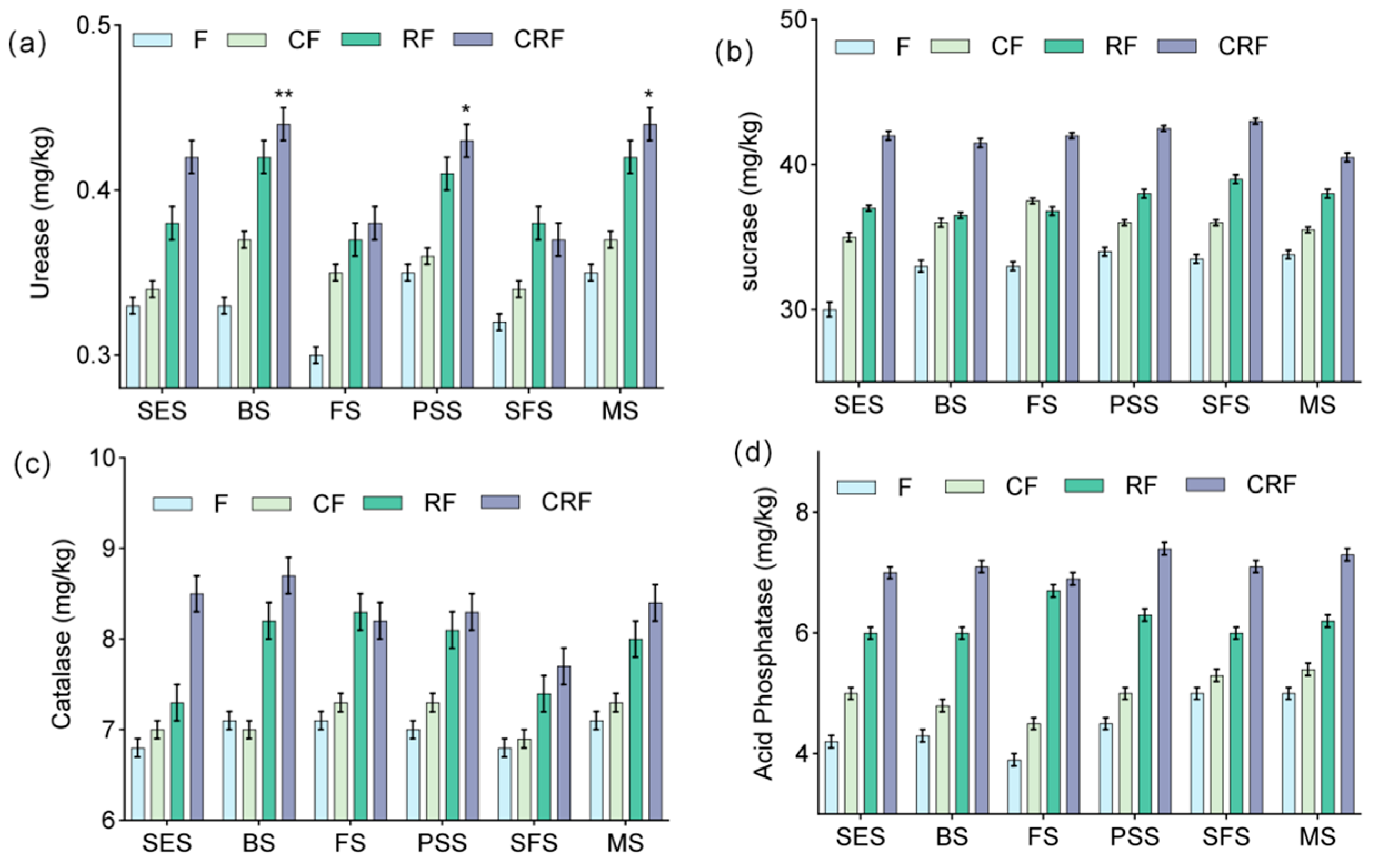
Figure 1. Soil enzyme activities under different inoculation treatments across six soybean growth stages. (a) Sucrase (Suc), (b) urease (Ure), (c) catalase (CAT), (d) acid phosphatase (ACP). F: conventional fertilization; CF: fertilization + rhizobia; RF: fertilization + microbial consortium; CRF: fertilization + rhizobia + consortium. SES: seedling emergence; BS: branching; FS: flowering; PSS: pod setting; SFS: seed filling; MS: maturity. n = 3. Asterisks indicate significant differences between treatments: p < 0.05 (*) and p < 0.01 (**).
Land 15 01270 g001
Figure 2. Principal coordinates analysis (PCoA) of bacterial community composition at the phylum (a) and genus (b) levels under different treatments.
Land 15 01270 g002
Figure 3. Redundancy analysis (RDA) showing relationships between soil variables and bacterial community composition at the phylum (a) and genus (b) levels.
Land 15 01270 g003
Table 1. Soybean growth and yield-related traits as affected by rhizobium and microbial consortium inoculation.
TraitFCFRFCRF
Plant height (cm)77.67 ± 2.1879.67 ± 2.3677.00 ± 2.1079.67 ± 2.25
Plant density (plants m−2)28.00 ± 0.5828.67 ± 0.7629.33 ± 0.5828.50 ± 0.71
Seeds per plant50.93 ± 1.7453.50 ± 1.9252.27 ± 1.6352.77 ± 1.85
Root length (cm)27.33 ± 1.1630.53 ± 1.3435.67 ± 1.5231.33 ± 1.28
Root diameter (cm)0.71 ± 0.040.64 ± 0.030.73 ± 0.040.81 ± 0.05
Root fresh weight (g)7.63 ± 0.386.72 ± 0.346.08 ± 0.317.40 ± 0.42
Nodule number per plant26.47 ± 1.8637.53 ± 2.3127.90 ± 1.9420.60 ± 1.42
Plant fresh weight (g)39.32 ± 1.9734.77 ± 1.7430.40 ± 1.6135.55 ± 1.82
Leaf area (cm2)30.89 ± 1.4634.72 ± 1.6226.66 ± 1.3120.16 ± 1.08
100-seed weight (g)16.30 ± 0.3115.93 ± 0.2815.93 ± 0.3016.50 ± 0.33
Yield (kg ha−1)2093.25 ± 58.642200.35 ± 67.252199.60 ± 62.482234.40 ± 70.16
Yield increase (%)5.005.007.00
Note: F, conventional fertilization; CF, conventional fertilization + multifunctional microbial consortium inoculation; RF, conventional fertilization + rhizobial inoculation; CRF, conventional fertilization + rhizobial inoculation + multifunctional microbial consortium co-inoculation. n = 3.
Table 2. Soil physicochemical properties of soybean rhizosphere at different growth stages under various inoculation treatments.
IndexTreatmentSESBSFSPSSSFSMS
pHF6.13 ± 0.05 cC6.03 ± 0.04 dC6.09 ± 0.05 cC6.13 ± 0.04 cB6.05 ± 0.05 cB6.21 ± 0.06 cB
CF6.22 ± 0.04 bB6.09 ± 0.05 cC6.33 ± 0.06 bB6.25 ± 0.05 bB6.14 ± 0.04 bA6.28 ± 0.05 bA
RF6.23 ± 0.05 bB6.19 ± 0.04 bB6.43 ± 0.05 aA6.30 ± 0.06 bA6.21 ± 0.05 aA6.30 ± 0.04 bA
CRF6.26 ± 0.04 aA6.28 ± 0.05 aA6.18 ± 0.04 bC6.37 ± 0.05 aA6.20 ± 0.04 aA6.35 ± 0.05 aA
SOM
(g kg−1)
F32.8 ± 0.9 cC33.4 ± 1.0 cB29.0 ± 0.8 dC31.5 ± 0.9 cC32.0 ± 0.8 cC33.5 ± 1.0 cC
CF33.6 ± 0.9 cB34.7 ± 1.1 bB37.2 ± 1.0 bB36.5 ± 1.1 bB39.3 ± 1.2 bB41.0 ± 1.3 bB
RF36.2 ± 1.0 aA37.1 ± 1.2 aA35.9 ± 1.0 cB41.3 ± 1.2 aA40.0 ± 1.1 bB42.4 ± 1.3 aA
CRF35.0 ± 1.0 bA37.3 ± 1.1 aA39.2 ± 1.2 aA41.0 ± 1.1 aA44.0 ± 1.3 aA43.6 ± 1.2 aA
SWC (%)F15.9 ± 0.5 dC16.3 ± 0.6 cB15.3 ± 0.5 dD16.4 ± 0.6 cC17.1 ± 0.5 dC16.5 ± 0.6 dC
CF17.1 ± 0.6 cB18.2 ± 0.7 bB17.6 ± 0.6 cB19.1 ± 0.7 bB18.0 ± 0.6 cC18.8 ± 0.7 cB
RF21.2 ± 0.7 bA20.9 ± 0.8 aA19.7 ± 0.7 bC21.1 ± 0.8 aA20.2 ± 0.7 bB22.4 ± 0.8 bA
CRF22.3 ± 0.8 aA22.1 ± 0.7 aA23.2 ± 0.8 aA20.7 ± 0.7 aA23.6 ± 0.9 aA23.0 ± 0.8 aA
AP
(mg kg−1)
F14.7 ± 0.6 dC15.6 ± 0.7 dC17.1 ± 0.7 cB16.4 ± 0.6 cC15.7 ± 0.6 cC18.2 ± 0.8 cC
CF16.4 ± 0.7 bB18.7 ± 0.8 bB19.1 ± 0.8 bA20.0 ± 0.9 bB18.7 ± 0.7 bB20.4 ± 0.9 bB
RF15.4 ± 0.6 cB16.8 ± 0.7 cC17.2 ± 0.7 cB19.6 ± 0.8 bB18.8 ± 0.8 bB21.0 ± 0.9 bA
CRF17.8 ± 0.7 aA21.9 ± 1.0 aA20.4 ± 0.9 aA21.3 ± 0.9 aA22.4 ± 1.0 aA21.9 ± 0.9 aA
AK
(mg kg−1)
F143.2 ± 4.3 cC144.3 ± 4.5 cC151.3 ± 4.8 cB150.4 ± 4.6 cC152.4 ± 4.9 bB156.0 ± 5.1 cC
CF166.0 ± 5.2 aA159.4 ± 4.9 bB162.5 ± 5.0 aA169.3 ± 5.4 aA171.6 ± 5.7 aA170.9 ± 5.5 bB
RF158.4 ± 4.8 bB161.4 ± 5.0 bA163.5 ± 5.1 aA171.7 ± 5.6 aA169.9 ± 5.4 bA173.5 ± 5.8 aA
CRF161.7 ± 5.0 bA165.4 ± 5.2 aA159.4 ± 4.8 bA162.4 ± 5.1 bB168.7 ± 5.3 bA171.8 ± 5.6 bA
AN
(mg kg−1)
F13.98 ± 0.5 bB14.55 ± 0.51 cC16.17 ± 0.58 dD15.98 ± 0.55 cC16.78 ± 0.61 cC16.90 ± 0.63 dD
CF12.66 ± 0.44 cC14.05 ± 0.49 cC16.78 ± 0.60 cC15.57 ± 0.54 cC18.98 ± 0.69 bB17.87 ± 0.65 cC
RF14.09 ± 0.50 bB15.09 ± 0.53 bB17.36 ± 0.62 bB18.36 ± 0.67 bB21.98 ± 0.82 aA19.32 ± 0.71 bA
CRF15.43 ± 0.54 aA17.36 ± 0.63 aA18.92 ± 0.70 aA19.37 ± 0.72 aA18.89 ± 0.68 bB20.81 ± 0.78 aA
Note: F, conventional fertilization; CF, conventional fertilization + multifunctional microbial consortium inoculation; RF, conventional fertilization + rhizobium inoculation; CRF, conventional fertilization + rhizobium + multifunctional microbial consortium co-inoculation. SES, seedling emergence stage; BS, branching stage; FS, flowering stage; PSS, pod setting stage; SFS, seed filling stage; MS, maturity stage. SOM, soil organic matter; SWC, soil water content; AP, available phosphorus; AK, available potassium; AN, alkali-hydrolyzable nitrogen. Different lowercase letters in the same column indicate significant differences at p < 0.05; different uppercase letters in the same row indicate significant differences at p < 0.05. n = 3.
Table 3. Pearson correlation analysis between soybean yield and soil physicochemical properties.
TreatmentspHSWC (%)SOM (g/kg)AP (mg/kg)AK (mg/kg)AN (mg/kg)
F0.071 *0.0120.3420.128 **0.3900.125
CF−0.136 **0.526 *0.1420.0910.638 *0.520
RF0.0310.681 *−0.798 **−0.217 *0.3820.461
CRF0.146 **0.3850.655 *0.071−0.708 **0.702 *
Footnote: F, conventional fertilization; CF, conventional fertilization + rhizobium inoculation; RF, conventional fertilization + multifunctional microbial consortium inoculation; CRF, conventional fertilization + rhizobium + multifunctional microbial consortium co-inoculation. * Significant correlation at p < 0.05 (two-tailed); ** significant correlation at p < 0.01 (two-tailed).
Disclaimer/Publisher’s Note: The statements, opinions and data contained in all publications are solely those of the individual author(s) and contributor(s) and not of MDPI and/or the editor(s). MDPI and/or the editor(s) disclaim responsibility for any injury to people or property resulting from any ideas, methods, instructions or products referred to in the content.