Article

Locked at the Node? Spatial Reconcentration and Conditional Diffusion Around Chinese-Financed Port Infrastructure in Africa


by
Hang Ren
1,2,
Tianhe Jiang
1 and
Mo Bi
3,*
1
Population Research Institute, Nanjing University of Posts and Telecommunications, Nanjing 210023, China
2
China Society for African Studies, Nanjing University, Nanjing 210023, China
3
School of Foreign Languages, Southeast University, Nanjing 210096, China
*
Author to whom correspondence should be addressed.
Land 2026, 15(7), 1161; https://doi.org/10.3390/land15071161
Submission received: 14 May 2026 / Revised: 20 June 2026 / Accepted: 22 June 2026 / Published: 27 June 2026

Abstract

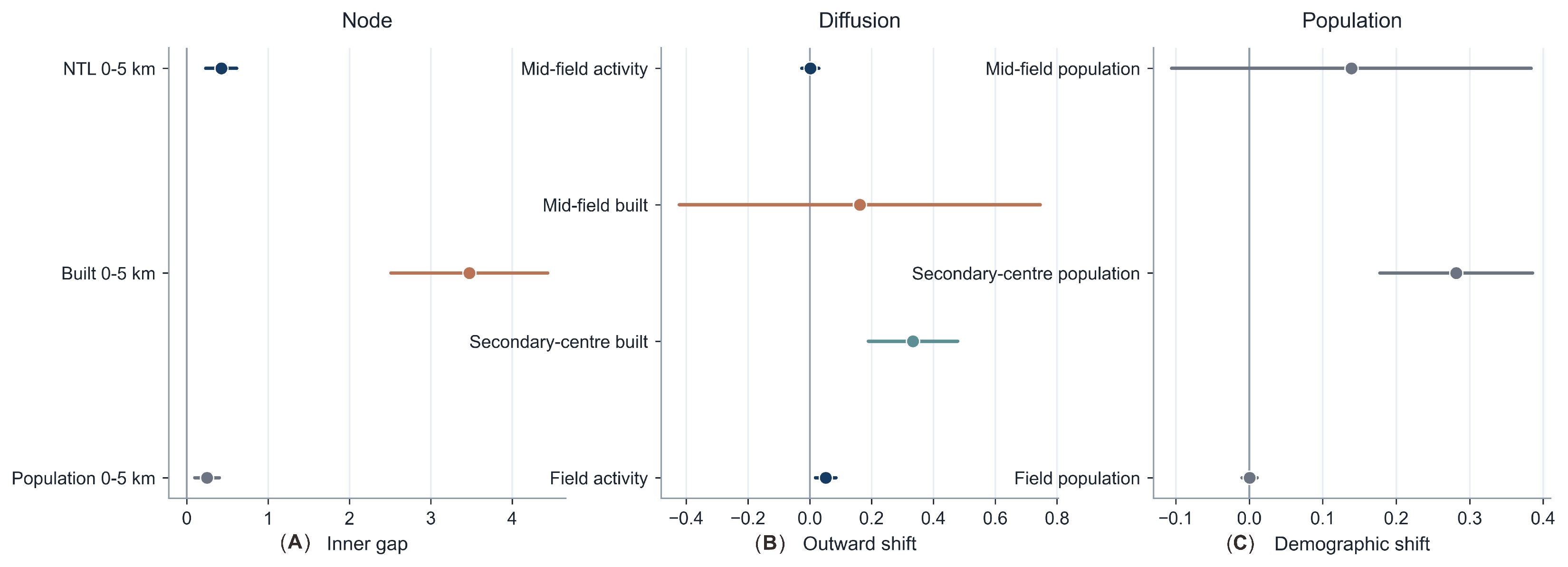
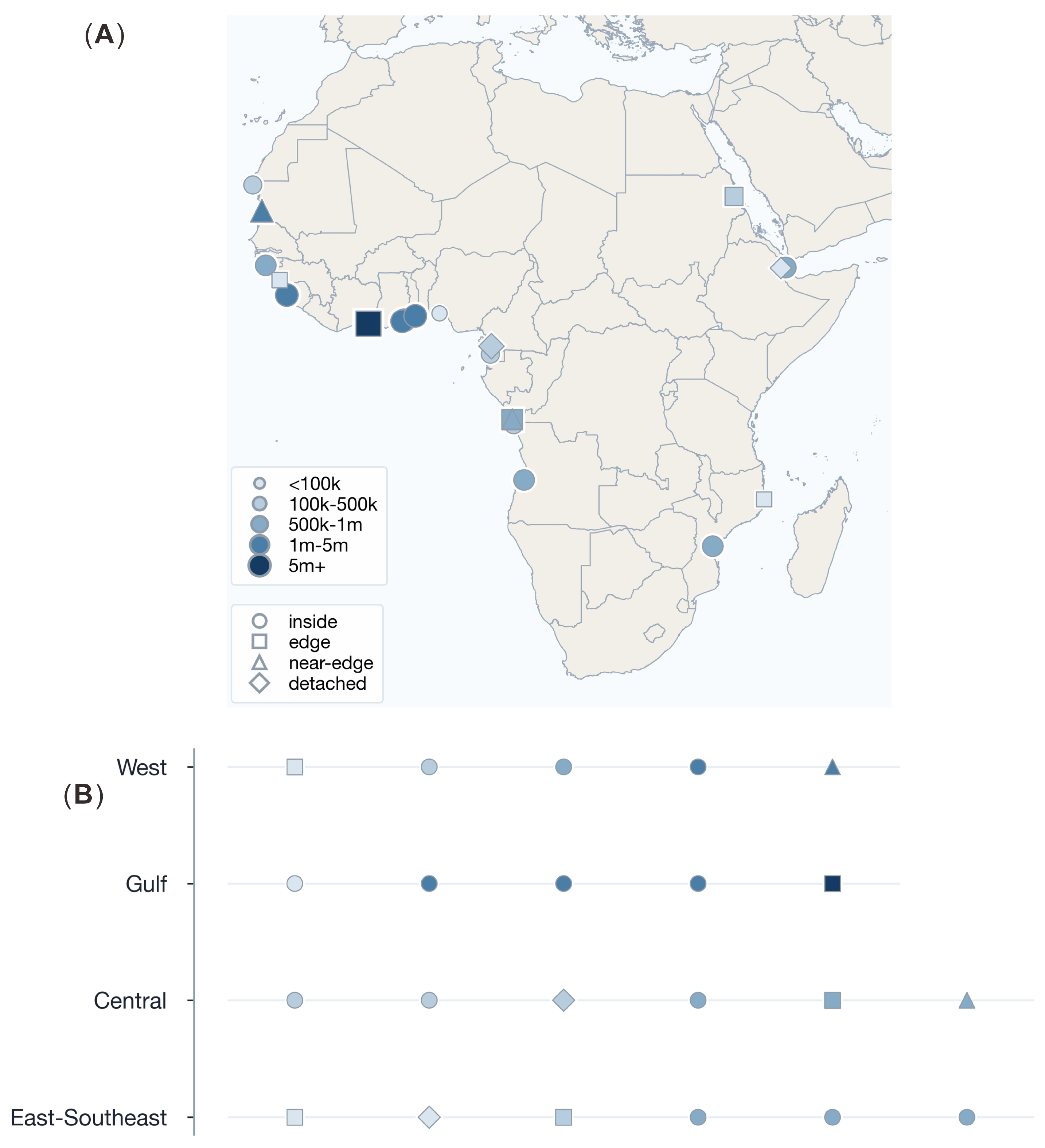
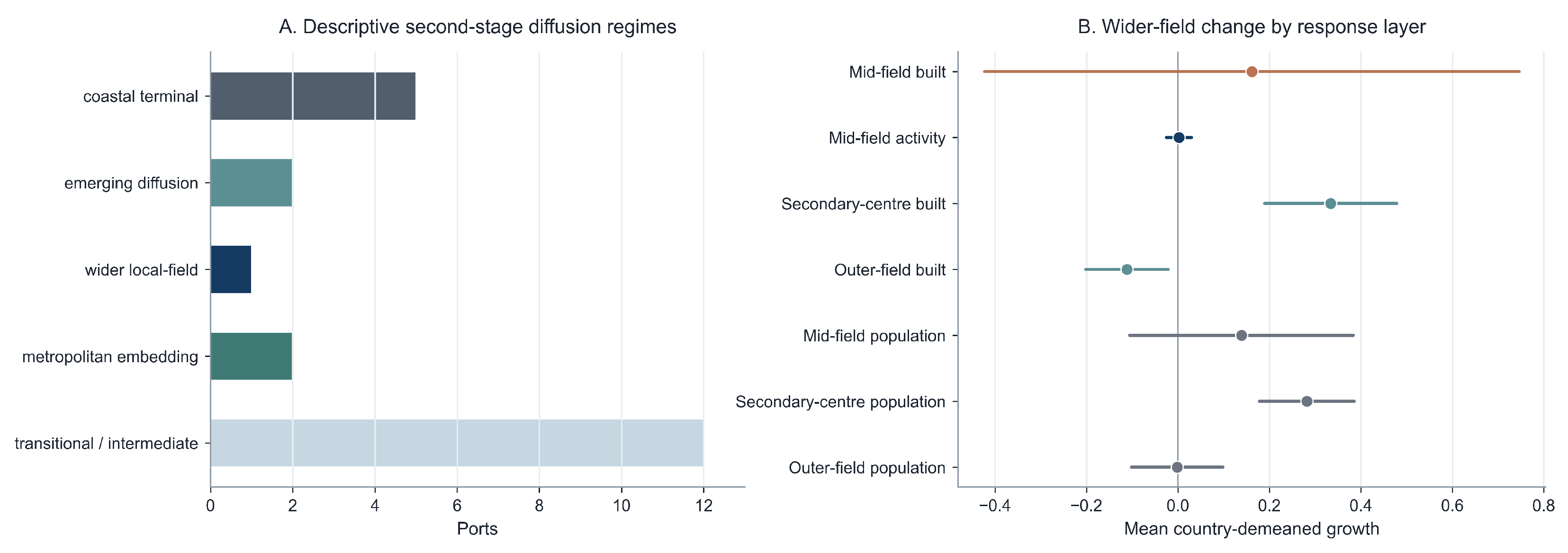
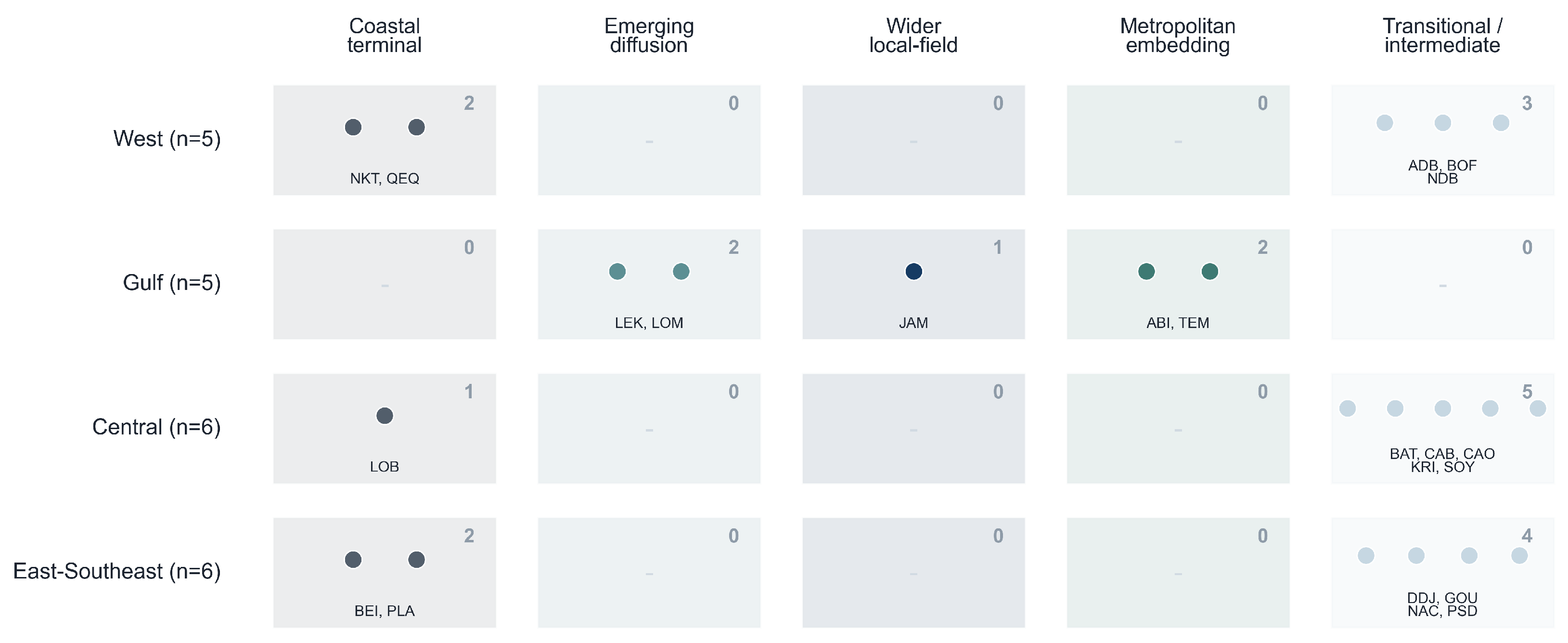
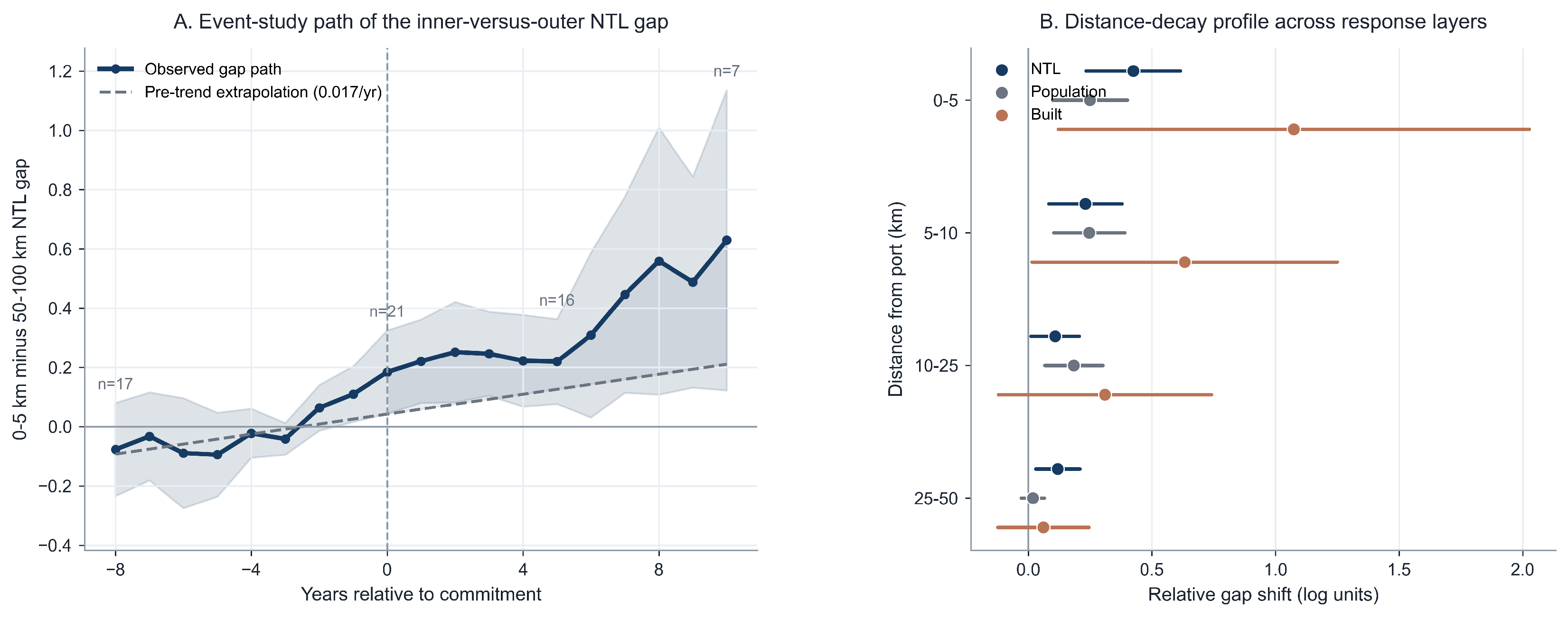
Ports are often expected to convert external connectivity into wider territorial development, yet the spatial reach of those gains is rarely observed directly around treated projects. This paper traces spatial change around 22geocodable physical port infrastructure projects drawn from a 58-unit African project universe. Local port node intensification is common, but outward diffusion is conditional. The strongest change is concentrated within 0–10 km of the port node, and most projects reinforce existing coastal nodes. When gains extend outward, they appear more clearly in activity and built-space uptake than in population. Node-centered activity intensifies first, followed by wider built-space uptake and land-use reorganization; population absorbs more slowly and less systematically. Outward diffusion is also more likely where local gains connect to stronger inherited or later-reinforced road networks and to an existing settlement skeleton. Overall, port-generated gains often remain concentrated at the coastal node; only where corridor connectivity and an existing settlement skeleton are present do they begin to reorganize nearby settlements.
Keywords: port infrastructure; African ports; Chinese finance; spatial reconcentration; conditional diffusion; built-space uptake; settlement restructuring port infrastructure; African ports; Chinese finance; spatial reconcentration; conditional diffusion; built-space uptake; settlement restructuring