Article

Long-Term Crop Diversification Enhances Soil Carbon Fractions and Sequestrations in Northwestern India

1
Department of Soil Science, Punjab Agricultural University, Ludhiana 141004, Punjab, India
2
School of Organic and Natural Farming, Punjab Agricultural University, Ludhiana 141004, Punjab, India
3
Department of Agronomy, School of Agriculture, Lovely Professional University, Phagwara 144411, Punjab, India
4
Zhejiang Provincial Key Laboratory of Agricultural Microbiomics, Institute of Biotechnology, Zhejiang University, Hangzhou 310058, China
5
Department of Agricultural Engineering, College of Food and Agriculture Sciences, King Saud University, P.O. Box 2454, Riyadh 11451, Saudi Arabia
6
Civil Engineering Department, Faculty of Engineering, Minia University, Minia 61111, Egypt
7
Structural Diagnostics and Analysis Research Group, Faculty of Engineering and Information Technology, University of Pécs, 7622 Pécs, Hungary
*
Authors to whom correspondence should be addressed.
Land 2026, 15(7), 1140; https://doi.org/10.3390/land15071140 (registering DOI)
Submission received: 15 May 2026 / Revised: 9 June 2026 / Accepted: 12 June 2026 / Published: 25 June 2026
(This article belongs to the Special Issue Carbon-Focused Land Use Strategies: Pathways to Climate Resilience)

Abstract

Prolonged cultivation of cereal-based cropping systems in the Indo-Gangetic Plain has contributed to soil degradation, groundwater depletion, and declining soil organic carbon levels, highlighting the urgent need for climate-resilient, sustainable crop diversification strategies that enhance soil carbon sequestration and improve overall soil health. A 6-year field experiment assessed 10 cropping systems (CSs) using a randomized complete block design with four replications, focusing on their effects on soil carbon stocks and sequestration at two soil depths (0–15 cm and 15–30 cm). It was inferred from the results that there is a significant variation in soil carbon stocks, with maize–peas–spring groundnut (CS6) having the highest surface carbon stock (13.0 Mg ha−1) and baby corn–potato–okra (CS10) having the highest sub-surface carbon stock (11.9 Mg ha−1). Carbon sequestration peaked in CS6 at 5.06 Mg ha−1 at 0–15 cm, and its sequestration rate was the highest (0.84 Mg ha−1 yr−1). Total organic carbon (TOC) ranged from 0.63% in Rice–Wheat (CS1) to 0.73% in CS6, with similarly high values in other diversified systems. Very labile carbon (VLC) was highest in basmati rice, late-sown wheat, and cowpea (CS3) and CS6, demonstrating the benefits of legume-based systems. At depths of 15–30 cm, trends were consistent but lower. Water-soluble carbon (WSC) and hot water-soluble carbon (HWSC) showed significant differences across systems, with CS3 recording the highest values. The findings indicate that cropping systems incorporating legume diversification and green manuring enhance carbon stocks, sequestration rates, and soil carbon stability, demonstrating that crop diversification is an effective means of increasing soil carbon storage, promoting soil health, and supporting sustainable agricultural production in Northwestern India.

1. Introduction

The Indo-Gangetic Plain (IGP), one of the most intensively cultivated agroecosystems in the world, is characterized by generally low soil organic carbon (SOC) concentrations, often below 0.5% in intensively cultivated soils [1,2]. Long-term cereal-based production systems, residue removal, intensive tillage, and imbalanced nutrient management have contributed to SOC depletion and declining soil quality across the region. Modelling studies have estimated SOC stocks in the IGP at approximately 1.27 Pg in the upper 20 cm of soil, highlighting the importance of management interventions to maintain and enhance soil carbon reserves [3]. Given that agricultural soils are among the largest terrestrial carbon pools globally, improving SOC sequestration through diversified and sustainable cropping systems is critical for fostering resilient, healthy soils, sustaining productivity, and mitigating climate change. In addition, the dominance of cereal-based systems, especially rice–wheat, under high tillage intensity, residue removal, and imbalanced nutrient use has contributed to SOC depletion as well as the decline of soil physical, chemical, and biological properties, including reduced aggregate stability, nutrient imbalance, and microbial activity, in the IGP [4,5]. Enhancing SOC sequestration through improved cropping systems is therefore considered a critical pathway to sustain agricultural productivity while mitigating greenhouse gas emissions [6].
Total SOC alone, however, often responds slowly to management, whereas its partitioning into distinct carbon fractions provides a more sensitive diagnostic of soil quality changes [7]. Particulate organic carbon (POC), permanganate-oxidizable carbon, and microbial biomass carbon (MBC) represent labile pools that are tightly connected to nutrient cycling and biological activity, and they respond rapidly to changes in residue inputs and tillage practices [8]. Simultaneous evaluation of labile and recalcitrant SOC fractions, therefore, offers a more comprehensive understanding of how management affects both short-term soil function and long-term carbon storage [9].
Cropping system composition and management exert strong controls on SOC fractions and sequestration potential [10]. Long-term experiments and reviews from Indian agro-ecosystems show that diversified and legume-based rotations, balanced fertilisation, and organic inputs enhance SOC stocks and C-rich fractions compared with simple cereal monocultures [11]. Under conservation agriculture (CA) practices in the IGP, combining reduced or zero tillage, residue retention, and diversified rotations, studies have reported increases in total SOC, labile C fractions, MBC, and improved aggregation relative to conventional tillage rice–wheat systems [12]. These gains in SOC pools have been associated with higher crop productivity and improved soil physical properties, indicating that appropriate cropping systems can simultaneously support production and carbon sequestration goals [13].
Recent work in rice–wheat and rice–wheat–mungbean systems in the eastern IGP demonstrates that 10–15 years of CA practices substantially increase SOC pools in surface soils compared with conventional management [14]. Similarly, long-term inclusion of pulses and organic amendments in Indo-Gangetic cropping systems have been shown to enhance SOC sequestration relative to fertiliser-only cereal rotations [15].
However, most studies have focused on specific tillage or residue management practices within a limited number of cropping patterns. Information remains scarce regarding the effects of a broader range of contrasting cropping systems, including cereal-based, legume-intensive, fodder-oriented, and vegetable-based systems, on SOC fractions under similar soil and climatic conditions in Northwestern India [16]. Addressing this knowledge gap is essential to identify carbon-efficient cropping systems that can rebuild SOC, enrich labile and stable carbon pools, and enhance the carbon sequestration potential of alluvial soils in this intensively cultivated region [17].
We hypothesized that long-term crop diversification, particularly through the inclusion of legumes, green manure, and diversified crop rotations, would enhance soil organic carbon fractions, carbon stocks, carbon management indices, and carbon sequestration potential compared with conventional cereal-based cropping systems.
The present study, therefore, aims to evaluate the impact of different cropping systems on soil carbon fractions and carbon sequestration in North-West India. It specifically investigates how long-term contrasting rotations influence total SOC, key labile and stable carbon pools, and associated carbon management indices in surface and subsurface soil layers of a representative alluvial soil. By linking cropping system composition with SOC fractions and sequestration potential, the study seeks to provide a scientific basis for recommending sustainable cropping systems that enhance soil carbon and support resilient production in the Indo-Gangetic Plains.

2. Materials and Methods

The study was conducted at the AICRP-IFS laboratory, School of Organic and Natural Farming, PAU, Ludhiana. Baseline soil characteristics are presented in Table 1.

2.1. Climate

The study area exhibits subtropical, semi-arid conditions, featuring a hot, dry summer (April–June), a hot, humid monsoon period (July–September), and a cool season from November to January. This area receives an average rainfall of about 650 mm. There were considerable fluctuations in mean maximum and minimum temperatures during different parts of the year. The mean monthly minimum temperature in winter ranged from 7.2 °C in December 2022 to 10.2 °C in February 2023. In the summer, the mean monthly maximum temperature varied from 36.3 °C in June 2022 to 31.7 °C in September 2022.

2.2. Experiment Details

The experiment used a randomized block design with four replications. We had 40 plots total, each 10 m by 10 m. Soil samples were collected from the following depths: Surface Soil (0–15 cm) and Sub-surface soil (15–30 cm). Ten cropping systems were tested (Table 2). CS 1 to CS4 were cereal-based systems. CS5 and CS6 focused on soil health. CS7 and CS8 were for fodder. CS9 and CS10 were vegetable systems.
All cropping systems were managed according to the recommended agronomic practices prescribed in the Package of Practices developed by PAU, Ludhiana. Rice cultivar PR 126 was transplanted (spacing 20 cm × 15 cm) using a seed rate of 20 kg ha−1. The crop received 105 kg N, 30 kg P, and 30 kg K ha−1, with nitrogen applied in three splits at 7, 21, and 35 days after transplanting (DAT). Basmati rice cultivar Pusa Basmati 1509 was supplied with 42 kg N ha−1 in two equal splits at 21 and 42 DAT.
Wheat cultivars Unnat PBW 373 and PBW 752 (late-sown) were established using a seed rate of 100 kg ha−1 at spacings of 15–20 cm and 15 cm × 5 cm, respectively. Both wheat crops were fertilized with 125 kg N and 62.5 kg P ha−1. Maize cultivar PMH-1 was sown at 60 cm × 20 cm spacing with a seed rate of 25 kg ha−1 and received 50 kg N, 60 kg P, and 30 kg K ha−1. Nitrogen was applied in three equal doses during the crop growth period. In the maize + cowpea intercropping system, 87.5 kg N and 30 kg P ha−1 were applied as basal fertilizers.
Potato cultivar Kufri Pukhraj was planted at 60 cm × 10 cm spacing and fertilized with 188 kg N, 63 kg P, and 63 kg K ha−1. Half of the nitrogen dose was top-dressed during earthing-up at 30 DAS. Cowpea cultivar CL 367 and mustard (Brassica juncea cv. GSC 7) were sown (spacing 45 cm × 15 cm). Cowpea received 50 kg N, 40 kg P, and 25 kg K ha−1, whereas mustard was supplied with 100 kg N and 30 kg P ha−1. Nitrogen application in mustard was split equally between sowing and first irrigation at 30 DAS.
Groundnut cultivar TG 37A and pea cultivar Punjab 89 were sown using seed rates of 80 and 75 kg ha−1, respectively, and fertilized with the recommended doses of nitrogen and phosphorus at sowing. Oat cultivar OL 11 and berseem cultivar BL 43 were maintained at spacings of 20 cm and 20 cm × 10 cm, respectively. Oats were sown with a seed rate of 62.5 kg ha−1, while berseem received 25 kg N and 75 kg P ha−1.
Sorghum multicut cultivar Punjab Sudax Chari 4 was fertilized with split nitrogen doses after successive cuttings. Onion cultivar Punjab Naroya and baby corn cultivar Baby Corn 1 received the recommended fertilizer application at transplanting, followed by additional nitrogen after crop establishment. Okra cultivar Punjab Suhawani was planted (spacing 45 cm × 15 cm) and fertilized with 92 kg N ha−1, of which half was applied at sowing and the remaining half after the first fruit picking.
The soil samples were collected from the above-mentioned cropping systems after the rabi crop harvesting in 2023. The soil samples were collected from the 0–15 cm and 15–30 cm depths to estimate soil chemical and biological properties. Within each plot, soil cores were collected from five representative locations following a zig-zag sampling pattern and thoroughly mixed to obtain one composite sample per plot and depth. These soil samples were then brought to the lab. After collecting soil samples from all treatments, the samples were air-dried, ground in a mortar and pestle, sieved through 2 mm sieves, and stored in plastic containers prior to analysis. For determining aggregate stability and bulk density, undisturbed fresh surface soil samples were collected. To determine microbial biomass carbon (MBC), fresh rhizospheric soil samples were also collected from the respective treatment plots. Rhizospheric soil was specifically used for MBC analysis because it represents the biologically active soil environment influenced by root exudates and microbial activity. Fresh samples were analyzed immediately for microbial biomass carbon, whereas the bulk soil samples were air-dried and processed for the determination of soil organic carbon fractions and other chemical properties.

2.3. Soil Analysis

Bulk Density

The core methodology was used to calculate bulk density. Using a metallic core of known volume, undisturbed soil samples were taken from the 0–15 cm and 15–30 cm soil layers. The bulk density was computed as the ratio of oven-dry soil mass to core volume. The obtained samples were oven-dried for 24 h at 105 °C [18].

2.4. Organic Carbon Pools in Soil

2.4.1. Total Organic Carbon (TOC)

Soil samples were completely ground up and then passed through a 0.25 mm sieve for TOC measurement. A commercial microwave oven (Samsung CE1041DSB2/TL 28 L Convection Microwave Oven (Samsung Electronics Co., Ltd., Suwon-si, Gyeonggi-do, Republic of Korea)) was used to digest soil samples in accordance with Benbi et al. [19]. A 0.5 g soil sample was accurately weighed into a 100 mL conical flask, then 5 mL each of 1 N K2Cr2O7 solution and concentrated H2SO4 were added. The flasks were gently swirled to thoroughly mix the contents. Subsequently, ten such flasks (total digestion mixture volume of 100 mL) were positioned on a mechanical turntable and subjected to microwave irradiation at full power (627 W) for 80 s, delivering approximately 500 J mL−1 of microwave energy to the mixture [20].
After digestion, the contents were transferred into 50 mL graduated centrifuge tubes after being allowed to cool to ambient temperature. The samples were centrifuged for five minutes at 5000 rpm after being diluted with double-distilled water to a final volume of 30 mL. The content of organic carbon was then measured using a spectrophotometer equipped with a 1 cm cuvette to measure the absorbance of Cr(III) in the supernatant at 590 nm. A calibration curve with sucrose standards ranging from 0 to 10 mg sucrose-C was created for quantitative estimation. The absorbance values obtained for the samples were interpolated against the standard curve to determine organic carbon concentration, which was then expressed as TOC (g kg−1).

2.4.2. Soil Organic Carbon (SOC)

To determine soil organic carbon content in soil, the wet combustion method of Walkley and Black (1934) [21] was used. First, 10 mL of 1 N K2Cr2O7 (potassium dichromate) was added to 2 g of dried soil in a conical flask. Then, 20 mL of concentrated sulphuric acid (H2SO4) was added to the flask and swirled while adding. After the flask’s contents cooled, about 2 g of NaF (sodium fluoride) was added, followed by 100 mL of distilled water, and 4–5 drops of diphenylamine indicator, resulting in a violet suspension. The excess dichromate was back-titrated with 0.5 N ferrous ammonium sulfate (FAS) solution until the endpoint was reached, as indicated by a colour transition from blue through violet to a bright green hue. The volume of FAS consumed during titration was used to determine the soil organic carbon content, which was expressed as a percentage.

2.4.3. Organic C Fractions of Different Oxidizability

To assess the quality and stability of organic carbon in soils, a modified Walkley and Black (1934) [21] method, as refined by Chan et al. [22], was utilized for fractionation. The method is based on the selective oxidation of carbon compounds using sulfuric acid at varying concentrations in the presence of potassium dichromate (K2Cr2O7). The use of H2SO4 at concentrations of 12 N, 18 N, and 24 N—corresponding to K2Cr2O7:H2SO4 ratios of 1:0.5, 1:1, and 1:2, respectively—enables categorisation of SOC into very labile, labile, less labile, and recalcitrant fractions. This partitioning reflects the relative ease with which different organic carbon components can be oxidized and contributes to understanding soil carbon dynamics under different cropping systems.

2.4.4. Organic Carbon Associated with Aggregates

Walkley and Black’s [21] quick titration technique was used to measure aggregate-associated carbon after oven-dried (50° C) soil aggregates of various size fractions were pulverized to a size of less than 0.25 mm using a wooden pestle and mortar.

2.4.5. Permanganate Oxidizable Soil Organic Carbon

The method proposed by Blair et al. [23] was employed to determine potassium permanganate-oxidizable carbon (KMnO4-C).

2.4.6. Water Soluble Carbon (WSC)

The method as described by Benbi et al. [24] was used for determination of water-soluble carbon (WSC). A 50 mL centrifuge tube was filled with 20 mL of double-distilled water and 10 g of soil. The samples were centrifuged for ten minutes at 5000 rpm after being shaken for five minutes. A 250 mL Erlenmeyer flask was filled with 5 mL of the solution after it had been filtered with Whatman No. 1 filter paper. Next, 10 mL of concentrated sulfuric acid, 5 mL of phosphoric acid, and 5 mL of 0.07 N potassium dichromate were added. After 30 min of heating to 150 °C, the mixture was chilled and 20 mL of double-distilled water was added. A 0.01 N FAS standard solution was used for the titration, and five to six drops of diphenylamine indicator were used to identify the endpoint.

2.4.7. Hot-Water Soluble Carbon

Hot water-soluble carbon (HWSC) was determined using the method proposed by Schulz et al. [25]. A 250 mL conical flask was filled with 20 g of dirt and 100 mL of distilled water. A reflux condenser was used to gently boil the mixture for an hour. The flask was immediately cooled to room temperature using a water bath after boiling. The suspension settled quickly after five to six drops of a 49% magnesium sulfate solution were added. To get a clear extract, the supernatant was then collected in centrifuge tubes and centrifuged for 10 min at 3000 rpm.
After transferring an aliquot of 10 mL to a 250 mL Erlenmeyer flask, 10 mL of 0.2 N chromosulfuric acid was added. After that, the mixture was heated for 20 min at 125 °C. Five drops of indicator solution containing 0.2 g N-phenylanthranilic acid and 0.2 g sodium carbonate were used to titrate the reaction mixtures with 0.2 M FAS solution after they had cooled to room temperature.

2.5. SOC Stocks and Carbon Sequestration

The experimental field’s baseline soil characteristics were determined before the experiment began in 2017. The initial soil organic carbon content was 0.39%, corresponding to carbon stocks of 8.07 and 7.35 Mg ha−1 in the surface soil (0–15 cm) and sub-surface soil (15–30 cm) layers, respectively. As the experiment was established on a relatively homogeneous field, these baseline values were considered representative of all treatment plots before the imposition of the cropping systems.
Carbon sequestration on depth basis (Chaudhary et al.) [26]
S O C   s t o c k s = o r g a n i c   c a r b o n % × d e p t h m × b u k   d e n s i t y   ( M g   m 3 ) × 10000 100
S e q u e s t e r e d   S O C M g   h a 1 = S O C f S O C i
where SOC(f) and SOC(i) denote the soil organic carbon stocks measured in 2023 and at the commencement of the experiment (2017), respectively.
S e q u e s t e r e d   S O C   r a t e M g   h a 1   y e a r 1 = S e q u e s t e r e d   S O C Y e a r s   o f   e x p e r i m e n t a t i o n

2.6. Microbial Biomass Carbon

The determination of microbial biomass carbon was conducted using a method proposed by Vance et al. [27].

2.7. Statistical Analysis

R software (version 4.5.0) with the agricolae package was used to conduct statistical analyses. Four replications (n = 4) of the experiment were carried out using a randomized full block design. To evaluate the impacts of cropping systems, soil depth, and their interaction, two-way analysis of variance (ANOVA) was applied to the data. Duncan’s Multiple Range Test (DMRT) was used to compare treatment means at a significance threshold of p < 0.05. At the 95% confidence level, mean differences were deemed statistically significant.

3. Results

3.1. Soil Bulk Density

The impact of crop diversity on soil physical characteristics is shown in the differences in soil bulk density between treatments. Bulk density in the cropping system, CS9, varied from 1.40 Mg m−3 at a depth of 0–15 cm to 1.62 Mg m−3 in CS1 (Table 1). The variation in surface soil bulk density among the cropping systems was statistically significant. Cropping systems such as CS9 and CS7 showed lower bulk density, suggesting improved soil physical conditions under these systems. In the sub-surface layer (15–30 cm), bulk density ranged from 1.61 Mg m−3 (CS7, CS8, and CS10) to 1.74 Mg m−3 (CS2 and CS5). However, the difference in soil bulk density at the sub-surface layer was found to be statistically non-significant (NS).

3.2. Mean Weight Diameter (MWD)

Mean weight diameter (MWD) at the surface depth (0–15 cm) showed a statistically significant variation (Table 3). The highest MWD was recorded in CS6 (0.654 mm), closely followed by CS9 (0.641 mm) and CS4 (0.618 mm). The lowest aggregate stability was found in CS7 (0.505 mm) and CS1 (0.539 mm). In the sub-surface layer (15–30 cm), MWD also varied significantly. The highest MWD was recorded in CS4 and CS6 (0.513 mm each). The lowest MWD was recorded in the CS1 (0.354 mm).
Statistical analysis confirmed that soil bulk density and MWD at the surface were significantly influenced by the cropping system, whereas bulk density differences were significant only at the surface, not in the subsurface. The diversified cropping systems with legumes, along with GM applications, produced looser soils with better aggregate stability, whereas conventional rice–wheat and vegetable-dominated systems reduced aggregation and structural resilience.

3.3. Impact of Different Cropping Systems on SOC Associated with Macroaggregates and Microaggregates

The impact of different cropping systems on SOC associated with macro- and microaggregates is shown in Table 4. Soil organic carbon content associated with macroaggregates (>0.25 mm) showed significant variation among the cropping systems. At the 0–15 cm depth, SOC values ranged from 6.63 g kg−1 in CS1 to 9.63 g kg−1 in CS3. Other cropping systems also recorded comparatively higher values, with CS4 (9.32 g kg−1), CS7 (9.55 g kg−1), and CS6 (9.21 g kg−1) in macroaggregates associated with SOC. In contrast, relatively lower values were observed in CS10 (7.41 g kg−1), CS9 (7.63 g kg−1) and CS1 (6.63 g kg−1). At a depth of 15–30 cm, SOC in macroaggregates ranged from 5.30 g kg−1 in CS1 to 7.70 g kg−1 in CS3, with CS7 (7.64 g kg−1), CS4 (7.46 g kg−1), and CS6 (7.37 g kg−1) also showing higher values. Lower SOC concentrations were found in CS1 (5.30 g kg−1), CS10 (5.93 g kg−1), and CS9 (6.10 g kg−1). The differences among treatments were significant.
For microaggregates (<0.25 mm), SOC was significantly influenced by cropping systems at both soil depths. At 0–15 cm, the highest microaggregate-associated SOC was recorded under CS3, followed closely by CS7, CS4, and CS6, whereas the lowest values were observed under CS1, CS10, and CS9. A similar trend was observed at the 15–30 cm depth, where CS3 maintained the highest SOC content, while CS1 exhibited the lowest value. Cropping systems incorporating legumes and diversified rotations tended to maintain greater microaggregate-associated SOC than conventional cereal-based systems.

3.4. Impact of Different Cropping Systems on C Stocks, C Sequestration and C Sequestration Rate

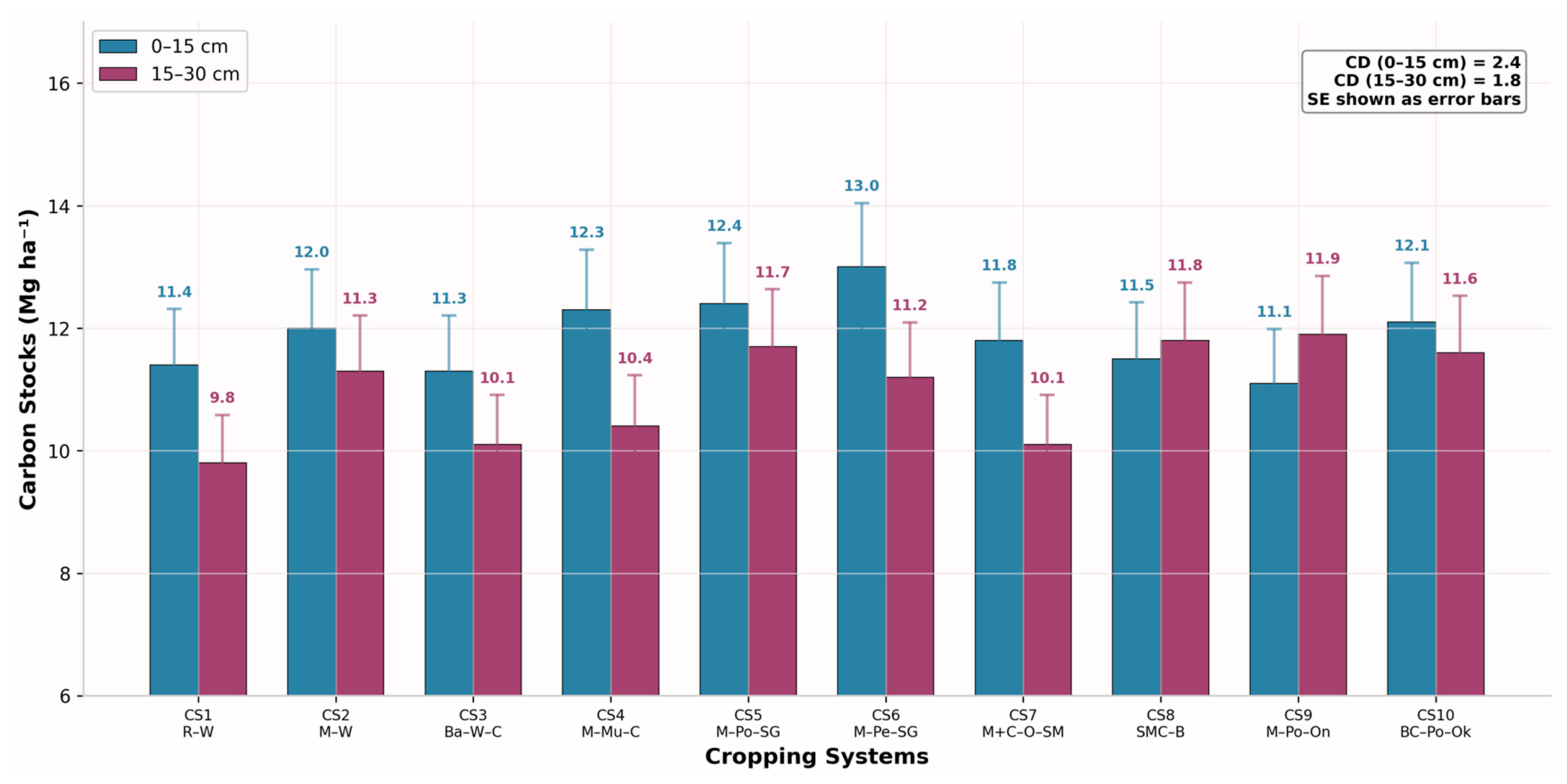
Figure 1 displays findings of how diverse cropping sequences affect soil carbon reserves. The result showed that soil carbon stocks differed significantly among cropping systems at both soil depths. At 0–15 cm, values ranged from 11.1 Mg ha−1 in CS9 to 13.0 Mg ha−1 in CS6. Other cropping systems, such as CS5 (12.4 Mg ha−1), CS4 (12.3 Mg ha−1), and CS10 (12.1 Mg ha−1), also recorded comparatively higher stocks. At 15–30 cm, carbon stocks varied between 9.8 Mg ha−1 in CS1 and 11.9 Mg ha−1 in CS9. Higher values were observed in CS5 (11.7 Mg ha−1), CS8 (11.8 Mg ha−1), and CS10 (11.6 Mg ha−1), while CS1 remained at the lower end.
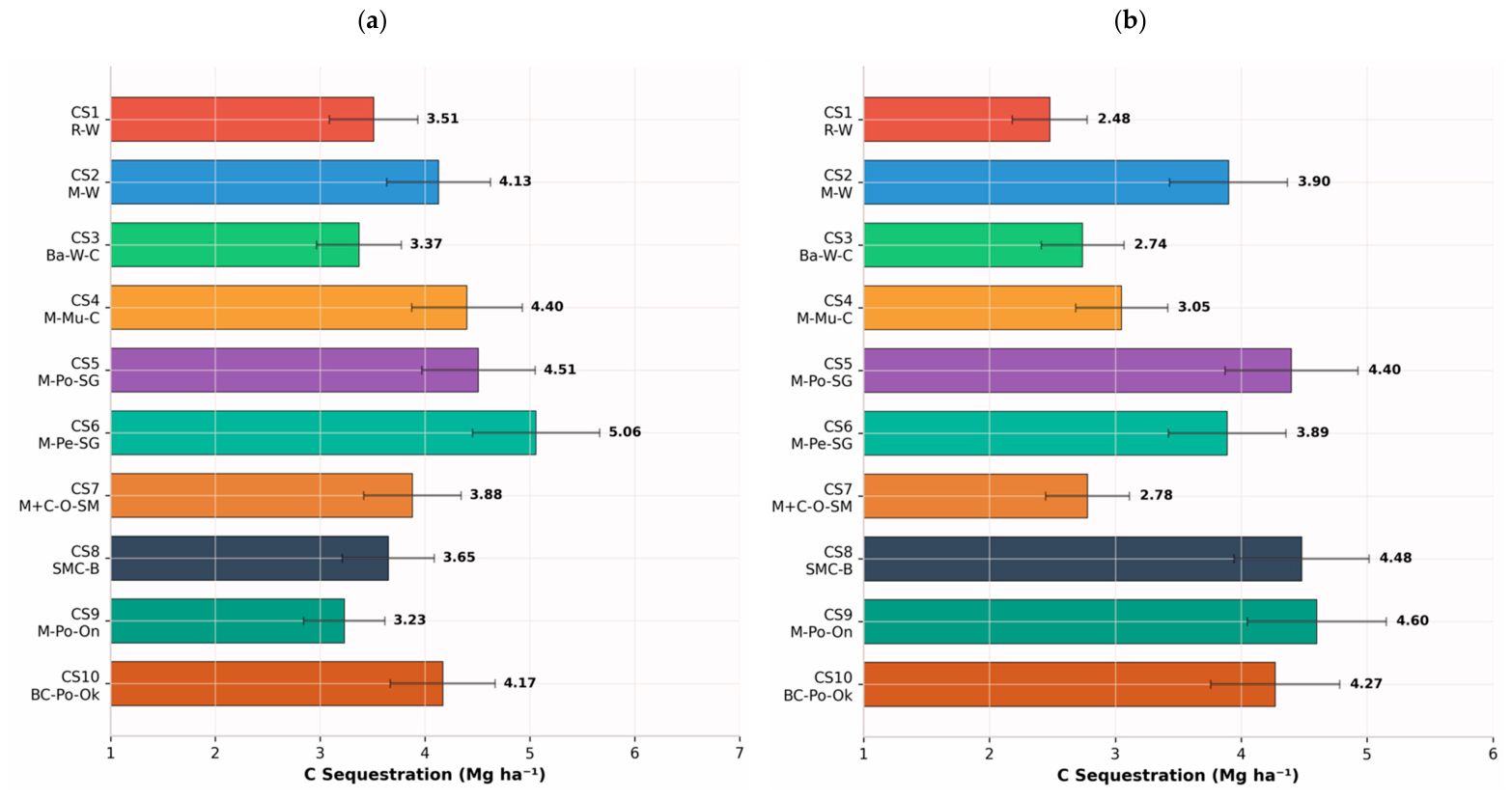
Carbon sequestration also showed significant variation across treatments (Figure 2). At 0–15 cm, the lowest value was recorded in CS9 (3.23 Mg ha−1) and the highest in CS6 (5.06 Mg ha−1). Other higher values included CS5 (4.51 Mg ha−1) and CS10 (4.17 Mg ha−1). At 15–30 cm, sequestration ranged from 2.48 Mg ha−1 in CS1 to 4.60 Mg ha−1 in CS9. Treatments such as CS8 (4.48 Mg ha−1), CS5 (4.40 Mg ha−1), and CS10 (4.27 Mg ha−1) were also among the higher values.
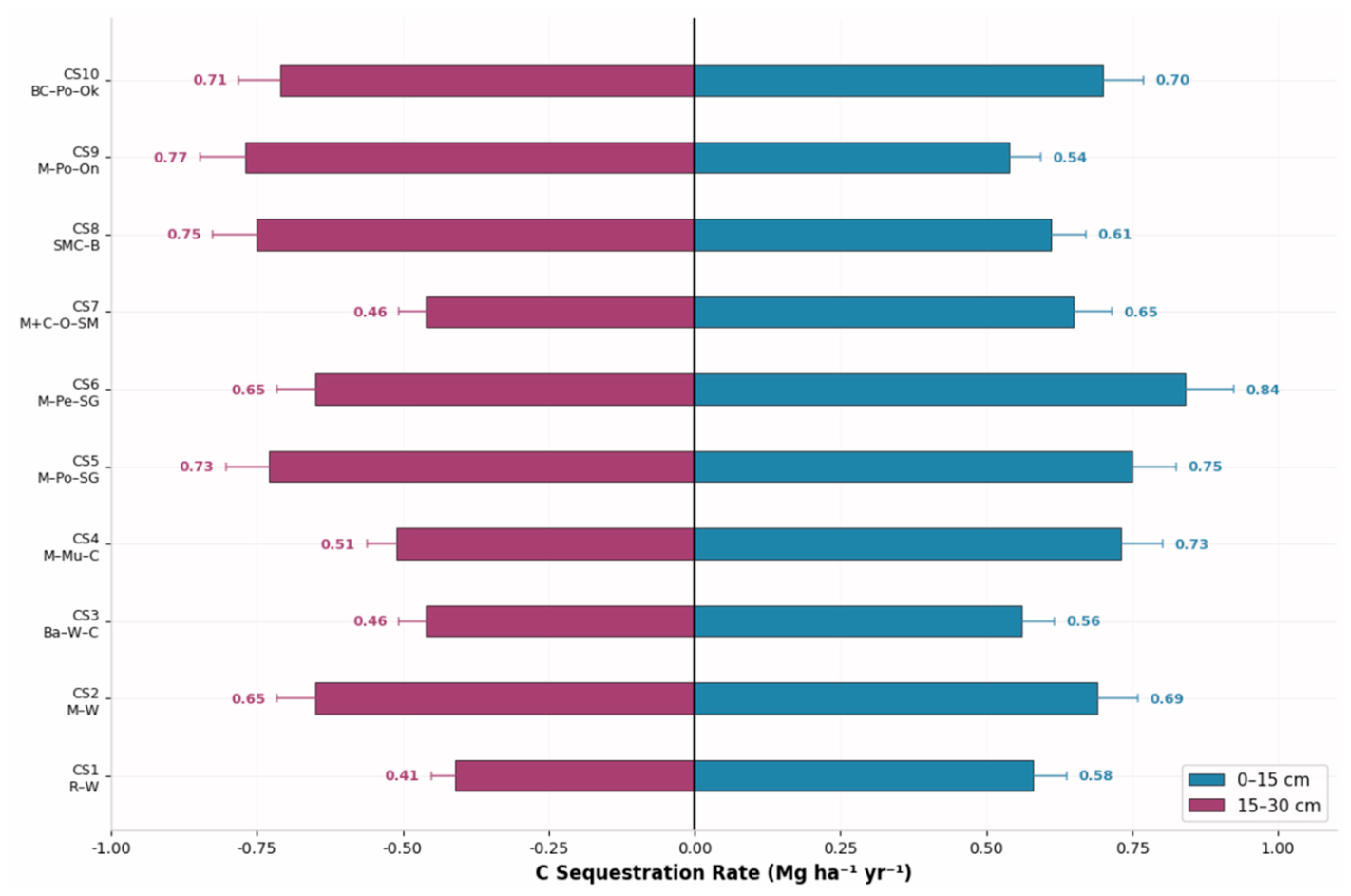
The carbon sequestration rate followed a similar significant trend (Figure 3). At 0–15 cm, values varied from 0.54 Mg ha−1 yr−1 in CS9 to 0.84 Mg ha−1 yr−1 in CS6. Higher rates were also observed in CS5 (0.75 Mg ha−1 yr−1) and CS10 (0.70 Mg ha−1 yr−1), while lower values were recorded in CS3 (0.56 Mg ha−1 yr−1) and CS1 (0.58 Mg ha−1 yr−1). At 15–30 cm, the sequestration rate ranged between 0.41 Mg ha−1 yr−1 in CS1 and 0.77 Mg ha−1 yr−1 in CS9. Higher values were also observed in CS8 (0.75 Mg ha−1 yr−1), CS5 (0.73 Mg ha−1 yr−1) and CS10 (0.71 Mg ha−1 yr−1).

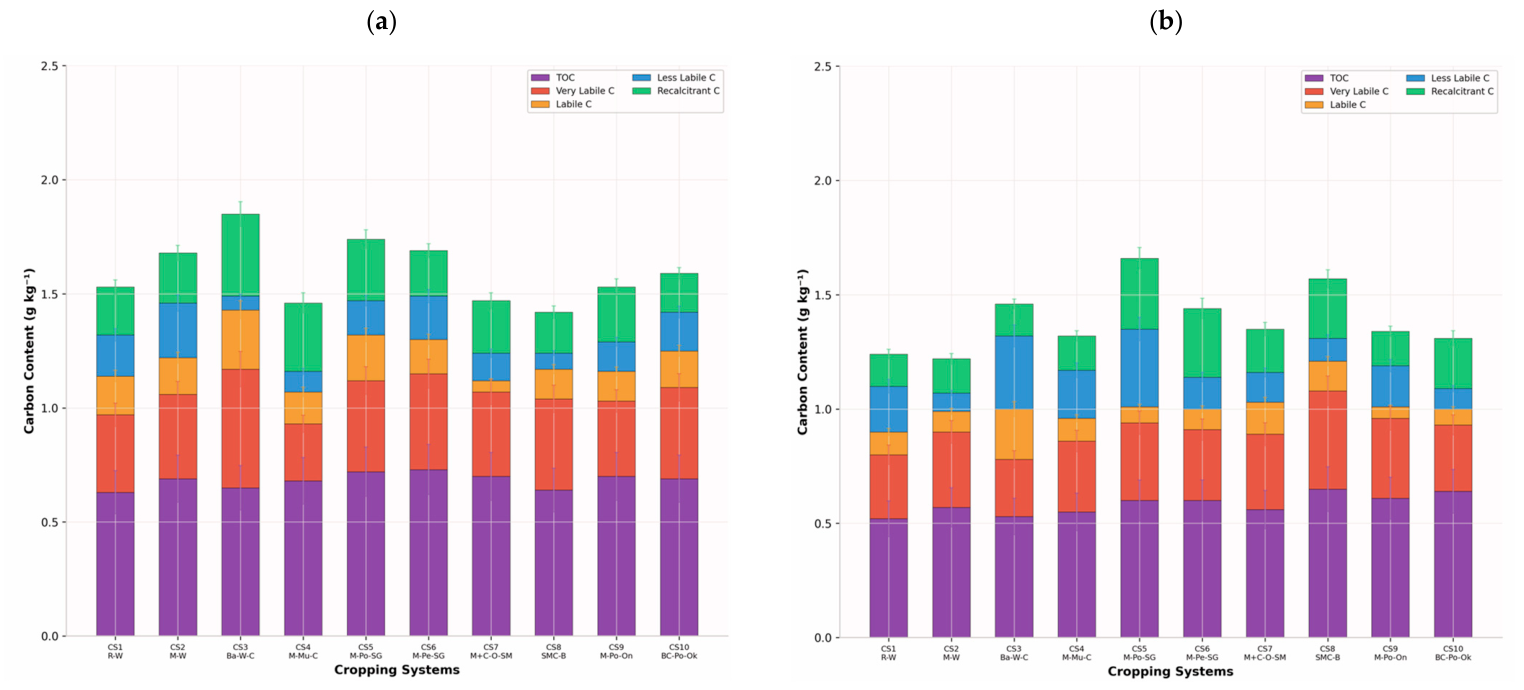
3.5. Impact of Different Cropping Systems on Total Organic Carbon (TOC), Very Labile Carbon, Labile Carbon, Less Labile Carbon and Recalcitrant Carbon in Surface Soil and Sub-Surface Soil

Figure 4 elucidates the effects of different cropping systems on TOC (%) and carbon fractions of different oxidizability in surface soil and sub-surface soil. The total organic carbon (TOC) content varied significantly among the cropping systems. In the surface layer (0–15 cm), TOC ranged from 0.63% under CS1 to 0.73% under CS6. Relatively higher values were also observed in CS5 (0.72%) and CS7 (0.70%), whereas lower concentrations were observed in CS1 (0.63%) and CS8 (0.64%). In the sub-surface layer (15–30 cm), TOC varied between 0.52% in CS1 and 0.65% in CS8, with higher values also recorded in CS5 (0.60%), CS6 (0.60%), and CS10 (0.64%).
Very labile carbon at 0–15 cm was highest in CS3 (0.52 g kg−1), followed by CS6 (0.42 g kg−1), CS5 (0.40 g kg−1) and CS10 (0.40 g kg−1). The lowest values were observed in CS4 (0.25 g kg−1). At 15–30 cm, very labile carbon ranged from 0.25 g kg−1 in CS3 to 0.43 g kg−1 in CS8, with relatively higher values in M-W (0.33 g kg−1), CS7 (0.33 g kg−1) and CS9 (0.35 g kg−1).
Labile carbon at 0–15 cm ranged from 0.05 g kg−1 in CS7 to 0.26 g kg−1 in CS3. Intermediate levels were observed in CS5 (0.20 g kg−1) and CS1 (0.17 g kg−1). In the 15–30 cm layer, labile carbon values ranged from 0.05 g kg−1 in CS9 to 0.22 g kg−1 in CS3. Treatments such as CS7 (0.14 g kg−1) and CS8 (0.13 g kg−1) also maintained higher values, while CS1 (0.10 g kg−1) and CS5 (0.07 g kg−1) showed lower contents.
Less labile carbon in the surface soil (0–15 cm) ranged from 0.06 g kg−1 in CS3 to 0.24 g kg−1 in M-W. Other treatments with relatively higher values were CS6 (0.19 g kg−1) and CS10 (0.17 g kg−1). In the 15–30 cm layer, the lowest labile carbon was observed in M-W (0.08 g kg−1), followed closely by CS3 (0.32 g kg−1) and CS5 (0.34 g kg−1). Cropping systems such as CS4 (0.21 g kg−1) and CS9 (0.18 g kg−1) fell in the intermediate range.
Recalcitrant carbon content at 0–15 cm was lowest in CS8 (0.18 g kg−1) and highest in CS3 (0.36 g kg−1). Relatively higher values were also found in CS4 (0.30 g kg−1) and CS5 (0.27 g kg−1), while comparatively lower values occurred in CS6 (0.20 g kg−1) and CS10 (0.17 g kg−1). At 15–30 cm depth, recalcitrant carbon varied between 0.14 g kg−1 in CS1 and CS3 and 0.31 g kg−1 in CS5. Cropping systems such as CS6 (0.30 g kg−1) and CS8 (0.26 g kg−1) also recorded higher contents.

3.6. Impact of Different Cropping Systems on Water-Soluble Carbon (WSC), Hot Water-Soluble Carbon (HWSC) and KMnO4-Oxidizable C in Surface Soil and Sub-Surface Soil

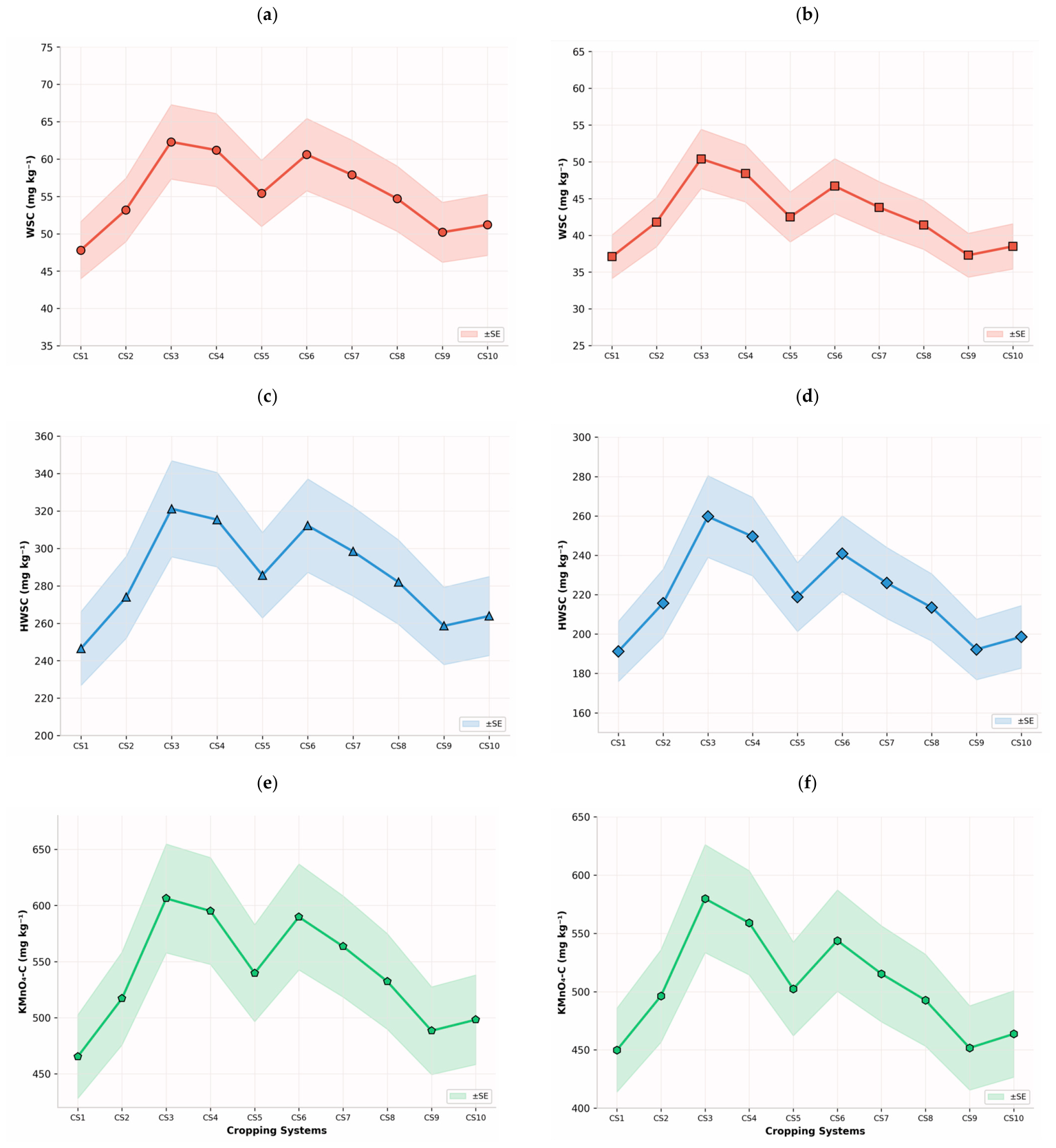
Figure 5 elucidates the effect of different cropping systems on Water-soluble carbon (WSC) and Hot water-soluble carbon (HWSC) in soil at surface and sub-surface soil. WSC content differed significantly among cropping systems at both soil depths. In the 0–15 cm layer, WSC ranged from 47.8 mg kg−1 under CS1 cropping system to 62.3 mg kg−1 under CS3. Other cropping systems with relatively higher values included CS4 (61.2 mg kg−1) and CS6 (60.6 mg kg−1). Lower values were observed in CS9 (50.2 mg kg−1) and CS10 (51.2 mg kg−1). At 15–30 cm depth, WSC varied between 37.1 mg kg−1 in CS1 and 50.4 mg kg−1 in CS3, with comparatively higher contents also noted in CS4 (48.4 mg kg−1) and CS6 (46.7 mg kg−1), while CS9 (37.3 mg kg−1) and CS10 (38.5 mg kg−1) were among the lowest cropping systems.
Hot water-soluble carbon (HWSC) also exhibited significant variation across treatments. At 0–15 cm, the maximum HWSC was recorded in CS3 (321.2 mg kg−1), followed closely by CS4 (315.4 mg kg−1) and CS6 (312.2 mg kg−1). The lowest values were observed in M-W (246.5 mg kg−1) and CS9 (258.6 mg kg−1). Intermediate values were maintained in treatments such as CS7 (298.4 mg kg−1) and CS8 (282.0 mg kg−1). In the 15–30 cm layer, HWSC ranged from 191.2 mg kg−1 in CS1 to 259.7 mg kg−1 in CS3. Relatively higher contents were also observed in CS4 (249.5 mg kg−1) and CS6 (240.8 mg kg−1), whereas lower values were found in CS9 (192.2 mg kg−1) and CS10 (198.6 mg kg−1).
Figure 5 shows that KMnO4-oxidizable carbon was significantly influenced by cropping systems at both soil depths. At 0–15 cm, the highest value was recorded in CS3 (606 mg kg−1), followed by CS4 (595 mg kg−1) and CS6 (589 mg kg−1), whereas the lowest value was observed in CS1 (465 mg kg−1). A similar trend was evident at 15–30 cm, where CS3 maintained the highest KMnO4-oxidizable carbon content (579 mg kg−1), while CS1 recorded the lowest value (449 mg kg−1). Overall, legume-based and diversified cropping systems tended to accumulate greater amounts of readily oxidizable carbon than conventional cereal-based systems, indicating enhanced carbon inputs and improved soil organic matter dynamics under diversified rotations.

3.7. Impact of Different Cropping Systems on Microbial Biomass Carbon

For microbial biomass carbon (MBC), values ranged from 224.3 to 257.6 mg kg−1 (Table 5). The highest value was observed in CS5 (257.6 mg kg−1), which was statistically equivalent to CS6 (255.5 mg kg−1). CS4 (250.0 mg kg−1) and CS10 (251.4 mg kg−1) also exhibited higher MBC values. On the other hand, CS1 (224.3 mg kg−1) showed the lowest MBC value, which was significantly lower than the highest (CS5). M-W (242.9 mg kg−1), CS7 (244.4 mg kg−1), and CS9 (245.2 mg kg−1) were found to be intermediate, with values still significantly lower than CS5.

3.8. Multi-Indicator Comparison of Top-Performing Cropping Systems

To further evaluate the overall performance of the most promising cropping systems, a multi-indicator comparison was conducted. The radar chart summarizing the overall performance of cropping systems has been provided in Supplementary Figure S1. Figure S1 compares CS5 (maize–potato–spring groundnut) and CS6 (maize–peas–spring groundnut) across five key indicators—total organic carbon (TOC), carbon stocks, carbon sequestration, water-soluble carbon (WSC), and hot water-soluble carbon (HWSC)—at both 0–15 cm and 15–30 cm depths.
The radar chart clearly demonstrates that CS6 outperformed CS5 in most indicators at the surface layer (0–15 cm), particularly in TOC (0.73% vs. 0.72%), carbon stocks (13.0 vs. 12.4 Mg ha−1), and carbon sequestration (5.06 vs. 4.51 Mg ha−1). However, both systems showed comparable performance at the subsurface layer (15–30 cm), suggesting that the benefits of legume-based diversification are more pronounced in surface soils. This multi-dimensional analysis confirms that CS6 represents the most effective cropping system for enhancing soil carbon sequestration in the study region.

3.9. Interrelationships Among Carbon Pools

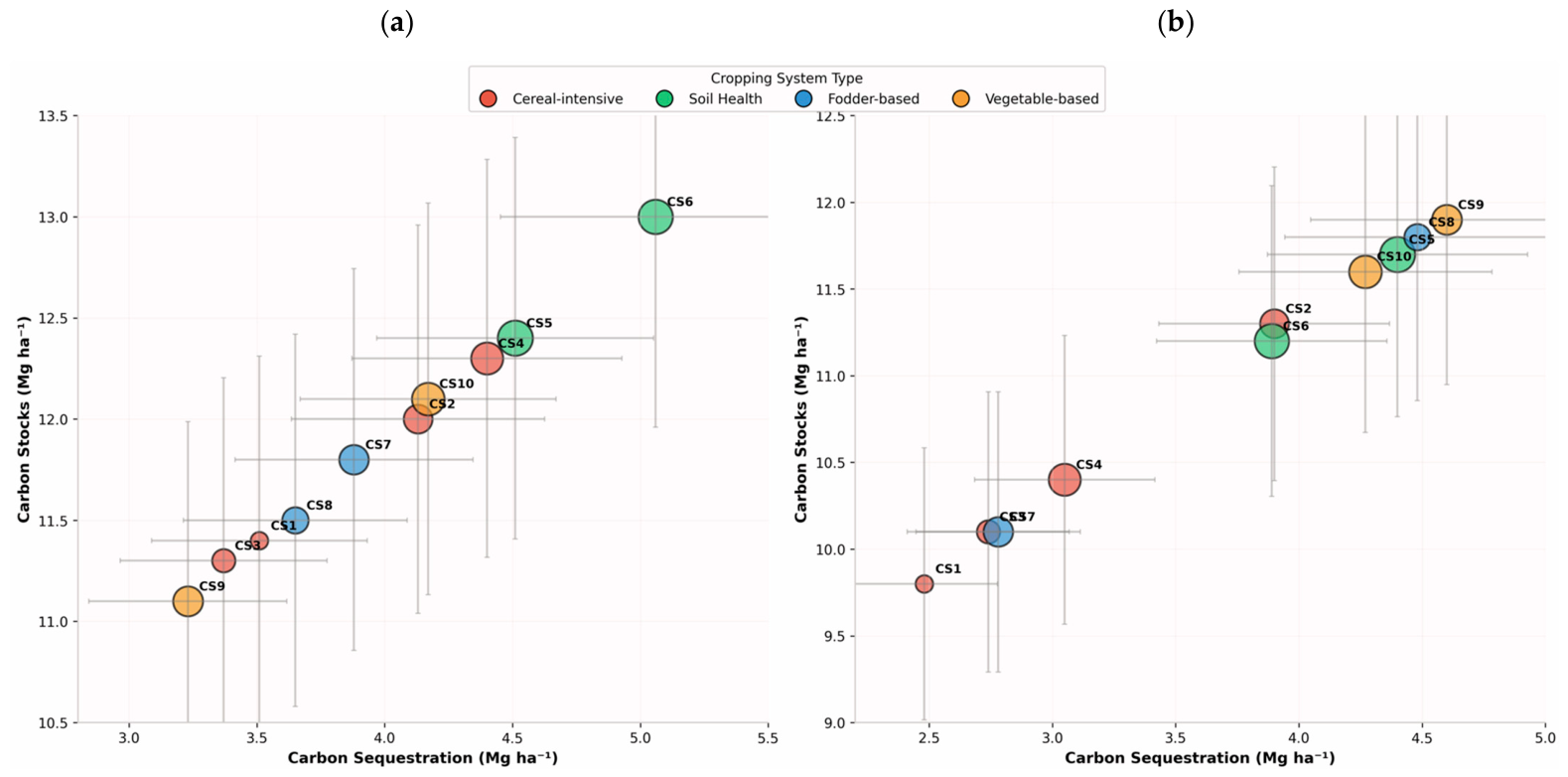
The interrelationships among carbon sequestration, carbon stocks, and microbial biomass carbon (MBC) were further explored to understand the mechanisms underlying carbon dynamics under different cropping systems. Figure 6 illustrates these relationships at both soil depths, where bubble size represents MBC levels.
At 0–15 cm depth (Figure 6a), CS6 exhibited the highest carbon sequestration (5.06 Mg ha−1) and carbon stocks (13.0 Mg ha−1), accompanied by elevated MBC (255.5 mg kg−1), indicating that enhanced microbial activity contributes significantly to carbon stabilization in this system. In contrast, CS1 (rice–wheat) showed the lowest values across all three parameters (3.51 Mg ha−1, 11.4 Mg ha−1, and 224.3 mg kg−1, respectively), reflecting the limitations of continuous cereal-based systems. At 15–30 cm depth (Figure 6b), CS9 and CS8 demonstrated higher carbon sequestration rates, suggesting that vegetable-based and fodder-based systems may contribute to deeper carbon storage.
Figure 6 suggests that cropping systems exhibiting greater carbon sequestration also tended to have higher carbon stocks and microbial biomass carbon, indicating a possible association among these variables.

4. Discussion

4.1. Impact of Different Cropping Systems on Bulk Density and Mean Weight Diameter (MWD)

Soil bulk density was significantly reduced in treatments such as CS9 and CS7 at the surface soil, indicating improved soil structure under these rotations. Lower bulk density under diversified systems is attributed to higher organic matter input and better aggregation due to varied root architecture [28]. However, in sub-surface soil, differences were not significant, possibly due to compaction persistence at deeper layers irrespective of the cropping system [29].
The CS1 showed the highest bulk density and the lowest aggregate stability, which may be attributed to intensive puddling in rice and to continuous cereal dominance, which limits organic matter buildup [30]. In contrast, systems that included legumes and organic amendments such as CS4 and CS6 registered significantly higher MWD. Legume roots and residue additions are known to improve soil structure through enhanced organic matter input and microbial activity [31]. Similar results were also reported by Elmholt et al. [32] in their studies on soil bulk density under different cropping systems; cropping systems involving the addition of organic amendments, such as FYM and GM, were found to have lower bulk densities and higher mean weight diameters.
The mean weight diameter (MWD) was markedly influenced by the cropping systems. Surface soils (0–15 cm) generally exhibited lower bulk density but higher MWD than subsurface layers (15–30 cm), reflecting greater organic matter accumulation and biological activity in the plough layer. The highest MWD values in surface soil were observed under CS6 and CS9, while CS10 and CS1 had the lowest. The increased MWD under diversified systems can be ascribed to greater root biomass, polysaccharide secretion, and the binding effects of microbial by-products [33].
The results clearly indicate that diversified cropping systems with legumes and organic inputs improve soil aggregation and stability as compared to cereal- and vegetable-dominated rotations. Improved aggregation is beneficial not only for soil physical health but also for long-term carbon sequestration and resilience to erosion [34]. These findings are in line with earlier long-term studies under organic and integrated nutrient management in Punjab, which highlighted the positive role of organics and legumes in enhancing soil structure and water transmission characteristics [35].
Crop diversification with the inclusion of legumes and groundnut improved soil fertility, micronutrient availability, and physical health. These findings support the hypothesis that diversified cropping systems with leguminous crops enhance soil sustainability by improving nutrient cycling, organic matter dynamics, and soil physical properties [36]. Long-term adoption of such systems can thus play a vital role in sustaining soil health and productivity in intensive agro-ecosystems.

4.2. Impact of Different Cropping Systems on SOC Associated with Macroaggregates and Microaggregates

Table 4 shows the impact of different cropping systems on SOC (g kg−1) in macro- and microaggregates. The distribution of soil organic carbon (SOC) in aggregates was significantly influenced by the cropping systems. Legume-based and diversified rotations generally showed higher SOC in both macro- and microaggregates than cereal-dominated systems. This pattern is consistent with earlier findings that diversified crop sequences, particularly those involving legumes, enhance SOC sequestration through greater organic residue inputs and root-derived carbon, which stabilize soil aggregates [37].
The enrichment of SOC within macroaggregates at the surface layer indicates that crop residues are preferentially incorporated and protected within larger aggregates. Six et al. [38] emphasized that macroaggregates serve as the primary sites for fresh organic matter input, leading to improved stabilization of carbon. Higher SOC contents in macroaggregates under diversified rotations in this study suggest greater carbon turnover and stabilization compared with continuous cereal systems. This study’s findings also align with research showing that soil management and crop diversity enhance macroaggregate formation and SOC storage, which is critical for soil fertility and carbon sequestration [39]. Benbi et al. [40] also reported an increase in macroaggregate-associated carbon in soil under rice–wheat and maize–wheat cropping systems that included the addition of organic inputs such as FYM and GM.
Microaggregate-associated SOC also differed significantly among treatments. Microaggregates are considered critical for the long-term protection of SOC as they provide physical occlusion of organic matter within mineral matrices [41]. The relatively higher values of microaggregate SOC in legume-based treatments agree with previous studies, which demonstrated that improved soil aggregation under diversified rotations enhances the formation of stable microaggregates and promotes long-term carbon storage [42].
The vertical distribution of SOC across depths showed consistently higher concentrations at 0–15 cm than at 15–30 cm, reflecting the direct influence of root residues and surface organic inputs. This depth-dependent decline in SOC has been widely reported in long-term field studies, where surface layers tend to accumulate more labile organic matter due to continuous crop residue deposition and root turnover [43]. These results indicate that crop diversification, especially the inclusion of legumes, plays an important role in enhancing SOC stabilization within soil aggregates. Such systems not only improve soil structure but also contribute to long-term soil carbon sequestration, thereby supporting soil fertility and resilience.

4.3. Impact of Different Cropping Systems on Soil Carbon Stocks and Carbon Sequestration

Figure 1, Figure 2 and Figure 3 show the impact of different cropping systems on soil carbon stocks and soil carbon sequestration. Soil carbon stocks and sequestration varied significantly across cropping systems and soil depths. Higher carbon stocks in the surface layer (0–15 cm) than in the subsurface (15–30 cm) were consistent with previous findings that surface horizons accumulate more organic carbon due to greater inputs of crop residues, root turnover, and microbial activity [44]. Treatments involving legumes and diversified rotations generally showed enhanced carbon storage and sequestration, reflecting their contribution to increased biomass inputs and improved soil structure.
The observed differences in carbon sequestration highlight the role of cropping system management in regulating soil carbon dynamics. Rotations such as CS6 and CS5 maintained higher surface sequestration, whereas systems including CS8 and CS9 showed greater carbon accumulation at subsurface depths. Such variation across depths suggests that crop-specific rooting patterns and residue quality can influence carbon stabilization in different soil layers.
The higher carbon sequestration rates in diversified systems further confirm that cropping intensification with legumes and mixed crops enhances carbon capture efficiency compared with continuous cereal-based systems. Diversified cropping has been shown to increase soil organic carbon by improving aggregate stability and rhizo-deposition, thereby increasing carbon residence time in soil [45]. The results agree with recent reports that crop rotations with legumes or deep-rooted crops increase soil carbon stocks and sequestration potential compared with monocultures [46]. These findings demonstrate that cropping system diversification is an important strategy for enhancing soil carbon sequestration. Cropping systems that include legumes and multi-crop rotations not only increase carbon storage in both surface and subsurface layers but also accelerate sequestration over time, contributing to climate change mitigation and long-term soil fertility [47].

4.4. Impact of Different Cropping Systems on Total Organic Carbon (TOC), Very Labile Carbon, Labile Carbon, Less Labile Carbon and Recalcitrant Carbon in Surface Soil and Sub-Surface Soil

The data in Figure 4 show the influence of different cropping systems on soil carbon fractions with different oxidizability. The data indicate that treatments with diversified cropping systems and organic amendments generally show higher total organic carbon (TOC) and labile carbon fractions compared to simpler rotations, such as the rice–wheat (R-W) system. The higher values of very labile and labile carbon fractions in several treatments suggest enhanced availability of easily decomposable organic carbon pools, which are crucial for soil microbial activity and nutrient cycling. The recalcitrant carbon fraction, representing more stable and persistent organic carbon, also varied among treatments, indicating differences in potential for long-term carbon storage [48].
At both soil depths (0–15 cm and 15–30 cm), TOC and its fractions tend to decrease with depth, which is a common observation linked to reduced organic matter inputs and microbial activity in deeper soil layers [49]. The significant differences among treatments highlight the influence of crop rotation, organic amendments, and management practices on the distribution and turnover of soil carbon pools.
The presence of higher labile carbon fractions in certain diversified systems aligns with previous studies emphasizing that these fractions are sensitive indicators of soil quality and respond rapidly to changes in management practices [50]. Furthermore, increased labile carbon supports greater soil biological activity, thereby enhancing nutrient availability, whereas recalcitrant carbon fractions play a pivotal role in long-term soil fertility and carbon sequestration [51]. This interplay between labile and recalcitrant carbon fractions across treatments underlines the importance of adopting sustainable management practices that enhance both short-term soil nutrient dynamics and long-term soil carbon stability. The results support the notion that optimizing crop rotations and organic matter inputs is vital for improving soil health and mitigating climate change through enhanced carbon sequestration [52].
Diversified cropping systems with greater biomass return and root inputs promote aggregate formation, resulting in the physical occlusion of organic matter within macro- and microaggregates, thereby reducing its accessibility to microbial decomposition [38]. Furthermore, decomposition products may undergo chemical stabilization through interactions with soil minerals and polyvalent cations, forming organo-mineral complexes that enhance carbon persistence and contribute to mineral-associated organic matter pools. These mechanisms collectively improve long-term carbon sequestration and soil fertility under diversified cropping systems [53].

4.5. Impact of Different Cropping Systems on Water-Soluble Carbon (WSC), Hot Water-Soluble Carbon (HWSC) and KMnO4 Oxidisable C in Surface Soil and Sub-Surface Soil

Water-soluble carbon (WSC) is a critical labile carbon pool that reflects the readily available organic substrates in soil, which influence microbial activity and nutrient cycling. Figure 5 shows that the observed variation in WSC under different crop rotations underscores the role of diversified cropping systems in enhancing organic carbon inputs and availability in soil. Higher WSC in surface soils under rotations including legumes or green manure crops indicates improved carbon inputs through root exudates and residue incorporation. This enhanced pool of labile carbon is important for sustaining microbial populations and facilitating rapid nutrient mineralization, which can improve crop nutrient availability and overall soil fertility [54]. Crop rotations that maintain continuous organic inputs can therefore promote a dynamic and functional soil carbon pool conducive to sustainable productivity.
Hot water-soluble carbon (HWSC), representing a more stable yet still bioavailable fraction of organic carbon, is influenced by management practices such as crop diversity and residue retention. The elevated HWSC levels in diversified and legume-inclusive rotations reflect enhanced turnover and accumulation of microbial residues and partially decomposed organic matter, which contributes to soil aggregation and carbon stabilization [54]. The significant variation in HWSC with depth also highlights the influence of organic inputs and gradients in microbial activity within soil profiles. Maintaining high HWSC concentrations through crop rotation and organic amendments can support soil structure and long-term soil health by promoting both microbial biomass and mineral-associated organic carbon pools.
The KMnO4-oxidizable carbon fraction largely represents the more labile and biologically active portion of soil organic carbon, which is sensitive to management practices such as crop rotation and residue inputs. The higher oxidizable carbon values observed in diversified cropping systems, including CS3 and maize-based rotations with legumes, suggest enhanced input and preservation of labile carbon pools under these treatments compared to simpler rotations such as rice–wheat monoculture. These findings underscore the role of rotation diversity and inclusion of legumes in promoting soil carbon quality and turnover. Enhanced labile carbon fractions indicate greater substrate availability for soil microorganisms, thereby improving nutrient cycling and soil fertility [54].
The decrease in KMnO4-oxidizable carbon between the 0–15 cm and 15–30 cm layers indicates the typical stratification of labile carbon pools, with surface soils receiving higher organic inputs from crop residues and root exudates. This vertical distribution pattern highlights the importance of maintaining surface residue management and crop diversity to sustain soil carbon pools, which are critical to soil health. Long-term crop rotation studies have similarly reported increased labile carbon pools predominantly in topsoil layers, linking these fractions to improved aggregate stability and microbial activity under diversified crop systems.
The significant differences among treatments across both depths suggest that agronomic practices strongly influence the quantity of active carbon pools, with implications for soil carbon sequestration potential. Rotations including legumes and multiple crop species favour greater labile carbon accumulation, thereby supporting both immediate soil fertility requirements and long-term carbon storage goals, which are critical for sustainable agricultural production and climate change mitigation.

4.6. Impact of Different Cropping Systems on Microbial Biomass Carbon

Microbial biomass carbon (MBC) is a key indicator of soil biological activity and organic matter transformation, sensitive to crop management and rotation effects. In this experiment (Table 5), MBC values were notably higher under diverse rotations than under continuous monoculture, with the highest MBC observed in treatments involving legumes and vegetable crops. This aligns with meta-analytical and long-term field evidence: crop rotation and organic amendments consistently promote higher MBC than monoculture, due to varied litter inputs and improved substrate quality for microbes [55].
Several studies demonstrated that rotations incorporating legumes or vegetables increase MBC by enhancing root biomass, nutrient return, and microbial niche heterogeneity [46]. Higher MBC levels are closely linked with improvements in soil structure, nutrient cycling, and resilience, making its assessment essential for evaluating soil health in sustainable systems [56]. Conversely, monocultures with low residue input and limited plant diversity generally display reduced MBC [57]. This reduction is attributed to fewer labile carbon sources, which constrain microbial proliferation and metabolic activity. Thus, the observed patterns confirm the broader conclusions that diversified rotations, residue management, and the inclusion of legumes markedly enhance soil microbial biomass and system sustainability.
While the present study demonstrates the positive effects of crop diversification on soil carbon fractions and sequestration, additional information on carbon input efficiency, residue C ratio, and root biomass distribution would further improve the understanding of the mechanisms underlying carbon stabilization. Future studies incorporating these parameters may provide deeper insights into the processes controlling carbon accumulation under diversified cropping systems.

5. Conclusions

The results clearly show that diversified and legume-based cropping systems substantially enhanced soil carbon quantity and quality compared with cereal-dominated rotations. Across both depths, these systems increased SOC associated with macro- and microaggregates, elevated TOC, and improved key labile and recalcitrant carbon fractions, indicating better aggregate stabilization and a more balanced carbon pool structure conducive to long-term soil fertility and resilience. The higher water-soluble, hot water-soluble, KMnO4-oxidisable carbon and microbial biomass carbon under diversified rotations further demonstrate that these systems support more active microbial communities and faster nutrient cycling, while simultaneously building stable carbon pools that contribute to sequestration. Overall, the findings confirm that cropping system diversification, particularly through the inclusion of legumes and high-residue crops, is an effective strategy to enhance soil carbon stocks, increase carbon sequestration rates, and improve soil health in the alluvial soils of North-West India, thereby offering a practical pathway for sustainable intensification and climate change mitigation in this region. From a practical perspective, the integration of legumes and diversified crop rotations into existing cereal-based production systems can be promoted by farmers, extension agencies, and policymakers as a viable approach to improving soil health, sustaining productivity, and strengthening the long-term environmental sustainability of agriculture in the Indo-Gangetic Plains.

Supplementary Materials

The following supporting information can be downloaded at: https://www.mdpi.com/article/10.3390/land15071140/s1, Figure S1: Radar chart comparison of top-performing cropping systems (CS5 and CS6) across multiple indicators (TOC, C stocks, C sequestration, WSC, HWSC) at 0–15 cm and 15–30 cm depths. Values were normalized to the maximum, and shaded bands represent individual standard errors (SE).

Author Contributions

Conceptualization, methodology, investigation, resources, data curation, project administration, formal analysis, writing—original draft preparation, P.S. and N.R.; conceptualization, project administration, supervision, resources, validation, S.S.W.; conceptualization, visualization, R.K.G.; supervision, visualization, writing—review and editing, M.U.H., M.A.M. and A.S. All authors have read and agreed to the published version of the manuscript.

Funding

Ongoing Research Funding program (ORF-2026-958), King Saud University, Riyadh, Saudi Arabia.

Data Availability Statement

The datasets used and/or analyzed during the current study are available from the corresponding author upon reasonable request.

Acknowledgments

The authors extend their appreciation to Ongoing Research Funding program (ORF-2026-958), King Saud University, Riyadh, Saudi Arabia. We are grateful to Punjab Agricultural University, Ludhiana, for offering the necessary research facilities.

Conflicts of Interest

The authors declare no conflict of interest.

References

  1. Bhattacharyya, T.; Pal, D.K.; Easter, M.; Batjes, N.H.; Milne, E.; Gajbhiye, K.S.; Chandran, P.; Ray, S.K.; Mandal, C.; Paustian, K.; et al. Modelled Soil Organic Carbon Stocks and Changes in the Indo-Gangetic Plains, India from 1980 to 2030. Agric. Ecosyst. Environ. 2007, 122, 84–94. [Google Scholar] [CrossRef]
  2. Nayak, A.K.; Gangwar, B.; Shukla, A.K.; Mazumdar, S.P.; Kumar, A.; Raja, R.; Kumar, A.; Kumar, V.; Rai, P.K.; Mohan, U. Long-Term Effect of Different Integrated Nutrient Management on Soil Organic Carbon and Its Fractions and Sustainability of Rice–Wheat System in Indo Gangetic Plains of India. Field Crops Res. 2012, 127, 129–139. [Google Scholar] [CrossRef]
  3. Venkatesh, M.S.; Hazra, K.K.; Ghosh, P.K.; Praharaj, C.S.; Kumar, N. Long-Term Effect of Pulses and Nutrient Management on Soil Carbon Sequestration in Indo-Gangetic Plains of India. Can. J. Soil Sci. 2013, 93, 127–136. [Google Scholar] [CrossRef]
  4. Jat, H.S.; Datta, A.; Choudhary, M.; Sharma, P.C.; Jat, M.L. Conservation Agriculture: Factors and Drivers of Adoption and Scalable Innovative Practices in Indo-Gangetic Plains of India– a Review. Int. J. Agric. Sustain. 2021, 19, 40–55. [Google Scholar] [CrossRef]
  5. Mishra, B.; Sharma, A.; Singh, S.K.; Prasad, J.; Singh, B.P. Influence of Continuous Application of Amendments to Maize-Wheat Cropping System on Dynamics of Soil Microbial Biomass in Alfisol of Jharkhand. J. Indian Soc. Soil Sci. 2008, 56, 71–75. [Google Scholar]
  6. Lal, R. Global Potential of Soil Carbon Sequestration to Mitigate the Greenhouse Effect. Crit. Rev. Plant Sci. 2003, 22, 151–184. [Google Scholar] [CrossRef]
  7. Bongiorno, G.; Bünemann, E.K.; Oguejiofor, C.U.; Meier, J.; Gort, G.; Comans, R.; Mäder, P.; Brussaard, L.; de Goede, R. Sensitivity of Labile Carbon Fractions to Tillage and Organic Matter Management and Their Potential as Comprehensive Soil Quality Indicators across Pedoclimatic Conditions in Europe. Ecol. Indic. 2019, 99, 38–50. [Google Scholar] [CrossRef]
  8. Awale, R.; Emeson, M.A.; Machado, S. Soil Organic Carbon Pools as Early Indicators for Soil Organic Matter Stock Changes under Different Tillage Practices in Inland Pacific Northwest. Front. Ecol. Evol. 2017, 5, 96. [Google Scholar] [CrossRef]
  9. Shen, X.; Wang, L.; Yang, Q.; Xiu, W.; Li, G.; Zhao, J.; Zhang, G. Dynamics of Soil Organic Carbon and Labile Carbon Fractions in Soil Aggregates Affected by Different Tillage Managements. Sustainability 2021, 13, 1541. [Google Scholar] [CrossRef]
  10. Lessmann, M.; Ros, G.H.; Young, M.D.; de Vries, W. Global Variation in Soil Carbon Sequestration Potential through Improved Cropland Management. Glob. Change Biol. 2022, 28, 1162–1177. [Google Scholar] [CrossRef]
  11. Ghosh, P.K.; Hazra, K.K.; Venkatesh, M.S.; Nath, C.P.; Singh, J.; Nadarajan, N. Increasing Soil Organic Carbon Through Crop Diversification in Cereal–Cereal Rotations of Indo-Gangetic Plain. Proc. Natl. Acad. Sci. India Sect. B Biol. Sci. 2019, 89, 429–440. [Google Scholar] [CrossRef]
  12. Samal, S.K.; Rao, K.K.; Poonia, S.P.; Kumar, R.; Mishra, J.S.; Prakash, V.; Mondal, S.; Dwivedi, S.K.; Bhatt, B.P.; Naik, S.K.; et al. Evaluation of Long-Term Conservation Agriculture and Crop Intensification in Rice-Wheat Rotation of Indo-Gangetic Plains of South Asia: Carbon Dynamics and Productivity. Eur. J. Agron. 2017, 90, 198–208. [Google Scholar] [CrossRef] [PubMed]
  13. Meena, R.S.; Kumar, S.; Yadav, G.S. Soil Carbon Sequestration in Crop Production. In Nutrient Dynamics for Sustainable Crop Production; Springer: Singapore, 2020; pp. 1–39. [Google Scholar]
  14. Laik, R.; Sharma, S.; Idris, M.; Singh, A.K.; Singh, S.S.; Bhatt, B.P.; Saharawat, Y.; Humphreys, E.; Ladha, J.K. Integration of Conservation Agriculture with Best Management Practices for Improving System Performance of the Rice–Wheat Rotation in the Eastern Indo-Gangetic Plains of India. Agric. Ecosyst. Environ. 2014, 195, 68–82. [Google Scholar] [CrossRef]
  15. Nath, C.P.; Dutta, A.; Hazra, K.K.; Praharaj, C.S.; Kumar, N.; Singh, S.S.; Singh, U.; Das, K. Long-Term Impact of Pulses and Organic Amendments Inclusion in Cropping System on Soil Physical and Chemical Properties. Sci. Rep. 2023, 13, 6508. [Google Scholar] [CrossRef] [PubMed]
  16. Mwila, M.; Mhlanga, B.; Thierfelder, C. Intensifying Cropping Systems through Doubled-up Legumes in Eastern Zambia. Sci. Rep. 2021, 11, 8101. [Google Scholar] [CrossRef] [PubMed]
  17. Kane, D.A. Carbon Sequestration Potential on Agricultural Lands: A Review of Current Science and Available Practices; National Sustainable Agriculture Coalition (NSAC): Washington, DC, USA; Breakthrough Strategies and Solutions, LLC: Washington, DC, USA, 2015. [Google Scholar]
  18. Grossman, R.B.; Reinsch, T.G. 2.1 Bulk Density and Linear Extensibility. In Methods of Soil Analysis: Part 4 Physical Methods; Soil Science Society of America, Inc.: Madison, WI, USA, 2002; pp. 201–228. [Google Scholar]
  19. Benbi, D.K. Evaluation of a Rapid Microwave Digestion Method for Determination of Total Organic Carbon in Soil. Commun. Soil Sci. Plant Anal. 2018, 49, 2103–2112. [Google Scholar] [CrossRef]
  20. Islam, K.R.; Weil, R.R. A Rapid Microwave Digestion Method for Colorimetric Measurement of Soil Organic Carbon. Commun. Soil Sci. Plant Anal. 1998, 29, 2269–2284. [Google Scholar] [CrossRef]
  21. Walkley, A.; Black, I.A. An Examination Of The Degtjareff Method For Determining Soil Organic Matter, And A Proposed Modification Of The Chromic Acid Titration Method. Soil Sci. 1934, 37, 29–38. [Google Scholar] [CrossRef]
  22. Chan, K.Y.; Bowman, A.; Oates, A. OXIDIZIBLE ORGANIC CARBON FRACTIONS AND SOIL QUALITY CHANGES IN AN OXIC PALEUSTALF UNDER DIFFERENT PASTURE LEYS. Soil Sci. 2001, 166, 61–67. [Google Scholar] [CrossRef]
  23. Blair, G.; Lefroy, R.; Lisle, L. Soil Carbon Fractions Based on Their Degree of Oxidation, and the Development of a Carbon Management Index for Agricultural Systems. Aust. J. Agric. Res. 1995, 46, 1459–1466. [Google Scholar] [CrossRef]
  24. Benbi, D.K.; Brar, K.; Toor, A.S.; Sharma, S. Sensitivity of Labile Soil Organic Carbon Pools to Long-Term Fertilizer, Straw and Manure Management in Rice-Wheat System. Pedosphere 2015, 25, 534–545. [Google Scholar] [CrossRef]
  25. Schulz, E.; Deller, B.; Hoffman, G. C Und N in Heißwasserextract. VDLUFA Methodenbuch 2003, 1. [Google Scholar]
  26. Chaudhary, S.; Dheri, G.S.; Brar, B.S. Long-Term Effects of NPK Fertilizers and Organic Manures on Carbon Stabilization and Management Index under Rice-Wheat Cropping System. Soil Tillage Res. 2017, 166, 59–66. [Google Scholar] [CrossRef]
  27. Vance, E.D.; Brookes, P.C.; Jenkinson, D.S. An Extraction Method for Measuring Soil Microbial Biomass C. Soil Biol. Biochem. 1987, 19, 703–707. [Google Scholar] [CrossRef]
  28. Baldwin-Kordick, R.; De, M.; Lopez, M.D.; Liebman, M.; Lauter, N.; Marino, J.; McDaniel, M.D. Comprehensive Impacts of Diversified Cropping on Soil Health and Sustainability. Agroecol. Sustain. Food Syst. 2022, 46, 331–363. [Google Scholar] [CrossRef]
  29. Engels, A.M.; Gaiser, T.; Ewert, F.; Grahmann, K.; Hernández-Ochoa, I. Simulating Soil Moisture Dynamics in a Diversified Cropping System Under Heterogeneous Soil Conditions. Agronomy 2025, 15, 407. [Google Scholar] [CrossRef]
  30. Rasool, R.; Kukal, S.S.; Hira, G.S. Soil Physical Fertility and Crop Performance as Affected by Long Term Application of FYM and Inorganic Fertilizers in Rice–Wheat System. Soil Tillage Res. 2007, 96, 64–72. [Google Scholar] [CrossRef]
  31. Six, J.; Bossuyt, H.; Degryze, S.; Denef, K. A History of Research on the Link between (Micro)Aggregates, Soil Biota, and Soil Organic Matter Dynamics. Soil Tillage Res. 2004, 79, 7–31. [Google Scholar] [CrossRef]
  32. Elmholt, S.; Schjønning, P.; Munkholm, L.J.; Debosz, K. Soil Management Effects on Aggregate Stability and Biological Binding. Geoderma 2008, 144, 455–467. [Google Scholar] [CrossRef]
  33. Nešić, L.; Milivoj, B.; Savin, L.; Ćirić, V.; Mina, S.; Manojlović, M. EFFECT OF ORGANIC PRODUCTION ON SOIL STRUCTURE. Bulg. J. Agric. Sci. 2014, 20, 1168–1174. [Google Scholar]
  34. Elliott, E.T. Aggregate Structure and Carbon, Nitrogen, and Phosphorus in Native and Cultivated Soils. Soil Sci. Soc. Am. J. 1986, 50, 627–633. [Google Scholar] [CrossRef]
  35. Jaggi, V.; Joshi, S.; Dasila, H.; Mahapatra, B.S.; Sahgal, M. Evaluation of Soil Health in Short Term Organic Vs Conventional Practices during Paddy Cultivation. Int. J. Curr. Microbiol. Appl. Sci. 2018, 7, 495–504. [Google Scholar] [CrossRef]
  36. Walia, S.S.; Rani, N.; Ravisankar, N.; Bhagat, R.; Kaur, T.; Kaur, K. Legume-Based Crop Rotation Sustain the Soil Biodiversity, Fertility Levels, Productivity, and Profitability: Evidence from a Long-Term Study under Indian Subtropical Conditions. Front. Agron. 2025, 7, 1681733. [Google Scholar] [CrossRef]
  37. Lal, R. Soil Carbon Sequestration Impacts on Global Climate Change and Food Security. Science (1979) 2004, 304, 1623–1627. [Google Scholar] [CrossRef] [PubMed]
  38. Six, J.; Feller, C.; Denef, K.; Ogle, S.M.; de Moraes, J.C.; Albrecht, A. Soil Organic Matter, Biota and Aggregation in Temperate and Tropical Soils-Effects of No-Tillage. Agronomie 2002, 22, 755–775. [Google Scholar] [CrossRef]
  39. Naresh, R.K.; Timsina, J.; Bhaskar, S.; Gupta, R.K.; Singh, A.K.; Dhaliwal, S.S.; Mahajan, N.C. Effects of Tillage, Residue and Nutrient Management on Soil Organic Carbon Dynamics and Its Fractions, Soil Aggregate Stability and Soil Carbon Sequestration: A Review. EC Nutr. 2017, 12, 53–80. [Google Scholar]
  40. Benbi, D.K.; Singh, P.; Toor, A.S.; Verma, G. Manure and Fertilizer Application Effects on Aggregate and Mineral Associated Organic Carbon in a Loamy Soil under Rice-Wheat System. Commun. Soil Sci. Plant Anal. 2016, 47, 1828–1844. [Google Scholar] [CrossRef]
  41. Tisdall, J.M.; Oades, J.M. Organic Matter and Water-stable Aggregates in Soils. J. Soil Sci. 1982, 33, 141–163. [Google Scholar] [CrossRef]
  42. Bronick, C.J.; Lal, R. Soil Structure and Management: A Review. Geoderma 2005, 124, 3–22. [Google Scholar] [CrossRef]
  43. Kong, A.Y.Y.; Six, J.; Bryant, D.C.; Denison, R.F.; van Kessel, C. The Relationship between Carbon Input, Aggregation, and Soil Organic Carbon Stabilization in Sustainable Cropping Systems. Soil Sci. Soc. Am. J. 2005, 69, 1078–1085. [Google Scholar] [CrossRef]
  44. Gregorich, E.G.; Carter, M.R.; Angers, D.A.; Monreal, C.M.; Ellert, B.H. Towards a Minimum Data Set to Assess Soil Organic Matter Quality in Agricultural Soils. Can. J. Soil Sci. 1994, 74, 367–385. [Google Scholar] [CrossRef]
  45. Blanco-Canqui, H.; Ruis, S.J. Cover Crop Impacts on Soil Physical Properties: A Review. Soil Sci. Soc. Am. J. 2020, 84, 1527–1576. [Google Scholar] [CrossRef]
  46. Liu, Q.; Zhao, Y.; Li, T.; Chen, L.; Chen, Y.; Sui, P. Changes in Soil Microbial Biomass, Diversity, and Activity with Crop Rotation in Cropping Systems: A Global Synthesis. Appl. Soil Ecol. 2023, 186, 104815. [Google Scholar] [CrossRef]
  47. Bhatt, R.; Dinesh, G.K.; Majumder, D. Soil Organic Carbon for Enhancing Soil Health. Food Sci. Rep. 2025, 5, 1–5. [Google Scholar] [CrossRef]
  48. Sainju, U.M.; Liptzin, D.; Stevens, W.B. How Soil Carbon Fractions Relate to Soil Properties and Crop Yields in Dryland Cropping Systems? Soil Sci. Soc. Am. J. 2022, 86, 795–809. [Google Scholar] [CrossRef]
  49. Nath, C.P.; Dutta, A.; Hazra, K.K.; Kumar, N.; Praharaj, C.S.; Kumar, M.; Hashim, M.; Dixit, G.P. Influence of Legume Diversification and Fertilization on Soil Potassium Pools under Distinct Cropping System Ecologies: Insight from 14-Years Study. Front. Sustain. Food Syst. 2025, 9, 1660079. [Google Scholar] [CrossRef]
  50. Lavallee, J.M.; Soong, J.L.; Cotrufo, M.F. Conceptualizing Soil Organic Matter into Particulate and Mineral-associated Forms to Address Global Change in the 21st Century. Glob. Change Biol. 2020, 26, 261–273. [Google Scholar] [CrossRef]
  51. Cotrufo, M.F.; Ranalli, M.G.; Haddix, M.L.; Six, J.; Lugato, E. Soil Carbon Storage Informed by Particulate and Mineral-Associated Organic Matter. Nat. Geosci. 2019, 12, 989–994. [Google Scholar] [CrossRef]
  52. Jindo, K.; El Aroussi, O.; de Vente, J.; López Carratalá, J.; Bastida, F.; Izquierdo, C.G.; Sawada, Y.; Goron, T.L.; Barberá, G.G. Effects of Local Farming Practices on Soil Organic Carbon Content, Enzymatic Activities, and Microbial Community Structure in Semi-Arid Soils of Morocco. Front. Soil Sci. 2024, 4, 1369971. [Google Scholar] [CrossRef]
  53. Hamada, K.; Yimatsa, N.; Ohtsuka, T.; Fujitake, N.; Miyajima, T.; Yokoyama, Y.; Miyairi, Y.; Kida, M. Organo-Metal Coprecipitation Contributes to Stable Organic Carbon Fraction in Mangrove Soil. Catena 2025, 256, 109075. [Google Scholar] [CrossRef]
  54. Wu, B.; Zhang, M.; Zhai, Z.; Dai, H.; Yang, M.; Zhang, Y.; Liang, T. Soil Organic Carbon, Carbon Fractions, and Microbial Community under Various Organic Amendments. Sci. Rep. 2024, 14, 25431. [Google Scholar] [CrossRef] [PubMed]
  55. Rai, A.K.; Basak, N.; Dixit, A.K.; Rai, S.K.; Das, S.K.; Singh, J.B.; Kumar, S.; Kumar, T.K.; Chandra, P.; Sundha, P.; et al. Changes in Soil Microbial Biomass and Organic C Pools Improve the Sustainability of Perennial Grass and Legume System under Organic Nutrient Management. Front. Microbiol. 2023, 14, 1173986. [Google Scholar] [CrossRef] [PubMed]
  56. Meng, X.; Wang, B.; Zhang, X.; Liu, C.; Ji, J.; Hao, X.; Yang, B.; Wang, W.; Xu, D.; Zhang, S.; et al. Long-Term Crop Rotation Revealed the Relationship Between Soil Organic Carbon Physical Fraction and Bacterial Community at Aggregate Scales. Microorganisms 2025, 13, 496. [Google Scholar] [CrossRef] [PubMed]
  57. Yeboah, S.; Zhang, R.; Cai, L.; Li, L.; Xie, J.; Luo, Z.; Liu, J.; Wu, J. Tillage Effect on Soil Organic Carbon, Microbial Biomass Carbon and Crop Yield in Spring Wheat-Field Pea Rotation. Plant Soil Environ. 2016, 62, 279–285. [Google Scholar] [CrossRef]
Figure 1. Impact of different cropping systems on soil carbon stocks at 0–15 cm and 15–30 cm depths. Error bars represent individual standard error (ES). CD = Critical Difference at p < 0.05.
Land 15 01140 g001
Figure 2. Carbon sequestration (Mg ha−1) under different cropping systems at (a) 0–15 cm and (b) 15–30 cm depths. Error bars represent individual SE. CD (0–15 cm) = 0.96; CD (15–30 cm) = 0.85.
Land 15 01140 g002
Figure 3. Carbon sequestration rate (Mg ha−1 yr−1) under different cropping systems at 0–15 cm (right) and 15–30 cm (left) depths. Diverging bar chart with individual SE bars. CD (0–15 cm) = 0.18; CD (15–30 cm) = 0.15.
Land 15 01140 g003
Figure 4. Distribution of total organic carbon (TOC) and carbon fractions (very labile, labile, less labile, and recalcitrant) under different cropping systems at (a) 0–15 cm and (b) 15–30 cm depths. Error bars represent individual SE. CD (0–15): TOC = 0.11, VL = 0.12, L = 0.18, LL = 0.14, R = 0.16; CD (15–30): TOC = 0.12, VL = 0.13, L = 0.12, LL = 0.09, R = 0.06.
Land 15 01140 g004
Figure 5. Water-soluble carbon (WSC), hot water-soluble carbon (HWSC), and KMnO4-oxidisable carbon under different cropping systems at (a) 0–15 cm WSC, (b) 15–30 cm WSC, (c) 0–15 cm HWSC, (d) 15–30 cm HWSC, (e) 0–15 cm KMnO4-C, and (f) 15–30 cm KMnO4-C. Shaded regions represent individual SE. CD (WSC) = 4.2; CD (HWSC) = 21.4; CD (KMnO4-C) = 29.4.
Land 15 01140 g005
Figure 6. Relationship between carbon sequestration and carbon stocks under different cropping systems at (a) 0–15 cm and (b) 15–30 cm depths. Bubble size is proportional to microbial biomass carbon (MBC). CD (0–15): Seq = 0.96, Stocks = 2.4; CD (15–30): Seq = 0.85, Stocks = 1.8. Error bars represent individual SE.
Land 15 01140 g006
Table 1. Physico-chemical soil properties at the start of the experiment (2017).
Soil PropertiesValue
pH (1:2 soil:water)7.68
E.C. (1:2) (dS m−1)0.42
Soil Organic Carbon (%)0.39
Available Nitrogen (kg ha−1)240
Available P (kg ha−1)45.5
Available K (kg ha−1)99.6
Bulk Density (Mg m−1)1.35
Agro-ecological subzone4.1
Soil orderInceptisol
Sub-groupTypic Ustocherpts
Soil TextureLoamy Sand
Table 2. Details of cropping systems for the experiment.
TreatmentCropping SystemTreatment Acronym
CS1Rice–WheatR-W
CS2Maize–WheatM-W
CS3Basmati rice–Late sown wheat–CowpeaBa-W-C
CS4Maize–Mustard–CowpeaM-Mu-C
CS5Maize–Potato–Spring GroundnutM-Po-SG
CS6Maize–Peas–Spring GroundnutM-Pe-SG
CS7Maize + Cowpea–Oats–Sathi MaizeM+C-O-SM
CS8Sorghum multi cut–BarseemSMC-B
CS9Maize–Potato–OnionM-Po-On
CS10Baby Corn–Potato–OkraBC-Po-Ok
CS1, CS2, CS3 and CS4 are conventional cereal-intensive cropping systems, CS5 and CS6 are soil health improvement cropping systems, CS7 and CS8 are fodder-based cropping systems and CS9 and CS10 are vegetable-based cropping systems.
Table 3. Impact of different cropping systems on soil bulk density and mean weight diameter (MWD).
TreatmentsBulk Density (Mg m−3)MWD (mm)
0–15 cm15–30 cm0–15 cm15–30 cm
CS11.62 ± 0.03 b1.68 ± 0.03 a0.54 ± 0.01 b0.35 ± 0.01 b
CS21.54 ± 0.04 ab1.74 ± 0.04 a0.56 ± 0.01 b0.42 ± 0.01 b
CS31.53 ± 0.07 ab1.68 ± 0.07 a0.58 ± 0.02 b0.49 ± 0.02 ab
CS41.61 ± 0.03 b1.69 ± 0.03 a0.62 ± 0.01 ab0.51 ± 0.01 a
CS51.53 ± 0.03 ab1.74 ± 0.03 a0.58 ± 0.01 b0.51 ± 0.01 a
CS61.57 ± 0.04 b1.67 ± 0.04 a0.65 ± 0.01 b0.51 ± 0.01 a
CS71.48 ± 0.06 ab1.61 ± 0.06 a0.51 ± 0.02 a0.48 ± 0.02 ab
CS81.60 ± 0.04 b1.61 ± 0.04 a0.61 ± 0.02 ab0.49 ± 0.01 ab
CS91.40 ± 0.05 a1.73 ± 0.06 a0.64 ± 0.02 a0.44 ± 0.01 b
CS101.55 ± 0.06 ab1.61 ± 0.06 a0.58 ± 0.02 b0.46 ± 0.02 b
CD (p ≤ 0.05)0.16NS0.0850.072
CV (%)1.812.922.004.05
Values are presented as means ± standard error (SE) of four independent replicates (n = 4). Different letters within a column indicate significant differences among treatments at (p ≤ 0.05) according to Duncan’s Multiple Range Test (DMRT).
Table 4. Impact of different cropping systems on SOC (g kg−1) associated with macro-aggregates (>0.25 mm) and microaggregates (<0.25 mm).
TreatmentsMacroaggregates (>0.25 mm)Microaggregates (<0.25 mm)
SOC (g kg−1)
0–15 cm15–30 cm0–15 cm15–30 cm
CS16.63 ± 0.22 b5.30 ± 0.18 b4.64 ± 0.16 b3.71 ± 0.12 b
CS28.12 ± 0.20 ab6.50 ± 0.16 ab5.68 ± 0.14 ab4.55 ± 0.11 ab
CS39.63 ± 0.28 a7.70 ± 0.23 a6.74 ± 0.20 a5.39 ± 0.16 a
CS49.32 ± 0.17 a7.46 ± 0.13 a6.52 ± 0.12 a5.22 ± 0.09 a
CS57.87 ± 0.19 a6.30 ± 0.15 ab5.51 ± 0.13 ab4.41 ± 0.10 ab
CS69.21 ± 0.16 a7.37 ± 0.13 a6.45 ± 0.11 a5.16 ± 0.09 ab
CS79.55 ± 0.34 a7.64 ± 0.28 a6.69 ± 0.24 a5.35 ± 0.19 a
CS88.86 ± 0.33 ab7.09 ± 0.26 ab6.20 ± 0.23 ab4.96 ± 0.18 ab
CS97.63 ± 0.14 ab6.10 ± 0.11 ab5.34 ± 0.10 ab4.27 ± 0.08 ab
CS107.41 ± 0.19 b5.93 ± 0.16 b5.19 ± 0.14 b4.15 ± 0.11 b
CD (p < 0.05)1.631.421.140.99
CV (%)3.965.214.353.41
Values are presented as means ± standard error (SE) of four independent replicates (n = 4). Different letters within a column indicate significant differences among treatments at (p ≤ 0.05) according to Duncan’s Multiple Range Test (DMRT).
Table 5. Impact of different cropping systems on microbial biomass carbon (MBC).
TreatmentsMicrobial Biomass Carbon
mg kg−1
CS1224.30 ± 7.92 b
CS2242.90 ± 4.18 ab
CS3232.60 ± 4.28 ab
CS4250.00 ± 9.18 ab
CS5257.60 ± 9.84 a
CS6255.50 ± 7.03 a
CS7244.40 ± 7.67 ab
CS8238.10 ± 4.31 ab
CS9245.20 ± 8.51 ab
CS10251.40 ± 8.42 ab
CD (p < 0.05)19.1
CV (%)4.63
Values are presented as means ± standard error (SE) of four independent replicates (n = 4). Different letters within a column indicate significant differences among treatments at (p ≤ 0.05) according to Duncan’s Multiple Range Test (DMRT).
Disclaimer/Publisher’s Note: The statements, opinions and data contained in all publications are solely those of the individual author(s) and contributor(s) and not of MDPI and/or the editor(s). MDPI and/or the editor(s) disclaim responsibility for any injury to people or property resulting from any ideas, methods, instructions or products referred to in the content.