Review

A Scoping Review of Brownfield Greening: Research Topics, Methods, Trends, and Challenges

by
Yawen Han
1,
Luca Maria Francesco Fabris
1,2 and
Yuanjing Zhang
3,4,5,*
1
Department of Architecture and Urban Studies, Politecnico di Milano, 20133 Milan, Italy
2
School of Architecture and Urban Planning, Beijing University of Civil Engineering and Architecture, Beijing 102627, China
3
College of Civil Engineering and Architecture, Zhejiang University, Hangzhou 310058, China
4
Zhejiang University Urban-Rural Planning & Design Institute Co., Ltd., Hangzhou 310058, China
5
School of Architecture, Tsinghua University, Beijing 100084, China
*
Author to whom correspondence should be addressed.
Land 2026, 15(7), 1132; https://doi.org/10.3390/land15071132 (registering DOI)
Submission received: 15 May 2026 / Revised: 21 June 2026 / Accepted: 23 June 2026 / Published: 25 June 2026

Abstract

Brownfield greening (BG) has become an important approach to addressing urban land scarcity, environmental remediation, and sustainable urban development. This scoping review analysed 116 English-language publications from the Web of Science and Scopus databases. The review identified five major research themes: pollution and remediation, regeneration design, brownfield characteristics and greening benefits, planning and decision-making, and stakeholder perceptions. Findings indicate a transition from contamination-focused studies towards integrated approaches emphasising ecological restoration, social values, and multifunctional green infrastructure. Research methods have evolved from qualitative case studies to interdisciplinary approaches involving spatial analysis, ecological modelling, scenario simulation, and participatory methods. Existing studies mainly focus on regenerated sites and site-scale analyses, while contamination and remediation processes are often insufficiently incorporated into planning, design, and ecosystem-service assessments. The review highlights the diverse ecological, social, economic, and cultural benefits generated by BG and identifies key research gaps, including the need to better integrate remediation into regeneration processes, to conduct long-term monitoring, to conduct comparative international studies, and to include evidence from underrepresented regions. Overall, BG is increasingly recognised as a multifunctional strategy for sustainable urban regeneration.

1. Introduction

Urban brownfield development is a significant phenomenon in metropolitan areas worldwide [1,2]. In Britain during the 1950s and 1960s, coal mining and heavy industry gradually declined. Large areas of land were abandoned or polluted, and policymakers and scholars commonly used the term ‘derelict land’ to describe this phenomenon [3], emphasising abandonment, with a focus on reclamation and reuse. During the same period, the United States experienced the relocation of manufacturing to suburbs or overseas, accompanied by a decline in city centres. The terms ‘urban blight’ or ‘blighted areas’ were employed to characterise the deterioration of city centres and the proliferation of vacant land [4,5], reflecting socio-economic decline driven by suburbanization and deindustrialisation. By the 1970s, however, with the rise of the environmental movement and the establishment of the Environmental Protection Agency (EPA), American discourse increasingly adopted terms such as ‘abandoned industrial sites’, ‘vacant land’, and ‘contaminated sites’ or ‘hazardous waste sites’, highlighting the environmental pollution associated with industrial abandonment [6,7]. The term ‘brownfield’ was first coined in the USA in the 1980s, and was later defined in the Small Business Liability Relief and Brownfield Regeneration Act in January 2002. A brownfield is a property, for which the expansion, redevelopment, or reuse of which may be complicated by the presence or potential presence of a hazardous substance, pollutant, or contaminant [8]. Along similar lines, a brownfield is defined in the British planning literature as land that has been used and subsequently abandoned or underutilised, partly due to industrial or mining waste or other contaminations, but with a potential for redevelopment [9]. In Europe, brownfields refer to sites that have been affected by the former uses of the site and surrounding land; are derelict and underused; may have real or perceived contamination problems; are mainly in developed urban areas; and require intervention to bring them back to beneficial use [10]. Although these definitions differ, they all emphasise the potential pollution of brownfields and the possibility of reuse. While brownfields have traditionally been defined as abandoned, underutilised, or contaminated industrial and commercial land requiring remediation and redevelopment, such definitions tend to portray them as static sites with clear boundaries and predetermined redevelopment trajectories [11,12,13]. Recent scholarship, however, increasingly broadens this view by conceptualising brownfields as dynamic and evolving socio-ecological territories. Rather than being fixed land parcels awaiting intervention, brownfields can be understood as fluid territories characterised by fuzzy boundaries, temporal instability, and continuous processes of transformation [13,14,15]. Within these spaces, natural succession, ecological recovery, industrial legacies, social practices, and urban development pressures interact and co-evolve, producing landscapes that are neither purely natural nor entirely artificial [13,14,16]. This shift reflects a broader conceptual transition from viewing brownfields as degraded sites requiring technical remediation toward understanding them as evolving socio-ecological systems in which ecological succession, industrial heritage, and urban development processes coexist and interact. Consequently, brownfields should not be regarded as blank slates for redevelopment, but as hybrid and in-between landscapes where remnants of former uses coexist with emerging ecological functions and new social meanings. Their regeneration is therefore increasingly understood as an adaptive and process-based trajectory rather than a linear transition from contamination to redevelopment. Furthermore, many brownfields function as spaces of mediation and thresholds, linking land and water systems, ecological and built environments, and past industrial cycles with future urban transitions.
In the context of urban transformation, the presence of brownfields, which are abandoned and widely dispersed in cities and occupy prime urban spaces, triggering environmental degradation, economic decline and social exclusion, is a crucial challenge for urban planning [17,18,19]. However, brownfields are also valuable land resources whose reuse can promote urban development and limit urban sprawl [20,21,22]. Therefore, brownfield regeneration is an important challenge for sustainable urban development, given the existing environmental degradation and resource scarcity. In past practice, brownfields have been widely regenerated for commercial, industrial, residential, and other purposes [23,24]. Among these approaches, the conversion of brownfields into green spaces has emerged as an important regeneration strategy. Given the pollution characteristics of brownfields, transforming them into green spaces enables more cost-effective approaches to pollution control [25,26,27], while simultaneously enhancing human well-being and promoting biodiversity [28,29,30], which is a widely advocated strategy.
The transformation of brownfields into green spaces has a long history and has gradually become an important strategy for urban regeneration. One of the earliest examples was Gas Works Park in Seattle, designed by Richard Haag in the 1970s, although limited knowledge of brownfield remediation at the time necessitated several subsequent restoration efforts [31]. During the 1980s and 1990s, similar initiatives emerged across Europe, particularly in the United Kingdom, France, and Germany, where ecological restoration became increasingly integrated into urban redevelopment. Under the IBA Emscher Park programme, Germany produced internationally recognised projects such as Duisburg-Nord Landscape Park and Zeche Zollverein, which demonstrated advanced restoration techniques and a stronger integration of industrial heritage with ecological design [32,33]. Since then, the conversion of brownfields into green spaces has been widely adopted in many countries, including Spain, China, Israel, and South Korea. Consequently, brownfields of various scales have been transformed into diverse forms of green infrastructure, such as parks, urban forests, greenways, and habitat restoration areas, making significant contributions to urban green space provision [34,35]. This trend has been conceptualised as brownfield greening, which refers to the process of converting brownfields into formal green spaces through the application of artificial or semi-natural restoration and greening techniques [36,37,38]. More recently, scholars have expanded this perspective by highlighting the ecological value of spontaneous or naturally regenerated vegetation on brownfields, arguing that such sites represent an underappreciated source of urban green space and a viable resource for urban greening management [39,40,41,42].
BG has become an increasingly important topic in spatial planning because it addresses several contemporary urban challenges, including land scarcity, environmental degradation, climate adaptation, and the demand for green infrastructure [41,43,44]. As cities seek more sustainable development pathways, planners are under growing pressure to balance urban regeneration, ecological restoration, and social well-being within limited land resources. In this context, brownfield sites represent strategic opportunities for transforming previously underutilised or contaminated land into multifunctional green spaces that contribute to urban sustainability. The significance of BG extends beyond site remediation. Within the international scientific debate, it is increasingly recognised as an approach that simultaneously supports circular land use, nature-based solutions, urban resilience, and green infrastructure planning [43,45,46]. Rather than treating contaminated land solely as an environmental liability, BG reframes brownfields as potential assets capable of delivering ecological, social, economic, and cultural benefits. Existing studies have shown that converting brownfields into green spaces can provide cost-effective remediation pathways while enhancing biodiversity, regulating urban climate, improving ecosystem services, and promoting human health and well-being [28,29,30,34,41]. Consequently, BG has attracted increasing attention from researchers, planners, and policymakers as a key strategy for supporting sustainable urban transformation and achieving broader environmental and planning objectives.
Correspondingly, an increasing number of studies have focused on the theme of BG. The research topics have evolved from early concerns about design and remediation toward the quantitative evaluation of ecological benefits and the integration of BG into broader urban planning perspectives. The research scope has expanded from individual sites to comparative multi-case studies and city-wide scales. Research methods have also evolved—from traditional case and archival studies to interdisciplinary approaches such as GIS spatial analysis and the InVEST ecosystem services (ES) assessment model. Although a growing body of literature has examined various aspects of BG, including remediation, design, ecosystem services, and planning, existing knowledge remains fragmented across disciplines and research contexts. Given the breadth and diversity of the available evidence, a scoping review is well-suited to map the characteristics and development of the field. Therefore, this paper conducts a literature review on BG. Through synthesising existing research, this review aims to: (1) analyse the main contents and issues addressed in existing studies, and to identify the development trends of research in this field; (2) identify the limitations of current studies, such as the lack of multi-scale evaluation, long-term monitoring, or consideration of socio-cultural dimensions, thereby providing directions for future research; (3) examine the research methods adopted across different themes and disciplines, and to determine whether certain methodological patterns exist, offering reference for future scholars; (4) reveal the social and environmental benefits of different BG strategies—such as ecological parks, habitat, and informal green areas—so as to provide decision-making support for governments and planners in urban renewal, land redevelopment, and environmental governance.

2. Methods

In this study, the PRISMA (Preferred Reporting Items for Systematic Reviews and Meta-Analyses) approach is applied to systematically collect and analyse the literature on BG, aiming to identify key research themes, methodological trends, and knowledge gaps. The PRISMA method provides a standardised and transparent framework for conducting systematic literature reviews. It ensures a rigorous process of identifying, screening, evaluating, and including relevant studies, thereby enhancing the reliability and reproducibility of research synthesis [47]. To identify all potential journal papers, we combined the terms ‘brownfield’, ‘contaminated land’, and ‘industrial wasteland’ with various synonyms for ‘green space’. The term ‘contaminated land’ was included because it represents a typical feature of brownfields and is frequently used in the related literature [2,48]. Similarly, ‘industrial wasteland’ reflects the characteristics of pollution and land reuse, which are often discussed in brownfield-related literature [49,50,51]. Terms such as derelict land, vacant land, and urban blight were not included to avoid overextending the concept of brownfields and to keep the literature selection more focused. Additionally, we included words such as ‘park’, ‘garden’, ‘green land’, and ‘green infrastructure’ (GI), which represent various forms of green space. Therefore, the final search query we used was: (“Brownfield” or “contaminated land” or “industrial wasteland”) AND (“landscape” or “park” or “garden” or “green space” or “green infrastructure” or “green land”).
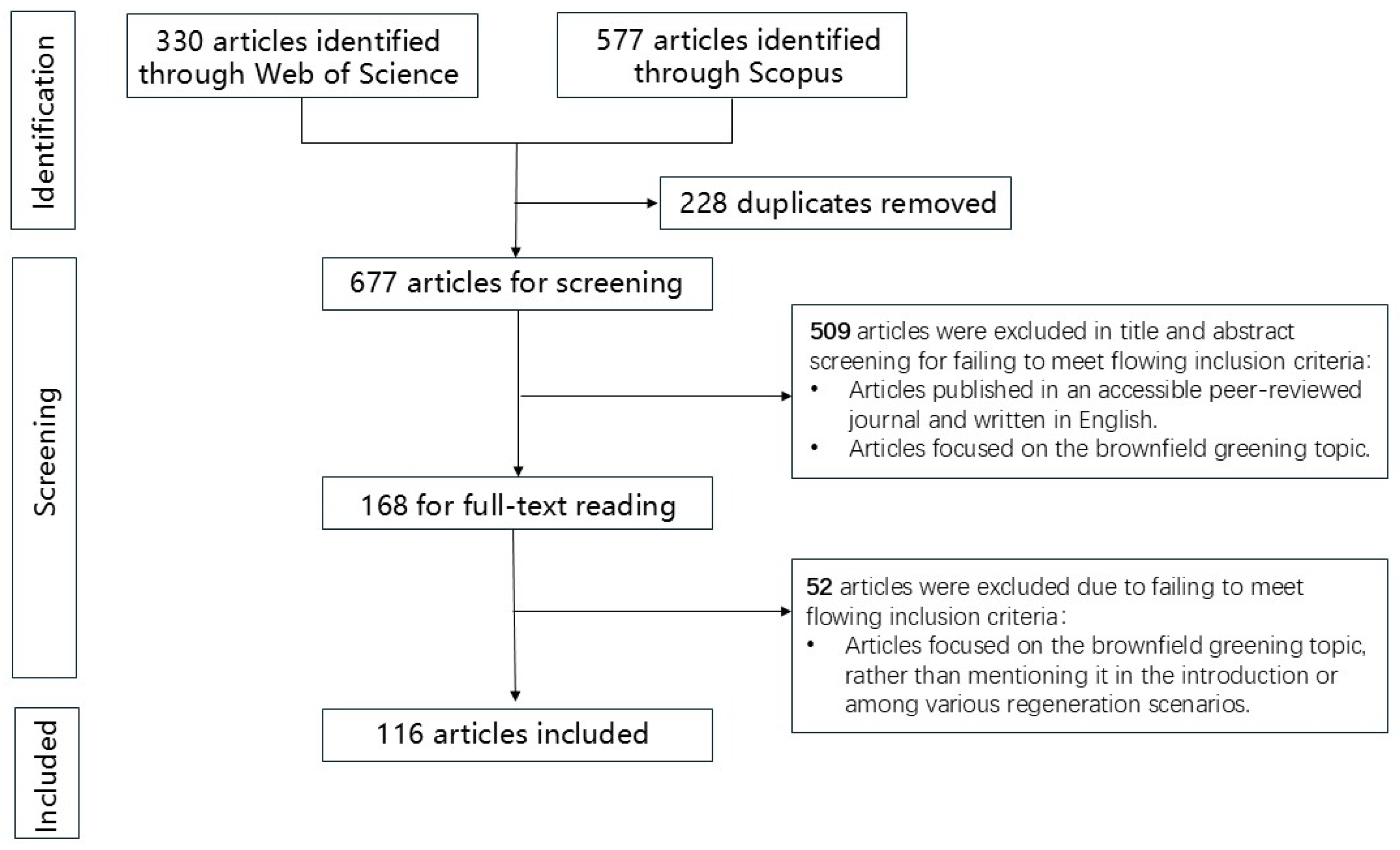
Two major online databases, Web of Science (WoS) and Scopus, were used as the search platform for literature collecting because they include a large number of publications in the fields of landscape studies, urban planning, and the built environment [52,53,54]. The search was conducted in October 2025. In WoS, the search scope was set to “Topic,” which covers title, abstract, and indexing information, while in Scopus, the search field “title, abstract and keywords” was selected. The search language was English, and document types were restricted to articles and review articles because these publications generally provide complete methodological descriptions and represent the most rigorously peer-reviewed sources of scientific evidence, thereby ensuring the consistency and reliability of the review findings. In total, 907 articles were identified from two databases. Next, the following screening criteria were established to filter the retrieved papers. Firstly, the reviewed papers had to be published in accessible, peer-reviewed journals and written in English. Secondly, the brownfield regeneration discussed in the papers should prioritise greening as the primary goal, rather than merely mentioning it alongside other regeneration scenarios. However, BG here includes both spontaneous natural successions, such as rewilding, and human interventions. After screening, 116 papers were selected for full-text review (Figure 1). These 116 articles are listed in Supplementary Materials Table S1, a data-charting form developed in Microsoft Excel based on the review objectives. The form was pilot-tested on a sample of included studies and revised as necessary. One reviewer charted the data and a second reviewer verified all extracted information. Extracted data were organised and analysed using descriptive statistics and thematic analysis. The findings were synthesised narratively and presented through tables, figures, and thematic categories.
To address the four research aspects, we collected information from the following four aspects.
Firstly, the general information of the articles, including the date of publication and the countries and regions involved in the studies (Table 1). The publication year helps reveal overall research trends and indicates the development stage of this field. The countries and regions studied show the spatial distribution and regional differences in research, supporting international comparison and knowledge flow analysis.
Secondly, the main body of each paper includes the research topic, methods, and scale (Table 1). We did not categorise research topics by broad disciplines such as urban planning, environmental engineering, or urban governance. Instead, we identified more specific themes within each field. For example, in urban planning, the topics include planning decision-making, participatory planning, etc. In environmental engineering, the topics involve pollution assessment, brownfield remediation, etc. A more detailed classification helps to show the main focuses, limitations, and future directions of research on BG. At the same time, we tracked the methods used in the papers to guide future researchers in selecting and developing appropriate methods across different fields. The method mapping was not limited to distinguishing between qualitative and quantitative approaches, but rather focuses on specific research methods—such as literature or archival review, field surveys, interviews, and spatial analysis and GIS approaches. These methods are then linked to the corresponding research content to identify whether similar topics share commonly used methods or whether there are innovative approaches worth further recognition.
Thirdly, the characteristics of the study objects (brownfields) and their relationship to the research topics were also analysed (Table 1). Specifically, we examined the scale of brownfields analysed in each paper—whether the research concentrated on a single site, compared multiple cases, or investigated brownfield clusters at the urban or regional scale. The scale of the study objects is closely related to the research topics and content; for example, studies on brownfield regeneration decision-making often involve multiple sites at the urban level. We also identified the original identity of the brownfields, such as industrial sites, landfills, or other types, as well as their pollution conditions, since this information is critical for certain research topics (e.g., environmental assessment and remediation) but may not be mentioned in others. In addition, we analysed the regeneration status of the brownfields—whether they are regenerated, undeveloped, or under construction—because the status of the study objects is also related to the research topics and methods. For instance, studies on regeneration decision-making usually focus on undeveloped brownfields, whereas studies on design and remediation typically examine redeveloped sites to summarise experiences and extract theoretical insights. Overall, reviewing the characteristics of the study objects helps to identify which types of brownfields have been extensively studied, which remain underexplored, and how to select appropriate research objects when defining research content and directions.
Finally, the review examines the types of green spaces resulting from (or potentially resulting from) BG—such as parks, GI, and spontaneously developed green spaces—as well as the functions these green spaces provide (Table 1). Reviewing the types and uses of BG provides scholars and decision-makers with a clear overview of the various possibilities for brownfield transformation, serving as a useful reference for future research and practical applications in BG.

3. Results

3.1. General Information

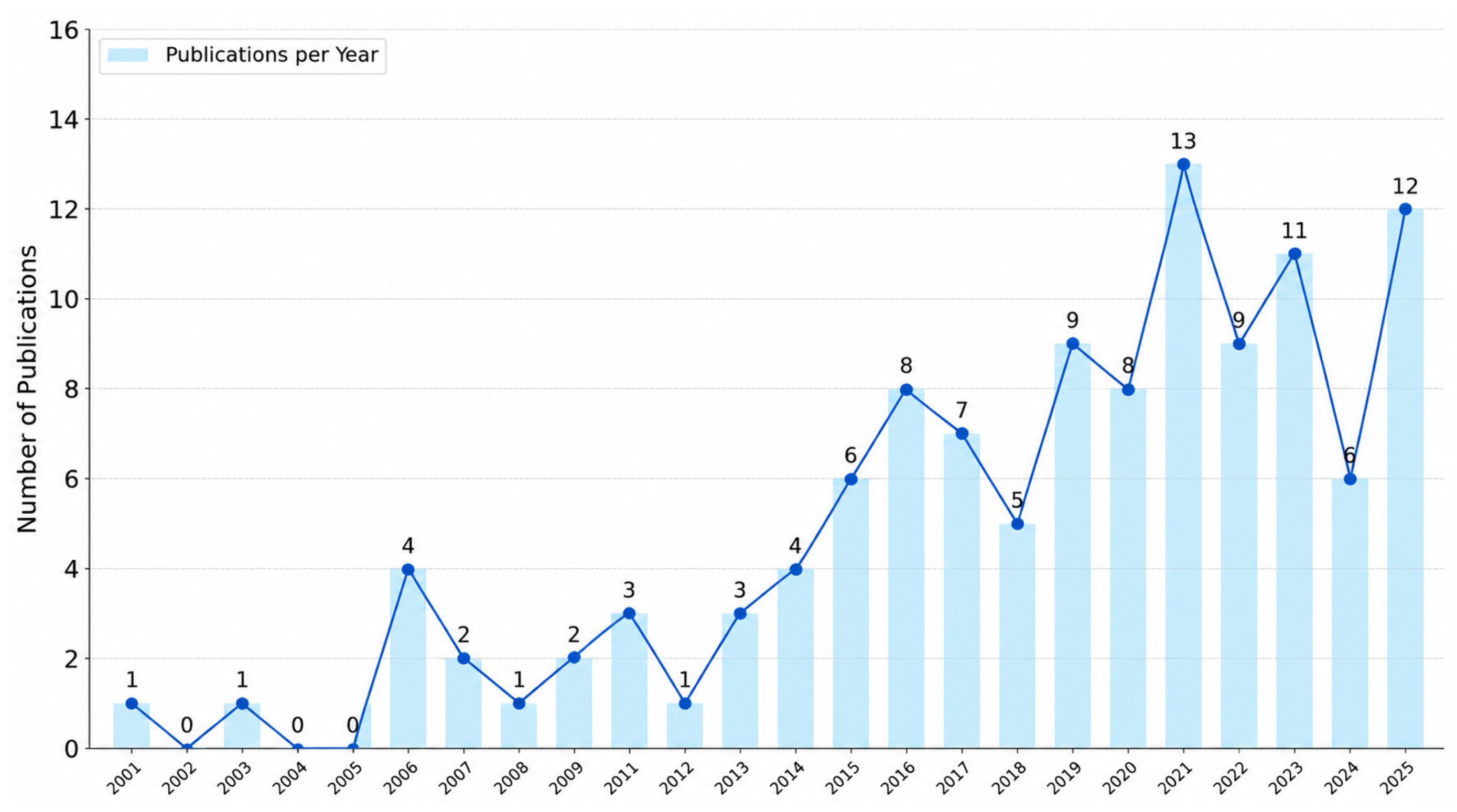
After reviewing 116 peer-reviewed articles, we found that research on BG first appeared in 2001. Since then, publications have gradually increased, especially after 2015 (Figure 2), when research on ‘urban greening’ expanded rapidly following the release of the United Nations Sustainable Development Goals (SDGs). The number of related studies continued to grow after 2019, reaching a peak in 2021 with 13 publications (Figure 2). This trend corresponds with several global and regional policy initiatives, such as the UN Decade on Ecosystem Restoration, the European Green Deal, the American Jobs Plan, and China’s ecological civilisation policy. Papers published between 2019 and 2025 account for 59% of all reviewed research (68 papers). These findings indicate that BG has become a prominent research topic, receiving increasing and continuous scholarly attention.
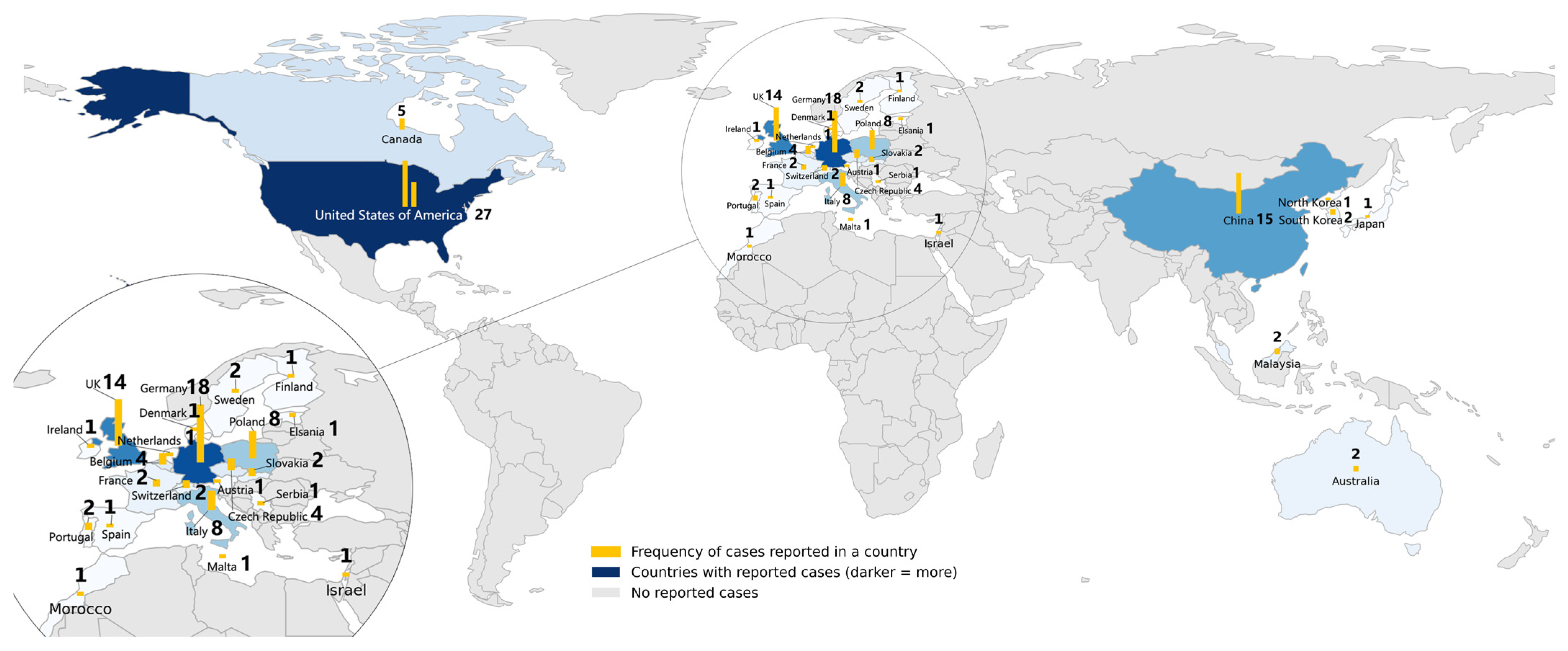
The studies reviewed cover locations across most continents, including Europe, North America, Asia, Africa, and Australia, but no studies were found from South America (Figure 3). Among all countries, the United States is mentioned most frequently, with 27 studies, followed by Germany, China, and the United Kingdom (18, 15, and 14 for each). Approximately 60% of the research is related to Europe, including countries such as Italy, the Czech Republic, and Belgium.
Most studies focus on a single country, and only eleven publications cover two or more countries [26,55,56,57,58,59,60,61,62,63,64]. Some studies analyse multiple countries to explore the use of phytoremediation in contaminated land for sustainable and resilient development [26,57]. Others examine common regeneration concepts, principles, and design strategies through examples of brownfield redevelopment worldwide [56,58,61,65], with some focusing more specifically on ecological design [56,65]. Cooper et al. [63] conducted workshops in four cities across the Northern Hemisphere to investigate public perceptions of wild vegetation and abandoned infrastructure within emerging urban ecosystems, such as informal green spaces and wastelands. Vincevica-Gaile et al. [62] analysed four regenerated landfills in four countries and assessed how their conversion into green spaces improved ES and increased land asset value.

3.2. Research Topics and Methods Adopted

To identify the main research directions within the selected literature, an inductive thematic analysis was conducted. Rather than classifying studies according to keywords alone, each publication was examined based on its principal conclusions and the primary research question it addressed. Studies that reached similar conclusions and focused on similar research questions were grouped into the same thematic category. This process resulted in five themes: contamination characteristics and remediation; brownfield design; analysis of brownfield characteristics and assessment of greening benefits; and planning strategies and decision-making.
The classification was also informed by the broader logic of brownfield greening research and practice. Collectively, these themes reflect the major dimensions involved in transforming brownfields into green spaces, including contamination remediation as a prerequisite for redevelopment, the design and implementation of greening interventions, the assessment of ecological and social benefits, the perceptions and preferences of stakeholders, and the planning and decision-making processes that guide regeneration. Although some studies addressed multiple dimensions, each publication was assigned to the category that best represented its dominant research question and primary contribution, thereby avoiding double-counting and ensuring consistency in the thematic analysis.
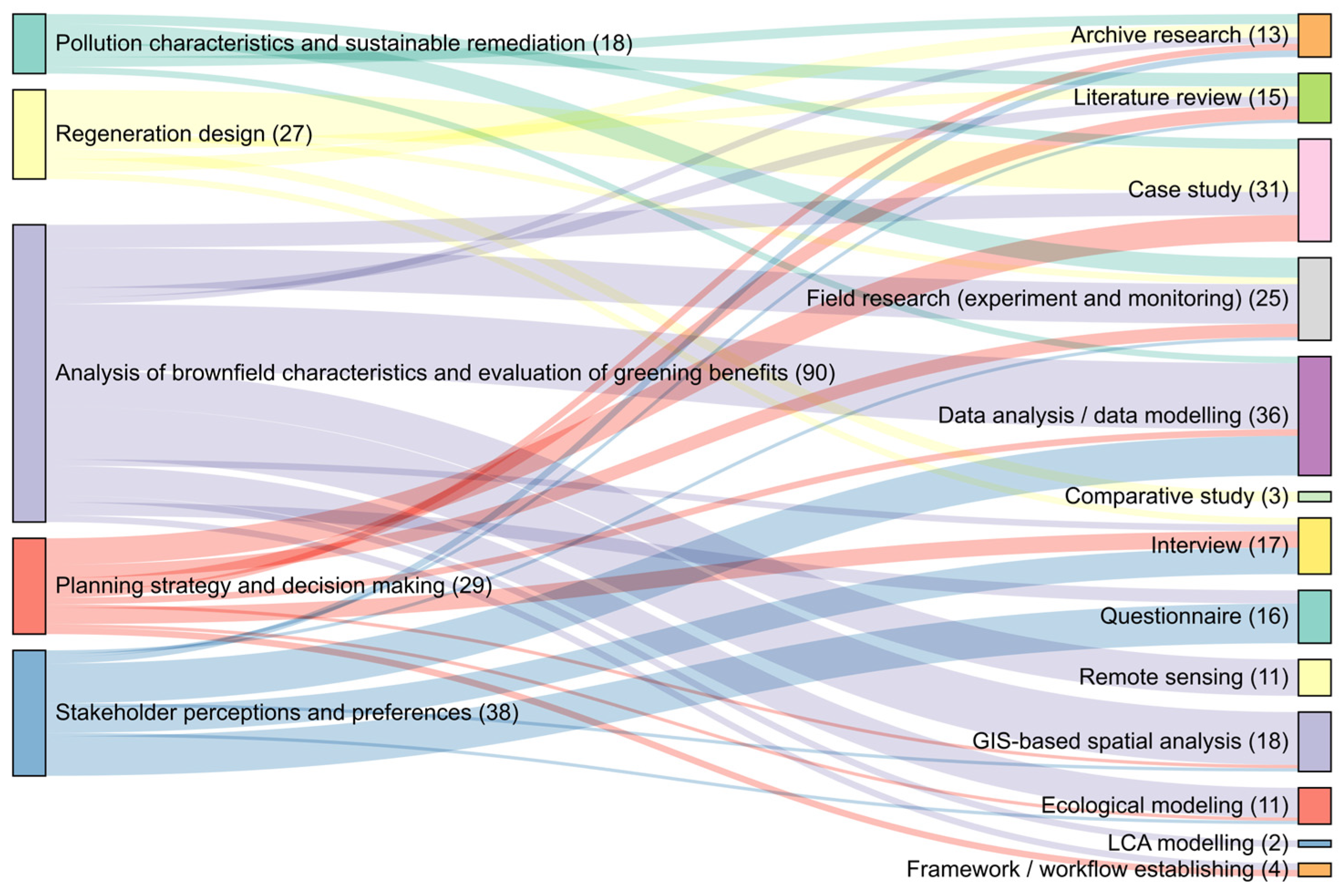
Furthermore, the research methods employed across the reviewed literature were systematically examined and classified into thirteen categories: (1) archive research; (2) literature review; (3) case study; (4) comparative study; (5) interview; (6) questionnaire; (7) field research (experiment and monitoring); (8) remote sensing; (9) GIS-based spatial analysis; (10) ecological modelling; (11) life cycle assessment (LCA) modelling (LCA evaluates the environmental impacts of a product, process, or system across its entire life cycle, from resource extraction to end-of-life disposal [66]); (12) data analysis and modelling; and (13) framework or workflow development. It should be noted that many studies included in this review employed multiple methods (e.g., interviews, case studies, and modelling). Therefore, Figure 4 is based on a multi-label counting approach, where a single article may contribute to more than one methodological category. As a result, the links represent method occurrences rather than unique publications, and repeated counting is therefore expected and intentional.

3.2.1. Pollution Characteristics and Sustainable Remediation of Brownfields

Fifteen studies focused on contamination characteristics and sustainable remediation of brownfields. Using case analysis, literature and archive reviews [25,26,57,67,68,69,70], as well as field monitoring [44,71,72,73,74,75,76,77] (Figure 4), these studies summarise strategies and challenges for sustainable brownfield remediation. Phytoremediation is highlighted as a ‘green’ and promising approach for treating brownfields and contaminated sites. It provides multiple benefits, including hydrological regulation (reducing runoff), carbon sequestration, noise reduction, air pollution mitigation, biodiversity enhancement, and improved social cohesion [26,44,57,70,71,73,75,77]. The contamination discussed in these studies mainly involves heavy metals (e.g., Cd, Cu, Pb, Zn, As) and organic pollutants such as polycyclic aromatic hydrocarbons (PAHs) and hydrocarbons. These studies focused more on environmental engineering, particularly on environmental assessment and remediation techniques. They explored how different engineering methods can be applied to the remediation of heavily contaminated brownfield sites, rather than discussing greening design approaches or regeneration strategies. For example, Hou et al. [67] conducted an in-depth examination of the remediation of the London Olympic Park. Their research demonstrated how the project successfully cleaned up and reused a large, complex contaminated area within three years, including recycling polluted soil and utilising biologically remediated soil as fill material to support subsequent park construction.

3.2.2. Brownfield Regeneration Design and Strategies

Sixteen studies focused on design strategies and methods for BG. These studies primarily employ qualitative methods, including case studies, literature and archival analyses [55,56,58,61,64,65,78,79,80,81,82,83,84,85,86], and semi-structured interviews [82,87] (Figure 4). Most of them emphasise the value of industrial heritage and industrial landscapes, including ecological value [61,79,81] and cultural value [81,83]. They argue that industrial landscapes can act as triggers for brownfield regeneration by retaining industrial elements and historical connections, creating attractive public spaces, strengthening identity, and supporting shifts in urban and regional planning [58,61,79,83]. Some scholars also stress the importance of integrating natural processes and ecological succession into design [61,79,86]. Two studies particularly focused on ecological design: Liu and Pan [56] proposed three models—ecological protection, ecological restoration, and ecological function design, while Rechner Dika [65] compared how ecological design principles influence design composition. Four additional studies emphasised that regeneration should be grounded in the environmental, cultural, and ecological characteristics of the site. Panagopoulos [64] suggested that successful design should rely on multiple landscape features to create multifunctional public spaces; Heatherington et al. [87] conceptualised brownfields as a ‘palimpsest,’ a temporal collage where past traces coexist with new interventions, requiring selective preservation of historical layers; and Limor-Sagiv et al. [82] explored how creative landscape design can serve as infrastructure to address flood control and drainage. Finally, two studies drew lessons from failed regeneration practices, including overly detailed but outdated and non-iconic design [80], and ecological designs that are too complex to maintain sustainably due to high costs [78].
Overall, these studies highlight that BG design is strongly shaped by industrial heritage, ecological processes, and site-specific landscape characteristics. Successful regeneration strategies often integrate historical identity, ecological restoration, and multifunctional public space design. At the same time, research on failed cases reminds designers to avoid overly complex or outdated solutions. Together, this body of work shows that effective BG requires not only ecological thinking, but also a careful balance between cultural interpretation, environmental limits, and long-term maintenance.

3.2.3. Analysis of Brownfield Characteristics and Assessment of Greening Benefits

Forty-eight studies have quantified and evaluated the benefits of BG from ecological, social, and economic perspectives. These studies not only demonstrated the potential of brownfields to provide ES, but also offer scientific evidence for GI planning. Most research employ quantitative methods, including remote sensing, GIS-based spatial analysis, life cycle assessment modelling, and data modelling, to map greening benefits. However, there are also a few studies that employed qualitative methods, such as field surveys, interviews, and literature reviews [36,62,88,89,90,91] (Figure 4).
From an ecological perspective, BG provides both regulating and supporting ES, and is increasingly promoted as part of urban GI. Regarding regulating services, informal green spaces (IGS) perform similarly to urban parks in dust reduction, cooling, hydrological regulation, and biodiversity protection [92]. Remote sensing shows that ecological restoration of landfills increases vegetation and produces cooling and moisture effects [93]. Kazmierczak [45] also highlighted the important role of BG in mitigating urban heat island effects. Masiero et al. [94] compared ES under two nature-based solutions (NBS) scenarios—urban forests and sparse grass landscapes—and found that the latter provides the highest overall ES value due to its strong phytoremediation capacity. Preston et al. [95] compared the regulating ES of brownfields and parks, showing that in high-density urban areas, brownfields offer around five times more carbon storage and air purification benefits than parks.
In terms of supporting ES, brownfields are described as ‘mosaic landscapes’ where natural and built elements intermingle [91]. Even under conditions of contamination and human disturbance, they can maintain complex multi-trophic ecological structures [96]. They provide important habitats for birds [97,98], insects [29,99], and invertebrates [90]. Vegetated brownfields can support species richness comparable to that of formal green spaces, with richness increasing as brownfield size increases [100]. However, redevelopment may reduce bird density [98], and converting contaminated land into agriculture or forest can decrease landscape diversity and reduce habitat [101]. To address this, ‘temporary conservation’ strategies have been proposed, suggesting that maintaining 50–60% open space and an average 15-year turnover can maximise biodiversity [28,99]. Overall, research warns that ignoring brownfield ecological functions and conducting unchecked redevelopment may lead to biodiversity loss and ecological degradation [28,90,99,101].
BG is widely recognised for its potential as a GI element because it can provide diverse ES. Brownfields function as both ‘stepping stones’ and ‘connectors’ in ecological networks [102]. Spatial prioritisation models are seen as useful tools for maximising regeneration benefits [30,42,103,104,105]. For example, Feng et al. [30] found that more than half of coal-mining brownfields have high ecological potential and are suitable for inclusion in urban ecological networks. Feng et al. [103] also proposed a model that ranks brownfield regeneration priorities by combining site suitability with urban functional demands to maximise overall benefits. Preston et al. [42] developed a general taxonomy for identifying brownfield types and distributions, providing a scientific basis for GI planning at the urban scale. Bardos et al. [36] introduced a value-based integrative method to identify and optimise both tangible and intangible benefits of ‘soft reuse’ (e.g., green and recreational uses). Ahn’s [106] “Prosuming-Parks” model further views BG as a dual engine for expanding green networks and restructuring regional economies.
Several studies have quantified the benefits of BG from both social and economic perspectives. In terms of social effectiveness, Palliwoda et al. [107] pointed out that unmanaged vegetated brownfields can provide complementary activity spaces such as quiet spaces and dog walking spaces; Kristi á nov á et al. [88] argued that BG not only improves residents’ mental health, but also has dual social and environmental benefits; Zhong et al. [105] found that converting brownfield into comprehensive green spaces can significantly enhance the cultural ES. A scenario assessment in Shanghai revealed that the multifunctional greening scenario yielded ES values more than 21% higher than those in purely ecological scenarios [105]. In terms of economic benefits, converting brownfields into green spaces can increase rental prices [108] and even raise total property values across surrounding communities [109]. Moreover, BG can enhance cultural ES—such as recreation and tourism—which generate additional economic benefits [62,110]. However, environmental improvements and rising property prices may also exacerbate gentrification and resident displacement [108].
Regarding sustainability, life cycle assessments show that phytoremediation has lower environmental impacts and lower costs [111], and hydroseeding native plants is the most sustainable lawn strategy [112]. A sustainability comparison reveals that an economically oriented redevelopment project scored higher than an ecologically oriented wetland park [113].
Overall, the literature demonstrates that BG significantly enhances ecological and economic performance, but its social impacts and environmental risks must be carefully considered to achieve balanced and sustainable transitions across ecological, economic, and social dimensions.

3.2.4. Planning Strategy and Decision-Making

Among the reviewed publications, seventeen studies focused on planning strategies and decision-making. Most of these studies employed socio-cultural research approaches, including literature and archival research, case studies, field investigations, interviews, and framework establishment, while only three studies used quantitative methods such as GIS-based analysis, data analysis, and modelling [40,114,115] (Figure 4). Existing studies explore multiple dimensions of the drivers, barriers, and governance models of BG. Firstly, several studies highlight the influence of macro-level contextual factors. For example, Otsuka et al. [46] showed that, in Japan, economic decline and urban shrinkage have created an opportunity for GI-led regeneration, with ecosystem restoration and biodiversity identified as key priorities by local stakeholders. Similarly, Hajduková and Sopirová [116] argued that in shrinking Slovak cities, environmental remediation is a prerequisite for redevelopment, and greening vacant land acts as a catalyst for improving urban attractiveness.
Secondly, a number of studies adopted social–ecological and heritage perspectives, emphasising the interaction between natural processes and social structures. For example, Law and McSweeney [117] highlighted the positive role of small landowners in forest regeneration, challenging traditional forest transition theory; Spiwak [118] argued that the natural–cultural hybridity of post-industrial landscapes has long been undervalued in heritage policies; Malone warned of soil contamination risks in community gardens from an environmental justice standpoint [119]; and Joksimović introduced the concept of ‘rural brownfields,’ finding that abandoned land may show high ecological stability due to vegetation growth but faces future threats from mining activities [115]. At the same time, scholars increasingly point to governance structures and citizen participation as key mechanisms within these socio-ecological processes. Based on the case of Toronto, De Sousa emphasises that transforming brownfields into green spaces faces obstacles such as funding shortages and weak institutional collaboration, suggesting the need for strong public-sector involvement [38]. Mattijssen et al. showed that active citizenship can shift green space governance toward collaborative models [120]; Follmann and Viehoff demonstrated the political role of community gardens as urban commons resisting neoliberal governance [121]; while Kantor-Pietraga et al., Pietta and Tononi, and Carver and Gardner identified local leadership, citizen involvement, creative management, and diversified land-use pathways as critical to successful brownfield regeneration [114,122,123]. Taken together, these studies show that brownfield regeneration is a socio-ecological-cultural process driven by governance, community action, and ecological succession.
In addition, some studies focus on technical approaches and planning tools. Todd et al. integrated phytoremediation with landscape design, proposing it as a medium-term strategy before determining permanent land uses [124]. Li et al. introduced a sustainability-related conceptual site model to support decision-making [125], while Kolosz et al. emphasised the importance of ES in prioritisation and proposed a cross-scale socio-ecological-economic workflow to enhance transparency and objectivity in planning decisions [126].
Overall, existing research indicates that planning and decision-making for BG rely not only on ecological restoration and technical tools, but are strongly shaped by social structures, governance models, cultural values, and the roles of non-human actors. In essence, it represents a cross-scale, cross-sector, and multi-actor policy and planning challenge.

3.2.5. Stakeholder Perceptions and Preferences

In recent years, as brownfield regeneration has shifted from a traditional pollution-control approach toward a more integrated social–ecological pathway, stakeholders’ perceptions, preferences, and behavioural responses to greening projects have become an important dimension for understanding regeneration outcomes. Existing research reveals the scenario diversity and contextual dependence of BG in terms of the public use behaviour, environmental perception, ES preferences, and concerns about social risks and spatial justice. Among the reviewed publications, twenty studies addressed stakeholder perceptions and preferences. Most of these studies adopted sociological research methods, including interviews, questionnaires, and field investigations. Data analysis was also an important research method (Figure 4); however, only two studies applied biophysical approaches, specifically GIS-based spatial analysis and ecological modelling [127,128].
Firstly, many studies focus on green space usage, environmental experience, and perceptions in regenerated brownfields. The spatial structure, vegetation maturity, and microclimate of parks significantly influence thermal sensation and public activities. For example, mature parks with dense tree cover better support nature-based activities, while regenerated parks are more frequently used for social and leisure activities, but may cause higher heat stress due to limited shade [89,129]. Moreover, transforming abandoned land into green areas generally improves residents’ subjective perceptions of safety, air quality, health condition, and life quality [128,130,131]. However, poor spatial connectivity, lack of guidance information, distrust of management institutions, and concerns about health risks often remain barriers to positive experiences [132,133,134].
Secondly, stakeholder preferences for ES and regeneration routing choice show differences. Research indicates trade-offs between public needs and ecological functions, although multifunctional green space designs are often widely supported by diverse actors [135]. The public also tends to prefer landscapes with mature, complex vegetation, which also improves ecological connectivity [127]. However, residents’ attitudes toward greening projects are not always positive; factors such as distance and potential disturbances can weaken support [136]. Studies show that preferences for land reuse are shaped by socio-spatial factors such as gender, age, social role, urban context, and site characteristics, influencing choices among demolition, renovation, recreation, or productive reuse [137,138,139]. For example, in landscapes with both recreational and ecological potential, residents and governments may hold divided preferences between conservation and development, revealing governance tensions in blue–green infrastructure planning [140]. Emotional responses to historical traces and wild vegetation are also polarised: informal nature may be valued as an ecological and cultural asset, or conversely associated with disorder and insecurity [37,114].
Furthermore, the social impacts of BG are increasingly connected to issues of environmental justice. In some cities, brownfield cleanup and greening projects have been linked to environmental gentrification [141]. Overall, research indicates that the socio-ecological value of BG is not determined by a single factor, but rather shaped by physical characteristics, ecological performance, governance and management, cultural meaning, and power relations among stakeholders. Understanding these complex perceptions and preferences is crucial for creating more acceptable, resilient, socially and ecologically beneficial regeneration strategies.

3.3. Characteristics of the Research Object

Table 2 provides a quantitative comparison of research objects across different research themes, allowing a more systematic examination of how contamination issues, regeneration status, and spatial scales are represented in the existing literature. Among the 116 reviewed articles, 72 mentioned contamination, and 39 specifically described pollutants or pollution types (Table 2). In the 15 articles focusing on brownfield contamination characteristics and sustainable remediation, all of them discussed the specific contamination conditions of brownfields (Table 2), such as heavy metal pollution and organic contamination, with soil and water pollution being the most common. These studies examined concrete remediation methods, and several of them highlighted the advantages of phytoremediation [26,57,70,71,73,75,77]. Nine out of the fifteen studies focused on regenerated brownfield cases (Table 2), and six studies focused on cases that have not been regenerated [70,72,77] (Table 2). Thirteen studies were conducted at the site scale, and two summarised cases from multiple countries to produce empirical conclusions [26,70] (Table 2).
Among the 16 studies on design strategies and methods for BG, 13 mentioned contamination (Table 2). However, most of these studies focused on interpreting the historical and cultural value of brownfields and on developing design strategies for regeneration, rather than discussing specific remediation techniques. Two articles referred to ecological restoration [56,61] and argued that brownfield landscape transformation should move beyond a ‘tabula rasa’ approach and allow natural processes to support sustainable transition [61]. Eleven of the 16 studies examined regenerated brownfields, three focused on both regenerated brownfields and sites still in the planning or early development stage [35,48,49] (Table 2), which discussed how brownfields are perceived and explored potential factors and challenges during the regeneration process. Two studies focused on brownfield that has not been regenerated [83] (Table 2). Ten studies were conducted at the site scale, and six papers compared cases across different countries or regions [55,56,58,61,64,65] (Table 2).
Among the 48 studies related to brownfields’ characteristics and greening benefits, 23 mentioned pollution (Table 2). Studies on the quantification of BG benefits can be divided into two categories. The first category includes scenario simulations or pre-assessments, which evaluate brownfield characteristics and estimate potential benefits. Their study objects are brownfields that have not yet been regenerated [28,30,36,42,45,88,94,99,101,103,104,105,106,109,111,112,142,143,144,145] (Table 2). The second category examines confirmed environmental benefits [29,43,62,89,90,91,92,93,95,96,97,98,100,102,107,108,110,113,146,147,148,149]. These studies focused on sites where greening projects have already been completed or where natural succession has occurred (Table 2), resulting in spontaneous greening or temporary uses. The scales of these studies range from individual case studies to city-wide or regional analyses. At the urban and regional scales, these studies provide priority recommendations for multiple brownfields under different scenarios and city needs [30,36,42,45,97,102,103,104,105,106].
Among the 17 studies related to planning strategies and decision-making, 10 mentioned brownfield pollution (Table 2). One study discussed risk management for contaminated land [122], and another suggested that regenerated community gardens should be covered with at least a 10 cm layer of sand and a protective liner across the entire site [121]. However, some studies also showed that brownfields can provide important ES even without remediation [126], and that acidic environments may attract pioneer species and therefore have higher ecological value [118]. As a result, some researchers have proposed strategies that do not involve remediation or mitigation [123]. Eight studies examined regenerated brownfields. Through literature and policy analysis, as well as case studies, these works summarised experiences of BG, including processes, influencing factors, challenges, benefits, and planning implications, providing lessons for other brownfield projects [38,46,114,117,119,121,123,125]. Other studies used policy analysis, field surveys, interviews, and similar methods to propose strategies and recommendations for brownfields that are undergoing regeneration or waiting to be regenerated [60,115,116,118,120,122,124,126]. Most studies focused on site-scale cases, while a smaller number analysed brownfields at the city scale [38,40,116,119] or the regional scale [60,115,117,126] (Table 2).
Among the 20 studies related to stakeholder perceptions and preferences, 11 mentioned brownfield pollution (Table 2). However, most of them did not discuss remediation strategies. Instead, they focused on how pollution may influence stakeholder perceptions and preferences [133,139]. Odour and dust pollution [130,137] are the most easily perceived by the public. Environmental contamination also tends to be concentrated in low-income and minority communities [141]. At the same time, brownfield cleanup and greening may trigger environmental gentrification [141]. Eleven studies focused on regenerated brownfields [89,128,129,130,131,132,134,138,141], while nine studies examined brownfields that were still in the planning, construction, or natural succession stages [63,127,133,135,136,140,150]. Most studies focused on stakeholder perceptions and preferences at the site level for specific cases, while a few expanded the analysis to larger scales (Table 2), exploring general public perceptions and preferences regarding brownfields [63,135,140,150].
Pollution disclosure varies considerably across research themes (Table 2). All studies focusing on pollution characteristics and sustainable remediation (15/15) reported specific pollutant types and contamination conditions. In contrast, contamination information was reported much less consistently in other research themes. For example, only 23 of the 48 studies evaluating greening benefits provided any information on contamination status, and only eight reported specific pollutant types. Similarly, studies on planning and decision-making (10/17) and stakeholder perceptions and preferences (11/20) frequently omitted detailed contamination information. These findings suggest that contamination issues are often treated as a separate research topic rather than being systematically integrated into design, planning, and ecosystem-service assessments. As a result, the relationship between residual contamination, remediation strategies, and post-regeneration ecosystem performance remains insufficiently explored.
The reviewed literature demonstrate clear differences in the regeneration status of study sites across research themes (Table 2). Regenerated brownfields are more commonly examined in studies on regeneration design (11/16), sustainable remediation (9/15), and stakeholder perceptions (11/20), whereas studies evaluating brownfield characteristics and greening benefits focus predominantly on unregenerated sites (28/48). In contrast, planning strategy and decision-making studies exhibit a more balanced distribution between regenerated and unregenerated sites (8 vs. 8), suggesting that this research theme is concerned not only with post-regeneration outcomes but also with the planning, governance, and implementation challenges encountered prior to regeneration. Overall, these patterns indicate that design research is largely based on completed projects, while benefit-assessment research often relies on hypothetical or potential ecosystem-service evaluations.

3.4. Brownfield Greening Types and Functions

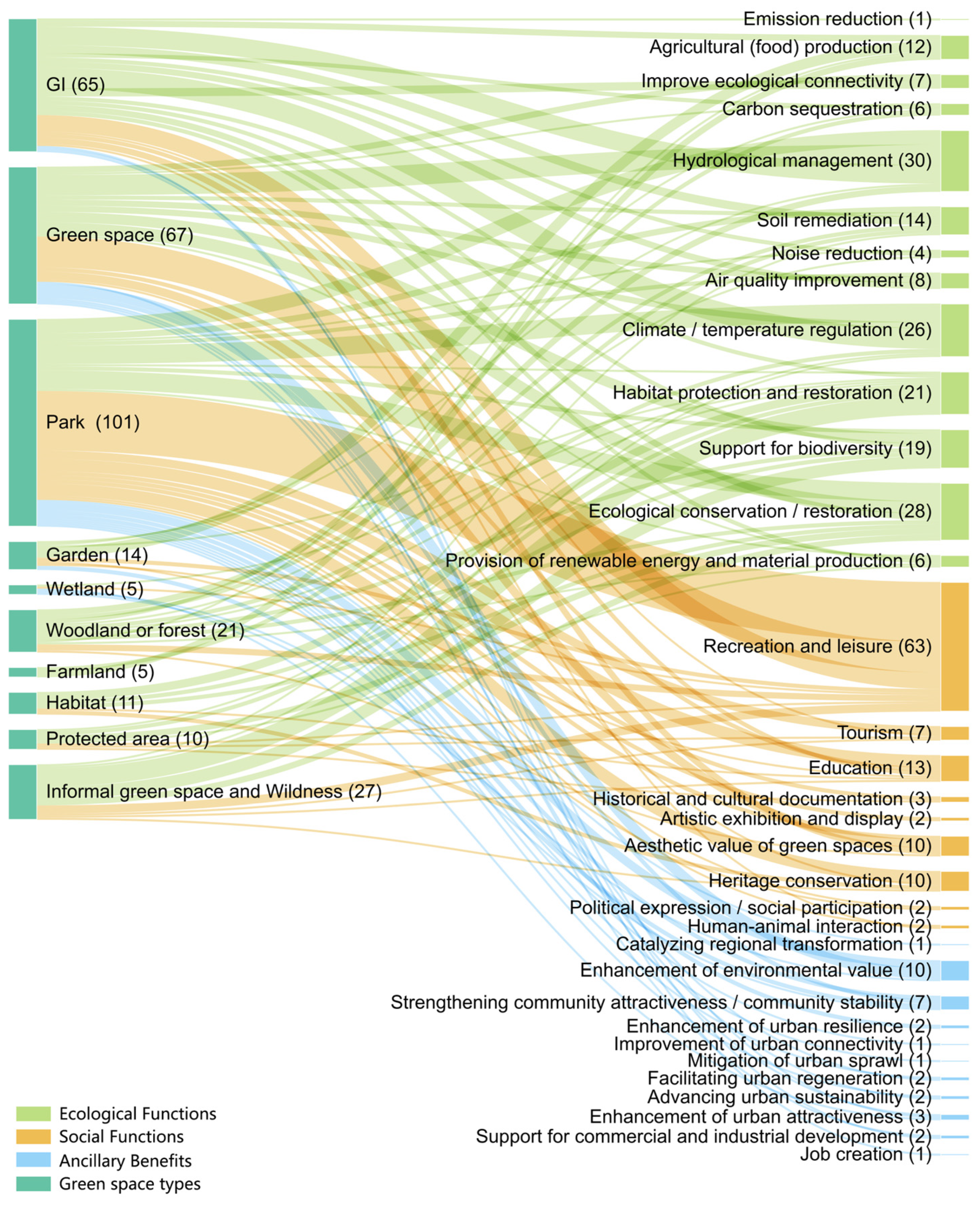
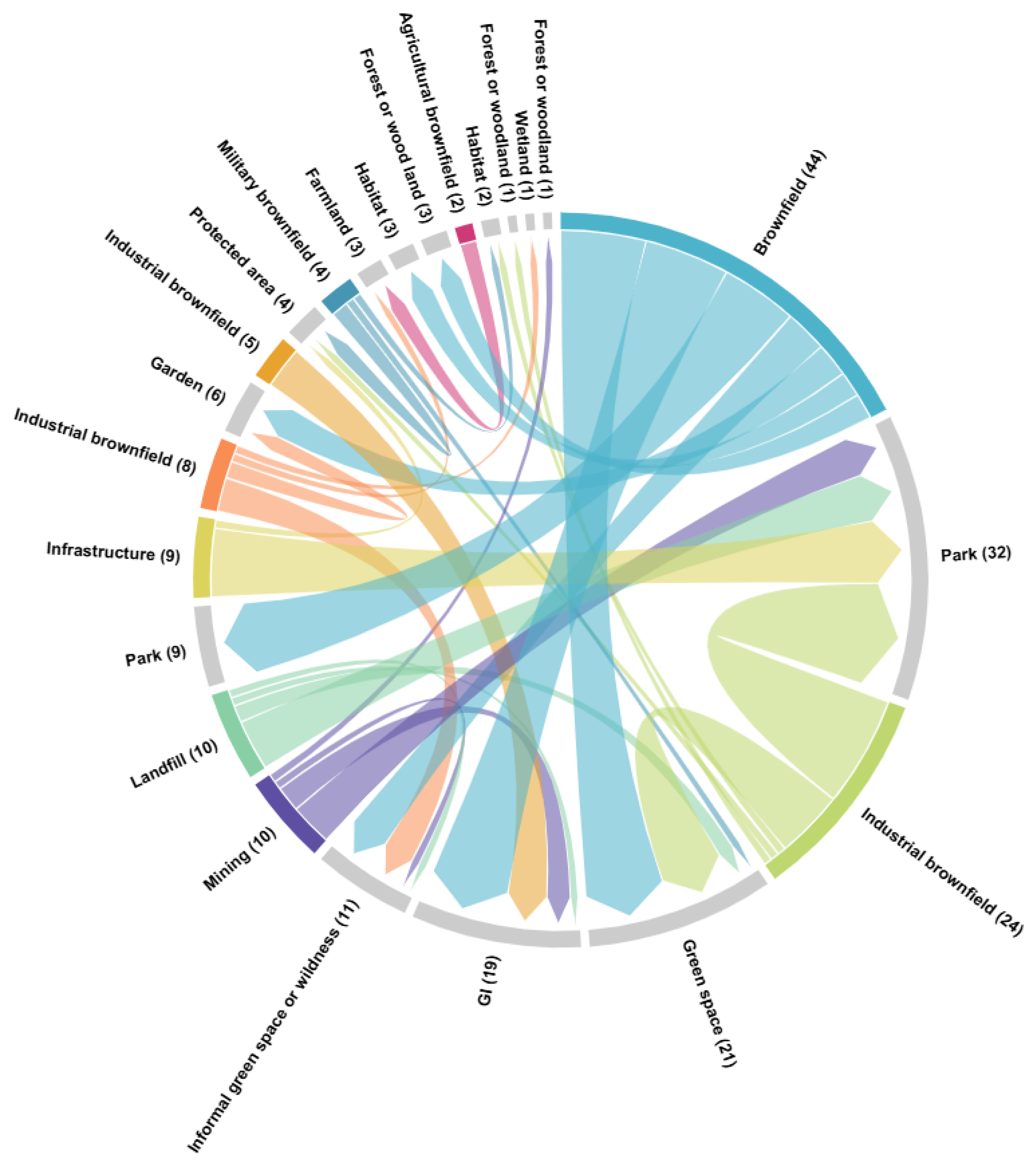
Among the 116 reviewed studies, seven types of brownfields were mentioned, namely industrial brownfield, mining, landfill, infrastructure, agricultural brownfield sites, military brownfield, and various types generally referred to as ‘brownfield’ in urban-scale studies. These are regenerated into diverse green spaces (BG), including formal types like parks, wetlands, and forests. Some sites developed via spontaneous succession into “informal green spaces” or “wilderness.” Other studies applied broader classifications, referring to outcomes simply as “green space” or “green infrastructure” (GI), reflecting varied levels of specificity in brownfield-to-green space transformation research (Figure 5).
When the study focused on parks, gardens, botanical gardens, or wetlands, the most-reported functions include social benefits such as recreation, culture, education, community cohesion, tourism attractiveness [58,78,79,83,89,92,113,121,128] (Figure 6). These spaces are also linked to ecological functions such as flood control, water drainage, climate regulation, carbon sequestration, and biodiversity support [56,65,92,93,96] (Figure 6). When BG appeared as forests or woodland/grassland, the research highlighted mostly ecological roles similar to those found in parks, but with stronger emphasis on hydrological management, carbon sinks, noise reduction, and enhancing biodiversity [94,114,115,117,120,127] (Figure 6). Protected areas and habitats are more specifically associated with the conservation of particular or endangered species [29,87,90,91,99,123] (Figure 6). The category of GI, or general green areas, includes various green space types and therefore more diverse functions (Figure 6). However, when the term GI is used, the emphasis is more often on ecological function and regulation ES, such as climate mitigation, air quality improvement, stormwater reduction, and pollution remediation [30,42,45,94,102,103,104,107] (Figure 6). Studies applying this term are often related to quantifying the benefits of BG. In contrast, ‘wildness’ and ‘informal green spaces’ highlight the spontaneous nature of BG and the limited human intervention or disturbance. Brownfields converted from these spaces focus mainly on their ecological functions, such as ecological restoration, providing habitats for rare species, supporting biodiversity, and enhancing ecological resilience [97,98,100,150] (Figure 6). Human–nature interaction may also become a future function once these spaces are redeveloped [97].
In addition to ecological and social functions, many studies also discussed the additional benefits provided by BG. These benefits include enhancing environmental value, strengthening community stability, mitigating urban sprawl, increasing urban attractiveness, improving urban resilience, promoting regional transformation, and supporting urban sustainability and regeneration. The types of green spaces discussed in the reviewed literature include parks, green spaces, GI, gardens, and wetlands (Figure 6). Notably, in the reviewed studies, most papers reported that even a single type of green space may generate multiple functions, including ecological, social, and environmental benefits, highlighting that urban green spaces are inherently multifunctional rather than function-specific. Therefore, Figure 6 illustrates a one-to-many relationship between green space types and their functions.

4. Discussion

4.1. Global Research Trend of Brownfield Greening Studies

Our review shows that BG has gained increasing scholarly attention in recent years. In terms of research content, current BG studies exhibit a clear shift from pollution-driven remediation toward integrated ecological–social values. Regeneration goals have expanded from ‘decontamination’ to include ecological recovery, landscape improvement, and community well-being, and have gradually begun to accept low-intervention or even non-remediation natural succession approaches [123]. These findings are consistent with the recent literature highlighting the growing role of brownfields as multifunctional components of urban green infrastructure rather than merely contaminated sites awaiting redevelopment [1,93,151]. Likewise, design thinking has shifted from landscape aesthetics toward multi-scale, ecological–cultural integration, emphasising the co-existence of industrial heritage and natural processes [61], and extending site strategies to urban and regional GI planning [42,106]. At the same time, benefit assessment has shifted from merely demonstrating ecological outcomes toward issues of social equity, governance risks, and sustainable development. Increasingly, studies address green gentrification, public safety perceptions, and differentiated stakeholder preferences [108,139,141]. Overall, BG is moving beyond traditional remediation engineering toward an integrated form of urban infrastructure that combines ecological resilience, cultural identity, and social equity.
Research methods in BG vary considerably across research themes, reflecting different analytical objectives. Studies on regeneration design and planning strategies rely predominantly on case studies [55,61,65,78], archival research [78,79,114,120], and literature reviews [46,119,124,126], which provide valuable contextual understanding but often lack generalisability across sites. In contrast, research focusing on the evaluation of greening benefits and site characteristics is dominated by quantitative approaches, including GIS-based spatial analysis, remote sensing, ecological modelling, and data-driven assessment [30,45,93,99,104]. These methods enable the large-scale and standardised evaluation of ecological performance and spatial patterns, facilitating comparisons across sites. However, their effectiveness depends heavily on data availability and model assumptions, and they may not adequately capture site-specific contamination conditions, governance contexts, or social dimensions. For example, remote sensing is particularly useful for the large-scale monitoring of vegetation dynamics and land-cover change, but it cannot directly capture subsurface contamination conditions or social outcomes. GIS-based approaches support spatial prioritisation and scenario analysis, yet their reliability depends heavily on data quality and spatial resolution. Ecosystem-service models such as InVEST facilitate the quantification of ecological functions under alternative land-use scenarios, whereas their simplified assumptions may overlook site-specific contamination characteristics and ecological processes. Similarly, i-Tree provides detailed estimates of vegetation-related ecosystem services, but is less effective in assessing broader social, cultural, or remediation-related benefits. Meanwhile, stakeholder-oriented studies primarily employ interviews, questionnaires, and behavioural analyses, offering insights into public preferences and decision-making processes, but often facing limitations related to sample size and contextual transferability. Overall, BG research has evolved toward a more integrated methodological framework that combines spatial assessment, ecological modelling, and participatory approaches, enabling a more comprehensive understanding of ecological, social, and planning dimensions while highlighting the need to balance methodological rigour with contextual sensitivity.
Geographically, BG research is highly uneven, with most studies concentrated in developed countries such as Germany, the United Kingdom, and the United States, while studies in developing countries remain limited. This corresponds with the view that brownfield issues receive relatively insufficient attention in the Global South [41]. Since the late twentieth century, developed countries have accumulated diverse BG practices, including temporary uses [28] and urban forests and rewilding approaches [150]. In contrast, developing countries, where industrialisation emerged later, now face growing brownfield challenges driven by economic restructuring and demographic change. Although some countries (e.g., Malaysia, China, Egypt) have begun to adopt baseline assessments and decision-support systems, overall research remains scarce. Given accelerating urbanisation and rising environmental awareness, more context-specific BG studies are urgently needed in developing regions.

4.2. The Limited Information on Brownfield Greening in the Current Literature

Although current research on BG provides substantial evidence on ecological benefits and general planning strategies, it still has significant limitations in both theory and practice. Many cross-national studies tend to summarise universal regeneration methods and design principles, but they often overlook contextual differences in policy systems, governance logics, public perceptions, land ownership, and funding mechanisms. Among the reviewed literature, nine studies examined cases across multiple countries or regions, yet only one explicitly discussed how legal frameworks, socio-economic conditions, governance structures, and institutional arrangements shaped regeneration outcomes [62]. These institutional and cultural structures largely determine how BG is implemented and how successful it becomes. As a result, existing models and methods are not easily transferable to developing countries and provide limited guidance for real planning decisions.
In addition, most studies focus only on a single stage of BG process—such as documenting abandoned land or evaluating post-greening benefits—while rarely examining the entire process from closure, contamination treatment, natural recovery or engineered restoration, to final reuse. In the reviewed sample, only two studies adopted a life cycle assessment approach and integrated contaminant fate and transport modelling to compare alternative greening scenarios and their environmental impacts [111,112]. The lack of whole-process tracking prevents comparison between different regeneration pathways (e.g., natural succession vs. strong intervention) and limits understanding of long-term maintenance needs, funding cycles, and the cumulative ecological and social outcomes. Consequently, BG research still lacks a life cycle decision framework that can be applied in policy-making.
Furthermore, key information about contamination status, risk levels, remediation costs, and long-term maintenance is often poorly described. Of the 116 reviewed studies, only 39 explicitly described site contamination conditions, and these were predominantly concentrated in the pollution and remediation research category. By contrast, studies focusing on design strategies, ecosystem services, and benefit assessment rarely reported contamination characteristics or remediation outcomes. This observation suggests a disconnect between remediation research and subsequent planning and evaluation studies. Consequently, debates over whether remediation is necessary or whether natural recovery is acceptable often lack clear thresholds for assessing acceptable levels of risk, leading to an idealised preference for ‘no remediation’ and ambiguity in real-world decision-making. While natural succession is increasingly recognised as a potentially valuable regeneration pathway, its applicability remains highly context-dependent. In many countries, strict contamination standards and liability requirements limit the feasibility of non-remediation strategies, even when natural succession may provide ecological benefits. At the same time, BG is frequently portrayed through a positive narrative that emphasises ecosystem services, while potential negative effects receive far less attention. These include green gentrification, community exclusion, rising management costs, and maintenance risks such as invasive species or safety issues. Trade-offs between safety and cost, natural processes and human intervention, or ecological and social benefits also lack systematic evaluation. As a result, BG research may risk falling into the value assumption of “blind greening” while overlooking practical constraints, regulatory requirements, and long-term management challenges.
Overall, current BG research remains insufficient in addressing contextual differences, clarifying risks and costs, exploring full life cycle dynamics, and assessing negative outcomes and trade-offs. Future studies urgently need context-sensitive, cross-scale, and interdisciplinary frameworks to more effectively support policy and practice.

4.3. Implications for Urban Planning and Management

Firstly, BG should be systematically integrated into urban planning frameworks rather than treated as isolated post-industrial interventions. At the urban scale, establishing a GIS-based brownfield database would be a foundational step for decision-making. Such a database should include detailed spatial and non-spatial attributes, such as former land-use types, contamination levels, ecological characteristics, size, accessibility, and locational context. This information enables planners to identify regeneration priorities, analyse potential ES, and pre-assess redevelopment risks, thus bridging the gap between preliminary environmental diagnosis and strategic spatial planning. Moreover, the database supports long-term governance by providing continuous inventories for reuse potential, allowing BG to become a proactive component of GI planning rather than a reactive remediation measure.
Secondly, urban planning should recognise the differentiated value of various greening models and pay attention to potential trade-offs and negative effects. Brownfields can be transformed into diverse green space types, including parks, green infrastructure networks, habitats, wetlands, woodlands, and informal green spaces, each providing distinct combinations of ecological, social, and ancillary benefits. For example, parks are more strongly associated with recreation, leisure, education, and aesthetic enhancement, whereas habitats, wetlands, and woodland regeneration areas contribute more substantially to biodiversity conservation, habitat restoration, hydrological management, and ecological connectivity. These findings suggest that BG should not be guided by a one-size-fits-all greening strategy. Instead, planners should adopt a function-oriented approach that aligns regeneration goals with local environmental conditions, community needs, and broader urban development priorities. Such an approach can help reveal the social and environmental benefits of different BG strategies and provide evidence-based support for urban renewal, land redevelopment, and environmental governance. At the same time, BG may also produce negative impacts, such as biodiversity loss resulting from the replacement of spontaneous vegetation, green gentrification, community exclusion, or increasing management costs. Therefore, greening strategies should be guided by comprehensive evaluation frameworks that balance ecological, social, and economic objectives, helping to avoid “blind greening” and promote multifunctional and socially just urban spaces.
Thirdly, at the site scale, planning and management should adopt a life cycle perspective, recognising that remediation strategies must correspond to the intended green use. The key determinant is whether the future space will be directly accessed by people. Informal greening, nature reserves, and woodland regeneration areas may rely on gradual phytoremediation, whereas urban parks or community gardens require stricter remediation standards to ensure public safety. Therefore, remediation should not operate separately from design, but should be incorporated into a coordinated strategy that links remediation processes, landscape design, and using scenarios.

5. Limitations

This study has several limitations. Firstly, the concept of brownfield varies across countries and disciplines, and is often used interchangeably with terms such as vacant land, abandoned land, or derelict land. To ensure consistency, this review included only studies explicitly referring to brownfield, contaminated land, or industrial wasteland. While this approach improved the clarity of the research scope, it may have excluded relevant studies using alternative terminologies and limited comparisons between brownfields and other forms of underutilised land.
Finally, only English-language, peer-reviewed journal articles were included, while non-English publications and grey literature (e.g., conference proceedings, books, policy reports, design guidelines, and professional publications) were excluded. This may have reduced the geographical and disciplinary representativeness of the review. In particular, knowledge related to BG is often disseminated through planning and design practice rather than academic journals, and therefore remains only partially reflected in the current corpus. Future research could incorporate multiple databases, non-English literature, and grey literature to develop a more comprehensive understanding of BG across different regional and professional contexts.

6. Conclusions

The findings of this review are broadly consistent with previous reviews of brownfield regeneration, which have highlighted the growing importance of sustainability, ecosystem services, urban renewal, and green infrastructure within brownfield research [1,151]. Unlike previous bibliometric reviews that primarily focused on publication trends, collaboration networks, and research hotspots, this study provides a more detailed examination of BG through a systematic review approach. The analytical framework proposed in this study demonstrates strong potential for transferability to other contexts of urban regeneration and green infrastructure research. By integrating five dimensions—research themes, methodologies, research objects, green space types, and functional outcomes—it provides a structured approach for systematically reviewing complex interdisciplinary literature. However, its application may also involve certain limitations, including potential subjectivity in thematic classification and dependence on available bibliographic databases. Despite these constraints, the framework offers clear added value by enhancing comparability across studies and supporting both academic synthesis and practical decision-making in spatial planning. The findings identify five major research themes within the existing literature: pollution characteristics and sustainable remediation, regeneration design, analysis of brownfield characteristics and evaluation of greening benefits, planning strategy and decision-making, and stakeholder perceptions and preferences. Methodologically, the field has progressed from qualitative case-based studies to increasingly interdisciplinary approaches that combine spatial analysis, ecological modelling, scenario simulation, and participatory methods. The review further shows that existing studies are dominated by site-scale investigations and regenerated brownfields, while contamination information is often insufficiently incorporated into design, planning, and ecosystem-service assessments. In terms of function, BG is increasingly recognised as a multifunctional form of green infrastructure that delivers ecological, social, economic, and cultural benefits.
The review also identifies several important gaps in the current knowledge base. First, contamination characteristics, remediation strategies, and long-term risks are rarely integrated into studies of ecosystem services, planning, and design, resulting in a disconnect between remediation research and subsequent regeneration processes. Second, most studies focus on individual sites or short-term outcomes, while longitudinal evidence on ecological succession, social impacts, maintenance requirements, and post-regeneration performance remains limited. Third, comparative research examining how different regulatory frameworks, liability systems, and governance arrangements influence BG outcomes is still scarce. Finally, the literature remains geographically uneven, with a strong concentration in Europe and North America and limited evidence from the Global South, where rapid urbanisation and industrial transformation are generating increasing numbers of brownfields.
Based on these findings, future research should prioritise four directions. Firstly, more longitudinal and life cycle studies are needed to examine the entire regeneration trajectory from contamination and remediation to ecological recovery, long-term maintenance, and post-regeneration outcomes. Secondly, comparative studies across countries and governance systems should be conducted to better understand how institutional and regulatory contexts shape regeneration pathways and the feasibility of approaches such as natural succession. Thirdly, future assessments should move beyond ecosystem-service benefits to systematically evaluate trade-offs, including environmental risks, management costs, green gentrification, and social equity implications. Finally, greater attention should be given to underrepresented regions, particularly developing countries, to generate more context-sensitive knowledge and broaden the geographical scope of BG research.
For urban planners and policymakers, the findings highlight that BG should be regarded not as an isolated remediation activity, but as a strategic component of urban green infrastructure and sustainable urban development. Effective BG requires the integration of contamination assessment, ecological restoration, spatial planning, and stakeholder participation within a coordinated decision-making framework. Planning strategies should be tailored to site conditions, intended land uses, and local governance contexts, while balancing ecological benefits, public safety, economic feasibility, and social justice. Such an approach can help cities maximise the multifunctional value of brownfields and support more resilient, inclusive, and sustainable urban transitions.

Supplementary Materials

The following supporting information can be downloaded at: https://www.mdpi.com/article/10.3390/land15071132/s1.

Author Contributions

Conceptualization, Y.H. and Y.Z.; methodology, Y.H.; validation, Y.H. and Y.Z.; formal analysis, Y.H.; investigation, Y.H. and L.M.F.F.; resources, Y.H.; data curation, Y.H.; writing—original draft preparation, Y.H.; writing—review and editing, Y.H. and Y.Z.; visualisation, Y.H.; supervision, L.M.F.F. and Y.Z. All authors have read and agreed to the published version of the manuscript.

Funding

This research was funded by the National Social Science Foundation of China, project entitled “Research on Territorial Spatial Planning Strategies for Northeastern Chinese Cities in the Context of Population Shrinkage” (Grant No. 22BRK020). This research was also supported by the China Scholarship Council (Grant number: 202408330073).

Data Availability Statement

No new data were created or analyzed in this study. Data sharing is not applicable to this article.

Acknowledgments

The authors would like to thank the reviewers for their insightful suggestions for this manuscript.

Conflicts of Interest

Author Yuanjing Zhang is employed by the company Zhejiang University Urban-Rural Planning & Design Institute Co., Ltd. The remaining authors declare that the research was conducted in the absence of any commercial or financial relationships that could be construed as a potential conflict of interest.

References

  1. Li, M.; Li, R.; Liu, X.; Fabris, L.M.F. A Brownfield Regeneration in Urban Renewal Contexts Visual Analysis: Research Hotspots, Trends, and Global Challenges. Landsc. Res. 2024, 49, 896–911. [Google Scholar] [CrossRef]
  2. Hammond, E.B.; Coulon, F.; Hallett, S.H.; Thomas, R.; Hardy, D.; Kingdon, A.; Beriro, D.J. A Critical Review of Decision Support Systems for Brownfield Redevelopment. Sci. Total Environ. 2021, 785, 147132. [Google Scholar] [CrossRef] [PubMed]
  3. Andrews, A. Dereliction, Decay and the Problem of de-Industrialization in Britain, c. 1968–1977. Urban Hist. 2020, 47, 236–256. [Google Scholar]
  4. Breger, G.E. The Concept and Causes of Urban Blight. Land Econ. 1967, 43, 369–376. [Google Scholar] [CrossRef]
  5. Hortas-Rico, M. Sprawl, Blight, and the Role of Urban Containment Policies: Evidence from US Cities. J. Reg. Sci. 2015, 55, 298–323. [Google Scholar]
  6. Accordino, J.; Johnson, G.T. Addressing the Vacant and Abandoned Property Problem. J. Urban Aff. 2000, 22, 301–315. [Google Scholar] [CrossRef]
  7. Baker, R.D.; Warren, J.L.; Behmanesh, N.; Allen, D.T. Management of Hazardous Waste in the United States. Hazard. Waste Hazard. Mater. 1992, 9, 37–59. [Google Scholar] [CrossRef]
  8. About|US EPA. Available online: https://www.epa.gov/brownfields/about (accessed on 8 January 2026).
  9. National Planning Policy Framework—Annex 2: Glossary—Guidance—GOV.UK. Available online: https://www.gov.uk/guidance/national-planning-policy-framework/annex-2-glossary (accessed on 10 January 2026).
  10. Ferber, U. (Ed.) Sustainable Brownfield Regeneration: CABERNET Network Report; University of Nottingham: Nottingham, UK, 2006; ISBN 978-0-9547474-5-9. [Google Scholar]
  11. De Sousa, C.; Carroll, A.M.M.; Whitehead, S.; Coffin, S.; Heberle, L.; Hettiarachchi, G.; Martin, S.; Sullivan, K.; Van Der Kloot, J. A Review of Brownfields Revitalisation and Reuse Research in the US over Three Decades. Local Environ. 2023, 28, 1629–1654. [Google Scholar] [CrossRef]
  12. Morar, C.; Berman, L.; Unkart, S.; Erdal, S. Sustainable Brownfields Redevelopment in The European Union: An Overview of Policy and Funding Frameworks. J. Environ. Health 2021, 84, 24–31. [Google Scholar] [PubMed]
  13. Zhang, L.; Wang, Y.; Ding, Q.; Shi, Y. Current Status and Prospects of Ecological Restoration and Brownfield Reuse Research Based on Bibliometric Analysis: A Literature Review. Land 2025, 14, 1185. [Google Scholar] [CrossRef]
  14. Costa, J.P.; Andrade, M.J.; Dal Cin, F. The (Re)Industrialised Waterfront as a “Fluid Territory”: The Case of Lisbon and the Tagus Estuary. Urban Plan. 2023, 8, 363–375. [Google Scholar] [CrossRef]
  15. Dal Cin, F.; de Mesquita Lima, J.; Proença, S.B. Fuzzy Boundaries: Threshold Between Water and Land; Taylor & Francis: London, UK, 2025; ISBN 1-040-67984-6. [Google Scholar]
  16. Mohamad Selamat, I.A.; Maruthaveeran, S.; Mohd Yusof, M.J.; Shahidan, M.F. Planning Tools to Revitalise Urban Vacant Land from Ecological Perspectives: A Systematic Review. Urban Sci. 2023, 7, 58. [Google Scholar] [CrossRef]
  17. Rieniets, T. Shrinking Cities: Causes and Effects of Urban Population Losses in the Twentieth Century. Nat. Cult. 2009, 4, 231–254. [Google Scholar] [CrossRef]
  18. Liebmann, H.; Kuder, T. Pathways and Strategies of Urban Regeneration—Deindustrialized Cities in Eastern Germany. Eur. Plan. Stud. 2012, 20, 1155–1172. [Google Scholar] [CrossRef]
  19. Nassauer, J.I.; Raskin, J. Urban Vacancy and Land Use Legacies: A Frontier for Urban Ecological Research, Design, and Planning. Landsc. Urban Plan. 2014, 125, 245–253. [Google Scholar] [CrossRef]
  20. Lange, D.A.; McNeil, S. Brownfield Development: Tools for Stewardship. J. Urban Plan. Dev. 2004, 130, 109–116. [Google Scholar] [CrossRef]
  21. Baing, A.S. Containing Urban Sprawl? Comparing Brownfield Reuse Policies in England and Germany. Int. Plan. Stud. 2010, 15, 25–35. [Google Scholar] [CrossRef]
  22. Nagengast, A.; Hendrickson, C.; Lange, D. Commuting from US Brownfield and Greenfield Residential Development Neighborhoods. J. Urban Plan. Dev. 2011, 137, 298–304. [Google Scholar] [CrossRef]
  23. Adams, D.; Watkins, C. Greenfields, Brownfields and Housing Development; John Wiley & Sons: New York, NY, USA, 2008; ISBN 1-4051-7246-0. [Google Scholar]
  24. Zhang, Y.; Wang, C.; Tian, W.; Zhang, G. Determinants of Purchase Intention for Real Estate Developed on Industrial Brownfields: Evidence from China. J. Hous. Built Environ. 2020, 35, 1261–1282. [Google Scholar] [CrossRef]
  25. Way, T. Landscapes of Industrial Excess: A Thick Sections Approach to Gas Works Park. J. Landsc. Archit. 2013, 8, 28–39. [Google Scholar] [CrossRef]
  26. Guidi Nissim, W.; Labrecque, M. Reclamation of Urban Brownfields through Phytoremediation: Implications for Building Sustainable and Resilient Towns. Urban For. Urban Green. 2021, 65, 127364. [Google Scholar] [CrossRef]
  27. Roy, S.; Labelle, S.; Mehta, P.; Mihoc, A.; Fortin, N.; Masson, C.; Leblanc, R.; Châteauneuf, G.; Sura, C.; Gallipeau, C. Phytoremediation of Heavy Metal and PAH-Contaminated Brownfield Sites. Plant Soil. 2005, 272, 277–290. [Google Scholar] [CrossRef]
  28. Kattwinkel, M.; Biedermann, R.; Kleyer, M. Temporary Conservation for Urban Biodiversity. Biol. Conserv. 2011, 144, 2335–2343. [Google Scholar] [CrossRef]
  29. Twerd, L.; Krzyzynski, M.; Waldon-Rudzionek, B.; Olszewski, P. Can Soda Ash Dumping Grounds Provide Replacement Habitats for Digger Wasps (Hymenoptera, Apoidea, Spheciformes)? PLoS ONE 2017, 12, e0175664. [Google Scholar] [CrossRef] [PubMed]
  30. Feng, S.; Hou, W.; Chang, J. Changing Coal Mining Brownfields into Green Infrastructure Based on Ecological Potential Assessment in Xuzhou, Eastern China. Sustainability 2019, 11, 2252. [Google Scholar] [CrossRef]
  31. Gas Works Park—(2876). Available online: https://apps.ecology.wa.gov/cleanupsearch/site/2876?utm_source=chatgpt.com (accessed on 8 January 2026).
  32. Seltmann, G. Renaissance of an Industrial Region:«Internationale Bauausstellung Emscher Park»–Achievements and Future Model for Others. 2007. Available online: http://www.riss.osaka-u.ac.jp/jp/events/point/P.Seltmann.pdf (accessed on 3 May 2014).
  33. Shaw, R. The International Building Exhibition (IBA) Emscher Park, Germany: A Model for Sustainable Restructuring? Eur. Plan. Stud. 2002, 10, 77–97. [Google Scholar] [CrossRef]
  34. De Sousa, C. The Greening of Urban Post-Industrial Landscapes: Past Practices and Emerging Trends. Local Environ. 2014, 19, 1049–1067. [Google Scholar] [CrossRef]
  35. Rink, D.; Schmidt, C. Afforestation of Urban Brownfields as a Nature-Based Solution. Experiences from a Project in Leipzig (Germany). Land 2021, 10, 893. [Google Scholar] [CrossRef]
  36. Bardos, R.P.; Jones, S.; Stephenson, I.; Menger, P.; Beumer, V.; Neonato, F.; Maring, L.; Ferber, U.; Track, T.; Wendler, K. Optimising Value from the Soft Re-Use of Brownfield Sites. Sci. Total Environ. 2016, 563–564, 769–782. [Google Scholar] [CrossRef] [PubMed]
  37. Koch, F.; Bilke, L.; Helbig, C.; Schlink, U. Compact or Cool? The Impact of Brownfield Redevelopment on Inner-City Micro Climate. Sustain. Cities Soc. 2018, 38, 31–41. [Google Scholar] [CrossRef]
  38. De Sousa, C.A. Turning Brownfields into Green Space in the City of Toronto. Landsc. Urban Plan. 2003, 62, 181–198. [Google Scholar] [CrossRef]
  39. Mathey, J.; Arndt, T.; Banse, J.; Rink, D. Public Perception of Spontaneous Vegetation on Brownfields in Urban Areas—Results from Surveys in Dresden and Leipzig (Germany). Urban For. Urban Green. 2018, 29, 384–392. [Google Scholar] [CrossRef]
  40. Chen, B.; Cortinovis, C.; Hashimoto, S.; Zheng, X. From Urban Scale Priorities to Local Actions: An Approach to Develop Brownfield Greening Strategies, Based on Ecosystem Services Supply and Demand. One Ecosyst. 2025, 10, e175875. [Google Scholar] [CrossRef]
  41. Chen, B.; Hashimoto, S. Integrate Brownfield Greening into Urban Planning: A Review from the Perspective of Ecosystem Services. Urban For. Urban Green. 2025, 104, 128642. [Google Scholar] [CrossRef]
  42. Preston, P.D.; Dunk, R.M.; Smith, G.R.; Cavan, G. Not All Brownfields Are Equal: A Typological Assessment Reveals Hidden Green Space in the City. Landsc. Urban Plan. 2023, 229, 104590. [Google Scholar] [CrossRef]
  43. Mathey, J.; Rößler, S.; Banse, J.; Lehmann, I.; Bräuer, A. Brownfields as an Element of Green Infrastructure for Implementing Ecosystem Services into Urban Areas. J. Urban Plan. Dev. 2015, 141, A4015001. [Google Scholar] [CrossRef]
  44. Rapaccini, G.; Porro, Z.; Passatore, L.; Trentanovi, G.; Zoderer, B.M.; Pirelli, P.; Guerci, L.; Galasso, G.; Quaglini, L.A.; Cardarelli, E.; et al. Interdisciplinary Approach to Regenerate Contaminated Urban Sites with Novel Ecosystems: The Multi-Layer Analysis of La Goccia Forest, a Case Study in Milan. Forests 2025, 16, 1410. [Google Scholar] [CrossRef]
  45. Scott, M.; Lennon, M.; Haase, D.; Kazmierczak, A.; Clabby, G.; Beatley, T. Nature-Based Solutions for the Contemporary City/Re-Naturing the City/Reflections on Urban Landscapes, Ecosystems Services and Nature-Based Solutions in Cities/Multifunctional Green Infrastructure and Climate Change Adaptation: Brownfield Greening as an Adaptation Strategy for Vulnerable Communities?/Delivering Green Infrastructure through Planning: Insights from Practice in Fingal, Ireland/Planning for Biophilic Cities: From Theory to Practice. Plan. Theory Pract. 2016, 17, 267–300. [Google Scholar] [CrossRef]
  46. Otsuka, N.; Abe, H.; Isehara, Y.; Miyagawa, T. The Potential Use of Green Infrastructure in the Regeneration of Brownfield Sites: Three Case Studies from Japan’s Osaka Bay Area. Local Environ. 2021, 26, 1346–1363. [Google Scholar] [CrossRef]
  47. Page, M.J.; McKenzie, J.E.; Bossuyt, P.M.; Boutron, I.; Hoffmann, T.C.; Mulrow, C.D.; Shamseer, L.; Tetzlaff, J.M.; Akl, E.A.; Brennan, S.E. The PRISMA 2020 Statement: An Updated Guideline for Reporting Systematic Reviews. BMJ 2021, 372, 71. [Google Scholar] [CrossRef]
  48. Ahmad, N.; Zhu, Y.; Ibrahim, M.; Waqas, M.; Waheed, A. Development of a Standard Brownfield Definition, Guidelines, and Evaluation Index System for Brownfield Redevelopment in Developing Countries: The Case of Pakistan. Sustainability 2018, 10, 4347. [Google Scholar] [CrossRef]
  49. Hu, W. Discussion on Reformation Design and Reuse of Industrial Wastelands Take the Landschaftspark Duisburg Nord Designed by Peter Latz as an Example; McAnally, E., Zhang, Y., Green, R., Tretyakova, I., Eds.; Atlantis Press: Paris, France, 2017; Volume 124, pp. 500–503. [Google Scholar]
  50. Marschall, K. SAARLAND from the Industrial Wasteland to the Post-Modern Eco-Park. Denkmalpflege 2020, 78, 182–183. [Google Scholar]
  51. Li, B.; Wang, B.; Cheng, Y.; Ke, M.; Li, X. Landscape Reconstruction and Reuse of Industrial Wasteland Based on the Concept of Ecological and Environmental Protection. Fresenius Environ. Bull. 2021, 30, 4561–4568. [Google Scholar]
  52. Shao, H.; Kim, G.; Li, Q.; Newman, G. Web of Science-Based Green Infrastructure: A Bibliometric Analysis in CiteSpace. Land 2021, 10, 711. [Google Scholar] [CrossRef] [PubMed]
  53. Janik, A.; Ryszko, A.; Szafraniec, M. Scientific Landscape of Smart and Sustainable Cities Literature: A Bibliometric Analysis. Sustainability 2020, 12, 779. [Google Scholar] [CrossRef]
  54. Zhang, D.; Xu, J.; Zhang, Y.; Wang, J.; He, S.; Zhou, X. Study on Sustainable Urbanization Literature Based on Web of Science, Scopus, and China National Knowledge Infrastructure: A Scientometric Analysis in CiteSpace. J. Clean. Prod. 2020, 264, 121537. [Google Scholar] [CrossRef]
  55. Loures, L.; Panagopoulos, T. Sustainable Reclamation of Industrial Areas in Urban Landscapes; Kungolos, A., Brebbia, C., Beriatos, E., Eds.; WIT Press: Southampton, UK, 2007; Volume 102, pp. 791–800. [Google Scholar]
  56. Liu, Y.; Pan, X. Ecotope-Based Urban Post-Industrial Landscape Design; Lee, G., Ed.; Elsevier: Amsterdam, The Netherlands, 2014; Volume 9, pp. 185–189. [Google Scholar]
  57. Cundy, A.B.; Bardos, R.P.; Puschenreiter, M.; Mench, M.; Bert, V.; Friesl-Hanl, W.; Müller, I.; Li, X.N.; Weyens, N.; Witters, N.; et al. Brownfields to Green Fields: Realising Wider Benefits from Practical Contaminant Phytomanagement Strategies. J. Environ. Manag. 2016, 184, 67–77. [Google Scholar] [CrossRef] [PubMed]
  58. Tubielewicz-Michalczuk, M. Industrial Wasteland as Faced with Contemporary Landscape Architects’ Challenges. IOP Conf. Ser. Mater. Sci. Eng. 2017, 245, 052011. [Google Scholar] [CrossRef]
  59. Maantay, J.A.; Maroko, A.R. Brownfields to Greenfields: Environmental Justice versus Environmental Gentrification. Int. J. Environ. Res. Public Health 2018, 15, 2233. [Google Scholar] [CrossRef] [PubMed]
  60. Kirkwood, N. Brownfield Borders: Post-Industrial and Post-Conflicting Brownfield Landscapes. Landsc. Archit. Front. 2020, 8, 128. [Google Scholar] [CrossRef]
  61. Heesche, J.; Braae, E.M.; Jørgensen, G. Landscape-Based Transformation of Young Industrial Landscapes. Land 2022, 11, 908. [Google Scholar] [CrossRef]
  62. Vincevica-Gaile, Z.; Burlakovs, J.; Fonteina-Kazeka, M.; Wdowin, M.; Hanc, E.; Rudovica, V.; Krievans, M.; Grinfelde, I.; Siltumens, K.; Kriipsalu, M.; et al. Case Study-Based Integrated Assessment of Former Waste Disposal Sites Transformed to Green Space in Terms of Ecosystem Services and Land Assets Recovery. Sustainability 2023, 15, 3256. [Google Scholar] [CrossRef]
  63. Cooper, C.; Collier, M.J.; Pineda-Pinto, M.; Castañeda, N.R.; O’Donnell, M.; Nulty, F. Urban Novel Ecosystems as Affective Landscapes. Sustain Sci. 2024, 19, 1921–1933. [Google Scholar] [CrossRef] [PubMed]
  64. Panagopoulos, T. From Industrial to Postindustrial Landscapes—Brownfield Regeneration in Shrinking Cities; Mastorakis, N., Jha, M., Eds.; WSEAS Press: Athens, Greece, 2009; pp. 51–57. [Google Scholar]
  65. Rechner Dika, I. Are Ecological Design Principles Becoming the Norm in Contemporary Landscape Design? A Comparative Analysis of Realized Park Projects (2015–2025). Sustainability 2025, 17, 6620. [Google Scholar] [CrossRef]
  66. Khasreen, M.M.; Banfill, P.F.; Menzies, G.F. Life-Cycle Assessment and the Environmental Impact of Buildings: A Review. Sustainability 2009, 1, 674–701. [Google Scholar] [CrossRef]
  67. Hou, D.; Al-Tabbaa, A.; Hellings, J. Sustainable Site Clean-up from Megaprojects: Lessons from London 2012. Proc. Inst. Civ. Eng.-Eng. Sustain. 2015, 168, 61–70. [Google Scholar] [CrossRef]
  68. Hansen, B. Seattle Waterfront Brownfield Converted into Outdoor Sculpture Park. Civ. Eng. 2006, 76, 12–13. [Google Scholar]
  69. Moyles, C.; Craul, T. Scenic Hudson’s Long Dock Park Cultivating Resilience: Transforming A Post-Industrial Brownfield Into A Functional Ecosystem. J. Green Build. 2016, 11, 55–77. [Google Scholar] [CrossRef]
  70. Thani, S.K.S.O.; Rahim, N.A.; Mohamad, N.H.N.; Hashim, N.H.M. Grey to Green: Rehabilitation of Urban Dump Site through Regenerative Landscape Design. Environ. Proc. J. 2016, 1, 193–202. [Google Scholar] [CrossRef]
  71. Adamo, P.; Mingo, A.; Coppola, I.; Motti, R.; Stinca, A.; Agrelli, D. Plant Colonization of Brownfield Soil and Post-Washing Sludge: Effect of Organic Amendment and Environmental Conditions. Int. J. Environ. Sci. Technol. 2015, 12, 1811–1824. [Google Scholar] [CrossRef]
  72. Hagmann, D.F.; Kruge, M.A.; Goodey, N.M.; Krumins, J.A. Characterization of Coal Particles in the Soil of a Former Rail Yard and Urban Brownfield: Liberty State Park, Jersey City (NJ), USA. Int. J. Coal Geol. 2020, 217, 103328. [Google Scholar] [CrossRef]
  73. Thomas, E.C.; Lavkulich, L.M. Community Considerations for Quinoa Production in the Urban Environment. Can. J. Plant Sci. 2015, 95, 397–404. [Google Scholar] [CrossRef]
  74. Raes Harms, A.M.; Presley, D.R.; Hettiarachchi, G.M.; Attanayake, C.; Martin, S.; Thien, S.J. Harmony Park: A Decision Case on Gardening on a Brownfield Site. Nat. Sci. Educ. 2014, 43, 33–41. [Google Scholar] [CrossRef]
  75. Wang, X.; Tao, C.; An, L. Screening Dominant Species and Exploring Heavy Metals Repair Ability of Wild Vegetation for Phytoremediation in Copper Mine. Sustainability 2025, 17, 784. [Google Scholar] [CrossRef]
  76. Qian, Y.; Gallagher, F.; Deng, Y.; Wu, M.; Feng, H. Risk Assessment and Interpretation of Heavy Metal Contaminated Soils on an Urban Brownfield Site in New York Metropolitan Area. Environ. Sci. Pollut. Res. 2017, 24, 23549–23558. [Google Scholar] [CrossRef] [PubMed]
  77. Kumari, D.; Wang, X.; Wu, J. The Role of Ecological Wisdom in Brownfields Redevelopment in China. In Ecological Wisdom Inspired Restoration Engineering; Springer: Berlin/Heidelber, Germany, 2018; pp. 171–180. [Google Scholar]
  78. Sellers, G.; Hutchings, T.; Moffat, A. Learning from Experience: Creating Sustainable Urban Greenspaces from Brownfield Sites; Brebbia, C., Brebbia, A., Mander, U., Eds.; WIT Press: Southampton, UK, 2006; Volume 94, pp. 163–172. [Google Scholar]
  79. Raines, A.B. Wandel Durch (Industrie) Kultur [Change through (Industrial) Culture]: Conservation and Renewal in the Ruhrgebiet. Plan. Perspect. 2011, 26, 183–207. [Google Scholar] [CrossRef]
  80. Knox, P.; Knox, P. Scharnhauser Park Stuttgart; Palimpsests: Biographies of 50 City Districts: International Case Studies of Urban Change; Walter de Gruyter Inc.: Berlin, Germany, 2012; p. 205. ISBN 978-3-0346-0809-1. [Google Scholar]
  81. Li, J. Study on Landscape Renewal Model of Industrial Wasteland; Liu, L., Xiao, J., Zhou, Y., Eds.; AIP Publishing: New York, NY, USA, 2019; Volume 2122. [Google Scholar]
  82. Limor-Sagiv, G. Israel’s Largest Landfill Rehabilitation: Creative Landscape Design as a Catalyst for a Functioning Metropolis. Plan. Perspect. 2024, 39, 259–283. [Google Scholar] [CrossRef]
  83. Vicari Aversa, C.S. A Valuable Brownfield Site by the Sea Awaiting Regeneration: The Case of the Lipari Pumice Quarries; Springer Nature: Cham, Switzerland, 2024; Volume 14820 LNCS, pp. 123–140. [Google Scholar]
  84. Gliniak, M.; Sobczyk, W. Proposal of Brownfield Land Development on the Example of the Landfills of Former Krakow Soda Works “Solvay”. J. Ecol. Eng. 2016, 17, 96–100. [Google Scholar] [CrossRef] [PubMed]
  85. Ebbensgaard, C.L. ‘I like the Sound of Falling Water, It’s Calming’: Engineering Sensory Experiences through Landscape Architecture. Cult. Geogr. 2017, 24, 441–455. [Google Scholar] [CrossRef]
  86. Yuan, J.; Qian, S.; You, F.; Zhang, Z.; Yin, Y. Herbaceous Planting for Ecological Restoration of Urban Brownfields Based on Mechanisms of the Assembly of Plant Communities. Landsc. Archit. Front. 2022, 10, 10–31. [Google Scholar] [CrossRef]
  87. Heatherington, C.; Jorgensen, A.; Walker, S. Understanding Landscape Change in a Former Brownfield Site. Landsc. Res. 2019, 44, 19–34. [Google Scholar] [CrossRef]
  88. Kristiánová, K.; Gécová, K.; Putrová, E. Old Industrial Sites—Conversion to Parks: Potential of Bratislava. Procedia Eng. 2016, 161, 1858–1862. [Google Scholar] [CrossRef]
  89. Pecina, V.; Juřička, D.; Vašinová Galiová, M.; Kynický, J.; Baláková, L.; Brtnický, M. Polluted Brownfield Site Converted into a Public Urban Park: A Place Providing Ecosystem Services or a Hidden Health Threat? J. Environ. Manag. 2021, 291, 112669. [Google Scholar] [CrossRef] [PubMed]
  90. Kupka, J.; Brázdová, A.; Vodová, J. Units of Military Fortification Complex as Phenomenon Elements of the Czech Borderlands Landscape. Land 2022, 11, 79. [Google Scholar] [CrossRef]
  91. Boyd, A.; McFadyen, L. The Melody That’s Sweetly Played in Tune’#—The Heritage Ecologies of the Ardeer Peninsula, North Ayrshire, Scotland. Landsc. Res. 2025, 50, 368–385. [Google Scholar] [CrossRef]
  92. Sikorski, P.; Gawryszewska, B.; Sikorska, D.; Chormanski, J.; Schwerk, A.; Jojczyk, A.; Ciezkowski, W.; Archicinski, P.; Lepkowski, M.; Dymitryszyn, I.; et al. The Value of Doing Nothing—How Informal Green Spaces Can Provide Comparable Ecosystem Services to Cultivated Urban Parks. Ecosyst. Serv. 2021, 50, 101339. [Google Scholar] [CrossRef]
  93. Wang, Y.; Li, Z.; Zheng, X. The Microclimatic Effects of Ecological Restoration in Brownfield Based on Remote Sensing Monitoring: The Case Studies of Landfills in China. Ecol. Eng. 2020, 157, 105997. [Google Scholar] [CrossRef]
  94. Masiero, M.; Biasin, A.; Amato, G.; Malaggi, F.; Pettenella, D.; Nastasio, P.; Anelli, S. Urban Forests and Green Areas as Nature-Based Solutions for Brownfield Redevelopment: A Case Study from Brescia Municipal Area (Italy). Forests 2022, 13, 444. [Google Scholar] [CrossRef]
  95. Preston, P.D.; Dunk, R.M.; Smith, G.R.; Cavan, G. Examining Regulating Ecosystem Service Provision by Brownfield and Park Typologies and Their Urban Distribution. Urban For. Urban Green. 2024, 95, 128311. [Google Scholar] [CrossRef]
  96. Gallagher, F.; Goodey, N.M.; Hagmann, D.; Singh, J.P.; Holzapfel, C.; Litwhiler, M.; Krumins, J.A. Urban Re-Greening: A Case Study in Multi-Trophic Biodiversity and Ecosystem Functioning in a Post-Industrial Landscape. Diversity 2018, 10, 119. [Google Scholar] [CrossRef]
  97. Stanford, H.R.; Hurley, J.; Garrard, G.E.; Kirk, H. The Contribution of Informal Green Space to Urban Biodiversity: A City-Scale Assessment Using Crowdsourced Survey Data. Urban Ecosyst. 2025, 28, 43. [Google Scholar] [CrossRef]
  98. Dixon, L.A.M. In the Bleak Mid-Winter: The Value of Brownfield Sites for Birds during the Winter. Urban For. Urban Green. 2022, 75, 127690. [Google Scholar] [CrossRef]
  99. Kattwinkel, M.; Strauss, B.; Biedermann, R.; Kleyer, M. Modelling Multi-Species Response to Landscape Dynamics: Mosaic Cycles Support Urban Biodiversity. Landsc. Ecol. 2009, 24, 929–941. [Google Scholar] [CrossRef]
  100. Macgregor, C.J.; Bunting, M.J.; Deutz, P.; Bourn, N.A.D.; Roy, D.B.; Mayes, W.M. Brownfield Sites Promote Biodiversity at a Landscape Scale. Sci. Total Environ. 2022, 804, 150162. [Google Scholar] [CrossRef] [PubMed]
  101. Luoto, M.; Rekolainen, S.; Salt, C.A.; Hansen, H.S. Managing Radioactively Contaminated Land: Implications for Habitat Diversity. Environ. Manag. 2001, 27, 595–608. [Google Scholar] [CrossRef] [PubMed]
  102. Wolff, M.; Haase, D.; Priess, J.; Hoffmann, T.L. The Role of Brownfields and Their Revitalisation for the Functional Connectivity of the Urban Tree System in a Regrowing City. Land 2023, 12, 333. [Google Scholar] [CrossRef]
  103. Feng, S.; Shen, J.; Sheng, S.; Hu, Z.; Wang, Y. Spatial Prioritizing Brownfields Catering for Green Infrastructure by Integrating Urban Demands and Site Attributes in a Metropolitan Area. Land 2023, 12, 802. [Google Scholar] [CrossRef]
  104. Zidar, K.; Belliveau-Nance, M.; Cucchi, A.; Denk, D.; Kricun, A.; O’Rourke, S.; Rahman, S.; Rangarajan, S.; Rothstein, E.; Shih, J.; et al. A Framework for Multifunctional Green Infrastructure Investment in Camden, NJ. Urban Plan. 2017, 2, 56–73. [Google Scholar] [CrossRef]
  105. Zhong, Q.; Zhang, L.; Zhu, Y.; Konijnendijk Van Den Bosch, C.; Han, J.; Zhang, G.; Li, Y. A Conceptual Framework for Ex Ante Valuation of Ecosystem Services of Brownfield Greening from a Systematic Perspective. Ecosyst. Health Sustain. 2020, 6, 1743206. [Google Scholar] [CrossRef]
  106. Ahn, J.-H.; Koh, K.-T.; Pae, J.-H.; Kim, Y. Defining Prosuming-Parks: Integrated Models of Industrial Activities and Green Infrastructure for the Border Regions of South Korea. Land 2025, 14, 1849. [Google Scholar] [CrossRef]
  107. Palliwoda, J.; Banzhaf, E.; Priess, J.A. How Do the Green Components of Urban Green Infrastructure Influence the Use of Ecosystem Services? Examples from Leipzig, Germany. Landsc. Ecol. 2020, 35, 1127–1142. [Google Scholar] [CrossRef]
  108. Ali, L.; Haase, A.; Heiland, S. Gentrification through Green Regeneration? Analyzing the Interaction between Inner-City Green Space Development and Neighborhood Change in the Context of Regrowth: The Case of Lene-Voigt-Park in Leipzig, Eastern Germany. Land 2020, 9, 24. [Google Scholar] [CrossRef]
  109. Kaufman, D.A.; Cloutier, N.R. The Impact of Small Brownfields and Greenspaces on Residential Property Values. J. Real. Estate Finan Econ. 2006, 33, 19–30. [Google Scholar] [CrossRef]
  110. De Valck, J.; Beames, A.; Liekens, I.; Bettens, M.; Seuntjens, P.; Broekx, S. Valuing Urban Ecosystem Services in Sustainable Brownfield Redevelopment. Ecosyst. Serv. 2019, 35, 139–149. [Google Scholar] [CrossRef]
  111. O’Connor, D.; Zheng, X.; Hou, D.; Shen, Z.; Li, G.; Miao, G.; O’Connell, S.; Guo, M. Phytoremediation: Climate Change Resilience and Sustainability Assessment at a Coastal Brownfield Redevelopment. Environ. Int. 2019, 130, 104945. [Google Scholar] [CrossRef] [PubMed]
  112. Smetana, S.M.; Crittenden, J.C. Sustainable Plants in Urban Parks: A Life Cycle Analysis of Traditional and Alternative Lawns in Georgia, USA. Landsc. Urban Plan. 2014, 122, 140–151. [Google Scholar] [CrossRef]
  113. Chan, H.H.; Hu, T.-S.; Fan, P. Social Sustainability of Urban Regeneration Led by Industrial Land Redevelopment in Taiwan. Eur. Plan. Stud. 2019, 27, 1245–1269. [Google Scholar] [CrossRef]
  114. Kantor-Pietraga, I.; Zdyrko, A.; Bednarczyk, J. Semi-Natural Areas on Post-Mining Brownfields as an Opportunity to Strengthen the Attractiveness of a Small Town. An Example of Radzionków in Southern Poland. Land 2021, 10, 761. [Google Scholar] [CrossRef]
  115. Joksimović, M. Natural Resource Management in Depopulated Regions of Serbia—Birth of Rural Brownfields or Final Abandonment. Land 2025, 14, 403. [Google Scholar] [CrossRef]
  116. Hajduková, R.; Sopirová, A. Perspectives of Post-Industrial Towns and Landscape in Eastern Slovakia—Case Study Strážske. Land 2022, 11, 1114. [Google Scholar] [CrossRef]
  117. Law, J.; McSweeney, K. Looking under the Canopy: Rural Smallholders and Forest Recovery in Appalachian Ohio. Geoforum 2013, 44, 182–192. [Google Scholar] [CrossRef]
  118. Spiwak, A.D. Ruderality and Refugia in the Ruins: Heritage, Alienation, and Post-Industrial Naturecultures in Northwest Wales. Landsc. Res. 2025, 50, 336–350. [Google Scholar] [CrossRef]
  119. Malone, M. Seeking Justice, Eating Toxics: Overlooked Contaminants in Urban Community Gardens. Agric. Hum. Values 2022, 39, 165–184. [Google Scholar] [CrossRef]
  120. Mattijssen, T.J.M.; Buijs, A.A.E.; Elands, B.H.M.; Arts, B.J.M.; Van Dam, R.I.; Donders, J.L.M. The Transformative Potential of Active Citizenship: Understanding Changes in Local Governance Practices. Sustainability 2019, 11, 5781. [Google Scholar] [CrossRef]
  121. Follmann, A.; Viehoff, V. A Green Garden on Red Clay: Creating a New Urban Common as a Form of Political Gardening in Cologne, Germany. Local Environ. 2015, 20, 1148–1174. [Google Scholar] [CrossRef]
  122. Pietta, A.; Tononi, M. Re-Naturing the City: Linking Urban Political Ecology and Cultural Ecosystem Services. Sustainability 2021, 13, 1786. [Google Scholar] [CrossRef]
  123. Carver, E.H.; Gardner, C. Multispecies Conservation Movements and the Redefinition of Urban Nature at Berlin’s Tempelhof Airfield. Environ. Plan. E Nat. Space 2022, 5, 2307–2331. [Google Scholar] [CrossRef]
  124. Todd, L.F.; Landman, K.; Kelly, S. Phytoremediation: An Interim Landscape Architecture Strategy to Improve Accessibility of Contaminated Vacant Lands in Canadian Municipalities. Urban For. Urban Green. 2016, 18, 242–256. [Google Scholar] [CrossRef]
  125. Li, X.; Bardos, P.; Cundy, A.B.; Harder, M.K.; Doick, K.J.; Norrman, J.; Williams, S.; Chen, W. Using a Conceptual Site Model for Assessing the Sustainability of Brownfield Regeneration for a Soft Reuse: A Case Study of Port Sunlight River Park (U.K.). Sci. Total Environ. 2019, 652, 810–821. [Google Scholar] [CrossRef] [PubMed]
  126. Kolosz, B.W.; Athanasiadis, I.N.; Cadisch, G.; Dawson, T.P.; Giupponi, C.; Honzák, M.; Martinez-Lopez, J.; Marvuglia, A.; Mojtahed, V.; Ogutu, K.B.Z.; et al. Conceptual Advancement of Socio-Ecological Modelling of Ecosystem Services for Re-Evaluating Brownfield Land. Ecosyst. Serv. 2018, 33, 29–39. [Google Scholar] [CrossRef]
  127. Lafortezza, R.; Corry, R.C.; Sanesi, G.; Brown, R.D. Visual Preference and Ecological Assessments for Designed Alternative Brownfield Rehabilitations. J. Environ. Manag. 2008, 89, 257–269. [Google Scholar] [CrossRef] [PubMed]
  128. Luo, Y.; Volk, M.; Chen, K. Promoting Goal-Driven Performance Evaluation: A Case Study of an Urban Park in Florida, USA. Landsc. Res. 2021, 46, 673–692. [Google Scholar] [CrossRef]
  129. Kabisch, N.; Kraemer, R. Physical Activity Patterns in Two Differently Characterised Urban Parks under Conditions of Summer Heat. Environ. Sci. Policy 2020, 107, 56–65. [Google Scholar] [CrossRef]
  130. Simis, M.; Awang, A.; Arifin, K. From Ex-Landfill to Public Park: Impact on Local Community’s Quality of Life and Living Environment. Procedia-Soc. Behav. Sci. 2016, 222, 763–771. [Google Scholar] [CrossRef]
  131. Rashid, M.; Ara, D.R. Designed Outdoor Spaces and Greenery in a Brownfield Inner City Area: A Case Study from Sydney. Landsc. Res. 2015, 40, 795–816. [Google Scholar] [CrossRef]
  132. Wang, S.; Duan, W.; Zheng, X. Post-Occupancy Evaluation of Brownfield Reuse Based on Sustainable Development: The Case of Beijing Shougang Park. Buildings 2023, 13, 2275. [Google Scholar] [CrossRef]
  133. Klenosky, D.B.; Snyder, S.A.; Vogt, C.A.; Campbell, L.K. If We Transform the Landfill, Will They Come? Predicting Visitation to Freshkills Park in New York City. Landsc. Urban Plan. 2017, 167, 315–324. [Google Scholar] [CrossRef]
  134. Wei, X.; Maruthaveeran, S.; Shahidan, M.F.; Sha, T. To Develop or to Be Abandoned Again? Tourism Spatial Quality Assessment of Brownfield Landscape Regeneration: A Case Study of Xi’an Banpo International Art Park, China. J. Outdoor Recreat. Tour. 2025, 51, 100933. [Google Scholar] [CrossRef]
  135. Washbourne, C.-L.; Goddard, M.A.; Le Provost, G.; Manning, D.A.C.; Manning, P. Trade-Offs and Synergies in the Ecosystem Service Demand of Urban Brownfield Stakeholders. Ecosyst. Serv. 2020, 42, 101074. [Google Scholar] [CrossRef]
  136. El M’Hadi, H.; Cherkaoui, A. Urban Planning of Business Parks (BPs): Ecological Challenges and Commitment to Sustainable Development, the Case Study of the Technopole ‘CasaNearshore’. Alex. Eng. J. 2023, 67, 23–30. [Google Scholar] [CrossRef]
  137. Navratil, J.; Krejci, T.; Martinat, S.; Pasqualetti, M.J.; Klusacek, P.; Frantal, B.; Tochackova, K. Brownfields Do Not “Only Live Twice”: The Possibilities for Heritage Preservation and the Enlargement of Leisure Time Activities in Brno, the Czech Republic. Cities 2018, 74, 52–63. [Google Scholar] [CrossRef]
  138. Martinat, S.; Navratil, J.; Hollander, J.B.; Trojan, J.; Klapka, P.; Klusacek, P.; Kalok, D. Re-Reuse of Regenerated Brownfields: Lessons from an Eastern European Post-Industrial City. J. Clean. Prod. 2018, 188, 536–545. [Google Scholar] [CrossRef]
  139. Cui, Y.; Fang, W. Research on the Spatial Perception of Stakeholders in Brownfield Redevelopment Based on Value Compatibility Analysis. Appl. Sci. 2023, 13, 620. [Google Scholar] [CrossRef]
  140. Kantor-Pietraga, I.; Krzysztofik, R.; Solarski, M. Planning Recreation around Water Bodies in Two Hard Coal Post-Mining Areas in Southern Poland. Sustainability 2023, 15, 10607. [Google Scholar] [CrossRef]
  141. Schusler, T.M.; Krings, A.; Melstrom, R.T. Experiences with Environmental Gentrification: Evidence from Chicago. Landsc. Urban Plan. 2023, 236, 104765. [Google Scholar] [CrossRef]
  142. Banzhaf, E.; Arndt, T.; Ladiges, J. Potenziale Städtischer Gewerbebrachflächen Für Eine Integrierte Stadtentwicklung: Monitoring Für Ein Nachhaltiges Flächenmanagement Am Beispiel Der Wieder Wachsenden Stadt Leipzig. disP-Plan. Rev. 2018, 54, 26–43. [Google Scholar] [CrossRef]
  143. Cortinovis, C.; Geneletti, D. Mapping and Assessing Ecosystem Services to Support Urban Planning: A Case Study on Brownfield Regeneration in Trento, Italy. One Ecosyst. 2018, 3, e25477. [Google Scholar] [CrossRef]
  144. Baumgartner, W.H. Green Gentrification in Lisbon (Portugal): A Study about Marvila’s Riverfront. Eur. J. Geogr. 2025, 16, 108–121. [Google Scholar] [CrossRef]
  145. Merwin, L.; Umek, L.; Anastasio, A.E. Urban Post-Industrial Landscapes Have Unrealized Ecological Potential. Restor. Ecol. 2022, 30, e13643. [Google Scholar] [CrossRef]
  146. Strauss, B.; Biedermann, R. Urban Brownfields as Temporary Habitats: Driving Forces for the Diversity of Phytophagous Insects. Ecography 2006, 29, 928–940. [Google Scholar]
  147. Harnik, P.; Donahue, R. Turning: Brownfields into Parks Green Grass and Greenbacks in Unexpected Spots: A Sustaining Places Story. Planning 2011, 77, 13–17. [Google Scholar]
  148. Salisbury, A.; Gallagher, F.J.; Parag, H.A.; Meneses-Florián, L.; Holzapfel, C. Plant Diversity Increases in an Urban Wildland after Four Decades of Unaided Vegetation Development in a Post-Industrial Site. Urban Ecosyst. 2021, 24, 95–111. [Google Scholar] [CrossRef]
  149. Martoglio, J.; Cornier, B.; Monty, A.; Mahy, G. Urban Brownfields and Their Potential for Nature Conservation: What Citizen Science Tells Us? Urban Ecosyst. 2025, 28, 182. [Google Scholar] [CrossRef]
  150. Jorgensen, A.; Tylecote, M. Ambivalent Landscapes—Wilderness in the Urban Interstices. Landsc. Res. 2007, 32, 443–462. [Google Scholar] [CrossRef]
  151. Zheng, B.; Masrabaye, F. Sustainable Brownfield Redevelopment and Planning: Bibliometric and Visual Analysis. Heliyon 2023, 9, e13280. [Google Scholar] [CrossRef] [PubMed]
Figure 1. The literature review process, based on the PRISMA method.
Land 15 01132 g001
Figure 2. Number of publications per year.
Land 15 01132 g002
Figure 3. Geographic location of the cases in the reviewed literature.
Land 15 01132 g003
Figure 4. Research topics and adopted methodologies.
Land 15 01132 g004
Figure 5. Green spaces transformed from brownfields.
Land 15 01132 g005
Figure 6. Green space types and corresponding functions mentioned in the literature.
Land 15 01132 g006
Table 1. Information collected in each study.
Review CategoryCoding
General information of articles
Date of publicatione.g., 2025.
Countriese.g., China
Continente.g., Asia
Research body
Research topice.g., Stakeholder perceptions and preferences
Research methode.g., Interview and data modelling
Brownfield characteristics
Scalee.g., Site/Urban/Region
Previous land-use typese.g., Landfill
Contamination situatione.g., Cd, Zn, Pb, Cu, As/Yes, but no specific information of pollution/Not mentioned
Statuse.g., Regenerated/Not regenerated/Under construction/Spontaneous succession
Transformed Green space typese.g., Park/Garden/Wildness/GI/forest
Function of green spacee.g., Climate regulation, leisure and entertainment, food provision, etc.
Table 2. Pollution status, regeneration status, and scale of research objects.
Research TopicsPapersPollution StatusRegeneration StatusResearch Scales
ContaminatedNot
Mentioned
Specific Types of
Pollution Were
Mentioned
RegeneratedNot
Regenerated
Regenerated
& Not
Regenerated
SiteUrbanRegion
Pollution characteristics and sustainable remediation1500159601302
Regeneration design1693411231006
Analysis of brownfield characteristics and evaluation of greening benefits481225111128920208
Planning strategy and decision making17476881944
Stakeholder perceptions and preferences2089311721514
Disclaimer/Publisher’s Note: The statements, opinions and data contained in all publications are solely those of the individual author(s) and contributor(s) and not of MDPI and/or the editor(s). MDPI and/or the editor(s) disclaim responsibility for any injury to people or property resulting from any ideas, methods, instructions or products referred to in the content.