1. Introduction
Bottom-up approaches are increasingly recognized in resilience research as essential for addressing complex social–ecological challenges, particularly under conditions of uncertainty, strong place specificity, and the coexistence of diverse knowledge systems. Against this background, this paper examines how Living Labs (LLs) can operationalize place-based knowledge integration to strengthen social–ecological resilience in small cities, towns, and peripheral regions.
The Bottom-Up Resilience initiatives of the Biodiversity Hub at the University for Continuing Education Krems (UWK), Austria, apply LL as transdisciplinary infrastructures and processes that connect research, monitoring, place-making, education, and policy support. Resilience is understood and communicated pragmatically as the capacity to maintain and enhance healthy social–ecological connectedness, enabling both robust and flexible adaptation of shared living spaces under changing environmental and social conditions [
1]. Drawing on Adger’s resilience framework, resilience is treated not as a static outcome but as a lived and continuously negotiated process, in which emotional place relationships are combined with collective assessment tools to support resistance, recovery, and adaptive change.
The research focuses on how emotional and cognitive knowledge integration can support capacity building in local groups through shared experiences of place, combined with integrative, place-based ecosystem services (ES) assessments. Methodologically, the LL approach builds on place-based experimentation, multi-stakeholder participation, and multi-method assessments embedded in continuous feedback loops. By linking interventions directly to their observable effects in everyday environments, following approach supports adaptive learning and iterative governance [
2,
3,
4]. The central element is the Moved Planning Process (MPP) [
5], which uses regular shared site walks to observe change, negotiate adaptations, and adjust management practices in situ.
Co-creativity combined with adaptive, shared experience has been shown to foster trust-building, collective agency, and self-organization in social systems, while simultaneously enhancing the capacity of located ecosystems to maintain key functions. Adaptive learning emerges from repeated shared experiences and is stabilized through shared narratives that reflect newly established relationships among citizens, places, and maintained natural processes.
The central research question guiding this work is the following:
How can LL operationalize place-based knowledge integration, feedback loops, and participatory negotiation to support social–ecological resilience, particularly by integrating climate-regulating natural processes, ecosystem services provision, and biodiversity across different communities and living spaces?
Empirically, the paper draws on national experience from the ÖKOleita project, a lighthouse initiative of the Lower Austrian Research, Technology and Innovation (RTI) program, implemented by UWK in cooperation with the Environment Agency Austria (EAA). The project assessed representative ecosystem functions of soil–plant–water systems and ecosystem services mapped in the Biodiversity Atlas Austria and aligned them with the European CICES v5.1 framework, which conceptualizes the cascade from biophysical structures and natural processes to ecosystem services and human well-being [
6]. Working across regional, local, and place-based scales, negotiation tools were developed to optimize landscape structures and natural processes for providing, regulating, and cultural ecosystem services [
7].
The Living Lab framework is further informed by international experience from the European Network of Living Labs (ENoLL) and guided by core principles: continuous human involvement, respectful exchange of perspectives, real-life experimentation, and low-threshold temporary and permanent interventions. In line with social–ecological resilience theory, ecological diversity (e.g., multiple species and spatial heterogeneity) and social diversity (e.g., shared memory and learning) are understood as mutually reinforcing foundations of resilience.
Against the background of increasing climate extremes, land-cover homogenization, soil degradation, and vulnerabilities in local supply systems, this work aligns with critical resilience research, which emphasizes that technological innovation alone is insufficient to address structurally embedded growth imperatives and dynamics of social acceleration [
8,
9]. Instead, socially negotiated, place-based, and culturally grounded approaches are required. By organizing interaction and negotiation around ecosystem services at the local scale—where the effects of changed actions can be experienced over seasonal cycles—place-making becomes a core mechanism for building shared understanding, motivation, and adaptive capacity [
10]. Place-making regards place as a dynamic, experience-based relationship between people, place, time, and self. It highlights emotional attachment, identity, and continuity as key drivers of motivation to care for and act on places. By explicitly integrating temporal and lived experience, the concept supports learning through repeated engagement and shared experience, providing a strong foundation for understanding how shared place meanings and motivation develop over time.
Finally, the LL approach combines systematic assessments with temporary, tactical interventions (e.g., PopUpUrbanSpaces, Interreg) to overcome barriers to transition. Climate resilience, changing mobility and settlement patterns, and natural processes and biodiversity are treated as interdependent ecosystem functions that must be maintained across all landscapes. Experiences from partner regions highlight increasing soil degradation, extreme weather events, drought, declining land-cover diversity, and biodiversity loss, which intensify heat stress and threaten essential ecosystem services, including pollinator-dependent agricultural production, underscoring the need for integrated solutions.
2. Materials and Methods
Building on Rosa’s theory of social acceleration and dynamic stabilization, global growth imperatives are maintained through continuously accelerating socio-cultural and economic processes that require constant expansion, innovation, and optimization to remain stable [
9]. In this context, contemporary poly-crisis narratives—framing climate change, geopolitical instability, economic insecurity, and ecological degradation as simultaneous and urgent crises—paradoxically reinforce these dynamics. Rather than opening spaces for reflection and transformation, such narratives often intensify time pressure, privileging rapid responses, short-term fixes, and technocratic solutions as we ongoingly experience.
This acceleration systematically constrains holistic social–ecological negotiation processes. Participatory, place-based, and integrative approaches—such as those required to negotiate ecosystem services, social cohesion, and long-term resilience—depend on temporal availability, iterative learning, and relational trust. Under conditions of permanent urgency, these slower, dialogical modes of governance are marginalized or rendered impractical. As a result, the very narratives that highlight systemic vulnerability may unintentionally stabilize growth-oriented trajectories by crowding out deliberative, multi-criteria, and transdisciplinary approaches that could enable genuine socio-ecological transformation.
This study adopts a qualitative, transdisciplinary Living Lab (LL) research design to investigate how science–society interfaces can be operationalized under conditions of social acceleration. The design explicitly responds to the challenge that accelerated socio-economic dynamics constrain holistic, participatory, and place-based negotiation processes. Such processes—required for addressing ecosystem services, social cohesion, and long-term resilience—depend on time, iterative learning, and trust-building, which are often undermined by pressures for rapid decision-making.
To address this, the Living Lab approach, implemented within time-limited projects, was deliberately structured as a process-oriented intervention, emphasizing “slowing down” mechanisms that create temporal and relational space for reflection, dialogue, and co-creation. Central to this design is the assumption that resilience emerges not from static solutions but from iterative, situated, and negotiated practices.
2.1. Nature-Based Solution Communication and Interaction Within the Living Labs (LL)
The Nature-based Solutions (NbS) research and teaching activities were designed in alignment with the EU Nature Restoration Law and related renaturation policies, which frame NbS as integrative interventions addressing climate adaptation, biodiversity restoration, and ecosystem resilience at landscape scale. In line with recent NbS research published in Land, this study acknowledges that current implementation and evaluation frameworks frequently rely on dominant single indicators, most notably CO
2 sequestration for climate regulation, which can lead to sectoral interpretations of NbS outcomes and fragmented land-use responses (e.g., climate mitigation, biodiversity, and water management treated separately) [
11,
12].
To address this limitation, the methodological framework adopts a process-based and multifunctional understanding of NbS, consistent with recent studies emphasizing ecosystem processes, landscape connectivity, and adaptive capacity over single output metrics [
13,
14,
15]. Climate regulation is therefore assessed as an emergent property of interacting soil–plant–atmosphere processes, extending beyond carbon dynamics to include evapotranspiration, soil moisture storage, infiltration, and canopy-based shading and cooling. This approach reflects findings that carbon-centric NbS metrics may inadequately capture local climate regulation, drought resilience, and land-system feedback relevant for ecosystem services and human well-being [
16].
Accordingly, the Soil–Plant–Atmosphere Continuum (SPAC) was applied as an integrative analytical framework linking soil structure and water availability, vegetation physiology (e.g., transpiration and canopy structure) of diverse plant communities, and atmospheric energy exchange. In line with NbS assessments in Land, this framework allows climate regulation to be operationalized as a multifunctional, place-based ecosystem process, supporting landscape-scale restoration and adaptive land-use planning [
14,
15].
In regards to participatory NbS assessment through walkshops, stakeholder engagement followed a place-based participatory assessment approach, increasingly applied in NbS-oriented land-system research in Land [
15,
16], and was initiated through shared site walks along jointly agreed pathways. These site walks served as a field-based NbS assessment method guided by the question:
Which core ecosystem functions of healthy and diverse soil–plant–water systems need to be preserved and maintained across the landscape to secure ecosystem services at regional and local scales?
The walkshops involved approximately 20 participants per session, including different stakeholder groups such as residents, municipal actors and landowners, pupils, and students and focused on identifying the place-specific capacity of natural processes to support the multifunctionality of ecosystem services (ES) within selected areas and communities [
17]. Observations related to land use and maintenance, ecosystem structure, hydrological conditions, vegetation dynamics, and visible climate impacts were systematically documented through written minutes. These shared observations formed the basis for the joint development of scoring approaches for ecosystem service capacities, supporting collective interpretation of natural processes and informing adaptive management discussions. This procedure enabled the integration of scientific, local, and experiential knowledge, consistent with co-creation-oriented NbS governance approaches [
18].
Resilience was operationalized as the adaptive capacity of diverse and connected social–ecological systems, following land-system resilience frameworks commonly applied in NbS research [
11]. Instead of relying exclusively on predefined indicator sets, the method applied structured guiding questions addressing everyday interactions with land and nature, observed environmental changes, perceived risks, and locally developed response strategies [
12]. This allowed NbS performance to be assessed in relation to local land-use practices and ecosystem dynamics.
To support cross-sectoral NbS assessment, simple and transparent evaluation tools were used to relate landscape structures and ecosystem functions to ecosystem service provision. Monitoring combined qualitative local observations with quantitative data analysis and scientific modeling, following mixed-methods approaches [
13]. These activities were embedded in recurring participatory formats referred to as “walkshops”, which linked field observation with joint reflection and assessment.
Within the walkshops, climate-regulating landscape processes were assessed in relation to supply security (water, food, materials) and biodiversity, using the Common International Classification of Ecosystem Services (CICES) framework. Assessments included measurements of landscape surface temperatures and visual indicators of ecosystem condition, complemented by structured discussions on human–nature relationships and place-based experiences.
2.2. Emotional, Cognitive and Social Processes Within That Approach
This work applies a co-creative, experience-based methodological approach grounded in resilience, sustainability science, and adaptive governance research, which emphasizes that shared action and joint learning are critical for building trust and strengthening self-organization in social systems [
19,
20,
21]. Co-creation was operationalized as the active involvement of diverse citizen groups in joint observation, experimentation, and negotiation processes, enabling the integration of scientific, local, and experiential knowledge.
A central mechanism enabling co-creation was the facilitation of emotional correspondence among participants, achieved through regular shared site walks. Emotional correspondence is understood here as the alignment of perception, attention, and embodied experience that emerges when participants move together through a shared environment [
5]. Joint walking creates common experiential conditions—such as synchronized rhythm of movement, breathing, physical effort, and sensory perception—that support mutual attunement and reduce asymmetries in communication.
This embodied co-presence plays a critical methodological role in participatory planning contexts, which typically involve heterogeneous groups with different institutional roles, social positions, interests, and levels of influence. At the outset of such processes, participants often lack a shared language, common interpretative frames, or mutual trust, which can lead to frustration, defensive positioning, or impasses in negotiation. Shared walking provides a non-hierarchical, situational interaction setting in which participants encounter each other and the landscape simultaneously, allowing differences and commonalities to be expressed in relation to concrete, observable conditions rather than abstract positions [
22].
During the walks, emotional correspondence supports participants in expressing individual perspectives and frustrations while remaining connected to the group experience. Because observations and concerns are articulated in direct relation to shared sensory input, individual viewpoints are more easily contextualized and understood by others. This reduces tendencies toward polarization or interest-based bargaining and supports the transformation of individual concerns into shared problem framings.
Negotiation, acting, and responsibility were treated as continuous and iterative processes. Participants formulated assumptions and expectations regarding land-use practices and management options, which were directly related to visible environmental conditions encountered during the walks. These assumptions were discussed, tested against shared observations, and revised accordingly using context-specific matrices to assess ecosystem services. The creation and application of immediate feedback loops between perception, structured interpretation based on predefined tools, and proposed actions supported collective problem-solving and enabled participants to jointly identify a field of actionable options. Emotional correspondence facilitated this process by stabilizing interaction during moments of uncertainty or disagreement, thereby helping to overcome temporary impasses and individual frustration [
5].
Repeated shared walks enabled participants to recall previous interactions, recognize earlier decisions and their outcomes, and progressively adjust both social relations and management strategies. Over time, this process strengthened interpersonal networks, reduced subgroup formation, and increased interaction across social boundaries. Emotional correspondence increased as participants repeatedly encountered each other in changing configurations and shared experiences, supporting the emergence of shared narratives about place, past actions, and collective responsibility.
Overall, emotional correspondence generated through shared walking functioned as a methodological bridge between individual experience and collective negotiating. By anchoring interaction in embodied, place-based experience, the method supported trust-building, reduced participation barriers, and enabled adaptive learning and coordinated action in complex social–ecological systems.
2.3. Facilitated Knowledge Integration Through Experiential and Creative Methods
Recent research provides extensive holistic assessment frameworks addressing ecosystem conditions, environmental pressures, societal drivers, and impacts on human well-being, primarily through top-down approaches developed to support reporting and international policy processes (e.g., SDGs, ecosystem service accounting). However, empirical studies indicate that significant impediments to holistic and cross-sectoral implementation persist within administrative structures, scientific disciplines, and citizen groups, limiting the uptake of NbS in practice [
13,
15].
To address these barriers within the LL context, this study complemented analytical assessment methods with facilitated experiential and creative interventions, including the deliberate use of humor and low-threshold land-art installations. These interventions were applied as methodological tools to disrupt established patterns of perception and interpretation and to support a shared understanding of natural processes. The use of creative and humorous contact processes follows insights from transdisciplinary and participatory research, which demonstrate that emotionally engaging formats can lower entry barriers, foster openness, and enhance mutual understanding in heterogeneous groups [
18].
Within the LL, these interventions were embedded in participatory formats such as site walks and walkshops, where participants jointly experienced and reflected on landscape processes. Initial emotional responses were explicitly acknowledged as part of the facilitation process, as emotions have been shown to play a key role in strengthening place attachment, motivating engagement, and supporting the assumption of shared responsibilities [
16]. Through this process, participants were encouraged to articulate values, preferences, and perceptions, which supported the development of shared future visions and value orientations guiding subsequent actions.
Experiencing the outcomes of practical and creative interventions enabled participants to build shared experiential knowledge about both ecosystem processes and group dynamics, thereby supporting trust-building and sustained engagement. These iterative assessments within the Living Lab enhanced knowledge integration and team development and facilitated the gradual transfer of tools and approaches into everyday administrative and cross-sectoral decision-making, which remains a key challenge in NbS implementation.
Balancing climate regulation, biodiversity conservation, and societal objectives through the strengthening of soil–plant–water systems requires an understanding of local ecological dynamics and their alignment with community needs. The applied dialogical and experiential methods supported the identification of locally appropriate solutions, reduced resistance to change, and fostered a sense of ownership—particularly in regions highly vulnerable to climate impacts and resource insecurity. This approach is consistent with recent research emphasizing that inclusive, place-based dialogue is critical for enabling effective and socially accepted NbS implementation.
2.4. Feedback to and Structuring of Applied Ecosystem Service Assessments
The relationship between emotional communication and negotiation processes and spatially explicit ecosystem service assessments is grounded in their mutual reinforcement: shared experience and dialogue structure interpretation, while assessment frameworks provide orientation for negotiation.
The case studies presented here apply a structured yet flexible, transdisciplinary assessment logic that integrates ecosystem-service analysis with place-based negotiation and action. Methodologically, the approach follows three consecutive phases adapted from established ecosystem assessment frameworks [
23], while remaining oriented toward socio-ecological co-construction rather than normative land-protection outcomes.
First, spatial identification focuses on land-cover formations across all living spaces—settlements, agricultural areas, infrastructure, and green spaces—rather than on delineating discrete ecosystem types. Relevant ecosystem services are selected through expert- and stakeholder-informed processes, and their provision capacities are assessed using transparent indicators and datasets documented in accessible fact sheets (“Steckbriefe”) within the ecosystem service assessment maps of the Biodiversity Atlas, based on the CICES framework.
Second, multi-scale assessment combines region-wide, data-based analyses embedded in the Lower Austrian Biodiversity Atlas with local and place-based transdisciplinary evaluations. This enables the integration of quantitative datasets (e.g., Copernicus, INVEKOS) with qualitative and relational knowledge, allowing assessments to be adapted to differing local contexts and governance scales.
Third, impact evaluation is oriented toward identifying both optimization potential and action potential. Optimization focuses on synergies between climate-regulating processes, biodiversity within soil–plant–water systems, and provisioning services, while action potential addresses formal and informal decision-making boundaries, implementation constraints, and feasible entry points for local action. Within this framework, the Greenergy case emphasizes optimization scenarios, whereas ÖKOleita prioritizes the identification of practicable first steps within citizen groups.
Overall, the methodology produces evidence on ecosystem-service risks and synergies, supports negotiation across actor groups, and enhances methodological transparency and traceability without constraining the exploratory and process-oriented character of the Living Lab approach. The case studies introduced in the next chapter further illustrate the application of this framework in practice.
2.5. Overall Analytical Structuring
The research draws on case-study material from Living Lab initiatives including the ÖKOleita and Greenergy projects. These cases represent different socio-ecological contexts (rural, peri-urban, and urban) and institutional settings, allowing for analytical comparison of process dynamics across scales.
Participants were recruited through a purposive and open selection strategy, aiming to include diverse knowledge types and stakeholder perspectives. Selection criteria included:
- -
Sectoral diversity (e.g., agriculture, municipal administration, planning, business, construction, environmental agencies);
- -
Knowledge diversity (scientific, local experiential, professional);
- -
Demographic diversity (including different age groups);
- -
Practical availability and willingness to engage in iterative processes.
Participants were invited through multiple channels, including direct outreach by the research team, collaboration with municipalities, and engagement with local actors such as farmers and gardeners (ÖKOleita), as well as governmental and economic institutions, business owners, and construction companies (Greenergy). This approach ensured inclusivity while reflecting real-world participation constraints typical for peripheral regions.
Data collection followed a multi-method qualitative approach throughout different scales, combining experiential, observational, and structured assessment formats embedded in continuous feedback loops on local scales, and satellite data, together with complementary spatial datasets, were used to identify, map, and locate ecosystem services across whole Lower Austria (ÖKOleita project). So-called Steckbriefe (fact sheets) were used to identify and structure representative ecosystem functions and services in accordance with the CICES classification system. The interdisciplinary framework identified key representative ecosystem services as defined in the Steckbriefe. Within these, relevant indicators are described and explained to support interpretation and understanding, thereby ensuring transparency and providing guidance for their application. Key data sources for the local analyses included:
- -
Walkshops (Moved Planning Process, MPP): regular in situ observations documenting environmental conditions, land-use practices, and perceived changes;
- -
Emotional and narrative communication: verbal exchanges capturing participants’ perceptions, values, and place-based experiences;
- -
Developing, adapting and using ecosystem services (ES) assessment matrices: structured co-creation tools linking local observations to established ES classifications (e.g., CICES framework);
- -
Field notes and documentation: records of discussions, negotiation processes, and emerging agreements;
- -
Iterative reflections: repeated engagement cycles allowing for validation and adjustment of observations and interpretations.
This combination enabled the integration of cognitive (analytical) and emotional (experiential) knowledge.
The analysis followed a qualitative, process-oriented and abductive approach, linking empirical observations with conceptual frameworks (resilience, SPAC, ecosystem services, and social acceleration). Rather than focusing on isolated outcomes, analysis emphasized process dynamics and emerging patterns to identify working approaches for longer lasting Living Labs:
Participation dynamics and trust formation
- -
How different interaction formats (e.g., site walks) influence engagement, interactions and power relations;
- -
Knowledge integration mechanisms;
- -
How scientific, local, and experiential knowledge are combined and operationalized.
Decision-making under uncertainty
- -
How evidence availability and social agreement shape the acceptance or rejection of interventions (linked to the “Matrix reloaded” framework);
- -
Ecosystem service co-assessment outcomes;
- -
How localized ES matrices support negotiation of multifunctional land-use strategies.
Resilience-building processes
- -
How connectedness between people, place, and ecological processes is strengthened.
These categories establish an explicit link between observations (e.g., site-based experiences), using and relating tools throughout scales (e.g., the regionalbiodiversity atlas-ecosys-tool and locally used ecosystem service matrices), and findings (e.g., improved decision-making capacity and reduced participation barriers), by enabling participants to jointly experience, reflect on, and realize the effects of shared adaptations.
3. Case Studies
The following case studies present empirical evidence from individual meetings and interactions alongside longer-term (max. 3 years) Living Lab projects.
3.1. Example of a Structured Walkshop with a Local Community Group on 4 December 2023
After an introduction outlining the purpose of the meeting—to jointly identify the most critical vulnerabilities in the town—and an ice-breaker activity, the objectives and organization of the walkshop were refined in line with local needs and was structured into three phases: (1) welcoming and arrival at the starting point; (2) a guided walk through the town with several observation stops; and (3) an indoor follow-up meeting at the community centre to identify next steps and jointly allocate further tasks:
- (1)
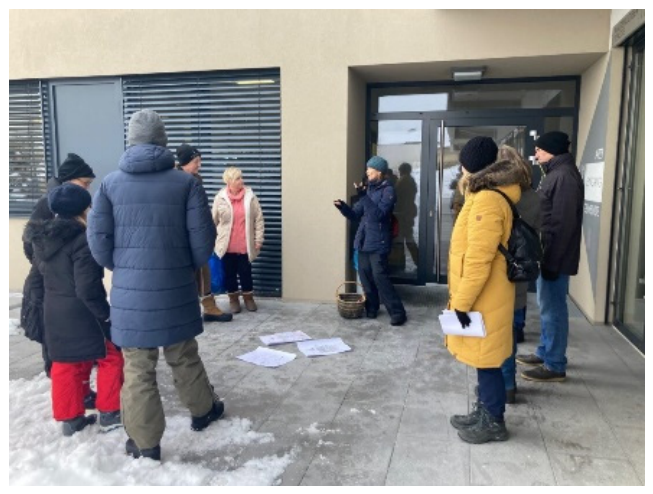
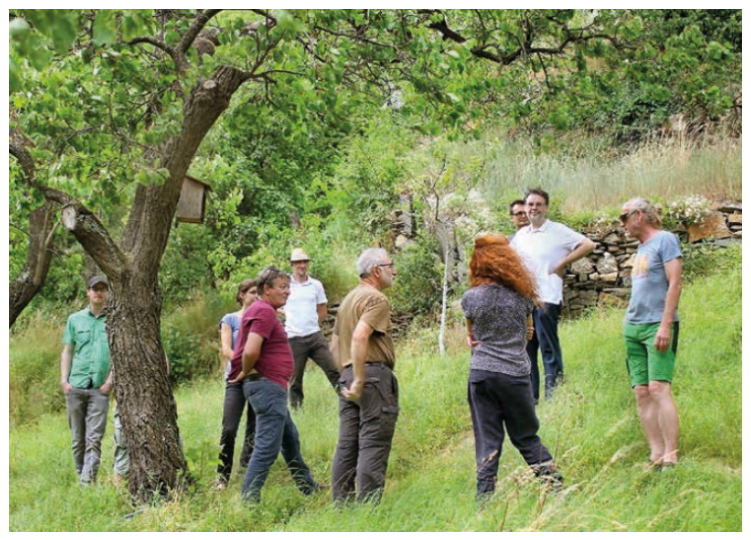
Welcoming and arrival took place at the starting point (see
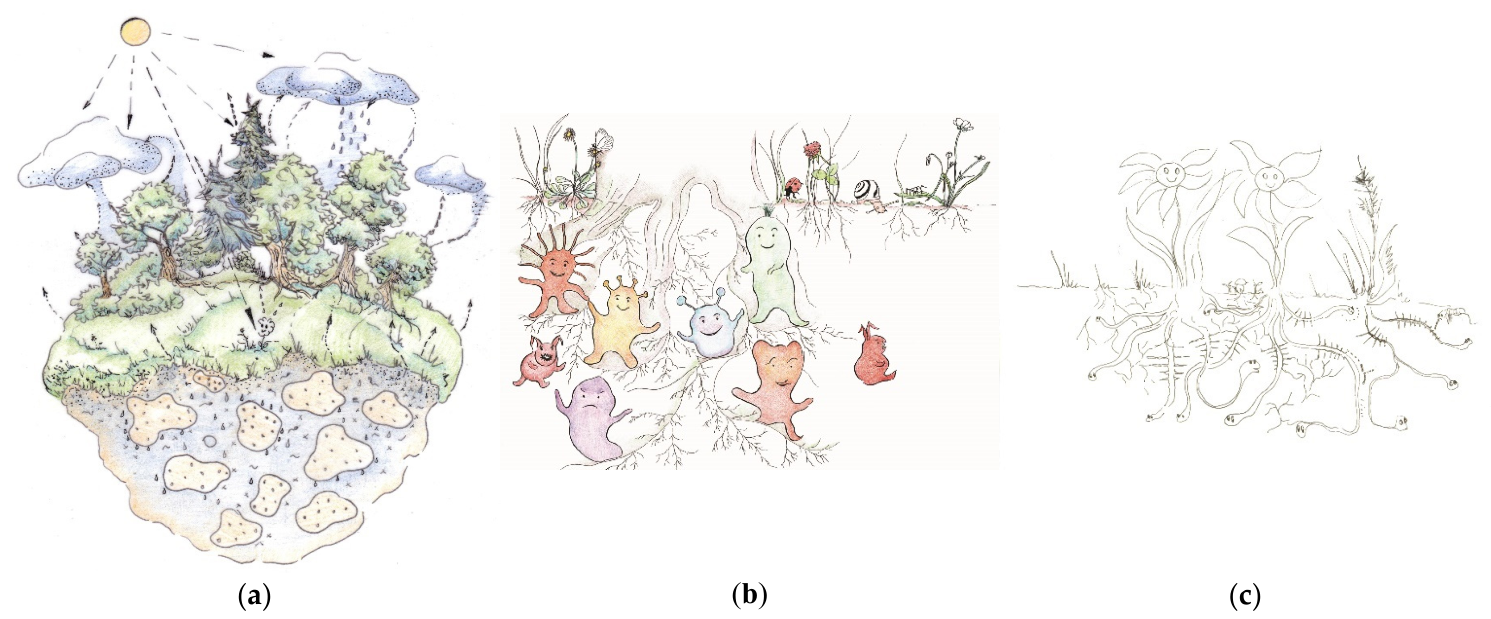
Figure 1) in front of the community center, which had recently been rebuilt and included a large parking area. Participants formed a circle and introduced themselves with short statements, already focusing on environmental questions and on what they value about nature in their local surroundings. The walkshop facilitator used this moment to introduce the impacts of sealed surfaces on natural processes of climate regulation and biodiversity, using simple drawings (see
Figure 2a–c) placed in the center of the circle to illustrate the main effects.
Participants immediately started sharing their everyday observations. They were then asked to collect natural materials (e.g., fruits, leaves etc.) and share their place-based knowledge and experiences during the walk.
- (2)
Walking and stopping together: As the group began walking, several sub-groups initially formed, with participants conversing among themselves and not yet consistently sharing observations. Gradually, these sub-groups converged as participants arrived together in the situation and the shared experience. The walk first followed a small creek whose morphology had been heavily modified, characterized by limited vegetation structure and a lack of native plant communities.
Initial place-based engagement occurred while participants collected cherry tree branches known as “Barbara branches,” following an Austrian tradition of cutting them on December 4 and placing them in water, where they typically begin flowering around Christmas. During this activity, participants started listening more closely to one another and began exchanging observations.
At the first collective stop at a bridge, a group-wide discussion emerged concerning fish and crayfish in the unobstructed section of the creek upstream from the village. Participants reported that some species were still present and shared memories of how fish and crayfish had previously been caught at this location, marking a deeper collective engagement with the place.
At the next stop, near an old dry-stone wall, participants exchanged knowledge about medicinal plants such as thyme species, yarrow, and wild roses. A brief interaction developed between children and older participants around traditional uses of rose hips, including their use as itching powder. Engagement with the place intensified as several participants tasted the rose hips and discussed their characteristics.
The following stop was at the church courtyard, where participants shared observations about a meadow with old trees. They discussed issues related to drought stress and maintenance, including appropriate tree pruning practices and the growth and recovery patterns of individual species. As the walk continued past a memorial site and the school and kindergarten area, participants observed children playing with sleds and began exchanging stories about winter experiences outdoors.
The final stop took place at the primary school, where participants examined a green building covered with ivy that attracted numerous birds despite freezing temperatures. Nearby, they identified an old hedge in a neighbouring garden that provided bird habitat and assessed the school playground, which included several trees and a raspberry hedge. Children pointed out their preferred meeting places, while older participants shared childhood memories associated with the area.
The last part of the walkshop consisted of an indoor gathering in a small, heated room at the community centre. Participants were offered tea, coffee, and apple cake. Collected natural materials from the walk were placed on a blanket in the centre of the circle. Children then invited adults to identify individual plants and materials by smell while blindfolded. Not all items could be identified, and participants expressed shared surprise upon discovering that dried evening primrose fruits had a scent resembling incense.
The group then collectively reflected on the walk, revisiting individual stops and shared observations. This process led to plans for further shared walks, the exploration of lesser-known pathways and hidden places, and the initiation of joint maintaining activities aimed at enhancing the qualities of local places together.
3.2. Reading the Landscape Together in Walkshops and Scoring Ecosystem Services
Focusing on natural processes that cool landscapes and enhance climate regulation helps bridge the gap between identifying local drivers of change and recognizing those that can be directly influenced at the local level. Within the walkshops, vulnerabilities are identified to develop a cohesive shared understanding of relevant natural processes and to integrate multiple ecosystem services (ES) [
6], including their links to biodiversity and to “readable” landscape structures.
Provisioning ecosystem services, for example, are jointly assessed, recognizing that approximately 80% of agricultural yields depend on insect pollination and that pollinator habitats therefore require prioritization. In the ÖKOleita project, representative ecosystem functions and services were structured according to the CICES classification system across the entire region of Lower Austria. The Environment Agency Austria (EAA) developed a framework to identify key representative ecosystem services, resulting in the localization and visualization of 17 ecosystem services using 28 indicators across Lower Austria:
https://biodiversityatlas.at/ecosystem-services/, which was developed over several years, between March 2020 and February 2023.
Local farmers were observed supporting wild bee and butterfly populations through the establishment of flowering strips and hedgerows. These landscape elements also functioned as windbreaks, contributing to reduced evapotranspiration from soils and vegetation. During the walkshops, participants jointly examined the interactions among soil conditions, solar radiation, local climate, water balance, and vegetation cover, as well as the role of biodiverse soil and plant communities (see
Figure 3). Shared assessments focused on how changes in settlement patterns, soil compaction, and vegetation loss have altered functionally connected soil–plant–water systems [
7]. Participants identified these changes as being associated with increased desiccation and heat stress, and, in some locations, with the development of desert like microclimatic conditions as described by the Local Climate Zones framework [
24].
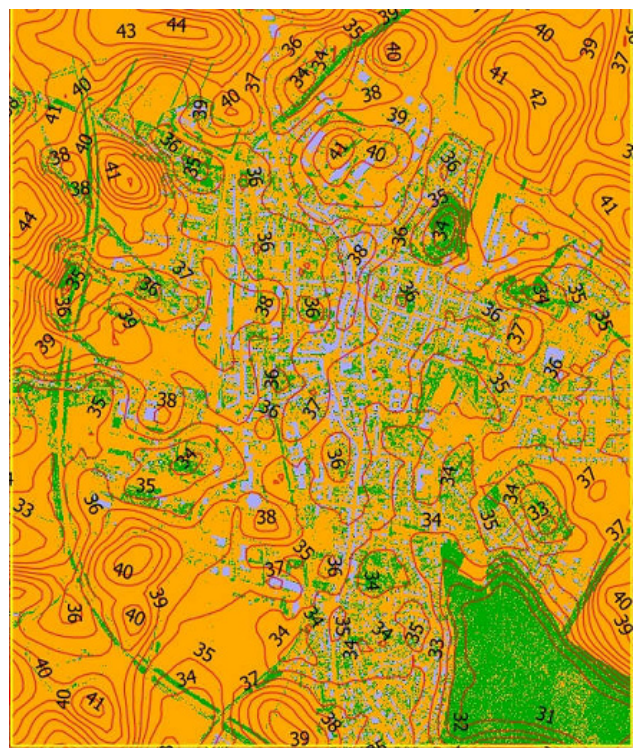
Figure 4 shows how assessing satellite data for identifying hot spots in the landscape and comparing those in separate layers with landcover maps can help in identifying the most vulnerable areas of a region, including self-made, desiccating, hot landscapes and settlement areas, which show extreme dryness and increased hot areas in the summer months, which already has observable effects on the vegetation and yield of crops.
While substantial individual knowledge exists, a shared regional understanding of cumulative effects across citizen groups remains limited. Participants observed that dry landscapes exhibit greater daily temperature extremes; however, these effects were rarely connected to underlying drivers such as reduced vegetation cover, soil compaction and sealing (see
Figure 4). As discussed during the walkshops, these changes lead to reduced shading and evapotranspirative cooling, accompanied by lower carbon uptake due to constrained photosynthetic activity during heat periods, as well as rapid runoff of rainwater from settlement areas and surrounding landscapes. Consequently, water is often unavailable when needed, further reinforcing heat and drought stress.
3.3. Understanding the Soil–Plant–Atmosphere Continuum (SPAC) Concept Together
To support the development of a shared understanding, we apply the adapted Soil–Plant–Atmosphere Continuum (SPAC) concept proposed by Norman and Anderson [
25] to jointly assess the climate-resilience-related natural processes of the selected sites.
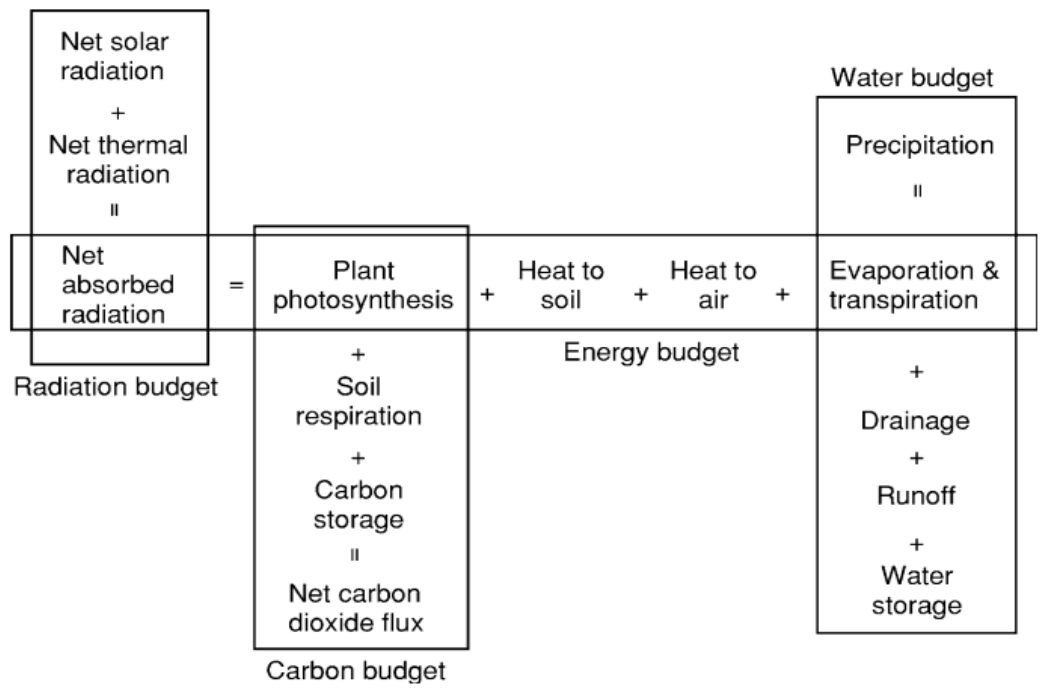
Figure 5 illustrates the SPAC framework, which links the solar radiation budget, plant growth, water availability, and CO
2 storage as an interconnected system. In our work, the framework is used to model, measure, and communicate these interdependent processes.
Within the SPAC concept, water is highlighted as a key regulating component, as evapotranspiration produces latent heat flux, which removes energy from land surfaces and thereby contributes to surface cooling. By explicitly addressing the ecosystem services provided by diverse plant systems—including water absorption and retention, shading, soil protection, and evapotranspiration—the framework supports an integrated understanding of climate-regulating processes.
The strength of interactions within biodiverse soil–plant–water systems and their coupling with the atmosphere is highly scale-dependent. As the spatial scale of coordinated soil and plant responses (e.g., soil drying or stomatal closure) increases, so does the influence of land-surface processes on atmospheric properties and circulation patterns. Counterbalancing these effects are feedback mechanisms that dampen the sensitivity of surface energy and water fluxes to changes in surface conditions, thereby contributing to climate regulation and resilience.
To improve understanding of the relationships among subsurface soil temperature, soil moisture, and soil biodiversity, local observations were used to document changes associated with land-management practices over recent decades. By applying the ÖKOleita assessment instruments and jointly scoring the capacities of ecosystem functions and services, everyday observations, local measurements, and model-based parameters of the SPAC at selected sites were integrated. This combination contributed to a more holistic and shared understanding of site-specific ecosystem dynamics.
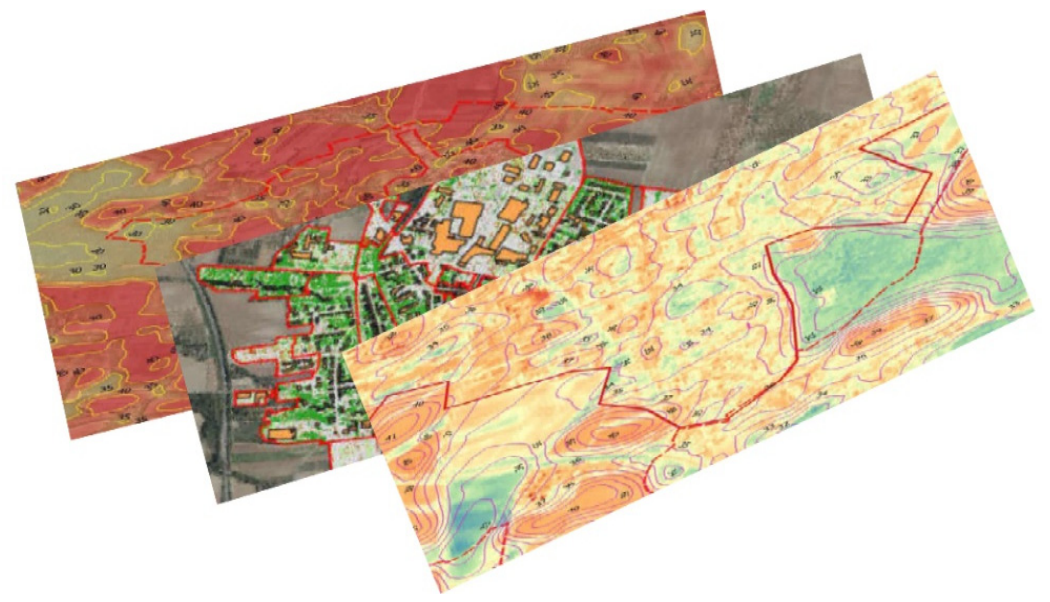
Modeling based on land-cover maps, hotspot analyses, and time-series derived from the Normalized Difference Water Index (NDWI) and Normalized Difference Vegetation Index (NDVI) further supported the identification of drought stress in soils and vegetation and enabled comparison with site-specific measurements and individual observations, as illustrated in
Figure 6. This integration contributed to understanding how water-retaining landscapes and shading structures can enhance local climate-regulating processes and supported the development of a shared interpretation through subsequent activities.
The eastern regions of Austria were identified as particularly affected by hot and dry soil conditions during summer. As shown in
Figure 6, agricultural soils frequently reach high temperatures following harvesting, which increasingly impairs the germination of intercrops. Under these conditions, building soil organic matter through soil-conservation measures and by shading becomes increasingly important.
Within the Living Lab framework, groups of farmers have begun testing adaptive management practices aimed at improving soil quality, including long-term crop rotations, the establishment of flowering strips, and the development of shading interventions based on top-down analyses (see
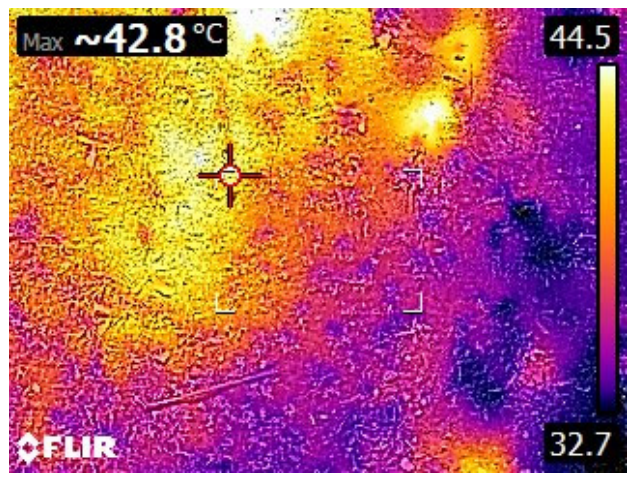
Figure 6). These experiments were accompanied by feedback and monitoring activities within the Living Lab in the walkshops using thermal imaging camera as shown in
Figure 7. In addition, test drone flights were conducted to introduce intercrop seeds into standing grain fields approximately one month before harvest, with the aim of protecting ripening crops while supporting the establishment of new vegetation.
Changes in biodiversity management were also observed. For example, fruit growers increasingly introduced wild bees for pollination, and flowering strips were expanded to support pollination in pumpkin cultivation. These measures highlight the combined need to address pollination services, biodiversity enhancement, and shading across agricultural fields and settlement areas.
3.4. Greenergy-Optimization of the Multifunctional Land Use of Business Areas for Enhancing Ecosystem Services
One key aspect of the LL approach is the identification and engagement of target groups that are open to cross-sectoral and integrative assessment methods. In practice, spatial planning and nature conservation authorities have proven to be particularly challenging groups to engage. Nature conservation actors often express reservations toward ecosystem services (ES) assessments, as discussions around valuation and the potential monetization of individual ecosystem services are perceived as incompatible with the core objective of protecting and enhancing designated conservation areas.
In the current debate surrounding renaturation, this tension has intensified, leading to increasing polarization between sector-specific interests. This polarization frequently occurs without sufficient attention to the underlying natural processes that can be maintained and strengthened across all living spaces, including urban, agricultural, and commercial areas.
In contrast, the LL approach applied in this study focuses on all types of living spaces and emphasizes the enhancement of selected ecosystem functions—such as climate regulation, water retention, and biodiversity support—independently of formal land-use designations. By concentrating on shared natural processes rather than sectoral mandates, the approach provides a common basis for dialogue and supports integrative assessments that can bridge existing institutional and disciplinary boundaries.
Potential measures range from improving site-specific rainwater retention to enhancing climate regulation through vegetation-based evaporation, shading, and cooling. For example, appropriate shading strategies can substantially reduce temperatures at business sites, improve thermal comfort, and significantly lower energy demand for building cooling. Modeling of the cooling potential of tree plantings at commercial sites in Lower Austria showed that mean radiant temperatures (Tmrt) in shaded areas could be reduced from 70–72 °C to 60–64 °C. In addition, rainwater retention supports biodiversity enhancement by promoting healthier soil–plant–water systems. Opportunities for local food and material production, photovoltaic integration, and similar uses further extend the potential of commercial sites beyond a purely functional role.
Building on a differentiated assessment of soil sealing, the project systematically analyzed its effects on climate regulation, biodiversity conservation, and supply security (e.g., water purification, food and material production). These effects were integrated into a matrix designed to evaluate the capacity of ecosystem services at commercial sites. In this framework, soil was not assessed solely through its physical and chemical properties but was conceptualized as a living system whose regulatory and life-supporting functions depend on adequate vegetation cover.
Based on climate regulation through soil–plant–water systems and biodiversity in settlement areas, characteristic groups of ecosystem services were developed within Living Lab feedback loops involving interdisciplinary experts, government-certified experts, and different user groups. Ecosystem functions (ecosystem service providers) were translated into visible and easily interpretable site features that support the long-term provision of selected ecosystem services. These functions and services were systematically linked to specific land-cover types within the matrix. This structured approach enables the identification of targeted adaptation measures for the ecological improvement of commercially used areas by environmentally interested non-experts. The application guide defines clearly who can use the matrix and that it can be applied to all sealed and compacted areas in settlement and landscape contexts to identify potential for multifunctional land use and to strengthen or newly create selected ecosystem services. From preparation advice to an explanation of the single steps, users are guided through a single or shared reading/understanding of landscape structures, related natural processes, and a scoring process about the capacities to provide ecosystem services.
In parallel, the approach has been incorporated into our open education program through the development of instructional videos for community-based application of the assessment.
4. Results-Approaching Trust-Building Through Co-Creation and Shared Experience
To support a shared understanding of the relationships between ecosystem functions and ecosystem services (ES), a matrix-based approach was applied to link measurement and modeling results with emotional nature and place relationships, local knowledge and joint ES capacity scoring at selected sites [
26,
27]. In the pilot region of Wachau, Living Lab workshops were conducted to collaboratively identify local knowledge on natural processes and human–nature interactions at both local and place-based scales.
To integrate individual observations into a shared regional understanding of cumulative effects across citizen groups, participants jointly used thermal cameras to observe and discuss the following patterns:
- →
Dry landscapes exhibited larger daily temperature extremes, which participants related to reduced vegetation cover, soil compaction and sealing, limited shading by vegetation, and reduced cooling through evapotranspiration.
- →
Carbon uptake was reduced, as vegetation showed lower photosynthetic activity during heat periods [
28].
Rainwater was rapidly drained from settlement areas and surrounding landscapes, resulting in limited water availability during dry periods.
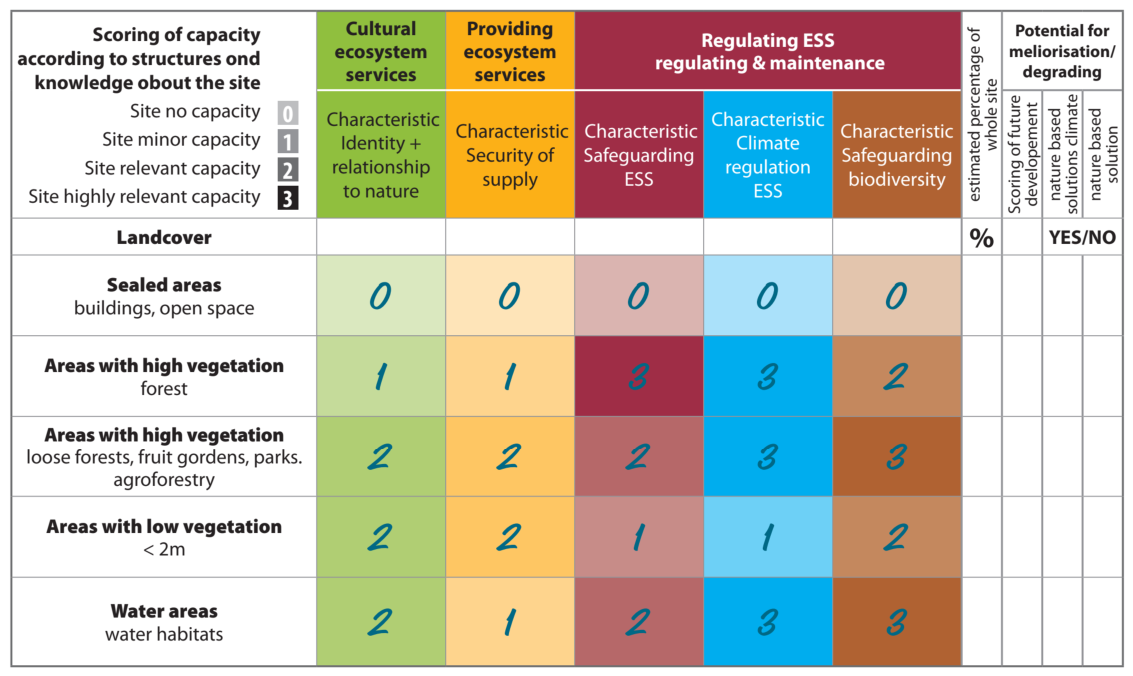
The matrix-based approach enabled the systematic linking of this local place relationship, knowledge systems with multi-ecosystem-service assessments and supported the development of a guide for interpreting visible landscape structures as indicators of underlying (“invisible”) natural processes and site-specific ES capacities. This guide was compiled as a set of analog map fans, developed in coordination with the ECOSYS digital tool integrated into the Biodiversity Atlas of Lower Austria (
https://biodiversityatlas.at/ecosystem-services/). The same ES classification groups and color schemes, as shown in
Figure 8, were used to ensure consistency across analog and digital representations. The tool was iteratively tested and refined to improve clarity and usability.
A key challenge was adapting the complexity of the information to different user needs. This was addressed by structuring the assessment around five land-cover types, allowing users to evaluate ES capacities based on their local knowledge and observations.
To jointly “read” the landscape, land-cover types at each site were linked to ecosystem services, and their capacities were assessed collaboratively. The assessment also considered how human activities contribute to maintaining or altering these capacities. The resulting matrix connects feature groups—such as identity and nature relationships (cultural ES), supply security (provisioning ES), and climate regulation, biodiversity conservation, and ensuring ecosystem services (regulating ES)—with potential improvement measures across the five land-cover types (see
Figure 8). This structure supported dialogue, negotiation, and trust-building by making complex social–ecological interactions jointly understandable and actionable.
To “read” the landscape together, land-cover types at a given site were linked to ES and their capacities were jointly assessed. The collaborative assessment also considered how human activities can maintain or alter these capacities. The matrix links feature groups—such as identity and nature relationships for cultural ES, supply security for provisioning ES, and ensuring ecosystem services, climate regulation, and biodiversity conservation for regulating ES (middle columns)—with corresponding improvement potentials (right columns) across five land-cover types (rows) (see
Figure 8). This structure supports the organization of dialogue and negotiation processes.
The ecosystem service capacity of each spatial unit is scored directly at the level of its respective land-cover type. Results are presented using a color-coded system, allowing participants to rapidly gain an initial overview. The improvement-potential column on the right helps identify and structure low-threshold measures that can be implemented with relatively little effort. Experiencing the effects of these adaptations in practice further supports trust-building among participants.
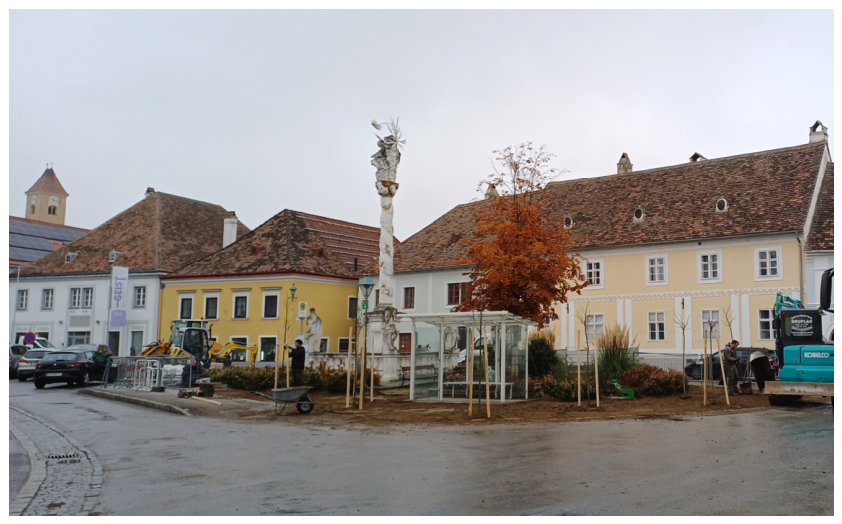
Examples of implemented measures include small-scale rainwater-retention interventions, enhancement of soil–plant–water systems through surface unsealing (see
Figure 9), tree planting, and the use of diverse local plant communities. As individual citizens and groups take responsibility for establishing, maintaining, and harvesting these elements (e.g., fruit and herbs), human–nature and human–place relationships are continuously strengthened.
5. Discussion: Climate Resilience and Equity Through Transdisciplinary Living Labs and Nature-Based Solutions
This work demonstrates how transdisciplinary LLs can support climate resilience and equity through holistically developed bottom-up NbS implementations. By working directly with affected communities and scientists, the LL approach integrates emotional relationships with nature and place, citizen observations, physical monitoring, and scientific modeling into adaptive management processes. This integration enables joint assessments of climate-regulating processes and biodiversity that are both scientifically robust and socially grounded.
Regular shared walks and walkshops function as inclusive, low-threshold participatory platforms that allow diverse participants to observe, discuss, and evaluate landscape functions and their spatial–temporal dynamics. Through iterative engagement, participants identify vulnerabilities, test temporary and permanent adaptations, and reflect on observed outcomes. This process supports shared learning, trust-building, and knowledge integration, while explicitly linking cultural, provisioning, and regulating ecosystem services with biodiversity. This approach is deliberately grounded in place-based, transdisciplinary LLs, which means that outcomes are strongly shaped by local socio-ecological conditions, participant constellations, and ongoing everyday practices. Accordingly, the approach does not aim at direct replication of case-study results but at deriving transferable process principles applicable across contexts.
Equity and Participation as Core Components of Climate Resilience
From an equity perspective, the LL approach addresses both procedural and distributive dimensions of climate resilience through a two-step process. The first step is emotional correspondence, established through shared, place-based experiences that create mutual attunement among participants. This emotional interaction enables participants to feel recognized in their perceptions and concerns, lowers participation barriers, and creates a shared experiential ground. Such correspondence is particularly important in contexts where climate impacts—such as heat stress, drought, and declining ecosystem services—are unevenly distributed across social groups and land-use types and where conventional planning processes often reproduce power asymmetries.
The second step is organized negotiation, which builds on this shared emotional ground. Once participants have established trust and mutual understanding through shared experience, local knowledge, lived experience, and scientific expertise can be brought into structured dialogue on an equal footing. In this phase, ecosystem services, vulnerabilities, and adaptation options are jointly interpreted and negotiated. This sequential process helps transform individual perceptions into collectively shared problem framings and supports informed decision-making, thereby mitigating power imbalances that typically characterize top-down planning approaches.
The focus on all living spaces—including residential areas, agricultural land, business sites, and public spaces—helps ensure that the benefits of NbS (e.g., cooling, water retention, biodiversity enhancement) are not confined to protected or high-value areas alone. Rather than being confined to specific sites or sectors, NbS in LLs are framed as collective assets that contribute to well-being, public health, and environmental quality across communities. In doing so, they support more equitable resilience outcomes at both place-based and municipal scales, even within spatial planning systems that remain largely sectoral.
SPAC-Informed NbS for Integrated Climate Regulation
A central contribution of this work lies in advancing NbS assessments beyond carbon-centric approaches. Scientific research consistently shows that climate regulation is shaped not only by CO2 dynamics but also by hydrological and energetic processes, including evapotranspiration, soil moisture dynamics, infiltration, and canopy shading. The Soil–Plant–Atmosphere Continuum (SPAC) provides a biophysical framework that integrates carbon and water processes, making visible the mechanisms through which NbS contribute to local cooling, drought mitigation, and heat-stress reduction.
Applying SPAC within participatory LL settings allows these processes to be jointly observed, discussed, and related to everyday experiences. This supports a shared understanding of climate regulation that is accessible to non-experts while remaining scientifically grounded. Importantly, it highlights leverage points—such as soil health, vegetation structure, and water retention—that can be influenced locally and equitably across different land-use contexts. Instead of reinforcing polarized single-interest perspectives, emphasizing synergies between natural processes, social maintenance practices, and biodiversity change can shift crisis narratives toward shared opportunities and collective action.
6. Conclusion: Implications for Land Systems, Climate Resilience, and Governance
This study demonstrates how transdisciplinary LLs can strengthen climate resilience and equity in land systems by enabling rapid, low-threshold connections between scientific knowledge and everyday land-use practices. Rather than relying on delayed knowledge transfer from science to policy or local implementation, the approach embeds scientific perspectives directly into place-based, everyday experimentation, reducing temporal and institutional gaps at the science–society interface.
A first key result is the identification of a two-step process-oriented participatory logic that supports equitable land-use negotiation processes: (1) emotional correspondence through shared, place-based experiences and (2) structured negotiation supported by simple, multi-criteria tools. This sequence lowers participation barriers, mitigates power asymmetries, and enables local knowledge, lived experience, and scientific expertise to be integrated on an equal footing.
Second, the study advances NbS assessment for land systems by applying a SPAC-informed, multi-criteria perspective that goes beyond carbon-centric indicators. By jointly addressing soil, vegetation, water, energy balance, biodiversity, and social values, the approach captures the multifunctionality of land and supports more robust and equitable climate-regulation strategies across diverse land-use types. Importantly, this enables NbS to be framed not as isolated technical interventions, but as place-based social–ecological processes embedded in everyday land management.
Third, the findings highlight the role of LLs as ongoing mediation and negotiation spaces within land governance. Tools such as shared walks and ecosystem-service assessment matrices function as boundary objects that translate complex scientific concepts into accessible, negotiable formats, supporting collective responsibility for land stewardship. While outcomes are context-specific, the study offers transferable process principles applicable to other rural, peri-urban, and small-municipality contexts facing climate stress.
At the same time, the study limitations must be acknowledged. Results depend strongly on local contexts, participant constellations, and facilitation quality; outcomes are not directly replicable across sites. The approach involves situated interpretation and does not provide longitudinal or comparative quantification of impacts. These characteristics reflect the exploratory and practice-oriented nature of the work and frame its contribution as complementary to formal land-system modelling or long-term monitoring.
Importantly, the approach can be implemented immediately and at low institutional thresholds, without requiring extensive political support or new cross-sectoral governance frameworks, by empowering involved actors through transparent, multi-criteria, and equity-based negotiation. Overall, the study contributes to land-system research by showing how equity, climate resilience, and ecosystem functionality can be jointly addressed through transdisciplinary, place-based governance processes, aligned with the IUCN NbS Standard and relevant for adaptive land-use planning.
Possible Future Research Directions
Building on these findings, several research directions can emerge regarding:
Transferability and scaling
- →
How can LL process principles be adapted to different land-use contexts (e.g., agricultural regions, urban fringes, mountain landscapes) while respecting local specificity?
Temporal dynamics and long-term effects
- →
How do short, everyday science–society interactions influence land-use decisions, ecosystem functions, and governance practices over longer time horizons?
Comparative land-system analysis
- →
How do outcomes of LL-based NbS negotiation compare with conventional planning approaches across regions and land-use types?
Integration with quantitative land-system metrics
- →
How can SPAC-informed, multi-criteria NbS assessments be systematically linked to remote sensing, monitoring data, and land-system models without losing participatory depth?
Equity and power in land governance
- →
To what extent do experiential and embodied methods (e.g., shared walks) reshape power relations in land-use decision-making, particularly for marginalized groups?
Institutional embedding
- →
How can LL practices be institutionalized within routine land-use planning, permitting, and climate-adaptation governance frameworks?
Possible Future Practical Directions
To move beyond project-based experimentation and integrate this approach into routine governance and planning processes, we suggest following implementation pathways:
- →
Institutionalizing Shared Walks as a Standard Step
Shared site walks can be formally integrated into early phases of planning, permitting, or land use change processes. As a low threshold method, they help establish emotional correspondence and shared situational awareness before formal negotiations begin.
These walks of scientists and local groups can be organized on a yearly basis related to an adaptive management program.
- →
Using Transdisciplinary Matrix Based Scoring as a Boundary Tool
The ecosystem service matrix can serve as a boundary object in regular administrative meetings, stakeholder consultations, and advisory processes. Its visual and multi-criteria structure allows different citizen and actor groups to negotiate tradeoffs transparently without requiring full technical expertise.
- →
Embedding Co-Creative Assessment in Advisory and Mediation Formats
Environmental advisory services, spatial planning consultations, and climate adaptation working groups can adopt co-creative scoring sessions as part of their standard workflow, linking local observations with scientific insights.
- →
Linking Living Lab Outputs to Formal Decision Processes
Results from shared evaluations (e.g., scored matrices, documented observations, agreed upon improvement measures) can be systematically fed into planning documents, climate adaptation strategies, and monitoring frameworks, increasing their legitimacy and acceptance.
- →
Capacity Building through Continuing Education
Training programs for planners, administrators, scientists, and local facilitators can incorporate Living Lab methods—such as shared walks, emotional correspondence, and adaptive scoring—to build competencies for transdisciplinary negotiation and resilience-oriented governance.






 ,
,