Article

Implications of Litterfall Dynamics and Stoichiometry for Nutrient Cycling in Subtropical Acid Rain Regions

1
Sichuan Forestry and Grassland Survey and Planning Institute, Chengdu 610081, China
2
Forestry and Grassland Bureau of Aksu Region, Aksu 843000, China
3
Key Laboratory of Forest Ecology and Environment of National Forestry and Grassland Administration, Ecology and Nature Conservation Institute, Chinese Academy of Forestry, Beijing 100091, China
4
Longhua State-Owned Forest Farm Management Office Maojingba Forest Farm, Chengde 068154, China
*
Author to whom correspondence should be addressed.
Land 2026, 15(6), 949; https://doi.org/10.3390/land15060949
Submission received: 15 April 2026 / Revised: 21 May 2026 / Accepted: 29 May 2026 / Published: 31 May 2026

Abstract

Selecting appropriate tree species is crucial for mitigating soil acidification and restoring biogeochemical cycles in subtropical acid rain regions. The objective of this study was to elucidate the influence of species selection on litter nutrient dynamics and its implications for soil carbon (C) and nitrogen (N) cycling. To achieve this, three forest types were examined at the Tieshanping Forest Farm (Chongqing, China). Twelve plots were established, including pure stands of Pinus massoniana Lamb. or Cinnamomum camphora (Linn) Presl, and mixed stands of these species. Litterfall was collected monthly (December 2020–November 2021) to determine pH, C, N, phosphorus, potassium, lignin, and cellulose contents, alongside potential nutrient returns and stoichiometric ratios. Results indicated that while total annual litterfall production did not differ significantly among the forest types, their seasonal dynamics varied distinctly, with C. camphora and P. massoniana peaking in spring and summer, respectively. Furthermore, C. camphora stands exhibited significantly higher annual P and K returns. Conversely, P. massoniana litter was characterized by the highest C:P ratio and mean annual lignin content (344.78 mg g−1), indicating lower decomposability that may restrict organic C turnover and N release. Consequently, the nutrient-rich and readily decomposable litter of C. camphora is more effective than P. massoniana at alleviating soil acidification and facilitating healthier C and N cycling. These findings highlight the critical role of aboveground litter quality in driving belowground soil C and N dynamics, providing a vital scientific basis for species selection during ecological restoration in acid rain-affected areas.

1. Introduction

Litterfall is a fundamental pathway for nutrient return and energy flow in forest ecosystems, providing a substantial source of essential nutrients (e.g., N, P, K) for plant growth [1,2]. The production and temporal dynamics of litterfall are driven by a complex interplay of forest type, stand characteristics, species composition, and climatic conditions (such as temperature, precipitation, and extreme weather events) [3,4,5,6,7]. For instance, evergreen broad-leaved forests typically exhibit litterfall peaks in spring or summer [8], whereas deciduous forests peak during late autumn [9]. Understanding these dynamics is critical, as the quantity and quality of litterfall directly influence soil fertility and nutrient balance [10].
The rate at which fresh litterfall decomposes and releases nutrients into the forest floor is primarily regulated by its initial chemical quality, which is often evaluated using carbon (C), nitrogen (N), and phosphorus (P) concentrations, alongside stoichiometric ratios (e.g., C:N, C:P) and recalcitrant compounds like lignin [11,12]. Litter nutrient profiles vary considerably among forest types. Generally, broad-leaved litter contains higher N and P concentrations and lower lignin and polyphenol contents, leading to more rapid decomposition compared to coniferous litter. Specifically, broad-leaved litter in subtropical forests typically reaches a 50% mass loss within from 6 to 12 months, whereas recalcitrant coniferous needles often require from 2 to 3 years to achieve the same level of decomposition [13,14,15,16]. These contrasting decomposition rates and nutrient releases significantly alter soil microbial community structure and activity, ultimately dictating soil N and P availability [17,18].
Beyond sustaining nutrient cycling, the forest litter layer plays a vital role in buffering acidic deposition and mitigating soil acidification—a critical environmental challenge in subtropical regions [19,20]. Mechanistically, as acidic water percolates through the litter layer, basic cations (such as Ca2+, Mg2+, and K+) released from the decomposing organic matter exchange with and neutralize the hydrogen ions (H+) in the acid rain. This process significantly reduces the acidity of the leachate before it enters the underlying mineral soil. Litter characterized by higher base cation concentrations and lower C:N ratios decomposes rapidly, thereby enhancing the soil’s acid-buffering capacity [21]. However, the efficacy of this buffering effect is highly species-dependent. While litter from certain broad-leaved species (e.g., Schima superba) can effectively reduce soil acidity [22,23], high litter production alone does not guarantee soil improvement. For example, litter from specific conifers or understory shrubs may fail to mitigate acidity or even exacerbate soil acidification due to slow decomposition and organic acid release [24,25]. Consequently, selecting appropriate tree species with optimal litter traits is of paramount importance for ecological restoration in acid-sensitive areas.
Despite the known impacts of individual species on soil chemistry, comparative studies on the litter nutrient dynamics of pure versus mixed stands in heavily acid-impacted regions remain insufficient. Based on the divergent biological traits of coniferous and broadleaf species, we hypothesized that: (1) broadleaf species (C. camphora) produce higher-quality litter (higher pH, lower lignin) than coniferous species (P. massoniana), indicating a greater potential to buffer acidic deposition and improve forest floor conditions; (2) under severe soil phosphorus (P) limitation, P. massoniana exhibits a conservative nutrient strategy with exceptionally high litter C:P ratios, whereas C. camphora stands alleviate this P depletion through superior nutrient return. To test these hypotheses, the primary objective was to elucidate the influence of tree species selection on litterfall dynamics, stoichiometry, and nutrient return. Therefore, we conducted a comparative study at the Tieshanping Forest Farm in Chongqing—a typical subtropical acid rain region—examing three representative forest types: P. massoniana pure stands, C. camphora pure stands, and their mixed stands. Our findings aim to provide a robust theoretical basis for sustainable forest management and species selection during ecological restoration in acid rain-affected areas. Unlike conventional species comparisons, this study explicitly integrates litterfall stoichiometry with nutrient dynamics to address the specific restoration needs of acid-impacted subtropical forests. By evaluating these traits, we aim to provide a targeted, mechanistic basis for tree species selection in regional soil rehabilitation.

2. Materials and Methods

2.1. Study Site and Plot Establishment

The study site is located at the Tieshanping Forest Farm in Jiangbei District, Chongqing, China (29°38′ N, 106°38′ E). The region experiences a subtropical monsoon humid climate, with a mean annual temperature of 18.2 °C and an average annual precipitation of 1100 mm [26]. The primary soil type is yellow soil (classified as an Ultisol according to the USDA Soil Taxonomy), which is derived from sandstone parent material and is characterized by silt loam and loam textures [27]. The forests originated from natural secondary stands of P. massoniana that regenerated following clear-cutting between 1958 and 1962. However, these stands experienced a significant decline due to long-term acid deposition [28]. To mitigate this decline and improve local ecological conditions, broadleaf species, including C. camphora, were selectively planted during the 1980s and 1990s within the natural secondary P. massoniana forests and on adjacent harvested lands [26]. Following decades of natural succession, three distinct forest types emerged: P. massoniana forest (Pi), C. camphora forest (Ci), and P. massoniana-C. camphora mixed forest (Pi_Ci), with average stand ages of 62, 37, and 50 years, respectively [29].
In 2018, three typical forest stands of these types were selected based on highly consistent topographic conditions, specifically ensuring comparable elevations (515–543 m), slopes (5–10°), and sun-facing aspects (i.e., south and southeast) across all sample plots. Within each forest type, four 20 m × 20 m sample plots were randomly established, resulting in a total of 12 plots at elevations ranging from 515 to 543 m a.s.l. For the Pi, Ci, and Pi_Ci stands, the average tree densities were 731.25, 743.75, and 450 stems ha−1, respectively. The mean tree heights were 15.46 m, 16.48 m, and 14.85 m, while the corresponding average diameter at breast height (DBH) values were 20.57 cm, 26.44 cm, and 25.67 cm, respectively. Although the tree density in the mixed stand was notably lower, its trees exhibited larger mean DBHs compared to the pure P. massoniana stand, indicating broader canopy extents that structurally compensate for the lower stem density.

2.2. Litter Sample Collection

In November 2020, five 1 m × 1 m subplots were established within each of the 12 sample plots. A 1 m2 nylon mesh trap was installed 50 cm directly above the center of each subplot to collect litterfall monthly from December 2020 to November 2021. The collected litterfall was sorted into broadleaf, needle, and other components (including branches and other non-leaf/needle parts). The different components of the monthly litterfall were physically pooled into four composite seasonal samples (Winter: December–February; Spring: March–May; Summer: June–August; Autumn: September–November) per plot prior to laboratory analysis. Each component was oven-dried at 65 °C to a constant weight for litterfall yield determination.

2.3. Chemical Analysis of Litter

The sorted litter components were pooled seasonally prior to chemical analysis. The oven-dried litter was thoroughly ground prior to subsequent nutrient analyses. This approach was adopted to ensure sufficient sample mass for accurate stoichiometric determination, and to better capture the seasonal phenological rhythms of the tree species while minimizing short-term fluctuations caused by stochastic weather events [5,11]. Litter pH was measured using a pH meter (Delta 320, Mettler-Toledo, Shanghai, China) in a 1:10 (w/w) litter-to-water suspension, which was shaken in an 80 °C water bath for 30 min and cooled to room temperature. Total organic carbon (TOC) was determined by the potassium dichromate-sulfuric acid oxidation method followed by ferrous sulfate (FeSO4) titration. For the determination of total nitrogen (TN), total phosphorus (TP), and total potassium (TK), the samples were digested with an H2SO4-H2O2 mixture on a hot plate at 330 °C for 12 h. Following digestion, TN, TP, and TK were assayed using the Kjeldahl method, vanadium molybdate yellow colorimetry, and atomic absorption spectrophotometry, respectively. These litter properties were analyzed following the standard protocols described by [30]. Cellulose and lignin contents were analyzed using the Van Soest detergent fiber analysis method [31]. Briefly, acid detergent fiber (ADF) was first extracted, followed by digestion with 72% sulfuric acid to isolate acid detergent lignin (ADL). Lignin content was determined by ashing the ADL residue, while cellulose was calculated as the mass difference between ADF and ADL.

2.4. Data Calculation

Litter yield (LY) was calculated using the following equation:
LY = LY1/S
where LY represents litter yield per unit area (expressed as Mg ha−1), LY1 is the dry weight of litter collected within the litter trap (g), and S is the area of the collection frame (1 m2). The raw calculated values were subsequently converted to standard SI units.
The potential return amount of each element in litter was calculated as:
L Y e   =   L Y × C e × 10 3
where LYe represents the potential return amount of a specific element per unit area (expressed as Mg ha−1), Ce is the concentration of the corresponding element in the litter (g kg−1), and 10−3 is the unit conversion factor [32,33]. It is important to note that this calculated value represents the theoretical gross nutrient flux entering the forest floor. It serves as an index of potential nutrient input and does not account for the subsequent temporal dynamics of litter decay and actual nutrient mineralization into the soil.
The ecological stoichiometric ratios, including C:N, C:P, and N:P, were calculated as the mass ratios of their corresponding elemental concentrations.

2.5. Statistical Analysis

Data organization and statistical analysis were performed using Excel 2019 and SPSS 23 software. Figures were generated using Origin 2017. For all analyses, the independent plot was strictly maintained as the true spatial replicate (n = 4 per forest type) for the seasonally pooled data, thereby avoiding temporal pseudo-replication. Prior to the analysis of variance, data were tested for normality using the Shapiro–Wilk test and for homogeneity of variances using Levene’s test. A two-way ANOVA was employed to assess the main and interactive effects of forest type and season on total litterfall production. Subsequently, a one-way ANOVA followed by Tukey’s post-hoc test was utilized to evaluate the significance of differences among specific groups for all measured variables (e.g., comparing different seasons within the same forest type, or different forest types within the same season), with the significance level set at p < 0.05.

3. Results

3.1. Litterfall Production and Temporal Dynamics

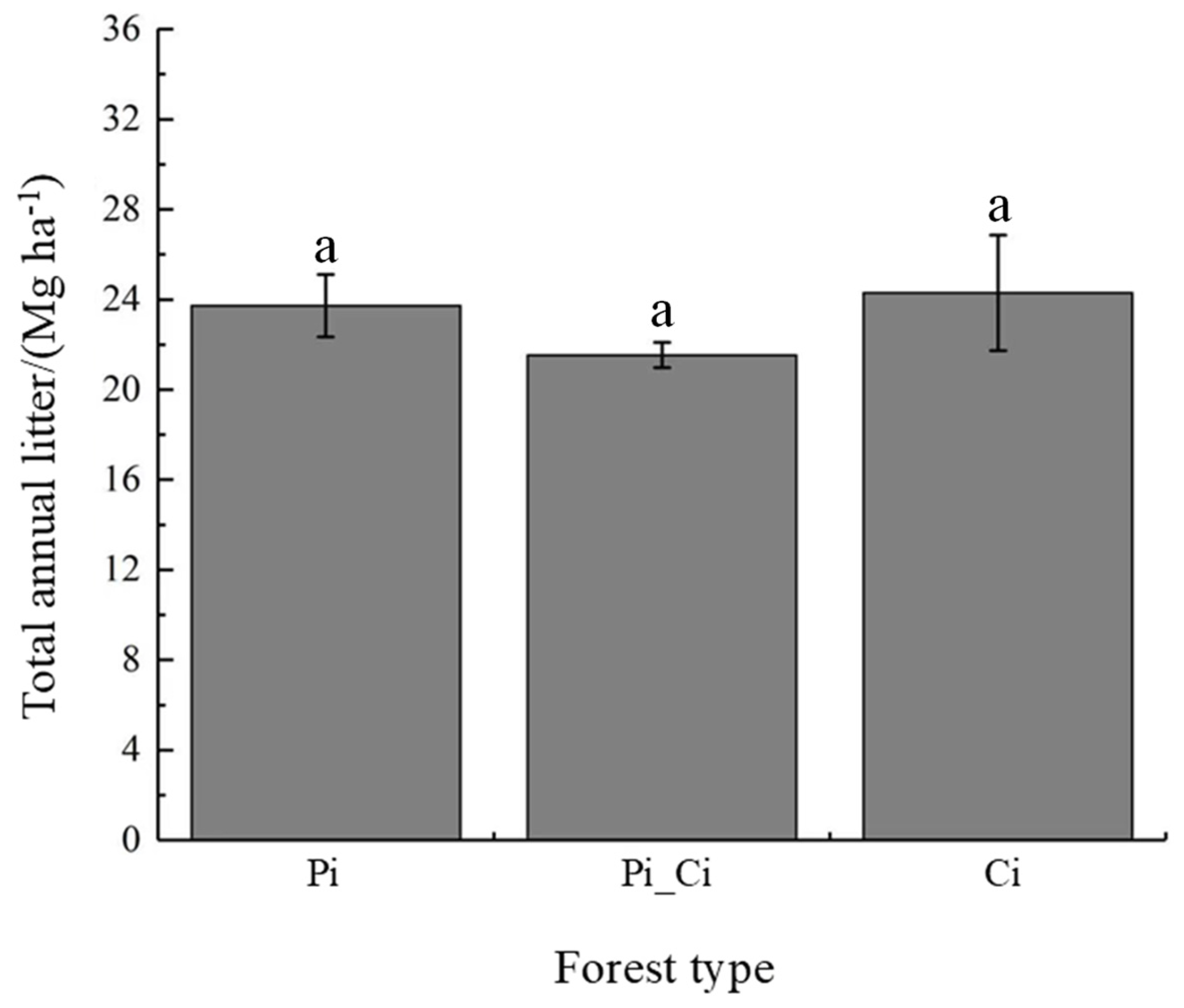
Two-way ANOVA indicated that both season and the interaction with forest type had significant effects on litterfall production (Table 1). This significant interaction effect is primarily driven by their distinct phenological shedding patterns (e.g., spring peak for C. camphora vs. summer peak for P. massoniana). However, there were no significant differences in total annual litterfall production among the three forest types (p > 0.05). The annual litterfall amounted to 24.29 Mg ha−1 in the C. camphora forest, 23.73 Mg ha−1 in the P. massoniana forest, and 21.54 Mg ha−1 in the mixed forest (Figure 1).
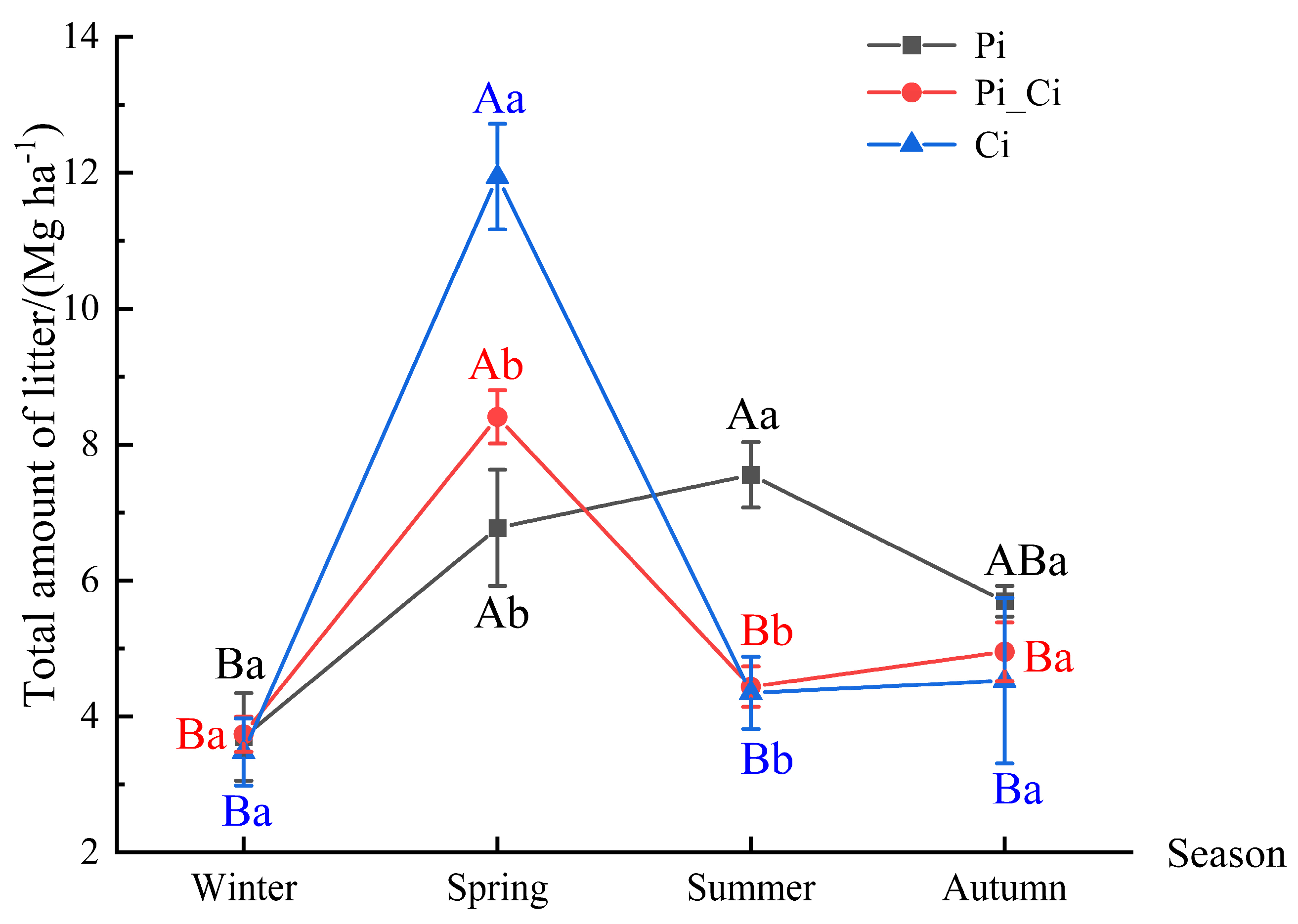
Seasonal dynamics of litterfall varied among forest types (Figure 2). In both the C. camphora and mixed forests, litterfall peaked in spring and was significantly higher than in other seasons (p < 0.05). Conversely, litterfall in the P. massoniana forest reached its maximum in summer, with spring and summer productions being significantly greater than those in winter (p < 0.05). Specifically, spring litterfall in the C. camphora forest reached 11.94 Mg ha−1, representing increases of 43.3% and 29.5% compared with the P. massoniana forest and the mixed forest, respectively. During summer, litterfall in the P. massoniana forest reached 7.55 Mg ha−1, exceeding the C. camphora and mixed forests by 42.4% and 41.2%, respectively (p < 0.05).

3.2. Variation in Litter pH

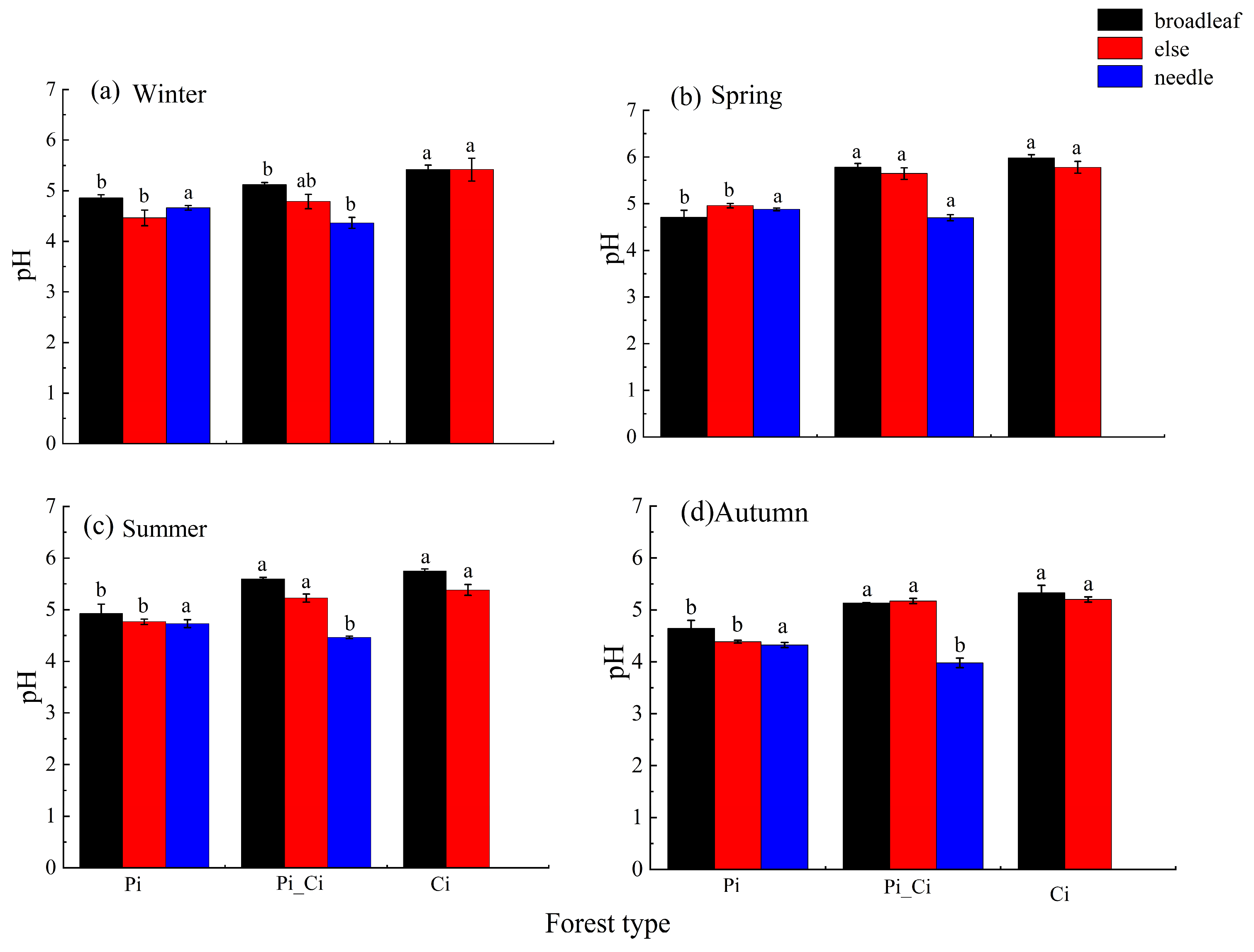
Across all seasons, the pH values of both broadleaf litter and miscellaneous litter in the C. camphora forest and the mixed forest were significantly higher than those in the P. massoniana forest (p < 0.05). For needle litter, the pH in the pure P. massoniana forest was significantly higher than that in the mixed forest, except during spring (p < 0.05). In addition, the overall litter pH across all three forest types was significantly higher in spring compared to autumn (Table 2, Figure 3).

3.3. Total Organic Carbon, Lignin, and Cellulose Contents

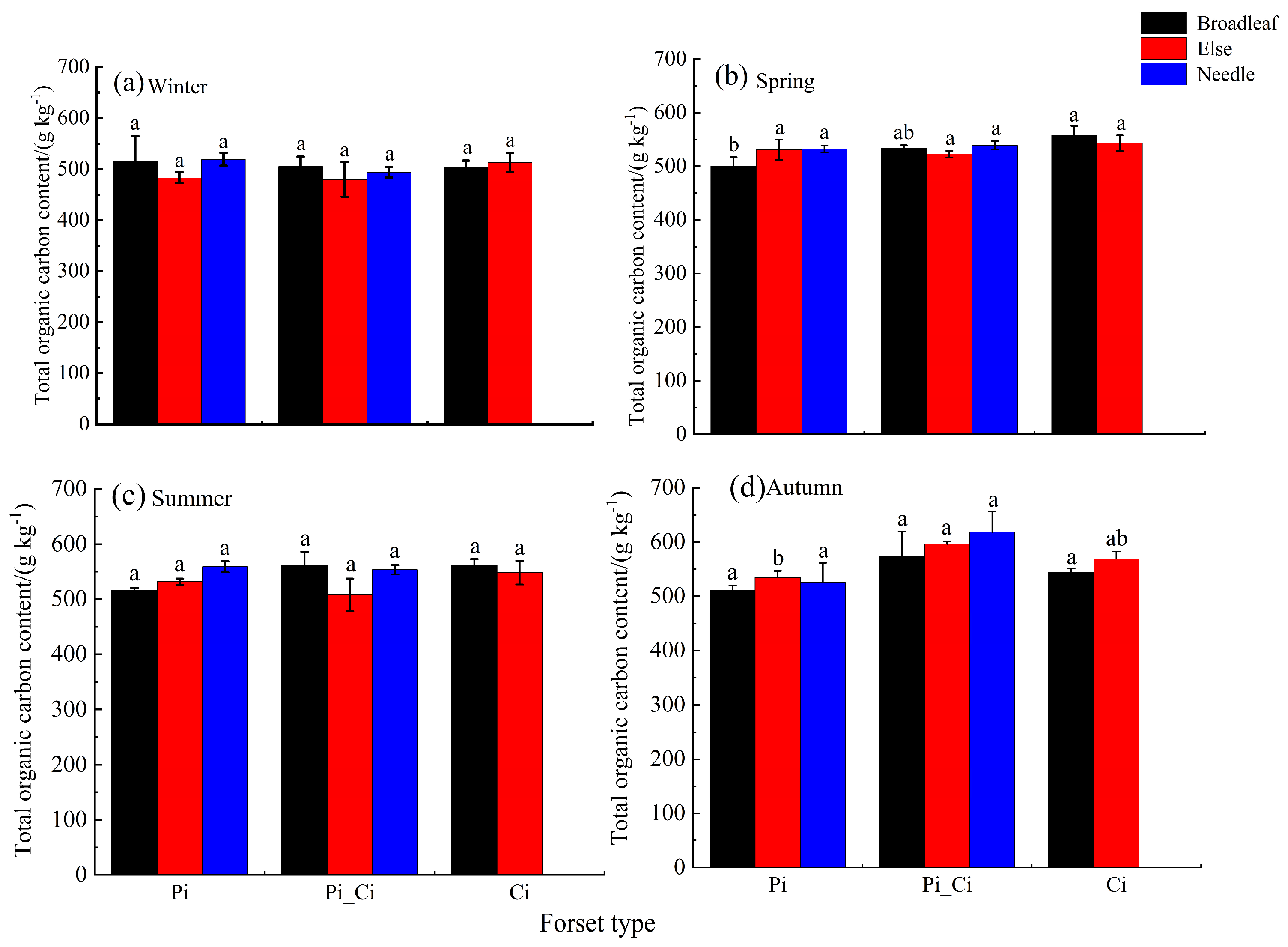
The total organic carbon (TOC) content of litter differed significantly among forest types in spring and autumn (Figure 4). In spring, the TOC content peaked in the broadleaf litter of the C. camphora forest (558.35 g kg−1), which was significantly higher (by 11.63%) than the minimum value recorded in the understory broadleaf litter of the P. massoniana forest (500.19 g kg−1). In autumn, the highest TOC content was observed in the miscellaneous litter of the mixed forest (596.46 g kg−1), which was 11.45% higher compared to the corresponding component in the P. massoniana forest (535.18 g kg−1).
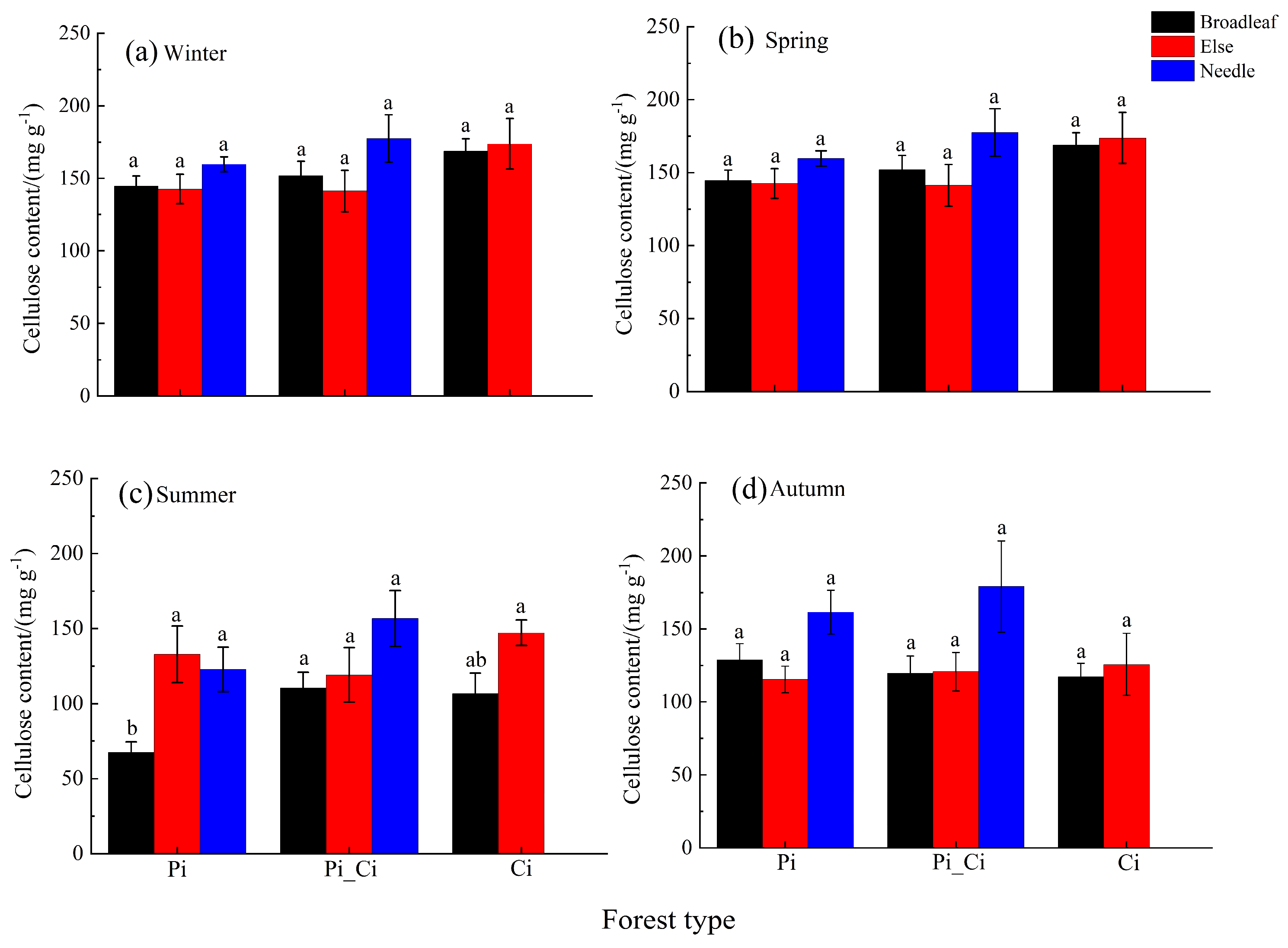
There were no significant differences in cellulose content detected among the forest types during winter, spring, and autumn (p > 0.05). However, significant variations emerged during summer, where the cellulose content of the broadleaf litter in the mixed forest (Pi_Ci) was significantly higher than that in the P. massoniana pure stand (Pi) (p < 0.05) (Figure 5).
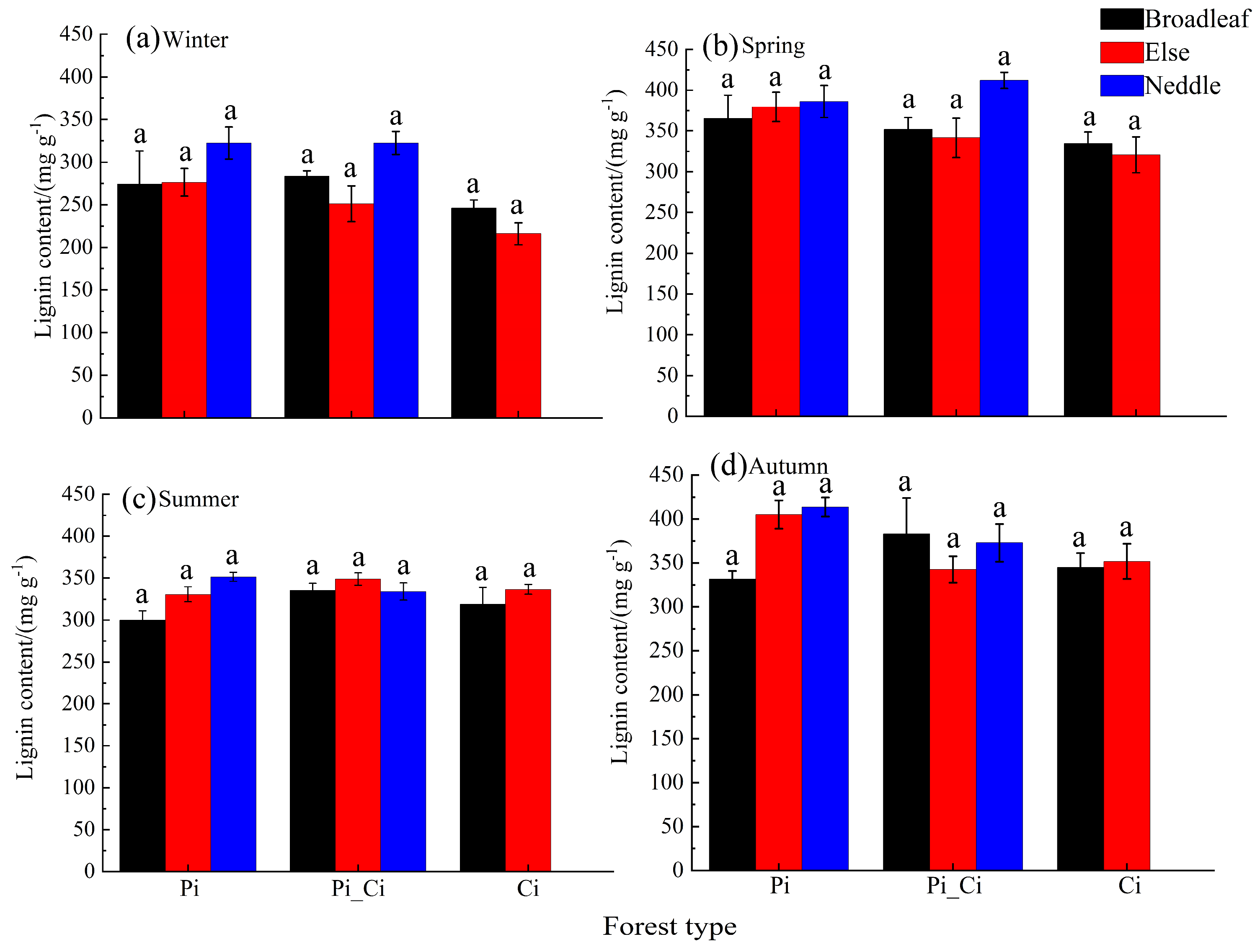
Lignin content showed clear differences among forest types (Figure 6). The annual mean lignin content of litter in the P. massoniana forest was 344.78 mg g−1, which was significantly higher than that in the C. camphora forest. In spring and winter, the lignin content in the P. massoniana forest (377.18 mg g−1 and 291.08 mg g−1, respectively) was significantly higher than that in the C. camphora forest (327.67 mg g−1 and 231.01 mg g−1, respectively) (p < 0.05).
In terms of seasonal dynamics, specific litter components exhibited significant variations in TOC, cellulose, and lignin (Table 3). Notably, TOC and lignin contents generally reached their minimum values during winter across most forest types. Conversely, the cellulose content in the broadleaf litter of the P. massoniana forest peaked in spring and dropped significantly in summer.

3.4. TN, TP, and TK Contents of Litter

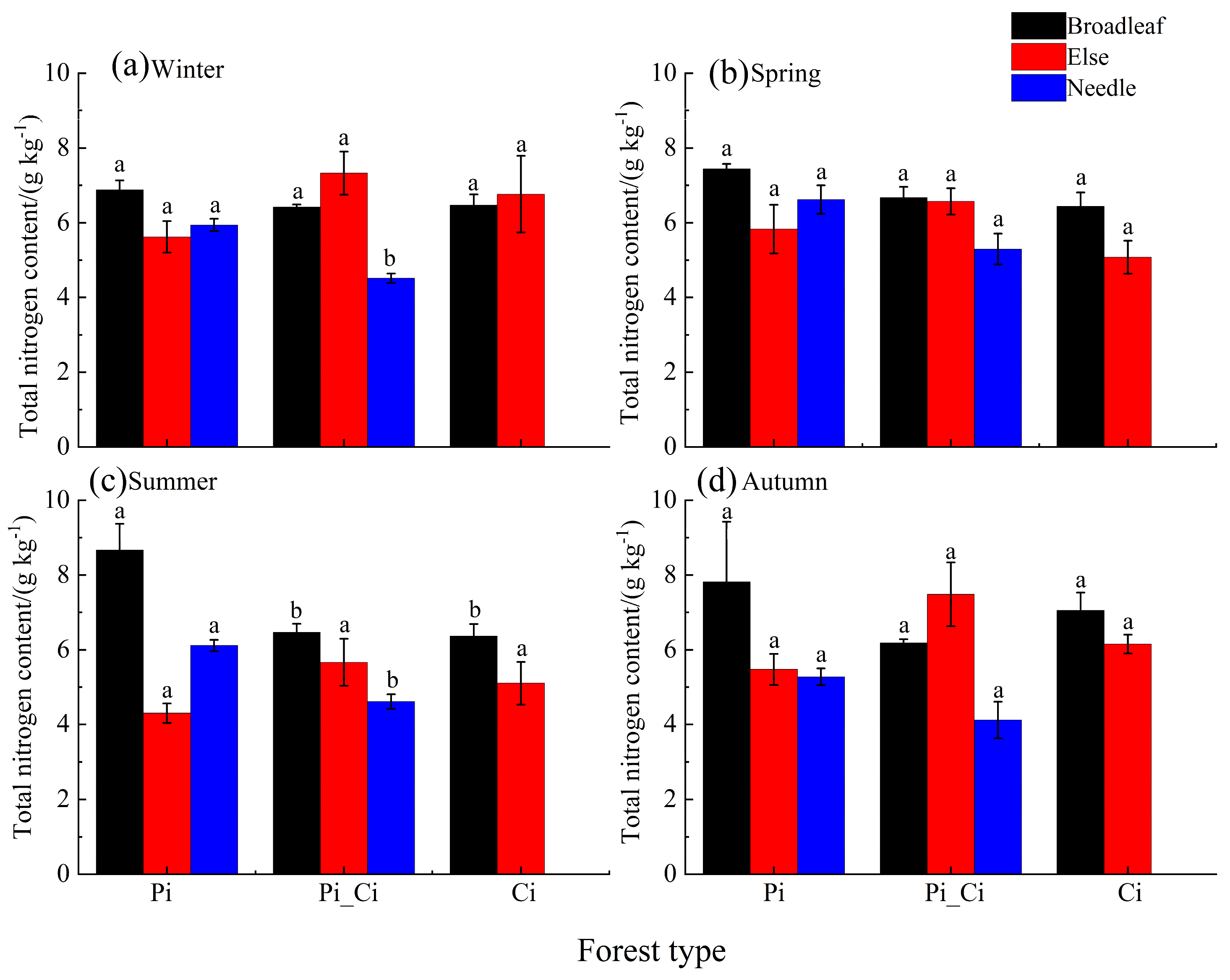
The TN content of litter ranged from 4.12 to 8.67 g kg−1. In summer, the TN content in the broadleaf litter of the P. massoniana forest was significantly higher than the corresponding components in the other two forest types. Additionally, for the needle litter in the P. massoniana forest, the TN content peaked in spring and dropped to its minimum in autumn (Figure 7).
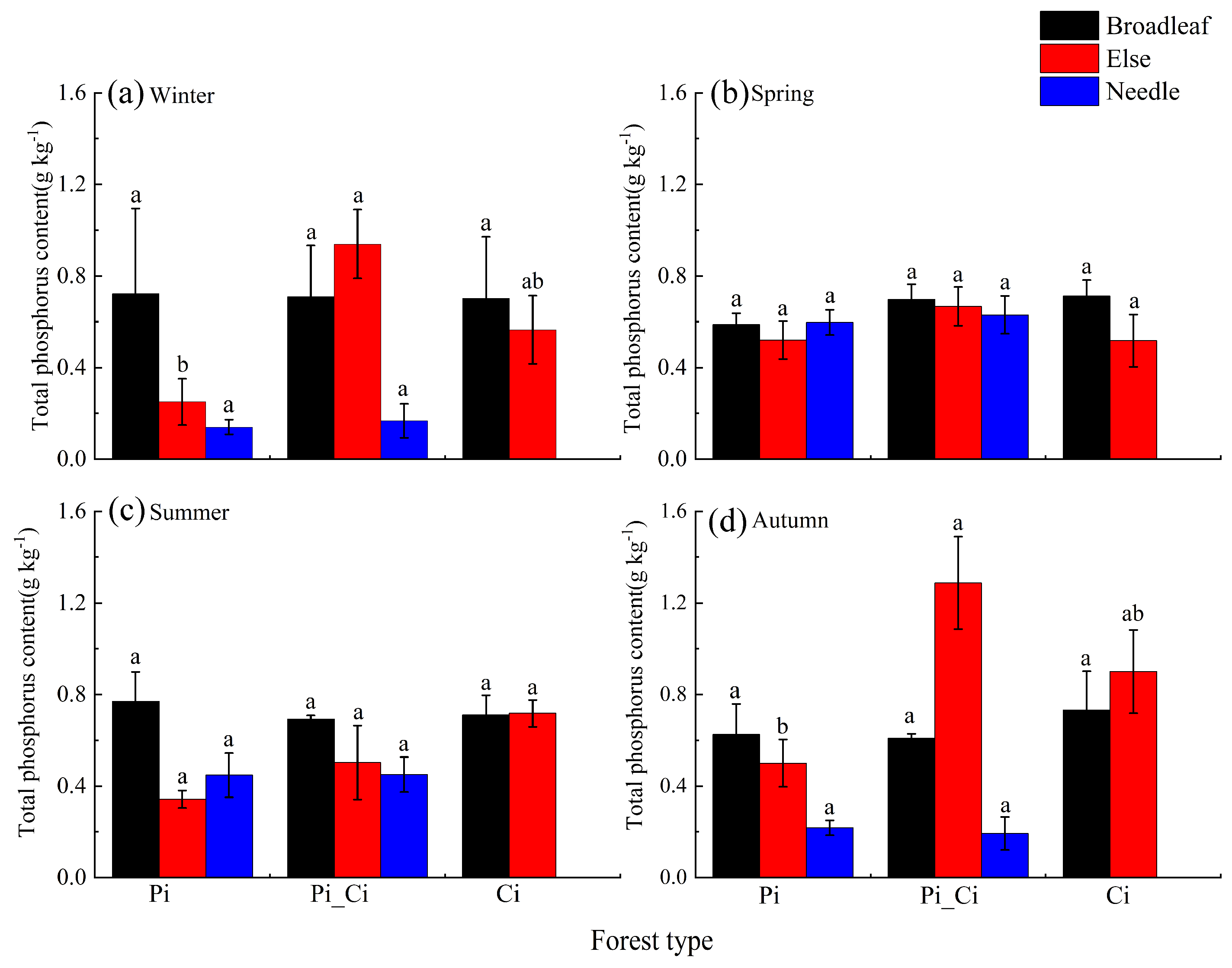
The TP content ranged from 0.14 to 1.29 g kg−1. In winter and autumn, the miscellaneous litter of the mixed forest showed significantly higher TP content than that of the P. massoniana forest (Figure 8).
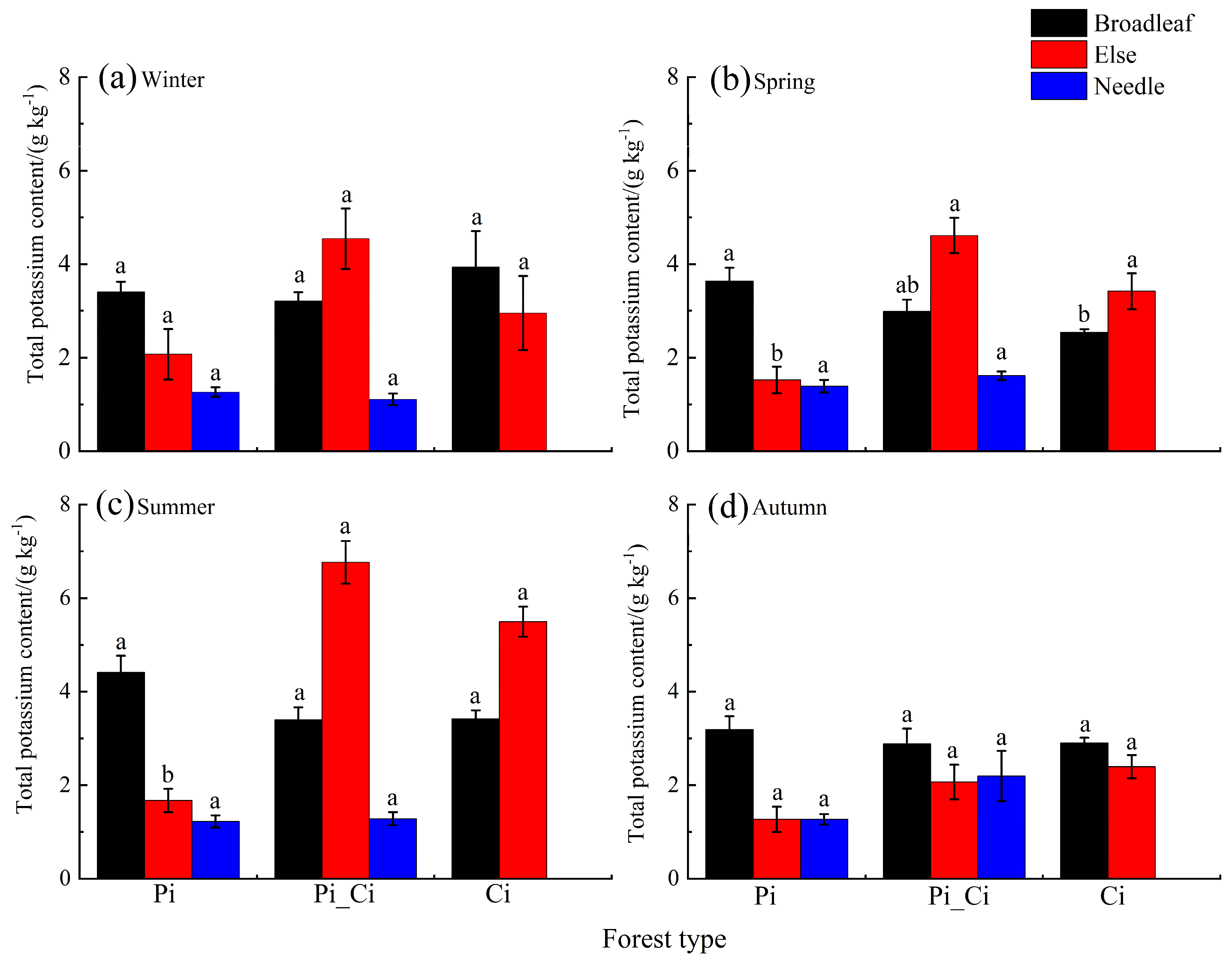
The TK content varied between 1.11 and 6.77 g kg−1. Across all seasons, broadleaf litter in the P. massoniana forest exhibited significantly higher TK content than the corresponding components in the other two forest types. However, during spring and summer, the miscellaneous litter in both the C. camphora forest and the mixed forest had significantly higher TK content than that in the P. massoniana forest (Figure 9).
Furthermore, the nutrient contents of specific litter components exhibited significant seasonal fluctuations (Table 4). Generally, TN and TP concentrations in the broadleaf and needle litters tended to peak during the active growing season (spring), whereas TK concentrations in several components—such as the miscellaneous litter—reached their maximum in summer.

3.5. Stoichiometric Characteristics of C, N, and P

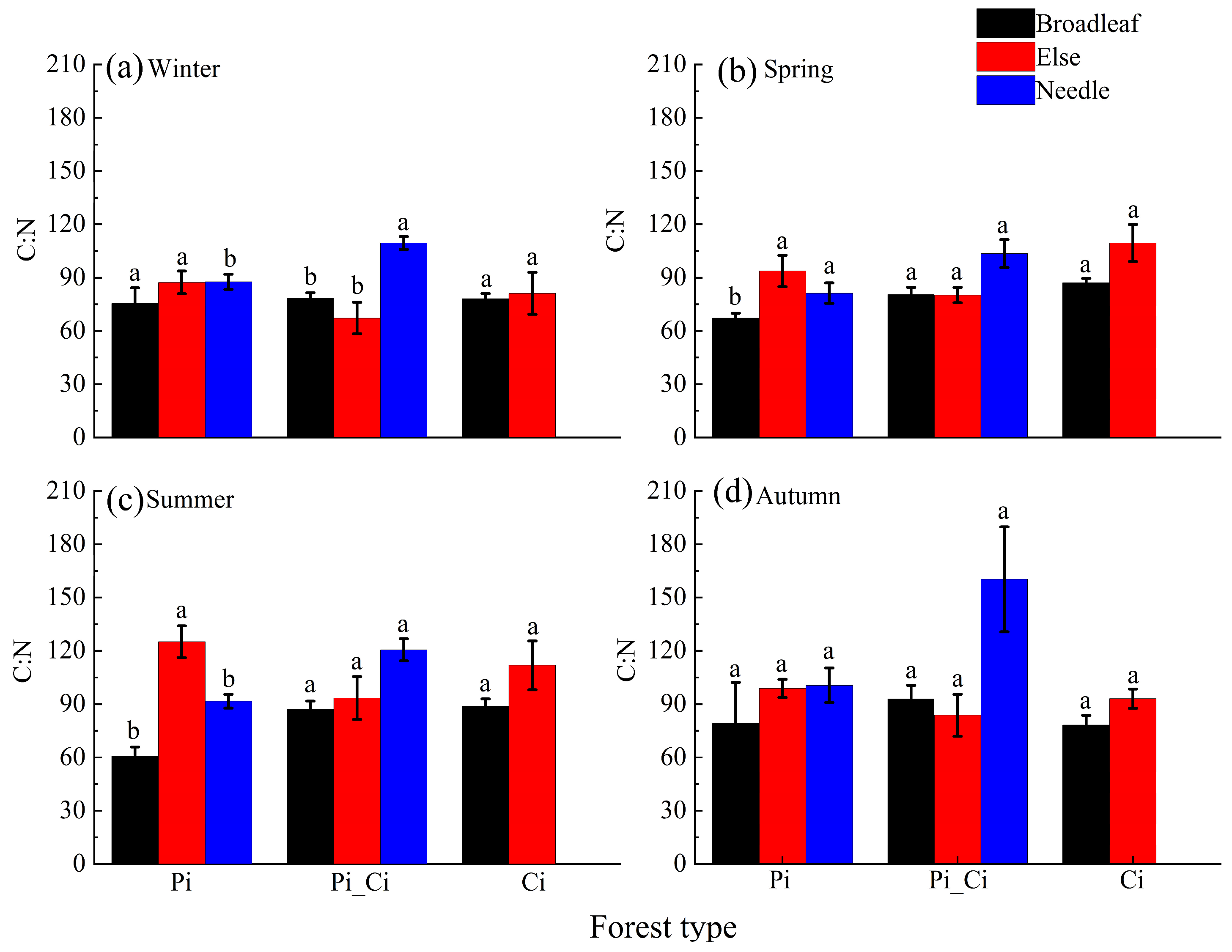
The C:N ratio ranged from 67.27 to 109.52. During spring and summer, the C:N ratio of broadleaf litter in the C. camphora forest and the mixed forest was significantly higher than that in the P. massoniana forest (Figure 10).
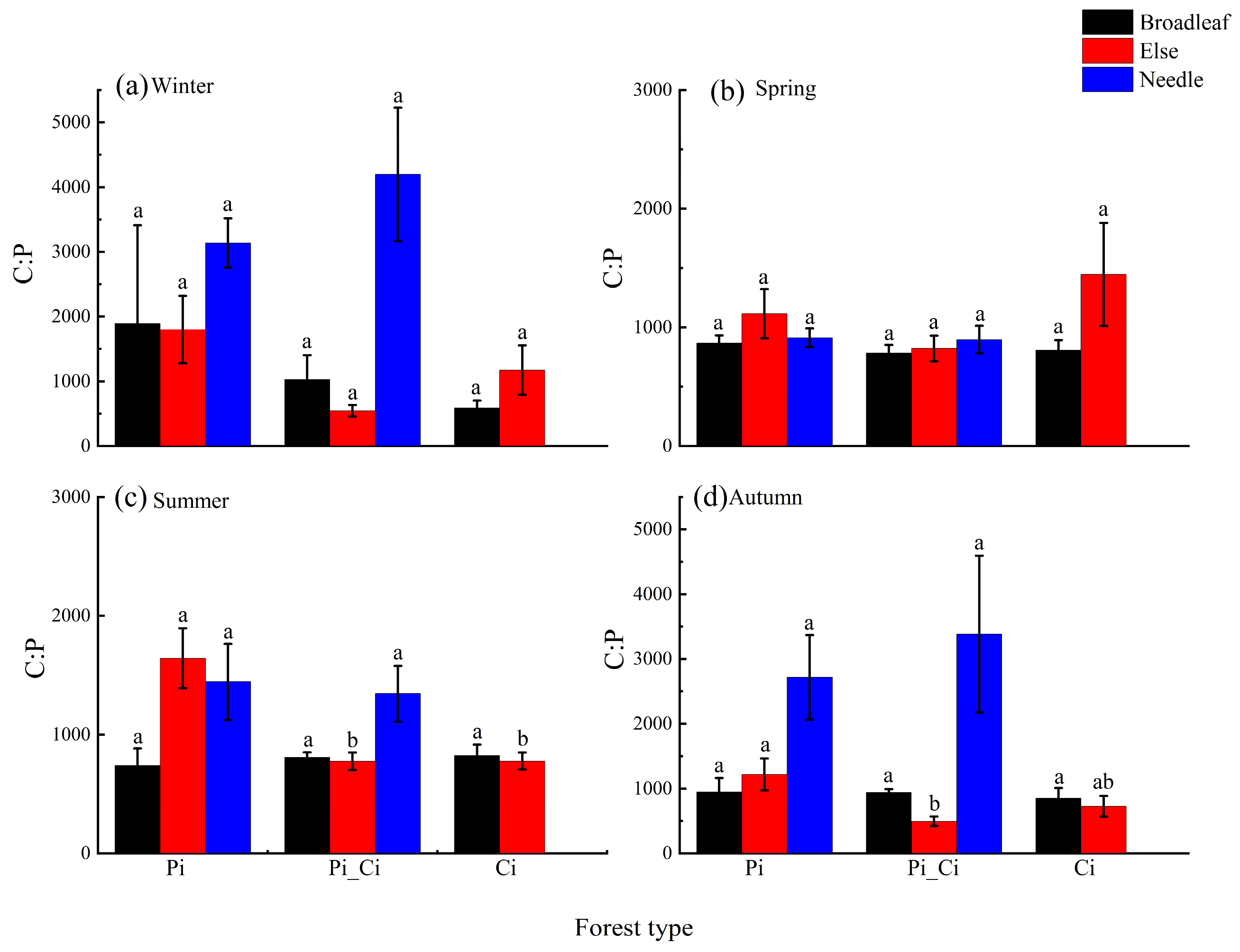
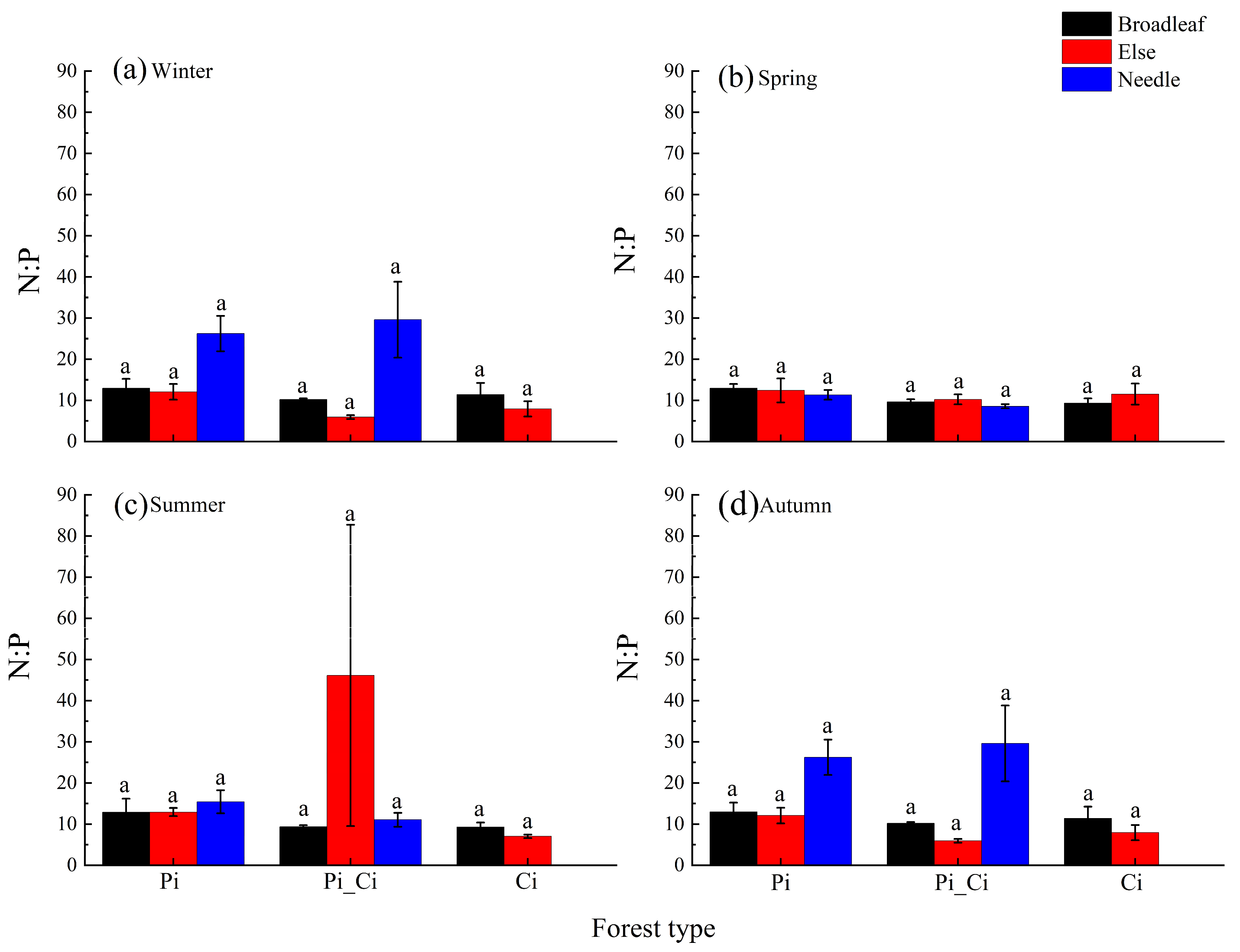
The C:P ratio varied between 592.38 and 3384.41. In summer and autumn, the C:P ratio of the miscellaneous litter in Pi was significantly higher (Figure 11). The N:P ratio ranged from 5.95 to 120.27 without a significant difference among forest types in any season (Figure 12).
The C:N, C:P, and N:P ratios of specific litter components exhibited marked seasonal variations (Table 5). Notably, the C:P and N:P ratios of needle litter in both pure and mixed stands reached their highest levels during winter and dropped significantly in spring. In contrast, the C:N ratio of the broadleaf litter in the P. massoniana forest peaked during summer.

3.6. Annual Potential Nutrient Return via Litterfall

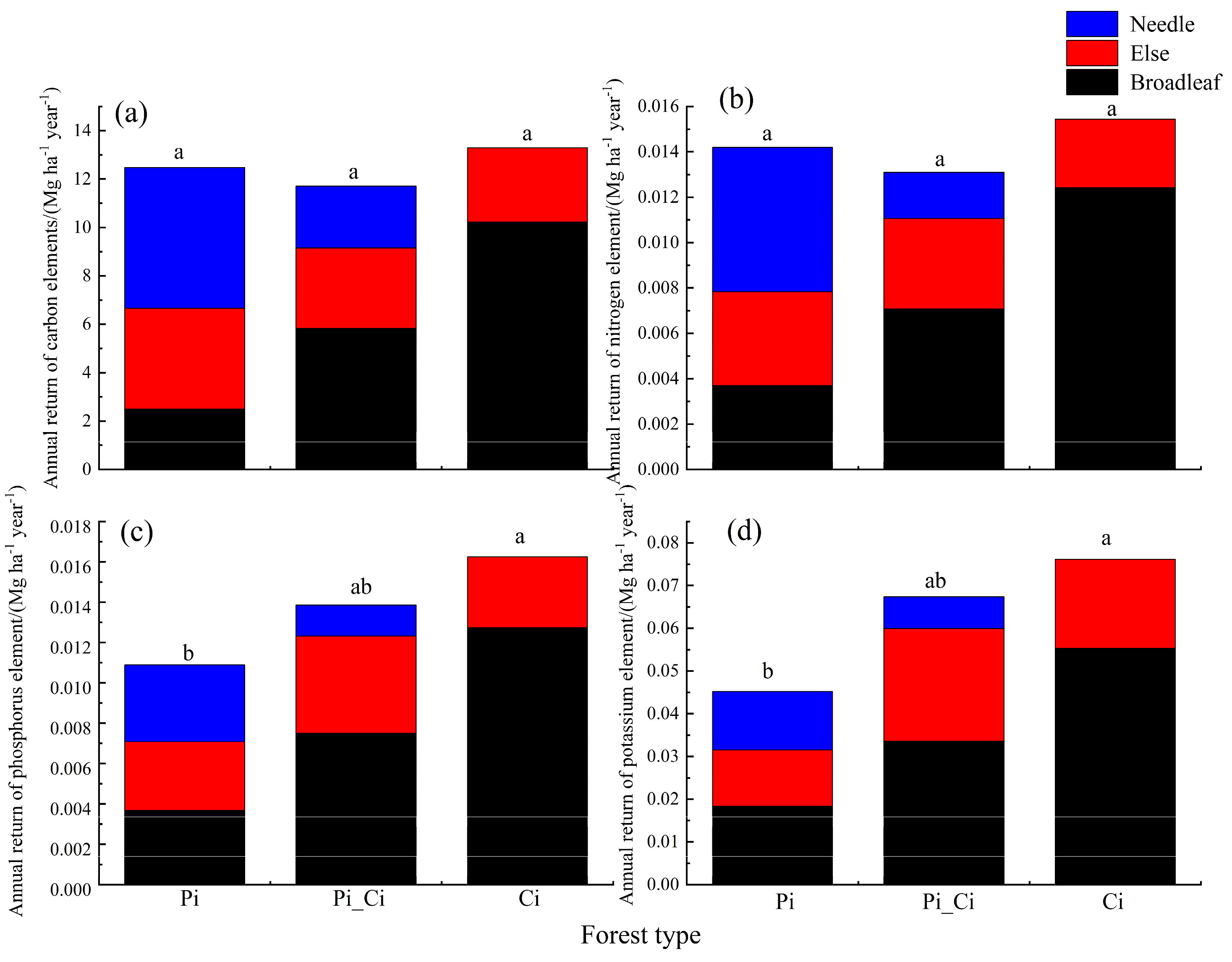
During the study period (December 2020–November 2021), the annual return of carbon through litterfall was 12.48, 11.72, and 13.30 Mg ha−1 yr−1 for the P. massoniana mixed and C. camphora forests, respectively. The annual returns of nitrogen were 0.014, 0.013, and 0.015 Mg ha−1 yr−1, phosphorus were 0.0108, 0.0138, and 0.0160 Mg ha−1 yr−1, and potassium were 0.045, 0.067, and 0.076 Mg ha−1 yr−1, respectively. Among these elements, the C. camphora forest showed significantly higher annual returns of P and K than the P. massoniana forest (Figure 13).

4. Discussion

4.1. Litterfall Production and Seasonal Dynamics

Contrary to several comparative studies reporting significantly higher litterfall production in mixed coniferous-broadleaf stands than in monocultures [34], the present study found no significant difference in total annual biomass among the three stand types. Our results demonstrated no significant differences in total annual litterfall production among the P. massoniana (23.73 Mg ha−1 yr−1), mixed (21.54 Mg ha−1 yr−1), and C. camphora (24.29 Mg ha−1 yr−1) forests. Seasonal dynamics, however, varied distinctly, which ecologically explains the highly significant interaction effect between forest type and season on total litterfall (Table 1). The P. massoniana forest peaked in summer, likely driven by the synchronized peaks in temperature and heavy monsoonal precipitation. This pattern aligns with broader findings that coniferous forests exhibit distinct litterfall-climate responses compared to broadleaf forests across continental scales [6]. In contrast, the C. camphora and mixed forests peaked in spring, aligning with broader regional observations in China, where the spring litterfall peak in subtropical evergreen broadleaf forests is primarily driven by canopy rejuvenation—the shedding of old leaves to facilitate new shoot emergence and nutrient reallocation [8]. The biological characteristics of dominant tree species significantly affect litterfall volume, shedding patterns, and compositional proportions [9]. Furthermore, evergreen conifers allocate substantial resources to heavy reproductive organs (e.g., cones) [35], explaining the dominance of needles and miscellaneous components in the P. massoniana litter. In contrast, broadleaf components constituted 80% of the C. camphora litterfall, aligning with previous observations by Guo et al. [36].

4.2. Litter Quality, Degradability, and Soil Acidification

Litter decomposition products directly influence soil chemistry [13,37]. Across all seasons, the C. camphora litter maintained a significantly higher pH than the P. massoniana litter, indicating that C. camphora possesses a much greater buffering capacity against soil acidification than P. massoniana. This buffering effect is closely tied to the structural components of the litter, which have the potential to profoundly regulate soil C and N cycling by driving microbial energy pathways and supporting diverse microbial communities [38,39,40]. In our study, the remarkably high mean annual lignin content in the P. massoniana litter (344.78 mg g−1) implies slower turnover rates [41], as such recalcitrant macromolecules form a structural barrier that retards decomposition and limits organic C turnover [37,42]. This obstruction can subsequently inhibit soil microbial and faunal activities [43] and restrict nutrient supply [17].
Importantly, our previous parallel investigations conducted at these exact same plots [26,28,29] have empirically corroborated these mechanisms. Those studies demonstrated that the soil under C. camphora stands exhibits significantly improved chemical properties and mitigated acidification compared to the pure P. massoniana stands. Easily decomposable, high-quality litter is essential for alleviating soil acidification [44]. This alleviation inherently may create a more favorable microenvironment, potentially enhancing N mineralization and reducing N leaching. Consequently, our findings directly explain why the low-lignin, high-pH litter of C. camphora could be more effective than P. massoniana at restoring soils and supporting healthier C and N cycles.

4.3. Stoichiometry and Nutrient Limitation

Litter C:N and C:P ratios are fundamental predictors of decomposition rates, while the N:P ratio is a critical diagnostic tool for nutrient limitation [45,46]. The exceptionally high C:P ratio observed in the P. massoniana litter during summer (1536.49) reflects an extremely high phosphorus resorption efficiency and further corroborates its resistance to decomposition [47,48]. This severe physiological internal recycling is a typical adaptation strategy of coniferous species to the acute P-deficient and strongly acidic soils, such as those at the Tieshanping site. Furthermore, the litter N:P ratios across all three forest types ranged between 16 and 26. Since an N:P ratio > 16 typically indicates phosphorus (P) limitation [46,49,50], plant growth in these stands is likely heavily constrained by P availability. This conclusion is strongly supported by soil analyses at the Tieshanping site, which report soil P concentrations far below the threshold (0.8–1.0 g kg−1) required to meet standard plant demands [29,51].

4.4. Nutrient Return and Ecological Implications

The consistent order of nutrient return (C > N > K > P) across all stands reflects fundamental plant physiological requirements for structural C and metabolic N [52], alongside the strong pre-abscission translocation of highly mobile P and K [53]. Additionally, the concentrated summer rainfall in the study area likely exacerbates the leaching of mobile K from the litter [54]. Despite this general scarcity of P and K, the annual return of these elements via litterfall was significantly higher in the C. camphora forest. High-quality C. camphora litter not only has a greater potential to replenish soil P and K [29], but our previous microbiological studies conducted in the same plots have also demonstrated its ability to suppress acid-producing fungi while promoting beneficial fungal diversity [55]. Consequently, the introduction of C. camphora into declining P. massoniana pure stands could serve as an effective biological strategy to help mitigate both nutrient deficiency and soil acidification.
Ultimately, our findings move beyond baseline species descriptions to offer actionable management innovations. The specific stoichiometric traits (e.g., low C:P and N:P ratios) and high buffering potential of C. camphora litterfall act as an active ecological lever that is highly valuable for sites with severe background acidification. Therefore, prioritizing the planting or mixing of C. camphora provides a strategic, evidence-based blueprint to accelerate nutrient cycling and facilitate soil rehabilitation in degraded subtropical forests.
Despite these findings, several limitations of this study must be acknowledged. First, the single-site design and short study duration (one year) restrict our ability to capture interannual variability driven by climatic fluctuations and broader spatial heterogeneity. Second, while we evaluated litter quality, this study lacks direct measurements of in-situ soil biogeochemical processes, such as actual decomposition rates and nutrient mineralization. Future research should prioritize long-term, multi-site monitoring combined with direct soil analyses to comprehensively understand forest-soil interactions.

5. Conclusions

The one-year study provides site-specific evidence demonstrating that while tree species selection does not significantly alter the total annual litterfall production in the subtropical acid rain region of Tieshanping, it profoundly impacts litter quality and potential nutrient return dynamics. Litterfall from the pure C. camphora and mixed forests exhibited significantly higher pH, lower lignin content, and greater P and K returns compared to the pure P. massoniana forest. Furthermore, the lower C:P ratio and reduced recalcitrant components in the C. camphora litter suggest a higher decomposition potential, which may alleviate the severe P limitation and nutrient depletion in these soils. Consequently, the findings from this localized study suggest that, for future ecological restoration and sustainable forest management in subtropical acid rain regions, prioritizing C. camphora pure stands or its mixed configurations with P. massoniana can be considered a promising potential strategy to enhance soil buffering capacity and promote long-term ecosystem stability.

Author Contributions

Conceptualization, B.L., Y.F. and Z.C.; methodology, B.L., Y.F. and Z.C.; investigation, B.L., X.N. and J.C.; data curation, B.L. and Y.F.; writing—original draft preparation, B.L.; writing—review and editing, Y.F., X.N., J.C. and Z.C.; project administration, Z.C.; funding acquisition, Z.C. All authors have read and agreed to the published version of the manuscript.

Funding

This research was funded by the National Natural Science Foundation of China (31971630).

Data Availability Statement

The original contributions presented in this study are included in the article. Further inquiries can be directed to the corresponding author.

Acknowledgments

The authors appreciate Tieshanping Forest Farm of Chongqing for helping with the field work.

Conflicts of Interest

The authors declare no conflict of interest.

References

  1. Lin, H.; Hong, T.; Wu, C.Z.; Chen, H.; Chen, C.; Li, J.; Lin, Y.-M.; Fan, H.-L. Monthly variation in litterfall and the amount of nutrients in an Aleurites montana plantation. For. Ecosyst. 2012, 14, 30–35. [Google Scholar] [CrossRef] [Scilit]
  2. Prescott, C.E. Litter decomposition: What controls it and how can we alter it to sequester more carbon in forest soils? Biogeochemistry 2010, 101, 133–149. [Google Scholar] [CrossRef] [Scilit]
  3. Paudel, E.; Dossa, G.G.O.; Xu, J.C.; Harrison, R.D. Litterfall and nutrient return along a disturbance gradient in a tropical montane forest. For. Ecol. Manag. 2015, 353, 97–106. [Google Scholar] [CrossRef] [Scilit]
  4. Shen, G.; Chen, D.; Wu, Y.; Liu, L.; Liu, C. Spatial patterns and estimates of global forest litterfall. Ecosphere 2019, 10, e02587. [Google Scholar] [CrossRef] [Scilit]
  5. Liu, X.; Feng, Y.; Zhao, X.; Cui, Z.; Liu, P.; Chen, X.; Zhang, Q.; Liu, J. Climatic drivers of litterfall production and its components in two subtropical forests in South China: A 14-year observation. Agric. For. Meteorol. 2024, 344, 109798. [Google Scholar] [CrossRef] [Scilit]
  6. Liu, C.J.; Westman, C.J.; Berg, B.; Kutsch, W.; Wang, G.Z.; Man, R.; Ilvesniemi, H. Variation in litterfall–climate relationships between coniferous and broadleaf forests in Eurasia. Glob. Ecol. Biogeogr. 2004, 13, 105–114. [Google Scholar] [CrossRef] [Scilit]
  7. Peng, Y.H.; Huang, X.R.; Shen, W.H. Litter characteristics of different forest types in the Laohuling Reservoir area. China Soil Water Conserv. 2015, 6, 56–59. (In Chinese) [Google Scholar]
  8. Dai, Y.; Gong, F.; Yang, X.; Chen, X.; Su, Y.; Liu, L.; Wu, J.; Liu, X.; Sun, Q. Litterfall seasonality and adaptive strategies of tropical and subtropical evergreen forests in China. J. Plant Ecol. 2022, 15, 320–334. [Google Scholar] [CrossRef] [Scilit]
  9. Zhang, H.; Yuan, W.; Liu, S.; Dong, W.; Fu, Y. Seasonal patterns of litterfall in forest ecosystems worldwide. Ecol. Complex. 2014, 22, 88–95. [Google Scholar] [CrossRef] [Scilit]
  10. Wang, H.C.; Lin, K.C.; Huang, C.Y. Temporal and spatial patterns of remotely sensed litterfall in tropical and subtropical forests of Taiwan. J. Geophys. Res. Biogeosci. 2016, 121, 509–522. [Google Scholar] [CrossRef] [Scilit]
  11. Güsewell, S. N:P ratios in terrestrial plants: Variation and functional significance. New Phytol. 2004, 164, 243–266. [Google Scholar] [CrossRef] [Scilit]
  12. Manzoni, S.; Trofymow, J.A.; Jackson, R.B.; Porporato, A. Stoichiometric controls on carbon, nitrogen, and phosphorus dynamics in decomposing litter. Ecol. Monogr. 2010, 80, 89–106. [Google Scholar] [CrossRef] [Scilit]
  13. Berg, B.; McClaugherty, C. Plant Litter: Decomposition, Humus Formation, Carbon Sequestration; Springer: Cham, Switzerland, 2008. [Google Scholar]
  14. Pan, W.H.; Zhao, Y.P.; Wu, J.S.; Yan, X.J. Nutrient elements of litter and soil fertility under different forest vegetation types in Lin’an City. Anhui Agric. Sci. 2011, 39, 5828–5840. (In Chinese) [Google Scholar]
  15. Chen, X.; Liu, Y.; Deng, J.; Shi, J. C, N and P stoichiometry of litter at different decomposition stages in subalpine forests of western Sichuan. Bull. Bot. Res. 2017, 37, 216–226. (In Chinese) [Google Scholar]
  16. Qin, Y.; Zhang, D.J.; Li, X.; Zhang, Y.; Yuan, Y.L.; Wang, L.F.; Pang, Z.H.; Zhang, J. Changes of total phenols and condensed tannins during decomposition of mixed litter of Pinus massoniana and broad-leaved species. Chin. J. Appl. Ecol. 2018, 29, 2224–2232. (In Chinese) [Google Scholar]
  17. Wardle, D.A.; Bardgett, R.D.; Klironomos, J.N.; Setälä, H.; van der Putten, W.H.; Wall, D.H. Ecological linkages between aboveground and belowground biota. Science 2004, 304, 1629–1633. [Google Scholar] [CrossRef] [Scilit] [PubMed]
  18. Cleveland, C.C.; Liptzin, D. C:N:P stoichiometry in soil: Is there a “Redfield ratio” for the microbial biomass? Biogeochemistry 2007, 85, 235–252. [Google Scholar] [CrossRef] [Scilit]
  19. Lee, J.J.; Weber, D.E. Effects of sulfuric acid rain on major cation and sulfate concentrations of water percolating through two model hardwood forests. In Agronomy Abstracts; American Society of Agronomy: Madison, WI, USA, 1982. [Google Scholar]
  20. Driscoll, C.T.; Lawrence, G.B.; Bulger, A.J.; Butler, T.J.; Cronan, C.S.; Eagar, C.; Lambert, K.F.; Likens, G.E.; Stoddard, J.L.; Weathers, K.C. Acidic deposition in the northeastern United States: Sources and inputs, ecosystem effects, and management strategies. BioScience 2001, 51, 180–198. [Google Scholar] [CrossRef] [Scilit]
  21. Clarholm, M.; Skyllberg, U. Translocation of metals by trees and fungi regulates pH, soil organic matter turnover and nitrogen availability in acidic forest soils. Soil Biol. Biochem. 2013, 63, 142–153. [Google Scholar] [CrossRef] [Scilit]
  22. Chen, D.Q. Decomposition of Schima superba litter and its effects on soil. Fujian For. Sci. Technol. 2001, 28, 35–38. (In Chinese) [Google Scholar]
  23. Wu, X. Study on the Redistribution and Buffering Effects of Vertical Structure of Typical Tree Species on Acid Rain in Guangzhou Urban Area. Master’s Thesis, Guangdong University of Technology, Guangzhou, China, 2022. (In Chinese) [Google Scholar]
  24. Van Nevel, L.; Mertens, J.; De Schrijver, A.; De Neve, S.; Tack, F.M.G.; Verheyen, K. Can shrub species with higher litter quality mitigate soil acidification in pine and oak forests on poor sandy soils? For. Ecol. Manag. 2014, 330, 38–45. [Google Scholar] [CrossRef] [Scilit]
  25. Zhang, L.P. Litter Decomposition and Its Interaction with Soil Properties in Typical Forest Ecosystems in the Upper Minjiang River, Sichuan. Ph.D. Thesis, Northwest A&F University, Xianyang, China, 2006. (In Chinese) [Google Scholar]
  26. Feng, Y.X.; Chen, R.S.; Ni, X.Y.; Shang, H.; Chen, Z. Planting Cinnamomum camphora effectively improves soil acidification and soil nutrient status in the acid rain area of Chongqing. Chin. J. Ecol. 2024, 43, 633–643. (In Chinese) [Google Scholar]
  27. Wang, Y.H.; Chen, Z.; Zhou, J.G. Effects of transformation of Pinus massoniana pure forest on soil acidification characteristics and aggregate stability in the acid rain area of Chongqing. Acta Ecol. Sin. 2021, 41, 5184–5194. (In Chinese) [Google Scholar]
  28. Wang, Y.H.; Solberg, S.; Yu, P.; Myking, T.; Vogt, R.D.; Du, S. Assessments of tree crown condition of two Masson pine forests in the acid rain region in south China. For. Ecol. Manag. 2007, 242, 530–540. [Google Scholar] [CrossRef] [Scilit]
  29. Feng, Y.X.; Wang, M.X.; Ni, X.Y.; Shang, H.; Chen, Z. Effects of transformation of Pinus massoniana pure forest on soil solution properties in the acid rain area of Chongqing. J. Terr. Ecosyst. Conserv. 2023, 2, 11–19. (In Chinese) [Google Scholar]
  30. Lu, R.K. Analytical Methods of Soil and Agricultural Chemistry; China Agricultural Science and Technology Press: Beijing, China, 2000; pp. 296–315. (In Chinese) [Google Scholar]
  31. Van Soest, P.J.; Robertson, J.B.; Lewis, B.A. Methods for dietary fiber, neutral detergent fiber, and nonstarch polysaccharides in relation to animal nutrition. J. Dairy Sci. 1991, 74, 3583–3597. [Google Scholar] [CrossRef] [Scilit] [PubMed]
  32. Sayer, E.J.; Rodtassana, C.; Sheldrake, M.; Bréchet, L.M.; Ashford, O.S.; Lopez-Sangil, L.; Kerdraon-Byrne, D.; Castro, B.; Turner, B.L.; Joseph Wright, S.; et al. Revisiting nutrient cycling by litterfall—Insights from 15 years of litter manipulation in old-growth lowland tropical forest. In Advances in Ecological Research; Academic Press: Cambridge, MA, USA, 2020; Volume 62, pp. 173–223. [Google Scholar]
  33. Zheng, Y.; Guan, F.; Fan, S.; Yan, X.; Huang, L. Dynamics of leaf-litter biomass, nutrient resorption efficiency and decomposition in a moso bamboo forest after strip clearcutting. Front. Plant Sci. 2022, 12, 799424. [Google Scholar] [CrossRef] [Scilit]
  34. Farooq, T.H.; Li, Z.; Yan, W.; Shakoor, A.; Kumar, U.; Shabbir, R.; Peng, Y.; Gayathiri, E.; Alotaibi, S.S.; Wróbel, J.; et al. Variations in litterfall dynamics, C:N:P stoichiometry and associated nutrient return in pure and mixed stands of camphor tree and masson pine forests. Front. Environ. Sci. 2022, 10, 903039. [Google Scholar] [CrossRef] [Scilit]
  35. Hou, L.L.; Mao, Z.J.; Sun, T.; Song, Y. Litter biomass and its dynamic changes in ten typical forest communities in the Xiaoxing’an Mountains. Acta Ecol. Sin. 2013, 33, 1994–2002. (In Chinese) [Google Scholar]
  36. Guo, J.F.; Chen, Q.W.; Yang, S.H.; Qian, W.; Yang, Y.S.; Zheng, Q.R. Litterfall and nutrient return of two natural forests and a Cunninghamia lanceolata plantation in Wanmu Forest Nature Reserve. Acta Ecol. Sin. 2006, 26, 4091–4098. (In Chinese) [Google Scholar]
  37. Desie, E.; Vancampenhout, K.; Nyssen, B.; van den Berg, L.; Weijters, M.; van Duinen, G.-J.; den Ouden, J.; Van Meerbeek, K.; Muys, B. Litter quality and the law of the most limiting: Opportunities for restoring nutrient cycles in acidified forest soils. Sci. Total Environ. 2020, 699, 134383. [Google Scholar] [CrossRef] [Scilit]
  38. Kögel-Knabner, I. The macromolecular organic composition of plant and microbial residues as inputs to soil organic matter. Soil Biol. Biochem. 2002, 34, 139–162. [Google Scholar] [CrossRef] [Scilit]
  39. Goldfarb, K.C.; Karaoz, U.; Hanson, C.A.; Santee, C.A.; Bradford, M.A.; Treseder, K.K.; Wallenstein, M.D.; Brodie, E.L. Differential growth responses of soil bacterial taxa to carbon substrates of varying chemical recalcitrance. Front. Microbiol. 2011, 2, 94. [Google Scholar] [CrossRef] [Scilit]
  40. Mooshammer, M.; Wanek, W.; Hämmerle, I.; Fuchslueger, L.; Hofhansl, F.; Knoltsch, A.; Schnecker, J.; Takriti, M.; Watzka, M.; Wild, B.; et al. Adjustment of microbial nitrogen use efficiency to carbon:nitrogen imbalances regulates soil nitrogen cycling. Nat. Commun. 2014, 5, 3694. [Google Scholar] [CrossRef] [Scilit] [PubMed]
  41. Thomas, K.D.; Prescott, C.E. Nitrogen availability in forest floors of three tree species on the same site: The role of litter quality. Can. J. For. Res. 2000, 30, 1698–1706. [Google Scholar] [CrossRef]
  42. Osono, T.; Hiradate, S.; Hobara, S. Bleaching of leaf litter accelerates the decomposition of recalcitrant components and mobilization of nitrogen in a subtropical forest. Sci. Rep. 2021, 11, 1787. [Google Scholar] [CrossRef] [Scilit] [PubMed]
  43. Hättenschwiler, S.; Tiunov, A.V.; Scheu, S. Biodiversity and litter decomposition in terrestrial ecosystems. Annu. Rev. Ecol. Evol. Syst. 2005, 36, 191–218. [Google Scholar] [CrossRef] [Scilit]
  44. Kooch, Y.; Bayranvand, M. Composition of tree species can mediate spatial variability of C and N cycles in mixed beech forests. For. Ecol. Manag. 2017, 401, 55–64. [Google Scholar] [CrossRef] [Scilit]
  45. Aerts, R. Climate, leaf litter chemistry and leaf litter decomposition in terrestrial ecosystems: A triangular relationship. Oikos 1997, 79, 439–449. [Google Scholar] [CrossRef] [Scilit]
  46. Koerselman, W.; Meuleman, A.F.M. The vegetation N:P ratio: A new tool to detect the nature of nutrient limitation. J. Appl. Ecol. 1996, 33, 1441–1450. [Google Scholar] [CrossRef] [Scilit]
  47. He, J.S.; Wang, L.; Flynn, D.F.B.; Wang, X.; Ma, W.; Fang, J. Leaf nitrogen:phosphorus stoichiometry across Chinese grassland biomes. Oecologia 2008, 155, 301–310. [Google Scholar] [CrossRef] [Scilit] [PubMed]
  48. Meng, Q.Q.; Ge, L.L.; Yang, X.M.; Wang, J.; Lin, Y.; He, Z.M.; Qiu, L.J.; Hu, H.T. Seasonal variation of leaf carbon, nitrogen and phosphorus stoichiometry in two plantations in Sanming, Fujian. Chin. J. Appl. Environ. Biol. 2019, 25, 776–782. (In Chinese) [Google Scholar]
  49. Xiong, X.S.; Cai, H.Y.; Li, Y.Q.; Ma, W.-H.; Niu, K.-C.; Chen, D.-M.; Liu, N.-N.; Su, X.-Y.; Jing, H.-Y.; Feng, X.-J.; et al. Seasonal dynamics of leaf C, N and P stoichiometry in typical steppe plants of Inner Mongolia. Chin. J. Plant Ecol. 2020, 44, 1138–1153. (In Chinese) [Google Scholar] [CrossRef] [Scilit]
  50. Kang, H.Z.; Xin, Z.J.; Berg, B.; Burgess, P.J.; Liu, Q.; Liu, Z.; Li, Z.; Liu, C. Global pattern of leaf litter nitrogen and phosphorus in woody plants. Ann. For. Sci. 2010, 67, 811. [Google Scholar] [CrossRef] [Scilit]
  51. Wang, S.L. Effects of different management types of Korean pine forests on soil properties in the Tangwang River Basin. J. Soil Water Conserv. 2006, 2, 90–93. (In Chinese) [Google Scholar]
  52. Liu, Y. Nutrient Return, Transfer and Decomposition Dynamics of Litter in Eucalyptus grandis Plantation. Master’s Thesis, Sichuan Agricultural University, Ya’an, China, 2006. (In Chinese) [Google Scholar]
  53. Liu, L.; Zhao, C.M.; Xu, W.T.; Shen, G.Z.; Xie, Z.Q. Nutrient characteristics of litterfall in evergreen and deciduous broad-leaved mixed forest in Shennongjia. Acta Ecol. Sin. 2019, 39, 7611–7620. (In Chinese) [Google Scholar]
  54. Xing, J.M.; Wang, K.Q.; Song, Y.L.; Zhang, Y.J.; Zhang, Z.M.; Pan, T.S. Litter nutrient return and nutrient dynamics in four typical forest stands in central Yunnan subalpine region. J. Cent. South Univ. For. Technol. 2021, 41, 134–144. (In Chinese) [Google Scholar]
  55. Ni, X.Y.; Feng, Y.X.; Li, R.H.; Shang, H.; Chen, Z. Effects of different forest types on soil acidification and fungal communities in the acid rain area of Chongqing. Acta Ecol. Sin. 2023, 43, 7203–7215. (In Chinese) [Google Scholar]
Figure 1. Annual Litterfall production across different forest types. Pi, pure stands of P. massoniana, Ci, pure stands of C. camphora, Pi_Ci, mixed stands of P. massoniana and C. camphora. The same letter means that there is no significant difference (p > 0.05).
Land 15 00949 g001
Figure 2. Seasonal dynamics in litterfall production among different forest types. Different uppercase letters indicate significant differences between the same forest type in different seasons (p < 0.05), and different lowercase letters indicate significant differences between different forest types in the same season (p < 0.05). No letters indicate no significant difference.
Land 15 00949 g002
Figure 3. The pH values of litter components of different forest types in different seasons. Different letters indicate significant differences among forest types (p < 0.05). There was no needle due to no coniferous trees in the pure stands of broadleaf (Ci).
Land 15 00949 g003
Figure 4. Effects of forest type and litter composition on total organic carbon of litters. Different letters indicate significant differences among forest types (p < 0.05).
Land 15 00949 g004
Figure 5. Effects of forest types and litter composition on litter cellulose. Different letters indicate significant differences among forest types (p < 0.05).
Land 15 00949 g005
Figure 6. Effect of forest type and litter composition on litter lignin. Different letters indicate significant differences among forest types (p < 0.05).
Land 15 00949 g006
Figure 7. Effects of forest type and litter composition on total nitrogen of litters. Different letters indicate significant differences among forest types (p < 0.05).
Land 15 00949 g007
Figure 8. Effects of forest type and litter composition on total phosphorus in litters. Different letters indicate significant differences among forest types (p < 0.05).
Land 15 00949 g008
Figure 9. Effects of forest type and litter composition on total potassium of litters. Different letters indicate significant differences among forest types (p < 0.05).
Land 15 00949 g009
Figure 10. Effects of forest type and litter composition on litter C:N. Different letters indicate significant differences among forest types (p < 0.05).
Land 15 00949 g010
Figure 11. Effects of different forest types and litter composition on litter C:P. Different letters indicate significant differences among forest types (p < 0.05).
Land 15 00949 g011
Figure 12. Effects of forest type and litter composition on litter N:P. Different letters indicate significant differences among forest types (p < 0.05).
Land 15 00949 g012
Figure 13. Total annual input of (a) carbon (C), (b) nitrogen (N), (c) phosphorus (P), and (d) potassium (K) in litter of different forest types. Different letters indicate significant differences among forest types (p < 0.05).
Land 15 00949 g013
Table 1. Effects of seasons and forest types on the annual litter amount of three forest types.
Impact FactorsSum of SquaresdfMean SquareFp
Forest type4.23922.1191.4010.259
Season190.291363.43041.9270.0001
Forest type × season81.163613.5278.9410.0001
Table 2. Effects of different seasons on the pH of litter composition under the same forest type and litter composition.
Forest TypeLitter CompositionWinterSpringSummerAutumn
PiElse4.46 BC4.95 A4.76 AB4.38 C
Needle4.66 A4.88 A4.73 A4.32 B
Pi_CiBroadleaf5.12 B5.78 A5.60 A5.13 B
Else4.78 B5.64 A5.22 AB5.17 B
Needle4.36 B4.70 A4.46 AB3.98 C
CiBroadleaf5.42 BC5.98 A5.75 AB5.32 C
Note: Different capital letters indicate that there are significant differences in the seasons of the same litter composition of the same forest type (p < 0.05), if not shown in the table, it is not significant (p > 0.05).
Table 3. Seasonal effects on litter total organic carbon, cellulose, and lignin.
Nutrient Content of LitterForest TypeLitter CompositionWinterSpringSummerAutumn
Total organic carbon
(g kg−1)
Pi_CiElse479.47 B522.27 AB508.04 AB596.45 A
Needle493.87 B538.85 AB553.40 AB618.99 A
CiBroadleaf503.31 B558.35 A561.38 A544.72 AB
Cellulose
(mg kg−1)
PiBroadleaf128.86 A144.56 A67.60 B99.63 AB
Lignin
(mg kg−1)
PiElse276.25 C379.68 AB330.74 B405.04 A
Needle322.56 B386.14 A351.54 AB413.70 A
Pi_CiBroadleaf283.53 B351.86 AB335.61 AB382.91 A
Else251.21 B341.65 A348.98 A342.45 A
Needle322.47 B412.09 A334.07 B372.89 AB
CiBroadleaf246.13 B334.62 A318.71 A344.74 A
Else215.89 B320.71 A336.69 A351.75 A
Note: Different capital letters indicate that there are significant differences in the seasons of the same litter composition of the same forest type (p < 0.05); if not shown in the table, it is not significant (p > 0.05).
Table 4. Effects of season on total nitrogen, total phosphorus, and total potassium in litters.
Nutrient Content of Litter (g kg−1)Forest TypeLitter CompositionWinterSpringSummerAutumn
Total nitrogenPiBroadleaf5.94 AB6.62 A6.12 AB5.28 B
Total phosphorusPiNeedle0.14 C0.60 A0.45 AB0.22 BC
Pi_CiElse0.94 AB0.67 AB0.50 B1.29 A
Broadleaf0.17 B0.63 A0.45 AB0.19 B
Total potassiumPiBroadleaf3.41 AB3.64 AB4.41 A3.19 B
Pi_CiElse4.54 B4.61 B6.77 A2.07 C
CiElse2.96 B3.42 B5.50 A2.40 B
Note: Different capital letters indicate that there are significant differences in the seasons of the same litter composition of the same forest type (p < 0.05); if not shown in the table, it is not significant (p > 0.05).
Table 5. Effects of seasons on stoichiometric characteristics of C, N, and P in litters.
Stoichiometric CharacteristicsForest TypeLitter CompositionWinterSpringSummerAutumn
C:NPiBroadleaf87.31 B93.83 AB125.16 A98.91 AB
C:PPiNeedle3136.65 A912.87 B1444.10 AB2716.26 A
Pi_CiNeedle4197.38 A897.76 B1343.21 AB3384.41 AB
N:PPi_CiNeedle37.88 A8.56 B11.06 AB29.61 AB
Note: Different capital letters indicate that there are significant differences in the seasons of the same litter composition of the same forest type (p < 0.05); if not shown in the table, it is not significant (p > 0.05).
Disclaimer/Publisher’s Note: The statements, opinions and data contained in all publications are solely those of the individual author(s) and contributor(s) and not of MDPI and/or the editor(s). MDPI and/or the editor(s) disclaim responsibility for any injury to people or property resulting from any ideas, methods, instructions or products referred to in the content.