1. Introduction
Madrid’s peri-urban territory is shaped by rapid urban expansion, fragmented land uses, infrastructure barriers, and uneven access to green and natural areas. These conditions have weakened the continuity between the city and its surrounding landscapes, limiting both ecological connectivity and everyday access to nature for residents. At the same time, conventional planning approaches often address mobility and green infrastructure separately, making it difficult to formulate integrated responses to such a complex and multiscalar territory. Also, urban fringes are governance-heavy territories where fragmented land uses, competing plans, and weak coordination make multi-scale design necessary, not optional. For this reason, this study adopts a research-by-design approach, using design to synthesize analysis and projective thinking to explore how spatial continuities might restore connections between Madrid, its peri-urban fringe, and the wider regional landscape.
Research by design (RbD) and research through design (RTD) treat design activity as a knowledge-generating research strategy rather than merely project delivery, emphasizing creative–abductive reasoning and iterative exploration to address research questions about possible urban, peri-urban, and rural landscapes. These approaches are commonly described as cyclical, “agile” search processes that advance through creative leaps and repeated refinement as problem understanding deepens.
Peri-urban landscapes are complex transition zones whose pressures, fragmentation, and governance misfits become legible only through planning and analysis across multiple spatial and temporal scales. These areas demand multiscalar methods to link territorial structure, urban form, and lived experience, particularly as they serve critical roles in recreation, and access to nature.
Accessibility to peri-urban landscapes and nature encompassesnot only physical reachability, but also cultural, social, and psychological dimensions of perceived access. Studies highlight the need to distinguish direct evidence, such as route standards, barrier removal, and accessibility mapping, from indirect measures like increased green space provision without explicit metrics.
Despite these advances, RbD/RTD often devolves into typical design procedures lacking transparent research setups, rigorous testing, or post-implementation evaluation, undermining claims about accessibility outcomes. Peri-urban and rewilding strategies frequently invoke connectivity and ecosystem services without operational indicators or scale-specific evaluation.
This paper addresses these gaps through Madrid’s peri-urban territory, asking the following questions: (1) How can a multiscalar RbD framework foster coherent city-peri-urban connections? (2) How can accessibility integrate structural analysis with user experience? We propose a design-led methodology combining structural, morphological, and perceptual scales to enhance public access and nature reintegration. In this case, the approach focuses on producing a document that will facilitate future decision-making regarding the proposal outlined here, i.e., city–peri-urban connections, and will serve as a basis for developing its subsequent phases.
In this paper, accessibility is the directly assessed outcome and the study focuses on one central problem: how to reconnect Madrid’s fragmented urban fringe through a design-led multiscalar framework that improves public access while also guiding territorial continuity.
2. Theoretical Framework
2.1. Research by Design
RbD/RTD is framed as an approach “encompassing attention to space” that combines interpretation and transformation of environments, and it is argued to be powerful for inter- and transdisciplinary work because it supports co-production and social learning alongside abductive reasoning [
1]. RTD is similarly defined as a research method “in which spatial design plays the leading role,” where design is positioned as an exploratory activity that produces knowledge aligned with research goals and questions [
2].
Research by design is particularly appropriate here because the research problem requires a method capable of linking territorial diagnosis, spatial proposal, and scale-specific evaluation within a single process. In the case of Madrid’s urban fringe, this approach makes it possible to connect the reading of fragmentation with the design of corridors and with the assessment of their accessibility effects.
Multiscalar reasoning is frequently treated as intrinsic to RbD/RTD, including explicit claims that designers think across multiple scales, from element and place through neighborhood, city, region, and the world [
3]. Within landscape-design research models, “working through the scales” is described as an essential element, which matters in peri-urban contexts where planning scales can mismatch with lived realities and thereby weaken responsiveness to local access needs [
3,
4].
This study adopts a methodology grounded in the complementary approaches of research by design (RbD) and research through design (RtD), which position the design process itself as a valid mode of knowledge production. Research by design, as articulated by Hauberg [
5] and Roggema [
6], treats the act of designing as an exploratory research strategy in which design proposals serve as instruments for investigating complex spatial problems and generating new insights that conventional analytical methods alone cannot produce [
7]. Research through design extends this premise by embedding systematic inquiry within iterative design processes, enabling the integration of scientific knowledge such as urban climate data or ecological principles directly into design solutions [
2,
8]. As Nijhuis and de Vries [
9] argue, design in landscape architecture functions simultaneously as a means of inquiry and a form of knowledge generation, bridging the gap between theoretical understanding and spatial intervention. This dual methodology allows the researcher to move between analytical and projective modes of working, using design propositions, not merely as end products, but as vehicles for testing hypotheses, revealing site-specific potentials, and advancing disciplinary knowledge [
10,
11]. Within this framework, design outcomes—whether masterplans, spatial scenarios, or landscape strategies—are understood as embodied arguments that contribute to both practical and theoretical discourse [
6,
12,
13].
Research grounded in a design process is research aimed at generating knowledge through methodology typically employed to develop solutions within the context of interventions in the built environment. As Nijhuis and de Vries [
9] point out, “In landscape architecture education and research in the academic context, as well as in practice, spatial design is increasingly used and acknowledged as a form of research, often referred to as ‘research by design’ or ‘research through design(ing)’”. In this context, it is important to note that the methodology stems from a very simple premise, yet one that is essential in the field of landscape architecture: drawing is thinking. Drawing is not merely a way of illustrating results but is a means of reflection. Nor is it a communication tool, although it can also play this role, but rather, it is a way for individuals to advance knowledge. In the process of drawing, abstract thought is subjected to a tension, an examination, or questioning of itself, which compels it to reveal nuances or insights that would not have been reached without this exercise.
However, multiple sources also caution that, in practice, “RTD” is often interpreted as typical design procedures rather than a consciously transparent research setup, and that RTD is frequently treated as experimentalism without accurate testing procedures needed to warrant internal and external validity of design products [
14].
2.2. Multiscalar Frameworks
Multiscalar planning frameworks treat peri-urban areas as systems where fragmentation pressures on open and rural surfaces become critical, and where effective planning requires aligning interpretative, design/planning, and governance instruments across scales [
1,
14]. Some frameworks propose approaching the peri-urban not as isolated surfaces but through “transition transects” from rural/natural to urban systems, enabling overlays of environmental, social, economic, and governance information to represent cross-system flows and dynamics [
15]. Existing studies often treat green infrastructure or accessibility separately, while fewer studies connect these with the governance of urban-fringe territories through a multi-scale design method [
16].
A prominent family of multiscalar approaches is network-based green infrastructure (GI) planning that connects peri-urban green areas to urban green networks and mobility systems through supra-municipal strategies [
15]. In south-west Madrid, for example, strategies aim to create and protect a network of quality open spaces that improves “accessibility of clean recreational areas” and establishes public uses “accessible to everyone” consistent with universality principles, while also promoting sustainable mobility and communication of green areas with urban areas [
17].
Other multiscalar frameworks operationalize accessibility more explicitly through classification and indicator systems, such as defining “recreational areas” as those with good accessibility to the green-area system and dense soft-mobility networks and calculating indices to represent population access to green areas within landscape units [
17]. In peri-urban park guidance, accessibility is positioned as a core requirement for delivering peri-urban parks’ social functions, with calls for continuity of cycle and pedestrian paths and for universal accessibility to underpin infrastructure development within peri-urban parks [
17]. The Council of Europe’s handbook
Periurban Parks: Tools for Management and Planning frames peri-urban parks as elements of green structure and ecological networks, and highlights land-use planning, zoning, and green-structure planning (including urban forests and ecological networks) as instruments to structure accessible peri-urban open spaces [
18].
2.3. Approximation by Scales
In 1968, architects Charles and Ray Eames explored human perception of the world through a documentary, initially titled “A Rough Sketch for a Proposed Film Dealing with the Powers of Ten and the Relative Size of Things in the Universe” [
19]. The film shows the universe’s scale in increments of ten, creating a matrix of images reflecting different observation scales. It starts with a couple on a lawn and zooms out to beyond our galaxy, then in to the tissue of a hand. The distant view interests astronomers, while the close-up appeals to biologists. At what scale do landscape architects observe? Three images in the Eames’ matrix, central to this inquiry, are notable. The power of ten to the fifth shows a city in its geographical context by a large lake, aiding understanding and intervention in a specific territory. This structural scale helps comprehend and influence the main structure’s elements.
The second scale image shows a segment of the previous full city view, now a detailed fragment. Unlike the earlier image showing the road network, this one reveals roadways, sidewalks, vegetation, and parking areas. This scale is morphological, highlighting city element shapes.
The third image is central to Charles and Ray Eames’ narrative, showing them on blankets. It differs from the whole city or urban fragment scales, focusing on textures, colors, and sounds, including the human as observer and observed. Full comprehension requires presence; the distance of the previous scales, which Soja [
20] describes as “measurable and mappable configurations and practices of urban life,” is absent. Here, the environment is perceived, and the observer becomes part of the reality.
While the first two scales are the main focus in urban studies, the third scale has been underexplored despite its importance in landscape architecture history. The structural and morphological scales are common because they enable objective, verifiable methods. The perceptual scale is challenging as it involves humans as both study objects and observers, similar to Heisenberg’s principle where observation alters phenomena. This scale, however, offers new perspectives not covered by the other scales. This article references Lynch [
21], Cullen [
22], Jacobs [
23], and Gehl [
24] from the late 1960s, who criticized Modernism for lacking depth by ignoring civic sociability and environmental complexity. A purely structural view can lead to clear but oppressive projects, as seen in Jacobs’ critique of Moses’ vision in 1960s New York [
25].
Camilo Sitte, an Austrian urban planner, advocated for the perceptual dimension in design. In
City Planning According to Artistic Principles [
26], Sitte critiqued the German school’s abstract methods, represented by Baumeister and Stübben, for neglecting this dimension. Raymond Unwin, an influential English architect in the garden city movement, supported Sitte’s ideas in Britain while acknowledging the German school’s contributions, particularly Stübben, in
Town Planning in Practice. Unwin [
27] valued Sitte’s work for elevating perception-based design to academic and professional levels.
2.4. Walkability and Connectivity in Peri-Urban Landscapes
Landscape in eighteenth-century England was linked to the ground-level perspective, conceptually based in walking during the Romantic period. Romantics transcended medieval garden confines. As Thacker [
28] notes, before Romanticism, engaging with nature was inconceivable; hostility or indifference prevailed. The world beyond towns was unexplored and seen as dangerous. Romantics expanded spatial boundaries beyond walled gardens, transforming perceptions. Romanticism identified nature as accessible with the simplest tools: legs. This movement, foundational for the landscape discipline, originated from eighteenth-century walking. Jarvis [
29] notes that the word “pedestrian” first appeared in English in a 1791 letter by Wordsworth to Mathew.
In the eighteenth century, walking’s social and ideological significance transformed with Romanticism’s rise. Educated bourgeois walkers challenged stereotypes linking walking to criminality and poverty, redefining it as an expression of freedom and pleasure beyond survival [
29]. Walking became a tool for Romantic poets, painters, architects, and landscape architects to transform admired landscapes.
Steven Heyde [
30] notes that in 18th-century France, landscape architecture emphasized the environment’s three-dimensionality, critiquing reliance on two-dimensional plans. The argument was that walking provided an experiential quality plans couldn’t convey, as they lacked intricate details. This concern was aesthetic and acknowledged the environment’s dynamic nature. However, the 19th century shifted to design practices prioritizing plans for greater control, dismissing earlier methods as imprecise [
30].
In contrast to the 18th-century exploration of landscapes, the 19th century experienced transformative changes with the rapid growth of industrial cities. As the 20th century began, authors noted the emotional impact of urban expansion [
31]. This growth and the urban–rural disconnect led to proposals for corridors, allowing landscapes into cities. Plans for Berlin (1910) and Madrid (1946), linked to Hermann Jansen, reflect these efforts. Later, demographic pressure and progress, driven by automobiles, turned Madrid into an impenetrable urban area. In 1985, Madrid’s General Urban Development Plan revived the 1946 plan’s goal of a green network to restore spatial continuity. It proposed a green axis along the River Manzanares and transverse green wedges connecting the city with its outskirts. While the wedges were underdeveloped, the green axis was realized in the 1990s (Manzanares Linear Park) and 2000s (Madrid Río). The 21st century focuses on reconnecting citizens with their environment.
2.5. What Accessibility Means and How It Is Measured
Accessibility is frequently regarded as a fundamental requirement for outdoor recreation. Nevertheless, the literature indicates that the terms “access” and “accessibility” are defined and applied variably across studies, thereby complicating comparative analysis and evaluation [
32]. Research on perceived accessibility distinguishes between physical accessibility attributes inherent in the landscape and cultural, social, or sociopsychological accessibility attributes of the observer. This distinction implies that assessments must deliberately and thoughtfully select the dimensions and attributes to be included [
32]. Quantitative methods for assessing accessibility are diverse, encompassing network-based service-area analyses (which define a service area as the region from which any access point is reachable within a specified distance along the street network), isochronal analyses, and floating-catchment approaches that evaluate travel-time thresholds for peri-urban park access [
33,
34,
35]. Empirical findings from a metropolitan isochronal analysis in the Milan Metropolitan Area illustrate how such methods can identify deficiencies in short-walk access, revealing that only 37% of residential areas provide pedestrian access to a green space within 300 m (approximately five minutes) [
34]. Space syntax and GIS are two commonly employed tools for measuring peri-urban accessibility. Space syntax captures the topological properties of street networks, such as integration, connectivity, and choice, that predict movement potential, yet it neglects physical characteristics like slope, surface quality, and land use. GIS, conversely, addresses these gaps. The Place Syntax tool, developed by Ståhle, Marcus, and Karlström [
36], was one of the early GIS plugins explicitly designed to merge space syntax’s topological distance measures with conventional GIS attraction-based accessibility, and it predicted pedestrian flows more accurately than either approach in isolation, particularly in modernist “tree-like” suburban morphologies. Lee and Seo [
37] analysed 10,000 locations across Seoul, combining space syntax variables (global integration, control) with GIS-derived built environment measures (employment density, land use, public transport accessibility). They discovered that global integration predicted walking volume in residential zones, while control value predicted it in commercial zones, indicating that different syntactic measures captured walkability in different land-use contexts. Baran, Rodriguez, and Khattak [
38], in one of the more frequently cited studies in my results, compared New Urbanist and conventional suburban neighbourhoods and found significant associations between space syntax measures (control, global integration) and both leisure and utilitarian walking. A recent study by Mouratidis [
39] on the 15 min city concept applied GIS-based proximity measures in Copenhagen, finding that even in a city with strong sustainable mobility infrastructure, suburban locations exhibit spatial clusters of insufficient walking accessibility.
McCahill and Garrick [
40] conducted a focused examination of space syntax for bicycle facility planning in Cambridge, Massachusetts, revealing that the “choice” measure indicative of the frequency with which a street segment appears on shortest paths effectively predicted bicycle volumes when integrated with census data. Manum [
41] extended this research by employing the Place Syntax tool in Trondheim, Norway, comparing space syntax analyses with actual GPS-tracked bicycle routes, and confirming the method’s efficacy in capturing street networks’ potential for viable bicycle routes. In Gothenburg, Manum et al. [
42] developed a more comprehensive model incorporating slope, curvature, lane width, surface type, and traffic volume, alongside a space syntax measure termed “Origin–Destination Betweenness.” Their findings indicated that OD-betweenness within 5 km and angular integration within 10 km were among the most significant predictors of cycling flow. Soltani et al. [
43] identified that the connectivity index from space syntax significantly predicted bicycle commuting choice in metropolitan Adelaide, but only when combined with socioeconomic and built environment factors. Most of these studies focus on urban cores, campuses, or suburban neighbourhoods, rather than specifically on peri-urban areas, highlighting a notable gap. The peri-urban fringe, characterized by fragmented street networks, incomplete infrastructure, and mixed rural–urban land use, presents distinct challenges for both methods. Jia et al. [
44] approached this by analysing park accessibility at multiple scales (walking, cycling, driving) across Xi’an using GIS and space syntax. They identified a “central agglomeration–peripheral sparsity” pattern, where corridors with high movement potential in peripheral areas remained underserved by green infrastructure.
Although recent studies have addressed urban green infrastructure, fragmentation of fringe landscapes, and the planning potential of rewilding, the relationship between these topics and the governance of urban fringe territories remains insufficiently integrated. In particular, the literature does not yet provide a fully systematic account of how multiscalar design methods can support decision-making across territorial structure, spatial form, and user experience in peri-urban contexts. This gap is especially relevant in cities such as Madrid, where fringe territories are shaped by overlapping planning agendas, infrastructural barriers, and discontinuous green systems.
In response to this gap, the present study advances a design-led multiscalar framework that links accessibility analysis, corridor continuity, and landscape interpretation. Rather than treating green infrastructure and accessibility as separate topics, the paper uses research by design to connect them within a single methodological sequence. In this way, the study contributes both a spatial proposal and a transferable way of reading and acting on urban-fringe territory.
Therefore, this study adopts a research-by-design approach, in which design is treated not only as the final output but also as a way of generating knowledge. The method combines analysis and proposal, using the design process to test ideas, reveal spatial relationships, and develop context-specific responses. Here, the approach is multiscalar, moving between structural, morphological, and perceptual readings of the territory. This allows the urban, territorial, and experiential dimensions to be connected in order to identify opportunities for improving accessibility and territorial continuity in Madrid’s peri-urban landscape.
3. Materials and Methods
The methodological sequence was organized to respond directly to the research aim, as follows: first, to identify structural and morphological discontinuities in the fringe; second, to interpret their perceptual and spatial qualities; and third, to evaluate the extent to which the proposed corridors improve pedestrian and cycling accessibility.
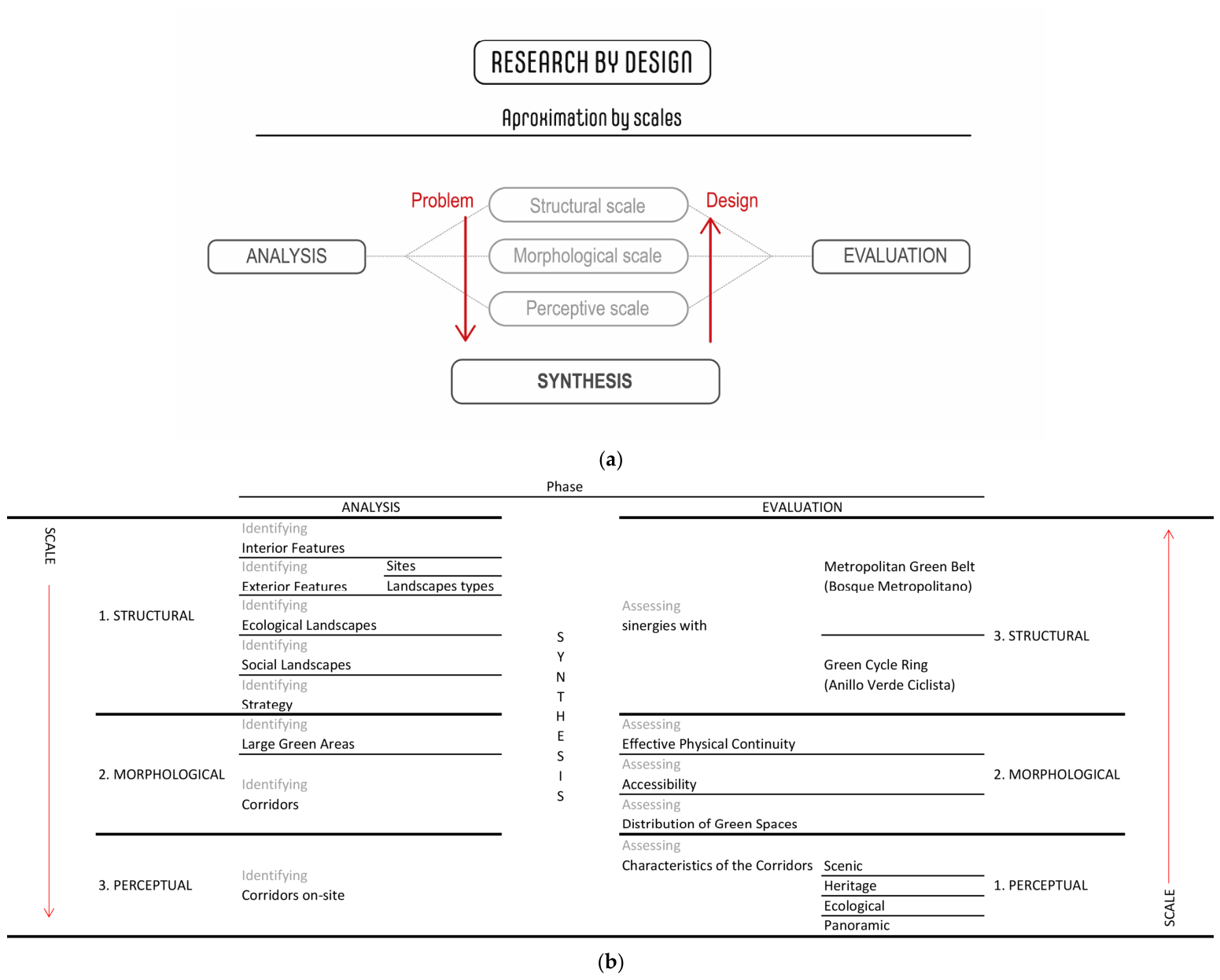
As delineated in the theoretical framework, this article presents a research-by-design methodology that progresses from the identified problem to its resolution in a design proposal. It follows a tripartite process of analysis–synthesis–evaluation, utilizing a multi-scale approach (
Figure 1a). The analysis phase commences with a top-down examination of the problem, beginning with an overview—a structural approach. It advances through a review of each component—a morphological approach. Then, it concludes with a street-level perspective—a perceptual approach aligned with an individual’s urban experience. The dissection of the analytical phase into fundamental elements culminates in a synthesis, providing a condensed overview that facilitates the evaluation phase, wherein the urban and territorial issues delineated in this article are identified and addressed. This evaluation is conducted in a bottom-up manner, again employing a multi-level approach from the perceptual to the morphological, and ultimately to the structural, considering urban problems from specific, concrete experiences to the comprehensive, systematized effectiveness of the overall vision. The proposed method for territorial study is thus predicated on a three-scale approach that incorporates the perceptual dimension as a dynamic and multifactorial scale, although with a subjective component that includes on-site observation and the researchers’ prior intuitions, expressed through photographs, collages or comments. The information recorded at this scale is integrated with the morphological scale that constructs the various fragments piece by piece, and the structural scale that addresses the city. This integration allows the findings to be cross-referenced with other municipal initiatives to create synergies and, above all, enduring and meaningful structures within the city (
Figure 1b).
3.1. Analysis
3.1.1. First Analytical Approach: Structural Scale
The initial approach is conducted on a structural scale, encompassing the entire city of Madrid and extending slightly beyond its administrative boundaries. This perspective is crucial for comprehending the city as a whole within its geographical context, primarily because one of the principal objectives of this methodological proposal is to integrate the city with its surroundings. The aim is to open the city, enabling its citizens to appreciate the value of the landscapes that encircle it. At this structural level, a set of reference points or elements is established, deemed essential for re-establishing the connections between the city’s core or internal elements and its surroundings or external elements. These elements are cross-referenced and evaluated using maps that incorporate existing or ongoing projects addressing green infrastructure or connectivity issues. This process generates a proactive analytical atlas that links various projects and identifies the vulnerabilities of the current system. This research project seeks to enhance the landscapes of the municipality of Madrid and promote access to them by improving connectivity and bringing citizens closer to the surrounding landscapes and nature. These benefits are achieved by enhancing the environmental conditions of the landscape, bringing the countryside closer to citizens, recovering humankind’s natural roots, and reconnecting with the territory’s identity. To this end, several objectives have been identified, including the following. To identify opportunities and constraints associated with the urban landscape in the Madrid area, a strategic framework at different scales from global to local is required, including special attention to the relationship with other municipal plans and initiatives on green infrastructure. (2) To developing a connectivity proposal for Madrid’s biophysical matrix that fosters new perspectives and approaches, priorities include establishing connectivity criteria, studying existing corridors, environmental values, ecosystem services, and co-benefits, defining routes, and milestones of interest. Other key areas include proposing the landscape axes to be developed, with detailed definitions of routes, descriptions of the routes, their beginning and end, the elements of value and interest found along them, and the continuity and connections they create.
3.1.2. Second Analytical Approach: Morphological Scale
In a secondary approach, at the morphological scale, the expansive green spaces within the urban environment are emphasized to evaluate their potential to function as wedges serving as connecting elements between the primary central axes and the river corridors.
The morphological scale is crucial because it is at this level that, relying on the large existing green spaces in the city, the number and general layout of the corridors are determined in relation to both their position within the city and their starting and ending points.
At this stage, the exploratory work carried out using aerial photography takes on particular importance; here, the exact route of each corridor is less important than the delineation of the areas within the city’s large green spaces through which each corridor must be able to move. The aim is not to establish a precise route, which should be the subject of a later phase, not so much of the research process as of the specific design process oriented towards its implementation. Rather, it is necessary to describe an area of movement that is physically and spatially feasible and plausible from an urban perspective.
This scale also provides an initial insight into an issue that will take on particular importance in the
Section 4, regarding which segments or locations hinder or prevent, to a greater or lesser extent, the continuity of the corridors. This is a key issue in this research, the theoretical framework for which is outlined in
Section 2.4. Regarding walkability and connectivity in peri-urban landscapes: as the industrial city grew larger, so too did concerns about an urban environment developing completely disconnected from its immediate landscape context. In this sense, the issue is not merely a matter of resolving the links at the precise and specific threshold between the city and its periphery; rather, it must be possible to develop connections from the very heart of the city to extend deeply into the surrounding landscapes. Analysis at the morphological scale addresses this issue directly.
3.1.3. Third Analytical Approach: Perceptual Scale
The preceding stage, the morphological scale, facilitated the identification of potential physical continuities that underpin the subsequent approach. This approach entails conducting a series of exploratory walks to gather diverse data pertaining to perspectives, heritage findings, and other characteristics that define the architectural, urban, or natural elements contributing to the scenic character of each area. The data collected during these surveys were documented on-site through notes and annotations on supporting maps, accompanied by an extensive collection of photographs to be subsequently curated and analysed. This perceptual phase also encompasses the acquisition of historical and geographical documentation concerning the city of Madrid, enabling us to contextualize certain identified elements.
Analysis at the perceptual level explores the potential of walking as a design and research tool, as outlined in the theoretical framework (
Section 2.4). The revaluation of walking in the 18th century marked a foundational moment in the early development of the discipline of landscape architecture and served as a key tool in its initial design practices. This research reclaims it as a fundamental part of the methodological process within the framework of research by design.
It is true that analysis at the perceptual scale relies on observations and records made by researchers from their own subjective perspective, as acknowledged in the theoretical framework (
Section 2.3), but in research of this type (research by design), this scale becomes particularly important because, both in the practical implementation of a project and in the preliminary analysis of a site’s capacity to accommodate that transformation, the perceptual aspects that shape a place’s character are of particular significance. This does not mean that the collection of information is arbitrary or capricious. The notes and photographs taken on site correspond to observations selected and coded into four groups according to a series of values linked to the experience of walking through the city: elements or environments of value from a (1) scenic; (2) heritage; (3) ecological; (4) panoramic perspective. The meaning of each of these codes is explained in more detail in
Section 4.3.1. Results of the first evaluation: perceptual scale.
3.2. Synthesis
At this juncture, following an analytical overview that simplifies the complexity of urban and territorial realities by deconstructing them into more interpretable components, it becomes imperative to synthesize a summary that reconstructs the overall picture based on the individual elements identified and compiled earlier. To accomplish this, a series of fact sheets were produced, facilitating a broad and comprehensive critical analysis grounded in the selected details. Utilizing the corridors identified in the morphological analysis and verified through the perceptual approach as a foundation, a fact sheet was created for each corridor. These fact sheets encapsulate the route, form, and principal elements characterizing each corridor across the three scales of analysis employed, thereby offering an overarching view that underscores their impact and significance for the city, the sector they influence, and the specific urban experience they provide for citizens.
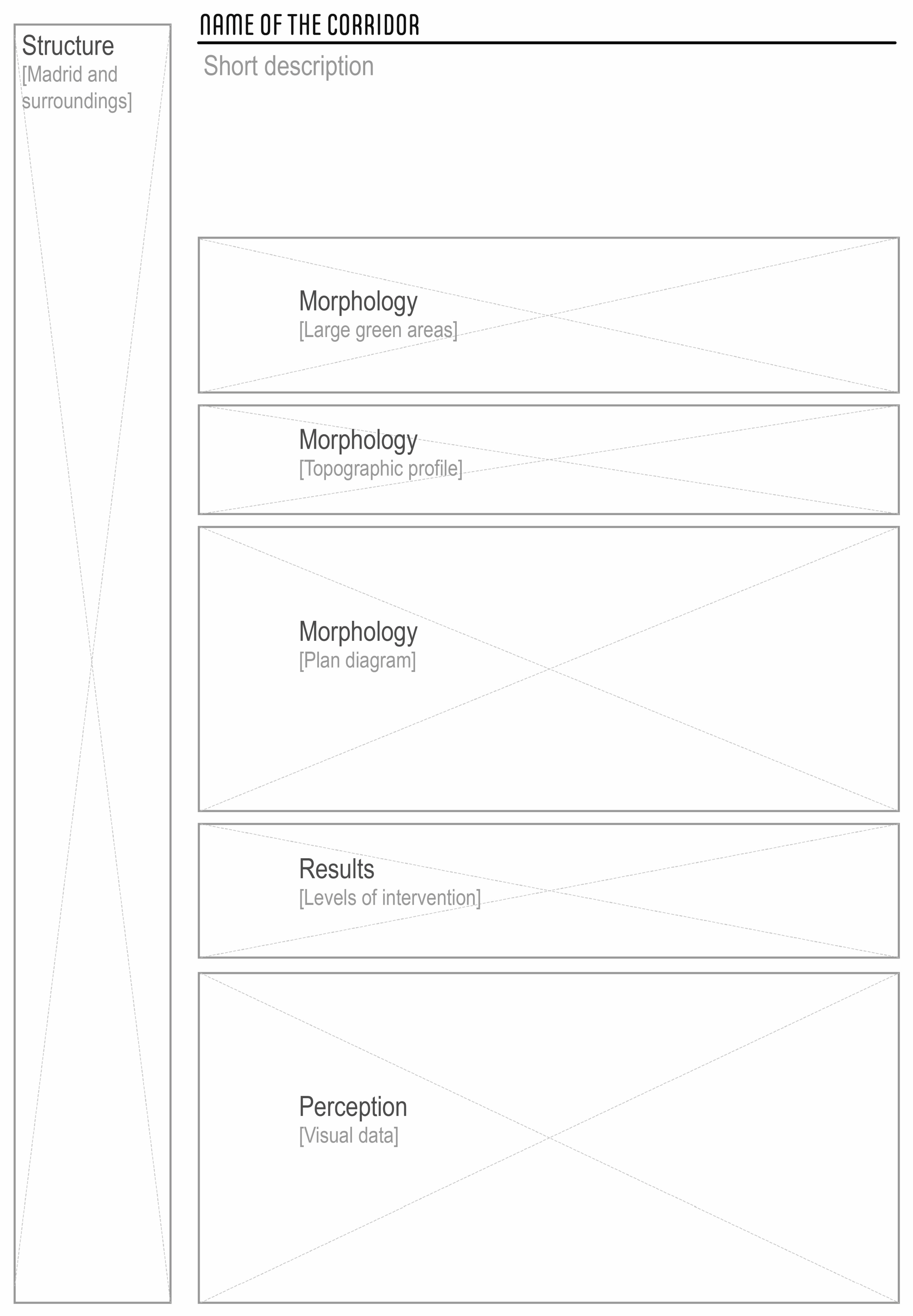
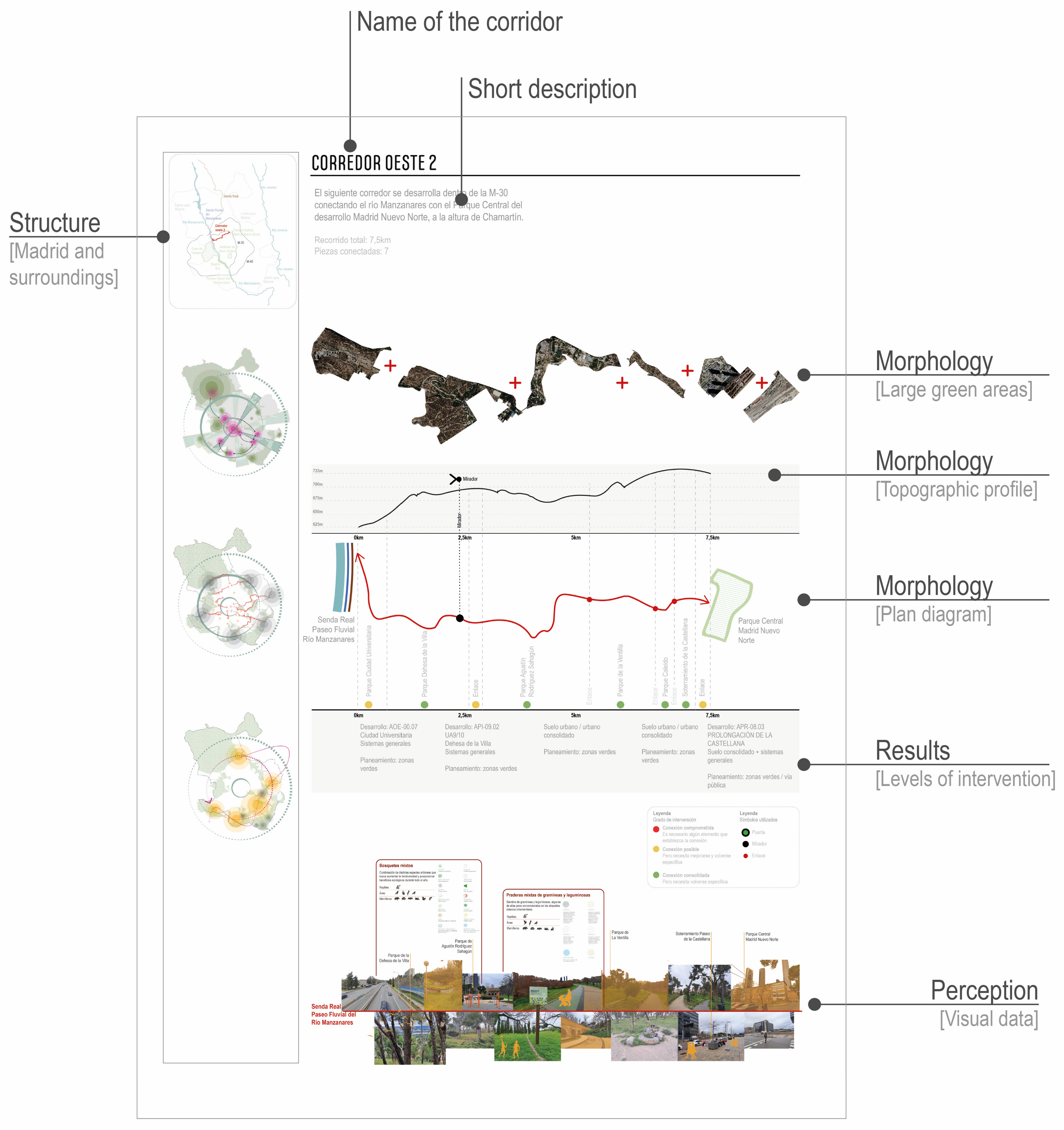
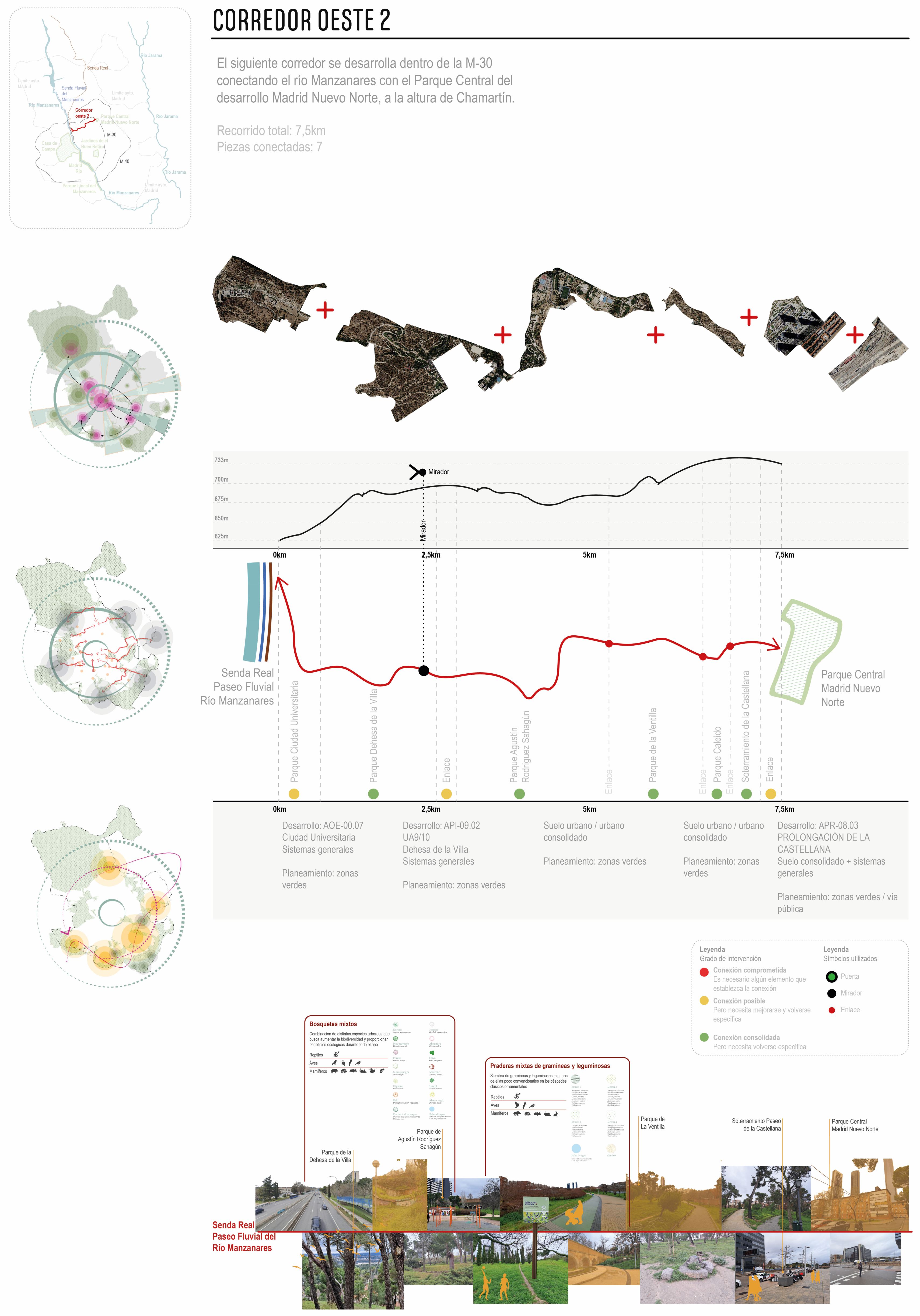
The attached image presents a generic prototype of the fact sheet, or file, (
Figure 2) and an illustration of its structure (
Figure 3), using the specific case of one of the developed corridors for elucidation (Corredor Oeste 2: number 2 of the corridors running West). These summary sheets initially emerge at the conclusion of the analytical phase, and they are finalized as results are acquired. At the culmination of this stage, the sheets provide an initial visualization depicting spatial development in terms of plans and sections, the situation within the urban context, its origin, and its destination. These aid in beginning to unravel the problem. Their function as a visual synthesis tool is enhanced as they are enriched with data and assessments obtained, such as collages, key point locations, or evaluations of elements promoting continuity. The sheets include the structural view on the left, the morphological view at the top, and the perceptual view at the bottom in the form of a collage. As the assessment progresses, results indicating the levels of intervention required to ensure the spatial continuity of each corridor are incorporated. From this juncture, the evaluation stage commences, following the path from the perceptual to the structural, this time in an ascending direction from the perspective closest to the ground to the view encompassing the city within its territorial context. This approach enables us not only to ascertain the proposal’s value at this scale but also to verify its validity in synergy with other recent municipal proposals.
3.3. Evaluation
3.3.1. First Evaluation: Perceptual Scale
The findings from the analytical phase at the perceptual scale are systematically organized into a table that delineates the primary potential of each corridor (
Section 4.3.1). This organization is based on the images captured on site and the data collected during the field surveys.
3.3.2. Second Evaluation: Morphological Scale
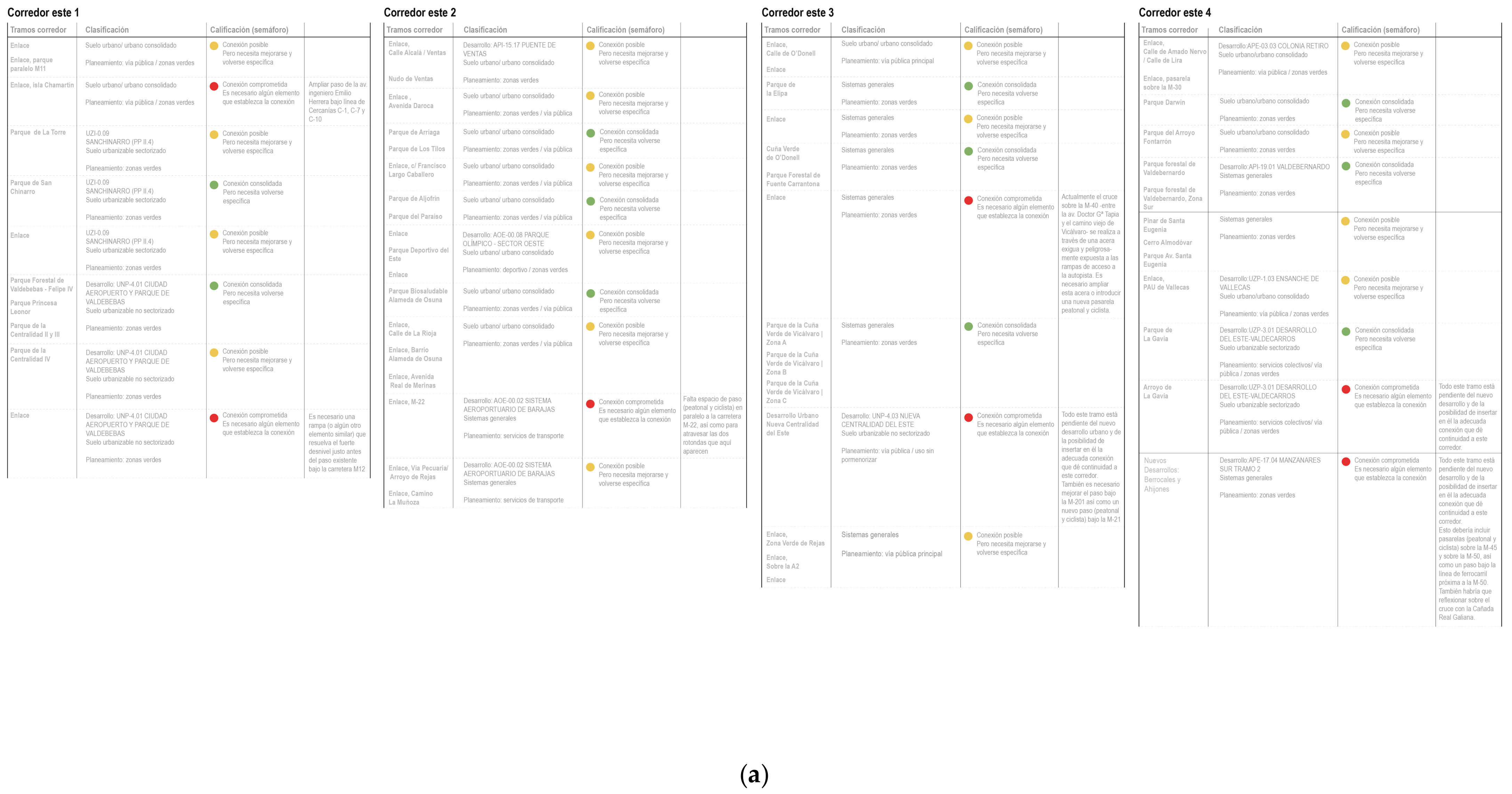
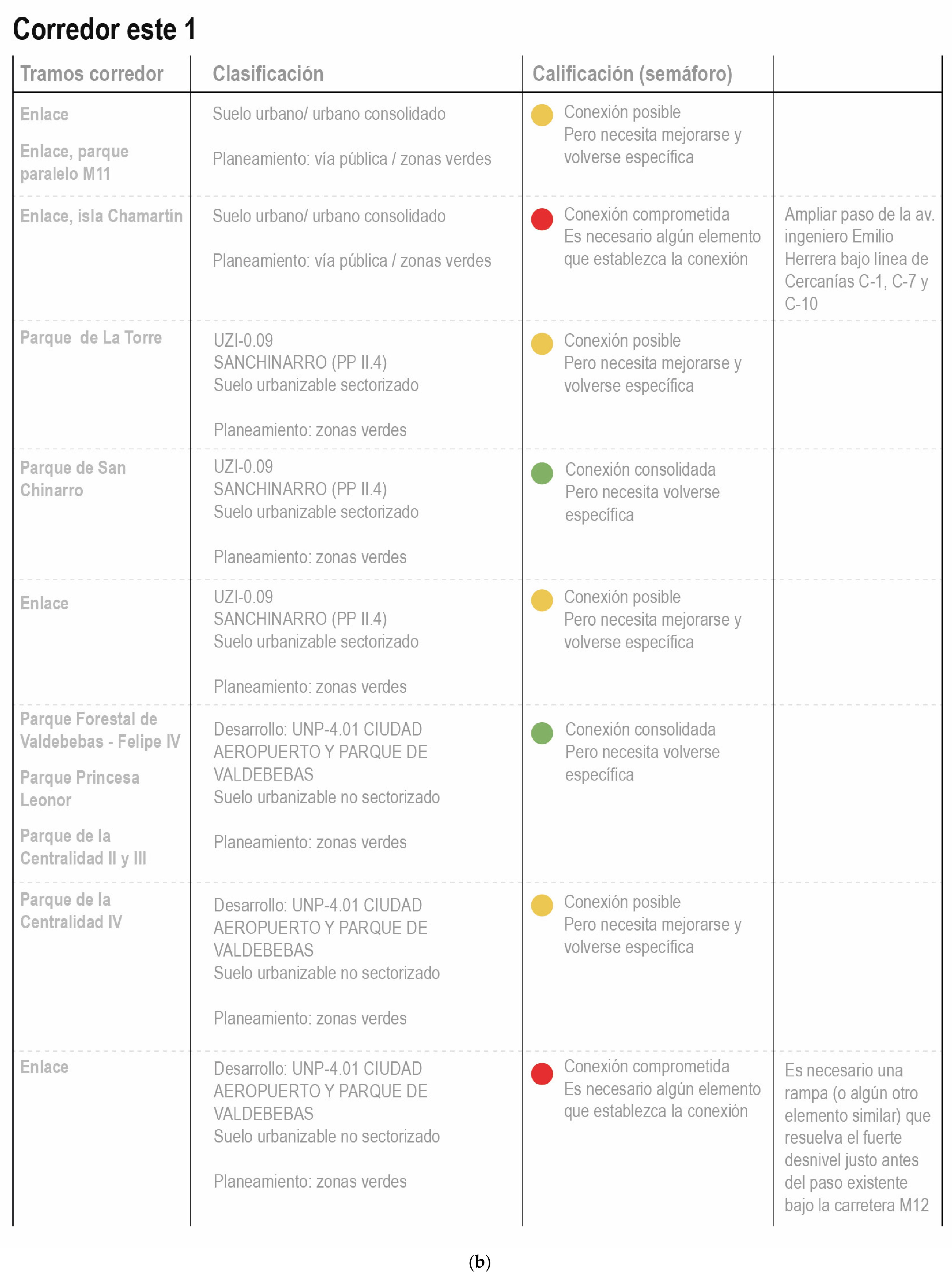
During this phase, a detailed cartographic reconstruction of each corridor is undertaken, and the factors hindering its continuity—previously illustrated on the maps—are evaluated and systematically organized into tables using a clear and intuitively recognizable color-coding scheme (red, yellow, green).
3.3.3. Third Evaluation: Structural Scale
In this analysis, the various components of the morphological puzzle are reassembled at the scale of the urban fabric and its territorial context using easily visualized diagrams. Their validity is subsequently cross-verified with accessibility data from different city areas, in coordination with other ongoing municipal initiatives. To evaluate the feasibility of the proposed socio-ecological corridors at the morphological level, a GIS methodology (using QGIS software and python programming) has been developed to assess accessibility and connectivity for both walking and cycling following the project’s introduction. A comparison was conducted to determine the improvement in accessibility achieved by the Corridors Project alone and when combined with the Bosque Metropolitano Project. The process described here concludes as a completed project, not as a final step in an initiative aimed at specific and material intervention in the city, but rather as a tool for justification and planning that facilitates the continuation of subsequent design phases. In this phase, the process begins by outlining its justification and objectives, identifying the potentials to be incorporated, and the challenges to be addressed in the following design stages.
4. Results
4.1. Results of the Analysis
The initial analytical approach, as outlined in the
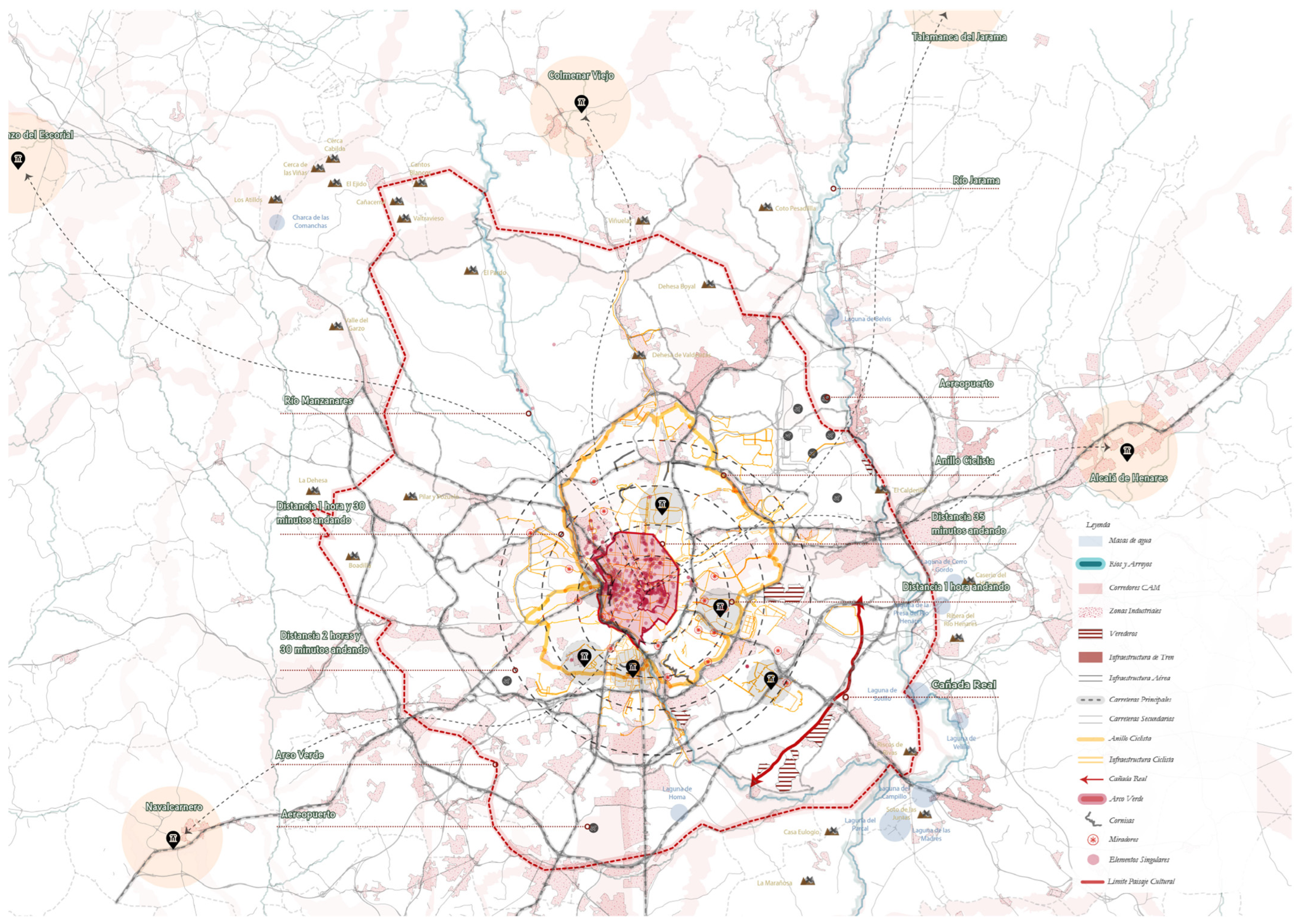
Section 3, focuses on the structural scale. This approach identifies a series of reference points both within the city of Madrid and in its peripheral areas. These designated points are represented on simplified diagrams of Madrid and its environs, which, through their visualization, enable a rapid comprehension of their significance as connecting or reference points.
4.1.1. Results of the First Analytical Approach: Structural Scale
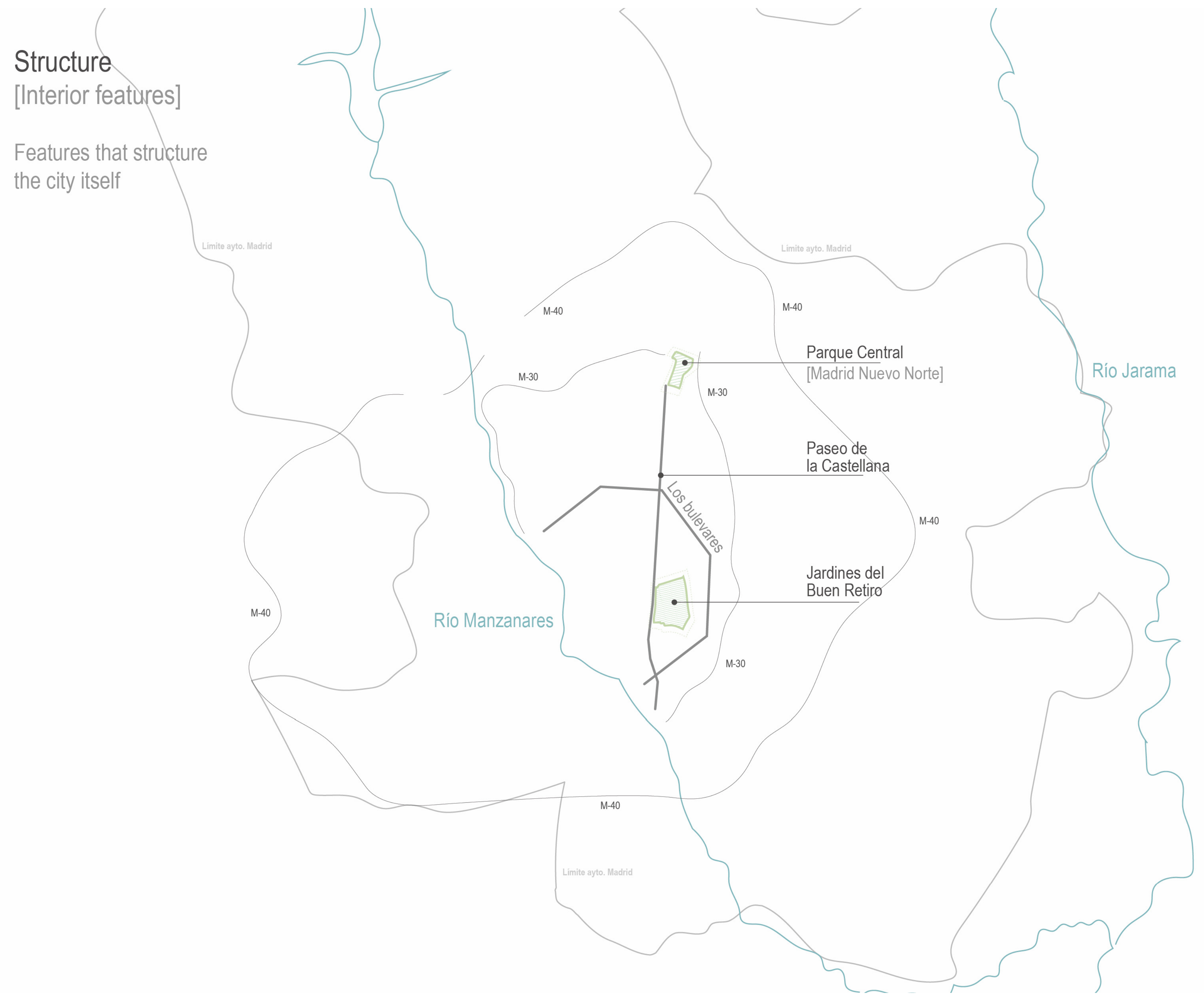
Structure. Interior elements (
Figure 4):
The interior elements have been identified based on their historical and functional significance. These elements define the area known as the central core of Madrid: the axis of the Paseo de la Castellana (and its southern extension through Recoletos, Prado, Atocha, and Delicias), the ring road enclosing the 19th-century bourgeois urban expansion (known as the Boulevards), El Retiro Park, and a feature yet to be realized but destined to become a central element of the city’s northern part: the Central Park of the new urban extension, currently under construction, known as Madrid Nuevo Norte. Also the River Manzanares is represented in the figure.
Figure 4.
Interior features of the city of Madrid structure (own elaboration).
Figure 4.
Interior features of the city of Madrid structure (own elaboration).
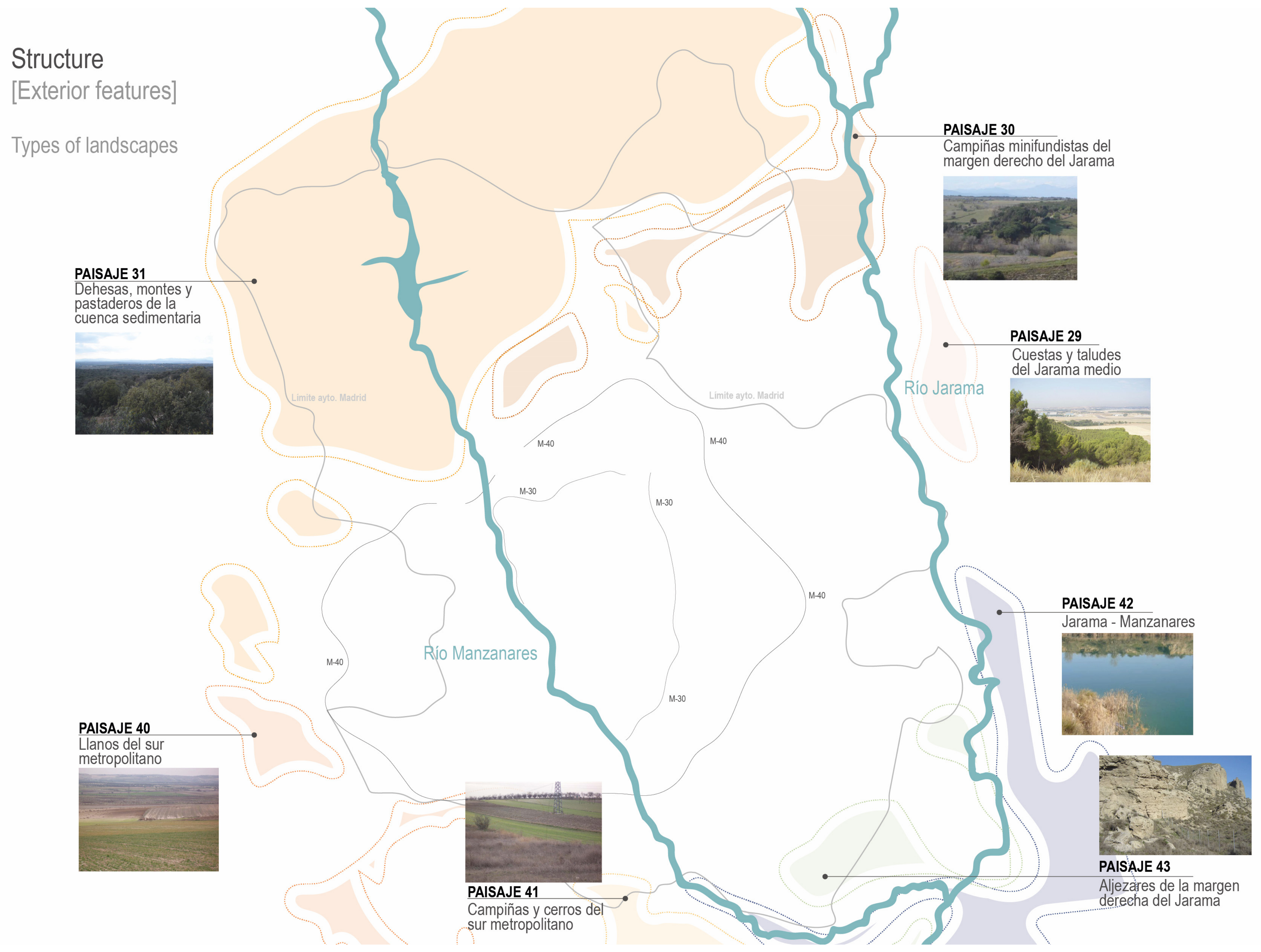
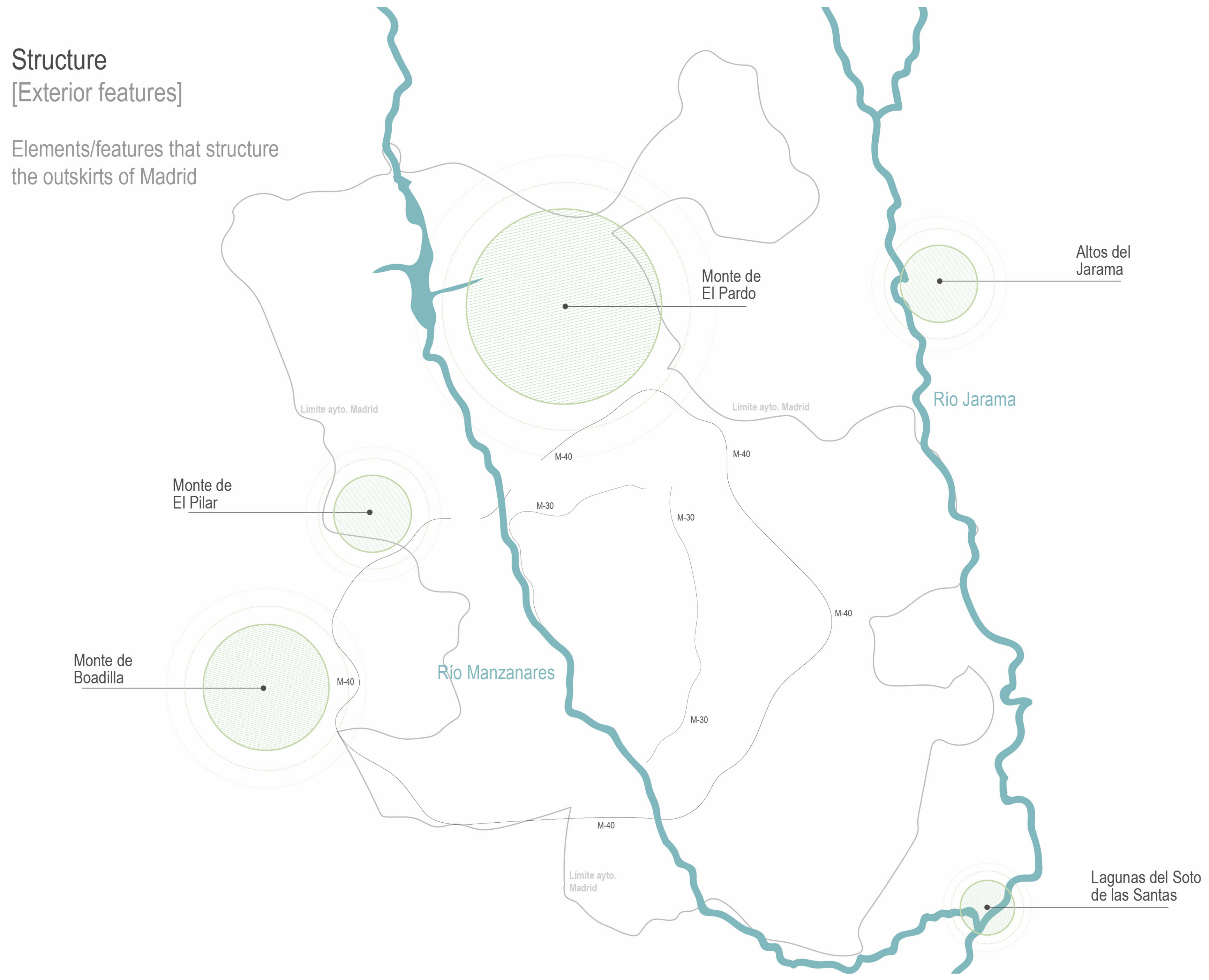
Structure. External elements (
Figure 5):
Externally, the principal features of the Madrid region are the river corridors formed by the Manzanares basin to the west and the Jarama basin to the east, which serve as fundamental structures forming the region’s backbone. The post-Spanish Civil War reconstruction plan for Madrid (General Plan for the Development of Madrid, 1946) was influenced by German urban planning principles, utilizing green spaces as the city’s backbone [
31]. This plan drew upon natural structures such as river basins, drainage lines, and other geographical features, identifying these two rivers as essential reference points. These river corridors also function as organic and practical routes in and out of the city. Another significant outdoor feature identified in this initial methodological approach is a series of geographical features located beyond the city’s administrative boundary, selected for their topographical significance, ecological or representative value, or historical and heritage value. Starting from the north and proceeding anticlockwise, these include (N) the
Senda Real and
Monte del Pardo; (W)
Monte del Pilar and
Monte de Boadilla; (S) the southern metropolitan plains; (E) the
Lagunas del Soto de las Juntas at the confluence of the River
Manzanares and the River
Jarama, and the
Altos del Jarama (High hills of the Jarama River).
Figure 5.
Exterior features (sites) of the city of Madrid structure (own elaboration).
Figure 5.
Exterior features (sites) of the city of Madrid structure (own elaboration).
In addition to emphasizing significant geographical and historical landmarks, the landscape units within the city boundaries are incorporated, referring to the classification established by the ‘Landscape Types of the Community of Madrid’ map from the
Landscape Assessment Study of the Community of Madrid: from protection to territorial management [
45]. In total, seven landscape types are located in proximity to the municipality (
Figure 6), as follows: (i) Landscape Unit (or Paisaje) 29: Slopes and embankments of the middle
Jarama; (ii) Landscape Unit30: Small-holding farmlands on the right bank of the
Jarama; (iii) Landscape Unit 31: Pastures, woodlands, and grazing lands of the sedimentary basin; (iv) Landscape Unit 40: Plains of the southern metropolitan area; (v) Landscape Unit 41: Farmlands and hills of the southern metropolitan area; (vi) Landscape Unit 42:
Jarama-
Manzanares, and Landscape (vii) Unit 43:
Aljezares on the right bank of the
Jarama (
Figure 6).
Figure 6.
Exterior features (landscape types) of the city of Madrid structure (own elaboration).
Figure 6.
Exterior features (landscape types) of the city of Madrid structure (own elaboration).
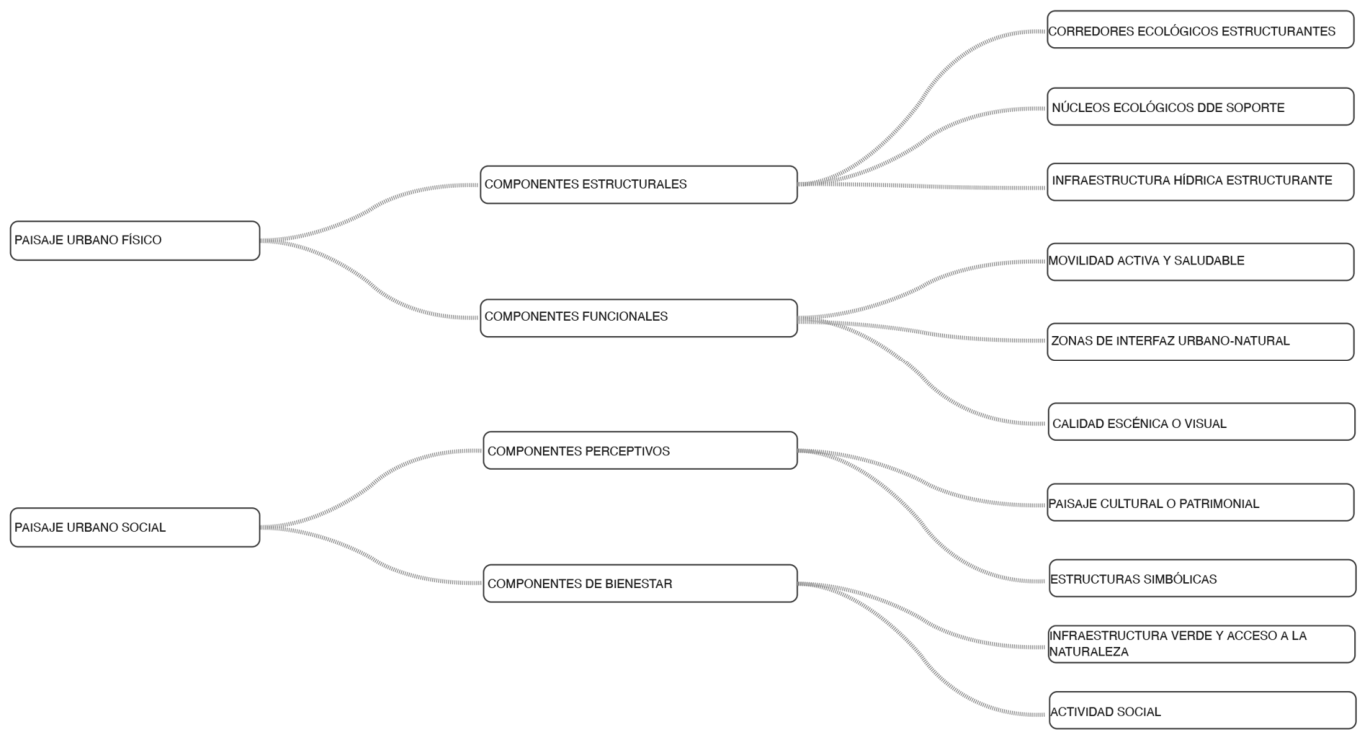
These elements of the urban landscape are ultimately organized and analysed from a dual perspective: the physical urban landscape and the social urban landscape. Both dimensions facilitate an integrated understanding of the urban environment, recognizing not only its ecological and functional structure but also its symbolic, cultural, and social well-being dimensions. This conceptual framework (
Figure 7) helps in the identification and classification of key elements for a more inclusive, resilient, and collective well-being-oriented approach to landscape planning.
The physical urban landscape can be delineated into two primary categories, as follows:
structural components, which establish the ecological foundation of the system (including corridors, hubs, and infrastructure);
functional components, which pertain to urban uses associated with mobility, interactions with the natural environment, and agricultural land.
Figure 7.
Landscape Conceptual Framework (own elaboration).
Figure 7.
Landscape Conceptual Framework (own elaboration).
The ecological analysis (
Figure 8) led to several conclusions, listed as follows:
Potential for connecting and regenerating landscapes of high ecological value;
Fragmentation of green infrastructure. Numerous isolated green patches are visible, with no continuity between them (particularly in the southern and eastern areas). There is a lack of a secondary green network connecting urban parks with the main corridors;
Territorial disconnection in the south and south-east. Many natural areas in the south are not well connected to the urban centre. Furthermore, the Eastern Corridor appears more fragile and fragmented than the Western Corridor;
The metropolitan area appears to be surrounded by unconnected green zones, which are perceived as isolated patches rather than part of an integrated territorial system.
There is no hierarchy of secondary corridors connecting the territory transversally (north–south, centre–periphery);
The social urban landscape, on the other hand, includes the following features:
Perceptual components, which relate to the identity, heritage value and symbolic dimension of the landscape;
Well-being components, centred on access to nature, the social use of space and urban health;
Figure 8.
Madrid region physical urban landscape components (own elaboration).
Figure 8.
Madrid region physical urban landscape components (own elaboration).
The social analysis (
Figure 9) yielded several conclusions, as follows:
There is potential to rebalance the southern region by establishing socio-cultural corridors that connect various areas;
The radial model necessitates the promotion of polycentrism to facilitate more diverse inter-urban relationships;
Multi-scale planning is required, as current infrastructure fails to integrate with existing territorial systems, leading to disruptions in the ecological and social fabric;
The associative and cultural fabric holds potential to enhance the urban landscape.
Figure 9.
Madrid region social urban landscape components (own elaboration).
Figure 9.
Madrid region social urban landscape components (own elaboration).
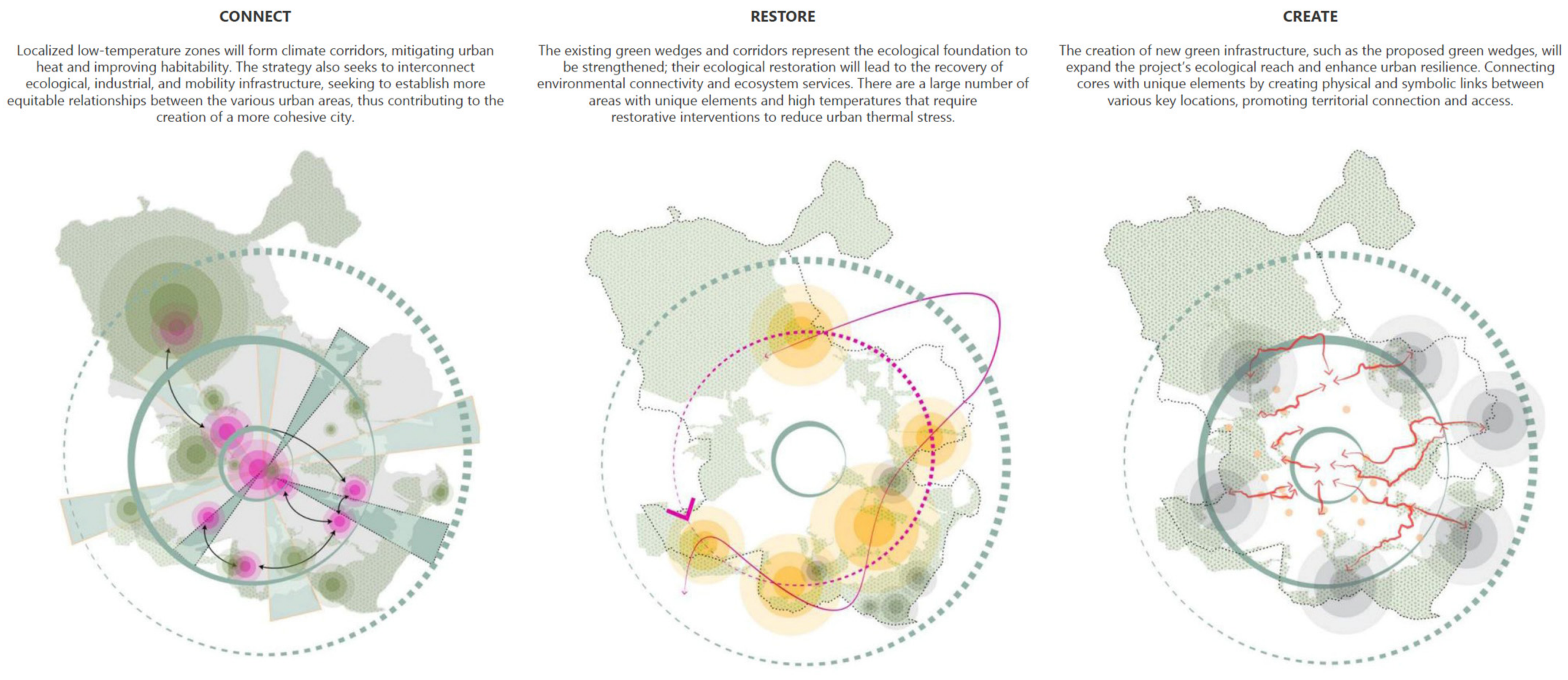
Following an analysis of these elements and a comprehensive assessment of the territory’s structural scale through its components, three broad categories of strategies were formulated. These strategies incorporate the vulnerabilities and potential of the previously analysed urban landscape and serve as guiding principles. The strategic axes for restoring the biophysical and social matrix of Madrid and its surrounding areas are Connect, Restore, and Create (
Figure 10).
Figure 10.
Strategies diagrams (own elaboration).
Figure 10.
Strategies diagrams (own elaboration).
Connect
The formation of localized low-temperature zones will create climate corridors and mitigate urban heat and enhance habitability. This strategy also aims to integrate ecological, industrial, and mobility infrastructure, with the objective of establishing more equitable relationships among various urban areas, thus contributing to the development of a more cohesive city.
Restore
The existing green wedges and corridors constitute the ecological foundation that requires reinforcement. Their ecological restoration will facilitate the recovery of environmental connectivity and ecosystem services. Numerous areas characterized by unique elements and elevated temperatures need restorative interventions to mitigate urban thermal stress.
Create
The development of new green infrastructure, such as the proposed green wedges, will extend the project’s ecological impact and bolster urban resilience. By establishing both physical and symbolic connections between various key locations, these initiatives aim to enhance territorial connectivity and accessibility. Ultimately, the objective is to restore the natural structures of the territory and integrate them into the urban metabolism of cities, thereby fostering urban environments that are more resilient to climate change.
4.1.2. Results of the Second Analytical Approach: Morphological Scale
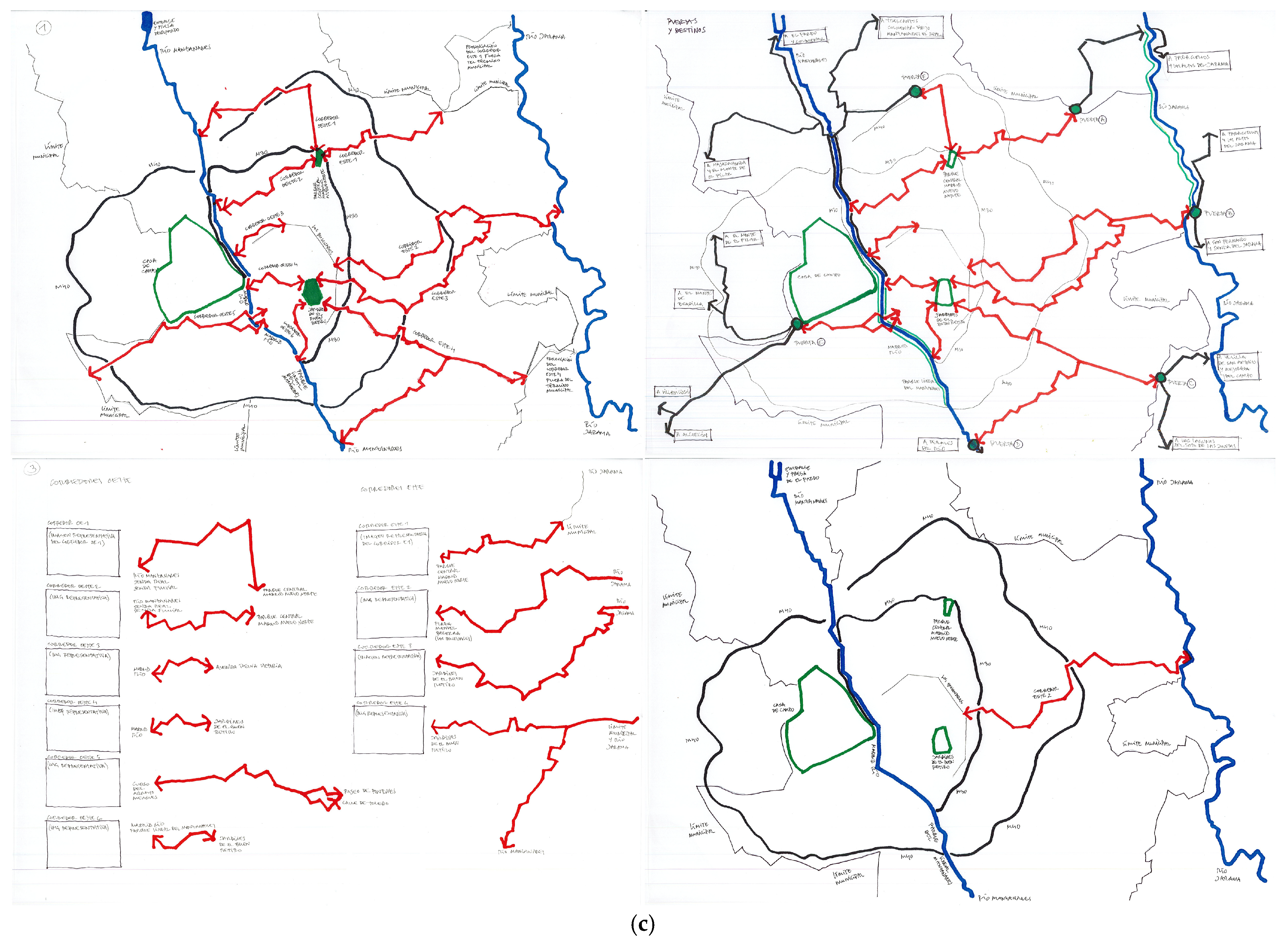
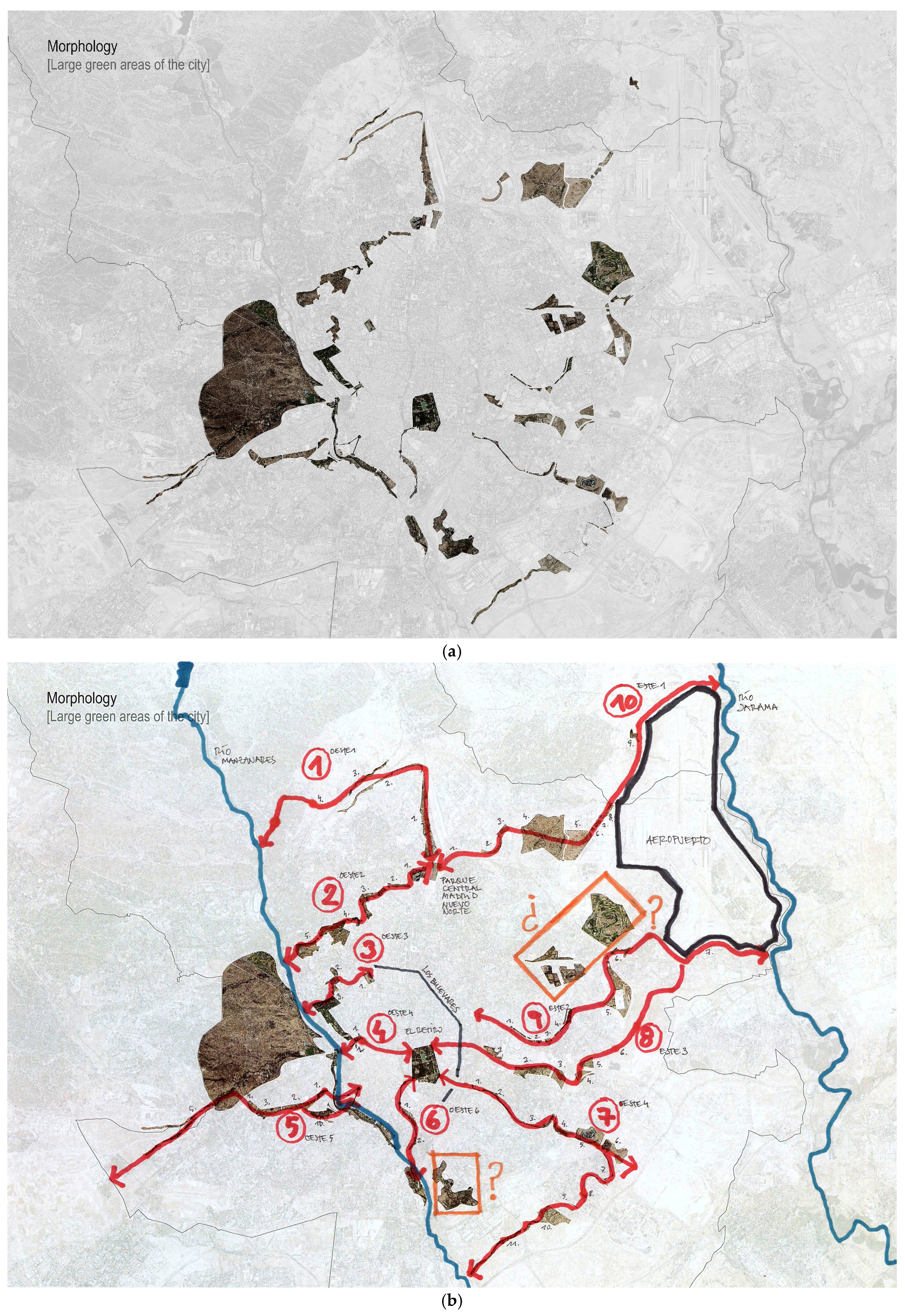
In an alternative approach, on a morphological scale, the city’s extensive green spaces—specifically, parks—are highlighted to evaluate their capacity to function as wedges, or connecting elements, between the primary central axes (
Castellana,
Retiro, the Boulevards,
Madrid Nuevo Norte Central Park) and the river corridors (
Manzanares and
Jarama). These urban green areas are superimposed onto a simplified map of the municipal region to facilitate rapid visualization (
Figure 11). Despite the deliberate simplification, this scheme incorporates an aerial photograph of the municipality as its cartographic background. This inclusion permits the representation of certain features that become pertinent at this scale, such as tree density, the configuration of promenades and other pathways, and the presence of specific public amenities.
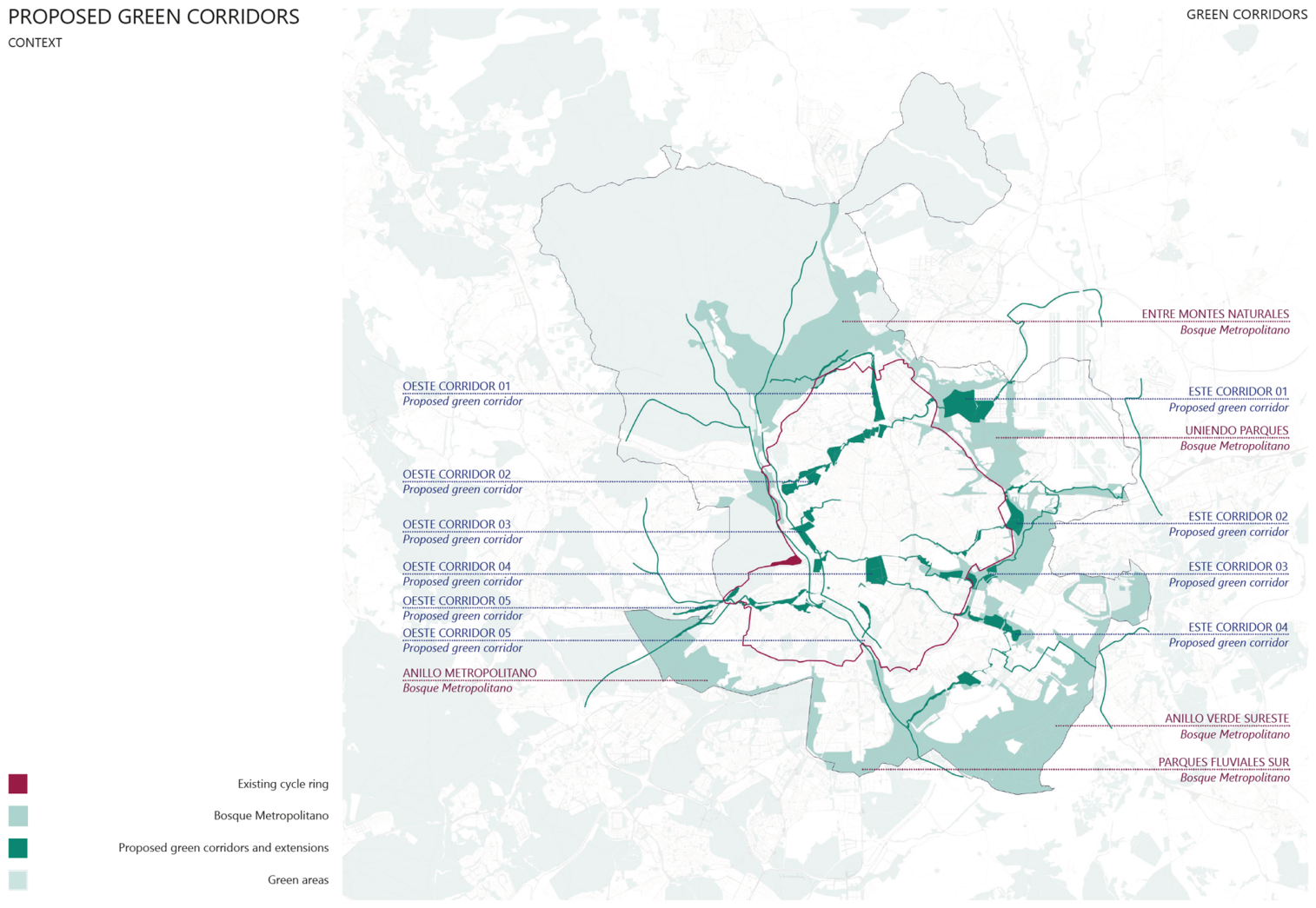
This visualization indicates specific spatial continuities that allow for the proposal of ten routes to connect the city of Madrid, from its central areas, with the valuable surrounding landscapes. This initiative seeks to address the challenge, as outlined in the theoretical framework, posed by the relentless expansion of large cities and the aspiration to maintain a connection with nature and the surrounding countryside. The ten proposed routes link numerous large green areas with others of intermediate size or with sites designated for planned urban development through various urban links such as streets and squares. Of the ten proposed routes, six are situated to the west, while only four are to the east, where spatial continuity is hindered by the vast and impassable expanse of the airport, which serves as a barrier.
Figure 11.
(a) Large green areas of the city (own elaboration). (b). Large green areas and sketch of ten proposed corridors (own elaboration). (c) Sketches of proposed corridors (own elaboration).
Figure 11.
(a) Large green areas of the city (own elaboration). (b). Large green areas and sketch of ten proposed corridors (own elaboration). (c) Sketches of proposed corridors (own elaboration).
It is important to remember that the project’s underlying premise is to connect the city with its outer perimeter, which is why the proposed corridors run in a radial direction. There is another municipal initiative, which spatially complements this one, that encircles the city along its outer edge; this initiative is currently underway and is known as
Bosque Metropolitano. On the other hand, the radial wedges proposed in this study are not an entirely new idea. Elements of this were already present in the 1946 General Urban Development Plan for Madrid, mentioned earlier in this article. The 1985 General Urban Development Plan for Madrid was the first by the then-newly established Spanish democracy and it revived the ambition of the 1946 plan to create a genuine interconnected green network, with the aim of providing continuity through large-scale green spaces on an urban scale. To this end, a number of parks were built at the time, such as the
Cuña Verde de Latina and the
Cuña Verde de O’Donnell (‘Cuña’, in Spanish, means ‘wedge’), but over time, the lack of continuity in this initiative on the part of the municipal authorities prevented the construction of a truly comprehensive network. This research revisits the concept from the 1946 and 1985 plans by proposing ten corridors. These ten corridors result from connecting the city’s internal points (the
Paseo de la Castellana axis, the boulevards and
El Retiro Park, as well as the future Central Park of
Madrid Nuevo Norte) (
Figure 4) with the outer elements (the river corridors of the Manzanares and Jarama rivers, the most significant ecological and topographical landmarks, and the various landscapes surrounding the city) (
Figure 5 and
Figure 6) that are highlighted in the results at the structural scale, and all the major existing green spaces in the city of Madrid, relevant at the morphological scale, that have been identified (
Figure 11a–c). The aim of highlighting the city’s existing large green spaces is also to avoid treating the transformation of the established city as if it were a blank slate—something that is both impossible and undesirable in a city like Madrid. These highlighted spaces are, above all, city parks, some of which already form part of a coherent network, whilst others currently stand isolated within certain neighbourhoods. Given that we are working in the heart of a fully developed city, the aim of this research has always been to intervene in the existing fabric, avoiding the creation of large-scale elements from scratch, which we consider unfeasible or implausible. For this reason, it is essential to recognise the existing elements, some of which were originally designed to form a radial structure.
The existing elements, linked simply by their physical proximity and topographical feasibility, give rise to the ten proposed corridors. Of all the large parks, only two sets have been ruled out. The group comprising the Piovera, Juan Pablo II, Quinta de los Molinos, Torre Arias and Juan Carlos I parks has been ruled out because its continuity towards the River Jarama —that is, its connection with the area outside the city— is blocked by the massive airport complex. The other major area ruled out is the Parque Forestal de Entrevías, due to its complete isolation from other green spaces with which it would need to connect in order to create a truly functional network. In Spanish, the very name of this park, Entrevías (‘in-between-the-railway-tracks’) refers to its isolated location amidst the vast network of railway infrastructure in southern Madrid. Its elevated topographical position (+628 m) in a location very close to the Manzanares basin (+550 m) also contributes to its isolation and makes it impossible to link it with other green spaces in southern Madrid.
4.1.3. Results of the Third Analytical Approach: Perceptual Scale
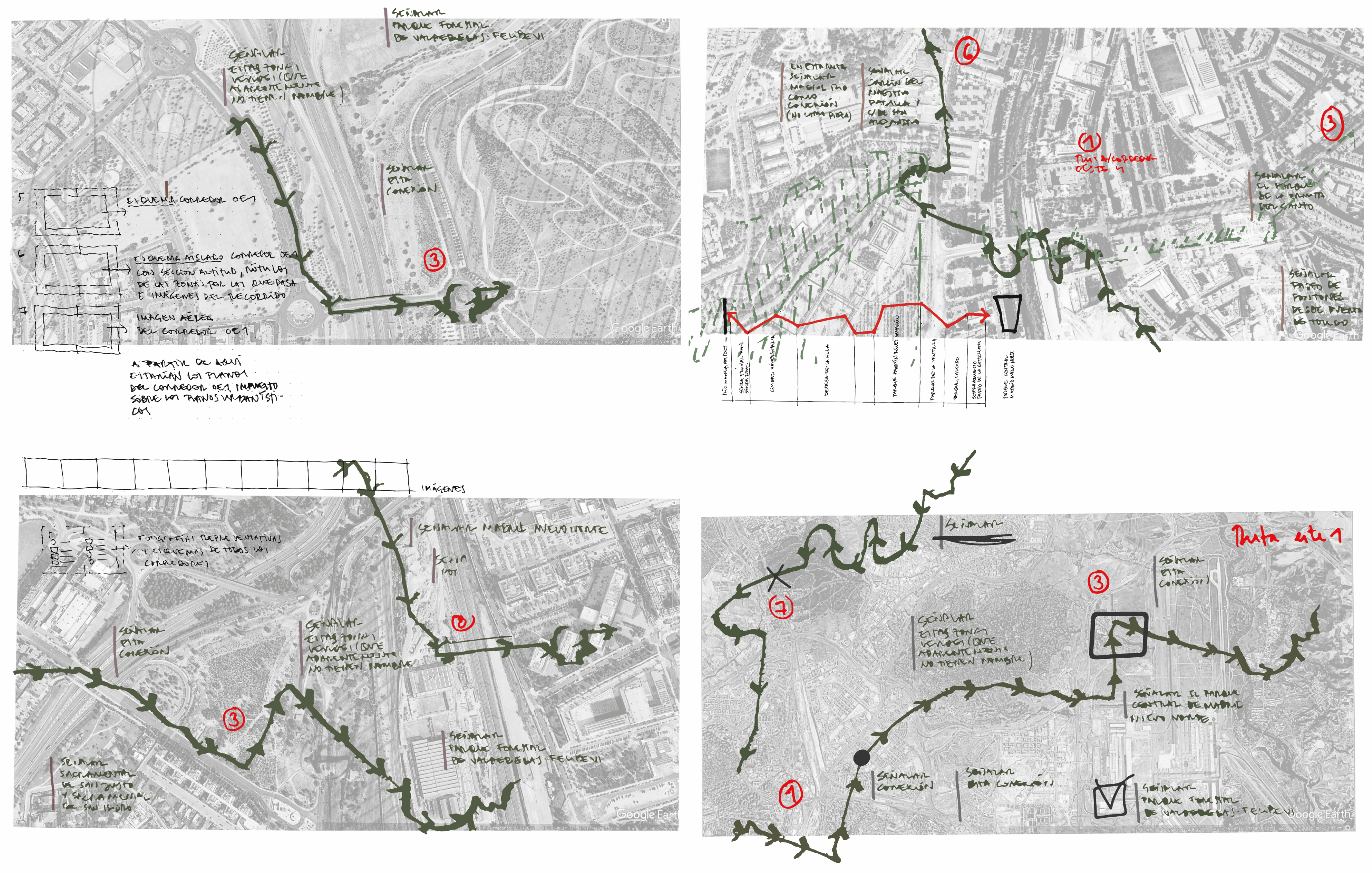
Data collected in the field were systematically plotted on-site onto guide and support maps, which are utilized during the traversal of the routes (
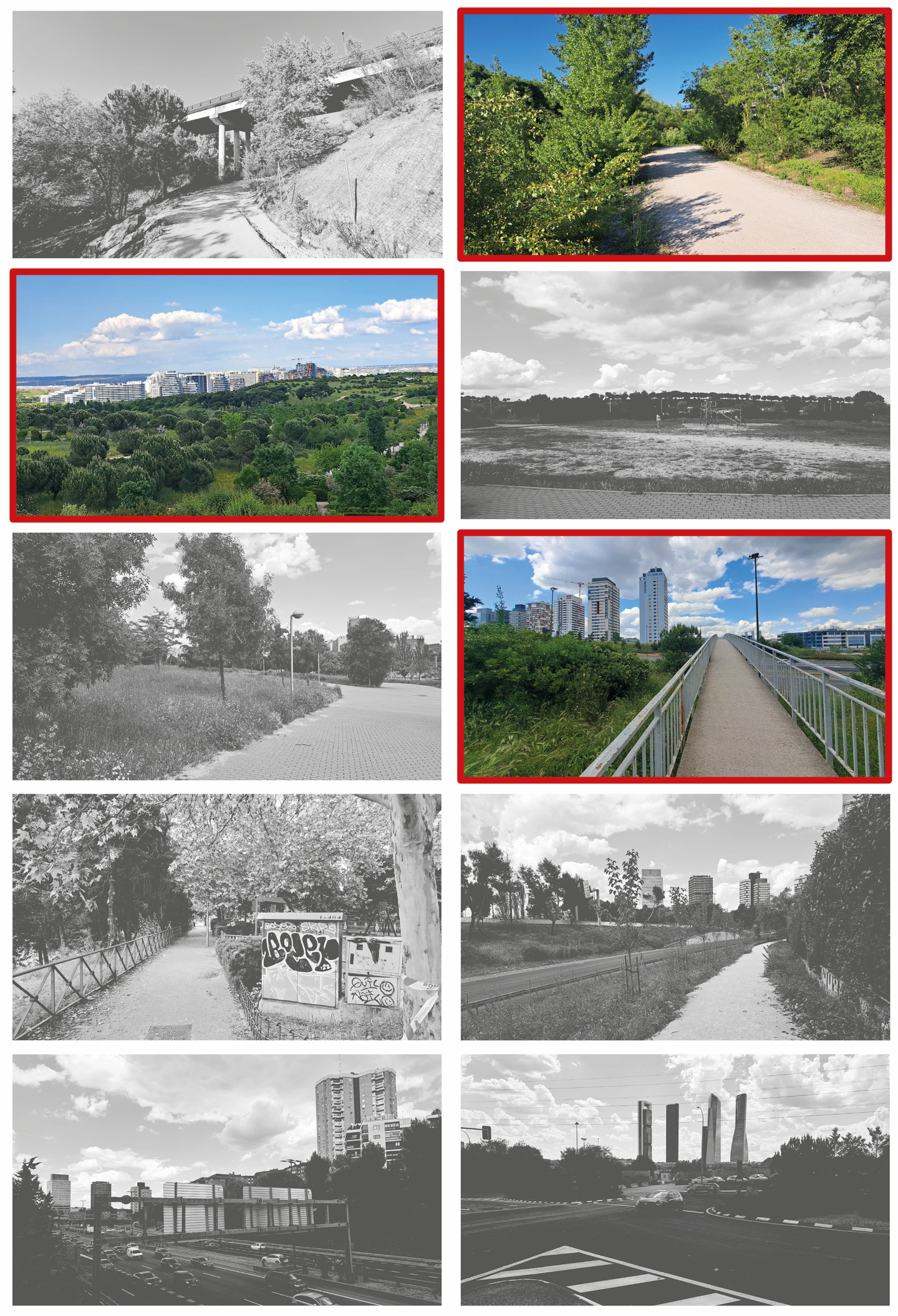
Figure 12). All notable elements observed are documented and emphasized and can subsequently be classified into distinct categories during the evaluation phase. Natural and heritage elements, vantage points, significant urban settings, and amenities are recorded as the proposed routes are followed.
These notes were systematically documented in images, creating photographic collections that were subjected to a selection process based on the categories of prominent elements (
Figure 13).
Figure 13.
Photographic collection of Corridor EAST 1 featuring selected images (own elaboration).
Figure 13.
Photographic collection of Corridor EAST 1 featuring selected images (own elaboration).
Once the ten corridors had been established, it was decided that each would be traversed in a single day, so that each corridor could be assessed as a coherent unit passing through different urban areas. It was also decided that all routes would always be covered by the same team member, in order to keep the perceptual subjectivity inherent in this methodology within consistent parameters across all observations. All the routes were covered over a period of four months in 2025, at intervals of one or two weeks.
The notes taken on site and the photographs of the location were recorded with the intention of being categorized according to the four parameters already mentioned, as explained in more detail in
Section 4.3.1: (1) Scenic; (2) Heritage; (3) Ecological; (4) Panoramic. Each route concluded with an initial set of photographs and notes on features belonging to one of these four categories, and a further set of somewhat more random photographs and notes taken approximately every 500 m in various directions (north–south–east–west), which were subsequently used to identify whether any of the values intended for recording may have gone unnoticed during the route. This scale also records indicators that highlight the difficulties currently faced by the corridors in ensuring their continuity; however, their value within the context of each corridor belongs to the morphological scale, as set out in
Section 4.3.2.
4.2. Results of the Synthesis
As outlined in the
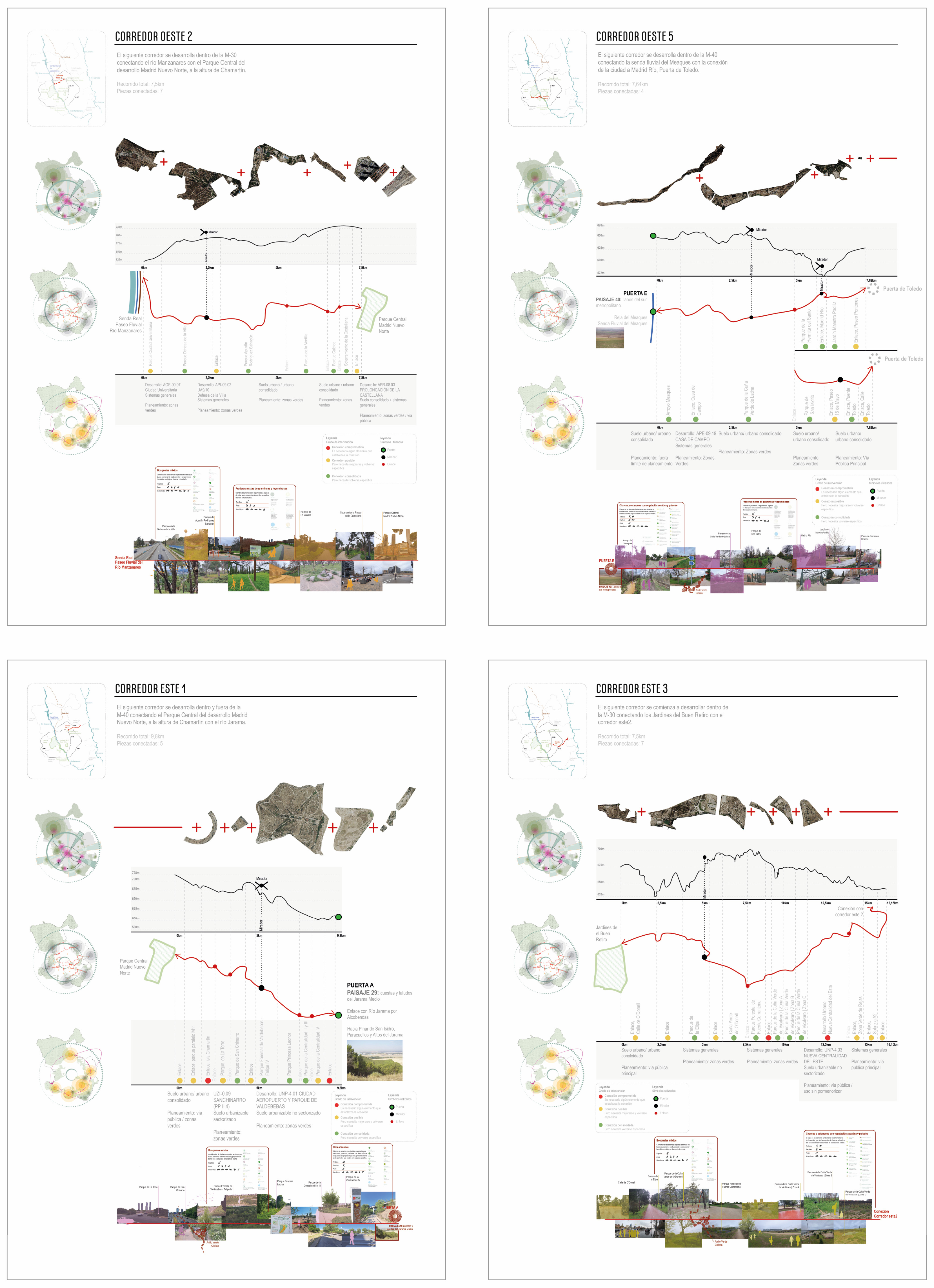
Section 3, the synthesis involves the creation of a series of fact sheets, each corresponding to one of the ten proposed corridors. Each sheet reconstructs the comprehensive image of its respective route, thereby facilitating a critical perspective based on details selected during the analytical phase, which aids in visualizing each corridor. This tool is designed to be open-ended, allowing for the integration of results from subsequent phases, including perceptual, morphological, and structural analyses. The accompanying image (
Figure 14) presents the fact sheet for the western corridor 2 (Corredor Oeste 2), while the subsequent image (
Figure 15) displays a set of fact sheets for four corridors. The uniform structure of these sheets enables collective viewing and comparison of their developments, ultimately contributing to a structural-scale view of the city as a whole. In the western corridor 2 (
Figure 14), the constituent elements are visible:
Madrid Nuevo Norte Central Park (to be developed), the
Castellana underpass (under construction),
Caleido Park,
La Ventilla Park,
Agustín Rodríguez Sahagún Park, Dehesa de la Villa Park, and Ciudad Universitaria. Below is the topographical profile of the route, which ranges in altitude from +625 m to +735 m, featuring the viewpoint known as
La Dehesa de la Villa viewpoint or
La Loma (elevation +712 m), offering views over the
Manzanares river valley and the
Sierra de Guadarrama. The route map indicates its length (approximately 7.5 km) and the urban classification of each section. At the bottom of the page are the morphological level results (the color-coded assessment explained later) and, further down, at the perceptual level, a collage highlighting the imposing backdrop of the Four Towers complex, the heritage landmarks of certain elements of the city’s hydraulic history, and details of some rewilding initiatives promoted by the City Council.
4.3. Results of the Evaluation
4.3.1. Results of the First Evaluation: Perceptual Scale
The data collected on-site, supplemented by supporting maps, facilitated the development of tables (
Table 1,
Table 2 and
Table 3) organized by routes, which have now been conceptualized as proposed corridors. These tables encompass the name of each section within the designated route, the prevailing planning regulations in each area, and the identification of values present in each section of the corridors. These values are categorized as scenic (valued for their capacity to create a distinctive atmosphere), heritage-related (linked to the city’s historical context), ecological (due to the presence of wild vegetation), or panoramic (with outstanding views). Scenic values are evident in areas where the urban or architectural fabric exhibits a notable and characteristic presence, such as the historic center or the Four Towers complex in the northern section of the
Paseo de la Castellana. Heritage value may be associated with well-known monuments like the
Toledo Bridge or with less conspicuous but equally significant sites, such as the entire hydraulic infrastructure—now disused—along the corridor from
La Ventilla Park to
La Dehesa de la Villa. Ecological values highlight areas where fauna and flora still prevail over human presence, generally on the outskirts, or spaces within the city where the City Council has initiated rewilding initiatives. As previously mentioned, panoramic values are directly linked to vantage points offering sweeping views, whether towards the city’s interior or exterior, typically associated with prominent topographical positions. Although there are various panoramic viewpoints in the city, Madrid is not abundant with them, making it challenging to find vantage points to take in the city or its surroundings. Therefore, identifying these places and incorporating them into regular routes is important. While these tables should not be perceived as dictating the direction of movement along the corridors, since they can function both from the city towards its outskirts and vice versa, they designate a point within the city as the starting point and a location on the outskirts as the destination.
4.3.2. Results of the Second Evaluation: Morphological Scale
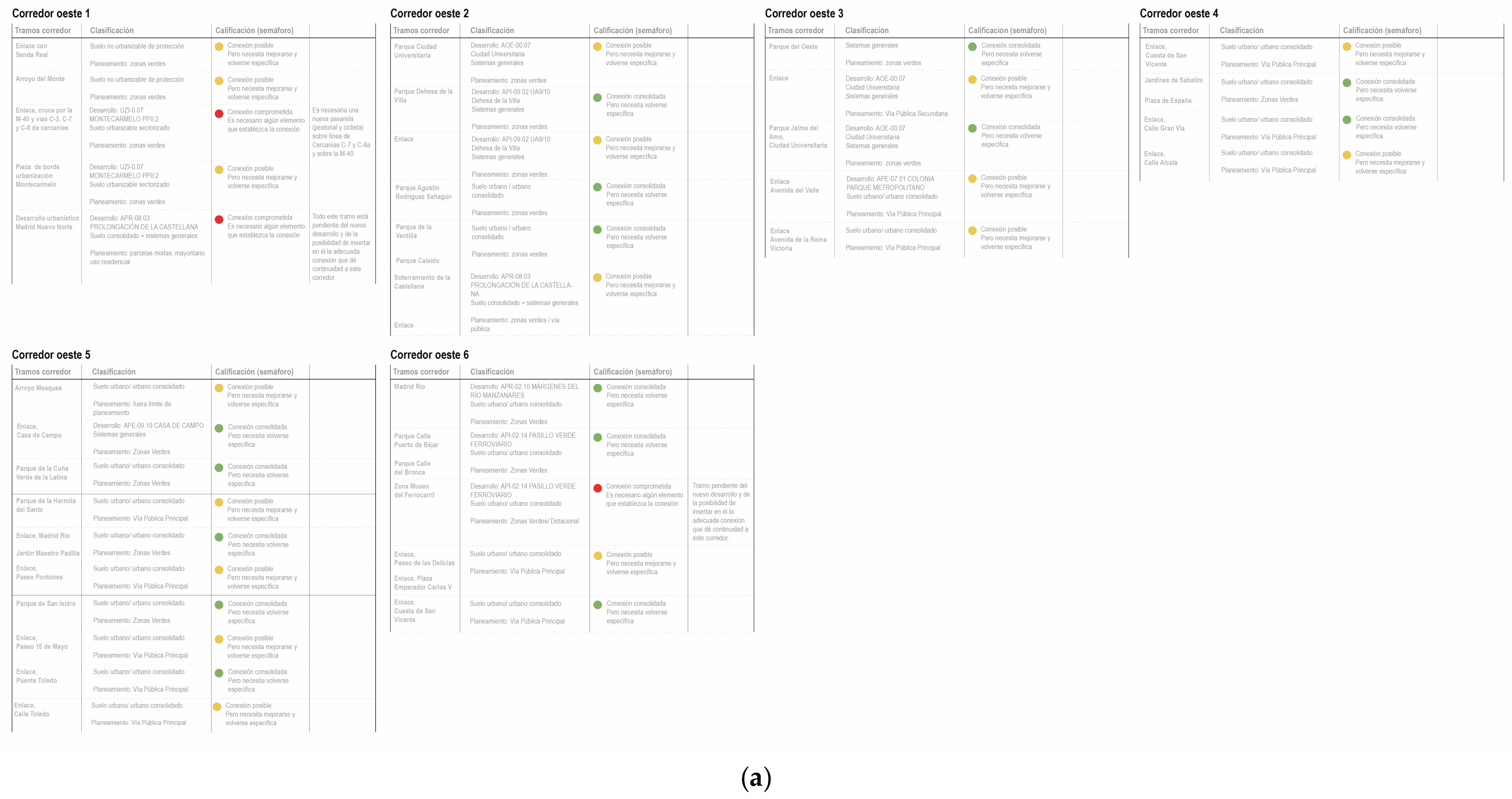
The results of the second evaluation pertain to the morphological scale. On this scale (
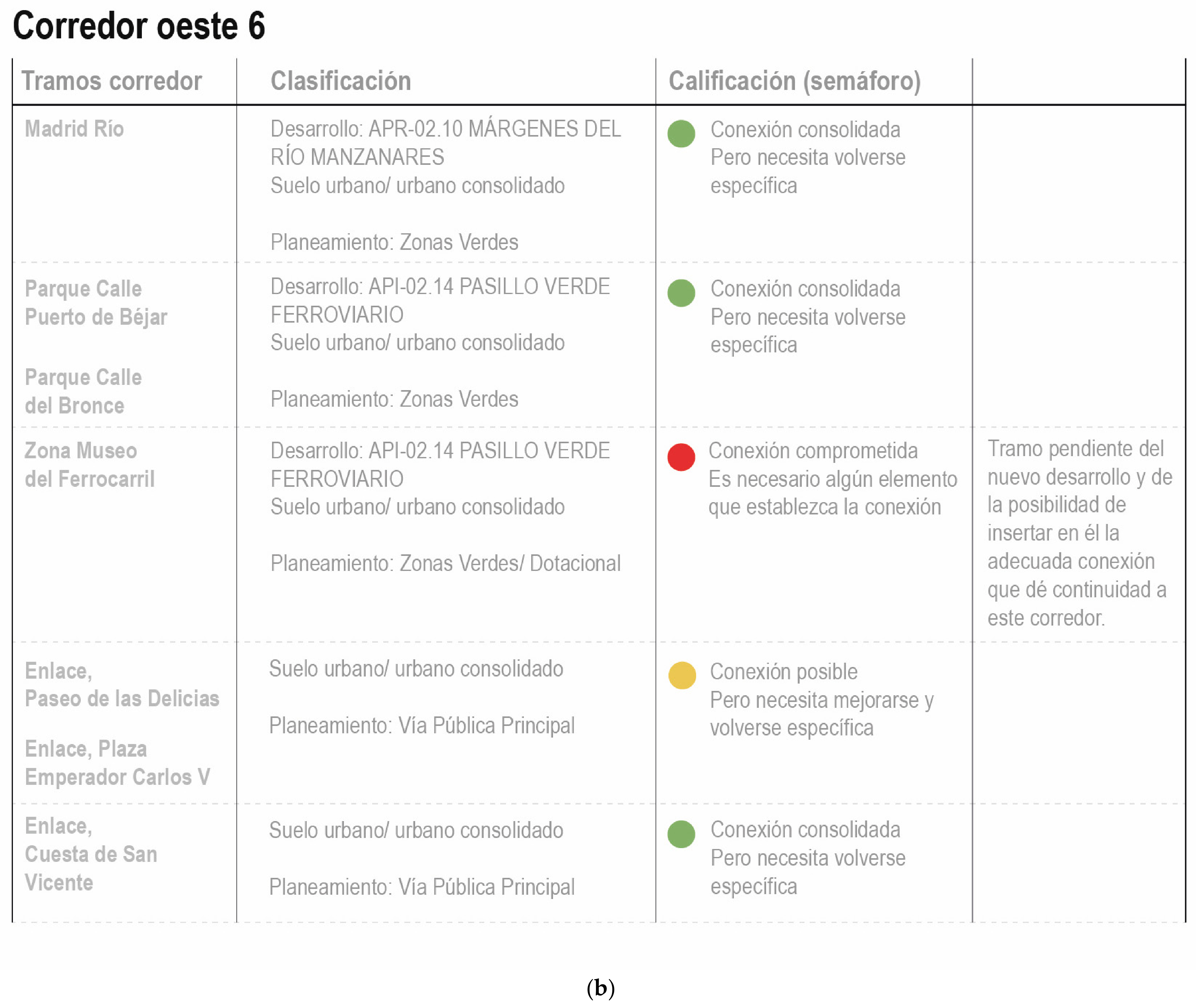
Figure 16a,b and
Figure 17a,b), the evaluation assesses each corridor’s ability to establish effective physical continuity, identifying necessary interventions where such continuity is currently lacking. Each section of the interconnected elements forming each corridor is assigned a value represented by a color. The three colors are used as indicators to highlight the different types of conditions encountered along each route. These conditions may facilitate, hinder or prevent continued travel, respectively. The three indicators—green, yellow, red—answer a simple question: is it possible to pass through here? The answer could only be one of these three: with absolute ease (green); with some difficulty (yellow); or it is practically impossible (red). Although the observations needed to answer this question were made during on-site surveys, their consideration is fundamental at a morphological scale, as it is in the overall view of each corridor that evaluations of its continuity make sense.
Green denotes areas that, although well-established as urban elements, could benefit from interventions to integrate them into a broader whole as a corridor linking the city with its surroundings. Yellow is assigned to areas where continuity is physically feasible but requires enhancement, and where, as in the previous assessment, interventions could be developed to help citizens recognize them as part of a larger whole. The interventions here should not only address functional issues but also aim to create atmospheres that offer the most pleasant experience for future users. The areas or elements assessed in this manner typically include streets, junctions, and other fragments of a predominantly hard urban landscape (hardscape) that appear among the large green spaces forming the fundamental framework upon which the corridors have been conceived. These elements are crucial connecting pieces for ensuring continuity between large urban parks because, in many cases, they enable the transformation into a continuous element that transcends this morphological scale to become a structural whole for the benefit of the city as a whole, which would otherwise be an archipelago of isolated fragments.
The red color signifies a connection that is currently either unattainable or exceedingly difficult to establish, necessitating the construction of specific components or even an entire urban development. These components may encompass substantial infrastructure, such as pedestrian footbridges over motorways or underpasses beneath railway lines. This evaluation also considers major urban developments already in progress, such as the city’s northward expansion (Madrid Nuevo Norte). As these areas remain under development, they present navigational challenges. Nevertheless, while their eventual completion is anticipated to ensure the desired continuity, the proposed corridor’s route will also require a redesign of the ongoing urban development at some juncture. This redesign aims to cultivate an environment that provides the optimal experience for citizens and ensures its integration as a recognizable component of a larger whole.
Figure 16.
(a) Morphological evaluation for West corridors (own elaboration). (b) Morphological evaluation for West corridor 6 (Corredor oeste 6), enlarged (own elaboration).
Figure 16.
(a) Morphological evaluation for West corridors (own elaboration). (b) Morphological evaluation for West corridor 6 (Corredor oeste 6), enlarged (own elaboration).
Figure 17.
(a) Morphological evaluation for East corridors (own elaboration). (b) Morphological evaluation for East corridor 1 (Corredor este 1), enlarged (own elaboration).
Figure 17.
(a) Morphological evaluation for East corridors (own elaboration). (b) Morphological evaluation for East corridor 1 (Corredor este 1), enlarged (own elaboration).
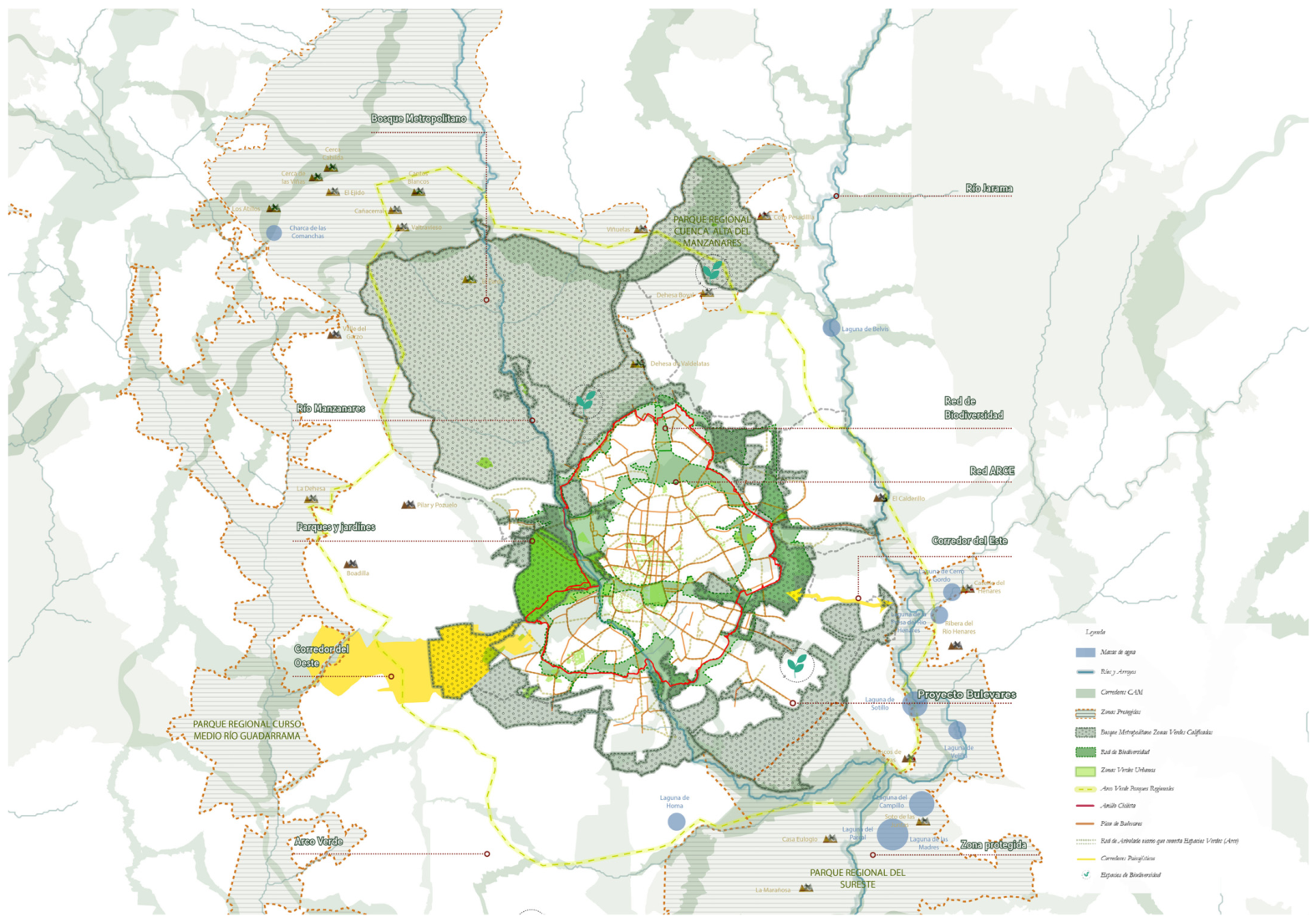
To evaluate the accessibility and distribution of green spaces in relation to the local population, we conducted an analysis of the proposed socio-ecological corridors in conjunction with the planned green areas within the
Bosque Metropolitano (Metropolitan Green Belt) (
Figure 18). For this analysis, we developed a bespoke methodology utilizing Geographic Information Systems (using QGIS software) and programming (python). The
Bosque Metropolitano is an upcoming green infrastructure initiative that will extend over 75 km in Madrid, with the objectives of rebalancing the city, reducing CO
2 emissions, mitigating climate change, restoring degraded ecological and landscape areas, and enhancing pedestrian and bicycle routes, thereby promoting public health. This forest belt is designed to encircle Madrid, incorporating green areas designated by urban planning, both completed and pending, to establish a green corridor within the municipality, running proximate to the municipal boundary and aiming for optimal ecological and spatial continuity. The proposed green corridors extend this project inward toward the city center. Our data analysis includes a comparative study of the differential impacts between these two projects.
Figure 18.
Map of the areas to be studied: Corridors and the Metropolitan Forest (own elaboration).
Figure 18.
Map of the areas to be studied: Corridors and the Metropolitan Forest (own elaboration).
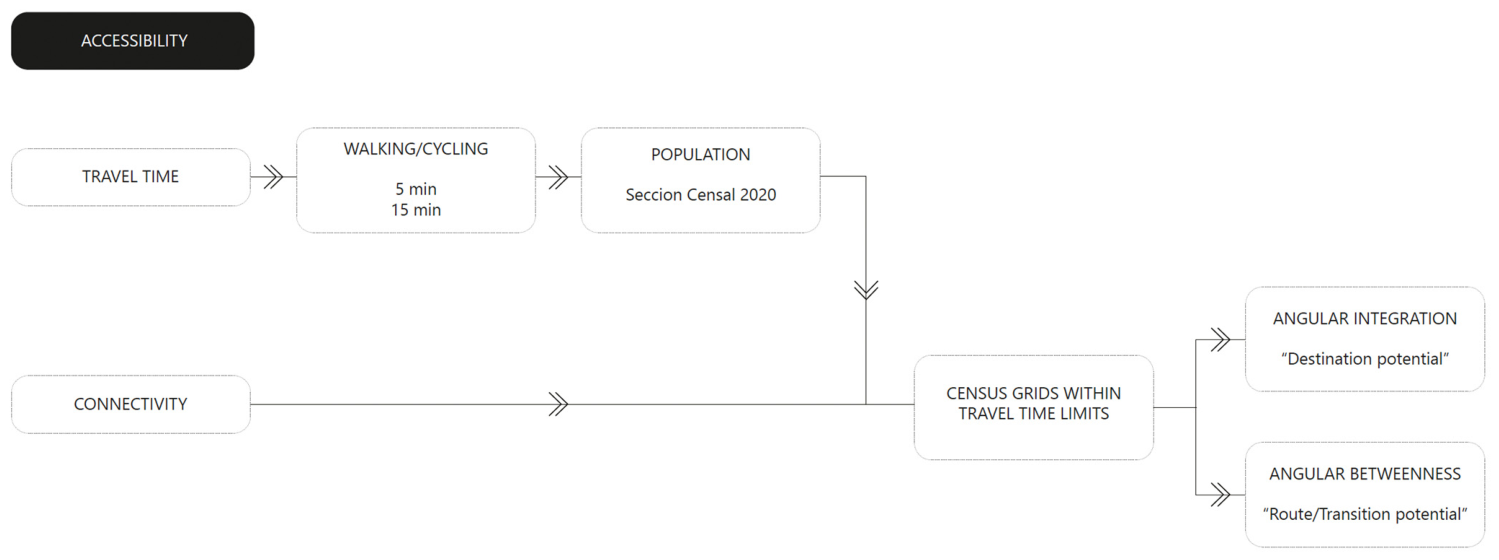
Figure 19.
Diagram of the GIS methodology applied (own elaboration in collaboration with Julia Thomas).
Figure 19.
Diagram of the GIS methodology applied (own elaboration in collaboration with Julia Thomas).
To evaluate the accessibility and spatial distribution of green spaces in relation to nearby populations, we conducted a multi-scalar analysis (
Figure 19) that considered both individual corridors and the broader system of green infrastructure. Specifically, the impact of each socio-ecological corridor was assessed independently, alongside the influence of adjacent areas belonging to the Metropolitan Green Belt, allowing a more nuanced understanding of their combined and differentiated effects.
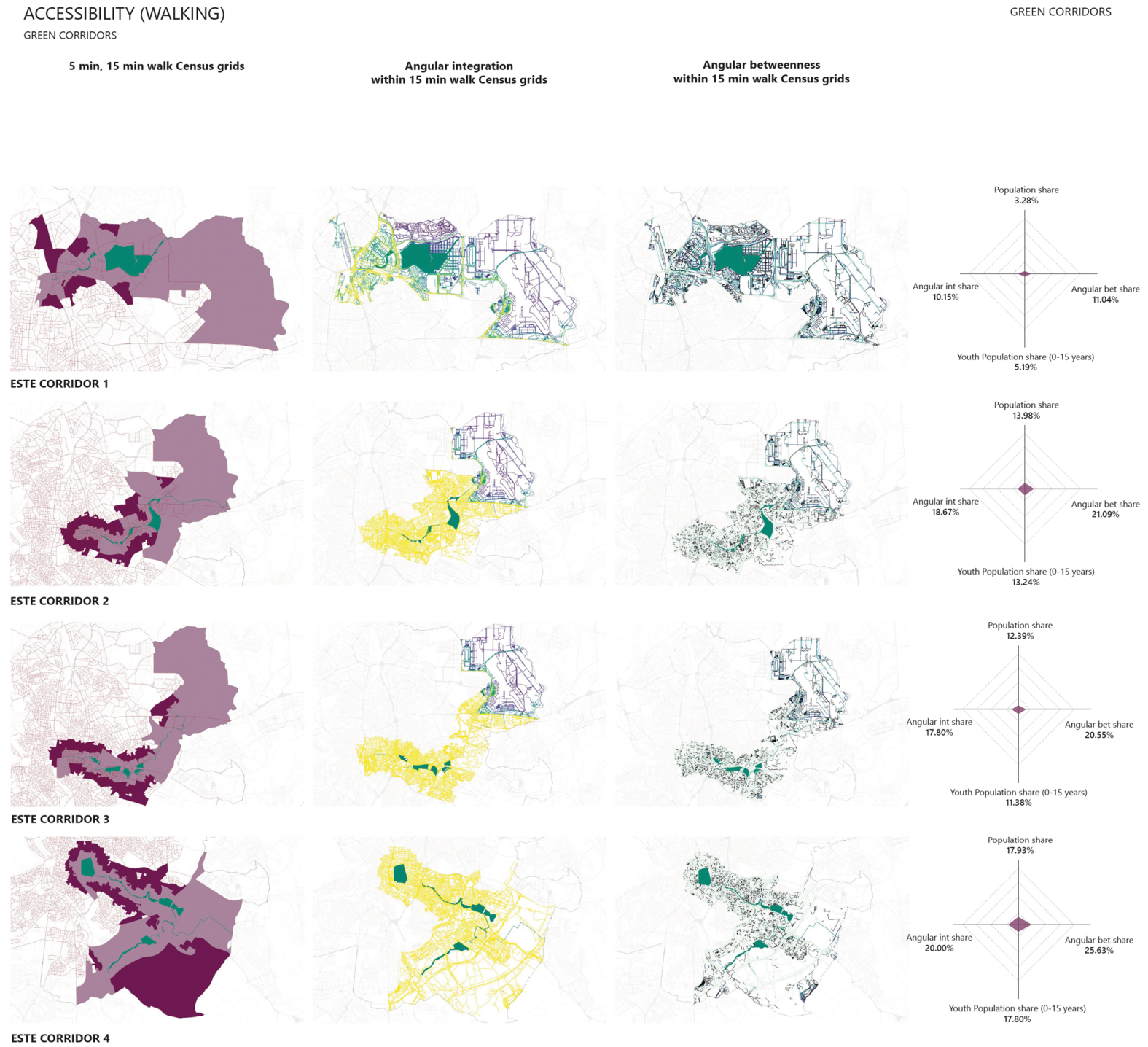
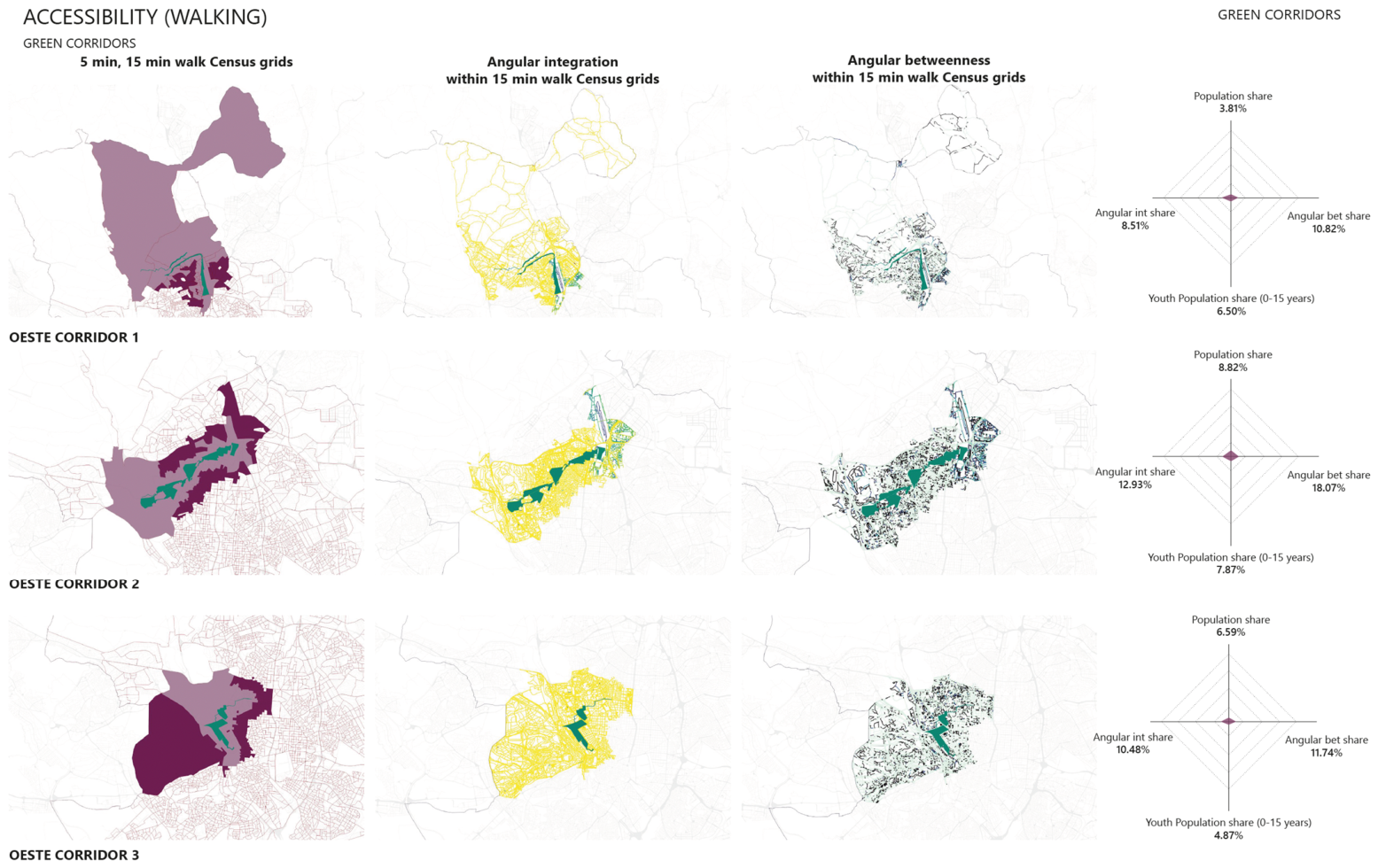
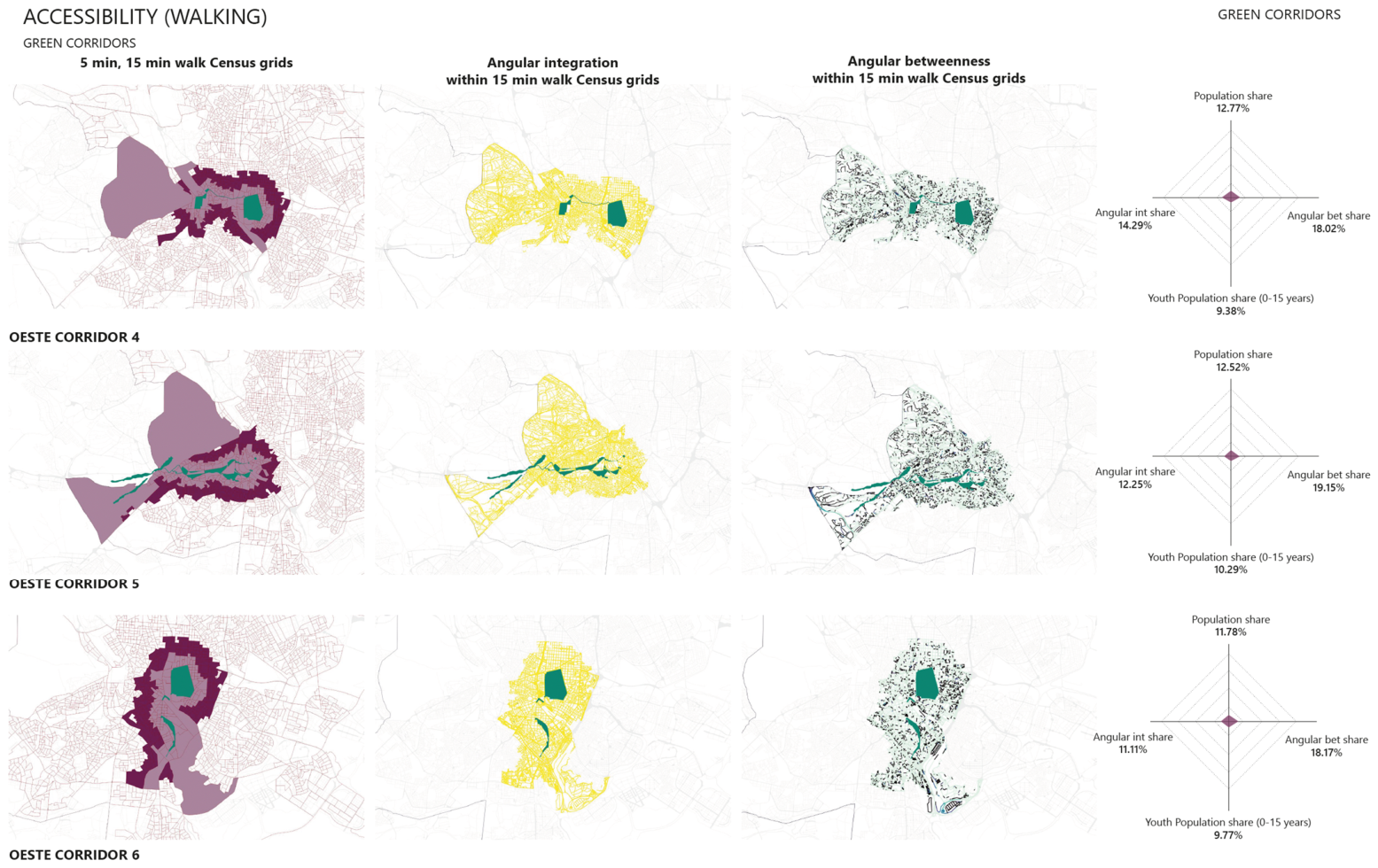
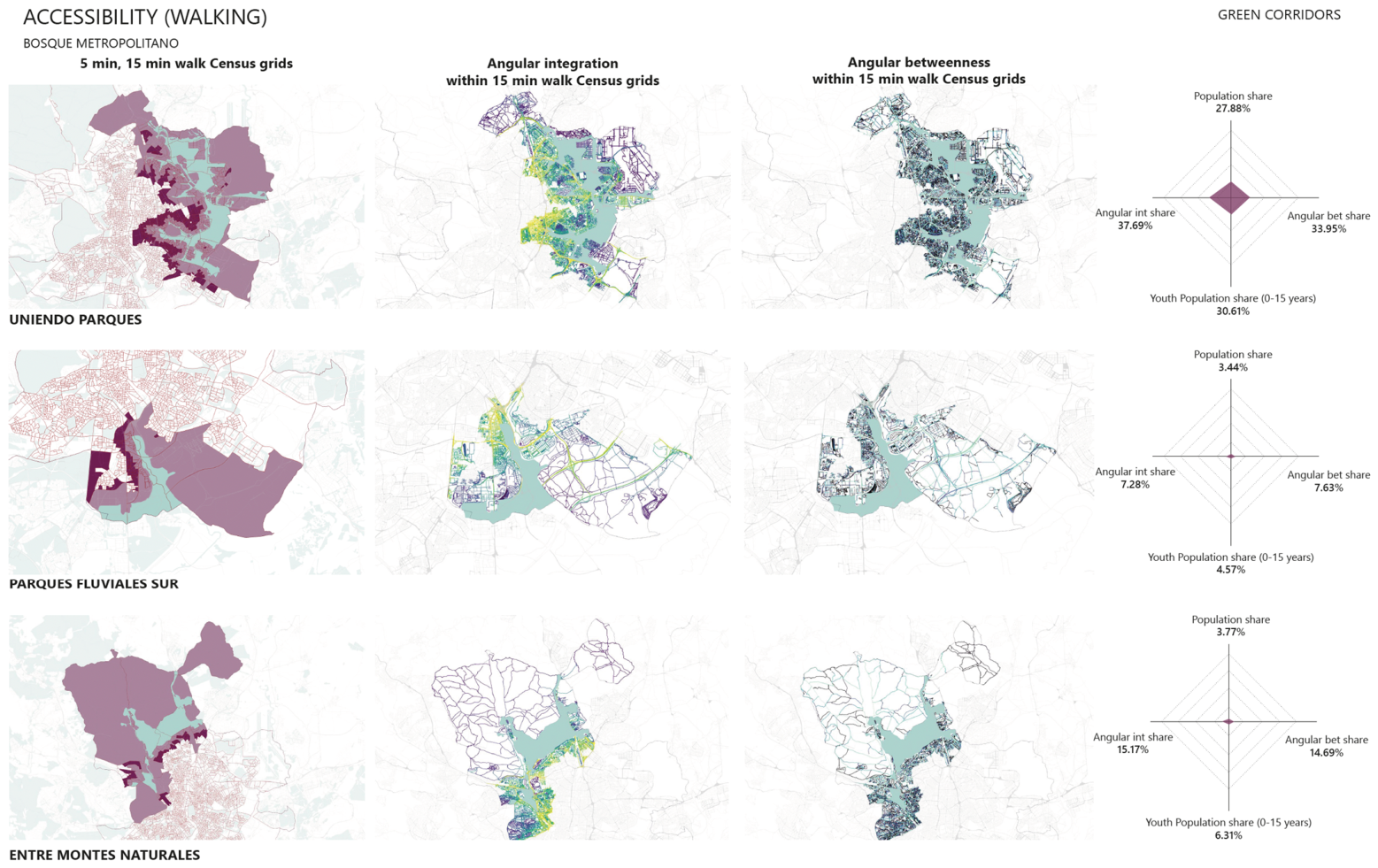
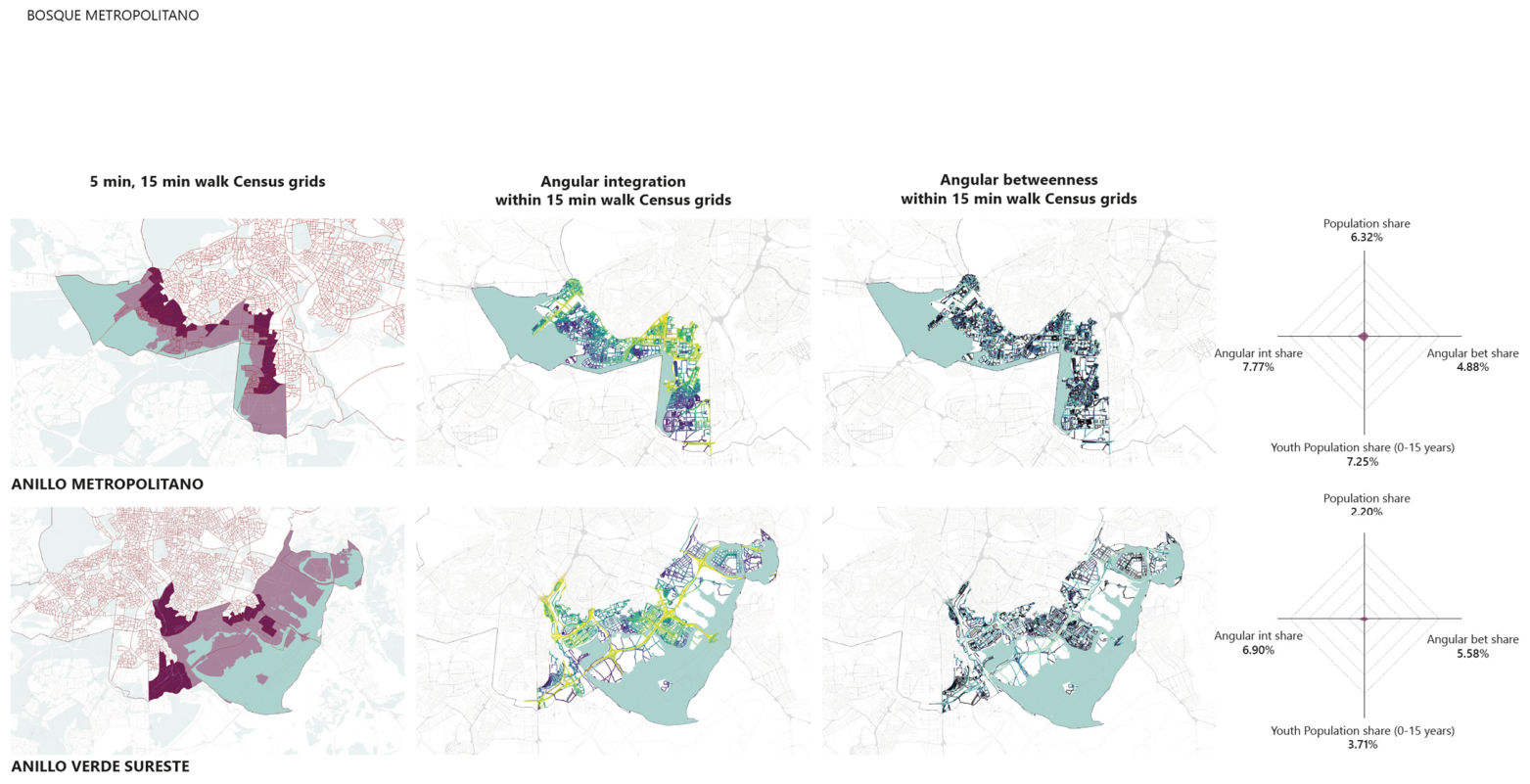
Pedestrian accessibility was examined by analysing each corridor separately, focusing on its immediate catchment area. For this purpose, we generated walking accessibility maps using 5 and 15 min isochrones—defined as areas of influence based on travel time on foot—around both the Metropolitan Forest and the network of socio-ecological corridors. These isochrones provide a temporal measure of accessibility that reflects everyday mobility conditions.
A spatial overlay analysis was then performed between each isochrone and the census grid. This process involved aggregating population data by merging spatial and statistical attributes according to their geographic location. By summing the population within each intersecting census unit, considering both total population and the subgroup of young residents aged 0 to 15, we were able to estimate the number of individuals with potential pedestrian access to these green spaces.
In addition, a space syntax analysis was carried out on the census grids intersecting the corridors. Two key metrics were employed: angular integration, which captures the potential of a space as a destination based on its accessibility within the network, and angular intermediation, which reflects its role as a route or transit space, indicating the likelihood of movement passing through it. Together, these measures provide insight into the spatial logic of movement and accessibility within the studied urban landscape.
All the GIS Madrid Metropolitan data were obtained from the Madrid Region Geoportal. The data presented in this section come from the statistical analysis carried out by the Community of Madrid based on the annual census files obtained by the National Statistics Institute (INE) from 2021 onwards, which are based on administrative records.
4.3.3. Results of the Third Evaluation: Structural Scale (GIS)
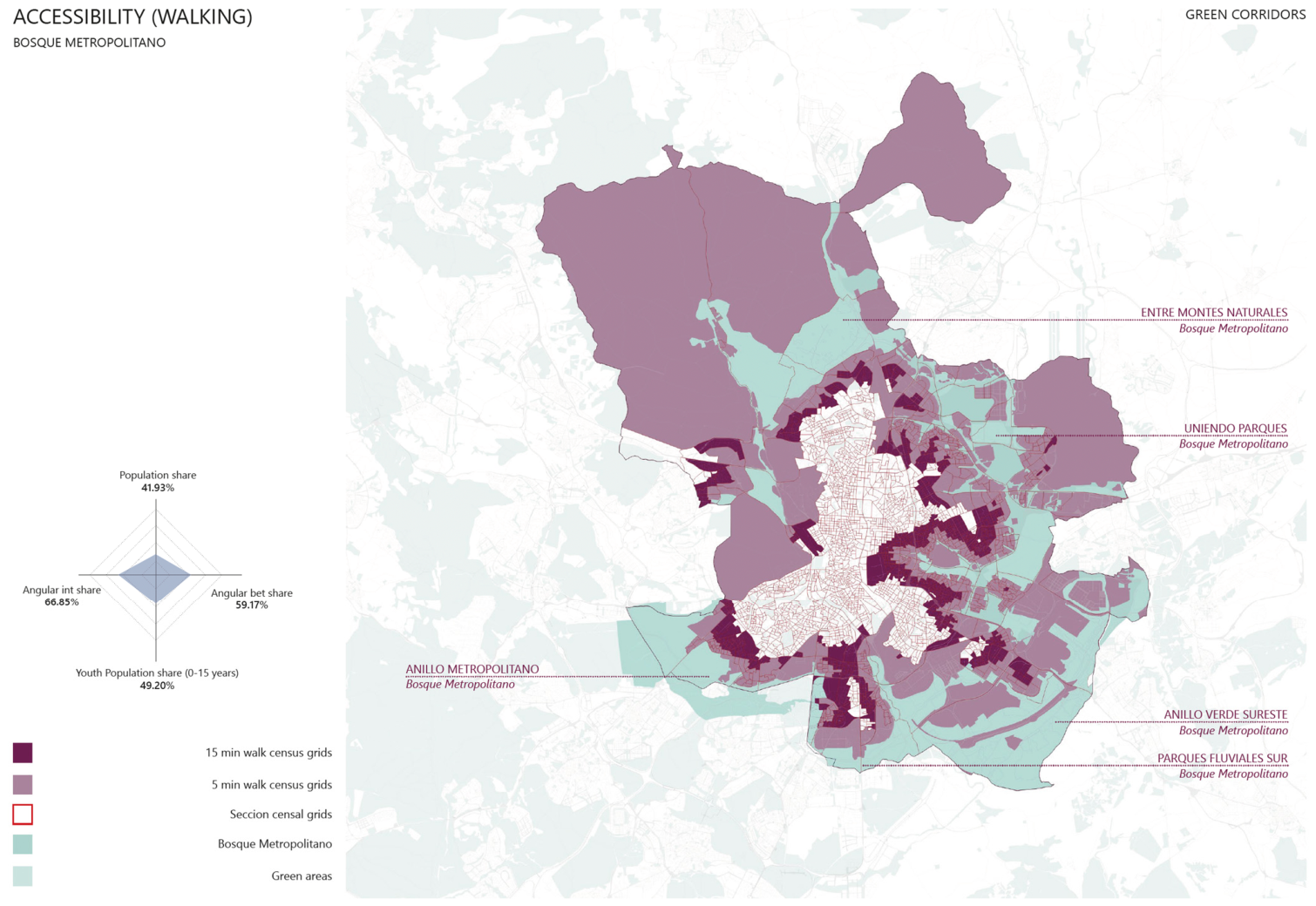
Following a comprehensive examination of each corridor at the morphological scale, we proceeded to analyse the proposed socio-ecological corridors in conjunction with the proposed green spaces within the Metropolitan Green Belt. To facilitate this analysis, we devised a methodology utilizing geographic information systems and programming. Initially, we evaluated walkability within the municipality. The resulting map (
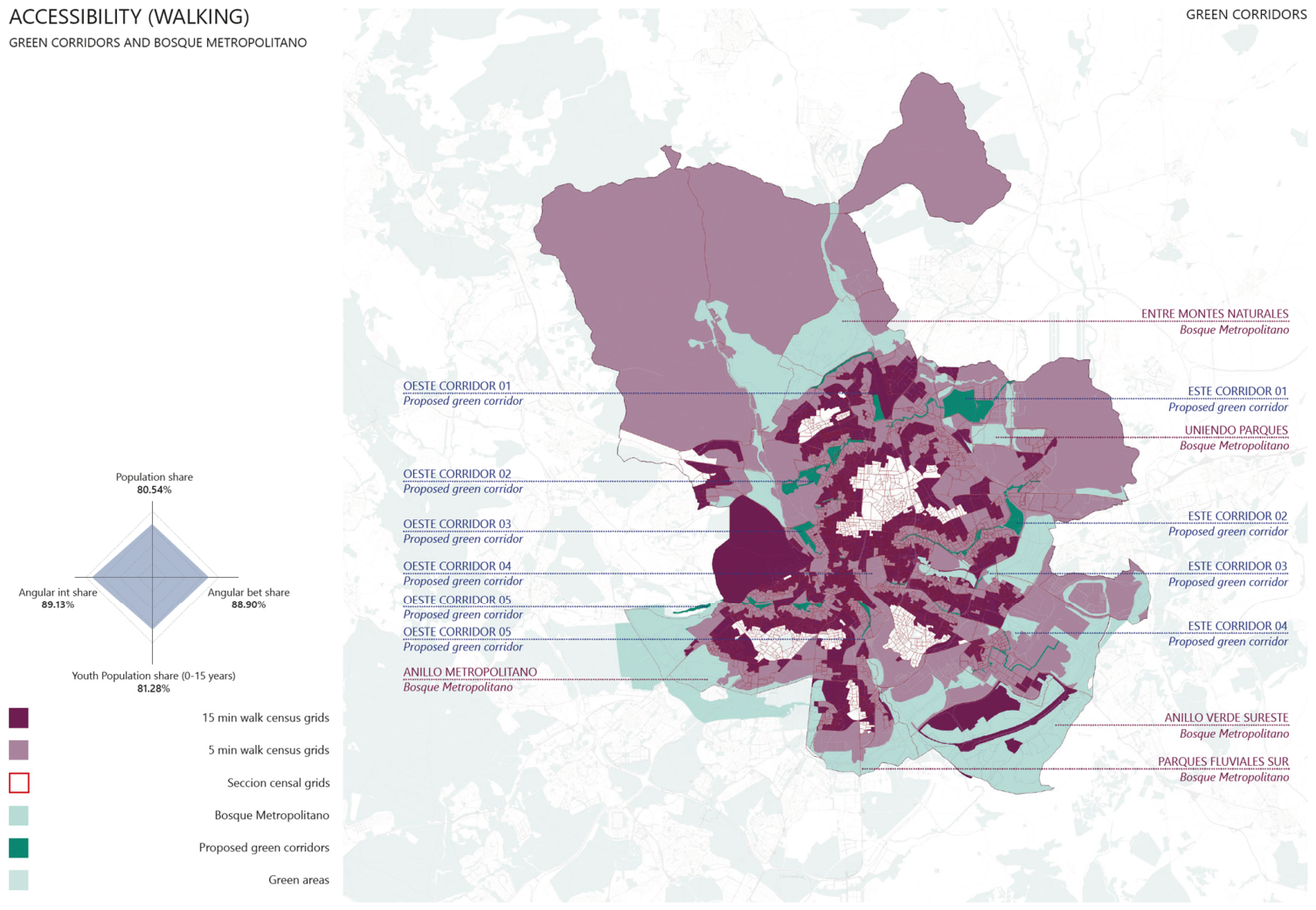
Figure 25) delineates the white gaps in the centre, signifying areas lacking immediate access (15 min) to these green spaces. With the implementation of the new green corridors (
Figure 26), the map demonstrates a substantial enhancement in accessibility catchment areas to green spaces within a 15 min walk for city residents. The proportion of the population with access has nearly doubled, attributable to these extensions reaching towards the city center, thereby effectively connecting the outskirts with the urban core.
Figure 25.
Results: Accessibility Walking: Metropolitan Forest (own elaboration in collaboration with Julia Thomas).
Figure 25.
Results: Accessibility Walking: Metropolitan Forest (own elaboration in collaboration with Julia Thomas).
Figure 26.
Results: Accessibility Walking combined: corridors + Bosque Metropolitano (own elaboration in collaboration with Julia Thomas).
Figure 26.
Results: Accessibility Walking combined: corridors + Bosque Metropolitano (own elaboration in collaboration with Julia Thomas).
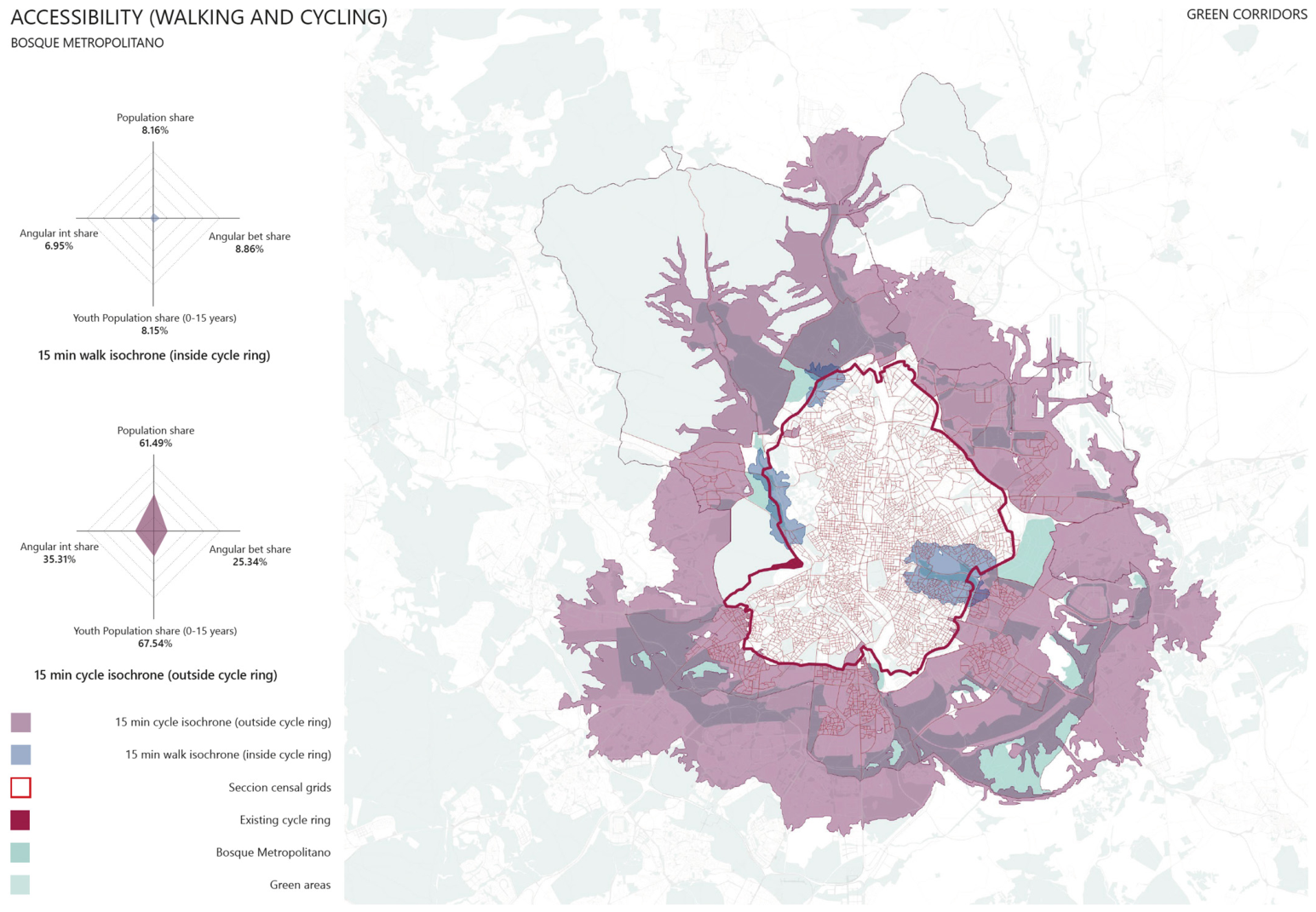
To evaluate the accessibility and spatial configuration of green spaces for cyclists, the Green Cycling Ring was adopted as the primary reference framework. This choice is grounded in its structural and functional role within Madrid’s mobility system, as well as in the concentration of access points, gates, and viewpoints. Within the limits of the Ring, everyday mobility is largely assumed to occur on foot or by bicycle, supported by relatively continuous urban fabrics and shorter travel distances. Beyond this boundary, however, urban continuity becomes more fragmented and distances increase, making the concept of walkability less consistent and reinforcing the bicycle as a key mode of soft mobility capable of extending the effective reach of green infrastructure.
In this context, cycling accessibility was analysed in articulation with pedestrian accessibility, acknowledging their complementary roles across different spatial scales. For areas located outside the Green Cycling Ring, 15 min cycling isochrones—defined as areas of influence based on travel time—were generated around both the Metropolitan Forest and the network of socio-ecological corridors. These isochrones reflect a realistic approximation of medium-range, non-motorised mobility, capturing the expanded catchment areas enabled by cycling.
A spatial overlay analysis was subsequently performed between each isochrone and the census grid. Through this process, demographic data were aggregated by merging spatial and statistical attributes according to geographic coincidence. By summing the population within each intersecting census unit, considering both total population and the subgroup of young residents aged 0 to 15, we estimated the number of individuals with potential cycling access to these green spaces. This approach allows a differentiated reading of accessibility in relation to both general and age-specific population groups.
In parallel, a Space Syntax analysis was conducted on the census grids intersecting the cycling catchment areas. Two complementary metrics were applied: angular integration, which measures the relative accessibility of a location within the network and thus its potential as a destination, and angular intermediation, which captures the likelihood of a segment being traversed as part of movement flows, indicating its role as a route or corridor. Together, these measures provide insight into how the spatial configuration of the network supports or constrains cycling accessibility and movement patterns across the metropolitan landscape.
The resulting map (
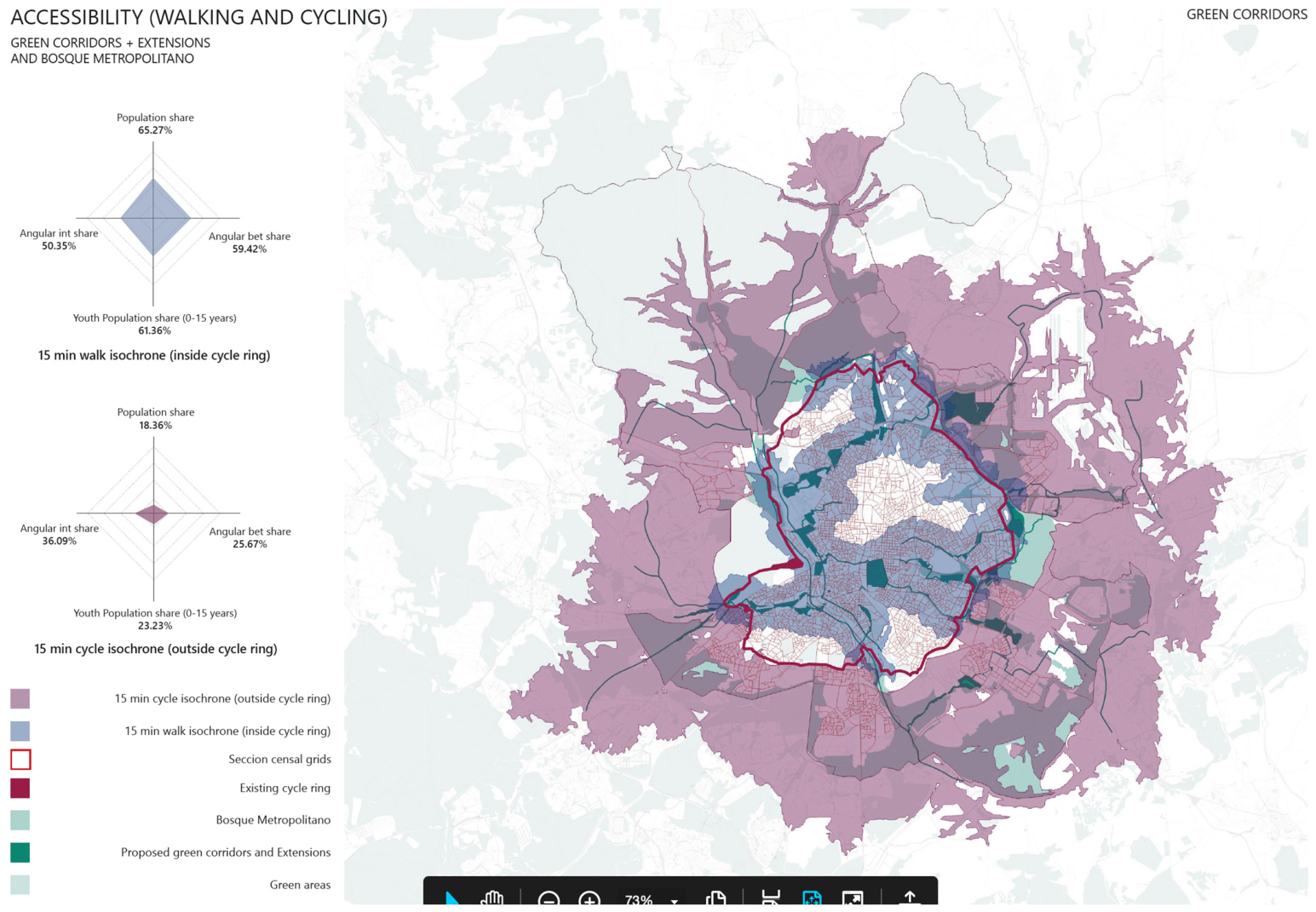
Figure 27) delineates the peripheral areas that lack immediate access to green spaces within a 15 min timeframe. The introduction of new green corridors and their extensions reaching the periphery, as depicted in the subsequent map (
Figure 28), demonstrates a significant enhancement in accessibility to green areas within a 15 min walk for inner-city residents. Additionally, there is a substantial increase in access to peripheral landscapes within a 15 min cycle ride. Consequently, the high-value natural spaces on the outskirts are effectively connected to the symbolic green spaces of the inner city. These socio-ecological corridors serve as a bridge between the various green rings—cycling and metropolitan—thereby ensuring accessibility for residents of both the city center and the immediate outskirts.
4.3.4. Rewilding and Habitat Creation Strategy
Applying the biodiversity framework based upon landscape performance led to the following:
Design outcomes that performed well in terms of social, cultural, and environmental performance metrics;
Design outcomes that developed a way of assessing a specific, context-specific approach that is unique to Madrid Region;
Expanding upon design thinking in terms of the potential of the corridors to enhance biodiversity;
Applying a holistic approach to understanding the different functions of the socioecological corridors.
5. Discussion
This study supports the idea that a design-led multiscalar framework can improve accessibility to peri-urban landscapes by linking structural, morphological, and perceptual readings of territory. Its main strength lies in the capacity to integrate these three scales into a single interpretive and projective framework, allowing accessibility to be understood not only as a matter of spatial proximity, but also as a function of connectivity, legibility, and experiential quality. This is particularly valuable in peri-urban contexts, where fragmentation, infrastructural barriers, and mismatches between planning scales require a method that can move between territorial structure and ground-level experience.
A second methodological advantage is that the approach combines design reasoning with GIS-based accessibility analysis and space syntax, which gives the proposal greater analytical credibility than a purely conceptual landscape vision. In that sense, the paper does more than propose corridors: it tests them as spatial hypotheses and shows that the combined corridor network and Metropolitan Green Belt can substantially increase 15 min walking and cycling access. The method is therefore well suited to exploratory landscape planning, especially where the goal is to connect ecological restoration, mobility, and public access in a single framework.
At the same time, the methodology has important limitations. The perceptual scale depends on field observation, photographic selection, and interpretive judgement, which makes it rich in qualitative insight but less reproducible than the GIS component. In addition, the analysis appears to privilege spatial potential over actual behavior, meaning that improved mapped accessibility does not necessarily imply that people will use the routes in practice. For this reason, the results should be read as evidence of potential accessibility, not as proof of realized use or social impact.
Several possible biases should also be acknowledged. First, there is a risk of researcher bias in the perceptual assessment, because the selection of scenic, heritage, ecological, and panoramic elements depends partly on the authors’ own interpretation of what counts as valuable. Second, there may be a selection bias in the corridor proposal itself, since the routes were identified because they already showed spatial continuity or design potential, which may make the project appear more successful than a neutral comparison would. Third, the GIS indicators simplify movement by relying on isochrones and network measures, so they do not fully capture personal preferences, perceived safety, slope, micro-scale comfort, seasonal change, or other factors that shape real walking and cycling behavior.
The uneven spatial distribution of results also deserves interpretation. The stronger improvements in accessibility are likely explained by the fact that some corridors connect already consolidated green spaces and exploit latent continuity in the urban fabric. Where the proposal links existing parks, promenades, and underused open spaces, the network gains are easier to achieve because the design activates pre-existing spatial structure rather than creating entirely new connections from scratch. This helps explain why the corridor system is especially effective in the western sector, where continuity is more feasible, and less so in the eastern sector, where the airport acts as a major barrier and fragments the network.
The large increase in 15 min access can also be understood as a synergetic effect between the corridors and the Metropolitan Green Belt. The belt provides a peripheral green structure, while the proposed corridors extend that structure inward toward the urban core, reducing the distance between residents and accessible green areas. In practical terms, the proposal works because it bridges center and edge, converts isolated green patches into a more legible system, and improves the territorial coherence of the whole network. This is why the gains are not only quantitative but also spatial and symbolic; the city becomes more connected to its surrounding landscapes.
The paper also contributes to the rewilding debate by suggesting that ecological restoration and public access should be designed together rather than treated as competing goals. This is an important point, because access can support public appreciation and stewardship of restored landscapes, while carefully designed routes can concentrate use in resilient areas and reduce pressure on more sensitive habitats. However, this balance should be treated cautiously, since increased accessibility may also generate new pressures on ecologically fragile sites if visitor management is not considered in future phases.
Future work should therefore move beyond accessibility potential and test whether the proposed corridors generate actual use, improved well-being, and equitable benefits across social groups. It would also be useful to assess how the corridors perform over time, whether they maintain ecological function, and whether they produce unintended effects such as spatial inequality in access or overuse of certain areas. More generally, this study shows that research by design can produce strong spatial hypotheses, but that its claims are most convincing when they are accompanied by transparent validation, behavioral data, and post-implementation evaluation.
6. Conclusions
This study demonstrates that a multiscalar research-by-design approach can effectively bridge the gap between territorial planning, spatial connectivity, and experiential access to peri-urban landscapes in Madrid. By integrating structural, morphological, and perceptual scales, the proposal moves beyond a purely cartographic reading of the city and provides a framework that links ecological restoration, route continuity, and human experience in a single design logic.
The main contribution of this work lies in showing that accessibility to nature should be understood not only as a matter of physical proximity, but also as a product of legibility, continuity, and spatial quality. In this sense, this study addresses a gap in the literature, where accessibility is often discussed in abstract terms or inferred from green-space provision without being directly tested through design-led, multiscalar methods. The proposed corridors therefore offer a transferable methodological model for planning peri-urban interfaces that are at once environmentally restorative, socially inclusive, and territorially coherent.
The proposed corridor network substantially improves modelled pedestrian and cycling access to peri-urban and semi-natural areas within short travel-time thresholds, with the strongest gains occurring where new links bridge existing green patches and where infrastructural barriers are less severe. These results should be understood as increases in potential accessibility rather than observed use, since further behavioural validation would be needed to confirm actual visitor flows.
From an ecological perspective, the corridors create opportunities to reinforce habitat continuity and support landscape-scale connectivity when they are integrated with the Metropolitan Green Belt. However, these ecological benefits remain contingent on detailed corridor design, habitat quality, and long-term management, and they should therefore be presented as plausible outcomes rather than guaranteed effects.
More broadly, the findings suggest that reconnecting the city with its surrounding landscapes can strengthen both urban resilience and public access to nature. Rather than treating rewilding, mobility, and landscape structure as separate agendas, this research shows that they can be combined into a unified strategy capable of supporting biodiversity, improving walkability and cyclability, and reinforcing the metropolitan relationship between city and countryside.