1. Introduction
Urban informality constitutes a defining condition of contemporary Latin American cities; in metropolitan areas like Lima, it is estimated that up to 80% of the urban landscape has been informally built [
1]. This mode of production has become the dominant element in regional urban expansion over recent decades [
2]. Informality has become a central topic in discussions of urban development across the region, as reflected in studies such as Ossandón [
3] and Gómez-Villanueva, Rolong-Ojito, and Therán-Nieto [
4]. Historically, the term “informal” described “spontaneous settlements” lacking formal title or infrastructure, which were often viewed as “marginal” to the mainstream economy [
5]. As Dovey and King [
6] note, however, these environments are not simply the result of absence or disorder; they are produced through residents’ own initiatives, resources, and socio-cultural aspirations. In this study, urban informality is defined as a generative mode of production [
7], specifically the “social production of habitat” [
8] Morphologically, it manifests through the incremental multi-story house built via “empirical constructive adaptation” [
9]. Materials typically transition from precarious plywood and corrugated iron to reinforced concrete and clay brick as residents reinvest in their structures over time [
9,
10]. Spatially, these settlements are defined by steep, irregular stairs and narrow corridors that serve as primary access routes, where building openings and ventilation are often constrained by high-density, organic growth [
11]. In the absence of formal planning, semi-communal spaces—such as staircase landings, street corners, or shared roofs—emerge as vital “unscripted” sites for play, social gathering, and community resilience [
12].
Early urban planning discourses were dominated by the notion of marginality, in which informal settlements were framed as urban pathologies to be eliminated [
12]. More recent perspectives have recognised informality as a legitimate urban condition and as a repertoire of spatial, social, and cultural practices through which citizens negotiate their everyday life and claim their right to the city [
12,
13,
14]. Since the 1960s, scholars have increasingly challenged the theory of social marginality underpinning the traditional dichotomy between “formal” and “marginal” city spaces [
15]. Over time, this critique weakened the perception of informal settlements as problems to be resolved through large-scale relocation or state-led housing programmes. Based on his fieldwork in so-called “marginal” neighbourhoods in Peru, John Turner [
16] argued that, far from being pathological, these environments represented a popular and effective response to the housing shortages of rapidly urbanising metropolises. He demonstrated that informal dwellings were the first stage of a gradual process of self-construction, and that their inhabitants acted as rational and resourceful agents, capable of organising their own priorities and responding pragmatically to conditions of insecurity and need.
McConville [
17] poses a fundamental question: why do people live in slums? His answer underscores that residing in an informal settlement often constitutes a rational and strategic response to structural poverty, social exclusion, and restricted access to formal housing. For a large proportion of the population in the Global South, informal housing—although frequently overcrowded and precarious—remains the only affordable and attainable option, revealing an adaptive capacity rather than a condition of mere deprivation [
5]. Informal occupation in cities therefore represents a form of adaptation to contemporary urban conditions. As Dovey et al. [
18] argue, such adaptation is shaped by a combination of factors, including land availability, transport networks, labour markets, demolition threats, planning frameworks, local politics, and climate. The so-called informal or self-organised city thus emerges as a productive and self-regulating environment, where residents mobilise social networks, incremental construction, and everyday forms of agency to sustain urban life.
In the decades following Turner’s work, numerous authors have advanced arguments for detaching the notion of informality from its persistent association with slums, favelas, or unregulated labour in the Global South, and from the idea that it exists “outside” the dominant institutions of governance [
7,
13,
19]. Building on this shift in perspective, several theorists and practitioners further redefined the understanding of informal urban environments by recognising the street and neighbourhood as vital spaces of social interaction and everyday urban life. Thinkers such as Jane Jacobs, Christopher Alexander, and Jan Gehl were instrumental in challenging the dominant functionalist doctrines of mid-twentieth-century planning, emphasising instead the value of human scale, diversity, and lived experience. Jacobs’ critique of “car-dependent functionalist planning” argued for understanding the innate, functioning order of cities based on social interaction [
20]. Similarly, Alexander’s distinction between “natural cities” with complex semi-lattice structures and “artificial cities” with rigid tree structures provided a scientific basis for recognizing the value of self-organized urban forms [
21]. Their critiques, together with the reflections emerging from TEAM 10, marked a broader reaction against the abstract and technocratic urbanism promoted by modernist orthodoxy. Scholars such as Dovey [
22], Lunque-Ayala and Neves Maia [
23], and Lutzoni [
24] highlight urban informality as a key lens through which to understand emergent and evolving urban processes. These authors conceive formality and informality not as opposites, but as mutually constitutive dimensions that continually shape and transform each other through residents’ urban practices. This movement encouraged a process of self-critique within the architectural discipline, inspiring a renewed attention to context, local history, and vernacular practices, as well as to the spirit of place as a foundation for more socially responsive and contextually grounded design approaches [
24,
25].
An analysis of 526 publications selected from the Web of Science Core Collection using the TOPIC search term “urban informality” shows a clear and sustained growth in academic interest in this field. The period 1993–2025 reveals a marked evolution: starting from an almost non-existent presence in 1993, the number of publications remains low and intermittent for more than a decade, then begins to rise steadily after 2009 and accelerates significantly from 2016 onward. The years 2021–2024 represent the peak of scholarly production, with 2024 reaching the highest number of publications in the entire dataset. This trajectory reflects a qualitative shift in the global research landscape, driven by the consolidation of academic communities working on informality, the increasing visibility of the topic in international debates, and its growing relevance to discussions on urban inequality, housing, governance and planning. This confirms a stable and mature trend in the scholarly engagement with urban informality, positioning the topic as a central concern in contemporary urban studies.
However, informality has become increasingly central in contemporary research, as rapid urbanisation across the Global South has revealed a widening disconnect between conventional planning theories and the complex realities of poverty, inequality, and spatial fragmentation [
26]. Consequently, UN-Habitat [
27] emphasizes the importance of understanding the operational logic of urban entropy associated with the emergence and consolidation of informal settlements, and of incorporating this knowledge into the technical and theoretical domains of urban planning and management. As the agency notes, “In many cities, informal settlements are so common and house such a high proportion of the population and workforce that they cannot be an exception but are the rule. If laws and regulations in force in a country consider the homes and livelihoods of much of the city population to be illegal, then the law’s appropriateness should be reviewed”. Furthermore, the 2030 Agenda [
28] situated populations living in slums, informal settlements, and inadequate housing within the same Sustainable Development Goal (SDG 11), recognizing slums as the shared physical and social space where these conditions intersect. This framing positions informal settlements within a broader urban continuum of deprivation and substandard living conditions [
29], even though public authorities often fail to acknowledge or treat these territories as integral and equal parts of the city [
30,
31].
The persistence of informal urbanism as a primary mode of city-making in the Global South underscores the limitations of traditional architectural curricula, which often prioritize formal design solutions over the adaptive realities of informal settlements [
11]. Consequently, planning education in developing regions continues to train students in problem solving by heavily instilling positivist, scientific, and technocratic perspectives that fail to engage with the nuanced intersectionality of social, cultural, and political dimensions [
32]. This gap is especially pronounced in Latin America, where dominant Euro-American planning traditions often prove inadequate for understanding the distinctive spatial practices, adaptive strategies, and infrastructural insurgencies that shape informal settlements [
33,
34]. This reveals a persistent disjunction between the lived realities of urban production and the academic frameworks that structure professional formation [
35]. As a result, future architects and planners are frequently trained under paradigms that privilege formal, regulated, and technocratic approaches [
32,
36], overlooking the creative, adaptive, and participatory processes that shape much of the urban fabric in their own territories [
25]. Given the current scale and complexity of informality, the critical question becomes how urban planning approaches can meaningfully integrate these realities in the future. A first step is the incorporation of these considerations into the education and training of urban planners. In this sense, scholars argue that built-environment education must undergo a fundamental “informal turn” to equip practitioners with the capacity to engage with these dynamics [
11] rather than relying on outdated, colonial pedagogical models that marginalise local context [
37].
Integrating informality into the curriculum serves several strategic pedagogical objectives. First, it aims to align professional training with the ‘lived realities’ of residents, moving beyond formalist models that fail to describe the actual functioning of Southern cities [
35]. Second, these courses seek to develop ‘contextual resilience’ by training students to navigate the complex, non-linear problems typical of self-organized urbanism [
11,
34]. Third, the inclusion of informality is designed to institutionalize ‘pro-poor’ and ethical planning practices that recognize the creative and participatory processes of the urban majority as a primary learning resource, rather than a problem to be corrected [
37,
38]. Finally, a central objective is to dismantle colonial pedagogical frameworks that marginalize local context by fostering critical, multi-scalar, and collaborative design competencies [
33].
It is important to note that this topic has been increasingly addressed by universities through specialized Master’s degree programmes, particularly in developing countries and within certain European institutions that have developed postgraduate curricula focusing on housing and urban informality in the Global South [
39]. However, despite these advancements at the graduate level, a significant gap persists in undergraduate architecture programmes, where the majority of future practitioners receive their core professional training [
11,
40].
Building on this concern, the hypothesis of this study is that although universities in the region increasingly acknowledge the social and environmental dimensions of urban development, the informal city is often addressed only tangentially, typically framed as a planning deficit or a social problem external to the discipline and urban informality continues to occupy a marginal position within architectural and urban design education.
The main objective of this research is to identify whether, and in what ways, academic training addresses the topic of urban informality, considering that it constitutes a structural dimension of urban development in Latin America. This leads to the central research question that guides the study: How do universities prepare planners and architects to work with, and within, conditions of urban informality?
The study focuses on three Latin American countries: Chile, Peru, and Ecuador. Comparing university curricular structures in these three countries makes it possible to examine how different academic and institutional traditions address—or bypass—urban informality, identifying convergences, gaps, and tensions within architectural education in Latin America when confronted with a phenomenon that constitutes a structural condition of regional urban development. The analysis considers the extent to which academic programmes prepare professionals who can understand, designing, and intervening in contexts of urban informality, not as anomalies to be corrected, but as legitimate and structural expressions of regional urban development.
Finally, the interpretation of the results is articulated through a critical reflection on the educational role of architecture schools in relation to the contemporary challenges of Latin American urbanism.
2. Materials and Methods
The study adopts a qualitative and comparative approach aimed at examining how schools of architecture integrate—or fail to integrate—the topic of urban informality within their curricular structures. This research focuses exclusively to undergraduate architecture programmes in Chile, Peru, and Ecuador. These countries were selected for their contrasting yet structurally comparable trajectories regarding urban informality and its treatment within professional training, as well as for their historical role in shaping professional training policies within the Andean region. Chile represents a ‘market-led’ model where decades of neoliberal urbanism have institutionalized a subsidiary state role, often rendering informal processes invisible in professional training [
41,
42,
43]. In contrast, Peru serves as a laboratory of ‘informality-led’ growth, where spontaneous occupation and self-construction are so prevalent that they constitute a foundational, though often unregulated, mode of urban production [
1,
44]. Finally, Ecuador offers a ‘state-regulated’ transitional model, where recent legislative reforms in higher education and habitat policies have attempted to bridge the gap between formalist planning and social reality through the framework of Buen Vivir [
45,
46]. This comparative logic allows the study to examine how different political-economic frameworks and educational traditions influence the integration of informality into architectural curricula. The data analysed in this study is drawn exclusively from university architecture programmes in these three national contexts.
From a critical and situated perspective, the analysis of curricula is understood to reveal not only explicit content but also the imaginaries, omissions, and hierarchies of knowledge that shape professional training. In this sense, the methodological design aligns with research traditions in higher education and urban studies that conceive curricula as cultural artefacts through which visions of territory, dwelling, and the production of space are institutionalised.
2.1. Institutional Sample Selection
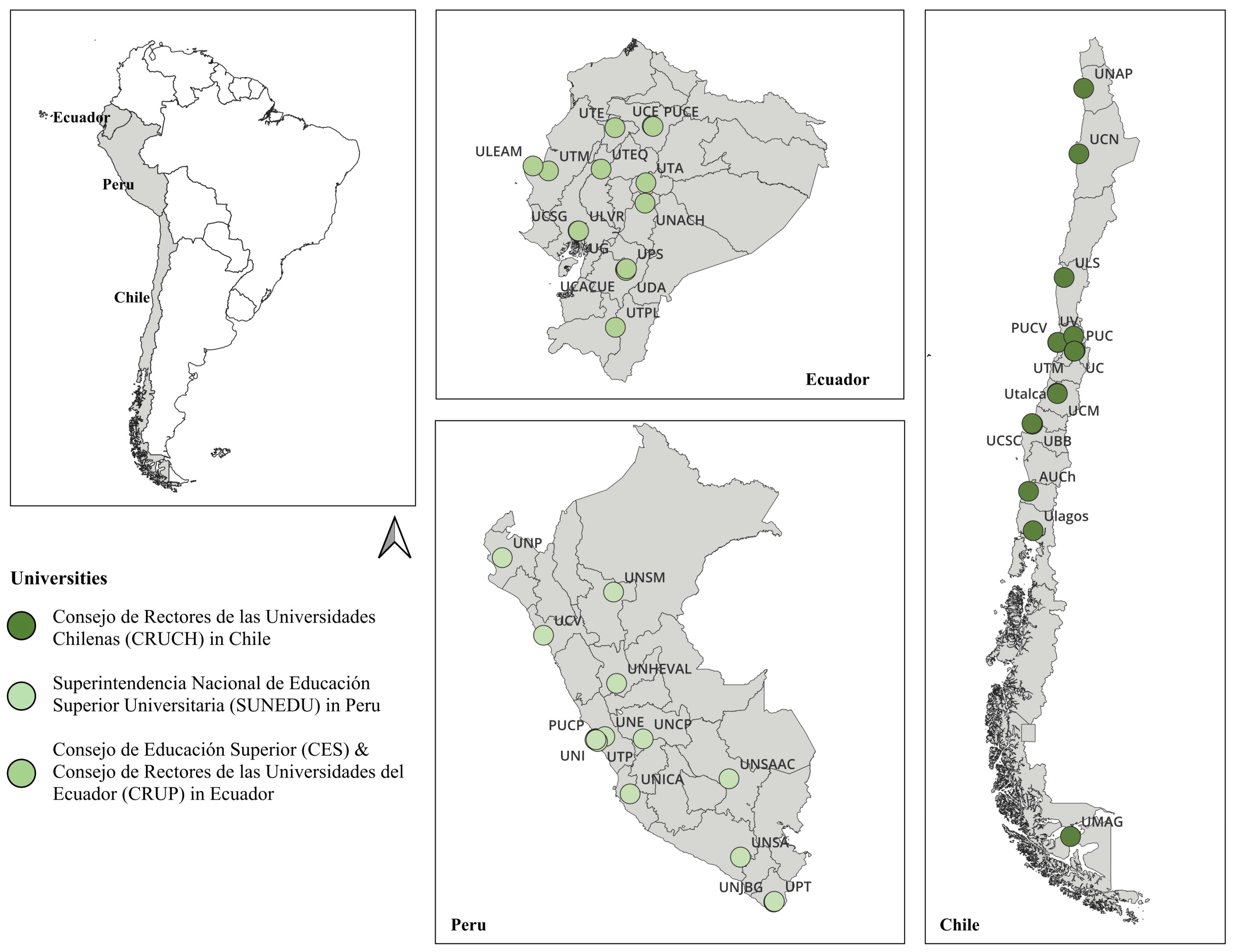
The sample was constructed using the principal higher education governing bodies in each country, which group together the most representative universities with the longest academic traditions: the Consejo de Rectores de las Universidades Chilenas (CRUCH) in Chile; the Consejo de Educación Superior (CES) and the institutions belonging to the Consejo de Rectores de las Universidades del Ecuador (CRUP) in Ecuador; and the Superintendencia Nacional de Educación Superior Universitaria (SUNEDU) in Peru.
This strategy ensured the inclusion of programmes that have historically defined the epistemological and training standards of the discipline, while also facilitating inter-institutional comparison. In total, 50 universities were analysed: 20 in Chile, 15 in Peru, and 15 in Ecuador. Final selection was guided by three criteria: (1) the presence of an accredited or active architecture programme, (2) the public availability of curricular information, and (3) regional representativeness within each country. In
Figure 1 a geographic distribution map of the universities was produced to visualise the study’s coverage and identify potential territorial gaps.
2.2. Information Sources and Units of Analysis
The analysis focused exclusively on undergraduate architecture programmes in Chile, Peru, and Ecuador, as this level establishes the theoretical, technical, and ethical foundations of professional practice. All documents were obtained from the official webpages of each programme, ensuring that the review was based on publicly available and institutionally validated information. To ensure the transparency and replicability of the findings, a systematic coding protocol was developed to identify how and where “urban informality” is integrated into the architectural training. Given that the term “urban informality” is often absent or replaced by technical euphemisms in official academic documents, the research did not rely solely on keyword matching. Instead, the concept was operationalized through three analytical dimensions that capture the multifaceted nature of the social production of habitat in Latin America: The morpho-spatial dimension identified terms related to the physical and spatial characteristics of non-planned urban growth. Indicators included descriptors such as “precarious settlements”, “slum upgrading”, “popular neighborhoods” (barrios populares), and country-specific terms like “campamentos” or “asentamientos humanos” [
1,
43]. These were validated as indicators of informality only when the course context referred to urban fabrics generated through non-formal occupation or progressive consolidation [
18]. The procedural dimension tracked references to the methods of spatial production that occur outside formal professional and legal frameworks. Concepts included “self-construction” (autoconstrucción) and “community-led management” [
47]. This dimension recognizes the pedagogical inclusion of the resident as a primary producer of space rather than a passive user. The socio-legal and governance dimension focused on the relationship between the built environment and the State. Indicators included “land tenure”, “urban regularisation”, “ex-post planning”, and “informal land markets” [
1,
48]. These terms signal an educational engagement with the legal and institutional challenges of integrating informal territories into the formal city fabric [
1,
37].
For each selected university, the following components were examined:
Graduate profile and the programme’s mission statement.
Full curricular structure, including organisation, hierarchies, and the articulation of different training areas, including studio and theoretical courses.
Descriptions of compulsory and elective courses related to the three analytical dimensions.
Available course programmes or syllabi, used to verify specific content.
In addition, the presence of research groups, extension courses, or postgraduate diploma programmes addressing these themes was recorded to identify correspondences or divergences between formal teaching and the institution’s broader academic production. All information was systematically documented in a comparative table.
The reliance on official curricular materials (syllabi, graduate profiles, and course descriptions) constitutes a methodological choice that allows for a systematic comparison across 50 institutions. However, it is important to acknowledge that in architectural education, the design studio often functions as a site for ‘informal’ or ‘non-formal’ learning that may not be fully captured in formal documents [
49]. Meaningful engagement with the social complexities of the city often occurs through experiential workshops, student-led collectives, and community-based projects that bridge the gap between academia and civil society [
50]. Consequently, this study should be understood as an analysis of the official institutional representation of informality rather than a comprehensive audit of the totality of teaching practices.
2.3. Analytical Strategy
A comparative matrix in Microsoft Excel organised by country and university served as the basis for systematising the information and enabling cross-case analysis. An Artificial intelligence (AI) tool (ChatGTP GPT-5.3 model) was used to assist in the organisation of the matrix and in the preliminary structuring of the dataset; however, all data were subsequently revised, verified, and interpreted by the authors. The methodological framework combined three complementary levels of analysis:
Thematic presence: Identification of courses or programmes that explicitly reference urban informality or equivalent concepts in titles, descriptions, or learning outcomes. This allowed the distinction between explicit incorporation and implicit or substituted terminology (urban informality, informal settlements, self-construction, popular urbanisation, or urban marginality).
Degree of curricular integration: Assessment of the extent to which informality is positioned as: a core thematic focus, a transversal subject integrated with broader urban issues, or a tangential topic mentioned secondarily. Differences between compulsory and elective courses were examined to determine the weight assigned to informality in professional training and graduate competencies.
Pedagogical orientation: Analysis of the perspective from which informality is taught—technical, normative, social, critical, or interdisciplinary. This involved cross-referencing course descriptions, graduate profiles, and institutional academic activities to understand how the phenomenon is conceptualised and what types of competencies programmes aim to develop. Using keywords from the graduate profiles, each university was classified according to four categories: (1) social/critical, (2) technical/normative, (3) interdisciplinary and (4) indeterminate (insufficient evidence to characterise the approach).
Findings were first organised by country and subsequently compared across national contexts. This inter-territorial comparison enabled the identification of common patterns such as the marginal or transversal presence of the topic, as well as structural differences shaped by national higher-education systems and urban policy frameworks. The analytical strategy thereby provided a robust basis for interpreting the uneven and fragmented incorporation of urban informality within architectural education in the region.
3. Results
The results are presented following the same analytical structure defined in the methodological framework: thematic presence, curricular integration, and pedagogical orientation.
Appendix A provides a matrix summarizing the information collected regarding the inclusion of informal settlements in undergraduate architecture curricula in Chile, Ecuador, and Peru. This matrix was developed on the basis of the institutional list of programmes and a systematic review of information available on official university websites. A single university may exhibit all three levels simultaneously, or only one or two orientations. In some cases, a pedagogical orientation towards informality may be present, for example, through statements in the graduate profile, without the existence of a course explicitly focused on informal settlements.
3.1. Thematic Presence
The comparative analysis of curricular structures and course descriptions reveals that urban informality occupies a limited and uneven position within architectural and urban planning education across the universities examined. In most cases, the concept does not appear explicitly under the term urban informality; instead, it is addressed through equivalent or euphemistic notions.
Only a small number of courses incorporate these themes explicitly in their titles or descriptions, while in most programmes references to informality remain implicit or subordinated to broader pedagogical objectives. This pattern suggests that, although the phenomenon is acknowledged within academic discourse, it is not consolidated as a central object of instruction but rather treated as a supplementary or contextual topic.
Significant variation is also observed both across countries and among universities within the same country, indicating that the inclusion of informality is driven more by institutional or faculty initiatives than by systematic curricular guidelines at the national or regional level. As shown in
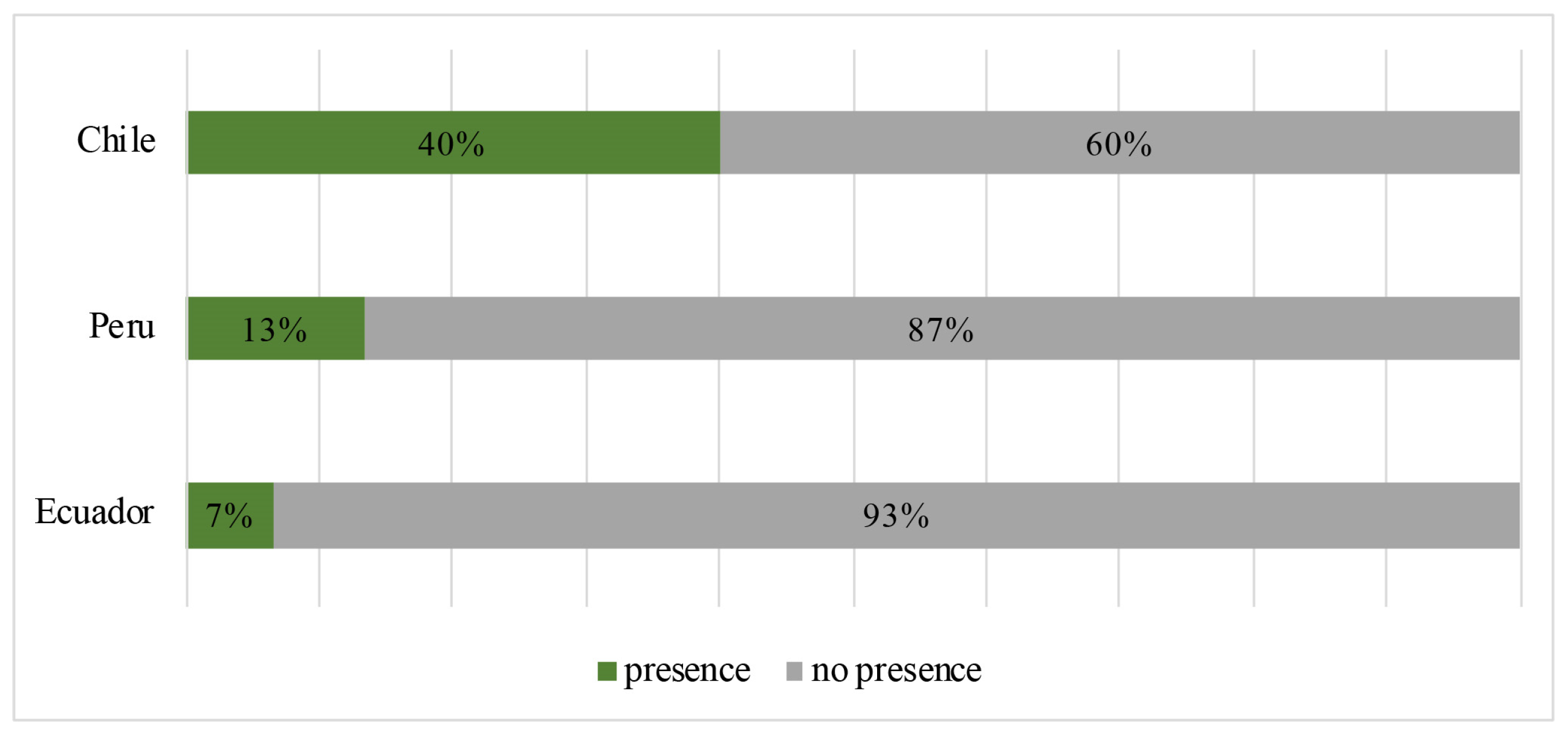
Figure 2, Chile presents the highest relative presence of the topic, with 38.1% of its universities incorporating some reference to urban informality in undergraduate training, whereas Peru (13.3%) and especially Ecuador (6.7%) exhibit minimal and exceptional integration within formal architectural curricula. Although informality constitutes a structural dimension of urban development in the three countries studied, its curricular treatment remains partial, fragmented, and in most cases marginal.
In Chile, the topic exhibits the most consistent presence across the region. While fewer than half of Chilean universities, mainly located in larger urban areas such as Santiago or Concepcion Metropolitan Area, incorporate urban informality explicitly, there is a critical mass of institutions where it appears linked to issues such as habitability in vulnerable areas, socio-spatial complexity at the scale of housing and neighbourhoods, and participatory urban design in precarious settlements. Nevertheless, this incorporation is largely indirect: informality is often addressed through categories such as sustainability, territorial inequality, social housing, or metropolitan planning, rather than as a central curricular object. Integration is mostly transversal, concentrated in compulsory urbanism courses and advanced design studios, with a predominantly technical–normative orientation that frames informality as an urban deficit or regulatory problem. Critical, socio-political, or territorial approaches appear more sporadically, usually tied to specific teaching initiatives or elective courses.
In Peru, the incorporation of informality is even more limited. Although courses on planning, urban development, and housing provide potential entry points, the topic is generally treated tangentially and subordinated to historical, normative, or policy-driven perspectives. The national pattern is characterised by heavy reliance on elective courses, which restricts its pedagogical impact and reinforces its peripheral curricular status. When informality is addressed more explicitly, it tends to adopt a social and territorial perspective that recognises processes of self-construction, urban expansion, and socio-spatial inequality, reflecting the empirical centrality of the phenomenon in the country. However, this recognition does not translate into systematic curricular integration nor into a redefinition of professional competencies.
In Ecuador, the presence of informality is similarly limited, though some programmes include more direct references to concepts such as popular habitat, human settlements, and local urban development in course descriptions and, occasionally, graduate profiles. Despite these indications, integration remains fragmented and largely tangential, concentrated in basic urbanism courses and a small number of electives. Pedagogical approaches combine social and interdisciplinary perspectives, yet with limited theoretical, methodological, or design depth. Informality is acknowledged as part of the Ecuadorian urban context but rarely treated as a strategic field of professional intervention or as a structural component of disciplinary training.
Taken together, the comparison shows that although all three countries recognise urban informality as a constitutive feature of their cities, its translation into architectural curricula is uneven, fragmented, and subordinate to conceptual frameworks that continue to privilege the formal city. Chile demonstrates relative advances, Peru reflects a tension between territorial reality and curricular marginality, and Ecuador offers explicit references with limited structural development. The overall picture is of a training landscape that has yet to fully acknowledge informality as a fundamental dimension of professional practice in the three countries examined.
3.2. Degree of Curricular Integration
The comparative review of the study plans shows how urban informality is incorporated—or omitted—within professional training, revealing differentiated patterns across the three countries.
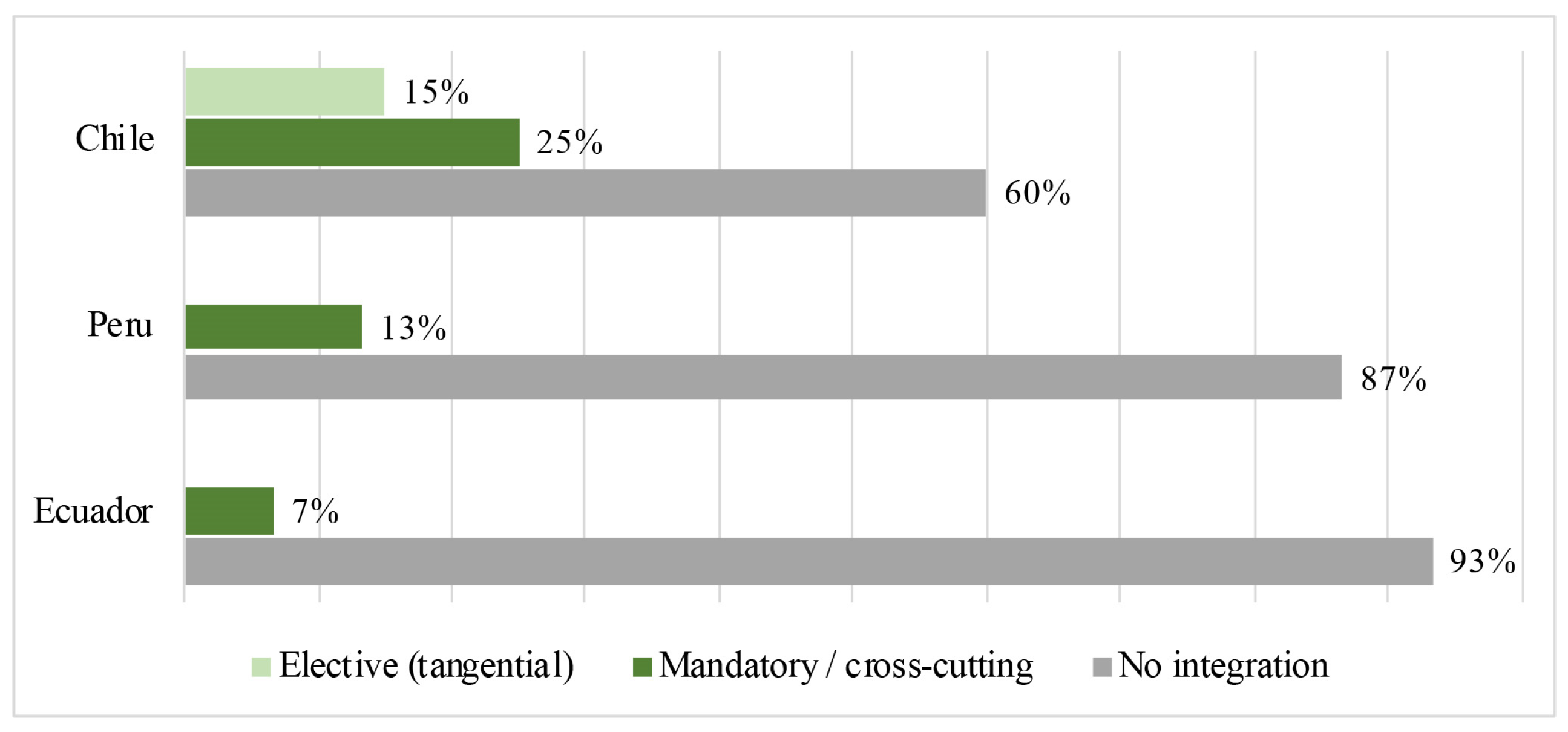
Figure 3 indicates that the predominant category in all cases is “No integration”, evidencing the absence of urban informality as a systematic component of undergraduate education. Only Chile presents a more visible set of experiences in which the topic enters the curriculum, either through compulsory courses related to urbanism and territorial studies or through electives focused on informal settlements, vulnerability, or popular neighbourhoods. In Peru and Ecuador, the identified presence is minimal and typically limited to isolated references within mandatory courses, without a consolidated offer of specialised electives.
A critical dimension of curricular integration is the pedagogical modality through which informality is taught. The analysis reveals a systemic preference for theoretical formats over design studios. Across the three countries, the majority of courses addressing urban informality are theoretical, positioning it as an object of sociological observation rather than a field of architectural intervention. The exceptions found in Chile: the ‘Taller de Proyectos de Diseño Urbano Participativo’ at the Universidad de La Serena and the elective ‘Taller del Barrio y Policentrismo Urbano’ at the Pontificia Universidad Católica de Valparaíso represent isolated attempts to bridge this gap.
The distribution of content related to urban informality suggests that, in Chile, its presence in elective courses reflects a training model that frames informality as an optional area of specialisation, accessible only to students who choose to pursue it, rather than as an essential professional competency. The few compulsory courses that directly address informality or vulnerable territories represent isolated efforts at curricular updating rather than a structural transformation of disciplinary training. Across all three countries, particularly in Chile and Peru, this pattern confirms that curricula continue to be organised around the logic of the formal, regulated city, where informality is not recognised as a constitutive dimension of urban development in these contexts but rather as a “special topic” to be addressed in a fragmented manner.
Analysis of the graduate profiles further confirms the limited weight assigned to urban informality in professional formation. Most profiles emphasise competencies associated with architectural design, normative planning, technical territorial management, and the ability to operate within formalised institutional frameworks. References to socio-spatial justice, work in vulnerable contexts, the social production of habitat, or critical understandings of urban inequality—when present—appear indirectly through broad formulations on sustainability, social responsibility, or comprehensive approaches to the built environment. These mentions, although relevant, do not constitute explicit recognition of informality as a central domain of professional practice, functioning instead as generic frames whose translation into informal-context training is uncertain.
Consequently, the place of informality within graduate profiles is accessory rather than structural. Even when profiles mention engagement with diverse or complex realities, the connection to informal settlements, self-construction, or popular urbanisation depends on individual interpretation rather than on a programmatic definition of the professional role. As a result, preparation for work in these contexts depends largely on individual curricular trajectories—electives, design studio experiences, or participation in specific projects—rather than on a clear institutional orientation. Architectural and urban planning education thus remains anchored in conceptual frameworks that prioritise the formal city, with limited alignment between of the territories in Chile, Peru, and Ecuador and the competencies explicitly defined in graduate profiles.
3.3. Pedagogical Orientation
The third level of analysis examines the perspective from which informality is approached when it appears in the curriculum. To determine this, information from multiple sources was cross-referenced: graduate profiles, urbanism and planning courses, the presence of informality-related content, and general institutional indicators such as research groups or extension programmes.
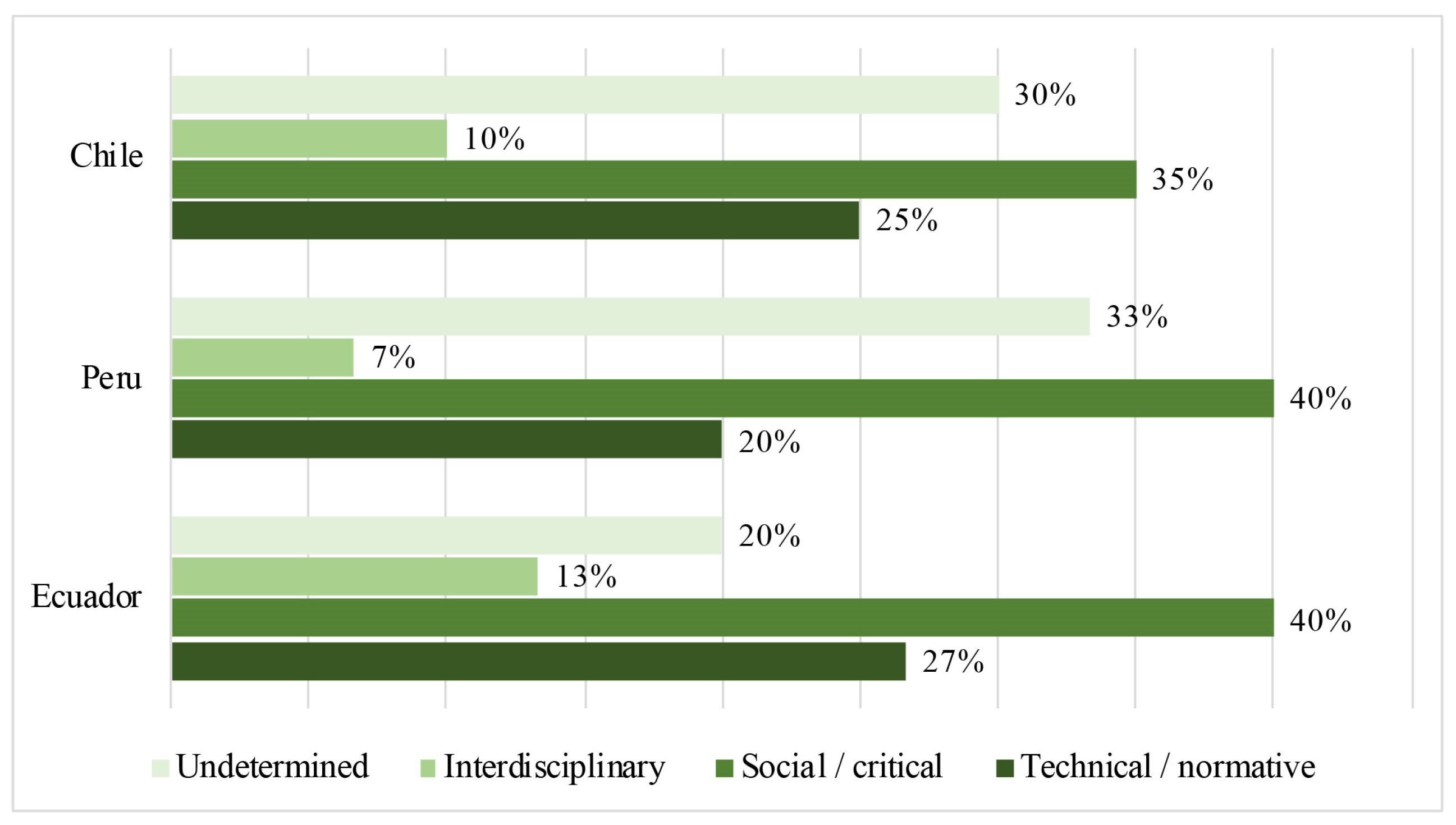
The analysis reveals that urban informality is predominantly addressed through technical, normative, or social perspectives, with comparatively limited adoption of critical or fully interdisciplinary approaches. As illustrated in
Figure 4, the social/critical category is the most common across the three countries, suggesting at least some recognition of informality as an expression of structural inequality rather than merely a regulatory deficit.
Interestingly, the number of universities adopting a social or critical perspective is relatively similar across Chile, Peru, and Ecuador, despite the markedly higher overall curricular presence of the topic in Chile. This pattern indicates that in Peru and Ecuador the few initiatives that do exist tend to adopt more explicitly critical or socially oriented approaches.
Nonetheless, these orientations remain narrow in scope. Approaches that recognise informality as a legitimate mode of urban production—linked to adaptive, participatory, and creative practices—are generally confined to experimental studios, elective courses, or isolated teaching initiatives, rather than embedded as transversal components of disciplinary training. Similarly, interdisciplinary approaches that integrate social, economic, political, and spatial dimensions remain marginal and have yet to become part of the core curriculum.
Taken together, these patterns suggest that university training continues to reproduce a dichotomous view of the formal and informal city, where informality is positioned as external to mainstream design and planning practice rather than as a legitimate and necessary field of intervention for architects and urbanists in the three countries studied.
3.4. Cross-Country Comparison
The comparison across the three countries reveals significant differences in how urban informality is incorporated into architectural education. In Chile, although integration is neither comprehensive nor uniform, the training landscape is comparatively more dynamic. Several institutions—including the Universidad de Chile, the Pontificia Universidad Católica de Chile, and the Pontificia Universidad Católica de Valparaíso—have begun to articulate courses, design studios, and research initiatives that address issues related to informal settlements, vulnerable territories, and the social production of habitat. Some universities host specialised academic structures, such as the Master in Human Settlements and the Environment at the Pontificia Universidad Católica de Chile, the Centre for Research on Urban Vulnerabilities at Universidad de Valparaíso, or research groups linked to resilience and sustainable environments. Additionally, the College UC offers an undergraduate programme in Urban Planning, which introduces a more explicit engagement with territorial inequality and informal urban processes, an institutional direction not commonly observed elsewhere in the region. While these initiatives remain partial, they suggest the emergence of a conceptual and methodological field in which urban informality is gaining a more substantive foothold.
In Peru, the presence of informality within architectural curricula is more limited, yet when it does appear it is often framed through social–critical perspectives that recognise the importance of self-construction, peri-urban expansion, and socio-spatial inequality in national urban development. Universities such as the Pontificia Universidad Católica del Perú and the Universidad Nacional de Ingeniería illustrate attempts to integrate these discussions into core courses on territory and urbanism. Several institutions also host relevant research agendas or academic groups—for example, INIFAUA at the Universidad Nacional de Ingeniería—although these efforts have not yet solidified into a systematic curricular framework. Notably, the Universidad Privada de Tacna (UPT) is currently preparing to launch an undergraduate degree in Urban Planning, an initiative that could broaden the institutional space for engaging with informal urbanisation in professional training.
In Ecuador, integration is more sporadic, although some schools such as the Pontificia Universidad Católica del Ecuador and the Universidad Católica de Santiago de Guayaquil, include direct references to concepts such as popular habitat, human settlements, or local urban development in course descriptions and, in some cases, graduate profiles. However, these inclusions remain limited in scope and do not permeate the curriculum. The dataset indicates little presence of research groups, extension programmes, or diplomas explicitly devoted to informality, underscoring the marginal institutional embedding of the topic.
Taken together, the results position Chile as the country with the most diverse mechanisms of integration, combining compulsory courses, electives, and research or extension activities. Peru and Ecuador, by contrast, exhibit more rigid curricular structures in which informality is incorporated marginally and with weak alignment to the stated graduate competencies. Across all contexts, a significant gap persists between the centrality of informality in urban development in Chile, Peru, and Ecuador and its treatment within architectural education: the formal city remains the dominant conceptual reference, while popular urbanisation continues to appear as peripheral, occasional, and heavily dependent on individual academic initiatives rather than institutional commitments.
4. Discussion
The findings of this study reveal a persistent and significant disconnect between the structural prevalence of urban informality in the cities of Chile, Peru, and Ecuador and its treatment within architectural and urban planning education. This interpretation is grounded in the empirical results presented above, particularly the limited thematic presence of informality, its predominantly tangential curricular integration, and the dominance of technical–normative pedagogical orientations.
This is especially significant given the increasing blurriness between formal and informal developments globally, necessitating a recognition of their entanglement rather than their treatment as separate entities. At the same time, higher-education systems in the region increasingly operate within competitive frameworks shaped by international rankings and accreditation processes, which are often presented as value-added indicators to attract prospective students. However, these metrics rarely question the extent to which architecture programmes remain meaningfully connected to the real socio-spatial challenges of the territories in which they operate. In this sense, the emphasis on institutional prestige and global competitiveness may inadvertently obscure a more fundamental question regarding the social relevance of architectural education and its engagement with pressing urban realities such as informality.
By recognising informality as a solution rather than a problem, planning education can dismantle the formal–informal divide and foster pedagogical approaches that integrate the resilience and creativity of marginalized neighbourhoods into broader city-building visions [
11,
31]. This shift can be understood as a response to the empirical gaps identified in this study, particularly the marginal and fragmented incorporation of informality across curricula, recognising the capacity of grassroots networks to contest epistemic injustices through the co-production of diverse forms of knowledge and practice, thereby contributing to more just and inclusive urban futures [
8].
4.1. The Persistent Disconnect in Planning Education
While it is estimated that up to 80% of metropolitan areas like Lima have been built informally, the analysis shows that only 13.3% of Peruvian architecture programmes and 6.7% of Ecuadorian programmes explicitly address this condition in their curricula. This quantitative exclusion provides a concrete basis for the critique of colonial pedagogical frameworks [
51]. The data suggest that despite the structural prevalence of self-construction, the majority of undergraduate programmes continue to prioritise Euro-American technocratic models that fail to engage with local socio-spatial practices [
52,
53]. The “persistent disconnect” identified in the results is therefore not merely a curricular oversight, but an indicator of an epistemic hierarchy that marginalises the lived experiences of the urban majority in favour of formalist traditions [
26].
The comparative analysis across Chile, Peru, and Ecuador revealed varied, yet consistently fragmented, approaches to integrating urban informality into architectural education. This fragmentation is not merely a curricular detail but a structural issue: when informality appears only through isolated electives, individual initiatives, or tangential mentions, students are unable to develop coherent conceptual frameworks or methodological competencies for engaging with the realities that shape most Latin American cities. The consequences of this gap extend directly to professional accreditation and practice in the three countries studied. Architectural programmes that do not systematically address informality: its socio-spatial logics, its incremental production processes, and its forms of governance fail to meet the competencies required for practice in contexts where informal urbanisation is the dominant mode of city-making. As noted by Perold et al. [
34], cited in Watson [
54] planning theory in these regions often leaves practitioners with little relevance to draw upon when facing the complex problems of southern cities. This gap results in the accreditation of professionals without demonstrable knowledge of the conditions they are likely to encounter in practice, thereby undermining both the relevance of accreditation standards and the capacity to respond to structural urban challenges. Furthermore, the absence of explicit curricular guidelines on informality perpetuates institutional biases that privilege formal planning instruments, technical regulation, and normative models of urban development, thereby constraining the transformative potential of architectural and planning professions.
Chile demonstrates the highest relative presence of the topic, with a “critical mass” of institutions beginning to address issues related to informal settlements and vulnerable territories. However, this incorporation is largely indirect, often subsumed under categories like sustainability or territorial inequality, and primarily maintains a technical–normative orientation that frames informality as an urban deficit. While dynamic, the focus in Chile often positions informality as an optional area of specialisation rather than an essential professional competency. In Peru, the integration of informality is more limited, often relying on elective courses and treating the subject tangentially within broader historical or policy-driven perspectives. While some initiatives adopt social and territorial perspectives recognizing self-construction, this does not translate into systematic curricular integration or a redefinition of professional competencies. In Ecuador, despite some explicit references to concepts like “popular habitat”, also exhibits sporadic and limited integration, lacking the structural depth needed to embed the topic institutionally.
These national patterns underscore the study’s central hypothesis: despite acknowledging the social and environmental dimensions of urban development, universities in the region tend to address the informal city tangentially. The predominant “no integration” category across all three countries further solidifies the argument that curricula remain organized around the logic of the formal city, hindering the comprehensive preparation of professionals for the realities of Latin American urbanism.
4.2. External Contextual Drivers of Curricular Differentiation
The curricular differences identified across the three countries are not merely the result of isolated pedagogical choices but might deeply influenced by external contextual factors, including national economic models, urbanisation levels, and the institutional development of higher-education systems. As mentioned in the country selection the three countries present differences in their planning system and the historical integration of informality.
The results for Chile suggest a highly technical but socially fragmented integration of informality, can be understood through the lens of its subsidiary state model. Since the late 1970s, Chilean urbanism has been characterized by a “neo-liberalised” planning framework that prioritizes market-led housing production and real estate investment [
41,
43]. This has forced architectural education into a “contradictory ethos”, where practitioners are trained to navigate market demands while simultaneously grappling with the social responsibilities of a discipline that has been largely stripped of its direct planning powers [
42]. Consequently, the inclusion of informality in Chilean curricula often appears as a critical “counter-narrative” by academic elites rather than a core institutional requirement of the professional market.
In the Peruvian context, the curricular gap identified in the results is driven by a unique history of “informality-led” urbanisation. In cities like Lima, the process of city-making has shifted from land “invasions” to a sophisticated “mercantilisation of popular land”, where 91% of recent growth is produced outside formal planning [
1]. The results reveal a lack of formal integration in Peru, reflecting a “disciplinary lag”. While on-the-ground realities are characterized by “empirical constructive adaptation” and the self-production of semi-communal spaces in hillside settlements as part of horizontal growth, these processes frequently occur through informal associations and demarcations, often occupying high-risk areas exposed to river flooding, landslides (huaycos), and earthquakes. In contrast, the official academy remains largely anchored in formalist traditions [
44,
47]. This creates a situation where the most prevalent mode of city-making is treated as an “other” reality, despite it being the dominant mode of spatial production in the country [
47].
The specific patterns found In Ecuador ’re primarily shaped by centralized legislative intervention. Unlike the market-driven model in Chile or the informality-led model in Peru, the Ecuadorian academic landscape has been fundamentally reshaped by the 2010 Organic Law of Higher Education. This reform shifted the focus toward “social pertinence” and the “regionalisation of the academic offer”, mandating that universities align their curricula with national development goals and the constitutional mandate of Buen Vivir [
45,
55]. The drive to include “ancestral knowledge” and “social equity” in the curricula is thus a direct institutional response to these quality-assurance mandates [
46,
56]. This explains why informality is often addressed through the lens of social policy and state-regulated standards rather than purely through the design studio’s experimental freedom.
4.3. Towards an “Informal Turn” in Built-Environment Education
The prevalence of the ‘No Integration’ category across all three countries (as illustrated in
Figure 3) justifies the call for a fundamental “informal turn” in built-environment education [
11]. This normative proposal arises directly from the documented marginality of the topic in our dataset: when informality is confined to elective courses or tangential mentions—as seen in the Chilean data (38.1%)—it is framed as an optional specialisation rather than an essential competency for regional practice [
52,
57]. To address this, architectural education must move beyond acknowledging informality as an ‘exception’ and instead integrate it as a structural component of the core curriculum [
35,
38]. This shift is necessary to equip future practitioners with the capacity to navigate the non-linear, adaptive logic of the social production of habitat that defines Andean cities [
51]. By integrating these realities, planning education can finally dismantle the binary divide that historically positioned informal settlements as problems to be corrected rather than legitimate urban environments [
7].
The identified pedagogical orientations—social/critical, technical/normative, and interdisciplinary—reveal further complexities. While a social or critical perspective is the most common approach when informality is addressed, it often remains narrow in scope and confined to experimental studios or elective courses. This means that approaches recognizing informality as a legitimate mode of urban production, linked to adaptive and participatory practices, are rarely embedded as transversal components of disciplinary training. This observation aligns with calls for educational programmes to encourage primary research and case studies, allowing students to comprehend the grounded particularities of urban informality and develop informed policy responses [
58].
Although the emphasis on SDGs, particularly SDG 11 (sustainable cities and communities), underscores the global recognition of the importance of improving slum areas and providing safe housing, the lack of formal education among educators on these critical frameworks suggests that self-learning often drives their integration, leading to uneven adoption [
38]. To truly prepare planners and architects, the discussion must move beyond merely acknowledging informality to actively cultivating critical, interdisciplinary, and ethically grounded pedagogical frameworks that embrace the full spectrum of urban realities [
35]. The emergence of “generative pedagogies” from grassroots initiatives, focusing on the social production of habitat and co-production of knowledge, offers promising alternative models for more contextually relevant and socially just urban education [
8].
It is important to distinguish between what the empirical analysis demonstrates and the broader pedagogical implications derived from it. The data presented in this study show that urban informality occupies a marginal, fragmented, and often indirect position within undergraduate architectural curricula across the three countries analysed. The proposal for a more explicit and systematic integration of informality, articulated here through the notion of an “informal turn”, should therefore be understood as a normative and forward-looking agenda informed by these findings, rather than as a direct empirical conclusion.
4.4. Study Limitations
While this research provides a comprehensive overview of the gap between architectural education, several limitations must be considered to contextualize the findings.
First, the geographic scope is restricted to Chile, Peru, and Ecuador. Although these countries offer a significant cross-section of neoliberal and self-construction models, the findings may not be fully generalizable to the entire Latin American region. Distinct urban histories and land tenure systems in countries like Brazil, Colombia, or Mexico could reveal different pedagogical approaches or institutional responses to informality. Second, the study focuses principally on undergraduate curricula. By doing so, it may overlook more specialized or experimental approaches to informal territories that are often found at the postgraduate level. Master’s programmes and research laboratories frequently lead the “informal turn” in architectural education, and their exclusion might present a more conservative view of the academic landscape than what exists.
Methodologically, the reliance on official programme descriptions and publicly available syllabi presents a challenge. There is often a disconnect between the “official curriculum” and the “delivered curriculum”. Moreover, many universities have academic freedom policies, which allow professors to incorporate their own ideas and research findings into their courses. This research captures what institutions formally claim to teach, but it cannot account for the “hidden curriculum”—the spontaneous workshops, elective courses, or grassroots initiatives led by individual professors that may address informality without being reflected in official university documentation.
Finally, the study is limited by its institutional perspective. By focusing on curricular structure, the research does not incorporate the lived experiences of students or alumni. Understanding how graduates perform when faced with informal urban challenges, or what communities require from professionals, remains a critical area for future qualitative research.
5. Conclusions
The study demonstrates a persistent and significant misalignment between the centrality of urban informality in urban development in Chile, Peru, and Ecuador and its marginal position within architectural education. Across the 50 universities analysed in Chile, Peru, and Ecuador, urban informality appears only sporadically and is seldom conceptualised as a structural dimension of the built environment. Curricular integration remains fragmented: Chile exhibits the most diverse set of initiatives—ranging from compulsory courses to research groups and postgraduate programmes—while Peru and Ecuador present more limited and inconsistent incorporation, often confined to isolated electives or tangential mentions in broader urbanism courses. Pedagogically, the predominant orientations are technical–normative or social–critical, but rarely interdisciplinary or explicitly oriented toward understanding informality as a legitimate mode of city-making. Across all contexts, the curricula continue to prioritise the formal, regulated city, leaving informal urbanisation largely peripheral to professional training.
The central objective of the research was to determine whether, and in what ways, universities prepare future architects and planners to engage with conditions of urban informality. The evidence indicates that preparation is limited, uneven, and highly dependent on individual academic initiatives rather than institutional or national directives. Only a minority of programmes offer substantive engagements such as design studios, specialised diplomas, or research lines that recognise informal settlements as complex, dynamic, and structurally embedded urban systems. For most institutions, informality remains a secondary or supplementary topic not reflected in graduate profiles, competencies, or core curricular structures. Thus, the study confirms the hypothesis that informal urbanism is acknowledged rhetorically but not integrated systematically into professional training.
While these findings reveal a significant gap in official curricular integration, it is likely that many schools maintain a ‘hidden curriculum’ where social issues are tackled through unscripted studio experiments or individual faculty initiatives. Nevertheless, the absence of these topics from official documents remains critical, as the lack of institutionalisation prevents these ‘marginal’ pedagogical innovations from becoming a stable and recognized component of professional formation.
Given the magnitude and persistence of urban informality in the three countries studied, the findings underscore the necessity of a profound pedagogical reorientation what current scholarship describes as an “informal turn” in built-environment education. Future research should expand the regional scope of analysis, incorporating additional countries and diverse institutional models, and should examine how pedagogical innovations such as community-based studios, transdisciplinary laboratories, or participatory research programmes may bridge the gap between academic training and real urban conditions. Further studies could also investigate students’ learning experiences, professional outcomes, and the influence of emerging disciplines such as urban planning degrees (e.g., the forthcoming programme at UPT in Peru) on reshaping the field. Ultimately, strengthening the integration of informality within architectural curricula is not merely an academic challenge but a prerequisite for producing professionals capable of contributing meaningfully to more just, resilient, and contextually grounded urban futures in the countries examined.