Conservation Effectiveness and Spatial Drivers of Qianjiangyuan National Park: Causal Evidence from a Quasi-Experimental Framework


Abstract
1. Introduction
2. Materials and Methods
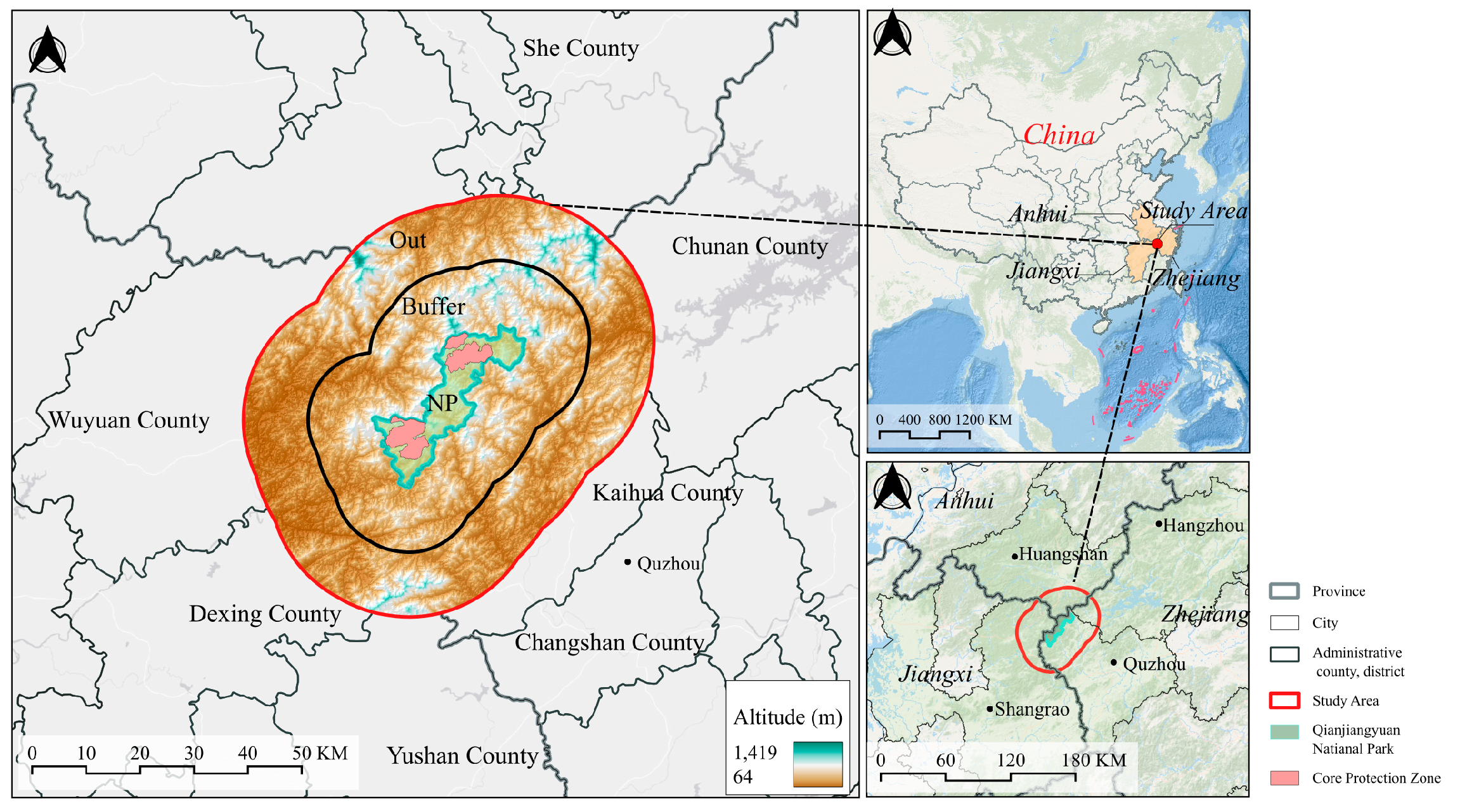
2.1. Study Area
2.2. Research Framework and Data Sources
2.3. Construction of the Ecological Conservation Effectiveness Index
2.4. Identification of Driving Factor Importance Based on the RF-SHAP Model
2.5. Identifying Conservation Effectiveness via Propensity Score Matching
3. Results
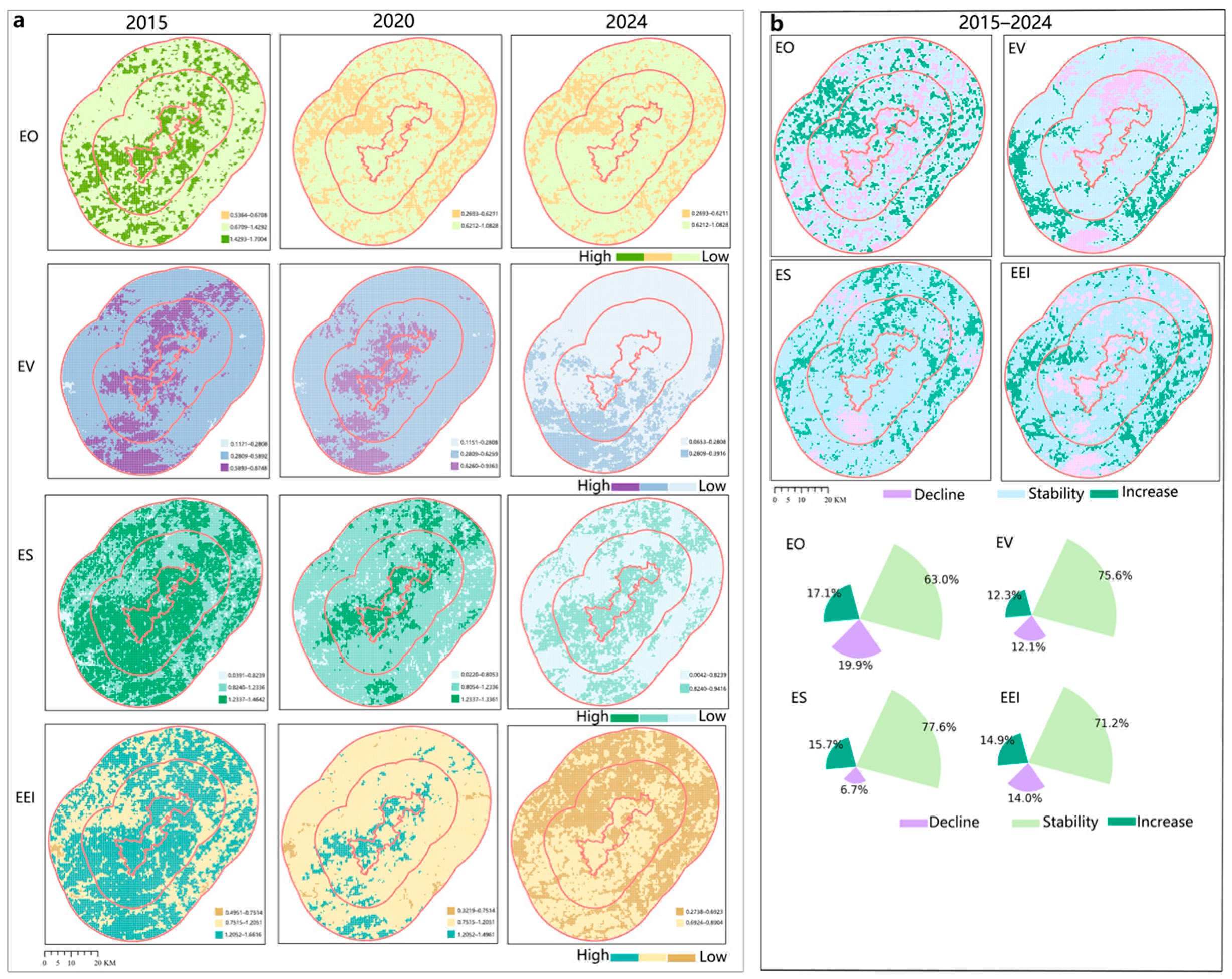
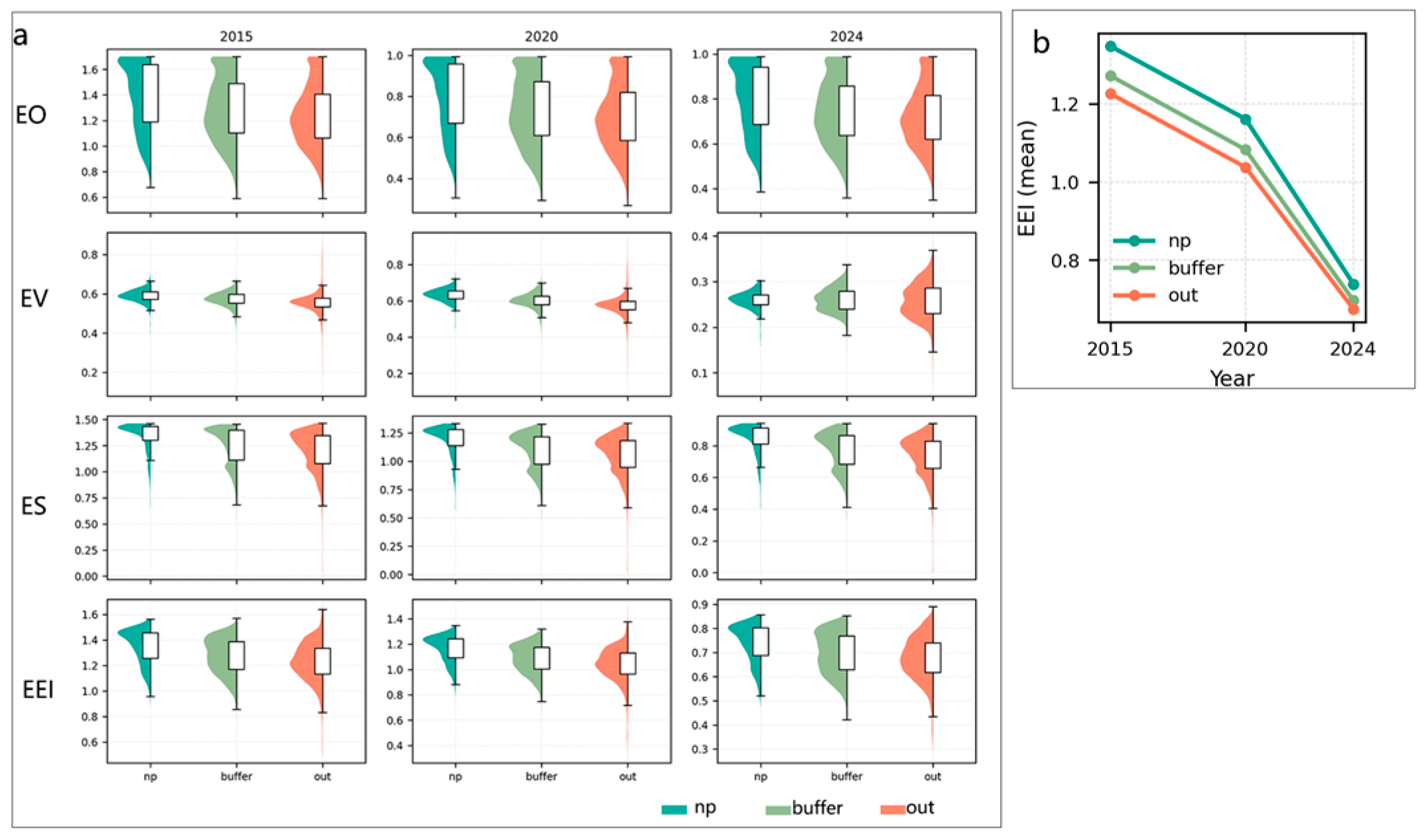
3.1. Analysis of the Spatial Patterns and Spatiotemporal Dynamics of Ecological Conservation Outcomes
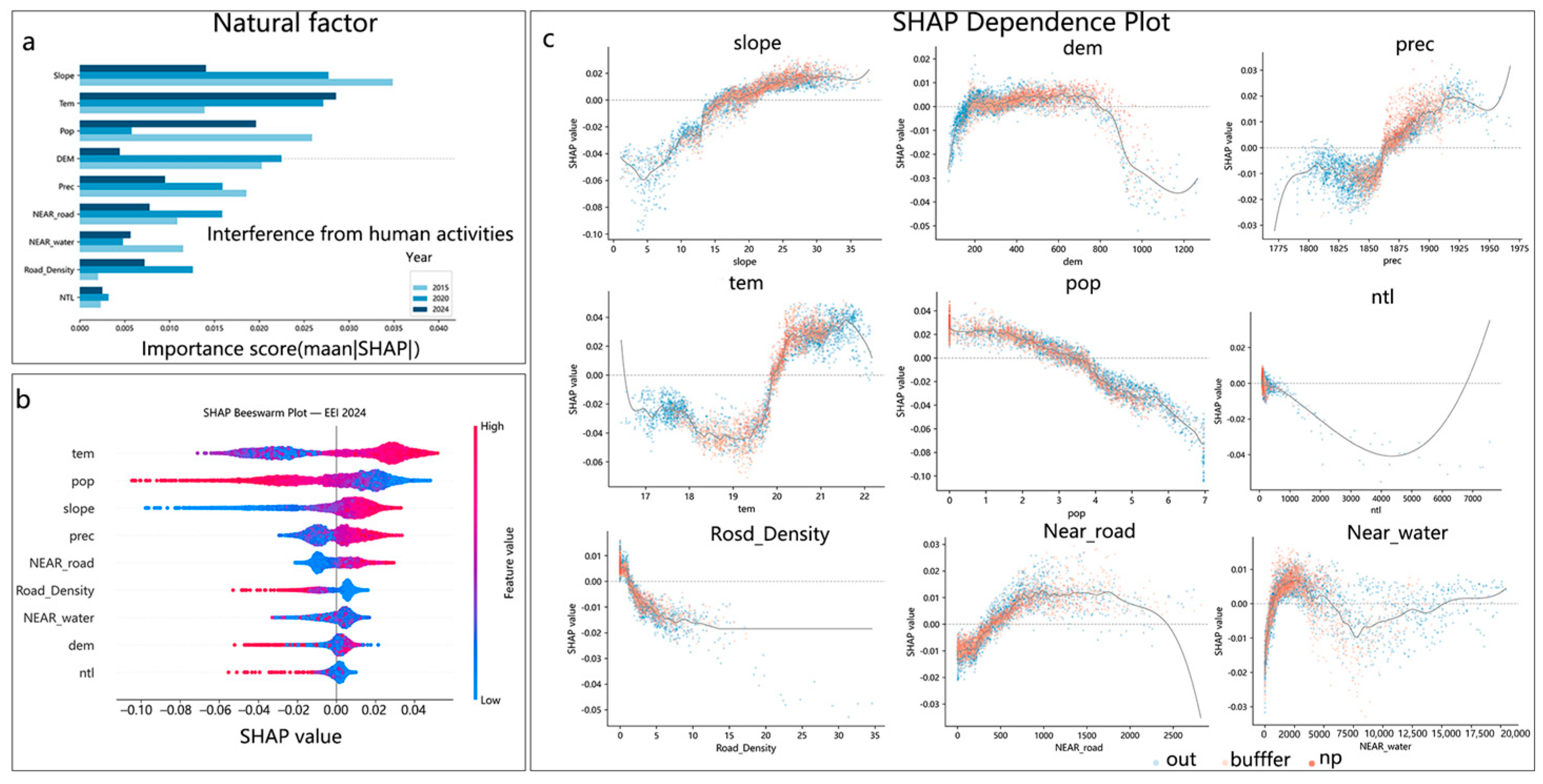
3.2. Analysis of the Importance and Mechanisms of Drivers Shaping the Spatial Patterns of Ecological Conservation Outcomes
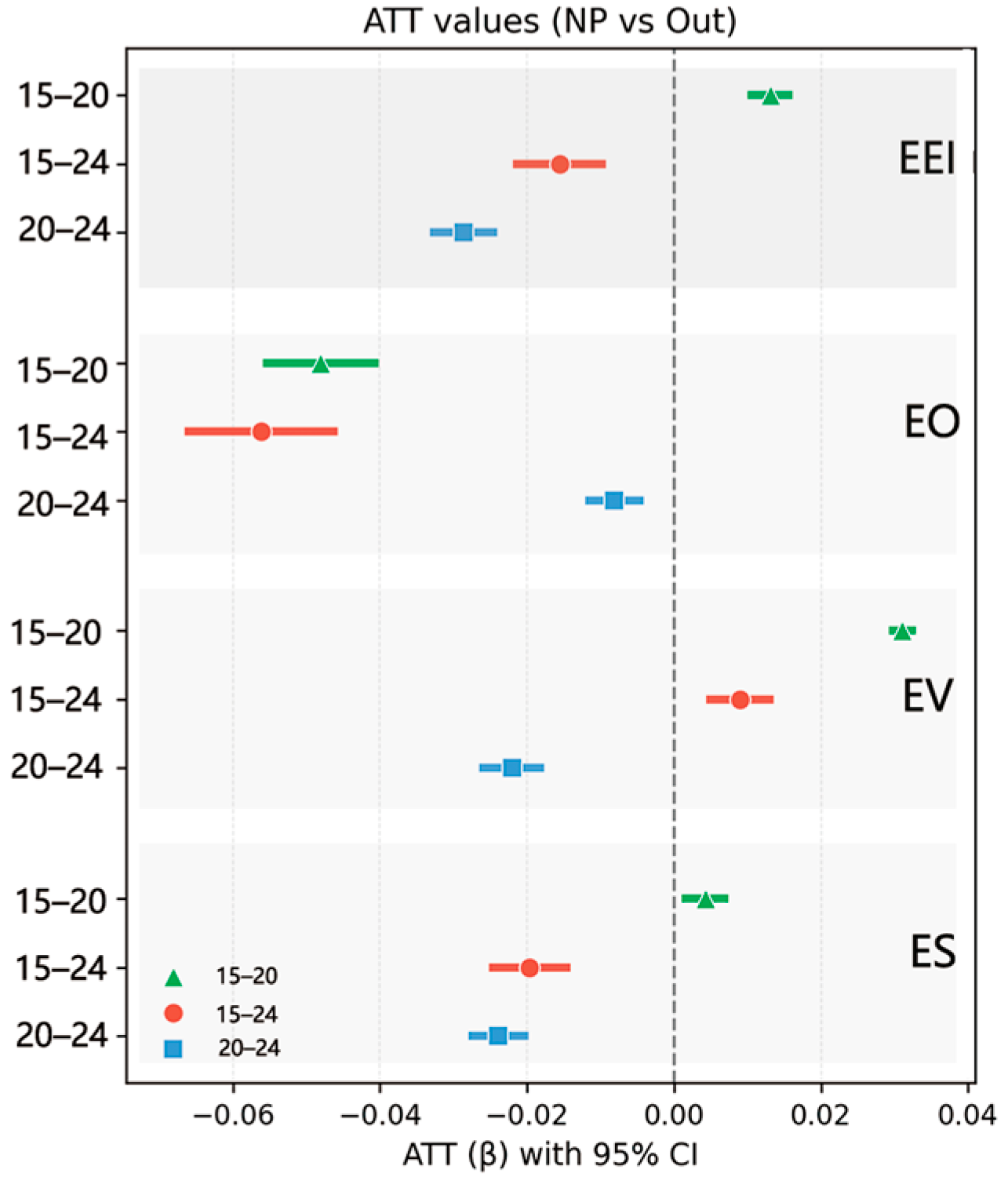
3.3. Evaluation of the Direct Policy Effects of the Establishment of QJYNP
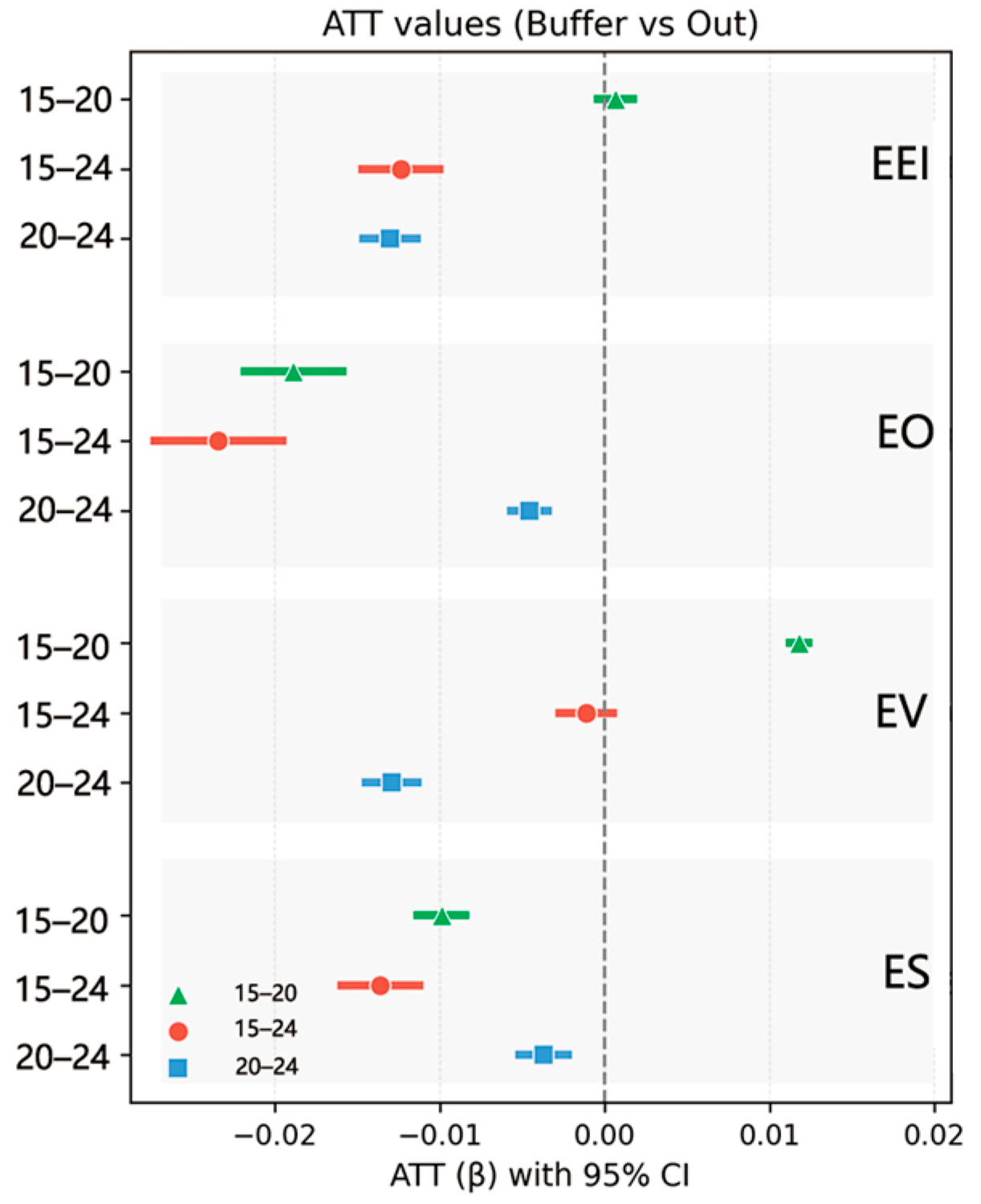
3.4. Evaluation of the Spillover Policy Effects of the Establishment of QJYNP
4. Discussion
4.1. Spatio-Temporal Evolution of National Park Conservation Outcomes and Policy Effectiveness
4.2. Driving Mechanisms of Spatial Variation in Ecological Conservation Outcomes
4.3. Causes of Declining National Park Conservation Effectiveness and Negative Spillover Effects
5. Conclusions
Supplementary Materials
Author Contributions
Funding
Data Availability Statement
Conflicts of Interest
Abbreviations
| QJYNP | Qianjiangyuan National Park |
| PA | Protected Area |
| PSM | Propensity Score Matching |
| DID | Difference-in-Difference |
| RF | Random Forest |
| SHAP | SHapley Additive exPlanations |
| ATT | Average Treatment Effect on the Treated |
| EV | Ecosystem Vigor |
| EO | Ecosystem Organization |
| ES | Ecosystem Service |
| EEI | Ecological Conservation Effectiveness Index |
Appendix A

| Dimensions | EO | EV | ES |
|---|---|---|---|
| Weight | 0.2567 | 0.3802 | 0.3631 |
References
- Turner, B.L.; Lambin, E.F.; Reenberg, A. The Emergence of Land Change Science for Global Environmental Change and Sustainability. Proc. Natl. Acad. Sci. USA 2007, 104, 20666–20671. [Google Scholar] [CrossRef]
- Maxwell, S.L.; Cazalis, V.; Dudley, N.; Hoffmann, M.; Rodrigues, A.S.L.; Stolton, S.; Visconti, P.; Woodley, S.; Kingston, N.; Lewis, E.; et al. Area-Based Conservation in the Twenty-First Century. Nature 2020, 586, 217–227. [Google Scholar] [CrossRef] [PubMed]
- Convention on Biological Diversity. Kunming-Montreal Global Biodiversity Framework; Secretariat of the Convention on Biolog-ical Diversity: Montreal, QC, Canada, 2022; Available online: https://www.cbd.int/gbf (accessed on 30 March 2026).
- Heinen, J.T. International Trends in Protected Areas Policy and Management. In Global Issues and Trends in the Protection of Natural Areas; Sladonja, B., Ed.; InTech: Rijeka, Croatia, 2012; p. 18. ISBN 978-953-51-0697-5. [Google Scholar]
- Barnes, M.D.; Craigie, I.D.; Dudley, N.; Hockings, M. Understanding Local-Scale Drivers of Biodiversity Outcomes in Terrestrial Protected Areas. Ann. N. Y. Acad. Sci. 2017, 1399, 42–60. [Google Scholar] [CrossRef]
- Stoner, C.; Caro, T.; Mduma, S.; Mlingwa, C.; Sabuni, G.; Borner, M. Assessment of Effectiveness of Protection Strategies in Tanzania Based on a Decade of Survey Data for Large Herbivores. Conserv. Biol. 2007, 21, 635–646. [Google Scholar] [CrossRef]
- Brodie, J.F.; Mohd-Azlan, J.; Chen, C.; Wearn, O.R.; Deith, M.C.M.; Ball, J.G.C.; Slade, E.M.; Burslem, D.F.R.P.; Teoh, S.W.; Williams, P.J.; et al. Landscape-Scale Benefits of Protected Areas for Tropical Biodiversity. Nature 2023, 620, 807–812. [Google Scholar] [CrossRef]
- Zhang, L.; Luo, Z.; Mallon, D.; Li, C.; Jiang, Z. Biodiversity conservation status in China’s growing protected areas. Biol. Conserv. 2017, 210, 89–100. [Google Scholar] [CrossRef]
- Jones, K.R.; Venter, O.; Fuller, R.A.; Allan, J.R.; Maxwell, S.L.; Negret, P.J.; Watson, J.E.M. One-Third of Global Protected Land Is under Intense Human Pressure. Science 2018, 360, 788–791. [Google Scholar] [CrossRef] [PubMed]
- Zhang, Y.; West, P.; Thakholi, L.; Suryawanshi, K.; Supuma, M.; Straub, D.; Sithole, S.S.; Sharma, R.; Schleicher, J.; Ruli, B.; et al. Governance and Conservation Effectiveness in Protected Areas and Indigenous and Locally Managed Areas. Annu. Rev. Environ. Resour. 2023, 48, 559–588. [Google Scholar] [CrossRef]
- Heller, N.E.; McManus Chauvin, K.; Skybrook, D.; Barnosky, A.D. Including Stewardship in Ecosystem Health Assessment. Nat. Sustain. 2023, 6, 731–741. [Google Scholar] [CrossRef]
- Xu, W.; Xiao, Y.; Zhang, J.; Yang, W.; Zhang, L.; Hull, V.; Wang, Z.; Zheng, H.; Liu, J.; Polasky, S.; et al. Strengthening Protected Areas for Biodiversity and Ecosystem Services in China. Proc. Natl. Acad. Sci. USA 2017, 114, 1601–1606. [Google Scholar] [CrossRef]
- Bowker, J.N.; De Vos, A.; Ament, J.M.; Cumming, G.S. Effectiveness of Africa’s Tropical Protected Areas for Maintaining Forest Cover. Conserv. Biol. 2017, 31, 559–569. [Google Scholar] [CrossRef]
- Ma, Y.; Liu, L.; Yao, W.; Zeng, Z.; Zhang, M.; Shang, E.; Zhang, S.; Yang, J. Spatial and Temporal Changes and Assessment of Multi-Species Habitat in Hainan Jianfengling Protected Area. Remote Sens. 2025, 17, 46. [Google Scholar] [CrossRef]
- Zalasiewicz, J.; Thomas, J.A.; Waters, C.N.; Turner, S.; Head, M.J. The Meaning of the Anthropocene: Why It Matters Even without a Formal Geological Definition. Nature 2024, 632, 980–984. [Google Scholar] [CrossRef]
- Li, C.; Hao, Y.; Zheng, Z.; Xu, X.; Cui, L.; Guan, M.; Guan, S.; Li, T.; Pang, Z.; Li, L.; et al. Determination of Priority Conservation Areas in the Yellow River Source Region Based on Ecosystem Integrity Evaluations. Glob. Ecol. Conserv. 2024, 49, e02800. [Google Scholar] [CrossRef]
- Parrish, J.D.; Braun, D.P.; Unnasch, R.S. Are We Conserving What We Say We Are? Measuring Ecological Integrity within Protected Areas. Bioscience 2003, 53, 851–860. [Google Scholar] [CrossRef]
- Nicholson, E.; Watermeyer, K.E.; Rowland, J.A.; Sato, C.F.; Stevenson, S.L.; Andrade, A.; Brooks, T.M.; Burgess, N.D.; Cheng, S.-T.; Grantham, H.S.; et al. Scientific Foundations for an Ecosystem Goal, Milestones and Indicators for the Post-2020 Global Biodiversity Framework. Nat. Ecol. Evol. 2021, 5, 1338–1349. [Google Scholar] [CrossRef] [PubMed]
- Rapport, D.J.; Costanza, R.; McMichael, A.J. Assessing Ecosystem Health. Trends Ecol. Evol. 1998, 13, 397–402. [Google Scholar] [CrossRef]
- Zhou, J.; Wang, X.; Wang, X.; Yao, W.; Tu, Y.; Sun, Z.; Feng, X. Evaluation of Ecosystem Quality and Stability Based on Key Indicators and Ideal Reference Frame: A Case Study of the Qinghai-Tibet Plateau. J. Environ. Manag. 2024, 370, 122460. [Google Scholar] [CrossRef]
- Zhang, S.; Zhang, Z.; Zhang, T.; Ju, H. Assessment of Coastal Zone Ecosystem Health in the Context of Tourism Development: A Case Study of Jiaozhou Bay. Ecol. Indic. 2024, 169, 112874. [Google Scholar] [CrossRef]
- Wang, T.; Zhang, J.; Qian, Z.; Dong, Y.; Ma, X. Conservation Effectiveness and Heterogeneity of the National Park in Promoting Ecosystem Health: Causal Evidence from Huangshan, China. Land 2025, 14, 1948. [Google Scholar] [CrossRef]
- Yadav, A.; Kansal, M.L.; Singh, A. Ecosystem Health Assessment Based on the V-O-R-S Framework for the Upper Ganga Riverine Wetland in India. Environ. Sustain. Indic. 2025, 25, 100580. [Google Scholar] [CrossRef]
- Li, W.; Chen, X.; Zheng, J.; Zhang, F.; Yan, Y.; Hai, W.; Yang, J.; Han, C.; Liu, L. Effectiveness and Driving Mechanisms of Ecological Conservation and Restoration in Sichuan Province, China. Ecol. Indic. 2025, 172, 113238. [Google Scholar] [CrossRef]
- Du, L.; Liu, H.; Liu, H.; Liu, W.; Li, Z.; Liu, X.; Li, J.; Quan, Z.; Zhang, Y. Temporal-Spatial Variation of Regulating Ecosystem Services and Analysis of Driving Factors in Hainan Tropical Rainforest National Park, China. Front. Earth Sci. 2025, 13, 1449816. [Google Scholar] [CrossRef]
- Tang, Z.; Fang, J.; Sun, J.; Gaston, K.J. Effectiveness of Protected Areas in Maintaining Plant Production. PLoS ONE 2011, 6, e19116. [Google Scholar] [CrossRef] [PubMed]
- Cao, Z.; Shao, M.; Lu, Z.; Dong, X.; Ma, C.; Yao, P. Quantitative Assessment of Ecological Conservation Effectiveness and Spillover Effects of China’s First Group of National Parks. Biol. Conserv. 2025, 308, 111242. [Google Scholar] [CrossRef]
- Oldekop, J.A.; Holmes, G.; Harris, W.E.; Evans, K.L. A Global Assessment of the Social and Conservation Outcomes of Protected Areas. Conserv. Biol. 2016, 30, 133–141. [Google Scholar] [CrossRef] [PubMed]
- Xu, Y.; Li, C. A Novel Multidimensional Framework for Bridging Conservation Gaps and Optimizing the System of Natural Reserves for Biodiversity: A Case Study of Dongying, China. Ecol. Indic. 2025, 170, 113088. [Google Scholar] [CrossRef]
- Yu, C.; Zhang, Z.; Jeppesen, E.; Gao, Y.; Liu, Y.; Liu, Y.; Lu, Q.; Wang, C.; Sun, X. Assessment of the Effectiveness of China’s Protected Areas in Enhancing Ecosystem Services. Ecosyst. Serv. 2024, 65, 101588. [Google Scholar] [CrossRef]
- Rosenbaum, P.R.; Rubin, D.B. The Central Role of the Propensity Score in Observational Studies for Causal Effects. Biometrika 1983, 70, 41–55. [Google Scholar] [CrossRef]
- Ferraro, P.J. Counterfactual Thinking and Impact Evaluation in Environmental Policy. New Dir. Eval. 2009, 2009, 75–84. [Google Scholar] [CrossRef]
- Andam, K.S.; Ferraro, P.J.; Pfaff, A.; Sanchez-Azofeifa, G.A.; Robalino, J.A. Measuring the Effectiveness of Protected Area Networks in Reducing Deforestation. Proc. Natl. Acad. Sci. USA 2008, 105, 16089–16094. [Google Scholar] [CrossRef]
- Baylis, K.; Honey-Rosés, J.; Börner, J.; Corbera, E.; Ezzine-de-Blas, D.; Ferraro, P.J.; Lapeyre, R.; Persson, U.M.; Pfaff, A.; Wunder, S. Mainstreaming Impact Evaluation in Nature Conservation. Conserv. Lett. 2016, 9, 58–64. [Google Scholar] [CrossRef]
- Zhang, X.; Zhong, L.; Zhang, H. Using Propensity Score Matching Models to Assess the Protection Effectiveness in Pudacuo National Park, China. Ecol. Indic. 2023, 150, 110222. [Google Scholar] [CrossRef]
- Li, S.; Yu, H.; Wei, R.; Yang, J. Can Wuyishan National Park Establishment Increase Regional Carbon Storage? An Empirical Study Based on the DID Model. Ecol. Indic. 2026, 182, 114500. [Google Scholar] [CrossRef]
- Zhang, X.; Liao, L.; Huang, Y.; Fang, Q.; Lan, S.; Chi, M. Conservation Outcome Assessment of Wuyishan Protected Areas Based on InVEST and Propensity Score Matching. Glob. Ecol. Conserv. 2023, 45, e02516. [Google Scholar] [CrossRef]
- Ma, B.; Zhang, Y.; Huang, Y.; Wen, Y. Socioeconomic and ecological direct and spillover effects of China’s giant panda nature reserves. For. Policy Econ. 2020, 121, 102313. [Google Scholar] [CrossRef]
- Wu, R.; Liu, Q.; Wang, H. Spatial Spillover Effects of Ecosystem Service Values in Northeast China Tiger and Leopard National Park Based on Spatial Durbin Model. Ecol. Indic. 2024, 166, 112509. [Google Scholar] [CrossRef]
- Ostrom, E. A General Framework for Analyzing Sustainability of Social-Ecological Systems. Science 2009, 325, 419–422. [Google Scholar] [CrossRef]
- Yu, D.; Zhou, Z.; Chen, M.; Liu, J.E.; Wang, N.; Zhu, B.; Cao, Y. Identifying the Driving Mechanisms of Ecosystem Health in a Typical Ecologically Fragile Region: A Study Based on the XGBoost–SHAP Model. Ecol. Indic. 2025, 181, 114472. [Google Scholar] [CrossRef]
- Ministry of Environmental Protection. China National Biodiversity Conservation Strategy and Action Plan; Ministry of Environmental Protection: Beijing, China, 2011. [Google Scholar]
- Bruelheide, H.; Böhnke, M.; Both, S.; Fang, T.; Assmann, T.; Baruffol, M.; Bauhus, J.; Buscot, F.; Chen, X.-Y.; Ding, B.-Y.; et al. Community Assembly during Secondary Forest Succession in a Chinese Subtropical Forest. Ecol. Monogr. 2011, 81, 25–41. [Google Scholar] [CrossRef]
- Zhao, X.; He, Y.; Yu, C.; Xu, D.; Zou, W. Assessment of Ecosystem Services Value in a National Park Pilot. Sustainability 2019, 11, 6609. [Google Scholar] [CrossRef]
- Costanza, R.; Mageau, M. What Is a Healthy Ecosystem? Aquat. Ecol. 1999, 33, 105–115. [Google Scholar] [CrossRef]
- Zhu, H.; Xu, Q.; Zheng, Y.; Cui, J.; Meng, Q. Ecological health assessment of the middle route of the South-to-North Water Diversion Project using an enhanced VORS model. Ecol. Indic. 2025, 172, 113281. [Google Scholar] [CrossRef]
- Li, M.; Li, X.; Liu, S.; Lyu, X.; Dang, D.; Dou, H.; Wang, K.; Cao, W.; Zhang, C. Analysis of the Spatiotemporal Dynamics and Driving Factors of Ecosystem Quality in Inner Mongolia from 2005 to 2020. Environ. Technol. Innov. 2024, 35, 103686. [Google Scholar] [CrossRef]
- Yu, Z.; Bu, C.; Li, Y. Machine Learning for Ecological Analysis. Chem. Eng. J. 2025, 507, 160780. [Google Scholar] [CrossRef]
- Cai, Y.; Zhu, P.; Li, X.; Liu, X.; Chen, Y.; Shen, Q.; Xu, X.; Zhang, H.; Nie, S.; Wang, C.; et al. Dynamics of China’s Forest Carbon Storage: The First 30 m Annual Aboveground Biomass Mapping from 1985 to 2023. Earth Syst. Sci. Data 2025, 17, 6993–7018. [Google Scholar] [CrossRef]
- Wei, J.; Ji, Y.; Yang, D.; Liang, F. A Multi-Model Coupling Approach to Biodiversity Conservation Strategies for Nationally Important Agricultural Heritage Systems in the Beijing–Tianjin–Hebei Region. Sustainability 2025, 17, 7959. [Google Scholar] [CrossRef]
- Wang, X.; Liu, G.; Jia, H. InVEST Model and Landscape Indices Reveal Habitat Quality Degradation From Land Use Changes in South China. Ecol. Evol. 2025, 15, e72719. [Google Scholar] [CrossRef]
- Ran, X.; Li, Y.; Guo, Y.; Wei, H. Ecosystem Services Assessment and Trade-off Synergy Relationships in Qianjiangyuan National Park based on In VEST model. Resour. Environ. Yangtze Basin 2023, 32, 1932–1948. (In Chinese) [Google Scholar]
- Jian, K.; Wu, X.; Zhang, Q.; Wang, S. Identification of Key Driving Factors for Ecological Environmental Quality in Hainan Tropical Rainforest National Park Using Causal Inference with Double Machine Learning. Environ. Sustain. Indic. 2025, 28, 101029. [Google Scholar] [CrossRef]
- Bai, Y.; Li, A.; Lei, G.; Bian, J.; Zhang, Z.; Nan, X.; Chen, L.; Lin, X.; Deng, Y.; Shao, H. Identifying Spatiotemporal Dynamics and Driving Factors of Landscape Pattern in Giant Panda National Park (GPNP) Using an Interpretable Machine Learning Technology. Ecol. Indic. 2025, 178, 114121. [Google Scholar] [CrossRef]
- Zhao, Z.; Lei, Y.; Jiang, X.; Leng, Y.; Li, W.; Zhao, W. Explainable Machine Learning Reveals Drivers of Ecological Quality in a Karst Watershed: Implications for Sustainable Management of the Mawei River Basin, China. Int. J. Digit. Earth 2026, 19, 2600876. [Google Scholar] [CrossRef]
- Lundberg, S.M.; Erion, G.; Chen, H.; DeGrave, A.; Prutkin, J.M.; Nair, B.; Katz, R.; Himmelfarb, J.; Bansal, N.; Lee, S.-I. From Local Explanations to Global Understanding with Explainable AI for Trees. Nat. Mach. Intell. 2020, 2, 56–67. [Google Scholar] [CrossRef] [PubMed]
- Meng, B.; Wang, M.; Zhang, Z.; Pan, H. Evaluation and Driving Force Analysis of Relative Effectiveness in the Giant Panda National Park in Sichuan, China. Front. Environ. Sci. 2025, 12, 1512640. [Google Scholar] [CrossRef]
- Zeng, Y.; Wang, L.; Zhong, L. Tourism Has Intensified Habitat Loss within and around Protected Areas: Evidence from China. J. Appl. Ecol. 2026, 63, e70246. [Google Scholar] [CrossRef]

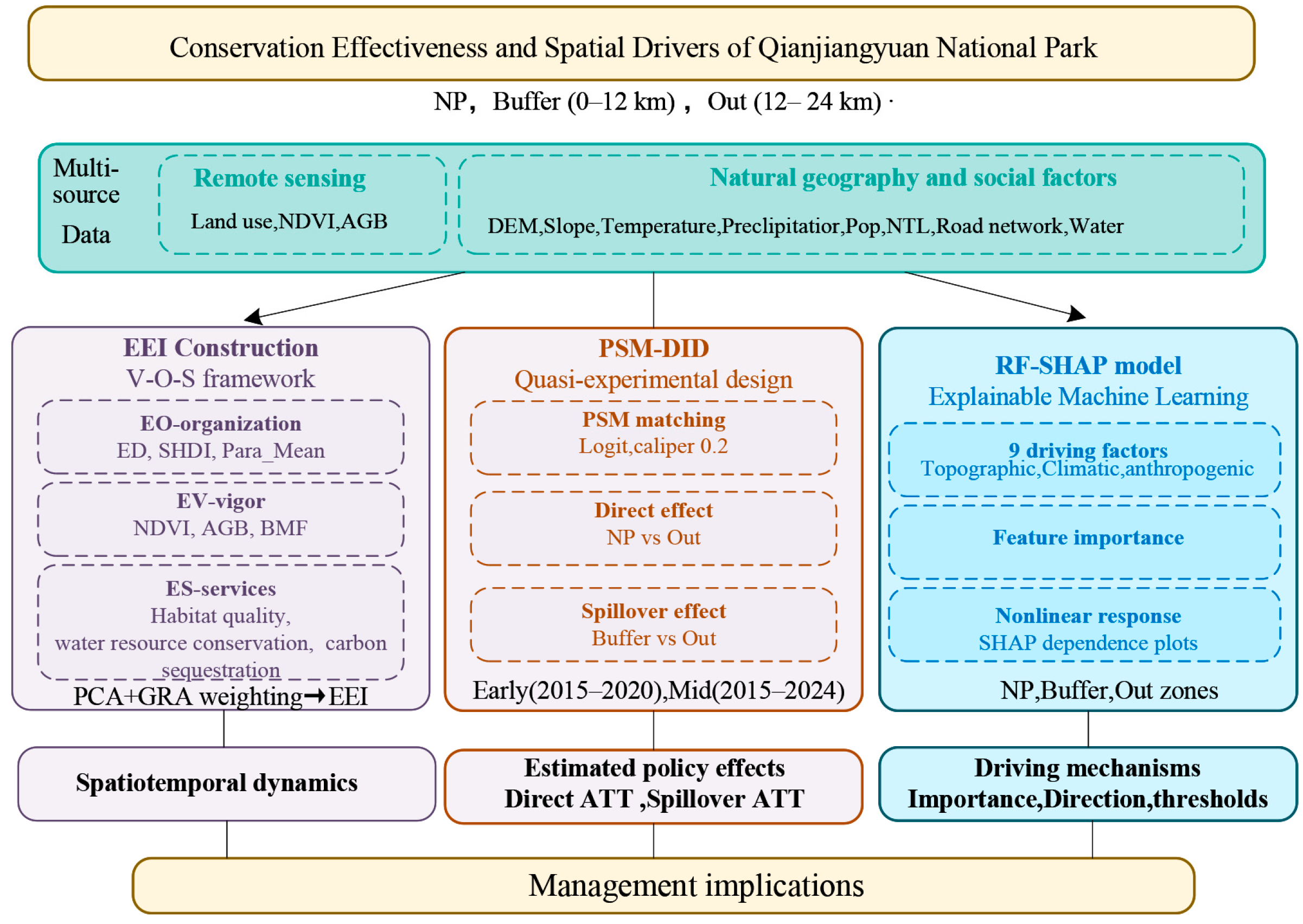



| Data Description | Data Sources | Resolution | Period |
|---|---|---|---|
| Land-use | Science and Data Center of the Chinese Academy of Sciences (https://www.resdc.cn/ (accessed on 20 November 2025) | 30 m | 2015, 2020, 2024 |
| China Annual Nighttime Light Dataset | 500 m | ||
| Maximum Normalized Difference Vegetation Index (NDVI_MAX) | 30 m | ||
| Net Primary Productivity (NPP) | 30 m | ||
| Elevation and Slope | 30 m | ||
| Forest Aboveground Biomass (AGB) | Zenodo [49] https://doi.org/10.5281/zenodo.12747329 (accessed on 20 November 2025) | 30 m | 2015, 2020, 2023 |
| Precipitation | National Tibetan Plateau Data Center https://data.tpdc.ac.cn/home (accessed on 20 November 2025) | 1000 m | 2014–2025 |
| Temperature | 1000 m | 2014–2025 | |
| Potential evapotranspiration | 1000 m | 2015, 2020, 2024 | |
| Soil data | Harmonized World Soil Database 2.0 https://www.fao.org/soils-portal/data-hub/soil-maps-and-databases/harmonized-world-soil-database-v20/en/(accessed on 20 November 2025) | 100 m | |
| Population | Oak Ridge National Laboratory https://landscan.ornl.gov/ (accessed on 25 November 2025) | 1000 m | 2015, 2020, 2024 |
| Road and water networks | OpenStreetMap https://www.openstreetmap.org/ (accessed on 25 November 2025) | vector data | 2015, 2020, 2024 |
| Indicator | Period | ATT (β) | 95% CI | Range |
|---|---|---|---|---|
| EEI | 2015–2020 | 0.013 *** | [0.010, 0.016] | +1.03% |
| 2015–2024 | −0.016 *** | [−0.022, −0.009] | −1.23% | |
| 2020–2024 | −0.029 *** | [−0.033, −0.024] | −2.26% | |
| EO | 2015–2020 | −0.048 *** | [−0.056, −0.040] | −3.85% |
| 2015–2024 | −0.056 *** | [−0.067, −0.046] | −4.50% | |
| 2020–2024 | −0.008 *** | [−0.012, −0.004] | −0.65% | |
| EV | 2015–2020 | 0.031 *** | [0.029, 0.033] | +5.25% |
| 2015–2024 | 0.009 *** | [0.004, 0.014] | +1.52% | |
| 2020–2024 | −0.022 *** | [−0.027, −0.018] | −3.73% | |
| ES | 2015–2020 | 0.004 ** | [0.001, 0.007] | +0.35% |
| 2015–2024 | −0.020 *** | [−0.025, −0.014] | −1.60% | |
| 2020–2024 | −0.024 *** | [−0.028, −0.020] | −1.95% |
| Indicator | Period | ATT (β) | 95% CI | Range |
|---|---|---|---|---|
| EEI | 2015–2020 | 0.0007 | [−0.0006, 0.0020] | +0.05% |
| 2015–2024 | −0.0124 *** | [−0.0150, −0.0098] | −1.00% | |
| 2020–2024 | −0.0130 *** | [−0.0149, −0.0112] | −1.05% | |
| EO | 2015–2020 | −0.0189 *** | [−0.0221, −0.0156] | −1.52% |
| 2015–2024 | −0.0234 *** | [−0.0276, −0.0193] | −1.89% | |
| 2020–2024 | −0.0046 *** | [−0.0059, −0.0032] | −0.37% | |
| EV | 2015–2020 | 0.0118 *** | [0.0110, 0.0126] | +2.08% |
| 2015–2024 | −0.0011 | [−0.0030, 0.0008] | −0.20% | |
| 2020–2024 | −0.0129 *** | [−0.0147, −0.0111] | −2.28% | |
| ES | 2015–2020 | −0.0099 *** | [−0.0116, −0.0082] | −0.82% |
| 2015–2024 | −0.0136 *** | [−0.0162, −0.0110] | −1.13% | |
| 2020–2024 | −0.0037 *** | [−0.0054, −0.0020] | −0.31% |
| Method | Np vs. Out | Buffer vs. Out | ||
|---|---|---|---|---|
| 2015–2020 | 2015–2024 | 2015–2020 | 2015–2024 | |
| Not match | 0.00% | −4.10% | 0.00% | −0.81% |
| PSM-DID | 1.03% | −1.23% | +0.05% | −1.00% |
Disclaimer/Publisher’s Note: The statements, opinions and data contained in all publications are solely those of the individual author(s) and contributor(s) and not of MDPI and/or the editor(s). MDPI and/or the editor(s) disclaim responsibility for any injury to people or property resulting from any ideas, methods, instructions or products referred to in the content. |
© 2026 by the authors. Licensee MDPI, Basel, Switzerland. This article is an open access article distributed under the terms and conditions of the Creative Commons Attribution (CC BY) license.
Share and Cite
Wang, C.; Wang, Y.; Lu, J.; Li, L. Conservation Effectiveness and Spatial Drivers of Qianjiangyuan National Park: Causal Evidence from a Quasi-Experimental Framework. Land 2026, 15, 863. https://doi.org/10.3390/land15050863
Wang C, Wang Y, Lu J, Li L. Conservation Effectiveness and Spatial Drivers of Qianjiangyuan National Park: Causal Evidence from a Quasi-Experimental Framework. Land. 2026; 15(5):863. https://doi.org/10.3390/land15050863
Chicago/Turabian StyleWang, Chuqi, Yinglin Wang, Jiwen Lu, and Liang Li. 2026. "Conservation Effectiveness and Spatial Drivers of Qianjiangyuan National Park: Causal Evidence from a Quasi-Experimental Framework" Land 15, no. 5: 863. https://doi.org/10.3390/land15050863
APA StyleWang, C., Wang, Y., Lu, J., & Li, L. (2026). Conservation Effectiveness and Spatial Drivers of Qianjiangyuan National Park: Causal Evidence from a Quasi-Experimental Framework. Land, 15(5), 863. https://doi.org/10.3390/land15050863