1. Introduction
Agriculture is a fundamental pillar of human survival and development, and its modernization is essential for global food security and economic stability. Worldwide, smallholder farmers constitute the backbone of agricultural production. Although small farms account for 84% of all farms globally, they cultivate only about 12% of agricultural land but produce 35% of the world’s food, underscoring their indispensable role in the global food system [
1]. However, fragmented operations, limited capacity for resource integration, and weak resilience to risk present common challenges for the modernization of smallholder-based agricultural systems [
2,
3]. In China, the world’s largest developing country, the smallholder economy remains particularly prominent. According to the Third National Agricultural Census, smallholders account for more than 98% of agricultural operators, highlighting their continued dominance in agricultural production [
4]. In response to the dual challenges of smallholder transformation and agricultural modernization, China has promoted the land trusteeship model. By providing agricultural services, this model enables scaled operation and offers an institutional solution to the constraints faced by smallholders. However, while land trusteeship can generate economies of scale by consolidating fragmented plots, the expansion of operational scale and rising input costs may also increase exposure to natural-disaster risks. Indeed, economic losses caused by natural disasters have become a major obstacle to China’s agricultural modernization [
5]. In response to the growing frequency of natural disasters, countries worldwide commonly rely on insurance as a mechanism for loss prevention and compensation [
6,
7]. Despite differences in policy priorities across countries, low insurance participation remains a global challenge [
8,
9]. Prior research suggests that improving participation requires not only external incentives but also the enhancement of farmers’ genuine demand for insurance, while respecting their preferences [
9,
10]. Against this backdrop, this study takes China’s land trusteeship model as its entry point to systematically examine the mechanisms influencing farmers’ decisions to purchase agricultural disaster insurance. The findings are intended to inform risk-protection strategies in the transformation of smallholder agriculture in China and provide insights for agricultural modernization in Asia, Africa, and Latin America.
Existing studies generally classify the determinants of farmers’ insurance purchase decisions into four dimensions: individual and household characteristics, risk perception, insurance awareness, and government subsidies. Some studies also consider the role of insurance product quality [
11]. With respect to individual and household characteristics, education level, exposure to insurance promotion, and farm size are positively associated with purchase decisions, whereas age is negatively associated with them [
12,
13]. Farm type and labor force size also matter [
14]. Regarding risk perception, farmers’ recognition of disaster risks, assessment of severity, and production objectives significantly shape their willingness to purchase insurance [
8,
15]. In addition, individual risk preferences, such as risk aversion, further influence these decisions [
16]. With regard to insurance awareness, research shows that farmers’ understanding of insurance principles, policy terms, and benefits not only directly promotes purchasing behavior [
17,
18] but also improves the rationality of insurance decisions [
19]. Beyond these internal factors, the external policy environment and product design are also critical. Government premium subsidies significantly encourage participation, although the marginal effect tends to diminish [
20,
21]. Moreover, as subsidy levels rise and agriculture becomes more specialized, the incentive effect weakens [
22,
23]. In addition, the quality and attractiveness of insurance products significantly affect farmers’ willingness to purchase. Insufficient incentives, mismatched products, and operational deficiencies on the part of insurers may negatively affect decisions [
9].
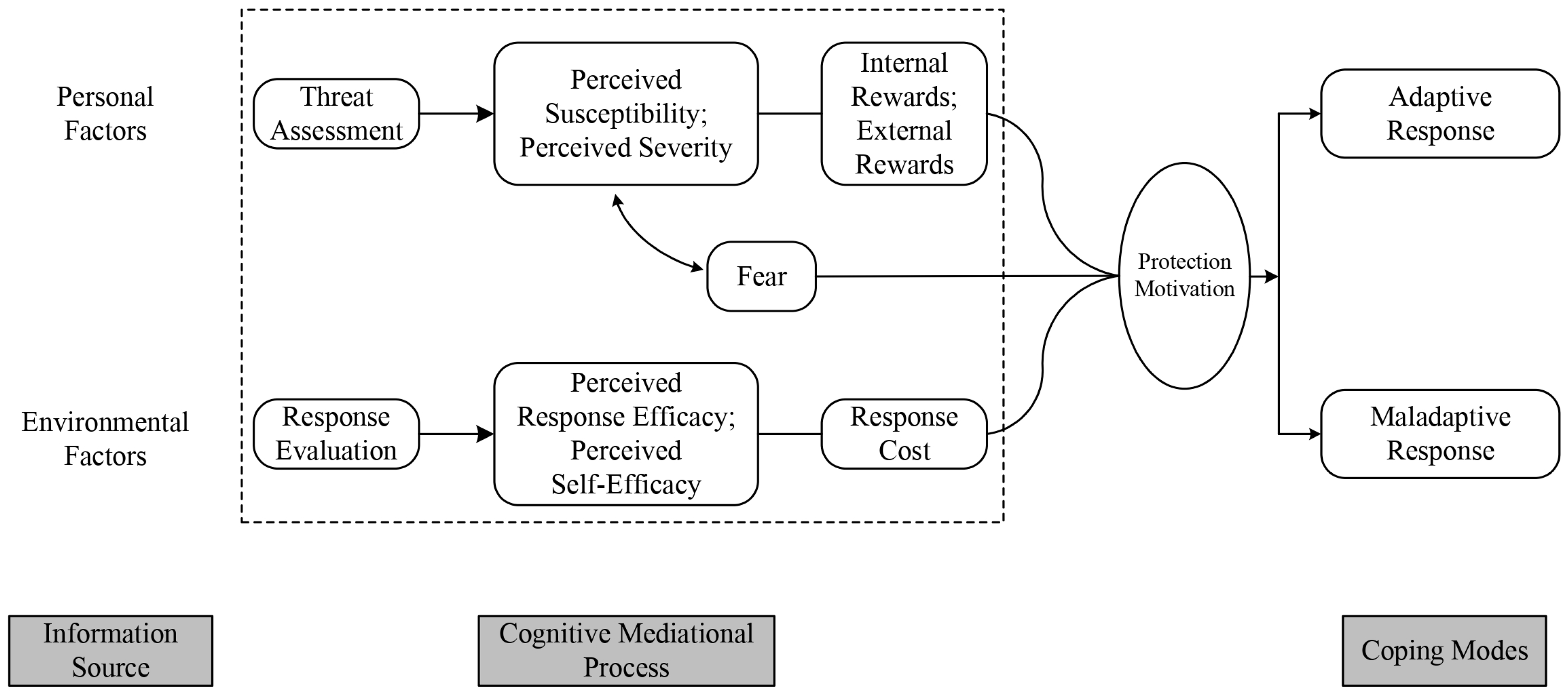
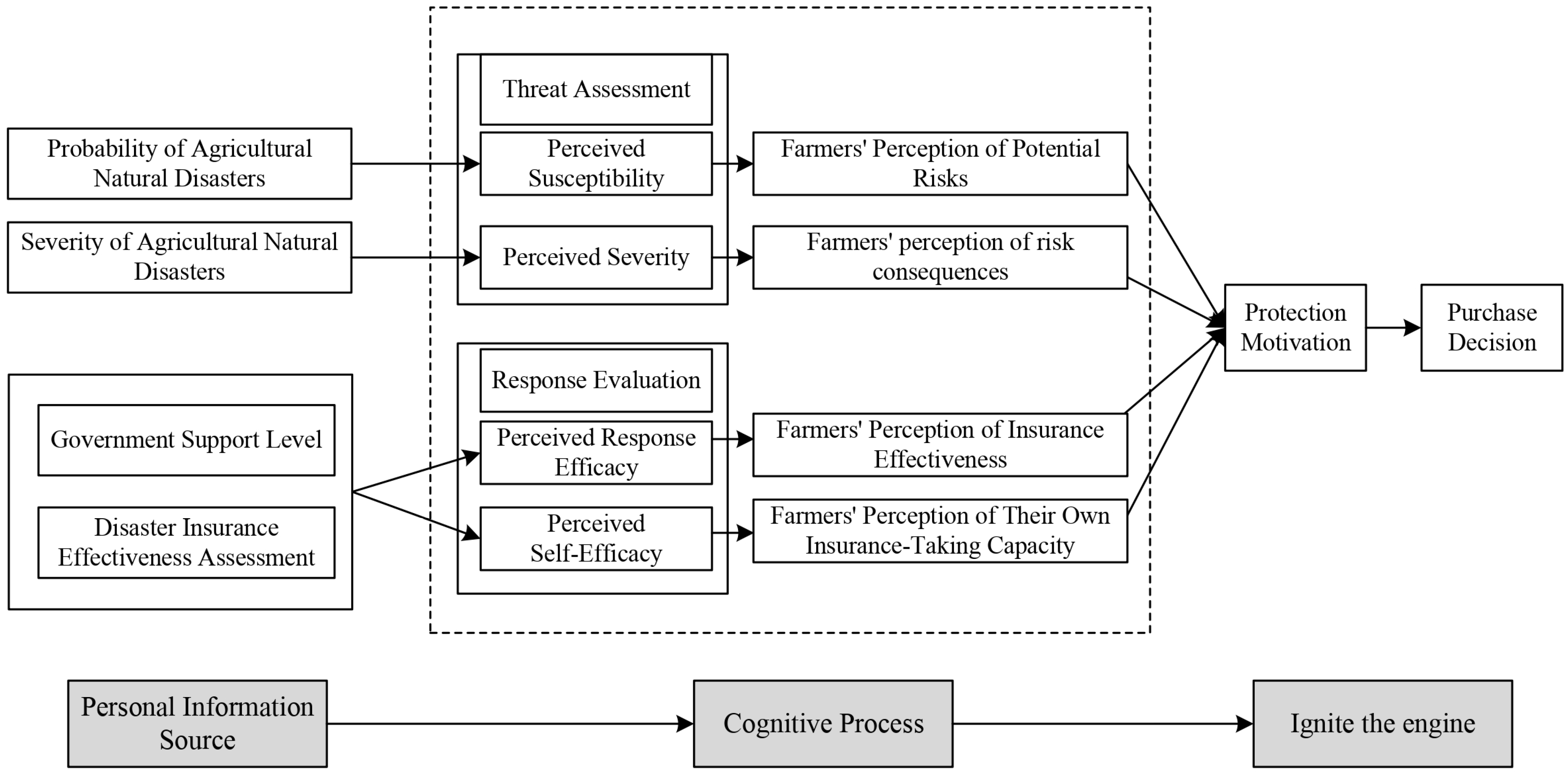
Existing research has mostly investigated farmers’ agricultural disaster insurance purchase decisions from isolated dimensions, mainly including individual and household attributes, risk perception, insurance awareness, and government subsidies. Few studies have adopted social cognitive theory to unpack the mediating mechanisms and causal pathways among these factors. Addressing this research gap, this paper first systematically clarifies the intrinsic linkage between land entrustment and farmers’ agricultural insurance decisions. On this basis, it employs the Protection Motivation Theory to empirically explore the determinants and formation mechanisms of farmers’ insurance purchasing behavior under land entrustment arrangements. The main contributions of this study are twofold. First, it overcomes the limitations of single-dimensional research by integrating the above dimensions into a unified analytical framework, enabling a holistic synthesis of the factors shaping farmers’ insurance decisions. Second, combining Protection Motivation Theory with structural equation modeling, this study quantitatively analyzes multidimensional influencing factors. It not only reveals the internal mechanisms of farmers’ insurance purchase decisions but also provides an intuitive quantitative evaluation of the relative impact of each dimension.
The rest of the article is structured as follows.
Section 2 presents the theoretical model and research hypotheses.
Section 3 describes the research methods, including model construction, sample characteristics, and scale design.
Section 4 reports the empirical findings, followed by
Section 5, which concludes with a discussion of the results and policy implications.
3. Research Design
3.1. Research Area Selection
To ensure the reliability and representativeness of the research sample, a multistage sampling approach was adopted. The sampling process encompassed three hierarchical levels: prefecture-level cities, townships, and farming households, serving as the primary, secondary, and tertiary sampling units, respectively. First, three prefecture-level cities in Hebei Province—Cangzhou, Langfang, and Tangshan—were selected as pilot study sites due to their well-established land trusteeship programs. Next, based on data provided by local agricultural and rural affairs bureaus, we identified 1 to 3 townships with well-established land trusteeship models in each selected city. These townships were purposively selected based on the recommendations of local agricultural bureaus, prioritizing those with well-established land trusteeship programs. Finally, this study designed standardized questionnaires via the Questionnaire Star platform, which were directionally distributed by village officials and farmer cooperatives in the selected townships through online communities exclusive to land trusteeship farmers. During this process, elderly respondents who were unfamiliar with smart devices were often assisted by their younger family members in completing the questionnaire. It is worth noting that “prefecture-level city” in this context refers to a second-tier administrative unit in China’s hierarchy, encompassing not only urban districts but also subordinate county-level cities, rural counties, and extensive agricultural areas. Unlike the conventional notion of a compact urban area, a prefecture-level city spans a broad administrative region. This study specifically targeted agricultural townships within these regions where land trusteeship programs have been implemented. This sampling framework ensures the study’s representativeness and robustness, capturing the dynamics of land trusteeship models in diverse agricultural settings.
Hebei experiences a temperate, semi-humid, semi-arid continental monsoon climate. Given its geographical and topographical conditions, agricultural production in the region is consistently vulnerable to natural disasters, resulting in considerable economic losses for local farmers. Cangzhou serves as a major grain-producing area in Hebei. According to data from its Municipal Bureau of Agriculture and Rural Affairs, the city hosted 3108 agricultural production service organizations in 2023, providing land stewardship services covering a total of 22.9 million mu (approximately 1.53 million hectares). Langfang functions as a key agricultural supply base for the Beijing–Tianjin–Hebei region. Since 2018, the city has actively promoted the adoption of managed farming services. Tangshan exhibits distinct advantages in crop cultivation. Official statistics indicate that the city’s entrusted agricultural service area reached 30.2 million mu in 2023.
3.2. Model Construction
This study employs a questionnaire survey to collect data, utilizing structural equation modeling supplemented by Bootstrap mediation effect testing and LSD multiple comparison methods to investigate the factors influencing farmers’ decisions to purchase agricultural disaster insurance under land trusteeship arrangements. Structural equation modeling quantifies and analyzes latent variables—those difficult to measure directly—through predefined observable and operationalized exogenous variables, thereby testing influence relationships or associative pathways between variables [
40]. The structural equation model comprises measurement equations and structural equations, with the relationships between variables expressed as follows:
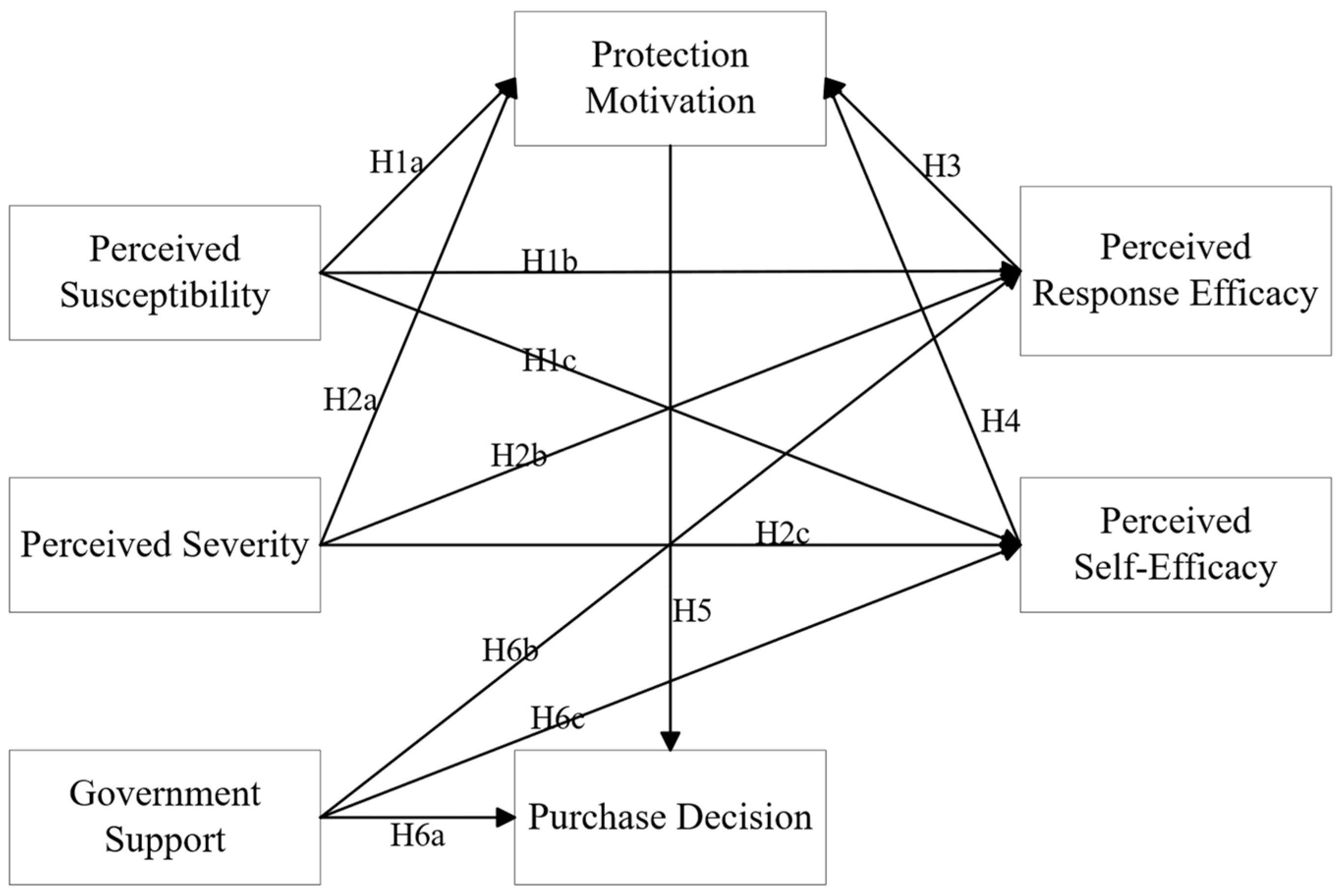
In this equation, denotes the exogenous latent variables, indicated by pv, ps, re, se, and gov. Meanwhile, represents the endogenous latent variables, indicated by mot and be. The observed variables—such as pv1, ps1, and re1, with a total of 21 items—are denoted by and . Matrix and capture the relationships between the latent variables and their respective observed indicators, allowing linear combinations to be derived for each latent variable from its indicators. The path coefficient matrix Γ is used to analyze the effects of pv, ps, re, and se on mot, as well as the effects of mot and gov on be. The terms , , and represent measurement errors.
Although structural equation modeling (SEM) is a powerful analytical tool for investigating complex relationships among latent variables, it is not without limitations. In the context of this study, the model incorporates 7 latent variables and 21 indicators, analyzed using a sample size of 319. While the parameter estimates meet standard criteria, caution is necessary when interpreting their stability, given the model’s complexity and sample size. Additionally, as the data are cross-sectional, the estimated paths (e.g., RE→MOT→BE) reflect statistical associations rather than causal relationships. It is important to note that the term “effect”, as used in this paper, is intended strictly in a statistical sense: within the specified model framework, a one-unit change in the exogenous variable corresponds to a β-unit change in the endogenous variable.
3.3. Scale Design
Through organizing and reviewing relevant literature and questionnaire examples, a five-point Likert scale method was adopted to construct the specific measurement scale. The scale items are organized around seven dimensions: susceptibility, severity, response efficacy, self-efficacy, government support, protective motivation, and purchase decision. Each dimension includes three items to accurately and comprehensively reflect farmers’ attitudes (see
Table 1).
3.4. Sample Characteristics
A total of 341 questionnaires were distributed in the formal online survey, and 319 valid responses were obtained, resulting in a valid response rate of 93.55% (as shown in
Table 2). Sample characteristics are summarized as follows: The gender distribution was relatively balanced, with males accounting for 51.41% and females 48.59%. In terms of age, respondents aged 51–60 constituted the largest group (30.09%), followed by those over 60 (20.69%), which may reflect the outmigration of younger laborers for off-farm employment. Education levels were predominantly low and unevenly distributed. The majority of respondents (54.55%) had attained junior high school education, followed by elementary school. Based on established classifications [
50], land-entrusting farmers were categorized into four household types according to the share of agricultural income in total household income: pure farmers (>80%), Type I part-time farmers (50–80%), Type II part-time farmers (30–50%), and non-agricultural households (<30%). In this sample, Type II part-time farmers and non-agricultural households together accounted for over 70%, indicating a high degree of part-time engagement among respondents. Regarding land holdings, the largest proportion of farmers (36.68%) operated 11–20 mu, followed by 1–10 mu (30.09%), suggesting that most farmers managed relatively small plots.
Over 70% of the study sample comprises Type II part-time and non-agricultural households, reflecting the pervasive off-farm employment in rural China and the growing relevance of the land trusteeship model. For these households, land trusteeship ensures standardized land use and stable farm income amid their primary non-agricultural work, making agricultural disaster insurance for entrusted land critical to mitigating production risks and stabilizing farm earnings. Despite most income coming from non-agricultural sectors, these households remain the primary decision-makers for such insurance purchases under the land trusteeship framework.
5. Discussion and Conclusions
5.1. Driving Factors Associated with Farmers’ Agricultural Disaster Insurance Purchase Decisions from the Perspective of the Protection Motivation Theory
This study develops a decision-making model for farmers’ purchase of agricultural disaster insurance within land trusteeship arrangements, drawing on protection motivation theory, market failure theory, and quasi-public goods theory. Using structural equation modeling, we empirically examine the mechanisms and pathways influencing farmers’ insurance purchase decisions. The main findings are as follows:
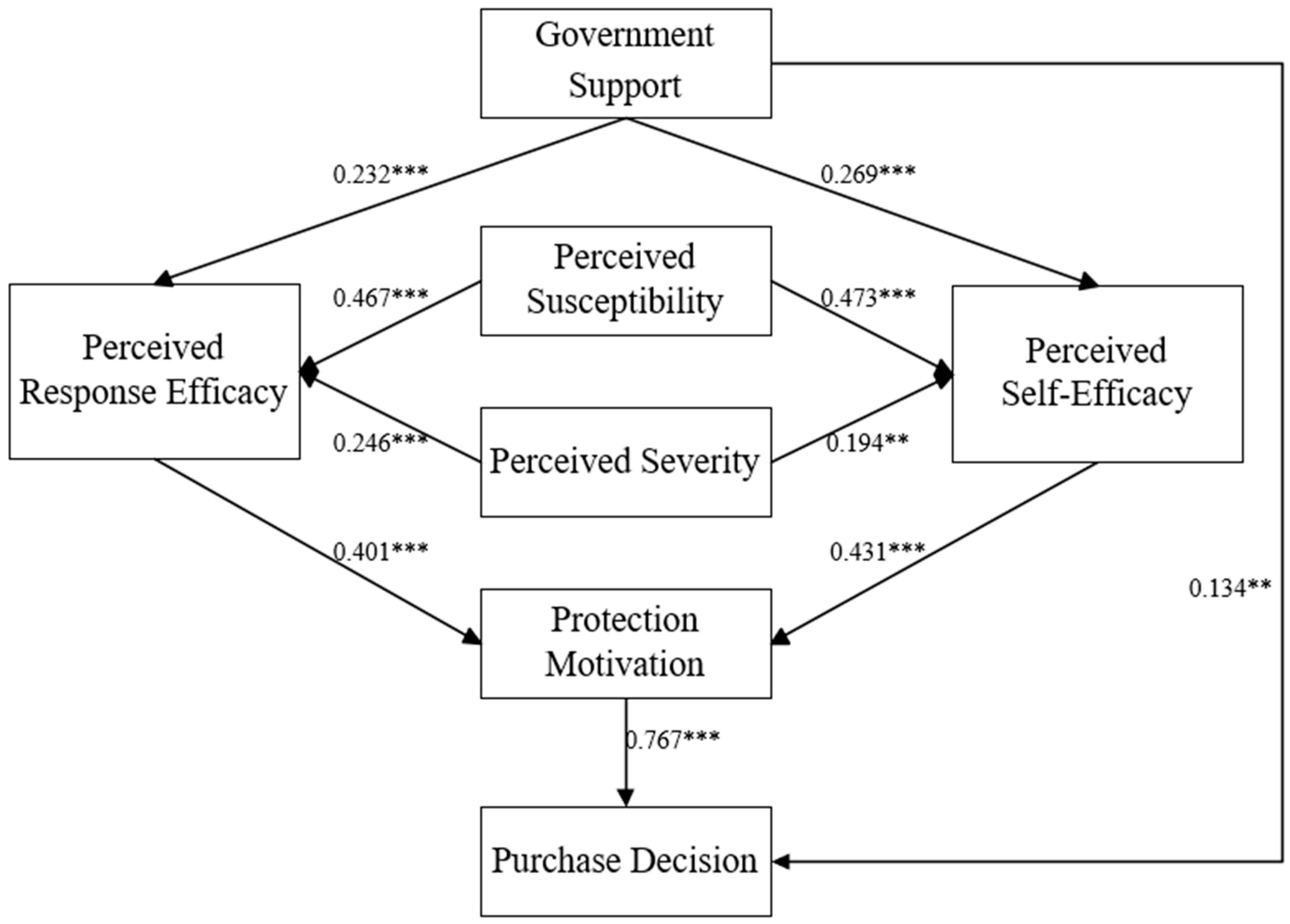
First, farmers’ response efficacy and self-efficacy are positively associated with their protection motivation, which is subsequently linked to their insurance purchase decisions [
12]. This finding aligns with Chen [
9], who reported that risk perception promotes purchase intention through protection motivation in Jiangsu, China. Some farmers have recognized the role of insurance in mitigating agricultural risks and believe in their own ability to purchase coverage. This awareness of both “insurance usefulness” and “personal capacity to buy insurance” is increasingly translating into actual purchase decisions. Given that agriculture is highly vulnerable to uncontrollable factors such as extreme weather and natural disasters—and agricultural income remains a major source of livelihood for many rural households—effective risk management tools are essential. Perceived efficacy helps farmers view insurance as a viable means of offsetting disaster losses, while self-efficacy reflects their confidence in completing the purchase process. As farmers’ trust in insurance and their perceived ability to buy it grow, so does their motivation to seek protection, thereby increasing the likelihood of insurance adoption.
Second, farmers’ insurance purchase decisions are associated with their susceptibility and severity perceptions, both of which are linked to protective motivation through perceived efficacy and self-efficacy, and thereby are indirectly associated with their purchasing decisions. Susceptibility and severity are key factors associated with farmers’ agricultural disaster insurance purchase decisions. However, unlike Fahad [
8], who found a direct effect of risk perception on purchase decisions in Pakistan, we found that susceptibility and severity are fully mediated by efficacy beliefs. This discrepancy likely reflects contextual differences: more frequent climate shocks in Pakistan may create a direct risk–action pathway, while China’s land trusteeship model—where service organizations assume part of daily risk management—weakens that direct link.
Third, farm household type and land scale exert significantly differentiated effects on agricultural disaster insurance purchase decisions [
39]. Pure farmers and part-time farmers of Category I have a higher proportion of agricultural income in their total economic income, making them naturally more inclined to purchase agricultural disaster insurance when faced with disaster impacts. Non-farmers exhibit the lowest willingness to purchase. Large-scale farmers also demonstrate stronger purchasing intent than small-scale farmers. These factors collectively result in significant differences in insurance decision-making among farmers of varying types and scales.
5.2. Farmers’ Protection Motivation, Purchase Decisions, and Policy Support
Farmers’ protection motivation is defined as their psychological tendency to proactively adopt risk prevention measures when facing uncontrollable agricultural risks—such as extreme weather and natural disasters—in order to safeguard their core interests. The stronger this motivation, the more likely farmers are to purchase agricultural disaster insurance. Government support serves as a catalyst for such motivation. Policy backing, direct premium subsidies, and governmental credibility together form the core pillars that stimulate farmers’ engagement in protective behaviors.
From the universal patterns observed in the global promotion of agricultural insurance, despite variations in implementation approaches across countries, the core consensus lies in the following: (1) Government policy support and public trust are pivotal in overcoming farmers’ insurance-related misconceptions. By clearly communicating the risk-diversification value of insurance, helping farmers understand the underlying logic of insurance operations and its adequate compensation function, and strengthening farmers’ response efficacy to agricultural disaster risks, these factors are positively associated with their purchase decisions [
10,
47]. (2) Direct premium subsidies serve as the primary means to alleviate farmers’ economic burdens. By reducing financial costs through premium subsidies, farmers’ self-efficacy in participating in insurance is enhanced, thereby influencing their purchasing decisions.
In addressing natural disaster risks, China has long relied predominantly on government relief, with such assistance and disaster support accounting for 90% of disaster compensation [
51]. Since 2003, China has explored establishing a policy-based agricultural insurance system. While fiscal support for agricultural disaster insurance has steadily increased, and coverage has expanded in both scope and scale, issues such as insufficient farmer awareness of insurance and weak willingness to bear premiums persist, constraining participation rates in agricultural disaster insurance.
5.3. Impact on Public Policy Makers
Agricultural disaster insurance is a critical instrument for mitigating natural risks and stabilizing agricultural production. Within large-scale land trusteeship systems, it plays an essential role in dispersing concentrated disaster losses and protecting the incomes of entrusted farmers. However, several challenges—such as low farmer awareness of insurance, limited capacity to pay premiums, and inconsistent quality of insurance products—have resulted in low participation rates. This undermines the core functions of insurance in disaster relief and risk transfer, particularly under the land trusteeship model. As this model expands the scale of land management, risks become more concentrated, making the consequences of low insurance uptake even more severe.
To enhance farmers’ participation in agricultural disaster insurance under land trusteeship and fully realize its risk-sharing and disaster compensation functions, the government must effectively leverage its macro-regulatory role while stimulating market vitality. The government should strengthen policy guidance and support by increasing publicity to break down farmers’ cognitive barriers, improving premium subsidy mechanisms to alleviate their financial burden, and reinforcing the review and supervision of insurance products to standardize market operations [
52]. Concurrently, insurance institutions should gain an in-depth understanding of farmers’ actual needs while adhering to policy directives. By continuously improving insurance products and optimizing claims settlement processes, they can enhance service quality [
53], effectively overcome obstacles in policy uptake and claims handling, and better fulfill the risk protection needs of farmers under trusteeship models.
Rooted in its national context as a “large country with small-scale farmers”, China has pursued a distinct path toward agricultural modernization. Through land trusteeship, it addresses the constraints of smallholder fragmentation, while agricultural disaster insurance helps mitigate risks associated with scaled production. This experience offers valuable insights for other developing countries. Many African nations, for instance, are in the early stages of agricultural modernization and face similar challenges—a high proportion of smallholders and weak risk resilience. Agricultural insurance has thus become a common strategy for protecting farmers’ livelihoods [
54,
55]. This study identifies key factors influencing farmers’ insurance uptake and underscores a fundamental principle: the promotion of agricultural insurance must align with national and agricultural realities. It cannot overlook the dominance of smallholders and resource constraints. Insurance systems must be tailored to specific developmental stages, leveraging governmental leadership while activating market potential.
5.4. Limitations and Future Prospects
This study extends the traditional Protection Motivation Theory—originally applied in health behavior decision-making—to the domain of agricultural risk management. This provides a new theoretical framework for analyzing farmers’ agricultural disaster insurance purchase decisions.
However, several limitations should be noted. First, the questionnaire was distributed via online communities, resulting in a non-probability convenience sample of land trusteeship farmers with WeChat group access; thus, results should be interpreted as exploratory rather than strictly population-representative. Second, as survey data were collected exclusively from Hebei Province, China, the findings—while relevant to regions with similar agricultural conditions in China—require further location-specific validation for broader generalizability. Additionally, the cross-sectional design of this study precludes definitive causal inference. Although structural equation modeling can test directional hypotheses, the associative pathways are correlational in nature. To address these limitations, future research should adopt longitudinal designs, quasi-experimental methods, or instrumental variable approaches to establish causal links with greater rigor. Another promising direction is to integrate theories such as institutional economics and contract governance to explore how different land trusteeship models shape farmers’ agricultural disaster insurance demand.