Article

Economic Valuation of Wildlife Habitat Conservation

by
Dimitrios Nikolaou
1,*,
Vasilios Liordos
2,
Spyridon Galatsidas
1 and
Georgios Tsantopoulos
1
1
Department of Forestry and Management of the Environment and Natural Resources, Democritus University of Thrace, Pantazidou 193, 68200 Orestiada, Greece
2
Department of Natural Environment and Climate Resilience, Democritus University of Thrace, P.O. Box 172, 66100 Drama, Greece
*
Author to whom correspondence should be addressed.
Land 2026, 15(5), 837; https://doi.org/10.3390/land15050837
Submission received: 24 March 2026 / Revised: 5 May 2026 / Accepted: 11 May 2026 / Published: 14 May 2026
(This article belongs to the Special Issue Species Vulnerability and Habitat Loss (Third Edition))

Abstract

The Earth’s ecosystems are rapidly deteriorating due to human activities. Habitats are being lost or degraded, and associated wildlife species are declining or becoming extinct at unprecedented rates. The study area, the prefectures of Rodopi and Evros, is a Greek biodiversity hotspot containing degraded habitats, such as forests and wetlands, that are critical for many threatened wildlife species. This situation calls for conserving threatened wildlife habitats, which requires considerable funds. A structured questionnaire was used to evaluate willingness to pay (WTP) for wildlife habitat conservation. We conducted personal interviews with residents of the study area, using a sample of 849 citizens from the two regions determined through stratified random sampling design, with equal allocation to the strata. The mean annual WTP per household was estimated at EUR 21.3, yielding a total of EUR 790,000 from households in the study area. Pro-environmental behavior was positively associated with WTP. Females and those with higher household income reported higher WTP than males and those with lower household income. Government agencies were preferred over hunting clubs and environmental NGOs for implementing programs to conserve local wildlife habitats. Findings will be most useful if incorporated into policies to (a) secure the funds necessary to implement wildlife habitat conservation programs in the area and (b) increase transparency and trust between conservation entities and the local community.

1. Introduction

Human activities, including infrastructure, housing, and industrial development, as well as the overexploitation of natural resources, have encroached on, and continue to encroach on, vast natural areas [1]. This encroachment has led to the destruction and degradation of habitats and the wildlife populations they sustain [2]. The Living Planet Index, provided by the Zoological Society of London, showed an average 73% decline in monitored vertebrate populations between 1970 and 2020 [3]. On average, 21% of the assessed wildlife species are threatened (i.e., listed as critically endangered, endangered, or vulnerable), according to the International Union for Conservation of Nature (mammals: 26%; birds: 12%; reptiles: 21%; amphibians: 41%) [4]. Human behavior has driven a rapid rate of species loss over the last few centuries, estimated to be 100 times the pre-human background rate on average, suggesting that a sixth mass extinction is already underway [5]. Habitats, in addition to sustaining wildlife, provide other benefits, including carbon sequestration, flood protection, water purification, and tourism revenue [6,7]. The critical importance and condition of wildlife habitats have been recognized, and many conservation programs are currently implemented by governments and environmental non-governmental organizations (NGOs) [8,9]. Governments and NGOs often rely on public support and funding to implement wildlife habitat conservation programs. Therefore, understanding the sources and magnitude of available funds is critical to the successful conservation of wildlife habitats and human well-being [10,11]. Conservation funds are typically raised through government taxation and NGO fundraising campaigns [12,13]. However, the transition from recognizing global biodiversity declines to implementing local conservation policies often depends on the availability of sustainable financing and the willingness of local communities to support such initiatives. In this context, public policy must align with social behavior to ensure that conservation funds are both sufficient and socially acceptable.
Wildlife habitat conservation has non-use value because it cannot be traded or evaluated in the market [14,15]. Goods with non-use value can be valued using hypothetical markets created by the contingent valuation method (CVM), the stated-preference method most often used to estimate willingness to pay (WTP) for the benefits of a given good [16]. The CVM has several advantages over other stated preference methods, such as choice experiments and conjoint analysis. It is highly flexible, as it can be used to estimate the economic value of virtually anything. It is straightforward and easy to design and implement because it asks respondents to state their WTP directly, and the mean WTP is easy to calculate and communicate to policymakers [16,17]. In addition to WTP, the effects of several factors, such as behaviors and sociodemographic characteristics, on WTP can be assessed using the CVM [18,19]. Discrete-choice questions are the preferred format for the WTP vehicle because they offer a limited number of bids and thus exhibit lower answer bias than continuous questions used in open-ended and payment card formats [20]. The multiple-bounded discrete questions format (state the certainty about paying each of a large predetermined number of bids) was selected because it suffers less bias in the choice of bids than the single-bounded (choose to pay or not to pay a set bid) and double-bounded (choice of an initial bid and a higher or lower bid depending on the first answer) formats [16,21].
The CVM does not come without its limitations, such as framing bias (when respondents are affected by the way questions are framed during the survey), social desirability bias (when respondents feel obliged to give socially acceptable answers and not state their preferences), and hypothetical bias (in a hypothetical market respondents state hypothetical preferences instead of actual payments) [16]. Despite its limitations, the CVM has been widely used to value wildlife conservation [7]. Among the numerous studies that have used the CVM for estimating the conservation value of wildlife, many have estimated the WTP for the conservation of single wildlife species (e.g., [18,19,22,23,24,25,26,27,28,29,30,31]), while many others have estimated the WTP for the conservation of habitats for wildlife (e.g., [32,33,34,35,36,37,38]).
Pro-environmental behavior refers to adopting actions that benefit the environment, such as recycling, energy conservation, and the use of renewable resources, and avoiding actions that harm the environment, such as air travel, overconsumption, and the use of fossil fuels [39,40]. The Value-Belief-Norm (VBN) theory claims that environmental actions come from a chain of personal values and beliefs that “foster” a sense of moral obligation. Additionally, the Theory of Planned Behavior (TPB) suggests that the main factors influencing willingness to pay are divided into three categories: (1) Demographic characteristics: This category includes age, gender, and the number of household members. (2) Economic factors: This category includes individual or household income. (3) Attitudes and perceptions: This category includes citizens’ attitudes and perceptions toward the environmental good being evaluated. Finally, an additional factor that may be taken into account is the involvement of the State or local authorities in allocating funds to cover the cost of the environmental good, which citizens are required to pay. Individuals who adopt a pro-environmental lifestyle strongly support and are willing to pay for environmental goods and biodiversity conservation [41,42]. Sociodemographic characteristics have been found to influence WTP for conserving wildlife species and their habitats. Young and female people usually report higher WTP than older and male people [18,19,22,23]. Similarly, highly educated and urban people report higher WTP than less educated or rural residents [24,25,30,43,44]. Young people and those with higher levels of education are typically more digitally literate and have greater access to online information on wildlife-related issues [45]. Females tend to extend love and concern for their offspring to all animals, leading to support for their conservation [46]. Well-off individuals can allocate more funds to conserving wildlife species and their habitats, as reported by most relevant studies [18,19,22,23,24,25]. This positive relationship between income and WTP is mostly observed across different species and geographical contexts [31,47]. Furthermore, this trend has been specifically confirmed for a diverse range of species, including both terrestrial and marine wildlife [47,48,49]. Urban residents are more distant from wildlife and are more likely to idealize animals, experience positive emotions, and support species conservation than those in rural areas [50].
Wildlife populations in Europe have declined by 18% since 1970 [3]. This is a longstanding negative trend that had already resulted in much biodiversity being depleted by 1970, rendering Europe an area with one of the world’s lowest levels of biodiversity intactness. In Greece, a European country, 19.8% of assessed wildlife species have been listed as threatened, consistent with the global negative trend [4]. Many natural habitats in Greece have been lost to agriculture and housing development. Northern Greece, especially the region of Thrace, is rich in habitats and wildlife, many of which are currently threatened [51,52,53,54,55,56]. Therefore, there is an urgent need to assess public support and funding availability to restore and protect habitats critical to the survival of local wildlife populations. This study aimed to (a) estimate the WTP for the conservation of wildlife habitats in a Greek biodiversity hotspot using the CVM and (b) evaluate the effects of pro-environmental behaviors and sociodemographic characteristics (age, gender, income, marital status, educational level, and place of residence) on WTP.

2. Materials and Methods

2.1. Study Area

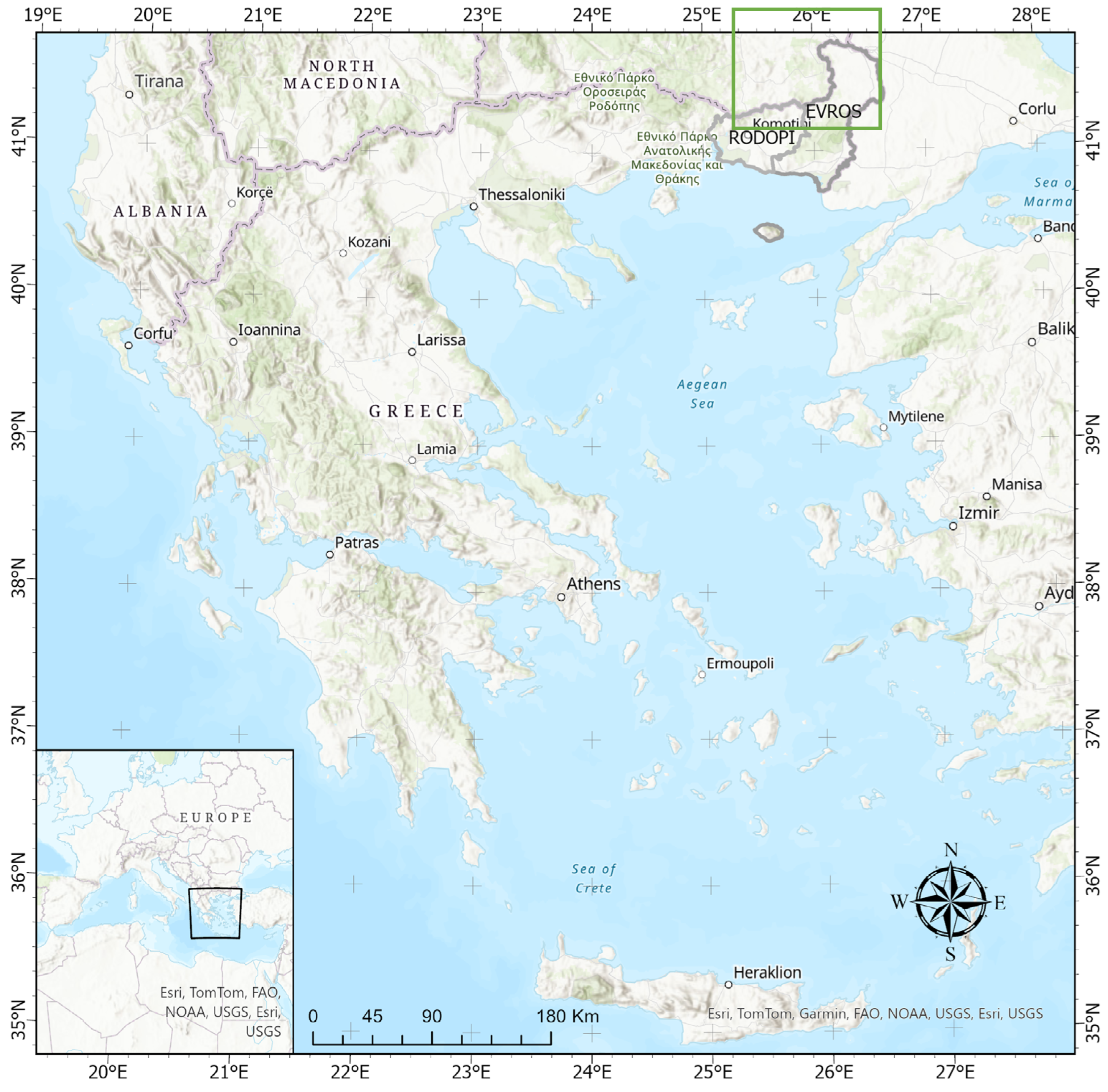
The study was conducted in the Evros and Rodopi prefectures of Thrace, Northern Greece (Figure 1). The population of the two prefectures is 137,000, distributed across 37,030 households [57], with a GDP per capita of EUR 15,478.2 [58]. A large part of the study area is covered by natural habitats, predominantly forests (42%) and wetlands (2.5%) [51,52]. These habitats host most Greek wildlife species, including many threatened species, such as the Grey Wolf Canis lupus, Golden Jackal Canis aureus, Brown Bear Ursus arctos, Red Deer Cervus elaphus, Cinereous Vulture Aegypius monachus, Egyptian Vulture Neophron percnopterus, Griffon Vulture Gyps fulvus, White-tailed Sea-eagle Haliaeetus albicilla, Lesser White-fronted Goose Answer erythropus, White-headed Duck Oxyura leucocephala, Ferruginous Duck Aythya nyroca, Dalmatian Pelican Pelecanus crispus, Spur-winged Lapwing Vanellus spinosus, Fire-bellied Toad Bombina bombina, European Common Frog Rana temporaria, and Hermann’s Tortoise Testudo hermanni [53]. The importance of the study area’s habitats for wildlife and the need to protect them have long been recognized. As a result, 13 sites have been declared Special Protection Areas (SPAs) under the Birds Directive, 13 sites are Special Areas of Conservation (SAC) under the Habitats Directive, two sites have been declared Wetlands of International Importance under the Ramsar Convention (Evros Delta, Lake Vistonis, Porto Lagos, Lake Ismaris and adjoining lagoons), and two sites have been declared National Parks (National Park of Eastern Macedonia and Thrace for its waterbirds, Dadia-Lefkimi-Soufli Forest National Park for its vultures) [54,55,56].

2.2. Sampling Protocol

A stratified random sampling design, with equal allocation to the strata, was employed to select the sample [36]. Compared with other sampling methods, this method has distinct benefits; most importantly, it does not require extensive knowledge of the population under study [39,59]. The study population consisted of all households in the prefectures of Evros and Rodopi. It should be noted that sampling households is a classic example of using a group of people as the sampling unit, and this method is significantly more convenient and accessible. Selecting one member from each randomly selected household ensured that the same member was not interviewed twice.
The stratified random sampling design, with equal allocation to the strata was used to calculate the sample size. According to the estimate, 426 residents of the Evros Region and 423 residents of the Rodopi Region were expected to participate in the survey. In other words, the total sample for this survey comprised 849 citizens, and to ensure anonymity, the questionnaires were placed in envelopes and destroyed after data coding. One researcher (D.N.) collected data from on-site, face-to-face interviews with adult residents aged 18 years and older between June and October 2020, conducted on weekdays from 9.00 to 21.00 [59].

2.3. Survey Design

The present research is part of a broader research project, within which the questionnaire was developed based on an extensive review of the relevant literature. Specifically, the instrument draws upon established theoretical and empirical contributions, including but not limited to [10,11,13,16,59,60,61]. This extensive grounding supports the content validity of the instrument and ensures that key dimensions discussed in the literature were considered during questionnaire development.
Furthermore, a pilot study was conducted with a sample of twenty randomly selected individuals (N = 20) to identify potential issues in question wording and interview procedures. The pilot results indicated that all questions were clear and comprehensible to participants. The average completion time, including any clarifications, was approximately 30 min. Since no substantial issues were identified, the questionnaire was deemed appropriate and was subsequently administered in the full study.
The final questionnaire was divided into three sections. The first section included the WTP vehicle. We first informed respondents of the research question: “In your area, many habitats and the wildlife species they sustain are threatened. Would you support a program designed to implement strategies for the conservation of wildlife habitats by paying an annual fee for the next five years?” We then presented a range of bids and asked respondents to assess the probability of paying each amount. The amounts were €1, €5, €10, €20, €40, €80, €150, €300, and €500, and the possible answers were “definitely yes,” “probably yes,” “not sure,” “probably no” or “definitely no.” The range of proposed options, from minimal to considerable, was suggested by Broberg and Brännlund [62] and Johansson [63] and adjusted to the Greek economic reality, following previous studies [18,19,25]. Lastly, we asked respondents to select their preferred entities for implementing the wildlife habitat conservation program. The options provided were: (a) NGOs, (b) Hunting Associations, and (c) Government Authorities.
The second section of the questionnaire consisted of six statements concerning pro-environmental behaviors. Respondents were asked to rate each statement on a 5-point scale as “strongly disagree” (1), “disagree” (2), “neither” (3), “agree” (4), or “strongly agree” (5).
The third section of the questionnaire included sociodemographic variables, such as age (in years; 5 categories), gender (male or female), marital status (no family, with family, with family and kids), household income (€), educational level (lower or higher), and place of residence (urban or rural).

2.4. Econometric Model

We applied the interval model introduced by Welsh and Poe [21] to analyze multi-bounded discrete choice data. In our approach, we used the “probably yes” recoding strategy, in which responses of “definitely yes” and “probably yes” are classified as “yes,” while responses of “not sure,” “probably no,” and “definitely no” are classified as “no.” This method aligns closely with outcomes from other common discrete choice models, including dichotomous choice, payment card, and open-ended formats [21]. Once multiple-bounded data are recoded into binary “yes” or “no” responses, they can be analyzed as double-bounded discrete-choice data [21,62,64].
The interval model establishes bounds on the respondent’s willingness to pay (WTP), with the highest accepted bid (tL) as the lower bound and the lowest rejected bid (tU) as the upper bound, following methods used in previous studies [21,65,66].
Based on the upper and lower bounds, the probability that an individual answers yes to the first lower bid amount and no to the higher bid amount (Pr(y,n)) is:
Pr y , n = Pr t L W T P t U = F ( f ( t L ) σ X β σ F ( f ( t U ) σ X β σ
where β is a vector of parameters to be estimated, X are the explanatory variables, and σ is the standard deviation of the error terms [65].
The probability that an individual answers yes to all bid amounts (Pr(y,y)) is:
Pr y , y = F ( f ( t L ) σ X β σ
where tL is the highest offered bid [65].
The probability that an individual answers no to all bid amounts (Pr(n,n)) is:
Pr n , n = 1 F ( f ( t U ) σ X β σ
where tU is the lowest offered bid [65].
The parameters of the WTP function:
W T P = X i β + ε i
where εi are random errors, estimated by the maximization of the log-likelihood function:
l n L = i = 1 n I 1 i l n F ( f t i L X i β σ ) + I 2 i l n ( F f t i L X i β σ f t i U X i β σ ) + I 3 i l n ( 1 F f t i U X i β σ )
where I1i = 1 if the respondent answers yes to all bids, = 0 otherwise; I2i = 1 if the respondent’s WTP lies between two offered bids, = 0 otherwise; and I3i = 1 if the respondent answers no to all bids, = 0 otherwise.

2.5. Data Analysis

Exploratory factor analysis with varimax rotation and an eigenvalue ≥ 1 as the criterion for factor inclusion was used to determine pro-environmental behavior factors. Cronbach’s alpha was used to assess the reliability of each factor, with values greater than 0.70 considered acceptable [67]. Reliability and factor analyses were conducted in SPSS Statistics (version 22.0, IBM Corp., 2013).
We included only variables with low variance inflation factors (VIF < 5) and correlations (rs < 0.7) in the interval model to avoid multicollinearity. VIFs were calculated using the function vifstep of the usdm R package [68], and correlations were calculated using the function cor.test of the ggpubr R package [69]. All VIFs were <1.659, and all correlations were <0.504; therefore, all variables were included in the interval model. The interval model was fitted using the doubleb function in Stata (version 15.0; StataCorp LLC, 2017) [65].

3. Results

3.1. Sociodemographic Characteristics

We collected 849 complete questionnaires. The study area’s population had a 51.5% female/48.5% male gender ratio, while our sample consisted of 48.6% females and 51.4% males (gender: χ2 = 1.2452.551, df = 1, p = 0.103) [57]. The age distribution in the sample was 23.2%, 24.2%, 19.4%, 19.7%, and 13.5% in the age groups 18–30, 31–40, 41–50, 51–60, and >60, respectively; educational attainment was 41.5% for tertiary education and 58.5% for lower education; and the urban-rural distribution of the sample was 59.6% urban/40.4% rural (Table 1), which are similar to those of the general population but cannot be compared exactly because ELSTAT uses different measurement scales that exhibit slight variations [57,58].

3.2. Pro-Environmental Behavior

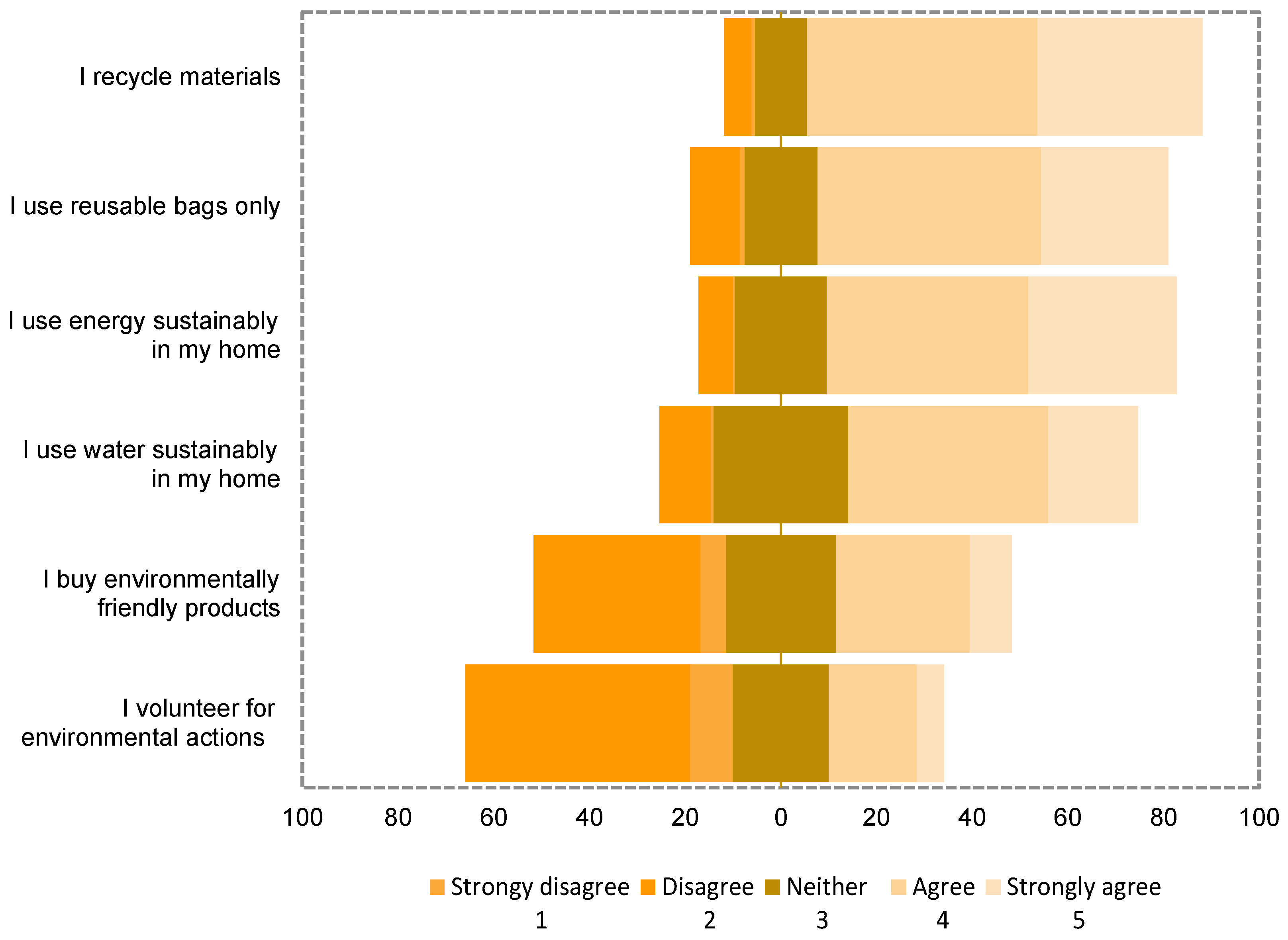
Most respondents engaged in pro-environmental behaviors, such as recycling (82.7%), using reusable bags (73.4%), and using energy (73.1%) and water (60.5%) sustainably (Figure 2). Moreover, 36.7% of respondents bought environmentally friendly products, while 40.2% did not. In contrast, most respondents did not volunteer for environmental actions (55.8%).
Exploratory factor analysis determined one pro-environmental behavior factor with an eigenvalue of 3.4, explaining 57.4% of the variance (mean score, 3.544 ± 0.730 SD; Table 2). The factor’s internal reliability was acceptable (Cronbach’s α = 0.849). Most respondents engaged in pro-environmental behaviors.

3.3. Willingness to Pay for Wildlife Habitat Conservation

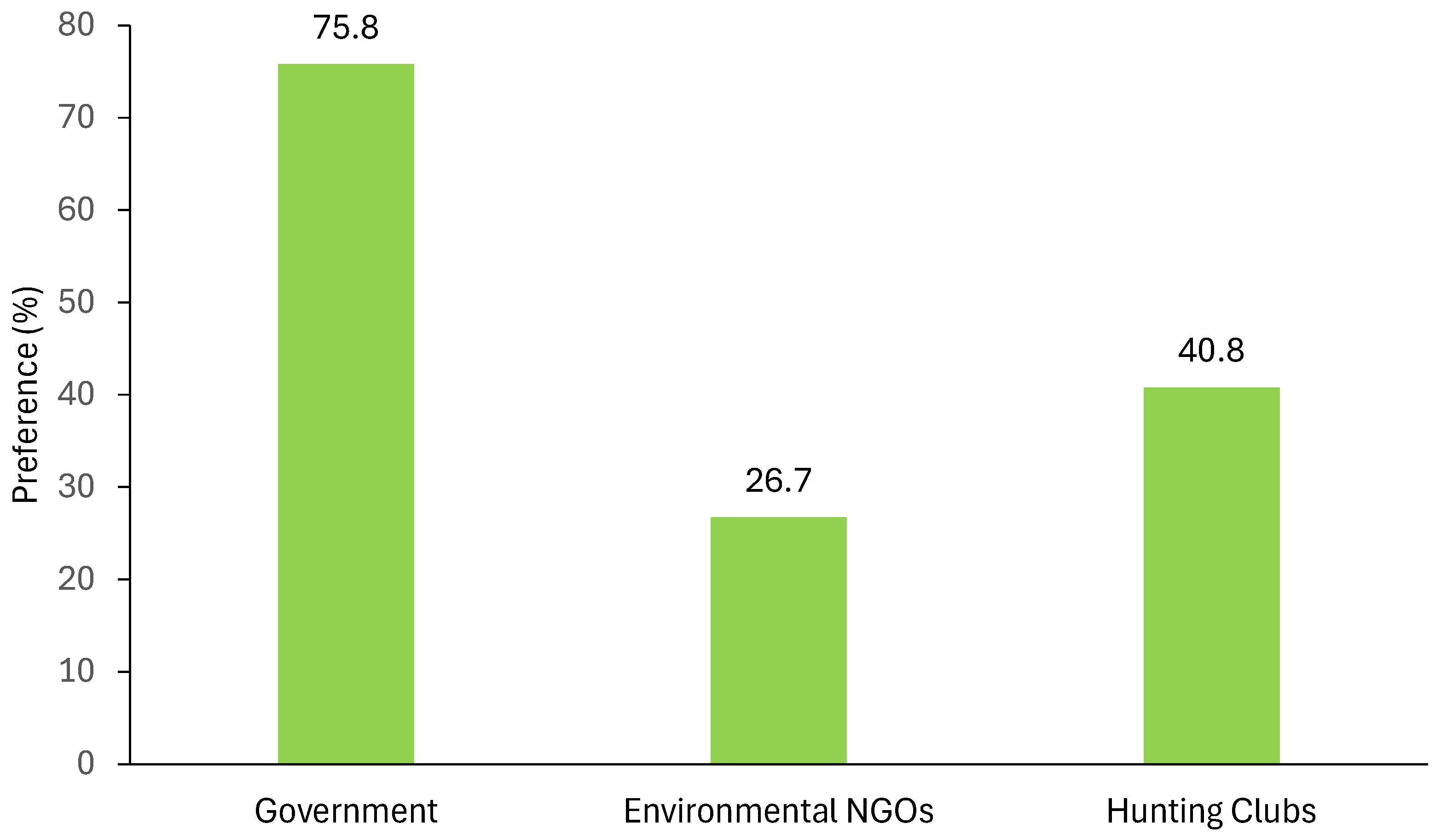
The interval regression model estimated a mean annual WTP of EUR 21.302 ± 1.607 SE (95% CI: 18.152/24.151). Based on the mean WTP and the number of households in the study area, the total funds that could be collected for conserving wildlife habitats could be estimated at EUR 788,807 (95% CI: 672,179/905,435). Most respondents trusted the government to implement the conservation program, followed by hunting clubs and environmental NGOs (Figure 3).
Respondents who were more active in pro-environmental behaviors reported a higher WTP than those who were less active in pro-environmental behaviors (p < 0.001) (Table 3). Females (p = 0.006) and respondents with higher household income (p < 0.001) reported a higher WTP than males and respondents with lower household income.

4. Discussion

4.1. The Value of Wildlife Conservation

The reported WTP indicated that respondents, residents of the Rodopi and Evros prefectures, were supportive of conserving local wildlife habitats by contributing funds for this cause. These funds should be primarily directed toward conserving key habitats for threatened wildlife species. The Dadia-Lefkimi-Soufli pine forest is vital for three threatened vultures (Cinereous Vulture, Egyptian Vulture, and Griffon Vulture) and for 17 other birds of prey that breed in the area [70]. Major threats to these pine forests are forest fires and pathogens. The Evros Delta and the lakes and coastal lagoons of eastern Macedonia and Thrace, home to numerous waterbird species, are threatened by pollution, encroachment for cultivation, household waste, and agricultural pollution runoff [71]. Iconic mammal species, such as the Brown Bear, the Grey Wolf, the Golden Jackal, and the Red Deer, are threatened by the loss or degradation of their forest, rangeland, and lowland habitats through conversion to agricultural and housing areas, fires, the closing of forest clearings, and the abandonment of traditional free-ranging livestock farming [72].
The mean annual WTP of respondents was comparable to that reported in other studies on the conservation of Greek wildlife habitats. In central and eastern Macedonia in 1997, 85.6% of respondents reported an annual WTP of EUR 20.94 (in 2020 values) to protect Lake Kerkini, an internationally important wetland for its waterbirds [73]. Less than half (43.9%) of residents of eastern Macedonia and Thrace pledged a mean annual WTP of EUR 137.2 in 2006 to protect the internationally important wetlands of the National Park of Eastern Macedonia and Thrace [60]. In Thessaly in 2017, 32.5% of respondents reported an annual WTP of EUR 22.7 to protect the Alonnisos Northern Sporades National Marine Park as a habitat for the endangered Mediterranean Monk Seal Monachus monachus [74]. In Kastoria Prefecture, northwestern Greece, in 2019, 90.0% of respondents bid an annual WTP of EUR 13.2 to restore and preserve Lake Kastoria as a wildlife habitat [75].

4.2. Preferred Conservation Organizations

Most respondents favored government entities leading wildlife habitat conservation programs. Governments are responsible for the design and implementation of many, often large-scale projects in all sectors. They are also accountable to the public for regulatory enforcement, the efficient use of resources, and the successful implementation, operation, and monitoring of these projects [76]. In Western societies, where policies promote institutional transparency and science communication, governments are generally considered capable and trustworthy in implementing projects for the benefit of society [77]. As for other activities, governments also have the resources needed to design and implement wildlife conservation programs, including legal, financial, and scientific ones. The availability of resources and the perceived capacity and responsibility of governments to protect nature and wildlife may explain respondents’ preference for government leadership of wildlife habitat conservation programs over other entities [77,78]. It should be emphasized that trust in the wildlife habitat conservation process is not automatic, given the many, often conflicting, stakeholders involved. Public communication and involvement in all the stages of a conservation project, design, implementation, and monitoring, would increase trust in the project [61].
Hunting clubs ranked second among respondents’ preferences for implementing wildlife habitat conservation programs, although this preference was substantial. As outdoor recreationists, hunters are stewards of nature and wildlife [79,80] and are actively involved in monitoring and conserving wildlife and their habitats worldwide [81,82]. Hunters also support wildlife management, especially for the benefit of game species [83,84]. Furthermore, profits from hunting license fees have been used to fund wildlife conservation programs [85,86]. In Greece, the Hellenic Hunting Confederation (HHC) has conducted a program since 2005 on the phenology of migration of aquatic and wading birds, the Eurasian Woodcock Scolopax rusticola, and thrushes Turdus spp. [87]. The HHC has also implemented since 2005 the Habitat Improvement program, which includes actions such as sowing, installing natural hedges and drinking troughs, planting fruit trees, and raising and releasing game [88]. At the local level, hunting clubs in Evros are currently partners in the LIFE project “Restoration of the Cinereous vulture population and trophic chain in the Bulgarian-Greek cross-border region,” responsible for establishing two new anti-poisoning dog units, conducting anti-poisoning and anti-poaching patrols, training relevant authorities to tackle wildlife crime, and implementing damage-prevention measures against wolf attacks, thereby reducing the risk of poisoning [89]. Hunting has long been practiced in Greece, and initiatives such as these have led many members of the public to recognize hunting clubs as conservation agencies [90].
In contrast to other agencies, only one-fourth of respondents selected environmental NGOs to implement a 5-year wildlife habitat conservation program. International NGOs, such as the World Wildlife Fund (WWF) and national NGOs, such as the Hellenic Ornithological Society, have implemented many conservation programs in Greece. NGOs can design and implement programs, engage volunteers, empower local communities, and mobilize philanthropists and secure international funding more quickly than government agencies [77,78]. They are also more eager to adopt innovative approaches and adaptive management and to maintain ties with the scientific community. In contrast, NGOs depend on funds that may not be available in the long term, resulting in gaps in implementation and monitoring [77,78]. Additionally, gaps in the accountability process may result in opaque governance and mismanagement of funds. Furthermore, long-term conservation often requires the enforcement of regulations, but NGOs lack law-enforcement authority and must rely on government authorities [91]. Some respondents may be ill-informed about environmental NGOs’ conservation efforts or hesitant due to concerns about fundraising and transparency [92].

4.3. WTP, Pro-Environmental Behavior, and Sociodemographics

Pro-environmental behavior was positively associated with WTP for wildlife habitat conservation. Numerous studies have highlighted the connection between environmentally friendly actions, attitudes toward wildlife, and increased WTP for conservation efforts. Residents of Drama in eastern Macedonia who adopted pro-environmental behaviors were willing to encounter all wildlife species in their city’s green spaces, irrespective of their likability assessment [93]. Pro-environmental behavior positively influenced WTP for biodiversity conservation among visitors to Raptor Watch weekend in Malaysia [42]. Pro-environmental behavior significantly influenced individuals’ willingness to contribute financially to policies aimed at preventing environmental damage in Spain [94]. People with pro-environmental attitudes were more willing to pay for a Common Murre Uria aalge restoration program in Galicia, Spain [95].
Females expressed a higher WTP for wildlife habitat conservation than males. Females are usually more positive toward pets and wildlife, and more supportive of conservation actions. These positive attitudes and behaviors lead to females’ higher WTP for conserving wildlife and their habitats more often than males’ [18,19,22,24]. This trend is further supported by studies focusing on specific endangered species and diverse geographical contexts [25,43,44], although it is not universal as some cases report different findings [30]. According to gender socialization theory, females are more empathetic, caring, and compassionate toward all creatures, whereas males are competitive yet fair and logical [46,96]. These behavioral differences between females and males may explain discrepancies in WTP between the genders.
Household income was positively associated with WTP for wildlife habitat conservation. Financial capability is a fundamental determinant of individuals’ WTP for public goods, including environmental conservation [49]. Economics has classified goods into three categories: normal (WTP increases with income), inferior (WTP decreases with income), and inelastic (income does not affect WTP) [97]. Wildlife habitat conservation can be classified as a normal good. In Greece, conservation was also a normal good for the Balkan Chamois Rupicapra rupicapra balcanica [19], the Northern White-breasted Hedgehog Erinaceus roumanicus [22], and snakes [25], and an inelastic good for bats [18]. Many different studies have identified wildlife conservation as a normal good, indicating that WTP increases alongside rising income levels [24,31,43,47]. This relationship is also confirmed by recent research on endangered marine species and coastal environments, where higher income consistently correlates with increased support for biodiversity protection [27,28,35]. Additionally, wildlife conservation has been characterised as an inelastic good, suggesting that the public’s commitment to its protection remains relatively stable despite changes in the associated costs [26,44].

4.4. Conservation and Management Implications

The research suggested that respondents were willing to contribute financially to the conservation of wildlife habitats. Funds collected should be used primarily to restore and preserve sensitive habitats critical for threatened species. Such habitats include protected wetlands and forests (national parks, special protection areas, special areas of conservation, and wetlands of international importance). A further increase in allocated funds could facilitate the implementation of additional conservation actions. Mobilizing citizens on environmental issues and increasing their WTP can be achieved through the following strategies: (a) developing targeted communication campaigns tailored to the demographic characteristics of citizens in each research area, especially groups that expressed lower WTP, such as those who did not participate in pro-environmental behaviors and males, to encourage more financial contributions to environmental actions; (b) ensuring that environmental initiatives requiring financial support are directly connected to the specific area under study, rather than being general or lacking significant local impact, as actions with clear relevance to the community are more likely to gain the trust and support of citizens; and (c) actively engaging citizens in the planning and implementation of environmental initiatives to foster a sense of ownership and importance [10,11,59,98].
Respondents largely preferred that the government implement wildlife habitat conservation. State wildlife managers should secure the resources needed to design, implement, and monitor conservation programs. Funding and mobilizing local communities through citizen science projects should be among their priorities [99]. Although less preferred than government agencies, hunting clubs and environmental NGOs have a long-standing record of wildlife habitat conservation in Greece. State officials should work with such organizations to advance conservation. Government agencies at both the local and national levels should also prioritize actions that inform the public about the conservation work of hunting clubs and NGOs and increase trust in them [100]. Government agencies, hunting clubs, and environmental NGOs should collaborate with one another and with local communities. In doing so, they will add incremental value to wildlife habitat conservation, emphasizing each entity’s strengths and mitigating weaknesses [61,77,78].

4.5. Methodological Considerations

A stratified random sampling design, with equal allocation to the strata, was employed to select the sample. However, the proportions of age, educational level, and place of residence did not match the population proportions. Therefore, the generalization of findings should account for these differences. Inter-observer bias was not introduced because the survey was conducted by a single researcher.
Anonymity was maintained throughout the research, and the respondent self-completed the questionnaire to minimize desirability bias [59]. We ensured that respondents were aware of the research question and could make informed decisions, thereby introducing framing bias. CVM creates a hypothetical market; therefore, hypothetical bias is inherent to the methodology [16]. It has been estimated that hypothetical WTP is about 21% higher than the true WTP [101].

5. Conclusions

The CVM survey indicated that considerable funds could be raised for the conservation of wildlife habitats. Pro-environmental behavior, income, and female respondents were positively associated with WTP, while the majority of respondents selected the government to implement wildlife habitat conservation. Future research should focus on revealing the factors underlying the low WTP among segments of the public identified in this survey. The reasons for the low acceptance of hunting clubs and, especially, environmental NGOs as conservation agencies should also be urgently investigated. Our findings would be useful as a basis for future research and for informing policies to promote WTP and support for wildlife habitat conservation, involving all key stakeholders. The preservation of wildlife habitats is critical to the well-being of both nature and society.

Author Contributions

Conceptualization, D.N. and V.L.; methodology, D.N. and V.L.; software, D.N.; validation, D.N., V.L., G.T. and S.G.; formal analysis, D.N. and V.L.; investigation, D.N.; resources, D.N.; data curation, D.N.; writing—original draft preparation, D.N. and V.L.; writing—review and editing, D.N.; visualization, D.N.; supervision, D.N., G.T. and S.G. All authors have read and agreed to the published version of the manuscript.

Funding

This research received no external funding.

Institutional Review Board Statement

The study was conducted in accordance with the Declaration of Helsinki, and the protocol was approved by the Ethics and Deontology of Research Committee of Democritus University of Thrace (6120/632) on 27 September 2021.

Informed Consent Statement

We sought informed consent from all the participants and maintained anonymity at all stages of the research.

Data Availability Statement

The data presented in this study are not available due to restrictions imposed by the Democritus University of Thrace (part of D.N.’s ongoing PhD thesis).

Acknowledgments

We thank survey respondents for sharing their opinions with us.

Conflicts of Interest

The authors declare no conflicts of interest.

References

  1. Barnosky, A.D.; Hadly, E.A.; Bascompte, J.; Berlow, E.L.; Brown, J.H.; Fortelius, M.; Getz, W.M.; Harte, J.; Hastings, A.; Marquet, P.A.; et al. Approaching a State Shift in Earth’s Biosphere. Nature 2012, 486, 52–58. [Google Scholar] [CrossRef] [Scilit]
  2. Pereira, H.M.; Leadley, P.W.; Proenca, V.; Alkemade, R.; Scharlemann, J.P.W.; Fernandez-Manjarres, J.F.; Araujo, M.B.; Balvanera, P.; Biggs, R.; Cheung, W.W.L.; et al. Scenarios for Global Biodiversity in the 21st Century. Science 2010, 330, 1496–1501. [Google Scholar] [CrossRef] [Scilit]
  3. WWF. Living Planet Report 2024—A System in Peril; WWF: Gland, Switzerland, 2024. [Google Scholar]
  4. IUCN. Summary Statistics. IUCN Red List Version 2024-1. Available online: https://www.iucnredlist.org/resources/summary-statistics#Summary%20Tables (accessed on 3 August 2024).
  5. Ceballos, G.; Ehrlich, P.R.; Barnosky, A.D.; García, A.; Pringle, R.M.; Palmer, T.M. Accelerated Modern Human–Induced Species Losses: Entering the Sixth Mass Extinction. Sci. Adv. 2015, 5, e1400253. [Google Scholar] [CrossRef] [Scilit] [PubMed]
  6. Bradbury, R.B.; Butchart, S.H.M.; Fisher, B.; Hughes, F.M.R.; Ingwall-King, L.; MacDonald, M.A.; Merriman, J.C.; Peh, K.S.-H.; Pellier, A.-S.; Thomas, D.H.L.; et al. The Economic Consequences of Conserving or Restoring Sites for Nature. Nat. Sustain. 2021, 4, 602–608. [Google Scholar] [CrossRef] [Scilit]
  7. Martino, S.; Kenter, J.O. Economic Valuation of Wildlife Conservation. Eur. J. Wildl. Res. 2023, 69, 32. [Google Scholar] [CrossRef] [Scilit]
  8. Brooks, T.M.; Mittermeier, R.A.; da Fonseca, G.A.B.; Gerlach, J.; Hoffmann, M.; Lamoreux, J.F.; Mittermeier, C.G.; Pilgrim, J.D.; Rodrigues, A.S.L. Global Biodiversity Conservation Priorities. Science 2006, 313, 58–61. [Google Scholar] [CrossRef] [Scilit]
  9. McClanahan, T.R.; Rankin, P.S. Geography of Conservation Spending, Biodiversity, and Culture. Conserv. Biol. 2016, 30, 1089–1101. [Google Scholar] [CrossRef] [Scilit] [PubMed]
  10. Manfredo, M.J. Who Cares About Wildlife; Springer: New York, NY, USA, 2008. [Google Scholar]
  11. Decker, D.J.; Riley, S.J.; Siemer, W.F. (Eds.) Human Dimensions of Wildlife Management, 2nd ed.; The Johns Hopkins University Press: Baltimore, MD, USA, 2012. [Google Scholar]
  12. Middleton, A.D.; Stoellinger, T.; Karandikar, H.; Leonard, B.; Doremus, H.; Kremen, C. Harnessing Visitors’ Enthusiasm for National Parks to Fund Cooperative Large Landscape Conservation. Conserv. Sci. Pract. 2021, 3, e335. [Google Scholar] [CrossRef] [Scilit]
  13. Duda, M.D.; Beppler, T.; Austen, D.J.; Organ, J.F. The Precarious Position of Wildlife Conservation Funding in the United States. Hum. Dimens. Wildl. 2022, 27, 164–172. [Google Scholar] [CrossRef] [Scilit]
  14. Jones-Walters, L.; Mulder, I. Valuing Nature: The Economics of Biodiversity. J. Nat. Conserv. 2009, 17, 245–247. [Google Scholar] [CrossRef] [Scilit]
  15. Morse-Jones, S.; Bateman, I.J.; Kontoleon, A.; Ferrini, S.; Burgess, N.D.; Turner, R.K. Stated Preferences for Tropical Wildlife Conservation amongst Distant Beneficiaries: Charisma, Endemism, Scope, and Substitution Effects. Ecol. Econ. 2012, 78, 9–18. [Google Scholar] [CrossRef] [Scilit]
  16. Greene, W.H. Econometric Analysis, 8th ed.; Pearson: New York, NY, USA, 2018. [Google Scholar]
  17. Perman, R.; Ma, Y.; McGilvray, J.; Common, M. Natural Resource and Environmental Economics, 3rd ed.; Pearson Education: Harlow, UK, 2003. [Google Scholar]
  18. Liordos, V.; Kontsiotis, V.J.; Koutoulas, O.; Parapouras, A. The Interplay of Likeability and Fear in Willingness to Pay for Bat Conservation. Earth 2021, 2, 781–796. [Google Scholar] [CrossRef] [Scilit]
  19. Liordos, V.; Antoniadou, M.; Kontsiotis, V.J. Economic Valuation of Balkan Chamois Conservation. Animals 2023, 13, 691. [Google Scholar] [CrossRef] [Scilit]
  20. Brown, T.; Champ, P.; Bishop, R.; McCollum, D. Which Response Format Reveals the Truth about Donations to a Public Good? Land Econ. 1996, 72, 152–166. [Google Scholar] [CrossRef] [Scilit]
  21. Welsh, M.P.; Poe, G.L. Elicitation Effects in Contingent Valuation: Comparisons to a Multiple Bounded Discrete Choice Approach. J. Environ. Econ. Manag. 1998, 36, 170–185. [Google Scholar] [CrossRef] [Scilit]
  22. Kontsiotis, V.J.; Chrysopoulou, D.; Chrysopoulou, P.; Liordos, V. Economic Valuation of Northern White-Breasted Hedgehog Conservation. Diversity 2023, 15, 490. [Google Scholar] [CrossRef] [Scilit]
  23. Becker, N.; Farja, Y.; Majewski, J.; Sobolewska, A. Does Nationality Matter? The Effect of Cross-Border Information on Willingness to Pay for Migratory Species Conservation. Reg. Environ. Change 2019, 19, 1987–1998. [Google Scholar] [CrossRef] [Scilit]
  24. Jaafar, K.J.D.; Vera, P.J.D.d.; Catipay, J.P.A.; Kontsiotis, V.J.; Liordos, V. Endemic and Threatened: The Conservation Value of the Philippine Duck. Diversity 2024, 16, 602. [Google Scholar] [CrossRef] [Scilit]
  25. Liordos, V.; Rapti, A.; Kontsiotis, V.J. Economic Valuation of Snake Conservation in Greece. J. Nat. Conserv. 2024, 79, 126615. [Google Scholar] [CrossRef] [Scilit]
  26. Bhattarai, B.R.; Morgan, D.; Wright, W. Equitable Sharing of Benefits from Tiger Conservation: Beneficiaries’ Willingness to Pay to Offset the Costs of Tiger Conservation. J. Environ. Manag. 2021, 284, 112018. [Google Scholar] [CrossRef] [Scilit]
  27. Kim, J.-H.; Kim, J.; Yoo, S.-H. What Value Does the Public Put on Managing and Protecting an Endangered Marine Species? The Case of the Finless Porpoise in South Korea. Sustainability 2020, 12, 4505. [Google Scholar] [CrossRef] [Scilit]
  28. Kim, J.-H.; Choi, K.-R.; Yoo, S.-H. Public Perspective on Increasing the Numbers of an Endangered Species, Loggerhead Turtles in South Korea: A Contingent Valuation. Sustainability 2020, 12, 3835. [Google Scholar] [CrossRef] [Scilit]
  29. Mukhacheva, A.S.; Bragina, E.V.; Miquelle, D.G.; Kretser, H.E.; Derugina, V.V. Local Attitudes toward Amur Tiger (Panthera tigris altaica) Conservation in the Russian Far East. Conserv. Soc. 2022, 20, 304–312. [Google Scholar] [CrossRef] [Scilit]
  30. Baral, N.; Gautam, R.; Timilsina, N.; Bhat, M.G. Conservation Implications of Contingent Valuation of Critically Endangered White-Rumped Vulture (Gyps bengalensis) in South Asia. Int. J. Biodivers. Sci. Manag. 2007, 3, 145–156. [Google Scholar] [CrossRef] [Scilit]
  31. Becker, N.; Choresh, Y.; Bahat, O.; Inbar, M. Economic Analysis of Feeding Stations as a Means to Preserve an Endangered Species: The Case of Griffon Vulture (Gyps fulvus) in Israel. J. Nat. Conserv. 2009, 17, 199–211. [Google Scholar] [CrossRef] [Scilit]
  32. Bond, C.A.; Cullen, K.G.; Larson, D.M. Joint Estimation of Discount Rates and Willingness to Pay for Public Goods. Ecol. Econ. 2009, 68, 2751–2759. [Google Scholar] [CrossRef] [Scilit]
  33. Kenyon, W.; Nevin, C. The Use of Economic and Participatory Approaches to Assess Forest Development: A Case Study in the Ettrick Valley. For. Policy Econ. 2001, 3, 69–80. [Google Scholar] [CrossRef] [Scilit]
  34. Loomis, J.B. Can Environmental Economic Valuation Techniques Aid Ecological Economics and Wildlife Conservation? Wildl. Soc. Bull. 2000, 28, 52–60. [Google Scholar]
  35. Mai, N.T.; Duc, T.D.; Huan, L.H.; Thuan, L.T.H. Valuing Community Awareness and Willingness to Pay for Marine Environment Management: Empirical Analysis in Coastal Central Region of Vietnam. Environ. Res. Commun. 2024, 6, 095029. [Google Scholar] [CrossRef] [Scilit]
  36. Akter, S.; Mozahid, M.N.; Iqbal, M.H. Valuation of Ratargul Swamp Forest Conservation: Does Climate Knowledge Matter? Trees For. People 2024, 17, 100638. [Google Scholar] [CrossRef] [Scilit]
  37. Yunus, M.; Pagdee, A.; Baral, H. Economics of Peatland Ecosystem Services: A Study of Use and Non-Use Values and People Interplays in Sumatra, Indonesia. Land 2024, 13, 866. [Google Scholar] [CrossRef] [Scilit]
  38. Kim, H.N.; Ryu, H. Estimating the Economic Value of Change in Ecosystem Habitat Quality in South Korea Using an Integrated Environmental and Economic Analysis. Land 2022, 11, 2249. [Google Scholar] [CrossRef] [Scilit]
  39. Lange, F.; Dewitte, S. Measuring Pro-Environmental Behavior: Review and Recommendations. J. Environ. Psychol. 2019, 63, 92–100. [Google Scholar] [CrossRef] [Scilit]
  40. Larson, L.R.; Stedman, R.C.; Cooper, C.B.; Decker, D.J. Understanding the Multidimensional Structure of Pro-Environmental Behavior. J. Environ. Psychol. 2015, 43, 112–124. [Google Scholar] [CrossRef] [Scilit]
  41. Chiambaretto, P.; Laurent, S.; Schmalz, U.; Fu, M.; Rouyre, A.; Bildstein, C.; Fernandez, A.S. Are Consumers Willing to Pay More for Green Innovations? Insights from the Air Transport Industry. Technovation 2024, 137, 103079. [Google Scholar] [CrossRef] [Scilit]
  42. Mustafa, A.M.A.A.; Ismail, N.; Rahman, R.; Das, K.D.S. Assessing the Drivers of Pro-Environmental Behavior and Willingness to Pay for Biodiversity Conservation among Visitors to Raptor Watch Weekend at Tanjung Tuan, Melaka. Malay. Nat. J. 2023, 75, 527–540. [Google Scholar]
  43. Sharma, S.; Kreye, M.M. Social Value of Bird Conservation on Private Forest Lands in Pennsylvania, USA. Ecol. Econ. 2022, 196, 107426. [Google Scholar] [CrossRef] [Scilit]
  44. Sun, X.; Shen, J.; Tao, R.; Shen, Y.; Cao, M.; Xiao, Y. Local Willingness to Pay Survey for Rare and Endangered Species Protection in Qianjiangyuan National Park, China. Sustainability 2023, 15, 2045. [Google Scholar] [CrossRef] [Scilit]
  45. Olson, K.E.; O’Brien, M.A.; Rogers, W.A.; Charness, N. Diffusion of Technology: Frequency of Use for Younger and Older Adults. Ageing Int. 2011, 36, 123–145. [Google Scholar] [CrossRef] [Scilit]
  46. Chodorow, N.J. The Reproduction of Mothering: Psychoanalysis and the Sociology of Gender; University of California Press: Oakland, CA, USA, 1978. [Google Scholar]
  47. Jin, J.; Wang, Z.; Liu, X. Valuing Black-Faced Spoonbill Conservation in Macao: A Policy and Contingent Valuation Study. Ecol. Econ. 2008, 68, 328–335. [Google Scholar] [CrossRef] [Scilit]
  48. Gong, Y.; Bi, X.; Wu, J. Willingness to Pay for the Conservation of the Endangered Red-Crowned Crane in China: Roles of Conservation Attitudes and Income. For. Policy Econ. 2020, 120, 102296. [Google Scholar] [CrossRef] [Scilit]
  49. Jacobsen, J.B.; Hanley, N. Are There Income Effects on Global Willingness to Pay for Biodiversity Conservation? Environ. Resour. Econ. 2009, 43, 137–160. [Google Scholar] [CrossRef] [Scilit]
  50. Karlsson, J.; Sjöström, M. Human Attitudes Towards Wolves: A Matter of Distance. Biol. Conserv. 2007, 137, 610–616. [Google Scholar] [CrossRef] [Scilit]
  51. ELSTAT. Statistical Yearbook of Greece. 2011. Available online: http://dlib.statistics.gr/Book/GRESYE_01_0002_00061.pdf (accessed on 10 September 2024). (In Greek)
  52. Zalidis, C.G.; Mantzavelas, A.L. (Eds.) Inventory of Greek Wetlands as Natural Resources (First Approximation); Greek Biotope/Wetland Centre (EKBY): Thessaloniki, Greece, 1994. [Google Scholar]
  53. Legakis, A.; Maragou, P. The Red Data Book of Threatened Animals of Greece; Hellenic Zoological Society: Athens, Greece, 2009. [Google Scholar]
  54. Natura. Natura 200 Viewer. 2000. Available online: https://natura2000.eea.europa.eu/ (accessed on 10 August 2024).
  55. Ramsar. The Convention on Wetlands. 1975. Available online: https://www.ramsar.org/country-profile/greece (accessed on 10 August 2024).
  56. WDPA. The World Database on Protected Areas. Available online: https://www.protectedplanet.net/en/search-areas?filters%5Blocation%5D%5Btype%5D=country&filters%5Bdb_type%5D%5B%5D=wdpa&filters%5Blocation%5D%5Boptions%5D%5B%5D=Greece (accessed on 10 August 2024).
  57. ELSTAT. Hellenic Statistical Authority, Population Census 2021. Available online: https://www.statistics.gr/el/2021-census-res-pop-results (accessed on 10 September 2024). (In Greek)
  58. World Bank. GDP per Capita (Current US$): Country Search. 2024. Available online: https://data.worldbank.org/indicator/NY.GDP.PCAP.CD?locations=GR (accessed on 10 September 2024).
  59. Vaske, J.J. Survey Research and Analysis, 2nd ed.; Venture: State College, PA, USA, 2019. [Google Scholar]
  60. Jones, N.; Iosifides, T.; Evangelinos, K.I.; Florokapi, I.; Dimitrakopoulos, P.G. Investigating Knowledge and Perceptions of Citizens of the National Park of Eastern Macedonia and Thrace, Greece. Int. J. Sustain. Dev. World Ecol. 2011, 19, 25–33. [Google Scholar] [CrossRef] [Scilit]
  61. Young, J.C.; Searle, K.; Butler, A.; Simmons, P.; Watt, A.D.; Jordan, A. The role of trust in the resolution of conservation conflicts. Biol. Conserv. 2016, 195, 196–202. [Google Scholar] [CrossRef] [Scilit]
  62. Broberg, T.; Brännlund, R. On the Value of Large Predators in Sweden: A Regional Stratified Contingent Valuation Analysis. J. Environ. Manag. 2008, 88, 1066–1077. [Google Scholar] [CrossRef] [Scilit]
  63. Johansson, M.; Sjöström, M.; Karlsson, J.; Brännlund, R. Is Human Fear Affecting Public Willingness to Pay for the Management and Conservation of Large Carnivores? Soc. Nat. Resour. 2012, 25, 610–620. [Google Scholar] [CrossRef] [Scilit]
  64. Hanemann, W.M.; Loomis, J.; Kanninen, B. Statistical Efficiency of Double-Bounded Dichotomous Choice Contingent Valuation. Am. J. Agric. Econ. 1991, 73, 1255–1263. [Google Scholar] [CrossRef] [Scilit]
  65. Lopez-Feldman, A. Introduction to Contingent Valuation Using Stata. Munich Personal RePEc Archive. 2012. Available online: https://mpra.ub.uni-muenchen.de/41018 (accessed on 10 September 2024).
  66. Vossler, C.A. Multiple Bounded Discrete Choice Contingent Valuation: Parametric and Nonparametric Welfare Estimation and a Comparison to the Payment Card. 2003. Available online: https://mpra.ub.uni-muenchen.de/38867 (accessed on 10 September 2024).
  67. Nunnally, J.C. Psychometric Theory, 2nd ed.; McGraw-Hill: New York, NY, USA, 1978. [Google Scholar]
  68. Naimi, B.; Hamm, N.; Groen, T.A.; Skidmore, A.K.; Toxopeus, A.G. Where is Positional Uncertainty a Problem for Species Distribution Modelling. Ecography 2014, 37, 191–203. [Google Scholar] [CrossRef] [Scilit]
  69. Kassambara, A. Ggpubr: ‘ggplot2’ Based Publication Ready Plots. R Package Version 0.4.0, 2020. Available online: https://CRAN.R-project.org/package=ggpubr (accessed on 15 September 2024).
  70. Poirazidis, K. Systematic Raptor Monitoring as Conservation Tool: 12-Year Results in the Light of Landscape Changes in Dadia-Lefkimi-Soufli National Park. Nat. Conserv. 2017, 22, 17–50. [Google Scholar] [CrossRef] [Scilit]
  71. Xofis, P.; Poirazidis, K. Combining Different Spatio-Temporal Resolution Images to Depict Landscape Dynamics and Guide Wildlife Management. Biol. Conserv. 2018, 218, 10–17. [Google Scholar] [CrossRef] [Scilit]
  72. Andrea, V.; Tampakis, S.; Tsantopoulos, G.; Manolas, E. Environmental Problems in Protected Areas: Stakeholders’ Views with Regard to Two Neighboring National Parks in Greece. Manag. Environ. Qual. 2014, 25, 723–737. [Google Scholar] [CrossRef] [Scilit]
  73. Oglethorpe, D.R.; Miliadou, D. Economic Valuation of the Non-Use Attributes of a Wetland: A Case Study for Lake Kerkini. J. Environ. Plan. Manag. 2000, 43, 755–767. [Google Scholar] [CrossRef] [Scilit]
  74. Halkos, G.; Matsiori, S.; Dritsas, S. Stakeholder Engagement for Sustainable Development and Their Suggestions for Environmental Policy: The Case of Mediterranean Monk Seal. Sustain. Dev. 2019, 27, 461–473. [Google Scholar] [CrossRef] [Scilit]
  75. Zoupanidou, E.; Batzias, F.; Kopsidas, O. Applying a Modified Contingent Valuation Method (CVM) for the Preservation/Restoration of the Lake Kastoria in Northern Greece. AIP Conf. Proc. 2019, 2186, 170035. [Google Scholar] [CrossRef] [Scilit]
  76. Weber, E.U.; Stern, P.C. Public Understanding of Climate Change in the United States. Am. Psychol. 2011, 66, 315–328. [Google Scholar] [CrossRef] [Scilit]
  77. Pomeranz, E.F.; Hare, D.; Decker, D.J.; Forstchen, A.B.; Jacobson, C.A.; Smith, C.A.; Schiavone, M.V. Successful Wildlife Conservation Requires Good Governance. Front. Conserv. Sci. 2021, 2, 753289. [Google Scholar] [CrossRef] [Scilit]
  78. Farwig, N.; Sprenger, P.P.; Baur, B.; Böhning-Gaese, K.; Brandt, A.; Eisenhauer, N.; Ellwanger, G.; Hochkirch, A.; Karamanlidis, A.A.; Mehring, M.; et al. Identifying Major Factors for Success and Failure of Conservation Programs in Europe. Environ. Manag. 2025, 75, 425–443. [Google Scholar] [CrossRef] [Scilit] [PubMed]
  79. MacMillan, D.C.; Leitch, K. Conservation with a Gun: Understanding Landowner Attitudes to Deer Hunting in the Scottish Highlands. Hum. Ecol. 2008, 36, 473–484. [Google Scholar] [CrossRef] [Scilit]
  80. Treves, A.; Martin, K.A. Hunters as Stewards of Wolves in Wisconsin and the Northern Rocky Mountains, USA. Soc. Nat. Resour. 2011, 24, 984–994. [Google Scholar] [CrossRef] [Scilit]
  81. Holsman, R.H. Goodwill hunting? Exploring the Role of Hunters as Ecosystem Stewards. Wildl. Soc. Bull. 2000, 28, 808–816. [Google Scholar]
  82. Loveridge, A.J.; Reynolds, J.C.; Milner-Gulland, E.J. Does Sport Hunting Benefit Conservation? In Key Topics in Conservation Biology; Macdonald, D.W., Service, K., Eds.; Blackwell Publishing: Oxford, UK, 2007; pp. 224–241. [Google Scholar]
  83. Kontsiotis, V.J.; Vadikolios, G.; Liordos, V. Acceptability and consensus for the management of game and non-game crop raiders. Wildl. Res. 2020, 47, 296–308. [Google Scholar] [CrossRef] [Scilit]
  84. Liordos, V.; Kontsiotis, V.J.; Emmanouilidou, F. Understanding Stakeholder Preferences for Managing Red Foxes in Different Situations. Ecol. Process. 2020, 9, 20. [Google Scholar] [CrossRef] [Scilit]
  85. Heffelfinger, J.R.; Geist, V.; Wishart, W. The Role of Hunting in North American Wildlife Conservation. Int. J. Environ. Stud. 2013, 70, 399–413. [Google Scholar] [CrossRef] [Scilit]
  86. Jenkins, L.H.; Jenkins, M.A.; Webster, C.R.; Zollner, P.A.; Shields, J.M. Herbaceous Layer Response to 17 Years of Controlled Deer Hunting in Forested Natural Areas. Biol. Conserv. 2014, 175, 119–128. [Google Scholar] [CrossRef] [Scilit]
  87. Hellenic Hunting Confederation. Phenology of Bird Migration in Greece. 2013. Available online: https://www.ksellas.gr/index.php?option=com_content&view=article&id=165&Itemid=210&lang=en (accessed on 9 January 2026).
  88. Hellenic Hunting Confederation. Improving Habitats. 2013. Available online: https://www.ksellas.gr/index.php?option=com_content&view=article&id=169&Itemid=215&lang=en (accessed on 9 January 2026).
  89. Natural Environment and Climate Change Agency. LIFE23-NAT-BG-LIFE-Rhodope Vulture: Restoration of the Cinereous Vulture Population and Trophic Chain in the Bulgarian-Greek Cross-Border Region. Available online: https://necca.gov.gr/erga/fysi-viopoikilotita/life23-nat-bg-life-rhodope-vulture-restoration-of-the-cinereous-vulture-population-and-trophic-chain-in-the-bulgarian-greek-cross-border-region/ (accessed on 9 January 2026).
  90. Raftogianni, G.; Kontsiotis, V.J.; Liordos, V. Wildlife Knowledge and Attitudes toward Hunting: A Comparative Hunter–Non-Hunter Analysis. Sustainability 2022, 14, 14541. [Google Scholar] [CrossRef] [Scilit]
  91. Brockington, D.; Scholfield, K. The Conservationist Mode of Production and Conservation NGOs in Sub-Saharan Africa. Antipode 2010, 42, 551–575. [Google Scholar] [CrossRef] [Scilit]
  92. Ghimire, K.B.; Pimbert, M.P. Social Change and Conservation: Environmental Politics and Impacts of National Parks and Protected Areas; Earthscan Publications: London, UK, 1997. [Google Scholar]
  93. Liordos, V.; Foutsa, E.; Kontsiotis, V.J. Differences in Encounters, Likeability, and Desirability of Wildlife Species among Residents of a Greek City. Sci. Total Environ. 2020, 739, 139892. [Google Scholar] [CrossRef] [Scilit]
  94. Torgler, B.; Garcia-Valiñas, M.A. The Determinants of Individuals’ Attitudes towards Preventing Environmental Damage. Ecol. Econ. 2007, 63, 536–552. [Google Scholar] [CrossRef] [Scilit]
  95. Ojea, I.; Loureiro, M.L. Altruistic, Egoistic and Biospheric Values in Willingness to Pay (WTP) for Wildlife. Ecol. Econ. 2007, 63, 807–814. [Google Scholar] [CrossRef] [Scilit]
  96. Gellar, E.S. Actively Caring for the Environment: An Integration of Behaviorism and Humanism. Environ. Behav. 1995, 27, 184–195. [Google Scholar] [CrossRef] [Scilit]
  97. Haque, M.O. Income Elasticity and Economic Development: Methods and Applications; Advanced Studies in Theoretical and Applied Econometrics; Springer: Dordrecht, The Netherlands, 2005; Volume 42. [Google Scholar]
  98. Hoffmaster, E.; Vonk, J.; Mies, R. Education to Action: Improving Public Perception of Bats. Animals 2016, 6, 6. [Google Scholar] [CrossRef] [Scilit]
  99. Eagles, P.F.; McCool, S.F.; Haynes, C.D. Sustainable Tourism in Protected Areas: Guidelines for Planning and Management; IUCN: Gland, Switzerland, 2002. [Google Scholar]
  100. Jedd, T.; Bixler, R.P. Accountability in Networked Governance: Learning from a Case of Landscape-Scale Forest Conservation. Environ. Policy Gov. 2015, 25, 172–187. [Google Scholar] [CrossRef] [Scilit]
  101. Schmidt, J.; Bijmolt, T.H.A. Accurately Measuring Willingness to Pay for Consumer Goods: A Meta-Analysis of the Hypothetical Bias. J. Acad. Mark. Sci. 2020, 48, 499–518. [Google Scholar] [CrossRef] [Scilit]
Figure 1. Map showing the study area, the Rodopi and Evros prefectures.
Land 15 00837 g001
Figure 2. Respondents’ (n = 849) percentage responses to 6 pro-environmental behavior statements. See Table 2 for the full wording of the statements.
Land 15 00837 g002
Figure 3. Preference (%) by Thrace residents of organizations for implementing a 5-year wildlife habitat conservation program.
Land 15 00837 g003
Table 1. Variables used in the WTP interval model.
VariableDefinitionMinMax
AgeYears of age (1 = 18–30, 2 = 31–40, 3 = 41–50, 4 = 51–60, 5 = >60)15
Gender1 if the participant is a woman01
Level of education0 if lower, 1 if higher01
Marital status1 no family, 2 with family, 3 with family and kids13
Household incomeAnnual household income (1 = <€8000, 2 = €8001–12,000, 3 = €12,001–24,000, 4 = >€24,000)14
Residence0 if the participant lives in a rural area, 1 if the participant lives in an urban area01
Pro-environmental behavior1 = strongly disagree, 2 = disagree, 3 = neither, 4 = agree, 5 = strongly agree15
Table 2. Results of principal components factor analysis of the survey participants’ (n = 849) pro-environmental behavior. Descriptive statistics, factor loadings, factor eigenvalues, % variance explained, and factor reliability are given.
Mean aSDPro-Environmental Behavior
I recycle materials (e.g., plastic, paper, metal).4.1010.8570.776
I use reusable bags only.3.8780.9510.752
I use energy sustainably in my home.3.9620.9060.762
I use water sustainably in my home.3.6750.9180.759
I buy products from environmentally friendly companies.3.0001.0910.791
I participate in voluntary environmental actions (e.g., tree planting, beach cleaning).2.6491.0560.703
Eigenvalue 3.444
% variance explained 57.396
Cronbach’s alpha 0.849
a Range: 1 (strongly disagree)–5 (strongly agree).
Table 3. Results of the interval regression willingness to pay model (n = 849).
CoefficientSEzp > z95% CI
Intercept−28.0046.940−4.0400.000−41.406/−14.403
Pro-environmental behavior9.6421.8925.1000.0005.934/13.350
Age0.0251.1050.0200.982−2.142/2.192
Gender (Female)+7.0332.573−2.7300.006−12.076/−1.991
Level of education (Higher)3.0012.8251.0600.288−2.536/8.538
Marital status−0.1121.701−0.0700.948−3.444/3.222
Household income6.4381.6123.9900.0003.279/9.597
Place of residence0.6842.5890.2600.792−4.390/5.758
Sigma36.1290.934
−LogLik2927.930
Wald χ2787,420
p > χ27<0.001
Disclaimer/Publisher’s Note: The statements, opinions and data contained in all publications are solely those of the individual author(s) and contributor(s) and not of MDPI and/or the editor(s). MDPI and/or the editor(s) disclaim responsibility for any injury to people or property resulting from any ideas, methods, instructions or products referred to in the content.