Article

Energy-Aware AI for Landscape-Scale Conservation: A Digital Twin Architecture for the Greater Yellowstone Ecosystem

by
Harsh Deep Singh Narula
World Wildlife Fund, Washington, DC 20037, USA
Land 2026, 15(5), 824; https://doi.org/10.3390/land15050824
Submission received: 8 April 2026 / Revised: 5 May 2026 / Accepted: 9 May 2026 / Published: 12 May 2026

Abstract

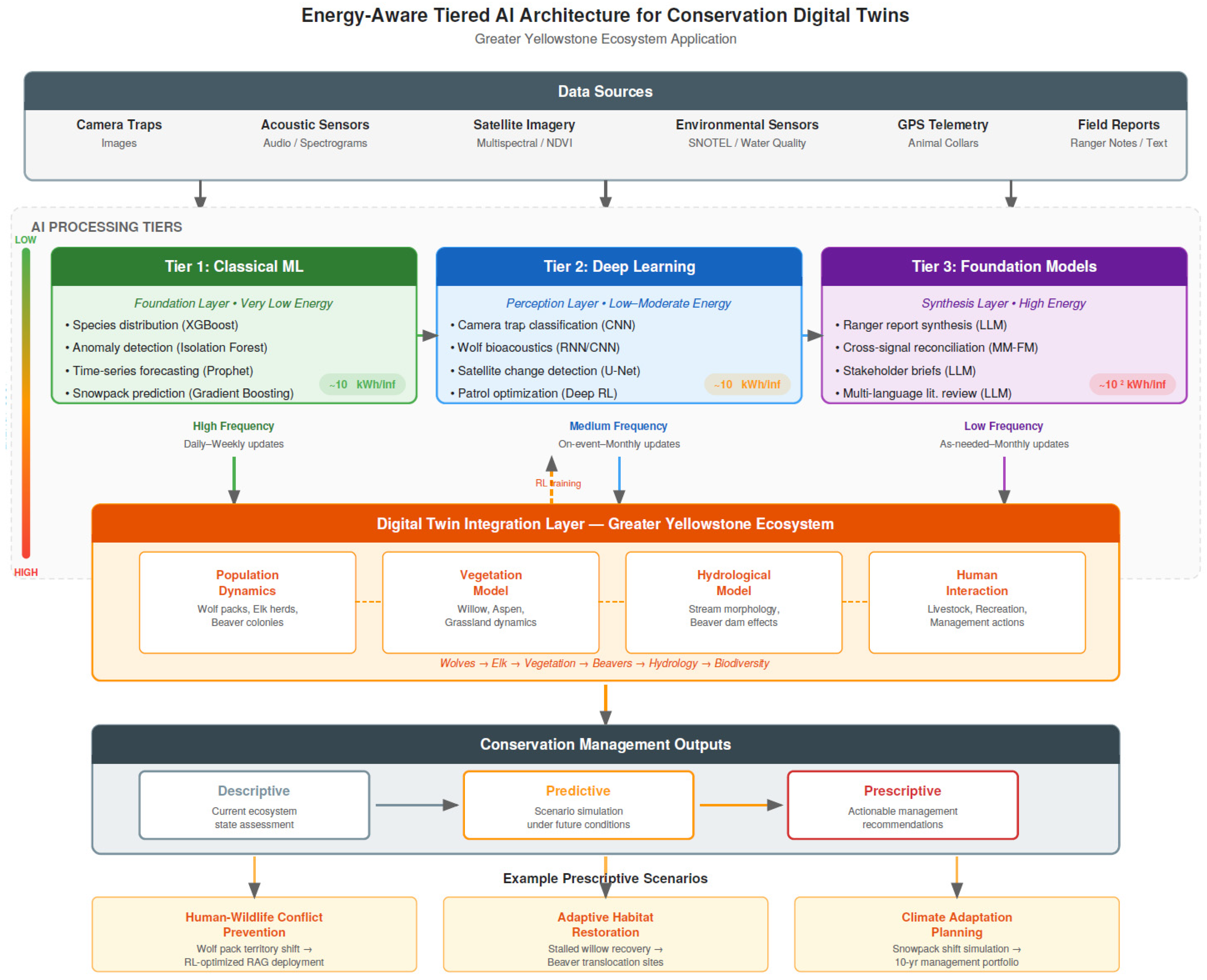
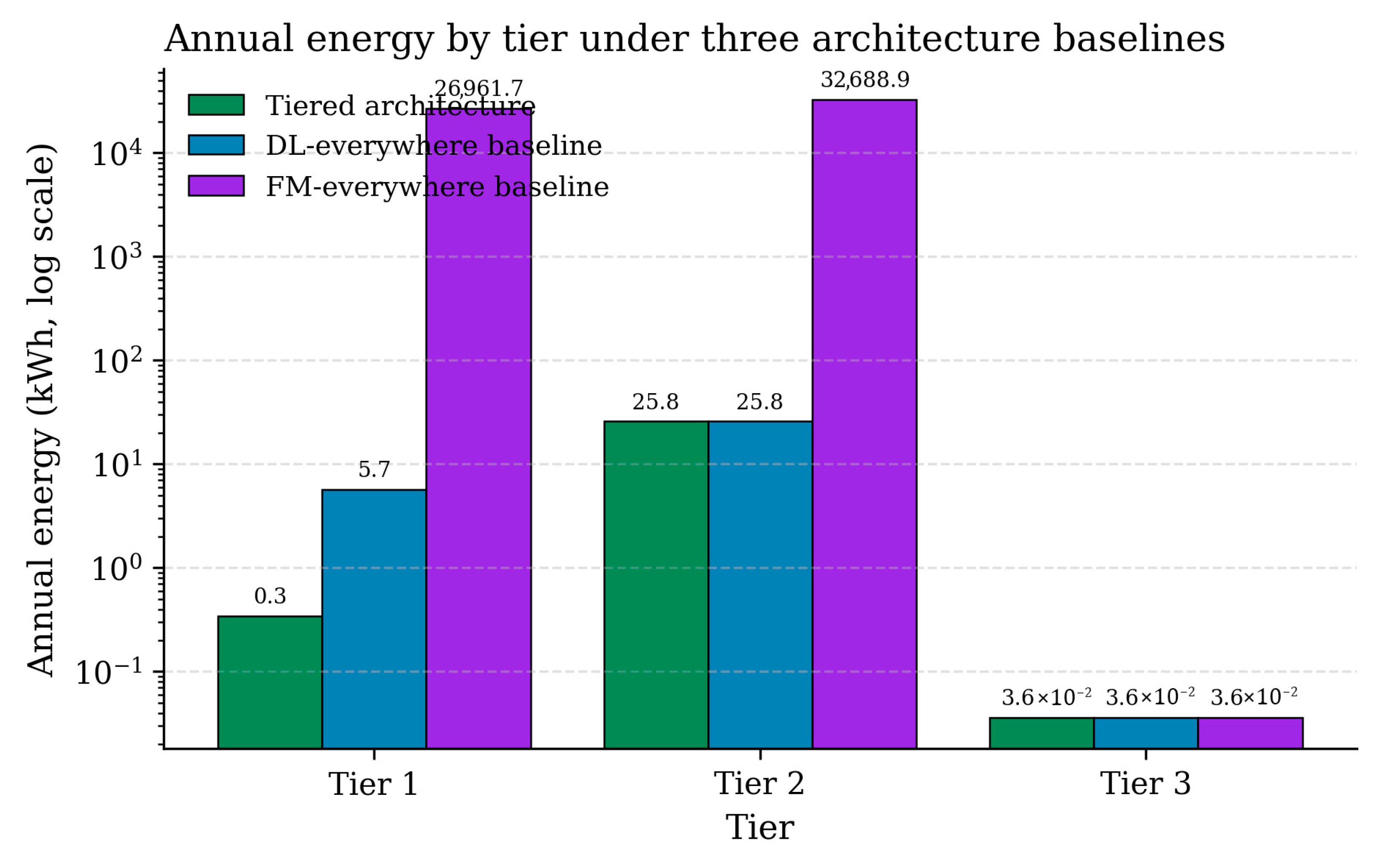
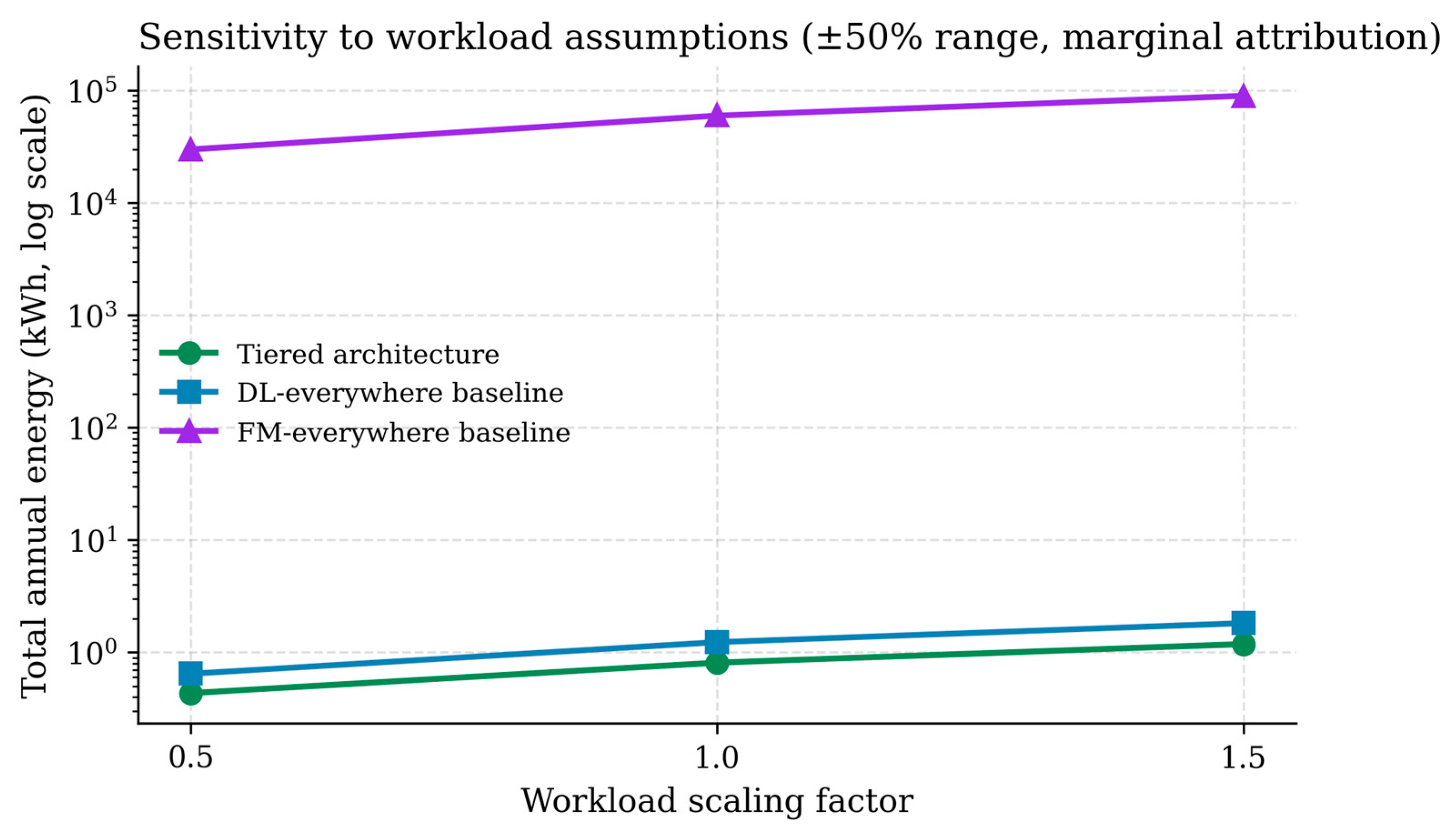
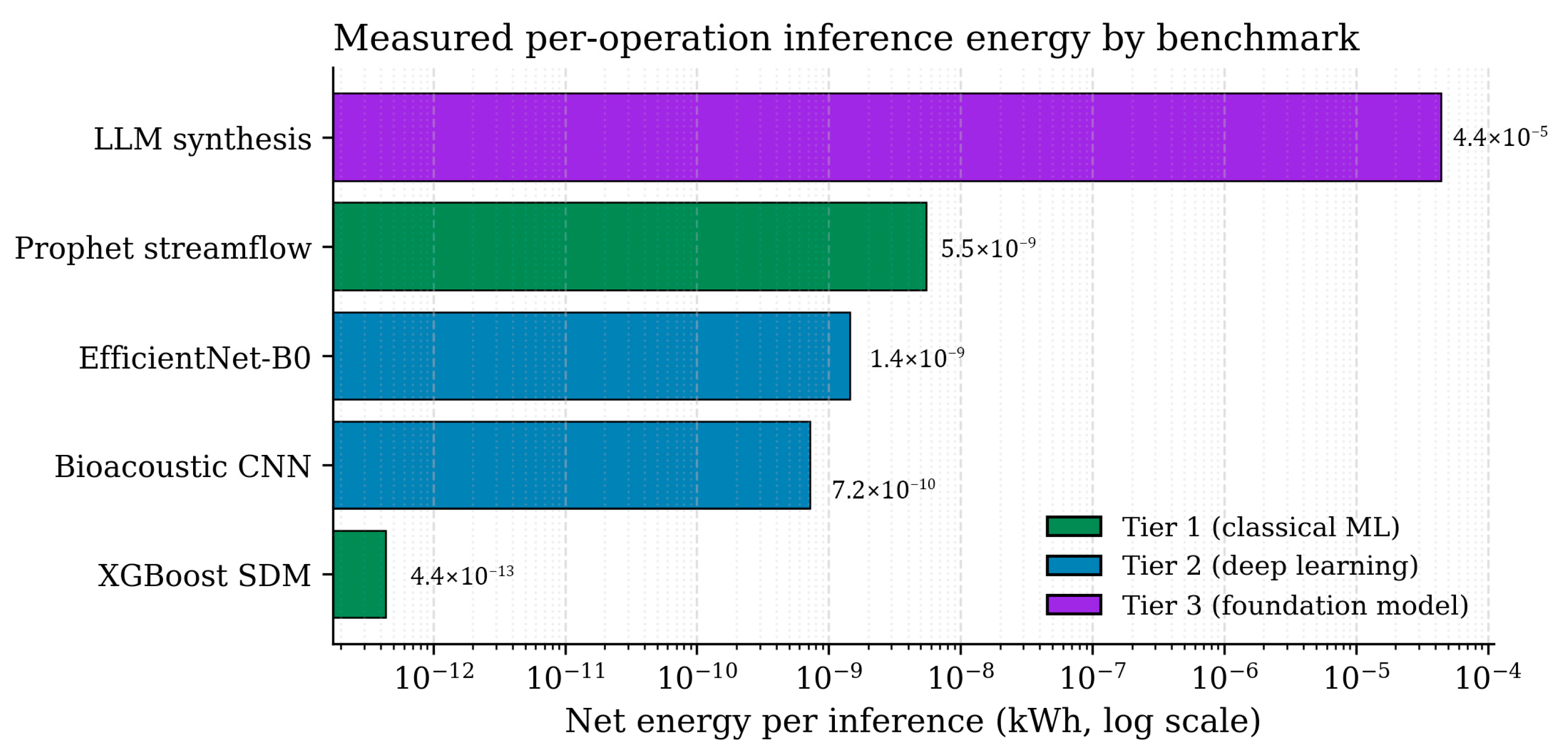
Conservation management of large, multi-species landscapes requires integrating heterogeneous data streams—such as satellite imagery, GPS telemetry, camera traps, bioacoustic sensors, weather stations, and field reports—into a unified model capable of simulating ecosystem dynamics and generating actionable recommendations. This paper proposes a tiered, energy-aware AI architecture for constructing ecosystem digital twins that enables prescriptive, rather than merely descriptive or predictive, landscape-scale conservation management. The framework classifies conservation tasks across three computational tiers: classical machine learning for continuous environmental monitoring and species distribution prediction, deep learning for perception-oriented tasks such as computer vision and bioacoustic analysis, and foundation models for cross-domain synthesis and stakeholder interaction. We apply this architecture to a comprehensive digital twin of the Greater Yellowstone Ecosystem, anchored in the ongoing conservation crisis of the Sublette Pronghorn Herd—a population that crashed from 43,000 to 24,000 animals in a single winter due to compounding severe weather and a Mycoplasma bovis outbreak. We formalize a coupled change model linking population dynamics, forage condition, corridor permeability, winter severity, and disease pressure, and demonstrate how a prescriptive recommendations engine can generate goal-conditioned management actions for the herd’s 165-mile “Path of the Pronghorn” migration corridor. A comparative energy footprint analysis, grounded in hardware-level energy measurements using Intel RAPL instrumentation and the CodeCarbon framework, estimates that the tiered architecture reduces computational energy consumption by approximately 34% relative to a deep-learning-everywhere baseline and by over three orders of magnitude relative to a foundation-model-centric baseline. The architecture provides a replicable blueprint for resource-constrained conservation organizations seeking to deploy AI-powered ecosystem management at landscape scale.
Keywords: landscape-scale conservation; digital twin; land system science; protected area management; ecosystem modeling; energy-aware AI; Greater Yellowstone Ecosystem; pronghorn migration; trophic cascade; socio-ecological systems; green AI; reinforcement learning; foundation models landscape-scale conservation; digital twin; land system science; protected area management; ecosystem modeling; energy-aware AI; Greater Yellowstone Ecosystem; pronghorn migration; trophic cascade; socio-ecological systems; green AI; reinforcement learning; foundation models