1. Introduction
Agricultural open burning of crop residues is a major source of air pollutants and greenhouse gas (GHG) emissions in many developing countries across Asia [
1]. In Southeast Asia, burning rice straw, maize stalks, and sugarcane tops and leaves after harvest remains common, driven by the low cost and convenience of clearing fields for the next crop cycle [
2,
3]. This practice releases large amounts of carbon dioxide (CO
2), methane (CH
4), nitrous oxide (N
2O), carbon monoxide (CO), and particulate matter (PM), contributing to regional air quality degradation and global climate change [
4,
5].
Northern Thailand has become a hotspot for biomass-burning-related air pollution, with recurring severe haze episodes during the dry season from January to May [
6,
7]. The region’s rugged, mountainous terrain worsens the problem by creating atmospheric inversion layers that trap pollutants in valleys, often causing PM2.5 levels to exceed Thailand’s 24-h National Ambient Air Quality Standard (NAAQS) of 37.5 μg/m
3 by several times [
8,
9]. The health effects of this seasonal pollution are well documented, including higher rates of respiratory illnesses, cardiovascular diseases, and premature death [
10,
11,
12]. Additionally, haze carried across borders from neighboring countries compounds local emissions, making air quality management in the region a complex, multi-jurisdictional challenge [
7].
From a climate change perspective, GHG emissions from agricultural residue burning are a significant yet often under-quantified component of national emission inventories. The Intergovernmental Panel on Climate Change (IPCC) provides standardized methods for estimating fire-related emissions [
13], but their application at the subnational level using spatially resolved data remains limited in Thailand. Previous studies have estimated emissions for specific crop types or provinces [
14,
15], but comprehensive assessments linking GHG emissions to satellite-derived fire activity and air quality data across multiple crops and provinces are rare. Recent research by Kanchanaroek et al. [
16] provided a spatial-economic analysis of agricultural residue burning emissions in Thailand, yet integrating fire hotspot dynamics with PM2.5 monitoring data across multiple crops and provinces has not been systematically examined.
Satellite-based remote sensing has transformed global monitoring of biomass burning. The Moderate Resolution Imaging Spectroradiometer (MODIS) and the Visible Infrared Imaging Radiometer Suite (VIIRS) provide complementary fire-detection capabilities: MODIS offers longer temporal coverage, whereas VIIRS provides higher spatial resolution [
17,
18]. Combining these satellite products with ground-based PM2.5 monitoring data helps build a more complete picture of how fire activity affects air quality [
19,
20]. Kernel density estimation (KDE) is widely used to identify clusters of fire hotspots, providing useful information for targeted interventions [
21].
Climate variability, particularly the El Niño–Southern Oscillation (ENSO), strongly influences the severity of biomass-burning seasons in Southeast Asia [
22,
23]. El Niño events reduce rainfall and intensify droughts, increasing fire activity and haze pollution, whereas La Niña years typically see lower fire activity [
20]. Understanding these annual climate–fire patterns is crucial for developing adaptive management strategies.
Among alternatives to open burning, biochar production via pyrolysis has emerged as a particularly promising strategy that addresses multiple environmental issues simultaneously. Biochar sequesters 40–50% of feedstock carbon in a stable aromatic form that can persist in soils for centuries, thereby converting a short-lived emission source into a long-term carbon sink [
24,
25]. Furthermore, applying biochar to agricultural soils has been shown to enhance soil fertility, water retention, and nutrient cycling while reducing soil-related GHG emissions [
26,
27]. Prior studies have demonstrated that biochar can be produced from rice straw, maize stalks, and sugarcane residues using both traditional drum kilns and modern pyrolysis systems in Southeast Asia [
28,
29]. Converting crop residues into biochar instead of burning them in the field can eliminate PM2.5 and precursor emissions during the critical haze season, providing co-benefits for climate change mitigation and public health [
30,
31].
Effective implementation of biochar-based zero-burning strategies, however, requires a detailed understanding of the spatial and temporal patterns of current burning practices, associated emission levels, and the air-quality impacts these interventions aim to address. Despite a growing body of research on individual aspects of this problem, a comprehensive assessment that integrates multi-crop GHG emission inventories, satellite-based fire-hotspot analysis, ambient PM2.5 correlations, and biochar mitigation potential within a single framework remains lacking in Northern Thailand.
This study addresses this gap by providing a comprehensive spatiotemporal assessment of agricultural residue burning and its environmental impacts across six provinces in Northern Thailand from 2019 to 2024. The specific objectives are to: (1) quantify GHG emissions from the open burning of rice, maize, and sugarcane residues using the 2006 IPCC methodology; (2) characterize the spatial and temporal distribution of fire hotspots using MODIS and VIIRS satellite data combined with KDE analysis; (3) examine the relationship between fire hotspot activity and ambient PM2.5 levels; and (4) discuss crop-residue valorization options (including biochar, composting, and biochar co-compost) as future zero-burning perspectives, without conducting in situ field trials. The findings aim to support evidence-based policy development for integrated air-quality and climate-change management in Northern Thailand’s agricultural sector. The novelty of this study lies in its methodological approach: it integrates IPCC-based GHG inventories, MODIS/VIIRS-derived fire hotspot dynamics, and ground-based PM2.5 monitoring data within a single spatiotemporal framework across six provinces and four crop-residue categories. This integrated approach moves beyond descriptive analyses by identifying high-priority intervention zones where emission reduction efforts can simultaneously deliver climate, air-quality, and public-health co-benefits, thereby providing a transferable framework for sub-national assessment of biomass-burning impacts in Southeast Asia.
2. Materials and Methods
2.1. Study Area and Period
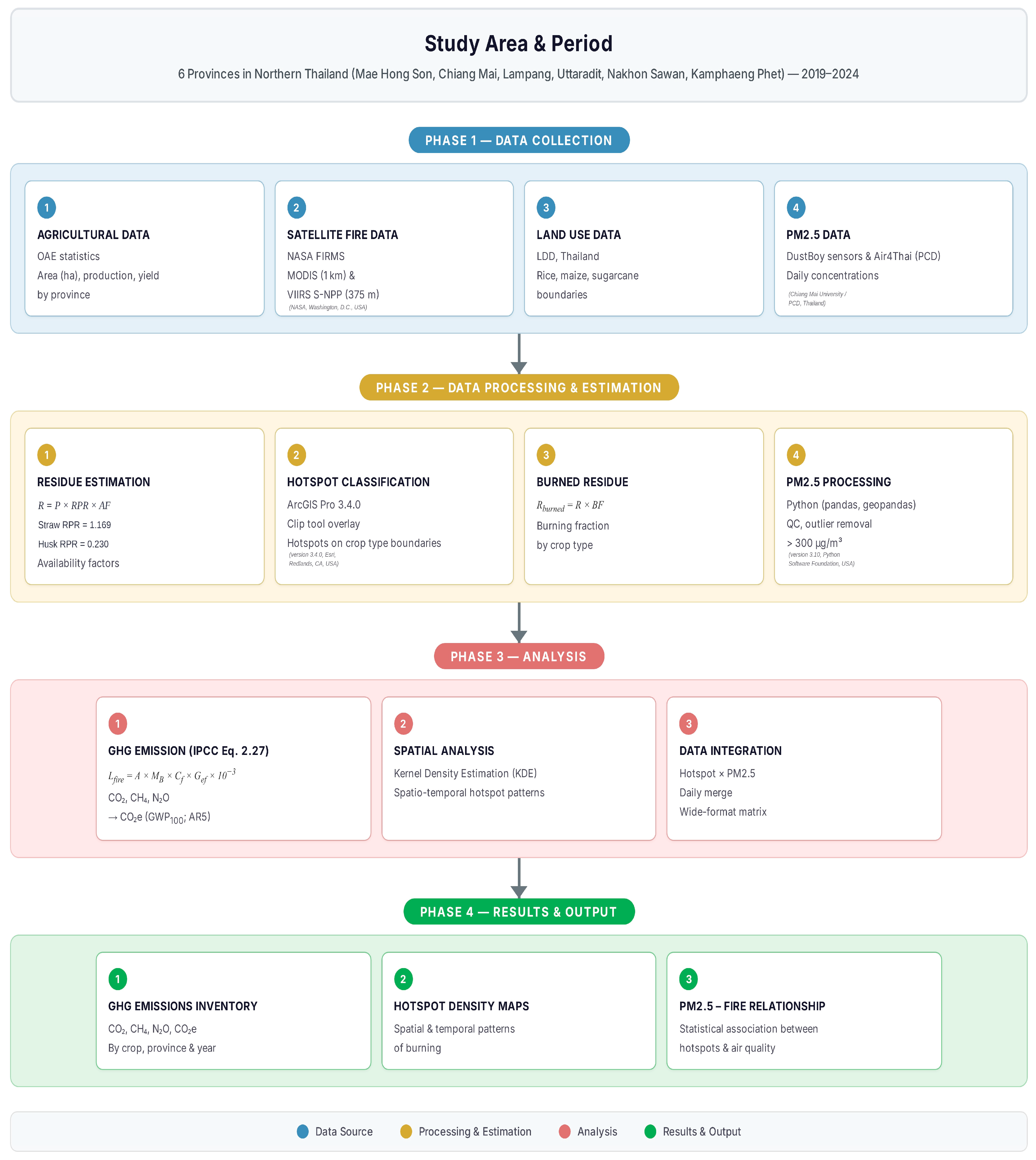
This study was conducted across six provinces in Northern Thailand: Mae Hong Son (MSN), Chiang Mai (CMI), Lampang (LPG), Uttaradit (UTT), Nakhon Sawan (NSN), and Kamphaeng Phet (KPT). These provinces are key agricultural production areas and are often associated with seasonal biomass open-burning events that significantly degrade regional air quality during the dry season (January–May). The study period spanned six consecutive years, from 2019 to 2024. The overall methodological framework is shown in
Figure 1.
2.2. Agricultural Production Data and Crop Residue Estimation
Provincial-level agricultural production data, including cultivated area (ha), harvested area (ha), production volume (tonnes), and yield (kg/ha), were obtained from annual statistical reports published by the Office of Agricultural Economics (OAE) [
32] of the Ministry of Agriculture and Cooperatives, Thailand. Original area data reported in rai (1 rai = 0.16 ha) were converted to hectares to align with international reporting standards. Data were collected for three major crop types associated with open burning: rice (
Oryza sativa), maize (
Zea mays), and sugarcane (
Saccharum officinarum).
Crop residue generation was estimated using residue-to-product ratios (RPR), following the method commonly used in biomass inventory studies. The amount of residue produced was calculated using Equation (1).
where
R is the amount of crop residue produced (tonnes),
P is the annual crop output (tonnes),
RPR is the residue-to-product ratio specific to each crop and residue type, and
AF is the residue availability factor, representing the proportion of residues remaining in the field after accounting for alternative uses (e.g., animal feed, composting, and industrial uses). For rice residues, straw-to-product and husk-to-product ratios of 1.169 and 0.230, respectively, were used, based on nationally reported values [
33]. These values align with biomass inventory practices in Thailand.
2.3. Estimation of Burned Residues
The amount of crop residue burned in the open was estimated using Equation (2):
where
Rburned is the amount of residue burned in the field (tonnes),
R is the total crop residue produced (tonnes), and
BF is the burning fraction, representing the proportion of available residue that is burned in the field.
2.4. Greenhouse Gas Emission Estimation
Greenhouse gas (GHG) emissions from open burning of agricultural residue were estimated using the methodology outlined in the 2006 IPCC Guidelines for National Greenhouse Gas Inventories [
13]. Specifically, emissions were calculated using Equation 2.27 from Volume 4, Chapter 2 (Generic Methodologies Applicable to Multiple Land-Use Categories), which provides a general formula for estimating GHG emissions from fire. The equation is presented as Equation (3):
where
Lfire is the amount of GHG emissions from fire (tonnes of each GHG, e.g., CH
4, N
2O);
A is the area burned (ha);
MB is the mass of fuel available for combustion (tonnes ha
−1), including biomass, ground litter, and dead wood;
Cf is the combustion factor (dimensionless), representing the proportion of fuel oxidized during burning; and
Gef is the emission factor (g kg
−1 dry matter burned) for the specific GHG species. The factor 10
−3 converts the emission factor from grams per kilogram to kilograms per kilogram; the resulting emissions are expressed in tonnes because M
B is in tonnes ha
−1.
In the context of agricultural residue burning, the product A × MB × Cf represents the mass of crop residue actually burned, which is equivalent to the burned residue (Rburned) estimated in Equation (2). The emission factors (Gef) and combustion factors (Cf) used in this study were derived from the IPCC’s default values in Tables 2.5 and 2.6 of the 2006 IPCC Guidelines, with region-specific values included where available.
Emissions were calculated separately for methane (CH
4) and nitrous oxide (N
2O). In accordance with IPCC (2006) guidelines, CO
2 emissions from crop residue burning are considered biogenic and therefore carbon neutral; thus, CO
2 was excluded from the total emission inventory. To enable comparison and aggregation across greenhouse gas (GHG) species, individual emissions were converted to CO
2-eq values using the 100-year global warming potential (GWP100) coefficients specified in the IPCC Fifth Assessment Report (AR5): 28 for CH
4 and 265 for N
2O [
34]. AR5 GWP100 values were adopted to maintain consistency with Thailand’s official National Greenhouse Gas Inventory reporting to the UNFCCC, which currently uses AR5 as its standard reporting basis. This study focuses exclusively on emissions from open burning of crop residues and excludes emissions from other agricultural processes, such as methane emissions from paddy rice cultivation.
2.5. Active Fire Detection and Hotspot Analysis
Active fire data (hotspots) were obtained from the Moderate Resolution Imaging Spectroradiometer (MODIS) sensors on the Terra and Aqua satellites, with a spatial resolution of 1 × 1 km. These data covered the dry-season months (January–May) for each year in the study period (2019–2024). Additionally, daily active fire records from the Visible Infrared Imaging Radiometer Suite (VIIRS) sensor on the Suomi National Polar-orbiting Partnership (S-NPP) satellite were obtained via the NASA Fire Information for Resource Management System (FIRMS).
The detected hotspots were spatially analyzed alongside land use data from the Land Development Department (LDD) [
35], Ministry of Agriculture and Cooperatives, Thailand, covering 2019–2024. Hotspots were categorized into three land use types: rice paddies, maize fields, and sugarcane plantations. The spatial overlay and classification were performed using the Clip tool in ArcGIS Pro (version 3.4.0, Esri Inc., Redlands, CA, USA [
36]). The Clip tool uses a boundary layer as a mask to extract features within the specified extent, isolating agricultural fire events from non-agricultural burning.
Spatial clustering patterns of hotspots were further examined using Kernel Density Estimation (KDE), a non-parametric statistical method for estimating the probability density function of point features across a continuous surface [
37,
38]. The Kernel Density tool in ArcGIS Pro calculates the density of point features within a specified search radius around each reference location, using distance-weighted functions to generate a smooth, continuous density surface [
39]. This method enabled identification of spatial clusters with high concentrations of fire activity and supported systematic analysis of spatio-temporal patterns of agricultural burning throughout the study area.
2.6. PM2.5 Data Acquisition and Integration
This study combined secondary spatiotemporal data from 2019 to 2024, using daily active fire records from the VIIRS S-NPP sensor (obtained via NASA FIRMS [
40]) and PM2.5 concentration data from two complementary monitoring networks: (i) the DustBoy low-cost sensor network [
41] and (ii) the Air4Thai standard monitoring stations operated by the Pollution Control Department [
42] of the Ministry of Natural Resources and Environment, Thailand.
All data management and geospatial processing were performed in Google Colaboratory using Python (version 3.x) with the pandas and geopandas libraries. The raw hotspot coordinates were converted to geospatial format using the WGS 84 coordinate reference system (EPSG:4326) and spatially joined to provincial boundary shapefiles to aggregate daily fire counts across the six target provinces. Simultaneously, PM2.5 datasets were retrieved via application programming interfaces (APIs) and subjected to rigorous quality control. Records with missing values were removed, and extreme instrumental outliers exceeding 300 μg/m3 were excluded before calculating daily spatial averages for each province.
To prepare the data for statistical modeling, the cleaned hotspot and PM2.5 datasets were merged by date and aligned with a complete annual calendar. Days without detected fires were assigned a hotspot count of zero, while PM2.5 observations on those days were retained as recorded values, reflecting background concentrations from non-fire sources. The integrated dataset was then transformed into a wide-format matrix that systematically organized daily PM2.5 averages and hotspot counts by province, and was exported as comprehensive annual files for further statistical analysis.
2.7. Data Sources and Software
Table 1 summarizes the data sources, parameters, and analytical tools used in this study. For clarity, each row in
Table 1 corresponds to a single input dataset and reports the provider, extracted parameters, and spatial and temporal resolutions. Provincial-level agricultural production data (cultivated area, yield, production) were obtained from the annual statistical reports of the Office of Agricultural Economics (OAE), Ministry of Agriculture and Cooperatives, Thailand (
https://www.oae.go.th, accessed on 10 January 2026). Provincial land-use shapefiles delineating rice, maize, and sugarcane cultivation areas were obtained from the Land Development Department (LDD), Ministry of Agriculture and Cooperatives, Thailand (
https://www.ldd.go.th, accessed on 10 January 2026). MODIS Terra/Aqua and VIIRS S-NPP active-fire products (NASA, Washington, DC, USA) were retrieved from NASA FIRMS, and PM2.5 records were obtained from DustBoy and Air4Thai stations. All datasets were aligned to a common provincial-day matrix for 2019–2024 before analysis.
Statistical analyses were performed in Python (v3.10) using pandas, NumPy, SciPy, and statsmodels. After merging daily PM2.5 and hotspot data by province and date, descriptive statistics (mean, median, standard deviation, inter-annual variability) were computed for each province-year. Pearson correlation coefficients (r) and their p-values were calculated between daily fire-hotspot counts and daily mean PM2.5 concentrations for each province-year. Ordinary least squares (OLS) linear regression with 95% confidence intervals was used to visualize the relationship. To address potential non-linearity and meteorological confounding, a sensitivity analysis was conducted in which the residue-to-product ratio (RPR), burning fraction (BF), and IPCC emission factors (Gef) were varied by ±20% to bound the GHG inventory; results are reported as ranges where applicable. A significance threshold of p < 0.05 was applied throughout.
3. Results
3.1. Agricultural Production and Crop Residue Generation in the Study Provinces
Table 2 presents crop area, production, and yield data for major agricultural crops across six provinces in Thailand from 2019 to 2024. These provinces span two agro-ecological zones: the upper northern highlands (Mae Hong Son, Chiang Mai, and Lampang), where terrain and climate favor upland rice and maize; and the lower northern-central plains (Uttaradit, Nakhon Sawan, and Kamphaeng Phet), where irrigated lowlands support intensive rice–sugarcane rotations. This geographic division enables comparison of residue production patterns and their environmental impacts.
Major rice (wet season) dominated the cultivated landscape across all six provinces, with a combined mean annual harvested area of approximately 775,000 ha and mean annual production exceeding 2.2 million tonnes (
Table 2). Nakhon Sawan had the largest harvested area and highest production, reflecting its status as one of Thailand’s key rice-producing provinces. Kamphaeng Phet showed a notable upward trend in production, with yields rising from 3.56 to 3.69 tonnes/ha over the study period, accompanied by an expansion of cultivated areas. In contrast, the upper northern provinces maintained relatively stable but lower yields, consistent with the limitations of rain-fed cultivation on mountainous terrain.
Second-rice (dry-season) cultivation was geographically limited mainly to Chiang Mai and Lampang, with only minor areas in Mae Hong Son (
Table 2). The high year-to-year variability in second-rice areas, especially in Chiang Mai, indicates sensitivity to dry-season availability of irrigation water. Second-rice yields consistently exceeded those of the main rice, as expected in irrigated farming with better water management.
Maize production was concentrated in the three northern upper provinces, with Chiang Mai having the largest cultivated area and production (
Table 2). All three provinces experienced significant growth in both area and yield from 2019 to 2024. In Mae Hong Son, the maize area nearly doubled over the study period, and yields increased considerably, indicating the adoption of improved varieties and management practices. Sugarcane cultivation was limited to the lower northern-central provinces, with Nakhon Sawan and Kamphaeng Phet each supporting over 100,000 hectares at the start of the period. However, a clear decline in harvested area was observed across all three sugarcane-producing provinces, with Kamphaeng Phet showing a 29% decrease by 2024. Yield variability was high, especially in Uttaradit, reflecting the combined effects of drought, market conditions, and a shift toward mechanical harvesting, which reduces the amount of residue burned in the field.
3.2. Emissions from Crop Residue Burning and Spatial Distribution of Fire Hotspots
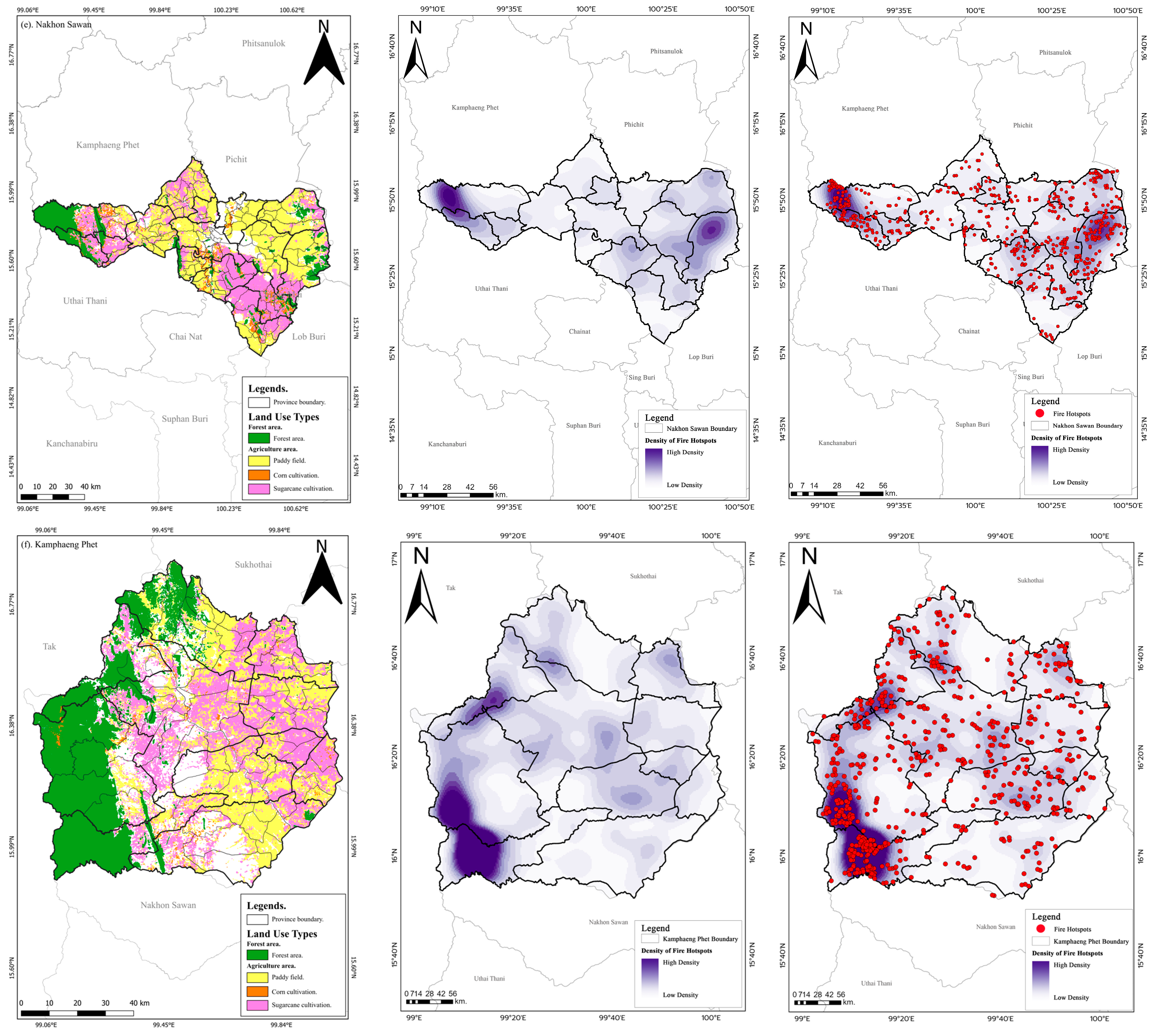
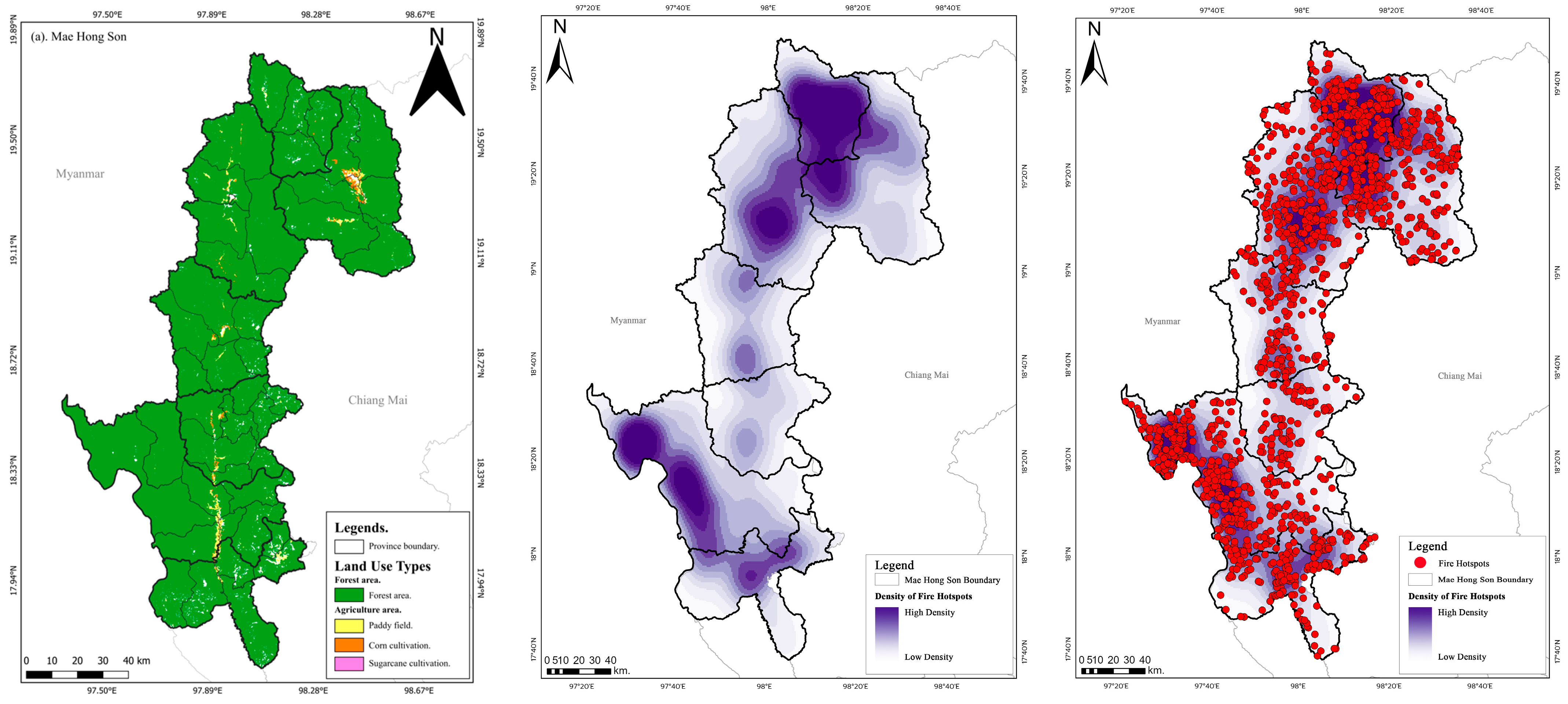
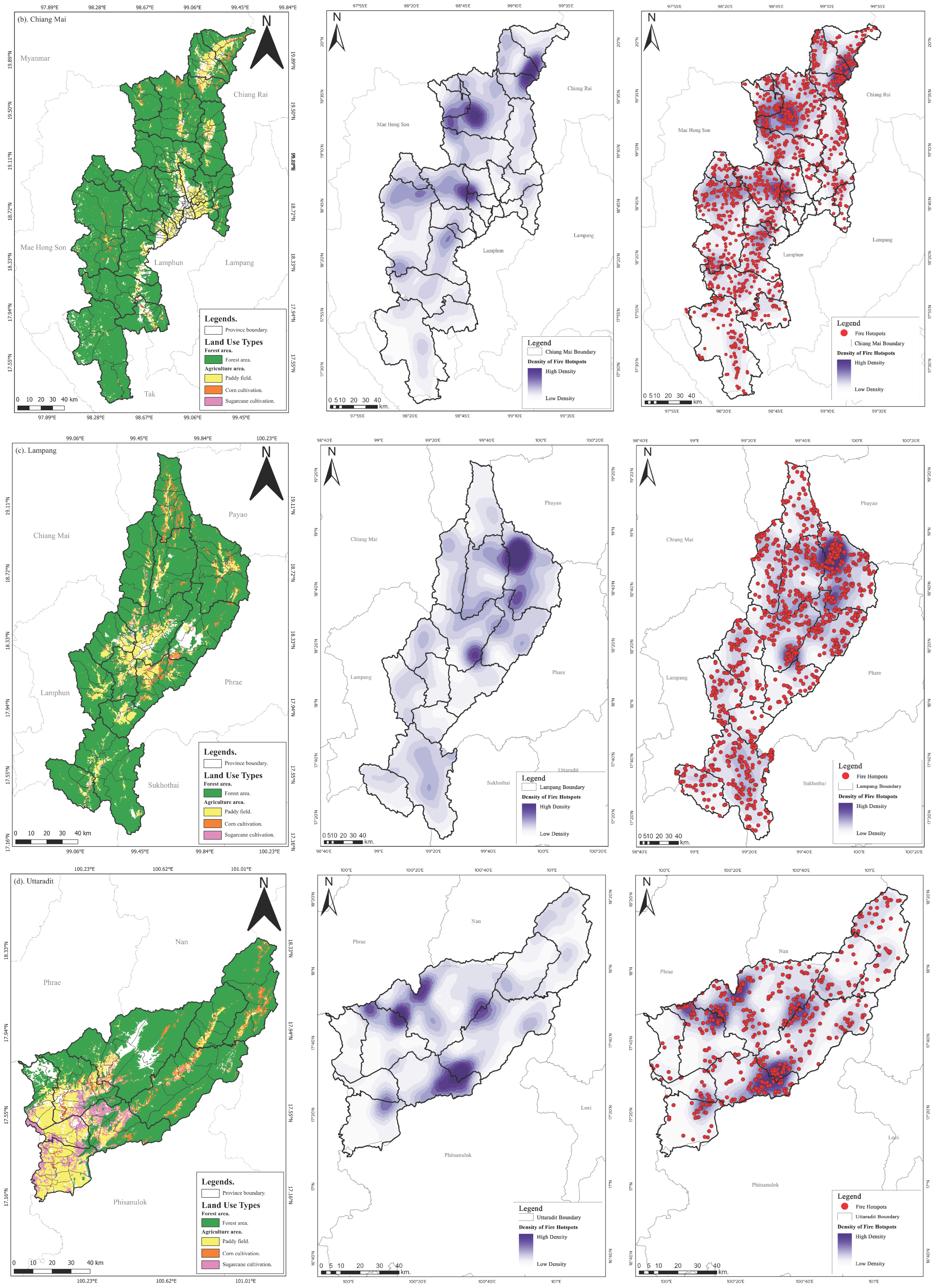
The spatial distribution of fire hotspots across the six study provinces during the haze season (January–May) is shown in
Figure 2a–f, which present kernel density maps derived from MODIS/VIIRS satellite-detected thermal anomalies, overlaid with land-use classifications. In the northern provinces, hotspots are concentrated in forest and agricultural land. Mae Hong Son (
Figure 2a) shows widespread, high-density hotspot clusters across its mountainous terrain, where slash-and-burn agriculture and forest fires are common. Chiang Mai (
Figure 2b) displays a two-part pattern of hotspot concentration: one cluster associated with highland maize-growing areas along the western border and another in the lowland paddy fields of the central valley. Lampang (
Figure 2c) shows high fire density in the eastern and central districts, where maize cultivation overlaps with forested uplands.
In contrast, the lower northern-central provinces exhibited fire hotspot patterns more closely associated with intensive agricultural activities. Uttaradit (
Figure 2d) experienced fire activity across both paddy fields and sugarcane areas, whereas Nakhon Sawan (
Figure 2e) showed a clear concentration of fire hotspots in the central and southern districts, where sugarcane cultivation is common. Kamphaeng Phet (
Figure 2f) exhibited the most widespread fire activity among the lower provinces, with dense clusters across sugarcane and rice fields in the province’s eastern and central areas.
Table 3 summarizes cumulative greenhouse gas emissions by crop type and province for 2019–2024. Total estimated emissions were 2,599,551 tCO
2-eq, with major rice accounting for the largest share (35.24%), followed by sugarcane (23.81%), second rice (20.98%), and maize (19.97%). The dominance of rice in the emission profile reflects both its extensive cultivated area—with major and second-season crops grown across all six provinces—and its relatively high residue-to-product ratio (RPR), which leads to large quantities of straw being burned openly.
3.3. Statistical Analysis of Fire Hotspot Counts and PM2.5 Correlations
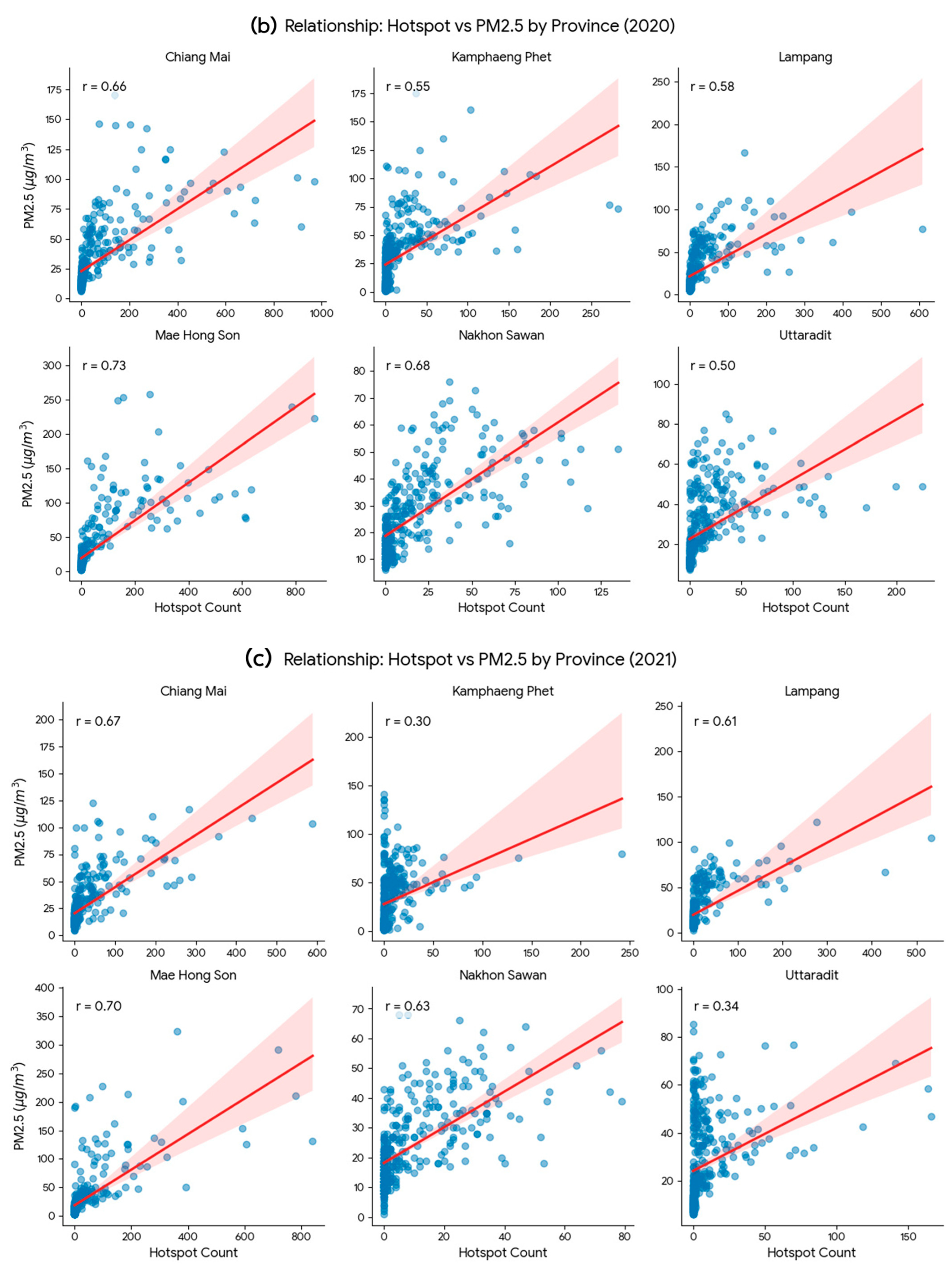
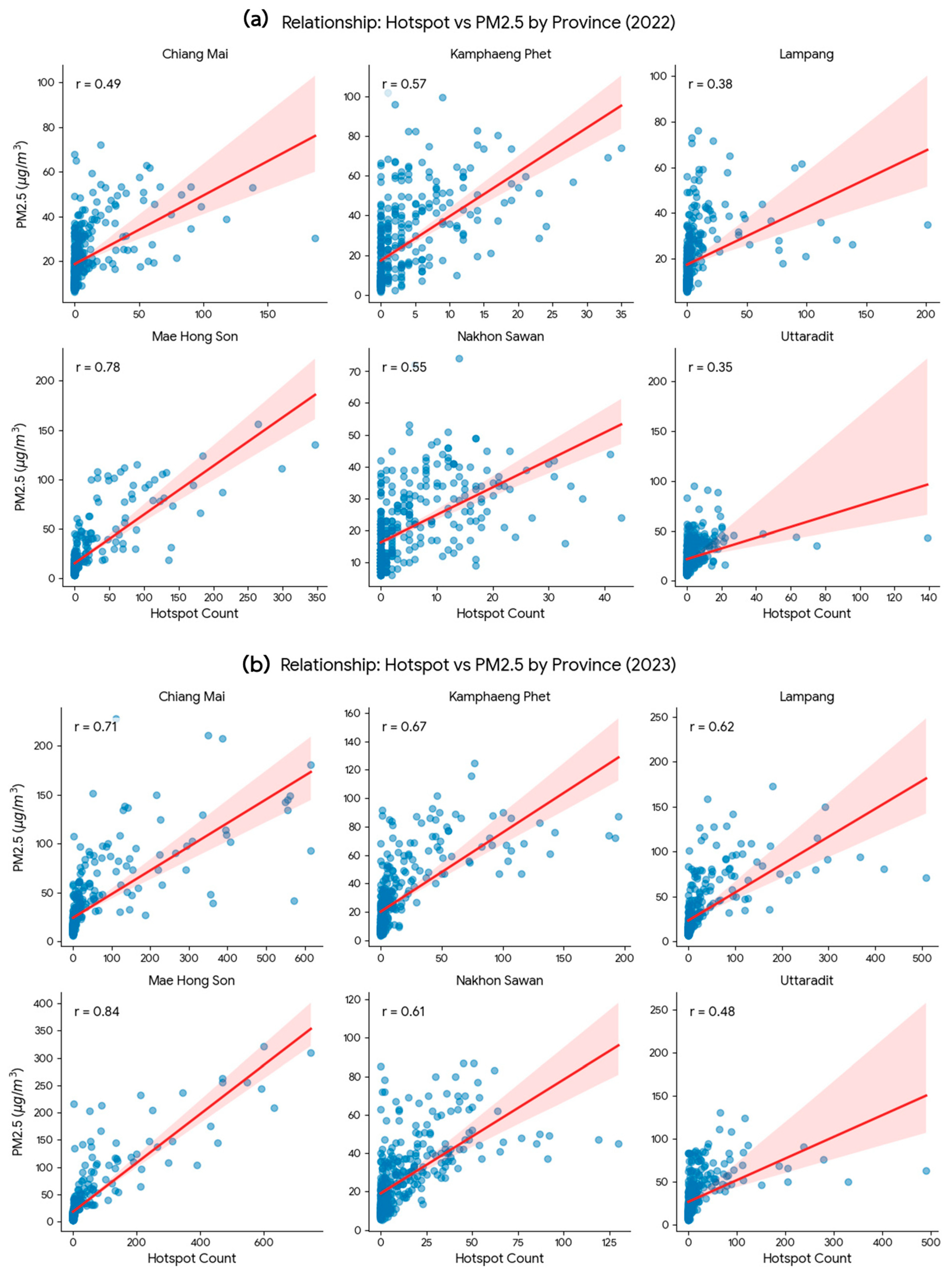
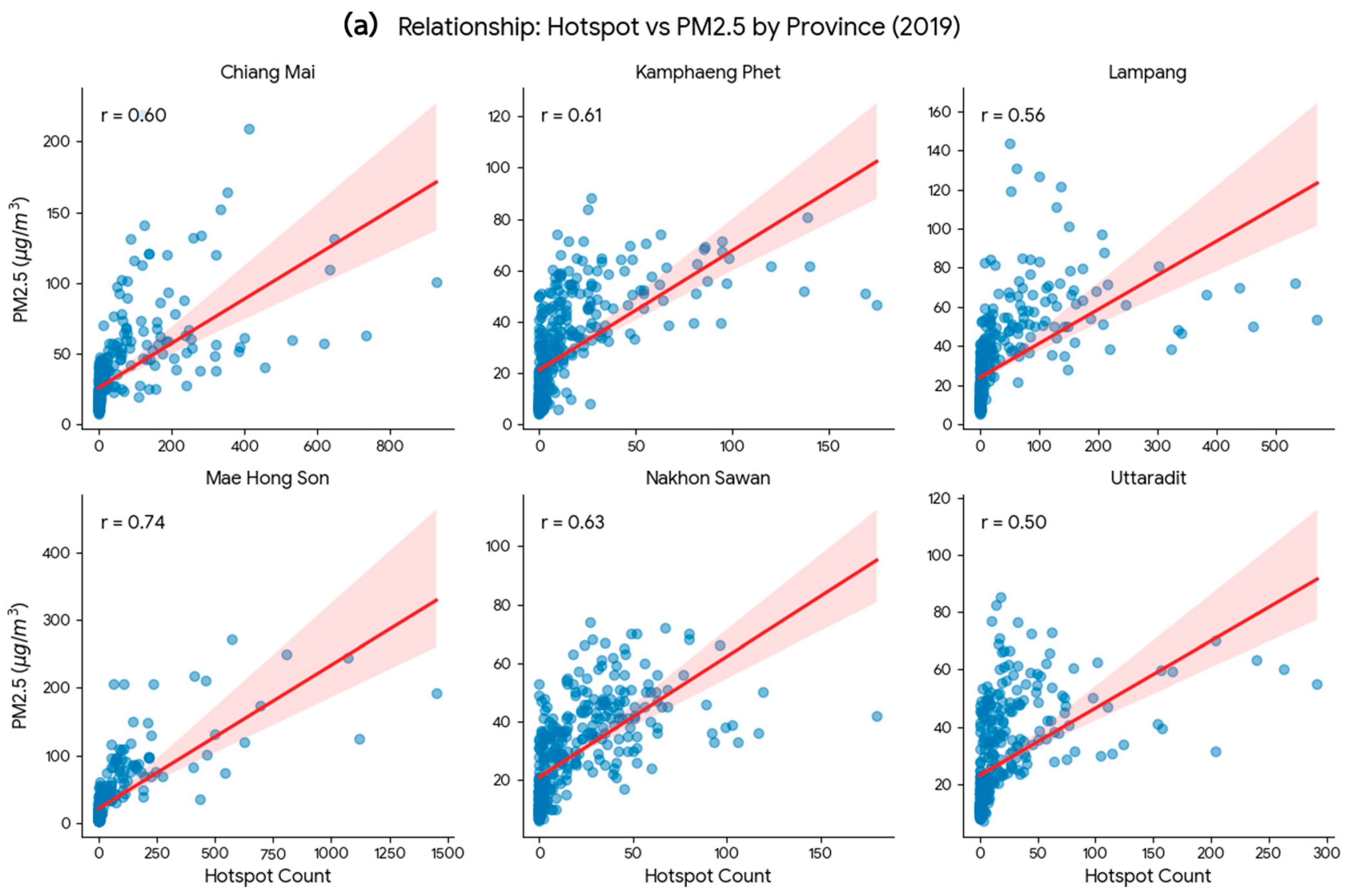
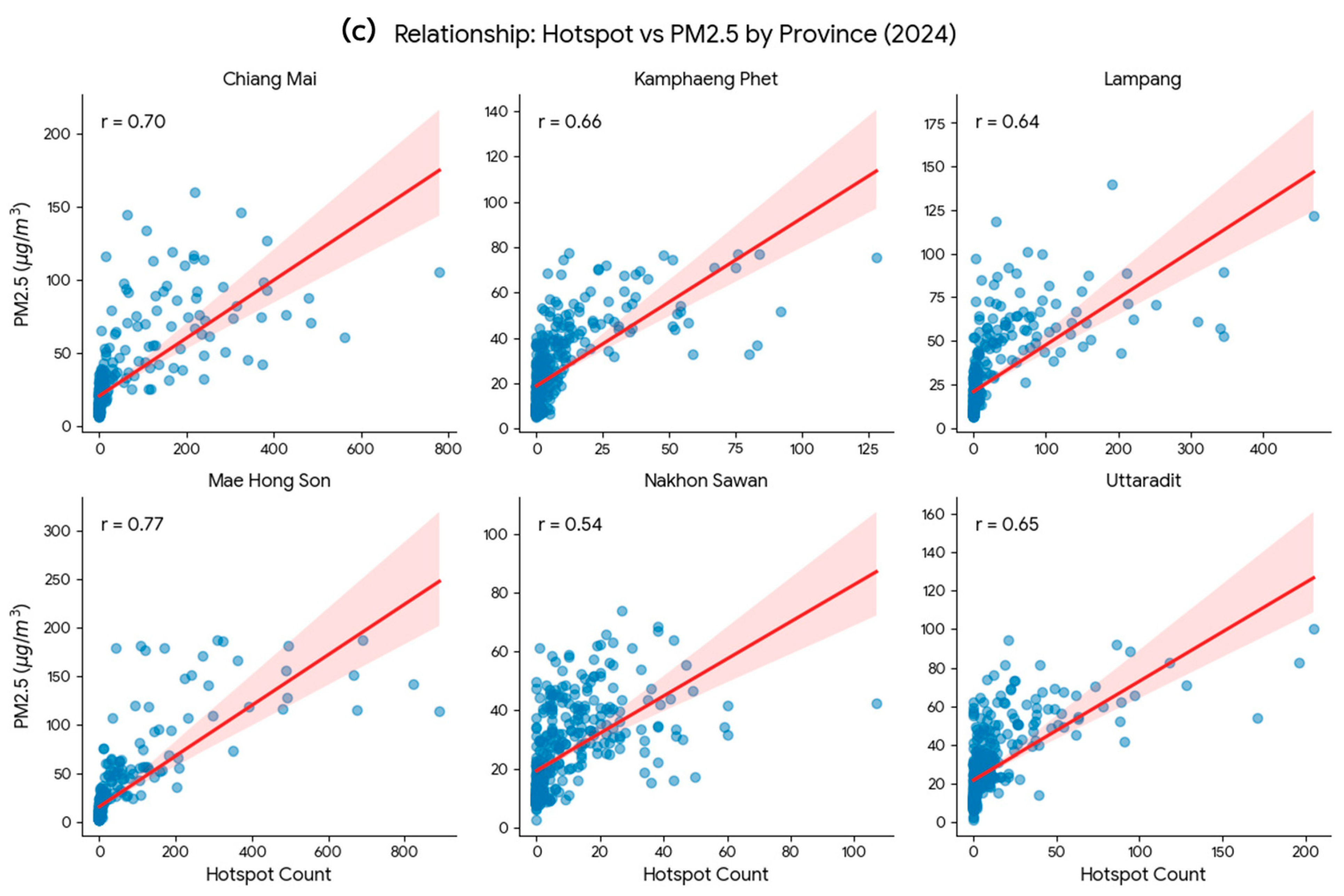
To examine the relationship between agricultural fire activity and ambient air quality, Pearson correlation analysis was conducted between daily fire hotspot counts and PM2.5 concentrations for each province over the six-year study period (2019–2024). Scatter plots with linear regression lines are shown in
Figure 3 and
Figure 4 for each year. Across all provinces and years, positive correlations were consistently observed between hotspot counts and PM2.5 levels, confirming the fundamental link between biomass burning and particulate pollution in the study region. Although linear regression was used as an initial exploratory approach, the relationship between hotspot counts and PM2.5 concentrations may not be strictly linear across all ranges of fire activity. At high hotspot densities, PM2.5 concentrations may approach a plateau, potentially reflecting a non-linear response. Future studies may benefit from exploring non-linear regression models, such as rectangular hyperbola fits, to more precisely characterize this relationship.
Mae Hong Son consistently showed the strongest correlations (r = 0.70–0.84), with the highest coefficient recorded in 2023 (r = 0.84). This province’s mountainous terrain creates an enclosed basin that traps both locally generated and transboundary smoke, amplifying the PM2.5 response to fire events. Chiang Mai also exhibited moderate to strong correlations across all years (r = 0.49–0.71), though the relationship was weaker in 2022 (r = 0.49) because reduced fire activity—likely due to La Niña-related precipitation—diminished the hotspot–PM2.5 signal. Lampang showed stable moderate correlations (r = 0.38–0.64), consistent with its role as a transit zone for transboundary haze from neighboring provinces.
Among the lower northern-central provinces, Kamphaeng Phet showed moderately variable correlations (r = 0.30–0.67), whereas Nakhon Sawan showed moderate correlations (r = 0.54–0.68), reflecting the significant contribution of sugarcane pre-harvest burning to local PM2.5 levels. Uttaradit also showed considerable interannual variability in correlation strength (r = 0.34–0.65), ranging from r = 0.34 in 2021 to r = 0.65 in 2024, which may be due to fluctuations in the influence of cross-boundary haze transport from provinces to the northeast. The generally weaker correlations in the lower northern-central provinces compared to the upper northern provinces can be explained by two factors: (1) more dispersed, open terrain that allows greater atmospheric dilution; and (2) a higher proportion of PM2.5 originating from non-agricultural sources, including vehicle emissions and industrial activity.
3.4. Observation of Seasonal Trends in PM2.5 Concentrations and Fire Hotspots
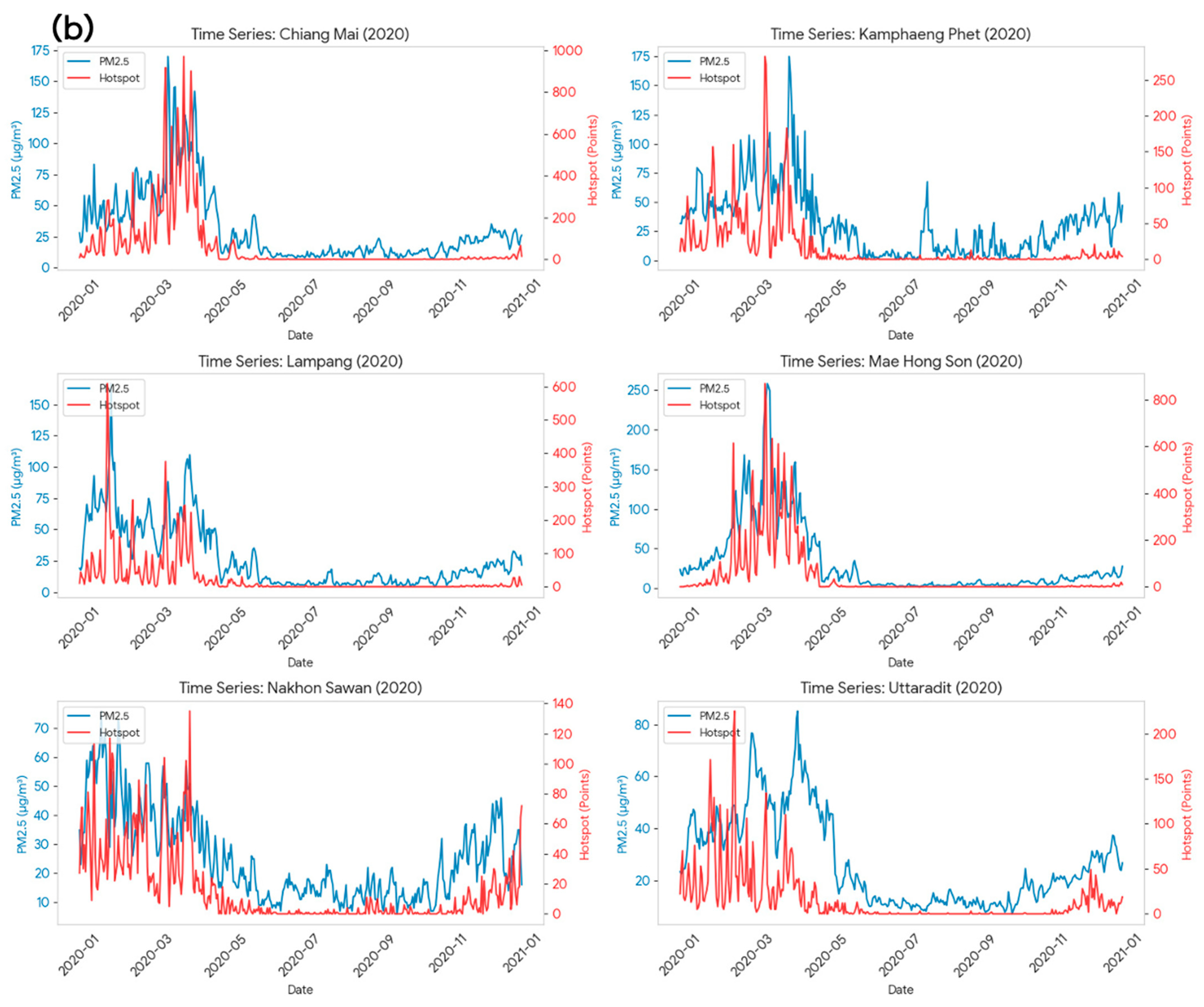
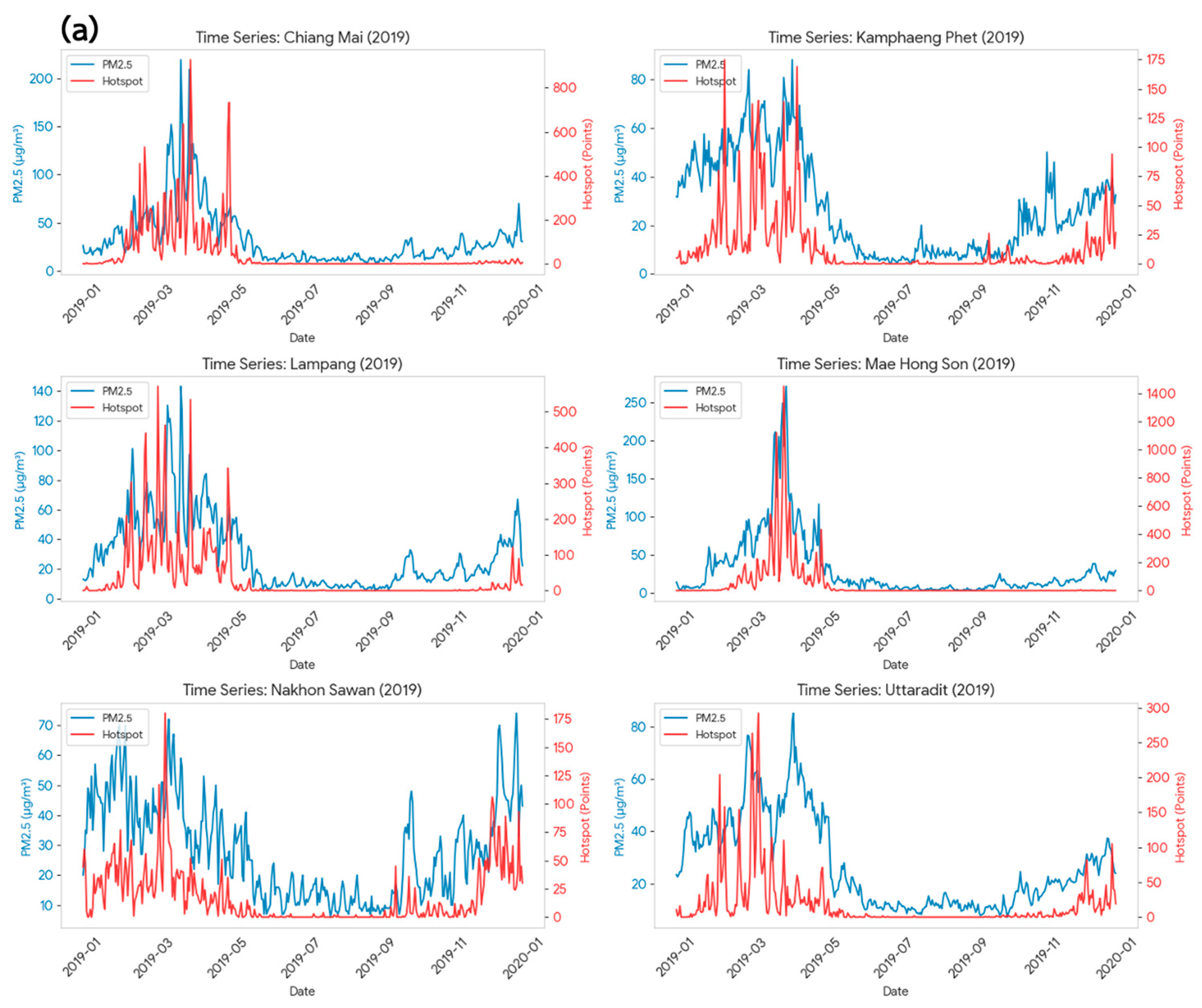
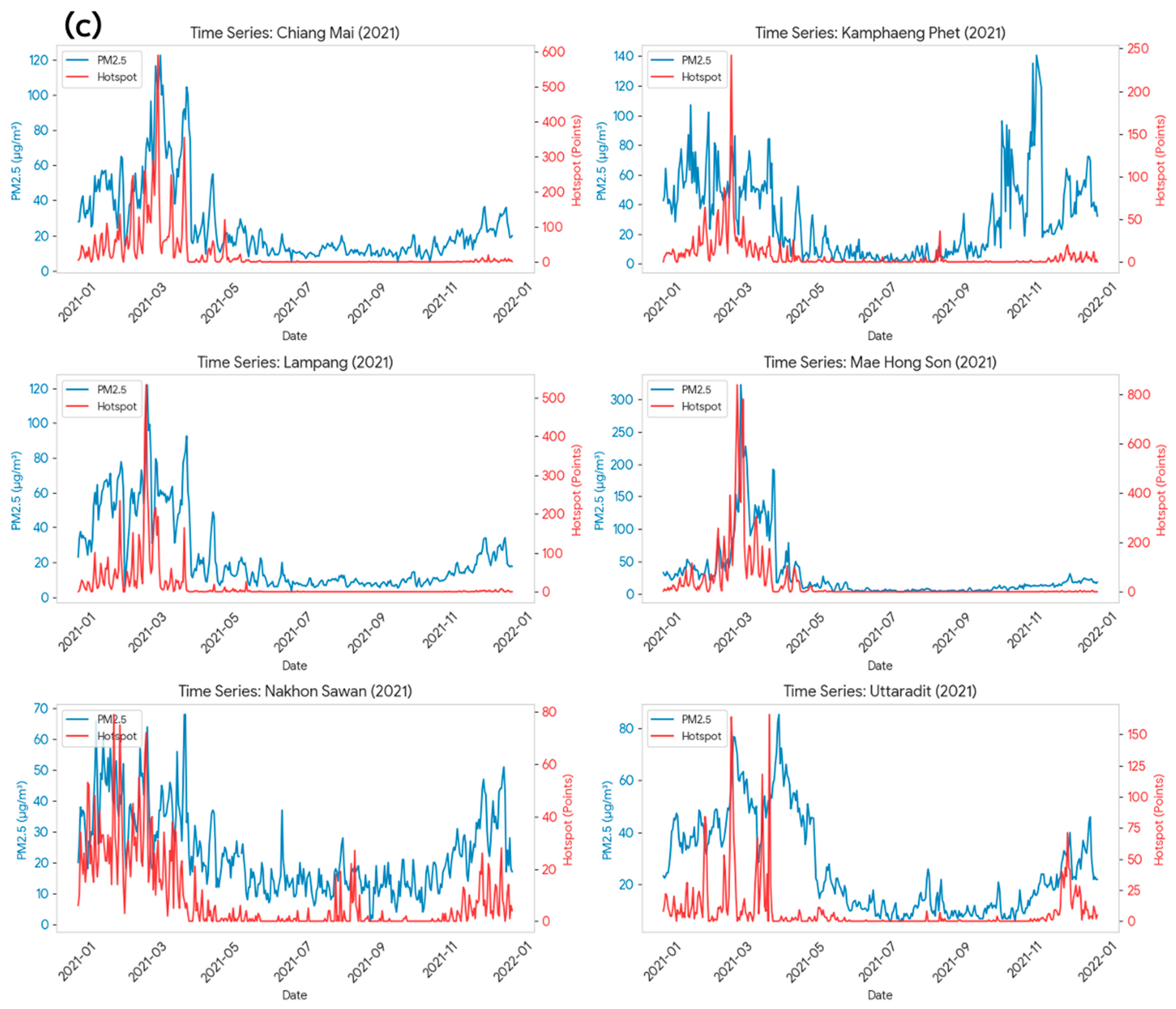
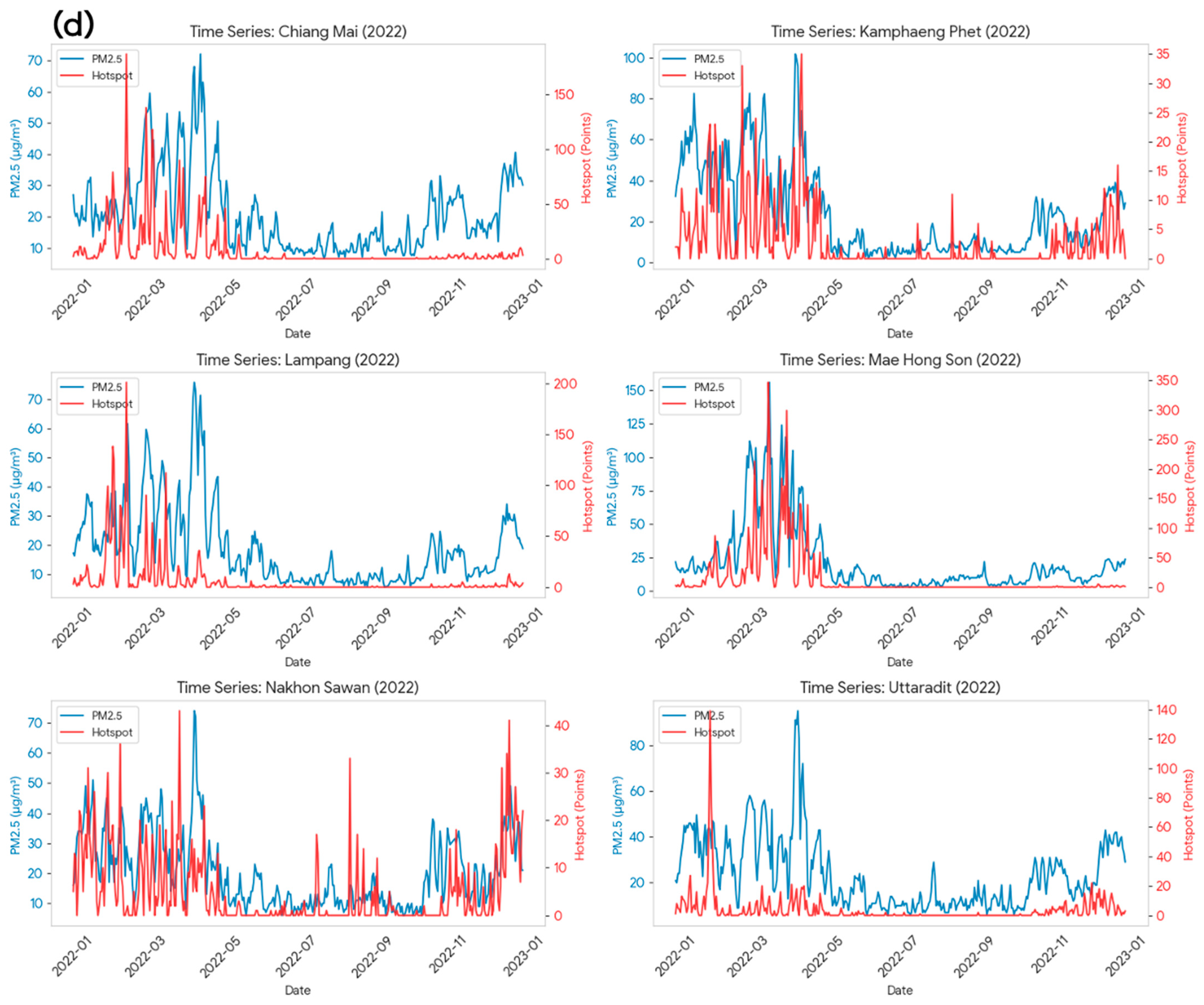
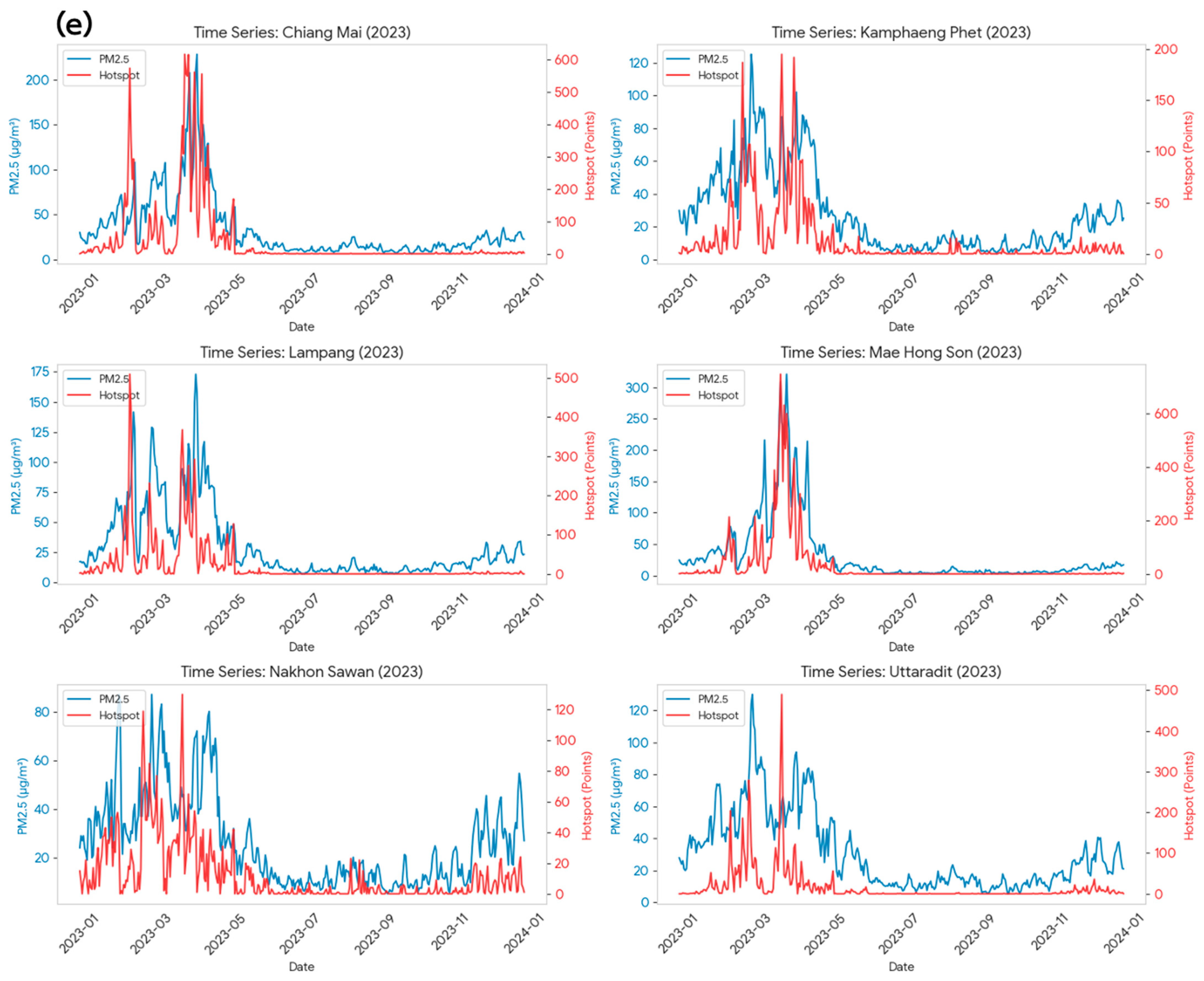
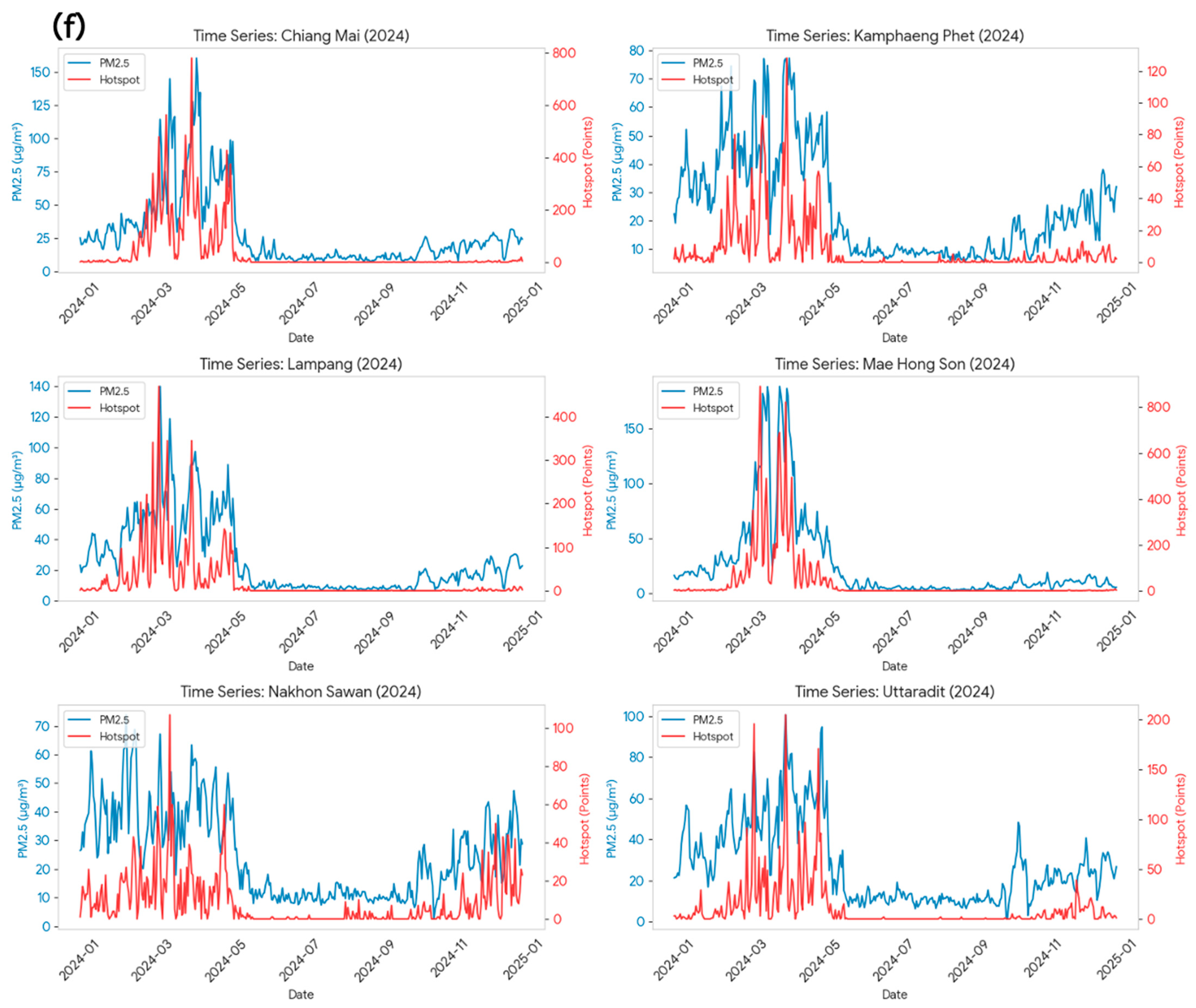
Figure 5 presents dual-axis time-series graphs of daily PM2.5 levels and fire hotspot counts across all six provinces from 2019 to 2024. The graphs reveal a clear, consistent seasonal pattern: PM2.5 levels begin to rise in late December or January, climb sharply through February and March, peak between mid-March and mid-April, and then fall rapidly from May as the monsoon brings rain and clears the atmosphere. This seasonality closely aligns with the agricultural burning cycle, which ramps up after the main rice harvest (November to January), peaks during dry-season land preparation for maize and second rice (February to April), and includes pre-harvest sugarcane burning (December to March).
In the northern provinces, the correlation between fire hotspots and PM2.5 was most evident in Mae Hong Son and Chiang Mai. Mae Hong Son consistently recorded the highest PM2.5 peaks, reaching 250–330 µg/m3 during March–April in severe years (2019–2024), which exceeded the Thailand 24-h national ambient air quality standard (NAAQS) of 37.5 µg/m3 by 7–9 times. Chiang Mai showed similar peak patterns, with daily PM2.5 levels often exceeding 100–200 µg/m3 during major burning periods in 2019 and 2023. Lampang exhibited a milder version of this pattern, with peaks generally reaching 80–175 µg/m3, likely due to its lower elevation and more open valley landscape.
The lower northern-central provinces exhibited lower peak PM2.5 levels but longer periods of elevated concentrations. Nakhon Sawan and Kamphaeng Phet had PM2.5 levels above 30–50 µg/m3 from January to May, with intermittent spikes coinciding with sugarcane burning events. A notable feature in these provinces was the occurrence of secondary PM2.5 peaks in late November and December, especially evident in the 2022 and 2024 time series for Nakhon Sawan and Kamphaeng Phet, which align with the early sugarcane pre-harvest burning season.
3.5. Biochar Mitigation Potential
Given the high GHG emissions (2,599,551 tCO
2-eq over six years) and severe PM2.5 episodes noted above, converting crop residues to biochar via pyrolysis offers a viable alternative to open burning. Biochar production shifts biomass from uncontrolled field combustion—which produces high particulate emissions due to incomplete combustion—to a controlled thermochemical process with much lower emission factors for PM2.5, CO, and volatile organic compounds [
43,
44]. Biochar can sequester 40–50% of the feedstock carbon in a long-lasting aromatic form, with reported mean residence times ranging from decades to centuries, depending on feedstock, pyrolysis conditions, and soil environment [
44]. However, in situ decomposition rates of biochar in tropical soils, including those of Thailand, remain poorly characterized, and global meta-analyses indicate that residence times in tropical agricultural soils may be 30–50% shorter than in temperate soils [
45].
Using crop residue estimates from the production data in
Table 2 and published residue-to-product ratios for rice straw (RPR = 1.0), maize stalk (RPR = 1.5–2.0), and sugarcane tops and leaves (RPR = 0.25–0.30), the six study provinces collectively produce an estimated 3.0–4.5 million tonnes of crop residues annually. However, not all residues are available for biochar conversion, as some are already used for other purposes, such as animal feed, mulching, and soil incorporation. Applying the IPCC (2006) default availability factors (rice straw = 0.50; maize stalk = 0.80; sugarcane tops = 0.80), the realistic fraction available for conversion is approximately 1.5–2.5 million tonnes annually. The sequestration figures reported below therefore represent a theoretical upper bound, with practical potential varying according to actual residue utilization patterns and biochar long-term stability. Assuming a conservative biochar yield of 30% by weight through slow pyrolysis (400–600 °C) and a biochar carbon content of 70% [
46], converting all available residues into biochar could theoretically sequester approximately 0.63–0.95 million tonnes of carbon each year, equivalent to 2.3–3.5 million tCO
2-eq under the assumption of full long-term carbon stability. Adopting a more conservative estimate that accounts for partial biochar degradation in tropical soils (assuming a 30–40% loss over 100 years, based on global meta-analyses), the realistic long-term sequestration potential would be approximately 1.4–2.5 million tCO
2-eq per year. Even under this conservative scenario, the sequestration potential remains substantially higher than emissions from open burning under current practices (about 433,000 tCO
2-eq per year based on the six-year cumulative total), suggesting that, in principle, biochar production could yield a net negative carbon balance. However, this comparison is based on theoretical assumptions and requires verification through long-term, in situ field trials in representative Thai agro-ecological zones, which remain absent in the current literature.
4. Discussion
4.1. Agricultural Production and Crop Residue Generation
Crop statistics in
Table 2 are a primary determinant of post-harvest residue generation and the resulting emissions from open burning. Rice straw is the largest source of crop residue in the study area, with an RPR of about 1.0 for paddy rice; roughly one tonne of straw is produced per tonne of grain harvested. Because combined rice production (major and second) exceeds 2.5 million tonnes annually across the six provinces, the corresponding straw generation is similarly large. Maize stalks (RPR ≈ 1.5–2.0) and sugarcane tops and leaves (RPR ≈ 0.25–0.30) also represent substantial biomass fractions of the total residue available for burning. The observed shifts—expanding maize cultivation in the highlands and contracting sugarcane in the plains—indicate a spatial redistribution of residue-burning pressure that affects both GHG emission inventories and PM2.5 exposure patterns, as discussed in the following sections.
KDE-based spatial patterns can be further interpreted by linking them to crop type, topography, and socioeconomic constraints. The high-density clusters in Mae Hong Son and western Chiang Mai correspond to highland maize cultivation on steep slopes, where slash-and-burn land preparation persists, likely due to limited access to mechanical residue management and the high cost of transporting residues out of remote uplands. In contrast, lowland clusters in Nakhon Sawan and Kamphaeng Phet align with intensive rice and sugarcane systems on flat, irrigated plains; here, burning appears to be associated with short fallow periods between rice–sugarcane rotations and labor shortages during pre-harvest sugarcane processing. Lampang exhibits an intermediate pattern, reflecting its role as a topographic transition zone. Quantitatively, mean kernel density values were highest in Mae Hong Son and Chiang Mai (highland maize zones) and declined across the central plains, consistent with the joint influence of crop type, terrain accessibility, and farmers’ access to alternative residue-management options.
4.2. GHG Emissions and Spatial Distribution of Fire Hotspots
At the provincial level, Nakhon Sawan was the largest emitter (1,059,576 tCO2-eq; 40.8% of total), reflecting its extensive rice and sugarcane production. Kamphaeng Phet ranked second (726,329 tCO2-eq; 27.9%), followed by Uttaradit (313,558 tCO2-eq; 12.1%). Among the upper northern provinces, Chiang Mai contributed 243,861 tCO2-eq (9.4%), Lampang 173,614 tCO2-eq (6.7%), and Mae Hong Son 82,614 tCO2-eq (3.2%). Mae Hong Son’s lower emissions, despite its high fire hotspot density, reflect its relatively small cultivated area compared with the plains provinces. These results indicate that the spatial pattern of agricultural GHG emissions is more closely associated with crop production scale than with fire density alone. This pattern suggests that mitigation efforts focused primarily on the three highest-emitting provinces (Nakhon Sawan, Kamphaeng Phet, and Uttaradit, which together account for 80.8% of total emissions) would address the largest share of regional GHG emissions from crop-residue burning.
4.3. Concentrations Interpretation of Fire-Air Quality Relationships and Confounding Factors
Interannual variability in correlation strength also provides useful insights into the interactions among fire activity, meteorological conditions, and PM2.5 levels. Weaker correlations were observed across most provinces in 2022 (e.g., Chiang Mai r = 0.49; Lampang r = 0.38; Uttaradit r = 0.35), consistent with reduced burning activity under the wetter conditions that year. By contrast, the strongest correlations occurred in 2019, 2020, and 2023, all of which were marked by severe drought and elevated fire activity. These patterns are detailed further in the time-series analysis in the following section.
It is important to emphasize that the Pearson correlations reported here reflect statistical associations rather than causation. Several sources of omitted-variable bias may influence the observed relationships, including transboundary smoke transport from neighboring countries (Myanmar, Lao PDR), local traffic and industrial emissions, secondary aerosol formation, and meteorological factors such as wind speed, boundary-layer height, relative humidity, and rainfall. The relationship may also be nonlinear: at very high hotspot densities, the daily PM2.5 response can plateau, reflecting saturation of dispersion capacity and atmospheric mixing, as well as the detection thresholds of low-cost sensors. Future work could employ lagged regression, generalized additive models (GAMs), or rectangular-hyperbola fits, together with meteorological covariates and HYSPLIT back-trajectory analysis, to better isolate the local-burning contribution from confounding sources.
Transboundary haze is particularly relevant in Northern Thailand. During the peak burning months of February–April, dominant southwesterly to westerly winds frequently advect smoke plumes from biomass burning in eastern Myanmar and northern Lao PDR into the upper northern provinces, especially Mae Hong Son and Chiang Mai. Previous WRF-Chem and back-trajectory studies suggest that 30–60% of episodic PM2.5 concentrations during severe haze episodes in this region can originate outside the national boundary. Because the present study did not perform chemical-transport modeling, this transboundary contribution is not separately quantified and should therefore be regarded as a study limitation: the reported correlations between local hotspots and ambient PM2.5 implicitly include a regional background component, and locally driven mitigation actions alone cannot be expected to fully eliminate haze episodes without coordinated cross-border action.
4.4. Analysis of Seasonal Variations and Meteorological Influences
A pronounced interannual trend was also evident. The year 2022 was marked by markedly lower fire-hotspot counts and PM2.5 peaks across all provinces, most notably in Mae Hong Son (peak ≈ 155 µg/m3 vs. ≈330 µg/m3 in 2021) and Chiang Mai (peak ≈ 70 µg/m3 vs. ≈175 µg/m3 in 2020).
This decrease aligns with La Niña conditions in 2021–2022, which brought above-average rainfall that persisted into the early dry season of 2022, keeping crop residues and vegetation moisture higher than usual and thereby reducing the likelihood of fire ignition. In contrast, the 2023 burning season saw increases in both hotspot counts and PM2.5 levels, especially in Mae Hong Son (peak ≈ 300 µg/m
3) and Lampang (peak ≈ 175 µg/m
3), reflecting the El Niño-induced drought that year. These seasonal patterns are consistent with agricultural open burning as a major contributor to seasonal haze in both upland and lowland agro-ecological areas, while transboundary smoke transport and meteorological conditions discussed in
Section 4.3 also contribute substantially to ambient PM2.5 levels.
4.5. Zero-Burning Strategies and Crop-Residue Valorization Pathways
From an air-quality perspective, eliminating open burning of the estimated 3.0–4.5 million tonnes of crop residues could substantially reduce the seasonal release of PM2.5 and its precursors during the critical January–April haze season, although the magnitude of the reduction would also depend on transboundary haze contributions and meteorological factors as discussed in
Section 4.3. Previous studies estimate that rice-residue open burning alone contributes approximately 38,000 tonnes of PM2.5 annually in Thailand [
4], and sugarcane burning adds approximately 31,000 tonnes per year [
47]. The northern provinces examined in this study account for a disproportionate share of these emissions. Under a hypothetical partial-adoption scenario in which 20% of crop residues are diverted to biochar production, the corresponding reduction in agricultural non-CO
2 GHG emissions would be approximately 4.7% (~20,400 tCO
2-eq per year), with a proportional decrease in field-burning PM2.5 emissions. These figures are illustrative only and assume constant emission factors and full operational compliance.
However, realizing this mitigation potential depends on overcoming several practical barriers. First, the decentralized, small-scale nature of farming in the study provinces requires distributed pyrolysis infrastructure, such as portable or community-scale biochar kilns, rather than centralized industrial facilities. Second, farmers currently incur no direct costs for open burning, whereas biochar production requires investment in equipment and labor. Economic incentive mechanisms—including carbon credit markets, government subsidies for biochar equipment, and payments for ecosystem services—will be important for shifting the current cost–benefit balance. Third, the agronomic benefits of biochar application (such as improved soil water retention, nutrient cycling, and crop yield) [
48] need to be demonstrated and communicated to farming communities to encourage voluntary adoption. Addressing these socioeconomic factors is a prerequisite for moving biochar from a theoretical mitigation option toward a practical contribution to zero-burning agriculture in northern Thailand.
Beyond its technical mitigation potential, the biochar pathway can be situated within a broader Bio-Circular-Green (BCG) economy and socio-technical transition framework. Reframing crop residues from low-value waste destined for open burning into a feedstock for a circular bio-economy may reposition farmers as suppliers of climate-positive products (biochar, bio-energy, soil amendments) and link agricultural waste management to national climate, energy, and rural-development policies. From a socio-technical transition perspective, scaling zero-burning practices would require the co-evolution of technology (low-cost pyrolysis units), institutions (carbon-credit and PES schemes, residue-aggregation cooperatives), and changes in farmer practices. Biochar is therefore best embedded within a policy mix that combines burning bans, mechanization subsidies, market-based incentives, and extension services, rather than treated as a stand-alone solution.
The present feasibility assessment also assumed near-complete residue conversion, which we acknowledge is an optimistic upper bound. Realistic adoption is constrained by economic factors (capital costs for pyrolysis kilns of roughly 50,000–500,000 THB per unit, transport and labor costs for residue collection of approximately 1500–3500 THB per tonne of biochar produced, and the absence of a guaranteed biochar market), institutional factors (limited access to carbon credits for smallholders and weak enforcement of burning bans), and behavioral factors (path dependence on burning, perceived risk of new technologies, and short planning horizons among tenant farmers). Compared with alternative valorization options—including composting, anaerobic digestion, mechanized residue baling, in-field incorporation, and paid silage collection—biochar is competitive primarily where soil-amendment co-benefits and carbon-credit revenue can be captured simultaneously. A particularly promising hybrid approach is biochar co-compost (BCC), in which biochar is mixed with raw compost feedstock during composting. BCC has been reported to retain the long-term carbon stability of biochar while improving compost nitrogen retention, microbial activity, and crop yield. It may be more agronomically attractive to farmers than biochar alone, although evidence specific to Thai cropping systems remains limited.
An important caveat to the biochar mitigation potential reported in this study is the absence of in situ decomposition data for biochar derived from local rice, maize, and sugarcane residues under tropical Thai soil conditions. Global meta-analyses indicate that mean biochar residence times in tropical soils may be 30–50% shorter than in temperate soils due to higher temperatures, moisture, and microbial activity [
45]. The carbon-sequestration figures reported in
Section 3.5 should therefore be interpreted as a theoretical upper bound rather than a verified mitigation outcome. Long-term, in situ field trials in representative Thai agro-ecological zones—covering highland maize systems (e.g., Mae Hong Son, Chiang Mai), lowland rice systems (e.g., Nakhon Sawan, Uttaradit), and sugarcane systems (e.g., Kamphaeng Phet)—together with feedstock-specific characterization (proximate and ultimate analyses, H/C and O/C molar ratios) and stability testing (e.g., the IBI Biochar Standards) are essential before biochar can be promoted as a quantitatively reliable component of Thailand’s climate mitigation portfolio.
5. Conclusions
This study presents a comprehensive spatiotemporal analysis of agricultural crop-residue burning and its environmental impacts across six provinces in Northern Thailand from 2019 to 2024. By integrating IPCC-based GHG emission estimates, satellite-derived fire-hotspot data, and ambient PM2.5 monitoring into a single framework, the analysis provides quantitative findings relevant to regional air-quality management and climate change mitigation.
Cumulative non-CO
2 GHG emissions from crop residue burning totaled 2,599,551 tCO
2-eq over the six-year period, with major rice contributing the largest share, followed by sugarcane, second rice, and maize (
Table 3). The spatial distribution of emissions was more closely associated with the scale of agricultural production than with fire density alone. The lower northern-central provinces of Nakhon Sawan (40.8%) and Kamphaeng Phet (27.9%) accounted for the largest shares of total emissions, and together with Uttaradit (12.1%) they represent the three highest-emission provinces (80.8% combined). These provinces are therefore the most relevant targets for emission-reduction interventions.
Satellite-based hotspot analysis revealed distinct spatiotemporal patterns of fire activity: the upper northern provinces showed fire clusters linked to highland maize cultivation and slash-and-burn practices, whereas the lower provinces exhibited patterns associated with intensive rice–sugarcane rotations. Positive correlations (Pearson r = 0.30–0.84) between daily fire-hotspot counts and PM2.5 concentrations are consistent with agricultural burning being a substantial contributor to seasonal haze; however, as discussed in
Section 4.3, transboundary smoke transport and meteorological factors also influence ambient PM2.5 levels. Basin topography in provinces such as Mae Hong Son appears to amplify impacts on air quality.
Among the zero-burning strategies discussed, biochar production via pyrolysis was identified as a valorization pathway with substantial theoretical mitigation potential. Assuming full long-term carbon stability, converting all available crop residues to biochar could sequester 2.3–3.5 million tCO
2-eq per year. A more conservative estimate, accounting for partial biochar degradation under tropical Thai soil conditions (30–40% loss over 100 years [
45], reduces this to approximately 1.4–2.5 million tCO
2-eq per year. Even under this conservative scenario, the value remains higher than annual emissions from current open burning (~433,000 tCO
2-eq), indicating that biochar conversion could, in principle, contribute to a net negative carbon balance. However, this comparison rests on theoretical assumptions, and no in situ biochar decomposition data exist for local Thai feedstocks under tropical soil conditions—a critical knowledge gap that requires dedicated long-term field trials before biochar can be presented as a verified mitigation outcome.
Realizing the mitigation potential of crop-residue valorization will depend on addressing several enabling conditions: (i) verification of biochar’s long-term stability in tropical Thai soils through dedicated in situ trials; (ii) economic instruments (e.g., carbon credit markets and subsidies) that offset biochar production costs of approximately 1500–3500 THB per tonne; (iii) integration into a broader policy mix that combines burning bans, mechanization support, and farmer extension services; and (iv) consideration of complementary valorization pathways, such as composting and biochar co-compost (BCC). Priorities for future research include life-cycle assessment of biochar production systems, economic feasibility studies of decentralized pyrolysis networks, long-term in situ field trials in representative Thai agro-ecological zones (highland maize, lowland rice, sugarcane), and continuous monitoring of air-quality outcomes following the adoption of zero-burning practices.





 ,
,