1. Introduction
UNESCO Global Geoparks (UGGps) are internationally recognised territories where geological heritage functions as a driver of sustainable development, education and community empowerment. Unlike conventional conservation areas, geoparks are inhabited landscapes in which geoheritage, geodiversity, biodiversity, agriculture and cultural practices are deeply interconnected. Within this governance framework, geoproducts—and particularly GEOfood—have emerged as innovative instruments for translating geological identity into socio-economic value and territorial resilience.
The GEOfood initiative, originally developed within Nordic geoparks and later expanded across the UNESCO Global Geoparks network, formalised the link between geology and local food systems. By restricting the label to officially recognised geoparks, the initiative ensures that certified products are rooted in geological identity, locally sourced and aligned with sustainability principles. GEOfood therefore represents more than a branding mechanism; it embodies a territorial governance tool that connects soil characteristics, microclimates, biodiversity and traditional knowledge to gastronomic production.
The intersection between food and geology is particularly significant in geopark territories, where landscapes shaped over geological time directly influence agricultural systems and cultural adaptations [
1]. Granite massifs, volcanic substrates, glacial formations and sedimentary basins condition soil fertility, water availability and vegetation patterns, which in turn shape pastoral systems, crop selection and culinary traditions. In this sense, GEOfood products can be understood as material expressions of geodiversity, embedding ecological processes within local economies and identity narratives.
Beyond their gastronomic value, GEOfood initiatives contribute to ecocultural sustainability by reinforcing short supply chains, preserving traditional agro-sylvo-pastoral systems and enhancing community cohesion. In contexts marked by rural depopulation, biodiversity loss and food system homogenisation, territorially anchored production models gain renewed relevance. By promoting local agro-products linked to geological identity, geoparks support endogenous economic cycles while safeguarding landscape heterogeneity and intangible cultural heritage as exemplified by the IGCP 726 project [
2].
Recent debates on regenerative tourism and land governance further expand the analytical relevance of GEOfood. Regenerative approaches move beyond impact mitigation and propose net-positive contributions to ecosystems and communities. Within this paradigm, food-based territorial strategies can revitalise abandoned agricultural landscapes, maintain transhumant systems, preserve endemic varieties and strengthen local stewardship capacities. GEOfood thus operates at the interface of geodiversity, land-use management and regenerative territorial development.
Portugal provides a particularly relevant empirical case. In 2023, five UNESCO Global Geoparks—Naturtejo, Arouca, Azores, Terras de Cavaleiros and Estrela—implemented structured strategies to valorise GEOfood products within diverse geological contexts. These territories encompass granite uplands, volcanic archipelagos and glacial mountain systems, offering distinct models of geodiversity-based food governance.
This study examines the contribution of GEOfood initiatives to ecocultural sustainability and regenerative land governance in Portuguese UNESCO Global Geoparks. Specifically, it aims to:
- -
Analyse the conceptual foundations of GEOfood within geopark governance;
- -
Systematise the strategic approaches adopted by Portuguese geoparks;
- -
Evaluate their ecological, socio-cultural and economic regenerative impacts.
By investigating the transformative potential of GEOfood as a land-based governance mechanism, this research contributes to ongoing debates on sustainable territorial development and positions geoparks as laboratories of ecocultural innovation in an era of environmental and socio-economic transition.
It should be emphasised that the creation of gastronomic products, menus and itineraries, based on the GEOfood concept and criteria, contributes to the affirmation and gastronomic identity of the territories and induces commercial expansion of the products, for which the management structures of the Geoparks, together with the local administration, have a role to play in promoting, supporting and publicising. Broadening the application of the concept to different products contributes to the maintenance of traditional agricultural practices, the enhancement of the authenticity of products and the stimulation of their commercialisation and associated services. It helps to promote the ecocultural aspect of these products, preserve local ways of life and boost the self-esteem of local populations.
2. Geoproducts, GEOfood and Geoheritage: Contributions to Building Sustainable Territories
Geoproducts represent a unique category of goods and services that derive their value from the geodiversity of specific regions. These products are closely linked to the geological features, natural resources and biodiversity of their regions of origin. By making the most of these natural resources, geoproducts play a key role in promoting sustainable economic development in local communities.
The concept of geoproducts is closely aligned with the broader initiative of geoparks, which aim to preserve geological heritage while simultaneously creating economic opportunities for local populations. As highlighted by Rodrigues and Neto de Carvalho [
1], geoproducts have emerged as a central focus within geopark initiatives. They not only contribute to the economic well-being of communities but also raise awareness about the importance of preserving geological and biological diversity [
3,
4]. The rich biodiversity found in geopark regions serves as a source of creative inspiration, enabling the development of innovative commercial products and businesses [
5]. Local artisans and entrepreneurs can harness these natural materials to create unique handicrafts, souvenirs, and other marketable items that reflect the geological heritage of their region [
6,
7]. This approach not only adds economic value but also strengthens the cultural identity of the community. It should be noted that, in accordance with the IGCP 726 project, the initiatives developed and the links between the community, producers and tourists take on new significance, fostering a sense of self-worth and revitalising the local identity [
2].
Geoproducts can take various forms, ranging from handcrafted items with geological themes to eco-friendly goods that emphasise the sustainable use of natural resources [
6]. These products often carry significant cultural and educational value, as they help narrate the story of the region’s geological history and its connection to the local community [
8,
9]. As the concept of geoparks gains traction globally, the development and promotion of geoproducts are likely to become increasingly important in achieving the dual goals of conservation and economic growth. Essentially, the emergence of geoproducts is a natural extension of the geopark concept, highlighting the potential for local communities to thrive economically while preserving and celebrating their unique geological and biological heritage [
7,
10,
11].
According to UNESCO [
10] geoproducts are defined as “the sustainable production of innovative food products and handicrafts with a geological connotation.” Farsani et al. [
3] outline several principles that should guide the development of geoproducts:
Geoproducts should be made with local or regional materials.
They should symbolise the territory’s geological or geomorphological heritage.
They should serve as both commercial and educational tools.
They should integrate local and traditional products with the concepts and interpretations of geosciences.
They must be environmentally sustainable.
These principles underscore the strong connection between geoproducts and local producers, which is a defining characteristic of their appeal. Gordon’s [
12] classification categorises geoproducts into handicrafts and food products. In recent years, many geoparks have collaborated to create a new concept of food known as “Geofood”.
GEOfood products represent an innovative intersection between geological heritage and gastronomy, promoting ecocultural sustainability in UNESCO-recognised territories. This concept, originally developed by the Magma Geopark (Norway), seeks to enhance geological heritage through food that reflects the unique characteristics of the soil and regional geodiversity. The GEOfood brand is restricted to Geoparks officially recognised by UNESCO, guaranteeing a standard of sustainability and connection between local products, culinary traditions and geological heritage. By promoting the production and consumption of GEOfood products, UNESCO territories not only preserve their natural landscapes and culinary traditions, but also foster sustainable economic development and cultural Exchange [
7,
13]. As a relatively recent process of valorisation of agro-products and culinary identities, it is based on the valorisation of local resources and the creative generation of products with an identity, which generate traction and promote visits. In this context, there is an articulation between the territory-community-tourism, in a logic of valorising local productions, stimulating traditions as guarantors of cultural authenticity and the use of local resources and generating attractions that complement visits to these territories.
The GEOfood initiative began as a cooperative project among Nordic countries in 2014, involving Magma (Norway), Odsherred (Denmark), Rokua (Finland), Reykjanes (Iceland), and Stonehammer (Canada). The primary objective was to establish a GEOfood label for geoparks, focusing on food quality and developing a shared philosophy, tools, and procedures [
14,
15].
GEOfood plays a crucial role in enhancing the ecocultural sustainability of UNESCO-designated territories. These unique food items are deeply rooted in the local geography, culture, and heritage of their respective regions. By promoting the production and consumption of GEOfood products, UNESCO territories not only preserve their natural landscapes and culinary traditions but also foster sustainable economic development and cultural exchange. These products serve as culinary testimonies that embody the geological, ecological, and cultural diversity of UNESCO territories. They reflect centuries of adaptation to local environmental conditions and the traditional knowledge passed down through generations. From volcanic wines to cured meats aged in natural caves, these specialities celebrate the unique characteristics of their regions. By promoting GEOfood products, UNESCO territories can showcase their cultural identity and stimulate sustainable gastronomic tourism.
GEOfood products are food and culinary references and identities that incorporate the geological, ecological and cultural diversity of UNESCO territories. Food specialities reflect centuries of adaptation to local environmental conditions and traditional knowledge passed down from generation to generation. By promoting GEOfood products, UNESCO territories can showcase their unique cultural identity, promote tourism and contribute to the eco-cultural sustainability of UNESCO territories in various ways:
Promoting Geodiversity: The link between food products and geographical identities promotes the promotion of territories and their communities, contributing to their ecocultural development. They include processes to disseminate geodiversity and its heritage value, materialised in local products, supported by raw materials that can guarantee the maintenance of sustainable agro-sylvo-pastoral practices and traditional ways of life [
6,
9].
Preserving cultural heritage: Geographical food products are deeply linked to the cultural heritage of UNESCO territories, reflecting the unique culinary traditions and ancestral knowledge of local communities [
16]. By safeguarding these culinary practices, UNESCO territories preserve their intangible cultural heritage and promote the intergenerational transmission of traditional knowledge [
17].
Biodiversity conservation: GEOfood products are derived from endemic plant and animal species, the conservation of which is essential for maintaining ecological balance. By supporting local farmers and GEOfood producers, UNESCO territories encourage the preservation of landscapes and habitats rich in biodiversity [
17,
18]. Sustainable agriculture: GEOfood production is often based on traditional agricultural practices that are inherently sustainable and respectful of natural resources. By promoting agro-ecological methods and indigenous farming techniques [
19], UNESCO territories can mitigate environmental degradation and promote food security [
20].
Economic development: The promotion of GEOfood products can stimulate economic development in rural areas, where agriculture and tourism are often the main sources of income [
21]. By creating market opportunities for GEOfood producers, UNESCO territories empower local communities and reduce dependence on unsustainable livelihoods [
22,
23].
Promote education and knowledge: Geoeducation involves educating the public about the geological aspects of our planet and their connections to everyday life [
3,
9]. By integrating geoeducation with GEOfood products, we can enhance awareness of sustainable practices, geological heritage, and cultural identity. This approach not only promotes a deeper understanding of geoscience but also supports local economies and encourages sustainable agriculture.
In practice, GEOfood products encapsulate the biodiversity, culture and heritage of UNESCO territories, offering a path to the territories’ ecocultural sustainability and bringing economic value to their communities [
5,
24]. By promoting these products, UNESCO territories can preserve their landscapes and ways of life, support local economies and celebrate the diversity of their gastronomic heritage for generations to come [
22,
25]. Through collaborative efforts and innovative initiatives, GEOfood products can serve as ambassadors for ecocultural sustainability, uniting communities and promoting stewardship of our common heritage [
16]. In this context, the aim is to identify the lines of action between the Portuguese Geoparks and their communities and to reflect on the contributions to the affirmation of these food products, the safeguarding of their sustainable production and the maintenance of the cultural identities of their communities.
2.1. Identity and Ecocultural Value Associated with GEOfood Products
GEOfood products incorporate their own philosophy, based on local geographic references and their main geological identities, supported by the support and empowerment of local communities in their production. These products and their brand align with the holistic, bottom-up approach taken by UNESCO World Geoparks, promoting geology and ecocultural identities through sustainably produced food. This synergy forms the basis of GEOfood’s identity, as the brand is intrinsically linked to the areas designated by UNESCO, reinforcing its commitment to sustainability and cultural preservation [
9,
16].
GEOfood products transcend their role as mere food objects. They are their own distinctive intersection of gastronomy, geology and regional culture, capturing the essence of the territories they come from [
21,
26]. Each product reflects the geological characteristics, biodiversity and cultural traditions of its location, serving as testimony to the profound interaction between nature and human ingenuity. This connection is evident in the distinctive qualities of these products: a cheese made in a geopark with limestone soils has a unique taste and texture, shaped by the mineral composition of the soil and the native flora; similarly, the wine of a volcanic region incorporates the distinctive properties of its volcanic terroir. These gastronomic treasures are living narratives of heritage, shaped by traditional cultivation and harvesting practices perfected over generations [
23,
27].
Promoting local food systems and shorter supply chains is widely recognised as a vital strategy for strengthening local economies. They embody forms of socio-economic organisation that incorporate ecocultural identities and values into processed food products. By minimising intermediaries between farmers and consumers, GEOfood ensures that more of the value of a farm or small production unit remains with the producers, promoting economic resilience in rural communities [
19]. In addition, consumers’ direct connection to the origins of their food cultivates a greater awareness of production methods and environmental impacts, encouraging more responsible consumer behaviour and increasing the perceived value of these products [
21,
26].
The cultural identity of GEOfood products plays a key role in fostering a connection between people and their heritage. It acts as a key driver for gastronomic tourism, attracting visitors looking for authentic and enriching experiences [
27]. The consumption of GEOfood products is more than a culinary act; it is a celebration of local culture, landscapes and ecosystems. This interaction supports sustainable agricultural practices and reinforces the preservation of natural resources. Consequently, the valorisation of GEOfood products increases the visibility and prestige of geoparks, generating economic benefits such as job creation and income generation. These contributions are essential for the economic sustainability of rural areas, strengthening local economies and promoting the conservation of natural and cultural heritage [
21].
The sustainable practices that make up GEOfood’s production are central to its mission. GEOfood producers often adopt organic or environmentally conscious cultivation techniques, guaranteeing the quality and authenticity of their products while actively contributing to the conservation of biodiversity and local ecosystems [
22,
23,
26]. This dedication to sustainability extends to the preservation of cultural heritage, as maintaining traditional farming methods and local knowledge strengthens the bond between communities and their territories. This relationship fosters a sense of identity and continuity, which is fundamental to cultural resilience.
The certification of GEOfood partners underlines the importance of sourcing raw materials and processing them within the boundaries of UNESCO Geoparks wherever possible [
14]. This certification is not just a label, but a strategic promotion tool that bridges the gap between local food production and tourism, highlighting the rich heritage of geoparks and a way of publicising and valuing this heritage as an economic asset. Scholars such as Vale et al. [
23] and Rodrigues et al. [
5] have aptly described GEOfood products as “gastronomic souvenirs”, reflecting their unique relationship with the geological and cultural elements of tourist destinations.
In essence, GEOfood products are much more than commodities, they are embodied identities of destinations with recognised heritage value, environmental sustainability and cultural traditions. They exemplify a model that respects and values the symbiotic relationship between people and their natural environment, ensuring that the legacy of these exceptional regions is preserved and celebrated for generations to come [
7,
21,
28]. In essence, they promote heritage, traditional productive activities and local culture in a logic of geographical valorisation, environmental awareness and respect for communities and their ways of life.
2.2. GEOfood as a Means of Promoting the Agri-Food Sector and Boosting Regenerative Tourism
In a global context marked by the climate crisis, the loss of biodiversity and the standardisation of food systems, the concept of GEOfood emerges as an innovative approach that combines the promotion of local agri-food products with regenerative tourism. This model does not merely aim to minimise environmental impacts, as sustainable tourism does, but seeks to generate net benefits for ecosystems, local economies and traditional cultures.
The relationship between food and place has been extensively studied by authors such as Parasecoli [
29], who highlights the importance of geography in the construction of food identities, and by Petrini [
30], founder of the Slow Food movement, who advocates for the preservation of traditional knowledge associated with local production. Regenerative tourism, on the other hand, as discussed by Mang and Reed [
31] goes beyond sustainability, proposing active involvement in the restoration of landscapes and communities. According to the FAO (2021) [
32], more than 90% of traditional crop varieties have disappeared over the last century. GEOood counters this trend by promoting: the recovery of underutilised species (e.g., ancient grains, regional fruits); climate resilience (crops adapted to local conditions); and food security (diversification of nutritional sources). These food producers, through their geographical location, but also through traditional knowledge, local biodiversity and the cultural practices that sustain them [
29], represent an opportunity to regenerate territories through agrifood development and tourism. By connecting producers, consumers and ecosystems, this model not only preserves cultural identities but also contributes to circular and resilient economies. Local food plays an essential role in creating authentic tourist experiences and in constructing narratives of identity [
29]. GEOfood, by highlighting products whose characteristics are deeply linked to the geological territory, enriches this dimension of identity and allows the story of the place to be told not only through the landscape, but also through the palate. It should be emphasised that regenerative tourism represents a step forward compared to more conventional sustainable approaches. Whilst sustainable tourism seeks to mitigate the negative impacts of tourism, regenerative tourism aims to restore, revitalise and regenerate local ecosystems and communities, leaving places in a better state than they were found [
33]. In this sense, the partnership with GEOfood offers a concrete opportunity to implement regenerative practices, through support for local food production, conscious consumption and environmental education. Furthermore, by encouraging sustainable agricultural practices—such as organic farming, the preservation of local varieties or the rational use of water and soil—GEOfood actively contributes to the regeneration of natural resources. This is particularly relevant in areas often marked by rural depopulation, biodiversity loss or cultural erosion.
3. Materials and Methods
This study adopts a qualitative exploratory multiple-case study design to achieve two main objectives: firstly, to describe the origins and significance of geogastronomic products, emphasising their contributions to local communities within geoparks, the enhancement of agricultural activities, and the promotion of regional cuisine. Secondly, the study evaluates the actions and strategies implemented by the five UNESCO Global Geoparks located in Portugal. This evaluation focuses on identifying the main geoproducts, the ways in which geoproducts are promoted and enhanced, and the links between producers and geoparks. Data collection involved semi-structured interviews with the executive coordinators of these five geoparks, who provided valuable information on the strategies currently being promoted and the directions to be taken in the future. Data collection took place between August and September 2025, enabling contact to be established with the five geopark coordination bodies, thereby facilitating an assessment of strategies and an understanding of current dynamics and projects. Furthermore, an in-depth analysis of the geoparks’ websites and activity plans was carried out to identify actions and structures aimed at promoting agri-food products. This analysis sought to identify the most representative GEOfood products and examine the methods used to promote them effectively. Synoptic comparison tables were developed, enabling the analysis of processes, stakeholders and impacts, and providing insights into the dynamics at play, which can serve as a basis for future studies and developments.
This exploratory design and case study approach is particularly well-suited to investigating complex, context-dependent processes involving multiple actors, institutional arrangements and symbolic constructions of value. The use of a multi-case design strengthens the analytical scope of the research, allowing for comparison between cases and supporting a logic of theoretical replication, rather than relying on a single illustrative example [
34,
35,
36].
In practice, each Portuguese UNESCO Global Geopark was treated as an individual case, enabling the research to capture both common patterns and specific variations in each case. This strategy allows for comparison between cases, whilst preserving the contextual specificity of each geopark, an important feature in multiple-case research related to territorial governance, local production systems and heritage-based development [
35,
37,
38].
The semi-structured interviews were conducted with the executive coordinators of the five geoparks between August and September 2025. This type of interview was chosen because it provides sufficient structure to address common themes across the cases, whilst maintaining the flexibility to explore in depth emerging issues, local interpretations and specific practices in each case. The interviews generated evidence on strategic priorities, institutional narratives, current projects, challenges in engaging producers and future guidelines for the development of geogastronomy and geoproducts. The interview guide was designed to balance consistency across cases with openness to contextual elaboration, following established methodological guidelines for semi-structured interviews in qualitative research [
34,
38,
39]. To complement the interviews, the study conducted an in-depth documentary analysis of geopark websites, activity plans and other institutional materials available to the public. The document analysis was used not only as a descriptive source but as a means of examining how GEOfood products and other geoproducts are formally represented, categorised, legitimised and communicated. This material enabled the identification of the ways used to link food to geology and the territory, the institutional frameworks underlying these products, and the strategies employed to promote them. Documentary evidence is particularly valuable in exploratory qualitative studies, as it helps to reconstruct organisational priorities, policy orientations and discourses directed at the public, whilst providing a basis for triangulating interview data [
40].
This procedure enabled the study to move from description to interpretation and develop a more structured understanding. A thematic analytical approach is particularly suitable in this context, as it allows for the systematic identification of recurring patterns whilst remaining sensitive to contextual nuances and interpretative depth [
41].
4. Strategies and Actions of UNESCO Geoparks in Portugal to Promote GEOfood Products and Regenerative Tourism
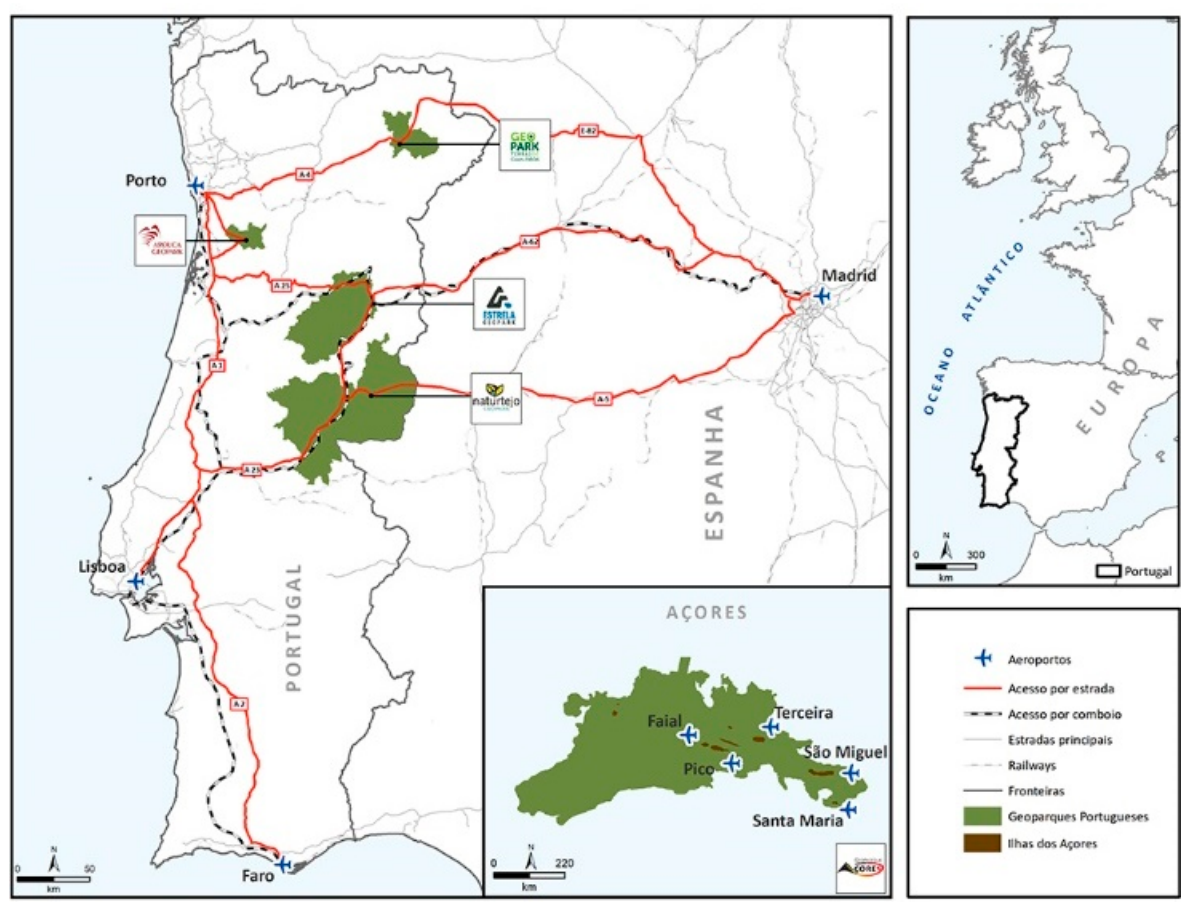
In Portugal, the 5 UNESCO World Geoparks in 2024—Naturtejo Geopark, Arouca Geopark, Azores Geopark, Terras de Cavaleiros Geoparak and Estrela Geopark—have implemented various initiatives to highlight and enhance GEOfood products, recognising the importance of integrating local gastronomy with the geological and cultural heritage of the regions. These actions are designed to promote sustainable agricultural practices, support the local economy and strengthen the cultural identity of communities. Sustainability is one of the pillars of geopark management, ensuring that food production practices are ecologically sound and preserve traditional methods. In this context, various initiatives have been promoted in Portuguese geoparks, including organic farming, conservation of traditional plant varieties and educational programmes that promote sustainable agriculture. These practices not only protect the environment but also maintain the cultural heritage of the regions. The policies and actions of the territories classified in 2023 as UNESCO Geoparks in Portugal (
Figure 1), in the promotion of GEOfood products, are important in promoting sustainability, cultural valorisation, the promotion of gastronomy and ecocultural heritage, as well as local economic development.
Portugal, known for its rich geological diversity, is home to five geoparques in 2023. These geoparks not only preserve the geological history but also showcase how these geological features influence local food culture. This section introduces the concept of GEOfood and highlights the importance of geoparks in maintaining the symbiotic relationship between geology and local cuisine.
One of the main strategies involves promoting food products that are intrinsically linked to the geological singularities of the geoparks. These products are often labelled with special labels that highlight their origin in the geoparks, increasing their visibility and differentiating them on the market. The creation of themed gastronomic routes is another significant action, where tourists and residents can explore and taste local products, such as cheeses, wines, honey and olive oils, while learning about the geology and history of the region. These routes not only educate visitors about the importance of geological and environmental conservation but also stimulate tourism and increase demand for local products.
Geoparks in Portugal also work closely with local farmers, producers and artisans to encourage the valorisation of products and their link to local geological characteristics and sustainable production methods that respect the environment and preserve biodiversity [
42]. Certification and training programmes are offered to ensure that GEOfood products are produced according to high standards of quality and sustainability. In addition, geoparks facilitate producers’ access to wider markets, both national and international, through fairs, exhibitions and partnerships with distributors. These actions help to increase the income of local producers and strengthen the rural economy.
Community education and awareness-raising are key components of Portuguese geoparks’ policies. Educational initiatives in schools and community events are organised to inform and involve the local population in the importance of geological conservation and the appreciation of GEOfood products. Workshops, talks and guided tours are used to pass on knowledge about traditional and sustainable agricultural practices, as well as to foster pride and a sense of belonging to the community. This holistic approach not only promotes the preservation of natural and cultural heritage but also strengthens the social fabric and community cohesion.
Contemporary scholarship recognises UGGps as place-based governance territories where geodiversity is mobilised through education, community participation and sustainable development [
3,
9]. In this governance logic, food systems become operational instruments that translate geological heritage into economic, cultural and educational value. The GEOfood initiative, increasingly consolidated within UNESCO-related frameworks, connects local production systems with geological identity, strengthening territorial branding and reinforcing local value chains [
2,
33].
Geoproduct strategies in geoparks have been shown to generate local development benefits when embedded in coherent certification systems, producer networks and interpretive narratives [
4]. Moreover, recent research linking geoparks and land-use management highlights the relevance of product-based approaches for sustaining landscapes under socio-economic pressure [
16]. In parallel, global concerns regarding agrobiodiversity erosion and food system homogenisation further justify territorially anchored production models that preserve diversity and resilience [
32,
43,
44].
Within the Portuguese context, the promotion of GEOfood across the five geoparks reveals four main strategic axes (
Table 1): (i) certification and territorial branding; (ii) reinforcement of short supply chains and producer empowerment; (iii) integration of gastronomy into interpretive tourism; and (iv) contribution to regenerative territorial practices.
Recent literature has consolidated conceptual clarity in regenerative tourism [
9] and documented community-based regenerative practices [
47,
48], including Portuguese experiences linking tourism innovation and territorial regeneration [
49]. Within this perspective, GEOfood initiatives in Portuguese geoparks contribute to regeneration when they:
Revitalise abandoned agricultural landscapes;
Maintain transhumant pastoral systems;
Preserve volcanic agro-ecosystems;
Support biodiversity-rich olive groves;
Reinforce intergenerational knowledge transmission.
Rather than functioning solely as marketing tools, these food systems stabilise local livelihoods and sustain cultural landscapes, contributing to land-based resilience [
16].
Mountain geoparks (Estrela and Terras de Cavaleiros) illustrate regeneration through the maintenance of altitude-adapted agro-sylvo-pastoral systems. The Azores demonstrate volcanic agro-ecosystem resilience and marine sustainability. Granite upland territories (Naturtejo and Arouca) reinforce pastoral beef systems and olive groves shaped by mineral-rich soils.
5. GEOfood Strategies in Portuguese UNESCO Global Geoparks: A Systematic Analysis (Results)
5.1. Naturtejo UNESCO Global Geopark
The Naturtejo UNESCO Global Geopark, located in central-eastern Portugal, represents a granite-dominated inland territory characterised by fossil heritage, Mediterranean microclimates and long-standing agro-sylvo-pastoral systems. Within this geological framework, GEOfood initiatives operate as instruments of territorial valorisation grounded in local production systems (
Table 2).
The geopark’s strategy is structured around three interrelated dimensions: (i) product certification and geological-terroir identity reinforcement; (ii) preservation of traditional agro-ecosystems; and (iii) integration of gastronomy into interpretive tourism.
Agricultural products such as olive oil, honey, bread, sweets and chestnuts are directly linked to granite soils and climatic conditions that favour drought-resistant crops and wild flora biodiversity. Livestock-based products—including cheese and sausages—derive from pastoral systems historically adapted to marginal terrains. The geopark emphasises authenticity and local production boundaries, reinforcing short supply chains and promoting restaurant partnerships that incorporate GEOfood into regional menus.
From a land governance perspective, Naturtejo’s GEOfood approach contributes to:
Maintenance of traditional olive groves;
Stabilisation of pastoral landscapes;
Preservation of pollinator ecosystems;
Reinforcement of fossil-geology interpretive narratives.
The main impacts of regenerative tourism are as follows:
Revitalise abandoned agricultural landscapes;
Maintain traditional cultural identities within the agropastoral system;
Support biodiversity-rich olive groves;
Reinforce intergenerational knowledge transmission;
Integration of new habitats and continuity of extensive production.
Thus, GEOfood operates not merely as a gastronomic asset but as a mechanism sustaining ecological functions and rural livelihoods.
5.2. Arouca UNESCO Global Geopark
The Arouca UNESCO Global Geopark, situated in northern Portugal, is defined by granite and schist uplands that support livestock systems and mountain agriculture. Its GEOfood strategy is more explicitly structured around certification, event-based promotion and producer capacity building.
Central products include arouquesa beef, honey, chestnuts, bread and traditional pastries. The granite upland ecosystem shapes vegetation diversity, influencing livestock quality and pasture-based production. Certification mechanisms ensure traceability and sustainability standards while strengthening product differentiation in national and international markets.
Arouca distinguishes itself through:
Structured gastronomic routes linking geosites and food experiences;
Producer training programmes focused on sustainable agriculture;
Participation in fairs and festivals as market expansion tools;
Collaboration with academic institutions for product innovation.
Regenerative impacts in community and landscape:
Revitalise abandoned agricultural landscapes;
Maintain cultural identities;
Preservation of interpretive trails and routes;
Promotion of traditional pastoralism;
Foster geotourism and new hotel and restaurant services
The regenerative dimension in Arouca lies primarily in the reinforcement of sustainable livestock systems and the maintenance of mountain agricultural mosaics. By strengthening local value retention, the geopark mitigates rural abandonment and preserves landscape heterogeneity.
5.3. Azores UNESCO Global Geopark
The Azores UNESCO Global Geopark encompasses nine volcanic islands in the Atlantic, where basaltic soils, geothermal activity and marine ecosystems define production systems. GEOfood initiatives here are strongly shaped by insularity and volcanic terroir identity.
Agricultural products include wine, tea, pineapple and honey; livestock production is centred on dairy systems adapted to volcanic pastures; marine products include tuna and other Atlantic species. The volcanic substrate provides mineral-rich soils that influence flavour profiles and pasture productivity.
The geopark’s strategy integrates:
Volcanic terroir branding;
Island-based short supply chains;
Marine sustainability frameworks;
Integration of geothermal landscapes into food narratives.
The regenerative impact in the Azores is multi-scalar:
Preservation of volcanic agro-ecosystems;
Sustainable fisheries management;
Reinforcement of island self-sufficiency;
Conservation of endemic biodiversity.
In this context, GEOfood contributes to resilience in a geographically vulnerable archipelagic system.
5.4. Terras De Cavaleiros UNESCO Global Geopark
The Terras de Cavaleiros UNESCO Global Geopark, located in Trás-os-Montes, is characterised by granite–schist mountain systems and Mediterranean mid-altitude climates. GEOfood strategies focus on revitalising traditional agricultural systems in a region historically affected by depopulation.
Key products include chestnuts, olive oil, honey, wine, dried fruits, cheese and smoked meats. These derive from agro-ecosystems shaped by microclimatic diversity and mineral-rich soils.
The geopark emphasises:
Harvest festivals and community events;
Revival of traditional plant varieties;
Direct-sale platforms;
Infrastructure supporting producer–consumer interaction;
Educational outreach linking geology and agriculture.
The regenerative dimension is particularly visible in:
Re-activation of chestnut groves;
Recovery of traditional smokehouse practices;
Strengthening of mountain agro-landscape mosaics;
Increased community engagement in land stewardship.
Thus, GEOfood becomes a strategy against rural decline and landscape homogenisation.
5.5. Estrela UNESCO Global Geopark
The Estrela UNESCO Global Geopark encompasses the Serra da Estrela mountain system, characterised by glacial geomorphology and altitude-driven ecological gradients. GEOfood strategies are deeply intertwined with transhumance traditions and mountain resilience.
Products include Serra da Estrela cheese, rye bread, honey, goat meat, smoked products and fario trout. Production systems reflect adaptation to harsh climatic conditions and high-altitude ecosystems.
The geopark’s structured approach includes:
Certification reinforcing mountain identity;
“Mercadinhos de Montanha” strengthens short supply chains;
Gastronomic routes integrated with glacial geosites;
Training in sustainable mountain agriculture;
Reuse of historical infrastructures for product valorisation.
The contributions promoted are linked to:
Maintenance of mountain biodiversity;
Preservation of transhumant pastoral systems;
Conservation of endemic flora;
Reinforcement of socio-cultural identity in fragile highland territories.
Estrela’s GEOfood strategy thus demonstrates how mountain systems can integrate heritage preservation with economic revitalisation.
The restoration and reuse of historic buildings and the creation of suitable infrastructures for the production and marketing of GEOfood products are other significant actions of Estrela Geopark. These infrastructures not only improve the working conditions of local producers but also act as tourist attractions, attracting visitors and increasing economic circulation in the region.
In brief, Estrela UNESCO World Geopark’s strategies and actions to promote GEOfood products are broad and integrated, ranging from sustainable production and quality certification, through touristic promotion and economic support, to community education and awareness-raising. These initiatives not only strengthen the local economy and the cultural identity of Serra da Estrela, but also contribute significantly to the conservation of its rich natural and cultural heritage, creating a model of sustainable development that can serve as an inspiration for other regions.
6. Systematisation of Action Logics in Portuguese Geoparks in the Valuation of Agroproducts and GEOfood Products: Discussion
The valorisation of agro-products and GEOfood products in Portuguese geoparks is a dynamic and essential strategy for preserving geological and cultural heritage while driving the sustainable development of local communities. This process plays a pivotal role in strengthening local economies, safeguarding traditions, and promoting environmental sustainability.
At its core, GEOfood valorisation emphasises the adoption of sustainable agricultural practices that respect the environment and enhance product quality. Organic and regenerative farming methods improve soil health and foster biodiversity, while the conservation of traditional plant varieties and local animal breeds ensures the preservation of cultural identity and heritage. These practices create a harmonious balance between nature and agriculture, securing the long-term viability of regional agro-products.
Certifications and quality labels inspire consumer confidence and make products easily recognisable in the market. Marketing initiatives, both digital and traditional, are key to increasing product visibility. The development of immersive tourism experiences, such as visits to producers and tasting events, enhances the region’s appeal and brings consumers directly into contact with the cultural and geological stories behind the products, revealing their nature and cultural significance.
Innovation and research are integral to elevating the value of GEOfood products. Collaborative studies with universities examine how geological factors shape the unique characteristics of these products, providing scientific insights that enhance their appeal. Encouraging creativity in product development rooted in local traditions, alongside the exploration of advanced processing and preservation techniques, ensures that GEOfood remains relevant and competitive in modern markets.
Partnerships and collaborations are essential for the success of GEOfood initiatives. By fostering connections between universities, research centres, local producers, and associations, these collaborations create robust production networks and facilitate the joint promotion of products. Such synergy strengthens community ties, promotes knowledge sharing, and amplifies the collective impact of these efforts, benefiting both producers and consumers.
Educational programmes play an important role in introducing younger generations to the value of agro-food products and to the geological contexts that shape their origin, quality, and identity. At the same time, workshops and training initiatives aimed at farmers can provide practical guidance for the adoption of more sustainable production practices. Public awareness campaigns also help communicate the ecological, cultural, and economic relevance of GEOfood, strengthening its recognition among local communities and visitors. In addition, local events and fairs create opportunities to connect geology, agriculture, and gastronomy, fostering community engagement while enhancing the visibility of territorial products.
By integrating sustainable practices, innovative research, effective branding, strategic partnerships, and educational outreach, Portuguese geoparks are creating a comprehensive framework for the valorisation of GEOfood products. This holistic approach not only strengthens local economies but also preserves the cultural and natural heritage of the regions, ensuring a sustainable and resilient future for communities and their unique agricultural legacies (
Table 3).
Practical examples of these initiatives can be observed across Portuguese geoparks. In the Arouca Geopark, efforts to promote honey and Arouquese meat include certification programs and gastronomic events that celebrate local flavours. In the Naturtejo Geopark, projects aimed at valorising olive oil and Nisa cheese involve the creation of specific brands and partnerships with restaurants to enhance their market presence. The Azores showcase a blend of traditional and modern techniques in the production of wines and seafood, while the Terras de Cavaleiros Geopark highlights chestnuts and local wines through harvest and tasting festivals. Similarly, the Estrela Geopark brings honey and bread into the spotlight, with Serra da Estrela cheese as its flagship product, bolstered by its UNESCO World Geopark classification and the development of “Mercadinhos de Montanha”.
The impacts of these actions extend across economic, environmental, and socio-cultural dimensions. Economically, these initiatives increase income for local producers and create new job opportunities, enhancing community well-being [
24,
50]. Environmentally, sustainable agricultural practices improve ecosystem quality and conserve biodiversity [
22,
51,
52]. Socio-culturally, they preserve culinary and agricultural traditions, strengthen local cultural identity, and boost the self-esteem of communities, while fostering greater ecocultural and tourism visibility for Geopark territories [
7,
13].
Research and innovation play a crucial role in the value enhancement of GEOfood products. Collaborative studies with universities examine how geological factors shape the unique characteristics of these products, providing scientific insights that enhance their appeal [
53] Encouraging creativity in product development rooted in local traditions, alongside the exploration of advanced processing and preservation techniques, ensures that GEOfood remains relevant and competitive in modern markets.
Promoting and commercialising GEOfood products requires the establishment of strong regional brands that certify their origin and quality. Certifications and labels instil consumer confidence and make products easily recognisable in the marketplace [
46,
53]. Marketing efforts, both digital and traditional, are vital to amplifying product visibility. Additionally, the development of immersive tourist experiences, such as producer visits and tasting events, enhances the region’s attractiveness and connects consumers directly with the cultural and geological stories behind the products.
Education and awareness are crucial for ensuring the sustainability of GEOfood initiatives. School programs introduce younger generations to the importance of agro-products and the geological context in which they are produced. Workshops and training sessions for farmers provide practical tools to adopt sustainable practices, while public awareness campaigns highlight the ecological, cultural, and economic benefits of GEOfood. Local events and fairs further bridge the connection between geology, agriculture, and gastronomy, engaging communities and visitors alike [
9,
45].
Partnerships and collaborations are essential for the success of GEOfood initiatives. By fostering connections between universities, research centres, local producers, and associations, these collaborations create robust production networks and facilitate the joint promotion of products. Such synergy strengthens community ties, promotes knowledge sharing, and amplifies the collective impact of these efforts, benefiting both producers and consumers [
32,
54]. By integrating sustainable practices, innovative research, effective branding, strategic partnerships, and educational outreach, Portuguese geoparks are creating a comprehensive framework for the valorisation of GEOfood products. The systematisation of these action logics underscores the importance of an integrated approach, demonstrating that the combination of education, sustainability, promotion, research, and partnerships is critical to the success of these initiatives.
The future of GEOfood valorisation in Portuguese geoparks is promising, with the potential to foster sustainable economic development and cultural preservation. As agriculture and livestock farming continue to evolve, there is growing demand and recognition for these products. GEOfood is becoming increasingly significant in local gastronomic identities and is gaining prominence in shops and restaurants, ensuring a thriving and resilient future for these unique regional offerings.
7. Conclusions
UNESCO geoparks offer an opportunity for ecocultural valorisation to integrate sustainable practices into the promotion of food products in territories of natural and sociocultural vulnerability, guaranteeing sustainable agricultural and food practices. By linking local geodiversity to agricultural traditions and gastronomy, GEOfood products not only reinforce the cultural identity of communities, but also create new economic opportunities, attract visitors and promote environmental conservation.
In the five Portuguese geoparks analysed, initiatives to enhance GEOfood products are aligned with the principles of sustainable development, integrating quality certification, educational promotion and marketing innovations. Examples such as Serra da Estrela cheese and wine from the volcanic soils of the Azores illustrate how the combination of geological heritage and local production can result in products with high added value and international appeal [
22,
25]. However, challenges remain, including the need for greater integration between geoparks and distribution networks, the strengthening of local production chains and the wider adoption of regenerative and low environmental impact practices. In addition, it is essential to promote a constant dialogue between researchers, local communities and geopark managers to ensure that GEOfood initiatives continue to evolve and meet the demands of sustainability and cultural identity.
GEOfood products have the potential to become ambassadors for ecocultural sustainability, raising awareness of the importance of natural and cultural heritage on a global scale. By promoting the intersection between geology, culture and gastronomy, Portuguese geoparks are consolidating themselves as models of integrated development, offering inspiration to regions around the world. Geoproducts (and GEOfood) are endowed with meaning because they can be symbolic, authentic, educational, interpretive and sustainable. These products are much more than a simple food product or souvenir, as they enhance the memory of the Earth, promoting self-esteem, social well-being and fostering educational and heritage preservation behaviours.
Sustainability is a pillar of geopark management, ensuring that food production practices are environmentally friendly, preserve traditional methods and generate income for their communities. The initiatives include organic farming, the conservation of traditional plant varieties, geo-interpretation and educational programs that promote sustainability and social well-being. These practices not only protect the environment but also maintain the cultural heritage of these regions, allowing gastronomy and services associated with tourism and hospitality to be enhanced.
8. Limitations and Future Areas of Research
This study has a number of limitations, namely: it is based on an essentially qualitative and exploratory approach, which limits the generalisability of the results to other geographical contexts or geoparks; data collection relies primarily on interviews with the executive coordinators of the geoparks, which may introduce institutional bias and a predominantly strategic, less critical perspective; it focuses exclusively on Portugal; the GEOfood model relies heavily on certification mechanisms, which may create barriers to entry for small-scale producers.
For the future, we propose the use of quantitative studies incorporating measurable indicators, such as the economic impact of GEOfood, tourist flows, producers’ incomes or levels of community engagement, as well as extending the scope to other geoparks in other countries.