Article

Mapping Power: A Landscape Approach to Etruscan Urbanisation and Territorial Control

Magdalene College, University of Cambridge, Cambridge CB3 0AG, UK
Land 2026, 15(5), 699; https://doi.org/10.3390/land15050699
Submission received: 27 March 2026 / Revised: 3 April 2026 / Accepted: 19 April 2026 / Published: 22 April 2026

Abstract

Etruscan studies have reached great heights in the accumulation of cultural data. This is particularly true for landscape studies: the second half of the 20th century has been fruitful as it saw a growth in survey projects exploring ancient central Italian landscapes. Survey data indeed have a lot of potential for the study of urbanisation, facilitating the quantification of different patterns to draw comparisons of control strategies enacted by different power places. This paper is a synthesis of the analyses on rural settlement data between the 7th and the 5th centuries BCE, when urbanised institutions and lifestyles consolidated. Four case studies are selected and discussed, representing different types of territorial control: Tuscania, a mid-ranking centre tied to the city of Tarquinia; Chiusi and Cerveteri, both urban central places, with different developments and ways to administer territories; and finally, the palatial site of Murlo, in open conflict with urbanised realities. Site trends, proxies of population change and locational analysis, using GIS, reveal different rural infrastructures sustaining Etruscan central places. These centres adopted different strategies to control their lands and benefit from them. As part of the approach, I will show how structured Etruscan landscapes became, how they were exploited, who lived there, and how relationships with the central place were developed.

1. Introduction

Etruscan studies have been traditionally focused on researching its most clear archaeological trace: funerary evidence. This has resulted in a limited understanding of more humble, domestic and rural Etruscan contexts [1], which have started to be tackled thanks especially to the development of landscape archaeology. The accumulation of cultural data, in fact, mainly through archaeological surveys, has been ongoing since the mid-20th century, kickstarted by the monumental South Etruria Survey. Such research endeavours were and are vital in understanding the ‘rural dimension’ of urbanisation during the 1st millennium BCE, including exploitation patterns, territoriality and cycles of nucleation, with the application of geographical models [2,3].
The results of some of the surveys led in the past 50 years were gathered in a dataset, by [4,5], which provided the basis for this paper. Recently, more computational methods and techniques have been applied in the study of Etruscans [6,7,8,9,10,11,12,13,14]. Particularly important for this paper and others by the same author [11,12,13,14] is the work of [8], revisited in [9], related to the application of the XTENT technique for the calculation of the development of Etruscan polities during the centuries considered here. Originally applied to Maltese polities in [15], the model is a practical application of the Early State Module where “social complexity and change are achieved through interaction among similar and neighbouring polities, which tend to be spaced regularly” [14]. Compared to the traditional Thiessen Polygons model, which divides territories purely geometrically and treats space as a blank canvas, XTENT represents a crucial methodological development, as it recognises political hierarchies, where major centres have stronger attractive points than minor ones. Further merits of the method lay in the calculation of territories that take into account not only the size of the central place, but also the landscape, through the integration of raster-based GIS modelling. This last element is present in the version of the model used in this work, calculated by [8]. In their article, the authors show how their model is further strengthened from the use of cost-surfaces, based on the DEM, as it represents the ‘friction’ imposed by the landscape, allowing territorial control to be assessed on travel time rather than just distance. In this way, human–landscape relations are considered, and it is possible to reconstruct the polities’ influence and communication in a more realistic way. Moreover, XTENT possesses a diachronic dimension: changing the value of k, the constant of the formula on which the model is based (I = Ca − k × d, where I: strength of the centre, C: centre size, d: distance, and a with k gives the balance between centre size and distance), determines the sizes of the territories at different stages of their development. However, there are several limits: First and foremost, the value of the constant is subjective. Secondly, the sizes of ancient centres, particularly Etruscan ones, are difficult to assess. The sizes of the plateaus are usually used to infer the sizes of the cities. However, Redhouse and Stoddart in 2011 pointed out in their work that these sizes, where possible, were calibrated and validated with the integration of topographic data, demographic studies and rank-size analyses [8]. For more details on the technique, check [16].
These studies have highlighted the differences in the strategies adopted by Etruscan central places in administering and controlling their land, despite responding to similar stimuli. Alongside the development of large urban centres, alternative non-urban central places have emerged, particularly in the centuries when the latter were consolidating their territories and urban infrastructures (7–5th centuries BCE). A vibrant picture has emerged: where Etruria was once seen as a subordinate player in Mediterranean urban life, compared to the long and largely stable examples of urbanisation represented by Rome or Athens, it is now being considered a crucial case study, an example of complex and dynamic urbanising processes [9,11,12,13,14,15,16,17,18].
This paper, based on the author’s unpublished PhD and other published papers by the same author, provides a comparative analysis of survey data to highlight differences in Etruscan central places between the 7th and 5th centuries BCE [11,12,13,14]. It highlights how these differences were shaped by the elites’ conflicting attitudes towards the opportunities and limitations of urban life. Four case studies were chosen, each representing a different type of central place: Cerveteri, a large southern Etruscan city with coastal ports and fertile volcanic soil, serving as a major urban centre. Chiusi, a smaller, less centralised northern Etruscan town with a polyfocal layout and landscape approach1. Tuscania, a regional market town under Tarquinia’s control, strategically located at the intersection of trade routes connecting the interior and coast. Murlo (or Poggio Civitate), a small, non-urban central place centred around an aristocratic residence, with possible signs of limited nucleation. The analysis and interpretation for Cerveteri’s and Murlo’s territories have been published in [12,13] and are here reported within a unified comparative framework. Their development will be compared, in fact, with new data pertaining to the centres of Chiusi and Tuscania. Together, these cases reflect the diverse economic, political, social, and ritual roles central places played in their regional contexts.

2. The Geographical Setting: Etruria

The area known historically as Etruria includes modern Tuscany, the western part of Umbria and Northern Lazio. Etruscans extended their territories to the north towards the Po Plain, and to the south towards Campania, with commercial outposts such as Spina to the north and Pontecagnano to the south. However, the northern limit of the core Etruscan region is commonly identified with the Arno, while to its southeast, the boundaries alternatively follow the Apennines and the river Tiber. The Tyrrhenian Sea provides the western boundary, even if coastal Etruscan cities extended their influence over its waters through trade and commercial activities [9]. The four case studies shown in this paper are located in two different geological and environmental compartments of Etruria.

2.1. North Etruria: Murlo and Chiusi

Murlo and Chiusi, located in northern and southern Tuscany, respectively, share similar geological and environmental features. Murlo’s landscape is mainly undulating hills, rarely exceeding 500 m, part of the Dorsale Medio Toscana, formed during the formation of the Apennine. Hills are higher near the Merse river, decreasing toward the Arbia valley, part of the Crete Senesi formation, characterized by low, round mounds and gentle slopes. Only small forest patches remain; most areas are plains or gentle hills used for extensive agriculture. The territory is drained by the Merse, Ombrone, and Arbia rivers, forming fluvial valleys and plains, with the largest at the Ombrone–Arbia confluence. The eastern plains contrast with the more rugged, wooded western sector [19,20].
Chiusi’s territory, between Tuscany and Umbria, is geologically tied to the southernmost Northern Apennines. The landscape is formed of gentle hills, basins (Siena, Radicofani, Val d’Orcia, and Val di Chiana), and river valleys. Soils include sands, clays, limestones, and volcanic debris, with frequent erosional features forming the Crete Senesi [21,22,23]. Fluvial plains along the Orcia, Asso, Formone, Paglia, and Rigo rivers are mainly cultivated. Higher hills (400–685 m) and woodlands dominate the northeast, while the Radicofani volcano (750–896 m) preserves volcanic deposits shaped by erosion and human levelling. The Val di Chiana basin features gentle hills of sands, clays, and marine deposits, while ridges like Rapolano–Cetona present cuestas, mesas, and travertine formations linked to thermal springs with ritual and symbolic significance in antiquity [24,25,26].

2.2. South Etruria: Cerveteri and Tuscania

Cerveteri and Tuscania lie within the Tuscan and Roman volcanic provinces, sharing complex volcanic and sedimentary landscapes. Cerveteri’s territory includes the Tolfa and Ceriti Hills, delimited by the Mignone River, Mola Stream, and the Tyrrhenian Sea. These hills, reaching 600 m, are heavily wooded, rich in metal resources, and formed by silicic magmas, potassic volcanic and plutonic rocks, with Pleistocene–Holocene alluvial deposits, travertine, and slope debris [27,28,29,30]. The Roman volcanic province, including the Sabatini and Alban Hills, created tuff plateaus north of the Tiber, with narrow north–south ridges (max 200 m) and fertile valleys [31,32]. Volcanic backfilling formed extensive plains, the Campagna Romana. The landscape features fertile soils, Mediterranean scrub, halophilic plants near the shore, and a dense network of rivers, streams, and springs supporting agriculture, resource exploitation, and communication [33].
Tuscania, part of the Tuscia Romana, is characterised by plateaus, ridges, hills, and gorges shaped by complex tectonics and volcanism (~1.3–0.04 Ma) from the Cimini, Tolfa, Vicano, Vulsini and Sabatini districts, which created lavas, tuffs, pyroclastics, and volcano-tectonic depressions [34,35]. Erosion by rivers and creeks incised deep gorges, similar to ones found in Cerveteri’s territory. Volcanic lakes (Bolsena and Vico), the Tyrrhenian coast, and a dense river network, including the Marta and Fiora, drain the volcanic massifs [36]. Isolated tuffaceous plateaus, with vertical cliffs, provided ideal conditions for rock chamber tombs of the Etruria Rupestre [37,38].

3. The Dataset and GIS Methodology

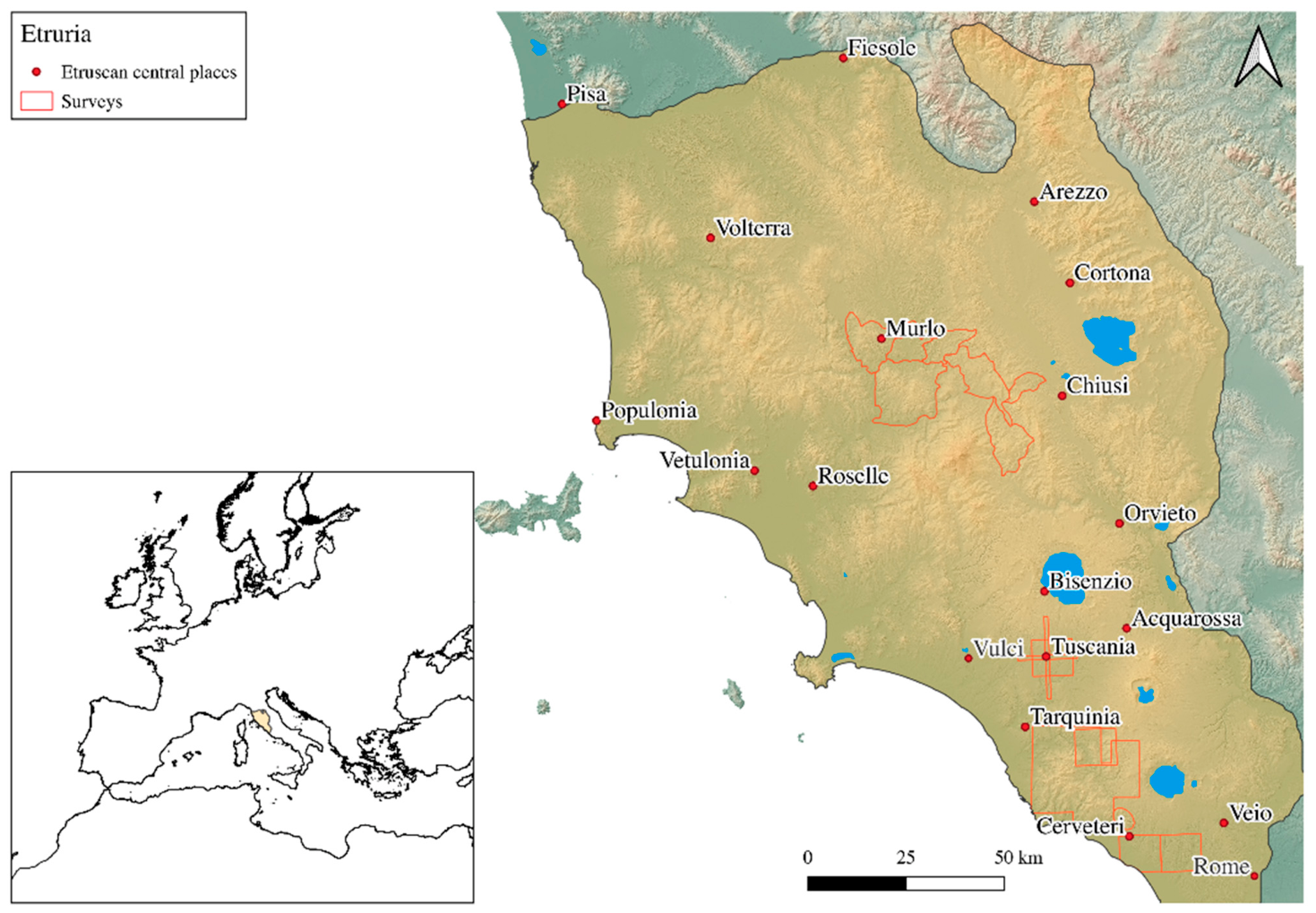
The majority of the database, as mentioned, was gathered in the Palmisano et al. datasets [4,5], integrated later with the Tuscania Survey Project in [10] (Figure 1). Among the surveys collected in these databases, only ones relevant to the territories under study are considered, especially those within the boundaries computed by XTENT. The author, as part of their PhD dissertation [11] and later published in [13], also integrated the Tolfa Hill survey, not present in the original dataset, covering the frontier area between Tarquinia and Cerveteri.
The sites found were reclassified according to set categories and chronologies (Table 1) in order to build effective diachronic population trends that would minimize the challenges characterising survey data, such as visibility issues. This recategorisation was largely based on material culture, as Table 1 shows. Similar to [12,13], this methodology to infer population trends in relative numbers is based on Roman demographic studies [46,47] that were applied to survey data to enhance their comparability and diminish contemporaneity issues [12,13]2.
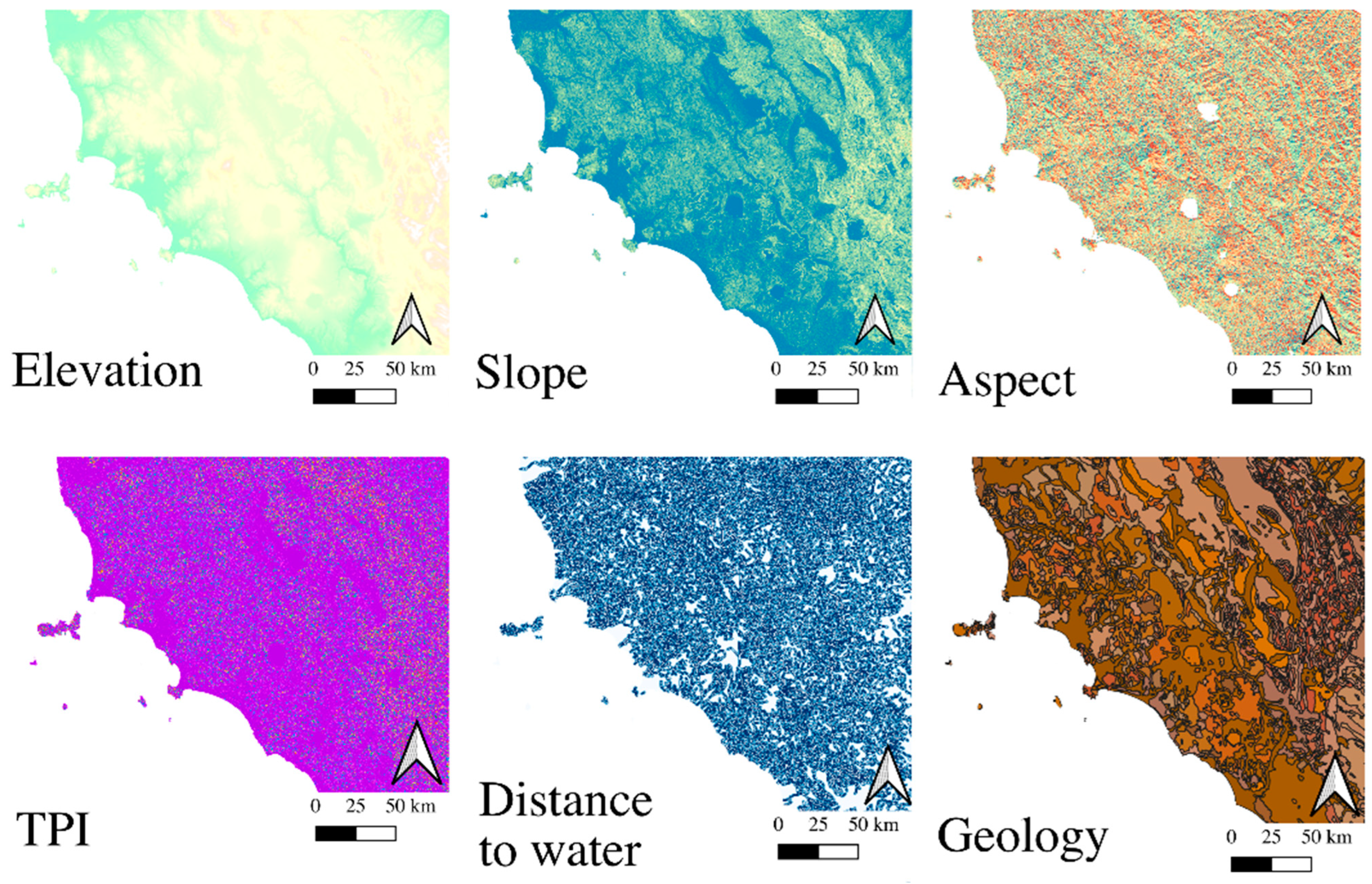
The resulting sites were then plotted against several raster and vector maps, at different stages of the territorial development of these centres in the periods considered. In particular, to explore each central place’s territory, a set of fixed analyses was carried out, in QGIS 3.38 (Figure 2), performed using a TINITALY DEM with a 10 m resolution which served as the basemap for all the maps created for this paper. The DEM is a national-scale elevation dataset derived from a triangulated irregular network with an average vertical accuracy of <3.5 m [48]. Using the GDAL, SAGA (v. 9.2) and GRASS (v. 2.12.99) tools integrated in QGIS, several layers were obtained: elevation (directly extrapolated from the DEM), slope and aspect, calculated with the SAGA algorithm—Slope, Aspect, Curvature. Landforms were computed based on the topographic position index. To do this, the TPI was calculated with the GDAL algorithm Topographic Position Index. The resulting layer was then classified into landforms with the SAGA algorithm TPI-based landform classification3. A final classification style based on the methodology by [50] was applied. As for proximity to water, a channel network was derived by the DEM using hydrological modelling in SAGA, and the Euclidian distance from the resulting river network was extrapolated through the GDAL Proximity (raster distance) tool. The geological map was downloaded from the Geoportale Nazionale website (https://gn.mase.gov.it/portale/home). These layers were selected to carry on the locational analyses as they represent suitable parameters to locate rural settlements specialised in agricultural activities, in a similar way done in work on pre-Roman Latium Vetus [31]. Other algorithms were employed: heatmaps based on kernel density estimation were created (Table 2) to show changes in settlement density across the periods and regions considered [51,52], [53] (pp. 117–175), [54,55,56,57,58]. Heatmaps are based on the conversion of points into continuous raster surfaces, highlighting clusters and densities. In this work, the bandwidth was adapted to each case study (except for Chiusi, as it was not very informative) and set equal to the calculated standard distance to reflect observed patterns. This optimal bandwidth was calculated using the SAGA tool Spatial Point Patterns Analysis. The table below shows the radius selected for each case study during each period.
Viewsheds were calculated using the GRASS tool r.viewshed. Viewpoints were generated from the location of central places and secondary fortified centres. An observer distance of 1.65 m was assumed, combined with an additional 10 m offset to approximate observation from a building, following [31]. These viewsheds were employed to give an idea of territorial control and monitoring, enabling a more ‘sensorial’ and experience-based perception of the landscape [31]. These types of analysis are important: GIS has been criticised thoroughly for its perceived positivist and environmentally determinist approach, not giving enough importance to human agency and social variables [59,60,61,62,63,64,65,66,67,68]. However, these accusations downplay the importance of investigating past landscapes, not to mention that the geographic nature of GIS analyses can shed light on their past affordances and limits through DTMs [69], themes that have become popular in archaeological studies [70,71,72,73].

4. Results and Discussion

A total of 600 sites were recorded from Cerveteri, 76 from Chiusi, 210 from Tuscania and 106 from Murlo. Table 3 shows the trend results for each central place. Below, the results of the analyses, from [11], will be summarised. The locational analyses will be summarised in Figure A1, Figure A2, Figure A3 and Figure A4 in Appendix A. As noted, the trend results for Cerveteri and Murlo, and their interpretation, have been previously published in [12,13]. These will be compared with the findings from the territories of Tuscania and Chiusi, for each period considered.

4.1. Orientalizing

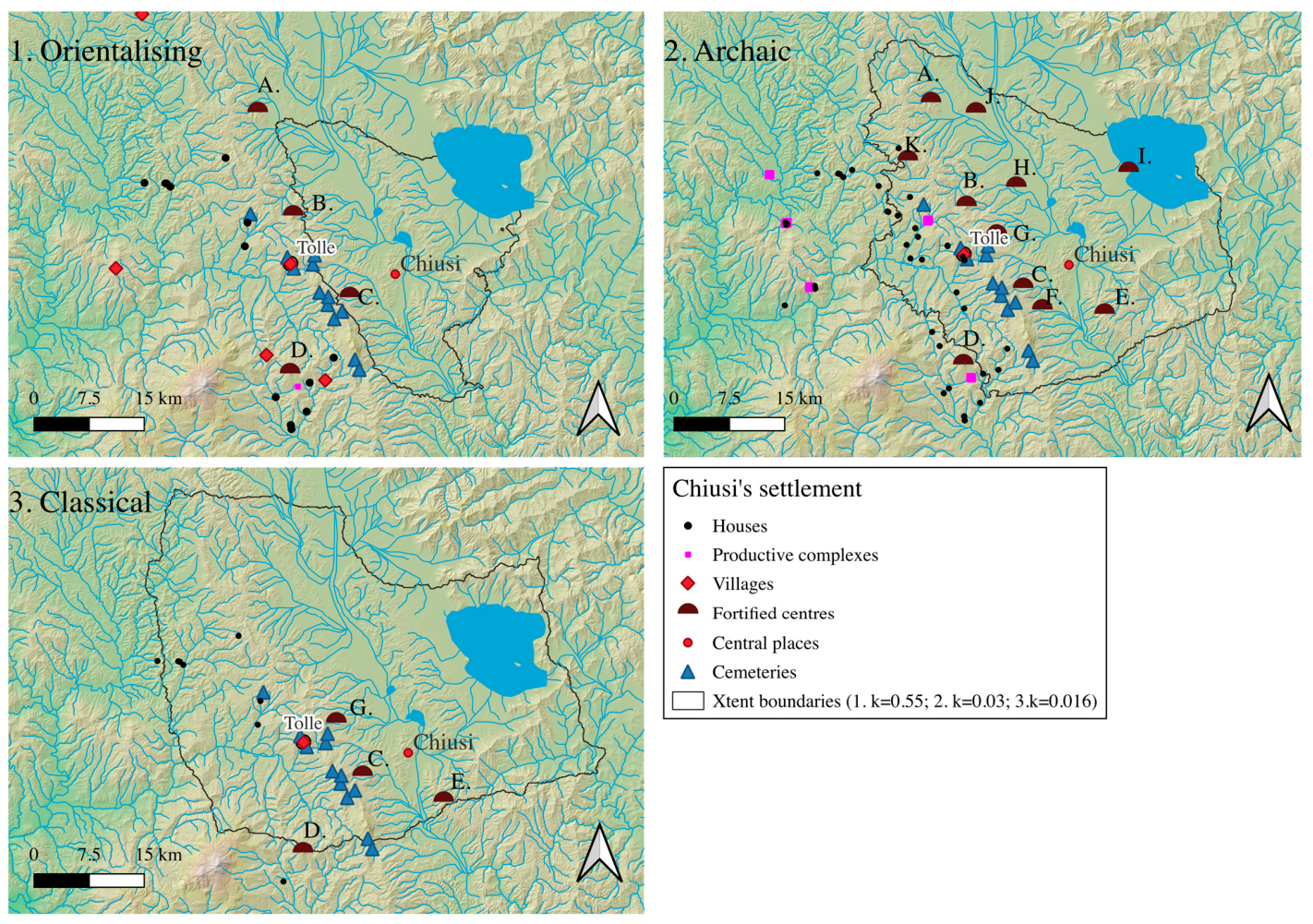
During the Orientalizing period, three of the four landscapes analysed were defined by more or less scattered occupation: in all cases, the most represented category was the isolated ‘house’, but more nucleated settlements were also present. While Cerveteri had already achieved regional central place status for its surroundings at the time, as its considerable size would suggest (162 ha), Chiusi was still in development. It appears to have been surrounded by centres of comparable status (Figure 3), each occupied by elites competing among each other for influence, through different means. This influence was extended via minor villages gravitating around these centres, like Borghetto, Castelluccio, Macchiapiana, Poggio Rotondo and Solaia. The first was an agriculture-based settlement [43], and the latter were outposts for commercial control [74]. Therefore, it could be plausible to suggest that Chiusi was not founded to be the only political reference for the territory but was really of equal status to these other centres, who, as their growing necropoleis suggest, were autonomous at this point [75]. Driving these processes were members of the elite, whose power exuded from their rich funerary assemblage, particularly from the second half of the 7th century BCE. At this time, the typical canopic cinerary started to be employed for incineration, an expensive hero’s ritual [74]. Such funerary customs can be indicative of the quest for the greater independence to which the aristocracies in this territory aspired. As for the broader landscape, a limited number of houses and productive complexes defined it.
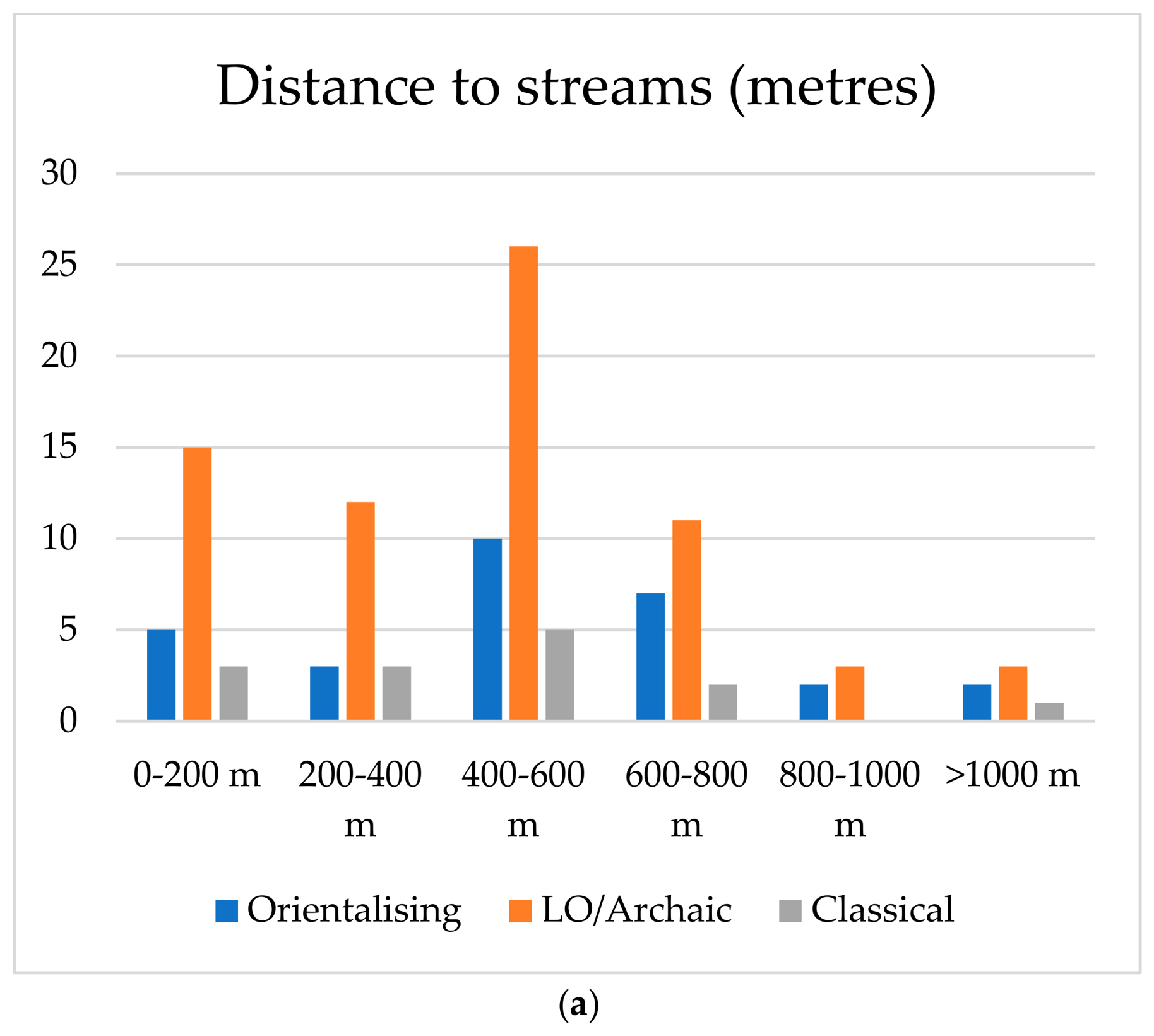
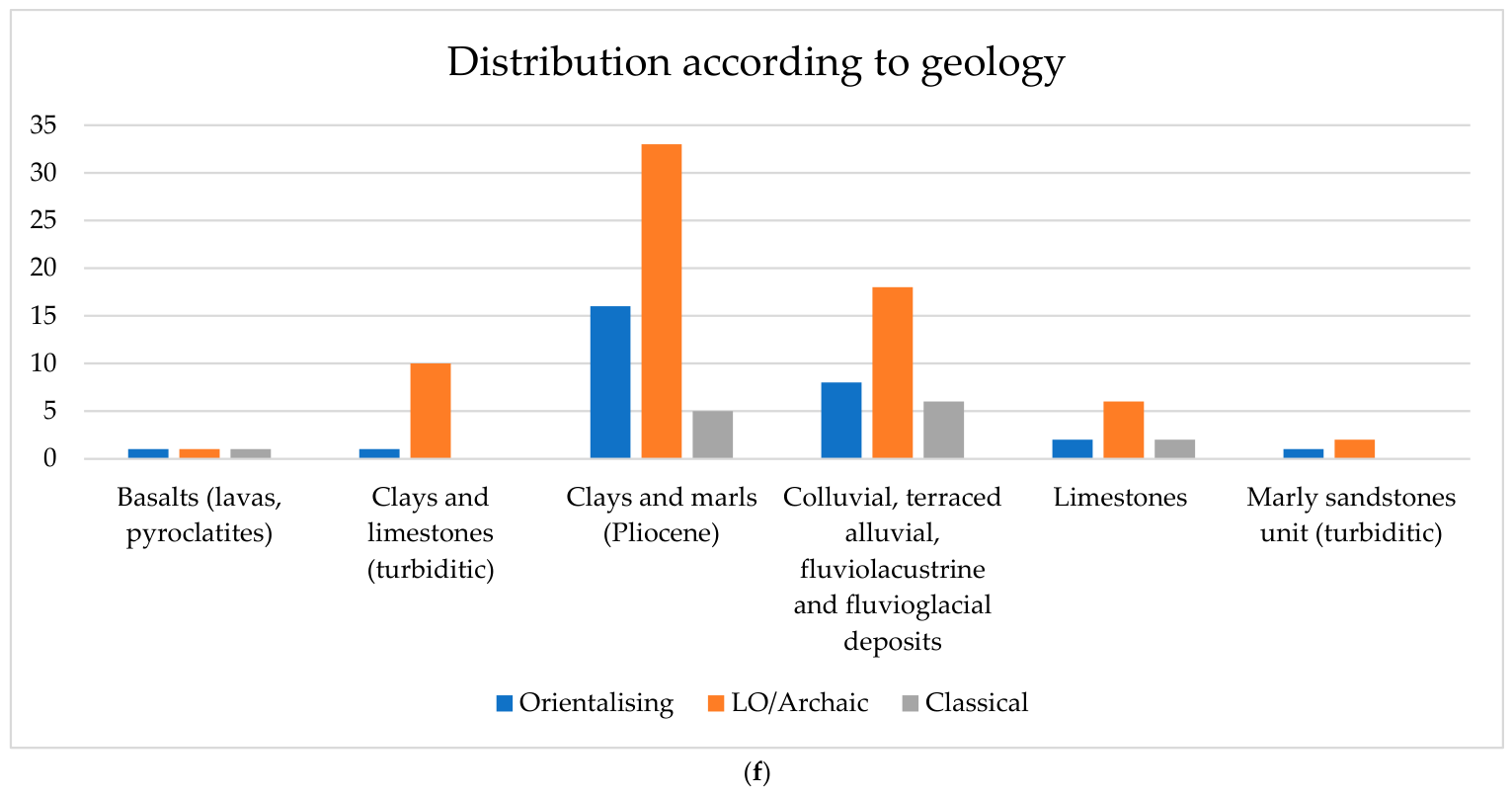
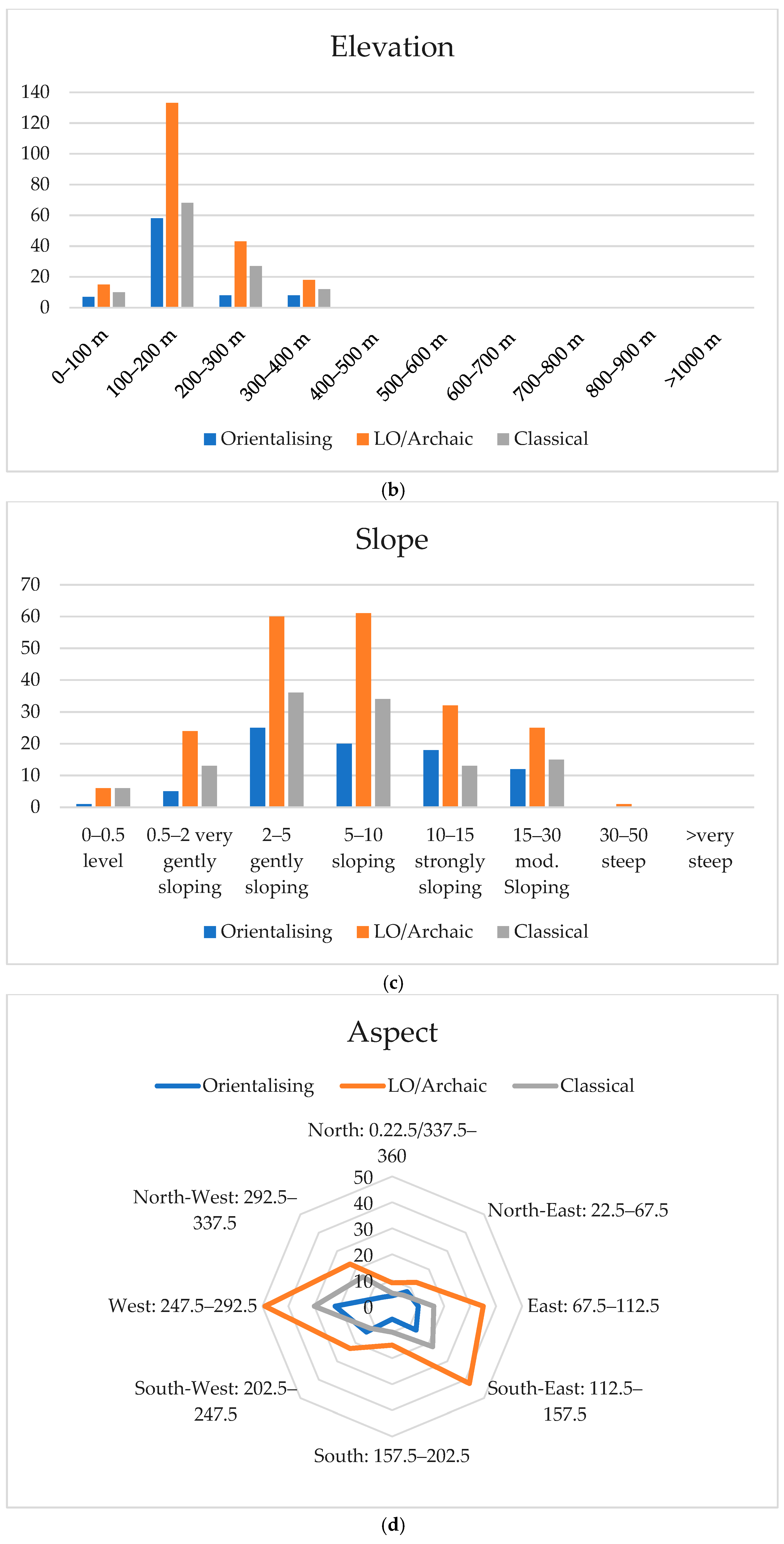
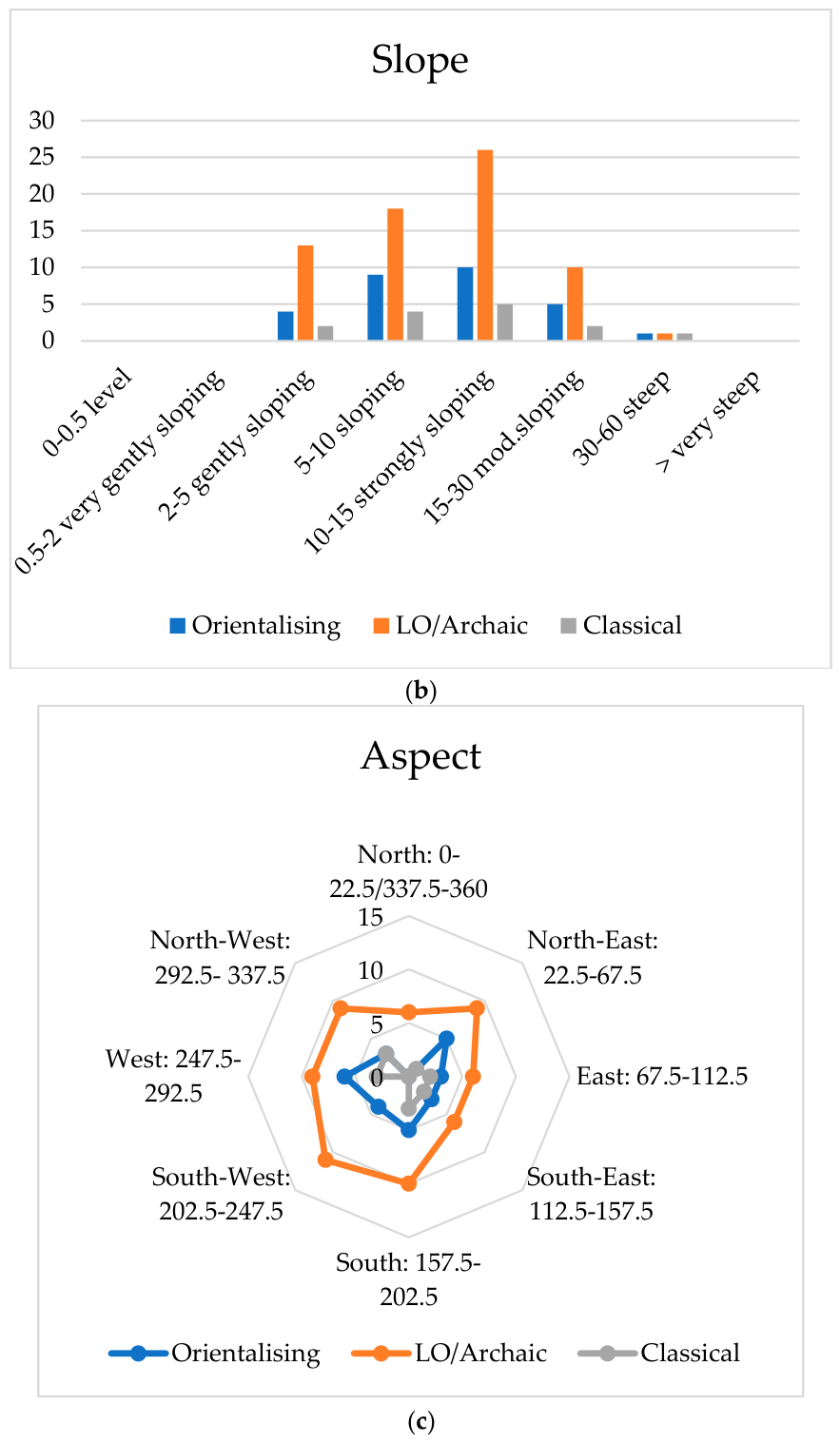
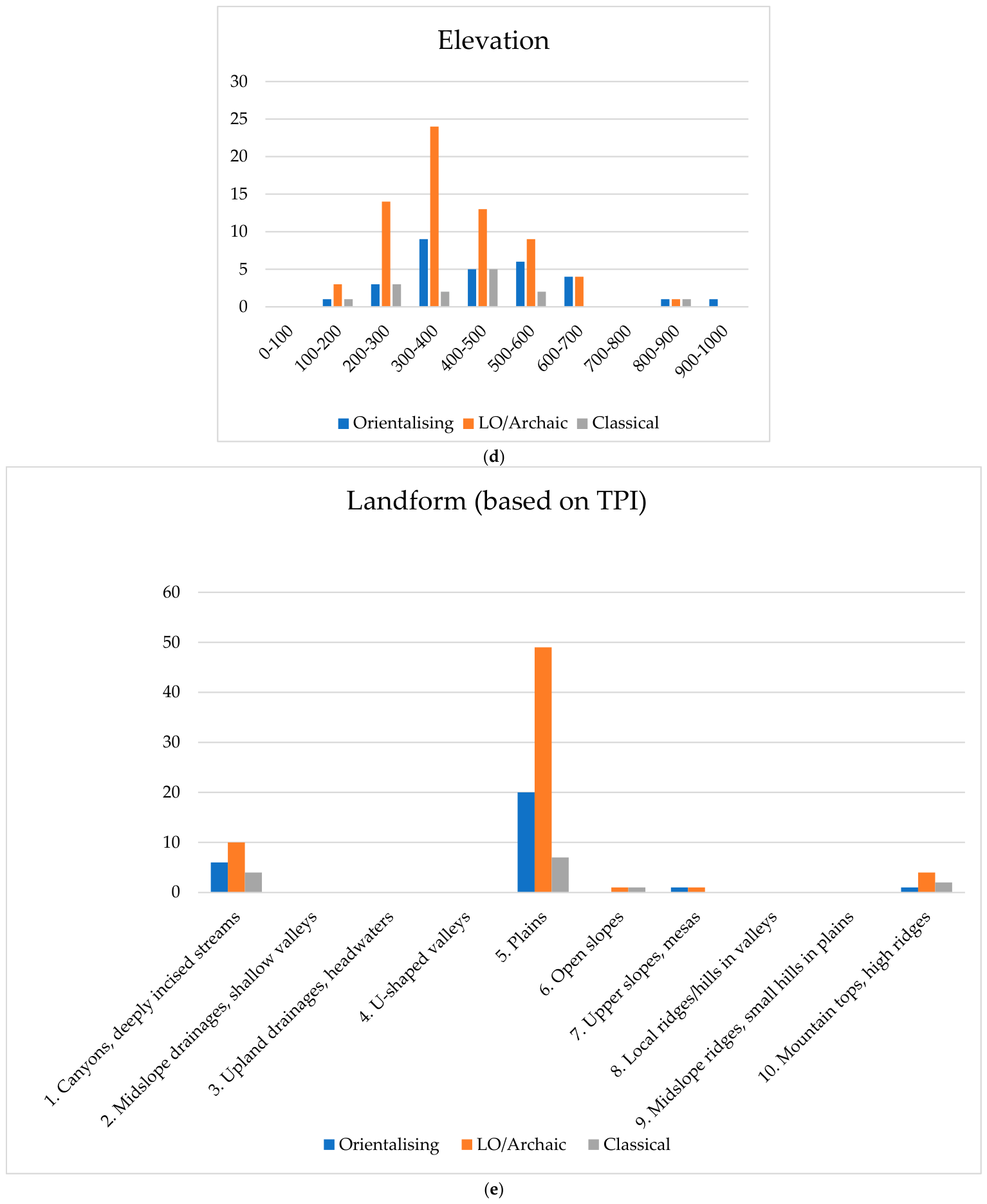
Most of them were in close proximity to riverways (Figure A2), generally within a short walking distance that ensured access to water and avoided areas at risk of flooding. The preferred locations were between roughly 400 and 600 m from waterways, while settlements became progressively rarer beyond this distance. In terms of soils, most sites were positioned on clayey and marly units, which provided excellent agricultural potential, especially for cereals and legumes. A smaller proportion occupied alluvial or colluvial deposits, also suitable for cultivation, suggesting a mixed agricultural strategy. Aspect analysis reveals a preference for east- to southwest-facing slopes, favourable for exposure to sunlight and warmth, particularly for grain cultivation [76,77,78]. Most settlements were located on plains and gently sloping areas, while the steepest terrain was rarely occupied. Elevation patterns indicate a concentration of sites between 300 and 400 m, balancing agricultural productivity with defensibility and drainage.
The same sentiment of autonomy, which further highlights the social fragmentation particularly pronounced in north Etruria, defines the foundation of Murlo, locating it in an empty and marginal landscape (the corridor between lake Bolsena and the Chianti). In fact, the first building phase of the Murlo residential building, called EPOC4, was contemporary to these developments [12]. The choice of location for the settlement was not driven purely out of convenience: despite its ‘emptiness’, this area was highly strategic, with access to the Colline Metallifere area and the fertile Ombrone Valley [79]. A non-elite residential community was installed near the residence, likely occupied by dependent people at the service of the aristocratic family, whose tombs have been found on Poggio Aguzzo [80]. At this stage, the landscape was not settled. However, the importance of the location suggests that its choice was intentional and driven by the awareness of the advantages it would bring to the occupiers [12].
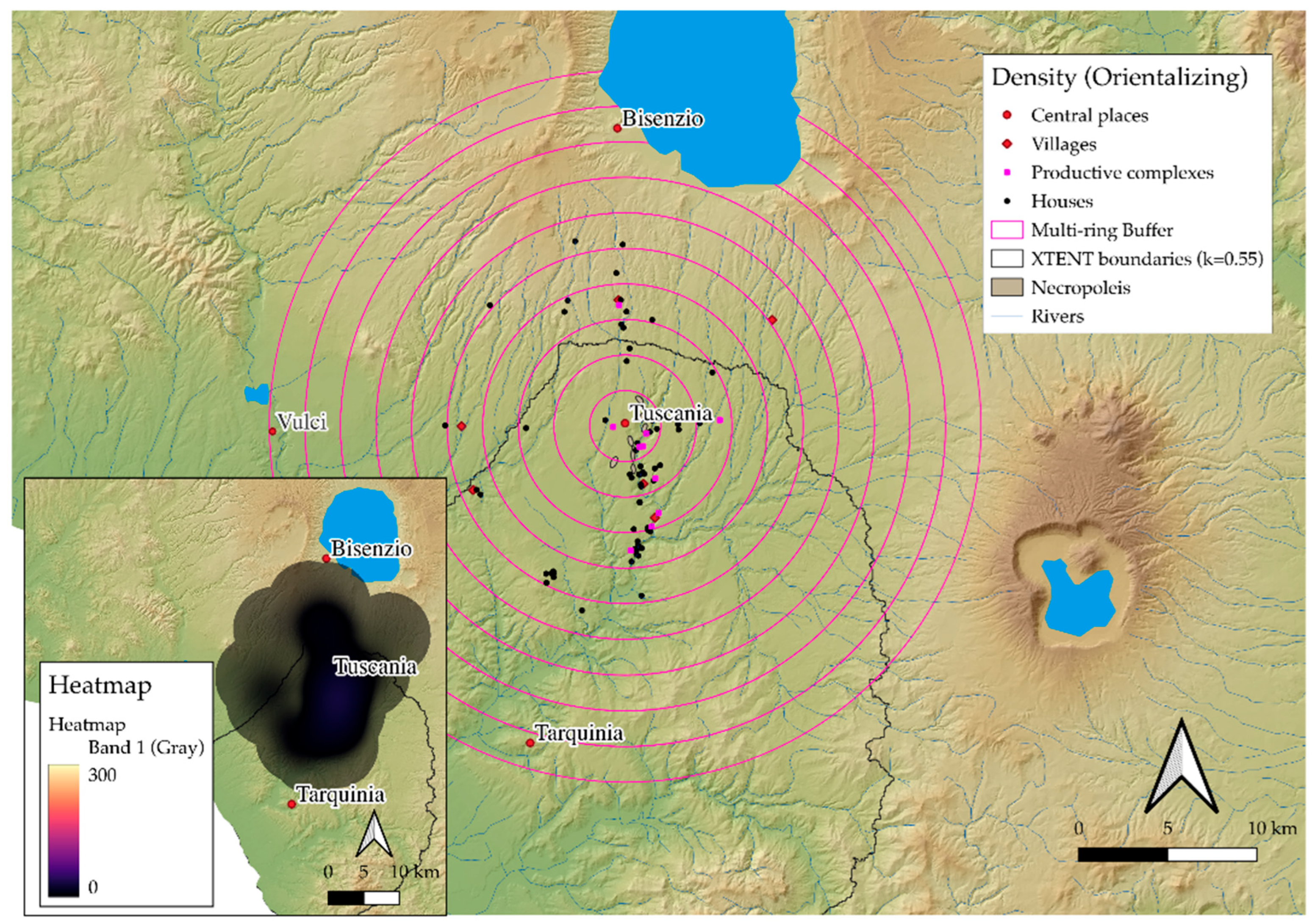
Tuscania’s case was similar at first but diverged early on because of a different strategy adopted by its occupants. While not participating in the larger regional movements that gave origin to Tarquinia4, like those seen in Cerveteri—an almost established urban central place in the Orientalizing process—Tuscania’s inhabitants seem at first to have sought an autonomous development, possibly with the intention of making their settlement an independent nucleated central place. This project was favoured by the optimal position of Tuscania, at the heart of trading networks thanks to the vicinity of the river Marta, connecting it to the coast and to Lake Bolsena [84], and of the most fertile area in the region, rich in volcanic soils. A halo of surrounding rural settlements (Figure 4), mainly houses and productive complexes, with one potential aristocratic residence, defined the Orientalizing phase, confirming the early development of the centre.
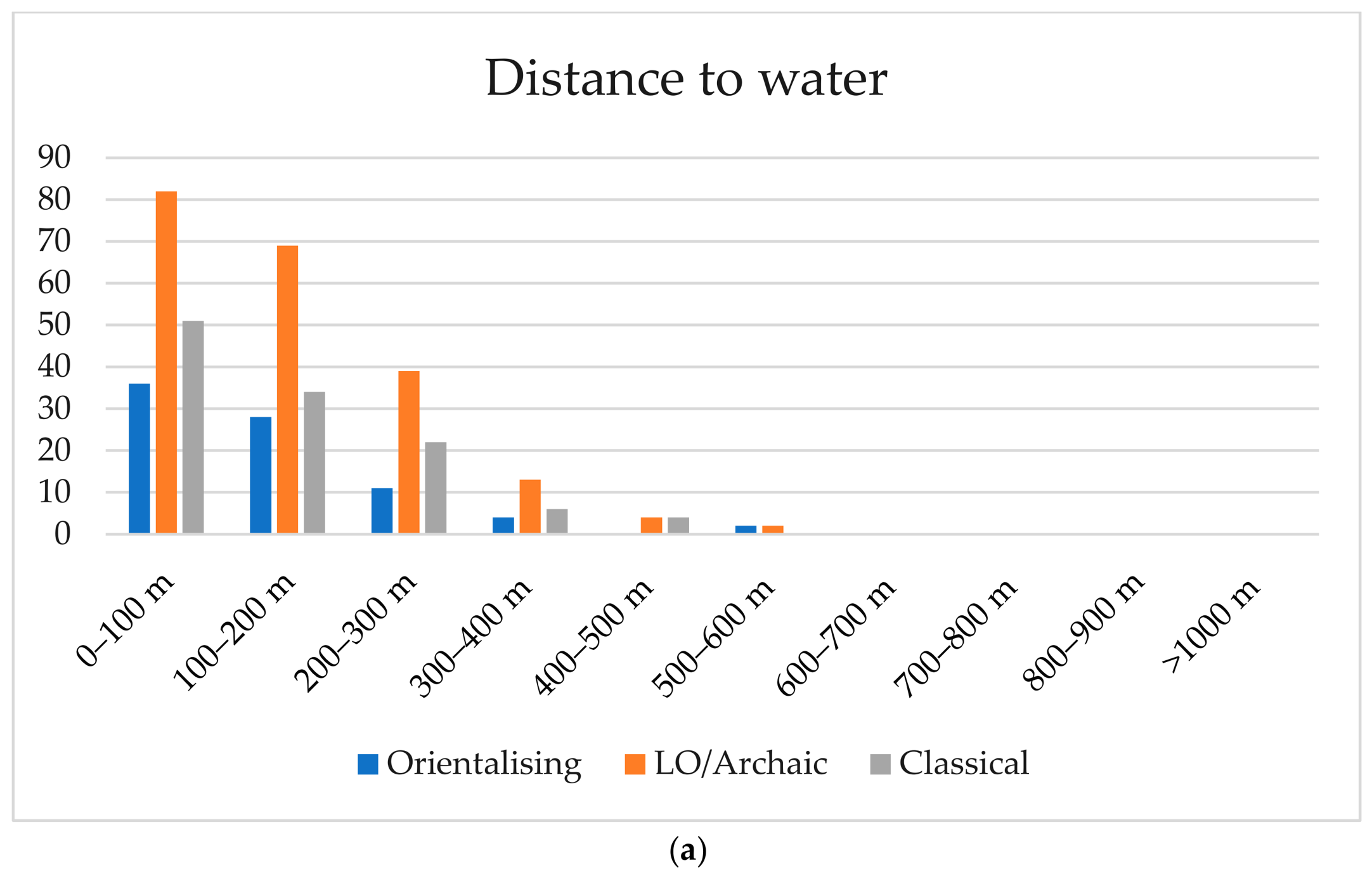
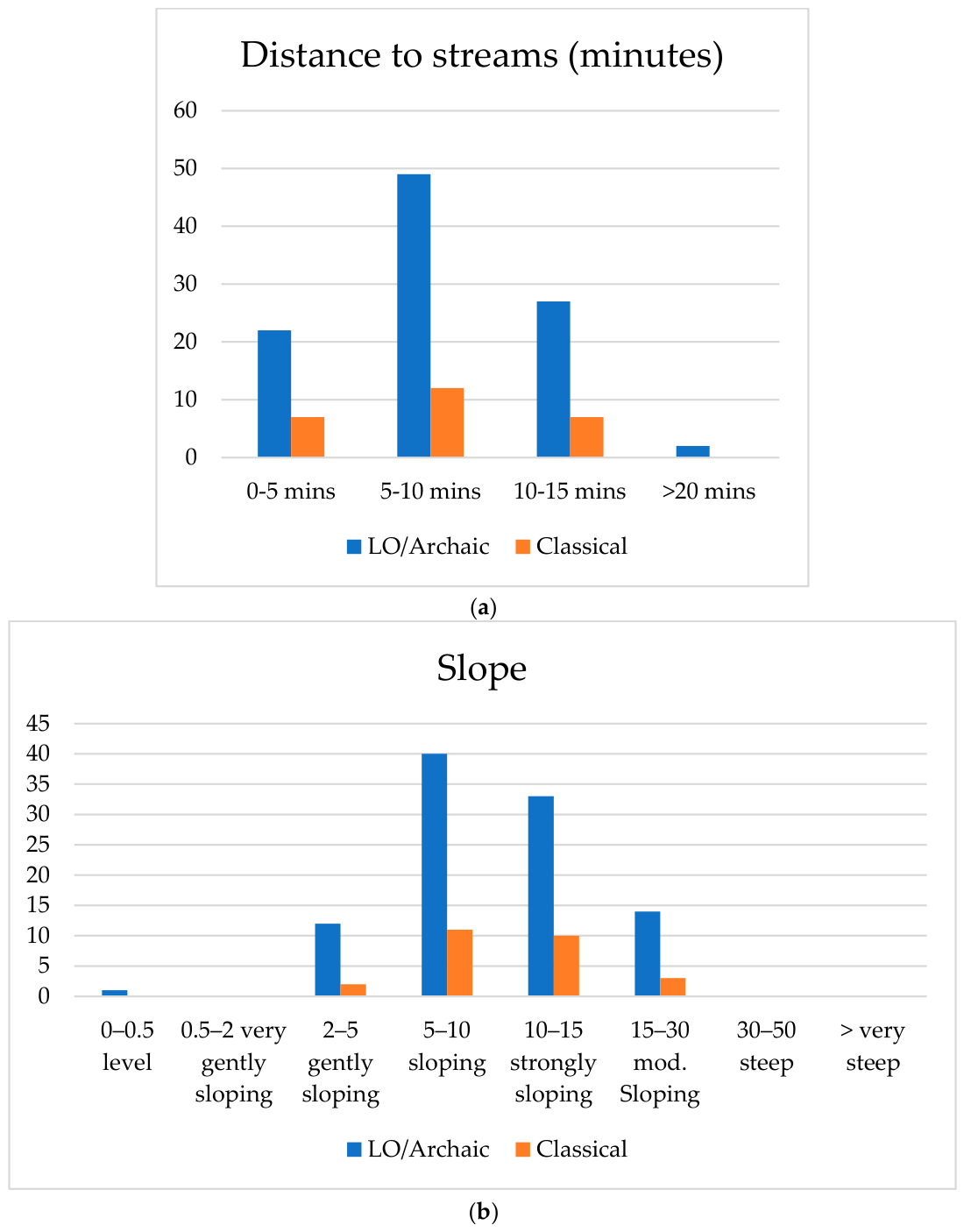
However, its internal and marginal position might have been a disadvantage, since neighbouring polities, like Tarquinia, Vulci and Cerveteri, quickly attracted more people and therefore resources, achieving growth rates difficult to match. The great majority of settlements in the landscape was concentrated within the first 200 m from the riverways (Figure A4). The preferable distance was within the first 100 m; beyond this threshold, the number of sites progressively diminished, and no settlement was recovered more than 600 m away from streams. When converted into walking distance, this pattern becomes even clearer: settlements were generally positioned within a ten-to-fifteen-minute walk from the main rivers, while very few lay further away. No site was located beyond a twenty-minute distance. Such close access to water was evidently a determining factor, not only for domestic use but also for agricultural purposes.
The territory of Tuscania is largely composed of volcanic soils (foids and tephrites) [85], forming the most extensive and fertile part of the area, followed by smaller patches of clays and marls, terraced alluvial deposits, and limestones. With such an abundance of good agricultural land, suitable for both extensive and intensive cultivation, it is unsurprising that the majority of settlements were positioned on these fertile volcanic soils. They occupied terrains with eastern and western exposure. West-facing sites were concentrated along the Marta and its tributaries, while the remainder extended across eastern and southwest-facing slopes, with fewer located on the cooler northern aspects. The preference for the warmer, sunlit slopes is consistent with agricultural and pastoral needs, ensuring longer periods of light and favourable conditions for crop growth. Most settlements were located between 100 and 200 m above sea level, with only a few situated at higher or lower altitudes. As for slope, sites were mainly located on gently sloping and moderately sloping grounds, with fewer on the steepest or completely level areas. Such preferences align with the suitability of gentle slopes for cereal and legume cultivation, while the steeper areas may have been used for arboreal crops such as olives. Topographically, Orientalizing sites were evenly distributed between plains, open slopes, and the edges of canyons or deeply incised streams, with a smaller number located on ridges or hilltops.
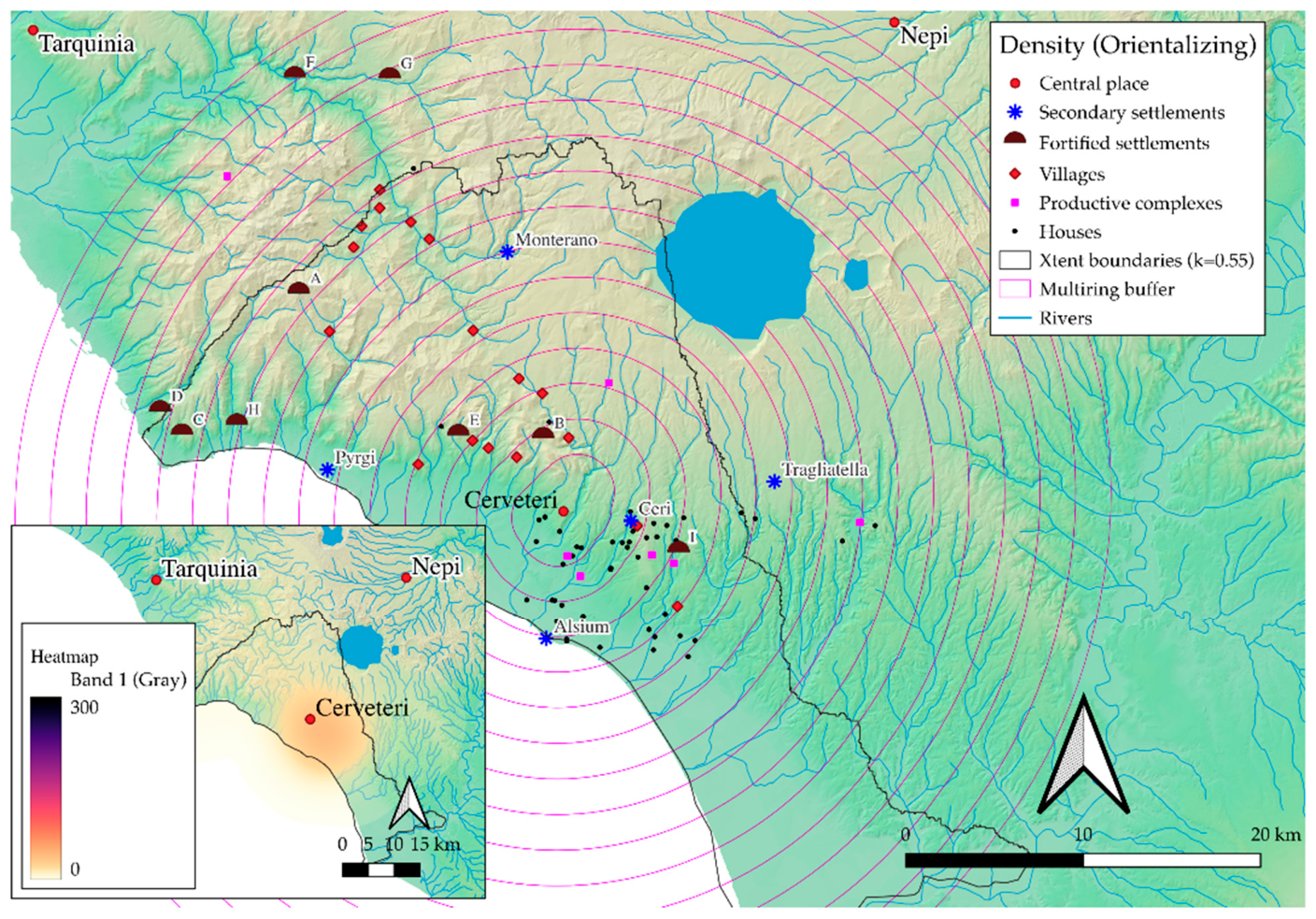
Cerveteri’s nucleation was matched by an immediate reoccupation of the landscape: a scattered pattern of houses and richer productive complexes towards the southeast, not yet as dense as the following period, with limited and distanced nucleated settlements (Ceri, the fortified settlement of Castellaccio, and the frontier centre of Tragliatella); a more nucleated one, with villages and fortified settlements, towards the north compartment of the Tolfa Hills, was supervised by the secondary centre of Monterano [13]. At the same time, on the coast, several ports were founded, with Pyrgi among them. Reoccupation was promoted and carried out by the elites [33], with the physical relocation of these groups and their dependants at those locations represented by the burial mounds that rose in the territory during this period [86,87]. Secondary centres, aside from Ceri, were placed radially from the central place, at the margins of the territory [13]. This landscape reclamation could have been a conscious response of Cerveteri to its position. Stuck between Veii and Tarquinia, and having the physical restraint provided by the sea to the west and the Tiber to its south [9], the centre opted for quick expansion, aimed to claim as much land as possible, with the foundation of secondary centres to stabilise the frontiers [13].
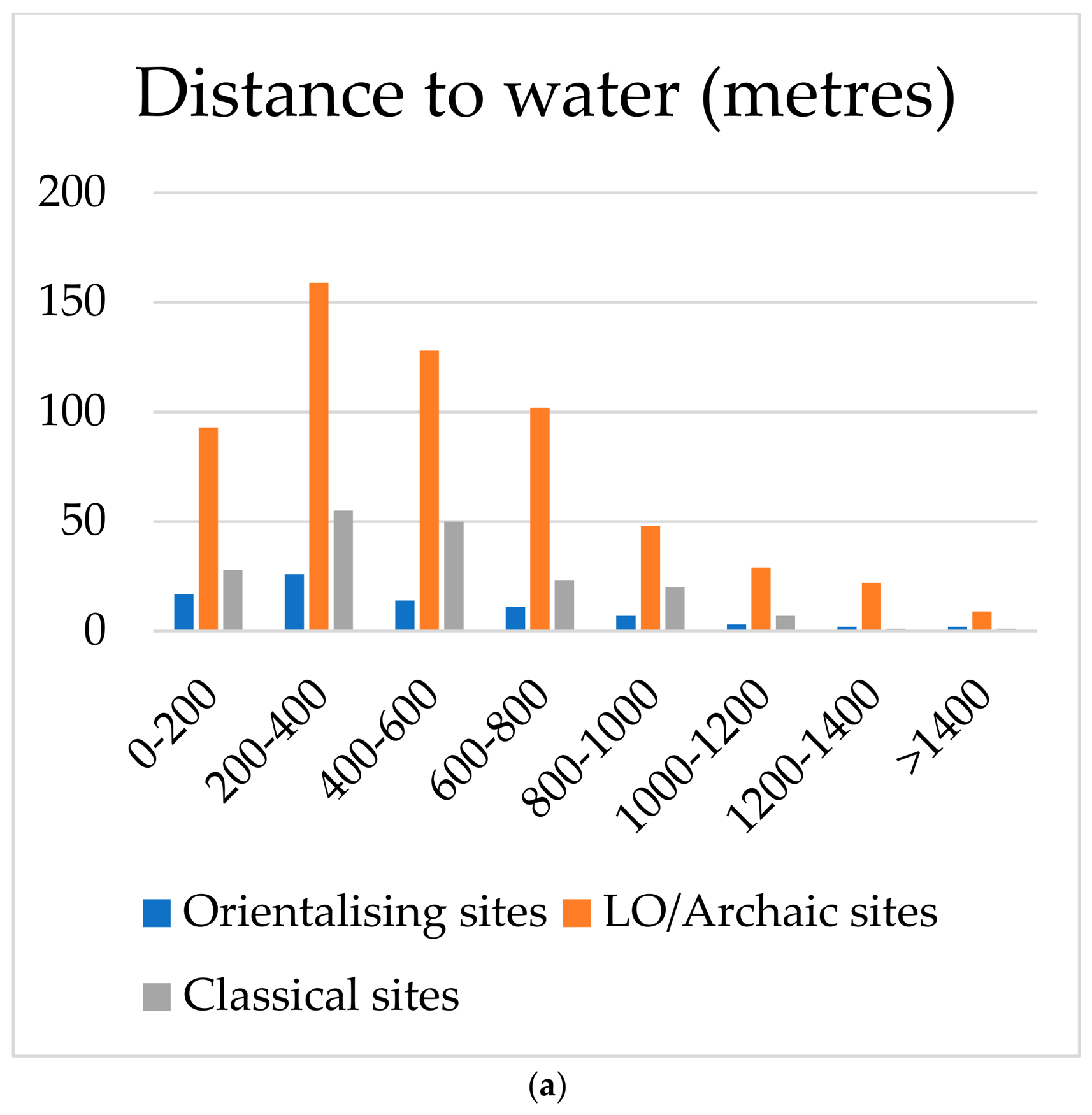
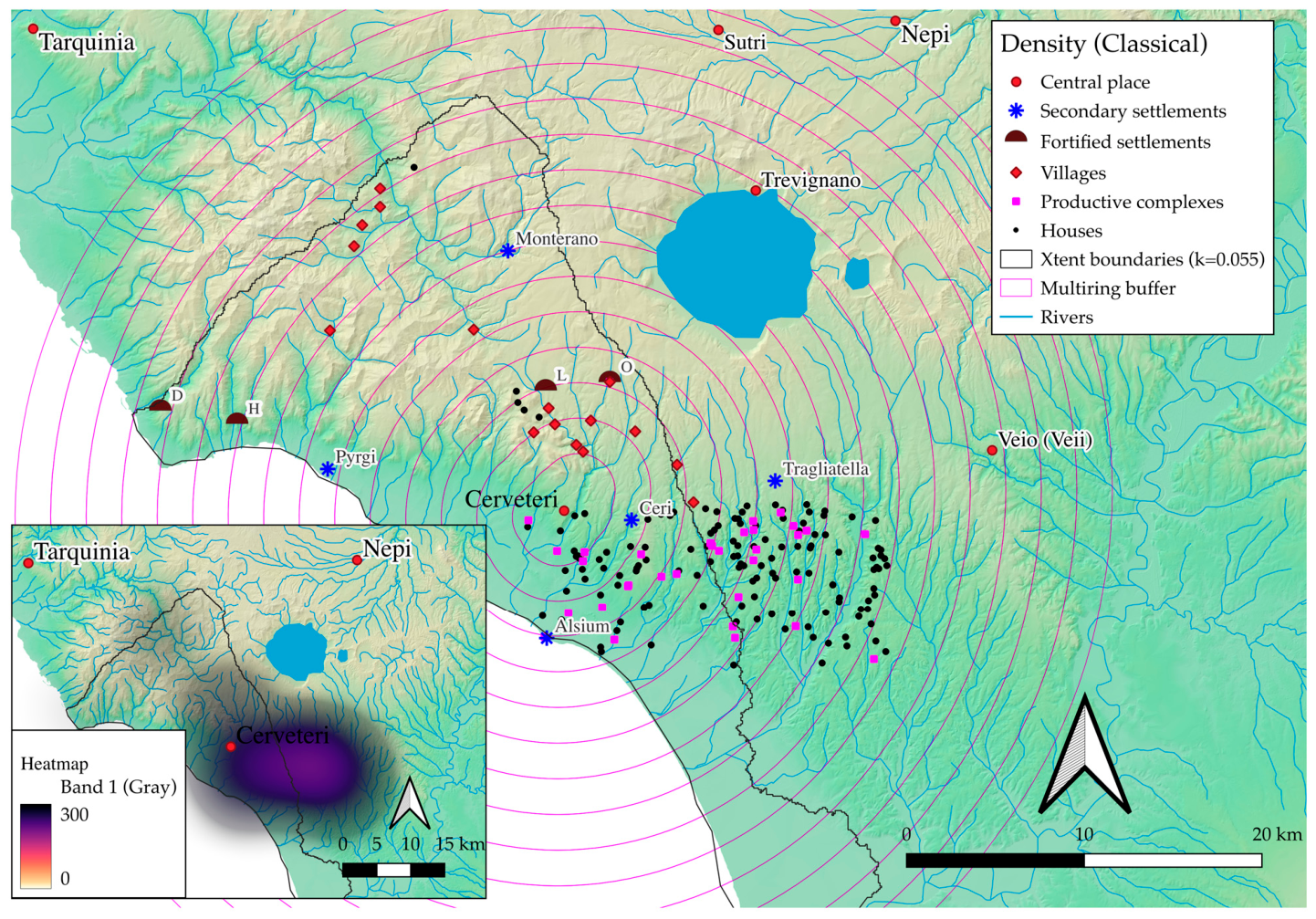
As for the settlement pattern (Figure 5), the majority of sites were located within close proximity to riverways, generally within a few hundred metres from the nearest course. Beyond this distance, numbers gradually decreased, and only a handful of sites were situated farther away, rarely exceeding one kilometre from water sources. The soils on which settlements were established reflect a clear preference for the most fertile types. In fact, the majority of sites were located on the productive tuff soils that characterise South Etruria, followed by those on alluvial and colluvial deposits. Clays were also favoured, whereas limestones were less frequented. These preferences are unsurprising, as volcanic soils are rich in minerals and highly suitable for cultivation and pasture alike [9], similarly to what is found at Tuscania. The combination of fertile soils and easy water access points to a strong agricultural focus already visible at this early stage. In terms of topography (Figure A3), settlements were generally distributed across very gently to moderately sloping areas, avoiding both the steepest and completely flat grounds, on low altitudes (mostly not over 200 m). This choice suggests a balance between accessibility and drainage, typical of early agricultural settlement planning. Aspect data indicate a predominant orientation towards the south and west, consistently avoiding the less sunny northern exposures. Such positioning would have maximised sunlight and warmth, vital for crop growth and habitation comfort. Landform analysis supports this pattern: most settlements were located on plains or open slopes, often in direct relation to agricultural fields, confirming a strong connection between settlement distribution and cultivation zones.

4.2. Archaic

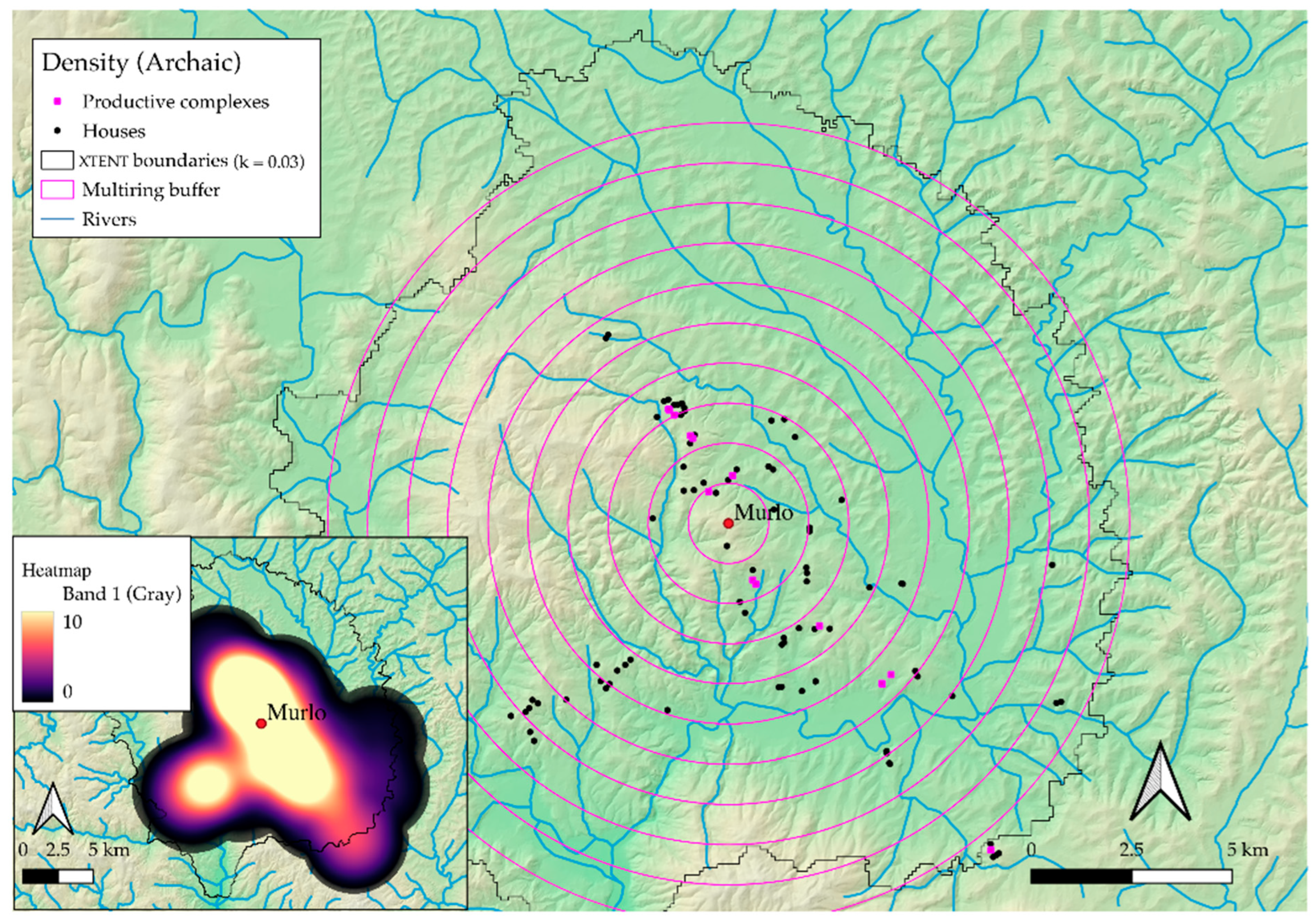
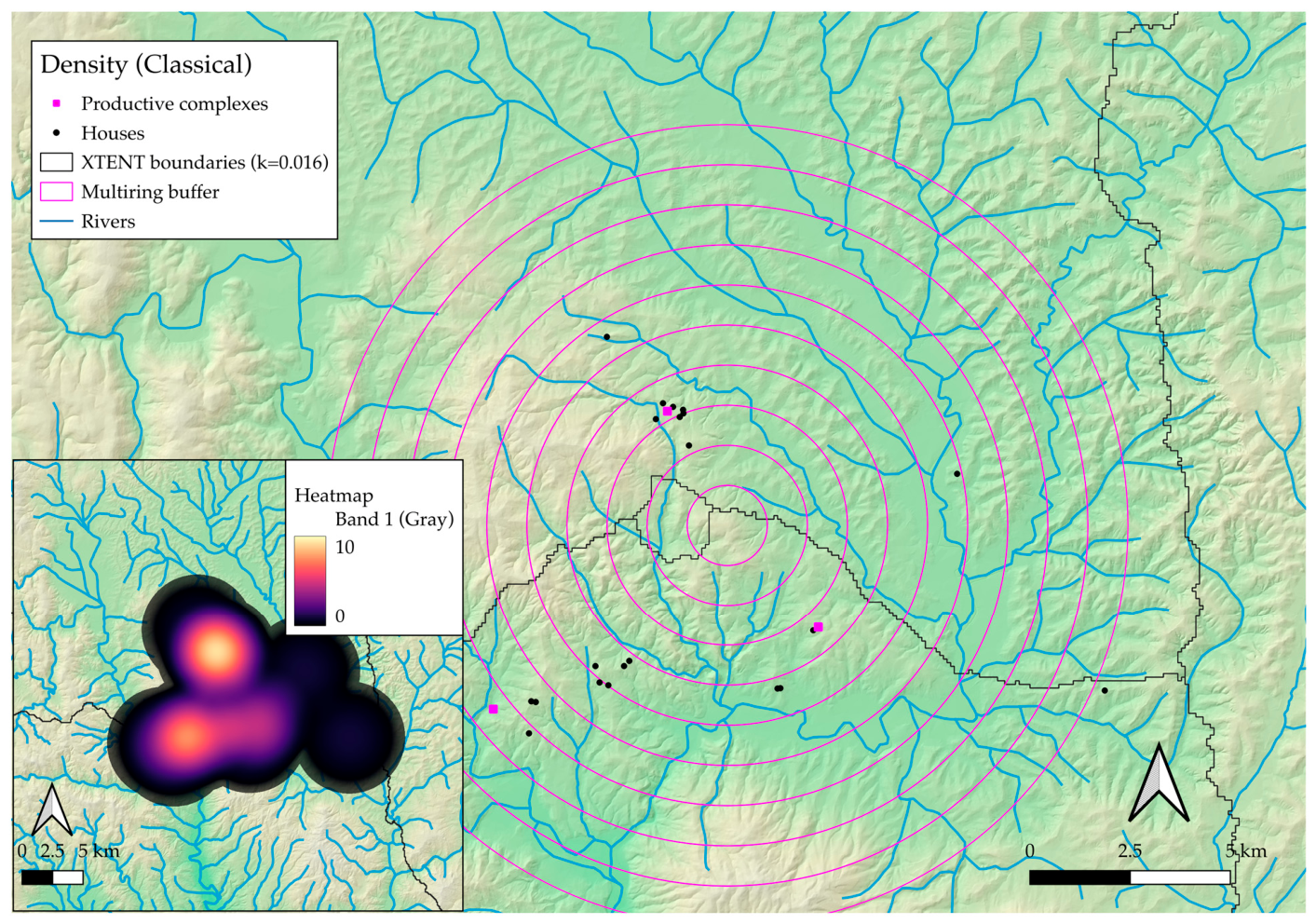
The following period, the Archaic, brought incredible changes. From sporadic and scattered landscape patterns, the territories examined witnessed growth in all site categories. Some were more dramatic than others. Chiusi’s area saw a growth in site density per year of +69% (from 0.27 to 0.49 site density per year). As for Tuscania, a growth of +82.6% of sites was recorded (from 0.75 to 1.37 site density per year). The results from Cerveteri’s territory were much more pronounced [13]. Here, a growth in site density from 0.8 to 3.92 of +390%, is very impressive. Murlo’s landscape filled up, with houses and productive complexes being located in the immediate environs of the residence. The central place and the residence’s occupants tightly controlled the landscape and directly organized the rural infrastructure [12]. This is also shown by the proximity of rural sites located around the residence: the 2 km band multiring buffer, with the residence as the centre, shows that the majority (55 sites) was distributed within the first 4 km, a number that progressively diminished the larger the distance from the residence (Figure 6). From no occupation, 101 settlements developed during this time, with a density of sites per year of 0.6 [12] (Table 2).
Several differences can be noted. While Cerveteri’s, Tuscania’s, and, to some minor degree, Chiusi’s territories display a hierarchy of settlements, in particular with humble houses and wealthier productive complexes demonstrating wealth differences among the population, Murlo’s was much flatter (Figure 6). As noted in [12], houses (87) and productive complexes (13) possessed a humble and highly local material culture, with no imports or transport vessels [19], which sets them aside from what was found in the other territories. This trait can be interpreted as a sign of the strong, ‘absolutistic’ hold of the residence over its territory; power was not delegated but tightly kept in the hands of the residents’ elite occupants, and possibly shared, in limited ways, with the non-elite community residing nearby which may have worked at the workshop complex [11].
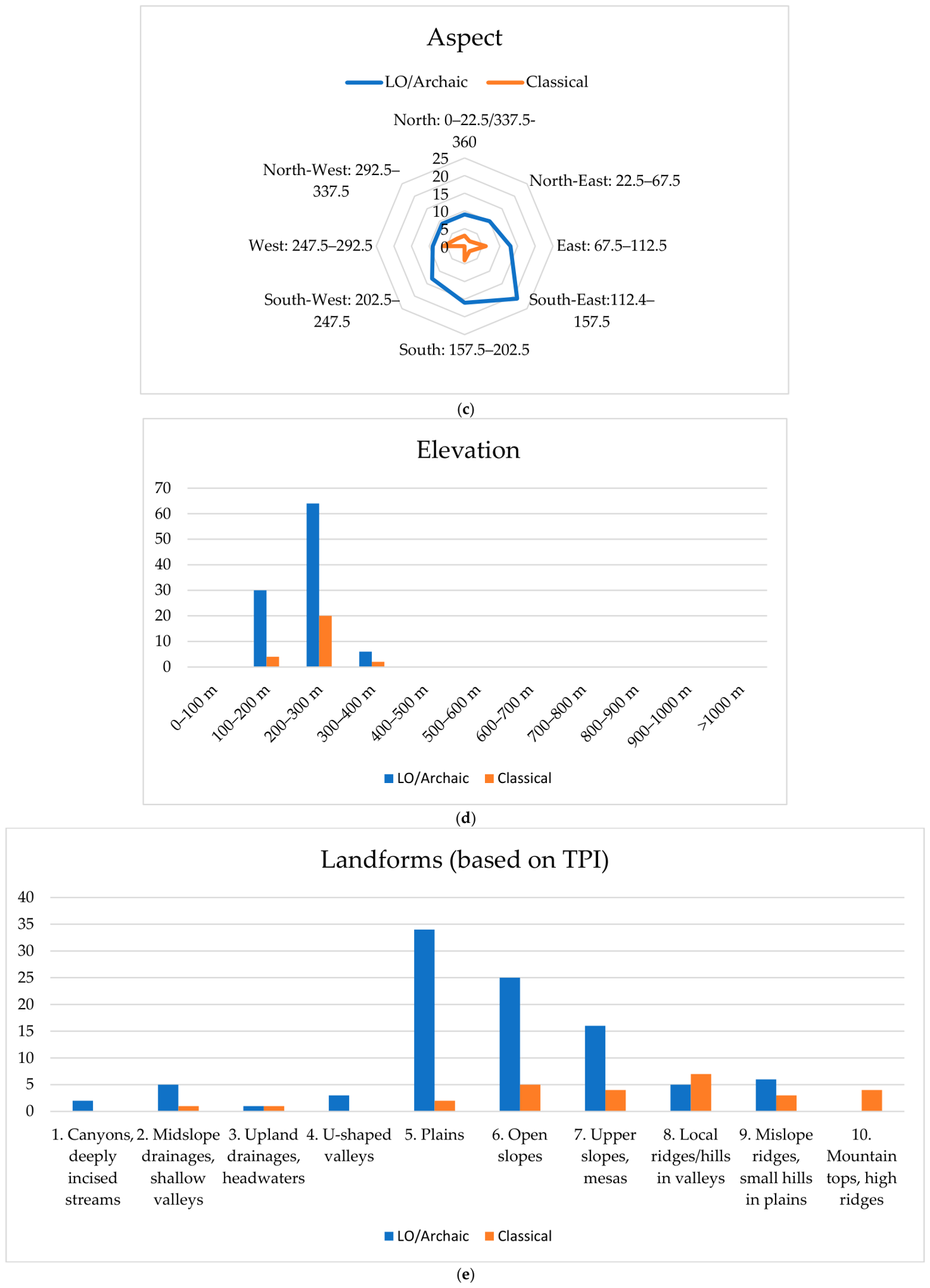
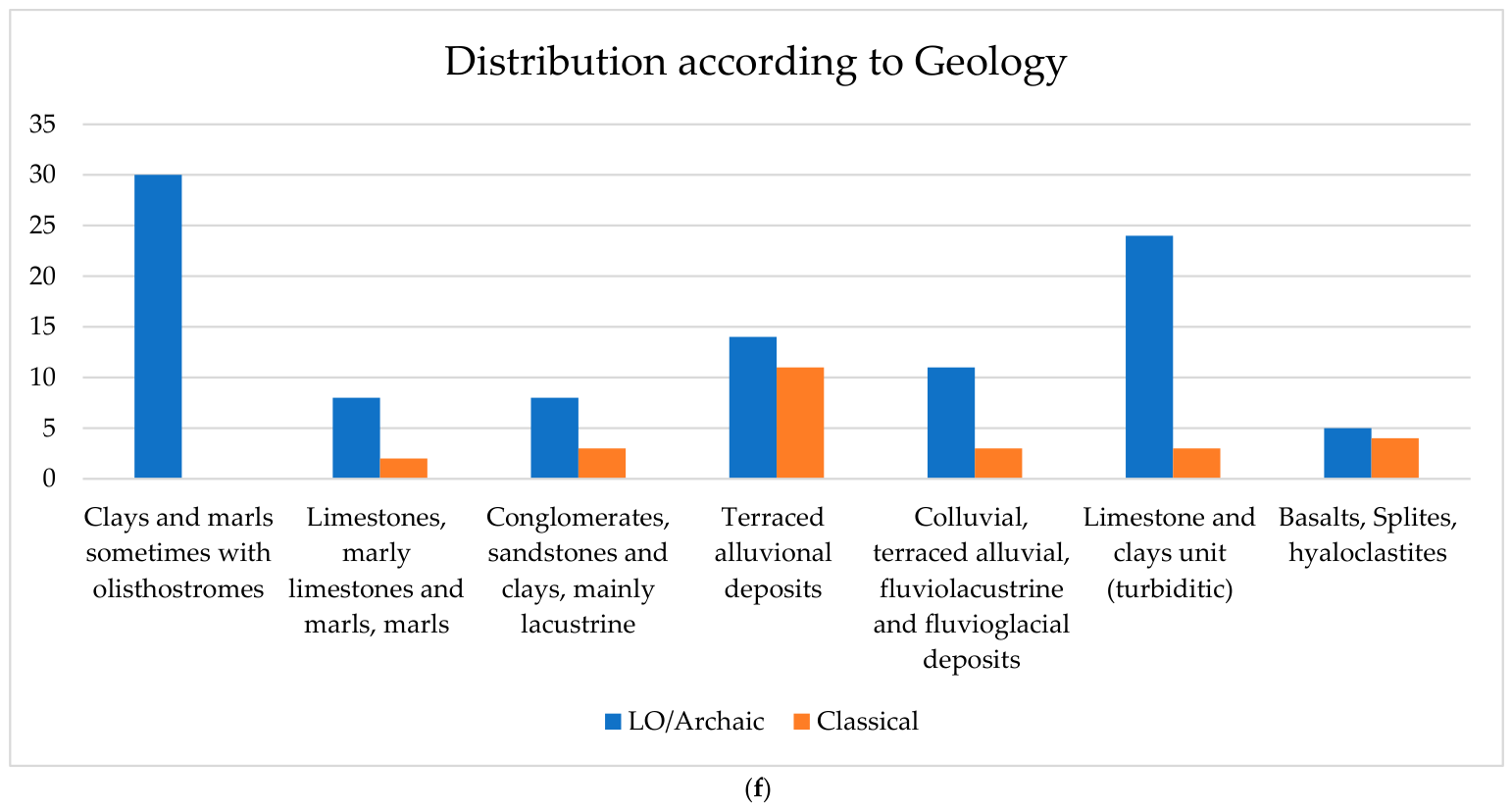
As for the locational analysis (Figure A1), settlements were located on areas that assured diversified resource exploitation and mixed agricultural practices that assured the central place’s self-sufficiency. Most of them were only a short walking distance from streams (within a 10-min walk), occupying gentle slopes to moderately inclined terrain, often south and southeastern facing ones. These orientations, favourable for mixed cultivation, would have supported cereals, legumes, vineyards, and olive groves, ensuring a varied and largely self-sufficient agricultural base. The soils most frequently settled were clays and marls, generally suitable for crops, with additional occupation of more mixed geological areas suitable for vineyards and tree cultivation. Elevation data suggest a preference for low to mid-altitudes, mostly between 200 and 300 m, while landforms show a focus on plains and open slopes, suitable for both habitation and cultivation.
Chiusi’s prosperity during the Archaic period was rooted in the consolidation of its settlement system and in the intensification of rural exploitation. All categories of sites increased, particularly productive complexes and houses, indicating a growing and active rural population (see Figure 3). New fortified settlements such as Città della Pieve, Piazza di Siena, Sinalunga, Cetona, Acquaviva, and Bettolle appeared across the Val di Chiana [88], marking both control and connectivity across the landscape. The countryside flourished, dotted with isolated ‘regal’ burials rich in prestige goods and imports [74,89], while key communication routes, especially those following the Clanis and Ombrone rivers, became vital for trade and cultural exchange [90].
Chiusi’s elites actively invested in the centralisation of artisanal activities, exemplified by the Petriolo complex, which fuelled the production of innovative ceramics such as local bucchero and promoted stylistic exchange with centres like Orvieto and the Faliscan-Capenate area [91,92,93]. The resulting cultural and economic dynamism attracted rural populations and artisans, generating a hierarchical system of settlements ranging from isolated productive complexes to villages and fortified hilltop sites. Rural aristocracies, though increasingly secondary to the urban elites, maintained their prestige through distinctive self-representation, such as the production of stone cinerary statues modelled on Oriental prototypes [94].
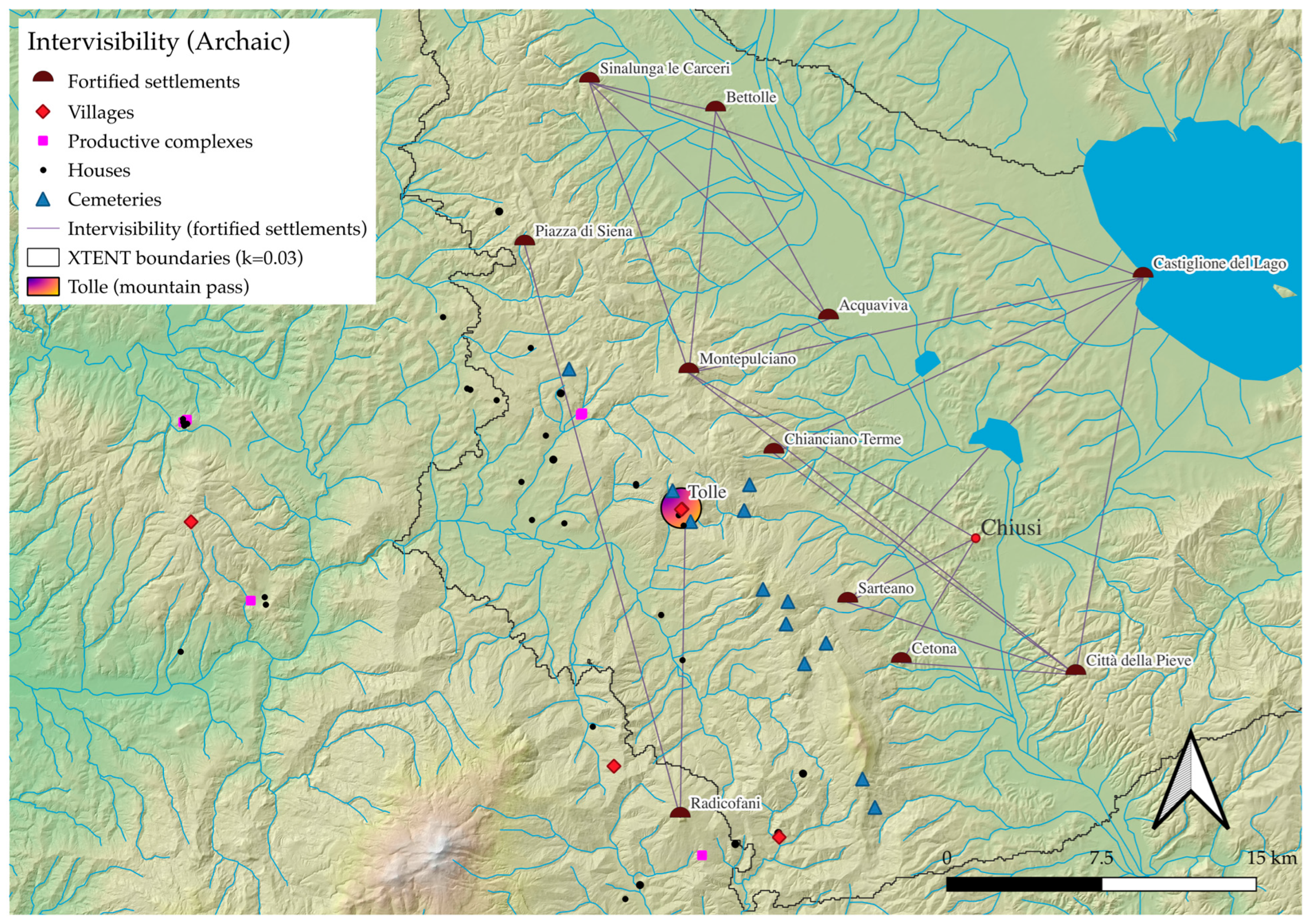
Intervisibility among fortified centres (Figure 7), each overlooking at least one other, with the exception of Chiusi itself, underscored the close ties between these rural elites, whose cooperation remained vital for Chiusi’s stability and prosperity. The pull towards urbanisation and the affirmation of Chiusi as a dominant central place became definitive between the end of the Archaic and the beginning of the Classical period, when the city consolidated its political authority and cultural influence across the northern Etruscan landscape.
Settlement distribution remained similar to the previous period (Figure A2), with a continuing preference for proximity to streams and rivers, again mostly within the 400–600 m range. This suggests continuity in the strategies for access to water and the avoidance of flood-prone areas. Clayey and marly soils remained the most frequently occupied, confirming the agricultural suitability of these deposits, while the occupation of colluvial and alluvial soils increased slightly. These zones would have supported a combination of extensive cultivation and more intensive crops such as vines and olives. Aspect data show a broader range of orientations, though south- and southwest-facing slopes were still predominant, supporting productive mixed farming. Topographically, most settlements occupied plains and open slopes with gentle-to-moderate inclines, suitable for ploughing and habitation. Sites tended to concentrate at altitudes between 200 and 400 m, with very few beyond 500 m. The overall distribution reflects a mature and stable rural system, based on cereal cultivation and mixed agriculture, with smaller fortified centres acting as local organisers of the landscape.
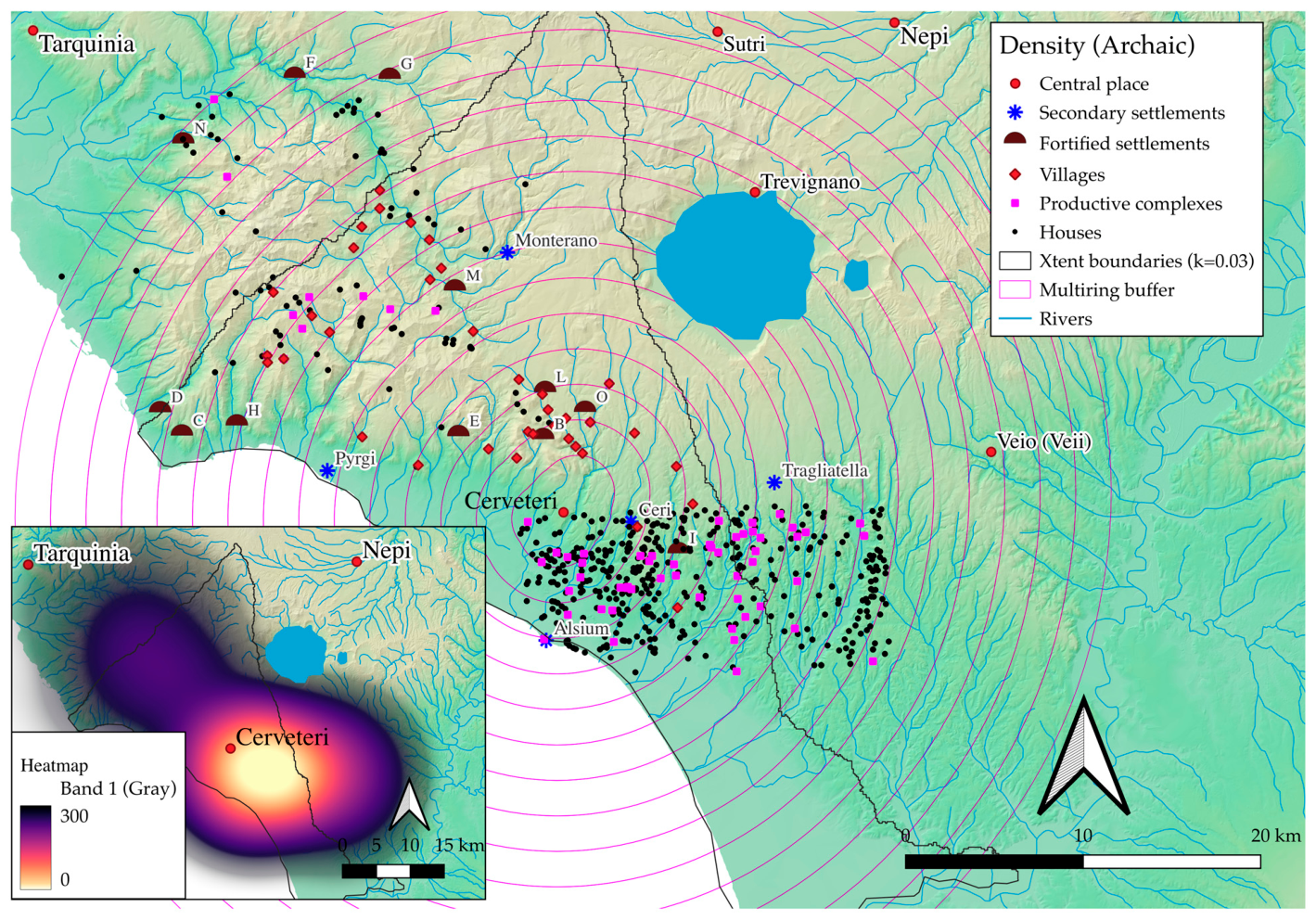
As noted in [13], Cerveteri’s wealth largely depended on its maritime authority, sustained, however, by maximisation of rural exploitation. This is suggested by the massive increase in settlements in all categories, much more pronounced than in other areas, with a greater amount of larger and wealthier productive complexes, which likely coordinated the activities of the dwellers of the humbler houses [13]. Cerveteri’s wider landscape was much more densely occupied, with the presence of these richer productive complexes and moderately wealthy houses [33]. This shows the involvement of a great portion of the rural population in wider networks of distribution [13], in a similar way to what is found in Tuscania’s territory and, in a more limited way, Chiusi’s. The differences highlighted in Cerveteri for the previous period, between the organisation of the southeastern and northern districts, were maintained. In the first district, rural people tended to prefer single houses, not far from one another, creating a dense settlement pattern particularly in the immediate vicinities of nucleated centres and significant natural features, like Cerveteri itself, Tragliatella5 or the boundary provided by the river Arrone. The regularly spaced richer productive complexes [33] were located to facilitate production. This dense settlement arrangement could have also been motivated by the fertility of this area compared to the rest of Cerveteri’s territory (Figure 8).
A more ‘militaristic’ pattern defined the mountainous areas of the Ceriti Hills and Tolfa/Allumiere region. Villages, on super-elevated hilltops, and fortified settlements, where elites resided, continued to be the preferred settling system in the fuzzy northern boundary. Despite the generally low productivity of the area, the strategic importance of the region is further highlighted by the good visibility index obtained from the fortified settlements through viewshed analysis. Both of the frontiers were sacralised by the presence of sanctuaries on both sides (Tragliatella, Punta della Vipera, Bagni di Stigliano, etc.) [13].
The locational pattern slightly changed. The number of sites increased overall, and settlement distribution became more evenly spread across the landscape. The preferred distance from riverways expanded, with many sites now located slightly farther from the immediate riverbanks. This shift likely reflects important developments in agricultural management and land exploitation. During this phase, the construction of cuniculi represents a key innovation [96]. These underground channels were used to drain marshlands and irrigate dry areas, thereby transforming the agricultural potential of the countryside. Because of such developments, settlements were no longer bound strictly to the immediate vicinity of rivers. Instead, they were more evenly distributed across the territory, while still remaining, for the most part, within reasonable distance from watercourses. This technological and organisational advancement mirrors the broader transformation of south Etruscan society, as primate cities such as Cerveteri began to optimise their control over the countryside and expand agricultural production [31,83]. The preference for volcanic and alluvial/colluvial soils remained pronounced, as these continued to represent the most fertile and productive terrains. However, there was also a greater presence of settlements on limestone soils, particularly within the Tolfa Hills district. Although less favourable for extensive agriculture, limestones provided suitable conditions for olive groves and other tree crops, as well as for grazing [97] (Section 4). This suggests a diversification of agricultural practices and perhaps a degree of regional specialisation in crop production and resource use. The modest increase in the use of clayey soils may also relate to technological improvements such as the adoption of the iron plough, which allowed for more effective cultivation of harder terrains. Topographically (Figure A3), sites continued to cluster on gently and moderately sloping areas, maintaining a preference for cultivable yet well-drained terrain. Fortified sites were the main exceptions, occasionally located on steeper ground for strategic reasons. As before, the majority of settlements faced south and west, continuing the trend towards warmer and sunnier exposures, while northern slopes were generally avoided. Most sites were located again at low altitudes, with very few located over 200 m. Landform data show a strong concentration of settlements on plains and low-lying areas, particularly within the survey zones of Enei and Tartara. These were largely represented by humble rural houses, positioned within or close to cultivated fields, underlining the agricultural character of the settlement system and the close relationship between habitation and production zones.
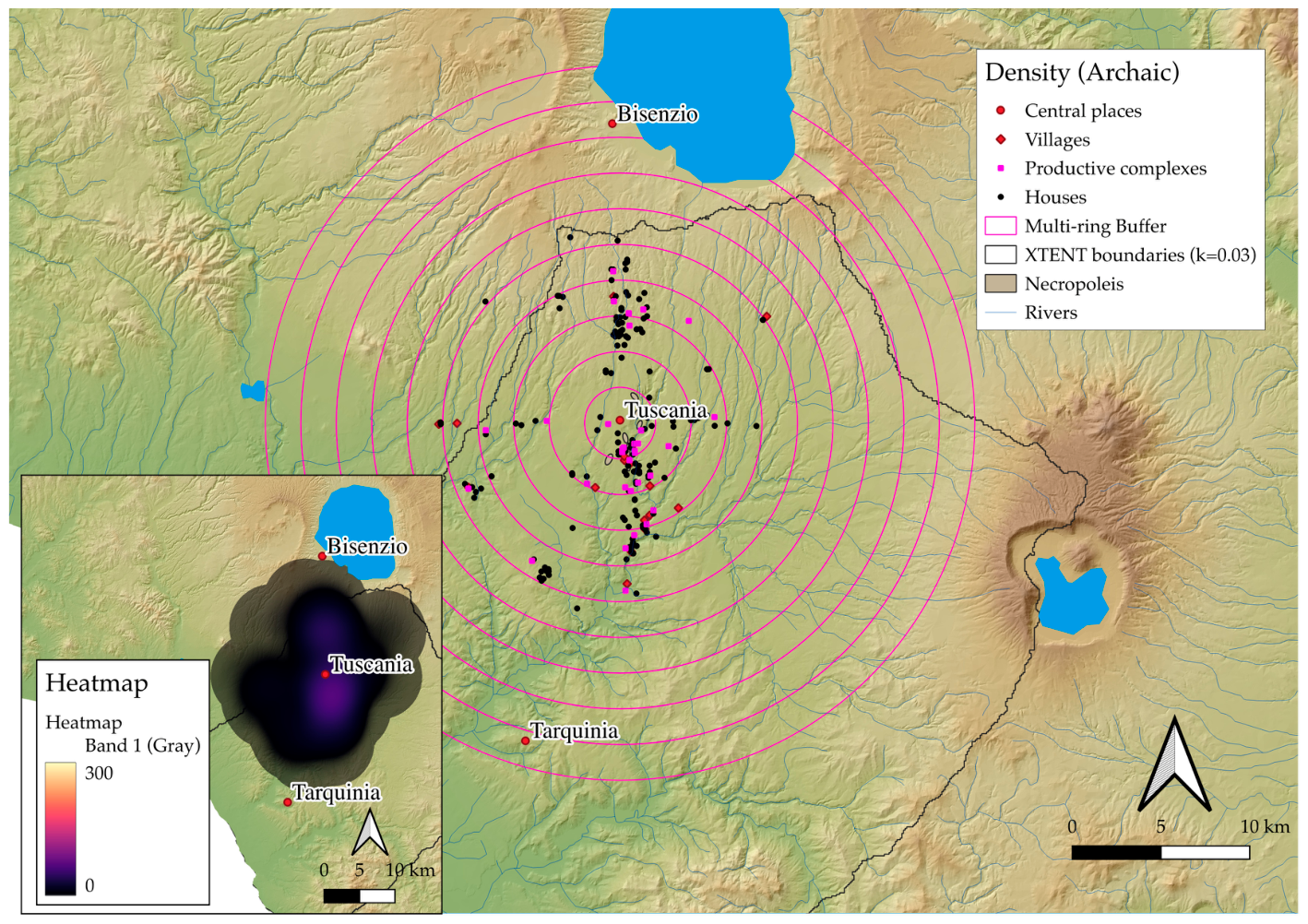
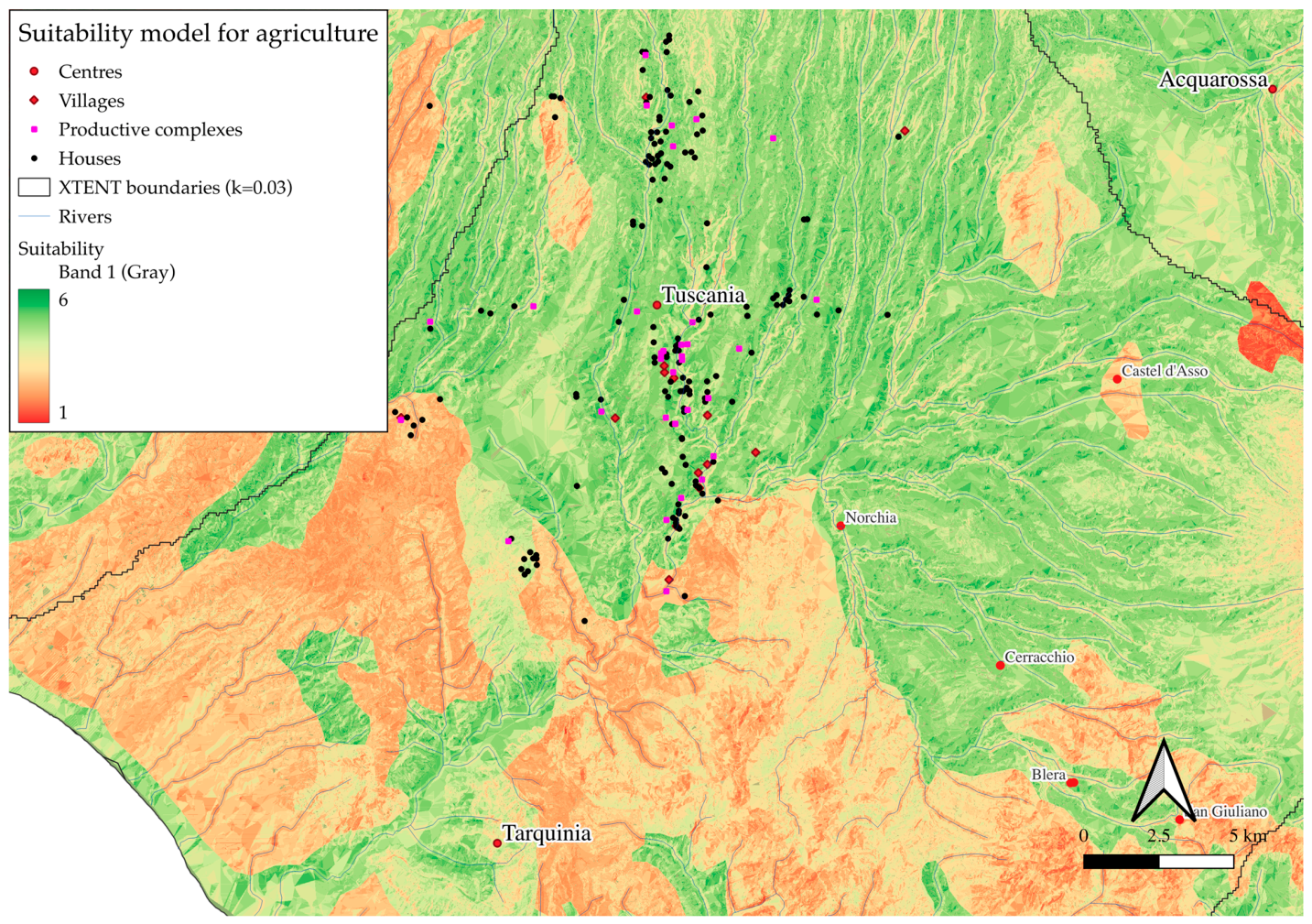
Tuscania continued to thrive because of its favourable position and ties to the metropole (Figure 9). Looking at Tarquinia’s broader territory, it is interesting to see that most of its secondary and fortified settlements, highlighted in Perego 2001 [98], were located on, or as lookouts of, the most fertile areas6 at the peripheries (Figure 10).
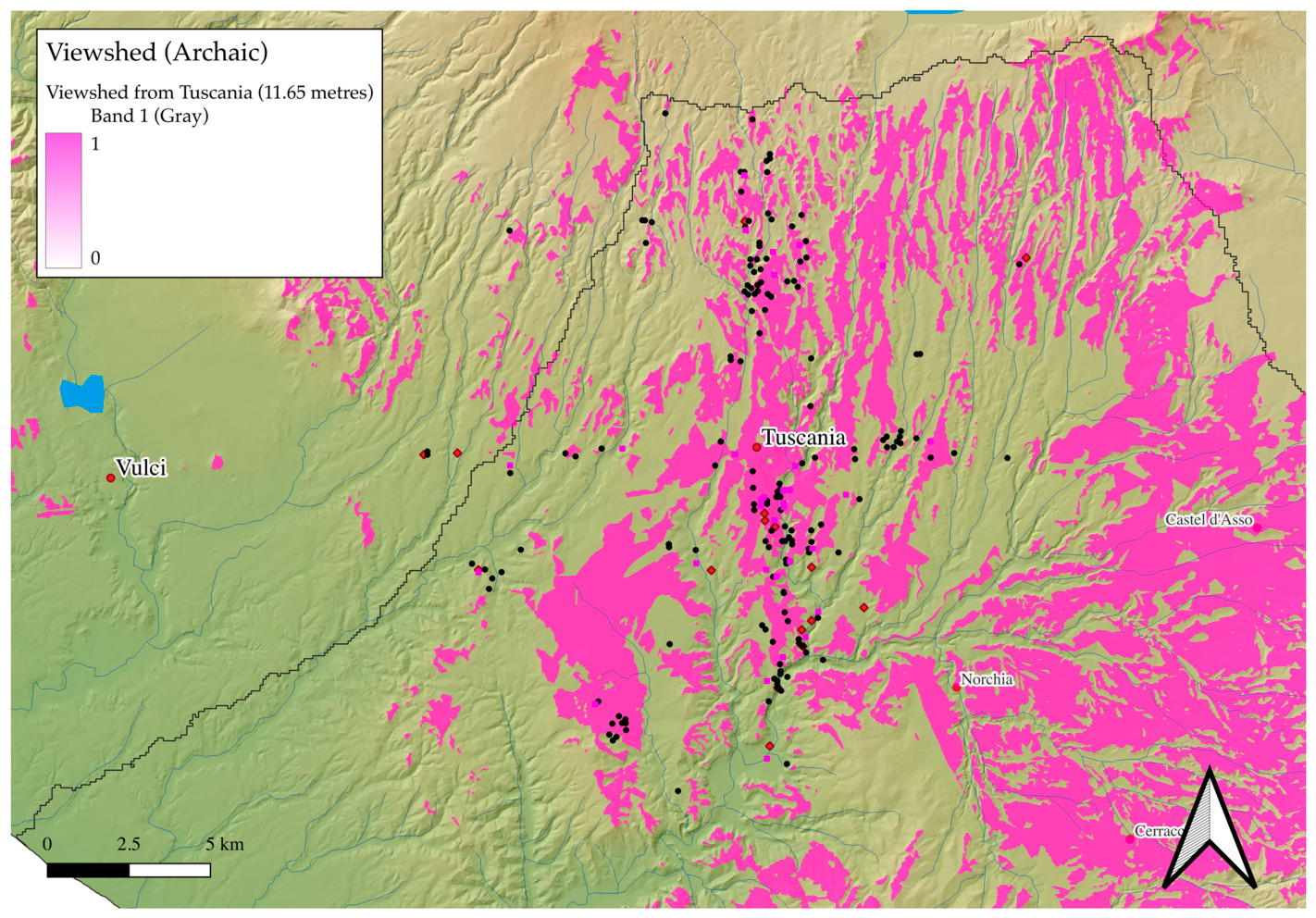
Tarquinia itself had a domineering view facing both the sea and its agricultural basin. Tuscania’s settlement pattern can be compared to the southeastern sector of Cerveteri. A dense occupation prevalently of houses and productive complexes shows a disparity in the wealth of its rural dwellers. Materials found at these sites can be traced back to Tarquinia and Cerveteri, confirming the market town nature of Tuscania, in charge of redistributing goods of prime importance coming from primate centres (tiles, storage wares and so on) [48]. In turn, the majority of the rural population concentrated on suitable areas for multiple crops, especially for grains, legumes and vineyards, with a particular focus on the Marta River [11]. The importance of the river is highlighted by its visibility from the centre (Figure 11) and the placing of rural settlements (in particular towards the south).
Proximity to water remained a primary determinant of settlement location, with most sites still positioned within easy access to streams (Figure A4). The occupation of volcanic soils continued to dominate, with only a few sites established on clays, marls, or alluvial terrains. Such a pattern reflects the continuing emphasis on highly fertile and cultivable land. The preference for south- to southwest-facing slopes became even more evident in this period. These exposures, warmer and well lit, offered optimal conditions for agriculture, particularly for cereals, while less favourable northern aspects continued to be generally avoided. Settlement altitudes largely mirrored those of the previous period, with most sites occupying the low-to-mid-altitude bands. Higher elevations were rarely chosen, and lower ones only occasionally. Sites were generally placed on gently sloping or moderately sloping terrain, while both very flat and very steep slopes were less frequently occupied. These choices once again reflect practical considerations: gentle slopes are ideal for extensive agriculture and legumes, while the steeper ones would have supported tree crops such as olives. Plains appear to have become slightly more preferred during this phase, followed by open slopes and broader valleys. Other geomorphological settings, such as upper slopes, ridges, and incised streams, continued to host fewer settlements.

4.3. Classical

The final period, the Classical, was defined by a decrease in the trends of all settlement categories. This decrease, however, was more dramatic in some areas. For example, Poggio Civitate saw a −74% decrease in settlements. From 0.6, the site density per year dropped to 0.17 (−71%). The drop coincided with the final destruction of the residence [12] (Table 2). Even more dramatic results were recorded in Chiusi’s case: from 0.49 density of sites per year to 0.1 (−77%). Slightly lower values were found for Cerveteri (−68%, from 3.92 sites per year to 1.24) [13] (Table 2). The least affected territory was Tuscania, even if it still underwent the same phenomenon (−44.5%, from 1.37 to 0.76 sites per year): these values are comparable to Tuscania’s Orientalizing phase (0.75 sites per year).
Different motivations and causes provoked these changes. For Poggio Civitate, the reason behind the depopulation of the territory, as said earlier in this section, is to be seen in Chiusi’s actions, and in particular the centralising pull promoted by the centre, which at the time acquired a hegemonic role in the area [11,12]. The completion of the transition to an urbanised power can be seen in the collapse of the rural settlement pattern, in particular of the nucleated settlements that had defined the area since the beginning of the 7th century BCE. As stated in [12], Poggio Civitate functioned both as an economic and a bureaucratic centre. The surveys proved that the study area was centred around an aristocratic residence that controlled its local population and restricted its development and access to wealth, capitalising on its economic production [12]. By identifying this site as a political bastion, it is possible to link it to broader regional powers, as the aristocrats possibly came from a neighbouring urban centre: Chiusi7. This site shows how urbanisation processes “could be restricted by local elites, who sought to extract wealth from their population, but also by regional powers, who tolerated more independent aristocratic dominance in order to maintain their control of the region against other regional powers, with the prospect of eventually eliminating it” [12]. The depopulation of the area (Figure 12) can be interpreted as a sign of Chiusi’s achieved control over the region, after the residence’s destruction, resulting in the dismantling of the border, as shown by the abandonment of the Archaic settlement of Poggio Civitella [12,98,100]. A border was reinstated when the political scene was destabilised in the course of the 4th century BCE by Rome’s expansionistic ambitions [101,102].
Chiusi became one of the most powerful cities in the 5th century BCE, as is proved by its role in Etruscan expansion up north in the Po Valley, through the Val di Chiana, as well as its hegemonic role in the Etruscan league of cities. As a polyfocal centre, much smaller in comparison to southern Etruscan centres, Chiusi’s motivations behind the deactivation of a portion of the nucleated settlements, seats for elite families, might have been related to the assertion of its authority over them, considering its late emergence and therefore inherent fragility as a primate centre. Its newfound role prompted a radical reorganisation of the landscape that favoured the eastern compartment of its territory rather than the western, hence the depopulation phenomenon highlighted by site trends. A few nucleated settlements were spared and in fact continued to grow (Chianciano, Castelluccio di Pienza, Sarteano, Castiglione del Lago and Città della Pieve in particular), while the cemeteries at Borghetto and Tolle continued to be frequented [75,103,104].
The sparse settlement pattern (see Figure 2) emerging from the examination of the Carta Archeologica surveys might confirm one of Livy’s accounts (Livy, V, 36). The ancient author reported that the Gauls, who had descended at the request of one of Chiusi’s aristocrats, had sought permission to occupy a portion of the city’s territory, as a great amount was not cultivated or used [105]. A great amount of the settlements recorded were positioned on marginally suitable land, perhaps to dedicate the already limited fertile zones exclusively to cultivation. In general, they were not positioned far from them, and overall, it is likely that the area was exploited for more suitable cash crops. A large gap in the archaeological record is the Val di Chiana, the most fertile area, not included in the survey areas. However, the foundation of settlements along the valley in the Archaic period, like Bettolle, Acquaviva, etc. [88], would indicate the agricultural exploitation of the valley parallel to its strategic importance as a communication artery. Chiusi, in fact, was tied commercially to the Adriatic Sea and the Padania plain [106]. Therefore, site trends could drastically change if this area was to be investigated.
During the Classical period, site numbers declined (see Figure 2) but the general locational preferences persisted. Settlements continued to favour the same mid-range distance from waterways, though a few isolated examples, like Radicofani, occupied higher or more marginal terrain (Figure A2). There was, however, a shift in soil preference towards lighter, sandy alluvial and colluvial deposits, indicating a tendency towards more intensively managed or easily cultivable soils. Orientation patterns also changed slightly, with more sites facing west and northwest, suggesting either adaptation to local topography or diversification of crop management. Plains and open slopes remained dominant as settlement locations, though there was an increased use of upper slopes compared to earlier phases, possibly reflecting the reorganisation of the landscape following the contraction of the main settlement system. Most sites were located between 300 and 500 m in altitude, corresponding to accessible but still agriculturally productive land.
In summary, Classical occupation reflects a continuity in general settlement preferences, like proximity to water, moderate slopes, and good soils, but with signs of reorganisation and reduced density, likely tied to broader demographic and economic shifts.
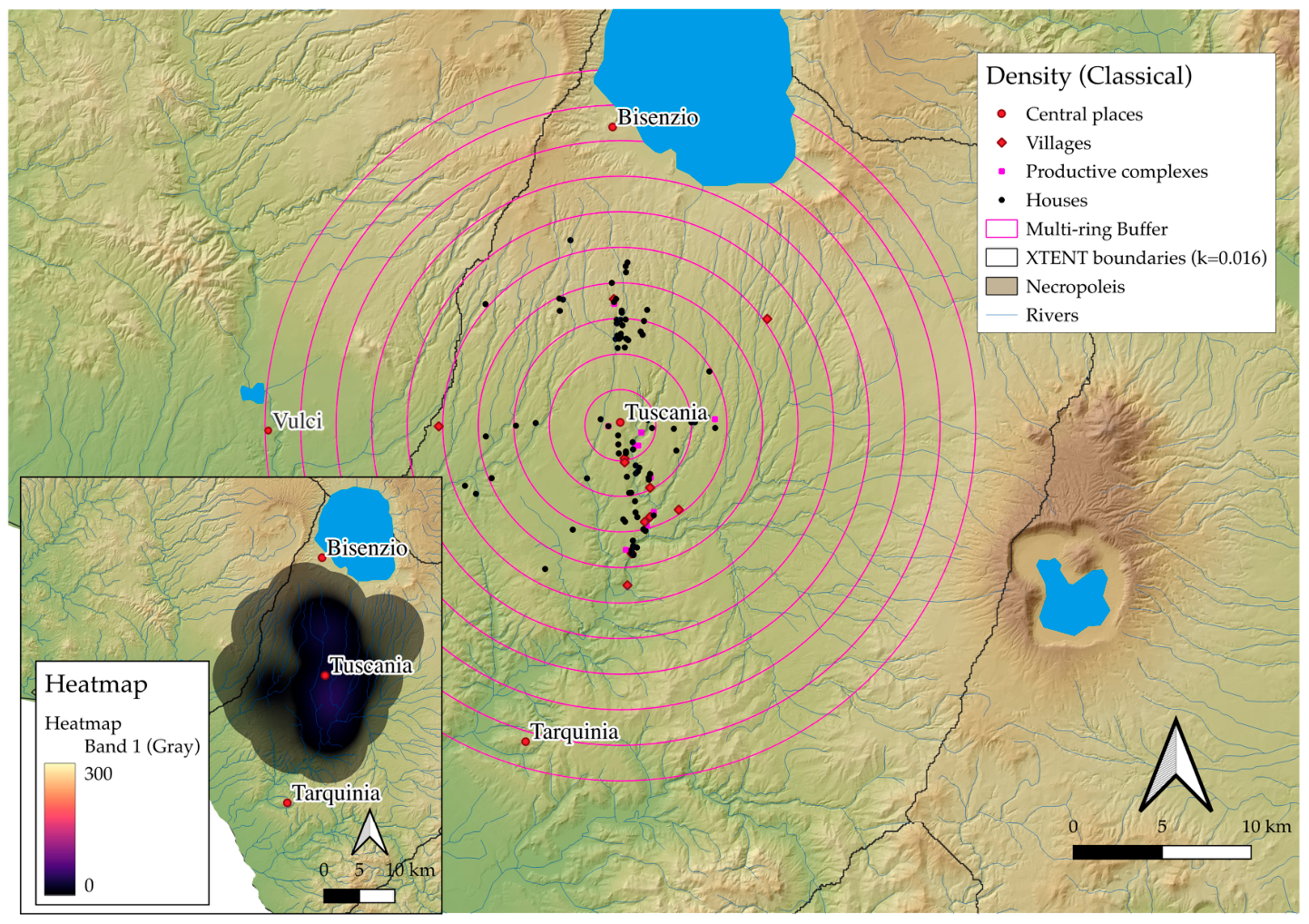
Different reasons, on the other hand, affected the settlement patterns in South Etruria. Tuscania’s losses were not as great as in other areas. Tarquinia’s broader territory, in fact, did not undergo the same shrinkage as Cerveteri’s, and the importance of other secondary settlements increased during the Classical period. In particular, the southern borders came to include the Tolfa Hills at the expense of Cerveteri. It is possible that the reason behind the slight decrease in rural sites around Tuscania was related to the flourishing of other secondary settlements like Musarna, Castel d’Asso and Norchia, which may attracted people from the surroundings [11]. This happened at the expense of the Tolfa Hills sector [84]. After a period of limited grave goods, in fact, Tuscania’s funerary areas once again started displaying conspicuous amounts of prestige materials, on a par with the other secondary settlements, especially in the latter part of the 4th century BCE [83]. Tuscania’s settlement pattern overall followed the previous Archaic trajectory (Figure 13): the Marta continued to be the focus, as most of the settlements, of all categories, continued to be distributed along this axis.
Latitudinal axes, on the other hand, were even more scarcely occupied, which could be a result, as mentioned, of the emergence just a few kilometres away of Castel d’Asso. During the Classical period, despite the general decline in the number of sites, locational tendencies remained consistent (Figure A4). Settlements continued to cluster within close reach of riverways, rarely extending beyond a few hundred metres from the nearest stream. A concentration on the most fertile volcanic soils became even more marked, while other soil types saw reduced occupation. This suggests a tendency toward greater agricultural intensification and a focus on the best arable land. The preference for east- to southwest-facing slopes persisted, reflecting the continuing importance of solar exposure for cultivation. Similarly, settlements remained concentrated on the same altitude band as before, with fewer located at higher or lower elevations. Sites continued to favour gently and moderately sloping terrain, while both very steep and completely level areas were rarely chosen. These slopes were particularly suitable for mixed cultivation strategies, combining cereals and legumes with olive or vine cultivation. Plains and open slopes remained the preferred settings, while valleys, ridges, and upper slopes were less frequently occupied.
Overall, the Classical period shows a consolidation of earlier settlement preferences, with communities maintaining close access to water and fertile volcanic soils, moderate slopes, low to mid-altitudes, and favourable solar exposure, factors that ensured both agricultural productivity and continuity within the Tuscanian landscape.
The real changes in Tarquinia’s territory occurred in the Hellenistic period, when a lower number of settlements is recorded, and which likely impacted Tuscania’s territory as well. Despite Gravisca’s persistence, the only settlements clearly assigned to the period are the settlements at Fontanile dell’Olmo and on the fertile plateau of the Argento area dominating the coastal plains towards the Arrone, with Roman influences becoming progressively clearer. In fact, the development of fortified settlements in the Tolfa Hills sector suggests the climate of uncertainty dominating South Etruria, in a period of open conflict with Rome. This is further highlighted by the location of numerous sanctuaries in the region [98].
What we see in Cerveteri broadly diverges from Tuscania’s and Tarquinia’s situation of prosperity in the Classical period (Figure 14).
It is certain that the loss at Cumae in 474 BCE had consequences in Cerveteri’s territory, even if they might not have been as disastrous as previously thought8. The decrease in settlement numbers was the result of a political choice made by Cerveteri [13]. The monitoring of both northern and southeastern frontiers did not change, and despite the more limited number of rural settlements, these continued, on the southeast portion of the territory, to be positioned on highly productive soils ensuring the city’s prosperity. On the contrary, the Tolfa Hills were heavily depopulated, with only seven sites detected. Losing supremacy on the sea, Cerveteri opted for an accentuated centralisation of power, maintaining only those necessary fortified and secondary settlements and sacrificing the rest. Such ‘involution’, interpreted as a period of crisis [13] often underlined and motivated by a general scarcity of wealth displayed in tombs, was probably conveyed and encouraged by the aristocracy at the head of the metropole’s hierarchy. Wealth was purposely displayed in a communal and public manner. Perhaps, the loss of a primary spot in maritime power and supremacy against Syracuse and the Greeks might have been a motivator to invest in the renovation of the metropole as well as the famous sanctuary in Pyrgi, as the pillaged wealth found there in 384 BCE might suggest. The need to focus on internal affairs is also demonstrated by the fact that there was no significant foundation of new settlements during the Classical period. The sites fell in number, but they were mostly not of new foundation, having phases of occupation in previous periods [13]. Sites spared from this contraction were ones located on the most fertile soils, marking the continuous importance of the products of the countryside for the feeding of urban populations. A complete transformation and restructuring of the landscape took place only during the Hellenistic period, when new settlements were founded, among them being the deduction of colonies (Castrum Novum, Pyrgi, Alsium, and Fregenae, for example) and the appearance of large villas [33], as a consequence of Roman action.
The overall settlement pattern remained largely consistent with that of the preceding phase (Figure A3). Most sites continued to be located within easy access to rivers, although the dependence on immediate proximity diminished thanks to the established irrigation and drainage networks.
The preference for fertile volcanic soils became even more marked, with these terrains now hosting the majority of sites. Alluvial and colluvial soils continued to be favoured as well, while occupation on clays and limestones declined. This growing focus on the most productive lands likely reflects a stage of agricultural intensification and a consolidation of rural land use strategies.
Slope preferences remained stable, with settlements generally positioned on gently or moderately sloping grounds. These areas provided both good drainage and easy cultivation, supporting a mix of cereals, legumes, and tree crops. As in previous periods, south- and west-facing slopes were preferred for their favourable sunlight exposure, essential for both crops and habitation. Most Classical sites were located on plains or open slopes, maintaining the long-established connection between rural habitation and farmland. This stable pattern reflects a mature, well-organised agricultural landscape, where technological and infrastructural developments allowed for the efficient exploitation of the most suitable and fertile areas of the Cerveteri countryside.

5. Conclusions

The analyses done revealed different ways of territorial management. Cerveteri represented the ‘conventional’ south Etruscan city: large, with a rich hinterland that sustained it and generated enough surplus to assert itself as a maritime power on the Tyrrhenian Sea [13]. Chiusi, by contrast, was a north Etruscan city with a ‘non-conventional’ and polyfocal layout. Its emergence was slower and more complex, shaped by competition with neighbouring centres, some of which eventually became included under its influence, while others opposed it and were eventually destroyed because of such opposition, like Poggio Civitate, which embodied an opposing aristocratic model: a solitary elite residence in a marginal area, possibly native to Chiusi but deliberately resisting urban participation [12]. Comparable patterns can be seen in Acquarossa and Bisenzio, which were likewise subdued as urban centres consolidated. Tuscania, meanwhile, represented a middle-sized interior marketplace, autonomous in its earliest stages but later dependent on Tarquinia, rising at the junction of north and South Etruria and favoured by fertile lands.
Through these case studies, different expressions of urbanisation and rural management emerged. Cerveteri and Tuscania were characterised by early and rapid rural expansion from the Orientalizing period onwards [13], while Chiusi’s growth was delayed and more cautious. Poggio Civitate’s countryside only filled in later, once the central place had been established as a regional power. Rural hierarchies were evident in all cases, but more pronounced when the central place was urbanised. In some areas, even the humbler ‘houses’ revealed signs of prosperity and of active participation in regional exchange networks through storage ware, amphorae and roof tiles. In others, such as Poggio Civitate, the landscape reflected stricter, more absolutistic control by the central place, with limited redistribution of goods and near-complete control over resources [12].
Patterns of settlement were closely tied to agricultural potential. Fertile areas, especially in South Etruria, were densely occupied, while in the north, less productive areas were still exploited but often near cultivable lands, likely reflecting strategies to maximise available terrain. In Chiusi, fortified settlements and nucleated sites dominated the hilly regions, while houses and productive complexes spread through the Chiana Valley’s fertile plains. By the 6th century BCE, Chiusi’s project of territorial control culminated in the foundation of secondary and fortified centres that opened routes to northern Italy, while the earlier nucleated centres and elite residences were progressively deactivated, signalling the triumph of the urban lifeway.
In South Etruria, boundaries were defined and reinforced through settlement density and sanctuaries. Around Cerveteri, the frontier was marked by the river Arrone and by densely spaced houses and productive complexes around secondary sites such as Tragliatella, signalling the need to secure borders toward both Veii and Tarquinia. Tarquinia’s own strategy differed, organising its territory through a rational and dendritic system [9] with fortified outposts protecting fertile pockets and a chain of secondary centres managing the hinterland. Tuscania’s elites, initially autonomous, eventually integrated into Tarquinia’s orbit, adopting its architectural styles and ideological language in their rock-cut tombs, symbols of the ‘house’ as both a domestic and political unit.
The ambivalence of aristocratic behaviour in relation to urbanisation is best explained through the ‘basal units’ and ‘house society’ models [108,109], applied in Terrenato’s work on central Italian elites [110,111]. These aristocracies acted as ‘basal unit’ within weak urban states, cooperative yet self-serving, bending institutions to their ambitions. They were fluid, capable of shifting alliances and crossing cultural boundaries without losing status. Archaeologically, the Villanovan clusters of houses on Etruscan plateaus represent these lineages and their dependents [112], while the house-shaped tombs of Tuscania’s Etruria Rupestre tradition express their continuity within an urban framework [11]. The “houses” could either work together to sustain the urban project, as in Cerveteri’s Tolfa Hills or Tarquinia’s hinterland, or resist it, as seen in the north compartment of Etruria. In every case, power stemmed from the control of resources, the management of dependents, and the circulation of prestige goods.
Elite competition and collaboration, framed within a peer-polity system, drove Etruscan urban and economic development. Through emulation and rivalry, these ‘houses’ exported the Etruscan brand and ideals, based on wealth, ritual, and craftsmanship, across the Mediterranean. Urbanisation, rather than erasing these lineages, reshaped their expression, providing the institutional framework for their continued prominence and for the enduring vitality of Etruscan society.

Funding

This research received no external funding.

Data Availability Statement

The original contributions presented in this study are included in the article. Further inquiries can be directed to the corresponding author.

Conflicts of Interest

The author declares no conflict of interest.

Appendix A. Figures for the Locational Analyses

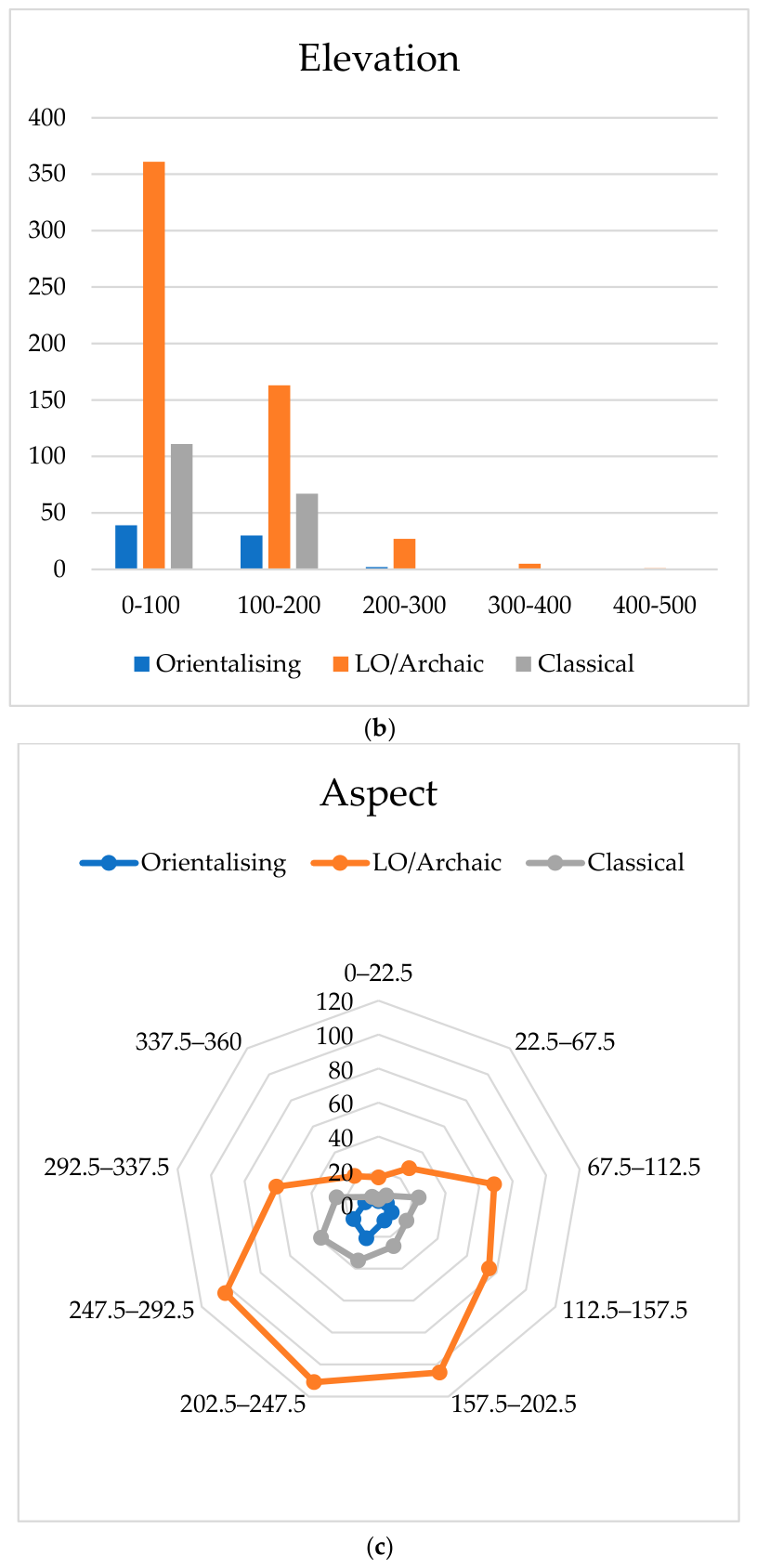
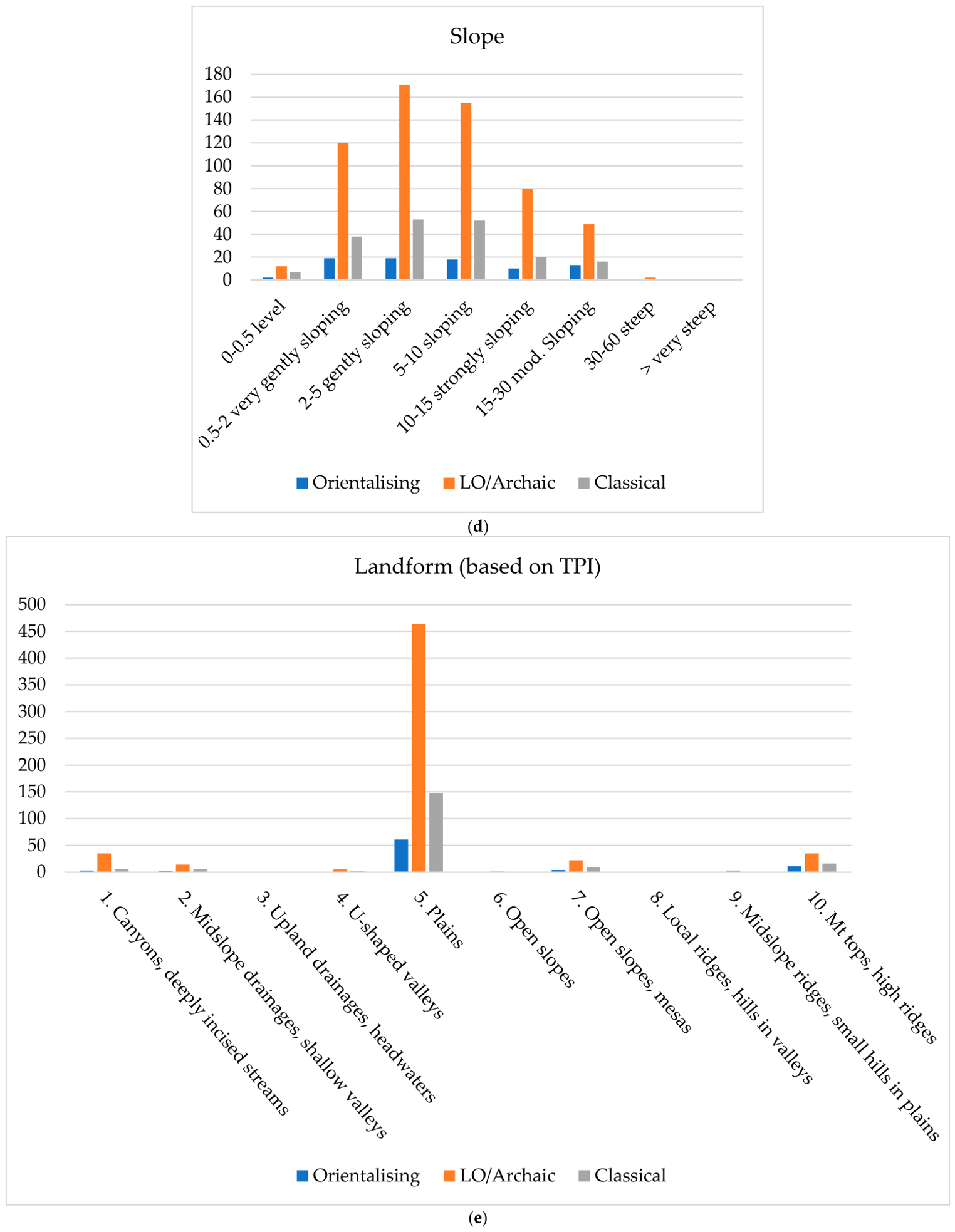
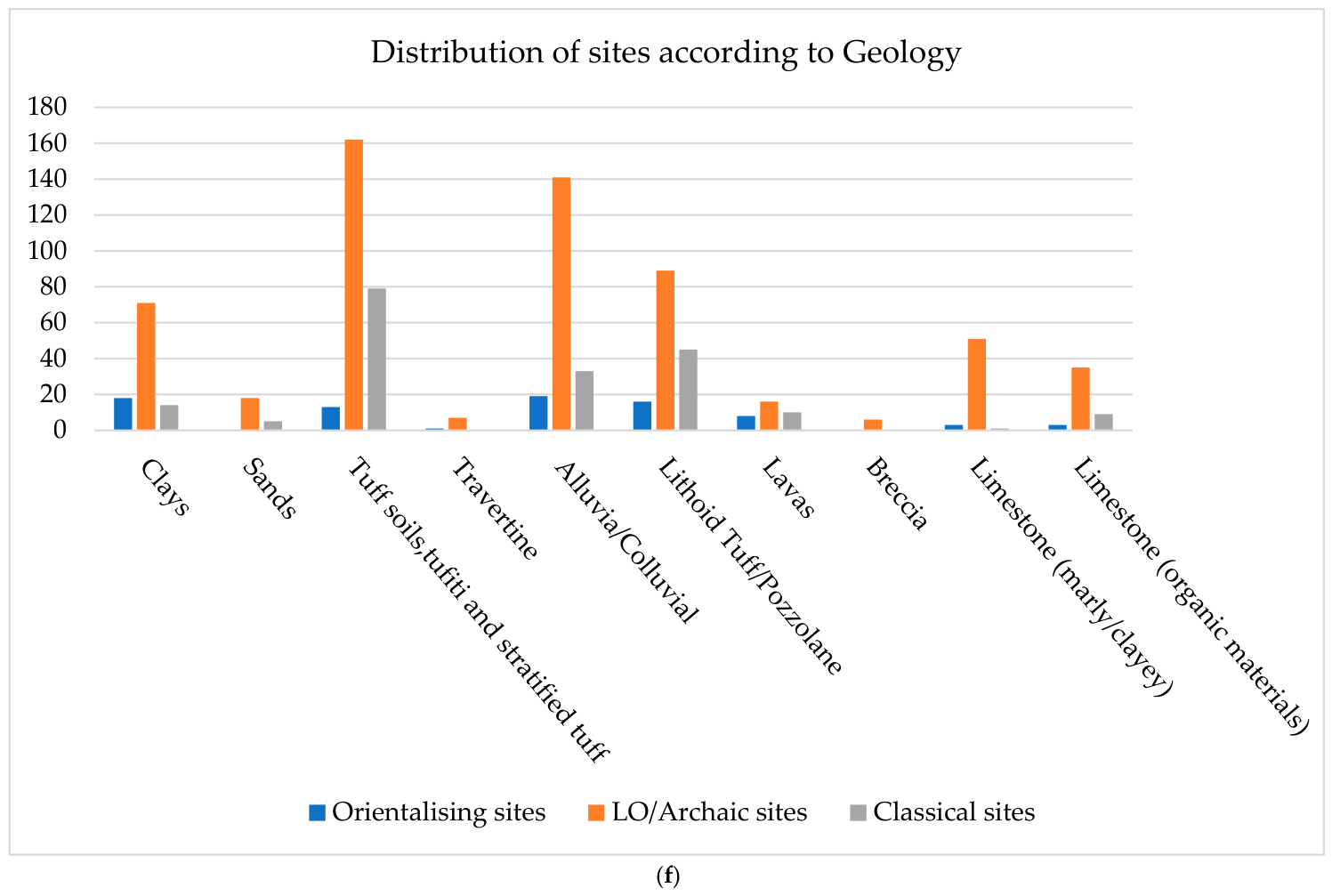
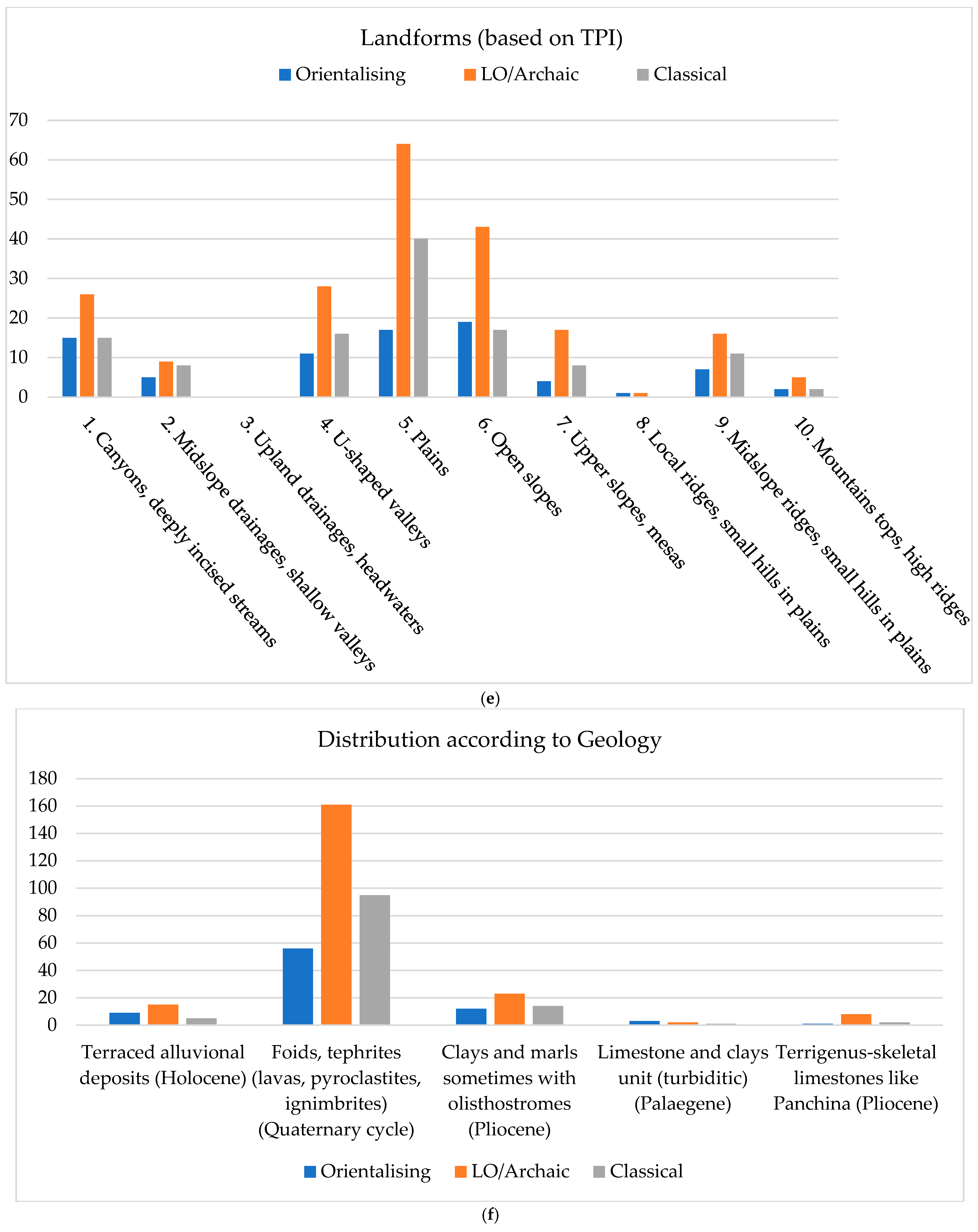
Figure A1. (af) Charts of the locational analyses done in the territory of Murlo, for both the Archaic and for the Classical periods [111].
Land 15 00699 g0a1aLand 15 00699 g0a1bLand 15 00699 g0a1c
Figure A2. (af) Charts of the locational analyses done in the territory of Chiusi, for the Orientalizing, Archaic and Classical periods [11].
Land 15 00699 g0a2aLand 15 00699 g0a2bLand 15 00699 g0a2cLand 15 00699 g0a2d
Figure A3. (af) Charts of the locational analyses done in the territory of Cerveteri, for the Orientalizing, Archaic and Classical periods [11].
Land 15 00699 g0a3aLand 15 00699 g0a3bLand 15 00699 g0a3cLand 15 00699 g0a3d
Figure A4. (af) Charts of the locational analyses done in the territory of Tuscania, for the Orientalizing, Archaic and Classical periods [11].
Land 15 00699 g0a4aLand 15 00699 g0a4bLand 15 00699 g0a4c

Notes

1
Until recently, it was believed that the extension of the city coincided with the one of the modern town, measuring between 25 and 28 ha: if the areas that show traces of settlements of the Etruscan phase, located on surrounding peaks of Montevenere, Monte S. Paolo and the Badiola-Petriolo plateau, are included, the extension of the city reaches between 80 and 90 ha [18], p. 80, which could explain the position of the funerary complexes, quite far from the main hilltop of modern Chiusi, as well as their large dimensions. This extent does not include the spaces between these elevated locations, which, however, do bear archaeological materials from the Classical period onwards [18], p. 80.
2
More details can be found in the mentioned papers, but for a more information on the workings of the methodology used see [47] (Ch. 4.2.3).
3
Radii were kept as the standard values selected by SAGA, based on Weiss (2001) [49], which correspond to a small radius of 100 m and a large radius of 1000 m. These allow the identification of both local features and broader topographic contexts defining site location.
4
Colle San Pietro, Tuscania’s plateau, started to be occupied since the latter part of the Iron Age [81], p. 182, with the most consistent evidence dating between the 8th and the 7th centuries BCE [82], p. 438. This occupation was mirrored in the countryside, with the evidence of Villanovan settlements found by the BSR survey, which could show this lack of participation of the communities located in Tuscania in the regional dynamics that contributed to the formation of Tarquinia [83], p. 38.
5
The centre, possibly the Etruscan Artena, is signalled by necropoleis that date from half of the 7th century BCE [32,95].
6
The agricultural suitability map has been created following the procedure published in [12,14]. Briefly, the model consists in the creation of Land Utilisation Classes for each raster considered (elevation, slope, aspect, proximity to water, topographic wetness index, geology) to be evaluated on a scale from 1 (least suitable) to 10 (very suitable). This value depends on the social and technological context, as well as on the type of crop considered (in this wheat, vineyards, legumes and olive groves). Each resulting map is then summed to create a general agricultural suitability model.
7
Some of the ivory objects created by the artisans working in the workshop bear inscriptions written in Chiusine alphabet [99], which demonstrate that the residents were aware of the potential of writing and its ability to channel status, power, and authority.
8
The Classical period was defined by the worsening of Veiian–Roman relationships, while relations between Rome and Cerveteri continued to be notably good. As noted in [13] (note 56), signs of prosperity are visible in the renovations of the sacred extra-urban area of Pyrgi, during Thefarie Velianas’ rule (6th-5th centuries BCE), as it was filled with riches which were eventually sacked by Dionysios of Syracuse in 384 BCE [107].

References

  1. Marras, G.B.; Marzullo, M.; Schmidt, F.; French, C.; Sheldrake, M.; Motta, L.; Garzulino, A.; Tentori, D.; Zerboni, A.; Stoddart, S.; et al. Beneath the city: Micromorphological insights into Etruscan urban life, infrastructure, and ritual spaces from Tarquinia, central Italy. Archaeol. Anthropol. Sci. 2026, 18, 3. [Google Scholar] [CrossRef]
  2. Di Gennaro, F. Organizzazione del territorio nell’Etruria meridionale protostorica: Applicazione di un modello grafico. Dial. Archeol. 1982, 2, 102–112. [Google Scholar]
  3. Rendeli, M. Città Aperte: Ambiente e Paesaggio Rurale Organizzato Nell’etruria Meridionale Costiera Durante L’età Orientalizzante e Arcaica; Gruppi Editoriali Internazionali: Rome, Italy, 1993. [Google Scholar]
  4. Palmisano, A.; Bevan, A.; Shennan, S. Comparing archaeological proxies for long-term population patterns: An example from central Italy. J. Archaeol. Sci. 2017, 87, 59–72. [Google Scholar] [CrossRef]
  5. Palmisano, A.; Bevan, A.; Shennan, S. Regional demographic trends and settlement patterns in Central Italy: Archaeological sites and radiocarbon dates. J. Open Archaeol. Data 2018, 6, 2. [Google Scholar] [CrossRef]
  6. Forte, M. (Ed.) A New Etruscan Archaeology: Twenty-First Century Techniques and Methods; Oxford University Press: New York, NY, USA, 2025. [Google Scholar] [CrossRef]
  7. Pasquinucci, M.; Menchelli, S. 2.2. Landscape transformations in North Coastal Etruria. In Landscape Archaeology Between Art and Science: From a Multi- to an Interdisciplinary Approach; Kluiving, S.J., Guttmann-Bond, E., Eds.; Amsterdam University Press: Amsterdam, The Netherlands, 2012; pp. 179–196. [Google Scholar] [CrossRef]
  8. Redhouse, D.I.; Stoddart, S.K.F. Mapping Etruscan state formation. In State Formation in Italy and Greece: Questioning the Neoevolutionist Paradigm; Haggis, D., Terrenato, N., Eds.; Oxbow Books: Oxford, UK, 2011; pp. 162–178. [Google Scholar]
  9. Stoddart, S. Power and Place in Etruria. The Spatial Dynamics of a Mediterranean Civilization, 1200-500BC; Cambridge University Press: Cambridge, UK, 2020. [Google Scholar] [CrossRef]
  10. Stoddart, S.; Palmisano, A.; Redhouse, D.; Barker, G.; di Paola, G.; Motta, L.; Rasmussen, T.; Samuels, T.; Witcher, R. Patterns of Etruscan urbanism. Front. Digit. Humanit. 2020, 7, 1. [Google Scholar] [CrossRef]
  11. Zeviani, C. Invisible Etruscans: A Study on Rural Landscape and Settlement Organization During the Urbanization of Etruria (7th–5th Centuries BC). Unpublished Ph.D. Thesis, University of Cambridge, Cambridge, UK, 2023. [Google Scholar]
  12. Zeviani, C. Urbanization halted: Regional politics and demographic changes between the 7th and the 5th centuries BCE in north Etruria. World Archaeol. 2025, 1–17. [Google Scholar] [CrossRef]
  13. Zeviani, C. Beyond Cerveteri: Landscape, Lineage and Power Dynamics of an Etruscan City. Etruscan Ital. Stud. 2025, 1–30. [Google Scholar] [CrossRef]
  14. Zeviani, C.; Bilotti, G.; Simmons, C.; Stoddart, S. Pointing out the pattern: Modelling human-environmental dynamics in Etruria during the 1st millennium BCE. J. Archaeol. Sci. Rep. 2025, 62, 105052. [Google Scholar] [CrossRef]
  15. Renfrew, C.; Level, E. Exploring dominance: Predicting polities from centers. In Transformations: Mathematical Approaches to Culture Change; Renfrew, C., Cooke, K.L., Eds.; Academic Press: New York, NY, USA, 1979; pp. 145–166. [Google Scholar] [CrossRef]
  16. Ducke, B.; Kroefges, P. From points to areas: Constructing territories from archaeological site patterns using an enhanced Xtent model. In Layers of Perception, Proceedings of the 35th International Conference on Computer Applications and Quantitative Methods in Archaeology (CAA), Berlin, Germany, 2–6 April 2007; Posluschny, A., Lambers, K., Herzog, I., Eds.; Kolloquien zur Vor-und Frühgeschichte, Volume 10; Rudolf Habelt Verlag: Bonn, Germany, 2007; pp. 244–251. [Google Scholar]
  17. Stoddart, S. An Etruscan urban agenda: The weaving together of traditions. J. Urban Archaeol. 2020, 1, 99–121. [Google Scholar] [CrossRef]
  18. Cappuccini, L. Dinamiche Insediative a Chiusi nel VII e nel VI sec. a.C. In L’Etrurie et l’Ombrie Avant Rome. Cité et Territoire. Actes du Colloque International. Louvain-la-Neuve, Halles Universitaires, S.nat acad.mique, 13–14 Février 2004; Institut Historique Belge de Rome Artes 1; Institut Historique Belge de Rome: Brussels, Belgium; Rome, Italy, 2010; pp. 63–81. [Google Scholar]
  19. Campana, S. Murlo. Carta Archeologica Della Provincia di Siena, V; Nuova Immagine Editore: Siena, Italy, 2001. [Google Scholar]
  20. Campana, S. Montalcino. Carta Archeologica Della Provincia di Siena, XII; Nuova Immagine Editore: Siena, Italy, 2013. [Google Scholar]
  21. Botarelli, L. Radicofani. Carta Archeologica Della Provincia di Siena, VII; Nuova Immagine: Siena, Italy, 2005. [Google Scholar]
  22. Felici, C. Pienza. Carta Archeologica Della Provincia di Siena, VI; Nuova Immagine: Siena, Italy, 2004. [Google Scholar]
  23. Felici, C. San Giovanni d’Asso.Carta Archeologica Della Provincia di Siena; Nuova Immagine: Siena, Italy, 2012; Volume X. [Google Scholar]
  24. Boscato, P.; Coltorti, M.; Reggiani, P. Pliocene Anancus arvernensis (Croizet & Jobert, 1828) remains from Cetona (Siena): Stratigraphy, chronology and paleoenvironment. Ital. J. Geosci. 2008, 127, 151–162. [Google Scholar]
  25. Coltorti, M.; Fantozzi, P.; Pieruccini, P. Tuscany hills and valleys: Uplift, exhumation, valley downcutting and relict landforms. In Landscapes and Landforms in Italy; Soldati, M., Marchetti, M., Eds.; Springer: Cham, Switzerland, 2017; pp. 245–255. [Google Scholar] [CrossRef]
  26. Palazzi, M. Relazione. Piano Strutturale per il Comune di C.T.; Comune di Chianciano Terme: Chianciano Terme, Italy, 2013.
  27. Della Ventura, G.; Patanè, A. Le miniere dei Monti della Tolfa-Allumiere (Roma). Mem. Descr. Carta Geol. Ital. 2020, 106, 23–32. [Google Scholar]
  28. Petracchini, L.; Scrocca, D.; Spagnesi, S.; Minelli, F. 3D Geological Modeling to Support the Assessment of Conventional and Unconventional Geothermal Resources in the Latium Region (Central Italy). In Proceedings of the World Geothermal Congress, Melbourne, Australia, 19–24 March 2015; pp. 19–25. [Google Scholar]
  29. Poli, G.; Frey, F.; Ferrara, G. Geochemical Characteristics of the South Tuscany (Italy) Volcanic Province: Constraints on Lava Petrogenesis. Chem. Geol. 1984, 43, 203–221. [Google Scholar] [CrossRef]
  30. Villa, I.; Giuliani, O.; De Grandis, G.; Cioni, R. Datazioni K/Ar dei vulcani di Tolfa e Manziana. Boll. GNV 1989, 5, 1025–1026. [Google Scholar]
  31. Fulminante, F. The Urbanization of Rome and Latium Vetus from the Bronze Age to the Archaic Era; Cambridge University Press: Cambridge, UK, 2014. [Google Scholar]
  32. Tartara, P. Torrimpietra. Forma Italiae; Leo S. Olschki: Firenze, Italy, 1999. [Google Scholar]
  33. Enei, F. Progetto Ager Caeretanus. Il litorale di Alsium; Regione Lazio: Santa Marinella, Italy, 2001.
  34. Bozzano, F.; Floris, M.; Gaeta, M.; Martino, S.; Scarascia Mugnozza, G. Assetto geologico ed evoluzione per frana di rupi vulcaniche nel Lazio Settentrionale. Boll. Soc. Geol. Ital. 2005, 124, 413–436. [Google Scholar]
  35. De Rita, D.; Celant, A.; Magri, D. Volcanoclastic sedimentation in coastal environments: The interplay between volcanism and Quaternary Sea level change (Central Italy). Quat. Int. 2002, 95–96, 141–154. [Google Scholar] [CrossRef]
  36. Ciferri, S.; Menegoni, P. Geomorfologia, idrologia e rischio idrogeologico. In Progetto LIFE02 ENV/IT/000111: Pilot Testing and Demonstration Actions to Implement EMAS on the Territorial Scale in the Tuscia Romana District; European Commission: Brussels, Belgium, 2002; p. 1. [Google Scholar]
  37. Casadei, C. Il Recupero Della Rete dei Percorsi Antichi per la “Riattualizzazione” del Territorio Azioni Strategiche Lungo la via Clodia nel Paesaggio Dell’etruria Meridionale Interna. Ph.D. Thesis, Università Roma Tre, Rome, Italy, 2016. [Google Scholar]
  38. Mannoni, T. Le rocce e argille dell’Etruria meridionale. In Etruria Meridionale. Conoscenza, Conservazione, Fruizione. Atti del Convegno. Viterbo, 29/30 Novembre–1 Dicembre 1985; Edizioni Quasar: Rome, Italy, 1988; pp. 39–42. [Google Scholar]
  39. Quilici Gigli, S. Tuscana (Forma Italiae, Regio VII.2); De Luca: Rome, Italy, 1970. [Google Scholar]
  40. Nardi, G. Definizione e perimetrazione del parco. In Caere I. Il Parco Archeologico; Cristofani, M., Nardi, G., Rizzo, M.A., Eds.; Centro Nazionale delle Ricerche: Rome, Italy, 1988; pp. 65–73. [Google Scholar]
  41. Naso, A.; Zifferero, A. Etruscan settlement patterns in the Monti della Tolfa area (Lazio). In Papers in Italian Archaeology, Vol. IV: The Cambridge Conference. Part I: The Human Landscape; Malone, C., Stoddart, S., Eds.; BAR: Oxford, UK, 1985; pp. 239–259. [Google Scholar]
  42. Zifferero, A. Insediamenti ed economia: Appunti sulle risorse minerarie dei Monti della Tolfa. In Caere e il suo Territorio. Da Agylla a Centumcellae; Officina Carte e Valori dell’Istituto Poligrafico e Zecca dello Stato: Rome, Italy, 1990; pp. 71–75. [Google Scholar]
  43. Cenni, F. Buonconvento. Carta Archeologica Della Provincia di Siena, VIII; Nuova Immagine Editore: Siena, Italy, 2007. [Google Scholar]
  44. Barker, G.; Rasmussen, T. In the Footsteps of the Etruscans: Changing Landscapes around Tuscania from Prehistory to Modernity; Cambridge University Press: Cambridge, UK, 2023. [Google Scholar] [CrossRef]
  45. Hamphill, P. The Civitella di Cesi Survey; Svenska Institutet i Rom: Stockholm, Sweden, 2000. [Google Scholar]
  46. Ikeguchi, M. A comparative study of settlement patterns and agricultural structures in ancient Italy: A methodology for interpreting field survey evidence. Kodai J. Anc. Hist. 1999, 10, 1–59. [Google Scholar]
  47. Launaro, A. Peasants and Slaves: The Rural Population in Roman Italy (200 BC to AD 100); Cambridge Classical Studies: Cambridge, UK, 2011. [Google Scholar]
  48. Tarquini, S.; Isola, I.; Favalli, M.; Mazzarini, F.; Bisson, M.; Pareschi, M.T.; Boschi, E. TINITALY/01: A new Triangular Irregular Network of Italy. Ann. Geophys. 2007, 50, 407–425. [Google Scholar] [CrossRef]
  49. Weiss, A.D. Topographic Position and Landforms Analysis. Poster Presentation. In Proceedings of the ESRI User Conference, San Diego, CA, USA, 9–13 July 2001. [Google Scholar]
  50. Jenness, J. Topographic Position Index (tpi_jen.avx) Extension for ArcView 3.x, v.1.-3a. 2006. Available online: http://www.jennessent.com/arcview/tpi.htm (accessed on 18 March 2025).
  51. Baxter, M.J.; Beardah, C.C.; Wright, R.V.S. Some archaeological applications of kernel density estimates. J. Archaeol. Sci. 1997, 24, 347–354. [Google Scholar] [CrossRef]
  52. Bonnier, A.; Finné, M.; Weiberg, E. Examining land-use through GIS-based kernel density estimation: A re-evaluation of legacy data from the Berbati-Limnes Survey. J. Field Archaeol. 2019, 44, 70–83. [Google Scholar] [CrossRef]
  53. Conolly, J.; Lake, M. Geographical Information Systems in Archaeology; Cambridge University Press: Cambridge, UK, 2006. [Google Scholar] [CrossRef]
  54. Herzog, I.; Yépez, A. Least-cost kernel density estimation and interpolation-based density analysis applied to survey data. In CAA2010: Fusion of Cultures, Proceedings of the 38th Annual Conference on Computer Applications and Quantitative Methods in Archaeology, Granada, Spain, 6–9 April 2010; Contreras, F., Farjas, M., Melero, F.J., Eds.; BAR International Series 2494; Archaeopress: Oxford, UK, 2013; pp. 367–374. [Google Scholar]
  55. Lindholm, K.-J.; Sandström, E.; Ekman, A.-K. The archaeology of the commons. J. Archaeol. Anc. Hist. 2013, 10, 3–49. [Google Scholar] [CrossRef]
  56. McMahon, T.C. Discerning prehistoric landscapes in Colorado and the Mesa Verde region using a kernel density estimate (KDE) method. In Digital Discovery: Exploring New Frontiers in Human Heritage, CAA 2006; Clark, J.T., Hagemeister, E.M., Eds.; Archaeolingua: Budapest, Hungary, 2007; pp. 151–166. [Google Scholar] [CrossRef]
  57. Sayer, D.; Wienhold, M. A GIS-Investigation of four Early Anglo-Saxon cemeteries: Ripley’s K-function analysis of spatial groupings amongst graves. Soc. Sci. Comput. Rev. 2013, 31, 71–89. [Google Scholar] [CrossRef]
  58. Wheatley, D.; Gillings, M. Spatial Technology and Archaeology—The Archaeological Applications of GIS; CRC Press: Boca Raton, FL, USA; Taylor & Francis: London, UK, 2002. [Google Scholar] [CrossRef]
  59. Cope, M.; Elwood, S. (Eds.) Critical GIS: A Mixed Methods Approach; Sage Publications: Los Angeles, CA, USA; London, UK; New Delhi, India; Singapore; Washington, DC, USA, 2009. [Google Scholar]
  60. Daly, P.; Lock, G. Time, space and archaeological landscapes: Establishing connections in the first millennium BC. In Spatially Integrated Social Science; Goodchild, M.F., Janelle, D.G., Eds.; Oxford University Press: Oxford, UK, 2004; pp. 349–365. [Google Scholar] [CrossRef]
  61. Gaffney, V.; van Leusen, P.M. Postscript—GIS, environmental determinism and archaeology. In Archaeology and Geographical Information Systems; Lock, G., Stančič, Z., Eds.; Taylor & Francis: London, UK, 1995; pp. 367–382. [Google Scholar] [CrossRef]
  62. Harris, T.M. Pursuing social goals through participatory geographic information systems. In Ground Truth: The Social Implications of Geographic Information Systems; Pickles, J., Ed.; Guilford Press: New York, NY, USA, 1995; pp. 196–222. [Google Scholar]
  63. Huggett, J. Archaeology and the new technological fetishism. Archeol. Calc. 2004, 15, 81–92. [Google Scholar]
  64. Kwan, M.P. Is GIS for women? Reflections on the critical discourse in the 1990s. Gend. Place Cult. 2002, 9, 271–279. [Google Scholar] [CrossRef]
  65. Llobera, M. Exploring the topography of mind: GIS, social space and archaeology. Antiquity 1996, 269, 612–622. [Google Scholar] [CrossRef]
  66. Lock, G.; Stančič, G. (Eds.) Archaeology and Geographic Information Systems: A European Perspective; CRC Press: Cleveland, OH, USA, 1995. [Google Scholar]
  67. Richards-Rissetto, H. What can GIS + 3D mean for landscape archaeology? J. Archaeol. Sci. 2017, 84, 10–21. [Google Scholar] [CrossRef]
  68. Thomas, J. A Précis of Time, Culture and Identity; Routledge: London, UK, 1996. [Google Scholar] [CrossRef]
  69. Aines, E. The Memory of Forgotten Landscape. Ph.D. Thesis, University of Cambridge, Cambridge, UK, 2019. [Google Scholar]
  70. Kopytoff, I. The cultural biography of things: Commoditization as process. In The Social Life of Things: Commodities in Cultural Perspective; Appadurai, A., Ed.; Cambridge University Press: Cambridge, UK, 1986; pp. 70–73. [Google Scholar] [CrossRef]
  71. Gosden, C.; Marshall, Y. The cultural biography of objects. World Archaeol. 1999, 31, 169–178. [Google Scholar] [CrossRef]
  72. Olsen, B. In Defence of Things: Archaeology and the Ontology of Objects; Altamira: Lanham, MD, USA, 2010. [Google Scholar] [CrossRef]
  73. Hodder, I. The entanglements of human and things: A long-term view. New Lit. Hist. 2014, 45, 19–36. [Google Scholar] [CrossRef]
  74. Minetti, A. L’Orientalizzante a Chiusi e nel suo Territorio; L’Erma di Bretschneider: Rome, Italy, 2004. [Google Scholar]
  75. Vander Poppen, R. Rural Change and Continuity in Etruria: A Study of Village Communities from the 7th Century B.C. to the 1st Century A.D. Ph.D. Thesis, University of North Carolina, Chapel Hill, NC, USA, 2008. [Google Scholar]
  76. van Joolen, E. Archaeological Land Evaluation: A Reconstruction of the Suitability of Ancient Landscapes for Various Land Uses in Italy Focused on the First Millennium BC. Ph.D. Thesis, University of Groningen, Groningen, The Netherlands, 2003. [Google Scholar]
  77. Goodchild, H. Modelling Roman Agricultural Production in the Middle Tiber Valley, Central Italy. Ph.D. Thesis, University of Birmingham, Birmingham, UK, 2007. [Google Scholar]
  78. Sotgia, A. Live in Villages, Plow Fields before Cities: Aspects of the Primary Economy of the Communities of Southern Etruria Between the Bronze Age and the Early Iron Age. Ph.D. Thesis, Università La Sapienza, Rome, Italy, 2023. [Google Scholar]
  79. Tuck, A. Poggio Civitate: A community from inland Etruria. In A Companion to the Etruscans; Bell, S., Carpino, A., Eds.; Wiley-Blackwell: Chirchester, UK, 2015; pp. 105–116. [Google Scholar] [CrossRef]
  80. Tuck, A. The Necropolis of Poggio Civitate (Murlo). Burials from Poggio Aguzzo; Bretschneider: Rome, Italy, 2009. [Google Scholar]
  81. Camilli, A. Tuscania. In Luoghi e Tradizioni d’Italia. Lazio Settentrionale; Vlad, L., Emiliani, V., Sommella, P., Eds.; Editalia: Rome, Italy, 2000. [Google Scholar]
  82. Gianfrotta, C.; Potter, T. Tuscania 1974—Scavi sul Colle S. Pietro: Una prima lettura. Archeol. Mediev. 1980, VII, 437–456. [Google Scholar]
  83. Barker, G.; Rasmussen, T. The archaeology of an Etruscan polis: A preliminary report on the Tuscania Project (1986 and 1987 Seasons). Pap. Sch. Rome 1988, 56, 25–42. [Google Scholar] [CrossRef]
  84. Colonna, G. L’Etruria meridionale interna dal Villanoviano alle tombe rupestri. Studi Etruschi 1967, 35, 3–30. [Google Scholar]
  85. Barker, G.; Grant, A.; Rasmussen, T. Approaches to the Etruscan landscape: The development of the Tuscania survey. In Case Studies in European Prehistory; CRC Press: Boca Raton, FL, USA, 1993; pp. 229–257. [Google Scholar] [CrossRef]
  86. Riva, C. The Urbanisation of Etruria: Funerary Practices and Social Change; Cambridge University Press: Cambridge, UK, 2009. [Google Scholar] [CrossRef]
  87. Naso, A. L’Etruria meridionale. In Tumuli e Sepolture Monumentali Nella Protostoria Europea, Atti del Convegno Internazionale, Celano, Italy, 21–24 September 2000; Naso, A., Ed.; Romisch-Germanisches Zentralmuseum: Mainz, Germany, 2011; pp. 115–130. [Google Scholar]
  88. Acconcia, V. Paesaggi Etruschi in Terra di Siena; BAR: Oxford, UK, 2012. [Google Scholar]
  89. Paolucci, G. Chianciano Terme. Carta Archeologica della Provincia di Siena; Nuova Immagine: Siena, Italy, 2007; Volume IX. [Google Scholar]
  90. Paolucci, G. Sinalunga e Bettolle. Due centri Etruschi della Val di Chiana; Soprintendenza per i beni archeologici della Toscana: Firenze, Italy, 1996. [Google Scholar]
  91. Gastaldi, P. Chiusi: Lo Scavo del Petriolo; Edizioni Luì: Chiusi, Italy, 2009. [Google Scholar]
  92. Camporeale, G. Buccheri a Cilindretto di Fabbrica Orvietana; Olschki: Firenze, Italy, 1972. [Google Scholar]
  93. Cristofani Martelli, M. Per una definizione archeologica della Sabina: La situazione storico-culturale di Poggio Sommavilla. In Civiltà Arcaica dei Sabini Nella Valle del Tevere, III; Santoro, P., Ed.; Consiglio Nazionale delle Ricerche: Rome, Italy, 1977; pp. 9–48. [Google Scholar]
  94. Maggiani, A. La costruzione dell’immagine del princeps: I cinerari iconici di Chiusi. In Ascesa e Crisi Delle Aristocrazie Arcaiche in Etruria e Nell’italia Preromana. Atti del XXVII Convegno Internazionale di Studi Sulla Storia e l’Archeologia dell’Etruria. Annali Della Fondazione per il Museo Cl. Faina; Della Fina, G.M., Ed.; Edizioni Quasar: Orvieto, Italy, 2020; pp. 179–211. [Google Scholar]
  95. Giglioli, G. L’oinochoe di Tragliatella (tavv. XXII-XXVII). Studi Etruschi 1929, III, 111–162. [Google Scholar]
  96. Bergamini, M. Gli Etruschi Maestri di Idraulica; Electa Editori Umbri: Perugia, Italy, 1991. [Google Scholar]
  97. Driessen, P.; Deckers, J.; Spaargaren, O. (Eds.) Lecture Notes on the Major Soils of the World; Food and Agriculture Organization of the United Nations: Rome, Italy, 2001. [Google Scholar]
  98. Perego, L. Il Territorio Tarquiniese. Ricerche di Topografia Storica; Università degli Studi di Milano: Milano, Italy, 2005. [Google Scholar]
  99. Wallace, R. Etruscan inscriptions on ivory objects from the Orientalizing period residence at Poggio Civitate (Murlo). Etruscan Stud. 2008, 11, 67–80. [Google Scholar] [CrossRef]
  100. Neil, S. Ethnicity, Identity and Landscape: The Archaeology of Late Archaic Etruria. Ph.D. Thesis, Cambridge, UK, 2014. [Google Scholar]
  101. Donati, L.; Cappuccini, L. Poggio Civitella: La fortezza Ellenistica e le testimonianze cultuali del luogo. In La Città Murata in Etruria. XXV Convegno Internazionale di Studi Etruschi, Chianciano Terme-Sarteano-Chiusi (30 Marzo–3 Aprile 2005); Cambi, F., Ed.; Fabrizio Serra Editore: Pisa, Italy; Rome, Italy, 2008; pp. 221–244. [Google Scholar]
  102. Donati, L. Civitella (Montalcino, SI): Una fortezza d’altura fra l’Elba e la Val di Chiana. Rass. Archeol. 2018, 26, 292–309. [Google Scholar]
  103. Bianchi Bandinelli, R. Clusium: Ricerche archeologiche e topografiche su Chiusi e il suo territorio in età etrusca. Monum. Ant. 1925, 30, 210–578. [Google Scholar]
  104. Paolucci, G. Il Territorio di Chianciano Terme Dalla Preistoria al Medioevo. Ricerche Topografiche in Valdichiana I; Multigrafica Editrice: Rome, Italy, 1988. [Google Scholar]
  105. Colonna, G. Basi conoscitive per una storia economica dell’Etruria. In Contributi Introduttivi Allo Studio Della Monetazione Etrusca (Atti V Convegno de Centro Internazionale di Studi Numismatici Napoli 1975); Istituto Italiano di Numismatica: Rome, Italy, 1976; Volume 22, pp. 3–24. [Google Scholar]
  106. Luchi, O. I territori di Volterra e di Chiusi. In Società Romana e Produzione Schiavistica; Giardina, A., Schiavone, A., Eds.; Laterza: Bari, Italy; Rome, Italy, 1981; Volume II, pp. 417–420. [Google Scholar]
  107. Michetti, L. Chapter 7 Ports, Trade, Cultural Connections, Sanctuaries and Emporia. In Caere. Cities of the Etruscans; de Grummond, N., Pieraccini, L., Eds.; University of Texas: Austin, TX, USA, 2016; pp. 73–86. [Google Scholar] [CrossRef]
  108. Jennings, J. Killing Urbanization: A Reassessment of Early Urbanism and Its Consequences; University of New Mexico Press: Albuquerque, NM, USA, 2016. [Google Scholar]
  109. Jennings, J.; Frenette, S.; Harmacy, S.; Keenan, P.; Maciw, A. Cities, surplus and the state: A re-evaluation. J. Urban Archaeol. 2021, 4, 15–31. [Google Scholar] [CrossRef]
  110. Terrenato, N. The versatile clans. Archaic Rome and the nature of early city states in Central Italy. In State Formation in Italy and Greece. Questioning the Neoevolutionist Paradigm; Haggis, D., Terrenato, N., Eds.; Oxbow Books: Oxford, UK, 2011; pp. 231–244. [Google Scholar]
  111. Terrenato, N. The Early Roman Expansion into Italy. Elite Negotiation and Family Agendas; University of Michigan: Ann Arbor, MI, USA, 2019. [Google Scholar] [CrossRef]
  112. Naglak, M.; Terrenato, N. Central Italian elite groups as aristocratic houses in the ninth to sixth centuries BCE. In Roman Law Before the Twelve Tables. An Interdisciplinary Approach; Bell, S.W., du Plessis, P.J., Eds.; Edinburgh University Press: Edinburgh, UK, 2020; pp. 25–40. [Google Scholar] [CrossRef]
Figure 1. Etruria, with its central places. In red, the surveys used in this work. List of surveys: [19,20,21,22,23,32,39,40,41,42,43,44,45]. Prepared by the author, 2026 using QGIS (version 3.38 Grenoble). Basemap: TINITALY Digital Terrain Model, property of the Istituto Nazionale di Geofisica e Vulcanologia, Rome (http://tinitaly.pi.ingv.it/).
Land 15 00699 g001
Figure 2. Raster and vector layers used in the locational analysis. Prepared by the author in 2026 using QGIS (version 3.38 Grenoble). Basemap: TINITALY Digital Terrain Model, property of the Istituto Nazionale di Geofisica e Vulcanologia, Rome (http://tinitaly.pi.ingv.it/).
Land 15 00699 g002
Figure 3. The development of Chiusi’s territory according to the XTENT model, with respective sites, during the three periods considered. List of fortified settlements: A = Sinalunga; B = Montepulciano; C = Sarteano; D = Radicofani; E = Città della Pieve; F = Cetona; G = Chianciano Terme; H = Acquaviva; I = Castiglione del Lago; J = Piazza di Siena; K = Bettolle. Prepared by the author, 2025, using QGIS (version 3.38 Grenoble). Basemap: TINITALY Digital Terrain Model, property of the Istituto Nazionale di Geofisica e Vulcanologia, Rome (http://tinitaly.pi.ingv.it/).
Land 15 00699 g003
Figure 4. Distribution and density of settlements around Tuscania during the Orientalizing period (730–630 BCE). The bands of the multiring buffer are 2 km wide. Prepared by the author, 2025, using QGIS (version 3.38 Grenoble). Basemap: TINITALY Digital Terrain Model, property of the Istituto Nazionale di Geofisica e Vulcanologia, Rome (http://tinitaly.pi.ingv.it/).
Land 15 00699 g004
Figure 5. Distribution and density of settlements around Cerveteri during the Orientalizing sites (730–630 BCE) (from [13]). The bands of the multiring buffer are 2 km wide. List of fortified centres: A = Monte Tolfaccia, B = Monte Vitoria, C = Ponton Castrato, D = Castellina del Marangone, E = Castel Dannato, F = Luni sul Mignone, G = San Giovenale, H = Poggio Castelsecco, I = Castellaccio di Castel Campanile. Prepared by the author, in 2025, using QGIS (version 3.38 Grenoble). Basemap: TINITALY Digital Terrain Model, property of the Istituto Nazionale di Geofisica e Vulcanologia, Rome (http://tinitaly.pi.ingv.it/).
Land 15 00699 g005
Figure 6. Distribution and density of settlements around Murlo during the Archaic period (630–480 BCE). The bands of the multiring buffer are 2 km wide. Prepared by the author, in 2026, using QGIS (version 3.38 Grenoble). Basemap: TINITALY Digital Terrain Model, property of the Istituto Nazionale di Geofisica e Vulcanologia, Rome (http://tinitaly.pi.ingv.it/).
Land 15 00699 g006
Figure 7. Intervisibility among the fortified settlements distributed around Chiusi during the Archaic period (630–480 BCE). Prepared by the author, in 2026, using QGIS (version 3.38 Grenoble). Basemap: TINITALY Digital Terrain Model, property of the Istituto Nazionale di Geofisica e Vulcanologia, Rome (http://tinitaly.pi.ingv.it/).
Land 15 00699 g007
Figure 8. Distribution and density of settlements around Cerveteri during the Archaic period (630–480 BCE) (from [13]). The bands of the multiring buffer are 2 km wide. List of fortified centres in the map: B = Monte Vittoria, C = Ponton Castrato, D = Castellina del Marangone, E = Castel Dannato, F = Luni sul Mignone, G = San Giovenale, H = Poggio Castelsecco, I = Castellaccio di Castel Campanile, L = Riserva Baccalà, M = Bagni di Stigliano, N = Oliveto di Cencelle, O = Castel Giuliano. Prepared by the author, in 2025, using QGIS (version 3.38 Grenoble). Basemap: TINITALY Digital Terrain Model, property of the Istituto Nazionale di Geofisica e Vulcanologia, Rome (http://tinitaly.pi.ingv.it/).
Land 15 00699 g008
Figure 9. Distribution and density of settlements around Tuscania in the Archaic period (630–480 BCE). The bands of the multiring buffer are 2 km wide. Prepared by the author in 2026 using QGIS (version 3.38 Grenoble). Basemap: TINITALY Digital Terrain Model, property of the Istituto Nazionale di Geofisica e Vulcanologia, Rome (http://tinitaly.pi.ingv.it/).
Land 15 00699 g009
Figure 10. Areas suitable for grain cultivation and site distribution in the Archaic period (630–480 BCE). Fortified and secondary settlements are located around or directly on the most fertile areas of the territory, especially in the volcanic areas of the hinterland. Prepared by the author, in 2026, using QGIS (version 3.38 Grenoble). Basemap: TINITALY Digital Terrain Model, property of the Istituto Nazionale di Geofisica e Vulcanologia, Rome (http://tinitaly.pi.ingv.it/).
Land 15 00699 g010
Figure 11. Viewshed from Tuscania over its territory. Prepared by the author in 2026 using QGIS (version 3.38 Grenoble). Basemap: TINITALY Digital Terrain Model, property of the Istituto Nazionale di Geofisica e Vulcanologia, Rome (http://tinitaly.pi.ingv.it/).
Land 15 00699 g011
Figure 12. Distribution and density of settlements after Murlo’s destruction in the Classical period (480–330 BCE). The bands of the multiring buffer are 2 km wide. Prepared by the author in 2026 using QGIS (version 3.38 Grenoble). Basemap: TINITALY Digital Terrain Model, property of the Istituto Nazionale di Geofisica e Vulcanologia, Rome (http://tinitaly.pi.ingv.it/).
Land 15 00699 g012
Figure 13. Distribution and density of settlements around Tuscania during the Classical period (480–330 BCE). The bands of the multiring buffer are 2 km wide. Prepared by the author, in 2026 (QGIS 3.38 Grenoble). Basemap: TINITALY Digital Terrain Model, property of the Istituto Nazionale di Geofisica e Vulcanologia, Rome (http://tinitaly.pi.ingv.it/).
Land 15 00699 g013
Figure 14. Distribution and density of Classical sites around Cerveteri (from [13]) (480–330 BCE). The bands of the multiring buffer are 2 km wide. List of fortified settlements in the map: D = Castellina del Marangone, H = Poggio Castelsecco, L = Castel Dannato, O = Monte della Vittoria. Prepared by the author in 2025 using QGIS (version 3.38 Grenoble). Basemap: TINITALY Digital Terrain Model, property of the Istituto Nazionale di Geofisica e Vulcanologia, Rome (http://tinitaly.pi.ingv.it/).
Land 15 00699 g014
Table 1. Site categories and chronologies used in this work [13].
Site CategoriesAssemblage
HousesPerishable materials and with very poor ceramics, coarse wares mainly, tied to domestic activities and limited storage, of low-ranking category.
Productive complexesRicher in assemblage (a combination of fine wares, coarse ware, grey bucchero, metals and other objects, like storage ware, tied to agricultural production), mid-ranking category.
VillagesRural nucleated and larger settlements, no defensive structures, presence of adjacent cemeteries.
Fortified centresNucleated settlements with artificial or natural defences, location on higher peaks dominating the surrounding landscapes.
Chronology
Orientalizing730–630 BCE
Archaic630–480 BCE
Classical480–330 BCE
Table 2. Standard distances of rural archaeological sites and corresponding kernel density estimation (KDE) radii for the case studies of Cerveteri, Tuscania, and Murlo.
Case StudyPeriodStandard Distance/KDE Radius (m)
CerveteriOrientalizing12,680
Archaic14,485
Classical9812
TuscaniaOrientalizing5937
Archaic5976
Classical5612
MurloArchaic4584
Classical3760
Table 3. Site trends and density of sites per year calculated for each central place. The apparent discrepancy between the total number of sites reported in the table and the number of actual spreads found on the ground is related to the application of the classification method where sites with an unclear classification are assigned a value of 0.5 (see [47] (Ch. 4.2) for details). OV = Orientalizing value; AV = Archaic Value; CV = Classical Value.
Central PlaceSitesOVAVTrend (OV → AV)AVCVTrend (AV → CV)
MurloHouses87.00n/a87.0023.00−75.00%
Productive complexes13.00n/a13.004.00−69.00%
Residences1.00n/a1.000.00−100.00%
Total 101.00n/a101.0027.00−74.00%
Density (sites/year) 0.60n/a0.600.18−70.00%
ChiusiHouses16.5047.00+185.00%47.008.00−83.00%
Productive complexes1.007.50+650.00%7.500.00−100.00%
Villages4.007.00+75.00%7.003.00−57.00%
Fortified Settlements6.0012.00+100.00%12.005.00−58.00%
Total 27.5073.50+167.00%73.5016.00−78.00%
Density (sites/year) 0.270.49+69.00%0.490.10−77.00%
CerveteriHouses47.00492.00+947.00%492.00134.50−72.00%
Productive complexes8.5057.50+576.40%57.5032.00−44.00%
Villages17.0036.50+114.70%36.5015.50−57.50%
Fortified Settlements9.0012.00+33.33%12.004.00−66.66%
Total 81.50588.00+621.00%588.00186.00−68.00%
Density (sites/year) 0.803.92+390.00%3.921.24−68.30%
TuscaniaHouses64.00157.50+146.10%157.5081.00−48.60%
Productive complexes8.0030.00+275.00%30.0022.00−26.60%
Villages6.0017.00+183.30%17.0011.00−35.30%
Residences0.500.500.00%0.500.33−33.30%
Total 78.50205.00+161.14%205.00114.00−44.40%
Density (sites/year) 0.781.37+82.60%1.370.76−44.50%
Disclaimer/Publisher’s Note: The statements, opinions and data contained in all publications are solely those of the individual author(s) and contributor(s) and not of MDPI and/or the editor(s). MDPI and/or the editor(s) disclaim responsibility for any injury to people or property resulting from any ideas, methods, instructions or products referred to in the content.