Article

Rethinking Urban Intersections for Sustainable Micro-Mobility: A Kinematic Comparison of E-Scooters and Bicycles at Mini-Roundabouts


by
Natalia Distefano
1,
Salvatore Leonardi
1,* and
Michele Lacagnina
2
1
Department of Civil Engineering and Architecture (DICAR), University of Catania, Via Santa Sofia 64, 95123 Catania, Italy
2
Department of Electrical Electronic and Computer Engineering (DIEEI), University of Catania, Via Santa Sofia 64, 95123 Catania, Italy
*
Author to whom correspondence should be addressed.
Land 2026, 15(4), 686; https://doi.org/10.3390/land15040686
Submission received: 25 March 2026 / Revised: 10 April 2026 / Accepted: 20 April 2026 / Published: 21 April 2026
(This article belongs to the Special Issue Advances in Urban Planning and Sustainable Mobility)

Abstract

Urban roundabouts present significant design challenges for the integration of micro-mobility, yet comparative evidence regarding user behavior remains limited. As cities transition toward sustainable transport networks, understanding the operational needs of different micromobility modes is essential for urban planning. This study investigates the dynamic strategies of micromobility users through a controlled field experiment at a mini-roundabout in Gravina di Catania, Italy. Twenty experienced riders executed crossings using conventional bicycles and electric scooters. Utilizing drone recordings and open-source tracking, the analysis extracted speed, longitudinal acceleration, and path radius across 80 maneuvers. The findings reveal that behavior is highly dependent on vehicle type and geometric deflection. On highly deflected trajectories, e-scooters selected wider radii and achieved up to 15% higher speeds and accelerations than bicycles, whereas on gentler trajectories, they adopted more conservative, tighter lines with intense braking. Bicycles exhibited smaller, less systematic adjustments. These significant kinematic differences indicate that bicycles and e-scooters possess distinct performance envelopes. Treating them as a single legal or design class obscures stability disparities influencing conflict risk. Ultimately, this research provides empirical insights to guide urban planners in redesigning intersections, emphasizing that tailored infrastructure and targeted speed management are critical steps toward safer, truly sustainable urban mobility.

1. Introduction

Urban areas face an escalating set of challenges tied to motorized traffic. Beyond chronic congestion and greenhouse gas emissions, there are social inequities in access to mobility affecting disadvantaged and vulnerable groups. These externalities have intensified calls for reforms that center sustainability, operational efficiency, and social inclusion. Cities are reassessing car-centric paradigms to develop adaptable, multimodal, and environmentally sustainable mobility systems.
Within this shift, micromobility has emerged as a promising strategy. Covering lightweight, low-speed vehicles—traditional bicycles, pedal-assist e-bikes, and stand-up e-scooters—it offers practical, space-efficient, and ecologically responsible alternatives to private cars [1,2,3]. These vehicles require relatively modest infrastructure, and their compact form suits dense urban environments where space and congestion constrain larger modes [4].
Micromobility systems yield ecological, social, and operational benefits. Through energy-efficient propulsion, they support transport decarbonization and improve urban air quality. They also enable agile travel over short to intermediate distances—often faster than cars during peak periods [5,6]. Collectively, these advantages encourage modal shifts toward active and shared transportation, promoting behavioral change at individual and societal levels [7,8,9,10]. This transition is visible in metropolitan centers where shared services—docked/dockless bike-share and e-scooter programs—are being integrated with public transport. By addressing the “first and last mile,” they enhance point-to-point connectivity, increasing the accessibility, equity, and resilience of transit networks [11,12,13]. In doing so, micromobility strengthens the multimodality, inclusiveness, and systemic coherence of urban mobility infrastructures [14,15].
However, deployment faces persistent challenges, foremost safety. Many potential users—especially inexperienced ones—are apprehensive about sharing roads with heavier motor vehicles, often due to limited dedicated infrastructure and protection from conflicts [16,17,18]. Addressing these barriers demands sustained investment in protected bike lanes, delineated micromobility corridors, secure docking, and intuitive signage to reduce conflicts and build user confidence [19,20].
Regulatory fragmentation is another constraint. The European Union lacks a harmonized framework for micromobility—particularly e-scooters—leading to disparate classifications and rules. Finland treats e-scooter users as pedestrians; Ireland classifies them as motor vehicle operators; Germany and Poland created new legal categories; and Italy and others align them with cyclists. Such inconsistencies create user uncertainty and hinder standardized safety protocols and infrastructure models [21,22]. Emerging research further questions bicycle–e-scooter equivalence, noting differences in kinematics, stability, acceleration dynamics, and vibration response [23]. From a road safety perspective, vehicle trajectory and dynamics are salient. Bicycles, due to their mechanics and rider posture, tend to follow more stable, linear paths. E-scooters show greater trajectory variability—especially while cornering, changing direction, or merging with traffic [24,25]. This divergence is amplified in complex urban geometries like roundabouts, where longitudinal and lateral accelerations interact to affect stability and control [26].
While the cornering dynamics of bicycles and e-bikes have been the subject of extensive study, the specific behavior of e-scooter users in similar settings remains insufficiently explored. Recent empirical work begins to analyze trajectories, speed variability, and rider strategies on such segments, particularly at urban roundabouts [27,28,29].
This study addresses that gap by examining the kinematic behavior of e-scooter and bicycle riders at mini-roundabouts. By comparing speed, longitudinal acceleration, and trajectory radii, the analysis assesses whether the legal equivalence of these vehicles is justified from a dynamic and stability standpoint. Ultimately, this research provides empirical evidence to guide specific infrastructure design and regulatory frameworks tailored to the actual performance envelopes of urban micromobility.

2. Literature Review

The stability of micromobility vehicles on curved segments stems from mechanical, behavioral, and environmental factors—vehicle geometry, wheel size, weight distribution, steering mechanics, rider posture, and control strategies. Owing to a longer wheelbase and lower center of gravity, bicycles and e-bikes are generally more stable in curves than e-scooters, which have a narrower deck, shorter wheelbase, and a more upright stance.
Cornering biomechanics differ across modes. Cyclists commonly use anticipatory deceleration, lean-in counterbalancing, and progressive acceleration on exit, maintaining smooth trajectories and lateral equilibrium [30]. E-scooter riders more often follow irregular lines and encroach into adjacent lanes in tight turns; combined with higher steering sensitivity, this raises risks of lane departure and interactions with nearby vehicles or infrastructure [25].
Speed control also diverges. Cyclists typically sustain steadier speeds through curves, whereas e-scooter users show abrupt acceleration/deceleration, increasing cognitive load and erratic path following [31]. Maintaining longitudinal control on e-scooters demands greater neuromuscular coordination and frequent micro-adjustments, heightening susceptibility to surface irregularities and crowding [27,32].
Small wheels and stiff frames reduce e-scooters’ tolerance to poor pavement, amplifying roughness effects and destabilization in curves or obstacle avoidance. In emergency maneuvers, they reach lower slip thresholds—especially on wet or uneven surfaces—raising the likelihood of lateral falls [33]. Braking further differentiates modes: bicycles allow more balanced, modulated braking via dual levers and weight shift, while e-scooter users often apply sudden, uneven forces (commonly rear-brake dominant), inducing tipping or skidding at curve entry or on descents [24,34]. Lack of suspension on many scooters compounds shock absorption and control issues.
These dynamics appear in injury data: e-scooter riders are overrepresented in single-vehicle crashes linked to balance loss or improper braking on curves, with head/facial injuries from lateral falls more frequent than in bicycle incidents [35,36]. Helmet use is lower among scooter users, exacerbating severe trauma risk [37,38,39,40,41].
Intersections—particularly urban roundabouts—add complexity. Cyclists already face elevated crash risk due to sight-line limitations, speed differentials, and ambiguous priority rules [42]. E-scooters, with shorter stopping distances and narrower visual profiles, may be even more vulnerable; observational studies show concentrated conflict points in circulating lanes and entries [43,44], while simulations and video analytics indicate frequent misjudgment of gap acceptance and trajectory alignment, notably at left-turn entries and multi-lane crossings [45,46,47,48,49]. Behavioral factors further compound risk: e-scooter riders are more often associated with sidewalk riding, failure to yield, and speeding, shaped by the accessibility of shared systems and scarcity of dedicated infrastructure. Unlike bicycles, which more often benefit from established lanes and user familiarity, scooters commonly share constrained space with both motor traffic and pedestrians, increasing friction and unpredictability [50,51,52].
Despite growing use, a gap remains in systematic, real-world observation on curved and constrained facilities; much evidence is hospital- or simulation-based, with limited insights into behavior at mini-roundabouts. Recent naturalistic studies begin to address this by examining trajectories, acceleration profiles, and incident types among shared scooter users [24]. Yet comparative understanding of e-scooter and bicycle interactions in such contexts is still limited, constraining planners’ ability to tailor designs.
Responding to this gap, the present study conducts controlled kinematic observations of e-scooter and bicycle trajectories at mini-roundabouts—facilities marked by limited space, reduced visibility, and intersecting trajectories—to assess mode-specific stability limits and dynamic adaptations under spatial constraint. By explicitly linking geometric deflection to speed and acceleration profiles, the resulting evidence supports regulatory and design guidance for safer, more adaptive micromobility infrastructure in curvilinear, multimodal urban settings.

3. Materials and Methods

This study focuses on analyzing the behavior of micromobility users at a mini-roundabout, with particular attention to their crossing trajectories, speed profiles, and acceleration and deceleration patterns. An experimental approach under controlled conditions was chosen to exclude external factors such as heavy traffic or interactions with other vehicles. This ensured the collection of reliable data that allowed for an accurate study of the dynamics of movement without external influences.
Data collection took place in June 2024 and spanned several days to capture consistent behavior in different test scenarios. To minimize possible disruptions caused by traffic congestion or mixed traffic, the observations were carried out between 14:00 and 16:00. This time window was specifically chosen to maintain a consistent and controlled environment.
Throughout the process, participants were closely observed as they performed their crossing maneuvers. A controlled field experiment protocol was developed to guide the test riders in performing representative maneuvers, allowing for a detailed analysis of the differences in movement dynamics between bicycles and e-scooters. This approach enabled a comprehensive comparison of the two micromobility vehicles and provided valuable insights into their respective speed profiles, acceleration and braking behavior.
The individual phases of data collection are described in the following sections.

3.1. Site Selection and Recruitment of Test Drivers

The analysis of the behavior of micromobility users was carried out at a mini-roundabout in the road network of the municipality of Gravina di Catania, Italy. This location was chosen because it is representative of many similar mini-roundabouts in the region and offered favorable conditions for experimentation thanks to the low traffic volume between 2:00 PM and 4:00 PM. These factors allowed detailed observation of trajectories, speed profiles and acceleration and deceleration dynamics without significant interference from other vehicles or road users.
The roundabout has an outer diameter of 22 m, a 10 m central island, and a 6 m circulatory carriageway. It is designed to reduce approach speeds; tight entry radii promote cautious behavior. Entry lanes are 3.5 m wide and exits 4.0 m to support flow. The layout currently lacks micromobility facilities such as bike lanes, cycle paths, or protected crossings.
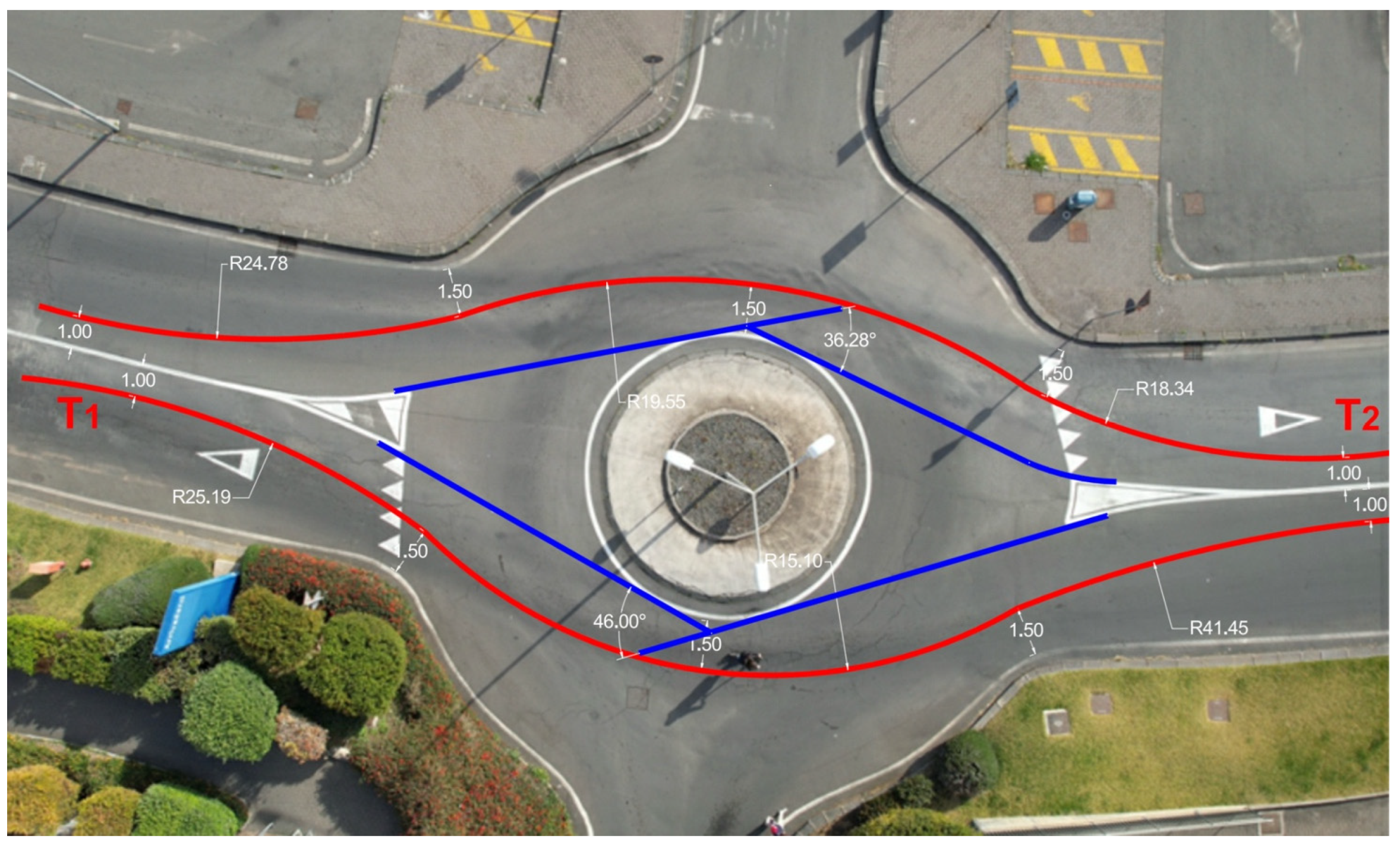
Figure 1 also reports the geometric parameters of the two crossing maneuvers (T1 and T2): in red, the fastest feasible trajectories; in blue, the deflection angles, calculated per Italian design standards [53].
Participants were recruited at the nearby Katanè shopping center via an information booth describing objectives and procedures. Eligibility required prior experience with both bicycles and e-scooters to obtain reliable, real-world behavior. Two vehicle types were tested: conventional, non-electric bicycles and standard electric scooters, enabling direct comparison of crossing distances, average speeds, and acceleration/braking strategies.
To ensure natural handling and a high level of comfort, participants were permitted to use their own vehicles or organization-provided ones; in the case of personal vehicles, each was inspected prior to the tests to ensure it met standard commercial specifications, thereby balancing ecological validity with technical consistency. To precisely contextualize the kinematic results, the physical specifications of these vehicles were recorded: the conventional bicycles featured an average wheelbase of 105 cm and standard 26 to 28-inch wheels, while the electric scooters (representing standard commercial models) were equipped with a 350 W motor, 8.5-inch wheels, and an average wheelbase of 114 cm. These distinct mechanical constraints are essential for interpreting the observed dynamic behaviors, as parameters such as wheel diameter and wheelbase directly influence lateral stability and cornering capabilities.
Participants received detailed information on aims, data use, and privacy safeguards. Participation was voluntary, without compensation, consistent with the Declaration of Helsinki. The sample was diversified by age, gender, and experience: 20 individuals, evenly split by gender, aged 18–30—a cohort with higher uptake of micromobility. To ensure natural handling, participants could use organization-provided vehicles or their own.
Each participant executed the two mini-roundabout maneuvers: T1 (west→east) and T2 (east→west). Both maneuvers were completed with both vehicles, permitting within-subject comparisons of mode-specific strategies under the same geometric conditions.

3.2. Data Collection and Processing

The data collection was designed to analyze micromobility driving behavior while crossing a mini-roundabout via a dedicated observational field trial. Twenty participants traversed both trajectories using an e-scooter and a bicycle. Prior to the tests, participants received specific briefing instructions asking them to execute the maneuvers at their natural, comfortable speed and to ride exactly as they would in everyday urban traffic, without adhering to any artificially imposed speed limits or predefined rigid paths. This approach was essential to capture authentic kinematic responses to the roundabout’s geometric constraints. Furthermore, to prevent any sequence bias, anticipation, or fatigue from skewing the data, the experimental design incorporated strict randomization; the sequence of the vehicles used, and the order of the executed trajectories were systematically randomized for each individual rider. Field runs extended from 50 m before the entry line to 50 m after the exit, with all drives recorded by a drone-mounted camera. Sessions occurred over four days in June 2024 (Monday–Thursday, 2:00–4:00 PM), periods of low traffic, yielding eight hours of video.
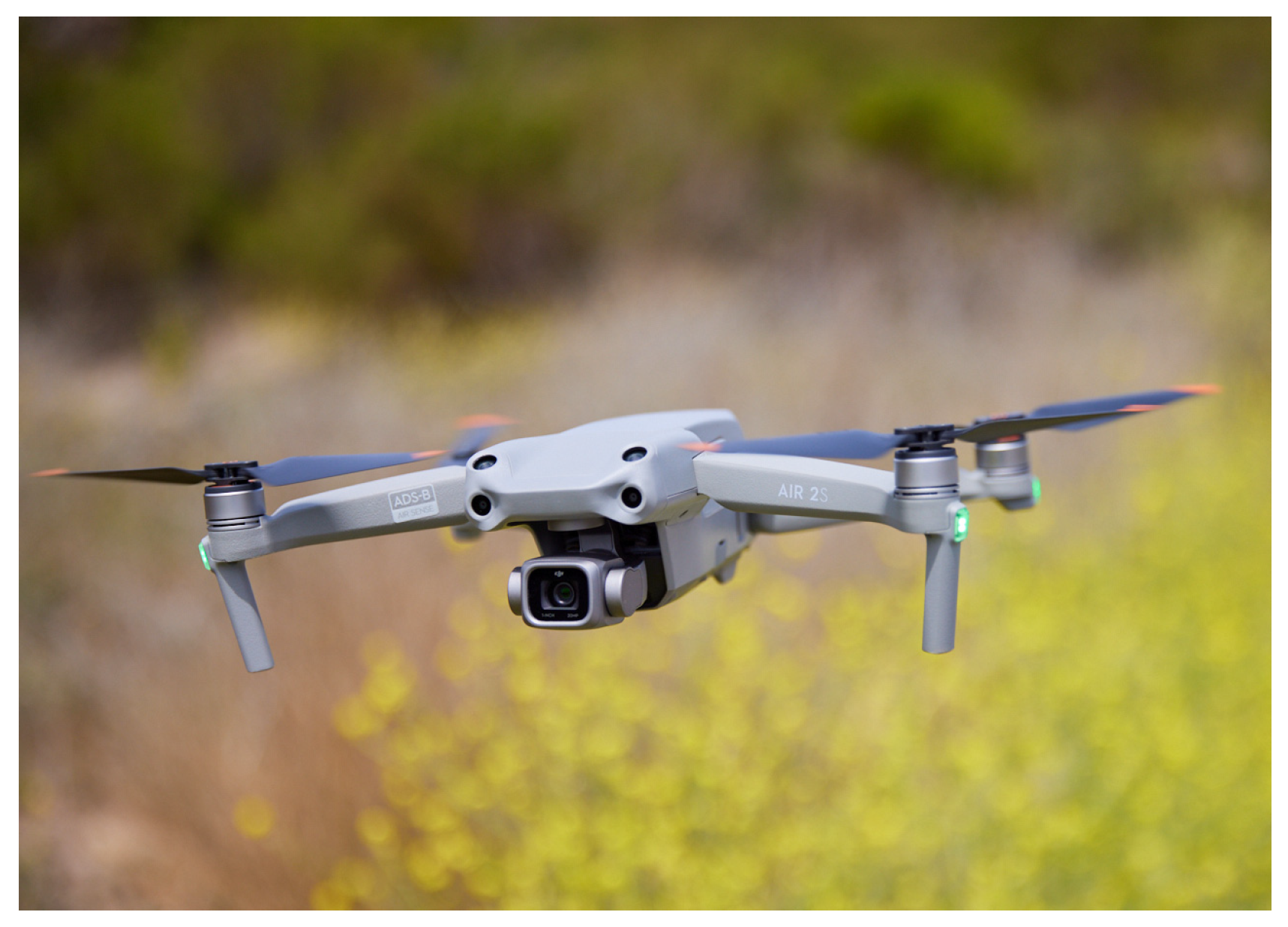
A DJI Air 2S (1-inch CMOS, 5.4 K) captured footage (Figure 2). The drone was flown at an altitude minimizing perspective distortion while covering the entire roundabout; position was adjusted to avoid occlusions and maintain continuous tracking of maneuvers.
Post-processing used Tracker, open-source software for motion tracking and trajectory analysis. Manual/automatic markers reconstructed paths; the software extracted trajectory and speed and longitudinal acceleration from video data [54]. Integrating aerial footage with tracking enabled detailed behavioral analysis and subsequent statistical testing.
Driving behavior was described via three indicators: curvature radius (R), speed (V), and longitudinal acceleration (a). Prior work has evaluated driving style using speed and acceleration profiles, highlighting individual perception and response particularly evident in longitudinal acceleration; models linking behavior to speed profiles and executed trajectories further support these choices [55,56,57,58,59,60].
To assess bicycle vs. e-scooter differences during roundabout traversal, an inferential analysis was conducted for the two trajectories (T1, T2), focusing on V, a, and R per vehicle type. The goal was to quantify how roundabout geometry influences dynamic and geometric parameters, using the actual paths taken relative to the intersection’s features. T1 and T2—two distinct routes through the same node with different geometric characteristics (Figure 1)—served as the comparative framework. For Tracker analysis, each trajectory began 5 m before the entry line and ended 5 m after the exit line to avoid survey-setup biases. Trajectories were segmented into entry, circulation, and exit phases.
To properly account for the within-subject correlation arising from the repeated measures design, since the 80 recorded maneuvers were executed by the same 20 participants, paired statistical analysis was implemented. For each variable and comparative scenario, normality of the differences between paired observations (Di = Xi − Yi), where Xi and Yi represent the paired kinematic parameters for the i-th participant under the two conditions being compared) was tested via the Shapiro–Wilk test, computing its W statistic as the ratio of the squared weighted sum of the ordered differences to the total sum of squared deviations from the mean; the null hypothesis of normality was accepted for p > 0.05.
Based on these results, the following tests were applied:
  • A paired t-test was used when the calculated differences followed a normal distribution, assessing the null hypothesis that the mean of the differences is zero by comparing the average difference to its standard error;
  • Conversely, when the normality assumption was not met, the non-parametric Wilcoxon signed-rank test was applied, evaluating its respective W statistic, determined as the sum of the ranks of the absolute differences, and allowing for robust comparisons of the medians without homoscedasticity constraints.
For each comparison, mean values by trajectory were reported along with the test used, p-value, and a significance summary. Conducting experiments without external interferences isolated the influence of infrastructure geometry on vehicle dynamics.

4. Results

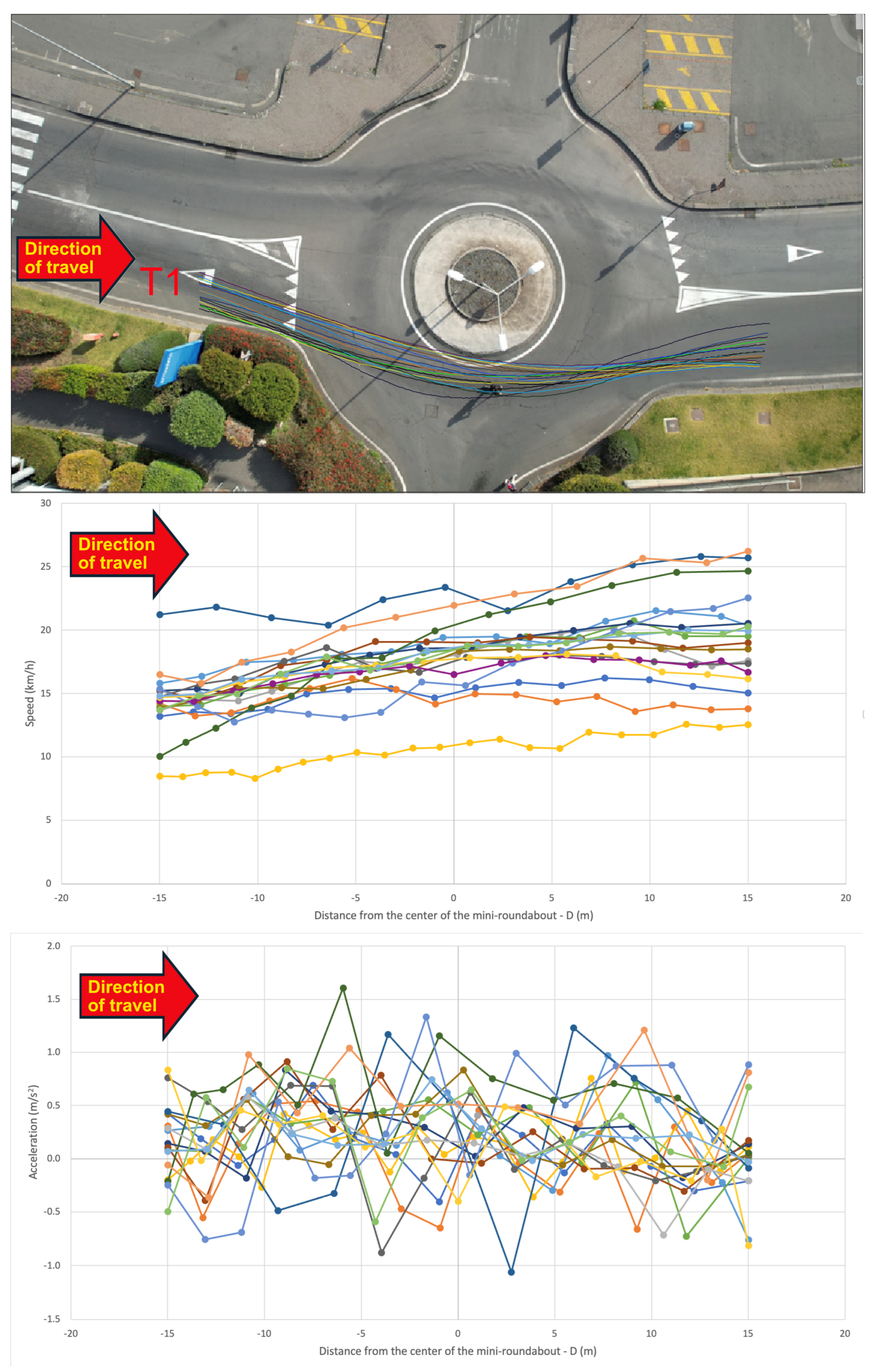
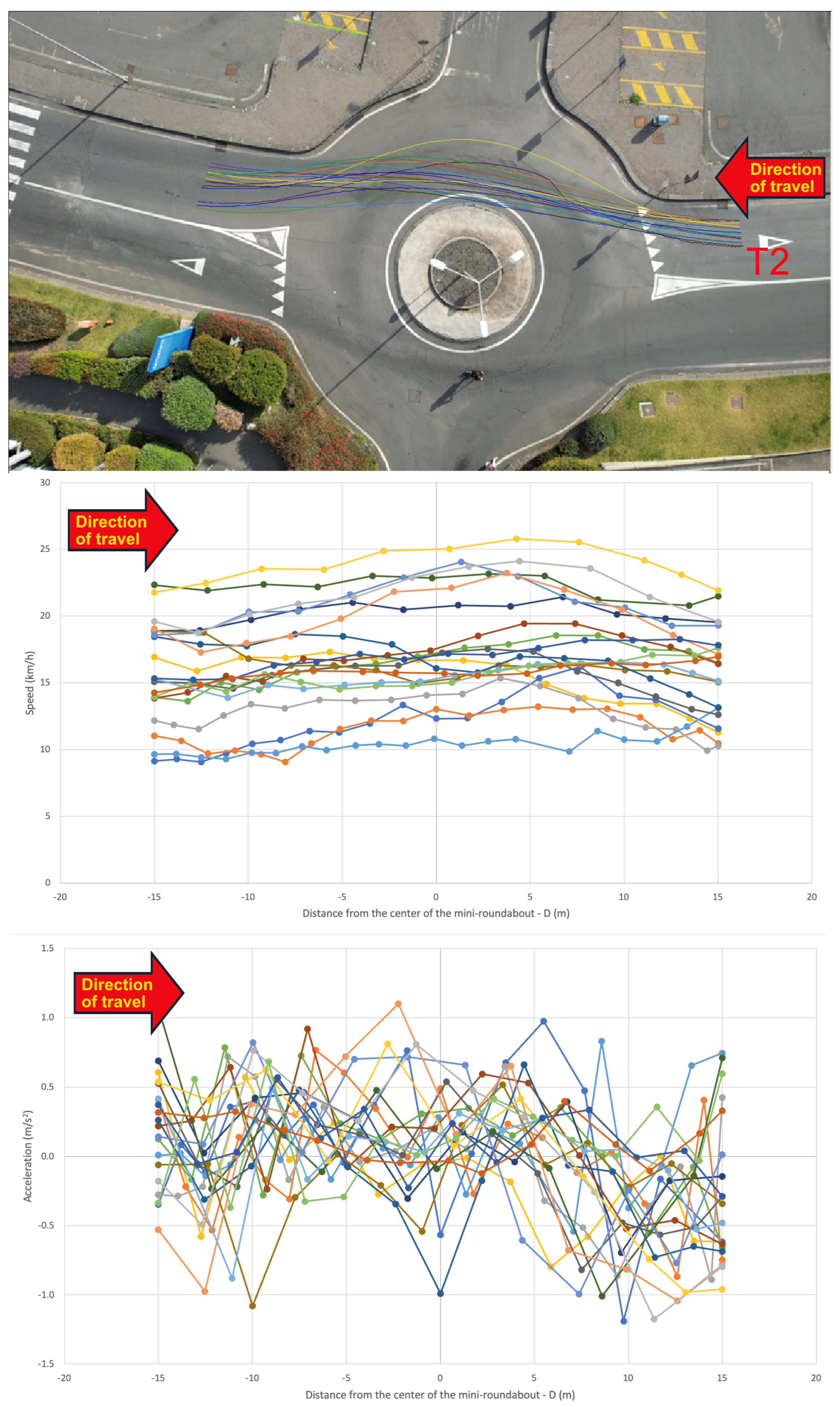
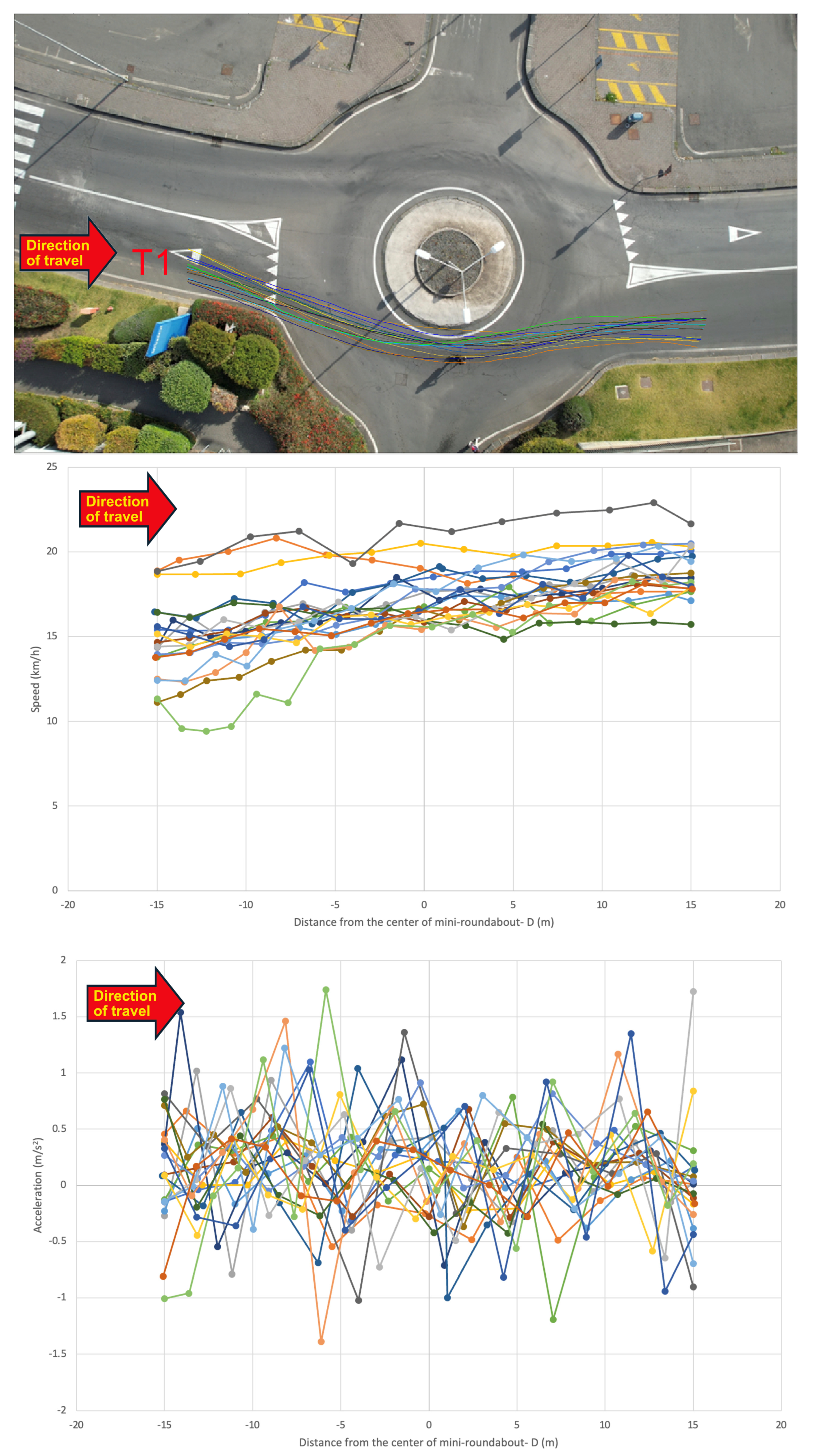
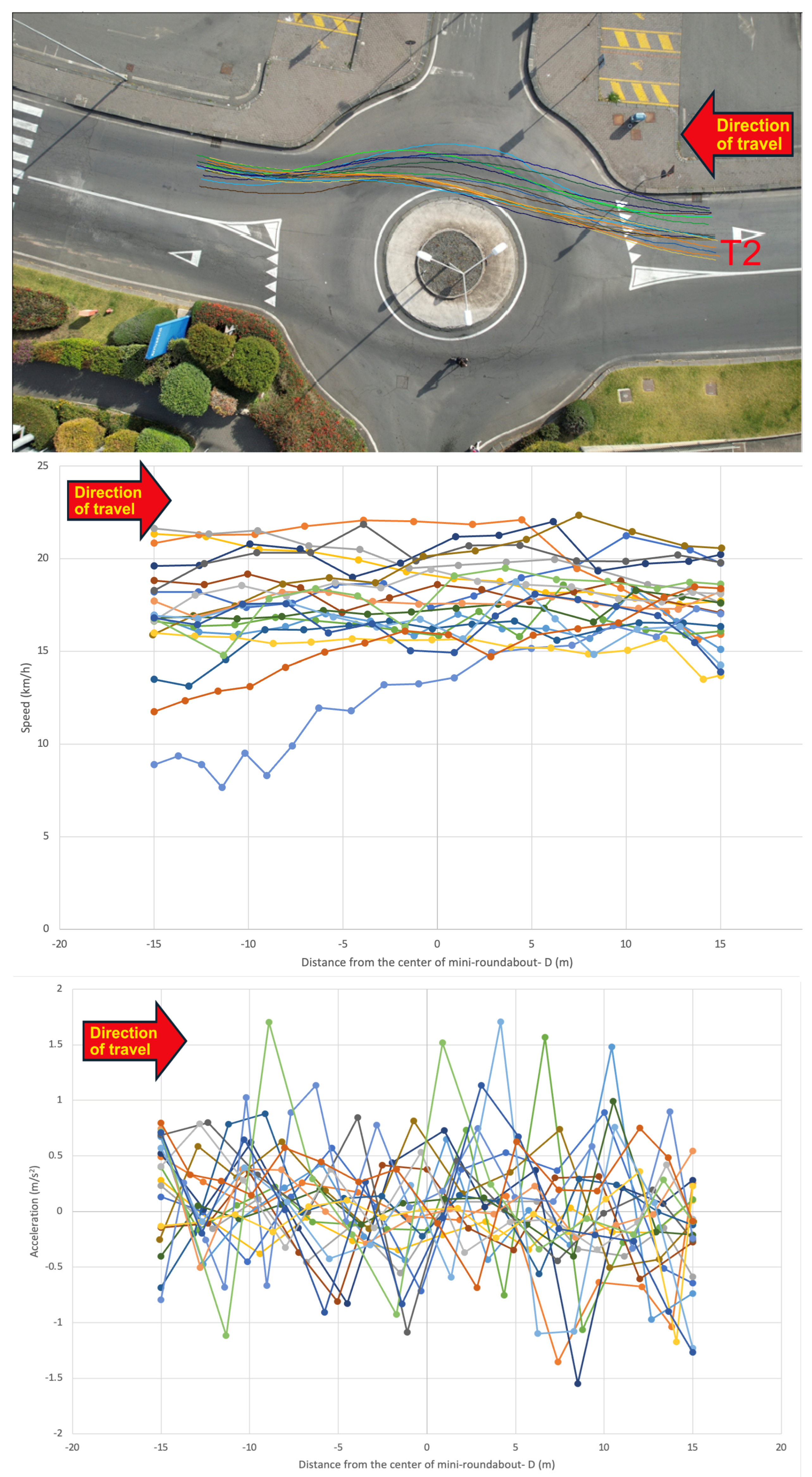
A total of 80 maneuvers were performed and recorded during the survey campaign, consisting of 20 test drives for each crossing trajectory (T1 and T2) and each vehicle type (e-scooter and bicycle). Each maneuver was analyzed using the Tracker software (version 6.3.4) to reconstruct the trajectories and extract the corresponding speed and acceleration profiles.
The results of the analysis are presented in the following figures (Figure 3, Figure 4, Figure 5 and Figure 6). A visual inspection of these figures reveals a significant volatility in the longitudinal acceleration profiles across all maneuvers. This volatility, characterized by rapid fluctuations between positive and negative values, is particularly pronounced in the e-scooter profiles (Figure 3 and Figure 4) compared to those of bicycles, indicating a continuous sequence of micro-adjustments during the crossing. An initial assessment tested whether trajectories T1 and T2 could be considered equivalent in users’ dynamic behavior. The comparison examined the three variables under study—speed (V), longitudinal acceleration (a), and curvature radius (R)—measured along each trajectory for both bicycles and electric scooters. To refine the analysis, the mini-roundabout traversal was partitioned into entry, circulation, and exit. From observed trajectories (Figure 3, Figure 4, Figure 5 and Figure 6), the entry phase ends 2 m after the entry line, the average distance at which users begin to change curvature; the exit phase begins 2 m before the exit line, when users typically initiate the exit curve. This segmentation enabled segment-by-segment comparisons aligned with standard maneuver phases. The objective was to determine whether the two opposing paths, characterized by different geometric deflections, produced systematic differences in these dynamic parameters for both vehicle types.
Regarding trajectory T1 (theoretical central radius 15.10 m; deflection angle β1 = 46°00′), Table 1 shows:
  • Entry: No significant differences in speed (14.98 vs. 14.81 km/h, p = 0.315) were found. However, there is a significant difference in longitudinal acceleration (0.21 vs. 0.28 m/s2, p = 0.042); curvature radius was larger for e-scooters (50.35 vs. 42.44 m, p = 0.0005), indicating wider lines.
  • Circulation: All variables differed; e-scooters had higher speeds (17.40 vs. 16.99 km/h, p = 0.002), greater acceleration (0.27 vs. 0.14 m/s2, p = 0.0015), and wider radii (64.14 vs. 23.26 m, p = 0.0001), consistent with smoother, less constrained riding.
  • Exit: Differences in curvature radius (142.62 vs. 105.40 m, p = 0.003) and mean speed (18.98 vs. 18.01 km/h, p = 0.008) were found; the <1 km/h speed gap suggests limited operational disparity. Acceleration did not differ (0.08 vs. 0.12 m/s2, p = 0.21).
For trajectory T2 (theoretical central radius 19.55 m; deflection angle β2 = 36°28′), Table 2 indicates:
  • Entry: Significant differences were found in speed and radius, but not acceleration. Bicycles were faster (16.79 vs. 15.04 km/h, p = 0.0001) and followed larger radii (30.10 vs. 24.02 m, p = 0.021); acceleration was 0.19 vs. 0.13 m/s2 (p = 0.31).
  • Circulation: All variables differed; bicycles reached slightly higher speeds (17.79 vs. 17.08 km/h, p = 0.0015) but showed lower acceleration (0.06 vs. 0.15 m/s2, p = 0.001) and narrower radii (23.32 vs. 35.14 m, p = 0.0001), indicating a more conservative line.
  • Exit: Differences were found across all variables; e-scooters exited at lower speeds (16.09 vs. 17.67 km/h, p = 0.0002), with larger radii (48.55 vs. 38.92 m, p = 0.008) and stronger deceleration (−0.31 vs. −0.11 m/s2, p = 0.0018), implying a less fluid transition.
Overall, kinematic parameters varied systematically by trajectory, confirming that the distinct geometry and deflection angle of T1 and T2 materially influence behavior for both bicycles and e-scooters.
Aggregating data across T1 and T2 is therefore unwarranted; the trajectories should be analyzed separately to characterize user behavior accurately. These patterns reflect the interaction between vehicle design characteristics and path geometry; treating the two paths as interchangeable would conceal mode-specific effects and bias inference. Separate modeling is therefore recommended for clarity.
After establishing that T1 and T2 are not equivalent for cross-mode comparisons, the analysis tested, within each vehicle type, whether dynamic behavior varied by trajectory. Speed (V), longitudinal acceleration (a), and curvature radius (R) were compared across entry, circulation, and exit phases.
Based on observed paths (Figure 3, Figure 4, Figure 5 and Figure 6), entry ends 2 m after the entry line (typical onset of curvature change) and exit begins 2 m before the exit line (onset of the exit curve). The goal was to identify trajectory-induced strategy shifts for each user category.
For bicycles (Table 3):
  • Entry: Speed differs significantly (14.98 km/h in T1 vs. 16.79 km/h in T2, p = 0.0001); curvature radius also differs (42.44 m vs. 30.10 m, p = 0.0005), while acceleration does not (0.21 vs. 0.19 m/s2, p = 0.65), indicating similar propulsive effort despite speed/path changes.
  • Circulation: Speed is higher in T2 (17.79 vs. 16.99 km/h, p = 0.0001), but acceleration is lower (0.06 vs. 0.14 m/s2, p = 0.015); mean radius is similar (23.26 vs. 23.32 m, p = 0.78), implying adjustments via speed/acceleration rather than geometry.
  • Exit: Acceleration and radius differ (0.12 to −0.11 m/s2, p = 0.0008; 105.40 to 38.92 m, p = 0.0001), while speed is similar (18.01 vs. 17.67 km/h, p = 0.15).
For e-scooters (Table 4):
  • Entry: Speed is similar (14.81 vs. 15.04 km/h, p = 0.45), but acceleration (0.28 vs. 0.13 m/s2, p = 0.004) and radius (50.35 vs. 24.02 m, p = 0.0001) differ, indicating trajectory and propulsion adjustments at entry.
  • Circulation: All variables differ—higher speed in T1 (17.40 vs. 17.08 km/h, p = 0.012), greater acceleration (0.27 vs. 0.15 m/s2, p = 0.001), and larger radius (64.14 vs. 35.14 m, p = 0.0001)—suggesting wider, stability-seeking lines under greater deflection angle.
  • Exit: All variables differ—higher speed in T1 (18.98 vs. 16.09 km/h, p = 0.0001), acceleration shifts from positive to negative (0.08 to −0.31 m/s2, p = 0.0001), and larger exit radius (142.62 vs. 48.55 m, p = 0.0001)—indicating smoother T1 transitions and sharper, decelerated T2 maneuvers.

5. Discussion

The comparative analysis of trajectories T1 and T2 for bicycles and e-scooters highlights systematic effects of roundabout geometry on micromobility dynamics. Although designed mainly for motor vehicles, geometric parameters shape user behavior. Specifically, among the different geometric characteristics of the mini-roundabout, the central circulatory radius and the corresponding deflection angle exert the greatest impact on speed and acceleration profiles. The central radius dictates the maximum lateral constraint, forcing users to implement compensatory longitudinal adjustments to maintain stability. T1 (central radius 15.10 m; deflection angle β1 = 46°00′) is more demanding than T2 (19.55 m; 36°28′), producing distinct adaptation strategies across segments.
In the entry of T1, no significant speed or acceleration differences emerged, likely due to the preceding straight section. The average curvature radius was nonetheless larger for e-scooters, indicating a tendency to set broader curves at onset, consistent with lower inherent stability and stronger deflection angle, and with evidence of wider, more variable trajectories among e-scooter users [29].
In the central section of T1, all variables—speed, curvature radius, acceleration—differed significantly. E-scooters traveled faster, accelerated more, and selected wider radii, favoring external lines to mitigate sharp deflection angle. Similar patterns—more reactive and unstable e-scooter behavior—were observed in conflict studies at urban roundabouts [28] and align with findings on stability sensitivity to curve geometry and speed [24].
In the exit of T1, differences narrowed for speed and acceleration, suggesting convergence of strategies, while a wider exit radius persisted for e-scooters, likely a stabilization response [42].
With T2’s lower deflection angle, mode differences became more evident at entry: bicycles maintained higher speeds and wider paths; e-scooters adopted narrower, more cautious trajectories. Acceleration did not differ significantly, implying geometry and maneuverability rather than propulsion intent drove behavior [61].
In the central section of T2, differences persisted but inverted relative to T1: e-scooters used narrower radii, lower speeds, and lower accelerations, indicating conservative strategies enabled by reduced deflection angles [62].
In the exit of T2, divergences intensified: e-scooters negotiated with lower speed, stronger deceleration, and tighter radii, consistent with controlled closures observed in small roundabouts under real traffic, further demonstrating that tight exit radii strongly govern deceleration demands [63].
Altogether, geometric deflection systematically affected paths and dynamics, with stronger effects for e-scooters. In T1, e-scooters compensated via wider, more external trajectories and active control; in T2, strategies were more restrained and safety-oriented. Micromobility users adapted to curvature and the deflection angle throughout, with heightened sensitivity in high-curvature segments [29].
For bicycles, entry differences across trajectories were significant: there were higher speeds and wider radii in T1 than T2, with comparable acceleration, indicating early path-planning responses to deflection angle [64]. In central segments, all variables diverged; in T2 cyclists rode faster with lower accelerations while keeping a similar radius, reflecting smoother dynamics under a reduced deflection angle [61], whereas T1’s sharper curvature required greater propulsion modulation, consistent with high-deflection angle settings [63]. At exit, cyclists used much wider radii in T1 (105.40 m vs. 38.92 m) and showed slight positive acceleration (0.12 m/s2) versus modest deceleration in T2 (−0.11 m/s2), aligning with anticipatory braking in tighter configurations [42].
For e-scooters, geometry-driven adaptation was more pronounced. At entry, curvature radius and acceleration differed significantly while speed was similar: in T1 the path was wider (50.35 m vs. 24.02 m) with higher acceleration (0.28 vs. 0.13 m/s2), consistent with stability-seeking under greater deflection angle [65]. In the central segment, all variables diverged: T1 featured higher speed, stronger thrust, and a wider radius than T2, in line with external, smoothing strategies; field observations similarly report wider, less-central e-scooter paths to preserve balance [29], and greater steering/braking complexity than bicycles [27]. At exit, differences persisted: T1 showed higher speed, positive acceleration (0.08 m/s2), and a radius nearly triple T2 (142.62 m vs. 48.55 m), whereas T2 involved sharp deceleration (−0.31 m/s2) and compact paths, reflecting conservative closure given stability limits, small wheels, and lack of a seat [66].
In sum, despite greater theoretical deflection angle, T1 was approached with smoother dynamics and wider paths—especially centrally and at exit—whereas T2 elicited more controlled behavior, greater deceleration, and narrower paths, particularly among e-scooters.
Observed responses reflect both geometry and the physical–mechanical characteristics of the vehicles involved [67,68]. In this context, the high volatility observed in the longitudinal acceleration profiles, characterized by a “sawtooth” pattern, warrants specific attention [27]. This phenomenon is a direct consequence of the inherent instability of micromobility vehicles, particularly e-scooters, which require the rider to perform constant corrective actions to maintain balance and trajectory while cornering [67,69]. Unlike motor vehicles, which typically exhibit smoother acceleration curves [68], micromobility users must frequently modulate their speed and thrust to compensate for lateral forces and tight geometric constraints [27,33]. These frequent braking and accelerating cycles represent a non-linear adaptation strategy, demonstrating the intense physical effort required to stabilize the vehicle within the roundabout [33,67,68].
Furthermore, analyzing these specific trajectories and kinematic profiles provides a critical foundation for advanced safety studies, particularly in developing surrogate safety measures (SSMs) for proactive risk assessment [69]. By quantifying deviations in speed, sudden longitudinal decelerations, and trajectory widening, this research identifies the mechanical thresholds where stability is compromised [70]. These kinematic footprints can be directly integrated into microsimulation models and video-conflict analysis tools to define mode-specific SSMs, such as the deceleration rate required to avoid a crash [71]. Consequently, identifying these pre-crash dynamic behaviors allows planners to proactively diagnose geometric risks and design infrastructural interventions before actual collisions occur [69,72].
Although this study analyzes a single mini-roundabout, the observed kinematic divergences suggest specific infrastructural interventions that could standardize e-scooter behavior and enhance safety in similar contexts. Potential countermeasures include the implementation of physically segregated micromobility lanes along the circulatory carriageway to guide trajectories and prevent excessive widening under high deflection angles [73]. To safely accommodate the unique performance envelope of e-scooters, specific design thresholds should be integrated into these interventions [74]. Based on the kinematic evidence from this study, it is recommended to limit the maximum entry deflection angle to approximately 35 degrees, as sharper angles (such as the 46 degrees in T1) trigger excessive lateral compensation and trajectory volatility. Furthermore, the aforementioned dedicated circulatory lanes should maintain a minimum width of 1.5 to 2.0 m to safely absorb the wider cornering radii inherent to this vehicle type without exposing riders to mixed-traffic conflicts.
Additionally, applying high-friction surface treatments would mitigate the stability issues inherent to e-scooters’ small wheels, while localized traffic calming measures at the approaches could ensure more uniform and manageable entry speeds for all micromobility users [75,76].

6. Conclusions

The analysis shows that roundabout geometry substantially conditions the dynamic behavior of micromobility users, with distinct effects for bicycles and electric scooters. This study contributes to the existing literature by providing direct, empirical kinematic comparisons between these vehicles in a curvilinear, constrained environment. Unlike previous research that predominantly relies on crash data, self-reported surveys, or simulated straight-line trajectories, this field experiment quantifies how specific geometric deflections uniquely dictate the dynamic behavior and stability of different micromobility modes. The two trajectories (T1, T2), defined by different geometric deflections, elicited non-interchangeable travel strategies across modes.
Cross-mode comparisons indicate that e-scooters exhibit more pronounced and consistent, mechanically constrained adaptations, with significant differences across segments and variables. Bicycles also adjust to geometry but display a more homogeneous response, less sensitive to the deflection angle.
These findings have regulatory implications. The marked divergences in kinematic and geometric profiles challenge the common practice—adopted in several frameworks, including Italy’s—of grouping both under a single “velocipede” category. E-scooters and bicycles present distinct vehicle types, with different stability, rider posture, dynamic behavior, and infrastructure interactions; uniform regulation is therefore technically inadequate and may undermine safety and functionality. To address this issue on a global scale, international regulatory bodies should move toward a weighted safety standard that distinctly categorizes micromobility vehicles based on their specific physical and operational demands. Such a framework must explicitly account for the profound stability disparities and the higher neuromuscular coordination required to operate e-scooters, especially during cornering and deceleration. By implementing weighted criteria—where infrastructure access, speed limits, and safety requirements are scaled according to the vehicle’s inherent dynamic footprint—policymakers can ensure more resilient and targeted safety regulations across diverse urban mobility networks.
Several limitations should be acknowledged. First, the small number of study participants (consisting of only twenty individuals) and the resulting dataset of 80 analyzed maneuvers represent an important constraint of this research. Specifically, the sample comprised young, experienced riders; inexperienced users or older populations might exhibit markedly different kinematic responses, particularly regarding balance control and braking modulation at critical entry and exit points. While adequate for an initial, paired-measure experimental design, this restricted sample size limits the ability to observe a comprehensive range of user profiles and heightens the potential for individual behavioral biases.
Additionally, observations were conducted without external interferences and with freely traveling users to isolate geometric effects, which constrains generalizability to congested or mixed-traffic settings. In real-world conditions, the presence of heavy vehicles would severely constrain the lateral freedom required for the “wider radii” strategy observed among e-scooters, potentially forcing riders into tighter, more unstable trajectories and increasing side-impact risks.
The analysis considered only two predefined trajectories; testing additional nodes and configurations would strengthen external validity. Furthermore, as the study exclusively measures speed, longitudinal acceleration, and curvature radius, there are no direct measurements of lateral acceleration, balance loss, or actual near-misses. Consequently, interpretations regarding stability, conflict risk, and safety outcomes are derived as deductions from the observed geometric and longitudinal profiles rather than direct field measurements.
These factors strongly qualify the findings, underscoring that the results are not fully conclusive regarding operational or safety performance in real-world conditions.
Future research should therefore significantly broaden the sample size to reduce potential biases and capture a wider array of driving profiles. Subsequent studies must expand observations to diverse urban contexts, incorporate more complex layouts, and evaluate real-world scenarios involving user interactions and traffic heterogeneity, enabling a fuller understanding of behavior under operational conditions. Therefore, rather than presenting a definitive study, this paper characterizes its conclusions as grounds for a robust working hypothesis to be further developed.
Considering the experimental evidence, regulatory reassessment appears warranted to distinguish the technical and dynamic characteristics of each vehicle type more precisely. Moving away from a single legal category for bicycles and e-scooters would better reflect observed behavioral differences and support safer, functionally coherent infrastructure and rules.

Author Contributions

Conceptualization, N.D. and S.L.; methodology, N.D., S.L. and M.L.; software, N.D. and S.L.; validation, N.D. and S.L.; formal analysis, N.D., S.L. and M.L.; investigation, N.D. and S.L.; resources, S.L.; data curation, N.D.; writing—original draft preparation, N.D. and S.L.; writing—review and editing, N.D., S.L. and M.L.; visualization, N.D., S.L. and M.L.; supervision, N.D. and S.L. All authors have read and agreed to the published version of the manuscript.

Funding

This research received no external funding.

Data Availability Statement

The original contributions presented in this study are included in the article. Further inquiries can be directed to the corresponding author.

Conflicts of Interest

The authors declare no conflicts of interest.

References

  1. Hardt, C.; Bogenberger, K. Usage of e-scooters in urban environments. Transp. Res. Procedia 2019, 37, 155–162. [Google Scholar] [CrossRef]
  2. Plazier, P.A.; Weitkamp, G.; van den Berg, A.E. The potential for e-biking among the younger population: A study of Dutch students. Travel Behav. Soc. 2017, 8, 37–45. [Google Scholar] [CrossRef]
  3. Şengül, B.; Mostofi, H. Impacts of e-micromobility on the sustainability of urban transportation: A systematic review. Appl. Sci. 2021, 11, 5851. [Google Scholar] [CrossRef]
  4. Yang, H.; Ma, Q.; Wang, Z.; Cai, Q.; Xie, K.; Yang, D. Safety of micro-mobility: Analysis of e-scooter crashes by mining news reports. Accid. Anal. Prev. 2020, 143, 105608. [Google Scholar] [CrossRef]
  5. McQueen, M.; Abou-Zeid, G.; Macarthur, J.; Clifton, K. Transportation transformation: Is micromobility making a macro impact on sustainability? J. Plan. Lit. 2020, 36, 46–61. [Google Scholar] [CrossRef]
  6. Fong, B.; Fong, A.C.M.; Hong, G. Sustainable micromobility management in smart cities. IEEE Trans. Intell. Transp. Syst. 2023, 24, 15890–15896. [Google Scholar] [CrossRef]
  7. Teixeira, J.F.; Silva, C.; Moura e Sá, F. Empirical evidence on the impacts of bikesharing: A literature review. Transp. Rev. 2020, 41, 329–351. [Google Scholar] [CrossRef]
  8. Dill, J.; Rose, G. Electric bikes and transportation policy: Insights from early adopters. Transp. Res. Rec. 2012, 2314, 1–6. [Google Scholar] [CrossRef]
  9. Bretones, A.; Marquet, O. Sociopsychological factors associated with the adoption and usage of electric micromobility: A literature review. Transp. Policy 2022, 127, 230–249. [Google Scholar] [CrossRef]
  10. Macarthur, J.; Dill, J.; Person, M. Electric bikes in North America. Transp. Res. Rec. 2014, 2468, 123–130. [Google Scholar] [CrossRef]
  11. Esztergár-Kiss, D.; Lopez Lizarraga, J.C. Exploring user requirements and service features of e-micromobility in five European cities. Case Stud. Transp. Policy 2021, 9, 1531–1541. [Google Scholar] [CrossRef]
  12. Bateman, L.B.; Fouad, M.N.; Sullivan, A.; Heider, L.; Oates, G.R. Barriers and facilitators to bikeshare programs: A qualitative study in an urban environment. J. Transp. Health 2021, 21, 101062. [Google Scholar] [CrossRef]
  13. Botsman, A.; Ponkratov, D.; Roslavtsev, D.; Pavlov, M. Evaluation of the equivalent trip distance using micromobility and public transit. Munic. Econ. Cities 2022, 6, 199–205. [Google Scholar] [CrossRef]
  14. Glavić, D.; Trpković, A.; Milenković, M.; Jevremović, S. E-scooter potential to change urban mobility—Belgrade case study. Sustainability 2021, 13, 5948. [Google Scholar] [CrossRef]
  15. Krauss, K.; Krail, M.; Axhausen, K.W. What drives the utility of shared transport services for urban travellers? A stated preference survey in German cities. Travel Behav. Soc. 2022, 26, 206–220. [Google Scholar] [CrossRef]
  16. Fitt, H.; Curl, A. The early days of shared micromobility: A social practices approach. J. Transp. Geogr. 2020, 86, 102779. [Google Scholar] [CrossRef]
  17. Kopplin, C.S.; Brand, B.M.; Reichenberger, Y. Consumer acceptance of shared e-scooters for urban and short-distance mobility. Transp. Res. Part D Transp. Environ. 2021, 91, 102680. [Google Scholar] [CrossRef]
  18. Mitra, R.; Hess, P.M. Who are the potential users of shared e-scooters? An examination of socio-demographic, attitudinal and environmental factors. Travel Behav. Soc. 2021, 23, 100–107. [Google Scholar] [CrossRef]
  19. Folco, P.; Gauvin, L.; Tizzoni, M.; Szell, M. Data-driven micromobility network planning for demand and safety. Environ. Plan. B 2023, 50, 2087–2102. [Google Scholar] [CrossRef]
  20. Schneeberger, T.; Schaffer, S.; Tsovaltzi, D.; Chehayeb, L.; Gebhard, P. Workshop on smart urban micromobility. In Proceedings of the Mensch und Computer (MuC) 2023, Rapperswil, Switzerland, 3–6 September 2023; Volume 2023, p. 104. [Google Scholar] [CrossRef]
  21. Sokołowski, M.M. Laws and policies on electric scooters in the European Union: A ride to the micromobility directive? Eur. Energy Environ. Law Rev. 2020, 29, 148–158. [Google Scholar] [CrossRef]
  22. Buongiorno, L.; Stellacci, A.; Cazzato, G.; Caricato, P.; De Luca, B.P.; Tarantino, F.; Baldassarra, S.L.; Ingravallo, G.; Marrone, M. Slow and steady wins the race: A comparative analysis of standing electric scooters’ European regulations integrated with the aspect of forensic traumatology. Sustainability 2022, 14, 6160. [Google Scholar] [CrossRef]
  23. Boglietti, S.; Ghirardi, A.; Turri Zanoni, C.; Ventura, R.; Barabino, B.; Maternini, G.; Vetturi, D. First experimental comparison between e-kick scooters and e-bikes’ vibrational dynamics. Transp. Res. Procedia 2022, 60, 114–121. [Google Scholar] [CrossRef]
  24. Pai, R.R.; Dozza, M. Understanding factors influencing e-scooterist crash risk: A naturalistic study of rental e-scooters in an urban area. Accid. Anal. Prev. 2025, 209, 107839. [Google Scholar] [CrossRef]
  25. Sabbaghian, M.H.; Llopis-Castelló, D.; García, A. Assessing micromobility safety on horizontal curves of bike lanes: A video motion analysis methodology. Traffic Saf. Res. 2024, 7, e000057. [Google Scholar] [CrossRef]
  26. Kemžuraitė, K.; Pukalskas, S.; Bureika, G. Investigation of vehicle stability on road curve in winter conditions. J. KONES Powertrain Transp. 2011, 18, 4. [Google Scholar]
  27. Dozza, M.; Li, T.; Billstein, L.; Svernlöv, C.; Rasch, A. How do different micro-mobility vehicles affect longitudinal control? Results from a field experiment. J. Saf. Res. 2023, 84, 24–32. [Google Scholar] [CrossRef]
  28. Li, R.; Liang, G.; Chen, Y.; Zhang, D.; Wang, B. Analysis of conflict distribution characteristics between motor vehicles and e-bikes at roundabouts. Appl. Sci. 2023, 13, 3475. [Google Scholar] [CrossRef]
  29. Distefano, N.; Leonardi, S.; Litrico, A. Analysis of driving behavior of micromobility vehicle users at mini-roundabouts. Appl. Sci. 2024, 14, 11944. [Google Scholar] [CrossRef]
  30. Nee, P.J.; Herterich, J.G. Modelling road cycling as motion on a curve. Sports Eng. 2022, 25, 12. [Google Scholar] [CrossRef]
  31. Distefano, N.; Leonardi, S. Sustainable mobility: A comparative analysis of vehicle interactions involving cars, e-scooters, and bicycles at urban intersections. Transp. Res. Procedia 2025, 90, 535–542. [Google Scholar] [CrossRef]
  32. Boufous, S.; Hatfield, J.; Grzebieta, R. The impact of environmental factors on cycling speed on shared paths. Accid. Anal. Prev. 2018, 110, 171–176. [Google Scholar] [CrossRef]
  33. Terranova, P.; Liu, S.Y.; Jain, S.; Engström, J.; Perez, M.A. Kinematic characterization of micro-mobility vehicles during evasive maneuvers. J. Saf. Res. 2024, 91, 342–353. [Google Scholar] [CrossRef]
  34. Bailly, N.; Schäuble, A.; Guesneau, M.; Wei, W.; Petit, Y. Assessing bicycle helmet protection for head and neck in e-scooter falls. Traffic Inj. Prev. 2025, 26, 866–873. [Google Scholar] [CrossRef]
  35. Richetta, C.; Karepov, Y. E-bikes (electrical bicycles and scooters) related neurosurgical injuries in the adult population: A single-center experience. Neurotrauma Rep. 2023, 4, 797–804. [Google Scholar] [CrossRef]
  36. Murros, O.; Puolakkainen, T.; Abio, A.; Thoren, H.; Snäll, J. Urban drinking and driving: Comparison of electric scooter and bicycle related accidents in facial fracture patients. Med. Oral Patol. Oral Cir. Bucal 2022, 28, e238–e246. [Google Scholar] [CrossRef] [PubMed]
  37. James, A.; Harrois, A.; Abback, P.S.; Moyer, J.D.; Jeantrelle, C.; Hanouz, J.L. Comparison of injuries associated with electric scooters, motorbikes, and bicycles in France, 2019–2022. JAMA Netw. Open 2023, 6, e2320960. [Google Scholar] [CrossRef] [PubMed]
  38. Fernandez, A.N.; Li, K.; Patel, H.V.; Allen, I.E.; Ghaffar, U.; Hakam, N.; Breyer, B.N. Injuries with electric vs. conventional scooters and bicycles. JAMA Netw. Open 2024, 7, e2424131. [Google Scholar] [CrossRef] [PubMed]
  39. Savitsky, B.; Radomislensky, I.; Goldman, S.; Kaim, A.; Israel Trauma Group; Bodas, M. Electric bikes and motorized scooters—Popularity and burden of injury: Ten years of national trauma registry experience. J. Transp. Health 2021, 22, 101235. [Google Scholar] [CrossRef]
  40. Cicchino, J.B.; Kulie, P.; McCarthy, M. Injuries related to electric scooter and bicycle use in a Washington, DC, emergency department. Traffic Inj. Prev. 2021, 22, 401–406. [Google Scholar] [CrossRef]
  41. Spörri, E.; Halvachizadeh, S.; Gamble, J.; Berk, T.; Allemann, F.; Pape, H.; Rauer, T. Comparison of injury patterns between electric bicycle, bicycle and motorcycle accidents. J. Clin. Med. 2021, 10, 3359. [Google Scholar] [CrossRef]
  42. Cumming, B. Roundabouts: Why they are dangerous for cyclists and what can be done about it. Transp. Eng. Aust. 2011, 13, 27–40. [Google Scholar]
  43. Saul, H.; Junghans, M.; Leich, A. Identifying hazardous locations at intersections by automatic traffic surveillance. In Proceedings of the 28th ICTCT Conference, Ashdod, Israel, 29–30 October 2015. [Google Scholar]
  44. Pérez-Zuriaga, A.M.; Dols, J.; Nespereira, M.; García, A.; Sajurjo-de-No, A. Analysis of the consequences of car to micromobility user side impact crashes. J. Saf. Res. 2023, 87, 168–175. [Google Scholar] [CrossRef]
  45. Zhang, C.; Ma, Y.; Sayed, T.; Guo, Y.; Chen, S.; Fu, Y. Exploring the impact of right-turn safety measures on e-bike—Heavy vehicle conflicts at signalized intersections. Accid. Anal. Prev. 2024, 206, 107722. [Google Scholar] [CrossRef]
  46. Al-Haideri, R.; Ismail, K.; Weiss, A. Modeling cyclists’ behavior at a roundabout approach. In Proceedings of the Canadian Society of Civil Engineering Annual Conference; Springer: Cham, Switzerland, 2023; Volume 2024, p. 2. [Google Scholar] [CrossRef]
  47. Hels, T.; Orozova-Bekkevold, I. The effect of roundabout design features on cyclist accident rate. Accid. Anal. Prev. 2007, 39, 300–307. [Google Scholar] [CrossRef]
  48. Møller, M.; Hels, T. Cyclists’ perception of risk in roundabouts. Accid. Anal. Prev. 2008, 40, 1055–1062. [Google Scholar] [CrossRef]
  49. Pulvirenti, G.; De Ceunynck, T.; Daniels, S.; Distefano, N.; Leonardi, S. Safety of bicyclists in roundabouts with mixed traffic: Video analyses of behavioural and surrogate safety indicators. Transp. Res. Part F Traffic Psychol. Behav. 2021, 76, 72–91. [Google Scholar] [CrossRef]
  50. Distefano, N.; Leonardi, S.; Kieć, M.; D’Agostino, C. Comparison of e-scooter and bike users’ behavior in mixed traffic. Transp. Res. Rec. 2024, 2679, 505–518. [Google Scholar] [CrossRef]
  51. Petzoldt, T.; Schleinitz, K.; Heilmann, S.; Gehlert, T. Traffic conflicts and their contextual factors when riding conventional vs. electric bicycles. Transp. Res. Part F Traffic Psychol. Behav. 2017, 46, 477–490. [Google Scholar] [CrossRef]
  52. Haworth, N.; Schramm, A.; Twisk, D. Comparing the risky behaviours of shared and private e-scooter and bicycle riders in downtown Brisbane, Australia. Accid. Anal. Prev. 2021, 152, 105981. [Google Scholar] [CrossRef] [PubMed]
  53. Ministero delle Infrastrutture e dei Trasporti. Functional and Geometric Standards for the Construction of Road Intersections (Norme Funzionali e Geometriche per la Costruzione Delle Intersezioni Stradali); D.M. 19 April 2006; Gazzetta Ufficiale della Repubblica Italiana n. 170; Istituto Poligrafico e Zecca dello Stato: Rome, Italy, 2006; Available online: https://www.gazzettaufficiale.it/eli/id/2006/07/24/06A06657/sg (accessed on 21 November 2025).
  54. Yang, Q.; Lu, F.; Ma, J.; Wang, J.; Wu, J.; Jiang, R.; Hu, H. Analyzing the delays of target lane vehicles caused by vehicle lane-changing operation. Sci. Rep. 2021, 11, 262. [Google Scholar] [CrossRef] [PubMed]
  55. Rosas-López, C.D.; Gaviria-Mendoza, C.A.; Calero-Valenzuela, C.A. Classification of driver behavior in horizontal curves of two-lane rural roads. Rev. Fac. Ing. 2021, 30, e13410. [Google Scholar] [CrossRef]
  56. Qi, G.; Du, Y.; Wu, J.; Xu, M. Leveraging longitudinal driving behaviour data with data mining techniques for driving style analysis. IET Intell. Transp. Syst. 2015, 9, 792–801. [Google Scholar] [CrossRef]
  57. Eboli, L.; Mazzulla, G.; Pungillo, G. Combining speed and acceleration to define car users’ safe or unsafe driving behavior. Transp. Res. Part C Emerg. Technol. 2016, 68, 113–125. [Google Scholar] [CrossRef]
  58. Frej, D.; Grabski, P.; Jurecki, R.S.; Szumska, E.M. Experimental study on longitudinal acceleration of urban buses and coaches in different road maneuvers. Sensors 2023, 23, 3125. [Google Scholar] [CrossRef]
  59. Leonardi, S.; Distefano, N. Roundabout trajectory planning: Integrating human driving models for autonomous vehicles. Sustainability 2023, 15, 16288. [Google Scholar] [CrossRef]
  60. Gu, T.; Dolan, J.M. Toward human-like motion planning in urban environments. In Proceedings of the 2014 IEEE Intelligent Vehicles Symposium (IV), Dearborn, MI, USA, 8–11 June 2014. [Google Scholar]
  61. Singleton, P.; Poudel, N. Bicycling comfort at roundabouts: Effects of design and situational factors. Transp. Res. Part F Traffic Psychol. Behav. 2023, 94, 227–242. [Google Scholar] [CrossRef]
  62. Jensen, S. Safe roundabouts for cyclists. Accid. Anal. Prev. 2017, 105, 30–37. [Google Scholar] [CrossRef]
  63. Poudel, N.; Singleton, P. Bicycle safety at roundabouts: A systematic literature review. Transp. Rev. 2021, 41, 617–642. [Google Scholar] [CrossRef]
  64. Aumann, P.; Pratt, K.; Papamiltiades, A. Bicycle safety at roundabouts. In Austroads; Kernich, G., Ed.; Austroads: Sydney, Australia, 2017; Austroads Publ. No. AP-R542-17; Available online: https://westcycle.org.au/wp-content/uploads/2024/03/AP-R542-17-Bicycle_Safety_at_Roundabouts.pdf (accessed on 21 May 2025).
  65. Schramm, A.; Haworth, N.; van den Dool, D.; Murphy, J.; Qu, X.; McDonald, M. Roundabout design and cycling safety. In Proceedings of the 3rd International Cycling Safety Conference (ICSC2014); Shepers, P., Ed.; 3rd International Cycling Safety Conference Organizing Committee: Gothenburg, Sweden, 2014; pp. 1–15. Available online: https://eprints.qut.edu.au/79323/ (accessed on 21 May 2025).
  66. Al-Haji, G. The impact of traffic calming measures on cyclists’ and e-cyclists’ safety. J. Traffic Logist. Eng. 2020, 8, 29–33. [Google Scholar] [CrossRef]
  67. Cai, G.; Parepally, N.; Zheng, L.; Lin, M.C. GM3: A General Physical Model for Micro-Mobility Vehicles. arXiv 2025, arXiv:2510.07807. [Google Scholar] [CrossRef]
  68. Micucci, A.; Mantecchini, L.; Bettazzi, G.; Scattolin, F. A Kinematic Analysis of Vehicle Acceleration from Standstill at Signalized Intersections: Implications for Road Safety, Traffic Engineering, and Autonomous Driving. Sustainability 2025, 17, 9332. [Google Scholar] [CrossRef]
  69. Johnsson, C.; Laureshyn, A.; De Ceunynck, T. In search of surrogate safety indicators for vulnerable road users: A review of surrogate safety indicators. Transp. Rev. 2018, 38, 765–785. [Google Scholar] [CrossRef]
  70. Kong, D.; Zhang, C.; Chen, F.; Li, C. Evaluating e-bike safety at unsignalized roundabouts using a Bayesian mixed logit model. Accid. Anal. Prev. 2025, 215, 108004. [Google Scholar] [CrossRef] [PubMed]
  71. Arun, A.; Haque, M.M.; Bhaskar, A.; Washington, S.; Sayed, T. A systematic mapping review of surrogate safety assessment using traffic conflict techniques. Accid. Anal. Prev. 2021, 153, 106016. [Google Scholar] [CrossRef]
  72. Laureshyn, A.; Svensson, Å.; Hydén, C. Evaluation of traffic safety, based on micro-level behavioural data: Theoretical framework and first implementation. Accid. Anal. Prev. 2010, 42, 1637–1646. [Google Scholar] [CrossRef]
  73. Ma, Q.; Yang, H.; Mayhue, A.; Sun, Y.; Huang, Z.; Ma, Y. E-Scooter Safety: The Riding Risk Analysis based on Mobile Sensing Data. Accid. Anal. Prev. 2020, 151, 105954. [Google Scholar] [CrossRef]
  74. Mitropoulos, L.; Stavropoulou, E.; Tzouras, P.; Karolemeas, C.; Kepaptsoglou, K. E-scooter micromobility systems: Review of attributes and impacts. Transp. Res. Interdiscip. Perspect. 2023, 21, 100888. [Google Scholar] [CrossRef]
  75. della Mura, M.; Failla, S.; Gori, N.; Micucci, A.; Paganelli, F. E-Scooter Presence in Urban Areas: Are Consistent Rules, Paying Attention and Smooth Infrastructure Enough for Safety? Sustainability 2022, 14, 14303. [Google Scholar] [CrossRef]
  76. Gössling, S. Integrating e-scooters in urban transportation: Problems, policies, and the prospect of system change. Transp. Res. Part D Transp. Environ. 2020, 79, 102230. [Google Scholar] [CrossRef]
Figure 1. Aerial view of the mini-roundabout under investigation, with an indication of the main geometric parameters describing the two analyzed trajectories (T1 and T2).
Land 15 00686 g001
Figure 2. Drone DJI Air 2S.
Land 15 00686 g002
Figure 3. Kinematic parameters for maneuver T1 performed by e-scooters.
Land 15 00686 g003
Figure 4. Kinematic parameters for maneuver T2 performed by e-scooters.
Land 15 00686 g004
Figure 5. Kinematic parameters for maneuver T1 performed by bicycles.
Land 15 00686 g005
Figure 6. Kinematic parameters for maneuver T2 performed by bicycles.
Land 15 00686 g006
Table 1. Statistical comparison between e-scooters and bikes along the 3 segments of trajectory T1.
Parameter—SegmentMean Value (E-Scooter)Mean Value (Bicycle)Shapiro p-Value (Differences)Normality Outcome (Differences)Statistical Testp-ValueStatistical Test Outcome
Speed (km/h)—Entry (T1)14.8114.980.15Normal distributionPaired t-test0.315No significant difference
Acceleration (m/s2)—Entry (T1)0.280.210.085Normal distributionPaired t-test0.042Significant difference
Radius (m)—Entry (T1)50.3542.440.012Non-normal distributionWilcoxon0.0005Significant difference
Speed (km/h)—Circulation (T1)17.416.990.22Normal distributionPaired t-test0.002Significant difference
Acceleration (m/s2)—Circulation (T1)0.270.140.035Non-normal distributionWilcoxon0.0015Significant difference
Radius (m)—Circulation (T1)64.1423.260.004Non-normal distributionWilcoxon0.0001Significant difference
Speed (km/h)—Exit (T1)18.9818.010.41Normal distributionPaired t-test0.008Significant difference
Acceleration (m/s2)—Exit (T1)0.080.120.18Normal distributionPaired t-test0.21No significant difference
Radius (m)—Exit (T1)142.62105.40.025Non-normal distributionWilcoxon0.003Significant difference
Table 2. Statistical comparison between e-scooters and bikes along the 3 segments of trajectory T2.
Parameter—SegmentMean Value (E-Scooter)Mean Value (Bicycle)Shapiro p-Value (Differences)Normality Outcome (Differences)Statistical Testp-ValueStatistical Test Outcome
Speed (km/h)—Entry (T2)15.0416.790.18Normal distributionPaired t-test0.0001Significant difference
Acceleration (m/s2)—Entry (T2)0.130.190.22Normal distributionPaired t-test0.31No significant difference
Radius (m)—Entry (T2)24.0230.10.045Non-normal distributionWilcoxon0.021Significant difference
Speed (km/h)—Circulation (T2)17.0817.790.11Normal distributionPaired t-test0.0015Significant difference
Acceleration (m/s2)—Circulation (T2)0.150.060.03Non-normal distributionWilcoxon0.001Significant difference
Radius (m)—Circulation (T2)35.1423.320.015Non-normal distributionWilcoxon0.0001Significant difference
Speed (km/h)—Exit (T2)16.0917.670.35Normal distributionPaired t-test0.0002Significant difference
Acceleration (m/s2)—Exit (T2)−0.31−0.110.42Normal distributionPaired t-test0.0018Significant difference
Radius (m)—Exit (T2)48.5538.920.025Non-normal distributionWilcoxon0.008Significant difference
Table 3. Statistical comparison between bike trajectories T1 and T2 across the 3 segments of the path.
Segment
(Vehicle)
ParameterMean T1Mean T2Shapiro p-Value (Differences)Normality Outcome (Differences)Statistical Testp-ValueTest Outcome
Entry
(Bicycle)
Speed (km/h)14.9816.790.02Non-normal distributionWilcoxon0.0001Significant difference
Entry
(Bicycle)
Acceleration (m/s2)0.210.190.51Normal distributionPaired t-test0.65No significant difference
Entry
(Bicycle)
Radius (m)42.4430.10.01Non-normal distributionWilcoxon0.0005Significant difference
Circulation
(Bicycle)
Speed (km/h)16.9917.790.035Non-normal distributionWilcoxon0.0001Significant difference
Circulation
(Bicycle)
Acceleration (m/s2)0.140.060.14Normal distributionPaired t-test0.015Significant difference
Circulation
(Bicycle)
Radius (m)23.2623.320.008Non-normal distributionWilcoxon0.78No significant difference
Exit
(Bicycle)
Speed (km/h)18.0117.670.62Normal distributionPaired t-test0.15No significant difference
Exit
(Bicycle)
Acceleration (m/s2)0.12−0.110.04Non-normal distributionWilcoxon0.0008Significant difference
Exit
(Bicycle)
Radius (m)105.438.920.005Non-normal distributionWilcoxon0.0001Significant difference
Table 4. Statistical comparison between e-scooter trajectories T1 and T2 across the 3 segments of the path.
Segment
(Vehicle)
ParameterMean T1Mean T2Shapiro p-Value (Differences)Normality Outcome (Differences)Statistical Testp-ValueTest Outcome
Entry
(E-Scooter)
Speed (km/h)14.8115.040.15Normal distributionPaired t-test0.45No significant difference
Entry
(E-Scooter)
Acceleration (m/s2)0.280.130.08Normal distributionPaired t-test0.004Significant difference
Entry
(E-Scooter)
Radius (m)50.3524.020.002Non-normal distributionWilcoxon0.0001Significant difference
Circulation
(E-Scooter)
Speed (km/h)17.417.080.015Non-normal distributionWilcoxon0.012Significant difference
Circulation
(E-Scooter)
Acceleration (m/s2)0.270.150.025Non-normal distributionWilcoxon0.001Significant difference
Circulation
(E-Scooter)
Radius (m)64.1435.140.001Non-normal distributionWilcoxon0.0001Significant difference
Exit
(E-Scooter)
Speed (km/h)18.9816.090.03Non-normal distributionWilcoxon0.0001Significant difference
Exit
(E-Scooter)
Acceleration (m/s2)0.08−0.310.12Normal distributionPaired t-test0.0001Significant difference
Exit
(E-Scooter)
Radius (m)142.6248.550.04Non-normal distributionWilcoxon0.0001Significant difference
Disclaimer/Publisher’s Note: The statements, opinions and data contained in all publications are solely those of the individual author(s) and contributor(s) and not of MDPI and/or the editor(s). MDPI and/or the editor(s) disclaim responsibility for any injury to people or property resulting from any ideas, methods, instructions or products referred to in the content.