Article

Source Apportionment and Risk of Soil Heavy Metals in Beijing–Tianjin–Hebei Major Function-Oriented Zone


1
School of Geographic and Environment, Jiangxi Normal University, Nanchang 330027, China
2
Institute of Geographic Sciences and Natural Resources Research, Beijing 100020, China
*
Author to whom correspondence should be addressed.
Land 2026, 15(4), 661; https://doi.org/10.3390/land15040661
Submission received: 5 March 2026 / Revised: 29 March 2026 / Accepted: 10 April 2026 / Published: 17 April 2026

Abstract

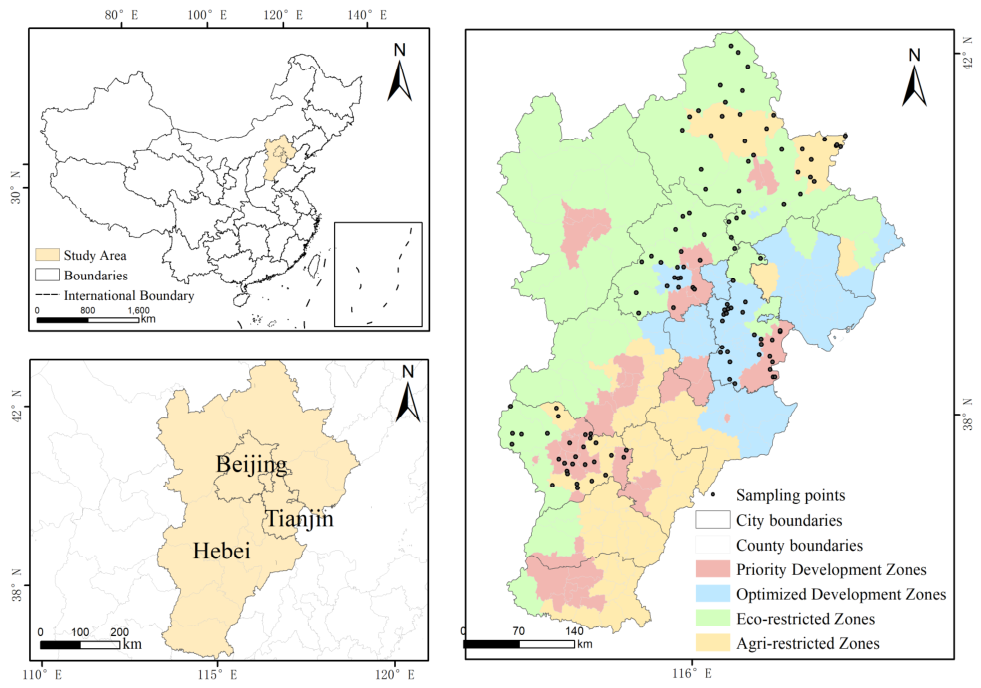
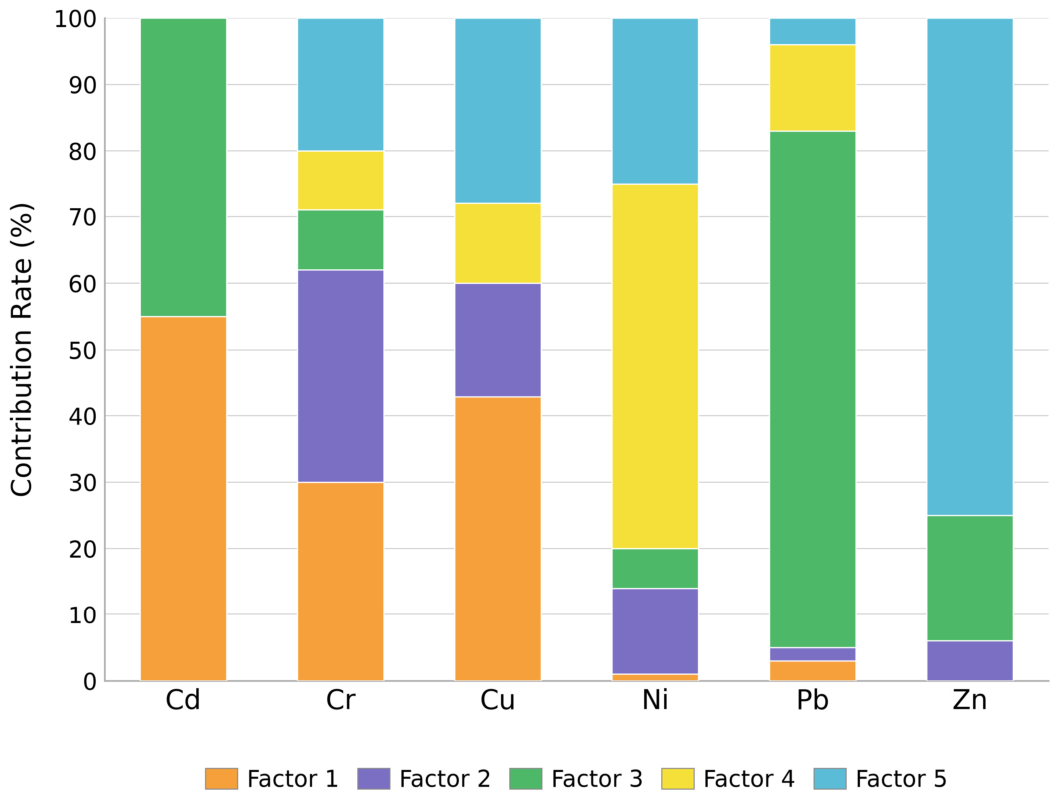
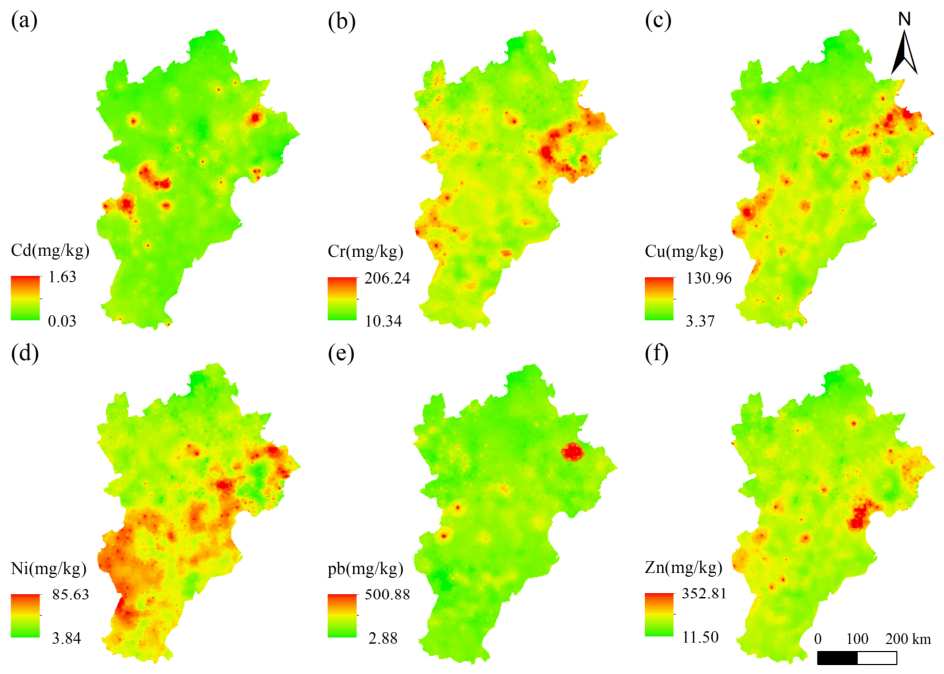
Managing soil heavy metal pollution is pivotal for the sustainable development of the Beijing–Tianjin–Hebei (BTH) urban agglomeration. This study integrated geostatistical methods, Principal Component Analysis, and Positive Matrix Factorization (PMF) to characterize “source–sink” dynamics across diverse Main Functional Zones. Results revealed distinct pollution landscapes: Key Development Zones exhibited high-risk accumulation driven by multi-source superposition, while Ecological-restricted Zones, despite overall low pollution levels, faced significant anomalous enrichment of Cadmium (Cd). Source apportionment confirmed that this spatial differentiation stems from the coexistence of “in situ accumulation” and “source–sink misalignment” mechanisms. The former is driven by high-intensity industrial agglomeration, whereas the latter is governed by cross-boundary atmospheric transport and the topographic blocking of emissions from the plains. This research demonstrates for the first time the joint shaping effect of national spatial planning and natural geographical processes on regional pollution patterns. Accordingly, a precise management framework incorporating source reduction, cross-boundary synergy, and spatial reorganization is proposed, providing a new paradigm for addressing environmental risks caused by unbalanced development in rapidly urbanizing regions.
Keywords: soil heavy metals; source apportionment; risk assessment; main functional areas; zoned management soil heavy metals; source apportionment; risk assessment; main functional areas; zoned management