Article

A Study on the Supply–Demand Relationship of Cultural Ecosystem Services in the Changbai Mountain Tourism Area

College of Geography and Ocean Sciences, Yanbian University, Yanji 133002, China
*
Authors to whom correspondence should be addressed.
Land 2026, 15(4), 650; https://doi.org/10.3390/land15040650
Submission received: 13 February 2026 / Revised: 10 April 2026 / Accepted: 13 April 2026 / Published: 15 April 2026
(This article belongs to the Special Issue Human–Environment Interactions in Land Use and Regional Development)

Abstract

Cultural ecosystem services (CES) provide non-material benefits that support human well-being and motivate ecosystem conservation, yet their subjectivity and spatial ambiguity complicate quantitative assessment and management. Taking the Changbai Mountain tourism area as a case, we adopted the ecosystem service matrix method to assess the CES supply score based on the natural system and human system. The service coverage density was obtained through accessibility, thereby quantifying the available supply index for each tourist source area. In addition, we quantified CES demand using a questionnaire survey. Demand for 10 CES types was measured via preference ranking and integrated with the entropy weight method; statistical analysis and GIS mapping were used to examine spatial patterns and influencing factors. Results show that: (1) The overall CES demand in the Changbai Mountain tourism area exhibits clear spatial differentiation, with higher demand in the central and eastern regions and lower demand in the northwest. High-demand areas are mainly concentrated in cities relatively close to the Changbai Mountain tourism area. (2) Among individual CES, recreation (r = 6.58), natural landscapes (r = 6.35), and aesthetic value (r = 6.19) receive the highest demand, and demand structure is significantly associated with occupation, education level, consumption level, and spatial distance. The results indicate that cultural services dominated by knowledge-based services are significantly positively correlated with educational level (r = 0.549, p < 0.001). (3) CES supply capacity shows strong seasonal fluctuations, and is frequently overloaded during peak seasons, leading to prominent supply–demand conflicts; with the exception of Shenyang, Dalian, Jilin and Anshan, the other 17 cities exhibit supply–demand imbalance. By integrating multiple CES types and multiple drivers, this study reveals spatial matching patterns of CES supply and demand in a complex mountain ecotourism region and provides evidence to support ecotourism management, service capacity improvement, and sustainable development.

1. Introduction

Cultural ecosystem services (CES) are regarded as the intangible benefits that humans obtain from ecosystems through spiritual satisfaction, cognitive development, reflection, recreation, aesthetic experiences, etc. [1]. These services include various CES, such as cultural heritage, spiritual and religious values, recreation and leisure, etc. [2,3]. CES can offer health and wellness benefits, as well as opportunities for outdoor recreation, helping individuals maintain their physical and mental health and enhance their quality of life [4]. At the same time, by offering diverse natural landscapes and organisms, CES contributes to raising public awareness of ecosystem conservation [5]. However, compared with other ecosystem services, CES are often considered subjective and difficult to quantify [2]. Furthermore, the ambiguous spatial unit of CES also poses challenges for assessment and mapping [6].
The supply of CES refers to the capacity and process through which ecosystems deliver CES to human society based on their structure, functions, and cultural attributes [7]. Ghasemi et al. [8] argue that the spatial regions with ecotourism potential, landscape recreation value, and suitability for ecotourism activities can be identified as supply areas for recreation services. For example, wetlands that attract bird habitats serve as supply areas for birdwatching services, and regions equipped with coastal stairs and other infrastructure are supply areas for recreational services [9]. Currently, an increasing number of studies assessing CES supply capacity have focused on outdoor recreation and leisure [10,11], mainly using approaches such as the travel cost method (TCM), contingent valuation method (CVM), and willingness to pay (WTP) method [12,13,14]. As greater attention has been paid to the experience of CES, the recreation opportunity spectrum (ROS) method has been developed [15,16]. However, studies addressing health and wellness values, scientific research values, and aesthetic values remain limited. Overall, the existing evaluation system for CES is still incomplete, and the research content is relatively narrow. Systematic research on the supply–demand relationship of CES will help to expand the depth of CES research. The demand for CES generally refers to the total amount of CES used by people within a given time period and region [17]. In the process of CES provision, mainly non-marketized CES, such as inspiration and religious values, are provided [18], while only a small portion involves significant marketized CES, such as tourism services [18,19]. In addition, CES demand mapping is commonly based on the addresses of service beneficiaries [20] or on locations where beneficiaries directly enjoy services from a landscape perspective [21].
In recent years, the quantitative assessment of the supply–demand relationship of CES has advanced. Zhang et al. [22] identified respondents’ preferences for various CES through a questionnaire survey, quantified the supply of CES on the Qinghai–Tibet Plateau using the SolVES model, and quantified CES demand using kernel density estimation based on tourism websites. They categorized both supply and demand into four levels based on their mean values to generate different supply–demand combinations and further evaluated CES supply–demand relationships using a bivariate matrix approach. Liu et al. [23] evaluated the supply–demand relationship of recreational services in Guangzhou through hotspot analysis. Peng et al. [24] applied an ecosystem services matrix to calculate the supply–demand budget for recreation, ecotourism, and landscape aesthetic services in the Pearl River Delta, using a supply–demand index to represent the balance level. The assessment of CES supply–demand relationships can also be achieved by constructing a supply–demand indicator system and using the entropy weight method to calculate a coupling coordination index to evaluate the degree of matching [25]. In general, quantitative assessment methods for CES supply–demand relationships remain limited and are mainly concentrated on recreational services. Therefore, it is necessary to broaden the range of service types and adopt appropriate methods for evaluating supply–demand relationships.
In terms of spatial scale, as the CES supply–demand assessment continues to develop, many studies have focused on medium- and small-scale landscapes such as watersheds, green spaces, protected areas, and urban regions [17,26,27,28], but research on tourism areas at larger spatial scales remains limited. As a typical complex ecotourism region in Northeast China, the Changbai Mountain tourism area is one of the world’s most well-preserved forest ecosystems [29]. The Changbai Mountain region is rich in tourism resources, with volcanic landforms as the core feature, supplemented by fluvial and glacial–periglacial landscapes, diverse flora and fauna, and unique folk culture and cultural landscapes. From April to October, the climate in the Changbai Mountain tourism area is relatively comfortable [30], and its unique and tourism landscapes attract a large number of tourists, resulting in significant seasonal fluctuations in tourist arrivals. The development of infrastructure and transportation has significantly enhanced the CES supply capacity of the Changbai Mountain tourism area. Therefore, taking Changbai Mountain as the study area to systematically analyze its CES supply characteristics, demand structure, and spatial matching relationships not only helps to reveal the unique patterns of CES supply and demand in a composite ecotourism region but also provides methodological references and case support for ecosystem services research in large-scale, highly heterogeneous regions.
As a composite ecotourism region, Changbai Mountain’s research particularity lies in its integration of a nature reserve, a world-class tourist destination, the cradle of multiple ethnic cultures, and a sensitive mountain ecosystem, thus forming a more complex social–ecological system than a single-type protected area. This study selects the Changbai Mountain tourism area as the research site to explore the internal mechanisms of CES supply–demand relationships. The goal is to identify the causes of supply–demand imbalances and, through scientific spatial governance, transform the immense utilization value of CES into an internal driving force for ecological conservation and the sustainable development of the tourism area. This research uses the annual tourist reception capacity to represent CES supply capacity, quantifies demand through preference analysis for 10 individual cultural services (e.g., natural landscapes), and derives the overall demand for CES using the entropy weight method. The supply–demand relationships and influencing factors are analyzed with IBM SPSS Statistics 27. Finally, ArcGIS 10.2 is used to map demand levels and supply–demand balance, providing data support for the management and construction of the tourism area.

2. Materials and Methods

2.1. Study Area

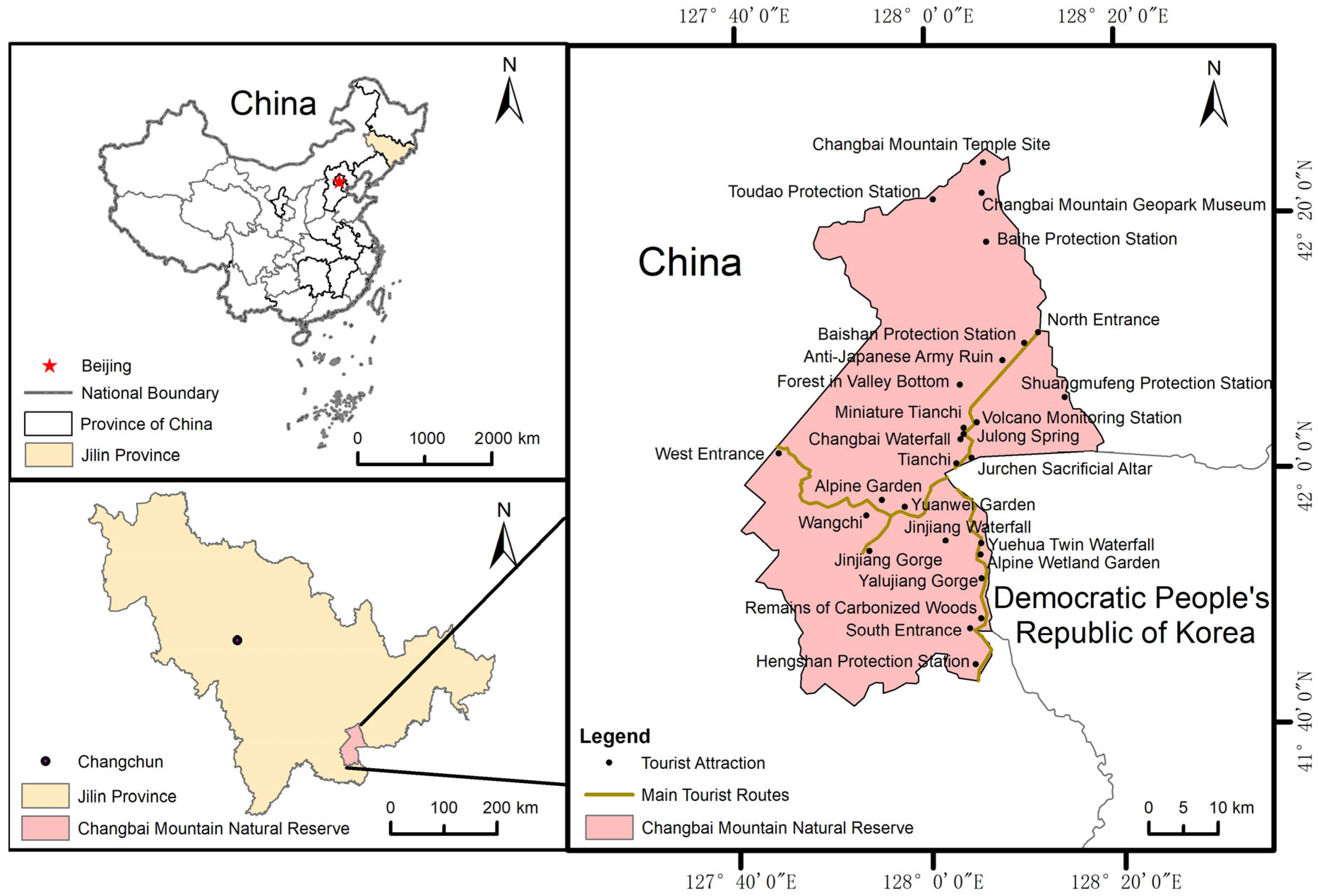
The Changbai Mountain region is located in southeastern Jilin Province, China, on the border with the Democratic People’s Republic of Korea. It is the highest mountain range on the eastern coast of the Eurasian continent. The officially verified area of the nature reserve is 196,465 hm2 (1993). The center of the study area is located at 127°48′00″ E, 41°57′36″ N. Its core landmark, Tianchi (a crater lake), is situated at the main peak of Changbai Mountain in the North Scenic Area of Erdaobaihe Town, Antu County. It serves as the source of the Songhua River, the Tumen River, and the Yalu River, forming a radially distributed river system. The study area has a temperate continental mountain climate influenced by monsoons, characterized by dry and windy springs, warm and humid summers, cool autumns, and long, cold winters. The average annual temperature ranges from 2 to 5 °C, and the cumulative annual precipitation ranges from 600 to 1000 mm [29]. The Changbai Mountain area offers a wide variety of tourism types, with ecotourism as the core, integrated with leisure vacation and cultural experience. Its major scenic spots include Tianchi, Changbai waterfall, alpine garden, julong spring, Jinjiang gorge and other attractions. The location of the study area is shown in Figure 1.

2.2. Data Sources and Processing

2.2.1. Questionnaire Survey

To assess the demand characteristics of CES in the Changbai Mountain tourism area, this study employed a questionnaire survey method. The objective was to directly capture tourists’ subjective perceptions and preferences for 10 specific CES types, providing a database for subsequent calculation of demand indices. In addition, the survey enables analysis of heterogeneity in CES demand among tourist groups with different sociodemographic characteristics and travel behaviors. Linking tourists’ residential locations with their CES demand data facilitates the mapping and analysis of spatial demand patterns.
The questionnaire consisted of four main parts:
  • Basic respondent information, including gender, age, occupation, place of residence, education level, and consumption level;
  • Travel information: travel season, number of visits, duration of stay, and transportation mode;
  • Satisfaction with services provided by the tourism area and suggestions for improvement;
  • Importance ranking of 10 cultural services: natural landscapes, landform features, aesthetic value, recreation, health and wellness value, plant appreciation, scientific research, ecological knowledge, environmental education, and cultural value [2,3,22,31,32,33]. Respondents assigned scores based on their personal perceptions.
A total of 163 questionnaires were distributed between October and November 2025, with a response rate of 100%. Among them, 153 questionnaires were valid, accounting for 93.87% of the total sample. The respondents’ ages covered five ranges: under 18, 18–35, 36–50, 51–65, and over 65. Respondents under 50 years old accounted for 93.46% of the sample. Students and company employees accounted for 45.75% and 47.71%, respectively, and 71.24% of respondents had a bachelor’s degree or above.

2.2.2. Statistical and Map Data

Statistical data, including the annual number of visitors received by the main Changbai Mountain tourism area, were obtained from the Administrative Committee of Changbai Mountain Protection and Development Zone, Jilin Province (AC of CBMPDZ, Jilin Province), and were used to assess CES supply. Vector maps were obtained from the National Platform for Common Geospatial Information Services, and all base maps were used with the Albers equal-area conic projection for CES demand mapping and supply–demand relationship visualization.

2.3. Supply Assessment

2.3.1. Weight Determination Using Analytic Hierarchy Process

To determine the relative importance of different components in CES supply, we employed the Analytic Hierarchy Process (AHP) [34]. The AHP procedure involved three steps:
  • Constructing a pairwise comparison matrix using Saaty’s nine-point scale (1 = equally important, 9 = extremely more important);
  • Calculating the eigenvector to derive the weights;
  • Checking the consistency of the judgments using the consistency ratio (CR), where CR < 0.10 is considered acceptable.
Based on the cultural ecosystem services assessment framework proposed by Burkhard et al. [19,35,36], the CES supply is jointly determined by natural and human systems. A panel of five experts with backgrounds in tourism geography and ecosystem services was invited to perform pairwise comparisons. Considering that the natural system serves as the core foundation and value source of CES, while the human system mainly plays a supporting and realizing role, the expert panel assigned a value of 2 (weak or slight importance) to the comparison “Natural system–Human system”. The resulting judgment matrix and weights are shown in Table 1.
Following the same procedure, the weights for the seven sub-dimensions (three natural system dimensions and four human system dimensions) were calculated. The complete pairwise comparison matrices for all sub-dimensions are provided in Appendix A.

2.3.2. Scoring Criteria and Seasonal Assessment

Each dimension was scored on a five-point scale (1 = very low, 2 = low, 3 = medium, 4 = high, 5 = very high) based on expert evaluation informed by official statistics and field observations. The specific scoring criteria are shown in Appendix A. Additionally, based on the tourist flow and other data provided by AC of CBMPDZ, Jilin Province, scores were assigned to each CES dimension (Table 2). The comprehensive CES supply scores for different seasons (Sr) were obtained via weighted summation with the specific calculation formula as follows:
S r = 0.67 × p = 1 3 G p r × C p + 0.33 × q = 1 4 H q r × E q ,
Among them, Gpr represents the score of the p-th dimension of the natural system in season r, Cp represents the weight of the p-th dimension of the natural system, Hqr represents the score of the q-th dimension of the human system in season r, and Eq represents the weight of the q-th dimension of the human system.
Subsequently, the overall CES supply score (Sa) for the Changbai Mountain Tourist Area was calculated using the following formula.
S a = r = 1 t S r t ,
where t denotes the number of seasons.
Recent studies have emphasized that focusing only on annual or interdecadal changes in ecosystem service supply and demand may ignore critical seasonal variations, which can have substantial impacts on human well-being and sustainable development [41]. Indeed, seasonal factors significantly influence people’s preferences for and consumption of cultural ecosystem services [42].
The scoring was conducted separately for four seasons (spring, summer, autumn, winter) to capture the pronounced seasonal variability in CES supply in the Changbai Mountain region. Although some human system dimensions, such as reception capacity and service facilities, are physically fixed in terms of infrastructure stock, their effective availability varies significantly across seasons due to differences in operational status, staffing levels, and visitor management strategies during peak versus off-peak periods [43,44]. Seasonal scoring therefore provides a more realistic representation of the actual supply available to tourists throughout the year.

2.3.3. Accessibility and Supply Availability

The three core accessibility indicators of traffic time, traffic mode, and traffic frequency obtained from Railway 12306 and AutoNavi Map API are obtained by the entropy weight method and the min–max normalization method to obtain the supply accessibility index (Ai) of each source i. The actual available CES supply index Si for each tourist source region i is obtained by multiplying the CES supply source intensity (Sa) of the tourist area and the accessibility (Ai) of the source region, which quantifies the spatial radiation of the CES supply capacity of the Changbai Mountain tourism area to tourist source regions [45]. The formula is as follows:
S i = S a × A i ,
This multiplicative formulation is methodologically grounded in two established traditions. Firstly, in accessibility research, the potential model, first proposed by Hansen et al. [46] and comprehensively reviewed by Geurs et al. [47], defines the accessibility of a location as the sum (or product) of opportunities weighted by a travel impedance function—a mathematical form analogous to our formulation. Secondly, in tourism geography, the gravity model similarly models interaction flows as the product of destination attractiveness and a function of accessibility [48]. Within the CES assessment literature, studies have operationalized this logic by combining attractiveness and accessibility indices to derive comprehensive service indices. For example, Shang et al. [49] explicitly employed this approach in a tourism-oriented region in China, combining attractiveness and accessibility indices to derive an integrated ecosystem service index.
Empirically, recent studies have validated the importance of accessibility in shaping CES actual utilization. Crouzat et al. [50] examined CES actual use in mountain protected areas and found that accessibility alone could explain approximately 50% of the variability in CES use, and when combined with supply intensity indicators, the explanatory power reached nearly 80%. This finding underscores that accessibility is not merely a secondary factor but a primary determinant of whether supply capacity translates into actual benefits.
Therefore, for a large mountain ecotourism destination like the Changbai Mountain tourism area, it is methodologically defensible to calculate the actual supply index available to source markets as the product of supply intensity (Sa) and accessibility (Ai).

2.4. Demand Quantification and Mapping

To quantify and visualize the spatial patterns of CES demand, this study, based on questionnaire data, first calculated indices for individual CES demand and overall CES demand, followed by spatial classification, mapping, and analysis of influencing factors.

2.4.1. Quantification of Individual CES Demand

Respondents ranked the importance of 10 CES. The highest-ranked service was assigned a value of 10, decreasing sequentially to 1 for the lowest-ranked service. This value (Wxy) represents the relative preference intensity of tourist y for service x.
The relative demand intensity index for individual CES (Wx) was calculated as follows:
W x = y = 1 n W x y n ,
where Wx represents the relative demand intensity index of cultural service x (x = 1–10, corresponding to natural landscapes, geomorphological features, aesthetic value, etc. [2,3,22,31,32,33]); Wxy represents the assigned value of the preference intensity of tourist y from the tourist origin for cultural service x; and n is the number of valid tourist samples from that origin.

2.4.2. Quantification of Overall CES Demand

To integrate the 10 services into a comprehensive demand index and objectively determine the contribution weight of each service, the entropy weight method [51] was applied to calculate the weight of each service (Table 3). The comprehensive CES demand index (Di) was calculated as:
D i = j = 1 m s j × x i j ,
where Di is the overall CES demand score of sample i; sj is the entropy weight of indicator j; xij is the original value of the j-th demand indicator for sample i; and m is the total number of indicators.

2.4.3. Visualization of Quantification Results

For comparison and visualization, the calculated individual CES demand indices (Wx) and the comprehensive CES demand index (Di) were normalized to the [0, 1] range via the min–max normalization method. Based on equal-interval classification, normalized demand intensity was divided into five levels: low demand (0–0.2), relatively low demand (0.2–0.4), medium demand (0.4–0.6), relatively high demand (0.6–0.8), and high demand (0.8–1) [52].
Tourists’ permanent residence information was used for spatial localization. The comprehensive CES demand values (Di) and their classified results were visualized by administrative units in ArcGIS 10.2 to generate a spatial differentiation map of total CES demand.

2.4.4. Correlation Analysis of Demand Influencing Factors

To explore the driving mechanisms of CES demand patterns, this study selected potential influencing factors for analysis, including spatial factors (geographic distance between tourist origin and the Changbai Mountain tourism area), socioeconomic factors (occupation and consumption level), and temporal factors (travel season).
Since some variables, such as distance and consumption level, may not follow a normal distribution, and occupation is a categorical variable, bivariate correlation analyses were conducted using IBM SPSS Statistics 27 with Spearman’s correlation coefficient at the individual tourist sample level to examine the relationships between these variables and both the demand for individual cultural services (Wx) and the total demand for cultural services (Di). The significance level was set at α = 0.05 with a two-tailed test, allowing identification of the main factors influencing individual and overall CES demand. Meanwhile, this study conducted a variance inflation factor (VIF) test on all independent variables. The results show that all VIF values were less than 10, indicating no severe multicollinearity.

2.5. Supply–Demand Balance Assessment

Quantification of the Supply–Demand Ratio of the Source Area

The formula is consistent with the classic assessment paradigm, and the results can directly determine the level of supply–demand balance. The formula is as follows:
S R i = S i D i ,
where SRi is the CES supply demand ratio of tourist source region i.

3. Results

3.1. Supply

3.1.1. Supply Characteristics

The CES of the Changbai Mountain tourism area relies on its distinctive volcanic landforms, forest ecosystems, ice and snow resources, and folk culture. The supply of CES exhibits pronounced seasonal fluctuations. Summer and winter are peak seasons, autumn is a shoulder season, and spring is the low season. Among them, the comprehensive CES supply indices (raw data) are Spring: 2.62; Summer: 4.29; Autumn: 3.42; Winter: 4.22. In summer (June–August), due to the advantages of escaping the summer heat and alpine landscapes, the supply of ecotourism services reaches its annual peak, with tourist flows concentrated on weekends and holidays. In winter (December–February of the following year), relying on ice and snow resources, the supply of services like ice and snow tourism and hot spring experiences forms a secondary peak. In autumn (September–November), the supply level is relatively lower, mainly due to the short duration of the unique autumn foliage landscape. In spring (March–May), landscapes are relatively monotonous during the snowmelt period, resulting in the lowest service supply level throughout the year. In 2025, the main tourism area of Changbai Mountain received 3.6773 million visitors, and its annual reception capacity has shown a long-term upward trend.

3.1.2. Supply Capacity Assessment

In 2025, the main tourism area of Changbai Mountain received 3.6773 million visitors, and its annual reception capacity has shown a long-term upward trend. During the peak season, the tourism area operates in an overloaded state, leading to considerable ecological pressure. The occupancy rate of hotels and guesthouses in the core area exceeds 90%, with temporary price increases observed in some surrounding villages. Service quality declines, and the utilization rates of facilities such as viewing platforms, restrooms, and rest areas reach saturation, while maintenance of some facilities is not timely. In contrast, during shoulder and low seasons, the carrying capacity of the tourism area is underutilized. Overall resource use efficiency is low, service supply is excessive, and facility utilization rates are below 20%, leading to high operating costs.

3.2. Demand

3.2.1. Overall Demand

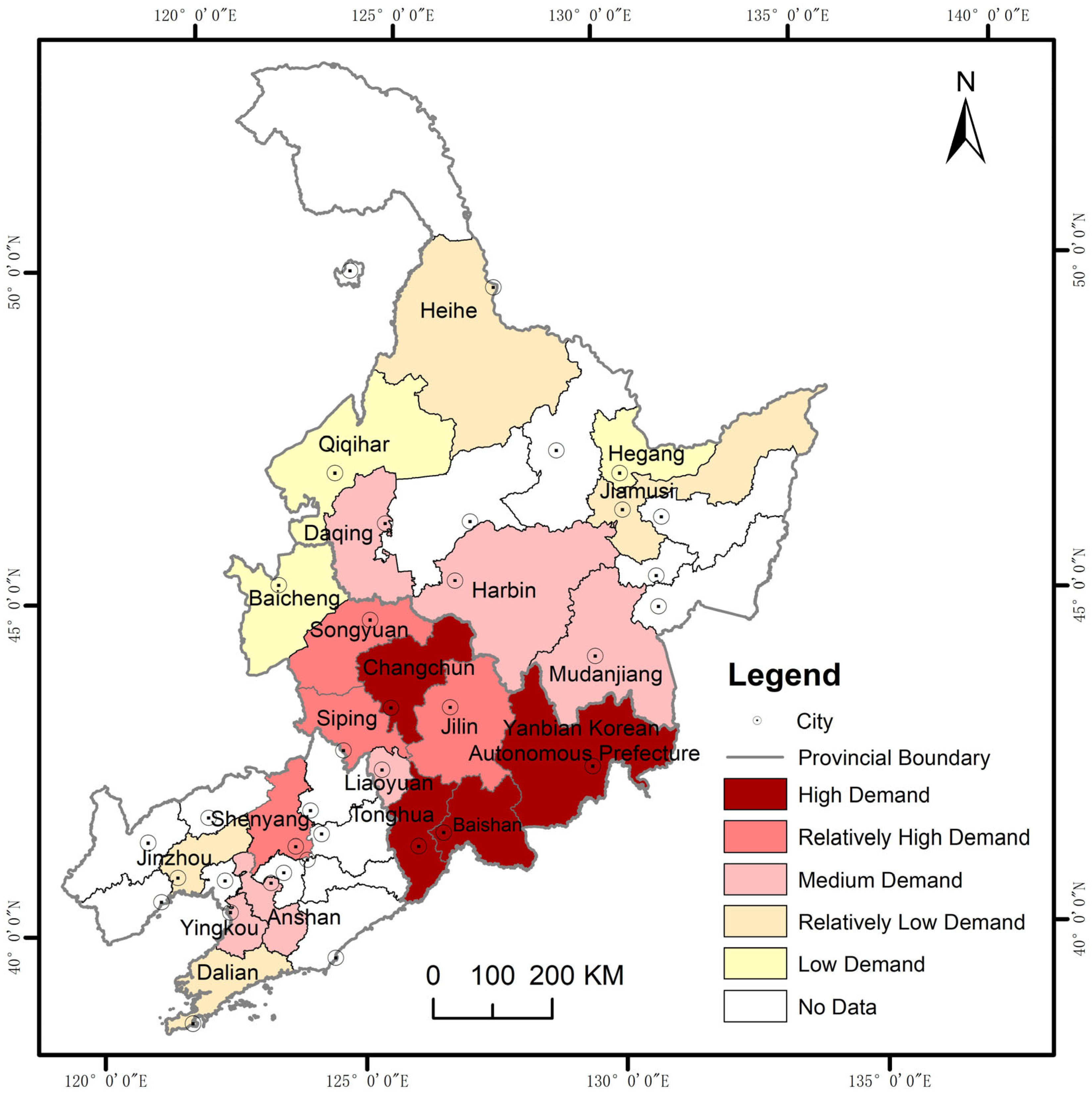
High-demand areas are located in Changchun, Tonghua, Baishan, and Yanbian Korean Autonomous Prefecture. Relatively high-demand areas are found in Jilin City, Siping, Songyuan, and Shenyang. Medium-demand areas include Liaoyuan, Anshan, Yingkou, Mudanjiang, Harbin, and Daqing. Relatively low-demand areas include Dalian, Jinzhou, Heihe, and Jiamusi. Low-demand areas include Hegang, Qiqihar, and Baicheng (Figure 2).
The overall CES demand in the Changbai Mountain tourism area is strongly correlated with distance, moderately correlated with respondents’ occupation, weakly correlated with consumption level and education level, and shows no correlation with travel season (Table 4).

3.2.2. Demand for Individual Cultural Ecosystem Services

Demand for recreation, natural landscapes, and aesthetic value is high. Demand for landform features, cultural value, environmental education, scientific research, and ecological knowledge is moderate, while demand for plant appreciation and health and wellness value is low (Table 5). The high demand for recreation, natural landscapes, and aesthetic value indicates that while people pursue self-fulfillment, they also seek harmonious relationships between humans and nature. This pattern may be attributed to socioeconomic development, environmental change, and educational influences.
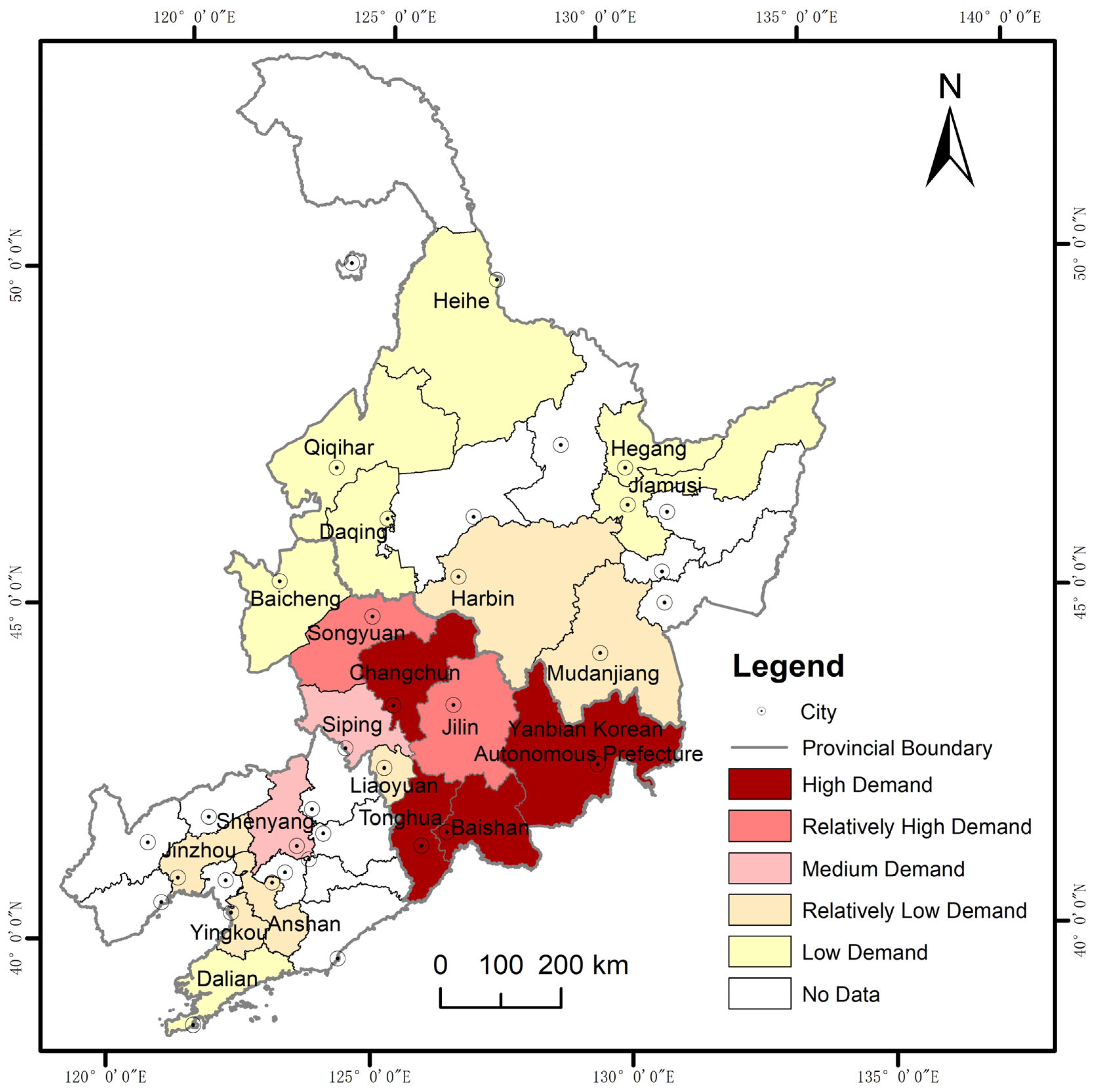
Demand for recreational services shows a significant negative correlation with distance. Demand for natural landscapes and plant appreciation shows no significant correlation with distance, while the remaining seven CES types exhibit relatively weak correlations with distance (Table 6). High-demand areas for recreational services are concentrated in Jilin Province, mainly in Changchun, Tonghua, Yanbian Korean Autonomous Prefecture, and Baishan. Relatively high-demand areas are primarily located in Jilin City and Songyuan. In addition to the distribution of core tourism areas in Yanbian Korean Autonomous Prefecture and Baishan, the region also contains other free-access natural parks, facilitating local residents’ visits to the broader Changbai Mountain tourism area. Moreover, residents of Changchun exhibit a high demand for recreational services due to a stronger local identity with ice and snow tourism and ecotourism. Jilin Province has also continuously introduced policies such as integrated tourism area tickets and direct shuttle services, boosting the tourism enthusiasm of Changchun residents, who primarily travel in the forms of family trips and team-building activities (Figure 3).
As shown in Table 4, the demand for natural landscapes, recreation, and health and wellness value is significantly positively correlated with consumption level, indicating that high-consumption tourists prioritize experiential sightseeing and leisure vacations. In contrast, the demand for ecological knowledge, landform features, and scientific research services is significantly negatively correlated with consumption level, mainly because low-consumption groups are dominated by students whose travel purposes are often education-oriented, with a stronger demand for specialized knowledge. Demand for ecological knowledge, landform features, scientific research, and aesthetic value is significantly positively correlated with education level, suggesting that tourists with higher education levels pursue higher-level spiritual values and more specialized services. Travel season is only positively correlated with demand for scientific research services, reflecting the seasonal characteristics of scientific research activities in the Changbai Mountain region, while other CES demands are relatively evenly distributed across seasons.

3.3. Supply–Demand Balance Analysis

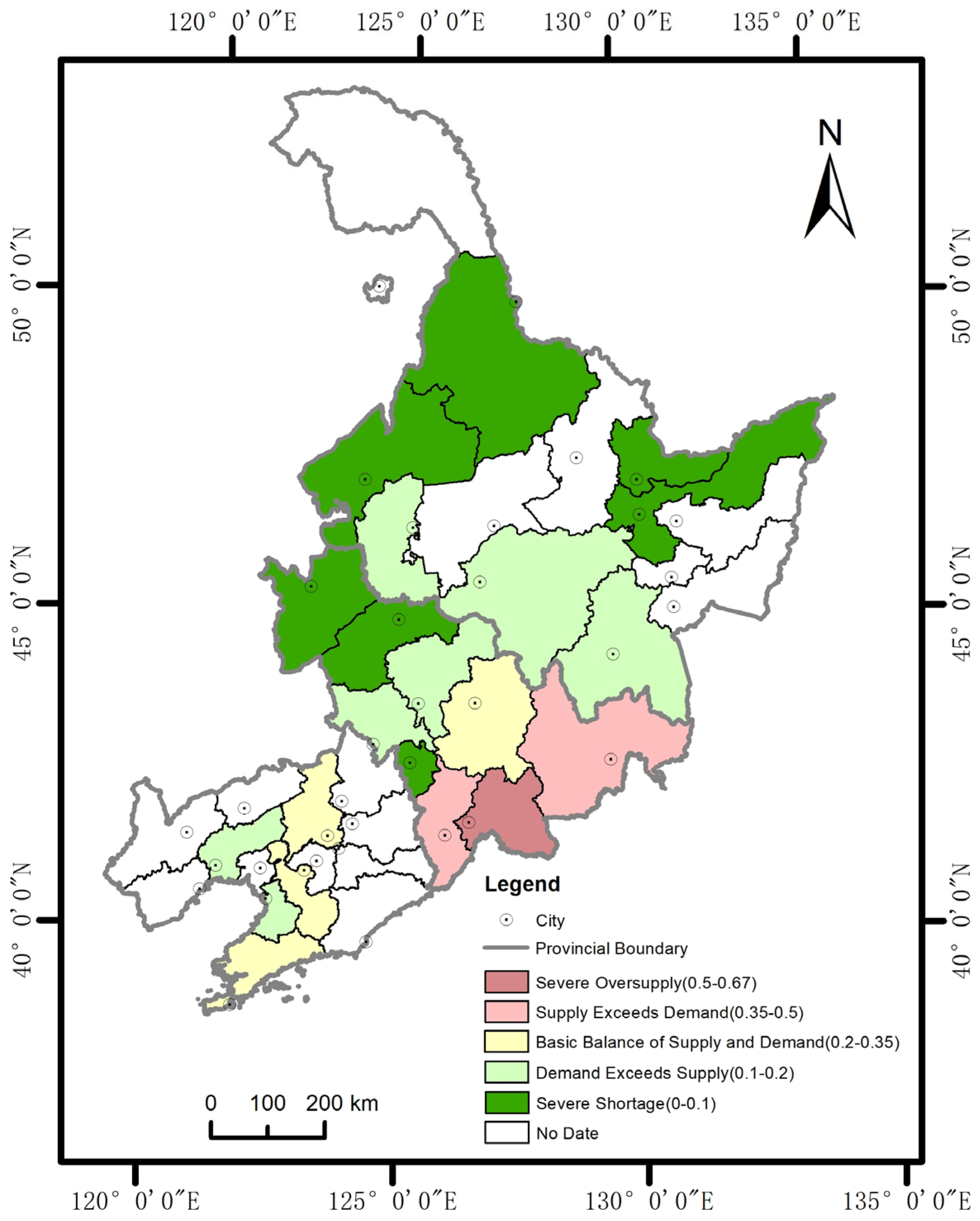
Most tourists stay in the tourism area for 6–8 h, focusing on core attractions such as Changbai Waterfall, Underground Forest, and Tianchi. Due to the spatial dispersion of attractions, peak-season tourism places substantial pressure on transportation capacity, catering services, and tourism services in the Changbai Mountain tourism area. Currently, the shuttle bus capacity in the core tourism area is insufficient during the peak season, with tourists’ waiting times exceeding 1.5 h, and it is difficult to book some cultural experience programs. Local government authorities have explicitly identified limited supply capacity as a major constraint on tourism development. Therefore, the CES supply–demand conflict in the Changbai Mountain tourism area primarily stems from insufficient supply. Meanwhile, based on expert experience, the obtained supply–demand ratio (SRi) of different cities was classified into five intervals, where a high value denotes oversupply and a low value indicates undersupply. As shown in Figure 4, cities with significant oversupply include Baishan, Tonghua, and Yanbian Korean Autonomous Prefecture. Cities with basically balanced supply and demand comprise Shenyang, Dalian, Jilin City, and Anshan, whereas 14 cities such as Changchun and Harbin exhibit undersupply.

4. Discussion

4.1. Discussion on CES Supply and Demand Assessment Methods

In recent years, research on CES demand has remained relatively narrow in scope, and research methods have not yet been standardized. Differences in service types and beneficiaries lead to variations in assessment methods and indicators. Therefore, identifying appropriate indicators is a critical first step in CES demand evaluation [53]. Currently, the evaluation indicators for most cultural service demands are mainly reflected through social preferences and willingness to pay [9,54], and the research methods are primarily focused on the ecosystem services matrix and questionnaire surveys. Hattam et al. [55] applied the ecosystem services matrix to calculate the demand for recreational services, cultural and religious activities, and educational services. Song et al. [56] used questionnaire surveys to obtain satisfaction scores for urban parks, thereby identifying demand levels. In addition, social media data have increasingly been used to quantify CES demand [22,57].
The ecosystem services matrix is a scoring matrix method based on land cover types to study the intrinsic connections between CES supply and demand, and its advantage lies in its flexibility and wide applicability [35]. However, variability in expert judgment quality can reduce the accuracy of results [58]. In the process of evaluating the supply of CES, experts often base their assessments on idealized ecological principles, overlooking interferences such as on-site visitor crowding and weather changes. Moreover, the experts participating in the scoring may be well-versed in internationally recognized CES evaluation indicators but may not necessarily have a deep understanding of the unique CES supply in the Changbai Mountain tourism area. When using questionnaire surveys to analyze CES supply–demand perceptions, respondents’ subjective preferences and psychological states can significantly influence the demand evaluation results [59]. When filling out questionnaires, particularly in visually striking scenic areas like Changbai Mountain, visitors are often in a state of heightened excitement at the peak of their experience. This emotional state may lead them to confuse their actual needs with momentary perceptions. Overall, the methods for evaluating CES supply and demand face two main issues. On the one hand, the supply assessed by experts using the ecosystem service matrix and the demand perceived by visitors essentially represent the superimposition of two subjectivities. On the other hand, neither the static ecosystem service matrix nor the snapshot-based questionnaire surveys effectively capture the transient changes and dynamic flow of the CES supply–demand relationship. Therefore, it is necessary to integrate multisource data and develop dynamically calibrated models based on field research to explore a more realistic representation of the CES supply–demand relationship.

4.2. Discussion on the Correlation Between CES Demand and Influencing Factors

Zhao et al. [60] argue that coastal areas can provide local residents with unique and abundant CES, thereby enhancing human well-being. In this context, southern Liaoning is predominantly characterized by marine ecosystems, which differ significantly from the forest ecosystem services of the Changbai Mountains, leading to variations in demand preferences. This aligns with the findings of this study, which indicate that coastal cities such as Dalian and Jinzhou have a relatively low demand for CES provided by the Changbai Mountain tourism area. Ala-Hulkko et al. [45] and Fu et al. [61] suggest that transportation accessibility significantly affects travel willingness, thereby influencing the demand for CES. Similarly, this study finds that cities surrounding the Changbai Mountains, such as the Yanbian Korean Autonomous Prefecture, Baishan, and Tonghua, benefit from a well-developed high-speed railway network, strong accessibility, and comprehensive supporting facilities, which further stimulate demand. Patra et al. [62] emphasize the critical role of economic development in shaping residents’ preferences for CES demand. This is consistent with the findings of this study, which show that economically developed cities with high resident disposable income, such as Changchun and Shenyang, are more capable of affording ecotourism expenses and exhibit a higher demand for CES.
Shi et al. [63] note that CES demand differs among various stakeholder groups. This study similarly finds that overall CES demand is highly correlated with respondents’ occupation, indicating that different social groups have distinct CES demand patterns [64]. Recreational service demand shows a significant negative correlation with distance, with high-demand areas concentrated in Changchun, Tonghua, Yanbian Korean Autonomous Prefecture, and Baishan, and relatively high-demand areas in Jilin City and Songyuan. Baró et al. [15] and Hooftman et al. [65] suggest that recreational demand follows a distance decay effect, whereby demand increases with proximity to tourist destinations and remains relatively stable over time. The results of this study are consistent with their findings. Demand for spiritually oriented services such as natural landscapes, recreation, and health and wellness value shows a significant positive correlation with consumption level. Sun et al. [66] believe that high-income groups are more inclined towards landscape ecotourism to obtain better spiritual value experiences, which is supported by the results of this study. Demand for knowledge-based services, including ecological knowledge, landform features, scientific research, and aesthetic value, shows a significant positive correlation with education level. Song et al. [56] argue that higher education levels are associated with a stronger perception of ecological and learning values, a finding with which our research is also consistent.

4.3. Transformation of the Tourist–Tourism Area Relationship

The sustainable development and supply–demand coordination of CES in the Changbai Mountain tourism area require strengthening ecological resource protection and science education while building on regional ecological characteristics and development conditions. For example, systematic conservation and restoration projects focusing on flagship species, volcanic landforms, and temperate forest ecosystems can provide high-quality ecological carriers for cultural services. The organization of regular events such as the “Changbai Mountain Ecological Culture Festival” can enhance tourists’ awareness of biodiversity conservation, thereby increasing CES demand, willingness and experiential quality.
Meanwhile, the Changbai Mountain Tourist Area provides visitors with sports facilities such as plank roads and ski resorts, which lays a foundation for visitors to carry out wellness activities and ice–snow entertainment. However, as a ticket-charging scenic spot, the Changbai Mountain Tourist Area sees a low demand for cultural services centered on physical activities among visitors during summer and autumn. Most tourists mainly pursue cultural services focused on sightseeing and recreation. In winter, relying on its abundant ice–snow tourism resources, the scenic area attracts a large number of visitors for outdoor activities dominated by skiing. Therefore, we suggest that the local government should dynamically and flexibly respond to visitors’ CES demand, so as to allocate the scenic area’s supply rationally.
Furthermore, the local government needs to conduct special investigations into CES supply and demand to identify the differentiated needs of different groups for various CES. For areas with supply–demand mismatches, such as insufficient service supply in remote attractions and excessive demand in core tourism areas, a combined strategy should be adopted. This includes enhancing basic service construction in remote areas to increase supply capacity, while implementing off-peak reservations and diversion measures to regulate overall demand in the tourism area. Establishing a dynamic monitoring and evaluation system for CES and optimizing policies based on the effectiveness of ecological protection and changes in tourist demand will achieve sustainable supply and efficient utilization of CES, thereby improving the supply–demand balance.

4.4. Implications of the Changbai Mountain Case for Global Mountain Protected Areas

The core contribution of this study lies in establishing a systematic governance framework that reframes CES supply–demand conflicts to promote coordinated development of ecological conservation and local economies. Firstly, the CES supply–demand balance analysis can guide infrastructure enhancement in areas with high demand and limited supply, ensuring both ecological integrity and visitor experience. Secondly, deeply integrating unique mountain landscapes with intangible cultural heritage can create distinctive CES experiences. The key is to establish a mechanism that allows local communities to benefit sustainably, effectively converting tourism economic returns into long-term investments in ecological protection and cultural inheritance. Finally, adaptive platforms integrating government regulation, scientific assessment, enterprise operation, and community participation should be developed. Regular monitoring of visitor pressure, combined with ecosystem modeling to assess ecological thresholds, can support timely management adjustments and facilitate a shift from static protection to flexible, feedback-based visitor management.

4.5. Limitations and Future Perspectives

This study combines questionnaire surveys with the ecosystem services matrix to assess CES supply–demand relationships at the scale of a mountain tourism area. The data and methods applied have the potential for extension to other regions. However, several limitations should be acknowledged. Firstly, the CES demand assessment relies primarily on questionnaire data, which may introduce subjectivity, and this study only conducted correlation analyses based on questionnaire survey data, without performing in-depth spatial analyses. Secondly, due to the small and scattered sample size, this study is more of an exploratory research in nature. Although the data reveal certain trends, these findings cannot be simply generalized as the true overall local demand, because the sample size for some cities is insufficient to achieve statistical power. Thirdly, the respondents were predominantly young and highly educated, and failed to adequately represent the needs of middle-aged, elderly, and less educated groups, resulting in insufficient sample representativeness. Finally, the research on CES supply–demand relationships focused mainly on the static quantification and comparison of supply and demand, lacking a spatio-temporal dynamic quantification perspective [67]. Examining temporal changes in CES supply–demand relationships could help better identify regional conflicts and provide new insights for CES assessment [68].
Therefore, several improvements can be made in future research. Firstly, the scientific rigor of the research can be enhanced by integrating multi-source data, such as mobile phone signaling data, social media data, and remote sensing data [69]. Secondly, combining online questionnaires with offline interviews can optimize sample structure and improve data reliability. Meanwhile, by increasing the budget and extending the research period, supplementary sampling can be conducted in cities with weak sample representation, so as to further explore the diversity and hierarchy of demand within Northeast China. Thirdly, in future research, correlation analysis can be combined with the bivariate Moran’s I index to further explore the spatial agglomeration characteristics of the supply–demand relationship. Finally, future studies should focus on structural supply–demand imbalances in the temporal dimension, particularly underutilized supply and latent demand in spring and autumn. Currently, since the CES supply–demand conflict in the Changbai Mountain tourism area mainly arises from insufficient supply, peak-season pressure can be alleviated through stricter core-area management and expansion of alternative services in peripheral areas, while off-season demand can be stimulated by developing distinctive tourism experiences to activate idle supply.
The core scientific issue in future research on the supply–demand relationship of CES lies in the following: with the improvement of health awareness in the post-pandemic era and the enhancement of environmental literacy, tourists’ cognitive preferences will shift. Such changes will be directly reflected on the demand side and drive the evolution of CES demand. Managers of the Changbai Mountain tourism area need to conduct continuous monitoring to capture these signals, predict potential future demand hotspots, and avoid the contradiction arising from unmet emerging demand.

5. Conclusions

This study takes the Changbai Mountain tourism area as a case study, assessing the supply and demand dynamics of CES in this mountainous tourism region based on expert evaluations of supply capacity and the results of visitor demand preferences. Firstly, the proposed approach directly captures tourists’ subjective preferences and value perceptions of specific cultural services. Secondly, it enables analysis of social drivers underlying CES perception and evaluation. Finally, compared with long-term sensor deployment or purchasing commercial datasets, this approach is generally more controllable in terms of time and financial costs, and allows flexible module design tailored to specific research questions.
The results show that the demand for CES in the Changbai Mountain tourism area is strong, and the supply–demand conflict primarily stems from insufficient supply. Spatially, CES demand exhibits a pattern of higher demand in the central and eastern regions and lower demand in the northwest. High- and relatively high-demand areas are mainly concentrated in cities relatively close to the Changbai Mountain tourism area and cities distributed along the Harbin–Dalian transportation corridor, including central Liaoning, while low-demand areas are mainly distributed in northern Heilongjiang and coastal southern Liaoning, areas where other resources provide CES. High demand for recreation, natural landscapes, and aesthetic value reflects broader consumption upgrading and growing awareness of habitat conservation. Demand for ecological knowledge, landform features, scientific research, and aesthetic value shows strong correlations with education level, suggesting that strengthening science education and nature-based aesthetic education in China can enhance overall ecological literacy and conservation awareness.
According to this study, temporally, tourist demand is highly concentrated in the short summer and autumn seasons as well as holidays, resulting in a decline in the perceived quality of CES during peak periods and the underutilization of abundant cultural service resources in off-seasons. Spatially, tourists’ travel routes are highly fixed, leading to extremely uneven spatiotemporal heterogeneity in the utilization efficiency of CES. We recommend that the Changbai Mountain tourism area scientifically regulate the temporal and spatial allocation of CES supply, strengthen infrastructure development, and enhance visitor flow monitoring capacity to improve the efficiency of tourism guidance. This paper, from the perspective of CES and covering a broader range of cultural service types, provides a new perspective for understanding CES supply–demand balance and promoting the sustainable development of the Changbai Mountain tourism area.


Supplementary Materials

The following supporting information can be downloaded at: https://www.mdpi.com/article/10.3390/land15040650/s1.

Author Contributions

Conceptualization, H.F.; Methodology, H.F.; Formal analysis, Z.F.; Investigation, Z.F.; Resources, D.Z.; Software, D.Z.; Data curation, Z.F. and D.Z.; Visualization, Z.F.; Validation, N.D.; Writing—original draft, Z.F.; Writing—review and editing, H.F. and H.W.; Supervision, H.F. and H.W.; Funding acquisition, H.F.; Project administration, H.F. All authors have read and agreed to the published version of the manuscript.

Funding

This study was funded by the University-Enterprise Cooperation Project of Yanbian University (Grant No. ydxq202412), and the Major Project of the Key Research Institutes of Humanities and Social Sciences, Ministry of Education (Grant No. 22JJD170001), and the Science and Technology Development Program of Jilin Province (Grant No. YDZJ202401523ZYTS).

Data Availability Statement

The original contributions presented in this study are included in the article/Supplementary Materials. Further inquiries can be directed to the corresponding authors.

Conflicts of Interest

All authors declare no conflict of interest.

Appendix A

Appendix A.1

Through the AHP method, calculations were conducted on the seven sub-dimensions. The following tables present the judgment matrix and corresponding weights.
Table A1. Judgment matrix and weights of sub-dimensions of natural system supply.
Natural System Supply Sub-Dimension AssessmentNatural Landscape and Aesthetic ValueRest PotentialScience and Education ValueWeight
Natural Landscape and Aesthetic Value1210.5396
Rest Potential1/211/20.1634
Science and Education Value1210.2970
λmax = 3.0092CI = 0.0046RI = 0.58 Σ = 1
CR = 0.0079Satisfying the consistency test
Table A2. Judgment matrix and weights of sub-dimensions of human system supply.
Human System Supply Sub-Dimension AssessmentReception CapacityService FacilitiesCultural ValueManagement and Planning SkillsWeight
Reception Capacity11/21/21/20.1404
Service Facilities21110.3952
Cultural Value21110.2322
Management and Planning Skills21110.2322
λmax = 4.0606CI = 0.0202RI = 0.90 Σ = 1
CR = 0.0225Satisfying the consistency test

Appendix A.2

This appendix provides the detailed scoring criteria for the seven dimensions of CES supply used in this study. Each dimension was scored on a five-point scale (1 = very low, 2 = low, 3 = moderate, 4 = high, 5 = very high) based on expert evaluation. Scoring was conducted separately for each season (spring, summer, autumn, winter) to capture seasonal variability in supply. The scoring criteria were developed based on official statistics from the AC of CBMPDZ, Jilin Province and field observations.
Table A3. Scoring Criteria for natural system supply dimensions.
CES DimensionScoreCriteria Description
Natural Landscape and Aesthetic Value1Landscape is monotonous; few or no distinctive scenic features; visual appeal is low.
2Limited scenic diversity; some landscape features present but not outstanding; visual quality is average.
3Moderate landscape diversity; presence of notable scenic features; visual appeal is acceptable.
4High landscape diversity; multiple distinctive scenic features; strong visual appeal.
5Exceptional landscape diversity; iconic or unique scenic features; outstanding visual quality.
Rest Potential1Limited opportunities for relaxation; low forest cover; poor air quality; few quiet areas.
2Moderate opportunities for relaxation; average forest cover and air quality; some quiet areas.
3Good opportunities for relaxation; forest cover >60%; negative oxygen ion concentration moderate; quiet areas available.
4Very good opportunities for relaxation; forest cover >70%; high negative oxygen ion concentration; well-distributed quiet areas.
5Excellent opportunities for relaxation; forest cover >80%; extremely high negative oxygen ion concentration; abundant quiet and restorative spaces.
Science and Education Value1Few or no scientific research or educational resources; limited interpretive facilities.
2Limited scientific research base; basic educational materials available.
3Established scientific research base; moderate educational resources; some interpretive signage.
4Well-established research base; rich educational resources; active science education programs.
5World-class research base; comprehensive educational resources; exemplary science education programs.
Table A4. Scoring criteria for human system supply dimensions.
CES DimensionScoreCriteria Description
Reception Capacity1Accommodation capacity < 5000 beds; limited transport access; daily carrying capacity < 5000 visitors.
2Accommodation capacity 5000–10,000 beds; basic transport access; daily carrying capacity 5000–10,000 visitors.
3Accommodation capacity 10,000–20,000 beds; moderate transport access; daily carrying capacity 10,000–20,000 visitors.
4Accommodation capacity 20,000–30,000 beds; good transport access (e.g., high-speed rail, airport); daily carrying capacity 20,000–30,000 visitors.
5Accommodation capacity 30,000–40,000 beds; excellent transport access with multiple modes; daily carrying capacity 30,000–40,000 visitors.
Service Facilities1Few restaurants and facilities; inadequate infrastructure; limited visitor services.
2With basic facilities but low openness; basic visitor services.
3Long waiting time for facility services; but with more complete facilities.
4Moderate waiting time for facility services; higher quantity and better service quality of scenic area staff.
5Short waiting time for facility services; complete scenic spot guidance; higher technological level of infrastructure.
Cultural Value1Limited cultural heritage or ethnic traditions; few cultural interpretive resources.
2Some cultural heritage present; basic cultural interpretive materials.
3Moderate cultural heritage; presence of ethnic cultural traditions; cultural interpretive facilities available.
4Rich cultural heritage; well-preserved ethnic traditions; active cultural events and programs.
5Exceptional cultural heritage; living traditions with deep historical significance; comprehensive cultural experiences and festivals.
Management and Planning Skills1Basic management practices; limited monitoring; no formal zoning or visitor management.
2Routine management practices; basic monitoring; informal visitor management.
3Structured management practices; regular monitoring; functional zoning and visitor management.
4Proactive management practices; advanced monitoring (e.g., UAV); effective zoning and visitor diversion.
5Exemplary management practices; integrated monitoring systems; adaptive management with real-time visitor flow control.

References

  1. Reid, W.V.; Mooney, H.A.; Cropper, A.; Capistrano, D.; Carpenter, S.R.; Chopra, K.; Dasgupta, P.; Dietz, T.; Duraiappah, A.K.; Hassan, R. Ecosystems and Human Well-Being-Synthesis: A Report of the Millennium Ecosystem Assessment; Island Press: Washington, DC, USA, 2005. [Google Scholar]
  2. Daniel, T.C.; Muhar, A.; Arnberger, A.; Aznar, O.; Boyd, J.W.; Chan, K.M.; Costanza, R.; Elmqvist, T.; Flint, C.G.; Gobster, P.H. Contributions of cultural services to the ecosystem services agenda. Proc. Natl. Acad. Sci. USA 2012, 109, 8812–8819. [Google Scholar] [CrossRef] [PubMed]
  3. Zuo, Y.; Zhang, L. Research on Local Ecosystem Cultural Services in the Jiangnan Water Network Rural Areas: A Case Study of the Ecological Green Integration Demonstration Zone in the Yangtze River Delta, China. Land 2023, 12, 1373. [Google Scholar] [CrossRef]
  4. Michalik-Śnieżek, M.; Lipińska, H.; Woźniak-Kostecka, I.; Komor, A.; Kępkowicz, A.; Adamczyk-Mucha, K.; Krukow, E.; Duniewicz, A. Cultural Ecosystem Services in Rural Areas: Assessing Demand and Supply for Ecologically Functional Areas (EFA). Sustainability 2025, 17, 8822. [Google Scholar] [CrossRef]
  5. Song, Y.; Zhang, Z.; Liu, W.; Lin, M. Government Leadership and Market Participation: A Collaborative Development Model for the Cultural Ecosystem Services of Nature Reserves. For. Prod. J. 2025, 75, 296–305. [Google Scholar] [CrossRef]
  6. Plieninger, T.; Dijks, S.; Oteros-Rozas, E.; Bieling, C. Assessing, mapping, and quantifying cultural ecosystem services at community level. Land Use Policy 2013, 33, 118–129. [Google Scholar] [CrossRef]
  7. Chan, K.M.; Satterfield, T.; Goldstein, J. Rethinking ecosystem services to better address and navigate cultural values. Ecol. Econ. 2012, 74, 8–18. [Google Scholar] [CrossRef]
  8. Ghasemi, M.; Charrahy, Z.; González-García, A. Mapping cultural ecosystem services provision: An integrated model of recreation and ecotourism opportunities. Land Use Policy 2023, 131, 106732. [Google Scholar] [CrossRef]
  9. Cabana, D.; Ryfield, F.; Crowe, T.P.; Brannigan, J. Evaluating and communicating cultural ecosystem services. Ecosyst. Serv. 2020, 42, 101085. [Google Scholar] [CrossRef]
  10. Hernández-Morcillo, M.; Plieninger, T.; Bieling, C. An empirical review of cultural ecosystem service indicators. Ecol. Indic. 2013, 29, 434–444. [Google Scholar] [CrossRef]
  11. Arnaiz-Schmitz, C.; Herrero-Jáuregui, C.; Schmitz, M.F. Recreational and nature-based tourism as a cultural ecosystem service. Assessment and mapping in a rural-urban gradient of central Spain. Land 2021, 10, 343. [Google Scholar] [CrossRef]
  12. Sánchez Bardales, E.; García Rosero, L.M.; Arellanos Carrion, E.S.; Bravo Campos, E.; Cruz Caro, O. The Synergy Between the Travel Cost Method and Other Valuation Techniques for Ecosystem Services: A Systematic Review. Environments 2025, 13, 18. [Google Scholar] [CrossRef]
  13. Wang, Y.; Li, Z.; Deng, X. Assessment of cultural ecosystem services of the Qinghai-Tibetan Plateau: Guarding the beauty of the Plateau, co-creating a better future. Ecol. Indic. 2024, 166, 112405. [Google Scholar] [CrossRef]
  14. Yang, C.; Wu, R.; Tao, J.; Jiang, Q.; Zhao, J.; Xu, J.; Liu, Q. Estimating the Non-Use Value of Laojun Mountain National Park: A Contingent Valuation Study with Cultural Identity Mediation in Yunnan, China. Sustainability 2025, 17, 9346. [Google Scholar] [CrossRef]
  15. Baró, F.; Palomo, I.; Zulian, G.; Vizcaino, P.; Haase, D.; Gómez-Baggethun, E. Mapping ecosystem service capacity, flow and demand for landscape and urban planning: A case study in the Barcelona metropolitan region. Land Use Policy 2016, 57, 405–417. [Google Scholar] [CrossRef]
  16. Shen, J.; Li, S.; Liang, Z.; Liu, L.; Li, D.; Wu, S. Exploring the heterogeneity and nonlinearity of trade-offs and synergies among ecosystem services bundles in the Beijing-Tianjin-Hebei urban agglomeration. Ecosyst. Serv. 2020, 43, 101103. [Google Scholar] [CrossRef]
  17. Meng, S.; Huang, Q.; Zhang, L.; He, C.; Inostroza, L.; Bai, Y.; Yin, D. Matches and mismatches between the supply of and demand for cultural ecosystem services in rapidly urbanizing watersheds: A case study in the Guanting Reservoir basin, China. Ecosyst. Serv. 2020, 45, 101156. [Google Scholar] [CrossRef]
  18. Chen, H. Land use trade-offs associated with protected areas in China: Current state, existing evaluation methods, and future application of ecosystem service valuation. Sci. Total Environ. 2020, 711, 134688. [Google Scholar] [CrossRef] [PubMed]
  19. Burkhard, B.; Kroll, F.; Nedkov, S.; Müller, F. Mapping ecosystem service supply, demand and budgets. Ecol. Indic. 2012, 21, 17–29. [Google Scholar] [CrossRef]
  20. Xia, Z.; Wang, Y.; Lu, Q.; Shen, Z.; Liu, K.; Wei, X.; Yuan, C.; Gao, Y.; Liu, L. Understanding residents’ perspectives on cultural ecosystem service supply, demand and subjective well-being in rapidly urbanizing landscapes: A case study of peri-urban Shanghai. Landsc. Ecol. 2024, 39, 22. [Google Scholar] [CrossRef]
  21. Nayal, R.; Thomas, M.; Tripathi, A.K.; Jaswal, K.; Dasgupta, R.; Hashimoto, S.; Dhyani, S. Relevance of community perceptions in mapping cultural ecosystem services: Lessons from bio-cultural landscape of Bhitarkanika Wildlife Sanctuary, Odisha. Ocean Coast. Manag. 2025, 264, 107626. [Google Scholar] [CrossRef]
  22. Zhang, J.; He, C.; Huang, Q.; Li, J.; Qi, T. Evaluating the supply and demand of cultural ecosystem services in the Tibetan Plateau of China. Landsc. Ecol. 2022, 37, 2131–2148. [Google Scholar] [CrossRef]
  23. Liu, H.; Remme, R.P.; Hamel, P.; Nong, H.; Ren, H. Supply and demand assessment of urban recreation service and its implication for greenspace planning—A case study on Guangzhou. Landsc. Urban Plan. 2020, 203, 103898. [Google Scholar] [CrossRef]
  24. Peng, J.; Wang, X.; Liu, Y.; Zhao, Y.; Xu, Z.; Zhao, M.; Qiu, S.; Wu, J. Urbanization impact on the supply-demand budget of ecosystem services: Decoupling analysis. Ecosyst. Serv. 2020, 44, 101139. [Google Scholar] [CrossRef]
  25. Ding, T.; Chen, J.; Fang, Z.; Chen, J. Assessment of coordinative relationship between comprehensive ecosystem service and urbanization: A case study of Yangtze River Delta urban Agglomerations, China. Ecol. Indic. 2021, 133, 108454. [Google Scholar] [CrossRef]
  26. Cao, H.; Miguez, N.G.; Mason, B.M.; Callaghan, C.T.; Qiu, J. Spatial patterns and interactions among multiple cultural ecosystem services across urban greenspaces. Ecosyst. Serv. 2025, 73, 101740. [Google Scholar] [CrossRef]
  27. Zhao, Y.; You, W.; Lin, X.; He, D. Assessing the supply and demand linkage of cultural ecosystem services in a typical county-level city with protected areas in China. Ecol. Indic. 2023, 147, 109992. [Google Scholar] [CrossRef]
  28. Bing, Z.; Qiu, Y.; Huang, H.; Chen, T.; Zhong, W.; Jiang, H. Spatial distribution of cultural ecosystem services demand and supply in urban and suburban areas: A case study from Shanghai, China. Ecol. Indic. 2021, 127, 107720. [Google Scholar] [CrossRef]
  29. Wang, H.; Xu, J.; Sheng, L.; Ma, L.; Liu, X. Study on the characteristics of climate change in Changbai Mountain National Natural Reserve from 1958 to 2017. Arab. J. Geosci. 2020, 13, 777. [Google Scholar] [CrossRef]
  30. Zhongbao, J.; Yukun, W.; Xueyan, Y.; Shangfeng, L.; Xiujing, Y.; Chunxiao, P.; Yixuan, Q. Characteristics of climate comfort period in Changbai Mountain region from 1961 to 2018. J. Arid Meteorol. 2024, 42, 620. (In Chinese) [Google Scholar]
  31. Brown, G.; Reed, P. Validation of a forest values typology for use in national forest planning. For. Sci. 2000, 46, 240–247. [Google Scholar] [CrossRef]
  32. Wang, L.; Huang, L.; Cao, W.; Zhai, J.; Fan, J. Assessing grassland cultural ecosystem services supply and demand for promoting the sustainable realization of grassland cultural values. Sci. Total Environ. 2024, 912, 169255. [Google Scholar] [CrossRef]
  33. Wang, W.; Wu, C.; Fang, Q.; Harrison, O.I. Cultural ecosystem services evaluation in a coastal city of China using social media data. Ocean Coast. Manag. 2023, 242, 106693. [Google Scholar] [CrossRef]
  34. Fan, G.; Wang, Y.; Zhao, S.; Qiao, X.; Yang, G.; Lin, Z. Optimization of social values for ecosystem services assessment based on the analytic hierarchy process: A case study of the core district parks in Zhengzhou. Environ. Sustain. Indic. 2025, 27, 100786. [Google Scholar] [CrossRef]
  35. Burkhard, B.; Kroll, F.; Müller, F.; Windhorst, W. Landscapes’ capacities to provide ecosystem services—A concept for land-cover based assessments. Landsc. Online 2009, 15, 1–22. [Google Scholar] [CrossRef]
  36. Burkhard, B.; Kandziora, M.; Hou, Y.; Müller, F. Ecosystem service potentials, flows and demands-concepts for spatial localisation, indication and quantification. Landsc. Online 2014, 34, 1–32. [Google Scholar] [CrossRef]
  37. Schirpke, U.; Timmermann, F.; Tappeiner, U.; Tasser, E. Cultural ecosystem services of mountain regions: Modelling the aesthetic value. Ecol. Indic. 2016, 69, 78–90. [Google Scholar] [CrossRef]
  38. Canedoli, C.; Rota, N.; Vogiatzakis, I.N.; Zanchi, A.; Drius, M.; Nagendra, H.; Padoa-Schioppa, E. Review of indicators for mountain ecosystem services: Are the most frequently used also the best? Ecol. Indic. 2024, 166, 112310. [Google Scholar] [CrossRef]
  39. Xu, C.; Zhao, T.; Shao, Y.; Yan, G. Assessing the value of cultural ecosystem services in urban landscapes: Evidence from Tai’an City, China. Front. Environ. Sci. 2025, 13, 1546844. [Google Scholar] [CrossRef]
  40. Zhang, Z.; Yao, J.; Zhou, Y.; Chen, W.; Yu, J.; He, X. Assessing the Supply and Demand for Cultural Ecosystem Services in Urban Green Space Based on Actual Service Utility to Support Sustainable Urban Development. Sustainability 2026, 18, 98. [Google Scholar] [CrossRef]
  41. Zhou, Y.; Huang, Q.; Wu, P.; Hou, Y.; Zhou, Y.; Chen, P.; Duan, X. Seasonal variations in ecosystem service supply and demand based on the SWAT model: A case study in the Guanting Reservoir Basin, China. Ecol. Indic. 2024, 158, 111552. [Google Scholar] [CrossRef]
  42. Huang, S.; Xiao, X.; Tian, T.; Che, Y. Seasonal influences on preferences for urban blue-green spaces: Integrating land surface temperature into the assessment of cultural ecosystem service value. Sustain. Cities Soc. 2024, 102, 105237. [Google Scholar] [CrossRef]
  43. Li, J.; Yang, Z.; Guo, J.; Zhou, J.; Wang, J.; He, K. Seasonal variation of cultural ecosystem services in urban blue-green spaces based on the SoLVES model and social media data. Ecol. Indic. 2025, 181, 114393. [Google Scholar] [CrossRef]
  44. Choi, M.; Jo, J.-H.; Kim, H.J.; Ji, S. Mapping the Unseen: Integrating Hiking Activities Into Spatially Explicit Cultural Ecosystem Service Assessment Through Agent-Based Modeling. Trans. GIS 2025, 29, e13285. [Google Scholar] [CrossRef]
  45. Ala-Hulkko, T.; Kotavaara, O.; Alahuhta, J.; Helle, P.; Hjort, J. Introducing accessibility analysis in mapping cultural ecosystem services. Ecol. Indic. 2016, 66, 416–427. [Google Scholar] [CrossRef]
  46. Hansen, W.G. How Accessibility Shapes Land Use. J. Am. Inst. Plan. 1959, 25, 73–76. [Google Scholar] [CrossRef]
  47. Geurs, K.T.; van Wee, B. Accessibility evaluation of land-use and transport strategies: Review and research directions. J. Transp. Geogr. 2004, 12, 127–140. [Google Scholar] [CrossRef]
  48. Shan, L.I.; Zheng, W.; Zhangqi, Z. Gravity Model for Tourism Spatial Interaction: Basic Form, Parameter Estimation, and Applications. Acta Geogr. Sin. 2012, 67, 526–544. (In Chinese) [Google Scholar]
  49. Shang, X.; Rong, Y.; Yan, Y.; Fan, J.; Zhao, C.; Wang, C. Ecosystem leisure services assessment, prediction and driving factors analysis in Xiong’an New Area based on spatial planning scenarios. Acta Ecol. Sin. 2022, 42, 4640–4653. (In Chinese) [Google Scholar]
  50. Crouzat, E.; De Frutos, A.; Grescho, V.; Carver, S.; Büermann, A.; Carvalho-Santos, C.; Kraemer, R.; Mayor, S.; Pöpperl, F.; Rossi, C.; et al. Potential supply and actual use of cultural ecosystem services in mountain protected areas and their surroundings. Ecosyst. Serv. 2022, 53, 101395. [Google Scholar] [CrossRef]
  51. Chen, J.; Ding, T.; Wang, H.; Yu, X. Research on total factor productivity and influential factors of the regional water–energy–food nexus: A case study on Inner Mongolia, China. Int. J. Environ. Res. Public Health 2019, 16, 3051. [Google Scholar] [CrossRef] [PubMed]
  52. Zhang, D.; Wang, X.; Zhang, L.; Huang, B. Research on the classification methods of ecosystem service of soil retention for large-scale choropleth mapping. Acta Ecol. Sin. 2021, 41, 1391–1401. [Google Scholar] [CrossRef]
  53. Ma, L.; Liu, H.; Peng, J.; Wu, J. A review of ecosystem services supply and demand. Acta Geogr. Sin. 2017, 72, 1277–1289. (In Chinese) [Google Scholar]
  54. Peña, L.; Casado-Arzuaga, I.; Onaindia, M. Mapping recreation supply and demand using an ecological and a social evaluation approach. Ecosyst. Serv. 2015, 13, 108–118. [Google Scholar] [CrossRef]
  55. Hattam, C.; Broszeit, S.; Langmead, O.; Praptiwi, R.A.; Lim, V.C.; Creencia, L.A.; Hau, T.D.; Maharja, C.; Wulandari, P.; Setia, T.M. A matrix approach to tropical marine ecosystem service assessments in South east Asia. Ecosyst. Serv. 2021, 51, 101346. [Google Scholar] [CrossRef]
  56. Song, L.; Wu, M.; Wu, Y.; Xu, X.; Xie, C. Research on the evaluation of cultural ecosystem services in zhengzhou urban parks based on public perceptions. Sustainability 2023, 15, 11964. [Google Scholar] [CrossRef]
  57. Huai, S.; Chen, F.; Liu, S.; Canters, F.; Van de Voorde, T. Using social media photos and computer vision to assess cultural ecosystem services and landscape features in urban parks. Ecosyst. Serv. 2022, 57, 101475. [Google Scholar] [CrossRef]
  58. Hou, Y.; Burkhard, B.; Müller, F. Uncertainties in landscape analysis and ecosystem service assessment. J. Environ. Manag. 2013, 127, S117–S131. [Google Scholar] [CrossRef]
  59. Rota, N.; Canedoli, C.; Azzimonti, O.L.; Nagendra, H.; Padoa-Schioppa, E. Ecosystem services in the Alps: Visitors’ perceptions of two alpine protected areas. Ecosyst. People 2025, 21, 2451274. [Google Scholar] [CrossRef]
  60. Zhao, Y.; Han, Z.; Zhang, C.; Wang, Y.; Zhong, J.; Gao, M. Coastal Cultural Ecosystem Services: A Bridge between the Natural Ecosystem and Social Ecosystem for Sustainable Development. Land 2024, 13, 1352. [Google Scholar] [CrossRef]
  61. Fu, B.; Xu, P.; Wang, Y.; Guo, Y.; Zhang, Y.; Li, S. Critical areas linking the supply and demand of cultural ecosystem services: Accessibility and geological disasters. Glob. Ecol. Conserv. 2020, 21, e00839. [Google Scholar] [CrossRef]
  62. Patra, S.; Saikia, P.; Kumar, A. Chapter 21—Cultural ecosystem services of protected areas: Considering community preferences and their socio-economic conditions. In Forests for Inclusive and Sustainable Economic Growth; Saikia, P., Kumar, A., Khan, M.L., Lei, X., Eds.; Elsevier: Amsterdam, The Netherlands, 2025; pp. 281–291. [Google Scholar]
  63. Shi, Q.; Chen, H.; Liu, D.; Geng, T.; Zhang, H. Identifying the spatial imbalance in the supply and demand of cultural ecosystem services. Int. J. Environ. Res. Public Health 2022, 19, 6661. [Google Scholar] [CrossRef]
  64. La Rosa, D.; Takatori, C.; Shimizu, H.; Privitera, R. A planning framework to evaluate demands and preferences by different social groups for accessibility to urban greenspaces. Sustain. Cities Soc. 2018, 36, 346–362. [Google Scholar] [CrossRef]
  65. Hooftman, D.A.; Ridding, L.E.; Redhead, J.W.; Willcock, S. National scale mapping of supply and demand for recreational ecosystem services. Ecol. Indic. 2023, 154, 110779. [Google Scholar] [CrossRef]
  66. Sun, X.; Liu, H.; Liao, C.; Nong, H.; Yang, P. Understanding recreational ecosystem service supply-demand mismatch and social groups’ preferences: Implications for urban–rural planning. Landsc. Urban Plan. 2024, 241, 104903. [Google Scholar] [CrossRef]
  67. Li, C.; Liang, Q.; Lin, B.; Zhai, J. Landscape management and planning as a spatial organization method connecting CES supply-demand assessment and sustainable tourism development. J. Outdoor Recreat. Tour. 2023, 44, 100705. [Google Scholar] [CrossRef]
  68. Zhang, Y.; Fu, B.; Sun, J.; da Silva, R.F.B. Quantifying supply and demand of cultural ecosystem services from a dynamic perspective. Land Use Policy 2025, 148, 107414. [Google Scholar] [CrossRef]
  69. Li, L.; Bai, Y.; Yuan, X.; Li, F. Assessing the Supply–Demand Matching and Spatial Flow of Urban Cultural Ecosystem Services: Based on Geospatial Data and User Interaction Data. Land 2025, 14, 773. [Google Scholar] [CrossRef]
Figure 1. Location of Study Area.
Land 15 00650 g001
Figure 2. Rank map of overall demand for CES in Changbai Mountain tourism area.

Land 15 00650 g002
Figure 3. Demand rank map of recreation service.
Land 15 00650 g003
Figure 4. Supply–demand shortage of CES in Changbai Mountain tourism area.
Land 15 00650 g004
Table 1. Natural system–human system judgment matrix and weights.
CES Supply Assessment in the Changbai Mountain Tourism AreaNatural SystemHuman SystemWeight
Natural System120.67
Human System1/210.33
For a 2 × 2 matrix, λmax = n = 2, CI = 0, RI = 0, CR = 0, automatically satisfying consistency.
Table 2. Natural System and human system supply.
Indicator SystemWeightCES DimensionWeightBasisMain ReferenceScoring Results
Natural System Supply0.67natural landscape and aesthetic value 0.5396There are Tianchi, Changbai Waterfall, underground forest, and vertical band spectrumSchirpke et al. [37]Spring: 3
Summer: 5
Autumn: 4
Winter: 5
rest potential 0.1634There are distinct landscapes in different seasons, including ice and snow scenery, red maple forests, and flower seas. The forest coverage rate is 87.7%, and the maximum negative oxygen ion concentration reaches 120,000 per cm3.Canedoli et al. [38]Spring: 2
Summer: 5
Autumn: 2
Winter: 4
science and education value 0.2970There are species gene banks, models of temperate mountain ecosystems, and a scientific research base.Xu et al. [39]Spring: 3
Summer: 5
Autumn: 3
Winter: 4
Human System Supply0.33reception capacity 0.1404There are about 40,000 beds, accessible by high-speed rail and airport, and the daily carrying capacity is up to 40,000 visitors.Zhang et al. [40]Spring: 2
Summer: 2
Autumn: 4
Winter: 3
service facilities 0.3952There are more than 1400 restaurants, complete plank roads and viewing platforms, and an appointment and visitor diversion system has been established.Zhang et al. [40]Spring: 2
Summer: 3
Autumn: 4
Winter: 4
cultural value 0.2322Changbai mountain is the birthplace of Manchu and Korean cultures.Canedoli et al. [38]Spring: 3
Summer: 3
Autumn: 3
Winter: 3
management and planning skills 0.2322Zonal management and UAV monitoring are implemented in the tourism area.Chan et al. [7]Spring: 2
Summer: 3
Autumn: 3
Winter: 4
Table 3. Weight of the demand for a single cultural service determined by the entropy weight method.
Cultural Service ItemsIndicator Weights
recreation 0.1958 (19.58%)
scientific research 0.1237 (12.37%)
natural landscapes 0.1215 (12.15%)
aesthetic value 0.1175 (11.75%)
landform features 0.0967 (9.67%)
ecological knowledge 0.0847 (8.37%)
environmental education 0.0714 (7.14%)
cultural value 0.0692 (6.92%)
health and wellness value 0.0650 (6.50%)
plant appreciation 0.0544 (5.44%)
Table 4. Influencing factors for the overall demand of CES in Changbai Mountain tourism area.

Influencing FactorsDistanceOccupationConsumption LevelEducation LevelTravel SeasonOverall CES Demand
Distance10.326 **−0.0830.371 **0.0500.473 **
Occupation0.326 **1−0.336 **0.319 **0.0440.600 **
Consumption Level−0.083−0.336 **1−0.199 *0.103−0.269 **
Education Level0.371 **0.319 **−0.199 *10.0870.460 **
Travel Season0.0500.0440.1030.08710.107
Overall CES Demand−0.605 **−0.456 **0.167 *0.187 *−0.1051
Note: ** indicates significance at the 0.01 level, * indicates significance at the 0.05 level.
Table 5. Demand of individual CES in Changbai Mountain tourism area.
Cultural Service ItemsImportant Value
recreation6.58
natural landscapes6.35
aesthetic value6.19
landform features5.70
cultural value5.37
environmental education5.25
scientific research5.07
ecological knowledge5.03
plant appreciation4.81
health and wellness value4.81
Table 6. Influencing factors of demand for individual CES in Changbai Mountain tourism area.
Influencing FactorsNatural LandscapesPlant AppreciationEcological KnowledgeLandform FeaturesScientific ResearchEnvironmental EducationAesthetic ValueCultural ValueRecreationHealth and Wellness Value
Distance−0.067−0.0080.444 **0.371 **0.494 **0.164 *−0.256 **−0.246 **−0.634 **−0.382 **
Occupation−0.186 *−0.1140.525 **0.455 **0.626 **0.322 **−0.357 **−0.359 **−0.575 **−0.476 **
Consumption Level0.182 *0.109−0.326 **−0.187 *−0.290 **−0.088−0.0060.0980.277 **0.300 **
Education Level−0.446 **−0.341 **0.423 **0.335 **0.549 **0.1370.225 **−0.266 **−0.435 **−0.336 **
Travel Season0.0670.0690.0490.0170.162 *−0.044−0.107−0.086−0.116−0.018
Note: ** indicates significance at the 0.01 level, * indicates significance at the 0.05 level.
Disclaimer/Publisher’s Note: The statements, opinions and data contained in all publications are solely those of the individual author(s) and contributor(s) and not of MDPI and/or the editor(s). MDPI and/or the editor(s) disclaim responsibility for any injury to people or property resulting from any ideas, methods, instructions or products referred to in the content.


