Article

TOD-Oriented Multi-Objective Optimization of Land Use Around Metro Stations in China: An Empirical Study of Xi’an Based on an Adaptively Improved NSGA-III Algorithm


1
College of Transportation Engineering, Chang’an University, Xi’an 710064, China
2
College of Urban Development and Modern Transportation, Xi’an University of Architecture and Technology, Xi’an 710055, China
*
Author to whom correspondence should be addressed.
Land 2026, 15(4), 629; https://doi.org/10.3390/land15040629
Submission received: 8 March 2026 / Revised: 27 March 2026 / Accepted: 9 April 2026 / Published: 11 April 2026

Abstract

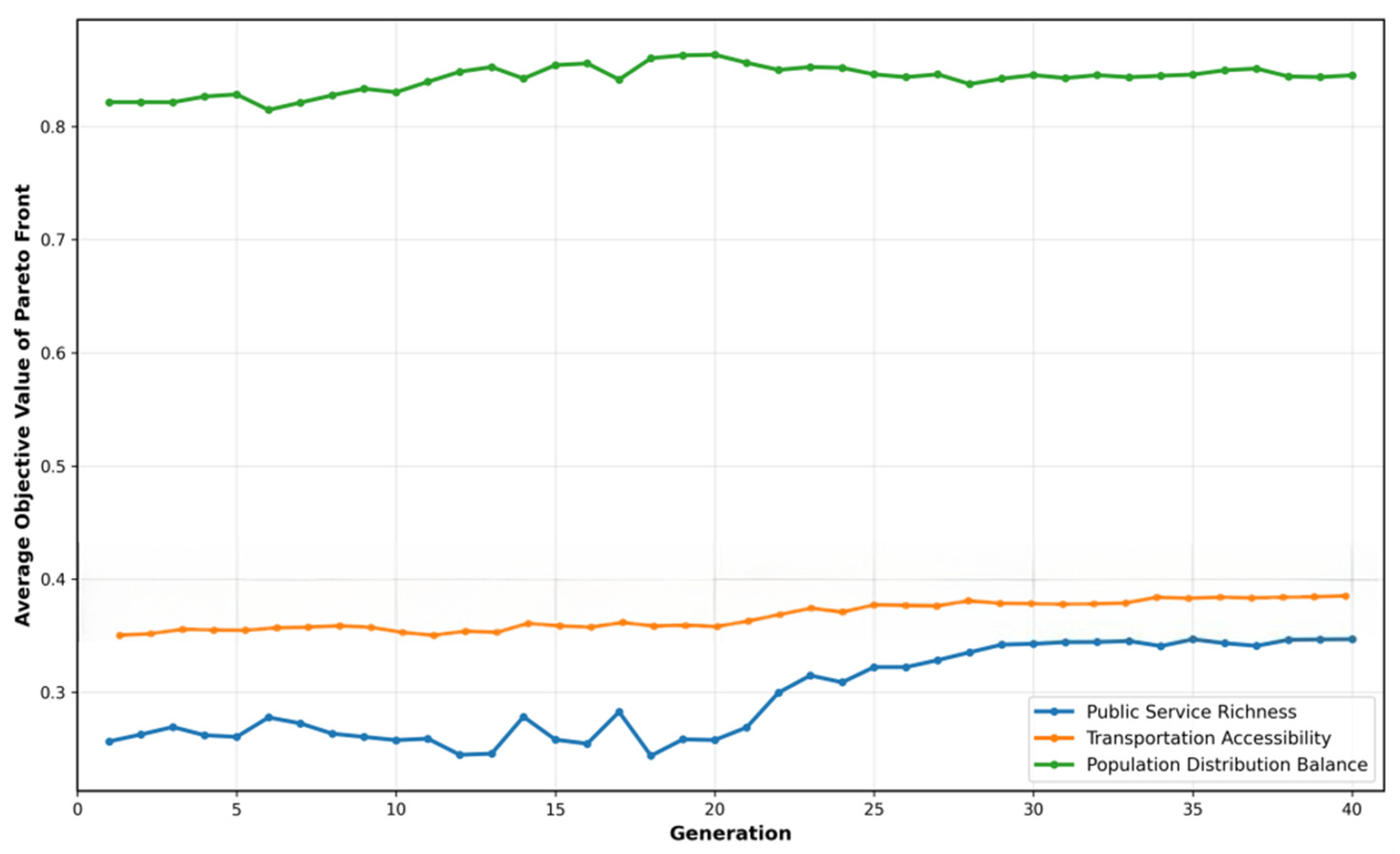
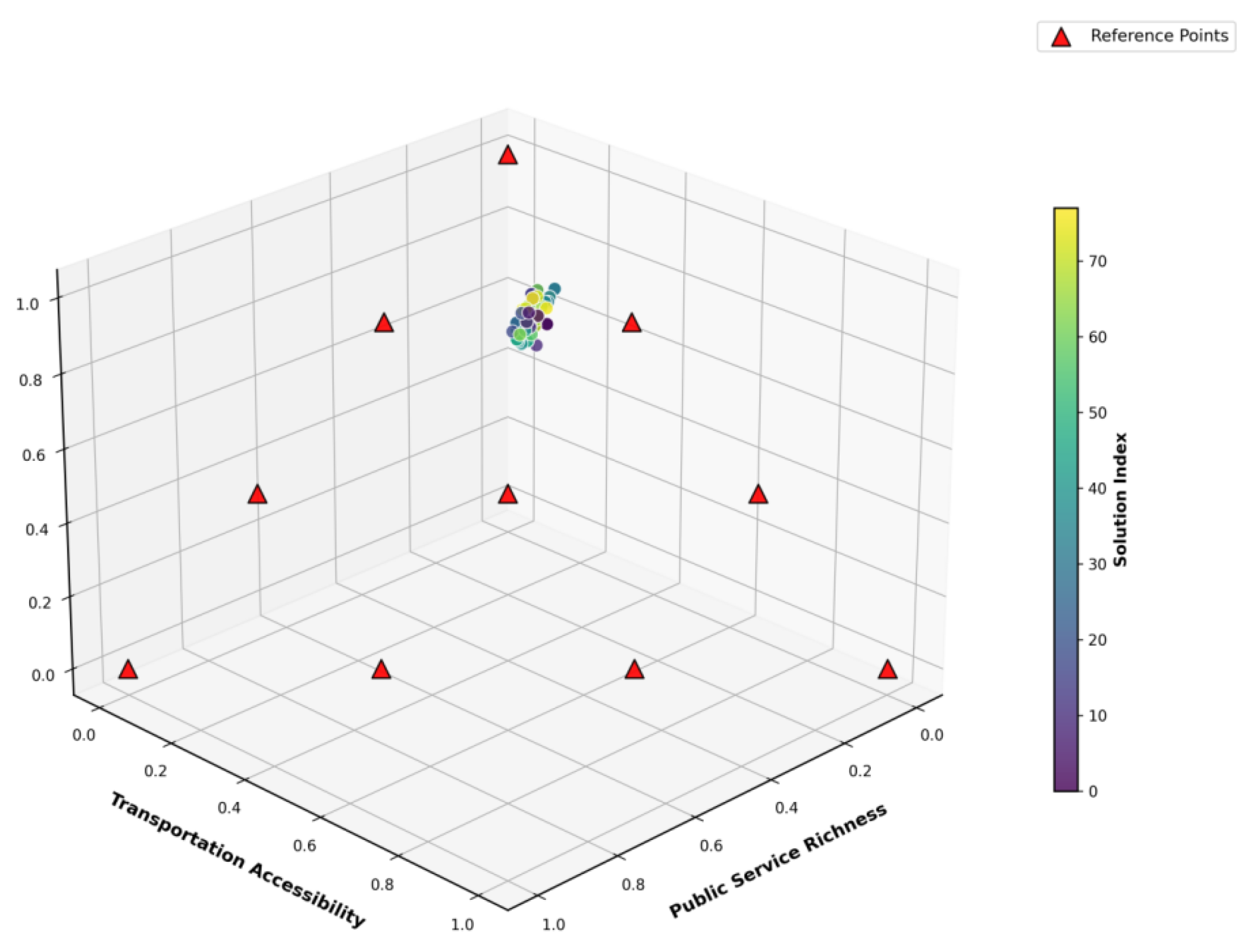
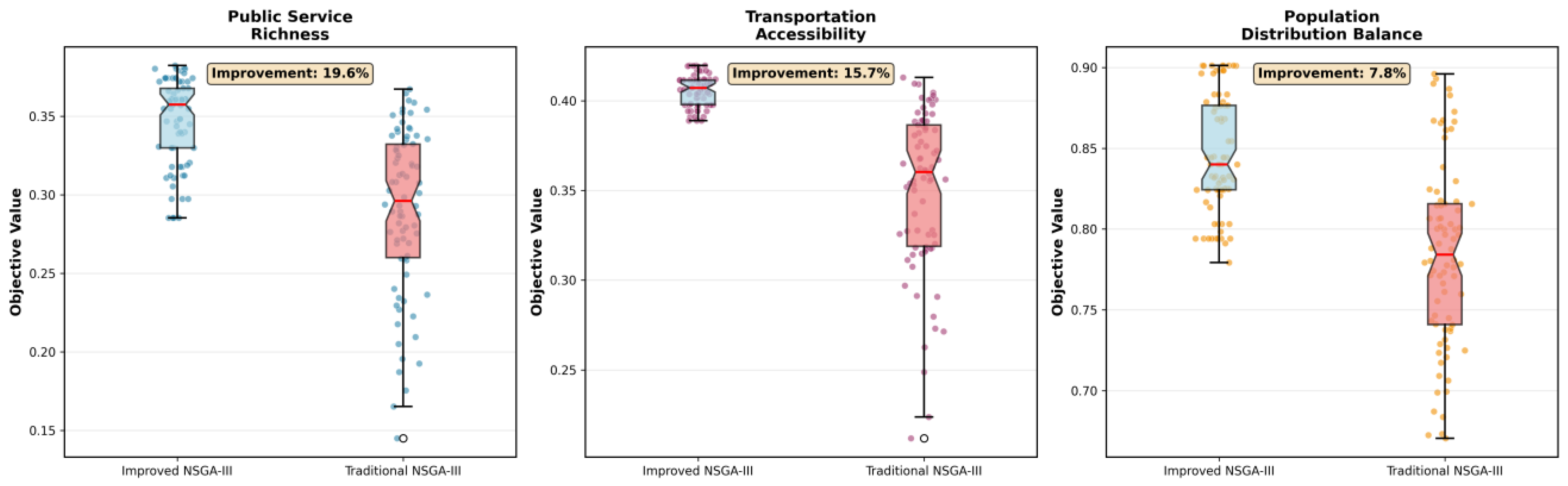
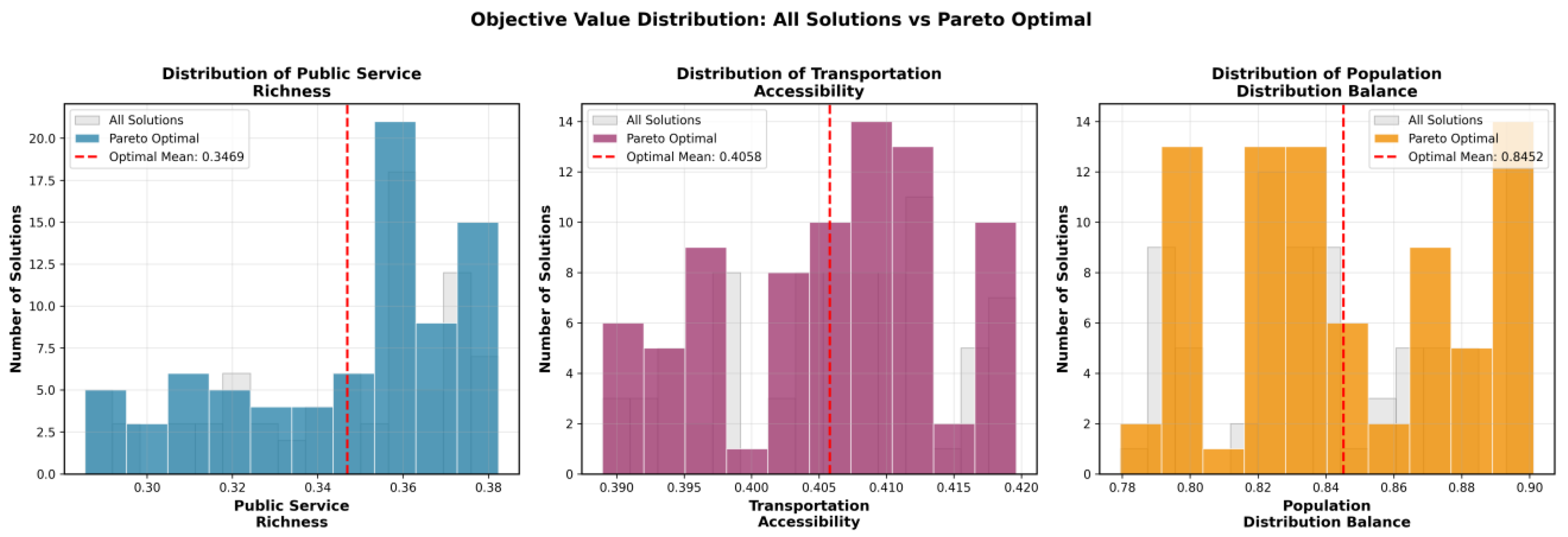
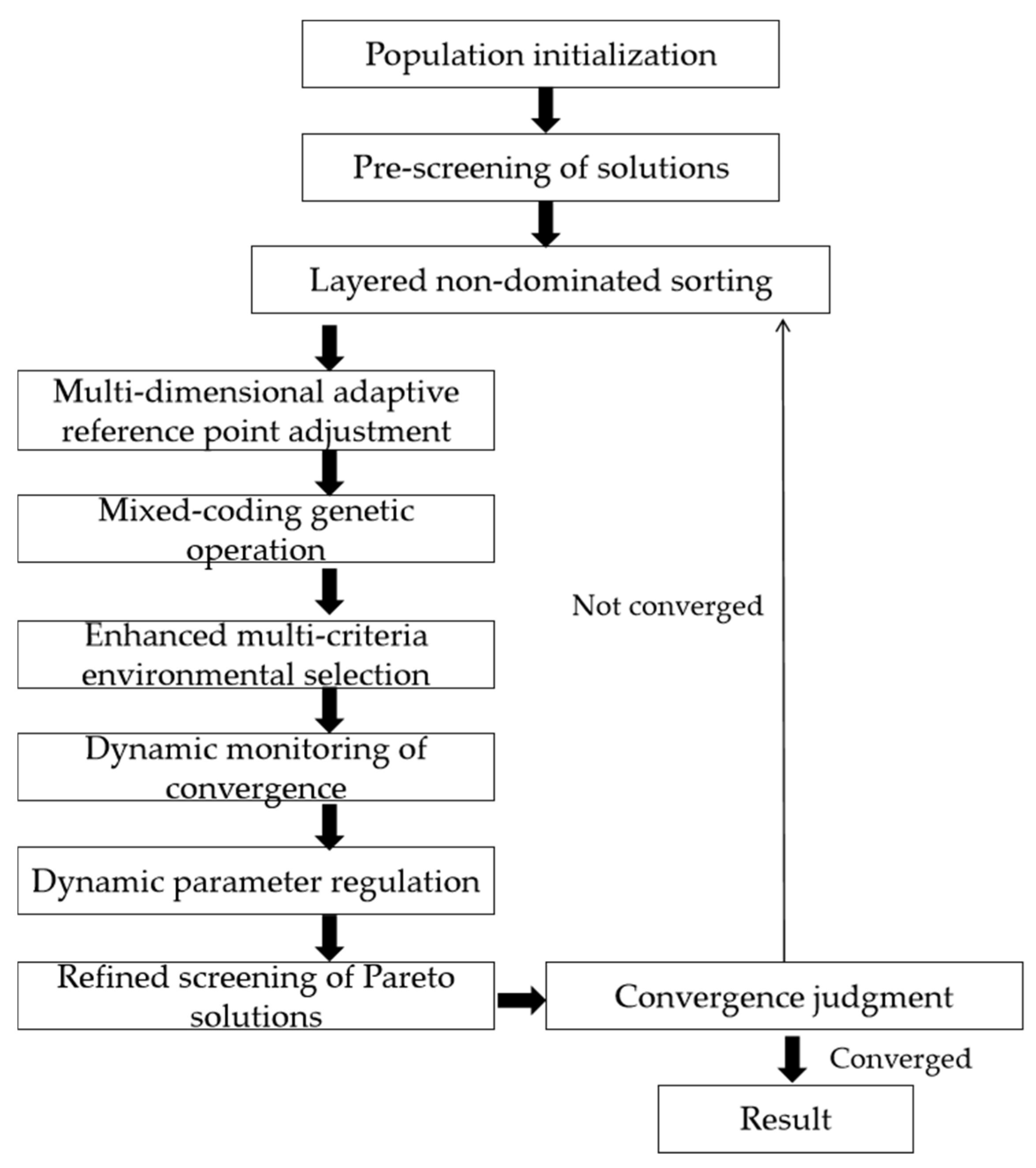
Against the backdrop of high-quality urbanization in cities, the rapid expansion of metro networks has led to severe spatial mismatches in land use around station areas, which seriously restricts the full exertion of the comprehensive benefits of the transit-oriented development (TOD) model. Taking 139 operational metro stations in Xi’an in 2024 as the research sample, this study constructs a multi-objective land use optimization model with the richness of public services, transportation accessibility and population distribution balance as the three core maximization objectives. A hierarchically adaptive improved NSGA-III algorithm is proposed, with the following four key technical optimizations implemented: multi-dimensional adaptive reference point adjustment, design of real-integer hybrid coding genetic operators, construction of an enhanced multi-criteria environmental selection mechanism, and dynamic regulation of algorithm iteration. Experimental results show that the performance of the improved algorithm is significantly superior to that of the traditional NSGA-III algorithm: the values of the three core objectives are increased by 59.58%, 12.94% and 7.35% respectively compared with the original data; the algorithm achieves stable convergence after 25 iterations, with the convergence efficiency improved by 30%. The obtained Pareto optimal front features good uniformity (U = 0.92) and coverage (C = 0.95), and all the 80 non-dominated solutions meet all constraint conditions, with the solution set highly coupled with the urban functional zoning and spatial planning of Xi’an. This study proposes a zoned, prioritized and phased hierarchical land use optimization strategy for the areas around metro stations in Xi’an. The research findings provide a replicable research framework and methodological reference for the TOD practice and land use optimization of metro station areas in other rapidly urbanizing central cities in China and developing countries worldwide with the characteristic of rapid rail transit expansion.
Keywords: TOD model; metro station; land use optimization; multi-objective optimization; improved NSGA-III algorithm; public service; transportation accessibility; population distribution balance TOD model; metro station; land use optimization; multi-objective optimization; improved NSGA-III algorithm; public service; transportation accessibility; population distribution balance