Article

Has Digital Economy Promoted Sustainable Intensification of Cultivated Land Use?

School of Public Administration, Huazhong Agricultural University, Wuhan 430070, China
*
Author to whom correspondence should be addressed.
Land 2026, 15(4), 586; https://doi.org/10.3390/land15040586
Submission received: 6 March 2026 / Revised: 27 March 2026 / Accepted: 31 March 2026 / Published: 2 April 2026
(This article belongs to the Section Land Socio-Economic and Political Issues)

Abstract

The expansion of China’s digital economy (DE) has begun to reshape agricultural production in ways that extend beyond efficiency gains, raising important questions about its implications for the long-term sustainable intensification of cultivated land use (SCU). Drawing on panel data from 31 provincial-level regions between 2011 and 2023, this study examines how digital development influences cultivated land sustainability from the perspectives of productivity, resource efficiency, and system resilience. The results indicate that digital advancement is closely associated with higher land productivity and more efficient input use, with digital industrialization playing a particularly pronounced role. Its contribution to land system resilience, however, appears more limited, likely because ecological stability and structural risk-buffering mechanisms respond slowly to technological change. Further analysis suggests that agricultural industrialization (AID) and Rural financing capacity (RFC) function as important transmission channels through which digital development shapes land-use outcomes. Notably, the effects are not uniform. The influence of digital development becomes more evident after 2015, when digital infrastructure and policy support deepened nationwide. Regional differences are also apparent: while the eastern region has already absorbed much of the early digital dividend, stronger marginal gains remain possible in central and western China, where agricultural modernization and digital integration are still unfolding. These findings underscore the importance of strengthening rural digital infrastructure, enhancing farmers’ digital capabilities, and improving digitally enabled financial services to support sustainable land use, particularly in less-developed regions.

1. Introduction

Cultivated land constitutes the fundamental basis of food security and remains central to the stable functioning of China’s socio-economic system [1]. Despite sustained economic growth, the long-standing constraint of “a large population with limited arable land” continues to shape the country’s development trajectory. In recent years, the expansion of non-agricultural land conversion and the growing tendency toward non-grain cultivation have become increasingly evident [2]. At the same time, excessive land exploitation and agricultural non-point source pollution have gradually weakened soil quality and ecological functions, raising mounting concerns over the sustainable intensification of cultivated land use (SCU) [3,4]. These challenges are not unique to China. Across many agricultural regions worldwide, ensuring that cultivated land can simultaneously sustain production, improve input efficiency, and remain resilient to environmental and socio-economic disturbances has become a central issue in debates on sustainable agriculture, land-use governance, and rural transformation. With ecological civilization elevated to a national strategic priority, cultivated land protection in China has evolved from a focus on quantity control to a more comprehensive objective that emphasizes quality, efficiency, and resilience. Improving cultivated land productive capacity (SCU-P), enhancing resource utilization efficiency (SCU-R), and strengthening cultivated land system resilience (SCU-S) together represent the core dimensions of advancing SCU. Progress across these dimensions is critical not only for consolidating food security but also for stabilizing agricultural production, safeguarding farmers’ livelihoods, and promoting agricultural modernization. This multidimensional understanding of SCU also aligns with current international discussions on sustainable intensification, which have increasingly moved beyond a narrow emphasis on output growth toward a broader concern with multidimensional performance, including productivity improvement, more efficient and coordinated resource use, ecological sustainability, and the resilience and adaptive capacity of agricultural systems under changing conditions. From this perspective, the present study’s focus on productivity, resource-use efficiency, and system resilience is consistent with an emerging international tendency to assess agricultural land use through a more integrated and system-oriented framework.
Meanwhile, the digital economy (DE) has expanded rapidly. It is generally understood as the interaction between digital industrialization (DE-D), which provides digital infrastructure and technological platforms, and industry digitalization (DE-I), which integrates digital technologies into traditional industries [5,6]. Through this dual process, digital elements increasingly interact with conventional production factors such as land, labor, and capital, thereby reshaping production organization and resource allocation patterns. Similar processes have been observed in many parts of the world, where digital technologies are increasingly seen as a critical force in agricultural modernization, rural service delivery, and green transformation. Studies from Southern Europe show that the digitalization of agriculture is increasingly linked to productivity, cost reduction, sustainability, and environmental protection, while facing significant implementation challenges [7,8]. Evidence from European rural contexts, such as smart village initiatives in Poland, further suggests that digitalization is increasingly viewed not only as a production tool, but also as a driver of rural service transformation and local development [9,10]. For China—simultaneously a major agricultural nation and a leading DE—clarifying how DE affects SCU within the broader framework of agricultural modernization is therefore not only a nationally important question, but also a case with wider relevance for understanding how digital transformation may reshape land-use sustainability under different development conditions.
As digital technologies continue to penetrate agricultural production and rural governance, agricultural digital transformation has gradually emerged as an important pathway toward greener and more sustainable development [11,12]. Existing studies indicate that digital applications—such as smart agriculture systems and precision management technologies—can reduce information asymmetries, facilitate technology diffusion, and optimize input allocation [13,14]. Systematic review evidence from Asia similarly indicates that digital technology integration can generate gains in productivity, sustainability, and resource management across agriculture-related sectors. On the one hand, DE improves the mobility and allocation efficiency of production factors, creating favorable conditions for capital, talent, and technological resources to enter agriculture [15]. On the other hand, digital technologies enhance factor productivity by transforming traditional production processes, including cultivated land management practices [16,17]. More precise decisions regarding fertilizer and pesticide application help control excessive input use and mitigate damage to soil quality and the ecological environment [18]. Existing research has provided a valuable foundation for understanding how digitalization improves agricultural productivity, optimizes input use, and reshapes production management. Nevertheless, as contemporary research increasingly emphasizes multidimensional and system-oriented approaches to agricultural sustainability, it remains insufficiently understood whether and through what mechanisms these digital transformations contribute to the sustainable intensification of cultivated land use. In much of the existing literature, productivity enhancement, resource-use efficiency, management optimization, and resilience-related outcomes are still treated as partially separate analytical concerns, leaving room for a more integrated framework that considers their interconnections within cultivated land use systems [19]. In addition, the transmission pathways and spatial–temporal heterogeneity of the effects of DE on SCU have not yet been fully elucidated.
Against this background, this study takes China as an empirical setting to examine whether DE promotes SCU, through which channels this effect operates, and whether it varies across development stages and regions. China offers a particularly valuable case in this regard. As a populous country with vast territorial space, marked regional disparities, and uneven digital development, it contains a wide range of agricultural and developmental contexts within a unified national framework. This internal heterogeneity makes it possible to observe how digital transformation interacts with cultivated land use under different conditions, thereby offering insights not only for China but also for many developing countries facing similar challenges of food security, agricultural transition, and uneven digitalization. By linking DE to SCU from the three dimensions of SCU-P, SCU-R, and SCU-S, this study seeks to contribute to ongoing discussions on digital transformation and sustainable land use.

2. Conceptual Framework

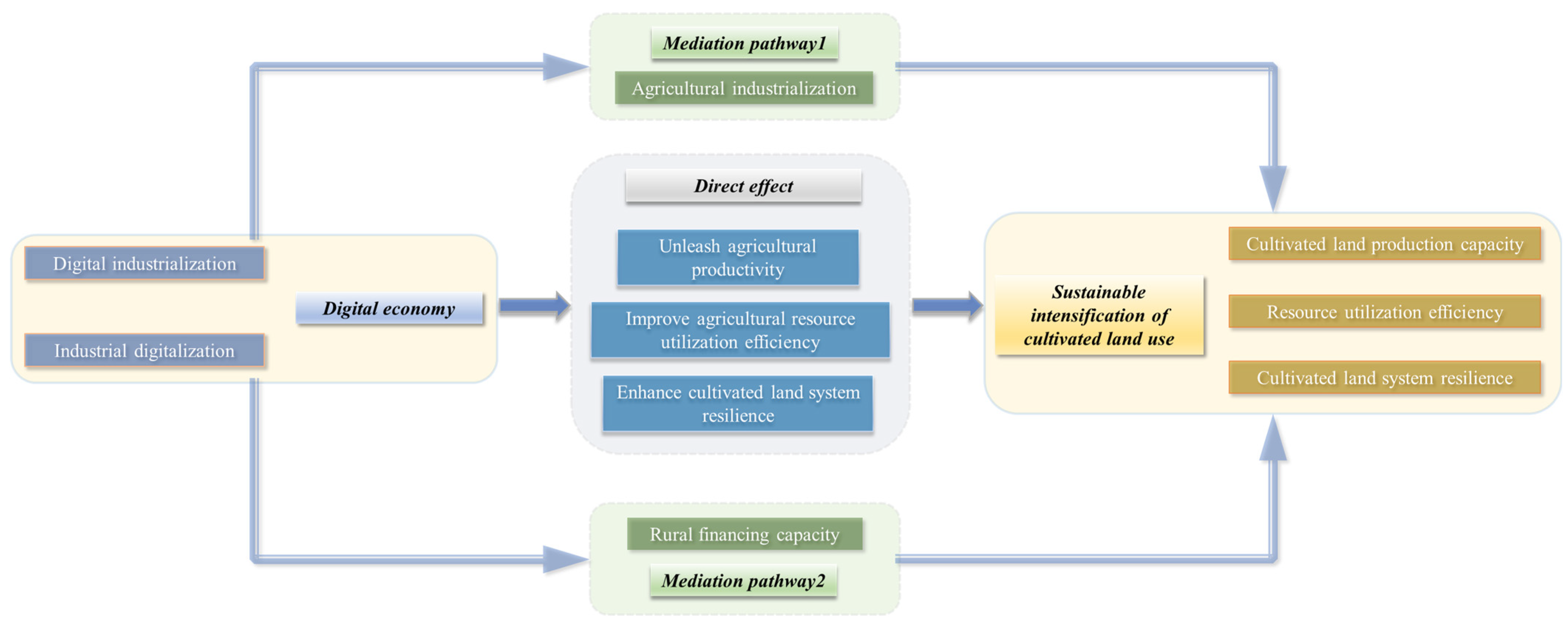
The SCU underpins China’s long-term goals related to food security and social well-being. It also reflects an international concern with how agricultural land systems can remain productive, efficient, and resilient in the face of technological change, environmental pressure, and rural restructuring. Achieving this objective depends not on a single policy instrument, but on the interaction of multiple actors, institutions, and production factors. In this context, the DE, characterized by cross-spatiotemporal information connectivity and lower transaction costs [20], has the potential to reshape agricultural development conditions. By easing labor constraints and reducing coordination and governance costs, digital technologies may create new opportunities for improving SCU. The influence of DE, however, is unlikely to operate solely through direct technological effects. As digital platforms and data-based systems become embedded in rural areas, they can alter production organization, reconfigure factor allocation, and expand access to financial resources. These structural adjustments may, in turn, affect how cultivated land is managed and utilized. At the same time, the effects of DE are unlikely to be uniform. Variations in development stages, regional economic foundations, institutional environments, and geographic conditions suggest that its impact may differ across space and evolve over time. Nonlinear patterns and heterogeneous outcomes are therefore plausible. Building on these considerations, the present study examines the relationship between DE and SCU from three complementary perspectives: overall effects, transmission mechanisms, and spatial–temporal heterogeneity. The corresponding analytical framework is illustrated in Figure 1.

2.1. Impact of DE on SCU

Cultivated land provides the basic resource base for agricultural production, and the SCU shapes the long-term viability of rural development. Beyond its role in supporting sustainable agriculture, SCU is closely tied to food security, rural social stability, and farmers’ livelihoods. In line with both existing scholarship and current policy priorities, SCU can be understood from three interrelated dimensions: SCU-P, SCU-R, and SCU-S. Improvements in SCU-P are typically reflected in higher grain yields and greater agricultural value added. SCU-R emphasizes the more efficient use of inputs—such as fertilizers and pesticides—alongside gains in output efficiency. SCU-S, by contrast, concerns the capacity of cultivated land systems to withstand external disturbances, which depends on maintaining land retention, reducing disaster-related losses, and strengthening water conservancy and drainage infrastructure [21,22]. Taken together, these dimensions capture the multifaceted nature of SCU rather than reducing it to a single performance indicator. This three-dimensional understanding is also consistent with international research emphasizing that land-use sustainability should be assessed not only by production outcomes, but also by efficiency performance and the adaptive capacity of agro-ecosystems.
The DE, centered on digital information and supported by internet-based platforms and technological innovation [23], has increasingly reshaped economic activities. It is commonly conceptualized as comprising DE-D and DE-I. While DE-D provides infrastructure, technical services, and foundational digital resources, DE-I integrate data and digital tools into traditional sectors, thereby altering production organization and factor allocation patterns [24]. In agriculture, where cultivated land remains the core production factor, DE influences not only infrastructure conditions but also production processes. Digital applications enhance monitoring capacity, enable more precise input management, and facilitate data-driven decision-making. These changes may improve resource efficiency and reduce environmental pressure, thereby creating conditions conducive to higher levels of SCU. Nevertheless, the extent to which these technological and organizational advantages can be translated into improvements in SCU depends on the degree to which digitalization development is effectively coupled with the functioning of local agricultural systems. Even so, by reshaping information flows, reducing allocation frictions, and enhancing production coordination, DE is generally expected to create more favorable conditions for the sustainable and intensive use of cultivated land.
Based on this reasoning, Hypothesis 1 is proposed as:
Hypothesis 1.
DE is positively associated with SCU.

2.2. DE-SCU Mechanisms

As the DE expands, its presence in agricultural production and rural governance has become increasingly visible, influencing SCU through multiple channels. Some effects arise directly from technological change. DE-D and DE-I introduce automation, platform-based services, and data-driven management into agricultural production, which can ease labor shortages associated with rural outmigration and lower the probability of land abandonment [25]. At the same time, digital tools applied to production monitoring and governance improve input control and process supervision, contributing to reductions in agricultural non-point source pollution and gradual improvements in the ecological conditions of cultivated land [26]. Higher and more stable household incomes associated with digital integration may further reduce short-term, subsistence-oriented land-use behavior, thereby alleviating ecological pressure [27]. These effects suggest that digitalization can shape land-use sustainability not only by increasing output potential but also by changing the way cultivated land is managed, supervised, and maintained.
Beyond these direct influences, DE may also operate through structural transformation. This study focuses on two potential mediating factors: agricultural industrialization (AID) and rural financing capacity (RFC). AID reflects the extent of value-chain coordination and the transition toward scale-based and enterprise-oriented management, while RFC captures the ability of rural actors to access and allocate financial resources through diversified channels. Analytically, these two mediators reflect two key dimensions through which digital transformation may shape land-use sustainability: organizational upgrading and financial empowerment.
In China, where smallholder farming has long dominated cultivated land management, persistent structural constraints—such as land fragmentation, limited grain profitability, and uneven technological access—continue to hinder sustainable land use [28,29]. Digital connectivity and lower transaction costs create conditions for closer coordination among production entities. As information flows become more transparent and organizational costs decline, farms and agribusinesses may be more inclined to cooperate, expand operational scale, and specialize, thereby strengthening AID [30]. At the same time, digital financial services can relax credit constraints, reduce financing costs, and improve the allocation of capital toward productive investment, contributing to stronger RFC [31]. Evidence from Africa also suggests that digitalization can improve agricultural services, financial inclusion, and rural land governance, influencing agricultural transformation [32]. The diffusion of digital infrastructure benefits not only large agribusinesses seeking technological upgrading, but also smallholders who gain broader access to information and collaborative platforms [33,34]. DE-I can stimulate innovation in production organization, lower entry barriers to specialization, and encourage participation in cooperatives or technical alliances [35]. Through these processes, higher levels of AID may foster more standardized land management practices and facilitate the dissemination of scientific cultivation methods, which are conducive to improving SCU [36]. Similarly, improvements in RFC provide financial support for upgrading production conditions, optimizing input structures, and adopting refined management practices [37,38].
On this basis, Hypothesis 2 is introduced as:
Hypothesis 2.
DE indirectly promotes SCU through its positive effects on AID and RFC.

2.3. Heterogeneity in Impact of DE on SCU

The trajectory of DE development is influenced by technological innovation, policy orientation, and institutional conditions. Its expansion has not followed a uniform pattern; instead, it has exhibited network spillovers and cumulative effects that vary across regions and over time [39]. Meanwhile, mediating factors such as AID and RFC evolve alongside broader socio-economic transformation and spatial restructuring. These dynamics suggest that the relationship between DE and the SCU is unlikely to remain constant across different contexts. From a theoretical perspective, the effect of digital transformation on cultivated land use should be expected to be context-dependent, because the benefits of digital infrastructure, platform coordination, and information integration can only be realized under specific combinations of economic conditions, institutional support, and user capabilities.
In China, DE has experienced a shift from an initial phase of rapid expansion to a period characterized by deeper integration. Prior to 2015, infrastructure construction, smart devices, and related digital services were gradually introduced, with policy efforts largely centered on informatization. During this stage, applications of DE within the “three rurals” (agriculture, rural areas, and farmers) were still at an exploratory stage, and the rural digital divide limited the dissemination of digital agricultural technologies [40]. Under such conditions, the influence of DE on SCU was likely constrained. After 2015, the strategic elevation of DE at the national level and the widespread adoption of new-generation communication technologies, including 4G, substantially improved rural digital infrastructure. The increasing penetration of the internet and mobile devices accelerated digital integration in the “three rural issues” [41]. At the same time, policy incentives and ongoing agricultural digital transformation contributed to the development of rural economic organizations and improvements in financing capacity. As farmers’ digital skills gradually improved, the channels through which DE could affect SCU became more substantial.
Regional differences further complicate this relationship. Marked disparities persist among eastern, central, and western China in terms of economic foundations, technological capacity, and policy implementation intensity [42]. These structural differences shape uneven patterns of DE development and also influence the evolution of AID and RFC. In addition, variations in geographic conditions and resource endowments lead to distinct cultivated land use patterns, ecological environments, and crop structures, all of which have implications for SCU [43]. Accordingly, heterogeneity is not merely an empirical extension of the baseline analysis, but a theoretically plausible outcome of uneven digital development and differentiated land-use conditions.
Collectively, these considerations support Hypothesis 3:
Hypothesis 3.
The impact of DE on SCU exhibits both stage-based and spatial heterogeneity.

3. Materials and Methods

3.1. Model

3.1.1. Two-Way Fixed Effects Regression Model

To examine the impact of DE on SCU, this study treats SCU as the dependent variable and DE development level as the key independent variable. We then construct a two-way fixed effects model that controls for both individual (province) fixed effects and time (year) fixed effects. The model is specified as follows:
S C U i t = α 0 + α 1 D E i t + k = 2 6 α k C o n t r o l i t + ω i + γ t + ε i t
In Equation (1), SCUit is the dependent variable, denoting the level of SCU in province (i) in year (t); DEit is the independent variable, denoting the level of DE development in province (i) in year (t). α0 is the constant term, and α1 captures the effect of DE on SCU. Controlit denotes the set of control variables. ωi represents province fixed effects, γt represents year fixed effects, and εit is the random error term.

3.1.2. Mediation Effect Model

To test the mediating mechanisms through which DE affects SCU, this study follows the mediation effect testing approach proposed by Wen and Ye [44]. Specifically, AID and RFC are introduced as mediating variables. Based on Equation (1), we construct the mediation effect model as follows:
M E D i t = β 0 + β 1 D E i t + k = 2 6 β k C o n t r o l i t + ω i + γ t + ε i t
C L P i t = δ 0 + δ 1 D E i t + k = 2 3 δ k M E D i t + k = 4 8 δ k C o n t r o l i t + ω i + γ t + ε i t
In Equation (2), MEDit denotes the mediating variable; β0 is the constant term; and β1 captures the effect of DE on the mediating variable.
In Equation (3), δ0 is the constant term; δ1 represents the effect of DE on SCU after the mediating variable is included; and δk (k = 2,3) denotes the effects of AID and RFC on SCU.

3.2. Variable Selection

3.2.1. Dependent Variable

As shown in Table 1, the dependent variable in this study is Sustainable intensification of cultivated land use (SCU). This paper synthesizes the definitions of cultivated land protection provided by Zu et al. [45] and Li et al. [46], as well as the definitions of cultivated land use efficiency proposed by Tan et al. [47] and Fu et al. [48]. Indicators are selected from three dimensions—cultivated land productivity capacity (SCU-P), resource utilization efficiency (SCU-R), and cultivated land system resilience (SCU-S)—and the entropy method is employed to evaluate the SCU level of each province in China. SCU-P: This dimension focuses on the capacity of cultivated land in grain production and economic output. SCU-R: This dimension captures the optimized allocation and efficient use of cultivated land-related resources, with particular attention to the utilization efficiency of fertilizers, pesticides, agricultural plastic film, and diesel. SCU-S: This dimension examines the recovery and adaptive capacity of cultivated land in the face of external shocks, such as natural disasters and environmental pressures.

3.2.2. Independent Variable

As shown in Table 2, the key independent variable in this study is the level of DE. We select indicators associated with two core features of DE: digital industrialization (DE-D) and industrial digitalization (DE-I). DE-D refers to the process of providing digital technologies, products, services, infrastructure, and solutions for the development of DE-I, encompassing various economic activities that are fully dependent on digital technologies and data [5]. Accordingly, this paper uses two primary indicators to capture DE-D: the level of the postal and telecommunications sector and that of the electronic information industry. DE-I refers to the transformation of traditional industries through the application of digital technologies and data resources to improve output and efficiency [49,50]. In this paper, DE-I is proxied by two primary indicators: the level of digital technology investment and firm digitalization.
Based on these indicators, this study employs the entropy method to construct a composite index of DE for each province in China.

3.2.3. Mediating Variables

As shown in Table 3, to examine the channels through which DE affects SCU, this study tests two mediators: agricultural industrialization degree (AID) and Rural financing capacity (RFC). AID refers to the realization of agricultural scale expansion and modernization through market orientation, whole value-chain coordination, and enterprise-based management. It is measured by the number of farmers’ specialized cooperatives per capita, the number of leading agribusiness enterprises in agricultural industrialization, and the number of modern agricultural demonstration zones. After standardization, these indicators are summed with equal weights. RFC refers to the capability of various rural agricultural business entities to obtain, allocate, and sustainably utilize financial resources through diversified financial channels, reflecting the accessibility of rural financial services and the intensity of financial support for the agricultural economy. This variable is proxied by household financing capacity and agricultural financing intensity; after standardization, the two indicators are summed with equal weights.

3.2.4. Control Variables

As shown in Table 3, the selection of control variables aims to eliminate the potential influence of external factors on SCU. Accordingly, the following controls are included. Economic development level (EDL), measured by GDP per capita, captures the potential effect of regional economic foundations on cultivated land use. Government support for agriculture (GSA), measured as the share of expenditure on agriculture, forestry, and water affairs in the general public budget expenditure of local governments, controls for the role of fiscal support in agricultural resource allocation. Agricultural labor force loss (AFL), measured by the proportion of migrant workers, reflects the shock of labor reduction on agricultural production and cultivated land use. Dependency ratio (DPR), measured by the share of the non-working-age population, controls for the indirect effects of demographic structure changes on labor supply and cultivated land protection. Industrial upgrading (ISU), measured by an industrial structure hierarchy coefficient, captures the promoting effect of improved resource use efficiency brought by industrial upgrading on sustainable cultivated land use. By incorporating these controls, we exclude major external confounders and improve the accuracy of the estimation results.

3.3. Research Region and Data Sources

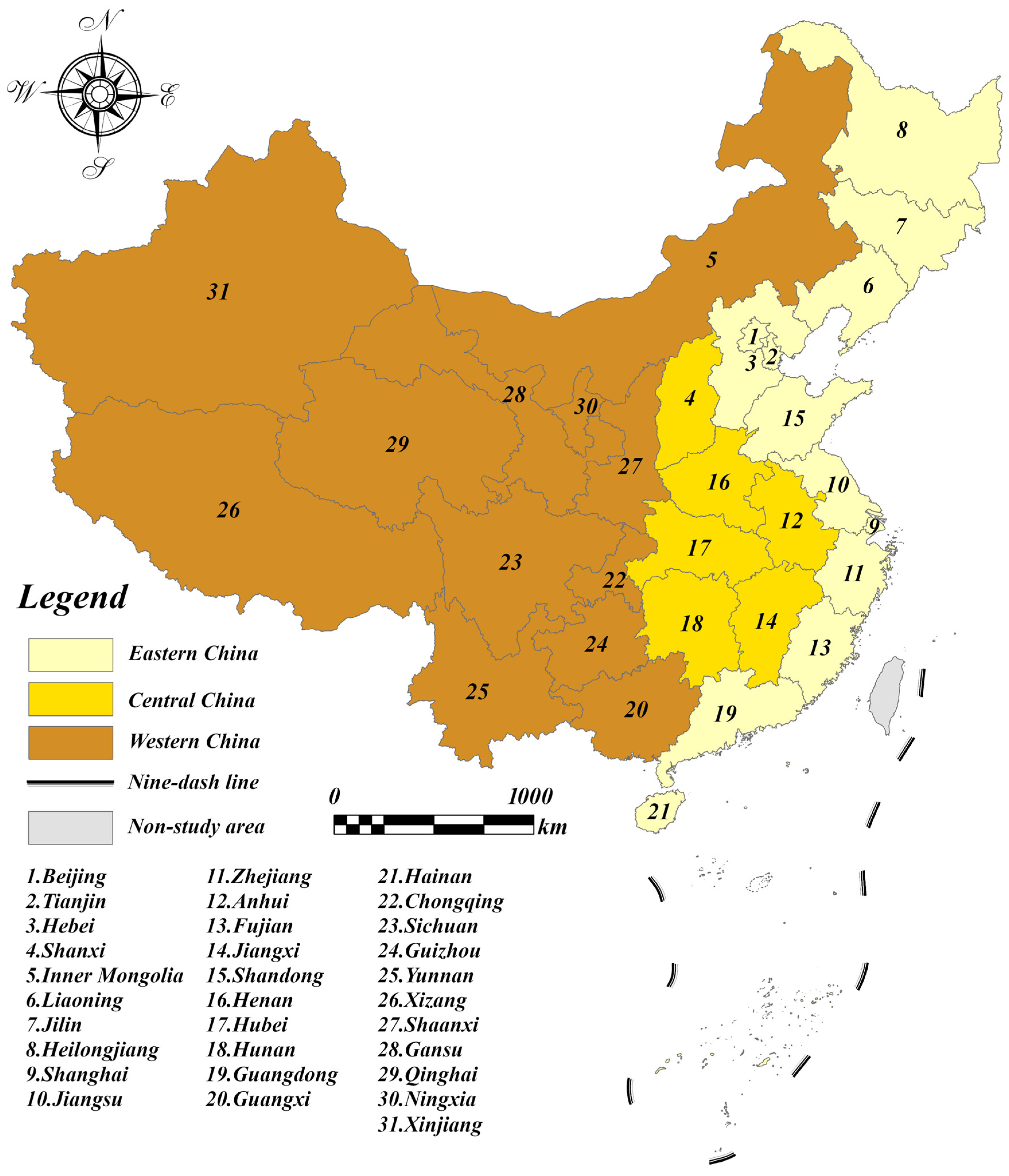
Given that the statistical coverage of key indicators in this study begins in 2011, the sample period is set to 2011–2023. Due to data completeness and availability constraints, data for Hong Kong, Macao, and Taiwan are not included. The final sample consists of statistical data for 31 provincial-level regions, yielding a balanced provincial panel of 403 observations. The study area is illustrated in Figure 2.
The data used in this paper can be grouped into three parts:
First, data for the dependent variable are drawn from the “China Statistical Yearbook [51]”, ”China Rural Statistical Yearbook [52]”, and provincial statistical yearbooks for the corresponding years. Data on cultivated land area are obtained from the Results Sharing and Application Service Platform of the National Land Survey [53].
Second, data for the independent variable are collected from the “China Statistical Yearbook”, the “China Statistical Yearbook of the Tertiary Industry [54]”, the “China Statistical Yearbook of Science and Technology [55]”, and the “Yearbook of China Information Industry [56]”.
Third, data for the mediating variables and control variables are obtained from the “China Statistical Yearbook”, the “China Rural Operation and Management Statistical Yearbook [57]”, the “China Rural Cooperative Economy Statistical Yearbook [58]”, and the “China Rural Policy and Reform Statistical Yearbook [59]” for the corresponding years. In particular, data related to household loans and agricultural loans are sourced from the “China Rural Financial Services Report [60]” and the “Almanac of China’s Finance and Banking [61]”.
To ensure unit consistency, variables related to quantities and monetary amounts among the control variables are log-transformed (with monetary indicators first deflated using the 2019 GDP deflator). Ratio and index variables are kept in their original form. Missing values during 2011–2023 are supplemented by consulting alternative sources or, where appropriate, using log-linear regression, interpolation, or the average growth rate method.
The descriptive statistics of the main variables are presented in Table 4.

4. Results

4.1. Temporal and Spatial Evolution of SCU and DE

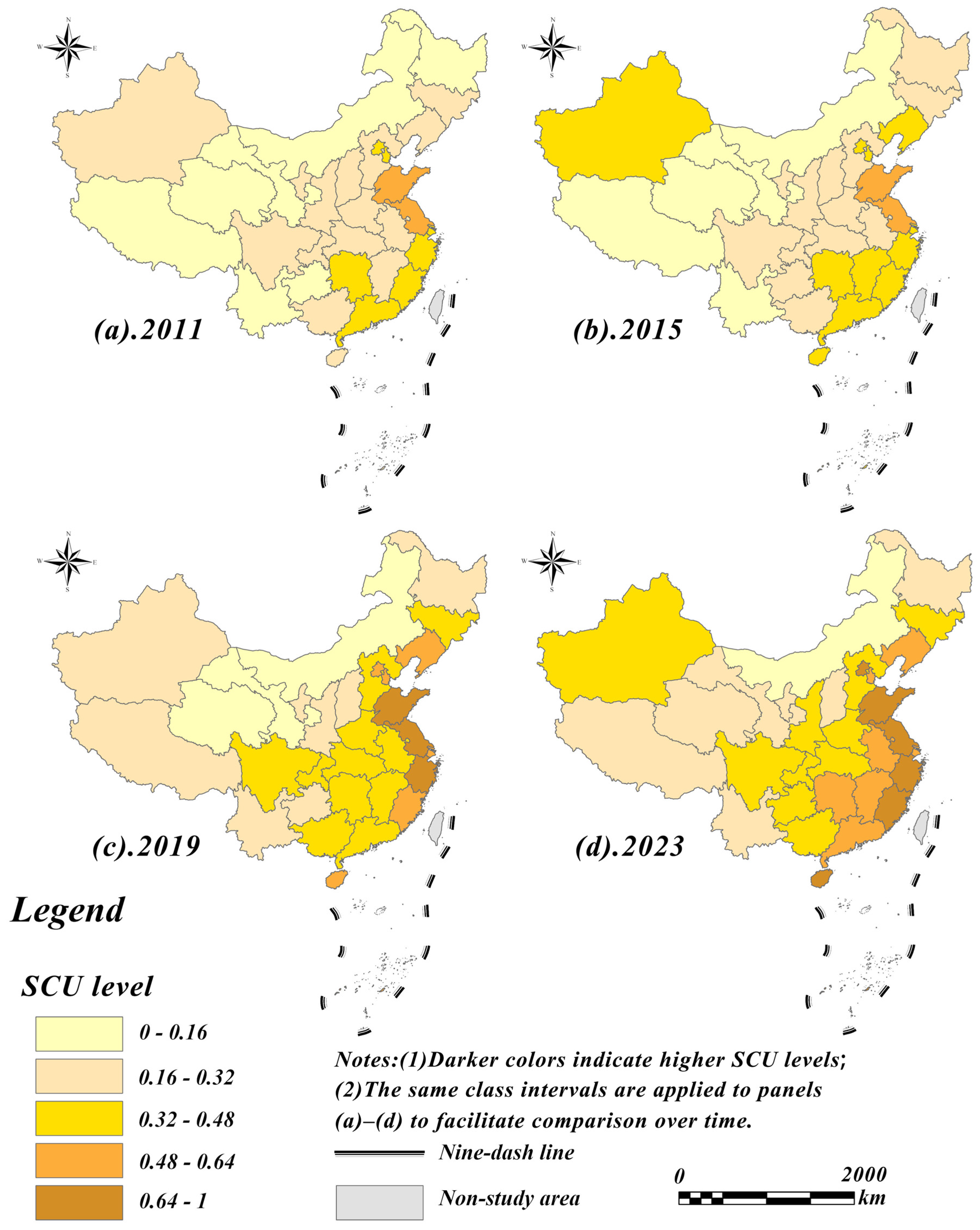
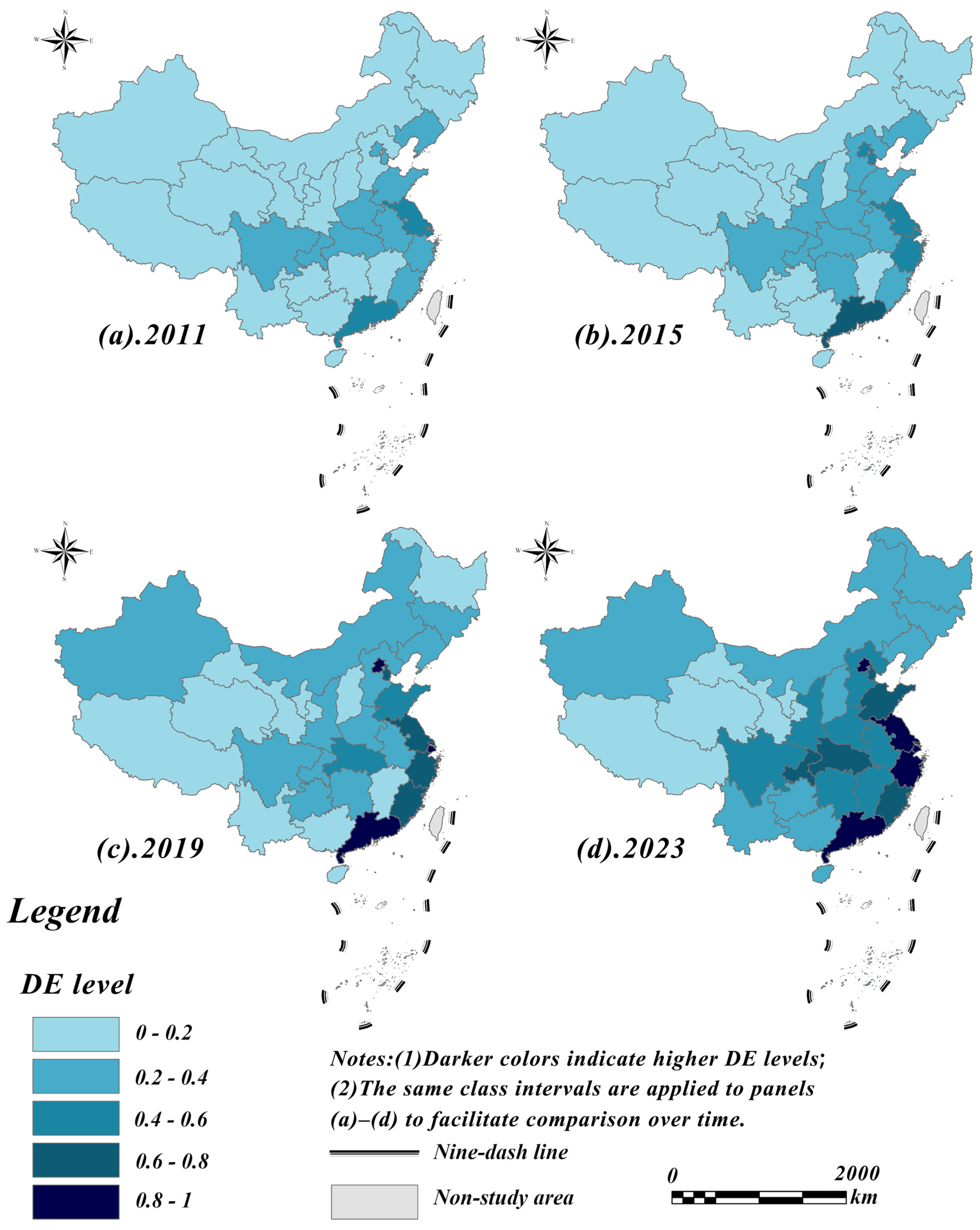
Using 2011, 2015, 2019, and 2023 as representative years, this study employs ArcGIS Pro 3.6.0 (Esri, Redlands, CA, USA) and vector data to map the spatiotemporal evolution of the dependent and key explanatory variables across 31 provincial-level regions (Figure 3 and Figure 4). Across the four cross-sections from 2011 to 2023, both SCU and DE levels exhibit pronounced temporal improvements and spatial differentiation.
With respect to SCU, the overall level in 2011 was relatively low, with marked regional disparities; higher values were mainly observed in some eastern coastal provinces. After 2015, SCU increased substantially in the central and eastern regions, and high-value areas gradually expanded toward the central region. By 2019 and 2023, high-value clusters further concentrated in the eastern coastal belt and parts of the central region, forming a gradient pattern with the east as the core and diffusion toward inland areas. In contrast, the western region and parts of Northeast China remained at a relatively low level.
DE development displays more salient spatial agglomeration. In 2011, the overall DE level was low, yet the eastern coastal region already showed a leading advantage. After 2015, infrastructure improvement and policy impetus further strengthened this eastern advantage. The central region began to improve gradually. In 2019 and 2023, high-value areas were concentrated in the Pearl River Delta, Yangtze River Delta, and parts of the Bohai Rim region. These regions exhibited a coastal, belt-shaped agglomeration pattern with diffusion to surrounding areas, though substantial regional disparities persisted.
Overall, both SCU and DE show a sustained upward trend over time. They form a spatial pattern of eastern agglomeration with diffusion toward inland regions. In the eastern region, high-DE areas overlap to some extent with areas of relatively high SCU. These observations provide a practical basis for further analysis of the impact of DE on SCU and its regional heterogeneity.

4.2. Tests of the Impact Effects and Mechanisms of DE on SCU

4.2.1. Baseline Regression and Endogeneity Tests

In Table 5, columns (1)–(4) report the estimation results from the mixed effects model (MEM), random effects model (RE), fixed effects model (FE), and two-way fixed effects model (TWFE), respectively. The BP–LM test comparing the MEM and RE models yields p < 0.001, thus rejecting the null hypothesis in favor of the MEM specification. The Hausman test comparing the RE and FE models yields p < 0.001, indicating rejection of the RE specification. Building on the control of individual effects, the TWFE model further controls for time effects, helping remove common shocks and systematic biases across time and improving estimation robustness. The TWFE results are consistent with the FE model in both coefficient signs and statistical significance, supporting the validity of the model specification.
Based on the TWFE model, the effect of DE on SCU is reported in Table 5, column (4). The coefficient for DE is 0.3139 and is statistically significant at the 1% level, indicating that DE development significantly improves SCU. Therefore, Hypothesis 1 is preliminarily supported.
To address potential endogeneity and reverse causality in the process by which DE promotes SCU, this study further employs an instrumental variable approach. Following the related literature, the one-period-lagged DE is used as an instrument, and estimation is conducted using two-stage least squares (2SLS). The identification tests indicate that the Kleibergen–Paap rk LM statistic is 7.55 (p = 0.006), suggesting no under-identification problem; the rk Wald F statistic is 1082.63, far exceeding the Stock–Yogo 10% critical value (16.38), thereby ruling out weak identification concerns. In Table 5, columns (5)–(6) present the regression results after introducing the instrument, without and with control variables, respectively. The estimated coefficients of DE remain positive and statistically significant at the 1% level in both specifications, indicating that the selected instrument is appropriate and valid.

4.2.2. Structural Effect Analysis

In this study, the evaluation system for DE level consists of two dimensions—DE-D and DE-I. SCU comprises three dimensions: SCU-P, SCU-R, and SCU-S. Based on these dimensional indicators, we further investigate the impact of DE on SCU from a structural perspective.
In Table 6, column (1) reports the baseline regression results, while columns (2)–(3) test the effects of DE-D and DE-I on SCU, respectively. The results show that the estimated coefficients for DE-D and DE-I are 0.3672 and 0.2993, both statistically significant at the 1% level. This indicates that both dimensions of DE exert significant positive effects on SCU, with DE-D playing a stronger role in promoting SCU.
Columns (4)–(6) of Table 6 report the effects of DE on the three dimensions of SCU. Specifically, the estimated coefficients of DE on SCU-P, SCU-R, and SCU-S are 0.1542, 0.3846, and 0.0947, respectively, all significant at the 1% level. These findings suggest that the impact of DE on SCU is primarily manifested through improvements in SCU-P and SCU-R, whereas its effect on enhancing SCU-S is relatively modest.

4.2.3. Mediation Effects Analysis

DE may indirectly promote SCU by enhancing AID and RFC, as discussed above.
Regression uses mediation effect models from Equations (2) and (3), and Table 7 shows the results. Column (1) presents baseline results. Column (2) shows the effect of DE on AID, and column (3) shows the combined effects of DE and AID on SCU. Column (4) shows the effect of DE on RFC, and column (5) shows the combined effects of DE and RFC on SCU.
Columns (2)–(3) show that DE has a positive effect on AID. Both DE and AID have significant effects on SCU at the 1% level. This means AID mediates the relationship between DE and SCU. Columns (4)–(5) show similar results for RFC: DE enhances RFC, and both DE and RFC have significant positive impacts on SCU at the 1% level. This implies that RFC is another important mediator.
Overall, AID accounts for about 31% of DE’s effect on SCU, while RFC accounts for about 14%. This shows that AID’s mediating effect is stronger than RFC’s. The two mediators do not account for the entire effect of DE on SCU. However, their size and significance support the validity of AID and RFC as mediators. This provides preliminary support for Hypothesis 2.

4.2.4. Robustness Test

To ensure reliable findings, this study uses both winsorization and trimming to test robustness. First, all variables are winsorized at the 1% and 5% levels to replace extreme outliers, and the TWFE model is re-estimated. Regression results are in Table 8, columns (2)–(3). Second, the digital economy development level (DE), the key explanatory variable, is trimmed at the 5% level to delete outliers. Results are shown in Table 8, column (4). In columns (2)–(4), the estimated coefficients of the core explanatory variable remain positive and significant at 1%. Compared with the baseline regression, neither significance nor sign changes, and effect sizes fluctuate only slightly. This shows the relationship is not driven by extreme outliers, confirming the robustness of the main conclusions. Building on this robust foundation, the following findings emerge.
In sum, DE positively affects SCU and can indirectly enhance SCU by promoting AID and improving RFC. Therefore, Hypotheses 1 and 2 are supported.

4.2.5. Heterogeneity Tests

To examine differences in the effects and pathways through which DE influences SCU across development stages and regions, this study follows the related literature by dividing DE into a rapid growth stage (2011–2015) and a deep expansion stage (2016–2023). Provinces are further classified into eastern, central, and western regions. We then construct and estimate the TWFE model for each subsample. The results are reported in Table 9, columns (1)–(5), where columns (1)–(2) present the stage-based heterogeneity results and columns (3)–(5) report the spatial heterogeneity results.
Comparing columns (1) and (2) of Table 9 shows that DE has an insignificant negative effect on SCU during the rapid growth stage, whereas its estimated coefficient is significantly positive at the 1% level during the deep expansion stage. This indicates that DE did not exert a meaningful influence on SCU during the rapid growth stage, but did so significantly after entering the deep expansion stage. Comparing columns (3)–(5) further indicates that the estimated coefficients of DE are significantly positive at the 1% level in the eastern, central, and western regions, with the magnitude being largest in the central region, followed by the western region, and smallest in the eastern region. This suggests that the promoting effect of DE on SCU is stronger in the central and western regions than in the eastern region.
Taken together, the above findings confirm that the impact of DE on SCU exhibits both stage-based and spatial heterogeneity, thereby supporting Hypothesis 3.

5. Discussion and Conclusions

5.1. Discussion

5.1.1. Positive Impact of DE Development on SCU

Empirical results indicate that the expansion of the DE is closely associated with higher levels of SCU. The transformation of agricultural production—driven by digital technologies—appears to play a central role in this process [13,15]. In particular, improvements are most evident in SCU-P and SCU-R, while gains in SCU-S are comparatively moderate. Taken together, these patterns suggest that digital development contributes to an overall enhancement of SCU, although its effects are not distributed evenly across different dimensions of cultivated land use.
A comparison between DE-D and DE-I reveals that the former exhibits a stronger association with SCU. As the primary pathway through which digital elements enter agricultural and rural contexts, DE-D is closely linked to improvements in rural infrastructure—especially broadband connectivity, mobile communication networks, and digital platform systems [62,63]. These infrastructural changes strengthen farmers’ digital capabilities and improve access to modern agricultural technologies, thereby creating more favorable conditions for sustainable cultivated land use. By contrast, DE-I, which mainly refers to the embedding of digital tools into existing industries, often unfolds more gradually, and its effects may emerge with a temporal lag.
The differentiated impact across SCU dimensions can be understood in light of the different ways in which digital technologies interact with agricultural systems. Digital tools more directly affect production processes and factor allocation, enabling more precise management and higher output per unit of land. Such mechanisms are more readily translated into improvements in SCU-P and SCU-R. In comparison, SCU-S depends more heavily on long-term structural and ecological conditions, including environmental stability, disaster prevention capacity, water conservancy support, and institutional coordination [64]. These elements usually change more slowly and exhibit stronger path dependence, so their response to digital development is less immediate.

5.1.2. Mediating Roles of AID and RFC

The empirical results suggest that AID functions as an important transmission mechanism linking the DE and SCU. As digital technologies become embedded in rural production systems, farmers’ access to information expands, and their capacity to adopt new technologies gradually improves. Cooperative organizations and specialized production entities tend to grow under these conditions, contributing to more professionalized and coordinated farm operations [36,49]. At the same time, digital integration supports the expansion of leading agribusiness enterprises and facilitates the diffusion of modern agricultural technologies, reinforcing trends toward scale-oriented and modernized production [50]. As production becomes more organized and standardized, scientific cultivation methods and cultivated land protection concepts are more widely disseminated. Resource allocation within agriculture also becomes more structured, creating conditions that are conducive to sustained improvements in SCU.
RFC represents another pathway through which DE may influence SCU. The digital transformation of financial services reduces information asymmetry, lowers transaction costs [37], and expands financing access for agricultural producers [38]. Improved credit availability enables investments in land improvement, technological upgrading, and more efficient input management, all of which support higher levels of SCU.
A comparison of mediating effects indicates that the pathway through AID appears stronger than that through RFC. This difference likely reflects the more immediate connection between industrialized production organization and cultivated land management outcomes. By fostering scale expansion, specialization, and modernization, AID directly reshapes how land resources are utilized, leading to observable gains in productivity and efficiency [27]. In contrast, RFC primarily operates through capital allocation and financial support mechanisms. Although essential, its effect often depends on how effectively financial resources are transformed into technological adoption, production upgrading, and improved land management. As a result, the transmission process through RFC may be longer and less direct, leading to a comparatively weaker overall influence on SCU.

5.1.3. Stage-Based and Spatial Heterogeneity in Impact of DE on SCU

The stage-specific analysis shows that the influence of the DE on the SCU was limited during the early phase of rapid expansion, but became more pronounced once DE entered a period of deeper integration. This pattern is consistent with the argument from Qiu et al. [65], who suggested that the diffusion of digital dividends in rural areas unfolded gradually. Access to infrastructure may generate an initial “penetration effect”, yet the “multiplier” and “cumulative” effects associated with effective technology use typically require time to materialize. During 2011–2015, digital development in China was characterized largely by infrastructure rollout and broad-based expansion. Although connectivity improved, digital applications had not yet been deeply embedded in agricultural production and rural governance. Under such conditions, the channels linking DE to SCU remained relatively weak. After 2015, however, the elevation of the “Digital China” initiative to a national strategy, together with the spread of communication technologies such as 4G, accelerated digital integration. Emerging models such as “Internet + Agriculture” and digital inclusive finance increasingly penetrated the “three rurals” domain. As these applications deepened, the multiplier and cumulative effects of digital technology became more visible, strengthening the observed relationship between DE and SCU.
Regional heterogeneity further illustrates this differentiated pattern. The positive association between DE and SCU appears stronger in central and western China than in the eastern region. One possible explanation lies in the earlier onset of agricultural modernization in the east, where infrastructure, financial systems, and technological capacity related to cultivated land management are comparatively well established [66]. In such contexts, incremental improvements in SCU may depend less heavily on digital expansion alone. By contrast, central and western regions, where modernization began later and land use has long been more extensive, may derive greater marginal benefits from digital integration. In some inland areas, for example, the expansion of digital platforms and digitally enabled services can more visibly improve access to technical information, production inputs, and market channels. In areas with weaker initial endowments, DE therefore plays a more prominent role in coordinating financial and technological resources and in facilitating the diffusion of sustainable land-use practices.
This heterogeneous pattern also gives the Chinese case broader significance. Experiences from Southeast Asia likewise suggest that agricultural digitalization remains uneven and context-dependent, and that clearer analytical frameworks are still needed to understand its developmental relevance across diverse rural settings [67]. As a large country with marked regional disparities, China contains multiple development contexts within a unified institutional framework. The observed variation across stages and regions suggests that the land-use effects of digital transformation depend not only on technology itself, but also on the conditions under which it is adopted, absorbed, and translated into agricultural practice. This experience may offer a useful reference for other developing countries facing simultaneous challenges of food security, agricultural modernization, and uneven digital development.

5.2. Conclusions and Policy Implications

5.2.1. Conclusions

A comparison with existing research reveals both points of convergence and areas of extension. Consistent with prior findings, the relationship between the DE and the SCU demonstrates clear spatiotemporal variation. In particular, the strengthening of DE’s influence during the deep expansion stage aligns with studies emphasizing the cumulative and lagged effects of digital integration [47]. Moreover, in economically advanced eastern provinces, where digital infrastructure and environmentally oriented land-use practices were established earlier, the incremental gains from further digital expansion tend to be smaller [48]. This pattern helps clarify why the marginal impact of DE on SCU appears relatively limited in the eastern region.
At the same time, the present study extends the literature by incorporating a mediation framework that explicitly examines the roles of AID and RFC. This approach highlights the structural channels through which DE reshapes agricultural organization and financial conditions. By situating AID and RFC within the analytical framework, the study contributes to a more nuanced understanding of how digital transformation interacts with agricultural modernization. Digital transformation promotes SCU not only through direct improvements in production efficiency, but also by reshaping production organization and strengthening rural factor support systems. These effects may, in turn, generate wider environmental and social benefits. Related research has likewise shown that digitalization can support the green transformation of agriculture-related sectors, suggesting that its significance may extend beyond efficiency gains to broader sustainability-oriented change [68]. By enabling more precise input management, more efficient resource coordination, and more stable agricultural operations, DE may contribute to improved ecological conditions and reduced pressure on cultivated land use. At the same time, through stronger organizational support and better access to financial and technological resources, it may also help sustain rural livelihoods [69].
This study also has implications beyond the Chinese context. China’s combination of a large population, intense cultivated land pressure, pronounced regional diversity, and uneven digital development provides a particularly informative setting for observing how digital transformation interacts with agricultural land use under different conditions. The findings may therefore offer useful insights for other developing countries seeking to balance food security, agricultural modernization, and sustainable land use under uneven digitalization. They also have practical relevance for policy design in the “three rurals” domain, where institutional coordination and resource allocation remain central concerns.

5.2.2. Policy Implications

The empirical evidence suggests that digital development can support the sustainability of cultivated land only when accompanied by complementary institutional and infrastructural adjustments. Several policy orientations emerge from this analysis.
One priority concerns rural digital infrastructure, particularly in central and western China. Strengthening broadband connectivity, mobile communication networks, and digital service platforms would help narrow the persistent digital divide affecting remote agricultural regions. However, infrastructure expansion alone may be insufficient. Greater attention should also be paid to the effective use of digital tools in farming practices through the integration of data-driven techniques into production processes. This would further enhance SCU-P and SCU-R, while gradually reinforcing the resilience of cultivated land systems.
A second priority is to reduce barriers to digital adoption in rural areas. In practice, the diffusion of digital technology may be constrained by limited technical skills, weak training support, aging farming populations, and insufficient organizational coordination. Policy efforts should therefore move beyond infrastructure provision and include digital training, technical extension, demonstration programs, and service support tailored to local agricultural conditions. Improving farmers’ practical ability to use digital tools is essential if digital infrastructure is to be translated into actual gains in cultivated land sustainability.
Another consideration relates to the interaction between digital transformation and agricultural industrialization. Enhancing farmers’ digital capabilities through cooperative organizations and professional training programs may facilitate the diffusion of advanced technologies and scientific management practices. In regions where agricultural modernization has already progressed, especially in eastern China, leading agribusiness enterprises and demonstration zones can function as hubs for technological spillover, allowing digital practices to radiate outward in a gradual “point-to-area” pattern. Encouraging more specialized, scale-oriented, and technology-intensive agricultural development may therefore contribute to more sustainable land-use outcomes. In central and western regions, by contrast, policy emphasis should be placed more strongly on improving the foundations for digital application, including organizational support, service accessibility, and the coordinated supply of technology and information. In addition, improvements in rural digital financial services remain important, particularly for areas where financing constraints are pronounced. Expanding digital inclusive finance platforms can broaden access to credit and reduce transaction costs, enabling investments in soil improvement, technological upgrading, and intensive land management. At the same time, prudent financial regulation is necessary to ensure transparent capital flows and to mitigate potential risks associated with rapid digital financial expansion. Strengthening oversight mechanisms may help safeguard the long-term sustainability of agricultural modernization.
Finally, for developing countries facing similar constraints, the Chinese experience suggests that the contribution of digitalization to sustainable land use depends not only on the spread of technology itself, but also on whether it is combined with long-term investments in infrastructure, organizational capacity, and rural governance.

5.2.3. Limitations and Future Research

Several limitations of this study should be acknowledged. First, although the resilience dimension is designed to capture the adaptive and recovery capacity of cultivated land systems, the disaster-related indicator used in this study is more capable of reflecting the breadth of disaster impact than the severity of disaster losses. This measurement choice is partly constrained by data availability, as comparable and continuous provincial-level data that directly capture disaster intensity or loss severity are relatively difficult to obtain. In practice, digital technologies are more likely to improve early warning, monitoring, coordination, and post-disaster response, thereby mitigating the severity of losses rather than fully preventing the occurrence of disasters. To this extent, the contribution of DE to SCU-S may be conservatively estimated in the present study. Second, while the interpolation of a small number of missing values helps preserve the integrity and comparability of the provincial panel data, such treatment may still introduce limited measurement bias and should therefore be interpreted with caution. Third, although this study incorporates multiple control variables and mediation channels, the sustainable intensification of cultivated land use is shaped by a complex economic–ecological system in which institutional arrangements, environmental processes, and behavioral responses may not be fully captured within a unified empirical framework. This is also consistent with review-based evidence suggesting that the role of digitalization in future agricultural systems must be understood in relation to broader sustainability goals, policy settings, and system-level interactions [70].
Future research may advance in two main directions. First, the measurement of cultivated land system resilience should be further improved by incorporating more detailed indicators of disaster intensity, loss severity, post-disaster recovery, and ecological stress, in order to better capture the dynamic capacity of cultivated land systems to absorb shocks and maintain stability. Second, comparative studies across regions or countries are needed to examine whether the effects of digital transformation on sustainable cultivated land use differ across varying agricultural conditions, institutional settings, and levels of digital development, thereby further testing the wider applicability of the findings derived from the Chinese case.

Author Contributions

Conceptualization, J.-R.Z.; Methodology, J.-R.Z.; Software, J.-R.Z.; Formal analysis, H.-B.L.; Resources, H.-B.L.; Writing—original draft preparation, J.-R.Z.; Writing—review and editing, J.-R.Z. and H.-B.L. All authors have read and agreed to the published version of the manuscript.

Funding

This research was funded by the National Natural Science Foundation of China, grant number 41871179.

Institutional Review Board Statement

Not applicable.

Informed Consent Statement

Not applicable.

Data Availability Statement

The data supporting the conclusions of this article will be made available by the authors upon reasonable request, as parts of the dataset are also being used in other submitted manuscripts and ongoing studies.

Conflicts of Interest

The authors declare no conflicts of interest.

Abbreviations

The following abbreviations are used in this manuscript:
DEDigital economy
DE-DDigital industrialization
DE-IIndustrial digitalization
SCUSustainable intensification of cultivated land use
SCU-PCultivated land productivity capacity
SCU-RResource utilization efficiency
SCU-SCultivated land system resilience
AIDAgricultural industrialization
RFCRural financing capacity
EDLEconomic development level
GSAGovernment support for agriculture
AFLAgricultural labor force loss
DPRDependency ratio
ISUIndustrial upgrading

References

  1. Zhu, Y.L.; Zhang, Y.N.; Ma, L.; Yu, L.; Wu, L. Simulating the dynamics of cultivated land use in the farming regions of China: A social-economic-ecological system perspective. J. Clean. Prod. 2024, 478, 143907. [Google Scholar] [CrossRef]
  2. Su, H.Z.; Liu, F.G.; Zhang, H.F.; Ma, X.F.; Sun, A.L. Progress and prospects of non-grain production of cultivated land in China. Sustainability 2024, 16, 3517. [Google Scholar] [CrossRef]
  3. Xie, H.L.; Huang, Y.Q.; Choi, Y.; Shi, J.Y. Evaluating the sustainable intensification of cultivated land use based on emergy analysis. Technol. Forecast. Soc. Change 2021, 165, 120449. [Google Scholar] [CrossRef]
  4. Liu, X.W.; Zhao, C.L.; Song, W. Review of the evolution of cultivated land protection policies in the period following China’s reform and liberalization. Land Use Policy 2017, 67, 660–669. [Google Scholar] [CrossRef]
  5. Bukht, R.; Heeks, R. Defining, conceptualising and measuring the digital economy. Dev. Inform. Work. Pap. 2017, 68, 1–24. Available online: https://diode.network/wp-content/uploads/2017/08/diwkppr68-diode.pdf (accessed on 6 October 2025). [CrossRef]
  6. Zhang, T.Y.; Li, N. Measuring digital economy: From the perspective of digital industrialization and industry digitalization. Procedia Comput. Sci. 2023, 221, 1006–1012. [Google Scholar] [CrossRef]
  7. Sadjadi, E.N.; Fernández, R. Challenges and Opportunities of Agriculture Digitalization in Spain. Agronomy 2023, 13, 259. [Google Scholar] [CrossRef]
  8. Doukas, Y.E.L.; Maravegias, N.; Chrysomallidis, C. Digitalization in the EU Agricultural Sector: Seeking a European Policy Re-sponse. In Food Policy Modelling: Responses to Current Issues; Springer International Publishing: Cham, Switzerland, 2022; pp. 83–98. [Google Scholar]
  9. Komorowski, Ł. Digitalisation as a Challenge for Smart Villages: The Case of Poland. Agriculture 2024, 14, 2270. [Google Scholar] [CrossRef]
  10. Ducman, A.; Teodorescu, C.; Lequeux-Dincă, A.-I. Administrative Digital Accessibility as an Opportunity for Rural Development—Case Study: The Peri-Urban Area of Bucharest. Economies 2025, 13, 335. [Google Scholar] [CrossRef]
  11. Lin, Y.M.; Li, C.H. Towards sustainable development: Research on the green growth effect of digital agriculture in China. Environ. Sci. Pollut. Res. 2023. Epub ahead of printing. [Google Scholar] [CrossRef]
  12. Niedbała, G.; Kujawa, S.; Piekutowska, M.; Wojciechowski, T. Exploring Digital Innovations in Agriculture: A Pathway to Sustainable Food Production and Resource Management. Agriculture 2024, 14, 1630. [Google Scholar] [CrossRef]
  13. Yao, W.; Sun, Z. The impact of the digital economy on high-quality development of agriculture: A China case study. Sustainability 2023, 15, 5745. [Google Scholar] [CrossRef]
  14. Azlan, Z.H.Z.; Junaini, S.N.; Bolhassan, N.A. Evidence of the Potential Benefits of Digital Technology Integration in Asian Agronomy and Forestry: A Systematic Review. Agric. Syst. 2024, 217, 103947. [Google Scholar] [CrossRef]
  15. Bampasidou, M.; Goldgaber, D.; Gentimis, T.; Mandalika, A. Overcoming “digital divides”: Leveraging higher education to develop next generation digital agriculture professionals. Comput. Electron. Agric. 2024, 224, 109181. [Google Scholar] [CrossRef]
  16. Ma, D.; Zhu, Q. Innovation in emerging economies: Research on the digital economy driving high-quality green development. J. Bus. Res. 2022, 145, 801–813. [Google Scholar] [CrossRef]
  17. Zhang, Z.P.; Sun, C.; Wang, J. How can the digital economy promote the integration of rural industries—Taking China as an example. Agriculture 2023, 13, 2023. [Google Scholar] [CrossRef]
  18. Li, J.; Sun, Z.C.; Zhou, J.; Sow, Y.Y.; Cui, X.F.; Chen, H.P.; Shen, Q.L. The impact of the digital economy on carbon emissions from cultivated land use. Land 2023, 12, 665. [Google Scholar] [CrossRef]
  19. Rolandi, S.; Brunori, G.; Bacco, M.; Scotti, I. The Digitalization of Agriculture and Rural Areas: Towards a Taxonomy of the Impacts. Sustainability 2021, 13, 5172. [Google Scholar] [CrossRef]
  20. Feng, Y.; Wang, S.K.; Cao, F.P. The impact of rural digital economy development on agricultural carbon emission efficiency: A study of the N-shaped relationship. Agriculture 2025, 15, 1583. [Google Scholar] [CrossRef]
  21. Lyu, X.; Wang, Y.N.; Niu, S.D.; Peng, W.L. Spatio-temporal pattern and influence mechanism of cultivated land system resilience: Case from China. Land 2021, 11, 11. [Google Scholar] [CrossRef]
  22. Li, L.S.; Pan, P.P.; Wang, Y.; Wang, X.Y.; Wang, X.X.; Xiao, D.P.; Song, S.K. Research on the cultivated land use system resilience under a safe and just space framework. J. Environ. Manag. 2025, 380, 125006. [Google Scholar] [CrossRef]
  23. Barefoot, K.; Curtis, D.; Jolliff, W.; Nicholson, J.R.; Omohundro, R. Defining and Measuring the Digital Economy; Bureau of Economic Analysis, US Department of Commerce: Washington, DC, USA, 2018. Available online: https://www.bea.gov/sites/default/files/papers/defining-and-measuring-the-digital-economy.pdf (accessed on 6 October 2025).
  24. Jia, X.M. Digital economy, factor allocation, and sustainable agricultural development: The perspective of labor and capital misallocation. Sustainability 2023, 15, 4418. [Google Scholar] [CrossRef]
  25. Zhou, M.; Zhang, H.; Zhang, Z.X.; Sun, H. Digital financial inclusion, cultivated land transfer and cultivated land green utilization efficiency: An empirical study from China. Sustainability 2023, 15, 1569. [Google Scholar] [CrossRef]
  26. Lin, Q.H.; Cheng, Q.W.; Zhong, J.F.; Lin, W.H. Can digital financial inclusion help reduce agricultural non-point source pollution?—An empirical analysis from China. Front. Environ. Sci. 2022, 10, 1074992. [Google Scholar] [CrossRef]
  27. Yan, M.Y.; Cao, X.Z. Digital economy development, rural land certification, and rural industrial integration. Sustainability 2024, 16, 4640. [Google Scholar] [CrossRef]
  28. Zhuo, L.J.; Zhang, Z.X.; Carlson, K.M.; MacDonald, G.K.; Brauman, K.A.; Liu, Y.C.; Zhang, W.; Zhang, H.Y.; Wu, W.B.; Zhao, X.L.; et al. Progress towards sustainable intensification in China challenged by land-use change. Nat. Sustain. 2018, 1, 304–313. [Google Scholar] [CrossRef]
  29. Ntihinyurwa, P.D.; de Vries, W.T. Farmland fragmentation, farmland consolidation and food security: Relationships, research lapses and future perspectives. Land 2021, 10, 129. [Google Scholar] [CrossRef]
  30. Wang, F.T.; Wang, H.; Xiong, L.C. Does the digital economy exhibit multiplier effects? A case study on the optimization of agricultural production structure in rural digital economy. Int. J. Agric. Sustain. 2024, 22, 2386821. [Google Scholar] [CrossRef]
  31. Lin, H.; Peng, P. Impacts of digital inclusive finance, human capital and digital economy on rural development in developing countries. Financ. Res. Lett. 2025, 73, 106654. [Google Scholar] [CrossRef]
  32. Kitole, F.A.; Mkuna, E.; Sesabo, J.K. Digitalization and Agricultural Transformation in Developing Countries: Empirical Evidence from Tanzania Agriculture Sector. Smart Agric. Technol. 2024, 7, 100379. [Google Scholar] [CrossRef]
  33. Chandio, A.A.; Ozdemir, D.; Gokmenoglu, K.K.; Usman, M.; Jiang, Y.S. Digital agriculture for sustainable development in China: The promise of computerization. Technol. Soc. 2024, 76, 102479. [Google Scholar] [CrossRef]
  34. Zhou, X.X.; Chen, T.; Zhang, B.B. Research on the impact of digital agriculture development on agricultural green total factor productivity. Land 2023, 12, 195. [Google Scholar] [CrossRef]
  35. Dibirov, A.; Dibirova, K. Prospects and problems of digitalization of the agricultural economy. In Agriculture Digitalization and Organic Production: Proceedings of the First International Conference (ADOP 2021), St. Petersburg, Russia, 7–9 June 2021; Springer Nature: Singapore, 2021; pp. 207–218. [Google Scholar]
  36. Kenney, M.; Serhan, H.; Trystram, G. Digitalization and platforms in agriculture: Organizations, power asymmetry, and collective action solutions. In ETLA Working Papers; The Research Institute of the Finnish Economy (ETLA): Helsinki, Finland, 2020; Volume 78, Available online: https://www.etla.fi/wp-content/uploads/ETLA-Working-Papers-78.pdf (accessed on 6 October 2025).
  37. Zhang, Z.Y.; Du, J.T.; Shen, Z.Y.; El Asraoui, H.; Song, M.L. Effects of modern agricultural demonstration zones on cropland utilization efficiency: An empirical study based on county pilot. J. Environ. Manag. 2024, 349, 119530. [Google Scholar] [CrossRef] [PubMed]
  38. Zhou, L.; Ji, X.Q.; Yuan, S. Research on the impact of digital finance on rural revitalization. Sci. Rep. 2026. [Google Scholar] [CrossRef] [PubMed]
  39. Zou, S.H.; Liao, Z.; Fan, X.B. The impact of the digital economy on urban total factor productivity: Mechanisms and spatial spill-over effects. Sci. Rep. 2024, 14, 396. [Google Scholar] [CrossRef] [PubMed]
  40. Dibbern, T.; Romani, L.A.S.; Massruhá, S.M.F.S. Main drivers and barriers to the adoption of Digital Agriculture technologies. Smart Agric. Technol. 2024, 8, 100459. [Google Scholar] [CrossRef]
  41. Wang, Y.F.; Peng, Q.Y.; Jin, C.; Ren, J.; Fu, Y.Y.; Yue, X.F. Whether the digital economy will successfully encourage the integration of urban and rural development: A case study in China. Chin. J. Popul. Resour. Environ. 2023, 21, 13–25. [Google Scholar] [CrossRef]
  42. Li, B.W.; Yang, C.C. Bridging the East-West environmental development gap in China: The role and mechanisms of the digital economy in promoting common prosperity. Appl. Econ. 2025, 1–21. [Google Scholar] [CrossRef]
  43. Liu, J.Z.; Fang, Y.G.; Wang, G.; Liu, B.C.; Wang, R.R. The aging of farmers and its challenges for labor-intensive agriculture in China: A perspective on farmland transfer plans for farmers’ retirement. J. Rural Stud. 2023, 100, 103013. [Google Scholar] [CrossRef]
  44. Wen, Z.L.; Ye, B.J. Analyses of mediating effects: The development of methods and models. Adv. Psychol. Sci. 2014, 22, 731–745. [Google Scholar] [CrossRef]
  45. Zu, J.; Hao, J.M.; Chen, L.; Zhang, Y.B.; Wang, J.; Kang, L.T.; Guo, J.H. Analysis on trinity connotation and approach to protect quantity, quality and ecology of cultivated land. J. China Agric. Univ. 2018, 23, 84–95. [Google Scholar]
  46. Liu, H.B.; Li, S.T.; Wu, M.Y.; Sun, F.J.; Wang, Q.B.; Dong, X.G. Current situation and perspectives of black soil protection from the integrated angle of quantity, quality, and ecology in Northeast China. Chin. J. Soil Sci. 2021, 52, 544–552. [Google Scholar]
  47. Tan, S.K.; Tong, B.; Zhang, J.W.; Zhang, B. Impact of digital financial inclusion on cultivated land use efficiency: Based on the empirical analysis of Central China from 2011 to 2020. China Land Sci. 2024, 38, 78–89. [Google Scholar]
  48. Fu, S.F.; Zhu, L.M.; Lyu, T.G.; Wang, L. Research on the influencing mechanism and threshold effect of rural digital transformation on cultivated land green use efficiency. China Land Sci. 2024, 38, 90–100+112. [Google Scholar]
  49. Ren, X.H.; Zeng, G.D.; Gozgor, G. How does digital finance affect industrial upgrading? Evidence from Chinese prefecture-level cities. J. Environ. Manag. 2023, 330, 117125. [Google Scholar] [CrossRef] [PubMed]
  50. Yu, F.F.; Du, H.Y.; Li, X.T.; Cao, J.Y. Enterprise digitalization, business strategy and subsidy allocation: Evidence of the signaling effect. Technol. Forecast. Soc. Change 2023, 190, 122472. [Google Scholar] [CrossRef]
  51. National Bureau of Statistics of China. China Statistical Yearbook; China Statistics Press: Beijing, China. Available online: https://www.stats.gov.cn/sj/ndsj/ (accessed on 11 September 2025).
  52. National Bureau of Statistics of China. China Rural Statistical Yearbook; China Statistics Press: Beijing, China. Available online: http://www.tjcn.org/ (accessed on 11 September 2025).
  53. Ministry of Natural Resources of the People’s Republic of China. Results Sharing and Application Service Platform of the National Land Survey (GTDC). Available online: https://gtdc.mnr.gov.cn/Share#/ (accessed on 2 October 2025).
  54. National Bureau of Statistics of China. China Statistical Yearbook of the Tertiary Industry; China Statistics Press: Beijing, China. Available online: https://www.shujuku.org/china-statistical-yearbook-of-the-tertiary-industry.html (accessed on 11 September 2025).
  55. National Bureau of Statistics of China. China Statistical Yearbook of Science and Technology; China Statistics Press: Beijing, China. Available online: https://www.shujuku.org/china-statistical-yearbook-on-science-and-technology.html (accessed on 11 September 2025).
  56. Ministry of Industry and Information Technology of China. Yearbook of China Information Industry; Publishing House of Electronics Industry: Beijing, China. Available online: https://www.shujuku.org/china-information-industry-yearbook.html (accessed on 11 September 2025).
  57. Ministry of Agriculture of China. China Rural Operation and Management Statistical Yearbook; China Agriculture Press: Beijing, China. Available online: http://www.tjcn.org/ (accessed on 11 September 2025).
  58. Ministry of Industry and Information Technology of China. China Rural Cooperative Economy Statistical Yearbook; China Agriculture Press: Beijing, China. Available online: http://www.tjcn.org/ (accessed on 11 September 2025).
  59. Ministry of Industry and Information Technology of China. China Rural Policy and Reform Statistical Yearbook; China Agriculture Press: Beijing, China. Available online: http://www.tjcn.org/ (accessed on 11 September 2025).
  60. People’s Bank of China. China Rural Financial Services Report; China Financial Publishing House: Beijing, China. Available online: http://www.tjcn.org/ (accessed on 11 September 2025).
  61. The People’s Bank of China. Almanac of China’s Finance and Banking; Almanac of China’s Finance and Banking Magazine Co.: Beijing, China. Available online: https://www.shujuku.org/china-finance-and-banking-yearbook.html (accessed on 11 September 2025).
  62. Abiri, R.; Rizan, N.; Balasundram, S.K.; Shahbazi, A.B.; Abdul-Hamid, H. Application of digital technologies for ensuring agricultural productivity. Heliyon 2023, 9, e22601. [Google Scholar] [CrossRef]
  63. Balkrishna, A.; Pathak, R.; Kumar, S.; Arya, V.; Singh, S.K. A comprehensive analysis of the advances in Indian Digital Agricultural architecture. Smart Agric. Technol. 2023, 5, 100318. [Google Scholar] [CrossRef]
  64. Finger, R. Digital innovations for sustainable and resilient agricultural systems. Eur. Rev. Agric. Econ. 2023, 50, 1277–1309. [Google Scholar] [CrossRef]
  65. Qiu, Z.Q.; Zhang, S.Q.; Liu, S.D. From the digital divide to the connectivity dividend difference: A connectivity capital perspective. Soc. Sci. China 2019, 40, 63–81. [Google Scholar] [CrossRef]
  66. Liu, D.D.; Zhu, X.Y.; Wang, Y.F. China’s agricultural green total factor productivity based on carbon emission: An analysis of evolution trend and influencing factors. J. Clean. Prod. 2021, 278, 123692. [Google Scholar] [CrossRef]
  67. Montesclaros, J.M.L.; Teng, P.S. Digital Technology Adoption and Potential in Southeast Asian Agriculture. Asian J. Agri-Cult. Dev. 2023, 20, 7–30. [Google Scholar]
  68. Yuan, Y.; Guo, X.; Shen, Y. Digitalization Drives the Green Transformation of Agriculture-Related Enterprises: A Case Study of A-Share Agriculture-Related Listed Companies. Agriculture 2024, 14, 1308. [Google Scholar]
  69. Muzammal, R.; Peng, X.; Wang, H.; Bah, A.S. Does the Synergy between Digitalization and Sustainability Matter for Agricultural Productivity in Asia? Cogent Food Agric. 2026, 12, 2641283. [Google Scholar] [CrossRef]
  70. MacPherson, J.; Voglhuber-Slavinsky, A.; Olbrisch, M.; Schöbel, P.; Dönitz, E.; Mouratiadou, I.; Helming, K. Future Agricultural Systems and the Role of Digitalization for Achieving Sustainability Goals: A Review. Agron. Sustain. Dev. 2022, 42, 70. [Google Scholar] [CrossRef]
Figure 1. Conceptual framework of DE-SCU relationship. Source: Compiled by the authors.
Land 15 00586 g001
Figure 2. Schematic map of the research region. Source: Prepared by the authors based on the provincial administrative boundary map, using the standard map approved under number GS (2024) 0650.
Land 15 00586 g002
Figure 3. Spatial distribution and temporal evolution of SCU across 31 provinces in China, 2011–2023. Source: Prepared by the authors based on the study data and the provincial administrative boundary map, using the standard map approved under number GS (2024) 0650.
Land 15 00586 g003
Figure 4. Spatial distribution and temporal evolution of DE across 31 provinces in China, 2011–2023. Source: Prepared by the authors based on the study data and the provincial administrative boundary map, using the standard map approved under number GS (2024) 0650.
Land 15 00586 g004
Table 1. Evaluation system for SCU.
Dependent VariableDimensionWeightPrimary IndicatorVariable DefinitionUnitDirectionWeight
Sustainable intensification of cultivated land use
(SCU)
Cultivated land productivity capacity
(SCU-P)
0.45Grain production capacityGrain yield/cultivated land area10 tons per ha+0.17
Land reclamation rateCrop sown area/cultivated land area%+0.29
Agricultural economic outputAgricultural GDP/cultivated land area100,000 CNY per ha+0.54
Resource utilization efficiency
(SCU-R)
0.18Fertilizer use efficiencyFertilizer application/agricultural GDP100 tons per million CNY0.42
Pesticide use efficiencyPesticide application/agricultural GDP100 tons per million CNY0.16
Mulch film use efficiencyAgricultural plastic film use/agricultural GDP100 tons per million CNY0.20
Diesel use efficiencyAgricultural diesel use/agricultural GDP100 tons per million CNY0.22
Cultivated land system resilience
(SCU-S)
0.37Cultivated land retentionCultivated land area/populationHa per capita+0.43
Non-grain cropping proportionNon-grain crop sown area/crop sown area%0.31
Disaster shocksDisaster-affected crop area/crop sown area%0.16
Waterlogging prevention capacityWaterlogging-drained crop area/cultivated land area%+0.03
Water conservancy constructionEffective irrigated area/cultivated land area%+0.07
Source: Compiled by the authors.
Table 2. Evaluation system of digital economics.
Independent VariableDimensionWeightPrimary IndicatorVariable DefinitionUnitDirectionWeight
Digital economy
(DE)
Digital economy
(DE-D)
0.56Level of the postal and telecommunications sectorPer capita total telecommunications business volumeCNY per capita+0.16
Mobile phone penetration rate%+0.02
Internet users/resident population%+0.04
Express delivery volumepieces+0.30
Level of the electronic information industryRevenue of the electronic information manufacturing industryCNY 100 million+0.24
Number of enterprises in the electronic information manufacturing industryUnits+0.24
Digital industrialization
(DE-I)
0.44Level of digital technology investmentPer capita fixed-asset investment in the information transmission, computer services and software industryCNY per capita+0.11
Number of employees in the information transmission, software and information technology services industryPersons+0.23
R&D expenditure of above-scale industrial enterprisesCNY 100 million+0.26
Level of firm digitalizationNumber of firm-owned websitesPersons+0.03
Share of firms engaging in e-commerce%+0.06
E-commerce sales revenueCNY 100 million+0.31
Source: Compiled by the authors.
Table 3. Research variables and explanations.
Variable TypeVariable NameVariable DefinitionUnit
Mediating variablesAgricultural industrialization
(AID)
Number of farmers’ specialized cooperatives per capitaCount per 10,000 persons
Number of national key leading agribusiness enterprises per capitaCount per 10,000 persons
Number of national modern agricultural demonstration zones per capitaCount per 10,000 persons
Rural financing capacity
(RFC)
Rural per capita loan amount10 thousand CNY per capita
Share of total agricultural loans in agricultural GDP%
Control variablesEconomic development level
(EDL)
GDP per capita10 thousand CNY per capita
Government support for agriculture
(GSA)
Share of expenditure on agriculture, forestry, and water affairs in the local general public budget expenditure%
Agricultural labor force loss
(AFL)
Share of migrant workers in the rural labor force%
Dependency ratio
(DPR)
Non-working-age population/working-age population%
Industrial upgrading
(ISU)
1 × primary industry + 2 × secondary industry + 3 × tertiary industry
Source: Compiled by the authors.
Table 4. Descriptive statistics of the main variables.
VariablesObservationsMeanStandard ErrorMinimumMaximum
SCU-P4030.3030.1250.070.76
SCU-R4030.2790.1950.030.96
SCU-S4030.7260.1680.261.00
SCU4030.3460.1530.080.88
DE-D4030.0990.1090.000.83
DE-I4030.1370.1270.010.82
DE4030.3650.1360.001.00
AID4030.2440.1560.010.73
RFC4030.1120.0920.010.62
Source: Authors’ calculations.
Table 5. Baseline regression and endogeneity test results.
VariablesSCU
MEMREFETWFEIV
(1)(2)(3)(4)(5)(6)
DE0.2502 ***0.3386 ***0.3522 ***0.3139 ***
(5.39)(8.53)(8.62)(7.76)
L.DE 0.4277 ***0.3668 ***
(3.79)(5.53)
EDL0.1124 ***0.0721 ***0.0725 ***0.1288 *** 0.1273 *
(7.10)(5.51)(5.15)(3.42) (1.65)
GSA−1.0749 ***−1.0828 ***−1.0775 ***−1.0052 *** −0.8986 ***
(−6.36)(−6.87)(−6.33)(−5.84) (−3.28)
AFL−0.2010 ***0.1491 ***0.1707 ***0.1158 *** 0.1518 **
(−3.95)(3.88)(4.31)(3.00) (2.12)
HCA0.5782 ***0.1186 *0.0849−0.1302 −0.9365
(8.46)(1.70)(1.07)(−1.35) (0.615)
ISU0.0390 ***0.0481 ***0.0457 ***0.0810 *** 0.0864 **
(5.23)(4.89)(4.04)(6.47) (2.25)
Constant term0.04670.1288 ***0.1335 ***−0.08590.4432 ***−0.1529
(1.21)(4.35)(4.71)(−0.73)(16.61)(−0.52)
BP-LM TestChi-squared = 609.24
[0.000]
Hausman Test Chi-squared = 46.59
[0.000]
K-P rk LM 8.40
[0.004]
7.55
[0.006]
K-P Wald F 1181.38
{16.38}
1082.63
{16.38}
N403403403403372372
R20.6690 0.74670.95100.93800.9521
Province fixedNONOYESYESYESYES
Time fixedNONONOYESYESYES
Notes: ***, **, and * represent significance levels of 1%, 5%, and 10%, respectively, with the values in ( ) indicating the t-statistics. The values in [ ] correspond to p-values, and the values in { } correspond to the critical values at the 10% level for the Stock–Yogo weak identification test. Source: Authors’ calculations.
Table 6. Results of structural effect tests.
VariablesSCUSCUSCUSCU-PSCU-RSCU-S
(1)(2)(3)(4)(5)(6)
DE0.3139 *** 0.1542 ***0.3846 ***0.0947 ***
(7.76) (4.05)(7.38)(3.32)
DE-D 0.3672 ***
(7.35)
DE-I 0.2993 ***
(6.96)
Constant term−0.0859−0.18500.0181−0.0858−0.23270.9178 ***
(−0.73)(−1.54)(0.15)(−0.77)(−1.53)(11.05)
Control variablesYESYESYESYESYESYES
N403403403403403403
R20.95100.95030.94950.93550.95020.9799
Province fixedYESYESYESYESYESYES
Time fixedYESYESYESYESYESYES
Notes: *** represents significance levels of 1%, with the values in ( ) indicating the t-statistics. Source: Authors’ calculations.
Table 7. Results of mediation effect tests.
VariablesSCUAID SCURFCSCU
(1)(2)(3)(4)(5)
DE0.3139 ***1.1269 ***0.2174 ***0.8937 ***0.2709 ***
(7.76)(4.35)(6.95)(3.45)(7.13)
AID 0.0857 ***
(3.14)
RFC 0.0481 ***
(3.44)
Constant term−0.08594.9286 ***−0.2126 *0.7691−0.1075
(−0.73)(6.53)(−1.73)(1.02)(−0.92)
Control variablesYESYESYESYESYES
N403403403403403
R20.95100.96280.95230.97610.9526
Province fixedYESYESYESYESYES
Time fixedYESYESYESYESYES
Notes: *** and * represent significance levels of 1% and 10%, respectively, with the values in ( ) indicating the t-statistics. Source: Authors’ calculations.
Table 8. Robustness test results.
VariablesSCU
TWFEWinsor1% Winsor5%Trim5%
(1)(2)(3)(4)
DE0.3139 ***0.3736 ***0.2940 ***0.2835 ***
(7.76)(7.58)(4.22)(7.85)
Constant term−0.08590.07380.1628 **−0.2854 **
(−0.73)(0.59)(2.03)(−2.47)
Control variablesYESYESYESYES
N403.0000403.0000403.0000377.0000
R20.95100.95140.95390.9556
Province fixedYESYESYESYES
Time fixedYESYESYESYES
Notes: *** and ** represent significance levels of 1% and 5%, respectively, with the values in ( ) indicating the t-statistics. Source: Authors’ calculations.
Table 9. Results of stage-based and spatial heterogeneity tests.
VariablesSCU
Rapid Growth
(2011–2015)
Deep Expansion
(2016–2023)
EasternCentralWestern
(1)(2)(3)(4)(5)
DE−0.13130.3765 ***0.1675 ***1.0456 ***0.5754 ***
(−1.36)(5.67)(2.82)(7.14)(3.78)
Constant term−0.08590.4376 ***−0.3289−0.38860.1443 *
(−0.73)(3.53)(−1.10)(−1.63)(1.81)
Control variablesYESYESYESYESYES
N155.0000248.0000169.000078.0000156.0000
R20.99010.95900.94030.99090.9734
Province fixedYESYESYESYESYES
Time fixedYESYESYESYESYES
Notes: *** and * represent significance levels of 1% and 10%, respectively, with the values in ( ) indicating the t-statistics. Source: Authors’ calculations.
Disclaimer/Publisher’s Note: The statements, opinions and data contained in all publications are solely those of the individual author(s) and contributor(s) and not of MDPI and/or the editor(s). MDPI and/or the editor(s) disclaim responsibility for any injury to people or property resulting from any ideas, methods, instructions or products referred to in the content.