Article

Evaluation of Urban Parks Under the Background of Low Carbon

School of Environment and Surveying and Mapping, China University of Mining and Technology, Xuzhou 221000, China
*
Author to whom correspondence should be addressed.
Land 2026, 15(4), 568; https://doi.org/10.3390/land15040568
Submission received: 13 February 2026 / Revised: 20 March 2026 / Accepted: 26 March 2026 / Published: 30 March 2026

Abstract

Measuring the service levels and spatial equity of urban parks constitutes a core research topic within the field of environmental justice. Against the backdrop of low-carbon urban transformation and sustainable development, this study constructs an ecological supply indicator calculation model for parks based on landscape ecology theory. Leveraging spatio-temporal big data such as Points of Interest (POI) and second-hand property transactions, it establishes a demand evaluation indicator system centered on human activity intensity. The study employs the Gini coefficient and location entropy to gauge the spatial equity of park supply–demand balance, utilizing the Z-score method to classify supply–demand matching types. An empirical case study is conducted in Shenzhen. Findings indicate that despite Shenzhen possessing abundant global-scale park resources, a Gini coefficient of 0.489 reveals significant deficiencies in the equitable provision of park services, with spatial distribution exhibiting pronounced social stratification. Specifically: (1) location entropy values exhibit an east-high, west-low spatial pattern; (2) areas with high location entropy are predominantly concentrated in Dapeng New District, rich in green space resources, where supply exceeds demand, creating an imbalance; and (3) areas with low locational entropy values are predominantly distributed in industrial clusters such as western Bao’an and western Longgang, exhibiting contradictory characteristics of low supply and high demand. Overall, the distribution of park and green space resources exhibits a polarized pattern.

1. Introduction

Urban parks serve as non-architectural areas for recreation, dust and noise reduction, and soil and water conservation. They are a crucial component of the urban landscape and public facilities [1,2]. Additionally, they play a fundamental role in the urban carbon cycle as both a source and sink of carbon [3,4,5]. However, as urbanization levels improve, construction projects continue to expand, leading to park reduction. Additionally, social public resources exhibit a spatial differentiation pattern in rapid urbanization [6]. Gentrification may cause residential segregation and social exclusion [7,8,9]. Additionally, it can exacerbate the unequal distribution of green space resources, intensify the conflict between resource supply and demand, and even lead to social differentiation in the urban ecological environment [10,11]. To address the issue of gentrification and the unequal distribution of urban environmental resources, it is necessary to first assess the current supply and demand of urban green spaces and identify any discrepancies in park services.
Currently, research on evaluating urban parks has developed a system that focuses on environmental equity of green space resources. This is based on single indicators such as green space coverage, per capita green area, landscape pattern, and accessibility. The system measures equalization of urban parks from a statistical perspective and spatial scale [12,13,14]. As society progresses, research has evolved into a multi-scale and diversified evaluation of fairness. One such evaluation, the people-oriented green space evaluation, takes into account green space users’ fair needs. This evaluation holds significant social and practical value and has become a focal point of research [15,16,17]. The digitized data era has expanded traditional census data into a variety of real-time socio-economic and spatial geographic data, enabling diversified evaluations [18,19,20].
However, most existing research only measures the fairness of green spaces based on their leisure function, while ignoring their ecological function in improving the urban environment, particularly the carbon environment. Some scholars have attempted to evaluate green space services from an ecological value perspective, but their methods are often cumbersome and require extensive data [21,22]. At the same time, traditional research methods are limited to the green space ecosystem itself. Their calculations do not consider the ecological supply capacity of parks, which is a dynamic diffusion process in urban parks.
To address the limitations of the previously mentioned research content and methods, this paper centers on the actual demand for carbon reduction services in urban parks and incorporates landscape ecology theory. The objectives are to: (1) propose a quantitative method to accurately reflect the carbon sink supply in urban parks; (2) integrate the characteristics of the built environment and human activities to illustrate the spatial pattern of carbon sink demand; (3) assess the balance between carbon supply and demand in urban parks alongside human needs; and (4) provide a scientific basis for green space planning, with an emphasis on enhancing carbon sink capacity, guided by the measurements of supply and demand. By achieving these research goals, this study seeks to offer a novel perspective on urban green space equity and provide a theoretical foundation at the technical level for park planning.

2. Materials and Methods

2.1. Research Area and Data Source

Shenzhen, a coastal city located south of the Tropic of Cancer in southern China, boasts a subtropical monsoon climate and abundant vegetation (Figure 1). According to the 2021 China Green Competitiveness Index Report released by the China Office of UNIDO-UNEP Green Industry Platform, Shenzhen ranks first among 289 Chinese cities in terms of urban green competitiveness. The number of parks in Shenzhen is the highest in the country. There is, however, a critical distinction between ‘Shenzhen speed’ and ‘Shenzhen quality’. For the future development of Shenzhen parks, the provision of high-quality leisure services has become a priority.
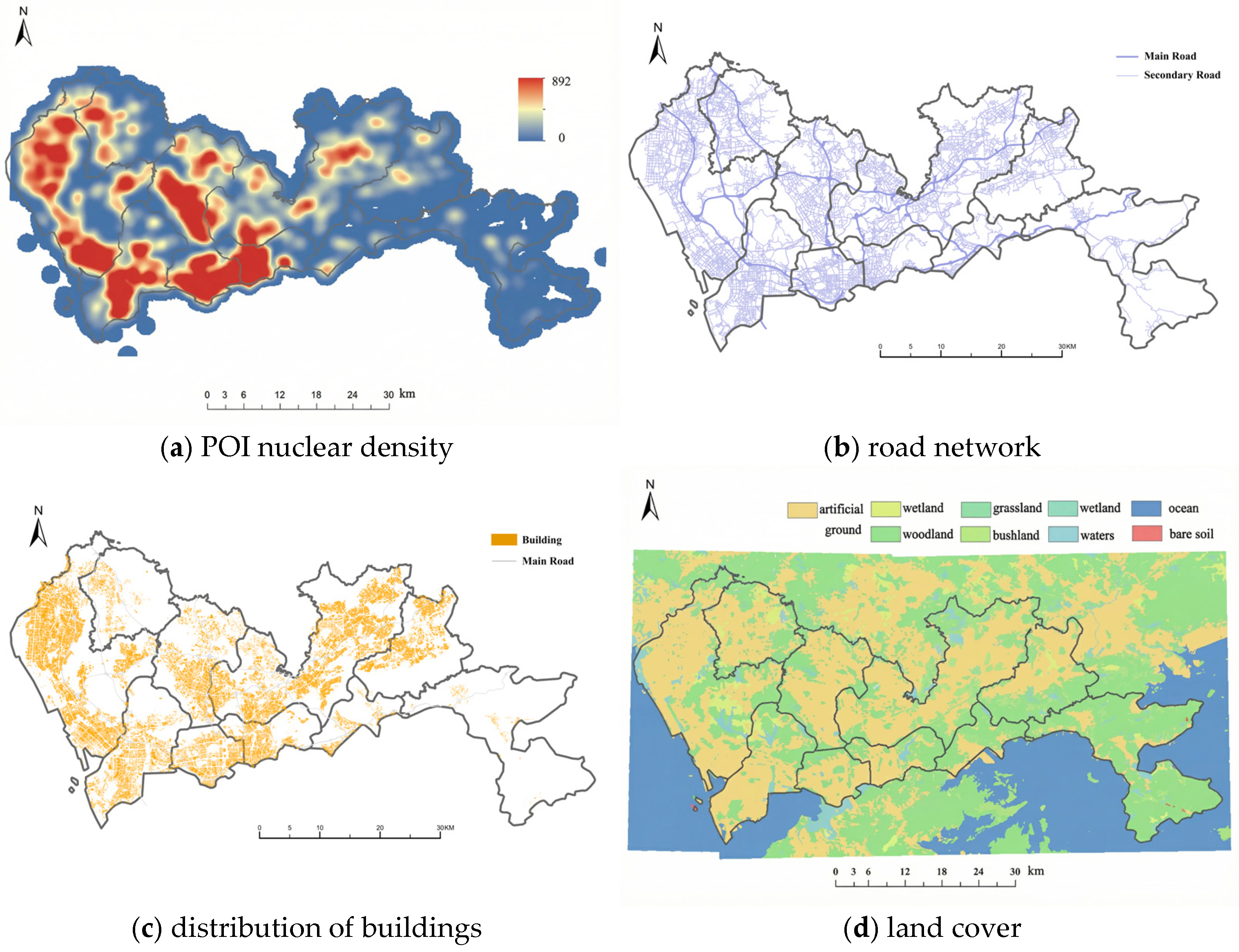
In the experimental dataset, the most recent administrative divisions, park distributions, OpenStreetMap (OSM) data, and GlobeLand30 V2020 land cover data of Shenzhen in 2022 are included. POI data were acquired from Amap’s open API. Building profiles and road network data are derived from OSM. A 30 m resolution global land cover dataset, GlobeLand30 V2020, was developed by the Chinese Academy of Sciences’ Institute of Aerospace Information Innovation (Figure 2).

2.2. Research Framework and Research Methods

The evaluation of urban park carbon sink supply capacity mainly focuses on two aspects. First, from the perspective of the carbon sink capacity of the park itself, it is primarily reflected in two dimensions: green space carbon sinks and water body carbon sinks [23,24,25]. Therefore, this paper quantifies the vegetation carbon sink level by calculating the net primary productivity (NPP) of green spaces, and incorporates the carbon sink capacity of water bodies to jointly construct a supply resilience evaluation index system. Second, considering the dynamic characteristics of the ecological supply diffusion process of parks, landscape ecology theory is introduced. From the perspective of ‘source’ and ‘sink’ landscapes, a minimum cumulative resistance model is constructed to establish a resistance surface, enabling the quantitative expression of carbon sink resistance.
Initially, urban green space demand was characterized by built-up areas and population distribution. In this analysis, however, supply and demand were only considered as factors of regional equality and social resource equalization, and varying needs for urban green spaces were not fully taken into account. A system of indicators (Table 1) is presented in this paper that reflects the demand for urban park for different living environments. With this system, the demand value for park ecological services is quantified from the perspective of low carbon and the characteristics and data of Shenzhen’s development.
Spatial mismatches between supply and demand hinder environmental equity in urban parks. An assessment of supply and demand for parks can contribute to scientific planning and rational resource allocation. Therefore, public parks can be utilized for their social, economic, and ecological value, and the urban environment can be made more equitable. Gini coefficients are commonly used to assess green space equity because of the similarity between park and social equity connotations [27,28,29,30]. As a macroeconomic indicator, they have the advantage of intuitively indicating supply and demand. However, they cannot express the specific situation of matching supply and demand spatially. Therefore, on the basis of the Gini coefficient, this paper uses location entropy to assess the balance between supply and demand for urban parks at a micro scale. Moreover, the z-score standardization method is used to normalize the supply and demand indices and categorize them.
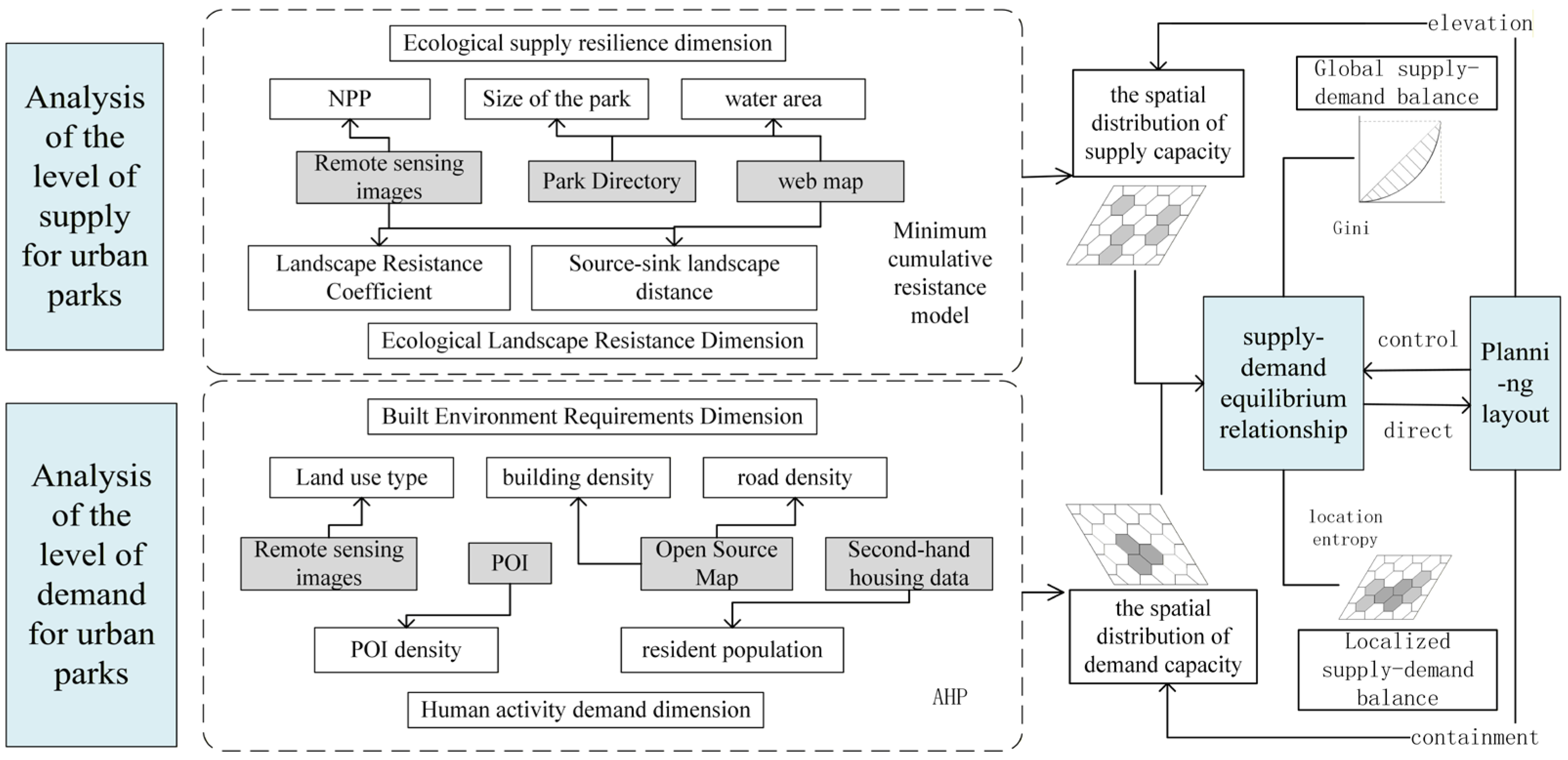
The specific research ideas and analysis procedures are shown in the technical route diagram (Figure 3).

2.2.1. Calculation of Park Supply Capacity Under the Support of ‘Source–Sink’ Theory

An evaluation model based on ‘source–sink’ landscape theory is presented in this paper to analyze the dynamic reduction process of urban parks. The model includes the calculation of the minimum cumulative resistance based on the service radius constraint and the park ecological service index. Overall, the model integrates non-point source ecological functions with the spatial pattern of urban parks. It is also easy to understand and calculate the model.
  • Quantifying Park Carbon Supply Capacity
Net primary productivity (NPP) refers to the net carbon accumulation remaining after subtracting the autotrophic respiration consumed by vegetation for life-sustaining activities from the total organic carbon fixed via photosynthesis [31,32]. Unlike vegetation indices (e.g., NDVI) that only reflect vegetation greenness, NPP enables direct quantification of vegetation biomass production and carbon sink contributions, allowing for a more precise depiction of the carbon sink service capacity of urban parks, thus rendering it more suitable for the evaluation of urban park ecological services [33]. For each park i , the carbon supply capacity F i is calculated as:
F i = ( N P P i × S v e g , i × C F ) + ( A w a t e r , i × k w a t e r )
where
  • N P P i : annual net primary productivity of park i (kgC/m2/year) from the 30 m resolution NPP dataset [34].
  • S v e g , i : vegetated area of park i (ha), extracted from land cover data.
  • C F : carbon conversion factor (0.47–0.50) following IPCC guidelines. The NPP data used in this study represent carbon-based net primary productivity (kgC/m2/year), and thus no additional carbon conversion factor is applied. The term CF is retained for consistency with studies using biomass-based NPP.
  • A w a t e r , i : water body area within park i (ha), derived from land cover data.
  • k w a t e r : water carbon sequestration coefficient, taken as 0.53 kgC/m2/year based on the landscape spatial unit framework established by Zhang [35], which classifies isolated water bodies as a distinct spatial unit type with stable long-term carbon sink functions primarily via sediment burial, aquatic vegetation uptake, and microbial processes.
b.
Carbon Resistance Surface Construction
In the study of a specific ecological pattern and process, the type of landscape that promotes the development of ecological processes is referred to as the ‘source’ landscape, whereas the type of landscape that delays the development of ecological processes is referred to as the ‘sink’ landscape [36]. It is possible to view the air purification process of urban-scale parks in relation to their surrounding area as a reflection of the resistance overcome by green space services from the ‘source’ through different landscape media. To quantify this resistance value, the MCR model was used to establish a landscape resistance surface that expresses the influence on the spatial diffusion of the source landscape [37].
To simulate the spatial diffusion of ecosystem services from supply to demand areas, the MCR model has been widely employed in landscape ecology. While traditional accessibility models such as gravity-based and two-step floating catchment area methods focus on human travel behavior [38], the MCR framework is better suited for modeling ecological processes by accounting for landscape heterogeneity and cumulative resistance effects [39,40]. Recent advances have further enabled the integration of carbon-related parameters into MCR modeling, transforming abstract resistance coefficients into concrete carbon emission costs based on land use types.
The MCR model includes landscape interface characteristics, landscape distance, and ‘source’ [41]. A radius of park service is introduced in this paper to limit the distance variable. The formula is as follows:
M = f m i n i = 1 , j = 1 i = m , j = n r i j × E i n o r m , r i j r i
It calculates the minimum cumulative resistance M based on the distance between the two landscapes r i j , the service radius of the park r i , and the landscape interface characteristics of the unit E i n o r m , which is represented by the resistance coefficient. The MCR model evaluates accessibility from a ‘source’ landscape to a specific landscape unit. Lower resistance values indicate higher accessibility. The concept of green space service diffusion is reflected in the ecological process of urban parks.
The minimum cumulative resistance model’s definition and calculation formula indicate that the resistance coefficient is a relative value for comparing different ecological lands, rather than an absolute value [42]. Generally, the resistance coefficient C ranges from 0 to 100 and is positively correlated with the resistance coefficient grade. We innovatively redefine resistance coefficients as land use-specific carbon emission coefficients, transforming abstract ecological resistance into concrete carbon costs. This approach builds on recent advances in integrating carbon parameters into spatial modeling for urban sustainability assessment.
To preserve the distinct roles of carbon sinks (negative emissions) and carbon sources (positive emissions) while maintaining a unified resistance scale, we employ a piecewise linear normalization method. The normalized carbon resistance coefficient E i n o r m for grid cell i is defined as:
E i norm = E i E min 0 E min × α , if   E i < 0 α + E i 0 E max 0 × ( 100 α ) , if   E i 0
where E i is the original carbon emission coefficient for land use type at cell i (tC/ha/year), and E max and E min are the maximum and minimum coefficients across all land use types. Here, α = 1 is set as the threshold to distinguish carbon sinks and sources. Negative coefficients (carbon sinks) are normalized to the range [0, 1], while non-negative coefficients (carbon sources) are normalized to [1, 100]. This segmented normalization preserves the relative relationships within sink and source categories while enabling consistent spatial modeling.
Carbon emission coefficients are derived from recent empirical studies in the Pearl River Delta region and Guangdong Province [38,43,44,45], with values shown in Table 2. Construction land receives the highest coefficient reflecting dominant contributions to urban carbon emissions, while forests receive negative values representing carbon sink functions.
c.
Grid-based park ecosystem service index calculation model
The ecological supply capacity F i of the park is evaluated. The service index A i j of park i in landscape unit j is then calculated. The study area is divided into n honeycomb grids and overlaid with a land cover map to determine the land cover type and its resistance coefficient C j for each grid. Then, the landscape resistance value M i , j is calculated. The service index A i j of park i in landscape unit j is calculated by incorporating landscape resistance. Please see the specific formula below:
M i , j = f m i n i = 1 , j = 1 i = m , j = n r i j × E i norm , r i j r i
A i j = F i ÷ M i , j

2.2.2. Quantifying Carbon Sequestration Demand

In traditional studies, park services are typically characterized using accessibility metrics, while demand is primarily delineated based on population distribution and travel modes. However, the demand for carbon sequestration services primarily stems from anthropogenic carbon emissions that require offsetting [46]. Following established frameworks for ecosystem service demand assessment [47], this study adopts a multi-dimensional indicator system. From the perspectives of the built environment and human activity characteristics, we selected five predominant influencing factors frequently cited in the literature. The Analytic Hierarchy Process (AHP) was employed to determine the weights of these factors. The descriptions and data sources for these five factors are presented in Table 3.
  • Quantification Methods
Residential Population IdentificationThis study employed mobile SDK data to invert the residential population of Shenzhen [17]. The raw data consisted of mobile application positioning records from weekdays during the eight weeks prior to 5 October 2020, sourced from Getui (https://www.getui.com/).
The processing steps were as follows. First, regarding location scoring, based on users’ location check-ins, each hour during the typical resting period (10 p.m. to 6 a.m.) was scored according to the location at that hour, with hours 0–3 receiving a score of 2 and the remaining hours receiving a score of 1. Subsequently, for residence determination, for each user, the location with the highest daily score was identified as that day’s residence; by accumulating the daily residence scores, the location with the highest cumulative score was determined as the long-term residence. Finally, through data aggregation and after removing erroneous data from areas such as water bodies and green spaces, residential population distribution information was obtained.
A total of 232,318 grids were delineated across the city, covering approximately 15.2514 million residents. This figure closely matches the permanent population count, demonstrating high accuracy and reference value.
POI density
POI data were obtained through the AMAP’s API, encompassing 12 functional categories including commercial services, industrial enterprises, transportation facilities, and public services. Following established methods, POI kernel density is calculated using a 500 m search radius to reflect the spatial clustering of carbon-intensive activities:
f ( s ) = 1 n h 2 i = 1 n K d i s h
where K is the Gaussian kernel function, K is the distance from POI i to location s , and h is the bandwidth.
Road density
Using OpenStreetMap road network data, we calculate road density for each grid cell as:
R D i = L r o a d A i
where L r o a d is the total road length within grid cell i , and A i is the grid cell area (km2).
Building volume density
Building volume density is calculated as the ratio of building footprint area to total grid cell area, derived from building footprint data extracted from Building height of Asia in 3D-GloBFP. It reflects the concentration of structures and associated operational emissions:
Higher building density typically implies greater energy consumption for lighting, heating, cooling, and daily operations, thereby increasing the demand for carbon offset services [48].
Land use
Land use types directly influence carbon emission patterns, with industrial, commercial, and residential lands exhibiting different emission intensities. Following established approaches, we assign carbon emission coefficients to each land use type based on regional studies (detailed in Section 2.2.1, Table 2).
b.
Determining Indicator Weights Using the Analytic Hierarchy Process
The weights for the five demand indicators were determined using the Analytic Hierarchy Process (AHP), a structured technique widely applied in urban ecosystem service assessments. An expert panel of six specialists (two urban planners, one landscape ecologists, two environmental scientists, and one practitioner from Shenzhen Urban Planning and Design Institute) was convened. Each expert independently compared the relative importance of the indicators using Saaty’s 1–9 scale. The aggregated judgment matrix, derived from the geometric means of individual judgments, is presented in Table 4.
The consistency ratio (CR) was calculated as 0.016 (λmax = 5.09, RI = 1.12), well below the acceptable threshold of 0.10, confirming the consistency of the expert judgments.
Prior to aggregation, all indicators were normalized to a 0–100 scale using min-max normalization. The composite carbon sequestration demand index is then calculated as the weighted sum of the normalized indicators.
This multi-dimensional demand framework captures both the spatial distribution of carbon emission sources and the population’s need for carbon offset services, providing a robust foundation for supply–demand equity assessment.

2.2.3. Measurement Method of Supply and Demand Balance

The Gini coefficient is a classical method used in economics to measure distribution fairness. In the context of urban parks, it can be used to measure the equity of supply and demand allocation across an entire city. The Gini coefficient is calculated as follows:
G = 1 j = 1 n F j F j 1 D j D j 1
In the formula, G is the Gini coefficient; F j is the proportion of cumulative supply index, and D j is the proportion of the cumulative demand index, F 0 = D 0 = 0 ,   F n = D n = 1 . The value of G is between 0 and 1, and the smaller the G value is, the higher the balance of supply and demand is, and the better the environmental fairness.
By measuring the spatial matching fairness of urban parks using location entropy, it is possible to identify areas in the city with relatively unbalanced supply and demand levels [49]. Planners can use the evaluation results to carry out layout planning, which ensures a relatively balanced supply and demand for urban park resources. Grid location entropy is calculated by comparing the supply and demand ratios of the grids in the study area with the supply and demand ratios of the entire study area:
L Q i = Q i × D i 1 Q × D 1
L Q i is the location entropy of grid i ;   Q i is the supply force of urban park in grid i , D i is the demand force of urban park in grid i , Q is the overall supply force of urban park in the study area, and D is the overall demand force of urban park in the study area. Supply and demand levels in the study area are higher if the location entropy is greater than 1, while lower if the location entropy is less than 1, which indicates a lower supply and demand level.

2.2.4. Z-Score

Using the Z-score method, the urban park supply and demand index data standards are combined so that different supply and demand types can be compared and divided. The formula is as follows:
Z = X X ¯ s
In the formula, X is the original data, that is, the unprocessed supply and demand index; X ¯ and s are the corresponding mean and standard deviation, respectively. After processing, the z-value can be positive or negative. A positive value indicates that the measured value is greater than the average value, which is labeled as high supply or high demand in this paper. Conversely, a negative value indicates that the measured value is less than the average and is labeled as low supply or low demand.

3. Results

3.1. Park Type Classification

Currently, the ‘Urban Green Space Classification Standard’ categorizes green spaces in parks into four types: comprehensive parks, community parks, special parks, and gardens based on park scale, supporting facilities, service population, and other factors [50]. A variety of cities have also issued corresponding documents to classify parks from a variety of perspectives. ‘Hangzhou Green Space System Planning’, for instance, determines the park level and service radius based on the scale of construction. Table 5 shows the specific classification results. Shenzhen municipal government categorizes parks into three levels: country parks, city parks, and community parks, with community parks having the narrowest service radius and scale. ‘Shenzhen Green Space System Planning’ defines community parks as open green spaces with a service radius of 500–1000 m and an area exceeding 500 square meters.
In summary, this paper uses the service radius of urban parks as a reference, which is determined by various regions and standards. Table 6 shows the park classification and service radius for Shenzhen based on the current status of park construction in the city.

3.2. Parks’ Service Areas

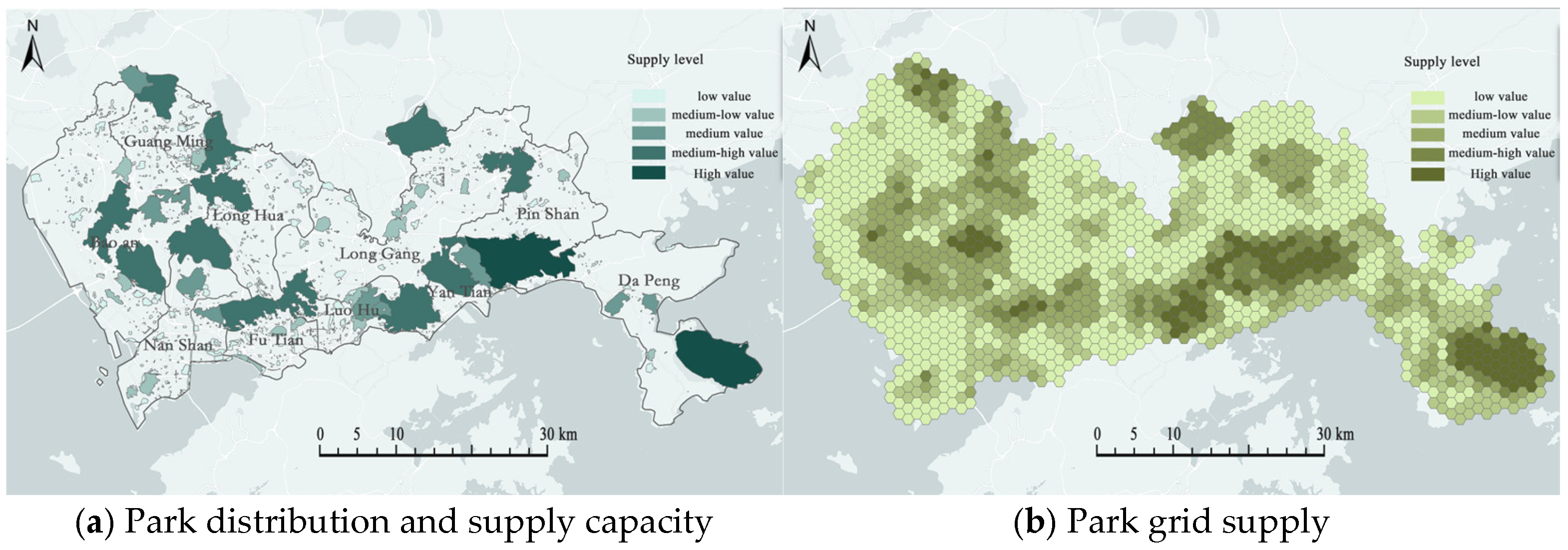
Based on the statistical table and distribution map of urban parks in Figure 4a, it is evident that Shenzhen has a significant number of parks, and their distribution is relatively balanced. Country parks and large urban parks dominate the eastern part of Shenzhen, while community parks are mostly located in the central and western regions, which are dominated by construction land. According to the supply grid map (Figure 4b), the capacity of urban parks in Shenzhen decreases from east to west, with a gradual weakening trend from the centers of large parks to the outside. Despite the scarcity of large urban parks in Luohu District and Longgang District, the overall supply intensity remains high due to the large number of community parks in the area with a balanced distribution.
Although there are some blind spots in the eastern part of Shenzhen City where park services are not available, the demand for urban parks is low due to the land use types in these areas, which are mainly grassland and forest land.

3.3. Park Demand Analysis

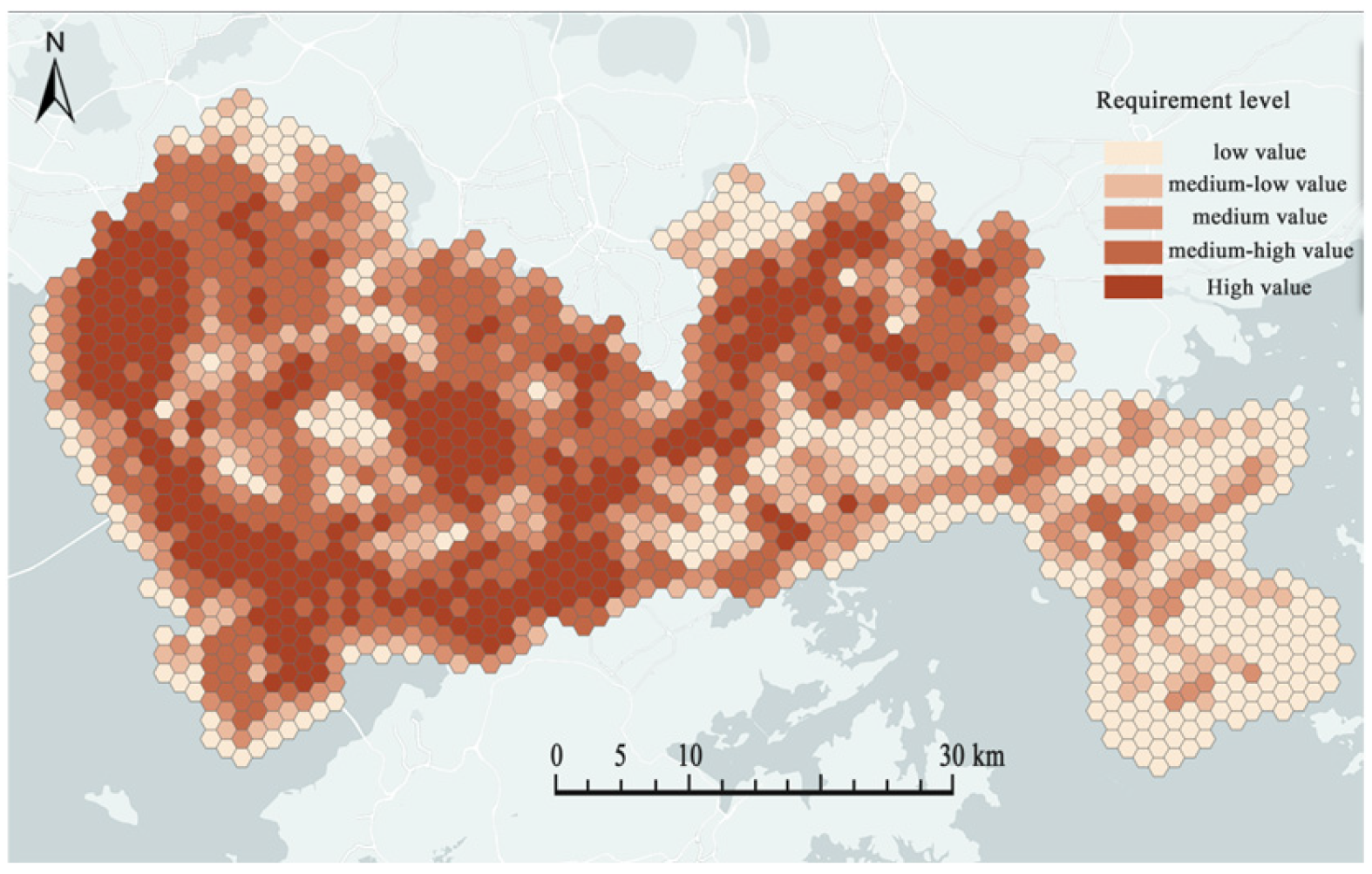
Shenzhen’s western part has a high demand for urban parks, while its eastern part has a low demand. The central and southern regions, particularly Luohu District and Futian District, show significant demand for green space (Figure 5). There is a substantial need for urban parks in these regions since they consist primarily of construction land with dense buildings and a large population. Pingshan District and Dapeng New District, however, have low demand. There are large areas of grassland and woodland in the eastern part of Shenzhen, giving the area a high green space rate and a favorable ecological environment. Moreover, this area is sparsely populated, resulting in lower demand for urban green space than the western portion.

3.4. Supply and Demand Analysis

The balance between park carbon sequestration supply and residential demand was assessed using the Gini coefficient at the macro scale and location entropy at the micro scale, followed by Z-score classification of supply–demand types.

3.4.1. Overall Equity Assessment

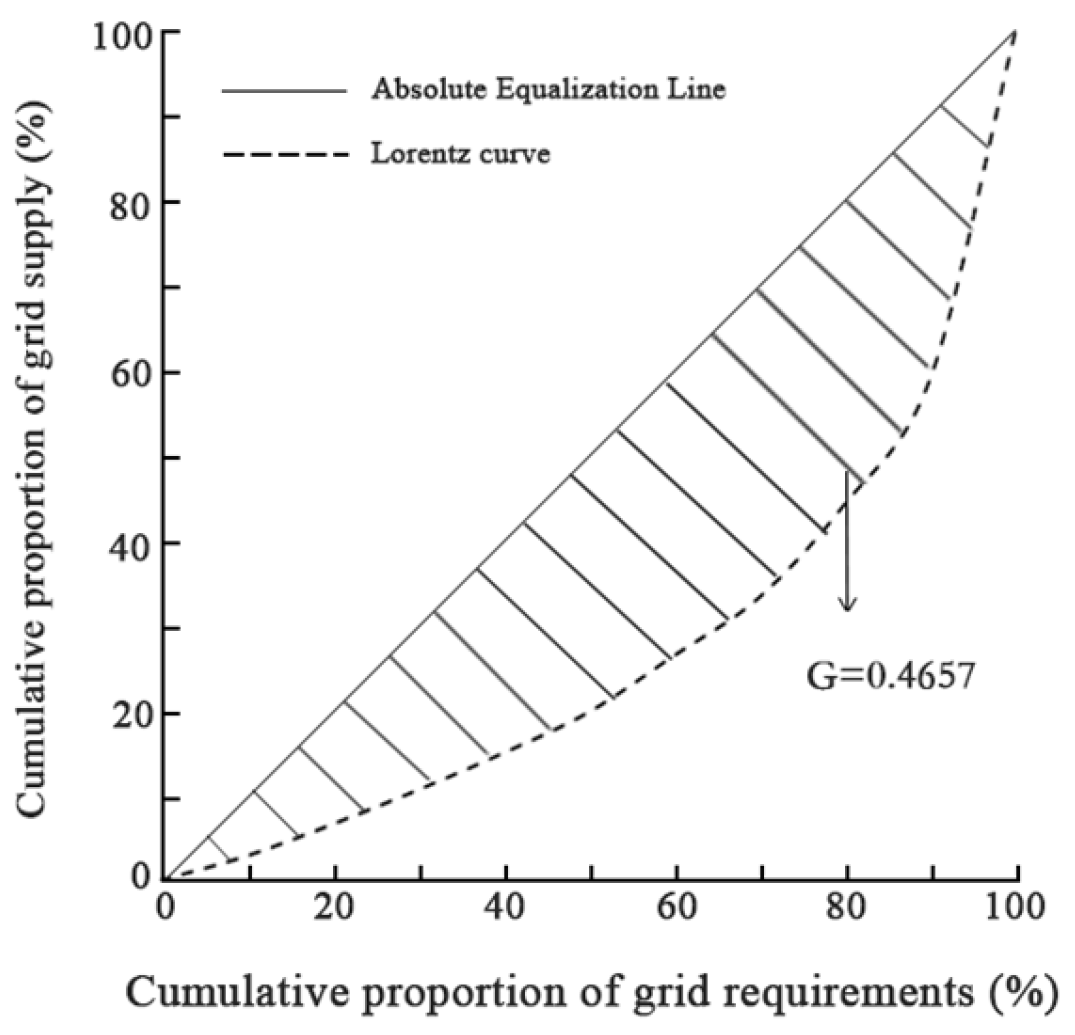
This paper uses the Gini coefficient to evaluate the supply and demand balance relationship in the study area. The smaller the value, the higher the overlap between the supply of urban parks and the demand of residents, and the more balanced the supply and demand relationship. Based on existing research, when the Gini coefficient indicates the fairness of urban parks, 0.4 is generally taken as the threshold. When this threshold is exceeded, it is regarded as the existence of unfairness. For instance, Gu et al. (2024) found that the Gini coefficient of urban green space accessibility in 35 major cities in China ranges from 0.31 to 0.62, and a value higher than 0.4 indicates significant unfairness [51]. Fang et al. (2024) also pointed out that in the stage of rapid urbanization, the Gini coefficient for matching the supply and demand of regional ecosystem services ranges from 0.45 to 0.55 [52]. The Gini coefficient obtained in this study is 0.46, which is in the high-value range of the above-mentioned comparative studies, indicating that there is a certain degree of unfairness between the distribution of park carbon sink services and the demands of residents.
The Lorenz curve (Figure 6) suggests that areas with low park supply can only maintain 7% of the park green space supply to meet 20% of the demand. In contrast, areas with high park supply can enjoy 39% of the total park green space with only 10% of the demand. This demonstrates a Matthew Effect where ‘the rich get richer and the poor get poorer’.

3.4.2. Spatial Patterns of Supply–Demand Matching

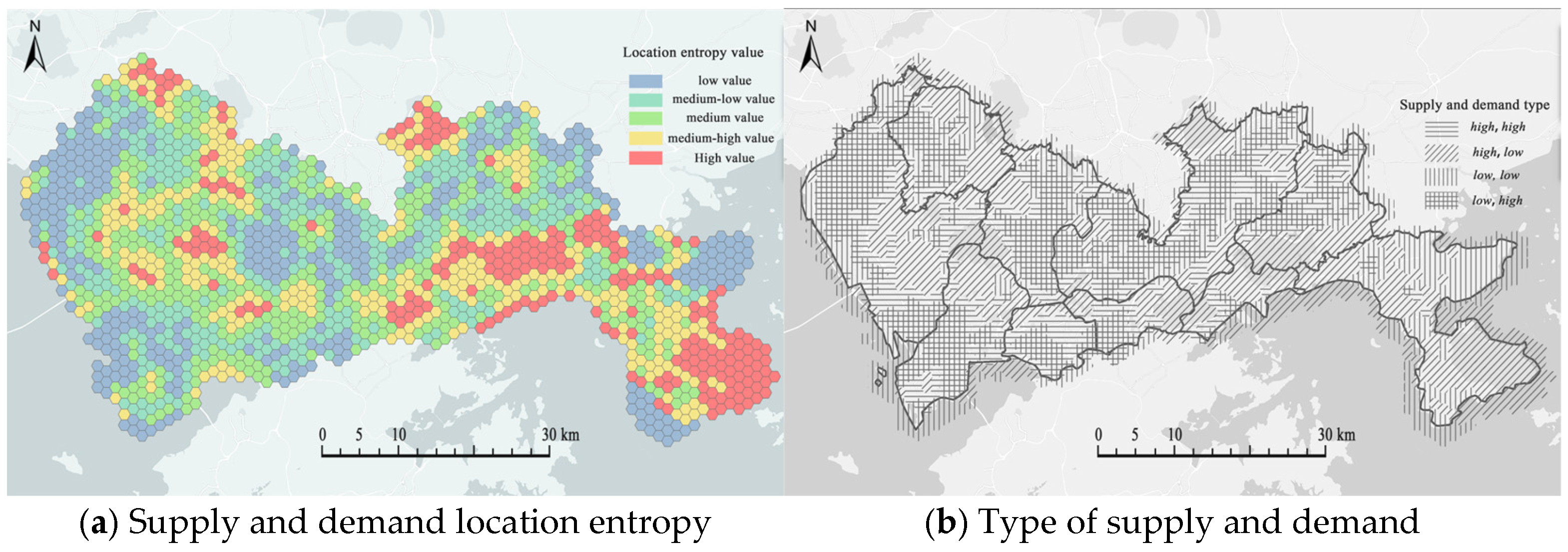
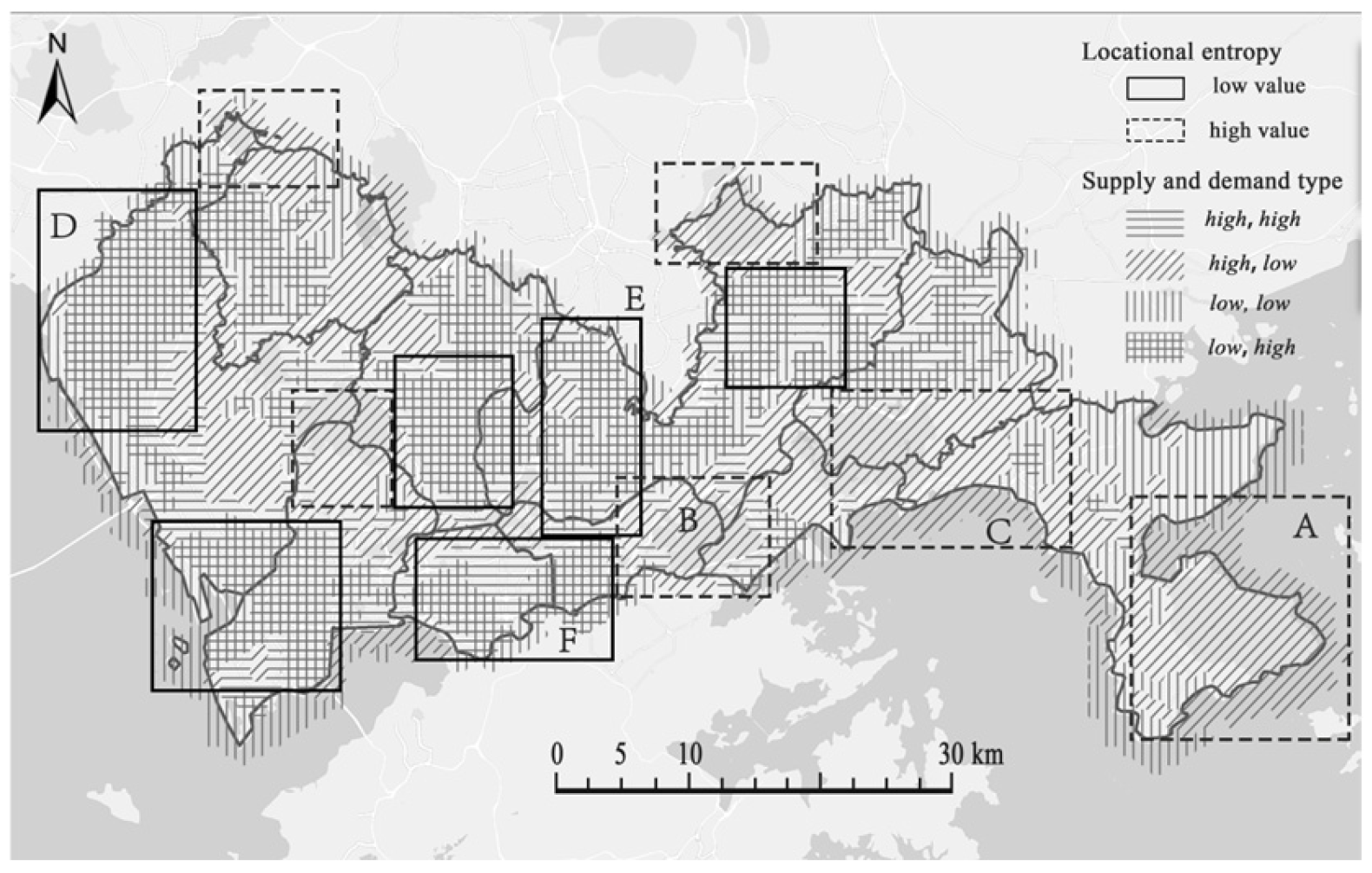
Location entropy values (Figure 7a) reveal distinct spatial patterns of supply–demand balance. High-location-entropy areas, where supply exceeds demand, are predominantly concentrated in the eastern part of Shenzhen, particularly in Dapeng New District and eastern Pingshan District. These areas are characterized by extensive forest coverage, national parks, and relatively low population density. Moderate location entropy areas are found in central urban districts including Luohu and Futian, where park supply and population demand are relatively balanced. Low-location-entropy areas, indicating supply deficits, are concentrated in western Bao’an District, western Longgang District, and parts of Longhua District—regions characterized by dense industrial activity and high population density.
To provide a clearer structural presentation of the supply–demand relationships, we classified grid cells into four categories using Z-score standardization of supply and demand values (Figure 7b).
The location entropy of park service levels exhibits a low pattern in the west and a high pattern in the east. The high location entropy values are mainly concentrated around large urban parks and radiate outward from there. Areas with high location entropy can roughly be categorized into three types: high supply–low demand, high supply–high demand, and low supply–low demand. Areas with low-location-entropy aggregation of supply and demand are dominated by low supply and high demand.
By overlaying Figure 7a,b, several representative areas can be identified for analysis, as shown in Figure 8. To provide a clearer presentation, Table 7 presents a detailed analysis of these six representative areas, linking their location entropy values with Z-score classifications and local characteristics.
Area A (Dapeng New District—High Supply, Low Demand)
Dapeng New Area’s eastern region A is a prime example of an area with high supply and low demand. It is characterized by grassland and woodland land use types, low development, dispersed building distribution, and low human activity. As a result, there is an overall low demand for urban parks. Despite this, there are large-scale urban parks in the area that provide park green space services.
Area B (Luohu–Futian Central Area—High Supply, High Demand)
Luohu Center Area and Futian Center Area B are both commercial and economic centers of Shenzhen, characterized by high supply and demand. The land use type is mainly construction land, with dense buildings and a large number of commercial office buildings. The areas have a high level of economic development, resulting in a huge flow of people and frequent human activities. Therefore, there is a high demand for urban parks and green spaces. Despite the fact that country parks are located nearby, they are quite far away. Consequently, the region’s interior provides the majority of urban green space services. Urban green space services are primarily provided by small urban and community parks located within and around the region. These parks are numerous and relatively decentralized, ensuring adequate park green space services for the urban center.
Area C (Southern Coastal Zone—Low Supply, Low Demand)
The coastal zone C in the south of Shenzhen is a typical area with low supply and demand relationships, characterized by low supply and low demand. The areas in question are located near the coast and far from the city’s built-up areas. Due to the low terrain and ample water supply, the surrounding parks are primarily seaside parks. These parks are characterized by low greening rates, sparse vegetation, and low elevations, but offer a large number of recreational facilities. Despite having many bodies of water, the park green space service overall capacity is weak. However, the area’s land use types consist mainly of water, community parks, and other scattered parks, providing sufficient park green space services to the urban center. However, the region mainly consists of water bodies, grasslands, and wetlands, with fewer buildings. Although there are certain human activities, the population stays for a short period of time, and the overall demand for urban park green space services is very low. Therefore, the entropy of urban park green space service area in such regions is high.
Area D (Western Bao’an District—Low Supply, High Demand)
The western area (D) of Bao’an District is a large industrial area in Shenzhen, with frequent human activities and extremely high demand for urban parks and green spaces; however, there are no large urban parks in the western part of Bao’an District, and the number of community parks distributed in the region is also small; therefore, relying only on the green space services provided by large urban parks in the central and eastern parts of Bao’an District is far from sufficient to meet the demand. This type of mismatch is more common in old industrial areas with rapid urbanization.
Area E (Western Longgang District—Low Supply, High Demand)
The western part of Longgang District E is located in the geometric center of the Shenzhen metropolitan area and is a population concentration area, which has a high demand for parks and green spaces. At the same time, there are some industrial lands in the area, which makes the demand for urban parks even higher. However, there is only one district-level park, Pinghu Ecological Park, and a number of community parks in the area, which cannot meet the demand for parks in the area.
Area F (Eastern Longhua District—Low Supply, High Demand)
The South Coastal Region F is characterized by low supply and low demand. Although the region is mainly composed of grasslands and wetlands with few buildings and low human activity, there is low demand for urban parks and green spaces. However, due to its proximity to the coast and distance from the city’s built-up areas, the surrounding parks are mainly seaside parks. These parks are characterized by low greening rates, sparse vegetation, and a large number of low-height playground facilities, resulting in an overall weak capacity for parks and green space services in the region. In general, park green spaces have a low service capacity, resulting in a low entropy.
Together, these six areas illustrate the diversity of supply–demand contexts in Shenzhen and underscore the need for differentiated planning strategies—conservation in surplus zones (A), maintenance in balanced zones (B), ecological enhancement in coastal zones (C), and targeted green space expansion in deficit zones (D, E, F).

3.5. Layout Guidelines for Parks and Green Spaces in Shenzhen

There is a disparity in the spatial distribution of park green spaces in Shenzhen according to the results of the supply and demand balance measurement. The main issues that hinder the supply and demand balance of urban park are as follows: (1) The current distribution of parks in the city is unbalanced, with a spatial pattern that favors the east over the west. Additionally, Baoan, Longgang, and other areas have insufficient park supply. (2) The imbalance between supply and demand for green space is a significant issue. In the eastern Dapeng New District, which is less developed, there are abundant high-quality green space resources, while some densely populated areas with high building density suffer from a severe shortage of green open space. (3) Additionally, some parks prioritize landscape and economic considerations over ecological concerns. For instance, despite the presence of a sizable green space in the city center, it is primarily utilized for economic activities like golf courses. Therefore, it is necessary to explore its ecological potential.
The Shenzhen Park City Construction Master Plan and Three-Year Action Plan (2022–2024) emphasizes the need to construct a ‘full-area park city’ that is accessible and beneficial to all. Consequently, beautiful ecological environments will be created to meet the growing demand for high-quality living environments. (1) To enhance forests’ quality and carbon sink capacity and improve ecological functions, the ecological base of urban park construction needs to be compacted for both the city’s eastern and western country parks. (2) Green space demand is high in industrial areas such as Baoan and Longgang due to huge people flows, dense road network, and high completion degree. However, parks are seriously inadequately supplied. To improve greenery in the region, it is necessary to reinforce the construction of community and belt parks, promote three-dimensional greening, increase environmental greening, and eliminate blind spots. In this way, more green spaces will be available in the region. (3) To ensure the quality of green spaces in regional parks, it is important to consider the cost of maintenance and avoid solely pursuing landscaping and economic benefits. Instead, it is necessary to use appropriate shrubs, herbs, trees, and other plants to form a hybrid green planting structure that improves the ecological supply capacity of the park, while also taking into account local conditions.

4. Discussion

This study constructs a spatially explicit framework that integrates the quantification of net NPP carbon supply and the simulation of MCR carbon flow, and systematically evaluates the supply–demand equity of carbon sink services in urban parks of Shenzhen. The main findings are as follows:
First, the overall spatial distribution of carbon supply from parks in Shenzhen is relatively balanced, exhibiting a pattern of ‘high in the east and low in the west’. Ecologically enriched areas in the eastern part serve as prominent regional carbon sink cores. Second, the spatial differentiation of carbon demand in Shenzhen is highly significant, showing an opposite pattern of ‘high in the west and low in the east’, with several distinct carbon demand hotspots in the western region that spread outward as centers. Third, the Gini coefficient stands at 0.47, indicating pronounced inequity in carbon sink services relative to residential demand and revealing a clear mismatch between service supply and resident demand. Fourth, by combining location entropy and the Z-score classification method, this study spatializes the supply–demand mismatch and identifies six typical supply–demand types. Among them, western Bao’an and western Longgang feature acute supply–demand conflicts and require priority intervention.
The overall characterization of supply–demand mismatch in Shenzhen revealed by this study (Gini coefficient = 0.47) is consistent with global research conclusions on inequity in urban ecosystem services [51,52]. This implies that within the same city, despite Shenzhen’s relatively low ratio of total carbon emissions to gross domestic product (GDP) growth, significant disparities exist across districts in terms of park carbon supply and the degree of demand satisfaction.
Further spatial pattern analysis also demonstrates that the supply–demand relationship of park carbon services in Shenzhen displays a prominent spatial ‘mismatch’ characteristic. Such spatial inequity is particularly pronounced in typical areas, especially industrial clusters, which bear higher emission burdens yet have limited access to carbon sink services. The two identified park carbon sink deficit areas—western Bao’an and western Longgang—are mainly characterized by low supply and high demand, a pattern similar to the supply–demand mismatch of ecosystem services in the Zhengzhou Metropolitan Area. That study further noted that rapid urbanization tends to trigger supply–demand imbalances in ecosystem services [53]. Research on urban ecosystem service supply–demand relationships in Italian cities has reached similar conclusions: compact urbanization models (e.g., dense urban structures and continuously rising buildings) lead to significant ecosystem service mismatches, and such correlations are independent of city size and geographic location [54]. However, other studies on green space carbon sinks in Wuhan have shown that higher urbanization intensity corresponds to a V-shaped trend in green space carbon storage—first decreasing and then increasing [55], which shares similarities with the equitable distribution pattern of park carbon services in highly urbanized Shenzhen. At the regional scale, Shenzhen’s urbanization has formed a distinct three-gradient structure, ranked, from high to low, as follows: early-developed inner districts (Luohu, Futian), later-industrialized outer districts (western Bao’an, western Longgang), and less-developed eastern Longgang. Correspondingly, the location entropy values of these three gradient regions in this paper also show a V-shaped trend.
The spatial inequity of carbon services in Shenzhen arises from the combined effects of multiple driving factors. Recent research has pointed out that among various factors influencing the satisfaction or equity of ecosystem services, the correlation of a single factor across different dimensions may be limited or even contradictory; however, the nonlinear synergistic interaction among multiple factors can effectively mitigate these differential impacts [52]. This insight suggests that addressing carbon service inequity in Shenzhen requires comprehensive intervention strategies, with policies targeting multiple factors such as population density regulation, green space expansion, and vegetation quality improvement, rather than relying on isolated measures.
From a planning perspective, the findings of this study indicate that achieving carbon neutrality depends not only on increasing the total amount of green space but also on ensuring the equity of its spatial allocation. For instance, research on the carbon sink capacity of green spaces in Beijing shows that human activities exert dual effects on carbon sink capacity: in highly urbanized areas, socio-economic pressure weakens green space carbon sink capacity, whereas in developing areas and ecological protection zones, landscape connectivity and green space coverage help enhance carbon sink capacity [56]. This underscores the necessity of adopting differentiated strategies: deficit areas should prioritize the expansion of park quantity and improvement of vegetation quality, while surplus areas can be protected through cross-regional ecological compensation mechanisms and incorporated into the regional ecological asset accounting system.

5. Restrictions and Ambiguities

Several methodological and interpretative limitations should be acknowledged, along with corresponding directions for future research.
In terms of data, the quantification of park carbon supply relies on NPP data at 30 m resolution, which may not fully capture fine-scale variations within urban parks. Sun et al. (2019) demonstrated that high-resolution data better reveal the spatial heterogeneity of urbanization’s impacts on vegetation carbon dynamics [57]. In terms of model construction, carbon emission coefficients assigned to land use types represent regional averages and may not capture intra-class variations or temporal dynamics. Schwantes et al. (2024) emphasize that carbon monitoring must account for spatial variability and temporal stability, indicating the need for localized coefficient calibration through field monitoring [58]. Third, the MCR model assumes carbon services follow least-cost paths, simplifying the complex multi-directionality of atmospheric transport. While widely used in ecological network modeling, this assumption may not fully capture urban carbon flows where air movement patterns play important roles.
To address these limitations, future studies should integrate atmospheric transport models or circuit theory approaches to better simulate multi-path diffusion, as circuit theory has been successfully applied to identify carbon sequestration service flow networks by treating ecological processes as electric current [59]. Additionally, the current framework does not account for vertical carbon fluxes (e.g., soil respiration, photosynthetic active radiation) that influence net carbon balances. Existing studies have shown that considering both aboveground and belowground carbon dynamics is essential for accurately understanding terrestrial carbon balance, and single-dimensional analyses can significantly underestimate or overestimate the net carbon sequestration capacity of ecosystems [60]
Vegetation structure—including tree density, species composition, and age—significantly affects per-unit-area carbon sequestration capacity but was not directly included in the supply model. Gaglio et al. demonstrated that different urban contexts and tree compositions produce varying patterns of regulating services, indicating that future refinements should integrate structural parameters derived from LiDAR or field surveys [61]. Furthermore, the analysis focuses on current conditions without considering future scenarios. Given rapid urban change in Shenzhen and the long time horizons required for tree growth and carbon accumulation, scenario-based approaches incorporating projected population changes, land use transitions, and climate policies would enhance policy relevance. Finally, integrating community-level socio-economic data could reveal whether the spatial inequities documented here translate into differential health and well-being outcomes, directly engaging with the environmental justice dimensions of urban carbon governance [62].
Overall, the identification of spatial patterns in supply–demand equity can be considered robust within the defined spatial and temporal framework. Future research that integrates extended time series, enhanced geographical resolution, meteorological normalization, and community-level variables would strengthen attribution and augment the relevance of scenario-based extensions for equitable urban planning.

6. Conclusions

From the perspective of supply and demand balance between urban parks and green spaces, this paper proposes a theoretical method for evaluating the spatial service capacity of urban parks. It then introduces the theory of ‘source–sink’ in landscape ecology. The method first uses the cumulative resistance model to analyze urban park green space supply. Then, using POI, OSM, and other data, we apply hierarchical analysis to various indicators to quantify the demand for urban park green space in different areas of Shenzhen City. Finally, the Gini coefficient is applied to evaluate the overall supply–demand balance relationship of urban parks in Shenzhen City. Additionally, location entropy is utilized to explore the supply–demand balance relationship in green spaces in Shenzhen City Parks. The study shows that there is a supply–demand balance relationship in Shenzhen City’s green parks:
  • Shenzhen has a plentiful supply of urban parks and green spaces, with a spatial pattern that is generally high in the east and low in the west. However, there are some service blind zones in certain areas.
  • In terms of demand for urban park green space, Shenzhen City exhibits a spatial differentiation pattern with higher demand in the west and lower demand in the east. As a result of dense buildings, frequent human activities, and a dense transportation network, the central and southern city center areas are high-value aggregation areas for urban park green space demand. On the other hand, the Dapeng New District in the west, which has a lower degree of development, is a low-value aggregation area for demand.
  • From a macro perspective, the supply and demand of parks and green spaces in Shenzhen City has a Gini coefficient of 0.489, indicating a significant gap in fairness. This suggests that the supply and demand of urban parks in the city is inadequate. When using the location entropy method to match the micro-level supply and demand of urban parks, spatial differences become apparent. For instance, although the demand for parks is greater in the central urban area than in the western areas of the city, the entropy value of its location is greater than that of the western region, which is dominated by logistics and manufacturing. This is likely due to lesser industrial pollution and the greater number of parks in the central city.
  • The study proposes policies aimed at addressing the current unbalanced supply and demand of urban parks and green spaces in Bao’an West and other regions, such as rational planning of park layout and improved level of park services.
In conclusion, achieving equitable distribution of park carbon sequestration services requires not only increasing total green space but also strategically targeting interventions to areas of greatest need. This study provides a foundation for such targeted planning and contributes to the broader goal of integrating carbon mitigation with environmental justice in urban development.

Author Contributions

Conceptualization, Q.W.; Methodology, C.L.; Resources, Y.Q.; Data curation, F.C.; Funding acquisition, Q.W. All authors have read and agreed to the published version of the manuscript.

Funding

This research received no external funding.

Institutional Review Board Statement

Not applicable.

Data Availability Statement

No new data were created or analyzed in this study. Data sharing is not applicable to this article.

Conflicts of Interest

The authors declare no conflicts of interest.

References

  1. Yan, Z.; Yanfang, L.; Yang, Z.; Liu, Y.; Zhang, G.; Chen, Y. On the spatial relationship between ecosystem services and urbanization: A case study in Wuhan, China. Sci. Total Environ. 2018, 637–638, 780–790. [Google Scholar]
  2. Ali, B.; Frédéric, C.; Bernard, K. Improving the multi-functionality of urban green spaces: Relations between components of green spaces and urban services. Sustain. Cities Soc. 2018, 43, S2210670717315792. [Google Scholar] [CrossRef]
  3. Wang, M.; Peng, J. A new interpretation of green space development in high-density cities. Garden 2018, 309, 28–33. [Google Scholar]
  4. She, X.; Gao, J.; Zhang, B. Assessment of PM2.5 retention function of green space in Shanghai based on urban green space dust retention model. Acta Ecol. Sin. 2020, 40, 2599–2608. [Google Scholar] [CrossRef]
  5. Tu, X.; Huang, G.; Wu, J. A review of research on the relationship between urban green space accessibility and residents’ well-being. Acta Ecol. Sin. 2019, 39, 421–431. [Google Scholar] [CrossRef]
  6. Wu, Y.; Sun, X. Retrospect and prospect of China’s land policy in the 40th anniversary of reform and opening up: The perspective of urbanization. China Land Sci. 2018, 32, 8. [Google Scholar] [CrossRef]
  7. Wu, F. State Dominance in Urban Redevelopment: Beyond Gentrification in Urban China. Urban Aff. Rev. 2016, 52, 631–658. [Google Scholar] [CrossRef]
  8. Ta, N.; Shen, Y. Spatial segregation of community residents’ activities and its influencing factors in suburban Shanghai based on the degree of sharing. Acta Geogr. Sin. 2020, 75, 849–859. [Google Scholar] [CrossRef]
  9. Bantis, T.; Haworth, J. Assessing transport related social exclusion using a capabilities approach to accessibility framework: A dynamic Bayesian network approach. J. Transp. Geogr. 2020, 84, 102673. [Google Scholar] [CrossRef]
  10. Liu, Y.; Jing, Y.; Cai, E.; Cui, J.; Zhang, Y.; Chen, Y. How Leisure Venues Are and Why? A Geospatial Perspective in Wuhan, Central China. Sustainability 2017, 9, 1865. [Google Scholar] [CrossRef]
  11. Rutt, R.L.; Gulsrud, N.M. Green justice in the city: A new agenda for urban green space research in Europe. Urban For. Urban Green. 2016, 19, 123–127. [Google Scholar] [CrossRef]
  12. Yin, H.; Kong, F. Accessibility analysis of urban green space in Jinan. J. Plant Ecol. 2006, 30, 17–24. [Google Scholar] [CrossRef]
  13. Matthew, M.; Abduwasit, G.; Tashpolat, T.; Pla, F.; Latorre-Carmona, P.; Halik, Ü.; Sawut, M.; Caetano, M. Effects of green space spatial pattern on land surface temperature: Implications for sustainable urban planning and climate change adaptation. ISPRS J. Photogramm. Remote Sens. 2014, 89, 59–66. [Google Scholar] [CrossRef]
  14. Tan, P.Y.; Samsudin, R. Effects of spatial scale on assessment of spatial equity of urban park provision. Landsc. Urban Plan. 2017, 158, 139–154. [Google Scholar] [CrossRef]
  15. Cheng, P.; Luan, F. Research on Subjective and Objective Measurement of Public Infrastructure Service Level and Development Strategy—Empirical Analysis Based on 16 Megacities. Urban Dev. Stud. 2016, 23, 117–124. [Google Scholar]
  16. Nesbitt, L.; Meitner, M.J.; Sheppard, S.R.J.; Girling, C. The dimensions of urban green equity: A framework for analysis. Urban For. Urban Green. 2018, 34, 240–248. [Google Scholar] [CrossRef]
  17. Huang, J.; Lin, Y.; Tao, Z.; Yang, J. A study on the accessibility of parks and green spaces in Shenzhen from the perspective of social equity. Sci. Geogr. Sin. 2022, 42, 896–906. [Google Scholar] [CrossRef]
  18. Ren, J.; Wang, Y. Spatial accessibility analysis of park green space in Huangpu District, Shanghai based on improved two-step moving search method. Prog. Geogr. 2021, 40, 10. [Google Scholar]
  19. Jing, Y. Spatial Distribution, Accessibility Measurement and Optimal Allocation of Urban Leisure Based on Geographic Big Data. Ph.D. Thesis, Wuhan University, Wuhan, China, 2019. [Google Scholar]
  20. Li, Z.; Fan, Z.; Song, Y.; Chai, Y. Assessing equity in park accessibility using a travel behavior-based G2SFCA method in Nanjing, China. J. Transp. Geogr. 2021, 96, 103179. [Google Scholar] [CrossRef]
  21. Wang, M.; Shi, Q. Evaluation index system and empirical study of green carbon sink efficiency in urban high-density areas-Taking Huangpu District of Shanghai as an example. Chin. Landsc. Archit. 2016, 32, 7. [Google Scholar]
  22. Song, P.; Kim, G.; Mayer, A.; He, R.; Tian, G. Assessing the Ecosystem Services of Various Types of Urban Green Spaces Based on i-Tree Eco. Sustainability 2020, 12, 1630. [Google Scholar] [CrossRef]
  23. Wang, M.; Shi, Q. Research on influencing factors and optimization of urban green carbon sink efficiency. J. Chin. Urban For. 2015, 13, 5. [Google Scholar]
  24. Min, Z.; Kong, Z.H.; Escobedo, F.J.; Gao, J. Impacts of urban forests on offsetting carbon emissions from industrial energy use in Hangzhou, China. J. Environ. Manag. 2010, 91, 807–813. [Google Scholar] [CrossRef] [PubMed]
  25. Nowak, D.J.; Greenfield, E.J.; Hoehn, R.E.; Lapoint, E. Carbon storage and sequestration by trees in urban and community areas of the United States. Environ. Pollut. 2013, 178, 229–236. [Google Scholar] [CrossRef]
  26. Che, Y.; Li, X.; Liu, X.; Wang, Y.; Liao, W.; Zheng, X.; Zheng, X.; Xu, X.; Shi, Q.; Zhu, J.; et al. Building Height of Asia in 3D-GloBFP. Zenodo. 2024. Available online: https://zenodo.org/records/11397015 (accessed on 15 March 2026).
  27. Whitehead, J.; Pearson, A.L.; Lawrenson, R.; Atatoa-Carr, P. How can the spatial equity of health services be defined and measured? A systematic review of spatial equity definitions and methods. J. Health Serv. Res. Policy 2019, 24, 270–278. [Google Scholar] [CrossRef]
  28. Xu, X. Evaluation and Optimization of Urban Ecological Recreation Space Equity. Ph.D. Thesis, Central-China Normal University, Wuhan, China, 2022. [Google Scholar]
  29. Park, K.; Rigolon, A.; Choi, D.A.; Lyons, T.; Brewer, S. Transit to parks: An environmental justice study of transit access to large parks in the U.S. West. Urban For. Urban Green. 2021, 60, 127055. [Google Scholar] [CrossRef]
  30. Chen, Y.; Ge, Y.; Yang, G.; Wu, Z.; Du, Y.; Mao, F.; Liu, S.; Xu, R.; Qu, Z.; Xu, B.; et al. Inequalities of urban green space area and ecosystem services along urban center-edge gradients. Landsc. Urban Plan. 2022, 217, 104266. [Google Scholar] [CrossRef]
  31. Bachelet, D.; Ferschweiler, K.; Sheehan, T.J.; Sleeter, B.M.; Zhu, Z. Translating MC2 DGVM Results into Ecosystem Services for Climate Change Mitigation and Adaptation. Climate 2018, 6, 1. [Google Scholar] [CrossRef]
  32. Liu, K.; Pei, F.; Liu, X.; Zeng, Z.; Zhu, P.; Fang, C.; Xu, X.; Wang, S.; Mao, J.; Chen, X.; et al. Nonnegligible cascading impacts of global urban expansion on net primary productivity. PNAS Nexus 2024, 4, pgae220. [Google Scholar] [CrossRef]
  33. Zhao, Y.; Chen, H.; Ge, W.; Shi, S.; Li, R.; Sinore, T.; Wang, F. Examining the direct and indirect impacts of urbanization on vegetation net primary productivity across Chinese cities. Agric. For. Meteorol. 2025, 374, 110815. [Google Scholar] [CrossRef]
  34. Liu, Y.; Zhao, W.; Zhang, Z.; Ding, J.; Wang, L. A High Spatial Resolution Dataset of Ecosystem Services in China for 2000, 2010, and 2020. Science Data Bank. 2025. Available online: https://cstr.cn/31253.11.sciencedb.20797 (accessed on 15 March 2026).
  35. Zhang, N.; Lang, L.; Cheng, S.; Fan, B.; Fang, Y. Life-Cycle Assessment of Carbon Sink Efficiency in Urban Landscape Spatial Units: Evidence from Luhe Park, Nanjing. Forests 2025, 16, 1828. [Google Scholar] [CrossRef]
  36. Chen, L.; Fu, B.; Zhao, W. Source-sink landscape theory and its ecological significance. Ecology 2006, 3, 1444–1449. [Google Scholar] [CrossRef]
  37. Knaapen, J.P.; Scheffer, M.; Harms, B. Estimating habitat isolation in landscape planning. Landsc. Urban Plan. 1992, 23, 1–16. [Google Scholar] [CrossRef]
  38. Dong, H.; Li, L.; Wang, X.; Wang, W. Scale effects in urban neighborhood green space carbon sequestration: Linking equity and quality. J. Clean. Prod. 2025, 530, 146838. [Google Scholar] [CrossRef]
  39. Yang, S.; Bai, Y.; Alatalo, J.M.; Shi, Y.; Yang, Z. Exploring an assessment framework for the supply–demand balance of carbon sequestration services under land use change: Towards carbon strategy. Ecol. Indic. 2024, 165, 112211. [Google Scholar] [CrossRef]
  40. Lin, Y.; Zhou, Y.; Zheng, J. Identification of ecological security pattern of Xiaoluanhe River Basin in Weichang County, Hebei Province of northern China based on MCR model. J. Beijing For. Univ. 2024, 46, 26–36. [Google Scholar] [CrossRef]
  41. Yu, K.; Li, D.; Ji, Q. Landscape and Urban Ecological Design: Concepts and Principles. Chin. Gard. 2001, 17, 8. [Google Scholar] [CrossRef]
  42. Zhang, Y.; Li, X.; Tian, Y. Urban-scale ecological function zoning based on the ‘source-sink’ theory of landscape ecology-Taking Tongliao City, Inner Mongolia as an example. Acta Ecol. Sin. 2018, 38, 8. [Google Scholar] [CrossRef]
  43. Yang, G.; Zhu, W.; Wen, Y.; Lin, Y. Spatial differentiation of carbon emission intensity and efficiency of land use in Guangdong Province in the past 20 years. Ecol. Environ. Sci. 2019, 2, 332–340. [Google Scholar]
  44. Li, H.; Shi, M.; Li, S. Does Land Operation Scale Improve Rice Carbon Emission Productivity? Evidence from 916 Farmers in Guangdong Province, China. Land 2025, 14, 1750. [Google Scholar] [CrossRef]
  45. Ye, L.; Yuan, Y.; Chen, Y.; Li, H. Spatial Zoning of Carbon Dioxide Emissions at the Intra-City Level Based on Ring-Layer and Direction Model: A Case Study of Shenzhen, China. Land 2025, 14, 1714. [Google Scholar] [CrossRef]
  46. Wolff, S.; Schulp, C.J.E.; Verburg, P.H. Mapping Ecosystem Services Demand: A Review of Current Research and Future Perspectives. Ecol. Indic. 2015, 55, 159–171. [Google Scholar] [CrossRef]
  47. Tan, X.C.; Lai, H.P.; Gu, B.H.; Tu, T.Q.; Li, H. Carbon emission accounting from the perspective of main functional areas: A case study of Guangdong Province. Acta Ecol. Sin. 2018, 38, 6292–6301. [Google Scholar] [CrossRef]
  48. Haberl, H.; Löw, M.; Perez-Laborda, A.; Matej, S.; Plank, B.; Wiedenhofer, D.; Creutzig, F.; Erb, K.-H.; Duro, J.A. Built structures influence patterns of energy demand and CO2 emissions across countries. Nat. Commun. 2023, 14, 3898. [Google Scholar] [CrossRef] [PubMed]
  49. Chen, F.; Ji, X.; Ji, X.; Zhang, H. The measurement and spatial differentiation of intra-city traffic equity. Econ. Geogr. 2015, 35, 70–75. [Google Scholar] [CrossRef]
  50. CJJ/T 85-2017; Urban Green Space Classification Standard. China Architecture & Building Press: Beijing, China, 2017.
  51. Gu, K.; Liu, J.; Wang, D.; Dai, Y.; Li, X. Analyzing the Supply and Demand Dynamics of Urban Green Spaces Across Diverse Transportation Modes. Land 2024, 13, 1937. [Google Scholar] [CrossRef]
  52. Fang, Z.; Xue, S.; Zhou, Q.; Cheng, C.; Bai, Y.; Huang, Z.; Wang, J.; Wang, R.; Wang, Y.; Wu, R.; et al. Unveiling Driving Disparities Between Satisfaction and Equity of Ecosystem Services in Urbanized Areas. Resour. Environ. Sustain. 2024, 18, 100176. [Google Scholar] [CrossRef]
  53. Zhao, H.; Zhang, X.; Lu, W.; Wei, C.; He, D.; Lei, Y.; Borowiak, K. Spatiotemporal Changes and Driving Mechanisms of Ecosystem Service Supply–Demand Contradictions Under Urbanization. Land 2024, 13, 1884. [Google Scholar] [CrossRef]
  54. Fusaro, L.; Nardella, L.; Manes, F.; Sebastiani, A.; Fares, S. Supply and demand mismatch analysis to improve regulating ecosystem services in Mediterranean urban areas: Insights from four Italian Municipalities. Ecol. Indic. 2023, 155, 110928. [Google Scholar] [CrossRef]
  55. Liu, M.; Luo, Q.; Huang, R.; Zhou, J. Urban-Rural Differences and Driving Factors of Urban Green Space Carbon Storage: A Case Study of the Built-Up Areas in Wuhan. Acta Ecol. Sin. 2024, 44, 11419–11436. [Google Scholar] [CrossRef]
  56. Zhou, K.; Zheng, X.; Huang, S.; Li, H.; Yin, H. Quantifying the Combined and Individual Impacts of Climate and Human Activity on the Urban Green Space Carbon Sink Capacity in Beijing. Sustain. Cities Soc. 2025, 122, 106253. [Google Scholar] [CrossRef]
  57. Sun, Y.; Xie, S.; Zhao, S. Valuing Urban Green Spaces in Mitigating Climate Change: A City-Wide Estimate of Aboveground Carbon Stored in Urban Green Spaces of China’s Capital. Glob. Change Biol. 2019, 25, 1717–1732. [Google Scholar] [CrossRef]
  58. Schwantes, A.M.; Rauen Firkowski, C.; Rodriguez, P.S.; Gonzalez, A.; Fortin, M.-J. A Comparison of Approaches to Quantify Carbon for Ecosystem Service Assessments Through Time. FACETS 2024, 9, 1–13. [Google Scholar] [CrossRef]
  59. Chen, Q.; Xu, J.; Li, W.; Zhang, Y. Integrating Circuit Theory and Network Modeling to Identify Ecosystem Carbon Sequestration Service Flow Networks. Ecol. Inform. 2025, 87, 103077. [Google Scholar] [CrossRef]
  60. Merganičová, K.; Merganič, J.; Dobor, L.; Hollós, R.; Barcza, Z.; Hidy, D.; Sitková, Z.; Pavlenda, P.; Marjanovic, H.; Kurjak, D.; et al. The biogeochemical model Biome-BGCMuSo v6.2 provides plausible and accurate simulations of the carbon cycle in central European beech forests. Geosci. Model Dev. 2024, 17, 7317–7341. [Google Scholar] [CrossRef]
  61. Gaglio, M.; Aschonitis, V.; Castaldelli, G.; Fano, E.A. Land use intensification rather than land cover change affects regulating services in the mountainous Adige river basin (Italy). Ecosyst. Serv. 2020, 45, 101158. [Google Scholar] [CrossRef]
  62. Selmi, W.; Selmi, S.; Teller, J.; Weber, C.; Riviere, E.; Nowak, D.J. Prioritizing the Provision of Urban Ecosystem Services in Deprived Areas, a Question of Environmental Justice. Ambio 2021, 50, 1035–1046. [Google Scholar] [CrossRef]
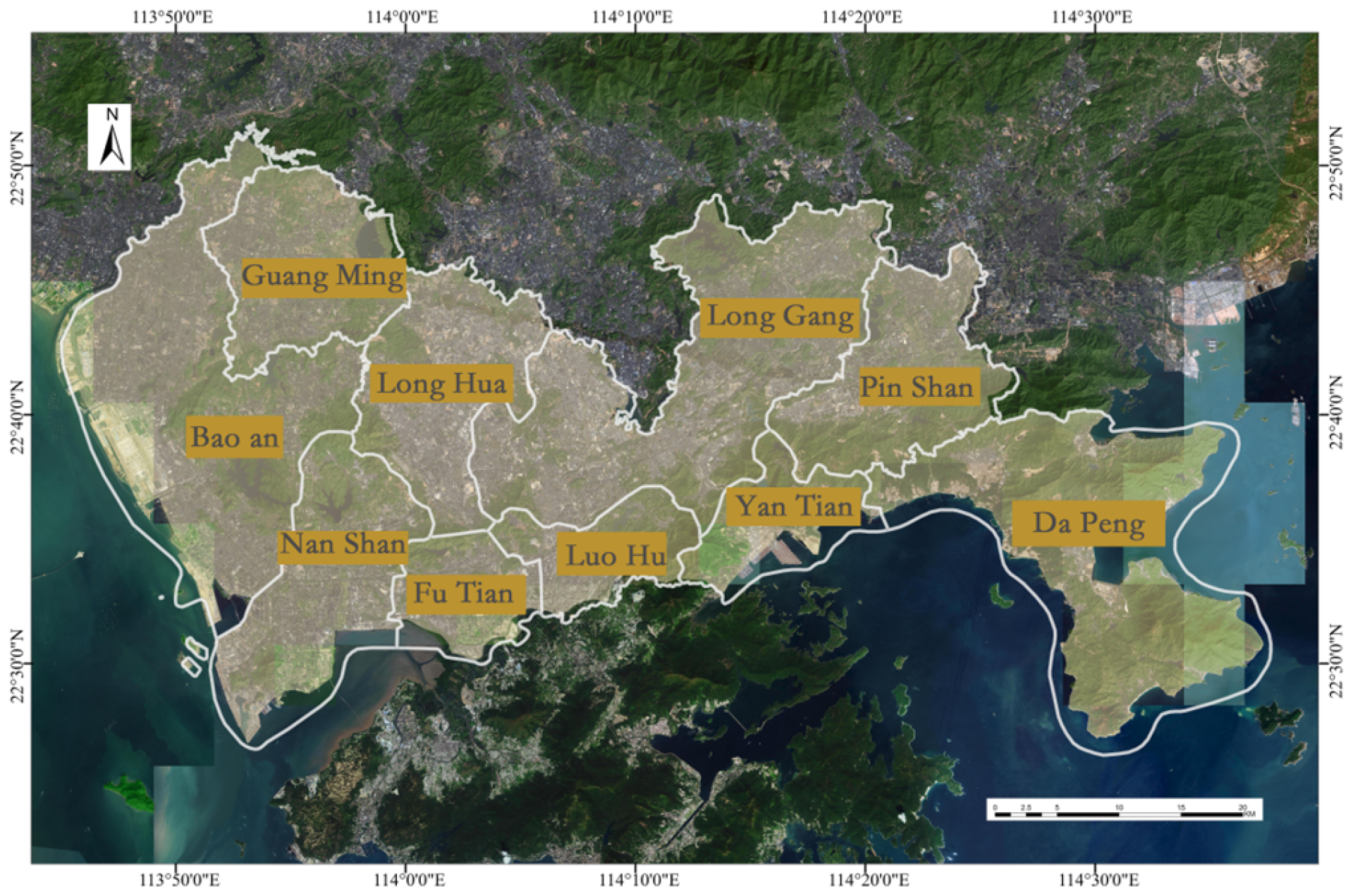
Figure 1. Spatial distribution of the study area.
Land 15 00568 g001
Figure 2. Data schematic diagram of the study area.
Land 15 00568 g002
Figure 3. Research framework.
Land 15 00568 g003
Figure 4. Park service scope diagram.
Land 15 00568 g004
Figure 5. Shenzhen’s park demand level map.
Land 15 00568 g005
Figure 6. Lorenz curve.
Land 15 00568 g006
Figure 7. Relationship between supply and demand of urban parks in Shenzhen.
Land 15 00568 g007
Figure 8. The distribution of the important analysis area.
Land 15 00568 g008
Table 1. Summary of experimental conditions of stationary sources.
Index CriteriaCorresponding IndicatorsIndex ConnotationData Sources
The demand dimension of the built environmentland useFor the highly urbanized city of Shenzhen, lcarbon emissions from land use follow the order of industrial land > commercial land > residential land.GlobeLand30 V2020
building densityIt reflects the greenhouse effect of the building in the production, transportation, construction and operation stages of the building materials related to it.Building height of Asia in 3D-GloBFP [26]
road densityUrban traffic is the main source of carbon emissions, and the index reflects the intensity of traffic carbon emissions.OpenStreetMap
The demand dimension of human activitiesPOI densityIt reflects the intensity of human activities in various parts of the city and characterizes the park demand of dynamic populations.Amap
populationIt reflects the aggregation of urban population and characterizes the park demand of static populations.Getui (https://www.getui.com/)
Table 2. Landscape types and their resistance coefficients.
Classification of ‘Source’ and ‘Sink’Landscape TypeCarbon Emission CoefficientResistance Coefficient
sourcecity park\1
water area−1.2, −0.51
grassland1.2, 2.87
brushland−1.5, −2.50.7
woodland−5.2, −3.50.1
sinkconstruction land18.3, 25.6100
cultivated land5.6, 7.230
wasteland0.5, 1.01
Table 3. Carbon sequestration demand indicator system.
Index CriteriaCorresponding IndicatorsIndex ConnotationData Sources
The demand dimension of the built environmentland useFor the perfect urbanization of Shenzhen City, land use carbon emissions are ranked as industrial > commercial > residential land uses.GlobeLand30 V2020
building volume densityIt reflects the greenhouse effect of the building in the production and transportation, construction and operation stages of the building materials related to it.Building height of Asia in 3D-GloBFP
road densityUrban traffic is the main source of carbon emissions, and the index reflects the intensity of traffic carbon emissions.OpenStreetMap
The demand dimension of human activitiesPOI densityIt reflects the intensity of human activities in various parts of the city and characterizes the park demand of dynamic population.Amap
permanent populationIt reflects the aggregation of urban population and characterizes the park demand of static population.Getui (https://www.getui.com/)
Table 4. Aggregated judgment matrix and weights for demand indicators.
IndicatorLand UseBuilding Volume DensityRoad DensityPOI DensityPopulationWeight
Land Use11.912.920.440.360.16
Building Volume Density0.521.002.000.330.300.11
Road Density0.340.501.000.240.220.07
POI Density2.273.004.171.000.550.28
Population2.783.334.551.821.000.38
Table 5. Park classification and service radius in Hangzhou.
Park LevelMunicipalDistrict LevelResidential District LevelCommunity Level
Size/m2>100 K50–10 K20–50 K4–20 K
Service radius/m300015001000500
Table 6. Shenzhen’s park classification and service radius.
Park LevelCountry LevelLarge Urban LevelUrban Medium-Sized LevelDistrict LevelResidential District LevelCommunity Level
Size/hm2>1000200~100030~2005~300.7~5 hm2<0.7
Service radius/m500025001500800500300
Number of parks152079227569372
Table 7. Supply–demand type classification and characteristics.
AreaLocationSupply–Demand TypeCharacteristics
ADapeng New DistrictHigh Supply–Low DemandExtensive forest cover; low population density; regional carbon sink
BLuohu–Futian CentralHigh Supply–High DemandDense commercial/residential; well-developed park network
CSouthern Coastal ZoneLow Supply–Low DemandCoastal wetlands; sparse vegetation; recreational use only
DWestern Bao’anLow Supply–High DemandMajor industrial zone; no large parks; sparse community parks
EWestern LonggangLow Supply–High DemandICT industry cluster; high density; only one district park
FEastern LonghuaLow Supply–High DemandRapid urbanization; park provision lags population growth
Disclaimer/Publisher’s Note: The statements, opinions and data contained in all publications are solely those of the individual author(s) and contributor(s) and not of MDPI and/or the editor(s). MDPI and/or the editor(s) disclaim responsibility for any injury to people or property resulting from any ideas, methods, instructions or products referred to in the content.