Previous Article in Journal
After-Use Trajectories of Peatlands Under Alternative Policy Pathways in Latvia
 
 
Due to scheduled maintenance work on our servers, there may be short service disruptions on this website between 11:00 and 12:00 CEST on March 28th.
Article

Spatiotemporal Dynamics of Urban Green Spaces and Vegetation Condition Amidst Urban Growth in Zomba, Malawi (1998–2021)


by
Patrick J. Likongwe
1,2,*,
Charlie M. Shackleton
1,
Madalitso Kachere
2,†,
Clinton Nkolokosa
2,
Sosten S. Chiotha
2,
Lois Kamuyango
2 and
Treaser Mandevu
2
1
Department of Environmental Science, Rhodes University, Makhanda 6140, South Africa
2
Leadership for Environmental & Development (LEAD), Zomba Private Bag 07, Malawi
*
Author to whom correspondence should be addressed.
Passed away on 25 August 2024 while the paper was being prepared for submission.
Land 2026, 15(4), 559; https://doi.org/10.3390/land15040559
Submission received: 18 February 2026 / Revised: 19 March 2026 / Accepted: 22 March 2026 / Published: 27 March 2026

Abstract

Urban green spaces (UGSs) provide critical ecosystem services (ESs) in rapidly urbanising cities but are increasingly threatened by land-use change, population growth, and socio-economic pressures. This study assessed spatial and temporal changes in UGS in Zomba City, Malawi, from 1998 to 2021 using geospatial and remote sensing methods. Landsat imagery from 1998, 2007, 2013, and 2021 was analysed through post-classification change detection to map land-use/land-cover (LULC) transitions, while the relationship between ward-level population density and vegetation condition was evaluated using the Normalised Difference Vegetation Index (NDVI). Results show a decline in total UGS cover from 60% in 1998 to 51% in 2021, primarily due to the expansion of built-up areas. Tree cover increased from 11% to 18%, with NDVI values rising from 0.700 to 0.947; these changes may reflect both natural vegetation growth and targeted restoration, indicating localised improvements in vegetation condition. An inverse relationship was observed between population density and NDVI, though some high-density wards exhibited NDVI gains associated with restoration initiatives. These findings underscore the role of both institutional and community efforts in sustaining urban vegetation and highlight the potential of ecological restoration to mitigate UGS loss and support ESs. Policymakers and planners should prioritise the protection, restoration, and equitable distribution of UGS, particularly in dense and underserved areas, as strategic urban greening enhances city resilience and human well-being.

1. Introduction

Africa’s urban population is projected to reach around 1.2–1.4 billion by 2050, driven by rapid demographic growth and rural–urban migration [1]. Much of this expansion is expected to occur in informal settlements, slums and rapidly growing secondary cities, where planning and infrastructure often lag behind population growth [1]. Notably, small- and medium-sized cities with a population below one million inhabitants host more than 60% of Africa’s urban population, making them central to the continent’s urban transition [1]. Urban expansion through population increases and spatial growth is a major driver of habitat loss, biodiversity decline, landscape fragmentation, and degradation of ecosystem services (ESs) in cities [2]. These processes often compromise the delivery of ESs, thereby reducing the resilience of urban systems and communities to environmental hazards and climate-related shocks [3]. Strengthening the provision of ESs in urban environments can be achieved through urban green infrastructure (UGI)—the interconnected network of urban green spaces (UGSs), vegetation, and natural areas that provide multiple ESs across spatial scales and enhance human well-being [3,4].
UGI encompasses vegetated elements embedded within the built environment, integrating diverse land uses such as parks, nature reserves, and cemeteries, as well as urban design features including street trees, landscaped parcels, green roofs, and sustainable urban drainage systems operating at multiple spatial scales—from buildings and neighbourhoods to entire landscapes and cities [5]. These vegetated elements include UGS whose quantity and quality influence the ESs experienced by urban residents and visitors. The quantity of UGS refers to the spatial extent of vegetation cover—including trees, shrubs, and all grasslands—often measured as per capita UGS availability or total vegetation cover within urban areas [6]. Such measurements are commonly derived from remote sensing and aerial imagery, which enable spatial delineation and monitoring of vegetation cover over time [7].
Beyond quantity, the quality of UGS plays a critical role in determining their ecological and social benefits. O’Neil and Gallagher [8] identified fourteen categories of UGI management, highlighting three key determinants of green space (GS) quality: (1) proximity to people, (2) biodiversity, and (3) connectivity between UGI features. Proximity relates to the accessibility of GS, particularly those located within walking distance of residential areas [8]. Biodiversity refers to the diversity of flora and fauna within ecological systems and opportunities for people to experience nature, while connectivity reflects physical and functional linkages that create networks of GS supporting multiple ecological and recreational functions [8]. Building on this work, Knobel et al. [9] synthesised dimensions of UGS quality through a systematic review and identified eleven attributes, including accessibility, surrounding land use, availability of facilities for activities, aesthetics, amenities, safety, incivilities, suitability for different uses, land-cover characteristics, governance and policy frameworks, and biodiversity indicators. These dimensions highlight that the benefits of UGS depend not only on their extent but also on their ecological condition and accessibility.
Land-use/land-cover (LULC) changes in African cities are driven by urbanisation, population growth, social-economic transformation, and climate change [10]. In Malawi, the transition to a multiparty political system in 1994 coincided with accelerated urban growth and spatial expansion, which has influenced patterns of land use and the condition of UGS. Changes in governance and land management arrangements resulted in encroachment on some UGSs that were previously earmarked for recreation, while others deteriorated due to limited financial resources for management and maintenance (https://www.urbanafrica.net, accessed on 1 March 2024).
In response to the degradation of UGS and the global call for increased access to safe, inclusive, and accessible GS under the Sustainable Development Goals, urban authorities and community organisations in Malawi have initiated efforts to restore urban forest restoration and expand vegetation cover. Since the early 2010s, institutions and community groups have promoted tree planting and restoration initiatives in major UGSs within Zomba, including Chirunga Forest (around 2010), Sadzi Hill (2013) [11], and Nkholonje Hill (2014) [12]. These initiatives emphasised both natural regeneration and active tree planting as strategies for restoring degraded landscapes [12,13].
However, studies examining LULC dynamics and UGS in Zomba have produced mixed and sometimes contradictory findings. Some studies reported an increase in urban forest cover between the 1970s and 2000s, while others documented an overall decline and fragmentation of GS between the late 1980s and 2021 [14,15,16]. These discrepancies can be attributed to several methodological factors. First, previous studies relied on different satellite imagery sources and spatial resolutions, often combining Landsat datasets from multiple sensors with varying spectral characteristics like global or regional scale vs. local. Such differences can influence vegetation detection and classification outcomes in heterogeneous urban landscapes. Second, the studies examined different temporal windows, frequently analysing only two time points or relatively short intervals, which may obscure intermediate fluctuations or recent recovery trends associated with restoration initiatives. Third, the studies applied different analytical approaches and indicators, ranging from land-cover classification to biodiversity assessments and landscape fragmentation metrics. These methods capture different aspects of UGS dynamics and may therefore lead to contrasting conclusions regarding trends in vegetation cover.
Another limitation of existing studies by [14,15,16] is their focus primarily in the spatial extent of GS, with limited attention to the ecological quality and health of urban vegetation. Indicators such as the Normalised Difference Vegetation Index (NDVI), which provide insights into vegetation health and productivity, have rarely been integrated into analyses of UGS dynamics in Malawi. Moreover, the relationship between urban population density and vegetation quality has received little empirical attention in Malawi’s secondary cities. Consequently, there remains a critical knowledge gap regarding how the quantity and ecological condition of UGS in Zomba have changed over time and how these changes relate to demographic pressures and urban restoration initiatives.
This study contributes to the literature in three ways. First, it provides a multi-temporal assessment of both the quantity and ecological quality of UGS in Zomba over more than two decades (1998–2021), thereby offering a longer-term perspective on vegetation dynamics during Malawi’s multiparty political era. Second, the study integrates NDVI-based vegetation health indicators with land-cover analysis, enabling a more comprehensive assessment of urban vegetation condition beyond spatial extent alone. Third, it examines the spatial relationship between ward-level population density and urban vegetation quality, providing new insights into how demographic pressures interact with UGI in a rapidly urbanising secondary city.
Therefore, the primary objectives of this study were to analyse and map the spatial and temporal changes in quantity and quality of UGS cover within the multiparty political era (1998, 2007, 2013 and 2021). Specifically, the study examines ward-level population density in relation to vegetation health, using the NDVI as a proxy. By integrating multi-temporal land-cover analysis, vegetation health assessment, and demographic data, this research provides an innovative, comprehensive perspective on UGS dynamics that goes beyond simple quantification of green areas. The intended outcomes include a clearer understanding of trends in UGS quantity and quality, insights into the effects of urbanisation and restoration initiatives, and evidence-based guidance for urban planning and green infrastructure management. These findings have broader implications for enhancing ES delivery, urban resilience, and sustainable development in secondary African cities.

2. Materials and Methods

2.1. Study Area

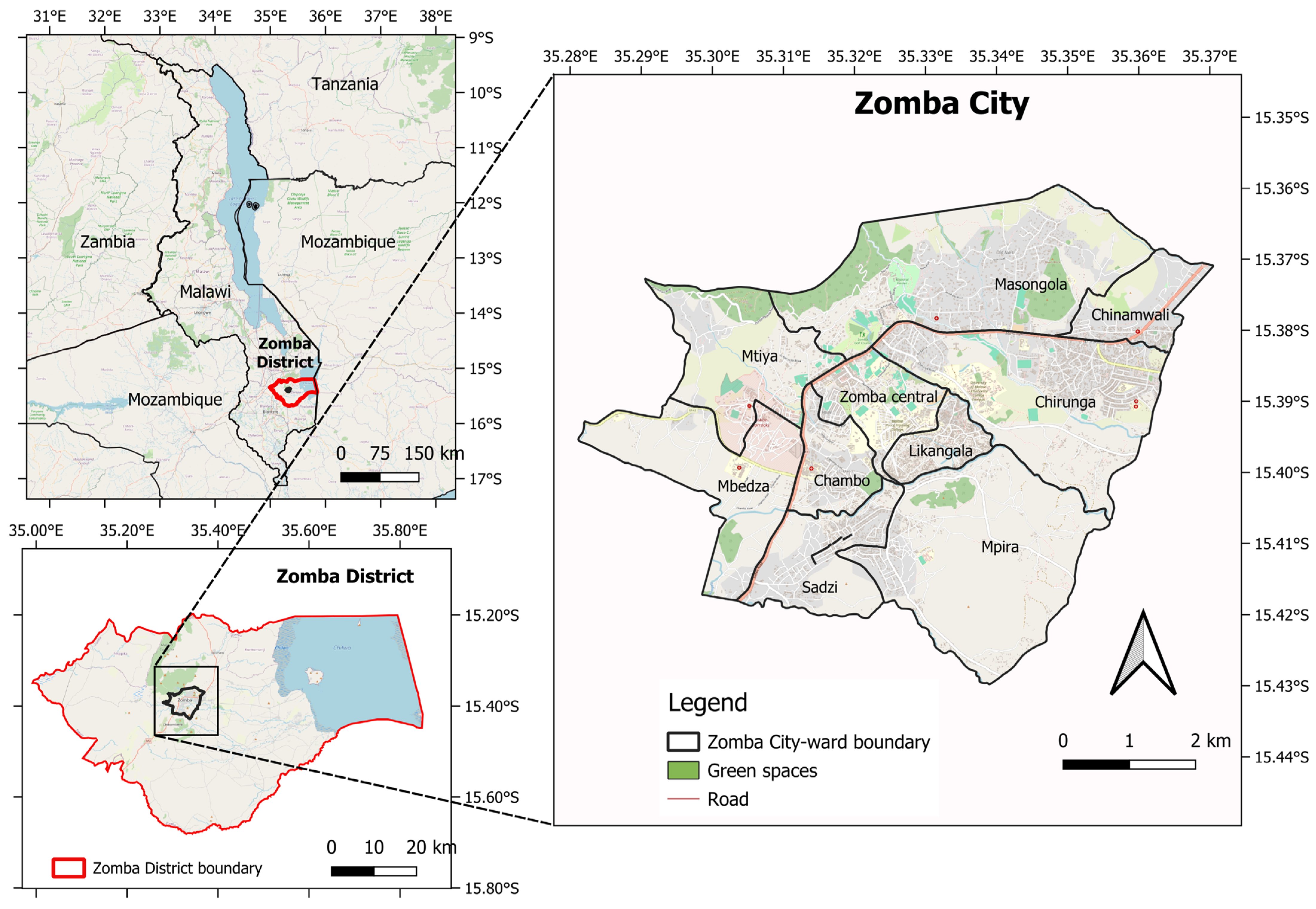
This study was conducted in Zomba, the fourth largest city in Malawi after Blantyre, Lilongwe and Mzuzu. Zomba covers approximately 42 km2 and lies at the foot of the Zomba Plateau, which rises to 2085 m above sea level. Administratively, the city comprises one parliamentary constituency—Zomba Central—and ten wards with approximately 25 neighbourhoods (Figure 1). These include the central government and business zones, public and private institutions, and residential areas consisting of both planned and unplanned settlements. Residential areas are further categorised into low-, medium-, and high-density settlements, largely determined by plot size and infrastructure provision.
Zomba experiences a tropical climate with three main seasons: the cold-dry season (April–July), hot-dry season (August–October), and hot-wet season (November–March). Maximum temperatures during the hottest months (September–November) typically range between 28 °C and 31 °C, occasionally exceeding 36 °C, while minimum temperatures of around 10 °C occur in June and July. Annual rainfall varies between 500 mm and 1800 mm, based on recorders from Chancellor College weather station between 1978/79 and 2018/19. Climate-related hazards such as heavy rainfall events, flooding, strong winds, landslides and occasional earth tremors are increasingly reported in the city and across Malawi [13].
Zomba has experienced substantial population growth since its early establishment. From an estimated 150 inhabitants in 1897, the population reached 105,013 people in 2018, corresponding to a density of 2500 persons per km2, with an average annual growth rate of 2.5% over the last decade [17]. According to the National Statistical Office, approximately 66% of residents lack adequate urban services and social infrastructure, and many live in informal settlements [18]. Urban expansion is increasingly occurring informally beyond the official city boundaries, often converting agricultural land into residential and commercial uses.
The local economy is dominated by informal and small-scale enterprises, including retail trade, construction, manufacturing, transport services, marketing, finance, and public administration. Small enterprises such as vendors, hawkers, taxi and minibus operators account for approximately 93% of economic activity, while medium- and large-scale enterprises contribute 6% and 1%, respectively. Approximately 58% of the population aged 15–64 years is employed, 27% economically inactive and 15% unemployed [18]. These socio-economic dynamics, together with population growth, contribute to a poverty rate of about 16%, with 4% classified as ultra-poor in 2018 [18]. The Zomba City Resilience Plan (2016–2026) further highlights that activities such as timber trading, brick moulding and firing, sand mining and quarrying increase environmental pressures and the risk of urban environmental hazards.

2.2. Data Acquisition and Processing

A combination of remote sensing and spatial analysis techniques was used to assess spatial and temporal changes in the quantity and vegetation condition of UGS and their related relationship with population density.

2.2.1. Analysing Spatial and Temporal Changes in UGS Cover

To analyse long-term changes in urban LULC, four cloud-free Landsat images from approximately the same seasonal period were obtained for 1998, 2007, 2013 and 2021 (Table 1). All images were downloaded from the United States Geological Survey Earth Explorer platform. Using images from similar seasons helps minimise variations caused by seasonal vegetation phenology. The spatial boundary for all analyses corresponds to the official Zomba city boundary established in 1964, ensuring consistency across the temporal dataset. Earlier satellite imagery that could extend the analysis to the late 1970s was not available with sufficient quality of coverage.
LULC classification was performed using the Minimum Distance Supervised Classification algorithm implemented in QGIS Desktop 3.28.8 and ESRI ArcGIS Desktop 10.8. This method assigns pixels to the class whose spectral signature has the smallest Euclidean distance from the pixel values. Although more advanced classifiers such as Random Forest, Support Vector Machines (SVMs), and object-based image analysis (OBIA) are widely used in recent remote sensing studies, the Minimum Distance classifier was selected for three main reasons [19]:
  • Consistency across multi-sensor imagery (Landsat 5 TM and Landsat 8/9 OLI), enabling comparable classification results across the 23-year period.
  • Computational simplicity and transparency, which facilitates reproducibility when analysing medium-resolution datasets in data-constrained environments.
  • Adequate performance for broad LULC categories when supported by carefully selected training samples and post-classification validation.
The classification focused on four major land-cover classes relevant to the urban landscape: tree cover, non-tree vegetation (grassland and shrubs), built-up areas, and bare land. These classes were selected based on the dominant land-cover characteristics observed within the study area and their relevance to assessing urban expansion and UGS dynamics. The classification approach was designed to distinguish between tree cover (vegetated) and non-tree cover (non-vegetated) surfaces in order to analyse changes in UGS over time. Although established land-cover classification frameworks such as CORINE are commonly used in large-scale regional studies, they often contain a larger number of categories that are difficult to reliably separate when using medium-resolution satellite imagery [20]. Therefore, a simplified scheme was adopted to improve spectral separability and classification accuracy when using multi-temporal Landsat imagery with a spatial resolution of 30 m.
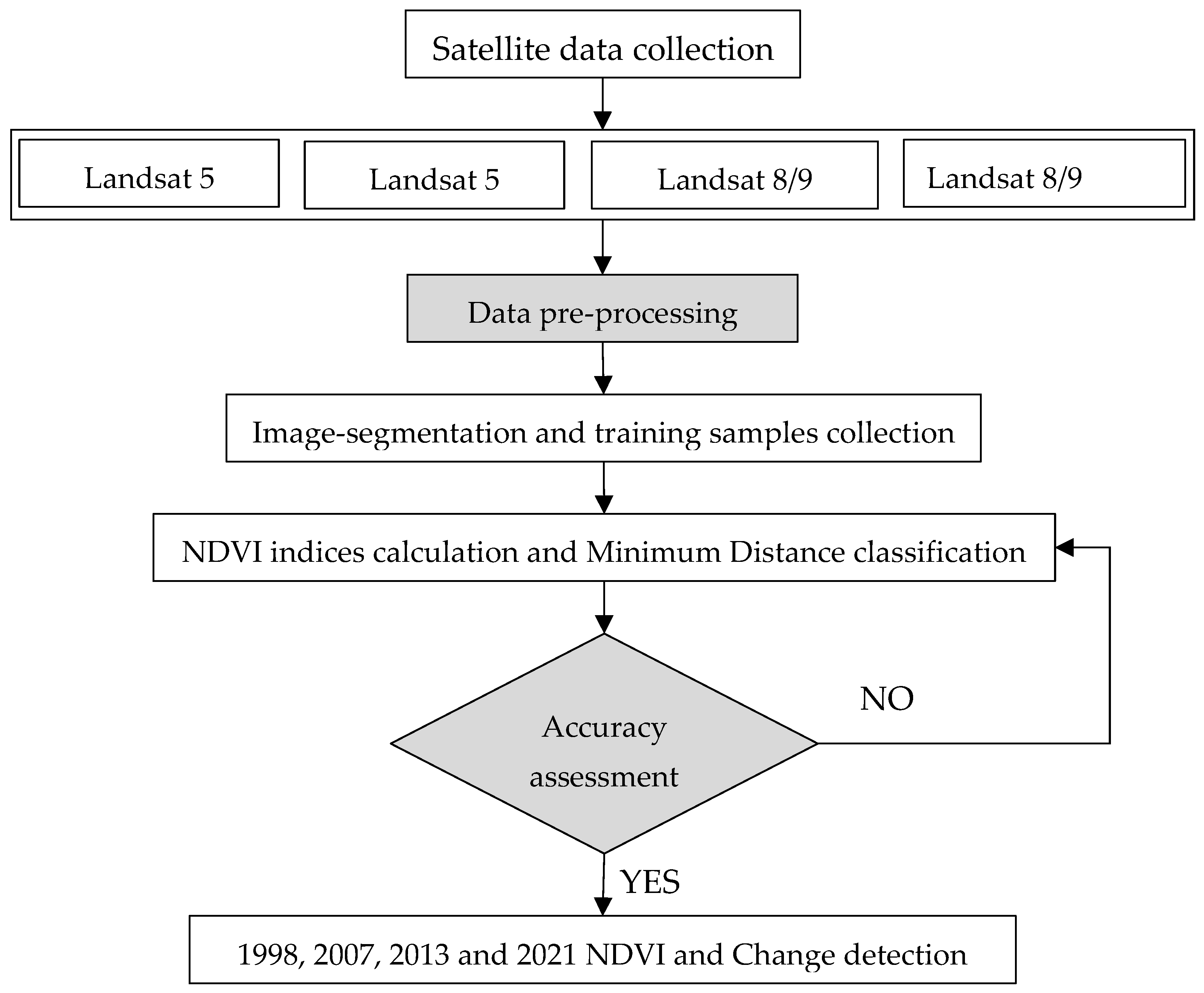
A total of 184 training samples were collected across the four classes using high-resolution imagery from Google Earth and Google Maps as reference data. As a rule of thumb, a minimum of 50 training samples is sufficient for every classification to ensure balanced representation across land-cover classes and spatial coverage of the study area [21]. The number of samples was determined across the city, consistent with commonly used supervised classification guidelines for medium-resolution imagery. The Landsat images were further processed through standard remote sensing workflows including image pre-processing, classification, validation and change detection, as summarised in Figure 2 and adapted from established LULC change detection methodologies [22].

2.2.2. Assessing Vegetation Condition of UGS

In this study, the ecological condition of urban vegetation was assessed using the NDVI. Rather than representing the full multidimensional concept of UGS quality, NDVI was used as a proxy indicator of vegetation greenness and health, reflecting the density and vigour of plant cover [23].
NDVI is calculated from near-infrared (NIR) and the red spectral bands of satellite imagery using Equation (1).
NDVI = ( N I R R e d ) ( N I R + R e d )
NDVI values range between −1.0 and 1.0, where negative values correspond to non-vegetated surfaces such as water bodies or bare soil, and values approaching 1.0 strongly indicate dense, vigorous, and healthy vegetation [24]. The same Landsat images used for the LULC classification were also used to compute NDVI in order to maintain temporal consistency. Using imagery from similar seasonal windows helped reduce bias associated with seasonal vegetation fluctuations, allowing the analysis to capture more stable patterns of perennial vegetation cover, particularly tree canopy.
The NDVI analysis distinguished four broad land-cover categories: tree cover, non-tree vegetation, built-up areas and bare land, enabling assessment of vegetation condition at both city and ward levels. NDVI has been widely used in urban ecological studies to analyse vegetation dynamics, plant phenology and ecosystem health [22].

2.2.3. Accuracy Evaluation and Validation

Classification accuracy was evaluated using 41 validation points randomly distributed across the study area. These points were selected from locations that could be clearly identified using high-resolution imagery from Google Earth and Google Maps, ensuring reliable reference data. Accuracy assessment was conducted using an error matrix, which compares classified pixels with reference data to determine the proportion of correctly classified observations. Overall classification accuracy was calculated using Equation (2).
A c c u r a c y = N u m b e r   o f   c o r r e c t l y   c l a s s f i e d   p o i n t s T o t a l   n u m b e r   o f   v a l i d a t i o n   p o i n t s
To further evaluate classification reliability, the Kappa (κ) coefficient was computed. The Kappa statistic measures the degree of agreement between classified and reference data while accounting for agreement occurring by chance [25]. Kappa values range from 0 to 1, where values above 0.8 indicate string agreement, while values below 0.4 indicate poor agreement between classification and reference data [23].
Although the number of validation points is relatively modest, their spatial distribution across the main land-cover classes and the use of high-resolution imagery as reference data helped improve the reliability of the accuracy assessment.

2.3. Analysing the Spatial Relationship Between Population Density and NDVI

To examine the spatial relationship between population density and vegetation condition, ward-level population data for 1998, 2007 and 2013 were used. Comparable ward-level population data for 2021 was not available at the time of analysis. Bivariate choropleth maps were generated to visualise the spatial relationship between population density and NDVI. Mapping was conducted using the biscale package (version 1.0.1) in R Statistical software (version 4.2.2) [26]. Bivariate thematic mapping enables the simultaneous representation of two variables within a single map, facilitating spatial interpretation of relationships between demographic pressure and vegetation condition across the city’s wards.

3. Results

3.1. Accuracy Assessment

The overall classification accuracy for the LULC and NDVI analysis was 83%, based on the random sampling validation procedure (Table S1). The user’s accuracy, which indicates the probability that a pixel classified into a given class on the ground, ranged from 67% to 100%. Producers’ accuracy, representing the proportion of reference pixels that were correctly classified for each class, ranged from 55% to 100%. The Kappa coefficient was 0.735, indicating a good level of agreement between the classified imagery and reference data (0.61–0.80) (Table S2). These results suggest that the classification outputs are sufficiently reliable for further analysis of spatial and temporal land-cover changes.

3.2. Spatial and Temporal Status of UGS Cover in the City

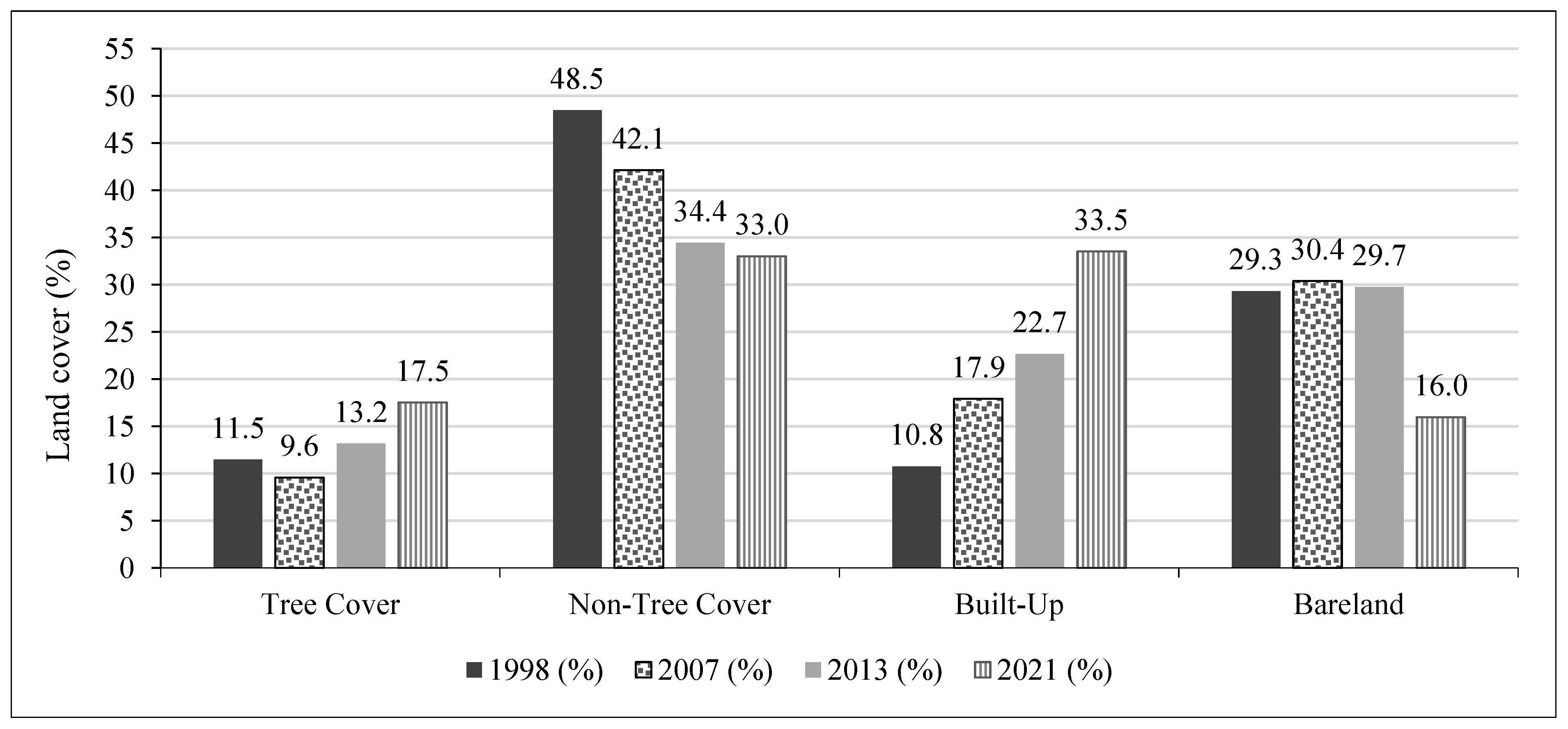
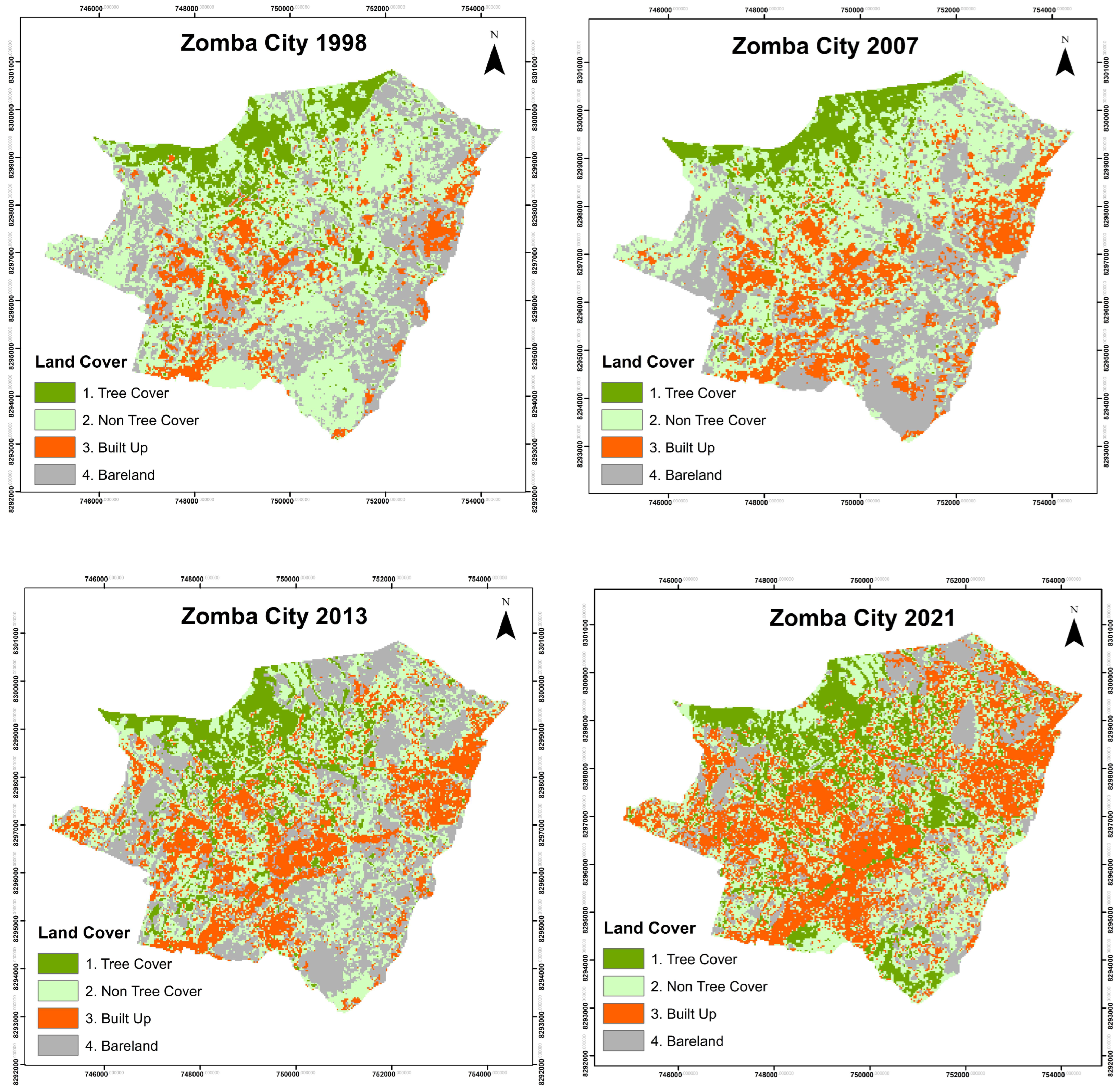
UGS, represented by tree and non-tree vegetation cover, accounted for approximately 60% of the city area in 1998, decreasing to 52% in 2007 and 48% in 2013, before slightly recovering to 51% in 2021. Overall, this represents a 9% decline in UGS cover over the 23-year period, equivalent to an average loss of approximately 0.4% per annum. When vegetation classes are considered separately, tree cover increased from about 12% in 1998 to 18% in 2021, while non-tree vegetation declined from 49% to 33% over the same period (Figure 3). At the same time, the built-up area expanded significantly, increasing from 11% in 1998 to 34% in 2021 (Figure 4), reflecting ongoing urban expansion.
The net land-cover change analysis shows a net of approximately of 253 ha in tree cover and 951 ha in built-up areas between 1998 and 2021. These gains were accompanied by net losses of 646 ha in non-tree vegetation and 558 ha in bare land (Table 2). Spatial analysis indicates that Masongola ward experienced the greatest loss of tree cover, while Mpira, Chirunga and Sadzi wards recorded the largest gains in tree cover.

3.3. Spatial and Temporal Changes in Quality of UGS

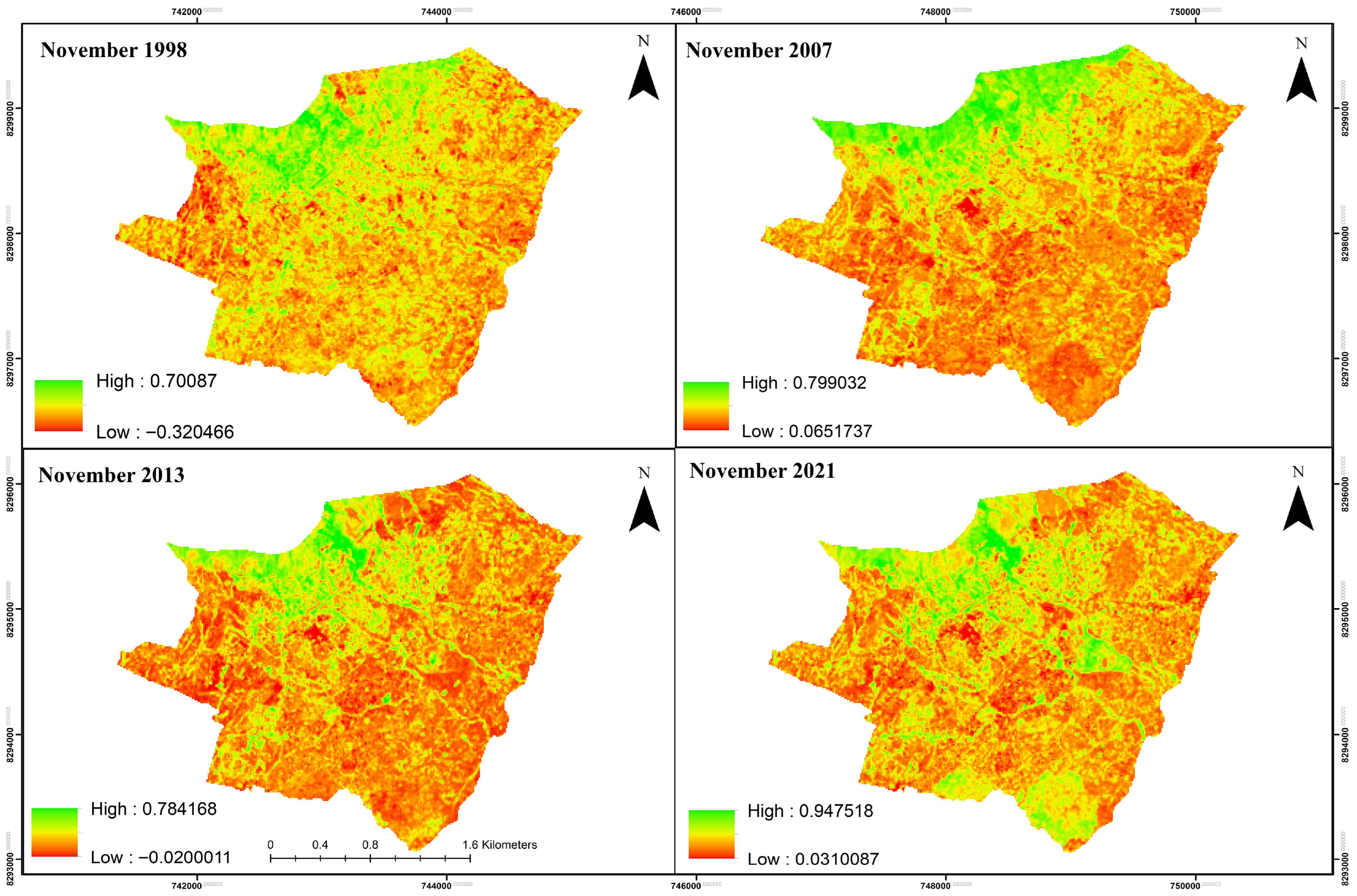
The NDVI value for the city increased from 0.700 in 1998 to 0.947 in 2021 (Figure 5), indicating an increase in vegetation greenness during the study period in selected wards within the city. This trend is consistent with the observed expansion of tree cover, despite the overall decline in total UGS. The increased NDVI may reflect several factors, including the maturation of trees that were younger in earlier years, natural regeneration, and localised restoration and tree planting initiatives, which have contributed to increased canopy cover and vegetation density in several parts of the city; however, the 2021 peak NDVI of 0.947 represents a pixel-level maximum within dense vegetative patches, rather than a city-wide average.
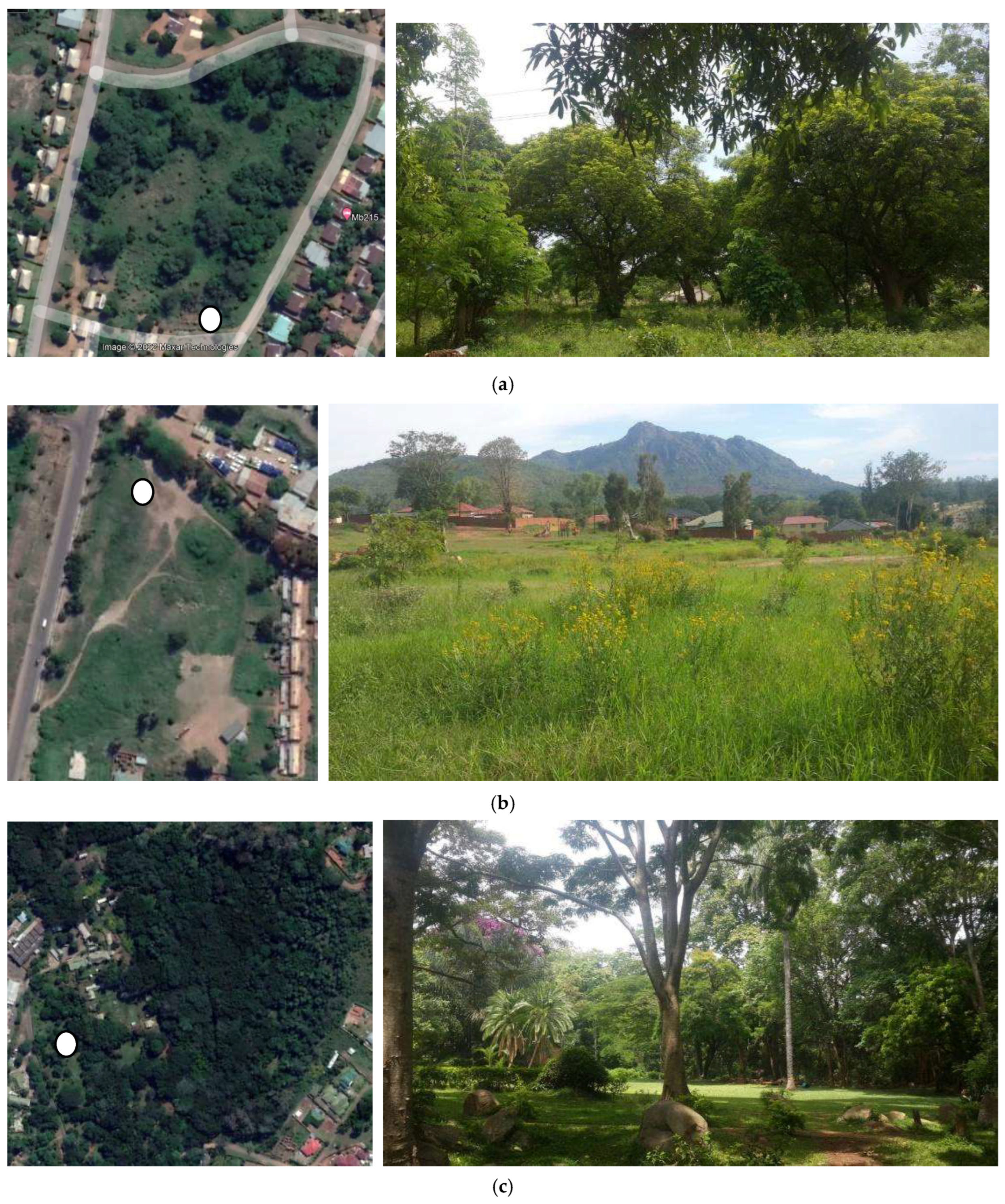
The city contains several private and public UGS areas (Figure 6), including approximately ten recreation parks, mainly located in Masongola and Mtiya wards. Many of these spaces are currently underutilised or poorly maintained. As a result, they are experiencing natural vegetation regeneration, with shrubs and trees establishing in the absence of regular disturbance. Examples include Ndola Park and Likangala Park in Likangala ward, where vegetation density has increased over time. Similarly, Zomba Botanical Gardens, located in Masongola ward, continue to support dense tree cover despite surrounding development pressures. These areas contribute to the overall NDVI increase observed in the city.

3.4. Spatial Relationship Between Population Density and NDVI

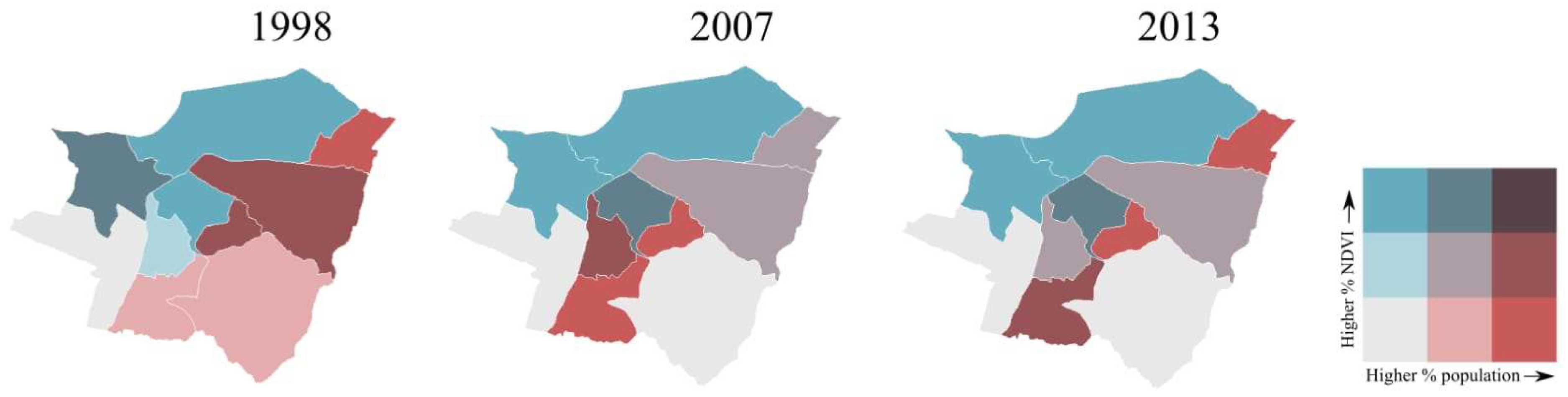
The correlation analysis reveals a moderate negative relationship between population density and mean NDVI across all of the study period (r = −0.45 in 2007 and 2013; r = −0.55 in 1998), although these relationships were not statistically significant (p > 0.05). The results suggest that wards’ with higher population density generally exhibit lower vegetation greenness, indicating pressure on urban vegetation from increasing settlement density. The bivariate choropleth maps (Figure 7) illustrate this spatial pattern, showing that areas with higher population density tend to have lower NDVI values. However, some exceptions are evident. For example, Sadzi ward initially exhibited low NDVI values with moderate population density in 1998, but by 2013, NDVI had improved to moderate levels despite higher population density, possibly reflecting local restoration and vegetation regeneration initiatives.

4. Discussion

4.1. Changes in the Extent of UGS in Zomba

The results show that UGS cover in Zomba declined from about 60% in 1998 to 51% in 2021, representing a 9% loss over 23 years. Although this reduction is notable, the decline is relatively modest compared with trends reported in several African cities. For example, formal UGS in Dakar, Senegal, declined by 34% between 1988 and 2008 [27]. Similarly, many urban centres across Africa have experienced significant reductions in GS due to rapid urbanisation and competing land uses [28]. Examples from other African cities illustrate the magnitude of this challenge. Kumasi in Ghana, once known as the “Garden city of West Africa,” currently saw a drop in UGS of about 40% between 2013 and 2023, declining at a rate of about 4% per annum and currently represented by about 17% UGS area [29]. Other cities such as Luanda (Angola), Dar es Salaam (Tanzania), and Accra (Ghana) also contain very small proportions of formal UGS relative to their total urban area [30]. In Ethiopia, Addis Ababa has gradually lost its “forest city” status as a result of increased urbanisation and development, with forestland decreasing from 7% in 1993 to 5% in 2023 while UGS decreased from 25% in 1993 to 13% in 2023 [31]. Similarly, Mafikeng, in South Africa, lost seven out of nine public UGSs between 1992 and 2016, leaving only two parks covering approximately 4 ha [32].
The observed decline in Zomba’s UGS is primarily associated with rapid urban expansion, reflected in the 951 ha increase in built-up area between 1998 and 2021. Conversion of open spaces, grasslands and bare land to residential and commercial land uses appears to be the major driver of this change. Such trends are consistent with global urbanisation patterns, where increasing demand for land for housing, infrastructure, and agriculture often occurs at the expense of GS [2,28]. However, despite the overall decline in UGS, the study recorded a net gain of 253 ha in tree cover. The increase was mainly observed in wards such as Mpira, Chirunga and Sadzi, largely due to the gains in vegetation cover from Nkholonje Hill, Chirunga Forest and Sadzi Hill. These areas have benefited from community-led restoration initiatives, including tree planting and natural regeneration programmes [11]. Similar restoration initiatives have been reported in other contexts where local communities play a key role in restoring degraded urban landscapes.
The increase in tree cover therefore partly offsets the decline in overall UGS, demonstrating the importance of urban forest restoration initiatives in maintaining ecological functions in rapidly growing cities.

4.2. Changes in the Condition of Urban Vegetation

While the spatial extent of UGS declined over the study period, the condition of urban vegetation showed improvement, as indicated by the increase in NDVI values from 0.70 in 1998 to 0.95 in 2021. NDVI primarily reflects vegetation greenness and density, and therefore provides an indication of vegetation condition rather than a comprehensive measure of overall UGS quality. In tropical environments, NDVI values between 0.6 and 0.8 generally represent dense vegetation cover, while values around 0.2 to 0.3 correspond to shrubs and grassed lands, and values close to zero indicate degraded or sparsely vegetated areas [25]. The NDVI values observed in this study therefore suggest that several parts of Zomba maintain relatively dense and healthy vegetation cover, providing some ESs like PM2.5 removal and a cooling effect noted in some areas of the city [4].
The improvement in vegetation condition can be attributed to several factors. First, trees that were relatively young during the earlier observation periods have matured over time, resulting in increased canopy cover and vegetation density. Second, urban forest restoration initiatives, including both natural regeneration and tree-planting programmes, have contributed to improved vegetation cover in several wards [11,12]. Notable examples include Nkholonje Hill, Chirunga Forest and Sadzi Hill, where restoration efforts have transformed previously degraded areas into areas with substantial tree cover. Other important GS that continue to support urban vegetation include the Botanical Gardens, Ndola Park and Likangala Park, along with several smaller green areas located within institutional and residential landscapes.
In some cases, limited maintenance of public parks has unintentionally allowed vegetation to regenerate naturally. Although this reflects challenges in park management, the reduced disturbance has enabled self-established shrubs and trees to grow and increase canopy cover, contributing to higher NDVI values in some areas. Similar patterns have been observed in other cities where reduced human disturbance facilitates natural vegetation recovery. Overall, the results suggest that urban forest restoration initiatives, natural regeneration processes and increasing canopy maturity have contributed to improved vegetation condition across parts of the city, despite the overall reduction in the spatial extent of UGS.

4.3. Population Pressure and Its Influence on Vegetation Patterns

The analysis revealed a moderate negative relationship between population density and NDVI values across the study periods. Although the correlations were not statistically significant, the consistent negative association suggests that areas with higher population densities tend to have lower vegetation greenness, similar to findings by Bille et al. [33]. This pattern reflects the influence of urban population growth on land use and vegetation dynamics. Zomba’s population increased from approximately 71,000 people in 1998 to about 105,000 in 2018, representing a population density increase from about 1690 to about 2500 inhabitants per km2 [17]. Such demographic changes increase demand for land for housing, infrastructure and other services, which often leads to the conversion of GS into built-up areas.
Consequently, wards with higher population densities tend to exhibit lower NDVI values, indicating reduced vegetation cover [33]. Conversely, wards with relatively lower population densities tend to maintain higher levels of vegetation greenness, particularly where large GS or conservation areas remain intact. However, the case of Sadzi ward illustrates that this trend is not fixed. Despite experiencing increasing population density, the ward showed improvements in NDVI values over time due to community-driven restoration efforts on Sadzi Hill. This demonstrates that targeted urban forest restoration initiatives can mitigate the negative impacts of population pressure on urban vegetation [33].
These findings highlight the importance of strategic urban planning and UGI development, particularly in densely populated wards that currently lack sufficient GS.

4.4. Implications for UGS Management and Planning

The findings highlight the need for deliberate urban planning strategies to protect and expand UGS in Zomba. Urban trees and GS provide essential ESs, including temperature regulation, air purification, stormwater management and recreational benefits [3,4]. These services are expected to become even more important as global temperatures continue to rise and urban populations grow. Globally, several cities have adopted tree canopy targets to address declining urban vegetation. For instance, Kuala Lumpur aims to increase tree canopy cover to 30%, while Melbourne has set a target of increasing canopy cover from 22% in 2014 to 40% by 2040 [7,34]. Similar benchmarks could inform urban greening strategies in Zomba.
Currently, Zomba’s tree canopy cover of approximately 19–20% suggests room for expansion. Increasing tree cover to at least 30%, as recommended in several urban forestry studies [7], could significantly enhance urban sustainability and resilience. The “3-30-300 rule” proposed for urban forests provides a useful framework for such efforts [35]. This guideline recommends that every resident should be able to see at least three mature trees from their home, that each neighbourhood should have a minimum of 30% tree canopy cover, and that every residence should be located within 300 m of a public GS.
Implementing such approaches in Zomba would require integrating green infrastructure into urban development planning, strengthening community-led restoration initiatives, and improving the management of existing parks and GS. These measures would help ensure that urban growth does not continue to occur at the expense of critical ecological infrastructure.

4.5. Limitations of the Study

One limitation of this study is the lack of consistent ward-level population data for 2021 to support analysis of population-vegetation relationships. Although WorldPo data were considered, they were not suitable due to temporal mismatch (available for 2020 only) and coarse spatial resolution (1 km), which is incompatible with the 30 m NDVI data and insufficient for capturing intra-ward variation. As a result, higher-resolution ward-level population data from the local authority were used, as they are better aligned with the scale of analysis.
A second limitation is the use of the Minimum Distance Supervised Classification method, which, although applied for consistency across multi-sensor Landsat imagery, is sensitive to the representativeness and balance of training samples and to use bias. Compared to more advanced methods such as Random Forest, Support Vector Machines, OBIA, and deep learning, it is less robust in handling spectral overlap and mixed pixels at 30 m resolution in complex urban environments. Additionally, the use of 184 training samples, though adequate in the small study site, may be relatively limited for ensuring strong classification reliability and validation.
A third limitation is that NDVI, while useful for assessing vegetation greenness and density, does not capture other important dimensions of UGS quality, such as biodiversity, accessibility, structural diversity, or recreational functionality. In addition, NDVI alone cannot fully distinguish vegetation structure, such as differentiating between trees, shrubs, and agricultural vegetation. At the 30 m spatial resolution of Landsat imagery, mixed pixels may also occur, particularly in heterogenous urban environments. As a result, the study’s assessment of UGS is limited to a biophysical proxy and does not fully reflect their multifunctional and socio-ecological value. NDVI was therefore used specifically as an indicator of vegetation greenness and condition rather than a comprehensive measure of UGS quality.

5. Conclusions

This study assessed long-term changes in the extent and vegetation condition of UGS in Zomba City between 1998 and 2021 using LULC analysis, NDVI-based vegetation assessment, and ward-level population data. The results show that overall UGS cover declined from about 60% in 1998 to 51% in 2021, largely due to the rapid expansion of built-up areas associated with population growth and urban development. Despite this decline, the city recorded a net gain of approximately 253 ha in tree cover, particularly in wards such as Mpira, Chirunga, and Sadzi, where restoration and natural regeneration activities have been prominent.
The analysis further revealed an increase in NDVI values from 0.70 to 0.95, indicating improved vegetation condition in several parts of the city. This improvement reflects the combined effects of urban forest restoration initiatives, natural regeneration processes, and the maturation of previously planted trees, particularly following restoration efforts implemented after 2010. However, the simultaneous decline in the overall extent of UGS suggests that urban expansion continues to exert pressure on green infrastructure. If not addressed, continued loss of GS may weaken the capacity of the urban ecosystem to provide essential ESs such as temperature regulation, air purification, stormwater management, biodiversity support, and recreational opportunities.
This study provides an integrated assessment of UGS extent, vegetation condition, and demographic pressures over multiple decades, contributing new evidence for understanding UGS dynamics in rapidly growing secondary cities in sub-Saharan Africa. NDVI captures vegetation greenness and density but does not fully represent other dimensions of UGS quality, such as biodiversity, accessibility, structural diversity, or recreational functionality. Future studies should therefore combine higher-resolution spatial data, field-based ecological assessments, and socio-ecological surveys to better evaluate the multifunctional benefits of UGS and their equitable distribution across urban communities.
Overall, the findings highlight the need for proactive urban planning that integrates green infrastructure into city development strategies. Protecting existing GS, restoring degraded areas, and expanding tree canopy coverage will be critical for sustaining ESs and enhancing urban resilience. UGS should be treated as essential urban infrastructure rather than residual land uses in city planning. Embedding UGS protection and restoration within the Zomba City master plan can help secure a more resilient, liveable, and environmentally sustainable future for the city and its residents.

Supplementary Materials

The following supporting information can be downloaded at https://www.mdpi.com/article/10.3390/land15040559/s1, Table S1: Confusion Matrix Comparing Classified Imagery with Reference (Google Earth) Data. Table S2: Interpretation of Kappa Coefficient Results. Reference Reference [36] is cited in the Supplementary Materials.

Author Contributions

Conceptualization, P.J.L. and C.M.S.; methodology, P.J.L., C.N., M.K., L.K., and T.M.; software, C.N. and M.K.; validation, S.S.C., L.K. and T.M.; formal analysis, P.J.L., C.N., and M.K.; investigation, P.J.L., L.K., T.M., and C.N.; resources, C.M.S. and S.S.C.; data curation, C.N., M.K., L.K., and T.M.; writing—original draft preparation, P.J.L.; writing—review and editing, C.M.S. and S.S.C.; visualisation, P.J.L.; project administration, P.J.L.; funding acquisition, C.M.S. All authors have read and agreed to the published version of the manuscript.

Funding

This work was funded by the German Federal Ministry of Education and Research (BMBF) (Project ID: 01DG16015). The mobility grant was from the German Academic Exchange Service (DAAD) (Project ID: 57353580). Charlie Shackleton was funded by the South African Research Chairs Initiative of the Department of Science and Technology and the National Research Foundation of South Africa (Grant no. 84379). Any opinion, finding, conclusion or recommendation expressed in this material is that of the authors and the NRF does not accept any liability in this regard.

Data Availability Statement

Publicly available data sets were used in this study. These can be accessed through the U.S. Geological Survey (USGS) Earth Explorer platform (https://earthexplorer.usgs.gov, accessed on 15 August 2024). Additional data supporting the findings of this study are available from the corresponding author upon reasonable request.

Acknowledgments

This study was conducted under the project ‘Adaptability, Food Security, Risk and the Right to the City in sub-Saharan Africa: Towards Sustainable Livelihoods and Green Infrastructure’ (AFRICITY).

Conflicts of Interest

The authors declare no conflicts of interest.

References

  1. OECD; SWAC. Africa’s Urbanisation Dynamics 2020: Africapolis, Mapping a New Urban Geography; OECD Publishing: Paris, France, 2020. [Google Scholar]
  2. Ghofrani, Z.; Sposito, V.; Faggian, R. Maximising the value of natural capital in a changing climate through the integration of blue-green infrastructure. J. Sustain. Dev. Energy Water Environ. Syst. 2020, 8, 213–234. [Google Scholar] [CrossRef]
  3. Semeraro, T.; Scarano, A.; Buccolieri, R.; Santino, A.; Aarrevaara, E. Planning of Urban Green Spaces: An Ecological Perspective on Human Benefits. Land 2021, 10, 105. [Google Scholar] [CrossRef]
  4. Fletcher, D.H.; Likongwe, P.J.; Chiotha, S.S.; Nduwayezu, G.; Mallick, D.; Uddin, N.; Rahman, A.; Golovátina-Mora, P.; Lotero, L.; Bricker, S.; et al. Using demand mapping to assess the benefits of urban green and blue space in cities from four continents. Sci. Total Environ. 2021, 785, 147238. [Google Scholar] [CrossRef]
  5. Shackleton, C.; Blair, A.; De Lacy, P.; Kaoma, H.; Mugwagwa, N.; Dalu, M.; Walton, W. How important is green infrastructure in small and medium-sized towns? Lessons from South Africa. Landsc. Urban Plan. 2018, 180, 273–281. [Google Scholar] [CrossRef]
  6. Summer, J.; Barchfield, V. African Green City Index: Assessing the Environmental Performance of Africa’s Major Cities; Siemens AG: München, Germany, 2018. [Google Scholar]
  7. Kanniah, K.D. Quantifying green cover change for sustainable urban planning: A case of Kuala Lumpur, Malaysia. Urban For. Urban Green. 2017, 27, 287–304. [Google Scholar] [CrossRef]
  8. O’Neil, J.A.; Gallagher, C.E. Determining what is important in terms of the quality of an urban green network: A study of urban planning in England and Scotland. Plan. Pract. Res. 2014, 29, 202–216. [Google Scholar] [CrossRef]
  9. Knobel, P.; Dadvand, P.; Maneja-Zaragoza, R. A systematic review of multi-dimensional quality assessment tools for urban green spaces. Health Place 2019, 59, 102198. [Google Scholar] [CrossRef] [PubMed]
  10. Gondwe, J.F.; Lin, S.; Munthali, R.M. Analysis of land use and land cover changes in urban areas using remote sensing: Case of Blantyre City. Discrete Dyn. Nat. Soc. 2021, 2021, 8011565. [Google Scholar] [CrossRef]
  11. Likongwe, P.J.; Chimaimba, F.B.; Chiotha, S.S.; Mandevu, T.; Kamuyango, L.; Garekae, H. Urban community power: Enhancing urban forest diversity and reversing ecosystem disservices in Zomba City, Malawi. Land 2021, 10, 1258. [Google Scholar] [CrossRef]
  12. Mwantani, M. Zomba Chief’s Reforestation Efforts at Nkholonje Hill Bear Fruit. The Africa Brief, Zomba, March 2021. Available online: https://africabrief.substack.com/p/zomba-chiefs-reforestation-efforts (accessed on 16 July 2024).
  13. Chiotha, S.S.; Kamdonyo, D.R.; Likongwe, P.J. Characterization and analysis of emerging localised severe storms in Malawi: How common are Tornadoes? In The Increasing Risk of Floods and Tornadoes in Southern Africa; Nhamo, G., Chapungu, L., Eds.; Sustainable Development Goals Series; Springer Nature: Cham, Switzerland, 2021; pp. 241–255. [Google Scholar]
  14. Skole, D.L.; Samek, J.H.; Mbow, C.; Chirwa, M.; Ndalowa, D.; Tumeo, T.; Kachamba, D.; Kamoto, J.; Chioza, A.; Kamangadazi, F. Direct measurement of forest degradation rates in Malawi: Toward a national forest monitoring system to support REDD+. Forests 2021, 12, 426. [Google Scholar] [CrossRef]
  15. Bone, R.A.; Parks, K.E.; Hudson, M.D.; Tsirizeni, M.; Willcock, S. Deforestation since independence: A quantitative assessment of four decades of land-cover change in Malawi. South. For. 2017, 79, 269–275. [Google Scholar] [CrossRef]
  16. Nazombe, K.; Nambazo, O. Monitoring and assessment of urban green space loss and fragmentation using remote sensing data in the four cities of Malawi from 1986 to 2021. Sci. Afr. 2023, 20, e01639. [Google Scholar] [CrossRef]
  17. National Statistics Office. 2018 Malawi Population and Housing Census Main Report; Government of Malawi, National Statistics Office, Zomba: Zomba, Malawi, 2019.
  18. National Statistics Office. Malawi Poverty Report 2018: Trends in Poverty; Government of Malawi, National Statistics Office, Zomba: Zomba, Malawi, 2019.
  19. Sumangala, N.; Kini, S. A Systematic Review of Machine Learning Applications in Land Use Land Cover Change Detection using Remote Sensing. Int. J. Appl. Eng. Manag. Lett. 2022, 6, 327–350. [Google Scholar] [CrossRef]
  20. Moraes, D.; Campagnolo, M.L.; Caetano, M. Training data in satellite image classification for land cover mapping: A review. Eur. J. Remote Sens. 2024, 57, 2341414. [Google Scholar] [CrossRef]
  21. Basheer, S.; Wang, X.; Farooque, A.A.; Nawaz, R.A.; Liu, K.; Adekanmbi, T.; Liu, S. Comparison of Land Use Land Cover Classifiers Using Different Satellite Imagery and Machine Learning Techniques. Remote Sens. 2022, 14, 4978. [Google Scholar] [CrossRef]
  22. Calderón-Contreras, R.; Quiroz-Rosas, L.E. Analysing scale, quality and diversity of green infrastructure and the provision of urban ecosystem services: A case from Mexico City. Ecosyst. Serv. 2017, 23, 127–137. [Google Scholar] [CrossRef]
  23. Landis, J.R.; Koch, G.G. A one-way components of variance model for categorical data. Biometrics 1977, 33, 671–679. [Google Scholar] [CrossRef]
  24. Huang, S.; Tang, L.; Hupy, J.P.; Wang, Y.; Shao, G. A commentary review on the use of normalized difference vegetation index (NDVI) in the era of popular remote sensing. J. For. Res. 2021, 32, 1–6. [Google Scholar] [CrossRef]
  25. Atasoy, M. Monitoring the urban green spaces and landscape fragmentation using remote sensing: A case study in Osmaniye, Turkey. Environ. Monit. Assess. 2018, 190, 713. [Google Scholar] [CrossRef] [PubMed]
  26. Prener, C. Bivarite Mapping with ggplot2 [Package Vignette], Vienna, Austria, 2019. Available online: https://cran.r-project.org/web/packages/biscale/vignettes/biscale.html (accessed on 15 September 2024).
  27. The World Bank. Inclusive Green Growth; The World Bank: Washington, DC, USA, 2012. [Google Scholar] [CrossRef]
  28. Muhoza, J.P.; Zhou, W. Urban Land Expansion and Spatiotemporal Dynamics of Urban Green Spaces in Africa. Sustainability 2025, 17, 2880. [Google Scholar] [CrossRef]
  29. Gagakuma, D.; Takyi, S.A.; Amponsah, O.; Quagraine, V.K. The functionality of urban green spaces in the greater Kumasi Metropolis of Ghana: Categorisation of green spaces, prospects, challenges and implications for sustainable management. SN Soc. Sci. 2025, 5, 48. [Google Scholar] [CrossRef]
  30. Seth, A.-O.; Kwaku, K.M.; Michael, O.A.; Owusu, A. Tragedy of urban green spaces depletion in selected sub-Sahara African major cities. J. Afr. Stud. Dev. 2023, 15, 46–61. [Google Scholar] [CrossRef]
  31. Hailu, T.; Assefa, E.; Zeleke, T. Urban expansion induced land use changes and its effect on ecosystem services in Addis Ababa, Ethiopia. Front. Environ. Sci. 2024, 12, 1454556. [Google Scholar] [CrossRef]
  32. Munyati, C.; Drummond, J.H. Loss of urban green spaces in Mafikeng, South Africa. World Dev. Perspect. 2020, 19, 100226. [Google Scholar] [CrossRef]
  33. Bille, R.A.; Jensen, K.E.; Buitenwerf, R. Global patterns in urban green space are strongly linked to human development and population density. Urban For. Urban Green. 2023, 86, 127980. [Google Scholar] [CrossRef]
  34. Plant, L.; Rambaldi, A.; Sipe, N. Evaluating revealed preferences for street tree cover targets: A business case for collaborative investment in leafier streetscapes in Brisbane, Australia. Ecol. Econ. 2017, 134, 238–249. [Google Scholar] [CrossRef]
  35. Konijnendijk, C.C. Evidence-based guidelines for greener, healthier, more resilient neighbourhoods: Introducing the 3–30–300 rule. J. For. Res. 2022, 34, 821–830. [Google Scholar] [CrossRef] [PubMed]
  36. Available online: https://www.researchgate.net/publication/332593787_THE_POSSIBILITY_OF_APPLICATION_OF_REMOTE_SENSING_IN_MANAGING_CRISIS_SITUATIONS/figures?lo=1 (accessed on 17 July 2023).
Figure 1. The location of Zomba and the city’s ten wards (source: researcher).
Land 15 00559 g001
Figure 2. Processing of NDVI and change detection maps for Zomba City.
Land 15 00559 g002
Figure 3. Percent coverage of the land-cover classes for Zomba in 1998, 2007, 2013 and 2021.
Land 15 00559 g003
Figure 4. Land-cover classification for Zomba in 1998, 2007, 2013 and 2021.
Land 15 00559 g004
Figure 5. Condition of UGS between 1998 and 2021 as measured from NDVI analysis.
Land 15 00559 g005
Figure 6. Sample of UGS quality/condition from selected recreation parks and a conservation area. (a) Aerial view and camera position (white dot) for the ground image of Ndola Park as of November 2019 (source: author’s fieldwork, 2019). (b) Aerial view and camera position (white dot) for the ground image of Likangala park as of November 2019 (source: author’s fieldwork, 2019). (c) Aerial view and camera position (white dot) for the ground image of Botanical gardens as of November 2019 (source: author’s fieldwork, 2019).
Land 15 00559 g006
Figure 7. Bivariate map between ward-level population density and NDVI values (refer to Figure 1 for the ward names).
Land 15 00559 g007
Table 1. Details of the Landsat satellite images used in the classification.
SatelliteSensor IDPath/RowDate of AcquisitionGrid Cell Size (m)
Landsat 5 TMLANDSAT/LT05/C02/T1_L2167/701 July 1998 to 30 November 199830
167/701 July 2007 to 30 November 200730
Landsat 8/9 OLI_TIRSLC08_L2SP_167071_20131108_20200912_02_T1167/708 November 201330
LC09_L2SP_167070_20211109_20230506_02_T1167/709 November 202130
Table 2. Land-cover changes within each land-use type across the years.
Land CoverArea_1998 (ha)Area_2007 (ha)Area_2013 (ha)Area_2021 (ha)Net Gain/Loss (Area 2021–Area 1998) ha
Tree Cover479.1728400.338886550.638003731.832178252.66
Non-Tree Cover2025.3078151760.2151611439.1580321379.731585−645.58
Built-Up449.524978748.827717947.0911761400.953791951.43
Bareland1225.141911270.2185031243.263754667.679001−557.46
Total4179.1475034179.6002674180.1509654180.196555
Disclaimer/Publisher’s Note: The statements, opinions and data contained in all publications are solely those of the individual author(s) and contributor(s) and not of MDPI and/or the editor(s). MDPI and/or the editor(s) disclaim responsibility for any injury to people or property resulting from any ideas, methods, instructions or products referred to in the content.